EP2099248B1 - Procédé pour résoudre la collision de signaux de liaison montante - Google Patents
Procédé pour résoudre la collision de signaux de liaison montante Download PDFInfo
- Publication number
- EP2099248B1 EP2099248B1 EP09154210.0A EP09154210A EP2099248B1 EP 2099248 B1 EP2099248 B1 EP 2099248B1 EP 09154210 A EP09154210 A EP 09154210A EP 2099248 B1 EP2099248 B1 EP 2099248B1
- Authority
- EP
- European Patent Office
- Prior art keywords
- transmission
- uplink
- random access
- downlink
- pusch
- Prior art date
- Legal status (The legal status is an assumption and is not a legal conclusion. Google has not performed a legal analysis and makes no representation as to the accuracy of the status listed.)
- Active
Links
Images






Classifications
-
- H—ELECTRICITY
- H04—ELECTRIC COMMUNICATION TECHNIQUE
- H04W—WIRELESS COMMUNICATION NETWORKS
- H04W72/00—Local resource management
- H04W72/20—Control channels or signalling for resource management
- H04W72/23—Control channels or signalling for resource management in the downlink direction of a wireless link, i.e. towards a terminal
-
- H—ELECTRICITY
- H04—ELECTRIC COMMUNICATION TECHNIQUE
- H04W—WIRELESS COMMUNICATION NETWORKS
- H04W72/00—Local resource management
- H04W72/04—Wireless resource allocation
- H04W72/044—Wireless resource allocation based on the type of the allocated resource
- H04W72/0446—Resources in time domain, e.g. slots or frames
-
- H—ELECTRICITY
- H04—ELECTRIC COMMUNICATION TECHNIQUE
- H04W—WIRELESS COMMUNICATION NETWORKS
- H04W72/00—Local resource management
- H04W72/12—Wireless traffic scheduling
- H04W72/1263—Mapping of traffic onto schedule, e.g. scheduled allocation or multiplexing of flows
-
- H—ELECTRICITY
- H04—ELECTRIC COMMUNICATION TECHNIQUE
- H04W—WIRELESS COMMUNICATION NETWORKS
- H04W72/00—Local resource management
- H04W72/20—Control channels or signalling for resource management
- H04W72/21—Control channels or signalling for resource management in the uplink direction of a wireless link, i.e. towards the network
-
- H—ELECTRICITY
- H04—ELECTRIC COMMUNICATION TECHNIQUE
- H04W—WIRELESS COMMUNICATION NETWORKS
- H04W74/00—Wireless channel access
- H04W74/002—Transmission of channel access control information
- H04W74/004—Transmission of channel access control information in the uplink, i.e. towards network
-
- H—ELECTRICITY
- H04—ELECTRIC COMMUNICATION TECHNIQUE
- H04W—WIRELESS COMMUNICATION NETWORKS
- H04W74/00—Wireless channel access
- H04W74/002—Transmission of channel access control information
- H04W74/006—Transmission of channel access control information in the downlink, i.e. towards the terminal
-
- H—ELECTRICITY
- H04—ELECTRIC COMMUNICATION TECHNIQUE
- H04W—WIRELESS COMMUNICATION NETWORKS
- H04W74/00—Wireless channel access
- H04W74/08—Non-scheduled access, e.g. ALOHA
- H04W74/0833—Random access procedures, e.g. with 4-step access
Definitions
- the present invention relates to a wireless communication system that supports at least one of SC-FDMA, MC-FDMA, and OFDMA, and more particularly, to a method for resolving collision of signals transmitted in uplink in the wireless communication system.
- An E-UMTS system is an evolved version of the WCDMA UMTS system and basic standardization thereof is in progress under the 3rd Generation Partnership Project (3GPP).
- the E-UMTS is also referred to as a Long Term Evolution (LTE) system.
- LTE Long Term Evolution
- the E-UMTS mainly includes a User Equipment (UE), base stations (or eNBs or eNode Bs), and an Access Gateway (AG) which is located at an end of a network (E-UTRAN) and which is connected to an external network.
- UE User Equipment
- eNB can simultaneously transmit multiple data streams for a broadcast service, a multicast service and/or a unicast service.
- the AG can be divided into a part that handles processing of user traffic and a part that handles control traffic.
- the AG part for processing new user traffic and the AG part for processing control traffic can communicate with each other using a new interface.
- One or more cells may be present for one eNB.
- An interface for transmitting user traffic or control traffic can be used between eNBs.
- a Core Network may include the AG and a network node or the like for user registration of UEs.
- An interface for discriminating between the E-UTRAN and the CN can be used.
- the AG manages mobility of a UE on a Tracking Area (TA) basis.
- One TA includes a plurality of cells.
- FIG. 1 illustrates a network structure of an Evolved Universal Terrestrial Radio Access Network (E-UTRAN) system.
- the E-UTRAN system is an evolved version of the conventional UTRAN system.
- the E-UTRAN includes base stations that will also be referred to as "eNode Bs" or "eNBs".
- the eNBs are connected through X2 interfaces.
- the X2 user plane interface (X2-U) is defined between eNBs.
- the X2-U interface provides non guaranteed delivery of user plane PDUs.
- the X2 control plane interface (X2-CP) is defined between two neighbour eNBs.
- the X2-CP performes following functions: context transfer between eNBs, control of user plane tunnels between source eNB and target eNB, transfer of handover related messages, uplink load management and the like.
- Each eNB is connected to User Equipments (UEs) through a radio interface and is connected to an Evolved Packet Core (EPC) through an S1 interface.
- the S1 user plane interface (S1-U) is defined between the eNB and the S-GW.
- the S1-U interface provides non guaranteed delivery of user plane PDUs between the eNB and the S-GW (Serving Gateway).
- the S1 control plane interface (S1-MME) is defined between the eNB and the MME (Mobility Management Entity).
- the S1 interface performes following functions: EPS (Enhanced Packet System) Bearer Service Management function, NAS (Non-Access Stratum) Signalling Transport function, Network Sharing Function, MME Load balancing Function and the like.
- EPS
- FIG. 2 illustrates the configurations of a control plane and a user plane of a radio interface protocol between the E-UTRAN and a UE based on the 3GPP radio access network standard.
- the radio interface protocol is divided horizontally into a physical layer, a data link layer, and a network layer, and vertically into a user plane for data transmission and a control plane for signaling.
- the protocol layers of FIG. 2 can be divided into an L1 layer (first layer), an L2 layer (second layer), and an L3 layer (third layer) based on the lower three layers of the Open System Interconnection (OSI) reference model widely known in communication systems.
- OSI Open System Interconnection
- the control plane is a passage through which control messages that a UE and a network use in order to manage calls are transmitted.
- the user plane is a passage through which data (e.g., voice data or Internet packet data) generated at an application layer is transmitted.
- data e.g., voice data or Internet packet data
- the physical layer which is the first layer, provides an information transfer service to an upper layer using a physical channel.
- the physical layer is connected to a Media Access Control (MAC) layer, located above the physical layer, through a transport channel. Data is transferred between the MAC layer and the physical layer through the transport channel. Data transfer between different physical layers, specifically between the respective physical layers of transmitting and receiving sides, is performed through the physical channel.
- the physical channel is modulated according to the Orthogonal Frequency Division Multiplexing (OFDM) method, using time and frequencies as radio resources.
- OFDM Orthogonal Frequency Division Multiplexing
- the MAC layer of the second layer provides a service to a Radio Link Control (RLC) layer, located above the MAC layer, through a logical channel.
- RLC Radio Link Control
- the RLC layer of the second layer supports reliable data transmission.
- the functions of the RLC layer may also be implemented through internal functional blocks of the MAC layer. In this case, the RLC layer need not be present.
- a PDCP layer of the second layer performs a header compression function to reduce unnecessary control information in order to efficiently transmit IP packets such as IPv4 or IPv6 packets in a radio interface with a relatively narrow bandwidth.
- a Radio Resource Control (RRC) layer located at the bottom of the third layer is defined only in the control plane and is responsible for control of logical, transport, and physical channels in association with configuration, re-configuration, and release of Radio Bearers (RBs).
- the RB is a service that the second layer provides for data communication between the UE and the E-UTRAN.
- the RRC layer of the UE and the RRC layer of the network exchange RRC messages.
- the UE is in an RRC connected mode if an RRC connection has been established between the RRC layer of the radio network and the RRC layer of the UE. Otherwise, the UE is in an RRC idle mode.
- a Non-Access Stratum (NAS) layer located above the RRC layer performs functions such as session management and mobility management.
- NAS Non-Access Stratum
- One cell of the eNB is set to use a bandwidth such as 1.25, 2.5, 5, 10 or 20MHz to provide a downlink or uplink transmission service to UEs.
- a bandwidth such as 1.25, 2.5, 5, 10 or 20MHz to provide a downlink or uplink transmission service to UEs.
- different cells may be set to use different bandwidths.
- Downlink transport channels for transmission of data from the network to the UE include a Broadcast Channel (BCH) for transmission of system information, a Paging Channel (PCH) for transmission of paging messages, and a downlink Shared Channel (SCH) for transmission of user traffic or control messages.
- BCH Broadcast Channel
- PCH Paging Channel
- SCH downlink Shared Channel
- User traffic or control messages of a downlink multicast or broadcast service may be transmitted through a downlink SCH and may also be transmitted through a downlink multicast channel (MCH).
- Uplink transport channels for transmission of data from the UE to the network include a Random Access Channel (RACH) for transmission of initial control messages and an uplink SCH for transmission of user traffic or control messages.
- RACH Random Access Channel
- Logical channels which are located above the transport channels and are mapped to the transport channels, include a Broadcast Control Channel (BCCH), a Paging Control Channel (PCCH), a Common Control Channel (CCCH), a Multicast Control Channel (MCCH), and a Multicast Traffic Channel (MTCH).
- BCCH Broadcast Control Channel
- PCCH Paging Control Channel
- CCCH Common Control Channel
- MCCH Multicast Control Channel
- MTCH Multicast Traffic Channel
- FIG. 3 illustrates an example of a physical channel structure used in an E-UMTS system.
- a physical channel includes a plurality of subframes in the time axis and a plurality of subcarriers in the frequency axis.
- one subframe includes a plurality of symbols in the time axis.
- One subframe includes a plurality of resource blocks and one resource block includes a plurality of symbols and a plurality of subcarriers.
- each subframe may use certain subcarriers of certain symbols (e.g., a first symbol) of a subframe for a physical downlink control channel (PDCCH), that is, an L1/L2 control channel.
- PDCCH physical downlink control channel
- An L1/L2 control information transmission region (PDCCH) and a data transmission region (PDSCH) are shown in FIG. 3 .
- the Evolved Universal Mobile Telecommunications System (E-UMTS) which is currently under discussion, uses 10ms radio frames, each including 10 subframes. Each subframe includes two consecutive slots, each of which is 0.5ms long. One subframe includes multiple OFDM symbols. Some (for example, the first symbol) of the OFDM symbols can be used to transmit L1/L2 control information.
- a Transmission Time Interval (TTI) which is a unit time during which data is transmitted, is 1ms.
- the eNB and the UE transmit and receive most data other than a specific control information or specific service data through a PDSCH, which is a physical channel, using a DL-SCH which is a transport channel.
- Information indicating a UE (one or a plurality of UEs) to which PDSCH data is transmitted and indicating how the UEs receive and decode PDSCH data is transmitted through the PDCCH.
- a specific PDCCH has been CRC-masked with a Radio Network Temporary Identity (RNTI) "A" and information associated with data transmitted using transport format information (e.g., transport block size, modulation, coding information, etc) "C” and a radio resource (e.g., a frequency position) "B" is transmitted through a specific subframe.
- RNTI Radio Network Temporary Identity
- the specific UEs receive the PDCCH and receive a PDSCH indicated by "B" and "C” through the received PDCCH information. That is, the PDCCH transmits downlink scheduling information of a specific UE and the PDSCH transmits downlink data corresponding to the downlink scheduling information.
- the PDCCH can also transmit uplink scheduling information of a specific UE.
- FIG. 4 is a block diagram of a transmitter according to a Single Carrier-Frequency Division Multiple Access (SC-FDMA) scheme.
- SC-FDMA Single Carrier-Frequency Division Multiple Access
- the SC-FDMA transmitter includes a DFT unit 410 that performs Discrete Fourier Transform (DFT), a subcarrier mapper 420, and an IFFT unit 430 that performs Inverse Fast Fourier Transform (IFFT).
- DFT Discrete Fourier Transform
- IFFT Inverse Fast Fourier Transform
- the DFT unit 410 performs DFT on received time-domain data and outputs frequency-domain symbols.
- the subcarrier mapper 420 maps frequency-domain symbols to subcarriers.
- the IFFT unit 430 performs IFFT on received frequency-domain symbols and outputs a time-domain signal
- FIG. 5 illustrates a structure of a radio frame used for uplink transmission.
- one radio frame includes 10 subframes and each subframe includes 2 slots.
- the time required to transmit one subframe is referred to as a "Transmission Time Interval (TTI)".
- TTI Transmission Time Interval
- the length of each subframe may be 1ms and the length of each slot may be 0.5ms.
- One slot includes a plurality of SC-FDMA symbols in the time domain and includes a plurality of resource blocks in the frequency domain.
- This radio frame structure is only illustrative and the number of subframes included in a radio frame, the number of slots included in a subframe, or the number of SC-FDMA symbols included in a slot may vary.
- FIG. 6 illustrates a resource grid of an uplink slot.
- one uplink slot includes a plurality of SC-FDMA symbols in the time domain and includes a plurality of resource blocks in the frequency domain.
- one uplink slot includes 7 SC-FDMA symbols and one resource block includes 12 subcarriers in the example of FIG. 6 , this structure is only illustrative.
- the number of SC-FDMA symbols included in one uplink slot may be changed according to the length of a Cyclic Prefix (CP).
- CP Cyclic Prefix
- Each element in the resource grid is referred to as a resource element.
- One resource block includes 12x7 resource elements.
- the number of resource blocks (N UL ) included in one uplink slot depends on an uplink transmission bandwidth set in the cell.
- FIG. 7 illustrates a structure of an uplink subframe to which SC-FDMA is applied.
- an uplink subframe can be divided into a region to which a Physical Uplink Control Channel (PUCCH) carrying uplink control information is allocated and a region to which a Physical Uplink Shared Channel (PUSCH) carrying user data is allocated.
- a middle portion of the subframe is allocated to the PUSCH and both side portions of a data region in the frequency domain are allocated to the PUCCH.
- the UE does not simultaneously transmit the PUCCH and the PUSCH.
- Uplink control information transmitted in the PUCCH includes an Acknowledgement (ACK)/Negative-Acknowledgement (NACK) signal used to perform Hybrid Automatic Repeat Request (HARQ), a Channel Quality Indicator (CQI) indicating a downlink channel status, and a scheduling request signal which serves to request allocation of uplink radio resources.
- ACK Acknowledgement
- NACK Negative-Acknowledgement
- CQI Channel Quality Indicator
- a scheduling request signal which serves to request allocation of uplink radio resources.
- a PUCCH for one UE uses one resource block that occupies a different frequency in each of the two slots in one subframe.
- the two slots use different resource blocks (or subcarriers) in the subframe. That is, the two resource blocks allocated to PUCCHs are subjected to frequency hopping in the slot boundary.
- the PUCCH can support multiple formats. That is, the PUCCH can transmit uplink control information having a different number of bits per subframe depending on the modulation scheme. For example, 1-bit uplink control information can be transmitted through the PUCCH when Binary Phase Shift Keying (BPSK) is used and 2-bit uplink control information can be transmitted through the PUCCH when Quadrature Phase Shift Keying (QPSK) is used.
- BPSK Binary Phase Shift Keying
- QPSK Quadrature Phase Shift Keying
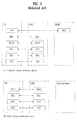
- FIG. 8 illustrates a random access procedure
- the random access procedure is used to transmit short-length data in uplink.
- the random access procedure is performed upon initial access in an RRC idle mode, upon initial access after radio link failure, upon handover requiring the random access procedure, and upon the occurrence of uplink/downlink data requiring the random access procedure during an RRC connected mode.
- Some RRC messages such as an RRC connection request message, a cell update message, and a URA update message are transmitted using a random access procedure.
- Logical channels such as a Common Control Channel (CCCH), a Dedicated Control Channel (DCCH), or a Dedicated Traffic Channel (DTCH) can be mapped to a transport channel (RACH).
- the transport channel (RACH) can be mapped to a physical channel (e.g., Physical Random Access Channel (PRACH)).
- PRACH Physical Random Access Channel
- the UE physical layer When a UE MAC layer instructs a UE physical layer to transmit a PRACH, the UE physical layer first selects an access slot and a signature and transmits a PRACH preamble in uplink.
- the random access procedure is divided into a contention-based procedure and a non-contention-based procedure.
- a UE receives and stores information regarding random access from an eNB through system information. Thereafter, when random access is needed, the UE transmits a random access preamble (Message 1) to the eNB (S810). Upon receiving the random access preamble from the UE, the eNB transmits a random access response message (Message 2) to the UE (S820).
- a random access response message Message 2
- downlink scheduling information for the random access response message can be CRC-masked with a Random Access-RNTI and can be transmitted through an L1/L2 control channel (PDCCH).
- the UE Upon receiving the downlink scheduling signal masked with the RA-RNTI, the UE can receive and decode a random access response message from a Physical Downlink Shared Channel (PDSCH).
- PDSCH Physical Downlink Shared Channel
- the UE checks whether or not random access response information corresponding to the UE is present in the received random access response message. Whether or not random access response information corresponding to the UE is present can be determined based on whether or not a Random Access preamble ID (RAID) for the preamble that the UE has transmitted is present.
- the random access response information includes Timing Advance (TA) indicating timing offset information for synchronization, information of allocation of radio resources used in uplink, and a temporary identity (e.g., T-CRNTI) for user identification.
- TA Timing Advance
- the UE Upon receiving the random access response information, the UE transmits an uplink message (Message 3) through an uplink Shared Channel (SCH) according to radio resource allocation information included in the response information (S830).
- the eNB After receiving the uplink message from the UE, the eNB transmits a contention resolution message (Message 4) to the UE (S840).
- uplink packets in a cellular radio packet transmission system which uses the SC-FDMA scheme for uplink transmission are discriminated as they use different time-frequency resources.
- an SC-FDMA UE transmits a signal using two or more frequency regions that are not adjacent in the frequency axis at the same time (or the same subframe)
- single-carrier characteristics of the SC-FDMA are degraded and thus it is necessary to increase the dynamic range of a transmission amplifier of the UE.
- the present invention is directed to a method for resolving collision of signals transmitted in uplink in a wireless communication system which substantially obviates one or more problems due to limitations and disadvantages of the related art.
- An object of the present invention is to provide a method for efficiently performing data transmission when different data transmission procedures are performed together in a wireless communication system.
- Another object of the present invention is to provide a method for efficiently performing data transmission when a separate uplink transmission procedure/downlink transmission procedure is performed together with uplink transmission of a random access procedure.
- Another object of the present invention is to provide a method for efficiently performing data transmission when uplink transmission associated with control information is performed together with uplink transmission of a random access procedure.
- the wireless communication system can support at least one of SC-FDMA, MC-FDMA, and OFDMA schemes. More preferably, the wireless communication system can support the SC-FDMA scheme.
- packets transmitted through a random access procedure and packets transmitted through other uplink transmission procedures are treated as uplink packets with different characteristics.
- a packet that is transmitted in uplink through a random access procedure is referred to as a "random access packet” or “random access physical uplink shared channel (RA-PUSCH)” for better understanding of the present invention.
- RA-PUSCH random access physical uplink shared channel
- PUSCH physical uplink shared channel
- collision between radio resources for signal transmission indicates that at least a part of time and frequency resources for signal transmission overlaps if not explicitly stated otherwise.
- collision between radio resources indicates that at least a part of time resources or time/frequency resources for signal transmission overlaps.
- time resources may be indicated on a TTI basis or a subframe basis. Accordingly, overlapping of at least a part of time resources indicates that different signals are transmitted through the same TTI or the same subframe.
- ignoring a signal/command indicates that decoding only is performed on the signal/command and no subsequent processes are performed thereon, if not explicitly stated otherwise.
- ignoring an RA-PUSCH transmission command indicates that, although decoding is performed on the RA-PUSCH transmission command for identifying the RA-PUSCH transmission command, no processes associated with the RA-PUSCH transmission command are performed after the RA-PUSCH transmission command is identified.
- an eNB transmits an uplink scheduling command to a UE in a general situation, the UE receives the scheduling command and transmits data through a PUSCH at a time indicated by the scheduling command or at a time fixed relative to the time at which the scheduling command is received.
- the UE may attempt uplink data transmission through an RA-PUSCH. Specifically, the UE transmits an RA-preamble signal and the eNB transmits an RA-response signal to the UE.
- the UE transmits an RA-PUSCH according to an uplink scheduling command included in the RA-response.
- the UE may attempt to retransmit the RA-preamble signal according to preset rules.
- the RA-preamble cannot carry an amount of information required to represent a unique ID of the UE or an ID in the system. Accordingly, the eNB cannot identify a UE which has attempted random access until the eNB receives an ID that the UE has transmitted through an RA-PUSCH. For this reason, a time that the eNB has allocated to the UE to transmit an RA-PUSCH may collide with an uplink time that the eNB has allocated to the UE to transmit a PUSCH according to a general uplink scheduling procedure.
- the present invention suggests a variety of methods to overcome such problems.
- the UE may ignore the RA-PUSCH transmission command and transmit a general PUSCH according to the general PUSCH transmission command.
- the UE may ignore the RA-PUSCH transmission command and transmit a general PUSCH according to the general PUSCH transmission command.
- the UE can transmit only one PUSCH in the SC-FDMA system, thereby maintaining single-carrier characteristics.
- the main reason why the RA-PUSCH is discarded is that the RA-PUSCH may collide with an RA-PUSCH transmitted by another UE that has transmitted the same RA-preamble. Accordingly, the eNB can more successfully receive a PUSCH transmitted through a general scheduling command rather than through a random access scheme.
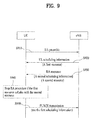
- the UE can also transmit information corresponding to a scheduling request or a transmission buffer status through the PUSCH. Details of this method are illustrated in FIG. 9 .
- the UE transmits an RA-preamble to the eNB when the UE has data to be transmitted (S910).
- the eNB cannot identify the UE although the eNB has successfully received the RA-preamble from the UE.
- the eNB transmits an uplink scheduling command to the UE in order to receive data from the UE (S920).
- the uplink scheduling command indicates a first radio resource.
- the eNB transmits random access response information (RA-response) including a timing offset for transmission timing control, information of allocation of resources for uplink transmission, and a temporary identity to the UE as a response to the RA-preamble (S930).
- RA-response random access response information
- the information of resource allocation for UE transmission indicates a second radio resource. If the UE has received different uplink scheduling information, then the UE checks whether or not the radio resources collide. Preferably, the collision of radio resources includes collision of time resources or time/frequency resources. Preferably, the different uplink scheduling information may indicate the same TTI or subframe.
- the UE ignores the RA-response received at step S930 and stops the random access procedure (S940). Thereafter, the UE performs PUSCH transmission using the uplink scheduling information. The order in which the uplink scheduling information transmission and the RA-response transmission are performed may be reversed.
- the UE may not decode or may ignore a general PUSCH uplink scheduling command during all or part of the period until the UE receives an RA-response and transmits an RA-PUSCH after starting RA-preamble transmission.
- the UE can also ignore a general PUSCH uplink scheduling command during all or part of the period until the UE terminates the random access attempt after starting RA-preamble transmission.
- This method eliminates the need for the UE, which attempts random access, to simultaneously transmit the RA-PUSCH and the PUSCH. This method also eliminates the burden of the UE, which attempts random access, having to decode both the general PUSCH uplink scheduling signal and the RA-response. Details of this method are illustrated in FIGs. 10-13 .
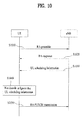
- a UE transmits an RA-preamble to an eNB (S1010).
- the eNB transmits an RA-response including information of resource allocation for uplink transmission to the UE (S1020).
- the eNB transmits a separate uplink scheduling command to the UE without knowing that the UE is performing a random access procedure (S1030).
- transmitting the uplink scheduling command simultaneously with the RA-response indicates that the uplink scheduling command and the RA-response are transmitted through the same TTI or the same subframe.
- the UE does not decode or ignores the uplink scheduling command received after the RA-preamble is transmitted (S1040). That is, during the random access procedure, the UE may not decode an uplink scheduling command or alternatively may omit processes associated with uplink transmission although the UE decodes the uplink scheduling command. Thereafter, the UE performs RA-PUSCH transmission using the information of resource allocation for uplink transmission included in the RA-response (S1050).
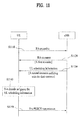
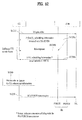
- the UE does not take into consideration whether or not the radio resources (for example, time resources) of the RA-PUSCH and the general PUSCH collide. However, preferably, the UE may not decode or may ignore uplink scheduling information indicating a radio resource which collides with RA-PUSCH transmission. This example is illustrated in FIG. 11 .
- steps S1110-S1150 correspond to steps S1010-S1050, respectively.
- the procedure of FIG. 11 differs from that of FIG. 10 in that the radio resources of the RA-PUSCH and the general PUSCH collide (S1120 and S1130).
- the collision of radio resources includes overlapping of at least a part of time resources or time/frequency resources.
- the UE may not decode or may ignore uplink scheduling information regarding the general PUSCH (S1140).
- the UE may not decode an uplink scheduling command or alternatively may omit processes associated with uplink transmission although the UE decodes the uplink scheduling command.
- the UE may transmit both the RA-PUSCH and the general PUSCH using the different radio resources.
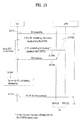
- FIGs. 12 and 13 illustrate a more detailed version of the procedure of FIG. 11 .
- a UE transmits an RA-preamble to an eNB (S1210).
- the eNB transmits RA-response scheduling information masked with an RA-RNTI through a PDCCH (S1220a).
- the RA-response scheduling information indicates a radio resource (PDSCH) through which an RA-response is transmitted.
- the eNB transmits the RA-response using the radio resource (PDSCH) indicated by the RA-response scheduling information (S1220b).
- the eNB transmits uplink scheduling information masked with a C-RNTI through a PDCCH (S1230a).
- the uplink scheduling information may indicate a radio resource that collides with RA-PUSCH transmission.
- the "RA-response scheduling information and RA-response" and the "uplink scheduling information” are transmitted to the UE through different TTIs or subframes. Because the RA-response scheduling information has been received, the UE knows that a random access procedure is in progress and therefore the UE may not decode or may ignore uplink scheduling information that is received thereafter (S1240). Thereafter, the UE performs RA-PUSCH transmission using information of resource allocation for uplink transmission included in the RA-response (S1250).
- a procedure illustrated in FIG. 13 is identical to that of FIG. 12 , except that the "RA-response scheduling information and RA-response" and the "uplink scheduling information” are transmitted to the UE through the same TTI or subframe.
- steps S1310-S1350 correspond to steps S1210-S1250, respectively.
- the UE since the RA-response scheduling information masked with an RA-RNTI and the uplink scheduling information masked with a C-RNTI are transmitted through a PDCCH of the same TTI or subframe, the UE cannot determine the presence of RA-response scheduling information before the presence of uplink scheduling information not associated with the RA-response.
- the UE cannot ignore the uplink scheduling information even though the uplink scheduling information is not associated with the RA-response and should monitor the PDCCH using both the RA-RNTI and the C-RNTI. If the UE receives and decodes both the RA-response scheduling information and the uplink scheduling information, then the UE can detect the presence of the RA-response. In this case, the UE may ignore uplink scheduling information (PDSCH) not associated with the RA-response (S1340). That is, the UE may not perform uplink transmission processes associated with the uplink scheduling information.
- PDSCH uplink scheduling information
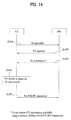
- the UE may not decode or may ignore a downlink transmission (i.e., information transmitted in downlink) other than an RA-response in order to further reduce decoding load of the UE during a random access procedure. Further, the UE may not decode or may ignore downlink packet scheduling information associated with a downlink transmission other than the RA-response. However, the UE may decode downlink packets that do not require uplink transmission. For example, the UE may decode downlink scheduling information of downlink packets (for example, broadcast or multicast packets) which do not require ACK/NACK transmission and packets corresponding to the downlink scheduling information. Details of this method are illustrated in FIGs. 14-16 .
- a UE transmits an RA-preamble to an eNB (S1410).
- the eNB transmits an RA-response to the UE (S1420).
- the eNB performs downlink transmission to the UE (S1430).
- transmitting the downlink scheduling command simultaneously with the RA-response indicates that the downlink scheduling command and the RA-response are transmitted through the same TTI or the same subframe.
- the downlink transmission may require uplink transmission.
- the downlink transmission may require uplink transmission, the radio resource of which collides with that of an RA-PUSCH transmission.
- the collision of radio resources includes collision of time resources or time/frequency resources.
- the uplink transmission due to the downlink transmission may indicate the same TTI or subframe as the RA-PUSCH is to be transmitted.
- the UE does not decode or ignores the downlink transmission received after the RA-preamble is transmitted (S1440). That is, during the random access procedure, the UE may not decode a downlink transmission even though the downlink transmission is received or alternatively may omit processes associated with downlink transmission although the UE decodes the downlink transmission. Thereafter, the UE performs RA-PUSCH transmission using the information of resource allocation for uplink transmission included in the RA-response (S1450).
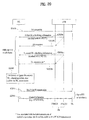
- FIGs. 15 and 16 illustrate a more detailed version of the procedure of FIG. 14 .
- a UE transmits an RA-preamble to an eNB (S1510).
- the eNB transmits first downlink scheduling information masked with an RA-RNTI through a PDCCH (S1520a).
- the first downlink scheduling information indicates a radio resource (PDSCH) through which an RA-response is transmitted.
- the eNB transmits the RA-response using the radio resource (PDSCH) indicated by the first downlink scheduling information (S1520b).
- the eNB transmits second downlink scheduling information masked with a C-RNTI through a PDCCH (S1530a).
- the second downlink scheduling information indicates a radio resource (PDSCH) through which downlink information of the UE is transmitted. Thereafter, the eNB transmits the downlink information using the radio resource (PDSCH) indicated by the second downlink scheduling information (S1530b).
- the downlink information may require uplink transmission.
- the downlink information may require uplink transmission, the radio resource of which collides with that of RA-PUSCH transmission.
- the "first downlink scheduling information and RA-response" and the "second downlink scheduling information and downlink information” are transmitted to the UE through different TTIs or subframes. Because the first downlink scheduling information associated with the RA-response has been received, the UE knows that a random access procedure is in progress and therefore the UE may not decode or may ignore second downlink scheduling information and/or downlink information that is received thereafter (S1540). Thereafter, the UE performs RA-PUSCH transmission using information of resource allocation for uplink transmission included in the RA-response (S1550).
- a procedure illustrated in FIG. 16 is identical to that of FIG. 15 , except that the "first downlink scheduling information and RA-response" and the "second downlink scheduling information and downlink information" are transmitted to the UE through the same TTI or subframe. Specifically, steps S1610-S1650 correspond to steps S1510-S1550, respectively.
- the UE since the first downlink scheduling information masked with an RA-RNTI and the second downlink scheduling information masked with a C-RNTI are transmitted through a PDCCH of the same TTI or subframe, the UE cannot determine the presence of first downlink scheduling information associated with the RA-response before the presence of second downlink scheduling information not associated with the RA-response. Accordingly, the UE cannot omit decoding of second downlink scheduling information even though the scheduling information is not associated with the RA-response and should monitor the PDCCH using both the RA-RNTI and the C-RNTI.
- the UE can detect the presence of the RA-response. In this case, the UE can ignore the second downlink scheduling information. That is, the UE may omit processes associated with the second downlink scheduling information. Accordingly, the UE may not decode a downlink transmission received through a radio resource (PDSCH) indicated by the second downlink scheduling information. The UE may also ignore the downlink transmission although it decodes the downlink transmission (S1640).
- PDSCH radio resource
- a UE that can decode both an RA-response and general uplink scheduling information can use the method illustrated in Embodiment 1.
- Other UEs may use the methods illustrated in Embodiment 2 and/or Embodiment 3.
- the UE may need to transmit uplink control information at the time when an RA-PUSCH is to be transmitted.
- the uplink control information includes an ACK/NACK signal used to perform HARQ, a CQI indicating a downlink channel status, and a scheduling request signal which serves to request allocation of uplink radio resources.
- the present invention further suggests a method for increasing transmission efficiency when the UE needs to simultaneously transmit uplink control information and an RA-PUSCH.
- Uplink control information is generally transmitted through a PUCCH. However, if a PUSCH transmission is present at the time when the uplink control information is to be transmitted, the UE transmits the uplink control information using the PUSCH. However, when radio resources for transmitting the RA-PUSCH and the uplink control information collide, the UE may transmit only the RA-PUSCH without transmitting the uplink control information. For example, when there is a need to also transmit an uplink control information at the time to transmit an RA-PUSCH, the UE may transmit only the RA-PUSCH without transmitting the uplink control information.
- the UE may transmit only the RA-PUSCH without transmitting the ACK/NACK signal. Since HARQ retransmission is applied to downlink packet transmission, it is possible to reconstruct the downlink packet transmission even if the ACK/NACK is not transmitted. Details of this method are illustrated in FIG. 17 .
- a UE transmits an RA-preamble to an eNB (S1710).
- the eNB transmits an RA-response including information of resource allocation for uplink transmission to the UE (S1720).
- the UE performs RA-PUSCH transmission using the information of random access for uplink transmission included in the RA-response (S1730).
- the UE needs to transmit an uplink control information.
- the UE checks whether or not radio resources for transmitting the RA-PUSCH and the uplink control information collide.
- the collision of radio resources indicates overlapping of at least a part of time and frequency resources for transmitting the RA-PUSCH and the uplink control information.
- the collision of radio resources indicates overlapping of at least a part of time resources for signal transmission or at least a part of time/frequency resources.
- whether or not time resources overlap can be determined on a TTI basis or a subframe basis. Accordingly, overlapping of at least a part of time resources may indicate that different signals are transmitted through the same TTI or the same subframe.
- radio resources collide it is assumed that an RA-PUSCH and an uplink control information are transmitted through the same TTI or subframe.
- this example is only illustrative for better understanding of the present invention, and examples of collision of radio resources include collision of at least a part of frequency resources simultaneously with collision of time resources.
- the UE transmits only the RA-PUSCH and does not transmit the uplink control information (S1740).
- radio resources for transmitting an RA-PUSCH and uplink control information collide for example when an RA-PUSCH and uplink control information are transmitted through the same TTI or subframe
- the UE may not decode or may ignore a downlink packet scheduling signal associated with transmission of an uplink control information and/or corresponding packets during all or part of the period until the UE transmits an RA-PUSCH after transmitting an RA-preamble.
- the UE may also not decode or may ignore a downlink packet scheduling signal associated with transmission of an uplink control information and/or packets corresponding to the downlink packet scheduling signal during all or part of the period until the UE terminates the random access attempt after transmitting the RA-preamble.
- the UE may decode downlink packets that do not require transmission of uplink control information.
- the UE may decode a downlink scheduling signal of downlink packets (for example, broadcast or multicast packets) which do not require ACK/NACK transmission and packets corresponding to the downlink scheduling signal.
- This method eliminates the need for the UE, which attempts random access, to simultaneously transmit the RA-PUSCH and the uplink control information. This method also eliminates decoding load of the UE which attempts random access. Details of this method are illustrated in FIGs. 18-21 .
- a UE transmits an RA-preamble to an eNB (S1810).
- the eNB transmits an RA-response including information of resource allocation for uplink transmission to the UE (S1820).
- the eNB transmits downlink information associated with transmission of uplink control information to the UE (S1830). In this case, the UE does not decode or ignores the downlink information received after the RA-preamble is transmitted (S1840).
- the UE may not decode the downlink information or alternatively may omit processes associated with the downlink information although the UE decodes the downlink information. Thereafter, the UE performs RA-PUSCH transmission using the information of resource allocation for uplink transmission included in the RA-response (S1850). Since the UE has not decoded or has ignored the downlink information at step S1840, the UE cannot perform PUSCH transmission of uplink control information (S1860).
- the RA-PUSCH and the uplink control information may have been scheduled to be transmitted through the same or different TTIs or subframes.
- the UE does not take into consideration whether or not the radio resources for transmitting the RA-PUSCH and the uplink control information actually collide. However, preferably, the UE may not decode or may ignore a downlink packet scheduling command associated with uplink control information transmitted using a TTI or subframe for transmission of the RA-PUSCH and/or packets corresponding to the downlink packet scheduling command.
- the basic procedure illustrated in FIG. 19 is identical to that of FIG. 18 . Specifically, steps S1910-S1960 correspond to steps S1810-S1860, respectively.
- the procedure of FIG. 19 differs from that of FIG. 18 in that the radio resource for transmission of uplink control information collides with that of the RA-PUSCH. If the radio resources for transmission of the RA-PUSCH and the uplink control information collide, the UE may not decode or may ignore downlink information associated with transmission of the uplink control information (S1940). On the other hand, if the time resource for transmission of uplink control information does not collide with that of the RA-PUSCH, the UE may transmit the uplink control information through a PUSCH or PUCCH.
- FIGs. 20 and 21 illustrate a more detailed version of the procedure of FIG. 19 .
- a UE transmits an RA-preamble to an eNB (S2010).
- the eNB transmits first downlink scheduling information masked with an RA-RNTI through a PDCCH (S2020a).
- the first downlink scheduling information indicates a radio resource (PDSCH) through which an RA-response is transmitted.
- the eNB transmits the RA-response using the radio resource (PDSCH) indicated by the first downlink scheduling information (S2020b).
- the eNB transmits second downlink scheduling information masked with a C-RNTI through a PDCCH (S2030a).
- the second downlink scheduling information indicates a radio resource (PDSCH) through which downlink information of the UE is transmitted. Thereafter, the eNB transmits the downlink information using the radio resource (PDSCH) indicated by the second downlink scheduling information (S2030b).
- the downlink information may be associated with subsequent transmission of uplink control information and the radio resource for transmission of the uplink control information may collide with that of the RA-PUSCH.
- the "first downlink scheduling information and RA-response" and the "second downlink scheduling information and downlink information” are transmitted to the UE through different TTIs or subframes. Because the first downlink scheduling information associated with the RA-response has been received, the UE knows that a random access procedure is in progress and therefore the UE may not decode or may ignore second downlink scheduling information and/or downlink information that is received thereafter (S2040). Thereafter, the UE performs RA-PUSCH transmission using information of resource allocation for uplink transmission included in the RA-response (S2050). Since the UE has not decoded or has ignored the downlink information at step S2040, the UE cannot perform transmission of uplink control information associated with the downlink information (S2060).
- a procedure illustrated in FIG. 21 is identical to that of FIG. 20 , except that the "first downlink scheduling information and RA-response" and the "second downlink scheduling information and downlink scheduling information" are transmitted to the UE through the same TTI or subframe. Specifically, steps S2110-S2160 correspond to steps S2010-S2060, respectively.
- the UE since the first downlink scheduling information masked with an RA-RNTI and the second downlink scheduling information masked with a C-RNTI are transmitted through a PDCCH of the same TTI or subframe, the UE cannot determine the presence of first downlink scheduling information associated with the RA-response before the presence of second downlink scheduling information not associated with the RA-response. Accordingly, the UE cannot omit decoding of second downlink scheduling information even though the scheduling information is not associated with the RA-response and should monitor the PDCCH using both the RA-RNTI and the C-RNTI.
- the UE can detect the presence of the RA-response. In this case, the UE may ignore the second downlink scheduling information. That is, the UE may omit processes associated with the second downlink scheduling information. Accordingly, the UE may not decode a downlink transmission received through a radio resource (PDSCH) indicated by the second downlink scheduling information. The UE may also ignore the downlink transmission although it decodes the downlink transmission (S2140).
- PDSCH radio resource
- BS Base Station
- UE user equipment
- MS mobile station
- MSS mobile subscriber station
- the embodiments of the present invention can be implemented by hardware, firmware, software, or any combination thereof.
- an embodiment of the present invention may be implemented by one or more application specific integrated circuits (ASICs), digital signal processors (DSPs), digital signal processing devices (DSPDs), programmable logic devices (PLDs), field programmable gate arrays (FPGAs), processors, controllers, microcontrollers, microprocessors, or the like.
- ASICs application specific integrated circuits
- DSPs digital signal processors
- DSPDs digital signal processing devices
- PLDs programmable logic devices
- FPGAs field programmable gate arrays
- processors controllers, microcontrollers, microprocessors, or the like.
- the embodiments of the present invention may be implemented in the form of modules, processes, functions, or the like which perform the features or operations described above.
- Software code can be stored in a memory unit so as to be executed by a processor.
- the memory unit may be located inside or outside the processor and can communicate data with the processor through a variety of known means.
- the present invention can be applied to a wireless communication system that supports at least one of SC-FDMA, MC-FDMA, and OFDMA. Particularly, the present invention can be applied to a method for resolving collision of signals transmitted in uplink in the wireless communication system.
Landscapes
- Engineering & Computer Science (AREA)
- Computer Networks & Wireless Communication (AREA)
- Signal Processing (AREA)
- Mobile Radio Communication Systems (AREA)
Claims (6)
- Procédé pour effectuer une procédure d'accès aléatoire par un équipement utilisateur dans un système de communication sans fil, le procédé comprenant :la transmission (S1410, S1510, S1610) d'un préambule pour un accès aléatoire à une station de base ;la réception (S1620a, S1630a) de premières informations de commande de liaison descendante masquées avec une identité temporaire de réseau radio d'accès aléatoire, RA-RNTI, et de deuxièmes informations de commande de liaison descendante masquées avec une RNTI de cellule, C-RNTI, dans une même sous-trame ou un même intervalle de temps de transmission, TTI ;le décodage des premières et deuxièmes informations de commande de liaison descendante reçues ;la réception (S1420, S1520b, S1620b) d'un message de réponse d'accès aléatoire à travers un premier canal physique partagé de liaison descendante, PDSCH, indiqué par les premières informations de commande de liaison descendante à partir de la station de base après que le préambule a été transmis ; etla transmission (S1450, S1550, S1650) d'un canal physique partagé de liaison montante, PUSCH, en fonction du message de réponse d'accès aléatoire,dans lequel un deuxième PDSCH indiqué par les deuxièmes informations de commande de liaison descendante n'est pas décodé (S1440, S1540, S1640).
- Procédé selon la revendication 1, dans lequel le système de communication sans fil supporte un accès multiple par répartition en fréquence à porteuse unique, SC-FDMA, pour une transmission de liaison montante.
- Procédé selon la revendication 1, dans lequel le premier PDSCH et le deuxième PDSCH sont reçus dans la même sous-trame ou le même TTI.
- Equipement utilisateur configuré pour fonctionner dans un système de communication sans fil, l'équipement utilisateur comprenant :un module de fréquence radio, RF, configuré pour transmettre/recevoir un signal radio vers/à partir d'une station de base ; etun processeur configuré pour commander le module RF et pour effectuer des opérations selon un protocole d'interface radio,dans lequel le processeur est configuré pourtransmettre (S1410, S1510, S1610) un préambule pour un accès aléatoire à la station de base ;recevoir (S1620a, S1630a) des premières informations de commande de liaison descendante masquées avec une identité temporaire de réseau radio d'accès aléatoire, RA-RNTI, et des deuxièmes informations de commande de liaison descendante masquées avec une RNTI de cellule, C-RNTI, dans une même sous-trame ou un même intervalle de temps de transmission, TTI ;décoder les premières et les deuxièmes informations de commande de liaison descendante reçues ;recevoir (S1420, S1520b, S1620b) un message de réponse d'accès aléatoire à travers un premier canal physique partagé de liaison descendante, PDSCH, indiqué par les premières informations de commande de liaison descendante à partir de la station de base après que le préambule a été transmis ; ettransmettre (S1450, S1550, S1650) un canal physique partagé de liaison montante, PUSCH, en fonction du message de réponse d'accès aléatoire,dans lequel le processeur est configuré en outre pour ne pas décoder un deuxième PDSCH indiqué par les deuxièmes informations de commande de liaison descendante (S1440, S1540, S1640).
- Equipement utilisateur selon la revendication 4, dans lequel le système de communication sans fil supporte un accès multiple par répartition en fréquence à porteuse unique, SC-FDMA, pour une transmission de liaison montante.
- Equipement utilisateur selon la revendication 4, dans lequel l'équipement utilisateur est configuré en outre pour recevoir le premier PDSCH et le deuxième PDSCH dans la même sous-trame ou le même TTI.
Priority Applications (1)
| Application Number | Priority Date | Filing Date | Title |
|---|---|---|---|
| EP14162706.7A EP2753139B1 (fr) | 2008-03-03 | 2009-03-03 | Procédé permettant de résoudre une collision de signaux de liaison montante |
Applications Claiming Priority (3)
| Application Number | Priority Date | Filing Date | Title |
|---|---|---|---|
| US3340308P | 2008-03-03 | 2008-03-03 | |
| US3698408P | 2008-03-16 | 2008-03-16 | |
| KR1020090009245A KR100925450B1 (ko) | 2008-03-03 | 2009-02-05 | 상향링크 신호의 충돌 해결 방법 |
Related Child Applications (2)
| Application Number | Title | Priority Date | Filing Date |
|---|---|---|---|
| EP14162706.7A Division EP2753139B1 (fr) | 2008-03-03 | 2009-03-03 | Procédé permettant de résoudre une collision de signaux de liaison montante |
| EP14162706.7A Division-Into EP2753139B1 (fr) | 2008-03-03 | 2009-03-03 | Procédé permettant de résoudre une collision de signaux de liaison montante |
Publications (3)
| Publication Number | Publication Date |
|---|---|
| EP2099248A2 EP2099248A2 (fr) | 2009-09-09 |
| EP2099248A3 EP2099248A3 (fr) | 2013-12-11 |
| EP2099248B1 true EP2099248B1 (fr) | 2016-05-11 |
Family
ID=41478575
Family Applications (2)
| Application Number | Title | Priority Date | Filing Date |
|---|---|---|---|
| EP09154210.0A Active EP2099248B1 (fr) | 2008-03-03 | 2009-03-03 | Procédé pour résoudre la collision de signaux de liaison montante |
| EP14162706.7A Active EP2753139B1 (fr) | 2008-03-03 | 2009-03-03 | Procédé permettant de résoudre une collision de signaux de liaison montante |
Family Applications After (1)
| Application Number | Title | Priority Date | Filing Date |
|---|---|---|---|
| EP14162706.7A Active EP2753139B1 (fr) | 2008-03-03 | 2009-03-03 | Procédé permettant de résoudre une collision de signaux de liaison montante |
Country Status (7)
| Country | Link |
|---|---|
| US (2) | US7873005B2 (fr) |
| EP (2) | EP2099248B1 (fr) |
| KR (1) | KR100925450B1 (fr) |
| CN (2) | CN103188818B (fr) |
| ES (1) | ES2586251T3 (fr) |
| TW (1) | TWI373275B (fr) |
| WO (1) | WO2009110716A2 (fr) |
Families Citing this family (99)
| Publication number | Priority date | Publication date | Assignee | Title |
|---|---|---|---|---|
| CN101682935B (zh) * | 2007-06-15 | 2012-08-08 | 夏普株式会社 | 基站装置、移动站装置、无线通信系统、程序、随机接入响应发送方法以及随机接入响应接收方法 |
| KR20090006708A (ko) | 2007-07-12 | 2009-01-15 | 엘지전자 주식회사 | 스케줄링 요청 신호 전송 방법 |
| EA016365B1 (ru) * | 2007-08-08 | 2012-04-30 | Шарп Кабусики Кайся | Система радиосвязи и устройство мобильной станции |
| KR101548748B1 (ko) * | 2008-08-07 | 2015-09-11 | 엘지전자 주식회사 | 랜덤 접속 절차를 수행하는 방법 |
| KR101603338B1 (ko) | 2008-08-11 | 2016-03-15 | 엘지전자 주식회사 | 무선 통신 시스템에서 정보 전송 방법 및 장치 |
| KR20100019947A (ko) * | 2008-08-11 | 2010-02-19 | 엘지전자 주식회사 | 무선 통신 시스템에서 정보 전송 방법 |
| KR101571566B1 (ko) | 2008-08-11 | 2015-11-25 | 엘지전자 주식회사 | 무선 통신 시스템에서 제어신호 전송 방법 |
| US8830884B2 (en) * | 2008-08-18 | 2014-09-09 | Qualcomm Incorporated | TTI bundling in a random access procedure |
| WO2010050497A1 (fr) * | 2008-10-30 | 2010-05-06 | 株式会社エヌ・ティ・ティ・ドコモ | Station de base sans fil et procédé de télécommunication mobile |
| US8228851B2 (en) * | 2008-11-03 | 2012-07-24 | Htc Corporation | Method for handling random access response reception and an E-UTRAN and user equipment thereof |
| KR101243508B1 (ko) | 2008-11-14 | 2013-03-20 | 엘지전자 주식회사 | 무선 통신 시스템에서 신호 전송 방법 및 장치 |
| WO2010056078A2 (fr) | 2008-11-14 | 2010-05-20 | 엘지전자주식회사 | Procédé et appareil permettant la transmission d'informations dans un système de communication sans fil |
| KR101156164B1 (ko) * | 2008-12-22 | 2012-06-18 | 한국전자통신연구원 | 주파수 집합 통신 환경에서의 단말 및 기지국, 이를 이용한호 접속 처리 방법 |
| KR20100075378A (ko) | 2008-12-24 | 2010-07-02 | 엘지전자 주식회사 | 제어 정보를 전송하는 방법 및 이를 위한 장치 |
| MY158329A (en) * | 2009-02-05 | 2016-09-30 | Lg Electronics Inc | Method and apparatus of transmitting uplink control signal in wireless communication system |
| WO2010090467A2 (fr) * | 2009-02-05 | 2010-08-12 | Lg Electronics Inc. | Procédé et appareil de transmission de signal de commande de liaison montante dans un système de communication sans fil |
| KR20100091876A (ko) | 2009-02-11 | 2010-08-19 | 엘지전자 주식회사 | 다중안테나 전송을 위한 단말 동작 |
| CN102301750B (zh) * | 2009-04-28 | 2013-06-12 | 上海贝尔股份有限公司 | 实现mbsfn方式传输mbms控制信令的方法和装置 |
| US8767846B2 (en) * | 2009-04-30 | 2014-07-01 | Qualcomm Incorporated | Joint layer 3 signalling coding for multicarrier operation |
| US8611238B2 (en) * | 2009-04-30 | 2013-12-17 | Samsung Electronics Co., Ltd | Multiplexing large payloads of control information from user equipments |
| US20120099419A1 (en) * | 2009-06-23 | 2012-04-26 | Electronics And Telecommunications Research Institute | Method for transmitting retransmission request information for an error packet in a multimedia broadcast/multicast service, and method for retransmitting a packet in response to the retransmission request |
| EP2502443B1 (fr) * | 2009-11-16 | 2014-01-08 | Telefonaktiebolaget L M Ericsson (publ) | Appareils et procédés de réduction de charge sur une passerelle de desserte dans un système de réseau de communication |
| KR101110348B1 (ko) * | 2009-12-04 | 2012-02-17 | 인스티튜트 포 인포메이션 인더스트리 | 베이스 스테이션, 상기 베이스 스테이션의 통신 방법, 및 컴퓨터-판독가능한 기록 매체 |
| KR101636931B1 (ko) * | 2009-12-11 | 2016-07-06 | 삼성전자 주식회사 | 이동통신 시스템에서 경쟁 기반 액세스를 수행하는 방법 및 장치 |
| WO2011074780A2 (fr) * | 2009-12-18 | 2011-06-23 | Lg Electronics Inc. | Procédé et appareil permettant de transmettre un signal de commande de liaison montante dans un système de communication sans fil |
| CN105846981B (zh) | 2010-01-08 | 2019-03-26 | 交互数字专利控股公司 | 一种wtru及用于建立时间提前量的方法 |
| CN102123399B (zh) * | 2010-01-08 | 2014-01-01 | 华为技术有限公司 | 调度请求的方法及装置 |
| US9426765B2 (en) | 2010-01-11 | 2016-08-23 | Acer Incorporated | Method of handling uplink synchronization and related communication device |
| JP4945652B2 (ja) * | 2010-03-29 | 2012-06-06 | シャープ株式会社 | 移動局装置、基地局装置、無線通信システム、ランダムアクセス方法及び集積回路 |
| CN102215525A (zh) * | 2010-04-07 | 2011-10-12 | 中国移动通信集团公司 | 载波聚合的方法、装置及系统 |
| CN102215590B (zh) * | 2010-04-12 | 2016-03-30 | 中兴通讯股份有限公司 | 一种调度方法及系统 |
| US9408232B2 (en) * | 2010-04-21 | 2016-08-02 | Qualcomm Incorporated | Method and apparatus for contention-based wireless transmissions |
| KR20130079302A (ko) * | 2010-04-23 | 2013-07-10 | 엘지전자 주식회사 | 무선 통신 시스템에서 직접 통신 방법 및 장치 |
| US8958382B2 (en) * | 2010-05-11 | 2015-02-17 | Lg Electronics Inc. | Method and device for receiving downlink signals |
| EP2597799B1 (fr) | 2010-07-19 | 2021-10-27 | LG Electronics Inc. | Procédé et dispositif de transmission d'informations de contrôle dans un système de communication sans fil |
| JP5559634B2 (ja) | 2010-08-06 | 2014-07-23 | シャープ株式会社 | 基地局装置、移動局装置、移動通信システム、通信方法、制御プログラムおよび集積回路 |
| US8989025B2 (en) * | 2010-11-12 | 2015-03-24 | Telefonaktiebolaget L M Ericsson (Publ) | UE timing adjustment in a multi-RAT, carrier aggregation community system |
| US9467959B2 (en) | 2011-04-01 | 2016-10-11 | Mediatek, Inc. | Method of maintaining multiple timing advance |
| US20120300714A1 (en) * | 2011-05-06 | 2012-11-29 | Samsung Electronics Co., Ltd. | Methods and apparatus for random access procedures with carrier aggregation for lte-advanced systems |
| KR101961807B1 (ko) | 2011-05-31 | 2019-07-18 | 삼성전자 주식회사 | 반송파 결합을 지원하는 tdd 통신 시스템에서 물리채널의 송수신 타이밍 및 자원 할당을 정의하는 방법 및 장치 |
| KR20130001096A (ko) * | 2011-06-23 | 2013-01-03 | 주식회사 팬택 | 무선 통신 시스템에서 랜덤 액세스의 수행장치 및 방법 |
| KR101295580B1 (ko) * | 2011-07-15 | 2013-08-09 | 엘지전자 주식회사 | 무선접속시스템에서 harq 채널식별자를 이용한 harq 동작 지원방법 및 장치 |
| KR101530808B1 (ko) * | 2011-08-12 | 2015-06-25 | 엘지전자 주식회사 | 랜덤 액세스 과정을 수행하는 방법 및 이를 이용한 무선기기 |
| US8576766B2 (en) | 2011-08-29 | 2013-11-05 | Telefonaktiebolaget L M Ericsson (Publ) | Dynamic scheduling of in-band relay node resources |
| CN103024904A (zh) | 2011-09-20 | 2013-04-03 | 北京三星通信技术研究有限公司 | 一种无线通信系统中的上行数据传输方法 |
| CN102510577B (zh) * | 2011-10-28 | 2017-10-27 | 中兴通讯股份有限公司 | 一种进行上行信道或信号发送的方法及设备 |
| US20130114572A1 (en) * | 2011-11-04 | 2013-05-09 | Mo-Han Fong | Uplink synchronization with multiple timing advances in a wireless communication environment |
| US9276810B2 (en) * | 2011-12-16 | 2016-03-01 | Futurewei Technologies, Inc. | System and method of radio bearer management for multiple point transmission |
| US9693340B2 (en) | 2012-02-03 | 2017-06-27 | Lg Electronics Inc. | Method and apparatus for transmitting uplink control information in wireless communication system |
| CN103298121B (zh) * | 2012-03-02 | 2016-07-06 | 普天信息技术有限公司 | 一种终端频点映射与配置方法 |
| US20130242892A1 (en) * | 2012-03-16 | 2013-09-19 | Acer Incorporated | Apparatuses and methods for handling random access procedures |
| WO2013151469A1 (fr) * | 2012-04-03 | 2013-10-10 | Telefonaktiebolaget L M Ericsson (Publ) | Contrôle d'interférence entre différents systèmes de communication radio mettant en jeu des équipements utilisateur |
| CN103391166B (zh) * | 2012-05-08 | 2016-08-10 | 普天信息技术研究院有限公司 | 一种pusch的授权和harq传输方法 |
| WO2013168137A2 (fr) * | 2012-05-10 | 2013-11-14 | Nokia Siemens Networks Oy | Hiérarchisation destinée à des transmissions de liaison montante en cas de répétition de rétroaction de la demande de répétition automatique hybride |
| WO2014007531A1 (fr) * | 2012-07-05 | 2014-01-09 | 주식회사 케이티 | Procédé de commande de transmission en liaison montante dans un réseau de communication mobile et appareil associé |
| KR101669710B1 (ko) | 2012-07-05 | 2016-10-26 | 주식회사 케이티 | 이동통신망에서의 상향링크 전송 제어 방법과 그 장치 |
| CN104662818B (zh) | 2012-09-21 | 2018-02-09 | Lg电子株式会社 | 用于在无线通信系统中发送和接收下行信号的方法和装置 |
| CN104813726A (zh) * | 2012-11-23 | 2015-07-29 | Lg电子株式会社 | 收发控制信号的方法及其设备 |
| US11356216B2 (en) * | 2013-01-10 | 2022-06-07 | Texas Instruments Incorporated | Methods and apparatus for dual connectivity operation in a wireless communication network |
| CN104185279B (zh) * | 2013-05-23 | 2019-05-14 | 索尼公司 | 无线通信系统中的装置和方法 |
| US9814037B2 (en) * | 2013-06-28 | 2017-11-07 | Intel Corporation | Method for efficient channel estimation and beamforming in FDD system by exploiting uplink-downlink correspondence |
| US10555286B2 (en) * | 2013-07-30 | 2020-02-04 | Qualcomm Incorporated | Uplink control information (UCI) transmission with bundling considerations |
| WO2015131316A1 (fr) | 2014-03-03 | 2015-09-11 | 华为技术有限公司 | Procédé de transmission d'informations, station de base et équipement d'utilisateur |
| KR102282590B1 (ko) | 2014-12-03 | 2021-07-29 | 삼성전자 주식회사 | 비면허 대역에서 동작하는 이동통신 시스템에서의 채널 감지 방법 및 장치 |
| US10939454B2 (en) * | 2014-12-11 | 2021-03-02 | Qualcomm Incorporated | Prioritizing colliding transmissions in LTE and ultra-low latency LTE communications |
| WO2016131475A1 (fr) * | 2015-02-17 | 2016-08-25 | Nokia Solutions And Networks Oy | Efficacité de communication |
| US10536957B2 (en) | 2015-03-08 | 2020-01-14 | Lg Electronics Inc. | Time delay adaptive signal transmission/reception method in wireless communication system and device therefor |
| JP6448850B2 (ja) * | 2015-08-14 | 2019-01-09 | 華為技術有限公司Huawei Technologies Co.,Ltd. | ダウンリンク情報処理方法、ユーザ機器、基地局、及び通信システム |
| US11405949B2 (en) * | 2015-08-21 | 2022-08-02 | Ntt Docomo, Inc. | Terminal and radio communication method for performing a random access procedure |
| CN111432488B (zh) * | 2015-09-23 | 2023-04-18 | 华为技术有限公司 | 终端设备、网络设备、上行发送方法和上行接收方法 |
| CN110099451B (zh) * | 2016-02-01 | 2023-04-07 | 上海朗帛通信技术有限公司 | 一种无线通信中的调度方法和装置 |
| CN108605363B (zh) * | 2016-02-05 | 2021-05-18 | 华为技术有限公司 | 空闲态上行信息发送方法、装置、系统和存储介质 |
| WO2017166245A1 (fr) * | 2016-03-31 | 2017-10-05 | 华为技术有限公司 | Procédé de gestion de ressource et équipement associé |
| US11190314B2 (en) | 2016-04-01 | 2021-11-30 | Lg Electronics Inc. | Method and apparatus for transmitting uplink data in wireless communication system |
| WO2017180280A1 (fr) * | 2016-04-12 | 2017-10-19 | Motorola Mobility Llc | Planification d'intervalles de temps de transmission |
| US20170332401A1 (en) * | 2016-05-13 | 2017-11-16 | Qualcomm Incorporated | Multiple transmission time interval coexistence |
| WO2018028139A1 (fr) * | 2016-08-12 | 2018-02-15 | 中兴通讯股份有限公司 | Procédé d'envoi d'informations, appareil d'envoi et support de stockage informatique |
| CN107734680B (zh) * | 2016-08-12 | 2023-05-09 | 中兴通讯股份有限公司 | 一种传输信息的方法及装置、接收信息的方法及装置 |
| CN107734688B (zh) * | 2016-08-12 | 2023-05-02 | 中兴通讯股份有限公司 | 一种信息发送方法及发送设备 |
| US20180176937A1 (en) * | 2016-12-16 | 2018-06-21 | Asustek Computer Inc. | Method and apparatus of handling multiple uplink resource collisions in a wireless communication system |
| WO2018120112A1 (fr) | 2016-12-30 | 2018-07-05 | Telefonaktiebolaget Lm Ericsson (Publ) | Procédés et dispositifs pour une transmission multi-connexion |
| US10764929B2 (en) | 2017-01-26 | 2020-09-01 | Lg Electronics Inc. | Method and apparatus for requesting system information |
| WO2018170670A1 (fr) | 2017-03-20 | 2018-09-27 | Qualcomm Incorporated | Techniques pour gérer des collisions entre des transmissions de liaison montante et des transmissions de liaison descendante sur un spectre sans fil |
| EP3592050B1 (fr) * | 2017-03-20 | 2022-03-02 | Guangdong Oppo Mobile Telecommunications Corp., Ltd. | Procédé de transmission d'informations système, station de base, et terminal |
| CN110603881B (zh) * | 2017-05-05 | 2023-10-13 | 摩托罗拉移动有限责任公司 | Stti与tti传输之间的冲突处理 |
| KR102406365B1 (ko) * | 2017-07-28 | 2022-06-08 | 삼성전자주식회사 | 단말 및 기지국 간의 rach 절차 수행 방법 및 이를 위한 기지국 및 단말 |
| CN109392101B (zh) * | 2017-08-04 | 2020-08-25 | 维沃移动通信有限公司 | 一种数据传输方法、终端及基站 |
| EP3711395B1 (fr) * | 2017-11-16 | 2022-09-14 | Telefonaktiebolaget LM Ericsson (publ) | Rnti(s) dédié pour une radiomessagerie pilotée par réponse |
| CN110149705A (zh) * | 2018-02-12 | 2019-08-20 | 维沃移动通信有限公司 | 上行传输方法和设备 |
| CN110351748B (zh) * | 2018-04-03 | 2022-10-18 | 财团法人资讯工业策进会 | 用于行动通信系统的用户装置及基站 |
| CN110418419B (zh) * | 2018-04-28 | 2022-03-25 | 中国移动通信有限公司研究院 | 一种随机接入方法、终端及网络设备 |
| CN110475372B (zh) * | 2018-05-10 | 2021-09-24 | 维沃移动通信有限公司 | 一种上行传输方法及终端 |
| WO2020032530A1 (fr) * | 2018-08-08 | 2020-02-13 | Lg Electronics Inc. | Procédé de transmission de signaux de liaison montante et dispositif associé |
| CN111435878B (zh) * | 2019-01-11 | 2021-10-01 | 大唐移动通信设备有限公司 | 一种信息传输方法、终端及网络设备 |
| CN111615204A (zh) * | 2019-05-10 | 2020-09-01 | 维沃移动通信有限公司 | 一种随机接入消息的处理方法和终端 |
| CN112312470B (zh) * | 2019-07-31 | 2025-04-04 | 中国移动通信有限公司研究院 | 信息处理方法及设备 |
| US20230023556A1 (en) * | 2021-07-21 | 2023-01-26 | Samsung Electronics Co., Ltd. | System and method of pdcch skipping and random access |
| CN116456501B (zh) * | 2022-01-05 | 2026-03-13 | 维沃移动通信有限公司 | 资源确定方法、装置、设备及介质 |
| KR102882247B1 (ko) * | 2022-04-20 | 2025-11-07 | 엘지전자 주식회사 | 무선 통신 시스템에서 신호 송수신 방법 및 장치 |
Citations (3)
| Publication number | Priority date | Publication date | Assignee | Title |
|---|---|---|---|---|
| EP1351448A1 (fr) * | 2002-04-05 | 2003-10-08 | Melco Mobile Communications Europe (SA) | Procédé d'accès aléatoire à un canal physique à accès aléatoire et station mobile mettant en ouvre ce procédé |
| WO2008024788A2 (fr) * | 2006-08-21 | 2008-02-28 | Qualcomm Incorporated | procédé et appareil pour un accès aléatoire dans un système de communication par accès multiple orthogonal |
| EP2124488A1 (fr) * | 2007-08-08 | 2009-11-25 | Sharp Kabushiki Kaisha | Système de communication radio et dispositif de station mobile |
Family Cites Families (28)
| Publication number | Priority date | Publication date | Assignee | Title |
|---|---|---|---|---|
| FI113223B (fi) * | 1995-10-23 | 2004-03-15 | Nokia Corp | Menetelmä, laite ja televerkko törmäysten välttämiseksi radioliikenteessä |
| EP0999669A1 (fr) * | 1998-11-06 | 2000-05-10 | Nortel Matra Cellular | Méthode et dispositif de réception en diversité de signaux identiques codés avec des codes correcteurs d'erreurs différents |
| WO2001059968A1 (fr) * | 2000-02-09 | 2001-08-16 | Golden Bridge Technology, Inc. | Evitement de collisions |
| US6967936B1 (en) * | 2000-02-11 | 2005-11-22 | Lucent Technologies Inc. | Uplink timing synchronization and access control for a multi-access wireless communication system |
| CA2364860A1 (fr) * | 2001-12-13 | 2003-06-13 | Soma Networks, Inc. | Structure de canal de communication et methode connexe |
| KR20040064867A (ko) * | 2003-01-10 | 2004-07-21 | 삼성전자주식회사 | 이동통신 시스템에서 역방향 메시지의 전송 구간을제공하는 방법 |
| US20050070273A1 (en) * | 2003-09-29 | 2005-03-31 | M-Stack Limited | Apparatus and method for responding to a CELL/URA update confirm message using a correct C-RNTI in universal mobile telecommunications system user equipment |
| SE0302654D0 (sv) * | 2003-10-06 | 2003-10-06 | Ericsson Telefon Ab L M | Method and arrangement in a telecommunication system |
| KR20050116076A (ko) | 2004-06-04 | 2005-12-09 | 삼성전자주식회사 | 이동통신시스템에서 효율적으로 스케줄링을 할당하는 방법 |
| KR100606049B1 (ko) * | 2004-08-27 | 2006-07-28 | 삼성전자주식회사 | 다중 셀 ofdma 망에서의 랜덤 접속 방법 |
| KR101265594B1 (ko) | 2005-08-23 | 2013-05-22 | 엘지전자 주식회사 | 무선 이동통신 시스템에서 상향링크 억세스 채널을 통한메시지 전송 및 수신 방법 |
| US20070064665A1 (en) * | 2005-08-23 | 2007-03-22 | Interdigital Technology Corporation | Method and apparatus for accessing an uplink random access channel in a single carrier frequency division multiple access system |
| WO2007024120A1 (fr) * | 2005-08-26 | 2007-03-01 | Electronics And Telecommunications Research Institute | Procede de demande de ressources et de programmation pour un trafic de liaison montante dans le cadre d'une communication mobile et appareil utilise a cette fin |
| US20070293218A1 (en) * | 2006-05-22 | 2007-12-20 | Qualcomm Incorporated | Collision avoidance for traffic in a wireless network |
| TW200805910A (en) * | 2006-06-19 | 2008-01-16 | Interdigital Tech Corp | Method and apparatus for performing random access in a wireless communication system |
| US20080005639A1 (en) * | 2006-06-20 | 2008-01-03 | Nokia Corporation | Apparatus, method and computer program product providing uplink H-ARQ using limited signaling |
| WO2008038983A1 (fr) | 2006-09-29 | 2008-04-03 | Samsung Electronics Co., Ltd. | Procédés et appareil d'attribution d'identité temporaire à un réseau radio cellulaire |
| US8169964B2 (en) * | 2006-10-02 | 2012-05-01 | Troels Kolding | Adaptive scheme for lowering uplink control overhead |
| JP4819129B2 (ja) * | 2006-10-27 | 2011-11-24 | 三菱電機株式会社 | データ通信方法、通信システム及び移動端末 |
| WO2008090528A1 (fr) * | 2007-01-25 | 2008-07-31 | Nokia Corporation | Détection de collision pour une procédure d'accès aléatoire |
| US8412209B2 (en) * | 2007-06-18 | 2013-04-02 | Motorola Mobility Llc | Use of the physical uplink control channel in a 3rd generation partnership project communication system |
| KR101388351B1 (ko) * | 2007-06-19 | 2014-04-22 | 엘지전자 주식회사 | 제어 정보를 이용하여, 빠르게 랜덤 액세스 프리앰블의전송을 재시도 하는 방법 |
| US8169992B2 (en) * | 2007-08-08 | 2012-05-01 | Telefonaktiebolaget Lm Ericsson (Publ) | Uplink scrambling during random access |
| US8767631B2 (en) * | 2007-09-25 | 2014-07-01 | Samsung Electronics Co., Ltd. | Method and system for alternate wireless channel selection for uplink and downlink data communication |
| US8665857B2 (en) | 2007-12-18 | 2014-03-04 | Qualcomm Incorporated | Method and apparatus for sending and receiving random access response in a wireless communication system |
| KR101447750B1 (ko) * | 2008-01-04 | 2014-10-06 | 엘지전자 주식회사 | 랜덤 액세스 과정을 수행하는 방법 |
| EP2241049B8 (fr) * | 2008-01-08 | 2019-05-22 | HMD global Oy | Agencement de signal de référence de sondage |
| US8059765B2 (en) | 2008-02-21 | 2011-11-15 | Nokia Siemens Networks Oy | Method and apparatus to detect random access channel preamble |
-
2009
- 2009-02-05 KR KR1020090009245A patent/KR100925450B1/ko active Active
- 2009-03-03 CN CN201310109152.0A patent/CN103188818B/zh active Active
- 2009-03-03 ES ES09154210.0T patent/ES2586251T3/es active Active
- 2009-03-03 US US12/396,959 patent/US7873005B2/en active Active
- 2009-03-03 WO PCT/KR2009/001016 patent/WO2009110716A2/fr not_active Ceased
- 2009-03-03 TW TW098106846A patent/TWI373275B/zh active
- 2009-03-03 CN CN2009801076109A patent/CN102084710B/zh active Active
- 2009-03-03 EP EP09154210.0A patent/EP2099248B1/fr active Active
- 2009-03-03 EP EP14162706.7A patent/EP2753139B1/fr active Active
- 2009-12-07 US US12/632,735 patent/US7876739B2/en active Active
Patent Citations (3)
| Publication number | Priority date | Publication date | Assignee | Title |
|---|---|---|---|---|
| EP1351448A1 (fr) * | 2002-04-05 | 2003-10-08 | Melco Mobile Communications Europe (SA) | Procédé d'accès aléatoire à un canal physique à accès aléatoire et station mobile mettant en ouvre ce procédé |
| WO2008024788A2 (fr) * | 2006-08-21 | 2008-02-28 | Qualcomm Incorporated | procédé et appareil pour un accès aléatoire dans un système de communication par accès multiple orthogonal |
| EP2124488A1 (fr) * | 2007-08-08 | 2009-11-25 | Sharp Kabushiki Kaisha | Système de communication radio et dispositif de station mobile |
Also Published As
| Publication number | Publication date |
|---|---|
| KR100925450B1 (ko) | 2009-11-06 |
| EP2753139B1 (fr) | 2016-10-05 |
| CN103188818B (zh) | 2016-01-20 |
| US20100085956A1 (en) | 2010-04-08 |
| WO2009110716A2 (fr) | 2009-09-11 |
| TW201002117A (en) | 2010-01-01 |
| EP2099248A2 (fr) | 2009-09-09 |
| US7873005B2 (en) | 2011-01-18 |
| CN102084710A (zh) | 2011-06-01 |
| US20090232095A1 (en) | 2009-09-17 |
| WO2009110716A3 (fr) | 2009-11-19 |
| CN102084710B (zh) | 2013-09-04 |
| KR20090094743A (ko) | 2009-09-08 |
| TWI373275B (en) | 2012-09-21 |
| EP2099248A3 (fr) | 2013-12-11 |
| EP2753139A1 (fr) | 2014-07-09 |
| US7876739B2 (en) | 2011-01-25 |
| ES2586251T3 (es) | 2016-10-13 |
| CN103188818A (zh) | 2013-07-03 |
Similar Documents
| Publication | Publication Date | Title |
|---|---|---|
| EP2099248B1 (fr) | Procédé pour résoudre la collision de signaux de liaison montante | |
| USRE49739E1 (en) | Method for signaling back-off information in random access | |
| USRE48836E1 (en) | Method for signaling back-off information in random access | |
| US9370024B2 (en) | Method and apparatus for random access in wireless communication system | |
| KR101899034B1 (ko) | 무선 통신 시스템에서 상향링크 데이터의 전송 방법 및 이를 위한 장치 | |
| US8682318B2 (en) | Method of performing random access after applying back-off | |
| EP2456109B1 (fr) | Reconfiguration de porteuses dans l'agrégation de porteuses multiples | |
| KR102015651B1 (ko) | 무선 통신 시스템에서 초기 접속을 수행하는 방법 및 이를 위한 장치 | |
| KR101438238B1 (ko) | 무선통신 시스템에서 랜덤 액세스 과정 수행 방법 | |
| WO2013151348A1 (fr) | Procédé et appareil de commande d'activation de cellule dans un système de communication sans fil | |
| KR101737836B1 (ko) | 다중 반송파 집성에서의 반송파 재설정 |
Legal Events
| Date | Code | Title | Description |
|---|---|---|---|
| PUAI | Public reference made under article 153(3) epc to a published international application that has entered the european phase |
Free format text: ORIGINAL CODE: 0009012 |
|
| 17P | Request for examination filed |
Effective date: 20090303 |
|
| AK | Designated contracting states |
Kind code of ref document: A2 Designated state(s): AT BE BG CH CY CZ DE DK EE ES FI FR GB GR HR HU IE IS IT LI LT LU LV MC MK MT NL NO PL PT RO SE SI SK TR |
|
| AX | Request for extension of the european patent |
Extension state: AL BA RS |
|
| PUAL | Search report despatched |
Free format text: ORIGINAL CODE: 0009013 |
|
| AK | Designated contracting states |
Kind code of ref document: A3 Designated state(s): AT BE BG CH CY CZ DE DK EE ES FI FR GB GR HR HU IE IS IT LI LT LU LV MC MK MT NL NO PL PT RO SE SI SK TR |
|
| AX | Request for extension of the european patent |
Extension state: AL BA RS |
|
| RIC1 | Information provided on ipc code assigned before grant |
Ipc: H04W 72/12 20090101AFI20131107BHEP |
|
| RBV | Designated contracting states (corrected) |
Designated state(s): AT BE BG CH CY CZ DE DK EE ES FI FR GB GR HR HU IE IS IT LI LT LU LV MC MK MT NL NO PL PT RO SE SI SK TR |
|
| 17Q | First examination report despatched |
Effective date: 20140909 |
|
| GRAP | Despatch of communication of intention to grant a patent |
Free format text: ORIGINAL CODE: EPIDOSNIGR1 |
|
| INTG | Intention to grant announced |
Effective date: 20151112 |
|
| RIN1 | Information on inventor provided before grant (corrected) |
Inventor name: YUN, YOUNG WOO Inventor name: KIM, KI JUN Inventor name: AHN, JOON KUI |
|
| GRAJ | Information related to disapproval of communication of intention to grant by the applicant or resumption of examination proceedings by the epo deleted |
Free format text: ORIGINAL CODE: EPIDOSDIGR1 |
|
| GRAR | Information related to intention to grant a patent recorded |
Free format text: ORIGINAL CODE: EPIDOSNIGR71 |
|
| INTG | Intention to grant announced |
Effective date: 20160219 |
|
| GRAA | (expected) grant |
Free format text: ORIGINAL CODE: 0009210 |
|
| AK | Designated contracting states |
Kind code of ref document: B1 Designated state(s): AT BE BG CH CY CZ DE DK EE ES FI FR GB GR HR HU IE IS IT LI LT LU LV MC MK MT NL NO PL PT RO SE SI SK TR |
|
| REG | Reference to a national code |
Ref country code: GB Ref legal event code: FG4D |
|
| REG | Reference to a national code |
Ref country code: CH Ref legal event code: EP |
|
| REG | Reference to a national code |
Ref country code: AT Ref legal event code: REF Ref document number: 799515 Country of ref document: AT Kind code of ref document: T Effective date: 20160515 |
|
| REG | Reference to a national code |
Ref country code: IE Ref legal event code: FG4D |
|
| REG | Reference to a national code |
Ref country code: DE Ref legal event code: R096 Ref document number: 602009038552 Country of ref document: DE |
|
| REG | Reference to a national code |
Ref country code: SE Ref legal event code: TRGR |
|
| REG | Reference to a national code |
Ref country code: NL Ref legal event code: FP |
|
| REG | Reference to a national code |
Ref country code: LT Ref legal event code: MG4D |
|
| REG | Reference to a national code |
Ref country code: ES Ref legal event code: FG2A Ref document number: 2586251 Country of ref document: ES Kind code of ref document: T3 Effective date: 20161013 |
|
| PG25 | Lapsed in a contracting state [announced via postgrant information from national office to epo] |
Ref country code: FI Free format text: LAPSE BECAUSE OF FAILURE TO SUBMIT A TRANSLATION OF THE DESCRIPTION OR TO PAY THE FEE WITHIN THE PRESCRIBED TIME-LIMIT Effective date: 20160511 Ref country code: LT Free format text: LAPSE BECAUSE OF FAILURE TO SUBMIT A TRANSLATION OF THE DESCRIPTION OR TO PAY THE FEE WITHIN THE PRESCRIBED TIME-LIMIT Effective date: 20160511 Ref country code: NO Free format text: LAPSE BECAUSE OF FAILURE TO SUBMIT A TRANSLATION OF THE DESCRIPTION OR TO PAY THE FEE WITHIN THE PRESCRIBED TIME-LIMIT Effective date: 20160811 |
|
| REG | Reference to a national code |
Ref country code: AT Ref legal event code: MK05 Ref document number: 799515 Country of ref document: AT Kind code of ref document: T Effective date: 20160511 |
|
| PG25 | Lapsed in a contracting state [announced via postgrant information from national office to epo] |
Ref country code: LV Free format text: LAPSE BECAUSE OF FAILURE TO SUBMIT A TRANSLATION OF THE DESCRIPTION OR TO PAY THE FEE WITHIN THE PRESCRIBED TIME-LIMIT Effective date: 20160511 Ref country code: HR Free format text: LAPSE BECAUSE OF FAILURE TO SUBMIT A TRANSLATION OF THE DESCRIPTION OR TO PAY THE FEE WITHIN THE PRESCRIBED TIME-LIMIT Effective date: 20160511 Ref country code: PT Free format text: LAPSE BECAUSE OF FAILURE TO SUBMIT A TRANSLATION OF THE DESCRIPTION OR TO PAY THE FEE WITHIN THE PRESCRIBED TIME-LIMIT Effective date: 20160912 Ref country code: GR Free format text: LAPSE BECAUSE OF FAILURE TO SUBMIT A TRANSLATION OF THE DESCRIPTION OR TO PAY THE FEE WITHIN THE PRESCRIBED TIME-LIMIT Effective date: 20160812 |
|
| PG25 | Lapsed in a contracting state [announced via postgrant information from national office to epo] |
Ref country code: IT Free format text: LAPSE BECAUSE OF FAILURE TO SUBMIT A TRANSLATION OF THE DESCRIPTION OR TO PAY THE FEE WITHIN THE PRESCRIBED TIME-LIMIT Effective date: 20160511 |
|
| PG25 | Lapsed in a contracting state [announced via postgrant information from national office to epo] |
Ref country code: DK Free format text: LAPSE BECAUSE OF FAILURE TO SUBMIT A TRANSLATION OF THE DESCRIPTION OR TO PAY THE FEE WITHIN THE PRESCRIBED TIME-LIMIT Effective date: 20160511 Ref country code: CZ Free format text: LAPSE BECAUSE OF FAILURE TO SUBMIT A TRANSLATION OF THE DESCRIPTION OR TO PAY THE FEE WITHIN THE PRESCRIBED TIME-LIMIT Effective date: 20160511 Ref country code: EE Free format text: LAPSE BECAUSE OF FAILURE TO SUBMIT A TRANSLATION OF THE DESCRIPTION OR TO PAY THE FEE WITHIN THE PRESCRIBED TIME-LIMIT Effective date: 20160511 Ref country code: SK Free format text: LAPSE BECAUSE OF FAILURE TO SUBMIT A TRANSLATION OF THE DESCRIPTION OR TO PAY THE FEE WITHIN THE PRESCRIBED TIME-LIMIT Effective date: 20160511 Ref country code: RO Free format text: LAPSE BECAUSE OF FAILURE TO SUBMIT A TRANSLATION OF THE DESCRIPTION OR TO PAY THE FEE WITHIN THE PRESCRIBED TIME-LIMIT Effective date: 20160511 |
|
| REG | Reference to a national code |
Ref country code: FR Ref legal event code: PLFP Year of fee payment: 9 |
|
| REG | Reference to a national code |
Ref country code: DE Ref legal event code: R097 Ref document number: 602009038552 Country of ref document: DE |
|
| PG25 | Lapsed in a contracting state [announced via postgrant information from national office to epo] |
Ref country code: AT Free format text: LAPSE BECAUSE OF FAILURE TO SUBMIT A TRANSLATION OF THE DESCRIPTION OR TO PAY THE FEE WITHIN THE PRESCRIBED TIME-LIMIT Effective date: 20160511 Ref country code: BE Free format text: LAPSE BECAUSE OF FAILURE TO SUBMIT A TRANSLATION OF THE DESCRIPTION OR TO PAY THE FEE WITHIN THE PRESCRIBED TIME-LIMIT Effective date: 20160511 Ref country code: PL Free format text: LAPSE BECAUSE OF FAILURE TO SUBMIT A TRANSLATION OF THE DESCRIPTION OR TO PAY THE FEE WITHIN THE PRESCRIBED TIME-LIMIT Effective date: 20160511 |
|
| PLBE | No opposition filed within time limit |
Free format text: ORIGINAL CODE: 0009261 |
|
| STAA | Information on the status of an ep patent application or granted ep patent |
Free format text: STATUS: NO OPPOSITION FILED WITHIN TIME LIMIT |
|
| 26N | No opposition filed |
Effective date: 20170214 |
|
| PG25 | Lapsed in a contracting state [announced via postgrant information from national office to epo] |
Ref country code: SI Free format text: LAPSE BECAUSE OF FAILURE TO SUBMIT A TRANSLATION OF THE DESCRIPTION OR TO PAY THE FEE WITHIN THE PRESCRIBED TIME-LIMIT Effective date: 20160511 |
|
| REG | Reference to a national code |
Ref country code: CH Ref legal event code: PL |
|
| PG25 | Lapsed in a contracting state [announced via postgrant information from national office to epo] |
Ref country code: MC Free format text: LAPSE BECAUSE OF FAILURE TO SUBMIT A TRANSLATION OF THE DESCRIPTION OR TO PAY THE FEE WITHIN THE PRESCRIBED TIME-LIMIT Effective date: 20160511 |
|
| REG | Reference to a national code |
Ref country code: IE Ref legal event code: MM4A |
|
| PG25 | Lapsed in a contracting state [announced via postgrant information from national office to epo] |
Ref country code: LU Free format text: LAPSE BECAUSE OF NON-PAYMENT OF DUE FEES Effective date: 20170303 |
|
| REG | Reference to a national code |
Ref country code: FR Ref legal event code: PLFP Year of fee payment: 10 |
|
| PG25 | Lapsed in a contracting state [announced via postgrant information from national office to epo] |
Ref country code: IE Free format text: LAPSE BECAUSE OF NON-PAYMENT OF DUE FEES Effective date: 20170303 Ref country code: LI Free format text: LAPSE BECAUSE OF NON-PAYMENT OF DUE FEES Effective date: 20170331 Ref country code: CH Free format text: LAPSE BECAUSE OF NON-PAYMENT OF DUE FEES Effective date: 20170331 |
|
| PG25 | Lapsed in a contracting state [announced via postgrant information from national office to epo] |
Ref country code: MT Free format text: LAPSE BECAUSE OF NON-PAYMENT OF DUE FEES Effective date: 20170303 |
|
| PG25 | Lapsed in a contracting state [announced via postgrant information from national office to epo] |
Ref country code: HU Free format text: LAPSE BECAUSE OF FAILURE TO SUBMIT A TRANSLATION OF THE DESCRIPTION OR TO PAY THE FEE WITHIN THE PRESCRIBED TIME-LIMIT; INVALID AB INITIO Effective date: 20090303 |
|
| PG25 | Lapsed in a contracting state [announced via postgrant information from national office to epo] |
Ref country code: BG Free format text: LAPSE BECAUSE OF FAILURE TO SUBMIT A TRANSLATION OF THE DESCRIPTION OR TO PAY THE FEE WITHIN THE PRESCRIBED TIME-LIMIT Effective date: 20160511 |
|
| PG25 | Lapsed in a contracting state [announced via postgrant information from national office to epo] |
Ref country code: CY Free format text: LAPSE BECAUSE OF NON-PAYMENT OF DUE FEES Effective date: 20160511 |
|
| PG25 | Lapsed in a contracting state [announced via postgrant information from national office to epo] |
Ref country code: MK Free format text: LAPSE BECAUSE OF FAILURE TO SUBMIT A TRANSLATION OF THE DESCRIPTION OR TO PAY THE FEE WITHIN THE PRESCRIBED TIME-LIMIT Effective date: 20160511 |
|
| PG25 | Lapsed in a contracting state [announced via postgrant information from national office to epo] |
Ref country code: TR Free format text: LAPSE BECAUSE OF FAILURE TO SUBMIT A TRANSLATION OF THE DESCRIPTION OR TO PAY THE FEE WITHIN THE PRESCRIBED TIME-LIMIT Effective date: 20160511 |
|
| PG25 | Lapsed in a contracting state [announced via postgrant information from national office to epo] |
Ref country code: IS Free format text: LAPSE BECAUSE OF FAILURE TO SUBMIT A TRANSLATION OF THE DESCRIPTION OR TO PAY THE FEE WITHIN THE PRESCRIBED TIME-LIMIT Effective date: 20160911 |
|
| P01 | Opt-out of the competence of the unified patent court (upc) registered |
Effective date: 20230524 |
|
| PGFP | Annual fee paid to national office [announced via postgrant information from national office to epo] |
Ref country code: ES Payment date: 20250408 Year of fee payment: 17 |
|
| PGFP | Annual fee paid to national office [announced via postgrant information from national office to epo] |
Ref country code: NL Payment date: 20260206 Year of fee payment: 18 |
|
| PGFP | Annual fee paid to national office [announced via postgrant information from national office to epo] |
Ref country code: SE Payment date: 20260206 Year of fee payment: 18 |
|
| PGFP | Annual fee paid to national office [announced via postgrant information from national office to epo] |
Ref country code: GB Payment date: 20260209 Year of fee payment: 18 |
|
| PGFP | Annual fee paid to national office [announced via postgrant information from national office to epo] |
Ref country code: DE Payment date: 20260205 Year of fee payment: 18 |
|
| PGFP | Annual fee paid to national office [announced via postgrant information from national office to epo] |
Ref country code: FR Payment date: 20260209 Year of fee payment: 18 |