EP2099321B1 - Muttermilchzusammensetzungen sowie verfahren zu ihrer herstellung und verwendung - Google Patents
Muttermilchzusammensetzungen sowie verfahren zu ihrer herstellung und verwendung Download PDFInfo
- Publication number
- EP2099321B1 EP2099321B1 EP07864921.7A EP07864921A EP2099321B1 EP 2099321 B1 EP2099321 B1 EP 2099321B1 EP 07864921 A EP07864921 A EP 07864921A EP 2099321 B1 EP2099321 B1 EP 2099321B1
- Authority
- EP
- European Patent Office
- Prior art keywords
- milk
- concentration
- human
- human milk
- composition
- Prior art date
- Legal status (The legal status is an assumption and is not a legal conclusion. Google has not performed a legal analysis and makes no representation as to the accuracy of the status listed.)
- Active
Links
Images

Classifications
-
- A—HUMAN NECESSITIES
- A23—FOODS OR FOODSTUFFS; TREATMENT THEREOF, NOT COVERED BY OTHER CLASSES
- A23C—DAIRY PRODUCTS, e.g. MILK, BUTTER OR CHEESE; MILK OR CHEESE SUBSTITUTES; PREPARATION THEREOF
- A23C9/00—Milk preparations; Milk powder or milk powder preparations
- A23C9/20—Dietetic milk products not covered by groups A23C9/12 - A23C9/18
- A23C9/206—Colostrum; Human milk
-
- A—HUMAN NECESSITIES
- A23—FOODS OR FOODSTUFFS; TREATMENT THEREOF, NOT COVERED BY OTHER CLASSES
- A23L—FOODS, FOODSTUFFS OR NON-ALCOHOLIC BEVERAGES, NOT OTHERWISE PROVIDED FOR; PREPARATION OR TREATMENT THEREOF
- A23L2/00—Non-alcoholic beverages; Dry compositions or concentrates therefor; Preparation or treatment thereof
- A23L2/52—Adding ingredients
-
- A—HUMAN NECESSITIES
- A23—FOODS OR FOODSTUFFS; TREATMENT THEREOF, NOT COVERED BY OTHER CLASSES
- A23L—FOODS, FOODSTUFFS OR NON-ALCOHOLIC BEVERAGES, NOT OTHERWISE PROVIDED FOR; PREPARATION OR TREATMENT THEREOF
- A23L2/00—Non-alcoholic beverages; Dry compositions or concentrates therefor; Preparation or treatment thereof
- A23L2/52—Adding ingredients
- A23L2/66—Proteins
-
- A—HUMAN NECESSITIES
- A23—FOODS OR FOODSTUFFS; TREATMENT THEREOF, NOT COVERED BY OTHER CLASSES
- A23L—FOODS, FOODSTUFFS OR NON-ALCOHOLIC BEVERAGES, NOT OTHERWISE PROVIDED FOR; PREPARATION OR TREATMENT THEREOF
- A23L33/00—Modifying nutritive qualities of foods; Dietetic products; Preparation or treatment thereof
- A23L33/10—Modifying nutritive qualities of foods; Dietetic products; Preparation or treatment thereof using additives
-
- A—HUMAN NECESSITIES
- A23—FOODS OR FOODSTUFFS; TREATMENT THEREOF, NOT COVERED BY OTHER CLASSES
- A23L—FOODS, FOODSTUFFS OR NON-ALCOHOLIC BEVERAGES, NOT OTHERWISE PROVIDED FOR; PREPARATION OR TREATMENT THEREOF
- A23L33/00—Modifying nutritive qualities of foods; Dietetic products; Preparation or treatment thereof
- A23L33/10—Modifying nutritive qualities of foods; Dietetic products; Preparation or treatment thereof using additives
- A23L33/15—Vitamins
-
- A—HUMAN NECESSITIES
- A23—FOODS OR FOODSTUFFS; TREATMENT THEREOF, NOT COVERED BY OTHER CLASSES
- A23L—FOODS, FOODSTUFFS OR NON-ALCOHOLIC BEVERAGES, NOT OTHERWISE PROVIDED FOR; PREPARATION OR TREATMENT THEREOF
- A23L33/00—Modifying nutritive qualities of foods; Dietetic products; Preparation or treatment thereof
- A23L33/10—Modifying nutritive qualities of foods; Dietetic products; Preparation or treatment thereof using additives
- A23L33/16—Inorganic salts, minerals or trace elements
-
- A—HUMAN NECESSITIES
- A23—FOODS OR FOODSTUFFS; TREATMENT THEREOF, NOT COVERED BY OTHER CLASSES
- A23L—FOODS, FOODSTUFFS OR NON-ALCOHOLIC BEVERAGES, NOT OTHERWISE PROVIDED FOR; PREPARATION OR TREATMENT THEREOF
- A23L33/00—Modifying nutritive qualities of foods; Dietetic products; Preparation or treatment thereof
- A23L33/10—Modifying nutritive qualities of foods; Dietetic products; Preparation or treatment thereof using additives
- A23L33/17—Amino acids, peptides or proteins
- A23L33/19—Dairy proteins
-
- A—HUMAN NECESSITIES
- A23—FOODS OR FOODSTUFFS; TREATMENT THEREOF, NOT COVERED BY OTHER CLASSES
- A23L—FOODS, FOODSTUFFS OR NON-ALCOHOLIC BEVERAGES, NOT OTHERWISE PROVIDED FOR; PREPARATION OR TREATMENT THEREOF
- A23L33/00—Modifying nutritive qualities of foods; Dietetic products; Preparation or treatment thereof
- A23L33/40—Complete food formulations for specific consumer groups or specific purposes, e.g. infant formula
Definitions
- the disclosure relates to human milk compositions, e.g., human milk fortifiers and standardized human milk formulations, and methods of making and using such compositions.
- Human milk is generally the food of choice for preterm and term infants because of its nutritional composition and immunologic benefits.
- the source of human milk can be, e.g., a donor or the infant's mother.
- the nutritional value of raw or conventionally-processed donor milk varies and, in most instances, is not sufficient to meet the needs of preterm infants.
- a possibility of bacterial, viral and other contamination of raw donor milk exists.
- use of milk from the infant's own mother has become the preferred nutritional approach in the modem neonatal intensive care units (NICUs).
- NICUs modem neonatal intensive care units
- Even the mother's own milk is not nutritionally sufficient for the premature infant. It is often desirable to feed preterm infants milk that is fortified with various supplements, e.g., proteins, added energy (calories) and/or minerals.
- EP 1637043 and US 6 294 206 disclose human milk compositions.
- EP 1637043 discloses a human milk fortifier containing protein and lactose but no fat.
- the human milk fortifier contains at least one human component directly or indirectly derived from human mammary secretion.
- US 6 294 206 discloses a human milk fortifier comprising a protein component from about 24wt/wt% to about 55wt/wt% of the fortified powder, and a fat component from about 1wt/wt% to about 30wt/wt% of the fortified powder and a carbohydrate component present from about 15wt/wt to about 75wt/wt% of the fortified powder.
- compositions e.g., pasteurized human milk compositions, and methods of making and using such compositions.
- the compositions include human milk fortifiers (e.g., PROLACTPLUSTM Human Milk Fortifiers, e.g., PROLACT+4TM, PROLACT+6TM, PROLACT+8TM, and/or PROLACT+10TM), which are produced from human milk and contain various concentrations of nutritional components, e.g., protein, fat, carbohydrates, vitamins, and/or minerals.
- fortifiers can be added to the milk of a nursing mother to provide an optimal nutritional content of the milk for, e.g., a preterm infant.
- the fortifiers of the present disclosure are generated from human milk and, therefore, provide infants with human-derived nutrients.
- the disclosure also features standardized human milk formulations (exemplified by PROLACT20TM, NEO20TM, and/or PROLACT24), which are produced from human milk. Methods of making and using such compositions are also described herein.
- These standardized human milk formulations can be used to feed, e.g., preterm infants, without mixing them with other fortifiers or milk. They provide a nutritional human-derived formulation and can substitute for mother's milk.
- Human milk formulations can contain various caloric contents, for example, PROLACT24TM (a full-feed whole milk product) can contain about 423 Cal/kg (24 Cal/oz) or about 81 Cal/100mL.
- the methods featured herein are used to process large volumes of donor milk, e.g., about 75-2,000 liters/lot of starting material.
- the disclosure features a pasteurized human milk composition that includes:
- Embodiments can include one or more of the following features.
- the composition can include the protein constituent of 55-65 mg/mL; the fat constituent of 85-95 mg/mL; and the carbohydrate constituent of 70-120 mg/mL.
- the carbohydrate constituent can include lactose.
- the composition can further include IgA and/or one or more constituents selected from the group consisting of:
- the disclosure features a pasteurized human milk composition that includes: a human protein constituent of about 11-20 mg/mL, e.g., about 11-13 mg/mL; a human fat constituent of about 35-55 mg/mL; and a human carbohydrate constituent of about 70-120 mg/mL, e.g., about 80-105 mg/mL.
- the carbohydrate constituent can include lactose.
- the caloric content of the composition can be about 0.64 to about 1.10 Cal/mL.
- Embodiments can include one or more of the following features.
- the pasteurized human milk composition can further include one or more of the following components: calcium (e.g., at a concentration of about 0.40-1.50 mg/mL); chloride (e.g., at a concentration of about 0.30-0.80 mg/mL); copper (e.g., at a concentration of about 0.0005-0.0021 mg/mL); iron (e.g., at a concentration of about 0.001-0.005 mg/mL); magnesium (e.g., at a concentration of about 0.03-0.13 mg/mL); manganese (e.g., at a concentration of about 0.01-0.092 mcg/mL); phosphorus (e.g., at a concentration of about 0.15-0.631 mg/mL); potassium (e.g., at a concentration of about 0.60-1.20 mg/mL); sodium (e.g., at a concentration of about 0.20-0.60 mg/mL); and/or zinc (e.g., at a concentration of about a concentration of
- the disclosure also features method of making various human milk compositions.
- the disclosure features a method for obtaining a pasteurized human milk composition.
- the method includes: (a) genetically screening human milk for one or more viruses; (b) filtering the milk; (c) heat-treating the milk, e.g., at about 63°C or greater for about 30 minutes; (d) separating the milk into cream and skim; (e) adding a portion of the cream to the skim; and (f) pasteurizing.
- Embodiments include one or more of the following features.
- the method can further include filtering the skim through filters after step (d), e.g., to filter the water out of the skim.
- the filters used in the filtering can be washed to obtain a post wash solution.
- the post wash solution can be added to the skim.
- the genetic screening in step (a) can be polymerase chain reaction and/or can include screening for one or more viruses, e.g., HIV-1, HBV, and/or HCV.
- the milk can be filtered through an about 200 micron screen in step (b).
- the method can further include running cream, e.g., about 30-50% of cream, through a separator following step (d).
- the composition of post wash and skim can include about 7.0-7.2% of protein.
- the method can further include carrying out mineral analysis of the portion of the composition obtained after step (e).
- the method can also include adding to the composition obtained after step (e) one or more minerals selected from the group consisting of: calcium, chloride, copper, iron, magnesium, manganese, phosphorus, potassium, sodium, and zinc. Adding of the one or more minerals can include heating the composition.
- the method can also include cooling the composition after step (f), carrying out biological testing of a portion of the composition after step (f), and/or carrying out nutritional testing of a portion of the composition after step (f).
- the human milk of step (a) can be pooled human milk.
- the methods featured herein can be carried out with large volumes of the starting material, e.g., human milk, e.g., pooled human milk.
- the volumes can be in the range of about 75-2,000 liters/lot of starting material.
- composition obtained after step (f) can include about 8.5-9.5% fat, about 6.3-7.0% protein, and about 8.0-10.5% lactose.
- the disclosure features a method for obtaining a pasteurized human milk composition.
- the method includes: (a) genetically screening human milk for one or more viruses; (b) filtering the milk; (c) adding cream; and (d) pasteurizing.
- Embodiments can include one or more of the following features.
- the genetic screening in step (a) can be polymerase chain reaction.
- the genetic screening can include screening for one or more viruses, e.g., HIV-1, HBV, and/or HCV.
- the milk can be filtered through an about 200 micron screen in step (b).
- the method can further include ultra filtering the whole milk after step (b) through filters.
- the filters used during ultra filtering can be post washed.
- composition can be cooled after step (d).
- Biological and/or nutritional testing of the composition can be carried out after step (d).
- Human milk of step (a) can be pooled human milk.
- the methods featured herein can be carried out with large volumes of the starting material, e.g., human milk, e.g., pooled human milk.
- the volumes can be in the range of about 75-2,000 liters/lot of starting material.
- the method can also include adding to the composition obtained after step (c) one or more minerals selected from the group consisting of: calcium, chloride, copper, iron, magnesium, manganese, phosphorus, potassium, sodium, and zinc.
- the composition obtained after step (d) can include about 11-20 mg/mL protein, about 35-55 mg/mL fat, and about 70-120 mg/mL carbohydrates.
- the disclosure features a kit that includes the pasteurized human milk compositions featured herein (e.g., a fortifier) and a graduated container (e.g., a bottle, a syringe, and a can) for mixing the featured compositions with raw human milk.
- a fortifier e.g., a fortifier
- a graduated container e.g., a bottle, a syringe, and a can
- the disclosure features a method of obtaining a nutritional milk composition.
- the method includes adding the pasteurized human milk compositions featured herein (e.g., fortifiers) to raw human milk, thereby increasing the nutritional concentration of the raw human milk.
- the caloric composition of the raw human milk can be increased by about 70 - 353 Cal/kg (2-10 Cal/oz).
- the disclosure features a method of providing supplemental nutrients to a premature human infant, the method comprising adding the compositions (fortifiers) featured herein to raw human milk to obtain a mixture and administering the mixture to the premature infant.
- premature infants born less than 37 weeks gestational age and/or with birth weights less than 2500 gm.
- LW low-birth-weight
- whole milk milk from which no fat has been removed.
- bioburden is meant microbiological contaminants and pathogens (generally living) that can be present in milk, e.g., viruses, bacteria, mold, fungus and the like.
- compositions e.g., pasteurized human milk compositions, and methods of making and using such compositions.
- the compositions include human milk fortifiers (e.g., PROLACTPLUSTM Human Milk Fortifiers, e.g., PROLACT+4TM, PROLACT+6TM, PROLACT+8TM, and/or PROLACT+10TM), which are produced from human milk and contain various concentrations of nutritional components, e.g., vitamins, and/or minerals.
- fortifiers can be added to the milk of a nursing mother to provide an optimal nutritional content of the milk for, e.g., a preterm infant.
- the fortifiers can be added to mother's milk.
- the protein concentration and/or caloric content of the mother's milk can be increased with the use of the fortifier.
- the featured fortifiers can deliver from about 3.3 to about 5.5 g of protein/kg/day to the infant receiving a full feed of 150 mL and/or 3.2 to 4.1 grams of protein per 120 Cal/kg/day.
- the disclosure also features standardized human milk formulations (exemplified by PROLACT20TM, NEO20TM, and/or PROLACT24TM), which are produced from human milk. Methods of making and using such compositions are also described. These standardized human milk formulations can be used to feed, e.g., preterm infants, without mixing them with other fortifiers or milk. Thus, the compositions provide an infant with a human-derived nutritional formulation that can substitute for mother's milk.
- Human milk formulations can contain various caloric contents, for example, PROLACT24 (a full feed whole milk formulation) can contain about (24 Cal/oz) 840 Cal/kg or about 81 Cal/100mL.
- compositions of the present disclosure are generated from human donor milk, e.g., pooled milk, which undergoes rigorous genetic screening, processing (e.g., to concentrate nutrients in the fortifier compositions, and/or to reduce bioburden), and pasteurization.
- human donor milk e.g., pooled milk
- processing e.g., to concentrate nutrients in the fortifier compositions, and/or to reduce bioburden
- pasteurization e.g., to concentrate nutrients in the fortifier compositions, and/or to reduce bioburden
- the milk can be supplemented with various minerals and/or vitamins.
- the disclosure also features methods of obtaining and processing milk from human donors.
- the methods of the present disclosure can be used to process large volumes of donor milk, e.g., about 75-2,000 liters/lot of starting material.
- the present disclosure features human milk compositions and methods of making and using such compositions for feeding and/or increasing the nutritional value of milk fed to infants, e.g., premature infants.
- the fortifiers described herein e.g., PROLACTPLUSTM
- the fortifiers described herein can deliver a high level of, e.g., protein and/or calories to the milk and therefore to the infant.
- the standardized human milk formulations e.g., PROLACT20TM and NEO20TM
- the compositions can be supplemented with various vitamins and/or minerals.
- the compositions can also contain IgA (e.g., secretory IgA) and various components described herein.
- compositions of the present disclosure are generated from donated human milk.
- Various techniques are used to identify and qualify suitable donors.
- a potential donor must obtain a release from her physician and her child's pediatrician as part of the qualification process. This helps to insure, inter alia , that the donor is not chronically ill and that her child will not suffer as a result of the donation(s).
- Methods and systems for qualifying and monitoring milk collection and distribution are described, e.g., in U.S. Patent Application No. 11/526,127 ( U.S. 2007/0098863 ).
- the donor screening process includes both interviews and biological sample processing. Any blood sample found positive for, e.g., viral contamination, on screening removes the donor from the qualification process.
- milk from each of her shipments is tested for, e.g., B. cereus and drugs of abuse (e.g., cocaine, opiates, methamphetamines, benzodiazepine, amphetamines, and THC). Any positive finding results in the deferral of the donor and destruction of all previously-collected milk.
- drugs of abuse e.g., cocaine, opiates, methamphetamines, benzodiazepine, amphetamines, and THC.
- Donors may be periodically requalified. For example, a donor is required to undergo screening by the protocol used in their initial qualification every four months, if the donor wishes to continue to donate. A donor who does not requalify or fails qualification is deferred until such time as they do, or permanently deferred if warranted by the results of requalification screening. In the event of the latter situation, all remaining milk provided by that donor is removed from inventory and destroyed.
- a qualified donor may donate at a designated facility (e.g., a milk bank office) or, typically, expresses milk at home.
- the qualified donor can be provided with supplies by a milk bank or directly from a milk processor (the milk bank and processor may be the same or different entities) to take home.
- the supplies will typically comprise a computer readable code (e.g., a barcode-label) on containers and may further include a breast pump.
- the donor can then pump and freeze the milk at home at a temperature of about -20°C or colder.
- the donor milk is accepted, provided that the donor is a qualified donor; if such results are satisfactory, an appointment is made for the donor to drop off the milk at the center, or to have it collected from home.
- a donor can also ship the milk directly to the milk bank center or milk processor in insulated containers provided by the milk bank or milk processor.
- the milk and container are examined for their condition and the barcode information checked against the database. If satisfactory, the units are placed in the donor milk center or processing center freezer (-20°C or colder) until ready for further testing and processing.
- each donor's milk is sampled for genetic markers, e.g., DNA markers, to guarantee that the milk is truly from the registered donor.
- genetic markers e.g., DNA markers
- subject identification techniques are known in the art (see, e.g., International Application Serial No. PCT/LTS2006/36827 ).
- the milk may be stored (e.g., at -20°C or colder) and quarantined until the test results are received. Throughout the above process, any non-complying milk specimens are discarded, and the donor is disqualified. Access to all confidential information about the donor, including blood test data, is carefully controlled and meets Health Insurance Portability and Accountability Act (HIPAA) requirements.
- HIPAA Health Insurance Portability and Accountability Act
- Collected donor human milk is processed to obtain, e.g., a human milk fortifier, and/or standardized human milk formulation.
- Fig. 1 is a chart showing an embodiment of generating a human milk fortifier (e.g., PROLACTPLUSTM). A detailed embodiment is discussed in Example 1 below.
- donor milk is carefully analyzed for both identification purposes and to avoid contamination.
- the donor milk is frozen and, when desired, thawed and pooled. It is then screened (step 1 of Fig. 1 ), e.g., genetically screened, e.g., by polymerase chain reaction (PCR). Genetic screening is done to identify any contaminants, e.g., viral, e.g., HIV-1, HBV, and/or HCV.
- PCR polymerase chain reaction
- step 2 The milk then undergoes filtering, e.g., through about a 200 micron filter (step 2), and heat treatment (step 3).
- the composition can be treated at about 63°C or greater for about 30 minutes or more.
- step 4 the milk is transferred to a separator, e.g., a centrifuge, to separate the cream from the skim.
- the skim can be transferred into a second processing tank where it remains at about 2 to 8°C until a filtration step (step 5).
- the cream separated from the skim in step 4 can undergo separation again to yield more skim.
- a desired amount of cream is added to the skim, and the composition undergoes further filtration (step 5), e.g., ultrafiltration.
- This process concentrates the nutrients in the skim milk by filtering out the water.
- the water obtained during the concentration is referred to as the permeate.
- Filters used during the ultrafiltration can be postwashed and the resulting solution added to the skim to maximize the amount of nutrients obtained, e.g., obtaining a protein concentration of about 7% to 7.2%.
- the skim is then blended with the cream (step 6) and samples taken for analysis. At this point during the process, the composition generally contains: about 8.5% to 9.5% of fat; about 6.3% to 7.0% of protein; and about 8% to 10.5% of carbohydrates, e.g., lactose.
- the cream flows into a holding tank, e.g., a stainless steel container.
- the cream can be analyzed for its caloric, protein and fat content.
- a portion of the cream can be added to the skim milk that has undergone filtration, e.g., ultrafiltration, (step 5) to achieve the caloric, protein and fat content required for the specific product being made.
- Minerals can be added to the milk prior to pasteurization.
- the processed composition can be frozen prior to the addition of minerals and thawed at a later point for further processing. Any extra cream that was not used can also be stored, e.g., frozen.
- samples are taken for mineral analysis. Once the mineral content of the processed milk is known, the composition can be thawed (if it were frozen) and a desired amount of minerals can be added to achieve target values.
- the composition undergoes pasteurization (step 7).
- the composition can be placed in a process tank that is connected to the high-temperature, short-time (HTST) pasteurizer via platinum-cured silastic tubing.
- HTST high-temperature, short-time
- the milk can be collected into a second process tank and cooled.
- Other methods of pasteurization known in the art can be used.
- vat pasteurization the milk in the tank is heated to a minimum of 63°C and held at that temperature for a minimum of thirty minutes.
- the air above the milk is steam heated to at least three degrees Celsius above the milk temperature.
- the product temperature is about 66°C or greater
- the air temperature above the product is about 69°C or greater
- the product is pasteurized for about 30 minutes or longer.
- both HTST and vat pasteurization are performed.
- the resulting fortifier composition is generally processed aseptically. After cooling to about 2 to 8°C, the product is filled into containers of desired volumes, and various samples of the fortifier are taken for nutritional and bioburden analysis.
- the nutritional analysis ensures proper content of the composition.
- a label that reflects the nutritional analysis is generated for each container.
- the bioburden analysis tests for presence of contaminants, e.g., total aerobic count, B. cereus , E. coli , Coliform , Pseudomonas , Salmonella , Staphylococcus , yeast, and/or mold. Bioburden testing can be genetic testing.
- the product is packaged and shipped once the analysis is complete and desired results are obtained.
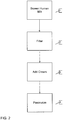
- Fig. 2 and Examples 3 and 4 below show some embodiments of the methods for obtaining standardized human milk formulations (e.g., PROLACT20TM and NEO20TM).
- donor milk is screened to ensure the identity of the donors and reduce the possibility of contamination.
- Donor milk is pooled and further screened (step 1 of Fig. 2 ), e.g., genetically screened (e.g., by PCR).
- the screening can identify, e.g., viruses, e.g., HIV-1, HBV, and/or HCV. Milk that tests positive is discarded.
- the composition undergoes filtering (step 2).
- the milk is filtered through about a 200 micron screen and then ultrafiltered. During ultrafiltration, water is filtered out of the milk (and is referred to as permeate) and the filters are postwashed using the permeate.
- Post wash solution is added to the milk to recover any lost protein and increase the concentration of the protein to, e.g., about 1.2% to about 1.5%.
- cream from another lot e.g., excess cream from a previous fortifier lot
- the composition generally contains: about 3.5% to 5.5% of fat; about 1.1% to 1.3% of protein; and about 8% to 10.5% of carbohydrates, e.g., lactose.
- composition can be frozen and thawed out for further processing later.
- a mineral analysis of the composition is carried out after step 3. Once the mineral content is known, a desired amount of minerals can be added to achieve target values.
- the composition is pasteurized.
- Pasteurization methods are known in the art.
- the product can be pasteurized in a tank that is jacketed.
- Hot glycol can be use to heat up the tank.
- the product temperature can be about 63°C or greater and the air temperature above the product about 66°C or greater.
- the product is pasteurized for a minimum of about 30 minutes.
- Other pasteurizing techniques are known in the art.
- the product After cooling to about 2 to 8°C, the product is filled into containers of desired volumes and various samples of the human milk formulation are taken for nutritional and bioburden analysis.
- the nutritional analysis ensures proper content of the composition.
- a label generated for each container reflects the nutritional analysis.
- the bioburden analysis tests for presence of contaminants, e.g., total aerobic count, B. cereus , E. coli , Coliform , Pseudomonas , Salmonella , Staphylococcus , yeast, and/or mold.
- the product is packaged and shipped once the analysis is complete and desired results are achieved.
- Human milk comprises about 100,000 different molecular entities - proteins, lipids, carbohydrates, vitamins, and trace minerals. Some specific components include the monomeric immunoglobulin A (IgA) and the dimeric secretory IgA (s[IgA] 2 ), lysozyme, and lactoferrin. Accordingly, the methods featured herein (which include pasteurization), while helping to ensure the safety of the milk product, should also preserve adequate quantities of those components, which are potentially heat labile. As described in Example 5 below and Table 3, pasteurization methods featured herein can preserve a large amount of IgA, lysozyme, and Vitamin B6 in the processed milk. As described in Example 5 below and Table 2, the featured methods are able to reduce any bioburden of human milk.
- IgA monomeric immunoglobulin A
- s[IgA] 2 dimeric secretory IgA
- lactoferrin lactoferrin
- compositions featured herein contain various amounts of nutrients, e.g., protein, carbohydrates, fat, vitamins, and minerals, as well as other milk components, such as IgA and lysozyme.
- Human milk fortifiers provide a concentrated amount of nutrients and calories that can be added to, e.g., mother's milk.
- Standardized human milk formulations can be supplemented with vitamins and/or minerals if desired and can be fed directly to an infant, e.g., a premature infant.
- the methods of generating these compositions are designed to optimize the amount of nutrients and calories in the compositions.
- compositions featured herein can deliver from about 3.3 to about 5.5 grams of protein/kg/day to an infant receiving a full feeding of 150 mL per day and/or 3.2 to 4.1 grams of protein/kg/day to infants receiving 120 Cal/kg/day.
- the human milk fortifiers featured herein contain concentrated amounts of nutrients.
- the fortifier can contain a human protein constituent of about 35-85 mg/mL; a human fat constituent of about 60-110 mg/mL; and a human carbohydrate constituent of about 60-140 mg/mL.
- Total caloric content of the fortifier can be, e.g., about 0.92 to about 1.89 Cal/mL.
- one embodiment can include the protein constituent of about 55-65 mg/mL; the fat constituent of about 85-95 mg/mL; and the carbohydrate constituent of about 70-120 mg/mL.
- the fortifier can be supplemented with minerals, if desired.
- the minerals can include: calcium concentration of about 4.0-5.5 mg/mL; chloride concentration of about 0.35-0.95 mg/mL; copper concentration of about 0.0005-0.0021 mg/mL; iron concentration of about 0.001-0.700 mg/mL; magnesium concentration of about 0.180-0.292 mg/mL; manganese concentration of about 0.010-0.092 micrograms/mL; phosphorus concentration of about 2.00-3.05 mg/mL; potassium concentration of about 1.90-2.18 mg/mL; sodium concentration of about 0.75-0.96 mg/mL; and zinc concentration of about 0.0200-0.0396 mg/mL.
- the minerals can include calcium concentration of about 2.00-2.9 mg/mL; chloride concentration of about 0.175-0.475 mg/mL; copper concentration of about 0.00025-0.001 mg/mL; iron concentration of about 0.0005-0.0025 mg/mL; magnesium concentration of about 0.090-0.170 mg/mL; manganese concentration of about 0.005-0.046 micrograms/mL; phosphorus concentration of about 1.00-1.50 mg/mL; potassium concentration of about 0.95-1.41 mg/mL; sodium concentration of about 0.375-0.608 mg/mL; and zinc concentration of about 0.010-0.0198 mg/mL.
- An exemplary fortifier can include the following components: human milk, calcium carbonate, potassium phosphate, calcium phosphate, calcium glycerophosphate, calcium gluconate, sodium citrate, magnesium chloride, calcium chloride, magnesium phosphate, zinc sulphate, cupric sulfate, and manganese sulfate.
- An exemplary fortifier can have the following characteristics per 100 mL: about 135 - 155 Cal; about 8.5 - 9.5 g of total fat; about 75 - 96 mg of sodium; about 190 - 218 mg of potassium; about 7.0 - 12.0 g of total carbohydrates; about 5.5 - 10.0 g of sugars; about 5.5 - 6.5 g of protein; about 1000 - 5000 IU of Vitamin A; less than about 1 mg of Vitamin C; about 400 - 550 mg of calcium; about 0.1 - 0.5 mg of iron; about 200 - 305 mg of phosphorus; about 18 - 29.2 mg of magnesium; about 35 - 95 mg of chloride; about 2.0 - 4.0 mg of zinc; about 0.05 - 0.21 mcg of copper; and less than about 9.2 mcg of manganese; with the osmolality of ⁇ 343 mOsm/Kg H 2 O (when mixed with raw human milk at the ratio of about 80% raw milk to 20% for
- the fortifiers featured herein can be mixed with mother's milk at various concentrations, depending on the nutritional content of the mother's milk and the needs of the infant.
- a mother's raw milk can be tested to determine the raw milk's nutritional value.
- Typical raw milk comprises, on average, 1.1g protein, 3.2g fat, 7.7 g carbohydrates (primarily lactose), and supplies about 64 kcal of energy per 100mL.
- the mother's milk can be adjusted by adding a fortifier composition discussed herein.
- the fortifiers can add from about 70-353 Cal/kg (2 to about 10 Cal/oz) and/or from 3.3 to 5.5 g/protein/kg/day when considering a full feeding of 150 mL/day and/or 3.2 to 4.1 grams of protein/kg/day to infants receiving 120 Cal/kg/day. If a lower dose of the fortifier and the nutrients is needed, the mixture can include about 20% of the fortifier and about 80% of raw human milk (adding about 140 Cal/kg (4 Cal/oz)) (e.g., the mixture with PROLACT+4TM).
- the mixture can include about 50% of raw human milk and about 50% of the fortifier (e.g., the mixture with PROLACT+10TM).
- the fortifier e.g., the mixture with PROLACT+10TM
- Other ratios of the mixtures are encompassed by this disclosure, including (but not limited to): about 30% fortifier with about 70% raw human milk (e.g., the mixture with PROLACT+6TM) and about 40% of fortifier with about 60% of raw human milk (e.g., the mixture with PROLACT+8TM).
- Example 2 below and Table 2 show some embodiments of the mixtures and their nutritional information.
- the standardized human milk formulations featured herein can be used in lieu of mother's own milk to feed the infants, e.g., premature infants. They include various nutritional components for infant growth and development.
- the standardized human milk formulation can include: a human protein constituent of about 11-20 mg/mL; a human fat constituent of about 35-55 mg/mL; and a human carbohydrate constituent of about 70-120 mg/mL.
- the formulation can contain: a human protein constituent of about 11-13 mg/mL; a human fat constituent of about 35-55 mg/mL; and a human carbohydrate constituent of about 80-105 mg/mL.
- the total caloric content of the formulations can be, e.g., from about 0.68 Cal/mL to about 0.96 Cal/mL.
- the milk formulation can be supplemented with vitamins and/or minerals.
- the composition can include: calcium concentration of about 0.40-1.50 mg/mL; chloride concentration of about 0.30-0.80 mg/mL; copper concentration of about 0.0005-0.0021 mg/mL; iron concentration of about 0.001-0.005 mg/mL; magnesium concentration of about 0.03-0.13 mg/mL; manganese concentration of about 0.01-0.092 mg/mL; phosphorus concentration of about 0.15-0.631 mg/mL (e.g., about 0.15-0.60 mg/mL); potassium concentration of about 0.60-1.20 mg/mL; sodium concentration of about 0.20-0.60 mg/mL; and zinc concentration of about 0.0025-0.0120 mg/mL.
- the human milk formulations can contain various caloric content, e.g., 67 Kcal/dL 700 Cal/kg (20 Calorie per ounce), and 81 Kcal/dL 840 Cal/kg (24 Calorie per ounce).
- An exemplary human milk formulation e.g., PROLACT24TM
- PROLACT24TM can include the following constituents: human milk, calcium glycerophosphate, potassium citrate, calcium gluconate, calcium carbonate, magnesium phosphate, sodium chloride, sodium citrate, zinc sulfate, cupric sulfate, and manganese sulfate.
- This exemplary composition can have the following characteristics per 100 ml: about 81 Cal; about 4.4 g of total fat; about 20.3 mg of sodium; about 60.3 mg of potassium; about 8 g total carbohydrates; about 5 - 9 g of sugars; about 2.3 g of protein; about 180 - 250 IU of Vitamin A; less than about 1.0 mg of Vitamin C; about 40.0 - 150.0 mg of calcium; about 100 - 150 mcg of iron; about 15 - 50 mg of phosphorus; about 3 - 10 mg of magnesium; about 25 - 75.0 mg of chloride; about 1.2 mcg of zinc; about 140 - 190 mcg of copper; less than about 60.2 mcg of manganese; and Osmolarity of about 322 mOsm/Kg H 2 O. Milk formulations with other constituents and constituents of different concentrations are encompassed by this disclosure.
- protein is needed for growth, synthesis of enzymes and hormones, and replacement of protein lost from the skin, urine and feces. These metabolic processes determine the need for both the total amount of protein in a feeding and the relative amounts of specific amino acids. The adequacy of the amount and type of protein in a feeding for infants is determined by measuring growth, nitrogen absorption and retention, plasma amino acids, certain blood analytes and metabolic responses.
- Some proteins present in the featured compositions beneficial for other than purely nutritional reasons include human IgA, lysozyme, and lactoferrin.
- Fat is generally a source of energy for LBW infants, not only because of its high caloric density but also because of its low osmotic activity in solution.
- the milk compositions of the invention can be supplemented with fat constituents.
- Such heterologous fat constituents include specific fatty acids such as docosahexaenoic acid (DHA) and arachidonic acid.
- Vitamins and minerals are important to proper nutrition and development of an infant.
- a premature infant or LBW infant requires electrolytes, e.g., sodium, potassium and chloride for growth and for acid-base balance. Sufficient intakes of these electrolytes are also needed for replacement of losses in the urine and stool and from the skin. Calcium, phosphorus and magnesium are needed for proper bone mineralization and growth.
- Trace minerals are associated with cell division, immune function and growth. Consequently, sufficient amounts of trace minerals are needed for infant growth and development.
- Some trace minerals that are important include, e.g., copper, magnesium and iron (which is important, e.g., for the synthesis of hemoglobin, myoglobin and iron-containing enzymes).
- Zinc is needed, e.g., for growth, for the activity of numerous enzymes, and for DNA, RNA and protein synthesis. Copper is necessary for, e.g., the activity of several important enzymes.
- Manganese is needed, e.g., for the development of bone and cartilage and is important in the synthesis of polysaccharides and glyoproteins. Accordingly, the human milk formulations and fortifier compositions of the invention can be supplemented with vitamins and minerals as described herein.
- Vitamin A is a fat-soluble vitamin essential for, e.g., growth, cell differentiation, vision and proper functioning of the immune system.
- Vitamin D is important, e.g., for absorption of calcium and to a lesser extent, phosphorus, and for the development of bone.
- Vitamin E tocopherol
- Folic acid plays a role in, e.g., amino acid and nucleotide metabolism. Serum folate concentrations have been shown to fall below normal after 2 weeks of age in LBW infants with low folic acid intakes. Additionally, several B vitamins are present at low concentrations in preterm milk.
- vitamins and minerals that can be added to the human milk compositions featured herein include: vitamin A, vitamin B1, vitamin B2, vitamin B6, vitamin B12, vitamin C, vitamin D, vitamin E, vitamin K, biotin, folic acid, pantothenic acid, niacin, m-inositol, calcium, phosphorus, magnesium, zinc, manganese, copper, sodium, potassium, chloride, iron and selenium.
- the compositions can also be supplemented with: chromium, molybdenum, iodine, taurine, carnitine and choline may also require supplementation.
- the osmolality of human milk fortifiers and standardized milk formulations featured herein can affect adsorption, absorption, and digestion of the compositions.
- High osmolality e.g.,. above about 400 mOsm/Kg H 2 O, has been associated with increased rates of necrotizing enterocolitis (NEC), a gastrointestinal disease that affects neonates (see, e.g., Srinivasan et al., Arch. Dis. Child Fetal Neonatal Ed. 89:514-17, 2004 ).
- the osmolality of the human milk composition and fortifier (once mixed with raw milk) of the disclosure is typically less than about 400 mOsm/Kg H 2 O.
- the osmolality is from about 310 mOsm/Kg of water to about 380 mOsm/Kg of water.
- the osmolality can be adjusted by methods known in the art.
- kits that include the human milk fortifiers described herein and containers for mixing the fortifiers with raw human milk.
- the containers can include bottles, e.g., graduated bottles to assist in proper dilution, syringes, cans, and other containers known in the art.
- Preparation of the fortifiers and standardized milk products in, e.g., NICUs is adjusted depending on the needs of the patients and the policies of various hospitals. Thus, the amount of milk prepared, e.g., with the fortifiers, will be determined on site. Examples 3, 4 and 5 are reference examples.
- PROLACTATM Bioscience Human Milk Fortifier HMF
- PROLACTPLUSTM The PROLACTATM Bioscience Human Milk Fortifier
- Example 2 Production and Compositions of Various Types of PROLACTATM Human Milk Products Based on Human Milk Fortifier
- HMFs human milk fortifiers
- raw human milk e.g., the milk from the mother of the premature infant
- HMF can be mixed at various ratios.
- PROLACT+4TM is a composition meant to be mixed at a ration of about 80% of raw milk with 20% of HMF.
- PROLACT+6TM is a composition meant to be mixed at a ratio of about 70% raw milk and 30% HMF.
- PROLACT+8TM is a composition meant to be mixed at a ratio of about 60% raw milk and 40% HMF.
- PROLACT+10TM is meant to be mixed at a ratio of about 50% of raw milk and 50% of HMF. The mixing was done by the customers, not at the PROLACTATM facilities.
- the table below shows an exemplary nutritional comparison of nutrients in raw milk, and the four PROLACTPLUSTM compositions mixed at various ratios with raw milk. Table 1.
- the PROLACTATM Bioscience NEO20TM is a standardized human milk formulation that was produced with the following steps. Processing was done in a class 100,000 clean room (ISO class 8), and filling was done in a class 10,000 clean room (ISO class 7):
- the PROLACTATM Bioscience PROLACT20TM is a standardized human milk product fortified with minerals. It was produced using the following steps in a class 100,000 clean room (ISO 8). Filling was done in a 10,000 clean room (ISO 7).
- compositions of the disclosure maintain desirable activities of important proteins and vitamins in the described compositions and eliminate bioburden (see, e.g., Terpstra et al., Breastfeeding Med. 2(1):27-33, 2007 ).
- HAV high-temperature short-time
- HBV hepatitis B virus
- HTST Test Organisms Pathogen Log 10 Reduction
- vat E. coli >32 Not done S. aureus 15 Not done S. agalactiae >26 Not done BVDVa >5.84 >6.1 HIV >7.27 >6.7 PSR >7.68 >6.8 HAV ⁇ 2 ⁇ 1.7
- Immunoglobulin A (IgA) and secretory IgA (s[IgA 2 ]) were quantitated in human milk samples using sandwich ELISA procedures. Following pasteurization using the HTST process featured herein, IgA concentration declined about 27% (e.g., a range of about 7% to about 47%), on average, and secretory IgA levels declined 17% (e.g., a range of about 7% to about 27%), on average, compared to the corresponding values in untreated human milk samples.
- Lysozyme activity was determined by a microtiter assay using a Micrococcus lysodeikticus suspension as a substrate.
- the lysozyme activity in human milk after pasteurization was about 22,000 IU/mL, 57% (e.g., a range of about 47% to about 67% or more) of the initial activity (39,000 IU/mL) in raw human milk.
- Lactoferrin concentration was determined by an ELISA technique.
- the lactoferrin content of human milk after pasteurization using the methods of the disclosure was about 0.033 g/100 mL, about 14% (e.g., a range of about 4-24%) of the initial concentration (0.24 g/100 mL) in raw human milk.
- Vitamin analyses were performed by validated HPLC procedures. Vitamin A, vitamin C, and ⁇ -, ⁇ -, and ⁇ -tocopherol levels remained unchanged following pasteurization. The vitamin B6 content of human milk slightly decreased to about 7.8 ⁇ g/100 mL, about 89% of the initial concentration of 8.8 ⁇ g/100 mL. These results are presented in Table 3. Table 3.
Landscapes
- Life Sciences & Earth Sciences (AREA)
- Chemical & Material Sciences (AREA)
- Health & Medical Sciences (AREA)
- Polymers & Plastics (AREA)
- Engineering & Computer Science (AREA)
- Food Science & Technology (AREA)
- Nutrition Science (AREA)
- Mycology (AREA)
- Pediatric Medicine (AREA)
- Proteomics, Peptides & Aminoacids (AREA)
- Inorganic Chemistry (AREA)
- Dairy Products (AREA)
- Measuring Or Testing Involving Enzymes Or Micro-Organisms (AREA)
- Medicines Containing Material From Animals Or Micro-Organisms (AREA)
- Coloring Foods And Improving Nutritive Qualities (AREA)
Claims (3)
- Pasteurisierte Humanmilchzusammensetzung, umfassend:einen Humanproteinbestandteil von 35-85 mg/ml;einen Humanfettbestandteil von 60-110 mg/ml; undeinen Humankohlenhydratbestandteil von 60-140 mg/ml;wobei die Zusammensetzung gegebenenfalls eine Zusammensetzung ist, in derder Humanproteinbestandteil 55-65 mg/ml beträgt;der Humanfettbestandteil 85-95 mg/ml beträgt; undder Humankohlenhydratbestandteil 70-120 mg/ml beträgt;wobei die Zusammensetzung gegebenenfalls eine oder mehrere Bestandteile umfasst, die aus der aus Calcium, Chlorid, Kupfer, Eisen, Magnesium, Mangan, Phosphor, Kalium, Natrium und Zink bestehenden Gruppe ausgewählt sind,
und wobei die Zusammensetzung gegebenenfalls menschliches IgA umfasst. - Zusammensetzung nach Anspruch 1, wobei:die Calciumkonzentration 4,0-5,5 mg/ml, vorzugsweise 2,00-2,90 mg/ml, beträgt; und/oderdie Chloridkonzentration 0,35-0,95 mg/ml, vorzugsweise 0,175-0,475 mg/ml, beträgt; und/oderdie Kupferkonzentration 0,0005-0,0021 mg/ml, vorzugsweise 0,00025-0,001 mg/ml, beträgt; und/oderdie Eisenkonzentration 0,001-0,007 mg/ml, vorzugsweise 0,0005-0,0025 mg/ml, beträgt; und/oderdie Magnesiumkonzentration 0,180-0,292 mg/ml, vorzugsweise 0,090-0,170 mg/ml, beträgt; und/oderdie Mangankonzentration 0,010-0,092 µg/ml, vorzugsweise 0,005-0,046 µg/ml, beträgt; und/oderdie Phosphorkonzentration 2,00-3,05 mg/ml, vorzugsweise 1,00-1,50 mg/ml, beträgt; und/oderdie Kaliumkonzentration 1,90-2,18 mg/ml, vorzugsweise 0,95-1,41 mg/ml; und/oder die Natriumkonzentration 0,75-0,96 mg/ml, vorzugsweise 0,375-0,608 mg/ml, beträgt; und/oderdie Zinkkonzentration 0,0200-0,0369 mg/ml, vorzugsweise 0,010-0,0198 mg/ml, beträgt.
- Zusammensetzung nach Anspruch 1, wobei der Kohlenhydratbestandteil Lactose umfasst.
Priority Applications (3)
| Application Number | Priority Date | Filing Date | Title |
|---|---|---|---|
| EP18214227.3A EP3485742B1 (de) | 2006-11-29 | 2007-11-29 | Muttermilchzusammensetzungen sowie verfahren zur herstellung und verwendung davon |
| ES18214227T ES2894973T3 (es) | 2006-11-29 | 2007-11-29 | Composiciones de leche materna y métodos de preparación y uso de las mismas |
| EP17166798.3A EP3248474A1 (de) | 2006-11-29 | 2007-11-29 | Muttermilchzusammensetzungen |
Applications Claiming Priority (3)
| Application Number | Priority Date | Filing Date | Title |
|---|---|---|---|
| US86774806P | 2006-11-29 | 2006-11-29 | |
| PCT/US2007/019234 WO2008027572A1 (en) | 2006-08-30 | 2007-08-30 | Methods of obtaining sterile milk and compositions thereof |
| PCT/US2007/085969 WO2008067486A2 (en) | 2006-11-29 | 2007-11-29 | Human milk compositions and methods of making and using same |
Related Child Applications (2)
| Application Number | Title | Priority Date | Filing Date |
|---|---|---|---|
| EP18214227.3A Division EP3485742B1 (de) | 2006-11-29 | 2007-11-29 | Muttermilchzusammensetzungen sowie verfahren zur herstellung und verwendung davon |
| EP17166798.3A Division EP3248474A1 (de) | 2006-11-29 | 2007-11-29 | Muttermilchzusammensetzungen |
Publications (3)
| Publication Number | Publication Date |
|---|---|
| EP2099321A2 EP2099321A2 (de) | 2009-09-16 |
| EP2099321A4 EP2099321A4 (de) | 2011-05-25 |
| EP2099321B1 true EP2099321B1 (de) | 2017-04-19 |
Family
ID=39464002
Family Applications (3)
| Application Number | Title | Priority Date | Filing Date |
|---|---|---|---|
| EP07864921.7A Active EP2099321B1 (de) | 2006-11-29 | 2007-11-29 | Muttermilchzusammensetzungen sowie verfahren zu ihrer herstellung und verwendung |
| EP17166798.3A Withdrawn EP3248474A1 (de) | 2006-11-29 | 2007-11-29 | Muttermilchzusammensetzungen |
| EP18214227.3A Active EP3485742B1 (de) | 2006-11-29 | 2007-11-29 | Muttermilchzusammensetzungen sowie verfahren zur herstellung und verwendung davon |
Family Applications After (2)
| Application Number | Title | Priority Date | Filing Date |
|---|---|---|---|
| EP17166798.3A Withdrawn EP3248474A1 (de) | 2006-11-29 | 2007-11-29 | Muttermilchzusammensetzungen |
| EP18214227.3A Active EP3485742B1 (de) | 2006-11-29 | 2007-11-29 | Muttermilchzusammensetzungen sowie verfahren zur herstellung und verwendung davon |
Country Status (9)
| Country | Link |
|---|---|
| US (5) | US8545920B2 (de) |
| EP (3) | EP2099321B1 (de) |
| JP (2) | JP5074514B2 (de) |
| CN (2) | CN105123950A (de) |
| CA (1) | CA2706722C (de) |
| DK (2) | DK3485742T3 (de) |
| ES (2) | ES2633922T3 (de) |
| HK (1) | HK1247531A1 (de) |
| WO (1) | WO2008067486A2 (de) |
Families Citing this family (34)
| Publication number | Priority date | Publication date | Assignee | Title |
|---|---|---|---|---|
| US20020182243A1 (en) * | 2001-05-14 | 2002-12-05 | Medo Elena Maria | Method of producing nutritional products from human milk tissue and compositions thereof |
| US20100268658A1 (en) * | 2001-05-14 | 2010-10-21 | Prolacta Bioscience | Method for collecting, testing and distributing milk |
| US20070203802A1 (en) * | 2005-09-23 | 2007-08-30 | Prolacta Bioscience, Inc. | Method for collecting, testing and distributing milk |
| US20070098863A1 (en) * | 2005-09-23 | 2007-05-03 | Prolacta Bioscience, Inc. | Method for collecting, testing and distributing milk |
| WO2007035870A2 (en) | 2005-09-20 | 2007-03-29 | Prolacta Bioscience, Inc. | A method for testing milk |
| EP2099321B1 (de) | 2006-11-29 | 2017-04-19 | Prolacta Bioscience, Inc. | Muttermilchzusammensetzungen sowie verfahren zu ihrer herstellung und verwendung |
| EP2101597B1 (de) | 2006-12-08 | 2012-10-17 | Prolacta Bioscience, Inc. | Zusammensetzungen menschlicher fette sowie verfahren zu ihrer herstellung und verwendung |
| JP2012510476A (ja) * | 2008-12-02 | 2012-05-10 | プロラクタ バイオサイエンス,インコーポレイテッド | ヒト乳透過組成物ならびにその製造および使用方法 |
| US20110305798A1 (en) * | 2008-12-17 | 2011-12-15 | Igelosa Nutrition Science AB | Nutritional supplement with specific amino acid profile |
| AU2010311316B2 (en) * | 2009-10-28 | 2015-03-12 | Valio Ltd | Whey protein product and a method for its preparation |
| PT2739157T (pt) * | 2011-08-03 | 2018-01-09 | Prolacta Bioscience Inc | Microfiltração de leite humano para reduzir a contaminação bacteriana |
| CA2902990C (en) | 2013-03-13 | 2021-11-16 | Prolacta Bioscience, Inc. | High fat human milk products |
| CA2902359A1 (en) * | 2013-03-13 | 2014-10-02 | Scott Eaker | Adulteration testing of human milk |
| CN105744846A (zh) * | 2013-11-29 | 2016-07-06 | 雀巢产品技术援助有限公司 | 具有相对较高脂质含量的液体乳强化剂组合物 |
| WO2016016796A1 (en) * | 2014-07-28 | 2016-02-04 | Nestec S.A. | Devices and kits for production of personalized, concentrated human milk compositions, and methods of making and using same |
| AU2015374053B2 (en) * | 2014-12-30 | 2020-04-09 | Prolacta Bioscience, Inc. | Methods of preventing and treating bronchopulmonary dysplasia using high fat human milk products |
| WO2016168698A1 (en) * | 2015-04-15 | 2016-10-20 | Prolacta Bioscience, Inc. | Human milk compositions and methods of making and using same |
| IL303044B2 (en) * | 2015-12-30 | 2025-05-01 | Prolacta Bioscience Inc | Human milk products used before and after active treatment |
| EP3522732B1 (de) * | 2016-10-04 | 2024-04-24 | LactaLogics, Inc. | Verfahren und systeme zur erzeugung eines sterilisierten muttermilchprodukts |
| WO2018067923A1 (en) * | 2016-10-06 | 2018-04-12 | Tallgrass Therapeutics, Llc | Compositions and methods for the prevention and treatment of colitis in infants |
| US20190343139A1 (en) * | 2016-12-27 | 2019-11-14 | IMB Inc. | Processing human milk for generating compositions of fortified human milk products |
| AU2020200778A1 (en) * | 2019-02-07 | 2020-08-27 | Aggarwal, Rakesh Kumar | A dry powdered human milk fortifier |
| EP3927171A4 (de) | 2019-02-22 | 2022-11-30 | Aquero Canada Ltd. | Angereicherte milchzusammensetzungen und deren verfahren zur herstellung |
| TW202126317A (zh) | 2019-09-24 | 2021-07-16 | 美商普拉塔生技公司 | 用於治療發炎和免疫疾病之組成物和方法 |
| WO2022148549A1 (en) | 2020-01-14 | 2022-07-14 | Babylat Gmbh | Apparatus and method for obtaining protein-enriched fractions from breast milk |
| WO2021146561A1 (en) * | 2020-01-17 | 2021-07-22 | Prolacta Bioscience, Inc. | Feeding protocol for optimal growth of preterm infants |
| CA3188645A1 (en) | 2020-08-14 | 2022-02-17 | Prolacta Bioscience, Inc. | Human milk oligosaccharide compositions for use with bacteriotherapies |
| CA3206972A1 (en) * | 2020-12-29 | 2022-07-07 | Whitewave Services, Inc. | Dairy creamer with a low carbohydrate content |
| EP4277634A1 (de) | 2021-01-12 | 2023-11-22 | Prolacta Bioscience, Inc. | Synbiotische behandlungsschemata |
| JP2024504983A (ja) | 2021-01-22 | 2024-02-02 | プロラクタ バイオサイエンス,インコーポレイテッド | ヒト乳局所製剤 |
| CA3213191A1 (en) | 2021-03-26 | 2022-09-29 | Melinda J. ELLIOTT | Methods of treatment for failure to thrive |
| LU502702B1 (en) * | 2022-08-24 | 2024-02-26 | Prolacta Bioscience Inc | Systems, Devices, and Methods for Management of Milk Allocation |
| WO2024006840A1 (en) * | 2022-06-29 | 2024-01-04 | Prolacta Bioscience, Inc. | Systems, devices, and methods for management of milk allocation |
| WO2024130119A2 (en) | 2022-12-16 | 2024-06-20 | Prolacta Bioscience, Inc. | Synbiotic compositions for short chain fatty acid production |
Family Cites Families (88)
| Publication number | Priority date | Publication date | Assignee | Title |
|---|---|---|---|---|
| US476282A (en) * | 1892-06-07 | Island | ||
| US2148100A (en) * | 1936-07-01 | 1939-02-21 | M & R Dietetic Lab Inc | Treatment of milk fluids |
| US2567898A (en) | 1945-03-19 | 1951-09-11 | Separator Ab | Method of standardizing cream |
| US3946113A (en) * | 1972-08-21 | 1976-03-23 | Economics Laboratory, Inc. | Continuous separating and standardizing of milk |
| SE380422B (sv) | 1974-03-07 | 1975-11-10 | Alfa Laval Ab | Foerfaringssaett foer separering av flytande mjoelkprodukter |
| DE3040171C2 (de) * | 1980-10-24 | 1986-05-22 | Max-Josef Dr.-Ing. Zürich Schönhuber | Datenregistriersystem zur Erfassung der Daten von bestimmten Gutmengen, insbesondere von Milchlieferungen |
| US4362697A (en) * | 1981-04-20 | 1982-12-07 | Miles Laboratories, Inc. | Homogeneous specific binding assay test device having copolymer enhancing substance |
| US4462932A (en) * | 1983-06-22 | 1984-07-31 | Purdue Research Foundation | Isolation of native casein by cryodestabilization |
| JPS6133895U (ja) | 1984-07-31 | 1986-03-01 | 東レ株式会社 | 加熱ロ−ラ装置 |
| SE451791B (sv) * | 1984-09-11 | 1987-11-02 | Alfa Laval Food & Dairy Eng | Sett och anleggning for framstellning av mjolk med lag bakteriehalt |
| US4772262A (en) * | 1985-04-16 | 1988-09-20 | Natural Technologies, Inc. | Portable electric breast pump |
| US4762822A (en) * | 1985-08-08 | 1988-08-09 | Ettinger Anna C | Reduction of gastrointestinal disease-producing organisms with sialic acid and gangliosides |
| US5310893A (en) * | 1986-03-31 | 1994-05-10 | Hoffmann-La Roche Inc. | Method for HLA DP typing |
| JPS6467141A (en) * | 1987-09-08 | 1989-03-13 | Kougakushiya Kk | Method for removing various germs and somatic cell from cow's milk and apparatus therefor |
| NZ228690A (en) * | 1988-04-13 | 1991-10-25 | Snow Brand Milk Products Co Ltd | Continuous production of cheese curds from ultrafiltrated milk |
| US6020015A (en) * | 1988-09-22 | 2000-02-01 | Gaull; Gerald E. | Infant formula compositions and nutrition containing genetically engineered human milk proteins |
| US5064674A (en) * | 1989-01-13 | 1991-11-12 | Immunopath Profile, Inc. | Hypoallergenic milk products and process of making |
| US5334822A (en) * | 1990-05-21 | 1994-08-02 | Universal Computer Technologies Inc. | Method and system for inventoring a distributed plurality of items on a supply |
| DE4018468A1 (de) * | 1990-06-08 | 1991-12-12 | Ultrakust Electronic Gmbh | Verfahren und vorrichtung zur entnahme einer repraesentativen milchprobe |
| US5972337A (en) * | 1990-11-01 | 1999-10-26 | Cancer Research Fund Of Contra Costa | 46 kilodalton human milk fat globule (HMFG) antigen, fragments and fusion protein |
| DK0636173T3 (da) * | 1991-05-31 | 1999-05-31 | Genentech Inc | Behandling af HIV associeret immunthrombocytopenisk purpura |
| US5169766A (en) * | 1991-06-14 | 1992-12-08 | Life Technologies, Inc. | Amplification of nucleic acid molecules |
| HRP930935A2 (en) * | 1992-06-11 | 1994-12-31 | Astra Ab | New dna sequences |
| US6056978A (en) * | 1992-06-16 | 2000-05-02 | Stolle Milk Biologics, Inc. | Use of hyperimmune milk to prevent suppression of T-lymphocyte production |
| US5256437A (en) * | 1992-06-19 | 1993-10-26 | Pall Corporation | Product and process of making sterile milk through dynamic microfiltration |
| CA2148261A1 (en) | 1992-10-30 | 1994-05-11 | Jerry A. Peterson | Anti-diarrheic product and method of treating rotavirus-associated infection |
| JP3150504B2 (ja) | 1993-02-26 | 2001-03-26 | 雪印乳業株式会社 | 低乳糖乳製品およびその製造方法 |
| DK169510B1 (da) * | 1993-05-13 | 1994-11-14 | Apv Pasilac As | Anlæg og fremgangsmåde til behandling af mælk |
| DE4326665C2 (de) * | 1993-08-09 | 1995-07-13 | Biotest Pharma Gmbh | Verfahren zur Sterilfiltration von Milch |
| US5417860A (en) * | 1993-08-30 | 1995-05-23 | Filtertek, Inc. | Bottle filter and pouring device |
| US5707678A (en) * | 1995-04-12 | 1998-01-13 | Galagen Inc. | Method for microfiltration of milk or colostral whey |
| US5670196A (en) * | 1995-04-12 | 1997-09-23 | Galagen Inc. | Method for microfiltration of milk or colostral whey |
| US5983198A (en) * | 1996-04-23 | 1999-11-09 | Novus International, Inc. | Integrated system monitoring use of materials, controlling and monitoring delivery of materials and providing automated billing of delivered materials |
| US5798266A (en) * | 1996-08-27 | 1998-08-25 | K-Quay Enterprises, Llc | Methods and kits for obtaining and assaying mammary fluid samples for breast diseases, including cancer |
| US6194009B1 (en) * | 1996-11-22 | 2001-02-27 | Princeton Nutrition, Llc | Refrigeration-shelf-stable ultra-pasteurized or pasteurized infant formula |
| SE519853E (sv) | 1997-06-19 | 2005-03-29 | Tetra Laval Holdings & Finance | Metod för framställning av steril skummjölk |
| US6652900B2 (en) * | 1997-03-14 | 2003-11-25 | Tetra Laval Holdings & Finance S.A. | Method and plant for producing a sterile milk product |
| US6017511A (en) * | 1997-05-30 | 2000-01-25 | Resolution Pharmaceuticals Inc. | Glycopeptide-chelator conjugates |
| GB9713597D0 (en) * | 1997-06-28 | 1997-09-03 | Sec Dep Of The Home Department | Improvements in and relating to forensic identification |
| US6846298B1 (en) * | 1997-07-25 | 2005-01-25 | Bristol-Myers Squibb Company | Blood product delivery system |
| US6004288A (en) * | 1998-11-24 | 1999-12-21 | Hochstedler; Judy R. | Breast pump |
| NL1010829C2 (nl) | 1998-12-16 | 2000-06-19 | Prolion Bv | Inrichting en werkwijze voor het melken van dieren en een vervuilingsmeter. |
| EP0951842B1 (de) * | 1999-01-20 | 2002-12-04 | N.V. Nutricia | Säuglingsnährpräparat |
| AU2971700A (en) | 1999-01-21 | 2000-08-07 | Wayne State University | Method and apparatus for measuring factors in mammary fluids |
| US20010049096A1 (en) * | 1999-03-23 | 2001-12-06 | Stephen J. Brown | Sample identification with analyte determination |
| US6294206B1 (en) * | 1999-04-09 | 2001-09-25 | Abbott Laboratories | Powdered human milk fortifier |
| DK174656B1 (da) * | 1999-06-04 | 2003-08-11 | Apv Pasilac As | Fremgangsmåde og anlæg til behandling af mælk |
| US6183803B1 (en) | 1999-06-11 | 2001-02-06 | Biosante Pharmaceuticals, Inc. | Method for processing milk |
| CA2392218A1 (en) * | 1999-11-17 | 2001-05-25 | Jiuping Ji | Simultaneous detection of hbv, hcv and hiv in plasma samples using a multiplex capture assay |
| US6780987B1 (en) * | 1999-12-10 | 2004-08-24 | Trustees Of The Tufts College | β-cap73 control of normal and abnormal cell migration |
| US20020155445A1 (en) * | 1999-12-16 | 2002-10-24 | Jarvik Jonathan W. | Methods and products for peptide based DNA sequence identification and analysis |
| US6670124B1 (en) * | 1999-12-20 | 2003-12-30 | Stemcyte, Inc. | High throughput methods of HLA typing |
| CA2370758A1 (en) * | 2000-03-01 | 2001-09-07 | Gambro, Inc. | Extracorporeal blood processing information management system |
| US6737096B2 (en) * | 2000-03-29 | 2004-05-18 | Tetra Laval Holdings & Finance S.A. | Method and apparatus for producing a sterile milk product |
| EP1341554A4 (de) * | 2000-11-15 | 2005-06-15 | Fonterra Co Operative Group | Zusammensetzung auf colostrumbasis |
| WO2002090572A2 (en) | 2001-05-09 | 2002-11-14 | Third Wave Technologies, Inc. | Nucleic acid detection in pooled samples |
| US20070098863A1 (en) | 2005-09-23 | 2007-05-03 | Prolacta Bioscience, Inc. | Method for collecting, testing and distributing milk |
| US20100268658A1 (en) * | 2001-05-14 | 2010-10-21 | Prolacta Bioscience | Method for collecting, testing and distributing milk |
| US20070203802A1 (en) * | 2005-09-23 | 2007-08-30 | Prolacta Bioscience, Inc. | Method for collecting, testing and distributing milk |
| US20020182243A1 (en) * | 2001-05-14 | 2002-12-05 | Medo Elena Maria | Method of producing nutritional products from human milk tissue and compositions thereof |
| US6866994B2 (en) * | 2001-05-30 | 2005-03-15 | Neomatrix, Llc | Noninvasive intraductal fluid diagnostic screen |
| US20030093171A1 (en) * | 2001-07-19 | 2003-05-15 | Creative Edge Design Group, Ltd. | Flexible label printing assembly |
| US6875459B2 (en) | 2001-09-10 | 2005-04-05 | Henry B. Kopf | Method and apparatus for separation of milk, colostrum, and whey |
| FI115752B (fi) | 2002-05-14 | 2005-07-15 | Valio Oy | Menetelmä käytettäväksi vähälaktoosisen tai laktoosittoman maitotuotteen valmistamiseksi |
| US6910594B2 (en) * | 2002-11-19 | 2005-06-28 | The First Years Inc. | Method and apparatus for storing milk |
| US7951410B2 (en) * | 2003-04-14 | 2011-05-31 | Mead Johnson Nutrition Company | Enteral compositions containing caseinoglycomacropeptide having an enhanced concentration of sialic acid |
| US7867541B2 (en) * | 2003-04-14 | 2011-01-11 | Mead Johnson Nutrition Company | Compositions and methods of formulation for enteral formulas containing sialic acid |
| PL1638416T3 (pl) * | 2003-06-23 | 2013-09-30 | Nestec Sa | Zastosowanie żywnościowego preparatu do optymalizowania działania bariery jelitowej |
| EP1643862A1 (de) | 2003-06-24 | 2006-04-12 | University of Kansas Medical Center | Fertignahrung für kleinkinder |
| NZ527434A (en) | 2003-08-07 | 2006-03-31 | Fonterra Co Operative Group | Production of protein composition from a dairy stream and its use as an ingredient in the manufacture of a cheese |
| WO2005035557A2 (en) * | 2003-10-14 | 2005-04-21 | The Provost, Fellows And Scholars Of The College Of The Holy And Undivided Trinity Of Queen Elizabeth, Near Dublin | Adenylate cyclase in the treatment and/or prophylaxis of immune-medicated disease |
| WO2005051088A2 (en) | 2003-11-12 | 2005-06-09 | Abbott Laboratories | Iron-containing human milk fortifier with improved antimicrobial properties |
| EP1723096A4 (de) | 2004-03-04 | 2008-03-05 | Htl High Tech Lipids Ltd | Strukturierte triglyceride und emulsionen, die diese enthalten |
| US20050214358A1 (en) * | 2004-03-23 | 2005-09-29 | Riken | Composition for promoting development of nervous system |
| JP2008512398A (ja) | 2004-09-10 | 2008-04-24 | メデラ ホールディング アーゲー | 人乳強化剤とその製法 |
| EP1637043A1 (de) * | 2004-09-17 | 2006-03-22 | Medela Holding AG | Anreicherungsmittel für Muttermilch sowie Verfahren zu dessen Herstellung |
| EP1787114A1 (de) * | 2004-09-10 | 2007-05-23 | Medela Holding AG | Verfahren und vorrichtung zur untersuchung und behandlung von menschlicher milch |
| US20060115558A1 (en) * | 2004-11-30 | 2006-06-01 | Jean-Claude Lamothe | Method of production and control of animal derived food products and derivatives thereof |
| CA2537452C (en) | 2005-03-09 | 2013-12-24 | Abbott Laboratories | Concentrated human milk fortifier liquid |
| US20060233915A1 (en) * | 2005-04-15 | 2006-10-19 | Bristol-Myers Squibb Company | Liquid nutritional product to supplement human milk |
| AU2006266546B2 (en) * | 2005-07-01 | 2012-01-12 | N.V. Nutricia | Infant nutrition with hydrolised proteins |
| WO2007035870A2 (en) | 2005-09-20 | 2007-03-29 | Prolacta Bioscience, Inc. | A method for testing milk |
| ES2634613T3 (es) | 2006-08-30 | 2017-09-28 | Prolacta Bioscience, Inc. | Métodos de obtención de leche estéril y composiciones de la misma |
| EP2099321B1 (de) | 2006-11-29 | 2017-04-19 | Prolacta Bioscience, Inc. | Muttermilchzusammensetzungen sowie verfahren zu ihrer herstellung und verwendung |
| EP2101597B1 (de) | 2006-12-08 | 2012-10-17 | Prolacta Bioscience, Inc. | Zusammensetzungen menschlicher fette sowie verfahren zu ihrer herstellung und verwendung |
| US20080254165A1 (en) * | 2007-04-12 | 2008-10-16 | Rashid Patel | Novel manufacturing process for milk acid |
| US20090181848A1 (en) * | 2007-07-06 | 2009-07-16 | Ep Minerals, Llc | Crystalline silica-free diatomaceous earth blended filter aids and methods of manufacturing the same |
| US20100069716A1 (en) | 2008-09-12 | 2010-03-18 | Yem Chin | Flexible guide conduit |
-
2007
- 2007-11-29 EP EP07864921.7A patent/EP2099321B1/de active Active
- 2007-11-29 ES ES07864921.7T patent/ES2633922T3/es active Active
- 2007-11-29 EP EP17166798.3A patent/EP3248474A1/de not_active Withdrawn
- 2007-11-29 JP JP2009539493A patent/JP5074514B2/ja active Active
- 2007-11-29 CN CN201510486569.8A patent/CN105123950A/zh active Pending
- 2007-11-29 ES ES18214227T patent/ES2894973T3/es active Active
- 2007-11-29 US US11/947,580 patent/US8545920B2/en active Active
- 2007-11-29 CA CA2706722A patent/CA2706722C/en active Active
- 2007-11-29 DK DK18214227.3T patent/DK3485742T3/da active
- 2007-11-29 EP EP18214227.3A patent/EP3485742B1/de active Active
- 2007-11-29 CN CN200780050590A patent/CN101626697A/zh active Pending
- 2007-11-29 WO PCT/US2007/085969 patent/WO2008067486A2/en not_active Ceased
- 2007-11-29 DK DK07864921.7T patent/DK2099321T3/en active
-
2012
- 2012-08-23 JP JP2012184405A patent/JP5726825B2/ja active Active
-
2013
- 2013-07-19 US US13/946,020 patent/US20140093634A1/en not_active Abandoned
-
2018
- 2018-05-28 HK HK18106975.6A patent/HK1247531A1/en unknown
- 2018-11-14 US US16/191,066 patent/US20190090501A1/en not_active Abandoned
- 2018-11-14 US US16/191,056 patent/US20190075808A1/en not_active Abandoned
-
2020
- 2020-06-29 US US16/915,656 patent/US20210161164A1/en not_active Abandoned
Non-Patent Citations (1)
| Title |
|---|
| None * |
Also Published As
| Publication number | Publication date |
|---|---|
| ES2894973T3 (es) | 2022-02-16 |
| DK3485742T3 (da) | 2021-11-15 |
| JP5726825B2 (ja) | 2015-06-03 |
| US20080124430A1 (en) | 2008-05-29 |
| JP5074514B2 (ja) | 2012-11-14 |
| CA2706722C (en) | 2016-01-12 |
| JP2012254091A (ja) | 2012-12-27 |
| EP2099321A4 (de) | 2011-05-25 |
| CA2706722A1 (en) | 2008-06-05 |
| US20140093634A1 (en) | 2014-04-03 |
| US20210161164A1 (en) | 2021-06-03 |
| EP3485742A1 (de) | 2019-05-22 |
| ES2633922T3 (es) | 2017-09-26 |
| DK2099321T3 (en) | 2017-07-17 |
| CN101626697A (zh) | 2010-01-13 |
| EP3485742B1 (de) | 2021-09-01 |
| US8545920B2 (en) | 2013-10-01 |
| WO2008067486A2 (en) | 2008-06-05 |
| EP2099321A2 (de) | 2009-09-16 |
| WO2008067486A3 (en) | 2008-07-24 |
| EP3248474A1 (de) | 2017-11-29 |
| CN105123950A (zh) | 2015-12-09 |
| HK1247531A1 (en) | 2018-09-28 |
| US20190090501A1 (en) | 2019-03-28 |
| US20190075808A1 (en) | 2019-03-14 |
| JP2010510811A (ja) | 2010-04-08 |
Similar Documents
| Publication | Publication Date | Title |
|---|---|---|
| EP2099321B1 (de) | Muttermilchzusammensetzungen sowie verfahren zu ihrer herstellung und verwendung | |
| US20250185679A1 (en) | Methods for obtaining sterile milk and compositions thereof | |
| CA2970533C (en) | Methods of preventing and treating bronchopulmonary dysplasia using high fat human milk products | |
| HK1137120B (en) | Human milk compositions and methods of making and using same | |
| HK1137120A (en) | Human milk compositions and methods of making and using same | |
| CN101605470A (zh) | 获得无菌乳及其组合物的方法 | |
| HK1139016A (zh) | 获得无菌乳及其组合物的方法 |
Legal Events
| Date | Code | Title | Description |
|---|---|---|---|
| PUAI | Public reference made under article 153(3) epc to a published international application that has entered the european phase |
Free format text: ORIGINAL CODE: 0009012 |
|
| 17P | Request for examination filed |
Effective date: 20090626 |
|
| AK | Designated contracting states |
Kind code of ref document: A2 Designated state(s): AT BE BG CH CY CZ DE DK EE ES FI FR GB GR HU IE IS IT LI LT LU LV MC MT NL PL PT RO SE SI SK TR |
|
| DAX | Request for extension of the european patent (deleted) | ||
| REG | Reference to a national code |
Ref country code: HK Ref legal event code: DE Ref document number: 1137120 Country of ref document: HK |
|
| A4 | Supplementary search report drawn up and despatched |
Effective date: 20110427 |
|
| 17Q | First examination report despatched |
Effective date: 20120229 |
|
| REG | Reference to a national code |
Ref country code: DE Ref legal event code: R079 Ref document number: 602007050714 Country of ref document: DE Free format text: PREVIOUS MAIN CLASS: A23L0001300000 Ipc: A23L0029000000 |
|
| GRAP | Despatch of communication of intention to grant a patent |
Free format text: ORIGINAL CODE: EPIDOSNIGR1 |
|
| STAA | Information on the status of an ep patent application or granted ep patent |
Free format text: STATUS: GRANT OF PATENT IS INTENDED |
|
| RIC1 | Information provided on ipc code assigned before grant |
Ipc: A23L 2/52 20060101ALI20161013BHEP Ipc: A23L 2/66 20060101ALI20161013BHEP Ipc: A23L 33/19 20160101ALI20161013BHEP Ipc: A23L 29/00 20160101AFI20161013BHEP Ipc: A23C 9/20 20060101ALI20161013BHEP Ipc: A23L 33/00 20160101ALI20161013BHEP Ipc: A23L 33/15 20160101ALI20161013BHEP Ipc: A23L 33/16 20160101ALI20161013BHEP |
|
| INTG | Intention to grant announced |
Effective date: 20161109 |
|
| GRAS | Grant fee paid |
Free format text: ORIGINAL CODE: EPIDOSNIGR3 |
|
| GRAA | (expected) grant |
Free format text: ORIGINAL CODE: 0009210 |
|
| STAA | Information on the status of an ep patent application or granted ep patent |
Free format text: STATUS: THE PATENT HAS BEEN GRANTED |
|
| AK | Designated contracting states |
Kind code of ref document: B1 Designated state(s): AT BE BG CH CY CZ DE DK EE ES FI FR GB GR HU IE IS IT LI LT LU LV MC MT NL PL PT RO SE SI SK TR |
|
| REG | Reference to a national code |
Ref country code: GB Ref legal event code: FG4D |
|
| REG | Reference to a national code |
Ref country code: CH Ref legal event code: EP |
|
| REG | Reference to a national code |
Ref country code: AT Ref legal event code: REF Ref document number: 885037 Country of ref document: AT Kind code of ref document: T Effective date: 20170515 |
|
| REG | Reference to a national code |
Ref country code: IE Ref legal event code: FG4D |
|
| REG | Reference to a national code |
Ref country code: DE Ref legal event code: R096 Ref document number: 602007050714 Country of ref document: DE |
|
| REG | Reference to a national code |
Ref country code: DK Ref legal event code: T3 Effective date: 20170707 |
|
| REG | Reference to a national code |
Ref country code: SE Ref legal event code: TRGR |
|
| REG | Reference to a national code |
Ref country code: PT Ref legal event code: SC4A Ref document number: 2099321 Country of ref document: PT Date of ref document: 20170721 Kind code of ref document: T Free format text: AVAILABILITY OF NATIONAL TRANSLATION Effective date: 20170717 |
|
| REG | Reference to a national code |
Ref country code: NL Ref legal event code: FP |
|
| REG | Reference to a national code |
Ref country code: LT Ref legal event code: MG4D |
|
| REG | Reference to a national code |
Ref country code: ES Ref legal event code: FG2A Ref document number: 2633922 Country of ref document: ES Kind code of ref document: T3 Effective date: 20170926 |
|
| PG25 | Lapsed in a contracting state [announced via postgrant information from national office to epo] |
Ref country code: GR Free format text: LAPSE BECAUSE OF FAILURE TO SUBMIT A TRANSLATION OF THE DESCRIPTION OR TO PAY THE FEE WITHIN THE PRESCRIBED TIME-LIMIT Effective date: 20170720 Ref country code: LT Free format text: LAPSE BECAUSE OF FAILURE TO SUBMIT A TRANSLATION OF THE DESCRIPTION OR TO PAY THE FEE WITHIN THE PRESCRIBED TIME-LIMIT Effective date: 20170419 |
|
| REG | Reference to a national code |
Ref country code: FR Ref legal event code: PLFP Year of fee payment: 11 |
|
| PG25 | Lapsed in a contracting state [announced via postgrant information from national office to epo] |
Ref country code: IS Free format text: LAPSE BECAUSE OF FAILURE TO SUBMIT A TRANSLATION OF THE DESCRIPTION OR TO PAY THE FEE WITHIN THE PRESCRIBED TIME-LIMIT Effective date: 20170819 Ref country code: BG Free format text: LAPSE BECAUSE OF FAILURE TO SUBMIT A TRANSLATION OF THE DESCRIPTION OR TO PAY THE FEE WITHIN THE PRESCRIBED TIME-LIMIT Effective date: 20170719 Ref country code: LV Free format text: LAPSE BECAUSE OF FAILURE TO SUBMIT A TRANSLATION OF THE DESCRIPTION OR TO PAY THE FEE WITHIN THE PRESCRIBED TIME-LIMIT Effective date: 20170419 Ref country code: PL Free format text: LAPSE BECAUSE OF FAILURE TO SUBMIT A TRANSLATION OF THE DESCRIPTION OR TO PAY THE FEE WITHIN THE PRESCRIBED TIME-LIMIT Effective date: 20170419 |
|
| REG | Reference to a national code |
Ref country code: DE Ref legal event code: R097 Ref document number: 602007050714 Country of ref document: DE |
|
| PG25 | Lapsed in a contracting state [announced via postgrant information from national office to epo] |
Ref country code: RO Free format text: LAPSE BECAUSE OF FAILURE TO SUBMIT A TRANSLATION OF THE DESCRIPTION OR TO PAY THE FEE WITHIN THE PRESCRIBED TIME-LIMIT Effective date: 20170419 Ref country code: SK Free format text: LAPSE BECAUSE OF FAILURE TO SUBMIT A TRANSLATION OF THE DESCRIPTION OR TO PAY THE FEE WITHIN THE PRESCRIBED TIME-LIMIT Effective date: 20170419 Ref country code: CZ Free format text: LAPSE BECAUSE OF FAILURE TO SUBMIT A TRANSLATION OF THE DESCRIPTION OR TO PAY THE FEE WITHIN THE PRESCRIBED TIME-LIMIT Effective date: 20170419 Ref country code: EE Free format text: LAPSE BECAUSE OF FAILURE TO SUBMIT A TRANSLATION OF THE DESCRIPTION OR TO PAY THE FEE WITHIN THE PRESCRIBED TIME-LIMIT Effective date: 20170419 |
|
| PLBE | No opposition filed within time limit |
Free format text: ORIGINAL CODE: 0009261 |
|
| STAA | Information on the status of an ep patent application or granted ep patent |
Free format text: STATUS: NO OPPOSITION FILED WITHIN TIME LIMIT |
|
| REG | Reference to a national code |
Ref country code: HK Ref legal event code: GR Ref document number: 1137120 Country of ref document: HK |
|
| 26N | No opposition filed |
Effective date: 20180122 |
|
| PG25 | Lapsed in a contracting state [announced via postgrant information from national office to epo] |
Ref country code: SI Free format text: LAPSE BECAUSE OF FAILURE TO SUBMIT A TRANSLATION OF THE DESCRIPTION OR TO PAY THE FEE WITHIN THE PRESCRIBED TIME-LIMIT Effective date: 20170419 |
|
| PG25 | Lapsed in a contracting state [announced via postgrant information from national office to epo] |
Ref country code: MC Free format text: LAPSE BECAUSE OF FAILURE TO SUBMIT A TRANSLATION OF THE DESCRIPTION OR TO PAY THE FEE WITHIN THE PRESCRIBED TIME-LIMIT Effective date: 20170419 |
|
| PG25 | Lapsed in a contracting state [announced via postgrant information from national office to epo] |
Ref country code: LU Free format text: LAPSE BECAUSE OF NON-PAYMENT OF DUE FEES Effective date: 20171129 |
|
| PG25 | Lapsed in a contracting state [announced via postgrant information from national office to epo] |
Ref country code: MT Free format text: LAPSE BECAUSE OF NON-PAYMENT OF DUE FEES Effective date: 20171129 |
|
| PG25 | Lapsed in a contracting state [announced via postgrant information from national office to epo] |
Ref country code: HU Free format text: LAPSE BECAUSE OF FAILURE TO SUBMIT A TRANSLATION OF THE DESCRIPTION OR TO PAY THE FEE WITHIN THE PRESCRIBED TIME-LIMIT; INVALID AB INITIO Effective date: 20071129 |
|
| PG25 | Lapsed in a contracting state [announced via postgrant information from national office to epo] |
Ref country code: CY Free format text: LAPSE BECAUSE OF NON-PAYMENT OF DUE FEES Effective date: 20170419 |
|
| PG25 | Lapsed in a contracting state [announced via postgrant information from national office to epo] |
Ref country code: TR Free format text: LAPSE BECAUSE OF FAILURE TO SUBMIT A TRANSLATION OF THE DESCRIPTION OR TO PAY THE FEE WITHIN THE PRESCRIBED TIME-LIMIT Effective date: 20170419 |
|
| REG | Reference to a national code |
Ref country code: AT Ref legal event code: UEP Ref document number: 885037 Country of ref document: AT Kind code of ref document: T Effective date: 20170419 |
|
| P01 | Opt-out of the competence of the unified patent court (upc) registered |
Effective date: 20230425 |
|
| PGFP | Annual fee paid to national office [announced via postgrant information from national office to epo] |
Ref country code: PT Payment date: 20241105 Year of fee payment: 18 |
|
| PGFP | Annual fee paid to national office [announced via postgrant information from national office to epo] |
Ref country code: NL Payment date: 20241126 Year of fee payment: 18 |
|
| PGFP | Annual fee paid to national office [announced via postgrant information from national office to epo] |
Ref country code: DE Payment date: 20241127 Year of fee payment: 18 |
|
| PGFP | Annual fee paid to national office [announced via postgrant information from national office to epo] |
Ref country code: DK Payment date: 20241126 Year of fee payment: 18 |
|
| PGFP | Annual fee paid to national office [announced via postgrant information from national office to epo] |
Ref country code: FI Payment date: 20241126 Year of fee payment: 18 Ref country code: BE Payment date: 20241127 Year of fee payment: 18 |
|
| PGFP | Annual fee paid to national office [announced via postgrant information from national office to epo] |
Ref country code: GB Payment date: 20241127 Year of fee payment: 18 |
|
| PGFP | Annual fee paid to national office [announced via postgrant information from national office to epo] |
Ref country code: FR Payment date: 20241128 Year of fee payment: 18 |
|
| PGFP | Annual fee paid to national office [announced via postgrant information from national office to epo] |
Ref country code: AT Payment date: 20241104 Year of fee payment: 18 |
|
| PGFP | Annual fee paid to national office [announced via postgrant information from national office to epo] |
Ref country code: IE Payment date: 20241127 Year of fee payment: 18 |
|
| PGFP | Annual fee paid to national office [announced via postgrant information from national office to epo] |
Ref country code: IT Payment date: 20241122 Year of fee payment: 18 Ref country code: ES Payment date: 20241202 Year of fee payment: 18 |
|
| PGFP | Annual fee paid to national office [announced via postgrant information from national office to epo] |
Ref country code: SE Payment date: 20241127 Year of fee payment: 18 |
|
| PGFP | Annual fee paid to national office [announced via postgrant information from national office to epo] |
Ref country code: CH Payment date: 20241201 Year of fee payment: 18 |