EP2099749B1 - C-h-bindungs-aminierung und olefin-aziridinierung mit beta-diketiminat-kupfer-katalysatoren - Google Patents
C-h-bindungs-aminierung und olefin-aziridinierung mit beta-diketiminat-kupfer-katalysatoren Download PDFInfo
- Publication number
- EP2099749B1 EP2099749B1 EP07868996.5A EP07868996A EP2099749B1 EP 2099749 B1 EP2099749 B1 EP 2099749B1 EP 07868996 A EP07868996 A EP 07868996A EP 2099749 B1 EP2099749 B1 EP 2099749B1
- Authority
- EP
- European Patent Office
- Prior art keywords
- reaction
- aryl
- certain embodiments
- occurrence
- alkyl
- Prior art date
- Legal status (The legal status is an assumption and is not a legal conclusion. Google has not performed a legal analysis and makes no representation as to the accuracy of the status listed.)
- Not-in-force
Links
- 238000005576 amination reaction Methods 0.000 title claims description 28
- 229910052802 copper Inorganic materials 0.000 title claims description 20
- 150000001336 alkenes Chemical class 0.000 title claims description 19
- JRZJOMJEPLMPRA-UHFFFAOYSA-N olefin Natural products CCCCCCCC=C JRZJOMJEPLMPRA-UHFFFAOYSA-N 0.000 title claims description 7
- 239000010949 copper Substances 0.000 title description 121
- 239000003054 catalyst Substances 0.000 title description 46
- RYGMFSIKBFXOCR-UHFFFAOYSA-N Copper Chemical compound [Cu] RYGMFSIKBFXOCR-UHFFFAOYSA-N 0.000 title description 16
- YXFVVABEGXRONW-UHFFFAOYSA-N Toluene Chemical compound CC1=CC=CC=C1 YXFVVABEGXRONW-UHFFFAOYSA-N 0.000 claims description 119
- 238000006243 chemical reaction Methods 0.000 claims description 75
- 238000000034 method Methods 0.000 claims description 60
- 150000001875 compounds Chemical class 0.000 claims description 38
- 125000000217 alkyl group Chemical group 0.000 claims description 36
- 230000003197 catalytic effect Effects 0.000 claims description 35
- 125000003118 aryl group Chemical group 0.000 claims description 30
- 229910052760 oxygen Inorganic materials 0.000 claims description 22
- 229910052739 hydrogen Inorganic materials 0.000 claims description 20
- 239000001301 oxygen Substances 0.000 claims description 19
- 125000003342 alkenyl group Chemical group 0.000 claims description 18
- QVGXLLKOCUKJST-UHFFFAOYSA-N atomic oxygen Chemical compound [O] QVGXLLKOCUKJST-UHFFFAOYSA-N 0.000 claims description 18
- 229910052736 halogen Inorganic materials 0.000 claims description 18
- 239000001257 hydrogen Substances 0.000 claims description 18
- 150000002367 halogens Chemical class 0.000 claims description 17
- 125000000304 alkynyl group Chemical group 0.000 claims description 16
- 125000003710 aryl alkyl group Chemical group 0.000 claims description 14
- 239000003153 chemical reaction reagent Substances 0.000 claims description 11
- 125000001072 heteroaryl group Chemical group 0.000 claims description 9
- 125000000999 tert-butyl group Chemical group [H]C([H])([H])C(*)(C([H])([H])[H])C([H])([H])[H] 0.000 claims description 9
- 230000009435 amidation Effects 0.000 claims description 8
- 238000007112 amidation reaction Methods 0.000 claims description 8
- 239000002879 Lewis base Substances 0.000 claims description 6
- 150000007527 lewis bases Chemical class 0.000 claims description 6
- 229910052794 bromium Inorganic materials 0.000 claims description 4
- 229910052801 chlorine Inorganic materials 0.000 claims description 4
- 229910052740 iodine Inorganic materials 0.000 claims description 3
- 150000002431 hydrogen Chemical class 0.000 claims 2
- 150000001491 aromatic compounds Chemical class 0.000 claims 1
- 239000000243 solution Substances 0.000 description 53
- RTZKZFJDLAIYFH-UHFFFAOYSA-N Diethyl ether Chemical compound CCOCC RTZKZFJDLAIYFH-UHFFFAOYSA-N 0.000 description 40
- UHOVQNZJYSORNB-UHFFFAOYSA-N Benzene Chemical compound C1=CC=CC=C1 UHOVQNZJYSORNB-UHFFFAOYSA-N 0.000 description 36
- 241000894007 species Species 0.000 description 34
- 238000003780 insertion Methods 0.000 description 32
- 230000037431 insertion Effects 0.000 description 32
- 150000001412 amines Chemical class 0.000 description 27
- 239000000047 product Substances 0.000 description 27
- 230000015572 biosynthetic process Effects 0.000 description 25
- 125000004435 hydrogen atom Chemical group [H]* 0.000 description 23
- 239000000758 substrate Substances 0.000 description 21
- PPBRXRYQALVLMV-UHFFFAOYSA-N Styrene Chemical compound C=CC1=CC=CC=C1 PPBRXRYQALVLMV-UHFFFAOYSA-N 0.000 description 20
- 239000000543 intermediate Substances 0.000 description 19
- 125000001424 substituent group Chemical group 0.000 description 19
- -1 sulfonylnitrene Chemical class 0.000 description 19
- 238000005160 1H NMR spectroscopy Methods 0.000 description 18
- UHOVQNZJYSORNB-MZWXYZOWSA-N benzene-d6 Chemical compound [2H]C1=C([2H])C([2H])=C([2H])C([2H])=C1[2H] UHOVQNZJYSORNB-MZWXYZOWSA-N 0.000 description 18
- 239000003446 ligand Substances 0.000 description 17
- OFBQJSOFQDEBGM-UHFFFAOYSA-N Pentane Chemical compound CCCCC OFBQJSOFQDEBGM-UHFFFAOYSA-N 0.000 description 16
- 230000009257 reactivity Effects 0.000 description 15
- 239000013078 crystal Substances 0.000 description 13
- VMQMZMRVKUZKQL-UHFFFAOYSA-N Cu+ Chemical class [Cu+] VMQMZMRVKUZKQL-UHFFFAOYSA-N 0.000 description 11
- WYURNTSHIVDZCO-UHFFFAOYSA-N Tetrahydrofuran Chemical compound C1CCOC1 WYURNTSHIVDZCO-UHFFFAOYSA-N 0.000 description 11
- UFWIBTONFRDIAS-UHFFFAOYSA-N Naphthalene Chemical compound C1=CC=CC2=CC=CC=C21 UFWIBTONFRDIAS-UHFFFAOYSA-N 0.000 description 10
- 125000004432 carbon atom Chemical group C* 0.000 description 10
- 239000012634 fragment Substances 0.000 description 10
- 238000002290 gas chromatography-mass spectrometry Methods 0.000 description 10
- 125000000623 heterocyclic group Chemical group 0.000 description 10
- 239000000376 reactant Substances 0.000 description 10
- 150000003624 transition metals Chemical class 0.000 description 10
- IJGRMHOSHXDMSA-UHFFFAOYSA-N Atomic nitrogen Chemical compound N#N IJGRMHOSHXDMSA-UHFFFAOYSA-N 0.000 description 9
- VYPSYNLAJGMNEJ-UHFFFAOYSA-N Silicium dioxide Chemical compound O=[Si]=O VYPSYNLAJGMNEJ-UHFFFAOYSA-N 0.000 description 9
- 150000001540 azides Chemical class 0.000 description 9
- 150000002466 imines Chemical class 0.000 description 9
- 229910052757 nitrogen Inorganic materials 0.000 description 9
- 229910052723 transition metal Inorganic materials 0.000 description 9
- JOMZSYXWYOVFEE-UHFFFAOYSA-N 1-azidoadamantane Chemical compound C1C(C2)CC3CC2CC1(N=[N+]=[N-])C3 JOMZSYXWYOVFEE-UHFFFAOYSA-N 0.000 description 8
- NOWKCMXCCJGMRR-UHFFFAOYSA-N Aziridine Chemical compound C1CN1 NOWKCMXCCJGMRR-UHFFFAOYSA-N 0.000 description 8
- 229910020676 Co—N Inorganic materials 0.000 description 8
- 239000000203 mixture Substances 0.000 description 8
- 238000003786 synthesis reaction Methods 0.000 description 8
- XDTMQSROBMDMFD-UHFFFAOYSA-N Cyclohexane Chemical compound C1CCCCC1 XDTMQSROBMDMFD-UHFFFAOYSA-N 0.000 description 7
- YLQBMQCUIZJEEH-UHFFFAOYSA-N Furan Chemical compound C=1C=COC=1 YLQBMQCUIZJEEH-UHFFFAOYSA-N 0.000 description 7
- 125000004429 atom Chemical group 0.000 description 7
- 125000005842 heteroatom Chemical group 0.000 description 7
- 125000004433 nitrogen atom Chemical group N* 0.000 description 7
- 239000000126 substance Substances 0.000 description 7
- 229910052717 sulfur Inorganic materials 0.000 description 7
- 239000011593 sulfur Substances 0.000 description 7
- 239000003039 volatile agent Substances 0.000 description 7
- NINIDFKCEFEMDL-UHFFFAOYSA-N Sulfur Chemical compound [S] NINIDFKCEFEMDL-UHFFFAOYSA-N 0.000 description 6
- 238000002441 X-ray diffraction Methods 0.000 description 6
- ZBIKORITPGTTGI-UHFFFAOYSA-N [acetyloxy(phenyl)-$l^{3}-iodanyl] acetate Chemical compound CC(=O)OI(OC(C)=O)C1=CC=CC=C1 ZBIKORITPGTTGI-UHFFFAOYSA-N 0.000 description 6
- 150000001408 amides Chemical class 0.000 description 6
- 125000000753 cycloalkyl group Chemical group 0.000 description 6
- RAXXELZNTBOGNW-UHFFFAOYSA-N imidazole Natural products C1=CNC=N1 RAXXELZNTBOGNW-UHFFFAOYSA-N 0.000 description 6
- 230000005291 magnetic effect Effects 0.000 description 6
- 229910052751 metal Inorganic materials 0.000 description 6
- 239000002184 metal Substances 0.000 description 6
- 125000000472 sulfonyl group Chemical group *S(*)(=O)=O 0.000 description 6
- 230000009466 transformation Effects 0.000 description 6
- 125000003545 alkoxy group Chemical group 0.000 description 5
- 150000004945 aromatic hydrocarbons Chemical class 0.000 description 5
- 238000010494 dissociation reaction Methods 0.000 description 5
- 230000005593 dissociations Effects 0.000 description 5
- 238000002474 experimental method Methods 0.000 description 5
- 229930195733 hydrocarbon Natural products 0.000 description 5
- 150000002430 hydrocarbons Chemical class 0.000 description 5
- 150000003949 imides Chemical class 0.000 description 5
- 238000002955 isolation Methods 0.000 description 5
- 125000000449 nitro group Chemical group [O-][N+](*)=O 0.000 description 5
- 150000002894 organic compounds Chemical class 0.000 description 5
- 239000007800 oxidant agent Substances 0.000 description 5
- 239000002243 precursor Substances 0.000 description 5
- 238000002360 preparation method Methods 0.000 description 5
- 230000000717 retained effect Effects 0.000 description 5
- 238000003756 stirring Methods 0.000 description 5
- JYYNAJVZFGKDEQ-UHFFFAOYSA-N 2,4-Dimethylpyridine Chemical compound CC1=CC=NC(C)=C1 JYYNAJVZFGKDEQ-UHFFFAOYSA-N 0.000 description 4
- 0 C[C@@](*)C(N(C(*)C(C1)*=C)NN1c1c(*)c(*)c(*)c(*)c1)=CC(*=I)=C(*)C1(*)CC1 Chemical compound C[C@@](*)C(N(C(*)C(C1)*=C)NN1c1c(*)c(*)c(*)c(*)c1)=CC(*=I)=C(*)C1(*)CC1 0.000 description 4
- 238000003775 Density Functional Theory Methods 0.000 description 4
- YMWUJEATGCHHMB-UHFFFAOYSA-N Dichloromethane Chemical compound ClCCl YMWUJEATGCHHMB-UHFFFAOYSA-N 0.000 description 4
- 125000001931 aliphatic group Chemical group 0.000 description 4
- 229910052799 carbon Inorganic materials 0.000 description 4
- 125000002915 carbonyl group Chemical group [*:2]C([*:1])=O 0.000 description 4
- 150000003857 carboxamides Chemical class 0.000 description 4
- 239000007795 chemical reaction product Substances 0.000 description 4
- 229910017052 cobalt Inorganic materials 0.000 description 4
- 239000010941 cobalt Substances 0.000 description 4
- GUTLYIVDDKVIGB-UHFFFAOYSA-N cobalt atom Chemical compound [Co] GUTLYIVDDKVIGB-UHFFFAOYSA-N 0.000 description 4
- 238000005888 cyclopropanation reaction Methods 0.000 description 4
- 230000005292 diamagnetic effect Effects 0.000 description 4
- RAABOESOVLLHRU-UHFFFAOYSA-N diazene Chemical compound N=N RAABOESOVLLHRU-UHFFFAOYSA-N 0.000 description 4
- 229910000071 diazene Inorganic materials 0.000 description 4
- 239000000706 filtrate Substances 0.000 description 4
- 239000007789 gas Substances 0.000 description 4
- HZVOZRGWRWCICA-UHFFFAOYSA-N methanediyl Chemical compound [CH2] HZVOZRGWRWCICA-UHFFFAOYSA-N 0.000 description 4
- 125000002524 organometallic group Chemical group 0.000 description 4
- 230000003647 oxidation Effects 0.000 description 4
- 238000007254 oxidation reaction Methods 0.000 description 4
- 239000000843 powder Substances 0.000 description 4
- 125000002924 primary amino group Chemical group [H]N([H])* 0.000 description 4
- 238000000425 proton nuclear magnetic resonance spectrum Methods 0.000 description 4
- 239000007787 solid Substances 0.000 description 4
- 239000002904 solvent Substances 0.000 description 4
- 230000000707 stereoselective effect Effects 0.000 description 4
- PKXHXOTZMFCXSH-UHFFFAOYSA-N 3,3-dimethylbut-1-ene Chemical compound CC(C)(C)C=C PKXHXOTZMFCXSH-UHFFFAOYSA-N 0.000 description 3
- HBAQYPYDRFILMT-UHFFFAOYSA-N 8-[3-(1-cyclopropylpyrazol-4-yl)-1H-pyrazolo[4,3-d]pyrimidin-5-yl]-3-methyl-3,8-diazabicyclo[3.2.1]octan-2-one Chemical class C1(CC1)N1N=CC(=C1)C1=NNC2=C1N=C(N=C2)N1C2C(N(CC1CC2)C)=O HBAQYPYDRFILMT-UHFFFAOYSA-N 0.000 description 3
- QTBSBXVTEAMEQO-UHFFFAOYSA-N Acetic acid Chemical compound CC(O)=O QTBSBXVTEAMEQO-UHFFFAOYSA-N 0.000 description 3
- VGGSQFUCUMXWEO-UHFFFAOYSA-N Ethene Chemical compound C=C VGGSQFUCUMXWEO-UHFFFAOYSA-N 0.000 description 3
- 239000005977 Ethylene Substances 0.000 description 3
- RWRDLPDLKQPQOW-UHFFFAOYSA-N Pyrrolidine Chemical compound C1CCNC1 RWRDLPDLKQPQOW-UHFFFAOYSA-N 0.000 description 3
- 150000001299 aldehydes Chemical group 0.000 description 3
- 125000004414 alkyl thio group Chemical group 0.000 description 3
- 238000004458 analytical method Methods 0.000 description 3
- 125000001743 benzylic group Chemical group 0.000 description 3
- 230000005587 bubbling Effects 0.000 description 3
- 238000004364 calculation method Methods 0.000 description 3
- 125000003178 carboxy group Chemical group [H]OC(*)=O 0.000 description 3
- XLJKHNWPARRRJB-UHFFFAOYSA-N cobalt(2+) Chemical compound [Co+2] XLJKHNWPARRRJB-UHFFFAOYSA-N 0.000 description 3
- 230000009849 deactivation Effects 0.000 description 3
- 238000006471 dimerization reaction Methods 0.000 description 3
- 229910001882 dioxygen Inorganic materials 0.000 description 3
- 230000000694 effects Effects 0.000 description 3
- 150000002148 esters Chemical class 0.000 description 3
- 230000006870 function Effects 0.000 description 3
- 125000002887 hydroxy group Chemical group [H]O* 0.000 description 3
- 238000003402 intramolecular cyclocondensation reaction Methods 0.000 description 3
- 150000002576 ketones Chemical group 0.000 description 3
- 150000003951 lactams Chemical class 0.000 description 3
- 230000014759 maintenance of location Effects 0.000 description 3
- 239000002808 molecular sieve Substances 0.000 description 3
- VLKZOEOYAKHREP-UHFFFAOYSA-N n-Hexane Chemical compound CCCCCC VLKZOEOYAKHREP-UHFFFAOYSA-N 0.000 description 3
- 230000001590 oxidative effect Effects 0.000 description 3
- 125000004430 oxygen atom Chemical group O* 0.000 description 3
- 230000010287 polarization Effects 0.000 description 3
- 230000008707 rearrangement Effects 0.000 description 3
- 238000001953 recrystallisation Methods 0.000 description 3
- 150000003335 secondary amines Chemical class 0.000 description 3
- URGAHOPLAPQHLN-UHFFFAOYSA-N sodium aluminosilicate Chemical compound [Na+].[Al+3].[O-][Si]([O-])=O.[O-][Si]([O-])=O URGAHOPLAPQHLN-UHFFFAOYSA-N 0.000 description 3
- 238000001228 spectrum Methods 0.000 description 3
- YXFVVABEGXRONW-JGUCLWPXSA-N toluene-d8 Chemical compound [2H]C1=C([2H])C([2H])=C(C([2H])([2H])[2H])C([2H])=C1[2H] YXFVVABEGXRONW-JGUCLWPXSA-N 0.000 description 3
- 238000012546 transfer Methods 0.000 description 3
- 230000007704 transition Effects 0.000 description 3
- XLYOFNOQVPJJNP-UHFFFAOYSA-N water Substances O XLYOFNOQVPJJNP-UHFFFAOYSA-N 0.000 description 3
- PAYRUJLWNCNPSJ-UHFFFAOYSA-N Aniline Chemical compound NC1=CC=CC=C1 PAYRUJLWNCNPSJ-UHFFFAOYSA-N 0.000 description 2
- 239000004215 Carbon black (E152) Substances 0.000 description 2
- 229910020647 Co-O Inorganic materials 0.000 description 2
- 229910002514 Co–Co Inorganic materials 0.000 description 2
- 229910020704 Co—O Inorganic materials 0.000 description 2
- MYMOFIZGZYHOMD-UHFFFAOYSA-N Dioxygen Chemical compound O=O MYMOFIZGZYHOMD-UHFFFAOYSA-N 0.000 description 2
- LFQSCWFLJHTTHZ-UHFFFAOYSA-N Ethanol Chemical compound CCO LFQSCWFLJHTTHZ-UHFFFAOYSA-N 0.000 description 2
- YNQLUTRBYVCPMQ-UHFFFAOYSA-N Ethylbenzene Chemical compound CCC1=CC=CC=C1 YNQLUTRBYVCPMQ-UHFFFAOYSA-N 0.000 description 2
- BDAGIHXWWSANSR-UHFFFAOYSA-M Formate Chemical compound [O-]C=O BDAGIHXWWSANSR-UHFFFAOYSA-M 0.000 description 2
- OAKJQQAXSVQMHS-UHFFFAOYSA-N Hydrazine Chemical compound NN OAKJQQAXSVQMHS-UHFFFAOYSA-N 0.000 description 2
- YNAVUWVOSKDBBP-UHFFFAOYSA-N Morpholine Chemical compound C1COCCN1 YNAVUWVOSKDBBP-UHFFFAOYSA-N 0.000 description 2
- 238000005481 NMR spectroscopy Methods 0.000 description 2
- CTQNGGLPUBDAKN-UHFFFAOYSA-N O-Xylene Chemical compound CC1=CC=CC=C1C CTQNGGLPUBDAKN-UHFFFAOYSA-N 0.000 description 2
- ZCQWOFVYLHDMMC-UHFFFAOYSA-N Oxazole Chemical compound C1=COC=N1 ZCQWOFVYLHDMMC-UHFFFAOYSA-N 0.000 description 2
- ABLZXFCXXLZCGV-UHFFFAOYSA-N Phosphorous acid Chemical class OP(O)=O ABLZXFCXXLZCGV-UHFFFAOYSA-N 0.000 description 2
- GLUUGHFHXGJENI-UHFFFAOYSA-N Piperazine Chemical compound C1CNCCN1 GLUUGHFHXGJENI-UHFFFAOYSA-N 0.000 description 2
- NQRYJNQNLNOLGT-UHFFFAOYSA-N Piperidine Chemical compound C1CCNCC1 NQRYJNQNLNOLGT-UHFFFAOYSA-N 0.000 description 2
- KYQCOXFCLRTKLS-UHFFFAOYSA-N Pyrazine Chemical compound C1=CN=CC=N1 KYQCOXFCLRTKLS-UHFFFAOYSA-N 0.000 description 2
- JUJWROOIHBZHMG-UHFFFAOYSA-N Pyridine Chemical compound C1=CC=NC=C1 JUJWROOIHBZHMG-UHFFFAOYSA-N 0.000 description 2
- KAESVJOAVNADME-UHFFFAOYSA-N Pyrrole Chemical compound C=1C=CNC=1 KAESVJOAVNADME-UHFFFAOYSA-N 0.000 description 2
- BUGBHKTXTAQXES-UHFFFAOYSA-N Selenium Chemical compound [Se] BUGBHKTXTAQXES-UHFFFAOYSA-N 0.000 description 2
- QAOWNCQODCNURD-UHFFFAOYSA-L Sulfate Chemical compound [O-]S([O-])(=O)=O QAOWNCQODCNURD-UHFFFAOYSA-L 0.000 description 2
- YTPLMLYBLZKORZ-UHFFFAOYSA-N Thiophene Chemical compound C=1C=CSC=1 YTPLMLYBLZKORZ-UHFFFAOYSA-N 0.000 description 2
- 239000007983 Tris buffer Substances 0.000 description 2
- 125000005073 adamantyl group Chemical group C12(CC3CC(CC(C1)C3)C2)* 0.000 description 2
- 150000001448 anilines Chemical class 0.000 description 2
- MWPLVEDNUUSJAV-UHFFFAOYSA-N anthracene Chemical compound C1=CC=CC2=CC3=CC=CC=C3C=C21 MWPLVEDNUUSJAV-UHFFFAOYSA-N 0.000 description 2
- 150000001541 aziridines Chemical class 0.000 description 2
- 238000005284 basis set Methods 0.000 description 2
- 230000008901 benefit Effects 0.000 description 2
- WGQKYBSKWIADBV-UHFFFAOYSA-N benzylamine Chemical group NCC1=CC=CC=C1 WGQKYBSKWIADBV-UHFFFAOYSA-N 0.000 description 2
- 125000000649 benzylidene group Chemical group [H]C(=[*])C1=C([H])C([H])=C([H])C([H])=C1[H] 0.000 description 2
- 150000001642 boronic acid derivatives Chemical class 0.000 description 2
- 239000006227 byproduct Substances 0.000 description 2
- VQXINLNPICQTLR-UHFFFAOYSA-N carbonyl diazide Chemical class [N-]=[N+]=NC(=O)N=[N+]=[N-] VQXINLNPICQTLR-UHFFFAOYSA-N 0.000 description 2
- 238000006555 catalytic reaction Methods 0.000 description 2
- 125000001309 chloro group Chemical group Cl* 0.000 description 2
- WILFNLHOTDCRAO-UHFFFAOYSA-N copper(1+);2-methylpropan-2-olate Chemical compound [Cu+].CC(C)(C)[O-] WILFNLHOTDCRAO-UHFFFAOYSA-N 0.000 description 2
- 239000002178 crystalline material Substances 0.000 description 2
- HGCIXCUEYOPUTN-UHFFFAOYSA-N cyclohexene Chemical compound C1CCC=CC1 HGCIXCUEYOPUTN-UHFFFAOYSA-N 0.000 description 2
- 238000011161 development Methods 0.000 description 2
- 238000000921 elemental analysis Methods 0.000 description 2
- 125000001033 ether group Chemical group 0.000 description 2
- 150000002170 ethers Chemical class 0.000 description 2
- 230000002349 favourable effect Effects 0.000 description 2
- 238000010438 heat treatment Methods 0.000 description 2
- 238000006713 insertion reaction Methods 0.000 description 2
- 239000012948 isocyanate Substances 0.000 description 2
- 150000002513 isocyanates Chemical class 0.000 description 2
- 238000004599 local-density approximation Methods 0.000 description 2
- 239000011777 magnesium Substances 0.000 description 2
- QSHDDOUJBYECFT-UHFFFAOYSA-N mercury Chemical compound [Hg] QSHDDOUJBYECFT-UHFFFAOYSA-N 0.000 description 2
- 229910052753 mercury Inorganic materials 0.000 description 2
- 125000000956 methoxy group Chemical group [H]C([H])([H])O* 0.000 description 2
- NLRKCXQQSUWLCH-UHFFFAOYSA-N nitrosobenzene Chemical compound O=NC1=CC=CC=C1 NLRKCXQQSUWLCH-UHFFFAOYSA-N 0.000 description 2
- 239000012038 nucleophile Substances 0.000 description 2
- 230000003287 optical effect Effects 0.000 description 2
- 125000001181 organosilyl group Chemical group [SiH3]* 0.000 description 2
- 230000037361 pathway Effects 0.000 description 2
- 150000003003 phosphines Chemical class 0.000 description 2
- 150000003141 primary amines Chemical class 0.000 description 2
- 230000008569 process Effects 0.000 description 2
- 125000006239 protecting group Chemical group 0.000 description 2
- BBEAQIROQSPTKN-UHFFFAOYSA-N pyrene Chemical compound C1=CC=C2C=CC3=CC=CC4=CC=C1C2=C43 BBEAQIROQSPTKN-UHFFFAOYSA-N 0.000 description 2
- 230000005855 radiation Effects 0.000 description 2
- 150000003254 radicals Chemical class 0.000 description 2
- 230000009467 reduction Effects 0.000 description 2
- 229910052711 selenium Inorganic materials 0.000 description 2
- 239000011669 selenium Substances 0.000 description 2
- 150000003346 selenoethers Chemical class 0.000 description 2
- 238000000926 separation method Methods 0.000 description 2
- 238000004772 slater type orbital Methods 0.000 description 2
- 238000006467 substitution reaction Methods 0.000 description 2
- 239000000725 suspension Substances 0.000 description 2
- 150000003568 thioethers Chemical class 0.000 description 2
- 150000003573 thiols Chemical class 0.000 description 2
- YWWDBCBWQNCYNR-UHFFFAOYSA-N trimethylphosphine Chemical compound CP(C)C YWWDBCBWQNCYNR-UHFFFAOYSA-N 0.000 description 2
- SEDZOYHHAIAQIW-UHFFFAOYSA-N trimethylsilyl azide Chemical compound C[Si](C)(C)N=[N+]=[N-] SEDZOYHHAIAQIW-UHFFFAOYSA-N 0.000 description 2
- 230000007306 turnover Effects 0.000 description 2
- GCSBYWTVHSKTNC-UHFFFAOYSA-N 1,3-oxazolidin-5-one Chemical class O=C1CNCO1 GCSBYWTVHSKTNC-UHFFFAOYSA-N 0.000 description 1
- RYHBNJHYFVUHQT-UHFFFAOYSA-N 1,4-Dioxane Chemical compound C1COCCO1 RYHBNJHYFVUHQT-UHFFFAOYSA-N 0.000 description 1
- VBNWSEVVMYMVLC-UHFFFAOYSA-N 1-(4-methylphenyl)sulfonylaziridine Chemical class C1=CC(C)=CC=C1S(=O)(=O)N1CC1 VBNWSEVVMYMVLC-UHFFFAOYSA-N 0.000 description 1
- WKBALTUBRZPIPZ-UHFFFAOYSA-N 2,6-di(propan-2-yl)aniline Chemical compound CC(C)C1=CC=CC(C(C)C)=C1N WKBALTUBRZPIPZ-UHFFFAOYSA-N 0.000 description 1
- IZXIZTKNFFYFOF-UHFFFAOYSA-N 2-Oxazolidone Chemical compound O=C1NCCO1 IZXIZTKNFFYFOF-UHFFFAOYSA-N 0.000 description 1
- XVMSFILGAMDHEY-UHFFFAOYSA-N 6-(4-aminophenyl)sulfonylpyridin-3-amine Chemical compound C1=CC(N)=CC=C1S(=O)(=O)C1=CC=C(N)C=N1 XVMSFILGAMDHEY-UHFFFAOYSA-N 0.000 description 1
- WEVYAHXRMPXWCK-UHFFFAOYSA-N Acetonitrile Chemical compound CC#N WEVYAHXRMPXWCK-UHFFFAOYSA-N 0.000 description 1
- UXVMQQNJUSDDNG-UHFFFAOYSA-L Calcium chloride Chemical compound [Cl-].[Cl-].[Ca+2] UXVMQQNJUSDDNG-UHFFFAOYSA-L 0.000 description 1
- KXDHJXZQYSOELW-UHFFFAOYSA-M Carbamate Chemical compound NC([O-])=O KXDHJXZQYSOELW-UHFFFAOYSA-M 0.000 description 1
- OKTJSMMVPCPJKN-UHFFFAOYSA-N Carbon Chemical compound [C] OKTJSMMVPCPJKN-UHFFFAOYSA-N 0.000 description 1
- 229910021595 Copper(I) iodide Inorganic materials 0.000 description 1
- 238000006969 Curtius rearrangement reaction Methods 0.000 description 1
- LVZWSLJZHVFIQJ-UHFFFAOYSA-N Cyclopropane Chemical compound C1CC1 LVZWSLJZHVFIQJ-UHFFFAOYSA-N 0.000 description 1
- 238000005033 Fourier transform infrared spectroscopy Methods 0.000 description 1
- UFHFLCQGNIYNRP-UHFFFAOYSA-N Hydrogen Chemical compound [H][H] UFHFLCQGNIYNRP-UHFFFAOYSA-N 0.000 description 1
- DGAQECJNVWCQMB-PUAWFVPOSA-M Ilexoside XXIX Chemical compound C[C@@H]1CC[C@@]2(CC[C@@]3(C(=CC[C@H]4[C@]3(CC[C@@H]5[C@@]4(CC[C@@H](C5(C)C)OS(=O)(=O)[O-])C)C)[C@@H]2[C@]1(C)O)C)C(=O)O[C@H]6[C@@H]([C@H]([C@@H]([C@H](O6)CO)O)O)O.[Na+] DGAQECJNVWCQMB-PUAWFVPOSA-M 0.000 description 1
- 238000005684 Liebig rearrangement reaction Methods 0.000 description 1
- WHXSMMKQMYFTQS-UHFFFAOYSA-N Lithium Chemical compound [Li] WHXSMMKQMYFTQS-UHFFFAOYSA-N 0.000 description 1
- FYYHWMGAXLPEAU-UHFFFAOYSA-N Magnesium Chemical compound [Mg] FYYHWMGAXLPEAU-UHFFFAOYSA-N 0.000 description 1
- 229910003844 NSO2 Inorganic materials 0.000 description 1
- 238000006995 Noyori hydrogenation reaction Methods 0.000 description 1
- ZGJXMIINONVFQR-UHFFFAOYSA-N O=CNC(CCOS=O)c1ccccc1 Chemical compound O=CNC(CCOS=O)c1ccccc1 ZGJXMIINONVFQR-UHFFFAOYSA-N 0.000 description 1
- PCNDJXKNXGMECE-UHFFFAOYSA-N Phenazine Natural products C1=CC=CC2=NC3=CC=CC=C3N=C21 PCNDJXKNXGMECE-UHFFFAOYSA-N 0.000 description 1
- OAICVXFJPJFONN-UHFFFAOYSA-N Phosphorus Chemical compound [P] OAICVXFJPJFONN-UHFFFAOYSA-N 0.000 description 1
- WTKZEGDFNFYCGP-UHFFFAOYSA-N Pyrazole Chemical compound C=1C=NNC=1 WTKZEGDFNFYCGP-UHFFFAOYSA-N 0.000 description 1
- CZPWVGJYEJSRLH-UHFFFAOYSA-N Pyrimidine Chemical compound C1=CN=CN=C1 CZPWVGJYEJSRLH-UHFFFAOYSA-N 0.000 description 1
- 238000006202 Sharpless epoxidation reaction Methods 0.000 description 1
- XUIMIQQOPSSXEZ-UHFFFAOYSA-N Silicon Chemical compound [Si] XUIMIQQOPSSXEZ-UHFFFAOYSA-N 0.000 description 1
- FZWLAAWBMGSTSO-UHFFFAOYSA-N Thiazole Chemical compound C1=CSC=N1 FZWLAAWBMGSTSO-UHFFFAOYSA-N 0.000 description 1
- HCHKCACWOHOZIP-UHFFFAOYSA-N Zinc Chemical compound [Zn] HCHKCACWOHOZIP-UHFFFAOYSA-N 0.000 description 1
- DGEZNRSVGBDHLK-UHFFFAOYSA-N [1,10]phenanthroline Chemical compound C1=CN=C2C3=NC=CC=C3C=CC2=C1 DGEZNRSVGBDHLK-UHFFFAOYSA-N 0.000 description 1
- NVJHHSJKESILSZ-UHFFFAOYSA-N [Co].N1C(C=C2N=C(C=C3NC(=C4)C=C3)C=C2)=CC=C1C=C1C=CC4=N1 Chemical compound [Co].N1C(C=C2N=C(C=C3NC(=C4)C=C3)C=C2)=CC=C1C=C1C=CC4=N1 NVJHHSJKESILSZ-UHFFFAOYSA-N 0.000 description 1
- NOVJDGJFTVLKAV-UHFFFAOYSA-N [IH]=N Chemical compound [IH]=N NOVJDGJFTVLKAV-UHFFFAOYSA-N 0.000 description 1
- 238000010521 absorption reaction Methods 0.000 description 1
- 230000002378 acidificating effect Effects 0.000 description 1
- 239000013543 active substance Substances 0.000 description 1
- 125000002015 acyclic group Chemical group 0.000 description 1
- 125000002252 acyl group Chemical group 0.000 description 1
- 125000004442 acylamino group Chemical group 0.000 description 1
- 125000002723 alicyclic group Chemical group 0.000 description 1
- 125000000746 allylic group Chemical group 0.000 description 1
- 125000003368 amide group Chemical group 0.000 description 1
- 125000003277 amino group Chemical group 0.000 description 1
- 125000004397 aminosulfonyl group Chemical group NS(=O)(=O)* 0.000 description 1
- 150000004982 aromatic amines Chemical class 0.000 description 1
- 229910052785 arsenic Inorganic materials 0.000 description 1
- RQNWIZPPADIBDY-UHFFFAOYSA-N arsenic atom Chemical compound [As] RQNWIZPPADIBDY-UHFFFAOYSA-N 0.000 description 1
- 230000002238 attenuated effect Effects 0.000 description 1
- 230000003190 augmentative effect Effects 0.000 description 1
- 125000000852 azido group Chemical group *N=[N+]=[N-] 0.000 description 1
- 238000005452 bending Methods 0.000 description 1
- RWCCWEUUXYIKHB-UHFFFAOYSA-N benzophenone Chemical compound C=1C=CC=CC=1C(=O)C1=CC=CC=C1 RWCCWEUUXYIKHB-UHFFFAOYSA-N 0.000 description 1
- 239000012965 benzophenone Substances 0.000 description 1
- PJHUABJTDFXYRQ-UHFFFAOYSA-N benzoyl azide Chemical compound [N-]=[N+]=NC(=O)C1=CC=CC=C1 PJHUABJTDFXYRQ-UHFFFAOYSA-N 0.000 description 1
- 125000001797 benzyl group Chemical group [H]C1=C([H])C([H])=C(C([H])=C1[H])C([H])([H])* 0.000 description 1
- 125000001246 bromo group Chemical group Br* 0.000 description 1
- 239000001110 calcium chloride Substances 0.000 description 1
- 229910001628 calcium chloride Inorganic materials 0.000 description 1
- 125000003917 carbamoyl group Chemical group [H]N([H])C(*)=O 0.000 description 1
- 125000002837 carbocyclic group Chemical group 0.000 description 1
- 150000001721 carbon Chemical group 0.000 description 1
- 239000011203 carbon fibre reinforced carbon Substances 0.000 description 1
- 238000001460 carbon-13 nuclear magnetic resonance spectrum Methods 0.000 description 1
- 150000001732 carboxylic acid derivatives Chemical class 0.000 description 1
- 230000008859 change Effects 0.000 description 1
- 229910052729 chemical element Inorganic materials 0.000 description 1
- 238000005356 chiral GC Methods 0.000 description 1
- JAWGVVJVYSANRY-UHFFFAOYSA-N cobalt(3+) Chemical compound [Co+3] JAWGVVJVYSANRY-UHFFFAOYSA-N 0.000 description 1
- 238000010276 construction Methods 0.000 description 1
- LSXDOTMGLUJQCM-UHFFFAOYSA-M copper(i) iodide Chemical compound I[Cu] LSXDOTMGLUJQCM-UHFFFAOYSA-M 0.000 description 1
- TUAPTEMVZBCXLJ-UHFFFAOYSA-N copper;toluene Chemical compound [Cu].[Cu].CC1=CC=CC=C1 TUAPTEMVZBCXLJ-UHFFFAOYSA-N 0.000 description 1
- 238000012937 correction Methods 0.000 description 1
- 230000008878 coupling Effects 0.000 description 1
- 238000010168 coupling process Methods 0.000 description 1
- 238000005859 coupling reaction Methods 0.000 description 1
- 239000012045 crude solution Substances 0.000 description 1
- 125000004122 cyclic group Chemical group 0.000 description 1
- 238000006352 cycloaddition reaction Methods 0.000 description 1
- WJTCGQSWYFHTAC-UHFFFAOYSA-N cyclooctane Chemical compound C1CCCCCCC1 WJTCGQSWYFHTAC-UHFFFAOYSA-N 0.000 description 1
- 239000004914 cyclooctane Substances 0.000 description 1
- 230000003247 decreasing effect Effects 0.000 description 1
- 230000001419 dependent effect Effects 0.000 description 1
- 238000001514 detection method Methods 0.000 description 1
- 229910003460 diamond Inorganic materials 0.000 description 1
- 239000010432 diamond Substances 0.000 description 1
- 239000000539 dimer Substances 0.000 description 1
- 238000006073 displacement reaction Methods 0.000 description 1
- 238000007323 disproportionation reaction Methods 0.000 description 1
- 238000001035 drying Methods 0.000 description 1
- 238000005516 engineering process Methods 0.000 description 1
- 238000003473 flash photolysis reaction Methods 0.000 description 1
- SMANXXCATUTDDT-QPJJXVBHSA-N flunarizine Chemical compound C1=CC(F)=CC=C1C(C=1C=CC(F)=CC=1)N1CCN(C\C=C\C=2C=CC=CC=2)CC1 SMANXXCATUTDDT-QPJJXVBHSA-N 0.000 description 1
- GVEPBJHOBDJJJI-UHFFFAOYSA-N fluoranthrene Natural products C1=CC(C2=CC=CC=C22)=C3C2=CC=CC3=C1 GVEPBJHOBDJJJI-UHFFFAOYSA-N 0.000 description 1
- 229910052731 fluorine Inorganic materials 0.000 description 1
- 238000009472 formulation Methods 0.000 description 1
- 125000000524 functional group Chemical group 0.000 description 1
- 238000007306 functionalization reaction Methods 0.000 description 1
- 239000003365 glass fiber Substances 0.000 description 1
- 125000005843 halogen group Chemical group 0.000 description 1
- 238000005913 hydroamination reaction Methods 0.000 description 1
- 125000004356 hydroxy functional group Chemical group O* 0.000 description 1
- 230000001976 improved effect Effects 0.000 description 1
- 238000011065 in-situ storage Methods 0.000 description 1
- 230000001939 inductive effect Effects 0.000 description 1
- 238000002329 infrared spectrum Methods 0.000 description 1
- 230000003993 interaction Effects 0.000 description 1
- 238000011835 investigation Methods 0.000 description 1
- 239000011133 lead Substances 0.000 description 1
- 229910052744 lithium Inorganic materials 0.000 description 1
- 229910052749 magnesium Inorganic materials 0.000 description 1
- 238000004519 manufacturing process Methods 0.000 description 1
- 238000005259 measurement Methods 0.000 description 1
- 230000007246 mechanism Effects 0.000 description 1
- 229910052752 metalloid Inorganic materials 0.000 description 1
- 150000002738 metalloids Chemical class 0.000 description 1
- 150000002739 metals Chemical class 0.000 description 1
- 125000004170 methylsulfonyl group Chemical group [H]C([H])([H])S(*)(=O)=O 0.000 description 1
- 239000002480 mineral oil Substances 0.000 description 1
- 235000010446 mineral oil Nutrition 0.000 description 1
- ZQHJAAMMKABEBS-UHFFFAOYSA-N morpholin-2-one Chemical class O=C1CNCCO1 ZQHJAAMMKABEBS-UHFFFAOYSA-N 0.000 description 1
- 238000011445 neoadjuvant hormone therapy Methods 0.000 description 1
- 239000012299 nitrogen atmosphere Substances 0.000 description 1
- QJGQUHMNIGDVPM-UHFFFAOYSA-N nitrogen group Chemical group [N] QJGQUHMNIGDVPM-UHFFFAOYSA-N 0.000 description 1
- 238000000655 nuclear magnetic resonance spectrum Methods 0.000 description 1
- 239000003921 oil Substances 0.000 description 1
- 125000001037 p-tolyl group Chemical group [H]C1=C([H])C(=C([H])C([H])=C1*)C([H])([H])[H] 0.000 description 1
- 230000005298 paramagnetic effect Effects 0.000 description 1
- 125000005010 perfluoroalkyl group Chemical group 0.000 description 1
- 230000000737 periodic effect Effects 0.000 description 1
- 125000001997 phenyl group Chemical group [H]C1=C([H])C([H])=C(*)C([H])=C1[H] 0.000 description 1
- 229910052698 phosphorus Inorganic materials 0.000 description 1
- 239000011574 phosphorus Substances 0.000 description 1
- 150000004032 porphyrins Chemical class 0.000 description 1
- LPNYRYFBWFDTMA-UHFFFAOYSA-N potassium tert-butoxide Chemical compound [K+].CC(C)(C)[O-] LPNYRYFBWFDTMA-UHFFFAOYSA-N 0.000 description 1
- 230000002035 prolonged effect Effects 0.000 description 1
- 125000002577 pseudohalo group Chemical group 0.000 description 1
- PBMFSQRYOILNGV-UHFFFAOYSA-N pyridazine Chemical compound C1=CC=NN=C1 PBMFSQRYOILNGV-UHFFFAOYSA-N 0.000 description 1
- UMJSCPRVCHMLSP-UHFFFAOYSA-N pyridine Natural products COC1=CC=CN=C1 UMJSCPRVCHMLSP-UHFFFAOYSA-N 0.000 description 1
- 239000002516 radical scavenger Substances 0.000 description 1
- 239000011541 reaction mixture Substances 0.000 description 1
- 230000035484 reaction time Effects 0.000 description 1
- 238000006894 reductive elimination reaction Methods 0.000 description 1
- 238000009877 rendering Methods 0.000 description 1
- 239000013557 residual solvent Substances 0.000 description 1
- 230000002441 reversible effect Effects 0.000 description 1
- 238000007363 ring formation reaction Methods 0.000 description 1
- 238000007142 ring opening reaction Methods 0.000 description 1
- 150000003839 salts Chemical class 0.000 description 1
- 238000010517 secondary reaction Methods 0.000 description 1
- 230000011664 signaling Effects 0.000 description 1
- 229910052710 silicon Inorganic materials 0.000 description 1
- 239000010703 silicon Substances 0.000 description 1
- 239000011734 sodium Substances 0.000 description 1
- 229910052708 sodium Inorganic materials 0.000 description 1
- 239000007858 starting material Substances 0.000 description 1
- 125000000547 substituted alkyl group Chemical group 0.000 description 1
- 125000005346 substituted cycloalkyl group Chemical group 0.000 description 1
- SEEPANYCNGTZFQ-UHFFFAOYSA-N sulfadiazine Chemical compound C1=CC(N)=CC=C1S(=O)(=O)NC1=NC=CC=N1 SEEPANYCNGTZFQ-UHFFFAOYSA-N 0.000 description 1
- IIACRCGMVDHOTQ-UHFFFAOYSA-N sulfamic acid Chemical class NS(O)(=O)=O IIACRCGMVDHOTQ-UHFFFAOYSA-N 0.000 description 1
- NVBFHJWHLNUMCV-UHFFFAOYSA-N sulfamide Chemical compound NS(N)(=O)=O NVBFHJWHLNUMCV-UHFFFAOYSA-N 0.000 description 1
- BDHFUVZGWQCTTF-UHFFFAOYSA-M sulfonate Chemical compound [O-]S(=O)=O BDHFUVZGWQCTTF-UHFFFAOYSA-M 0.000 description 1
- 125000006296 sulfonyl amino group Chemical group [H]N(*)S(*)(=O)=O 0.000 description 1
- 125000003375 sulfoxide group Chemical group 0.000 description 1
- RAOIDOHSFRTOEL-UHFFFAOYSA-N tetrahydrothiophene Chemical compound C1CCSC1 RAOIDOHSFRTOEL-UHFFFAOYSA-N 0.000 description 1
- 150000007970 thio esters Chemical class 0.000 description 1
- 229930192474 thiophene Natural products 0.000 description 1
- QERYCTSHXKAMIS-UHFFFAOYSA-N thiophene-2-carboxylic acid Chemical compound OC(=O)C1=CC=CS1 QERYCTSHXKAMIS-UHFFFAOYSA-N 0.000 description 1
- 125000003944 tolyl group Chemical group 0.000 description 1
- 231100000331 toxic Toxicity 0.000 description 1
- 230000002588 toxic effect Effects 0.000 description 1
- 238000000844 transformation Methods 0.000 description 1
- 150000003623 transition metal compounds Chemical class 0.000 description 1
- 150000003852 triazoles Chemical class 0.000 description 1
- SWUFZSQHKFLQTM-UHFFFAOYSA-N tripyrazol-1-yl borate Chemical class C1=CC=NN1OB(ON1N=CC=C1)ON1C=CC=N1 SWUFZSQHKFLQTM-UHFFFAOYSA-N 0.000 description 1
- 229910052725 zinc Inorganic materials 0.000 description 1
- 239000011701 zinc Substances 0.000 description 1
Images




Classifications
-
- C—CHEMISTRY; METALLURGY
- C07—ORGANIC CHEMISTRY
- C07C—ACYCLIC OR CARBOCYCLIC COMPOUNDS
- C07C209/00—Preparation of compounds containing amino groups bound to a carbon skeleton
- C07C209/02—Preparation of compounds containing amino groups bound to a carbon skeleton by substitution of hydrogen atoms by amino groups
-
- B—PERFORMING OPERATIONS; TRANSPORTING
- B01—PHYSICAL OR CHEMICAL PROCESSES OR APPARATUS IN GENERAL
- B01J—CHEMICAL OR PHYSICAL PROCESSES, e.g. CATALYSIS OR COLLOID CHEMISTRY; THEIR RELEVANT APPARATUS
- B01J31/00—Catalysts comprising hydrides, coordination complexes or organic compounds
- B01J31/16—Catalysts comprising hydrides, coordination complexes or organic compounds containing coordination complexes
- B01J31/18—Catalysts comprising hydrides, coordination complexes or organic compounds containing coordination complexes containing nitrogen, phosphorus, arsenic or antimony as complexing atoms, e.g. in pyridine ligands, or in resonance therewith, e.g. in isocyanide ligands C=N-R or as complexed central atoms
- B01J31/1805—Catalysts comprising hydrides, coordination complexes or organic compounds containing coordination complexes containing nitrogen, phosphorus, arsenic or antimony as complexing atoms, e.g. in pyridine ligands, or in resonance therewith, e.g. in isocyanide ligands C=N-R or as complexed central atoms the ligands containing nitrogen
-
- C—CHEMISTRY; METALLURGY
- C07—ORGANIC CHEMISTRY
- C07C—ACYCLIC OR CARBOCYCLIC COMPOUNDS
- C07C251/00—Compounds containing nitrogen atoms doubly-bound to a carbon skeleton
- C07C251/02—Compounds containing nitrogen atoms doubly-bound to a carbon skeleton containing imino groups
- C07C251/04—Compounds containing nitrogen atoms doubly-bound to a carbon skeleton containing imino groups having carbon atoms of imino groups bound to hydrogen atoms or to acyclic carbon atoms
- C07C251/10—Compounds containing nitrogen atoms doubly-bound to a carbon skeleton containing imino groups having carbon atoms of imino groups bound to hydrogen atoms or to acyclic carbon atoms to carbon atoms of an unsaturated carbon skeleton
- C07C251/16—Compounds containing nitrogen atoms doubly-bound to a carbon skeleton containing imino groups having carbon atoms of imino groups bound to hydrogen atoms or to acyclic carbon atoms to carbon atoms of an unsaturated carbon skeleton containing six-membered aromatic rings
-
- C—CHEMISTRY; METALLURGY
- C07—ORGANIC CHEMISTRY
- C07D—HETEROCYCLIC COMPOUNDS
- C07D203/00—Heterocyclic compounds containing three-membered rings with one nitrogen atom as the only ring hetero atom
- C07D203/02—Preparation by ring-closure
-
- C—CHEMISTRY; METALLURGY
- C07—ORGANIC CHEMISTRY
- C07D—HETEROCYCLIC COMPOUNDS
- C07D203/00—Heterocyclic compounds containing three-membered rings with one nitrogen atom as the only ring hetero atom
- C07D203/04—Heterocyclic compounds containing three-membered rings with one nitrogen atom as the only ring hetero atom not condensed with other rings
- C07D203/06—Heterocyclic compounds containing three-membered rings with one nitrogen atom as the only ring hetero atom not condensed with other rings having no double bonds between ring members or between ring members and non-ring members
- C07D203/08—Heterocyclic compounds containing three-membered rings with one nitrogen atom as the only ring hetero atom not condensed with other rings having no double bonds between ring members or between ring members and non-ring members with only hydrogen atoms, hydrocarbon or substituted hydrocarbon radicals, directly attached to the ring nitrogen atom
-
- C—CHEMISTRY; METALLURGY
- C07—ORGANIC CHEMISTRY
- C07D—HETEROCYCLIC COMPOUNDS
- C07D203/00—Heterocyclic compounds containing three-membered rings with one nitrogen atom as the only ring hetero atom
- C07D203/04—Heterocyclic compounds containing three-membered rings with one nitrogen atom as the only ring hetero atom not condensed with other rings
- C07D203/06—Heterocyclic compounds containing three-membered rings with one nitrogen atom as the only ring hetero atom not condensed with other rings having no double bonds between ring members or between ring members and non-ring members
- C07D203/16—Heterocyclic compounds containing three-membered rings with one nitrogen atom as the only ring hetero atom not condensed with other rings having no double bonds between ring members or between ring members and non-ring members with acylated ring nitrogen atoms
- C07D203/18—Heterocyclic compounds containing three-membered rings with one nitrogen atom as the only ring hetero atom not condensed with other rings having no double bonds between ring members or between ring members and non-ring members with acylated ring nitrogen atoms by carboxylic acids, or by sulfur or nitrogen analogues thereof
-
- C—CHEMISTRY; METALLURGY
- C07—ORGANIC CHEMISTRY
- C07D—HETEROCYCLIC COMPOUNDS
- C07D319/00—Heterocyclic compounds containing six-membered rings having two oxygen atoms as the only ring hetero atoms
- C07D319/10—1,4-Dioxanes; Hydrogenated 1,4-dioxanes
- C07D319/12—1,4-Dioxanes; Hydrogenated 1,4-dioxanes not condensed with other rings
-
- B—PERFORMING OPERATIONS; TRANSPORTING
- B01—PHYSICAL OR CHEMICAL PROCESSES OR APPARATUS IN GENERAL
- B01J—CHEMICAL OR PHYSICAL PROCESSES, e.g. CATALYSIS OR COLLOID CHEMISTRY; THEIR RELEVANT APPARATUS
- B01J2231/00—Catalytic reactions performed with catalysts classified in B01J31/00
- B01J2231/40—Substitution reactions at carbon centres, e.g. C-C or C-X, i.e. carbon-hetero atom, cross-coupling, C-H activation or ring-opening reactions
- B01J2231/46—C-H or C-C activation
-
- B—PERFORMING OPERATIONS; TRANSPORTING
- B01—PHYSICAL OR CHEMICAL PROCESSES OR APPARATUS IN GENERAL
- B01J—CHEMICAL OR PHYSICAL PROCESSES, e.g. CATALYSIS OR COLLOID CHEMISTRY; THEIR RELEVANT APPARATUS
- B01J2531/00—Additional information regarding catalytic systems classified in B01J31/00
- B01J2531/02—Compositional aspects of complexes used, e.g. polynuclearity
- B01J2531/0213—Complexes without C-metal linkages
- B01J2531/0216—Bi- or polynuclear complexes, i.e. comprising two or more metal coordination centres, without metal-metal bonds, e.g. Cp(Lx)Zr-imidazole-Zr(Lx)Cp
-
- B—PERFORMING OPERATIONS; TRANSPORTING
- B01—PHYSICAL OR CHEMICAL PROCESSES OR APPARATUS IN GENERAL
- B01J—CHEMICAL OR PHYSICAL PROCESSES, e.g. CATALYSIS OR COLLOID CHEMISTRY; THEIR RELEVANT APPARATUS
- B01J2531/00—Additional information regarding catalytic systems classified in B01J31/00
- B01J2531/02—Compositional aspects of complexes used, e.g. polynuclearity
- B01J2531/0238—Complexes comprising multidentate ligands, i.e. more than 2 ionic or coordinative bonds from the central metal to the ligand, the latter having at least two donor atoms, e.g. N, O, S, P
-
- B—PERFORMING OPERATIONS; TRANSPORTING
- B01—PHYSICAL OR CHEMICAL PROCESSES OR APPARATUS IN GENERAL
- B01J—CHEMICAL OR PHYSICAL PROCESSES, e.g. CATALYSIS OR COLLOID CHEMISTRY; THEIR RELEVANT APPARATUS
- B01J2531/00—Additional information regarding catalytic systems classified in B01J31/00
- B01J2531/10—Complexes comprising metals of Group I (IA or IB) as the central metal
- B01J2531/16—Copper
-
- B—PERFORMING OPERATIONS; TRANSPORTING
- B01—PHYSICAL OR CHEMICAL PROCESSES OR APPARATUS IN GENERAL
- B01J—CHEMICAL OR PHYSICAL PROCESSES, e.g. CATALYSIS OR COLLOID CHEMISTRY; THEIR RELEVANT APPARATUS
- B01J2531/00—Additional information regarding catalytic systems classified in B01J31/00
- B01J2531/80—Complexes comprising metals of Group VIII as the central metal
- B01J2531/84—Metals of the iron group
- B01J2531/845—Cobalt
-
- C—CHEMISTRY; METALLURGY
- C07—ORGANIC CHEMISTRY
- C07C—ACYCLIC OR CARBOCYCLIC COMPOUNDS
- C07C2601/00—Systems containing only non-condensed rings
- C07C2601/12—Systems containing only non-condensed rings with a six-membered ring
- C07C2601/14—The ring being saturated
-
- C—CHEMISTRY; METALLURGY
- C07—ORGANIC CHEMISTRY
- C07C—ACYCLIC OR CARBOCYCLIC COMPOUNDS
- C07C2603/00—Systems containing at least three condensed rings
- C07C2603/56—Ring systems containing bridged rings
- C07C2603/58—Ring systems containing bridged rings containing three rings
- C07C2603/70—Ring systems containing bridged rings containing three rings containing only six-membered rings
- C07C2603/74—Adamantanes
Definitions
- NR nitrene
- Transition metal-catalyzed C-H bond amination generally involves generation of a nitrene (NR) in the presence of a transition metal catalyst [M] which is thought to stabilize it against the generally non-selective reactivity of free nitrenes (Davies and Long, Ibid. )
- NR nitrene
- M transition metal catalyst
- This transition metal-stabilized nitrene [M] NR or [M] 2 ( ⁇ -NR) then undergoes further reaction with an organic substrate more selectively than the free nitrene.
- a copper-based system with brominated tris(pyrazolyl)borate ligands has also shown significant activity in intermolecular C-H amination reactions (Scheme 2). See Fructos et al. (2006) JACKS, 128:11784-11791 ; D ⁇ az-Requejo et al. (2003) JACS, 125:12078-12079 . It is also a very good aziridination catalyst with many olefins to give N- tosylaziridines. See Diaz-Requejo et al. (1997) Organometallics, 16:4399-4402 ; Diaz-Requejo et al. (2001) J. Organomet.
- Electron-poor phenanthroline ligands in conjunction with Cu(I) salts allows for the tosylamination of electron-rich phenyl rings such as 1,3-(MeO) 2 C 6 H 4 in 63% yield. See Hamilton et al. (2004) Chem. Commun., 1628-1629 .
- a chiral amination catalyst such as a Ru(II) tetraaryl porphyrin with four chiral auxilaries on the four aryl rings opened the possibility to inducing enantioselectivity with pro-chiral substrates. See Liang et al. (2004) J. Org. Chem., 69:3610-3619 ; Liang et al. (2002) Angew. Chem. Int. Ed., 41:3465-3468 . For example, when sulfamate esters H 2 NSO 3 R were employed, respectable enantioselectivities were observed (Scheme 4)
- organoazides RN 3 could considerably expand the range of amine products that could be obtained through catalytic amination.
- a cobalt porphyrin system has been reported to aminate toluene and other substrates with benzylic C-H bonds. See Cenini ( supra ); Caselli et al. (2005) J. Organometal. Chem., 690 ; Fantauzzi et al. (2005) Organometallics, 24:4710-4713 ; Cenini et al. (1999) J. Mol. Catal. A, 137:135-146 ; Cenini et al. (2000) Chem. Commun., 2265-2266 ; Ragaini et al (2003) Chem.
- aspects of the present disclosure relate to a methodology that allows for the use of electron-rich aliphatic azides for amidation of C-H bonds in excellent yields.
- This methodology can be extended for the C-H insertion of any number of nitrenes that can be generated and stabilized by a ⁇ -diketiminato metal catalyst.
- Said nitrenes may be generated from organoazides, or by oxidation of the corresponding amine.
- the present disclosure described herein employs transition metal (e.g., Cu(I)) complexes of an electron rich, bidentate N,N-donor ligand ( ⁇ -diketiminate) that react with nitrenes to yield a unique metal-nitrene complex, which selectively reacts with hydrocarbons to insert an amine moiety in C-H bonds without many of the problems mentioned above.
- transition metal e.g., Cu(I)
- ⁇ -diketiminate N,N-donor ligand
- the present disclosure also relates to olefin aziridination using said ⁇ -diketiminato copper catalysts.
- the methodology of the present disclosure can be readily extended to include the stereoselective C-H bond aminations and olefin aziridinatons, which may be conducted in an aerobic environment.
- Systems of the present disclosure employ Cu(I) complexes of an electron-rich, bidentate N,N-donor ligand ( ⁇ -diketiminates) that react with organoazides to promote C-H bond insertion and alkene aziridination. Said reactions may be catalytic in the amount of said complexes.
- oxidants such as PhI(OAc) 2 to oxidize an amine H 2 NR (generating PhI and 2 equiv. acetic acid) in the presence of a transition metal catalyst to give a nitrene NR active in C-H bond insertion
- the present disclosure relates generally to ⁇ -diketiminato transition metal catalysts and their utility for the catalytic C-H bond insertion of nitrenes; the catalytic amination of C-H bonds with organoazides; the catalytic aziridination of alkenes with organoazides; and the catalytic aerobic amindation of C-H bonds and aziridination of alkenes with amines.
- the transition metal can be copper or cobalt.
- the diketiminato ligand is coordinated to the transition metal atom through two nitrogen atoms bonded to the backbone of the diketiminato ligand.
- the dikotiminato ligand can be optionally substituted with halogens, alkyl groups, or aryl groups,
- the transition metal is copper and the nitrogen atoms of the diketiminato ligand are substituted with 2,6-dichloro groups.
- the ⁇ -diketiminato may be compound chiral.
- the paramagnetic, tetrahedral Co(II) ⁇ -diketiminate 13 [Me 2 NN]Co(I)(2,4-lutidine) may be prepared in 90% yield from reaction of Tl[Me 2 NN] 14 with Col 2 (2,4-lutidine) 2 as teal crystals. Reduction of this species with Mg powder in toluene provides air-sensitive, red crystals of [Me 2 NN]Co( ⁇ 6 -toluene) in 60-70% yield on a gram scale (Scheme 7). This d 8 Co(I)-arene adduct is high-spin as evidenced by its room temperature magnetic moment of 2.7 B.M. in toluene-d 8 .
- Scheme 7 depicts the synthesis, structure, and reactivity of 1 .
- Addition of several equivalents of dry oxygen to 1 in ether at room temperature results in an immediate color change from red to violet signaling the formation of ⁇ [Me 2 NN]Co ⁇ 2 ( ⁇ -O) 2 ( 2 ) that may be isolated in 75% yield as maroon crystals (Scheme 7).
- the X-ray structure of 2 obtained at - 90 °C consists of two [Me 2 NN]Co fragments related by inversion separated by 2.716(4) A.
- Final refinement suggested positional disorder for the bridging oxygen atoms.
- the predominant orientation (86% occupancy) consists of oxo atoms related by inversion that appear in roughly square planar sites 9 (22.2° and 23.0° twist angles between the N-Co-N and O1-Co-O1' planes) with nearly identical Co-O1 and Co-O1' bond distances of 1.784(3) and 1.793(4) A.
- the minor orientation consists of two inequivalent oxo atoms that symmetrically bridge in a tetrahedral disposition and exhibit somewhat lengthened Co-O distances.
- the X-ray structure of 3 exhibits a considerably longer Co-Co separation (3.067(3) ⁇ ) than found in 2 with Co-N(imido) bond distances of 1.983(3) and 1.988(3) ⁇ .
- the X-ray structure of 5 reveals a Co-N(imide) bond distance of 1.624(4) ⁇ which is at the short end of the range 1.64 - 1.70 ⁇ observed in sparse examples of Fe, 11,16 Co, 12 and Ni 17 terminal imides.
- diamagnetic 4 exhibits C 2v -symmetric 1 H and 13 C NMR spectra in benzene-d 6 at RT.
- This low-spin d 6 configuration in 4 would allow ⁇ -donation of the two orthogonal lone pairs of an sp-hybridized imido N-atom into two empty metal d orbitals destabilized by ⁇ -and ⁇ -interactions with the ⁇ -diketiminate N-donor atoms.
- Preliminary DFT calculations support this simple orbital picture that predicts considerable metal-imido multiple bond character in 4 and allows its formulation as a 16-electron species.
- the X-ray structure of 5 is intermediate between the structures observed for the square-planar bis( ⁇ -oxo) 2 and tetrahedral bis( ⁇ -imido) 3 with opposing [Me 2 NN]Co fragments that are nearly orthogonal (89.2° twist angle). While the Co-Co separation (2.7420(6) A) and Co-O distances (1.783(2) and 1.786(2) A) in 5 are similar to those found in the square planar bis( ⁇ -oxo) 2 , the Co-N distances (1.821(3) and 1.823(3) ⁇ ) lie between those in the tetrahedral bis( ⁇ -imido) 3 and terminal imido 4 . Furthermore, 5 possesses a non-temperature dependent solution magnetic moment of 4.9 B.M. that falls between that observed for 2 and 3 .
- aspects of the present invention relate to stoichiometric nitrene C-H bond insertion with ⁇ -diketiminato and anilidoimine copper nitrenes.
- aspects of the present invention relate to the development of a novel ⁇ -diketiminato catalysts and their utility for insertion of nitrenes in C-H bonds.
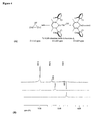
- Figure 4 depicts 1 H NMR analysis of the chemical shifts for a solution of ⁇ [Cl 2 NN]Cu ⁇ 2 ( ⁇ -NAr) in benzene- d 6 : (A) reaction scheme; (B) 1 H NMR spectra.
- Benzene- d 6 solutions of ⁇ [Cl 2 NN]Cu ⁇ 2 ( ⁇ -NAr) show one major backbone C-H peak at ⁇ 5.142 ppm, as well as a triplet for the p -Ar position.
- Two other ⁇ -diketiminato backbone resonances at ⁇ 5.003 and 4.829 ppm are always observed in benzene- d 6 solutions of ⁇ [Cl 2 NN]Cu ⁇ 2 ( ⁇ -NAr).
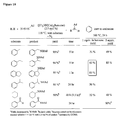
- hydrocarbons such as toluene and cyclohexane
- tertiary azides are the most successful substrates.
- arylazides are appropriate substrates for C-H insertion reactions.
- a particularly interesting class of substrates are ⁇ -azido esters N 3 CMe 2 C(O)OR which are easily prepared from the corresponding ⁇ -bromo esters BrCMe 2 C(O)OR, many of which are commercially available. These substrates will enable the formation of N-alkyl amino esters in intermolecular reactions and 5-oxazolidinones or morpholin-2-ones in intramolecular reactions, depending on the relative ability to form 5- and 6-membered rings.
- the [Cl 2 NN]Cu fragment serves as a competent catalyst for the amination of toluene and cyclohexane.
- reaction times of these reactions can be considerably decreased with the assistance of a microwave reactor.
- the conditions employed in a microwave reactor are 110°C, 1 hour, neat substrate. See also Example 5.
- TMSN 3 trimethylsilyl azide
- toluene with 5 mol% ⁇ [Cl 2 NN]Cu ⁇ 2 ( ⁇ -toluene) at 110°C over 2 days results in the detection of a species consistent with PhCH 2 NHTMS.
- TsN 3 also gives rise to the amination product PhCH 2 NHTs, also in lower yield.
- the novel catalyst systems of the present invention are also applicable to the class of substrates organoazides, RCON 3 , wherein the azido functionality is attached to a carbonyl group.
- organoazides RCON 3
- Many such organoazides RCON 3
- RCON 3 are susceptible to a thermal Curtius rearrangement to give the corresponding isocyanate RNCO (Scheme 15). This rearrangement can proceed either in concert with N 2 loss or from a nitrene intermediate RCON following N 2 loss. See Liu et al (2004) J. Org. Chem., 69:8583-8593 ; L'Abbé, G. (1969) Chem. Rev., 69:345-363 .
- an intramolecular variant of this reaction is generated when n BuCON 3 is added to 5 mol % ⁇ [Cl 2 NN]Cu ⁇ 2 ( ⁇ -toluene) in toluene.
- the cyclic lactam is the expected product (Scheme 19).
- aspects of the present invention may also be selective for 5 and/or 6 membered rings (Scheme 20).
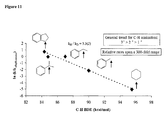
- the order of reactivity of the metal nitrene catalyst species would be predicted to be fastest with tertiary C-H bonds, and slowest with primary C-H bonds used to form lactams and other 5- and 6-membered N-containing heterocycles.
- a green solution characteristic of dicopper nitrenes [Cu] 2 (m-NR) is generated when n BuCON 3 is added to 5 mol% ⁇ [Cl 2 NN]Cu ⁇ 2 (m-toluene) in toluene.
- the use of a chiral version of the catalyst could lead to the formation of chiral heterocycles.
- the presence of singlet nitrene intermediates gives the expectation of retention of stereochemistry during insertion into C-H bonds (Scheme 21).
- aspects of the present invention are related to catalytic aziridination of alekenes with organoazides.
- aspects of the present invention are related to aziridine formation with AdN 3 under forcing conditions with styrene (Scheme 22). It is not believed that this is a C-H inserted product, as no insertion of NAd into any sp 2 -hybridized C-H bonds has yet been observed. See also Example 7.
- FIG. 5 depicts X-ray structures of catalyst deactivation products with N 3 Ar F show attack of an electrophilic azide (left or right) or nitrene NAr F fragment (right) on the central C atom of the ⁇ -diketiminato backbone.
- Placement of a "protecting group" at this C-atom may be important to achieve higher turnover numbers with a given catalyst, or alternatively it could be sterically protected by using large groups on the two adjacent positions of the backbone, as exemplified in Formulas II and III respectively.
- nitrenes generated from carbonyl azides RC(O)N 3 in the presence of ⁇ -diketiminato copper catalysts of the present invention lead to aziridination at room temperature.
- PhC(O)N 3 reacts with styrene at room temperature in the presence of 5 mol% ⁇ [Cl 2 NN]Cu to give the corresponding aziridine (Scheme 24).
- aspects of the present invention relate to catalytic aerobic amination of C-H Bonds and aziridination of alkenes with amines.
- the Cu(I) ⁇ -diketiminate complexes of the present invention will react with O 2 to give bis( ⁇ -oxo) species [Cu] 2 ( ⁇ -O) 2 detectable at low temperature.
- bis( ⁇ -oxo) species [Cu] 2 ( ⁇ -O) 2 detectable at low temperature.
- These reactive bis( ⁇ -oxo) species subsequently react with some sacrificial H-atom donor to give the isolable bis( ⁇ -hydroxy) complexes [Cu] 2 ( ⁇ -OH) 2 (Scheme 29).
- Figure 6 depicts the X-ray structure of ⁇ [Cl 2 NN]Cu ⁇ 2 ( ⁇ -OH) 2 .
- an amine H 2 NR can be used in the presence of oxygen and the ⁇ -diketiminato copper catalyst ⁇ [Cl 2 NN]Cu ⁇ 2 ( ⁇ -toluene) to form a product in which new N-C bonds are formed.
- Figure 7 depicts possible catalytic cycles for aerobic C-H amination reactions.
- this allows "photochemical” type reactivity under thermal conditions, and under some conditions, at modest temperatures.
- the green ⁇ [Cl 2 NN]Cu ⁇ 2 ( ⁇ -O) 2 can be isolated and reacts with aryl amines to give blue solutions with concomitant formation of azobenzenes and N,N'-diarylhydrazines.
- the C-H insertion product (secondary amine) can also be observed by GC/MS.
- Electron-poor amines have been used by DuBois in conjuction with powerful, but environmentally unfriendly oxidants such as PhI(OAc) 2 to effect intramolecular and intermolecular C-H insertion chemistry of a formal carbonyl nitrene (see Figure 8 ).
- PhI(OAc) 2 powerful, but environmentally unfriendly oxidants
- aspects of the present invention contemplate alleviating some of the associated challenges such as the fact that aliphatic nitrenes normally rearrange and do not work with catalysts; that aryl nitrenes demonstrate only some cases of insertion, with poor yield and selectivity; that amides NC(O)XR require the use of very electron-poor species; and/or that the use of PhI(OAc) 2 as an oxidant is too expensive for very large scale use.
- aspects of the present invention relate to many opportunities and certain embodiments of the present invention provide many advantages.
- Key finding here is that o -substituents oil N -aryl ring should not contain H atoms, rendering it prone to interact with the metal-nitrene functionality.
- copper nitrenes are generated when copper(I) ⁇ -diketiminates are exposed to organoazides. These can suffer from attack of nitrene on sp 3 -hybridized C-H bonds of N-aryl substituents, which can be blocked by use of halogen containing substituents.
- the catalysts can be made resistant to reaction with active [Cu]+NR intermediates by (1) removing benzylic C-H bonds (i.e., place halogens around the active intermediate); and/or (2) manipulating the backbone nucleophilicity.
- active [Cu]+NR intermediates By (1) removing benzylic C-H bonds (i.e., place halogens around the active intermediate); and/or (2) manipulating the backbone nucleophilicity.
- Singlet nitrenes are known for stereospecific insertion. This allows for stereochemistry presently in molecule to be retained, or for stereoselection to take place by interaction of the substrate with a chiral catalyst. As discussed above, so long as the active intermediate is a singlet nitrene, retention of stereochemistry is to be expected.
- aspects of the present invention relate to the use of amines and O 2 as the terminal oxidant.
- Evidence has been presented herein that nitrene intermediates can be generated with O 2 , which should be assisted by the use of more NH-acidic amides, thus making it available to do on a large scale and very cheaply.
- the catalyst is stable towards any water formed, for example, by use of a chemical scavenger or manipulation of the ligand to make it less basic.
- this overall transformation could be catalyzed by exposure of the initial product (using 1 equiv. azide), i.e., a secondary amine, to oxygen in the presence of the catalyst; this embodiment is prophetic.
- Imines might also be formed by tandem insertion of a nitrene into C-H bond alpha to an ether, and expulsion of an alcohol.
- amines alpha to ether functionalities are known to be susceptible to the loss of alcohol to give the corresponding imine.
- the methods of the present invention favor C-H insertion into a C-H bond alpha to an ether moiety. The overall transformation is summarized in the scheme below.
- an element means one element or more than one element.
- a “stereoselective process” is one which produces a particular stereoisomer of a reaction product in preference to other possible stereoisomers of that product.
- An “enantioselective process” is one which favors production of one of the two possible enantiomers of a reaction product.
- the subject method is said to produce a "stereoselectively-enriched" product (e.g., enantioselectively-enriched or diastereoselectively-enriched) when the yield of a particular stereoisomer of the product is greater by a statistically significant amount relative to the yield of that stereoisomer resulting from the same reaction run in the absence of a chiral catalyst.
- an enantioselective reaction catalyzed by one of the subject chiral catalysts will yield an e.e. for a particular enantiomer that is larger than the e.e. of the reaction lacking the chiral catalyst.
- reaction product means a compound which results from the reaction of the catalyst and the alkene substrate.
- reaction product will be used herein to refer to a stable, isolable compound, and not to unstable intermediates or transition states.
- catalytic amount is recognized in the art and means a substoichiometric amount relative to a reactant. As used herein, a catalytic amount means from 0.0001 to 90 mole percent relative to a reactant, more preferably from 0.001 to 50 mole percent, still more preferably from 0.01 to 10 mole percent, and even more preferably from 0.1 to 5 mole percent relative to a reactant.
- the reactions contemplated in the present invention include reactions which are enantioselective, diastereoselective, and/or regioselective.
- An enantioselective reaction is a reaction which converts an achiral reactant to a chiral product enriched in one enantiomer.
- An enantioselective reaction yields a product with an e.e. greater than zero.
- Preferred enantioselective reactions yield a product with an e.e. greater than 20%, more preferably greater than 50%, even more preferably greater than 70%, and most preferably greater than 80%.
- a diastereoselective reaction converts a chiral reactant (which may be racemic or enantiomerically pure) to a product enriched in one diastereomer. If the chiral reactant is racemic, in the presence of a chiral non-racemic reagent or catalyst, one reactant enantiomer may react more slowly than the other. This class of reaction is termed a kinetic resolution, wherein the reactant enantiomers are resolved by differential reaction rate to yield both enantiomerically-enriched product and enantimerically-enriched unreacted substrate.
- Kinetic resolution is usually achieved by the use of sufficient reagent to react with only one reactant enantiomer (i.e., one-half mole of reagent per mole of racemic substrate).
- Examples of catalytic reactions which have been used for kinetic resolution of racemic reactants include the Sharpless epoxidation and the Noyori hydrogenation.
- non-racemic with respect to the chiral catalyst, means a preparation of catalyst having greater than 50% of a given enantiomer, more preferably at least 75%.
- substantially non-racemic refers to preparations of the catalyst which have greater than 90% ee for a given enantiomer of the catalyst, more preferably greater than 95% ee.
- alkyl refers to the radical of saturated aliphatic groups, including straight-chain alkyl groups, branched-chain alkyl groups, cycloalkyl (alicyclic) groups, alkyl substituted cycloalkyl groups, and cycloalkyl substituted alkyl groups.
- a straight chain or branched chain alkyl has 30 or fewer carbon atoms in its backbone (e.g., C 1 -C 30 for straight chain, C 3 -C 30 for branched chain), and more preferably 20 of fewer.
- preferred cycloalkyls have from 4-10 carbon atoms in their ring structure, and more preferably have 5, 6 or 7 carbons in the ring structure.
- lower alkyl as used herein means an alkyl group, as defined above, but having from one to ten carbons, more preferably from one to six carbon atoms in its backbone structure. Likewise, “lower alkenyl” and “lower alkynyl” have similar chain lengths.
- alkenyl and alkynyl refer to unsaturated aliphatic groups analogous in length and possible substitution to the alkyls described above, but which contain at least one double or triple carbon-carbon bond, respectively.
- Me 2 NN refers to a moiety represented by the general formula:
- the term "amino” means -NH 2 ; the term “nitro” means -NO 2 ; the term “halogen” designates -F, -Cl, -Br or -I; the term “thiol” means -SH; the term “hydroxyl” means -OH; the term “sulfonyl” means -SO 2 -; and the term “organometallic” refers to a metallic atom (such as mercury, zinc, lead, magnesium or lithium) or a metalloid (such as silicon, arsenic or selenium) which is bonded directly to a carbon atom, such as a diphenylmethylsilyl group.
- amine and “amino” are art-recognized and refer to both unsubstituted and substituted amines, e.g., a moiety that can be represented by the general formula: wherein R 9 , R 10 and R' 10 each independently represent a group permitted by the rules of valence.
- acylamino is art-recognized and refers to a moiety that can be represented by the general formula: wherein R 9 is as defined above, and R' 11 represents a hydrogen, an alkyl, an alkenyl or -(CH 2 ) m -R 8 , where m and R 8 are as defined above.
- amide is art-recognized as an amino-substituted carbonyl and includes a moiety that can be represented by the general formula: wherein R 9 , R 10 are as defined above. Preferred embodiments of the amide will not include imides which may be unstable.
- alkylthio refers to an alkyl group, as defined above, having a sulfur radical attached thereto.
- the "alkylthio" moiety is represented by one of -S-alkyl, -S-alkenyl, -S-alkynyl, and -S-(CH 2 ) m -R 8 , wherein m and R 8 are defined above.
- Representative alkylthio groups include methylthio, ethyl thio, and the like.
- carbonyl is art-recognized and includes such moieties as can be represented by the general formula: wherein X is a bond or represents an oxygen or a sulfur, and R 11 represents a hydrogen, an alkyl, an alkenyl, -(CH 2 ) m -R 8 or a pharmaceutically acceptable salt, R' 11 represents a hydrogen, an alkyl, an alkenyl or -(CH 2 ) m -R 8 , where m and R 8 are as defined above. Where X is an oxygen and R 11 or R' 11 is not hydrogen, the formula represents an "ester".
- alkoxyl or "alkoxy” as used herein refers to an alkyl group, as defined above, having an oxygen radical attached thereto.
- Representative alkoxyl groups include methoxy, ethoxy, propyloxy, tert-butoxy and the like.
- An "ether” is two hydrocarbons covalently linked by an oxygen. Accordingly, the substituent of an alkyl that renders that alkyl an ether is or resembles an alkoxyl, such as can be represented by one of -O-alkyl, -O-alkenyl, -O-alkynyl, -O-(CH 2 ) m -R 8 , where m and R 8 are described above.
- sulfonate is art-recognized and includes a moiety that can be represented by the general formula: in which R 41 is an electron pair, hydrogen, alkyl, cycloalkyl, or aryl.
- sulfonyl refers to a moiety that can be represented by the general formula: in which R 44 is selected from the group consisting of hydrogen, alkyl, alkenyl, alkynyl, cycloalkyl, heterocyclyl, aryl, or heteroaryl.
- sulfoxido refers to a moiety that can be represented by the general formula: in which R 44 is selected from the group consisting of hydrogen, alkyl, alkenyl, alkynyl, cycloalkyl, heterocyclyl, aralkyl, or aryl.
- sulfate means a sulfonyl group, as defined above, attached to two hydroxy or alkoxy groups.
- a sulfate has the structure: in which R 40 and R 41 are independently absent, a hydrogen, an alkyl, or an aryl.
- R 40 and R 41 taken together with the sulfonyl group and the oxygen atoms to which they are attached, may form a ring structure having from 5 to 10 members.
- Analogous substitutions can be made to alkenyl and alkynyl groups to produce, for example, alkenylamines, alkynylamines, alkenylamides, alkynylamides, alkenylimines, alkynylimines, thioalkenyls, thioalkynyls, carbonyl-substituted alkenyls or alkynyls, alkenoxyls, alkynoxyls, metalloalkenyls and metalloalkynyls.
- aryl as used herein includes 4-, 5-, 6- and 7-membered single-ring aromatic groups which may include from zero to four heteroatoms, for example, benzene, naphthalene, anthracene, pyrene, pyrrole, furan, thiophene, imidazole, oxazole, thiazole, triazole, pyrazole, pyridine, pyrazine, pyridazine and pyrimidine, and the like.
- aryl heterocycle 4-, 5-, 6- and 7-membered single-ring aromatic groups which may include from zero to four heteroatoms, for example, benzene, naphthalene, anthracene, pyrene, pyrrole, furan, thiophene, imidazole, oxazole, thiazole, triazole, pyrazole, pyridine, pyrazine, pyridazine and pyrimidine, and the like.
- the aromatic ring can be substituted at one or more ring positions with such substituents as described above, as for example, halogens, alkyls, alkenyls, alkynyls, hydroxyl, amino, nitro, thiol amines, imines, amides, phosphonates, phosphines, carbonyls, carboxyls, silyls, ethers, thioethers, sulfonyls, selenoethers, ketones, aldehydes, esters, or - (CH 2 ) m -R 7 , -CF 3 , -CN, or the like.
- substituents as described above, as for example, halogens, alkyls, alkenyls, alkynyls, hydroxyl, amino, nitro, thiol amines, imines, amides, phosphonates, phosphines, carbonyls, carboxyls, sily
- heterocycle or “heterocyclic group” refer to 4 to 10-membered ring structures, more preferably 5 to 7 membered rings, which ring structures include one to four heteroatoms.
- Heterocyclic groups include pyrrolidine, oxolane, thiolane, imidazole, oxazole, piperidine, piperazine, morpholine.
- the heterocyclic ring can be substituted at one or more positions with such substituents as described above, as for example, halogens, alkyls, alkenyls, alkynyls, hydroxyl, amino, nitro, thiol, amines, imines, amides, phosphonates, phosphines, carbonyls, carboxyls, silyls, ethers, thioethers, sulfonyls, selenoethers, ketones, aldehydes, esters, or -(CH 2 ) m -R 7 , -CF 3 , -CN, or the like.
- substituents as described above, as for example, halogens, alkyls, alkenyls, alkynyls, hydroxyl, amino, nitro, thiol, amines, imines, amides, phosphonates, phosphines, carbonyls, carboxyls,
- heteroatom as used herein means an atom of any element other than carbon or hydrogen. Preferred heteroatoms are nitrogen, oxygen, sulfur, phosphorus and selenium.
- ortho, meta and para apply to 1,2-, 1,3- and 1,4-disubstituted benzenes, respectively.
- 1,2-dimethylbenzene and ortho-dimethylbenzene are synonymous.
- the term "substituted" is contemplated to include all permissible substituents of organic compound.
- the permissible substituents include acyclic and cyclic, branched and unbranched, carbocyclic and heterocyclic, aromatic and nonaromatic substituents of organic compounds.
- Illustrative substituents include, for example, those described hereinabove.
- the permissible substituents can be one or more and the same or different for appropriate organic compounds.
- the heteroatoms such as nitrogen may have hydrogen substituents and/or any permissible substituents of organic compounds described herein which satisfy the valencies of the heteroatoms. This invention is not intended to be limited in any manner by the permissible substituents of organic compounds.
- R 7 -R 9 may have H atoms; sample R 7 -R 9 substituents include, but are not limited to: H, Me, CF 3 , Ph, and t-Bu.
- the complex may be manipulated via electronic tuning to make it more or less electron-rich.
- the complexes may be used with a chiral Lewis base (L*) (Scheme 38).
- One aspect of the present invention relates to a compound as claimed in claim 1.
- the present invention relates to the aforementioned compound and any attendant definitions, wherein M is Cu.
- the present invention relates to the aforementioned compound and any attendant definitions, wherein M is Co.
- the present invention relates to the aforementioned compound and any attendant definitions, wherein R7 - R9 represents independently for each occurrence H, Me, CF 3 , Ph, or t-Bu.
- the present invention relates to the aforementioned compound and any attendant definitions, wherein R7 and R8 represent t-Bu.
- the present invention relates to the aforementioned compound and any attendant definition, wherein X1-X4 are independently for each occurrence Cl, I, Br, or CF 3 .
- the present invention relates to the aforementioned compound and any attendant definitions, wherein X1-X4 are independently for each occurrence Cl.
- the present invention relates to the aforementioned compound and any attendant definitions, wherein X1-X4 are independently for each occurrence CF 3 .
- the present invention relates to the aforementioned compound and any attendant definitions, wherein M is Cu, and X1-X4 are independently for each occurence Cl.
- the present invention relates to the aforementioned compound and any attendant definitions, wherein M is Cu, and X1-X4 are independently for each occurrence CF 3 .
- the present invention relates to the aforementioned compound and any attendant definitions, wherein L is aromatic.
- the present invention relates to the forementioned compound and any attendant definitions, wherein L is toluene,
- the present invention relates to the aforementioned compound and any attendant definitions, wherein L is ( ⁇ -O) 2 .
- the present invention relates to the aforementioned compound and any attendant definitions, wherein M is Cu, X1-X4 are independently for each occurrence Cl, and L is toluene.
- the present invention relates to the aforementioned compound and any attendant definitions, wherein M is Cu, X1-X4 arc independently for each occurrence CF 3 , and L is toluene.
- One aspect of the present invention relates to a method as claimed in claim 7.
- the present invention relates to the aforementioned method and any attendant definitions, wherein the reaction is catalytic in the compound represented by Formula IV.
- the present invention relates to the aforementioned method and any attendant definitions, wherein the reaction further comprises the use of oxygen as a reagent.
- Another aspect of the present invention relates to a method of C-H bond amidation as claimed in claim 10.
- the present invention relates to the aforementioned method and any attendant definition, wherein the reaction is catalytic in the compound represented by Formula IV.
- the present invention relates to the aforementioned method and any attendant definitions, wherein the reaction further comprises the use of oxygen as a reagent.
- Another aspect of the invention relates to a method of olefin aziridination as claimed in claim 13.
- the present invention relates to the aforementioned method and any attendant definitions, wherein the reaction is catalytic in the compound represented by Formula IV.
- the present invention relates to the aforementioned method and any attendant definitions, wherein the reaction further comprises the use of oxygen as a reagent.
- Another aspect of the invention relates to a method of C-H bond amidation as claimed in claim 16.
- the present invention relates to the aforementioned method and any attendant definitions, wherein the reaction is catalytic in the compound represented by Formula IV.
- the present invention relates to the aforementioned method and any attendant definitions, wherein the reaction further comprises the use of oxygen as a reagent.
- the present invention relates to any of the aforementioned methods, wherein M is Cu.
- the present invention relates to any of the aforementioned methods, wherein M is Co.
- the present invention relates to any of the aforementioned methods, wherein R7 - R9 represents independently for each occurrence H, Me, CF 3 , Ph, or t-Bu.
- the present invention relates to any of the aforementioned methods, wherein R7 and R8 represent t-Bu.
- the present invention relates to any of the aforementioned methods, wherein X1-X4 are independently for each occurrence halogen or perfluoroalkyl.
- the present invention relates to any of the aforementioned methods, wherein X1-X4 are independently for each occurrence Cl, I, Br, or CF 3 .
- the present invention relates to any of the aforementioned methods, wherein, X1-X4 are independently for each occurrence Cl.
- the present invention relates to any of the aforementioned methods, wherein X1-X4 are independently for each occurrence CF 3 .
- the present invention relates to any of the aforementioned methods, wherein M is Cu, and X1-X4 are independently for each occurrence Cl.
- the present invention relates to any of the aforementioned methods, wherein M is Cu, and X1-X4 are independently for each occurrence CF 3 .
- the present invention relates to any of the aforementioned methods, wherein L is ( ⁇ -O) 2 .
- the present invention relates to any of the aforementioned methods, wherein L is aromatic.
- the present invention relates to any of the aforementioned methods, wherein L is toluene.
- the present invention relates to any of the aforementioned methods, wherein M is Cu, X1-X4 are independently for each occurrence Cl, and L is toluene.
- the present invention relates to any of the aforementioned methods, XI-X4 are independently for each occurrence CF 3 , and L is toluene.
- the present invention relates to any of the aforementioned methods, wherein the compound represented by Formula IV selected from the group consisting of;
- Anhydrous 1-adamantylazide was obtained from Strem and used as received.
- O 2 gas (99.5%) was obtained from MG Industries and passed through a drying tube containing CaCl 2 prior to use.
- this R(factor) can be applied to other cyclopropanation yield calculations by adding a certain amount of naphthalene as a internal standard.
- 1-Adamantylazide (0.030 g, 0.172 mmol) was dissolved in 3 mL ether and added to a stirring solution of ⁇ [Cl 2 NN]Cu ⁇ 2 (toluene) 7 (0.170 g, 0.172 mmol) in 5 mL ether at room temperature. The solution turned green after 5 min and bubbling of N 2 gas was observed. The solution was stirred for 30 minutes, filtered through Celite and the filtrate was concentrated in vacuo to ca. 3 mL.
- 1-Adamantylazide (0.056 g, 0.316 mmol) was dissolved in 5 mL ether and added to a stirring solution of ⁇ [Me 3 NN]Cu ⁇ 2 (toluene) (0.255 g, 0.288 mmol) in 5 mL ether at room temperature. The solution turned green after 5 min and bubbling of N 2 gas was observed. The solution was stirred for 30 minutes, filtered though Celite and the filtrate was concentrated in vacuo to ca. 3 mL. The solution crystallized overnight at -35°C to afford 0.130 mg (47%) of dark green crystals and upon recrystallization from pentane, crystals suitable for X-ray diffraction were obtained.
- 1-Adamantylazide (0135 g, 0.755 mmol) was dissolved in 5 mL cyclohexane and added to a stirring solution of ⁇ [Cl 2 NN]Cu ⁇ 2 (touene) 7 (0.300 g, 0.330 mmol) in 5 mL cyclohexane at room temperature. The solution turned green after 5 min and bubbling of N 2 gas was observed. The solution was stirred for two days at 100°C. A blue solution was obtained which was filtered through Celite and the volatiles were removed in vacuo. 1 H NMR of the crude solution shows the formation of a terminal species (Table 2 and Figure 4 ).
- Powdered [Cu(CH 3 CN) 4 ]+BF 4 - (0.534 g, 1.433 mmol) was added to a solution of 3,3-dimethylbutene (0.241 g, 2.866 mol) in 10 mL ether at -40 °C.
- Li[Me 3 NN] (0.860 g, 1.433 mmol) was dissolved in 10 mL ether at -40 °C and added to the former suspension for 15 minutes, After stirring for 1 hour at room temperature, the volatiles were removed in vacuo and the residue was extracted with pentane (25 mL) and filtered through Celite. The filtrate was concentrated and cooled to -40°C to afford 0.799 g (75 %) of bright yellow crystals.
- STO basis sets employed for H, C, and N atoms were of triple- ⁇ quality augmented with two polarization functions (TZP2 / ADF basis V) while an improved triple- ⁇ basis set with two polarization functions (TZP2+) was employed for the Co atom.
- the 1s electrons of C and N as well as the 1s - 2p electrons of Co were treated as frozen core.
- the VWN (Vosko, Wilk, and Nusair) functional was used for LDA (local density approximation). See Vosko, S. H.; Wilk, L.; Nusair, M. Can. J. Phys. 1980, 58, 1200 .
Landscapes
- Chemical & Material Sciences (AREA)
- Organic Chemistry (AREA)
- Inorganic Chemistry (AREA)
- Engineering & Computer Science (AREA)
- Materials Engineering (AREA)
- Chemical Kinetics & Catalysis (AREA)
- Organic Low-Molecular-Weight Compounds And Preparation Thereof (AREA)
- Low-Molecular Organic Synthesis Reactions Using Catalysts (AREA)
- Catalysts (AREA)
Claims (20)
- Verbindung, dargestellt durch die Formel IV:
 R1 - R9 unabhängig für jedes Vorkommen H, Alkyl, Aryl, Aralkyl, Halogen, CN oder CF3 darstellen;X1 - X4 unabhängig für jedes Vorkommen Halogen oder Perhaloalkyl darstellen;L eine Lewis-Base oder (µ-O)2 ist; undM Cu oder Co ist.
 - Verbindung nach Anspruch 1, wobei M Cu ist.
- Verbindung nach Anspruch 1, wobei R7 - R9 unabhängig für jedes Vorkommen H, Me, CF3, Ph oder t-Bu darstellen, wobei R7 und R8 vorzugsweise t-Bu darstellen.
- Verbindung nach Anspruch 1, wobei X1 - X4 unabhängig für jedes Vorkommen Cl, I, Br oder CF3 sind.
- Verbindung nach Anspruch 1, wobei X1 - X4 unabhängig für jedes Vorkommen Cl oder CF3 sind.
- Verbindung nach Anspruch 1, wobei L eine aromatische Verbindung ist, vorzugsweise Toluol; oder wobei L (µ-O)2 ist.
- Verfahren der Aminierung mit C-H-Verbindung wie in Schema A dargestellt:
 R Alkyl, Alkenyl, Alkynyl, Aralkyl, Aryl oder Heteroaryl darstellt;R' Alkyl, Alkenyl, Alkynyl, Aralkyl, Aryl oder Heteroaryl darstellt;R1 - R9 unabhängig für jedes Vorkommen H, Alkyl, Aryl, Aralkyl, Halogen, Cn oder CF3 darstellen;X1 - X4 unabhängig für jedes Vorkommen H, Halogen oder Perhaloalkyl darstellen;L eine Lewis-Base oder (µ-O)2 ist; undM Cu oder Co ist.
 - Verfahren nach Anspruch 7, wobei die Reaktion in der durch die Formel IV dargestellten Verbindung katalytisch ist.
- Verfahren nach Anspruch 7, außerdem umfassend die Verwendung von Sauerstoff als Reagens.
- Verfahren der Amidbildung mit C-H-Verbindung, wie in Schema B dargestellt:
 R Alkyl, Alkenyl, Alkynyl, Aralkyl, Aryl oder Heteroaryl darstellt;R' Alkyl, Alkenyl, Alkynyl, Aralkyl, Aryl oder Heteroaryl darstellt;R1 - R9 unabhängig für jedes Vorkommen H, Alkyl, Aryl, Aralkyl, Halogen, CN oder CF3 darstellen;X1 - X4 unabhängig für jedes Vorkommen H, Halogen oder Perhaloalkyl darstellen;L eine Lewis-Base oder (µ-O)2 ist; undM Cu oder Co ist.
 - Verfahren nach Anspruch 10, wobei die Reaktion in der durch Formel IV dargestellten Verbindung katalytisch ist.
- Verfahren nach Anspruch 10, außerdem umfassend die Verwendung von Sauerstoff als Reagens.
- Verfahren der Olefin-Aziridinbildung, wie in Schema C dargestellt:
 R Alkyl, Alkenyl, Alkynyl, Aralkyl, Aryl oder Heteroaryl darstellt;R' Alkyl, Alkenyl, Alkynyl, Aralkyl, Aryl oder Heteroaryl darstellt;R1 - R9 unabhängig für jedes Vorkommen H, Alkyl, Aryl, Aralkyl, Halogen, CN oder CF3 darstellen;X1 - X4 unabhängig für jedes Vorkommen Wasserstoff, Halogen oder Perhaloalkyl darstellen;L eine Lewis-Base oder (µ-O)2 ist; undM Cu oder Co ist.
 - Verfahren nach Anspruch 13, wobei die Reaktion in der durch Formel IV dargestellten Verbindung katalytisch ist.
- Verfahren nach Anspruch 13, außerdem umfassend die Verwendung von Sauerstoff als Reagens.
- Verfahren der der Amidbildung mit C-H-Verbindung, wie in Schema D dargestellt:
 R Alkyl, Alkenyl, Alkynyl, Aralkyl, Aryl oder Heteroaryl darstellt;R' Alkyl, Alkenyl, Alkynyl, Aralkyl, Aryl oder Heteroaryl darstellt;R1 - R9 unabhängig für jedes Vorkommen H, Alkyl, Aryl, Aralkyl, Halogen, CN oder CF3 darstellen;X1 - X4 unabhängig für jedes Vorkommen Wasserstoff, Halogen oder Perhaloalkyl darstellen;L eine Lewis-Base oder (µ-O)2 ist; undM Cu oder Co ist.
 - Verfahren nach Anspruch 16, wobei die Reaktion in der durch Formel IV dargestellten Verbindung katalytisch ist.
- Verfahren nach Anspruch 16, außerdem umfassend die Verwendung von Sauerstoff als Reagens.
- Verfahren nach einem der Ansprüche 7-18, wobei die durch Formel IV dargestellte Verbindung wie in einem der Ansprüche 2 bis 6 gefordert ist.
- Verfahren nach einem der Ansprüche 7-18, wobei die durch Formel IV dargestellte Verbindung ausgewählt ist aus der Gruppe umfassend:

Applications Claiming Priority (2)
| Application Number | Priority Date | Filing Date | Title |
|---|---|---|---|
| US87332106P | 2006-12-07 | 2006-12-07 | |
| PCT/US2007/086506 WO2008073781A2 (en) | 2006-12-07 | 2007-12-05 | C--h bond amination and olefin aziridination with beta-diketiminato copper catalysts |
Publications (3)
| Publication Number | Publication Date |
|---|---|
| EP2099749A2 EP2099749A2 (de) | 2009-09-16 |
| EP2099749A4 EP2099749A4 (de) | 2012-05-02 |
| EP2099749B1 true EP2099749B1 (de) | 2015-09-23 |
Family
ID=39512404
Family Applications (1)
| Application Number | Title | Priority Date | Filing Date |
|---|---|---|---|
| EP07868996.5A Not-in-force EP2099749B1 (de) | 2006-12-07 | 2007-12-05 | C-h-bindungs-aminierung und olefin-aziridinierung mit beta-diketiminat-kupfer-katalysatoren |
Country Status (4)
| Country | Link |
|---|---|
| US (1) | US8471051B2 (de) |
| EP (1) | EP2099749B1 (de) |
| CA (1) | CA2671783C (de) |
| WO (1) | WO2008073781A2 (de) |
Cited By (2)
| Publication number | Priority date | Publication date | Assignee | Title |
|---|---|---|---|---|
| US10611786B2 (en) | 2017-10-09 | 2020-04-07 | The Board Of Trustees Of The University Of Illinois | Manganese (III) catalyzed C—H aminations |
| US10961266B2 (en) | 2018-09-13 | 2021-03-30 | The Board Of Trustees Of The University Of Illinois | Chemoselective methylene hydroxylation in aromatic molecules |
Families Citing this family (8)
| Publication number | Priority date | Publication date | Assignee | Title |
|---|---|---|---|---|
| WO2010028159A2 (en) * | 2008-09-04 | 2010-03-11 | Georgetown University | Transition metal-catalyzed c-h amination using unactivated amines |
| US20110207956A1 (en) * | 2010-02-24 | 2011-08-25 | Zhang X Peter | Intramolecular c-h amination with phosphoryl azides |
| WO2013188771A2 (en) * | 2012-06-15 | 2013-12-19 | Georgetown University | Catalytic c-h bond activation for the synthesis of ethers and thioethers |
| WO2014025927A1 (en) * | 2012-08-07 | 2014-02-13 | University Of Louisiana At Lafayette | Method of producing chiral n-substituted allylic amine compounds |
| EP2906518A4 (de) | 2012-10-09 | 2016-07-27 | California Inst Of Techn | Durch hämenzyme katalysierte in-vivo- und in-vitro-olefincyclopropanierung |
| WO2014058729A1 (en) * | 2012-10-09 | 2014-04-17 | California Institute Of Technology | In vivo and in vitro carbene insertion and nitrene transfer reactions catalyzed by heme enzymes |
| US9487472B2 (en) | 2013-02-26 | 2016-11-08 | President And Fellows Of Harvard College | Synthesis of acyclic and cyclic amines using iron-catalyzed nitrene group transfer |
| US9399762B2 (en) | 2014-02-18 | 2016-07-26 | California Institute Of Technology | Methods and systems for sulfimidation or sulfoximidation of organic molecules |
Family Cites Families (1)
| Publication number | Priority date | Publication date | Assignee | Title |
|---|---|---|---|---|
| WO2005007659A2 (en) * | 2003-07-11 | 2005-01-27 | Georgetown University | Diketiminato cu(i) and co(i) carbene catalysts, and cyclopropanation methods using them |
-
2007
- 2007-12-05 WO PCT/US2007/086506 patent/WO2008073781A2/en not_active Ceased
- 2007-12-05 EP EP07868996.5A patent/EP2099749B1/de not_active Not-in-force
- 2007-12-05 US US12/518,189 patent/US8471051B2/en not_active Expired - Fee Related
- 2007-12-05 CA CA2671783A patent/CA2671783C/en not_active Expired - Fee Related
Cited By (2)
| Publication number | Priority date | Publication date | Assignee | Title |
|---|---|---|---|---|
| US10611786B2 (en) | 2017-10-09 | 2020-04-07 | The Board Of Trustees Of The University Of Illinois | Manganese (III) catalyzed C—H aminations |
| US10961266B2 (en) | 2018-09-13 | 2021-03-30 | The Board Of Trustees Of The University Of Illinois | Chemoselective methylene hydroxylation in aromatic molecules |
Also Published As
| Publication number | Publication date |
|---|---|
| US8471051B2 (en) | 2013-06-25 |
| CA2671783C (en) | 2016-02-02 |
| EP2099749A2 (de) | 2009-09-16 |
| CA2671783A1 (en) | 2008-06-19 |
| WO2008073781A2 (en) | 2008-06-19 |
| WO2008073781A3 (en) | 2008-10-16 |
| US20100056806A1 (en) | 2010-03-04 |
| EP2099749A4 (de) | 2012-05-02 |
Similar Documents
| Publication | Publication Date | Title |
|---|---|---|
| US8471051B2 (en) | C-H bond amination and olefin aziridination with β-diketiminato copper catalysts | |
| US10953393B2 (en) | Stabilization of active metal catalysts at metal-organic framework nodes for highly efficient organic transformations | |
| Chew et al. | Our odyssey with functionalized chiral phosphines: from optical resolution to asymmetric synthesis to catalysis | |
| Sues et al. | Stereoelectronic factors in iron catalysis: synthesis and characterization of aryl-substituted iron (II) carbonyl P–N–N–P complexes and their use in the asymmetric transfer hydrogenation of ketones | |
| JP6516856B2 (ja) | ホルムアミド系化合物を製造する方法 | |
| WO2012065571A1 (zh) | 手性螺环吡啶胺基膦配体化合物与合成方法及其应用 | |
| Castano et al. | Asymmetric cyclopropanation of olefins catalysed by Cu (I) complexes of chiral pyridine-containing macrocyclic ligands (Pc-L*) | |
| CN114080379B (zh) | 在Ru-PNN配合物存在下将酯类氢化为醇类 | |
| Yu et al. | Titanium (IV)/Tridentate BINOL Derivative as Catalyst for meso‐Aziridine Ring‐Opening Reactions: High Enantioselectivity, Strong Positive Non‐Linear Effect and Structural Characterization | |
| Pandey et al. | Methyl effects on the stereochemistry and reactivity of PPP-ligated iron hydride complexes | |
| Seino et al. | Heterolytic H 2 activation by rhodium thiolato complexes bearing the hydrotris (pyrazolyl) borato ligand and application to catalytic hydrogenation under mild conditions | |
| JP2018519282A (ja) | Fe/三座配位子錯体を用いたアルデヒド化合物またはケトン化合物の水素化 | |
| CN110305171B (zh) | 含双噁唑啉衍生的氮杂环卡宾配体和亚磷酸酯配体的混配型镍(ii)配合物的制备及应用 | |
| Ekanayake et al. | Hydrogenation reactions catalyzed by HN (CH 2 CH 2 PR 2) 2-ligated copper complexes | |
| Gourkhede et al. | Arene displacement, C–H activation and acetonitrile insertion reactions enabled by coordination of a functionalized iminophosphorane to a Ru II–p-cymene scaffold | |
| Yamamoto et al. | Stereoselective synthesis of the isoxazolidine ring via manganese (iii)-catalysed aminoperoxidation of unactivated alkenes using molecular oxygen in air under ambient conditions | |
| Vasconcelos et al. | Preparation and structure of new homochiral diazaphosphole ligands and their platinum (II) chloride complexes | |
| Slamova et al. | Aminophosphine PN H complexes of Mn (i), Fe (ii), and Co (ii) and evaluation of their activities in the transfer hydrogenation of nitriles | |
| WO2005007659A2 (en) | Diketiminato cu(i) and co(i) carbene catalysts, and cyclopropanation methods using them | |
| US10407448B2 (en) | N-N-bis(2-dialkylphosphinoethyl)amine-borane complex and production method therefor, and method for producing ruthenium complex containing N,N-bis(2-dialkylphosphinoethyl)amine as ligand | |
| Jagtap et al. | Achiral and chiral NNN-pincer nickel complexes with oxazolinyl backbones: application in transfer hydrogenation of ketones | |
| CN116283672B (zh) | 一种β-烯丙基苯乙胺衍生物的合成方法及应用 | |
| Wang | Hydrogen Bonding Cyclodiphosphazanes: Enantioselective Catalysis | |
| Nasim | Exploring nickel catalysis in carbonyl and alcohol addition reactions | |
| Wang | Ring-opening and ring-expansion reactions of gem-difluorinated cyclopropanes and cyclopropenones |
Legal Events
| Date | Code | Title | Description |
|---|---|---|---|
| PUAI | Public reference made under article 153(3) epc to a published international application that has entered the european phase |
Free format text: ORIGINAL CODE: 0009012 |
|
| 17P | Request for examination filed |
Effective date: 20090626 |
|
| AK | Designated contracting states |
Kind code of ref document: A2 Designated state(s): AT BE BG CH CY CZ DE DK EE ES FI FR GB GR HU IE IS IT LI LT LU LV MC MT NL PL PT RO SE SI SK TR |
|
| DAX | Request for extension of the european patent (deleted) | ||
| A4 | Supplementary search report drawn up and despatched |
Effective date: 20120403 |
|
| RIC1 | Information provided on ipc code assigned before grant |
Ipc: C07D 203/04 20060101AFI20120326BHEP |
|
| 17Q | First examination report despatched |
Effective date: 20130131 |
|
| GRAJ | Information related to disapproval of communication of intention to grant by the applicant or resumption of examination proceedings by the epo deleted |
Free format text: ORIGINAL CODE: EPIDOSDIGR1 |
|
| RIC1 | Information provided on ipc code assigned before grant |
Ipc: C07C 251/16 20060101ALI20150323BHEP Ipc: C07C 209/02 20060101ALI20150323BHEP Ipc: C07D 203/04 20060101AFI20150323BHEP Ipc: B01J 31/18 20060101ALI20150323BHEP Ipc: C07D 203/18 20060101ALI20150323BHEP Ipc: C07D 203/08 20060101ALI20150323BHEP Ipc: C07D 319/12 20060101ALI20150323BHEP Ipc: C07D 203/02 20060101ALI20150323BHEP |
|
| GRAP | Despatch of communication of intention to grant a patent |
Free format text: ORIGINAL CODE: EPIDOSNIGR1 |
|
| INTG | Intention to grant announced |
Effective date: 20150507 |
|
| GRAS | Grant fee paid |
Free format text: ORIGINAL CODE: EPIDOSNIGR3 |
|
| GRAA | (expected) grant |
Free format text: ORIGINAL CODE: 0009210 |
|
| AK | Designated contracting states |
Kind code of ref document: B1 Designated state(s): AT BE BG CH CY CZ DE DK EE ES FI FR GB GR HU IE IS IT LI LT LU LV MC MT NL PL PT RO SE SI SK TR |
|
| REG | Reference to a national code |
Ref country code: GB Ref legal event code: FG4D |
|
| REG | Reference to a national code |
Ref country code: CH Ref legal event code: EP |
|
| REG | Reference to a national code |
Ref country code: AT Ref legal event code: REF Ref document number: 751147 Country of ref document: AT Kind code of ref document: T Effective date: 20151015 |
|
| REG | Reference to a national code |
Ref country code: IE Ref legal event code: FG4D |
|
| REG | Reference to a national code |
Ref country code: DE Ref legal event code: R096 Ref document number: 602007043273 Country of ref document: DE |
|
| REG | Reference to a national code |
Ref country code: FR Ref legal event code: PLFP Year of fee payment: 9 |
|
| REG | Reference to a national code |
Ref country code: NL Ref legal event code: MP Effective date: 20150923 |
|
| PG25 | Lapsed in a contracting state [announced via postgrant information from national office to epo] |
Ref country code: LV Free format text: LAPSE BECAUSE OF FAILURE TO SUBMIT A TRANSLATION OF THE DESCRIPTION OR TO PAY THE FEE WITHIN THE PRESCRIBED TIME-LIMIT Effective date: 20150923 Ref country code: GR Free format text: LAPSE BECAUSE OF FAILURE TO SUBMIT A TRANSLATION OF THE DESCRIPTION OR TO PAY THE FEE WITHIN THE PRESCRIBED TIME-LIMIT Effective date: 20151224 Ref country code: LT Free format text: LAPSE BECAUSE OF FAILURE TO SUBMIT A TRANSLATION OF THE DESCRIPTION OR TO PAY THE FEE WITHIN THE PRESCRIBED TIME-LIMIT Effective date: 20150923 Ref country code: FI Free format text: LAPSE BECAUSE OF FAILURE TO SUBMIT A TRANSLATION OF THE DESCRIPTION OR TO PAY THE FEE WITHIN THE PRESCRIBED TIME-LIMIT Effective date: 20150923 |
|
| REG | Reference to a national code |
Ref country code: LT Ref legal event code: MG4D |
|
| REG | Reference to a national code |
Ref country code: AT Ref legal event code: MK05 Ref document number: 751147 Country of ref document: AT Kind code of ref document: T Effective date: 20150923 |
|
| PG25 | Lapsed in a contracting state [announced via postgrant information from national office to epo] |
Ref country code: SE Free format text: LAPSE BECAUSE OF FAILURE TO SUBMIT A TRANSLATION OF THE DESCRIPTION OR TO PAY THE FEE WITHIN THE PRESCRIBED TIME-LIMIT Effective date: 20150923 |
|
| PG25 | Lapsed in a contracting state [announced via postgrant information from national office to epo] |
Ref country code: NL Free format text: LAPSE BECAUSE OF FAILURE TO SUBMIT A TRANSLATION OF THE DESCRIPTION OR TO PAY THE FEE WITHIN THE PRESCRIBED TIME-LIMIT Effective date: 20150923 |
|
| PG25 | Lapsed in a contracting state [announced via postgrant information from national office to epo] |
Ref country code: SK Free format text: LAPSE BECAUSE OF FAILURE TO SUBMIT A TRANSLATION OF THE DESCRIPTION OR TO PAY THE FEE WITHIN THE PRESCRIBED TIME-LIMIT Effective date: 20150923 Ref country code: ES Free format text: LAPSE BECAUSE OF FAILURE TO SUBMIT A TRANSLATION OF THE DESCRIPTION OR TO PAY THE FEE WITHIN THE PRESCRIBED TIME-LIMIT Effective date: 20150923 Ref country code: CZ Free format text: LAPSE BECAUSE OF FAILURE TO SUBMIT A TRANSLATION OF THE DESCRIPTION OR TO PAY THE FEE WITHIN THE PRESCRIBED TIME-LIMIT Effective date: 20150923 Ref country code: IT Free format text: LAPSE BECAUSE OF FAILURE TO SUBMIT A TRANSLATION OF THE DESCRIPTION OR TO PAY THE FEE WITHIN THE PRESCRIBED TIME-LIMIT Effective date: 20150923 Ref country code: IS Free format text: LAPSE BECAUSE OF FAILURE TO SUBMIT A TRANSLATION OF THE DESCRIPTION OR TO PAY THE FEE WITHIN THE PRESCRIBED TIME-LIMIT Effective date: 20160123 Ref country code: EE Free format text: LAPSE BECAUSE OF FAILURE TO SUBMIT A TRANSLATION OF THE DESCRIPTION OR TO PAY THE FEE WITHIN THE PRESCRIBED TIME-LIMIT Effective date: 20150923 |
|
| REG | Reference to a national code |
Ref country code: DE Ref legal event code: R082 Ref document number: 602007043273 Country of ref document: DE Representative=s name: HERNANDEZ, YORCK, DIPL.-ING., DE |
|
| PG25 | Lapsed in a contracting state [announced via postgrant information from national office to epo] |
Ref country code: PL Free format text: LAPSE BECAUSE OF FAILURE TO SUBMIT A TRANSLATION OF THE DESCRIPTION OR TO PAY THE FEE WITHIN THE PRESCRIBED TIME-LIMIT Effective date: 20150923 Ref country code: RO Free format text: LAPSE BECAUSE OF FAILURE TO SUBMIT A TRANSLATION OF THE DESCRIPTION OR TO PAY THE FEE WITHIN THE PRESCRIBED TIME-LIMIT Effective date: 20150923 Ref country code: PT Free format text: LAPSE BECAUSE OF FAILURE TO SUBMIT A TRANSLATION OF THE DESCRIPTION OR TO PAY THE FEE WITHIN THE PRESCRIBED TIME-LIMIT Effective date: 20160125 Ref country code: AT Free format text: LAPSE BECAUSE OF FAILURE TO SUBMIT A TRANSLATION OF THE DESCRIPTION OR TO PAY THE FEE WITHIN THE PRESCRIBED TIME-LIMIT Effective date: 20150923 Ref country code: BE Free format text: LAPSE BECAUSE OF NON-PAYMENT OF DUE FEES Effective date: 20151231 |
|
| REG | Reference to a national code |
Ref country code: DE Ref legal event code: R097 Ref document number: 602007043273 Country of ref document: DE |
|
| PG25 | Lapsed in a contracting state [announced via postgrant information from national office to epo] |
Ref country code: LU Free format text: LAPSE BECAUSE OF FAILURE TO SUBMIT A TRANSLATION OF THE DESCRIPTION OR TO PAY THE FEE WITHIN THE PRESCRIBED TIME-LIMIT Effective date: 20151205 Ref country code: MC Free format text: LAPSE BECAUSE OF FAILURE TO SUBMIT A TRANSLATION OF THE DESCRIPTION OR TO PAY THE FEE WITHIN THE PRESCRIBED TIME-LIMIT Effective date: 20150923 |
|
| PLBE | No opposition filed within time limit |
Free format text: ORIGINAL CODE: 0009261 |
|
| REG | Reference to a national code |
Ref country code: CH Ref legal event code: PL |
|
| STAA | Information on the status of an ep patent application or granted ep patent |
Free format text: STATUS: NO OPPOSITION FILED WITHIN TIME LIMIT |
|
| 26N | No opposition filed |
Effective date: 20160624 |
|
| PG25 | Lapsed in a contracting state [announced via postgrant information from national office to epo] |
Ref country code: DK Free format text: LAPSE BECAUSE OF FAILURE TO SUBMIT A TRANSLATION OF THE DESCRIPTION OR TO PAY THE FEE WITHIN THE PRESCRIBED TIME-LIMIT Effective date: 20150923 |
|
| REG | Reference to a national code |
Ref country code: IE Ref legal event code: MM4A |
|
| PG25 | Lapsed in a contracting state [announced via postgrant information from national office to epo] |
Ref country code: CH Free format text: LAPSE BECAUSE OF NON-PAYMENT OF DUE FEES Effective date: 20151231 Ref country code: LI Free format text: LAPSE BECAUSE OF NON-PAYMENT OF DUE FEES Effective date: 20151231 Ref country code: IE Free format text: LAPSE BECAUSE OF NON-PAYMENT OF DUE FEES Effective date: 20151205 |
|
| PG25 | Lapsed in a contracting state [announced via postgrant information from national office to epo] |
Ref country code: SI Free format text: LAPSE BECAUSE OF FAILURE TO SUBMIT A TRANSLATION OF THE DESCRIPTION OR TO PAY THE FEE WITHIN THE PRESCRIBED TIME-LIMIT Effective date: 20150923 |
|
| REG | Reference to a national code |
Ref country code: FR Ref legal event code: PLFP Year of fee payment: 10 |
|
| PG25 | Lapsed in a contracting state [announced via postgrant information from national office to epo] |
Ref country code: BE Free format text: LAPSE BECAUSE OF FAILURE TO SUBMIT A TRANSLATION OF THE DESCRIPTION OR TO PAY THE FEE WITHIN THE PRESCRIBED TIME-LIMIT Effective date: 20150923 |
|
| PG25 | Lapsed in a contracting state [announced via postgrant information from national office to epo] |
Ref country code: BG Free format text: LAPSE BECAUSE OF FAILURE TO SUBMIT A TRANSLATION OF THE DESCRIPTION OR TO PAY THE FEE WITHIN THE PRESCRIBED TIME-LIMIT Effective date: 20150923 Ref country code: HU Free format text: LAPSE BECAUSE OF FAILURE TO SUBMIT A TRANSLATION OF THE DESCRIPTION OR TO PAY THE FEE WITHIN THE PRESCRIBED TIME-LIMIT; INVALID AB INITIO Effective date: 20071205 |
|
| PG25 | Lapsed in a contracting state [announced via postgrant information from national office to epo] |
Ref country code: CY Free format text: LAPSE BECAUSE OF FAILURE TO SUBMIT A TRANSLATION OF THE DESCRIPTION OR TO PAY THE FEE WITHIN THE PRESCRIBED TIME-LIMIT Effective date: 20150923 |
|
| PG25 | Lapsed in a contracting state [announced via postgrant information from national office to epo] |
Ref country code: MT Free format text: LAPSE BECAUSE OF FAILURE TO SUBMIT A TRANSLATION OF THE DESCRIPTION OR TO PAY THE FEE WITHIN THE PRESCRIBED TIME-LIMIT Effective date: 20150923 Ref country code: TR Free format text: LAPSE BECAUSE OF FAILURE TO SUBMIT A TRANSLATION OF THE DESCRIPTION OR TO PAY THE FEE WITHIN THE PRESCRIBED TIME-LIMIT Effective date: 20150923 |
|
| REG | Reference to a national code |
Ref country code: FR Ref legal event code: PLFP Year of fee payment: 11 |
|
| PGFP | Annual fee paid to national office [announced via postgrant information from national office to epo] |
Ref country code: FR Payment date: 20191226 Year of fee payment: 13 |
|
| PGFP | Annual fee paid to national office [announced via postgrant information from national office to epo] |
Ref country code: GB Payment date: 20191227 Year of fee payment: 13 Ref country code: DE Payment date: 20191231 Year of fee payment: 13 |
|
| REG | Reference to a national code |
Ref country code: DE Ref legal event code: R119 Ref document number: 602007043273 Country of ref document: DE |
|
| GBPC | Gb: european patent ceased through non-payment of renewal fee |
Effective date: 20201205 |
|
| PG25 | Lapsed in a contracting state [announced via postgrant information from national office to epo] |
Ref country code: FR Free format text: LAPSE BECAUSE OF NON-PAYMENT OF DUE FEES Effective date: 20201231 |
|
| PG25 | Lapsed in a contracting state [announced via postgrant information from national office to epo] |
Ref country code: DE Free format text: LAPSE BECAUSE OF NON-PAYMENT OF DUE FEES Effective date: 20210701 Ref country code: GB Free format text: LAPSE BECAUSE OF NON-PAYMENT OF DUE FEES Effective date: 20201205 |