EP2100970A2 - Oligonucléotides spécifiques aux gènes Ig et leurs utilisations - Google Patents
Oligonucléotides spécifiques aux gènes Ig et leurs utilisations Download PDFInfo
- Publication number
- EP2100970A2 EP2100970A2 EP09155158A EP09155158A EP2100970A2 EP 2100970 A2 EP2100970 A2 EP 2100970A2 EP 09155158 A EP09155158 A EP 09155158A EP 09155158 A EP09155158 A EP 09155158A EP 2100970 A2 EP2100970 A2 EP 2100970A2
- Authority
- EP
- European Patent Office
- Prior art keywords
- seq
- oligonucleotides
- genes
- assaying
- family
- Prior art date
- Legal status (The legal status is an assumption and is not a legal conclusion. Google has not performed a legal analysis and makes no representation as to the accuracy of the status listed.)
- Granted
Links
Images

Classifications
-
- C—CHEMISTRY; METALLURGY
- C12—BIOCHEMISTRY; BEER; SPIRITS; WINE; VINEGAR; MICROBIOLOGY; ENZYMOLOGY; MUTATION OR GENETIC ENGINEERING
- C12Q—MEASURING OR TESTING PROCESSES INVOLVING ENZYMES, NUCLEIC ACIDS OR MICROORGANISMS; COMPOSITIONS OR TEST PAPERS THEREFOR; PROCESSES OF PREPARING SUCH COMPOSITIONS; CONDITION-RESPONSIVE CONTROL IN MICROBIOLOGICAL OR ENZYMOLOGICAL PROCESSES
- C12Q1/00—Measuring or testing processes involving enzymes, nucleic acids or microorganisms; Compositions therefor; Processes of preparing such compositions
- C12Q1/68—Measuring or testing processes involving enzymes, nucleic acids or microorganisms; Compositions therefor; Processes of preparing such compositions involving nucleic acids
- C12Q1/6876—Nucleic acid products used in the analysis of nucleic acids, e.g. primers or probes
- C12Q1/6883—Nucleic acid products used in the analysis of nucleic acids, e.g. primers or probes for diseases caused by alterations of genetic material
Definitions
- the present invention concerns the fields of immunology. More specifically, the present invention relates to oligonucleotides for detection of rearrangement of immunoglobulin genes.
- Humoral immunity relies on the specific recognition and elimination of foreign antigen (Ag), brought about by immunoglobulin (Ig) Ag receptors present on B cells.
- the humoral immune system needs a vast and diverse array of antibody (Ab) molecules to specifically recognize the extensive and varied world of potential Ags. It achieves this in part by encoding a large array of germline variable (V), diversity (D) and joining (J) gene segments.
- V germline variable
- D diversity
- J joining
- germinal centers The specialized micro environments present in secondary lymphoid organs like the spleen and lymph nodes, where T-cell dependent Ab responses occur, are referred to as germinal centers.
- Ag specific B cells undergo clonal expansion, somatic hypermutation, isotype class switching, affinity maturation, Ag-driven selection and differentiation into memory B cells or plasma cells.
- PCR technology has been used for studying various aspects of B cell biology such as B cell repertoire analysis, expression of Ab using phage display systems and detection of B cell clonality in diagnostic haematopathology.
- numerous investigators have tried to devise an universal primer or set of primers for amplifying all possible mouse V gene rearrangements (Chiang et al., 1989; LeBoeuf et al., 1989; Orlandi et al., 1989; Larrick et al., 1990; Coloma et al., 1991; Kettleborough et al., 1993; Nicholls et al., 1993; Zhou et al., 1994; Dattamajumdar et al., 1996; Lan et al., 1996; Krebber et al., 1997).
- mice Ab genes whether expressed in homogeneous hybridoma cell lines or a heterogeneous splenic B cell population, are to ensure broad and highly specific amplification. This need arises due to the fact that the mouse V genes show intra- and inter-family sequence variability, and somatically rearrange to generate nearly limitless Ab diversity. Additionally, somatic hypermutation events that coincide with the primer binding sites can potentially adversely affect the efficiency of amplification.
- the present invention discloses a novel nested PCR primer set that amplifies all possible mouse rearranged/expressed V H , V ⁇ and V ⁇ genes from C57BL/6 and BALB/c mice in an isotype-independent manner with minimum cross reactivity, low degeneracy, high specificity and sensitivity, using genomic DNA or total RNA from small number of B cells.
- the present invention relates to oligonucleotides for detection of rearrangement of immunoglobulin genes for identifying clonality of cells, cancer cells, hypermutation in immunoglobulin gene, antibody isotype producing cell and/or assaying B cell repertoire in a sample.
- the oligonucleotides provided in the present invention amplify all possible mouse rearranged/expressed V H , V ⁇ and V ⁇ genes from C57BL/6 and BALB/c mice in an isotype-independent manner with minimum cross reactivity, low degeneracy, high specificity and sensitivity, using genomic DNA or total RNA from small number of B cells.
- nucleotide sequences of said set of oligonucleotides is selected from the group consisting of set 45: SEQ ID NO: 1 to 34, SEQ ID NO: 38-54; set 46: SEQ ID NO: 1 to 34, SEQ ID NO: 38, SEQ ID NO: 43 to 44; set 47: SEQ ID NO: 1 to 34, SEQ ID NO: 39, SEQ ID NO: 45 to 48; set 48: SEQ ID NO: 1 to 34, SEQ ID NO: 40, SEQ ID NO: 49 to 50; set 49: SEQ ID NO: 1 to 34, SEQ ID NO: 41, SEQ ID NO: 51 to 52; set 50: SEQ ID NO: 1 to 34, SEQ ID NO
- Another aspect of the present invention relates to a set of oligonucleotides for assaying rearrangement of immunoglobulin genes for identifying clonality of cells, cancer cells, hypermutation in immunoglobulin gene, antibody isotype producing cell and/or assaying B cell repertoire in a sample, wherein nucleotide sequences of said oligonucleotides are as set forth in SEQ ID NO: 1 to 54.
- Still another aspect of the present invention relates to a set of oligonucleotides for assaying rearrangement of immunoglobulin genes for identifying clonality of cells, cancer cells, hypermutation in immunoglobulin gene, antibody isotype producing cell and/or assaying B cell repertoire in a sample, wherein nucleotide sequences of said oligonucleotides are as set forth in SEQ ID NO: 98 to 112.
- Still another aspect of the present invention relates to a process of assaying rearrangement of immunoglobulin genes for identifying clonality of cells, cancer cells, hypermutation in immunoglobulin gene, antibody isotype producing cell and/or assaying B cell repertoire in a sample; the process comprises providing a sample; providing a first set of oligonucleotides as set forth in SEQ ID NO: 1, SEQ ID NO: 2, SEQ ID NO: 5, SEQ ID NO: 7, SEQ ID NO: 9, SEQ ID NO: 11, SEQ ID NO: 13, SEQ ID NO: 15, SEQ ID NO: 17, SEQ ID NO: 19, SEQ ID NO: 21, SEQ ID NO: 23, SEQ ID NO: 25, SEQ ID NO: 27, SEQ ID NO: 29, SEQ ID NO: 31, SEQ ID NO: 33, SEQ ID NO: 35, SEQ ID NO: 55, SEQ ID NO: 58, SEQ ID NO: 60, SEQ ID NO: 62, SEQ ID NO: 64, SEQ ID NO: 66, SEQ ID NO
- SEQ ID NO: 4 SEQ ID NO: 6, SEQ ID NO: 8, SEQ ID NO: 10, SEQ ID NO: 12, SEQ ID NO: 14, SEQ ID NO: 16, SEQ ID NO: 18, SEQ ID NO: 20, SEQ ID NO: 22, SEQ ID NO: 24, SEQ ID NO: 26, SEQ ID NO: 28, SEQ ID NO: 30, SEQ ID NO: 32, SEQ ID NO: 34, SEQ ID NO: 36, SEQ ID NO: 37, SEQ ID NO: 56, SEQ ID NO: 57, SEQ ID NO: 59, SEQ ID NO: 61, SEQ ID NO: 63, SEQ ID NO: 65, SEQ ID NO: 67, SEQ ID NO: 69, SEQ ID NO: 71, SEQ ID NO: 73, SEQ ID NO: 75, SEQ ID NO: 77, SEQ ID NO: 79, SEQ ID NO: 81, SEQ ID NO: 83, SEQ ID NO: 85, SEQ ID NO: 87, SEQ ID NO: 89, SEQ
- Still another aspect of the present invention relates to a process of assaying rearrangement of immunoglobulin genes for identifying clonality of cells, cancer cells, hypermutation in immunoglobulin gene, antibody isotype producing cell and/or assaying B cell repertoire in a sample; the process comprises providing a sample; providing a first set of oligonucleotides as set forth in SEQ ID NO: 1, SEQ ID NO: 2, SEQ ID NO: 5, SEQ ID NO: 7, SEQ ID NO: 9, SEQ ID NO: 11, SEQ ID NO: 13, SEQ ID NO: 15, SEQ ID NO: 17, SEQ ID NO: 19, SEQ ID NO: 21, SEQ ID NO: 23, SEQ ID NO: 25, SEQ ID NO: 27, SEQ ID NO: 29, SEQ ID NO: 31, SEQ ID NO: 33, SEQ ID NO: 35, SEQ ID NO: 55, SEQ ID NO: 58, SEQ ID NO: 60, SEQ ID NO: 62, SEQ ID NO: 64, SEQ ID NO: 66, SEQ ID NO
- SEQ ID NO: 4 SEQ ID NO: 6, SEQ ID NO: 8, SEQ ID NO: 10, SEQ ID NO: 12, SEQ ID NO: 14, SEQ ID NO: 16, SEQ ID NO: 18, SEQ ID NO: 20, SEQ ID NO: 22, SEQ ID NO: 24, SEQ ID NO: SEQ ID NO: 26, SEQ ID NO: 28, SEQ ID NO: 30, SEQ ID NO: 32, SEQ ID NO: 34, SEQ ID NO: 44, SEQ ID NO: 47, SEQ ID NO: 48, SEQ ID NO: 50, SEQ ID NO: 52 and SEQ ID NO: 54; detecting presence of an amplified product
- Still another aspect of the present invention relates to a process for constructing library of polynucleotides encoding immunoglobulin genes, said process comprises amplifying immunoglobulin genes using the oligonucleotide sequences as set forth in SEQ ID NO: 1-112 to obtain amplified product; cloning said amplified product in an expression vector to obtain a recombinant expression vector; and transforming said recombinant expression vector in a host cell.
- Still another aspect of the present invention relates to a kit for assaying rearrangement of immunoglobulin genes for identifying clonality of cells, cancer cells, hypermutation in immunoglobulin gene, antibody isotype producing cell and/or assaying B cell repertoire in a sample, wherein said kit comprises nucleotide sequences of said oligonucleotides are as set forth in SEQ ID NO: 1 to 112.
- kits for assaying rearrangement of immunoglobulin genes for identifying clonality of cells, cancer cells, hypermutation in immunoglobulin gene, antibody isotype producing cell and/or assaying B cell repertoire in a sample
- said kit comprises at least one set of oligonucleotides selected from the group consisting of set 1: SEQ ID NO: 1 to 37, SEQ ID NO: 55 to 95 and SEQ ID NO: 99 to 108; and set 44: SEQ ID NO: 1 to 34, SEQ ID NO: 38 to 93, SEQ ID NO: 96 to 104 and SEQ ID NO: 109 to 112.
- kits for assaying rearrangement of immunoglobulin genes for identifying clonality of cells, cancer cells, hypermutation in immunoglobulin gene, antibody isotype producing cell and/or assaying B cell repertoire in a sample
- said kit comprises at least one set of oligonucleotides selected from the group consisting of set 2: SEQ ID NO: 1 to 37, set 3: SEQ ID NO: 1 to 4 and SEQ ID NO: 35-37, set 4: SEQ ID NO: 5 to 6 and SEQ ID NO: 35 to 37, set 5: SEQ ID NO: 7 to 8 and SEQ ID NO: 35-37, set 6: SEQ ID NO: 9 to 10 and SEQ ID NO: 35-37, set 7: SEQ ID NO: 11 to 12 and SEQ ID NO: 35-37; set 8: SEQ ID NO: 13 to 14 and SEQ ID NO: 35-37; set 9: SEQ ID NO: 15 to 16 and SEQ ID NO: 35-37; set 10
- Still another aspect of the present invention relates to a kit for assaying rearrangement of immunoglobulin genes for identifying clonality of cells, cancer cells, hypermutation in immunoglobulin gene, antibody isotype producing cell and/or assaying B cell repertoire in a sample, wherein said kit comprises set 19: SEQ ID NO: 55 to 95 and SEQ ID NO: 99 to 108.
- kits for assaying rearrangement of immunoglobulin genes for identifying clonality of cells, cancer cells, hypermutation in immunoglobulin gene, antibody isotype producing cell and/or assaying B cell repertoire in a sample
- said kit comprises at least one set of oligonucleotides selected from the group consisting of set 40: SEQ ID NO: 99 to 108; set 41: SEQ ID NO: 99 to100 and SEQ ID NO: 105 to 108; set 42: SEQ ID NO: 101 to 102 and SEQ ID NO: 105 to 108; and set 43: SEQ ID NO: 103 to 108.
- kits for assaying rearrangement of immunoglobulin genes for identifying clonality of cells, cancer cells, hypermutation in immunoglobulin gene, antibody isotype producing cell and/or assaying B cell repertoire in a sample
- said kit comprises at least one set of oligonucleotides selected from the group consisting of set 45: SEQ ID NO: 1 to 34, SEQ ID NO: 38-54; set 46: SEQ ID NO: 1 to 34, SEQ ID NO: 38, SEQ ID NO: 43 to 44; set 47: SEQ ID NO: 1 to 34, SEQ ID NO: 39, SEQ ID NO: 45 to 48; set 48: SEQ ID NO: 1 to 34, SEQ ID NO: 40, SEQ ID NO: 49 to 50; set 49: SEQ ID NO: 1 to 34, SEQ ID NO: 41, SEQ ID NO: 51 to 52; set 50: SEQ ID NO: 1 to 34, SEQ ID NO: 42, SEQ ID NO: 53 to 54;
- a database of germline immunoglobulin sequences was used to design 112 primers (SEQ ID NO: 1-112) for a nested (RT-)PCR based strategy to cover all V H , V L , J H , J L , C H and C L gene families/genes from C57BL/6 and BALB/c mice. 93.7% of the primers had 4-fold or less, while 71.4% had no degeneracy. The proportions of germline V genes to which the primers bind with no, up to 1 and up to 2 mismatches are 59.7%, 84.1% and 94.9%, respectively.
- the designed primers Due to the high sensitivity and specificity, and broad V gene family coverage, the designed primers have the potential to be used for studying various mouse B cell subsets, to follow progress of B cell lymphomas and test the heterogeneity of B cell populations at the single cell level (Jacob et al., 1991a; Jacob et al., 1991b; Kim and Berek, 2007; Tiller et al., 2007). It would now be possible to amplify and sequence V genes from small numbers of B cells recovered from lesions or during the course of infection. This will facilitate the study of anti-infectious disease Ab repertoire.
- the present invention discloses a functional set of nested primers having nucleotide sequence as set forth in SEQ ID NO: 1-112 that cover all mouse V H , V ⁇ , V ⁇ , J H , J ⁇ , J ⁇ , C H , C ⁇ and C ⁇ genes.
- the primer set and the PCR strategy permits amplification of essentially all rearranged V H and V L gene families from C57BL/6 and BALB/c mice from either genomic DNA or transcript in a highly sensitive and V gene specific manner.
- the primers exhibit low degeneracy and cross-family priming, and amplify the rearranged V genes in an isotype independent fashion.
- the design principle outlined here can be extended to Ig gene systems from other species, other members of the Ig super family such as the T cell receptor and in designing primers for complex multigene families.
- V gene family-specific nature of the primers (SEQ ID NO: 1-112) disclosed in the present invention is experimentally confirmed for 6 randomly selected V H , 6 V ⁇ and 2 V ⁇ families.
- Cocktail of constant region specific primers allowed efficient RT-PCR amplification of IgM, IgG, IgA, Ig ⁇ and Ig ⁇ isotypes.
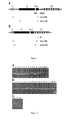
- V ⁇ and V ⁇ genes was essentially identical to the one used for the H chain ( Fig. 1 ).
- Mouse germline Ig sequences were downloaded from international ImMunoGeneTics information system and IgBLAST databases for designing the primers. We focused our primer designing effort on the two most commonly used inbred strains of mice, namely C57BL/6 and BALB/c. The sequences were grouped in 16 V H (350 members), 19 V ⁇ (164 members), 3 V ⁇ (3 members), 1 J H (4 members), 1 J ⁇ (5 members), and 1 J ⁇ (5 members) families according to the IMGT nomenclature. MacVector software was used to analyze each Ig gene family. Based on the nucleotide sequence alignment of individual families, we designed a set of external and internal primers targeting conserved motifs in the leader, framework region 1, joining and constant regions of H and L chain genes ( Fig. 1 ).
- the 112 oligonucleotide primers (SEQ ID NO: 1-112) designed for amplifying the mouse rearranged/expressed Ig genes are summarized in Tables 1-3.
- 5 C H external, 5 C H internal and 5 C H primers for reverse transcribing the Ig transcript (RTC H ) were designed for the H chain isotypes IgM, IgG, IgA, IgE and IgD (Table 1).
- the total number of genes in any given Ig family, sequence of the oligonucleotide primer, position of the primer binding sites of the external and internal primers, fold degeneracy and the number of genes in a given Ig family with 0, 1, 2, 3 or 4 mismatches relative to the primer sequence are detailed in Tables 1-3.
- the 5' external and internal primers bind in the leader and framework region 1, respectively, in the case of 8 out of 16 (50%) V H families, 18 out of 19 (94.7%) V ⁇ families and all V ⁇ genes (100%). In the remaining V gene families, both 5' external and internal primers hybridize to framework region 1. Primers designed for 7 out of 16 (43.7%) V H families, 14 out of 19 (73.7%) V ⁇ families and all V ⁇ genes (100%) allow amplification of full-length V genes.
- the size of the PCR product obtained was generally consistent with the position of the binding site of the 5' internal primer of the corresponding V gene family (Tables 1-3). It is highly unlikely that these bands were the result of PCR contamination. This was confirmed by cloning and sequencing the PCR product of 6 randomly selected V H and V ⁇ families, and all V ⁇ genes.
- V gene usage was found to be limited in V gene families with 1 to 4 members (V H 4, V H 11, V H 15, V ⁇ 11, V ⁇ 17, V ⁇ 1/2 and V ⁇ 3) (Table 4). We observed that all the independent rearrangements recovered from V H 4, V H 11, V H 15, and V ⁇ 11 gene family-specific libraries utilized a single V gene belonging to the corresponding V gene family.
- the RT-PCR amplified product was sequenced using the appropriate C H , C ⁇ or C ⁇ internal primer. Sequence comparison and V gene family assignment for the expressed H and L chain genes was done using IMGT and IgBLAST databases.
- V H genes expressed in the 38 hybridomas indicated that they belonged to 8 out of the 16 V H families.
- V H 1, V H 5 and V H 9 the primers amplified V H 2, V H 3, V H 7, V H 10 and V H 14 minor V H gene families.
- a family with less than 5% of the total number of genes present in our V H database was classified as a minor family.
- V L genes expressed in the 38 hybridomas were sequenced and analyzed. Thirty seven of the 38 hybridomas expressed ⁇ L chain.
- the expressed V ⁇ genes belong to 14 out of the 19 V ⁇ families. They are V ⁇ 1, V ⁇ 2, V ⁇ 3, V ⁇ 4, V ⁇ 5, V ⁇ 6, V ⁇ 8, V ⁇ 9, V ⁇ 10, V ⁇ 12, V ⁇ 13, V ⁇ 15, V ⁇ 18 and V ⁇ 19 families. Of these V ⁇ 5, V ⁇ 9, V ⁇ 10, V ⁇ 15, V ⁇ 18 and V ⁇ 19 families have 6 (3.7%) or fewer members.
- the lone ⁇ L chain expressing hybridoma rearranged V ⁇ 2 and J ⁇ 2 gene segments.
- V H and V ⁇ genes were amplified using pooled primers that target all V H families and all V ⁇ genes, respectively (SEQ ID NO:1-112, Tables 1-3).
- V H and V ⁇ PCR products were cloned and the recombinants recovered from the two libraries were sequenced.
- the nucleotide sequence was analyzed to identify the germline V gene and family utilized.
- V H and V ⁇ cDNA libraries were constructed using pooled constant region, and V H and V ⁇ primer mixes. The summary of the nucleotide sequence analysis is presented in Table 5.
- the 119 rearranged V H genomic clones analyzed represented 38 unique V H genes belonging to 12 of the 15 V H families present in CBA/J mice. Most of the remaining 81 rearranged V H genomic clones were independent VDJ rearrangements of the 38 unique V H genes. In some instances, we observed 2 or more identical copies of the same genomic clone.
- V H and V ⁇ primer set SEQ ID NO: 1-112 disclosed in the present invention provides broad V gene family coverage under conditions where primer mixes and splenocytes were used.
- degenerate primers and primer cocktails can allow broad V family/member coverage.
- the potential disadvantage of using degenerate primers or primer mixes is that it can lead to introduction of mutation(s) in the annealing region as result of (a) degenerate bases present in the primer, (b) cross-family priming and (c) authentic somatic mutation(s) present in the primer binding site may get replaced by the corresponding nucleotide in the annealing primer during PCR.
- hybridomas represent 14 of the 19 V ⁇ families and the number of hybridomas that belong to a given V ⁇ gene family ranged from 1 to 7.
- the nucleotide sequences from the hybridomas were analyzed to identify the V ⁇ internal primer that amplified the expressed V ⁇ gene.
- the V ⁇ internal primer used and the amplified V ⁇ gene belonged to the same family indicating low cross-V ⁇ gene family priming and high degree of specificity of the primers.
- 5 V ⁇ 1 gene family expressing hybridomas 2 were primed by V ⁇ 4 primer. None of the 7 V ⁇ 4 expressing hybridomas were primed by a V ⁇ 1 primer.
- V H gene families The issue of cross-family priming was also examined for the V H gene families. This was addressed in two ways. One, by analyzing the recombinants recovered from a library generated using pooled V H primers and splenocyte genomic DNA. A V H cDNA library was generated in parallel using pooled V H primers and total RNA from splenocytes. The clones recovered from the V H genomic and cDNA libraries (listed in Table 5) were analyzed to identify the V H internal primer that amplified the expressed V H gene and family to which the expressed V H gene belongs. In the 38 V H genomic and 22 cDNA clones analyzed, the V H internal primer used and the amplified V H gene belonged to the same family with no exceptions.
- V H primers exhibited high V H family specificity and no cross-family priming.
- IgH, Ig ⁇ and Ig ⁇ specific constant region primers for reverse transcription allows subsequent amplification of only IgH, Ig ⁇ and Ig ⁇ chain, respectively.
- the C H and C L constant region primers have to be pooled.
- total RNA isolated from splenocytes was reverse transcribed using pooled IgM, IgG, IgA, Ig ⁇ and Ig ⁇ specific constant region primers (listed in Tables 1-3).
- Equal amount of cDNA was used as template for setting up 6 independent nested PCRs for amplifying IgM, IgG, IgA, Ig ⁇ and Ig ⁇ V gene transcripts.
- the IgG transcripts were covered in two separate reactions, one for IgG3 and the second one for the remaining IgG isotypes.
- the expressed H, ⁇ and ⁇ chain were amplified using the corresponding pooled V H , V ⁇ and V ⁇ primer cocktail, respectively.
- the second round PCR products were cloned and recombinants recovered from the resultant 6 cDNA isotype specific libraries were sequenced. Analysis of the recombinants revealed that each of the 6 libraries were indeed specific for the intended isotype.
- V H and V L genes belonging to different V gene families can be amplified from pooled hybridomas in a representative manner
- V H and V L primer sets Since we use pooled V H and V L primer sets to amplify the rearranged/expressed V H and V L genes, it was important to test for any possible preferential binding of individual primers to selected rearranged/expressed V genes as it can complicate B cell repertoire analysis.
- the V H genes expressed in these hybridomas belonged to V H 1, V H 2, V H 3, V H 7 and V H 14 gene families.
- V H and V L gene specific cDNA libraries starting with total RNA pooled from hybridomas as template, and cocktails of all V H and V L primers.
- the plasmid DNA recovered from the recombinants obtained from the V H and V L cDNA libraries were digested with restriction enzyme(s) that can distinguish the V H and V L genes expressed in the hybridomas pooled in the experiment.
- restriction enzyme(s) that can distinguish the V H and V L genes expressed in the hybridomas pooled in the experiment.
- restriction profiling we recovered the expected 5 expressed V H and 4 V ⁇ genes from the V H and V L cDNA libraries, respectively.
- the 5 expressed V H and 4 V ⁇ genes identified by restriction digestion were confirmed by sequencing.
- V ⁇ J ⁇ gene In addition to these 4 expressed V ⁇ genes, we found a rearranged V ⁇ 1 family member that was rendered non-functional because of a frameshift mutation in framework region 1 and the presence of a nonsense codon in framework region 2. This V ⁇ J ⁇ gene most likely represents a non-productively rearranged allele present in one of the 5 hybridomas.
- the set of oligonucleotides for assaying rearrangement of immunoglobulin genes for identifying clonality of cells, cancer cells, hypermutation in immunoglobulin gene, antibody isotype producing cell and/or assaying B cell repertoire in a sample wherein nucleotide sequences of said oligonucleotides are as set forth in SEQ ID NO: 1 to 112., wherein said antibody is selected from the group consisting of immunoglobulin heavy chain isotypes IgG, IgM, IgA, IgE, and IgD; and light chain isotypes ⁇ and ⁇ .
- nucleotide sequences of said set of oligonucleotides is selected from the group consisting of set 1: SEQ ID NO: 1 to 37, SEQ ID NO: 55 to 95 and SEQ ID NO: 99 to 108; and set 44: SEQ ID NO: 1 to 34, SEQ ID NO: 38 to 93, SEQ ID NO: 96 to 104 and SEQ ID NO: 109 to 112.
- One embodiment of the present invention provides a set of oligonucleotides for assaying rearrangement of immunoglobulin genes for identifying clonality of cells, cancer cells, hypermutation in immunoglobulin gene, antibody isotype producing cell and/or assaying B cell repertoire in a sample, wherein nucleotide sequences of said set of oligonucleotides is selected from the group consisting of set 2: SEQ ID NO: 1 to 37, set 3: SEQ ID NO: 1 to 4 and SEQ ID NO: 35-37, set 4: SEQ ID NO: 5 to 6 and SEQ ID NO: 35 to 37, set 5: SEQ ID NO: 7 to 8 and SEQ ID NO: 35-37, set 6: SEQ ID NO: 9 to 10 and SEQ ID NO: 35-37, set 7: SEQ ID NO: 11 to 12 and SEQ ID NO: 35-37; set 8: SEQ ID NO: 13 to 14 and SEQ ID NO: 35-37; set 9: SEQ ID NO: 15 to 16 and
- Still another embodiment of the present invention provides a set of oligonucleotides for assaying rearrangement of immunoglobulin genes for identifying clonality of cells, cancer cells, hypermutation in immunoglobulin gene, antibody isotype producing cell and/or assaying B cell repertoire in a sample, wherein nucleotide sequences of said set of oligonucleotides are as set forth in set 19: SEQ ID NO: 55 to 95 and SEQ ID NO: 99 to 108.
- Yet another embodiment of the present invention provides a set of oligonucleotides for assaying rearrangement of immunoglobulin genes for identifying clonality of cells, cancer cells, hypermutation in immunoglobulin gene, antibody isotype producing cell and/or assaying B cell repertoire in a sample, wherein nucleotide sequences of said set of oligonucleotides is selected from the group consisting of set 20: SEQ ID NO: 55 to 95; set 21: SEQ ID NO: 55 to 57 and SEQ ID NO: 94 to 95; set 22: SEQ ID NO: 58 to 59 and SEQ ID NO: 94 to 95; set 23: SEQ ID NO: 60 to 61 and SEQ ID NO: 94 to 95; set 24: SEQ ID NO: 62 to 63 and SEQ ID NO: 94 to 95; set 25: SEQ ID NO: 64 to 65 and SEQ ID NO: 94 to 95; set 26: SEQ ID NO: 66 to 67 and SEQ ID NO: 94
- the present invention further provides a set of oligonucleotides for assaying rearrangement of immunoglobulin genes for identifying clonality of cells, cancer cells, hypermutation in immunoglobulin gene, antibody isotype producing cell and/or assaying B cell repertoire in a sample, wherein nucleotide sequences of said set of oligonucleotides is selected from the group consisting of set 45: SEQ ID NO: 1 to 34, SEQ ID NO: 38-54; set 46: SEQ ID NO: 1 to 34, SEQ ID NO: 38, SEQ ID NO: 43 to 44; set 47: SEQ ID NO: 1 to 34, SEQ ID NO: 39, SEQ ID NO: 45 to 48; set 48: SEQ ID NO: 1 to 34, SEQ ID NO: 40, SEQ ID NO: 49 to 50; set 49: SEQ ID NO: 1 to 34, SEQ ID NO: 41, SEQ ID NO: 51 to 52; set 50: SEQ ID NO: 1 to 34, SEQ ID NO: 42,
- the present invention further provides a set of oligonucleotides for assaying rearrangement of immunoglobulin genes for identifying clonality of cells, cancer cells, hypermutation in immunoglobulin gene, antibody isotype producing cell and/or assaying B cell repertoire in a sample, wherein nucleotide sequences of said set of oligonucleotides is selected from the group consisting of set 45: SEQ ID NO: 1 to 34, SEQ ID NO: 38-54; set 46: SEQ ID NO: 1 to 34, SEQ ID NO: 38, SEQ ID NO: 43 to 44; set 47: SEQ ID NO: 1 to 34, SEQ ID NO: 39, SEQ ID NO: 45 to 48; set 48: SEQ ID NO: 1 to 34, SEQ ID NO: 40, SEQ ID NO: 49 to 50; set 49: SEQ ID NO: 1 to 34, SEQ ID NO: 41, SEQ ID NO: 51 to 52; set 50: SEQ ID NO: 1 to 34, SEQ ID NO: 42,
- a set of oligonucleotides for assaying rearrangement of immunoglobulin genes for identifying clonality of cells, cancer cells, hypermutation in immunoglobulin gene, antibody isotype producing cell and/or assaying B cell repertoire in a sample, wherein nucleotide sequences of said oligonucleotides are as set forth in SEQ ID NO: 1 to 54, wherein said immunoglobin genes are V H , J H , and C H .
- a set of oligonucleotides for assaying rearrangement of immunoglobulin genes for identifying clonality of cells, cancer cells, hypermutation in immunoglobulin gene, antibody isotype producing cell and/or assaying B cell repertoire in a sample, wherein nucleotide sequences of said oligonucleotides are as set forth in SEQ ID NO: 55 to 98.
- a set of oligonucleotides for assaying rearrangement of immunoglobulin genes for identifying clonality of cells, cancer cells, hypermutation in immunoglobulin gene, antibody isotype producing cell and/or assaying B cell repertoire in a sample, wherein nucleotide sequences of said oligonucleotides are as set forth in SEQ ID NO: 55 to 98, wherein said immunoglobin genes are V ⁇ , J ⁇ , and C ⁇ gene.
- SEQ ID NO: 4 SEQ ID NO: 6, SEQ ID NO: 8, SEQ ID NO: 10, SEQ ID NO: 12, SEQ ID NO: 14, SEQ ID NO: 16, SEQ ID NO: 18, SEQ ID NO: 20, SEQ ID NO: 22, SEQ ID NO: 24, SEQ ID NO: 26, SEQ ID NO: 28, SEQ ID NO: 30, SEQ ID NO: 32, SEQ ID NO: 34, SEQ ID NO: 36, SEQ ID NO: 37, SEQ ID NO: 56, SEQ ID NO: 57, SEQ ID NO: 59, SEQ ID NO: 61, SEQ ID NO: 63, SEQ ID NO: 65, SEQ ID NO: 67, SEQ ID NO: 69, SEQ ID NO: 71, SEQ ID NO: 73, SEQ ID NO: 75, SEQ ID NO: 77, SEQ ID NO: 79, SEQ ID NO: 81, SEQ ID NO: 83, SEQ ID NO: 85, SEQ ID NO: 87, SEQ ID NO: 89, SEQ
- a process of assaying rearrangement of immunoglobulin genes for identifying clonality of cells, cancer cells, hypermutation in immunoglobulin gene, antibody isotype producing cell and/or assaying B cell repertoire in a sample comprises providing a sample; providing a first set of oligonucleotides as set forth in SEQ ID NO: 1, SEQ ID NO: 2, SEQ ID NO: 5, SEQ ID NO: 7, SEQ ID NO: 9, SEQ ID NO: 11, SEQ ID NO: 13, SEQ ID NO: 15, SEQ ID NO: 17, SEQ ID NO: 19, SEQ ID NO: 21, SEQ ID NO: 23, SEQ ID NO: 25, SEQ ID NO: 27, SEQ ID NO: 29, SEQ ID NO: 31, SEQ ID NO: 33, SEQ ID NO: 35, SEQ ID NO: 55, SEQ ID NO: 58, SEQ ID NO: 60, SEQ ID NO: 62, SEQ ID NO: 64, SEQ ID NO: 66, SEQ ID NO:
- SEQ ID NO: 4 SEQ ID NO: 6, SEQ ID NO: 8, SEQ ID NO: 10, SEQ ID NO: 12, SEQ ID NO: 14, SEQ ID NO: 16, SEQ ID NO: 18, SEQ ID NO: 20, SEQ ID NO: 22, SEQ ID NO: 24, SEQ ID NO: SEQ ID NO: 26, SEQ ID NO: 28, SEQ ID NO: 30, SEQ ID NO: 32, SEQ ID NO: 34, SEQ ID NO: 44, SEQ ID NO: 47, SEQ ID NO: 48, SEQ ID NO: 50, SEQ ID NO: 52 and SEQ ID NO: 54; and detecting presence of an amplified product
- Yet another embodiment of the present invention relates to cancer, wherein said cancer is B cell lymphoma.
- Yet another embodiment of the present invention relates to cell, wherein said cell is a hybridoma cell.
- Yet another embodiment of the present invention relates to wherein said sample is a B cell.
- One embodiment of the present invention provides a prokaryotic expression vector.
- kits for assaying rearrangement of immunoglobulin genes for identifying clonality of cells, cancer cells, hypermutation in immunoglobulin gene, antibody isotype producing cell and/or assaying B cell repertoire in a sample
- said kit comprises nucleotide sequences of said oligonucleotides are as set forth in SEQ ID NO: 1 to 112.
- kits for assaying rearrangement of immunoglobulin genes for identifying clonality of cells, cancer cells, hypermutation in immunoglobulin gene, antibody isotype producing cell and/or assaying B cell repertoire in a sample
- said kit comprises at least one set of oligonucleotides selected from the group consisting of set 1: SEQ ID NO: 1 to 37, SEQ ID NO: 55 to 95 and SEQ ID NO: 99 to 108; and set 44: SEQ ID NO: 1 to 34, SEQ ID NO: 38 to 93, SEQ ID NO: 96 to 104 and SEQ ID NO: 109 to 112.
- kits for assaying rearrangement of immunoglobulin genes for identifying clonality of cells, cancer cells, hypermutation in immunoglobulin gene, antibody isotype producing cell and/or assaying B cell repertoire in a sample
- said kit comprises at least one set of oligonucleotides selected from the group consisting of set 2: SEQ ID NO: 1 to 37, set 3: SEQ ID NO: 1 to 4 and SEQ ID NO: 35-37, set 4: SEQ ID NO: 5 to 6 and SEQ ID NO: 35 to 37, set 5: SEQ ID NO: 7 to 8 and SEQ ID NO: 35-37, set 6: SEQ ID NO: 9 to 10 and SEQ ID NO: 35-37, set 7: SEQ ID NO: 11 to 12 and SEQ ID NO: 35-37; set 8: SEQ ID NO: 13 to 14 and SEQ ID NO: 35-37; set 9: SEQ ID NO: 15 to 16 and SEQ ID NO: 35-37; set
- kits for assaying rearrangement of immunoglobulin genes for identifying clonality of cells, cancer cells, hypermutation in immunoglobulin gene, antibody isotype producing cell and/or assaying B cell repertoire in a sample wherein said kit comprises set 19: SEQ ID NO: 55 to 95 and SEQ ID NO: 99 to 108.
- kits for assaying rearrangement of immunoglobulin genes for identifying clonality of cells, cancer cells, hypermutation in immunoglobulin gene, antibody isotype producing cell and/or assaying B cell repertoire in a sample comprising at least one set of oligonucleotides selected from the group consisting of set 20: SEQ ID NO: 55 to 95; set 21: SEQ ID NO: 55 to 57 and SEQ ID NO: 94 to 95; set 22: SEQ ID NO: 58 to 59 and SEQ ID NO: 94 to 95; set 23: SEQ ID NO: 60 to 61 and SEQ ID NO: 94 to 95; set 24: SEQ ID NO: 62 to 63 and SEQ ID NO: 94 to 95; set 25: SEQ ID NO: 64 to 65 and SEQ ID NO: 94 to 95; set 26: SEQ ID NO: 66 to 67 and SEQ ID NO: 94 to 95; set 27: S
- the present invention also provides a kit for assaying rearrangement of immunoglobulin genes for identifying clonality of cells, cancer cells, hypermutation in immunoglobulin gene, antibody isotype producing cell and/or assaying B cell repertoire in a sample, wherein said kit comprises at least one set of oligonucleotides selected from the group consisting of set 40: SEQ ID NO: 99 to 108; set 41: SEQ ID NO: 99 to100 and SEQ ID NO: 105 to 108; set 42: SEQ ID NO: 101 to 102 and SEQ ID NO: 105 to 108; and set 43: SEQ ID NO: 103 to 108.
- the present invention further provides a kit for assaying rearrangement of immunoglobulin genes for identifying clonality of cells, cancer cells, hypermutation in immunoglobulin gene, antibody isotype producing cell and/or assaying B cell repertoire in a sample
- said kit comprises at least one set of oligonucleotides selected from the group consisting of set 45: SEQ ID NO: 1 to 34, SEQ ID NO: 38-54; set 46: SEQ ID NO: 1 to 34, SEQ ID NO: 38, SEQ ID NO: 43 to 44; set 47: SEQ ID NO: 1 to 34, SEQ ID NO: 39, SEQ ID NO: 45 to 48; set 48: SEQ ID NO: 1 to 34, SEQ ID NO: 40, SEQ ID NO: 49 to 50; set 49: SEQ ID NO: 1 to 34, SEQ ID NO: 41, SEQ ID NO: 51 to 52; set 50: SEQ ID NO: 1 to 34, SEQ ID NO: 42, SEQ ID NO: 53 to 54; set 51: SEQ
- the present invention further provides a kit for assaying rearrangement of immunoglobulin genes for identifying clonality of cells, cancer cells, hypermutation in immunoglobulin gene, antibody isotype producing cell and/or assaying B cell repertoire in a sample
- said kit comprises at least one set of oligonucleotides selected from the group consisting of set 67: SEQ ID NO: 55 to 93; SEQ ID NO: 96 to 104 and SEQ ID NO: 109 to 112; set 68: SEQ ID NO: 55 to 93 and SEQ ID NO: 96 to 98, set 69: SEQ ID NO: 55 to 57 and SEQ ID NO: 96 to 98, set 70: SEQ ID NO: 58 to 59 and SEQ ID NO: 96 to 98, set 71: SEQ ID NO: 60 to 61 and SEQ ID NO: 96 to 98, set 72: SEQ ID NO: 62 to 63 and SEQ ID NO: 96 to 98, set 73: S
- mice BALB/c and CBA/J inbred strains of mice were from The Jackson Laboratory, and were bred and maintained in the Small Animal Facility of the National Institute of Immunology. Mice used for experiments were 6 to 8 wk old. Approval from the Institutional Animal Ethics Committee was obtained for all experimental procedures involving animals.
- Genomic DNA was isolated from 2 x 10 7 splenocytes from CBA/J mice using a commercially available genomic DNA isolation kit following the manufacturer's instructions (Qiagen, Germany).
- a nested PCR was performed for amplifying the rearranged V H and V L gene families.
- Family targeted PCRs were set up for each V gene family using H chain primer sets 3-18, ⁇ L chain primer sets 21-39 and ⁇ L chain primer sets 41-43 (Table 6) and genomic DNA from splenocytes.
- the 50 ⁇ l first round PCR mix consisted of 1 X PCR buffer I, 200 ⁇ M dNTPs, 0.25 ⁇ M external 5' (V gene) and 3' (J region) primers each, and 2.5 U of AmpliTaq DNA polymerase (Applied Biosystems, USA).
- Touchdown PCR was set up on a GeneAmp 2700 PCR System (Applied Biosystems, USA).
- the touchdown part of the PCR programme started with an initial denaturation step at 95°C for 2 min. This was followed by denaturation at 94°C for 1 min, annealing at 62°C for 1 min and an extension at 72°C for 1 min.
- the annealing temperature was decreased from 62°C to 52°C over 5 cycles at the rate of 2°C per cycle. This was followed by 25 cycles consisting of denaturation at 94°C for 1 min, annealing at 52°C for 1 min and an extension at 72°C for 1 min.
- a final extension step was carried out at 72°C for 10 min.
- composition of the reaction mixture and cycling parameters for the second round PCR were same as were used for the first round PCR except that 2 ⁇ l of the unpurified first round PCR product served as template for the second round PCR in place of splenocyte genomic DNA.
- the amplified products were analyzed on a 0.9% agarose gel.
- the melting temperature (T m in °C) of the primers was calculated using the formula [(4 x number of G or C nucleotides in the primer sequence) + (2 x number of A or T nucleotides in the primer sequence)].
- V H 1 family SEQ ID NO. 1 and 2 V H 2 family SEQ ID NO. 5; V H 3 family SEQ ID NO. 7; V H 4 family SEQ ID NO. 9; V H 5 family SEQ ID NO. 11; V H 6 family SEQ ID NO. 13; V H 7 family SEQ ID NO.15; V H 8 family SEQ ID NO. 17; V H 9 family SEQ ID NO. 19; V H 10 family SEQ ID NO. 21; V H 11 family SEQ ID NO. 23; V H 12 family SEQ ID NO. 25; V H 13 family SEQ ID NO. 27; V H 14 family SEQ ID NO. 29; V H 15 family SEQ ID NO. 31; V H 16 family SEQ ID NO.
- V gene family-specific primers and AmpliTaq DNA polymerase were used for amplifying 6 randomly selected V H (V H 1, V H 4, V H 5, V H 8, V H 11 and V H 15) and 6 V ⁇ (V ⁇ 3, V ⁇ 4, V ⁇ 11, V ⁇ 13, V ⁇ 14 and V ⁇ 17) families and the 3 V ⁇ (i. e. V ⁇ , V ⁇ 2 and V ⁇ 3) genes using splenocyte genomic DNA from CBA/J mice.
- the PCR products obtained were purified using columns (RBC, Taiwan), cloned in TOPO-TA cloning vector (Invitrogen, USA) and transformed into E. coli strain XL1 Blue.
- V gene family-specific library Four to six recombinants from each V gene family-specific library were sequenced using an automated DNA sequencer. IMGT and IgBLAST databases were used to assign the germline gene segments utilized in the H and L chain. L chains with the same V L and J L gene segments were considered independent rearrangements if the V L to J L junctions were different. Rearranged V genes recovered from the libraries that had identical sequences were scored once.
- V H 1, V H 4, V H 5, V H 8, V H 11 and V H 15 families were amplified by nested PCR using primer sets 3, 6, 7, 10, 13 and 17, respectively.
- the V ⁇ 3, V ⁇ 4, V ⁇ 11, V ⁇ 13, V ⁇ 14 and V ⁇ 17 families were amplified by nested PCR using primer sets 23, 24, 31, 33, 34 and 37, respectively.
- the V ⁇ 1 and V ⁇ 2, and V ⁇ 3 gene were amplified by nested PCR using primer sets 41 and 42, respectively (Table 6).
- a library targeting the complete complement of immunoglobulin H and L chain rearrangements can be constructed using H chain primer sets 3-18, ⁇ L chain primer sets 21-39 and ⁇ L chain primer sets 41-43 (Table 6).
- V H and V ⁇ gene families For applications where the identity of the rearranged/expressed V H and V L gene is not known, we used pooled primer mixes for (RT-) PCR. Separate external and internal primer mixes were made for V H , V ⁇ and V ⁇ gene families. The V H external primer mix was prepared by pooling 17 external primers targeting all the V H gene families at a concentration of 2 ⁇ M each (Table 1). Similarly, the V H internal primer mix was prepared by pooling the 17 internal primers targeting all the V H gene families. Likewise, external and internal primer mixes were made for the V ⁇ and V ⁇ gene families (Table 2 and Table 3).
- Each 5' external and internal primer was used at a final concentration of 0.1 ⁇ M in the first and second round PCR.
- the same 5' primer mixes were used for amplifying the rearranged/expressed V H and V L genes from splenocyte genomic DNA or total RNA from splenocytes/hybridomas. The 3' were used at a final concentration of 0.25 ⁇ M as described above.
- J H or J L (for genomic DNA template) and C H or C L (for RNA template) primers were used as antisense primers.
- the first strand cDNA for the expressed H and L chain was synthesized using a commercially available RT-PCR kit (Applied Biosystems, USA) and C H or C L RT antisense primers ( Fig. 1 and Tables 1-3, SEQ ID NO: 1-112).
- RT-PCR kit Applied Biosystems, USA
- C H or C L RT antisense primers Fig. 1 and Tables 1-3, SEQ ID NO: 1-112
- the corresponding primers used for the ⁇ and ⁇ chains were RTC ⁇ and RTC ⁇ , respectively.
- the 20 ⁇ l reverse transcription reaction mixture consisted of 1 X PCR buffer II, 0.75 ⁇ M antisense primer, 10 mM dNTP mix, 5 mM MgCl 2 , 1 U of RNase inhibitor, 50 U of MuLV reverse transcriptase (Applied Biosystems, USA) and 10 ⁇ g of total RNA.
- the reaction was performed at 42°C for 1 h.
- Reverse transcriptase was inactivated by incubating at 99°C for 5 min. Five ⁇ l of unpurified cDNA was used as a template for the first round PCR.
- PCR buffer I concentration of the components and cycling parameters were the same as described above for the genomic PCR except that PCR buffer I, AmpliTaq DNA polymerase, and J region primers were replaced by Pfu Ultra Hotstart buffer, Pfu Ultra Hotstart DNA polymerase (Stratagene, USA) and C region primers, respectively.
- Pfu Ultra Hotstart buffer Pfu Ultra Hotstart DNA polymerase (Stratagene, USA)
- C region primers respectively.
- Taq DNA polymerase was preferred over Pfu DNA polymerase because of its higher amplification efficiency.
- hybridoma cells IgM, ⁇
- diethyl pyrocarbonate treated PBS were first counted using a haemocytometer and used in the range of 1 to 100 cells.
- the expressed V ⁇ and V H gene was amplified using V ⁇ and V H pooled primers respectively, in conjunction with corresponding constant region primers, as described above.
- a second set of RT-PCRs were set up where the amplification cycles were increased from 25 to 50 for the first and second round PCR.
- the amplified product was analyzed on a 0.9% agarose gel.
- SEQ ID NO. 26 SEQ ID NO. 28, SEQ ID NO. 30, SEQ ID NO. 32 and SEQ ID NO. 34.
- Pooled 3' C H external primer mix comprised of SEQ ID NO. 43, SEQ ID NO. 45, SEQ ID NO. 46, SEQ ID NO. 49, SEQ ID NO. 51 and SEQ ID NO. 53.
- the 3' C ⁇ external primer mix was SEQ ID NO. 97.
- Pooled 3' C H internal primer mix comprised of SEQ ID NO. 44, SEQ ID NO. 47, SEQ ID NO. 48, SEQ ID NO. 50, SEQ ID NO. 52, and SEQ ID NO. 54.
- the 3' C ⁇ internal primer was SEQ ID NO. 98.
- RT-PCR amplified V H and V L genes expressed in the hybridomas were column- or gel-purified (Qiagen, Germany) and sequenced using the appropriate C H , C ⁇ or C ⁇ internal antisense primer ( Fig. 1 and Tables 1-3).
- the nucleotide sequence was analyzed with MacVector software.
- the family to which the expressed V H and V L genes belong was assigned using IMGT and IgBLAST databases. Once the V gene family was identified, we used the corresponding 5' internal primer to sequence the second strand of the amplified product.
- the (RT-) PCR product was cloned and recombinants from the resultant genomic/cDNA library were sequenced.
- the nucleotide sequence analysis was restricted to the sequence internal to the 5' and 3' internal primer. This was done to prevent mutations introduced by the primer during (RT-) PCR from affecting the sequence analysis.
- the RT-PCR protocol used for hybridomas was followed for splenocytes with the following modifications.
- First strand cDNA was synthesized for H and L chain transcripts from splenocytes using pooled constant region specific primers.
- RTC ⁇ , RTC ⁇ , RTC ⁇ , RTC ⁇ and RTC ⁇ were used at a final concentration of 0.15 ⁇ M each (Tables 1-3).
- Equal amounts (200 ng/hybridoma) of total RNA from 5 previously characterized IgM expressing hybridomas were mixed, and cDNA synthesized using H and L chain constant region specific antisense primers in 2 separate reverse transcription reactions.
- the expressed V H and V L genes in the hybridomas belonged to V H 1, V H 2, V H 3, V H 7 and V H 14, and V ⁇ 5, V ⁇ 9, V ⁇ 12, V ⁇ 18 and V ⁇ 2 gene families.
- Separate cocktails comprising of all V H and V L (containing of both ⁇ and ⁇ ) primers and AmpliTaq DNA polymerase were used to amplify the expressed V H and V L genes from the cDNA pool.
- the H and L chain RT-PCR products were purified and separate libraries were constructed in TOPO-TA cloning vector.
- the ligated DNA was transformed in E . coli strain XL1 Blue. Plasmid DNA isolated from the recombinants was digested with restriction enzyme(s) that can distinguish the V H and V L genes expressed in the 5 hybridomas. The recombinants selected after restriction profiling were confirmed by nucleotide sequencing.
- Spleen from naive BALB/c mice were embedded in OCT, frozen over liquid nitrogen vapours, and stored at -70°C till further use. Seven micron sections were cut using a cryostat microtome (Thermo Shandon, UK), collected on glass slides and stored at - 70°C until required. For staining, the splenic sections were washed with PBS, blocked using 2% bovine serum albumin (Vector Laboratories, USA) and incubated with rat anti-mouse B220 primary Ab (GE Biosciences, USA). The splenic sections were further incubated with horseradish peroxidase labeled goat anti-rat Ig.
- the B220 + cells were visualized using 3, 3'-diaminobenzidine (Vector Laboratories, USA) and H 2 O 2 .
- the sections were washed with water and dehydrated in ethanol (once in 75% ethanol for 30 s, once in 95% ethanol for 30 s and thrice in absolute ethanol for 2 min each).
- the splenic section was subjected to three changes of xylene.
- the microdissection was performed using a hydraulic micromanipulator (Narashige, Japan) assembled on an inverted microscope (Nikon, Japan).
- B220 + cells were microdissected from the immunohistochemically stained splenic section, transferred to a 0.2 ml PCR tube containing 10 ⁇ l of 1 X PCR buffer (Applied Biosystems, USA) and stored at - 20°C until required.
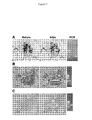
- the rearranged V H and V ⁇ genes were directly PCR amplified from the microdissected B cells using pooled primer mixes comprising of primers targeting all the V H and V ⁇ gene families, and the corresponding J region primer(s) as described above.
- the number of B cells microdissected was estimated by comparing the image of the stained section taken before and after microdissection.
- the rearranged H chain were amplified by nested PCR using splenocyte genomic DNA as template.
- the 50 ⁇ l first round PCR mix consisted of 1 X PCR buffer I, 200 ⁇ M dNTPs, 0.25 ⁇ M external 5' (V gene) and 3' (J region) primers each, and 2.5 units of AmpliTaq DNA polymerase (Applied Biosystems, USA). Touchdown PCR was set up on a GeneAmp 2700 PCR System (Applied Biosystems, USA). The touchdown part of the PCR programme started with an initial denaturation step at 95°C for 2 min. This was followed by denaturation at 94°C for 1 min, annealing at 62°C for 1 min and an extension at 72°C for 1 min.
- the annealing temperature was decreased from 62°C to 52°C over 5 cycles at the rate of 2°C per cycle. This was followed by 25 cycles consisting of denaturation at 94°C for 1 min, annealing at 52°C for 1 min and an extension at 72°C for 1 min. A final extension step was carried out at 72°C for 10 min.
- the first round primer mix comprised of SEQ ID NOs: 1, 2, 5, 7, 9, 11, 13, 15, 17, 19, 21, 23, 25, 27, 29, 31, 33 and 35.
- the composition of the reaction mixture and cycling parameters for the second round PCR were same as were used for the first round PCR except that 2 ⁇ l of the unpurified first round PCR product served as template for the second round PCR in place of splenocyte genomic DNA.
- the second round primer set comprised of SEQ ID NOs. 3, 4, 6, 8, 10, 12, 14, 16, 18, 20, 22, 24, 26, 28, 30, 32, 34, 36 and 37.
- Example 10 describes the process of amplifying rearranged H chain by nested PCR using splenocyte genomic DNA as template. The same process can be repeated for amplifying the ⁇ and ⁇ L chains using the corresponding primers described in Table 1-3.
- the rearranged H chains were amplified by nested PCR using total or polyA + RNA as template.
- the 20 ⁇ l reverse transcription reaction mixture consisted of 1 X PCR buffer II, 0.75 ⁇ M antisense primer, 10 mM dNTP mix, 5 mM MgCl2, 1 U of RNase inhibitor, 50 U of MuLV reverse transcriptase (Applied Biosystems, USA) and 10 ⁇ g of total RNA.
- the reaction was performed at 42 °C for 1 h. Reverse transcriptase was inactivated by incubating at 99°C for 5 min.
- the reverse transcription reaction was done using a primer mix comprising of SEQ ID NOs. 38-42.
- the 50 ⁇ l first round PCR mix consisted of 1 X PCR buffer I, 200 ⁇ M dNTPs, 0.25 ⁇ M external 5' (V gene) and 3' (C region) primers each, and 2.5 units of Pfu Ultra Hotstart buffer and Pfu Ultra Hotstart DNA polymerase (Stratagene, USA) (Applied Biosystems, USA). Touchdown PCR was set up on a GeneAmp 2700 PCR System (Applied Biosystems, USA). The touchdown part of the PCR programme started with an initial denaturation step at 95°C for 2 min. This was followed by denaturation at 94°C for 1 min, annealing at 62°C for 1 min and an extension at 72°C for 1 min.
- the annealing temperature was decreased from 62°C to 52°C over 5 cycles at the rate of 2°C per cycle. This was followed by 25 cycles consisting of denaturation at 94°C for 1 min, annealing at 52°C for 1 min and an extension at 72°C for 1 min. A final extension step was carried out at 72°C for 10 min.
- the first round PCR was done using a primer set consisting of SEQ ID NO: 1, 2, 5, 7, 9, 11, 13, 15, 17, 19, 21, 23, 25, 27, 29, 31, 33, 43, 45, 46, 49, 51 and 53. Five ⁇ l of unpurified cDNA was used as a template for the first round PCR.
- the composition of the reaction mixture and cycling parameters for the second round PCR were same as were used for the first round PCR except that 2 ⁇ l of the unpurified first round PCR product served as template for the second round PCR in place of genomic DNA.
- the primer set for the second round PCR comprised of SEQ ID No. 3, 4, 6, 8, 10, 12, 14, 16, 18, 20, 22, 24, 26, 28, 30, 32, 34, 44, 47, 48, 50, 52 and 54.
- Example 11 describes the process of amplifying the rearranged H chain by nested PCR using total or polyA + RNA as template. The same process can be used for amplifying the ⁇ and ⁇ L chains using the corresponding primers described in Table 1-3.
- a Two pseudogenes (AJ231202 and AJ231204) were not included in the analysis as the sequences were too divergent.
- b Four pseudogenes (AJ132682, AJ231261, AJ231265 and AJ231266) were not included in the analysis as the sequences were too divergent.
- c Two pseudogenes (AJ231220, AJ231230) and a functional gene (AJ231226) were not included in the analysis as the sequences were too divergent.
- d J00546 could not be included in designing the external primer as the GenBank entry does not cover the leader sequence.
- the database entry AJ235950 could not be included in designing the external primer as the sequence was too divergent.
Landscapes
- Chemical & Material Sciences (AREA)
- Life Sciences & Earth Sciences (AREA)
- Proteomics, Peptides & Aminoacids (AREA)
- Health & Medical Sciences (AREA)
- Organic Chemistry (AREA)
- Wood Science & Technology (AREA)
- Analytical Chemistry (AREA)
- Zoology (AREA)
- Genetics & Genomics (AREA)
- Engineering & Computer Science (AREA)
- Pathology (AREA)
- Immunology (AREA)
- Microbiology (AREA)
- Molecular Biology (AREA)
- Biotechnology (AREA)
- Biophysics (AREA)
- Physics & Mathematics (AREA)
- Biochemistry (AREA)
- Bioinformatics & Cheminformatics (AREA)
- General Engineering & Computer Science (AREA)
- General Health & Medical Sciences (AREA)
- Measuring Or Testing Involving Enzymes Or Micro-Organisms (AREA)
Applications Claiming Priority (1)
| Application Number | Priority Date | Filing Date | Title |
|---|---|---|---|
| IN634DE2008 | 2008-03-13 |
Publications (3)
| Publication Number | Publication Date |
|---|---|
| EP2100970A2 true EP2100970A2 (fr) | 2009-09-16 |
| EP2100970A3 EP2100970A3 (fr) | 2009-11-04 |
| EP2100970B1 EP2100970B1 (fr) | 2017-05-10 |
Family
ID=40756382
Family Applications (1)
| Application Number | Title | Priority Date | Filing Date |
|---|---|---|---|
| EP09155158.0A Active EP2100970B1 (fr) | 2008-03-13 | 2009-03-13 | Oligonucléotides spécifiques aux gènes Ig et leurs utilisations |
Country Status (2)
| Country | Link |
|---|---|
| US (1) | US8143007B2 (fr) |
| EP (1) | EP2100970B1 (fr) |
Families Citing this family (36)
| Publication number | Priority date | Publication date | Assignee | Title |
|---|---|---|---|---|
| EP2088432A1 (fr) * | 2008-02-11 | 2009-08-12 | MorphoSys AG | Procédés pour l'identification d'un anticorps ou d'une cible |
| US8748103B2 (en) | 2008-11-07 | 2014-06-10 | Sequenta, Inc. | Monitoring health and disease status using clonotype profiles |
| US9528160B2 (en) | 2008-11-07 | 2016-12-27 | Adaptive Biotechnolgies Corp. | Rare clonotypes and uses thereof |
| EP2364368B1 (fr) * | 2008-11-07 | 2014-01-15 | Sequenta, Inc. | Procédés de surveillance de maladies par analyse de séquence |
| US9506119B2 (en) | 2008-11-07 | 2016-11-29 | Adaptive Biotechnologies Corp. | Method of sequence determination using sequence tags |
| US8628927B2 (en) | 2008-11-07 | 2014-01-14 | Sequenta, Inc. | Monitoring health and disease status using clonotype profiles |
| US9365901B2 (en) | 2008-11-07 | 2016-06-14 | Adaptive Biotechnologies Corp. | Monitoring immunoglobulin heavy chain evolution in B-cell acute lymphoblastic leukemia |
| US8691510B2 (en) * | 2008-11-07 | 2014-04-08 | Sequenta, Inc. | Sequence analysis of complex amplicons |
| ES2726702T3 (es) | 2009-01-15 | 2019-10-08 | Adaptive Biotechnologies Corp | Perfilado de la inmunidad adaptativa y métodos para la generación de anticuerpos monoclonales |
| CA2758356C (fr) | 2009-05-29 | 2016-07-26 | Morphosys Ag | Une collection de paires de vh et de vl ayant des proprietes biophysiques favorables et ses methodes d'utilisation |
| WO2010151416A1 (fr) | 2009-06-25 | 2010-12-29 | Fred Hutchinson Cancer Research Center | Procédé de mesure de l'immunité adaptative |
| US9043160B1 (en) | 2009-11-09 | 2015-05-26 | Sequenta, Inc. | Method of determining clonotypes and clonotype profiles |
| US8367586B2 (en) | 2010-11-19 | 2013-02-05 | Morphosys Ag | Collection and methods for its use |
| US10385475B2 (en) | 2011-09-12 | 2019-08-20 | Adaptive Biotechnologies Corp. | Random array sequencing of low-complexity libraries |
| EP2768982A4 (fr) | 2011-10-21 | 2015-06-03 | Adaptive Biotechnologies Corp | Quantification de génomes de cellules immunitaires adaptatives dans un mélange complexe de cellules |
| US9824179B2 (en) | 2011-12-09 | 2017-11-21 | Adaptive Biotechnologies Corp. | Diagnosis of lymphoid malignancies and minimal residual disease detection |
| US9499865B2 (en) | 2011-12-13 | 2016-11-22 | Adaptive Biotechnologies Corp. | Detection and measurement of tissue-infiltrating lymphocytes |
| EP3372694A1 (fr) | 2012-03-05 | 2018-09-12 | Adaptive Biotechnologies Corporation | Détermination de chaînes de récepteur immunitaire appariées de sous-unités à adaptation de fréquence |
| HUE029357T2 (en) | 2012-05-08 | 2017-02-28 | Adaptive Biotechnologies Corp | Preparations and devices for measuring and calibrating amplification distortion in multiplex PCR reactions |
| EP3330384B1 (fr) | 2012-10-01 | 2019-09-25 | Adaptive Biotechnologies Corporation | Évaluation de l'immunocompétence par la diversité adaptative du récepteur immunitaire et la caractérisation de la clonalité |
| WO2015160439A2 (fr) | 2014-04-17 | 2015-10-22 | Adaptive Biotechnologies Corporation | Quantification de génomes de cellules de l'immunité acquise dans un mélange complexe de cellules |
| GB2525568B (en) | 2013-03-15 | 2020-10-14 | Abvitro Llc | Single cell barcoding for antibody discovery |
| US9708657B2 (en) | 2013-07-01 | 2017-07-18 | Adaptive Biotechnologies Corp. | Method for generating clonotype profiles using sequence tags |
| WO2015134787A2 (fr) | 2014-03-05 | 2015-09-11 | Adaptive Biotechnologies Corporation | Procédés dans lesquels on utilise des molécules synthétiques contenant des randomères |
| US10066265B2 (en) | 2014-04-01 | 2018-09-04 | Adaptive Biotechnologies Corp. | Determining antigen-specific t-cells |
| EP3950944A1 (fr) | 2014-09-15 | 2022-02-09 | AbVitro LLC | Séquençage à haut débit de banque de nucléotides |
| CA2966201A1 (fr) | 2014-10-29 | 2016-05-06 | Adaptive Biotechnologies Corp. | Detection simultanee hautement multiplexee d'acides nucleiques codant pour des heterodimeres de recepteurs de l'immunite adaptative apparies a partir de nombreux echantillons |
| US10246701B2 (en) | 2014-11-14 | 2019-04-02 | Adaptive Biotechnologies Corp. | Multiplexed digital quantitation of rearranged lymphoid receptors in a complex mixture |
| AU2015353581A1 (en) | 2014-11-25 | 2017-06-15 | Adaptive Biotechnologies Corporation | Characterization of adaptive immune response to vaccination or infection using immune repertoire sequencing |
| CA2976580A1 (fr) | 2015-02-24 | 2016-09-01 | Adaptive Biotechnologies Corp. | Methodes pour le diagnostic d'une maladie infectieuse et la determination du statut hla a l'aide du sequencage du repertoire immunitaire |
| EP3277294B1 (fr) | 2015-04-01 | 2024-05-15 | Adaptive Biotechnologies Corp. | Procédé d'identification des récepteurs de lymphocytes t spécifiques à compatibilité humaine pour une cible antigénique |
| CN112481217A (zh) | 2016-09-01 | 2021-03-12 | 嵌合体生物工程公司 | Gold优化的car t-细胞 |
| WO2018053119A2 (fr) | 2016-09-15 | 2018-03-22 | Augmenta Bioworks, Inc. | Méthodes et applications d'amplification de séquences de répertoires immunologiques |
| US10428325B1 (en) | 2016-09-21 | 2019-10-01 | Adaptive Biotechnologies Corporation | Identification of antigen-specific B cell receptors |
| US11254980B1 (en) | 2017-11-29 | 2022-02-22 | Adaptive Biotechnologies Corporation | Methods of profiling targeted polynucleotides while mitigating sequencing depth requirements |
| WO2020077017A2 (fr) | 2018-10-10 | 2020-04-16 | Augmenta Bioworks, Inc. | Procédés pour isoler des protéines de liaison immunitaire |
Family Cites Families (3)
| Publication number | Priority date | Publication date | Assignee | Title |
|---|---|---|---|---|
| DE69228247T2 (de) * | 1991-08-10 | 1999-07-08 | Medical Research Council, London | Behandlung von Zellpopulationen |
| US6258529B1 (en) * | 1994-12-01 | 2001-07-10 | Oravax, Inc. | PCR amplification of rearranged genomic variable regions of immunoglobulin genes |
| KR20030038693A (ko) * | 2000-08-11 | 2003-05-16 | 파브릴, 인크. | B 세포 매개 병증을 개선시키기 위한 방법 및 조성물 |
-
2009
- 2009-03-13 EP EP09155158.0A patent/EP2100970B1/fr active Active
- 2009-03-13 US US12/381,679 patent/US8143007B2/en active Active
Non-Patent Citations (30)
| Title |
|---|
| BREZINSCHEK, H.P.; BREZINSCHEK, R.I.; LIPSKY, P.E.: "Analysis of the heavy chain repertoire of human peripheral B cells using single-cell polymerase chain reaction", J IMMUNOL, vol. 155, 1995, pages 190 - 202 |
| CHARDES, T. ET AL.: "Efficient amplification and direct sequencing of mouse variable regions from any immunoglobulin gene family", FEBS LETT, vol. 452, 1999, pages 386 - 94, XP004259787, DOI: doi:10.1016/S0014-5793(99)00649-3 |
| CHIANG, Y.L. ET AL.: "Direct cDNA cloning of the rearranged immunoglobulin variable region", BIOTECHNIQUES, vol. 7, 1989, pages 360 - 6, XP000350904 |
| COLOMA, M.J. ET AL.: "Primer design for the cloning of immunoglobulin heavy-chain leader-variable regions from mouse hybridoma cells using the PCR", BIOTECHNIQUES, vol. 11, 1991, pages 152 - 4 |
| DATTAMAJUMDAR, A.K. ET AL.: "Rapid cloning of any rearranged mouse immunoglobulin variable genes", IMMUNOGENETICS, vol. 43, 1996, pages 141 - 51, XP009171778, DOI: doi:10.1007/BF00176675 |
| DOHMEN ET AL.: "Production of recombinant Ig molecules from antigen-selected single B cells and restricted usage oflg-gene segments by anti-D antibodies", J IMMUNOL, vol. 298, 2005, pages 9 - 20 |
| ESSONO, S. ET AL.: "A general method allowing the design of oligonucleotide primers to amplify the variable regions from immunoglobulin cDNA", J IMMUNOL, vol. 279, 2003, pages 251 - 66, XP004455324, DOI: doi:10.1016/S0022-1759(03)00242-4 |
| FARNER, N.L.; DOMER, T.; LIPSKY, P.E.: "Molecular mechanisms and selection influence the generation of the human V lambda J lambda repertoire", J IMMUNOL, vol. 162, 1999, pages 2137 - 45 |
| FOSTER, S.J. ET AL.: "Molecular mechanisms and selective influences that shape the kappa gene repertoire of IgM+ B cells", J CLIN INVEST, vol. 99, 1997, pages 1614 - 27 |
| GUO, L. ET AL.: "IgM-mediated signaling is required for the development of a normal B cell memory response", MOL IMMUNOL, vol. 45, 2008, pages 1071 - 7, XP022322734, DOI: doi:10.1016/j.molimm.2007.07.034 |
| JACOB, J. ET AL.: "Intraclonal generation of antibody mutants in germinal centres", NATURE, vol. 354, 1991, pages 389 - 92 |
| JACOB, J.; KASSIR, R.; KELSOE, G.: "In situ studies of the primary immune response to (4-hydroxy-3-nitrophenyl)acetyl. I. The architecture and dynamics of responding cell populations", J EXP MED, vol. 173, 1991, pages 1165 - 75 |
| JONES, S.T.; BENDIG, M.M.: "Rapid PCR-cloning of full-length mouse immunoglobulin variable regions", BIOTECHNOLOGY, vol. 9, 1991, pages 88 - 9 |
| KETTLEBOROUGH, C.A. ET AL.: "Optimization of primers for cloning libraries of mouse immunoglobulin genes using the polymerase chain reaction", EUR J IMMUNOL, vol. 23, 1993, pages 206 - 11, XP000573168, DOI: doi:10.1002/eji.1830230132 |
| KIM, H.J.; BEREK, C.: "Single cell analysis of synovial tissue B-cells", METHODS MOL MED, vol. 136, 2007, pages 25 - 37 |
| KREBBER, A. ET AL.: "Reliable cloning of functional antibody variable domains from hybridomas and spleen cell repertoires employing a reengineered phage display system", J IMMUNOL METHODS, vol. 201, 1997, pages 35 - 55, XP002151868, DOI: doi:10.1016/S0022-1759(96)00208-6 |
| LAN, F.; UMEDA, M.; INOUE, K.: "Extended fitness of variable region primers by a novel PCR protocol", J IMMUNOL METHODS, vol. 195, 1996, pages 27 - 32, XP004021250, DOI: doi:10.1016/0022-1759(96)00084-1 |
| LARRICK, J.W. ET AL.: "Immunoglobulin V regions of a bactericidal anti-Neisseria meningitidis outer membrane protein monoclonal antibody", SCAND J IMMUNOL, vol. 32, 1990, pages 121 - 8 |
| LEBOEUF, R.D. ET AL.: "Cloning and sequencing of immunoglobulin variable-region genes using degenerate oligodeoxyribonucleotides and polymerase chain reaction", GENE, vol. 82, 1989, pages 371 - 7, XP002375035, DOI: doi:10.1016/0378-1119(89)90065-6 |
| NICHOLLS, P.J. ET AL.: "An improved method for generating single-chain antibodies from hybridomas", J IMMUNOL METHODS, vol. 165, 1993, pages 81 - 91, XP023974103, DOI: doi:10.1016/0022-1759(93)90109-K |
| ORLANDI, R. ET AL.: "Cloning immunoglobulin variable domains for expression by the polymerase chain reaction", PROC NATL ACAD SCI U S A, vol. 86, 1989, pages 3833 - 7, XP000026475, DOI: doi:10.1073/pnas.86.10.3833 |
| OWENS, R.J.; YOUNG, R.J.: "The genetic engineering of monoclonal antibodies", J IMMUNOL METHODS, vol. 168, 1994, pages 149 - 65, XP023974941, DOI: doi:10.1016/0022-1759(94)90051-5 |
| RUBERTI, F.; CATTANEO, A.; BRADBURY, A.: "The use of the RACE method to clone hybridoma cDNA when V region primers fail", J IMMUNOL METHODS, vol. 173, 1994, pages 33 - 9, XP023992607, DOI: doi:10.1016/0022-1759(94)90280-1 |
| SEHGAL, D. ET AL.: "Analyses of single B cells by polymerase chain reaction reveal rearranged VH with germline sequences in spleens of immunized adult rabbits: implications for B cell repertoire maintenance and renewal", J IMMUNOL, vol. 161, 1998, pages 5347 - 56 |
| SEIJEN, A.M.; SEIJEN, H.G.; BOS, N.A.: "Systematic design of mouse Vh gene family-specific oligonucleotides", J IMMUNOL METHODS, vol. 254, 2001, pages 161 - 8, XP004245450, DOI: doi:10.1016/S0022-1759(01)00396-9 |
| TILLER, T. ET AL.: "Efficient generation of monoclonal antibodies from single human B cells by single cell RT-PCR and expression vector cloning", J IMMUNOL METHODS, 2007 |
| WANG, X; STOLLAR, B.D.: "Human immunoglobulin variable region gene analysis by single cell RT-PCR", J IMMUNOL METHODS, vol. 244, 2000, pages 217 - 225, XP004218461, DOI: doi:10.1016/S0022-1759(00)00260-X |
| WANG, Y. ET AL.: "Degenerated primer design to amplify the heavy chain variable region from immunoglobulin cDNA", BMC BIOINFORMATICS, vol. 7, no. 4, 2006, pages 9 |
| WANG, Z. ET AL.: "Universal PCR amplification of mouse immunoglobulin gene variable regions: the design of degenerate primers and an assessment of the effect of DNA polymerase 3' to 5' exonuclease activity", J IMMUNOL METHODS, vol. 233, 2000, pages 167 - 77, XP004188255, DOI: doi:10.1016/S0022-1759(99)00184-2 |
| ZHOU, H.; FISHER, R.J.; PAPAS, T.S.: "Optimization of primer sequences for mouse scFv repertoire display library construction", NUCLEIC ACIDS RES, vol. 22, 1994, pages 888 - 9 |
Also Published As
| Publication number | Publication date |
|---|---|
| EP2100970B1 (fr) | 2017-05-10 |
| US8143007B2 (en) | 2012-03-27 |
| EP2100970A3 (fr) | 2009-11-04 |
| US20090280489A1 (en) | 2009-11-12 |
Similar Documents
| Publication | Publication Date | Title |
|---|---|---|
| EP2100970B1 (fr) | Oligonucléotides spécifiques aux gènes Ig et leurs utilisations | |
| EP3636759B1 (fr) | Sélection simultanée et intégrée et évolution des performances d'anticorps/de protéines et de l'expression dans des hôtes de production | |
| KR101621643B1 (ko) | 다중 pcr 반응에서 증폭 바이어스를 측정 및 교정하기 위한 조성물 및 방법 | |
| US6165713A (en) | Composition and methods relating to DNA mismatch repair genes | |
| AU2009313759B2 (en) | Genetic variants underlying human cognition and methods of use thereof as diagnostic and therapeutic targets | |
| JP2000514651A (ja) | 合成または増幅過程をブロックまたは中断することにより製造されたポリヌクレオチドによるdnaのシャッフリング方法 | |
| JP2007515955A (ja) | 個体の再構成又は標的遺伝的組換えの定量的評価の方法及びその使用 | |
| EP4433503A2 (fr) | Anticorps variants de cytokine et procédés d'utilisation | |
| CN104212806B (zh) | Alport综合征新的突变致病基因及其编码蛋白和应用 | |
| EP4433085A2 (fr) | Anticorps variants dickkopf-1 et procédés d'utilisation | |
| US12331358B2 (en) | Gene and mutations thereof associated with seizure and movement disorders | |
| JP2017513937A5 (fr) | ||
| JP2003524415A5 (fr) | ||
| US20080248464A1 (en) | Method of DNA Shuffling with Polynucleotides Produced by Blocking or Interrupting a Synthesis or Amplification Process | |
| EP2573169B1 (fr) | Souris transgénique hif-2 spécifique du cartilage comme modèle animal pour l'arthrite, et son utilisation | |
| US20110082096A1 (en) | Gene and pathway and their use in methods and compositions for predicting onset or progression of autoimmune and/or autoinflammatory diseases | |
| Dunnick et al. | Germline transcription and switch recombination of a transgene containing the entire H chain constant region locus: effect of a mutation in a STAT6 binding site in the γ1 promoter | |
| EP2368429A1 (fr) | Obtention d'un animal Rex au moyen de procédés moléculaires basés sur l'altération de la fonction LIPH | |
| KR20110136347A (ko) | 항암 표적치료제제 감수성 예측용 snp | |
| CA2614350A1 (fr) | Allergene de chat | |
| US20130317123A1 (en) | Large deletions in human pms2 gene and use thereof | |
| KR102492140B1 (ko) | 환경유해물질의 인체 노출 여부 확인용 바이오 마커 및 이를 이용한 환경유해물질의 위해성 평가 방법 | |
| CA2547033A1 (fr) | Marqueurs genetiques de ntrk1 associes a l'evolution de la maladie d'alzheimer | |
| HK40000181A (en) | Simultaneous, integrated selection and evolution of antibody/protein performance and expression in production hosts | |
| HK40000181B (en) | Simultaneous, integrated selection and evolution of antibody/protein performance and expression in production hosts |
Legal Events
| Date | Code | Title | Description |
|---|---|---|---|
| PUAI | Public reference made under article 153(3) epc to a published international application that has entered the european phase |
Free format text: ORIGINAL CODE: 0009012 |
|
| 17P | Request for examination filed |
Effective date: 20090313 |
|
| AK | Designated contracting states |
Kind code of ref document: A2 Designated state(s): AT BE BG CH CY CZ DE DK EE ES FI FR GB GR HR HU IE IS IT LI LT LU LV MC MK MT NL NO PL PT RO SE SI SK TR |
|
| AX | Request for extension of the european patent |
Extension state: AL BA RS |
|
| PUAL | Search report despatched |
Free format text: ORIGINAL CODE: 0009013 |
|
| AK | Designated contracting states |
Kind code of ref document: A3 Designated state(s): AT BE BG CH CY CZ DE DK EE ES FI FR GB GR HR HU IE IS IT LI LT LU LV MC MK MT NL NO PL PT RO SE SI SK TR |
|
| AX | Request for extension of the european patent |
Extension state: AL BA RS |
|
| AKX | Designation fees paid |
Designated state(s): DE FR GB |
|
| 17Q | First examination report despatched |
Effective date: 20101118 |
|
| GRAP | Despatch of communication of intention to grant a patent |
Free format text: ORIGINAL CODE: EPIDOSNIGR1 |
|
| STAA | Information on the status of an ep patent application or granted ep patent |
Free format text: STATUS: GRANT OF PATENT IS INTENDED |
|
| INTG | Intention to grant announced |
Effective date: 20161108 |
|
| GRAS | Grant fee paid |
Free format text: ORIGINAL CODE: EPIDOSNIGR3 |
|
| GRAA | (expected) grant |
Free format text: ORIGINAL CODE: 0009210 |
|
| STAA | Information on the status of an ep patent application or granted ep patent |
Free format text: STATUS: THE PATENT HAS BEEN GRANTED |
|
| AK | Designated contracting states |
Kind code of ref document: B1 Designated state(s): DE FR GB |
|
| REG | Reference to a national code |
Ref country code: GB Ref legal event code: FG4D |
|
| REG | Reference to a national code |
Ref country code: DE Ref legal event code: R096 Ref document number: 602009045960 Country of ref document: DE |
|
| REG | Reference to a national code |
Ref country code: DE Ref legal event code: R097 Ref document number: 602009045960 Country of ref document: DE |
|
| PLBE | No opposition filed within time limit |
Free format text: ORIGINAL CODE: 0009261 |
|
| STAA | Information on the status of an ep patent application or granted ep patent |
Free format text: STATUS: NO OPPOSITION FILED WITHIN TIME LIMIT |
|
| 26N | No opposition filed |
Effective date: 20180213 |
|
| REG | Reference to a national code |
Ref country code: DE Ref legal event code: R119 Ref document number: 602009045960 Country of ref document: DE |
|
| PG25 | Lapsed in a contracting state [announced via postgrant information from national office to epo] |
Ref country code: DE Free format text: LAPSE BECAUSE OF NON-PAYMENT OF DUE FEES Effective date: 20181002 |
|
| PG25 | Lapsed in a contracting state [announced via postgrant information from national office to epo] |
Ref country code: FR Free format text: LAPSE BECAUSE OF NON-PAYMENT OF DUE FEES Effective date: 20180331 |
|
| PGFP | Annual fee paid to national office [announced via postgrant information from national office to epo] |
Ref country code: GB Payment date: 20260310 Year of fee payment: 18 |