EP2101418A1 - Procédé pour le contrôle de l'interférence générée par une station mobile dans des stations de base voisines - Google Patents
Procédé pour le contrôle de l'interférence générée par une station mobile dans des stations de base voisines Download PDFInfo
- Publication number
- EP2101418A1 EP2101418A1 EP08290239A EP08290239A EP2101418A1 EP 2101418 A1 EP2101418 A1 EP 2101418A1 EP 08290239 A EP08290239 A EP 08290239A EP 08290239 A EP08290239 A EP 08290239A EP 2101418 A1 EP2101418 A1 EP 2101418A1
- Authority
- EP
- European Patent Office
- Prior art keywords
- base station
- mobile station
- level
- attenuation
- attenuation value
- Prior art date
- Legal status (The legal status is an assumption and is not a legal conclusion. Google has not performed a legal analysis and makes no representation as to the accuracy of the status listed.)
- Granted
Links
- 238000000034 method Methods 0.000 title claims abstract description 14
- 230000002596 correlated effect Effects 0.000 claims description 19
- 238000004891 communication Methods 0.000 claims description 12
- 230000001276 controlling effect Effects 0.000 claims description 4
- 230000005540 biological transmission Effects 0.000 description 3
- 238000005259 measurement Methods 0.000 description 2
- 230000002457 bidirectional effect Effects 0.000 description 1
- 238000004364 calculation method Methods 0.000 description 1
- 230000015556 catabolic process Effects 0.000 description 1
- 238000012937 correction Methods 0.000 description 1
- 238000006731 degradation reaction Methods 0.000 description 1
- 238000001914 filtration Methods 0.000 description 1
- 238000005457 optimization Methods 0.000 description 1
- 238000012545 processing Methods 0.000 description 1
Images


Classifications
-
- H—ELECTRICITY
- H04—ELECTRIC COMMUNICATION TECHNIQUE
- H04W—WIRELESS COMMUNICATION NETWORKS
- H04W52/00—Power management, e.g. Transmission Power Control [TPC] or power classes
- H04W52/04—Transmission power control [TPC]
- H04W52/18—TPC being performed according to specific parameters
- H04W52/24—TPC being performed according to specific parameters using SIR [Signal to Interference Ratio] or other wireless path parameters
- H04W52/243—TPC being performed according to specific parameters using SIR [Signal to Interference Ratio] or other wireless path parameters taking into account interferences
-
- H—ELECTRICITY
- H04—ELECTRIC COMMUNICATION TECHNIQUE
- H04W—WIRELESS COMMUNICATION NETWORKS
- H04W52/00—Power management, e.g. Transmission Power Control [TPC] or power classes
- H04W52/04—Transmission power control [TPC]
- H04W52/18—TPC being performed according to specific parameters
- H04W52/24—TPC being performed according to specific parameters using SIR [Signal to Interference Ratio] or other wireless path parameters
- H04W52/247—TPC being performed according to specific parameters using SIR [Signal to Interference Ratio] or other wireless path parameters where the output power of a terminal is based on a path parameter sent by another terminal
-
- H—ELECTRICITY
- H04—ELECTRIC COMMUNICATION TECHNIQUE
- H04W—WIRELESS COMMUNICATION NETWORKS
- H04W52/00—Power management, e.g. Transmission Power Control [TPC] or power classes
- H04W52/04—Transmission power control [TPC]
- H04W52/06—TPC algorithms
- H04W52/14—Separate analysis of uplink or downlink
- H04W52/146—Uplink power control
Definitions
- the present invention pertains to wireless communication, and more specifically to a method for controlling uplink interference level generated by a mobile station communicating with a current base station, on at least a neighbour base station in a wireless communication system.
- the method comprises at least a step of selecting at least one neighbour base station, and a step of estimating an attenuation level between the mobile station and the current base station, and at least an attenuation level between the mobile station and the neighbour base station.
- a wireless communication network comprises a plurality of zones or cells, for example C0 to C18 in figure 1 , each zone may comprise a base station.
- the base station with which a mobile station does communicate is called the current (or serving) base station, and the other base stations of the network with which the mobile station does not communicate, are called the neighbor base stations.
- the base station BSO of cell C0 with which the mobile station communicates is the current base station, and the other base stations BSi, i being an integer at least equal to 1 and being the reference number of the cells, are the neighbor base stations.
- signal sent in such a network comprises a plurality of frames, each of which comprises data and information relative to the sender station (mobile station or base station) and at least one recipient station (mobile station or base station) of the data.
- the communication between a base station and a mobile station is bidirectional: transmission from the base station to the mobile station is referred to as downlink, and transmission from a mobile station to a base station is referred to as uplink. Therefore, downlink signals coexist with uplink signals, and particularly in uplink communication, a signal transmitted by the mobile station MS to the current base station BS0 is received by the current base station BSO and also by the neighbor base stations BSi.
- the receiving performance of the neighbor base station is limited by a thermal noise and a co-channel interference generated by the mobile station on the neighbor base station, and the capacity of the uplink is reduced.
- the mobile station MS considering the cell C0, the mobile station MS communicates with the current base station BS0, and interferes on the neighbor base station BS1 to BSi. Therefore, the level of the uplink interference generated by the mobile stations on the neighbor base stations in a wireless communication network has to be controlled and limited.
- the control of the uplink interference can be performed in different ways.
- a solution referred to as frequency planning, consists in deploying base stations on the network in such a way that two neighbor base stations do not use the same carrier frequency and this way do not interfere one on another, though this solution leads to important deployment costs.
- each base station filters part of the interference generated by the mobile stations located in the neighboring cells while demodulating the received signal, but this interference cancellation technique requires an increased number of receiving antennas at the base station side and a complex receiving signal processing.
- a base station of a cell controls the average interference level generated by all the mobile stations present in the cell by limiting the number of users that can be allowed in the cell, but this solution does not allow identifying the mobile station which is creating more interference on neighbor cells than the other mobile stations, and thus penalizes mobile stations that are not the source of the interference.
- a plurality of field intensities and bit error rate (BER) of downlink radio wave are measured at different measurement timing, and are used in a complex statistical calculation.
- BER bit error rate
- the purpose of the present invention is to overcome these disadvantages by proposing a less complex method for controlling the interference level generated by a mobile station on the network.
- an object of the invention is to provide a method for controlling the interference level generated by a mobile station, communicating with a current base station, on at least a neighbor base station in a wireless communication system.
- the method comprises at least steps:
- the mobile station can set its transmitted signal strength equal or lower than the maximum transmitted signal strength in order to reduce the interference level generated on the neighbour station of the network.
- the wireless communication network may comprise one or a plurality of neighbor stations.
- a plurality of neighbour base stations may be selected.
- the first attenuation value and a plurality of second attenuation values may be estimated, each second attenuation value among the plurality of second attenuation values being correlated to one neighbour base station among the plurality of neighbour base stations, and being representative of signal attenuation level between the mobile station and the correlated neighbour base station.
- L may be the lowest second attenuation value among the plurality of estimated second attenuation values.
- a given current base station of a cell can identify the mobile station present in the cell that would generate too much interference and can solve the issue by limiting the transmitted signal strength of this mobile station.
- the given current base station controls the uplink transmission of this mobile station without penalizing the other mobile stations present in the cell, and the overall capacity of the network is maximized.
- a wireless communication system may comprise a current base station, a mobile station and at least a neighbour base station.
- the current base station may perform steps A, C', C" and D, and may send to the mobile station information relative to neighbour base stations selected in step A.
- the mobile station may perform the step B, may receive information relative to at least the first and second transmitted signal strengths BS0_TSS, BSi_TSS, and may send at least the first and the second attenuation level of step B to the current base station.
- the transmitted signal strength of the mobile station may be set according to the maximum transmitted signal strength. For example, the transmitted signal level of the mobile station should not exceed the maximum transmitted signal strength.
- the signal attenuation level (or propagation loss) between a given mobile station and a given neighbour base station, and the signal attenuation level between the base station and the mobile station have to be estimated.
- Each mobile station and each base station transmit at their own transmitted signal level (TSS), and have a given received signal level (RSS) at each mobile station and base station receiver inputs of the network.
- TSS transmitted signal level
- RSS received signal level
- the mobile station MS being in the cell C0, the base station BSO is the current (or serving) base station and the base station BSi is the neighbour base station.
- the current base station BSO transmits at a first transmitted signal level, noted BS0_TSS, and receives signal from the mobile station MS with a first received signal strength BS0_RSS.
- the mobile station MS receives signal from the current base station BSO with a second received signal strength MS_RSS0, and receives signal from the neighbour base station BSi with a third received signal strength MS_RSSi.
- the neighbour base station BSi transmits at a second transmitted signal strength MS_TSSi.
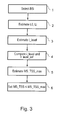
- the current base station BS0 may select (step 1 in figure 3 ) one or a plurality of neighbour base stations BSi and may send this selection to the mobile base station MS, for example by sending a list of neighbour base station identifiers.
- the current base station BSO may also send to the mobile station MS the transmitted signal strength BSi_TSS of each selected neighbour base station BSi and its own transmitted signal strength BS0_TSS.
- the current base station BSO may select the neighbour base stations BSi which are at a distance lower than a maximum distance Dmax of the current base station.
- the current base station BSO may also select the neighbour base stations BSi which are in the first two rings around of its cell C0, for example cells C1 to C18 in figure 1 , the interference being considered as negligible beyond.
- the mobile station MS may estimate a first attenuation value L0 and a second attenuation value Li correlated to the selected neighbour base station BSi ( figure 4 ).
- the first attenuation value L0 is representative of signal attenuation level between the mobile station MS and the current base station BSO
- the second attenuation value Li is representative of signal attenuation level between the mobile station MS and the correlated neighbour base station BSi.
- the mobile station MS receives signals from the current base station and from the neighbour base stations of the network, the mobile station MS can easily estimate the third received signal strength and the first received signal strength.
- the mobile station MS may then report the first and second attenuation values L0, Li to the current base station BSO, for example in a message usually used for handover mechanism.
- the interference level I_level is then for example compared (step 4 in figure 3 ) to a reference interference level I_level_ref.
- the interference level I_level may not be more than a noise floor of the base station BSO plus an additional margin.
- I_level_ref noise floor + margin , wherein:
- the reference interference level I_level_ref may be set differently.
- the reference interference level can be set by an operator of the wireless communication network according to an average interference level measured in the network, or according to other network parameters.
- the reference interference level may also be update according to operating conditions of the network.
- the current station may estimate (step 5 in figure 3 ) and send to the mobile station information relative to a maximum transmitted signal strength MS_TSS_max.
- the mobile station MS may then set (step 6 in figure 3 ) its transmitted signal strength MS_TSS according to this maximum transmitted signal strength MS_TSS_max.
- the current base station can optimize the transmit power level of the mobile station in order to maximize the power of the received signal strength BS0_RSS at a receive antennas BS0_RX of the current base station without exceeding the maximum power level of the signal received at a receive antenna BSi_RX of the neighbour station.
- the received signal strength BSi_RSS of the neighbour base stations should not exceed a threshold named BSi_RSS_max. This threshold may be defined by an operator and may be set for example to the maximum level of noise a mobile station can generate without the neighbour base station to detect it, that is to say the noise floor of the neighbour base station.
- the mobile station MS may estimate the first attenuation value L0 and a plurality of second attenuation values Li.
- each second attenuation value (Li) among the plurality of second attenuation values is correlated to one neighbour base station (BSi) among the plurality of neighbour base stations (for example L1 correlated with BS1, L2 correlated with BS2, Li correlated with BSi).
- Each second attenuation value Li is representative of signal attenuation level between the mobile station MS and the neighbour base station BSi with which it is correlated.
- the relation seen above used to estimate the second attenuation value may also be used to estimate each second attenuation value of the plurality of second attenuation values in this case.
- the mobile station MS may then report the first and all the second attenuation values L0, Li to the current base station BSO, and in this case, the lowest second attenuation value Li among the plurality of estimated second attenuation values is chosen as the parameter L in the relation used to estimate the interference level I_level, as seen above.
- the current base station BS0 has computed the interference level I_level generated by the mobile station, the current base station will be able to discriminate if this particular mobile station generates too much interference on the given neighbour station.
- the current base station is able to reduce the transmit power of a mobile station generating high interference on a neighbour base station without penalizing any other user in the cell.
Landscapes
- Engineering & Computer Science (AREA)
- Computer Networks & Wireless Communication (AREA)
- Signal Processing (AREA)
- Mobile Radio Communication Systems (AREA)
Priority Applications (3)
| Application Number | Priority Date | Filing Date | Title |
|---|---|---|---|
| EP08290239A EP2101418B1 (fr) | 2008-03-12 | 2008-03-12 | Procédé pour le contrôle de l'interférence générée par une station mobile dans des stations de base voisines |
| AT08290239T ATE535118T1 (de) | 2008-03-12 | 2008-03-12 | Verfahren zum steuern der interferenz, die von einer mobilstation auf nachbarbasisstationen erzeugt wird |
| US12/399,905 US8219137B2 (en) | 2008-03-12 | 2009-03-06 | Method for controlling interference generated by a mobile station on neighbor base stations |
Applications Claiming Priority (1)
| Application Number | Priority Date | Filing Date | Title |
|---|---|---|---|
| EP08290239A EP2101418B1 (fr) | 2008-03-12 | 2008-03-12 | Procédé pour le contrôle de l'interférence générée par une station mobile dans des stations de base voisines |
Publications (2)
| Publication Number | Publication Date |
|---|---|
| EP2101418A1 true EP2101418A1 (fr) | 2009-09-16 |
| EP2101418B1 EP2101418B1 (fr) | 2011-11-23 |
Family
ID=39711857
Family Applications (1)
| Application Number | Title | Priority Date | Filing Date |
|---|---|---|---|
| EP08290239A Not-in-force EP2101418B1 (fr) | 2008-03-12 | 2008-03-12 | Procédé pour le contrôle de l'interférence générée par une station mobile dans des stations de base voisines |
Country Status (3)
| Country | Link |
|---|---|
| US (1) | US8219137B2 (fr) |
| EP (1) | EP2101418B1 (fr) |
| AT (1) | ATE535118T1 (fr) |
Cited By (2)
| Publication number | Priority date | Publication date | Assignee | Title |
|---|---|---|---|---|
| WO2014059935A1 (fr) * | 2012-10-17 | 2014-04-24 | Huawei Technologies Co., Ltd. | Système et procédé de coordination dynamique d'interférences entre cellules |
| WO2015028723A1 (fr) * | 2013-08-29 | 2015-03-05 | Cassidian Sas | Procédé de détermination de valeurs de paramètres pour le contrôle de la puissance d'émission d'un équipement d'utilisateur |
Families Citing this family (9)
| Publication number | Priority date | Publication date | Assignee | Title |
|---|---|---|---|---|
| EP2246991B1 (fr) * | 2009-04-27 | 2013-11-06 | Alcatel Lucent | Communication en liaison montante dans un réseau de communication sans fil |
| US8379551B2 (en) * | 2009-08-18 | 2013-02-19 | Qualcomm Incorporated | Radio selection in a multi-radio device |
| US8738065B2 (en) * | 2009-10-02 | 2014-05-27 | Kyocera Corporation | Radio communication system, large cell base station, and communication control method |
| US9237459B1 (en) * | 2010-12-10 | 2016-01-12 | Marvell International Ltd | System and method for measuring characteristics of neighbor cells using a synthesized composite antenna pattern |
| WO2013141652A1 (fr) * | 2012-03-22 | 2013-09-26 | 엘지전자 주식회사 | Procédé de mesure de puissance de brouillage dans un système de communication sans fil et dispositif correspondant |
| US10560244B2 (en) | 2013-07-24 | 2020-02-11 | At&T Intellectual Property I, L.P. | System and method for reducing inter-cellsite interference in full-duplex communications |
| US9451558B2 (en) * | 2013-08-20 | 2016-09-20 | Qualcomm Incorporated | Adaptive transmit power control in a communication network |
| EP3661320B1 (fr) * | 2017-07-28 | 2022-11-30 | Beijing Xiaomi Mobile Software Co., Ltd. | Procédé et appareil de commande de dispositif commandable |
| CN109451786B (zh) * | 2017-07-28 | 2021-10-08 | 北京小米移动软件有限公司 | 无人机管理方法及装置、通信连接建立方法及装置 |
Citations (4)
| Publication number | Priority date | Publication date | Assignee | Title |
|---|---|---|---|---|
| US5603093A (en) | 1994-12-28 | 1997-02-11 | Ntt Mobile Communications Network, Inc. | Method for monitoring the state of interference by a base station of a mobile radio communication system |
| WO2003094544A1 (fr) * | 2002-04-29 | 2003-11-13 | Nokia Corporation | Procede et appareil permettant d'eviter des inerferences ul au moyen de mesures dl et de ifho |
| WO2004075423A2 (fr) * | 2003-02-19 | 2004-09-02 | Motorola Inc. | Balayages de fond multimode de differents systemes de communication sur des frequences similaires |
| EP1873925A1 (fr) * | 2005-04-20 | 2008-01-02 | Mitsubishi Denki Kabushiki Kaisha | Procede de determination de la qualite de communication, station mobile, station de base et systeme de communication |
Family Cites Families (3)
| Publication number | Priority date | Publication date | Assignee | Title |
|---|---|---|---|---|
| FI934759A7 (fi) * | 1993-10-27 | 1995-04-28 | Nokia Corp | Menetelmä monikäyttöhäiriön poistamiseksi sekä liikkuva asema |
| US7647025B2 (en) * | 2006-09-29 | 2010-01-12 | Alcatel-Lucent Usa Inc. | Method for adaptively controlling and coordinating other cell interference |
| US8717914B2 (en) * | 2009-04-29 | 2014-05-06 | Samsung Electronics Co., Ltd. | Method for controlling interference |
-
2008
- 2008-03-12 AT AT08290239T patent/ATE535118T1/de active
- 2008-03-12 EP EP08290239A patent/EP2101418B1/fr not_active Not-in-force
-
2009
- 2009-03-06 US US12/399,905 patent/US8219137B2/en active Active
Patent Citations (4)
| Publication number | Priority date | Publication date | Assignee | Title |
|---|---|---|---|---|
| US5603093A (en) | 1994-12-28 | 1997-02-11 | Ntt Mobile Communications Network, Inc. | Method for monitoring the state of interference by a base station of a mobile radio communication system |
| WO2003094544A1 (fr) * | 2002-04-29 | 2003-11-13 | Nokia Corporation | Procede et appareil permettant d'eviter des inerferences ul au moyen de mesures dl et de ifho |
| WO2004075423A2 (fr) * | 2003-02-19 | 2004-09-02 | Motorola Inc. | Balayages de fond multimode de differents systemes de communication sur des frequences similaires |
| EP1873925A1 (fr) * | 2005-04-20 | 2008-01-02 | Mitsubishi Denki Kabushiki Kaisha | Procede de determination de la qualite de communication, station mobile, station de base et systeme de communication |
Cited By (4)
| Publication number | Priority date | Publication date | Assignee | Title |
|---|---|---|---|---|
| WO2014059935A1 (fr) * | 2012-10-17 | 2014-04-24 | Huawei Technologies Co., Ltd. | Système et procédé de coordination dynamique d'interférences entre cellules |
| US10085154B2 (en) | 2012-10-17 | 2018-09-25 | Huawei Technologies Co., Ltd. | System and method for dynamic inter-cell interference coordination |
| WO2015028723A1 (fr) * | 2013-08-29 | 2015-03-05 | Cassidian Sas | Procédé de détermination de valeurs de paramètres pour le contrôle de la puissance d'émission d'un équipement d'utilisateur |
| US9756577B2 (en) | 2013-08-29 | 2017-09-05 | Airbus Ds Sas | Method for defining parameter values for controlling the transmission power of a piece of user equipment |
Also Published As
| Publication number | Publication date |
|---|---|
| US8219137B2 (en) | 2012-07-10 |
| US20090233594A1 (en) | 2009-09-17 |
| ATE535118T1 (de) | 2011-12-15 |
| EP2101418B1 (fr) | 2011-11-23 |
Similar Documents
| Publication | Publication Date | Title |
|---|---|---|
| EP2101418B1 (fr) | Procédé pour le contrôle de l'interférence générée par une station mobile dans des stations de base voisines | |
| US8913530B2 (en) | Dynamic band selection for interference minimization in direct device to device communications | |
| US10368357B2 (en) | Mitigating UL-to-DL interference | |
| US8792881B2 (en) | Method and apparatus for determining cell for executing comp in multi-cell environment | |
| RU2521522C2 (ru) | Пилот-сигналы для использования в многосекторных ячейках | |
| KR100627637B1 (ko) | 핸드오버를 시작할지를 결정하는 원격 네트워크 제어기 | |
| US9369996B2 (en) | Base station apparatus, user apparatus and communication control method | |
| EP2247143A1 (fr) | Système de transmission à relais, station de base, station de relais et procédé | |
| KR101339696B1 (ko) | 중계 및 대응하는 방법을 구현하기 위한 기지국, 중계국, 및 이동 단말 | |
| KR101517241B1 (ko) | 중계국 선택 방법 | |
| US20100291931A1 (en) | Mobile communication system, base station, mobile station, and base station installation method | |
| EP2945451A1 (fr) | Réduction de brouillage dans un réseau de communication par planification et adaptation de liaison | |
| EP1750472B1 (fr) | Appareil et méthode pour le transfert dans un système de communication | |
| US9048973B2 (en) | Base station device | |
| IL206838A (en) | Serving base station selection in a wireless communication network | |
| Abrardo et al. | Network coding schemes for device-to-device communications based relaying for cellular coverage extension | |
| US6907014B1 (en) | Apparatus and method for TDMA-TDD based transmission/reception | |
| KR20080053885A (ko) | 이동체 통신 시스템, 이동체 통신 시스템에 있어서의 이동단말, 그 제어 프로그램 및 이동체 통신 시스템에 있어서의동기 확립 판정 방법 | |
| CA2582366C (fr) | Procede permettant d'attenuer l'interference d'intermodulation par estimation et attenuation de puissance de canal dans un systeme de communication radio bidirectionnel | |
| GB2382278A (en) | Method of determining electric field state of a mobile station in view of electric field state of uplink | |
| CN101287275A (zh) | 一种基于cdma系统的下行方向邻区干扰的测量方法 | |
| EP1058474A1 (fr) | Réseau cellulaire avec liaison entre mobiles et stations de base optimisée et méthode pour la déterminer | |
| KR20160062721A (ko) | 이동통신 시스템에서 다중 빔을 송수신하는 방법 및 장치 | |
| Cierny et al. | SINR prediction versus reverse reporting for soft reuse and interference management | |
| JP2004260446A (ja) | 移動通信システム、無線制御装置、基地局及び送信電力制御方法 |
Legal Events
| Date | Code | Title | Description |
|---|---|---|---|
| PUAI | Public reference made under article 153(3) epc to a published international application that has entered the european phase |
Free format text: ORIGINAL CODE: 0009012 |
|
| AK | Designated contracting states |
Kind code of ref document: A1 Designated state(s): AT BE BG CH CY CZ DE DK EE ES FI FR GB GR HR HU IE IS IT LI LT LU LV MC MT NL NO PL PT RO SE SI SK TR |
|
| AX | Request for extension of the european patent |
Extension state: AL BA MK RS |
|
| 17P | Request for examination filed |
Effective date: 20100312 |
|
| AKX | Designation fees paid |
Designated state(s): AT BE BG CH CY CZ DE DK EE ES FI FR GB GR HR HU IE IS IT LI LT LU LV MC MT NL NO PL PT RO SE SI SK TR |
|
| REG | Reference to a national code |
Ref country code: DE Ref legal event code: R079 Ref document number: 602008011537 Country of ref document: DE Free format text: PREVIOUS MAIN CLASS: H04B0007005000 Ipc: H04W0052240000 |
|
| RIC1 | Information provided on ipc code assigned before grant |
Ipc: H04W 52/24 20090101AFI20110411BHEP Ipc: H04B 17/00 20060101ALI20110411BHEP |
|
| GRAP | Despatch of communication of intention to grant a patent |
Free format text: ORIGINAL CODE: EPIDOSNIGR1 |
|
| GRAS | Grant fee paid |
Free format text: ORIGINAL CODE: EPIDOSNIGR3 |
|
| GRAA | (expected) grant |
Free format text: ORIGINAL CODE: 0009210 |
|
| AK | Designated contracting states |
Kind code of ref document: B1 Designated state(s): AT BE BG CH CY CZ DE DK EE ES FI FR GB GR HR HU IE IS IT LI LT LU LV MC MT NL NO PL PT RO SE SI SK TR |
|
| REG | Reference to a national code |
Ref country code: GB Ref legal event code: FG4D |
|
| REG | Reference to a national code |
Ref country code: CH Ref legal event code: EP |
|
| REG | Reference to a national code |
Ref country code: IE Ref legal event code: FG4D |
|
| REG | Reference to a national code |
Ref country code: DE Ref legal event code: R096 Ref document number: 602008011537 Country of ref document: DE Effective date: 20120119 |
|
| REG | Reference to a national code |
Ref country code: NL Ref legal event code: VDEP Effective date: 20111123 |
|
| LTIE | Lt: invalidation of european patent or patent extension |
Effective date: 20111123 |
|
| PG25 | Lapsed in a contracting state [announced via postgrant information from national office to epo] |
Ref country code: IS Free format text: LAPSE BECAUSE OF FAILURE TO SUBMIT A TRANSLATION OF THE DESCRIPTION OR TO PAY THE FEE WITHIN THE PRESCRIBED TIME-LIMIT Effective date: 20120323 Ref country code: LT Free format text: LAPSE BECAUSE OF FAILURE TO SUBMIT A TRANSLATION OF THE DESCRIPTION OR TO PAY THE FEE WITHIN THE PRESCRIBED TIME-LIMIT Effective date: 20111123 Ref country code: NO Free format text: LAPSE BECAUSE OF FAILURE TO SUBMIT A TRANSLATION OF THE DESCRIPTION OR TO PAY THE FEE WITHIN THE PRESCRIBED TIME-LIMIT Effective date: 20120223 |
|
| PG25 | Lapsed in a contracting state [announced via postgrant information from national office to epo] |
Ref country code: SI Free format text: LAPSE BECAUSE OF FAILURE TO SUBMIT A TRANSLATION OF THE DESCRIPTION OR TO PAY THE FEE WITHIN THE PRESCRIBED TIME-LIMIT Effective date: 20111123 Ref country code: PT Free format text: LAPSE BECAUSE OF FAILURE TO SUBMIT A TRANSLATION OF THE DESCRIPTION OR TO PAY THE FEE WITHIN THE PRESCRIBED TIME-LIMIT Effective date: 20120323 Ref country code: NL Free format text: LAPSE BECAUSE OF FAILURE TO SUBMIT A TRANSLATION OF THE DESCRIPTION OR TO PAY THE FEE WITHIN THE PRESCRIBED TIME-LIMIT Effective date: 20111123 Ref country code: BE Free format text: LAPSE BECAUSE OF FAILURE TO SUBMIT A TRANSLATION OF THE DESCRIPTION OR TO PAY THE FEE WITHIN THE PRESCRIBED TIME-LIMIT Effective date: 20111123 Ref country code: HR Free format text: LAPSE BECAUSE OF FAILURE TO SUBMIT A TRANSLATION OF THE DESCRIPTION OR TO PAY THE FEE WITHIN THE PRESCRIBED TIME-LIMIT Effective date: 20111123 Ref country code: GR Free format text: LAPSE BECAUSE OF FAILURE TO SUBMIT A TRANSLATION OF THE DESCRIPTION OR TO PAY THE FEE WITHIN THE PRESCRIBED TIME-LIMIT Effective date: 20120224 Ref country code: SE Free format text: LAPSE BECAUSE OF FAILURE TO SUBMIT A TRANSLATION OF THE DESCRIPTION OR TO PAY THE FEE WITHIN THE PRESCRIBED TIME-LIMIT Effective date: 20111123 Ref country code: LV Free format text: LAPSE BECAUSE OF FAILURE TO SUBMIT A TRANSLATION OF THE DESCRIPTION OR TO PAY THE FEE WITHIN THE PRESCRIBED TIME-LIMIT Effective date: 20111123 |
|
| PG25 | Lapsed in a contracting state [announced via postgrant information from national office to epo] |
Ref country code: CY Free format text: LAPSE BECAUSE OF FAILURE TO SUBMIT A TRANSLATION OF THE DESCRIPTION OR TO PAY THE FEE WITHIN THE PRESCRIBED TIME-LIMIT Effective date: 20111123 |
|
| PG25 | Lapsed in a contracting state [announced via postgrant information from national office to epo] |
Ref country code: EE Free format text: LAPSE BECAUSE OF FAILURE TO SUBMIT A TRANSLATION OF THE DESCRIPTION OR TO PAY THE FEE WITHIN THE PRESCRIBED TIME-LIMIT Effective date: 20111123 Ref country code: CZ Free format text: LAPSE BECAUSE OF FAILURE TO SUBMIT A TRANSLATION OF THE DESCRIPTION OR TO PAY THE FEE WITHIN THE PRESCRIBED TIME-LIMIT Effective date: 20111123 Ref country code: DK Free format text: LAPSE BECAUSE OF FAILURE TO SUBMIT A TRANSLATION OF THE DESCRIPTION OR TO PAY THE FEE WITHIN THE PRESCRIBED TIME-LIMIT Effective date: 20111123 Ref country code: BG Free format text: LAPSE BECAUSE OF FAILURE TO SUBMIT A TRANSLATION OF THE DESCRIPTION OR TO PAY THE FEE WITHIN THE PRESCRIBED TIME-LIMIT Effective date: 20120223 Ref country code: SK Free format text: LAPSE BECAUSE OF FAILURE TO SUBMIT A TRANSLATION OF THE DESCRIPTION OR TO PAY THE FEE WITHIN THE PRESCRIBED TIME-LIMIT Effective date: 20111123 |
|
| PG25 | Lapsed in a contracting state [announced via postgrant information from national office to epo] |
Ref country code: IT Free format text: LAPSE BECAUSE OF FAILURE TO SUBMIT A TRANSLATION OF THE DESCRIPTION OR TO PAY THE FEE WITHIN THE PRESCRIBED TIME-LIMIT Effective date: 20111123 Ref country code: PL Free format text: LAPSE BECAUSE OF FAILURE TO SUBMIT A TRANSLATION OF THE DESCRIPTION OR TO PAY THE FEE WITHIN THE PRESCRIBED TIME-LIMIT Effective date: 20111123 Ref country code: RO Free format text: LAPSE BECAUSE OF FAILURE TO SUBMIT A TRANSLATION OF THE DESCRIPTION OR TO PAY THE FEE WITHIN THE PRESCRIBED TIME-LIMIT Effective date: 20111123 |
|
| REG | Reference to a national code |
Ref country code: AT Ref legal event code: MK05 Ref document number: 535118 Country of ref document: AT Kind code of ref document: T Effective date: 20111123 |
|
| PLBE | No opposition filed within time limit |
Free format text: ORIGINAL CODE: 0009261 |
|
| STAA | Information on the status of an ep patent application or granted ep patent |
Free format text: STATUS: NO OPPOSITION FILED WITHIN TIME LIMIT |
|
| 26N | No opposition filed |
Effective date: 20120824 |
|
| PG25 | Lapsed in a contracting state [announced via postgrant information from national office to epo] |
Ref country code: MC Free format text: LAPSE BECAUSE OF NON-PAYMENT OF DUE FEES Effective date: 20120331 |
|
| REG | Reference to a national code |
Ref country code: CH Ref legal event code: PL |
|
| REG | Reference to a national code |
Ref country code: DE Ref legal event code: R097 Ref document number: 602008011537 Country of ref document: DE Effective date: 20120824 |
|
| REG | Reference to a national code |
Ref country code: IE Ref legal event code: MM4A |
|
| PG25 | Lapsed in a contracting state [announced via postgrant information from national office to epo] |
Ref country code: IE Free format text: LAPSE BECAUSE OF NON-PAYMENT OF DUE FEES Effective date: 20120312 Ref country code: CH Free format text: LAPSE BECAUSE OF NON-PAYMENT OF DUE FEES Effective date: 20120331 Ref country code: AT Free format text: LAPSE BECAUSE OF FAILURE TO SUBMIT A TRANSLATION OF THE DESCRIPTION OR TO PAY THE FEE WITHIN THE PRESCRIBED TIME-LIMIT Effective date: 20111123 Ref country code: LI Free format text: LAPSE BECAUSE OF NON-PAYMENT OF DUE FEES Effective date: 20120331 |
|
| PG25 | Lapsed in a contracting state [announced via postgrant information from national office to epo] |
Ref country code: ES Free format text: LAPSE BECAUSE OF FAILURE TO SUBMIT A TRANSLATION OF THE DESCRIPTION OR TO PAY THE FEE WITHIN THE PRESCRIBED TIME-LIMIT Effective date: 20120305 |
|
| PG25 | Lapsed in a contracting state [announced via postgrant information from national office to epo] |
Ref country code: FI Free format text: LAPSE BECAUSE OF FAILURE TO SUBMIT A TRANSLATION OF THE DESCRIPTION OR TO PAY THE FEE WITHIN THE PRESCRIBED TIME-LIMIT Effective date: 20111123 |
|
| PG25 | Lapsed in a contracting state [announced via postgrant information from national office to epo] |
Ref country code: MT Free format text: LAPSE BECAUSE OF FAILURE TO SUBMIT A TRANSLATION OF THE DESCRIPTION OR TO PAY THE FEE WITHIN THE PRESCRIBED TIME-LIMIT Effective date: 20111123 |
|
| PG25 | Lapsed in a contracting state [announced via postgrant information from national office to epo] |
Ref country code: TR Free format text: LAPSE BECAUSE OF FAILURE TO SUBMIT A TRANSLATION OF THE DESCRIPTION OR TO PAY THE FEE WITHIN THE PRESCRIBED TIME-LIMIT Effective date: 20111123 |
|
| PG25 | Lapsed in a contracting state [announced via postgrant information from national office to epo] |
Ref country code: LU Free format text: LAPSE BECAUSE OF NON-PAYMENT OF DUE FEES Effective date: 20120312 |
|
| PG25 | Lapsed in a contracting state [announced via postgrant information from national office to epo] |
Ref country code: HU Free format text: LAPSE BECAUSE OF FAILURE TO SUBMIT A TRANSLATION OF THE DESCRIPTION OR TO PAY THE FEE WITHIN THE PRESCRIBED TIME-LIMIT Effective date: 20080312 |
|
| REG | Reference to a national code |
Ref country code: FR Ref legal event code: PLFP Year of fee payment: 9 |
|
| REG | Reference to a national code |
Ref country code: FR Ref legal event code: PLFP Year of fee payment: 10 |
|
| PGFP | Annual fee paid to national office [announced via postgrant information from national office to epo] |
Ref country code: FR Payment date: 20170119 Year of fee payment: 10 Ref country code: DE Payment date: 20170327 Year of fee payment: 10 |
|
| PGFP | Annual fee paid to national office [announced via postgrant information from national office to epo] |
Ref country code: GB Payment date: 20170324 Year of fee payment: 10 |
|
| REG | Reference to a national code |
Ref country code: DE Ref legal event code: R119 Ref document number: 602008011537 Country of ref document: DE |
|
| GBPC | Gb: european patent ceased through non-payment of renewal fee |
Effective date: 20180312 |
|
| PG25 | Lapsed in a contracting state [announced via postgrant information from national office to epo] |
Ref country code: DE Free format text: LAPSE BECAUSE OF NON-PAYMENT OF DUE FEES Effective date: 20181002 |
|
| PG25 | Lapsed in a contracting state [announced via postgrant information from national office to epo] |
Ref country code: GB Free format text: LAPSE BECAUSE OF NON-PAYMENT OF DUE FEES Effective date: 20180312 |
|
| PG25 | Lapsed in a contracting state [announced via postgrant information from national office to epo] |
Ref country code: FR Free format text: LAPSE BECAUSE OF NON-PAYMENT OF DUE FEES Effective date: 20180331 |