EP2101435A2 - Verfahren und Vorrichtung zur Kombination von Raum-Frequenz-Blockkodierung, räumlichem Multiplexing und Strahlformung in einem MIMO-OFDM-System - Google Patents
Verfahren und Vorrichtung zur Kombination von Raum-Frequenz-Blockkodierung, räumlichem Multiplexing und Strahlformung in einem MIMO-OFDM-System Download PDFInfo
- Publication number
- EP2101435A2 EP2101435A2 EP08170201A EP08170201A EP2101435A2 EP 2101435 A2 EP2101435 A2 EP 2101435A2 EP 08170201 A EP08170201 A EP 08170201A EP 08170201 A EP08170201 A EP 08170201A EP 2101435 A2 EP2101435 A2 EP 2101435A2
- Authority
- EP
- European Patent Office
- Prior art keywords
- stream
- data
- sub
- spatial
- transmitter
- Prior art date
- Legal status (The legal status is an assumption and is not a legal conclusion. Google has not performed a legal analysis and makes no representation as to the accuracy of the status listed.)
- Granted
Links
Images

Classifications
-
- H—ELECTRICITY
- H04—ELECTRIC COMMUNICATION TECHNIQUE
- H04B—TRANSMISSION
- H04B7/00—Radio transmission systems, i.e. using radiation field
- H04B7/02—Diversity systems; Multi-antenna system, i.e. transmission or reception using multiple antennas
- H04B7/04—Diversity systems; Multi-antenna system, i.e. transmission or reception using multiple antennas using two or more spaced independent antennas
- H04B7/0408—Diversity systems; Multi-antenna system, i.e. transmission or reception using multiple antennas using two or more spaced independent antennas using two or more beams, i.e. beam diversity
-
- H—ELECTRICITY
- H04—ELECTRIC COMMUNICATION TECHNIQUE
- H04B—TRANSMISSION
- H04B7/00—Radio transmission systems, i.e. using radiation field
- H04B7/02—Diversity systems; Multi-antenna system, i.e. transmission or reception using multiple antennas
- H04B7/04—Diversity systems; Multi-antenna system, i.e. transmission or reception using multiple antennas using two or more spaced independent antennas
- H04B7/0413—MIMO systems
-
- H—ELECTRICITY
- H04—ELECTRIC COMMUNICATION TECHNIQUE
- H04B—TRANSMISSION
- H04B7/00—Radio transmission systems, i.e. using radiation field
- H04B7/02—Diversity systems; Multi-antenna system, i.e. transmission or reception using multiple antennas
- H04B7/04—Diversity systems; Multi-antenna system, i.e. transmission or reception using multiple antennas using two or more spaced independent antennas
- H04B7/06—Diversity systems; Multi-antenna system, i.e. transmission or reception using multiple antennas using two or more spaced independent antennas at the transmitting station
- H04B7/0613—Diversity systems; Multi-antenna system, i.e. transmission or reception using multiple antennas using two or more spaced independent antennas at the transmitting station using simultaneous transmission
- H04B7/0615—Diversity systems; Multi-antenna system, i.e. transmission or reception using multiple antennas using two or more spaced independent antennas at the transmitting station using simultaneous transmission of weighted versions of same signal
- H04B7/0617—Diversity systems; Multi-antenna system, i.e. transmission or reception using multiple antennas using two or more spaced independent antennas at the transmitting station using simultaneous transmission of weighted versions of same signal for beam forming
-
- H—ELECTRICITY
- H04—ELECTRIC COMMUNICATION TECHNIQUE
- H04B—TRANSMISSION
- H04B7/00—Radio transmission systems, i.e. using radiation field
- H04B7/02—Diversity systems; Multi-antenna system, i.e. transmission or reception using multiple antennas
- H04B7/04—Diversity systems; Multi-antenna system, i.e. transmission or reception using multiple antennas using two or more spaced independent antennas
- H04B7/06—Diversity systems; Multi-antenna system, i.e. transmission or reception using multiple antennas using two or more spaced independent antennas at the transmitting station
- H04B7/0613—Diversity systems; Multi-antenna system, i.e. transmission or reception using multiple antennas using two or more spaced independent antennas at the transmitting station using simultaneous transmission
- H04B7/0615—Diversity systems; Multi-antenna system, i.e. transmission or reception using multiple antennas using two or more spaced independent antennas at the transmitting station using simultaneous transmission of weighted versions of same signal
- H04B7/0619—Diversity systems; Multi-antenna system, i.e. transmission or reception using multiple antennas using two or more spaced independent antennas at the transmitting station using simultaneous transmission of weighted versions of same signal using feedback from receiving side
- H04B7/0621—Feedback content
- H04B7/0626—Channel coefficients, e.g. channel state information [CSI]
-
- H—ELECTRICITY
- H04—ELECTRIC COMMUNICATION TECHNIQUE
- H04B—TRANSMISSION
- H04B7/00—Radio transmission systems, i.e. using radiation field
- H04B7/02—Diversity systems; Multi-antenna system, i.e. transmission or reception using multiple antennas
- H04B7/04—Diversity systems; Multi-antenna system, i.e. transmission or reception using multiple antennas using two or more spaced independent antennas
- H04B7/06—Diversity systems; Multi-antenna system, i.e. transmission or reception using multiple antennas using two or more spaced independent antennas at the transmitting station
- H04B7/0613—Diversity systems; Multi-antenna system, i.e. transmission or reception using multiple antennas using two or more spaced independent antennas at the transmitting station using simultaneous transmission
- H04B7/068—Diversity systems; Multi-antenna system, i.e. transmission or reception using multiple antennas using two or more spaced independent antennas at the transmitting station using simultaneous transmission using space frequency diversity
-
- H—ELECTRICITY
- H04—ELECTRIC COMMUNICATION TECHNIQUE
- H04B—TRANSMISSION
- H04B7/00—Radio transmission systems, i.e. using radiation field
- H04B7/02—Diversity systems; Multi-antenna system, i.e. transmission or reception using multiple antennas
- H04B7/04—Diversity systems; Multi-antenna system, i.e. transmission or reception using multiple antennas using two or more spaced independent antennas
- H04B7/06—Diversity systems; Multi-antenna system, i.e. transmission or reception using multiple antennas using two or more spaced independent antennas at the transmitting station
- H04B7/0697—Diversity systems; Multi-antenna system, i.e. transmission or reception using multiple antennas using two or more spaced independent antennas at the transmitting station using spatial multiplexing
-
- H—ELECTRICITY
- H04—ELECTRIC COMMUNICATION TECHNIQUE
- H04B—TRANSMISSION
- H04B7/00—Radio transmission systems, i.e. using radiation field
- H04B7/02—Diversity systems; Multi-antenna system, i.e. transmission or reception using multiple antennas
- H04B7/12—Frequency diversity
-
- H—ELECTRICITY
- H04—ELECTRIC COMMUNICATION TECHNIQUE
- H04L—TRANSMISSION OF DIGITAL INFORMATION, e.g. TELEGRAPHIC COMMUNICATION
- H04L1/00—Arrangements for detecting or preventing errors in the information received
- H04L1/02—Arrangements for detecting or preventing errors in the information received by diversity reception
- H04L1/04—Arrangements for detecting or preventing errors in the information received by diversity reception using frequency diversity
-
- H—ELECTRICITY
- H04—ELECTRIC COMMUNICATION TECHNIQUE
- H04L—TRANSMISSION OF DIGITAL INFORMATION, e.g. TELEGRAPHIC COMMUNICATION
- H04L1/00—Arrangements for detecting or preventing errors in the information received
- H04L1/02—Arrangements for detecting or preventing errors in the information received by diversity reception
- H04L1/06—Arrangements for detecting or preventing errors in the information received by diversity reception using space diversity
- H04L1/0606—Space-frequency coding
-
- H—ELECTRICITY
- H04—ELECTRIC COMMUNICATION TECHNIQUE
- H04L—TRANSMISSION OF DIGITAL INFORMATION, e.g. TELEGRAPHIC COMMUNICATION
- H04L27/00—Modulated-carrier systems
- H04L27/26—Systems using multi-frequency codes
- H04L27/2601—Multicarrier modulation systems
-
- H—ELECTRICITY
- H04—ELECTRIC COMMUNICATION TECHNIQUE
- H04L—TRANSMISSION OF DIGITAL INFORMATION, e.g. TELEGRAPHIC COMMUNICATION
- H04L27/00—Modulated-carrier systems
- H04L27/26—Systems using multi-frequency codes
- H04L27/2601—Multicarrier modulation systems
- H04L27/2626—Arrangements specific to the transmitter only
-
- H—ELECTRICITY
- H04—ELECTRIC COMMUNICATION TECHNIQUE
- H04L—TRANSMISSION OF DIGITAL INFORMATION, e.g. TELEGRAPHIC COMMUNICATION
- H04L27/00—Modulated-carrier systems
- H04L27/26—Systems using multi-frequency codes
- H04L27/2601—Multicarrier modulation systems
- H04L27/2626—Arrangements specific to the transmitter only
- H04L27/2627—Modulators
-
- H—ELECTRICITY
- H04—ELECTRIC COMMUNICATION TECHNIQUE
- H04L—TRANSMISSION OF DIGITAL INFORMATION, e.g. TELEGRAPHIC COMMUNICATION
- H04L27/00—Modulated-carrier systems
- H04L27/26—Systems using multi-frequency codes
- H04L27/2601—Multicarrier modulation systems
- H04L27/2647—Arrangements specific to the receiver only
-
- H—ELECTRICITY
- H04—ELECTRIC COMMUNICATION TECHNIQUE
- H04L—TRANSMISSION OF DIGITAL INFORMATION, e.g. TELEGRAPHIC COMMUNICATION
- H04L5/00—Arrangements affording multiple use of the transmission path
- H04L5/0001—Arrangements for dividing the transmission path
- H04L5/0003—Two-dimensional division
- H04L5/0005—Time-frequency
- H04L5/0007—Time-frequency the frequencies being orthogonal, e.g. OFDM(A) or DMT
-
- H—ELECTRICITY
- H04—ELECTRIC COMMUNICATION TECHNIQUE
- H04L—TRANSMISSION OF DIGITAL INFORMATION, e.g. TELEGRAPHIC COMMUNICATION
- H04L1/00—Arrangements for detecting or preventing errors in the information received
- H04L1/0001—Systems modifying transmission characteristics according to link quality, e.g. power backoff
- H04L1/0002—Systems modifying transmission characteristics according to link quality, e.g. power backoff by adapting the transmission rate
- H04L1/0003—Systems modifying transmission characteristics according to link quality, e.g. power backoff by adapting the transmission rate by switching between different modulation schemes
-
- H—ELECTRICITY
- H04—ELECTRIC COMMUNICATION TECHNIQUE
- H04L—TRANSMISSION OF DIGITAL INFORMATION, e.g. TELEGRAPHIC COMMUNICATION
- H04L1/00—Arrangements for detecting or preventing errors in the information received
- H04L1/0001—Systems modifying transmission characteristics according to link quality, e.g. power backoff
- H04L1/0009—Systems modifying transmission characteristics according to link quality, e.g. power backoff by adapting the channel coding
-
- H—ELECTRICITY
- H04—ELECTRIC COMMUNICATION TECHNIQUE
- H04L—TRANSMISSION OF DIGITAL INFORMATION, e.g. TELEGRAPHIC COMMUNICATION
- H04L1/00—Arrangements for detecting or preventing errors in the information received
- H04L1/0001—Systems modifying transmission characteristics according to link quality, e.g. power backoff
- H04L1/0023—Systems modifying transmission characteristics according to link quality, e.g. power backoff characterised by the signalling
- H04L1/0026—Transmission of channel quality indication
-
- H—ELECTRICITY
- H04—ELECTRIC COMMUNICATION TECHNIQUE
- H04L—TRANSMISSION OF DIGITAL INFORMATION, e.g. TELEGRAPHIC COMMUNICATION
- H04L25/00—Baseband systems
- H04L25/02—Details ; arrangements for supplying electrical power along data transmission lines
- H04L25/0202—Channel estimation
- H04L25/024—Channel estimation channel estimation algorithms
- H04L25/0242—Channel estimation channel estimation algorithms using matrix methods
- H04L25/0248—Eigen-space methods
Definitions
- the present invention is related to wireless communication systems. More particularly, the present invention is related to a method and apparatus for combining space-frequency block coding (SFBC), Spatial multiplexing (SM) and beamforming in a multiple-input multiple-output (MIMO) orthogonal frequency division multiplexing (OFDM) system.
- SFBC space-frequency block coding
- SM Spatial multiplexing
- MIMO multiple-input multiple-output
- OFDM orthogonal frequency division multiplexing
- OFDM is a data transmission scheme where data is split into a plurality of smaller streams and each stream is transmitted using a sub-carrier with a smaller bandwidth than the total available transmission bandwidth.
- the efficiency of OFDM depends on choosing these sub-carriers orthogonal to each other. The sub-carriers do not interfere with each other while each carrying a portion of the total user data.
- An OFDM system has advantages over other wireless communication systems.
- the effective data rate on each sub-carrier is much smaller. Therefore, the symbol duration is much larger.
- a large symbol duration can tolerate larger delay spreads. Thus, it is not affected by multipath as severely. Therefore, OFDM symbols can tolerate delay spreads without complicated receiver designs.
- typical wireless systems need complex channel equalization schemes to combat multipath fading.
- OFDM orthogonal sub-carriers at the transmitter and receiver can be done by using inverse fast Fourier transform (IFFT) and fast Fourier transform (FFT) engines. Since the IFFT and FFT implementations are well known, OFDM can be implemented easily and does not require complicated receivers.
- IFFT inverse fast Fourier transform
- FFT fast Fourier transform
- MIMO refers to the type of wireless transmission and reception scheme where both a transmitter and a receiver employ more than one antenna.
- a MIMO system takes advantage of the spatial diversity or spatial multiplexing and improves signal-to-noise ratio (SNR) and increases throughput.
- SNR signal-to-noise ratio
- SFBC is a scheme for transmitting symbols of a space diversity coding on neighboring sub-carriers rather than on the same sub-carrier in the successive time slots.
- the SFBC avoids the problems of fast time variations associated with space time block coding (STBC).
- STBC space time block coding
- the channel needs to be constant over the sub-carriers that combining takes place.
- the present invention is related to a method and apparatus for combining SFBC, SM and beamforming in a MIMO-OFDM system.
- the system includes a transmitter with a plurality of transmit antennas and a receiver with a plurality of receive antennas.
- the transmitter generates at least one data stream and a plurality of spatial streams.
- the number of generated spatial streams is based on the number of the transmit antennas and the number of the receive antennas.
- the transmitter determines a transmission scheme in accordance with at least one of SFBC, SM and beam forming.
- the transmitter transmits data in the data stream to the receiver based on the selected transmission scheme.
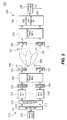
- Figure 1 is a block diagram of an OFDM-MIMO system implementing a closed loop mode in accordance with the present invention.
- FIG. 2 is a block diagram of an OFDM-MIMO system implementing an open loop mode in accordance with the present invention.
- the features of the present invention may be incorporated into an integrated circuit (IC) or be configured in a circuit comprising a multitude of interconnecting components.
- IC integrated circuit
- the present invention provides a plurality of combinations of SFBC, SM, FD and beam selection according to the number of available data streams and spatial streams and the number of transmit and receive antennas.
- the combinations provide flexibility on the design of MIMO-OFDM systems and scalable solutions for any number transmit and receive antenna configuration.
- Each combination has trade-offs between performance, reliability and data rate. Therefore, a combination can be chosen according to some criteria, such as robustness, a data rate, a channel condition, or the like.
- the number of data streams is preferably decided based on a modulation and coding scheme.
- the number of spatial streams is decided by the number of transmit and receive antennas.
- the closed loop is used when channel state information (CSI) is available to the transmitter.
- the open loop is used when CSI is not available at the transmitter.
- a variant may be used for transmission to legacy STA where it provides diversity benefits.
- CSI is used to create virtually independent channels by decomposing and diagonalizing the channel matrix by precoding at the transmitter and further antenna processing at the receiver.
- SFBC and/or SM This scheme allows for a simple receiver implementation, simpler than a Minimum Mean Square Error (MMSE) receiver.
- MMSE Minimum Mean Square Error
- the combined solution enables higher throughput over a larger range compared to traditional techniques.
- the technique allows per sub-carrier power/bit loading and maintains a sustained robust link through closed loop operation with CSI feedback.
- Another benefit of the technique is that it is easily scalable to any number of antennas at both transmitter and receiver.
- the CSI can be obtained at the transmitter either by feedback from the receiver or through exploiting channel reciprocity. Latency requirements and feedback data rates are typically not significant to the inherent frequency non-selectivity of eigenvalues.
- a transmit antenna calibration scheme is required.
- channel quality information CQI is used to determine a coding rate and a modulation scheme per sub-carrier or group of sub-carriers. The determined coding rate and modulation scheme determines the number of data streams. According to the number of data streams, the combinations are chosen with the available spatial streams.
- FIG. 1 is a block diagram of an OFDM-MIMO system 100 implementing a closed loop mode in accordance with the present invention.
- the system 100 includes a transmitter 110 and a receiver 130.
- the transmitter 110 includes a channel coder 112, a multiplexer 114, a power loading unit 116, a plurality of optional SFBC units 118, a plurality of serial-to-parallel (S/P) converters 120, a transmit beamformer 122, a plurality of IFFT units 124 and a plurality of transmit antennas 126.
- the channel coder 112 codes data preferably in accordance with a CQI which is provided by the receiver 130.
- the CQI is used to determine a coding rate and modulation scheme per sub-carrier or group of sub-carriers.
- the coded data stream is multiplexed by the multiplexer 114 into two or more data streams 115.
- the transmit power level of each data stream 115 is adjusted by the power loading unit 116 based on feedback 150 provided from the receiver 130.
- the power loading unit 116 adjusts power levels with respect to the data rate of each eigenbeam to balance the total transmit power over all eigenbeams (or sub-carriers).
- the optional SFBC units 118 perform SFBC on the data streams 115.
- SFBC is performed over eigen-beams and sub-carriers for each data rate that is transmitted. Eigen-beam and sub-carrier pairs are selected to ensure independent channels. OFDM symbols are carried on K sub-carriers.
- the sub-carriers are divided into L pairs of sub-carriers (or group of sub-carriers). The bandwidth of each group of sub-carriers should be less than the coherence bandwidth of the channel. However, when combined with eigen-beamforming this restriction is relaxed due to the frequency insensitivity of the eigen-beams.
- the pairs of sub-carrier groups used by the block code are considered independent.
- the coded blocks are multiplexed by the S/P converters 120 and input to the transmit beamformer 122.
- the transmit beamformer 122 distributes eigen-beams to the transmit antennas.
- the IFFT units 124 convert the data in frequency domain to the data in time domain.
- the receiver 130 comprises a plurality of receive antennas 128, a plurality of FFT units 132, a receive beamformer 134, a plurality of optional SFBC decoding units 136, a demultiplexer 138, a channel decoder 144, a channel estimator 140, a CSI generator 142 and a CQI generator 146.
- the FFT units 132 convert samples received in time domain by the antennas 128 to frequency domain.
- the receive beamformer 134, the optional SFBC decoding units 136, the demultiplexer 138 and the channel decoder 144 process the samples converted to the frequency domain.
- the channel estimator 140 generates channel matrix using a training sequence transmitted from the transmitter and decomposes the channel matrix into two beam-forming unitary matrices U and V , ( U for transmit and V for receive), and a diagonal matrix D per sub-carrier (or per sub-carrier group) by singular value decomposition (SVD) or eigenvalue decomposition.
- the CSI generator 142 generates CSI 147 from the channel estimation results and the CQI generator generates a CQI 148 based on the decoding results.
- the CSI and the CQI provide feedback 150 from the receiver 130 to the transmitter 110.
- H h 11 h 21 ⁇ h 1 , nT h 21 h 22 ⁇ h 2 , nT ⁇ ⁇ h nR , 1 h nR , 2 ⁇ h nR , nT
- H UD ⁇ V H
- U and V are unitary matrices and D is a diagonal matrix.
- U are eigenvectors of HH H
- V are eigenvectors of H H H
- D is a diagonal matrix of singular values of H (square roots of eigenvalues of HH H ).
- the transmitter 110 and the receiver 130 may be used for SM.
- a combination of space-frequency coding and spatial spreading in the transmitter 110 provides diversity without requiring CSI 147.
- the CQI 148 is used to determine a coding rate and modulation per sub-carrier or group of sub-carriers.
- This coding rate and modulation scheme determines the number of data streams. According to the number of data streams, the combinations are chosen with the available spatial streams.
- FIG. 2 is a block diagram of a system 200 implementing an open loop mode in accordance with the present invention.
- the system 200 includes a transmitter 210 and a receiver 230.
- a combination of space-frequency coding and spatial spreading in the transmitter 210 provides diversity without requiring CSI.
- a variant of this scheme may be used when operating with legacy IEEE 802.11a/g user equipment.
- the transmitter 210 includes a channel coder 212, a multiplexer 214, a power loading unit 216, a plurality of SFBC units 218, a plurality of serial-to-parallel (S/P) converters 220, a beamformer network (BFN) 222, a plurality of IFFT units 224 and a plurality of transmit antennas 226.
- the channel coder 212 uses CQI to determine coding rate and modulation per sub-carrier or group of sub-carriers.
- the coded data stream 213 is multiplexed by the multiplexer 214 into two or more data streams 215.
- the BFN 222 forms N beams in space, where N is the number of antennas 226.
- the beams are pseudo-randomly constructed by the BFN matrix operation.
- the independent sub-carrier groups used for the SFBC coding are transmitted on individual beams.
- SFBC coding may not be performed. Instead diversity through beam permutation is performed which improves diversity and therefore the performance of legacy IEEE 802.11a/g user equipment.
- the receiver 230 includes a plurality of receive antennas 231, FFT units 232, a BFN 234, an SFBC decoding and combining unit 236 and a channel decoder 238.
- the FFT units 232 convert samples received in time domain by the receive antennas 231 to frequency domain.
- the SFBC decoding and combining unit 236 decodes and combines symbols received from sub-carrier groups/eigen-beams and converts them from parallel to serial using a prior knowledge of the constellation size. Symbols are combined using MRC.
- the channel decoder 238 decodes the combined symbol and generates a CQI 240.
- the transmitter 210 and the receiver 230 may be used for SM.
- S i denotes the group of the modulated symbols. The length depends on how many groups the sub-carriers for data are divided into. Sub-carriers are divided into two groups. Each S i includes symbols whose length is a half of the number of sub-carriers for data.
- d n denotes singular values of the channel matrix, where d 1 > d 2 > d 3 > ...> d M , M is the maximum number of the singular values, (i.e., the number of transmit antennas).
- Rate 1 means that M symbols are sent and recovered per one sub-carrier during one OFDM symbol duration. When less than M symbols are sent and recovered, the rate is fractional.
- S i is sent on a half of sub-carriers and S i * is sent on the other half of sub-carriers.
- a 2 ⁇ 1 or a 2 ⁇ 2 MIMO-OFDM system may be supported, and either one or two data streams may be supported.
- beam selection with or without FD and SFBC may be used. Since data transmitted on the beam having smaller singular value will die, one beam is selected through SVD. The SVD beam having a larger singular value is chosen. For a beam selection without FD, one data symbol is sent per a sub-carrier and for a beam selection with FD, one data symbol is sent per two sub-carriers. In a beam selection with FD, the rate is a half of that in the beam selection without FD case, but the reliability is increased.
- SM with or without FD and SFBC may be used.
- SM with the fixed beamforming matrix
- one data symbol is sent per sub-carrier for each spatial stream by using the fixed beamforming and SM
- SM with FD one data symbol is sent per two sub-carriers for each spatial stream by using the fixed beamforming and SM.
- Combination of FD and non-FD is possible.
- one symbol is sent on two sub-carriers on one spatial stream and one symbol is sent on one sub-carrier on the other spatial stream.
- the data rate is 3 ⁇ 4 of the SM without FD case.
- SFBC with the fixed beamforming matrix two data symbols of the data stream are sent on two sub-carriers through two antennas by using the fixed beamforming.
- the data rate is a half of the SM without-FD case.
- Table 3 Spatial Streams SM (Without FD) SM (With FD) SM SFBC (FD + non-FD) Stream 1 S1, S2 S1, S1* S1, S1* S1, -S2* Stream 2 S3, S4 S2, S2* S2, S3 S2, S1* Rate 1 1 ⁇ 2 3 ⁇ 4 1/2
- an open loop mode should be used since an SVD beam having a smaller singular value carries nothing but noise and will die, as explained hereinbefore.
- FD one data symbol is sent per sub-carrier for each spatial stream and with FD, one data symbol is sent per two sub-carriers for each spatial stream. Combination of FD and non-FD is possible.
- Table 4 Spatial Streams SM (Without FD) SM (FD + non-FD) SM (With FD) Stream 1 S1, S2 S1, S1* S1, S1* Stream 2 S3, S4 S2, S3 S2, S2* Rate 1 3 ⁇ 4 1 ⁇ 2
- SM In a closed loop mode, SM with or without FD, beam selection with or without FD and SFBC may be used. In a closed loop mode, two spatial beams are formed by SVD for each sub-carrier.
- SM without FD For SM without FD, one data symbol is sent per one sub-carrier for each spatial stream and for SM with FD, one data symbol is sent per two sub-carriers by using one spatial stream. Combination of FD and non-FD is possible.
- one SVD beam between two beams for each sub-carrier is selected, which has larger singular value, and the other beam of each sub-carrier is discarded.
- one data symbol is sent per one sub-carrier by using one spatial stream.
- one data symbol is sent per two sub-carriers by using one spatial stream.
- Two spatial streams for each sub-carrier are generated according to the SVD of the channel of each sub-carrier and two data symbols can be sent on two sub-carriers by using SFBC.
- Table 5 Spatial Streams SM + SVD (Without FD) SM + SVD (With FD) SM + SVD (FD + non-FD) Beam Selection(Without FD) Beam Selection (With FD) SFBC Stream 1 (d1) S1, S2 S1, S1* S1, S2 S1, S2 S1, S1* S1, -S2* Stream 2 (d2) S3, S4 S2, S2* S3, S3* S2, S1* Rate 1 1/2 3/4 1/2 1 ⁇ 4 1 ⁇ 2
- SM In an open loop, SM with or without FD and SFBC may be supported. SM is implemented with a fixed beamforming matrix and both spatial streams of each sub-carrier may be used.
- SM without FD For SM without FD, one data symbol is sent per one sub-carrier for each spatial stream and for SM with FD, one data symbol is sent per two sub-carriers by using one spatial stream. Combination of FD and non-FD is possible.
- Two data symbols of the data stream can be sent on two sub-carriers for each spatial stream by using the fixed beamforming and SFBC.
- the transmitting method is same as one for the 2 ⁇ 1 system. However, the performance will be better, since two receive antennas are used in a receiver.
- Table 6 Spatial Streams SM (Without FD) SM (With FD) SM (FD + non-FD) SFBC Stream 1 S1, S2 S1, S1* S1, S2 S1, -S2* Stream 2 S3, S4 S2, S2* S3, S3* S2, S1* Rate 1 1 ⁇ 2 3/4 1/2
- SM In a closed loop mode, SM with or without FD may be used. SM is performed with SVD beamforming and two spatial streams are available for each sub-carrier. Since there are two data streams, one spatial stream should be assigned to each data stream, and SFBC is not possible for the same reason.
- SM without FD For SM without FD, one data symbol is sent per one sub-carrier for each spatial stream and for SM with FD, one data symbol is sent per two sub-carriers by using one spatial stream. Combination of FD and non-FD is possible.
- Table 7 Spatial Streams SM +SVD (Without FD) SM + SVD (With FD) SM (FD + non-FD) Stream 1 (d1) S1, S2 S1, S1* S1, S2 Stream 2 (d2) S3, S4 S2, S2* S3, S3* Rate 1 1/2 3 ⁇ 4
- SM is implemented with the fixed beamforming matrix and two spatial streams are available for each sub-carrier. As explained hereinbefore, one spatial stream is assigned to each data stream.
- SM without FD For SM without FD, one data symbol is sent per one sub-carrier for each spatial stream and for SM with FD, one data symbol is sent per two sub-carriers by using one spatial stream. Combination of FD and non-FD is possible.
- Table 8 Spatial Streams SM (Without FD) SM (With FD) SM (FD + non-FD) Stream 1 S1, S2 S1, S1* S1, S1* Stream 2 S3, S4 S2, S2* S2, S3 Rate 1 1/2 3 ⁇ 4
- 3 ⁇ 1, 3 ⁇ 2 and 3 ⁇ 3 MIMO-OFDM systems may be supported, and either one, two or three data streams may be supported.
- Beams are generated with SVD beam forming, and for beam selection, one spatial beam is selected (only one beam is available since two other beams do not carry nothing but noise and will die). The beam having the largest singular value is selected.
- one data symbol is sent per one sub-carrier for the chosen spatial stream and for beam selection with FD, one data symbol is sent per two sub-carriers for the chosen spatial stream.
- two spatial streams are selected for each sub-carrier: one corresponding to the largest singular value and the other one corresponding to one of the rest.
- the performance will be very low, since one spatial stream includes only noise.
- SM and SFBC are implemented with the fixed beamforming matrix and three spatial streams are available.
- one data symbol is sent per one sub-carrier for each spatial stream and for SM with FD, one data symbol is sent per two sub-carriers for each spatial stream.
- SM with FD For SM without FD, one data symbol is sent per two sub-carriers for each spatial stream. Combination of FD and non-FD is possible. One data symbol is sent per two sub-carriers on one spatial stream and one symbol is sent per one sub-carrier on two other spatial streams, or one data symbol is sent per two sub-carriers on two spatial streams and one symbol is sent per one sub-carrier on the other spatial stream.
- SFBC may be implemented with or without FD.
- two spatial streams are used for SFBC and the other one is used for independent data symbol. Therefore, three symbols can be sent for each sub-carrier at each instant.
- Table 10 Spatial Streams SM (Without FD) SM (With FD) SM (FD + non-FD (case 1) SM (FD + non-FD (case 2) SFBC + Without FD SFBC + With FD Stream 1 S1, S2 S1, S1* S1, S2 S1, S2 S1, -S2* S1, -S2* Stream 2 S3, S4 S2, S2* S3, S3* S3, S4 S2, S1* S2, S1* Stream 3 S5, S6 S3, S3* S4, S4* S5, S5* S3, S4 S3, S3* Rate 1 1/2 2/3 5/6 2/3 1/2
- SM and SFBC are implemented with the fixed beamforming matrix and two data streams are divided into three spatial streams for each sub-carrier.
- SM without FD For SM without FD, one data symbol is sent per one sub-carrier for each spatial stream and for SM with FD, one data symbol is sent per two sub-carriers for each spatial stream. Combination of FD and non-FD is possible.
- SFBC single data stream is sent and recovered by using SFBC and the other data stream does not use SFBC.
- two spatial streams are used for SFBC and the other one is for the other data stream.
- Table 11 Spatial Streams SM (Without FD) SM (With FD) SM (FD + non-FD (case 1) SM (FD + non-FD (case 2) SFBC + Without FD SFBC + With FD Stream 1 S1, S2 S1, S1* S1, S2 S1, S2 S1, -S2* S1, -S2* Stream 2 S3, S4 S2, S2* S3, S3* S3, S4 S2, S1* S2, S1* Stream 3 S5, S6 S3, S3* S4, S4* S5, S5* S3, S4 S3, S3* Rate 1 1/2 2/3 5/6 2/3 1/2
- SM and SFBC are implemented with the fixed beamforming matrix and three data streams are divided into three spatial streams for each sub-carrier and SFBC is not possible in this case.
- SM without FD For SM without FD, one data symbol is sent per one sub-carrier for each spatial stream and for SM with FD, one data symbol is sent per two sub-carriers for each spatial stream. Combinations of FD and non-FD are possible.
- Table 12 Spatial Streams SM (Without FD) SM (With PD) SM (FD + non-FD (case 1) SM (FD + non-FD (case 2) Stream 1 S1, S2 S1, S1* S1, S2 S1, S2 Stream 2 S3, S4 S2, S2* S3, S3* S3, S4 Stream 3 S5, S6 S3, S3* S4, S4* S5, S5* Rate 1 1 ⁇ 2 2/3 5/6
- Two spatial streams are available for this case. Two beams are selected among three beams for each sub-carrier generated through SVD. Two SVD beams having larger singular values are selected.
- SM without FD For SM without FD, one data symbol is sent per one sub-carrier for each spatial stream and for SM with FD, one data symbol is sent per two sub-carriers for each spatial stream.
- FD For SM without FD, one data symbol is sent per two sub-carriers for each spatial stream.
- a combination of FD and non-FD is possible.
- SFBC For SFBC, two spatial streams for each sub-carrier are selected and two symbols are sent at the same time by using SFBC through two sub-carriers. Using this scheme, two data symbol can be recovered per two sub-carriers.
- the 3 ⁇ 2 open loop case for one data stream is same to the 3 ⁇ 1 open loop case for one data stream.
- Two spatial streams are available for this case. Two beams among three beams for each sub-carrier generated through SVD are selected. Two SVD beams having larger singular values are selected.
- SM without FD For SM without FD, one data symbol is sent per one sub-carrier for each spatial stream and for SM with FD, one data symbol is sent per two sub-carriers for each spatial stream.
- FD For SM without FD, one data symbol is sent per two sub-carriers for each spatial stream.
- a combination of FD and non-FD is possible.
- the 3 ⁇ 2 open loop case for two data streams is same to the 3 ⁇ 1 open loop case for two data streams.
- a 3 ⁇ 2 MIMO-OFDM system for three data streams is same to the 3 ⁇ 1 MIMO-OFDM system for three data streams.
- SM without FD one data symbol is sent per one sub-carrier for each spatial stream
- SM with FD one data symbol is sent per two sub-carriers for each spatial stream.
- Combinations of FD and non-FD are possible.
- two spatial streams among three spatial streams are selected.
- two bad spatial streams for each sub-carrier are selected, which have smaller singular values.
- Two symbols are sent at the same time by using SFBC on the two bad spatial streams of two sub-carriers.
- one data symbol is sent without SFBC.
- FD For the non-SFBC spatial stream, if FD is used, one data symbol is sent per one sub-carrier for this spatial stream and if FD is not used, one data symbol is sent per two sub-carriers for this spatial stream.
- Table 15 Spatial Streams SM (Without FD) SM (With FD) SM (FD + non-FD (case 1) SM (FD + non-FD (case 2) SFBC + Without FD SFBC + With FD Stream 1 (d1) S1, S2 S1, S1* S1, S2 S1, S2 S1, S1* Stream 2 (d2) S3, S4 S2, S2* S3, S3* S3, S4 S3, -S4* S2, -S3* Stream 3 (d3) S5, S6 S3, S3* S4, S4* S5, S5* S4, S3* S3, S2* Rate 1 1/2 2/3 5/6 2/3 1/2
- Three spatial streams are available for this case and two data streams are divided into three spatial streams for each sub-carrier.
- a closed loop for SM without FD, one data symbol is sent per one sub-carrier for each spatial stream, and for SM with FD, one data symbol is sent per two sub-carriers for each spatial stream. Combinations of FD and non-FD are possible.
- two spatial streams are selected among three spatial streams.
- two bad spatial streams for each sub-carrier are selected, which have smaller singular values.
- two symbols are sent at the same time by using SFBC on two bad spatial streams of two sub-carriers, and for the other good stream for each carrier, the other data stream is sent without SFBC.
- Table 16 Spatial Streams SM (Without (With FD) SM FD) SM (FD + non-FD (case 1) SM (FD + non-FD (case 2) SFBC + Without FD SFBC + With FD Stream 1 (d1) S1, S2 S1, S1* S1, S2 S1, S2 S1, S1* Stream 2 (d2) S3, S4 S2, S2* S3, S3* S3, S4 S3, -S4* S2, -S3* Stream 3 (d3) S5, S6 S3, S3* S4, S4* S5, S5* S4, S3* S3, S2* Rate 1 1/2 2/3 5/6 2/3 1/2
- Three spatial streams are available for this case and three data streams are divided into three spatial streams for each sub-carrier.
- a closed loop for SM without FD, one data symbol is sent per one sub-carrier for each spatial stream and for SM with FD, one data symbol is sent per two sub-carriers for each spatial stream. Combinations of FD and non-FD are possible.
- Table 17 Spatial Streams SM (Without FD) SM (With FD) SM (FD + non-FD 1) SM (FD + non-FD 2) Stream 1 (d1) S1, S2 S1, S1* S1, S2 S1, S2 Stream 2 (d2) S3, S4 S2, S2* S3, S3* S3, S4 Stream 3 (d3) S5, S6 S3, S3* S4, S4* S5, S5* Rate 1 1/2 2/3 5/6
- 4 ⁇ 1, 4 ⁇ 4, 4 ⁇ 3 and 4 ⁇ 4 MIMO-OFDM systems may be supported, and either one, two, three or four data streams may be supported.
- SM without FD For SM without FD, one data symbol is sent per one sub-carrier for the spatial stream and for SM with FD, one data symbol is sent per two sub-carriers for the spatial stream.
- two spatial streams for each sub-carrier are selected among four beams generated through SVD. One corresponds to the largest singular value and the other corresponds to one of the rest. Although two symbols can be sent at the same time by using SFBC through two sub-carriers, the performance will be low, since the bad spatial stream includes only noise.
- SM is implemented with the fixed beamforming matrix and four spatial streams are available.
- SM without FD For SM without FD, one data symbol is sent per one sub-carrier for the spatial stream and for SM with FD, one data symbol is sent per two sub-carriers for the spatial stream.
- Combinations of FD and non-FD are possible as shown in Table 19 below. For one data stream, these combinations may not be used to maintain same quality for all data symbols.
- a first option is one 2 ⁇ 2 SFBC and two SM. For one data stream, this option may not used to maintain same quality for all data symbols.
- the other two spatial streams of each sub-carrier are used for SM of another two data symbols of the data stream. Without FD, one data symbol is sent per one sub-carrier for each spatial stream and with FD, one data symbol is sent per two sub-carriers for each spatial stream. Combinations of FD and non-FD are possible as shown in Table 20.
- a second option is using two 2 ⁇ 2 SFBC.
- Four spatial streams of each sub-carrier are divided into two groups of two streams and each group is assigned to each SFBC.
- four (4) data symbols are sent on two sub-carriers by using the fixed beamforming and two 2 ⁇ 2 SFBCs.
- SM is implemented with the fixed beamforming matrix and two data streams are divided into four spatial streams for each sub-carrier.
- SM without FD For SM without FD, one data symbol is sent per one sub-carrier for the spatial stream and for SM with FD, one data symbol is sent per two sub-carriers for the spatial stream.
- Combinations of FD and non-FD are possible as shown in Table 21.
- the combination cases 1 and 3 in Table 21 may not used to maintain the same quality for each data symbol of each data stream.
- a first option is one 2 ⁇ 2 SFBC and two SM.
- One data stream is assigned to the SFBC and the other data stream is sent by SM.
- Two spatial streams of each sub-carrier are used for SFBC and the other two spatial streams of each sub-carrier are used for SM.
- Without FD one data symbol is sent per one sub-carrier for each spatial stream, and with FD, one data symbol is sent per two sub-carriers for each spatial stream.
- a combination of FD and non-FD is possible as shown in Table 22. This combination may not used to maintain the same quality for each data symbol of the data stream, which uses SM.
- a second option is using two 2 ⁇ 2 SFBCs.
- Each data stream is assigned to the separate 2 ⁇ 2 SFBC.
- Four spatial streams of each sub-carrier are divided into two groups of two streams and each group is assigned to each SFBC.
- 2 data symbols of each data stream are sent on two sub-carriers by using the fixed beamforming and each 2 ⁇ 2 SFBCs.
- SM is implemented with the fixed beamforming matrix and three data streams are divided into four data symbols for each sub-carrier. All the combinations in Table 21 can be used.
- Combination of SM and SFBC with the fixed beamforming matrix is possible.
- a first option is using one 2 ⁇ 2 SFBC and two SMs. Two spatial streams of each sub-carrier are used for SFBC. One data stream is sent using this SFBC and the fixed beamforming and the other two spatial streams of each sub-carrier are used for SM of the other two data streams. Without FD, one data symbol is sent per one sub-carrier for each spatial stream, and with FD, one data symbol is sent per two sub-carriers for each spatial stream.
- a combination of FD and non-FD is possible as shown in Table 23.
- Table 23 Three data stream case for the 4 ⁇ 1 MIMO-OFDM open loop for SFBC is summarized in Table 23.
- Table 23 Spatial Streams SFBC (Without FD) SFBC (With FD) SFBC (FD + non-FD Stream 1 S1, S2 S1, S1* S1, S2 Stream 2 S3, S4 S2, S2* S3, S3* Stream 3 S5, -S6* S3, -S4* S4, -S5* Stream 4 S6, S5* S4, S3* S5, S4* Rate 3/4 1/2 5/8
- SM is implemented with the fixed beamforming matrix and four data streams are divided into four spatial streams for each sub-carrier. All the methods in Table 21 can be used.
- SFBC For SFBC, two spatial streams for each sub-carrier are selected, which have larger singular values. Two symbols are sent at the same time by using SFBC through two sub-carriers. Using this scheme, two data symbol are recovered per two sub-carriers at each instant.
- Two spatial streams are available for this case. Two beams are selected among four beams for each sub-carrier generated through SVD. Two SVD beams having larger singular values are selected. Without FD, one data symbol is sent per one sub-carrier for each spatial stream, and with FD, one data symbol is sent per two sub-carriers for each spatial stream. A combination of FD and non-FD is possible.
- Table 25 Two data stream case for the 4 ⁇ 2 MIMO-OFDM closed loop is summarized in Table 25.
- SM is implemented with SVD beamforming and three spatial streams are available for this case. Three spatial streams that have larger singular values are selected. Without FD, one data symbol is sent per one sub-carrier for each spatial stream, and with FD, one data symbol is sent per two sub-carriers for each spatial stream. Combinations of FD and non-FD are possible as shown in Table 26.
- SFBC For SFBC, three spatial streams for each sub-carrier are selected, which have larger singular values. Among them, two spatial streams, preferably two bad spatial streams, are assigned for SFBC. Two symbols are sent at the same time by using SFBC on two bad spatial streams of two sub-carriers, and for the best spatial stream of each carrier, one data symbol is sent without SFBC. For the latter spatial stream, without FD, one data symbol is sent per one sub-carrier for each spatial stream, and with FD, one data symbol is sent per two sub-carriers for each spatial stream.
- SM is implemented with SVD beamforming and three spatial streams are available for this case. Two data streams are divided into three spatial streams for each sub-carrier. All the SM methods in Table 26 can be applied to this case.
- one data stream is sent by using SFBC.
- Three spatial streams for each sub-carrier are selected, which have larger singular values.
- two spatial streams, preferably two bad spatial streams, for each sub-carrier are assigned for SFBC.
- Two symbols are sent at the same time by using SFBC on two bad spatial streams of two sub-carriers.
- the other stream is sent by using SM. All the methods for SFBC in Table 26 can be used for this case.
- Table 27 Two data stream case for the 4 ⁇ 3 MIMO-OFDM closed loop is summarized in Table 27.
- SM is implemented with SVD beamforming and three spatial streams are available for this case. Three data streams are divided into three spatial streams for each sub-carrier. Without FD, one data symbol is sent per one sub-carrier for each spatial stream, and with FD, one data symbol is sent per two sub-carriers for each spatial stream. Combinations of FD and non-FD are possible.
- Table 28 Three data stream case for the 4 ⁇ 3 MIMO-OFDM closed loop is summarized in Table 28.
- 4 ⁇ 3 MIMO-OFDM open loop - three data stream case In this case, all the options for 4 ⁇ 1 for three data stream case may be used.
- SM is implemented with SVD beamforming and four spatial streams are available for this case. Without FD, one data symbol is sent per one sub-carrier for each spatial stream, and with FD, one data symbol is sent per two sub-carriers for each spatial stream. Combinations of FD and non-FD are possible as shown in Table 29.
- a first option for SFBC is using one 2 ⁇ 2 SFBC and two SMs.
- two spatial streams preferably two bad spatial streams having smaller singular values, are selected.
- the data symbol is sent by using SFBC.
- two data symbols are sent by using SM, without SFBC.
- FD one data symbol is sent per one sub-carrier for each spatial stream
- FD one data symbol is sent per two sub-carriers for each spatial stream.
- Table 30 A combination of FD and non-FD is possible as shown in Table 30.
- a second option is using two 2 ⁇ 2 SFBCs. Each two data symbols are assigned to the separate 2 ⁇ 2 SFBC.
- Four spatial streams of each sub-carrier are divided into two groups of two spatial streams and each group is assigned to each SFBC. For each instant, four (4) data symbols of the data stream on two sub-carriers are sent by using the SVD beamforming and two 2 ⁇ 2 SFBCs.
- Table 29 Spatial Streams SM (Without FD) SM (With FD) SM (FD + non-FD (case 1) SM (FD + non-FD (case 2) SM (FD + non-FD (case 3) Stream 1(d1) S1, S2 S1, S1* S1, S2 S1, S2 S1, S2 Stream 2(d2) S3, S4 S2, S2* S3, S3* S3, S4 S3, S4 Stream 3(d3) S5, S6 S3, S3* S4, S4* S5, S5* S5, S6 Stream 4(d4) S7, S8 S4, S4* S5, S5* S6, S6* S7, S7* *Rate 1 1 ⁇ 2 5/8 3/4 7/8 Table 30 Spatial Streams SFBC (Without FD) SM (FD + non-FD (case 1) SM (FD + non-FD (case 2) SM (FD + non-FD (case 3) Stream 1(d1) S1, S2 S1, S1* S1, S2 S
- 4 ⁇ 4 MIMO-OFDM open loop - one data stream case In this case, all the options for 4 ⁇ 1 for one data stream case may be used.
- SM is implemented with SVD beamforming and four spatial streams are available for this case. Two data streams are divided into four spatial streams for each sub-carrier. All the methods in Tables 29 and 30 can be used.
- 4 ⁇ 4 MIMO-OFDM open loop - two data stream case 4 ⁇ 4 MIMO-OFDM open loop - two data stream case.
- all the options for 4 ⁇ 1 for two data stream case may be used.
- SM is implemented with SVD beamforming and four spatial streams are available for this case. Three data streams are divided into four spatial streams for each sub-carrier. All the methods in Table 29 can be used.
- one 2 ⁇ 2 SFBC and two SMs are used for three data streams.
- One data stream is sent by using the 2 ⁇ 2 SFBC with SVD beamforming.
- two spatial streams preferably two bad spatial streams having smaller singular values, are selected.
- two data symbols of one data stream on two sub-carriers are sent by using SFBC and SVD beamforming.
- the other two data streams are sent by using SM with SVD beamforming.
- two data symbols per sub-carrier are sent for the other two data streams by using SM, without SFBC.
- FD one data symbol is sent per one sub-carrier for each spatial stream
- with FD one data symbol is sent per two sub-carriers for each spatial stream.
- a combination of FD and non-FD is possible as shown in Table 31.
- Table 31 Three data stream case for the 4 ⁇ 4 MIMO-OFDM closed loop for SFBC is summarized in Table 31.
- Table 31 Spatial Streams SFBC (Without FD) SFBC (With FD) SFBC (FD + non-FD Stream 1(d1) S1, S2 S1, S1* S1, S2 Stream 2(d2) S3, S4 S2, S2* S3, S3* Stream 3(d3) S5, -S6* S3, -S4* S4, -S5* Stream 4(d4) S6, S5* S4, S3* S5, S4* Rate 3/4 1/2 5/8
- 4 ⁇ 4 MIMO-OFDM open loop - three data stream case In this case, all the options for 4 ⁇ 1 1 for three data stream case may be used.
- SM is implemented with SVD beamforming and four spatial streams are available for this case.
- Four data streams are divided into four spatial streams for each sub-carrier. All the methods in Table 29 can be used.
- 4 ⁇ 4 MIMO-OFDM open loop - four data stream case 4 ⁇ 4 MIMO-OFDM open loop - four data stream case.
- all the options for 4 ⁇ 1 for four data stream case may be used.
Landscapes
- Engineering & Computer Science (AREA)
- Signal Processing (AREA)
- Computer Networks & Wireless Communication (AREA)
- Quality & Reliability (AREA)
- Radio Transmission System (AREA)
- Mobile Radio Communication Systems (AREA)
- Detection And Prevention Of Errors In Transmission (AREA)
Applications Claiming Priority (4)
| Application Number | Priority Date | Filing Date | Title |
|---|---|---|---|
| US62721004P | 2004-11-12 | 2004-11-12 | |
| US11/254,358 US8130855B2 (en) | 2004-11-12 | 2005-10-20 | Method and apparatus for combining space-frequency block coding, spatial multiplexing and beamforming in a MIMO-OFDM system |
| PCT/US2005/039525 WO2006055241A2 (en) | 2004-11-12 | 2005-11-01 | Method and apparatus for combining space-frequency block coding, spatial multiplexing and beamforming in a mimo-ofdm system |
| EP05848783A EP1815630A4 (de) | 2004-11-12 | 2005-11-01 | Verfahren und vorrichtung zur kombination von raum-frequenz-blockkodierung, räumlichem multiplexing und strahlformung in einem mimo-ofdm-system |
Related Parent Applications (2)
| Application Number | Title | Priority Date | Filing Date |
|---|---|---|---|
| EP05848783A Division EP1815630A4 (de) | 2004-11-12 | 2005-11-01 | Verfahren und vorrichtung zur kombination von raum-frequenz-blockkodierung, räumlichem multiplexing und strahlformung in einem mimo-ofdm-system |
| EP05848783.6 Division | 2005-11-01 |
Publications (3)
| Publication Number | Publication Date |
|---|---|
| EP2101435A2 true EP2101435A2 (de) | 2009-09-16 |
| EP2101435A3 EP2101435A3 (de) | 2012-08-15 |
| EP2101435B1 EP2101435B1 (de) | 2020-05-27 |
Family
ID=36407600
Family Applications (2)
| Application Number | Title | Priority Date | Filing Date |
|---|---|---|---|
| EP08170201.1A Expired - Lifetime EP2101435B1 (de) | 2004-11-12 | 2005-11-01 | Verfahren und Vorrichtung zur Kombination von Raum-Frequenz-Blockkodierung, räumlichem Multiplexing und Strahlformung in einem MIMO-OFDM-System |
| EP05848783A Withdrawn EP1815630A4 (de) | 2004-11-12 | 2005-11-01 | Verfahren und vorrichtung zur kombination von raum-frequenz-blockkodierung, räumlichem multiplexing und strahlformung in einem mimo-ofdm-system |
Family Applications After (1)
| Application Number | Title | Priority Date | Filing Date |
|---|---|---|---|
| EP05848783A Withdrawn EP1815630A4 (de) | 2004-11-12 | 2005-11-01 | Verfahren und vorrichtung zur kombination von raum-frequenz-blockkodierung, räumlichem multiplexing und strahlformung in einem mimo-ofdm-system |
Country Status (14)
| Country | Link |
|---|---|
| US (4) | US8130855B2 (de) |
| EP (2) | EP2101435B1 (de) |
| JP (5) | JP5238257B2 (de) |
| KR (6) | KR101315551B1 (de) |
| CN (4) | CN103731187A (de) |
| AU (2) | AU2005306875B2 (de) |
| BR (1) | BRPI0516688A (de) |
| CA (2) | CA2836722A1 (de) |
| IL (2) | IL183081A0 (de) |
| MX (1) | MX2007005536A (de) |
| NO (1) | NO340390B1 (de) |
| SG (1) | SG170650A1 (de) |
| TW (6) | TWI437839B (de) |
| WO (1) | WO2006055241A2 (de) |
Families Citing this family (60)
| Publication number | Priority date | Publication date | Assignee | Title |
|---|---|---|---|---|
| JP4433867B2 (ja) | 2004-04-28 | 2010-03-17 | ソニー株式会社 | 無線通信システム |
| WO2006020741A2 (en) | 2004-08-12 | 2006-02-23 | Interdigital Technology Corporation | Method and apparatus for implementing space frequency block coding |
| US8130855B2 (en) * | 2004-11-12 | 2012-03-06 | Interdigital Technology Corporation | Method and apparatus for combining space-frequency block coding, spatial multiplexing and beamforming in a MIMO-OFDM system |
| US8594207B2 (en) | 2005-10-31 | 2013-11-26 | Motorola Mobility Llc | Method and apparatus for providing channel quality feedback in an orthogonal frequency division multiplexing communication system |
| CN100340077C (zh) * | 2005-11-29 | 2007-09-26 | 东南大学 | 多天线无线传输系统中信道环境自适应传输方法 |
| US8155597B2 (en) | 2006-01-10 | 2012-04-10 | Marvell World Trade Ltd. | Transmission scheduling for receiver feedback |
| WO2007088624A1 (ja) * | 2006-02-02 | 2007-08-09 | Fujitsu Limited | 無線伝送方法並びに無線送信機及び無線受信機 |
| US20070211813A1 (en) * | 2006-03-10 | 2007-09-13 | Shilpa Talwar | MIMO precoding in the presence of co-channel interference |
| US7787554B1 (en) * | 2006-05-02 | 2010-08-31 | Marvell International Ltd. | Beamforming to a subset of receive antennas in a wireless MIMO communication system |
| US8107543B2 (en) * | 2006-06-27 | 2012-01-31 | Amimon Ltd. | High diversity time-space coding and decoding for MIMO systems |
| US7680205B2 (en) | 2006-07-28 | 2010-03-16 | Broadcom Corporation | Method and system for transmitter beamforming for reduced complexity multiple input multiple output (MIMO) transceivers |
| WO2008021008A2 (en) * | 2006-08-07 | 2008-02-21 | Interdigital Technology Corporation | Method, apparatus and system for implementing multi-user virtual multiple-input multiple-output |
| CN101132381B (zh) * | 2006-08-22 | 2010-08-11 | 上海无线通信研究中心 | Mimo-ofdm系统的导频数据发送信道估计方法 |
| CN1917498B (zh) * | 2006-09-08 | 2010-05-12 | 清华大学 | 克服ofdm截取位置漂移的空频分组码相位补偿方法 |
| US20080080434A1 (en) * | 2006-09-28 | 2008-04-03 | Guy Wolf | Method and apparatus of system scheduler |
| US7702029B2 (en) * | 2006-10-02 | 2010-04-20 | Freescale Semiconductor, Inc. | MIMO precoding enabling spatial multiplexing, power allocation and adaptive modulation and coding |
| US7940690B2 (en) | 2006-11-07 | 2011-05-10 | Samsung Electronics Co., Ltd. | Apparatus and method for determining transmission mode in wireless communication system |
| US20080139153A1 (en) * | 2006-12-12 | 2008-06-12 | Hong Kong Applied Science And Technology Research Institute Co., Ltd. | Antenna configuration selection using outdated channel state information |
| IL180537A0 (en) * | 2007-01-04 | 2007-12-03 | Runcom Technologies Ltd | Mimo communication system and method |
| US8077796B2 (en) * | 2007-03-05 | 2011-12-13 | Intel Corporation | Methods and arrangements for communicating in a multiple input multiple output system |
| US8831116B2 (en) | 2007-03-20 | 2014-09-09 | Motorola Mobility Llc | Method and apparatus for providing channel quality and precoding metric feedback in an orthogonal frequency division multiplexing communication system |
| KR100840618B1 (ko) * | 2007-04-23 | 2008-06-24 | 한국전자통신연구원 | 폐루프 전송 방법 및 장치 |
| US8019016B1 (en) * | 2007-04-27 | 2011-09-13 | Marvell International Ltd. | System and method of transmit beam selection |
| EP2165446A1 (de) | 2007-05-08 | 2010-03-24 | InterDigital Technology Corporation | Verfahren und vorrichtung zur minimierung von interferenzen in der raum-frequenz-blockkodierungskommunikation |
| BR122013003058A2 (pt) * | 2007-06-19 | 2015-07-14 | Ntt Docomo Inc | Transmissor e método de transmissão |
| KR101365565B1 (ko) * | 2007-08-08 | 2014-02-21 | 포항공과대학교 산학협력단 | 공간 주파수 블록 부호화 신호 처리 시스템 |
| US8798183B2 (en) * | 2007-08-13 | 2014-08-05 | Qualcomm Incorporated | Feedback and rate adaptation for MIMO transmission in a time division duplexed (TDD) communication system |
| JP5639470B2 (ja) * | 2007-08-31 | 2014-12-10 | コーニンクレッカ フィリップス エヌ ヴェ | 改善されたマルチユーザ伝送 |
| WO2009110240A1 (ja) * | 2008-03-06 | 2009-09-11 | パナソニック株式会社 | 無線受信装置及びフィードバック方法 |
| CN102067476B (zh) * | 2008-07-07 | 2013-06-05 | 上海贝尔股份有限公司 | 发送设备、接收设备以及发送和接收方法 |
| US8098750B2 (en) | 2008-07-10 | 2012-01-17 | Infineon Technologies Ag | Method and device for transmitting a plurality of data symbols |
| KR101603338B1 (ko) * | 2008-08-11 | 2016-03-15 | 엘지전자 주식회사 | 무선 통신 시스템에서 정보 전송 방법 및 장치 |
| KR101646249B1 (ko) * | 2008-08-11 | 2016-08-16 | 엘지전자 주식회사 | 무선 통신 시스템에서 정보 전송 방법 및 장치 |
| KR101597573B1 (ko) * | 2008-08-11 | 2016-02-25 | 엘지전자 주식회사 | 제어정보의 상향링크 전송 방법 |
| KR101571566B1 (ko) | 2008-08-11 | 2015-11-25 | 엘지전자 주식회사 | 무선 통신 시스템에서 제어신호 전송 방법 |
| KR20100019947A (ko) * | 2008-08-11 | 2010-02-19 | 엘지전자 주식회사 | 무선 통신 시스템에서 정보 전송 방법 |
| US8274937B2 (en) * | 2008-08-26 | 2012-09-25 | Samsung Electronics Co., Ltd. | Method and apparatus for beamforming in OFDM wireless system |
| WO2010055786A1 (en) * | 2008-11-12 | 2010-05-20 | Nec Corporation | Method for qr-mld demodulation |
| ES2614605T3 (es) | 2008-11-14 | 2017-06-01 | Lg Electronics Inc. | Procedimiento y aparato de transmisión de información en sistema de comunicación inalámbrica |
| WO2010056068A2 (ko) * | 2008-11-14 | 2010-05-20 | 엘지전자주식회사 | 무선 통신 시스템에서 신호 전송 방법 및 장치 |
| KR20100091876A (ko) | 2009-02-11 | 2010-08-19 | 엘지전자 주식회사 | 다중안테나 전송을 위한 단말 동작 |
| CN101944978B (zh) * | 2009-07-03 | 2013-01-16 | 中兴通讯股份有限公司 | 基于lte系统下行发射分集模式的数据解调方法和解调装置 |
| TWI562554B (en) * | 2009-12-30 | 2016-12-11 | Sony Corp | Communications system and device using beamforming |
| US9407409B2 (en) | 2010-02-23 | 2016-08-02 | Qualcomm Incorporated | Channel state information reference signals |
| US9048907B2 (en) | 2010-03-10 | 2015-06-02 | Alcatel Lucent | Methods for reducing interference in communication systems |
| CN102792606B (zh) * | 2010-03-16 | 2015-07-22 | 瑞典爱立信有限公司 | 开环与闭环多流传送之间的切换方法及设备 |
| US8989240B2 (en) * | 2010-06-23 | 2015-03-24 | Koninklijke Philips N.V. | Method for operating a secondary station |
| JP5578617B2 (ja) | 2010-10-18 | 2014-08-27 | パナソニック インテレクチュアル プロパティ コーポレーション オブ アメリカ | 送信方法、送信装置、受信方法および受信装置 |
| WO2012159357A1 (zh) * | 2011-07-29 | 2012-11-29 | 华为技术有限公司 | 正交频分复用系统中的资源分配方法及基站 |
| JP2014534651A (ja) * | 2011-10-31 | 2014-12-18 | 日本電気株式会社 | Mimo通信システムにおけcsi測定方法及びcsi測定用ユーザー機器 |
| KR101935782B1 (ko) * | 2012-03-29 | 2019-01-08 | 삼성전자주식회사 | 다중 셀룰러 네트워크에서 신호의 송수신 방법 및 장치 |
| WO2016058179A1 (zh) | 2014-10-17 | 2016-04-21 | 华为技术有限公司 | 无线通信方法及系统 |
| WO2017069510A1 (en) * | 2015-10-19 | 2017-04-27 | Samsung Electronics Co., Ltd. | Signal transmitting method, signal receiving method, transmitter and receiver |
| US10199742B2 (en) * | 2016-04-19 | 2019-02-05 | Raytheon Company | Passive frequency multiplexer |
| CN108886507B (zh) | 2016-05-12 | 2021-04-13 | 松下电器(美国)知识产权公司 | 用于无线通信系统中的分集发送的装置和方法 |
| TWI618374B (zh) * | 2017-04-21 | 2018-03-11 | 國立臺灣大學 | 束波成型索引空間調變的方法 |
| US12040855B2 (en) * | 2018-08-30 | 2024-07-16 | Nokia Technologies Oy | Frequency time domain channel hardening and overhead reduction |
| KR200494991Y1 (ko) | 2020-07-29 | 2022-02-10 | 주식회사 한국가스기술공사 | 휴대용 기밀유지 부재 절단기 |
| US11153000B1 (en) * | 2020-11-19 | 2021-10-19 | Qualcomm Incorporated | Multi-factor beam selection for channel shaping |
| CN112511471B (zh) * | 2021-02-01 | 2021-05-07 | 中国人民解放军国防科技大学 | 基于空频分组码的信道估计方法、装置、设备及介质 |
Family Cites Families (53)
| Publication number | Priority date | Publication date | Assignee | Title |
|---|---|---|---|---|
| JPS6041831A (ja) * | 1983-08-17 | 1985-03-05 | Japan Radio Co Ltd | ダイバ−シチ方式 |
| CA2183140C (en) | 1996-08-12 | 2001-11-20 | Telecommunications Research Laboratories | Ofdm timing and frequency recovery system |
| DE29824765U1 (de) | 1997-09-16 | 2002-06-13 | AT & T Wireless Services, Inc., Kirkland, Wash. | Elektronische Schaltung für einen Empfänger für drahtlose Kommunikation |
| JPH11308130A (ja) * | 1998-04-17 | 1999-11-05 | Mitsubishi Electric Corp | 干渉波抑圧装置 |
| US6298092B1 (en) | 1999-12-15 | 2001-10-02 | Iospan Wireless, Inc. | Methods of controlling communication parameters of wireless systems |
| US6473467B1 (en) | 2000-03-22 | 2002-10-29 | Qualcomm Incorporated | Method and apparatus for measuring reporting channel state information in a high efficiency, high performance communications system |
| US7020072B1 (en) * | 2000-05-09 | 2006-03-28 | Lucent Technologies, Inc. | Orthogonal frequency division multiplexing transmit diversity system for frequency-selective fading channels |
| US6802035B2 (en) * | 2000-09-19 | 2004-10-05 | Intel Corporation | System and method of dynamically optimizing a transmission mode of wirelessly transmitted information |
| JP2002101062A (ja) * | 2000-09-26 | 2002-04-05 | Yrp Kokino Idotai Tsushin Kenkyusho:Kk | マルチキャリア通信システム及び無線受信装置 |
| US6961388B2 (en) * | 2001-02-01 | 2005-11-01 | Qualcomm, Incorporated | Coding scheme for a wireless communication system |
| EP1241824A1 (de) * | 2001-03-14 | 2002-09-18 | TELEFONAKTIEBOLAGET LM ERICSSON (publ) | Multiplexverfahren in ein Mehrträgersendediversitätssystem |
| US6771706B2 (en) * | 2001-03-23 | 2004-08-03 | Qualcomm Incorporated | Method and apparatus for utilizing channel state information in a wireless communication system |
| EP1255369A1 (de) | 2001-05-04 | 2002-11-06 | TELEFONAKTIEBOLAGET LM ERICSSON (publ) | Verbindungsanpassung für drahtlose Kommunikationssysteme mit mehreren Eingängen und mehreren Ausgängen |
| US6785341B2 (en) | 2001-05-11 | 2004-08-31 | Qualcomm Incorporated | Method and apparatus for processing data in a multiple-input multiple-output (MIMO) communication system utilizing channel state information |
| US6751187B2 (en) | 2001-05-17 | 2004-06-15 | Qualcomm Incorporated | Method and apparatus for processing data for transmission in a multi-channel communication system using selective channel transmission |
| EP1282245A1 (de) | 2001-07-30 | 2003-02-05 | Telefonaktiebolaget L M Ericsson (Publ) | Kanalschätzung in einem Mehrträgersystem mit Diversität Übertragung |
| US7961589B2 (en) | 2001-09-28 | 2011-06-14 | Intel Corporation | System and related methods for introducing sub-carrier diversity in a wideband communication system |
| US6956907B2 (en) * | 2001-10-15 | 2005-10-18 | Qualcomm, Incorporated | Method and apparatus for determining power allocation in a MIMO communication system |
| US20030125040A1 (en) * | 2001-11-06 | 2003-07-03 | Walton Jay R. | Multiple-access multiple-input multiple-output (MIMO) communication system |
| JP3962020B2 (ja) * | 2001-11-10 | 2007-08-22 | サムスン エレクトロニクス カンパニー リミテッド | 直交周波数分割多重方式の移動通信システムにおける時空間−周波数符号化/復号化装置及び方法 |
| US8018903B2 (en) | 2001-11-21 | 2011-09-13 | Texas Instruments Incorporated | Closed-loop transmit diversity scheme in frequency selective multipath channels |
| US7154936B2 (en) | 2001-12-03 | 2006-12-26 | Qualcomm, Incorporated | Iterative detection and decoding for a MIMO-OFDM system |
| US7020110B2 (en) * | 2002-01-08 | 2006-03-28 | Qualcomm Incorporated | Resource allocation for MIMO-OFDM communication systems |
| JP2003264527A (ja) | 2002-03-12 | 2003-09-19 | Mega Chips Corp | Ofdm用周波数誤差検出装置、検出方法、および、ofdm用受信装置 |
| KR100945410B1 (ko) | 2002-05-10 | 2010-03-04 | 인터디지탈 테크날러지 코포레이션 | 노드 b 내 버퍼의 선택적 퍼징을 용이하게 하는 rnc |
| US7327800B2 (en) | 2002-05-24 | 2008-02-05 | Vecima Networks Inc. | System and method for data detection in wireless communication systems |
| EP1367760B1 (de) | 2002-05-27 | 2009-11-18 | Nokia Corporation | Drahtlose Kommunikation mit Sende- und Empfangsdiversität |
| GB0212165D0 (en) * | 2002-05-27 | 2002-07-03 | Nokia Corp | A wireless system |
| US7184713B2 (en) * | 2002-06-20 | 2007-02-27 | Qualcomm, Incorporated | Rate control for multi-channel communication systems |
| US7095709B2 (en) | 2002-06-24 | 2006-08-22 | Qualcomm, Incorporated | Diversity transmission modes for MIMO OFDM communication systems |
| US7020446B2 (en) | 2002-07-31 | 2006-03-28 | Mitsubishi Electric Research Laboratories, Inc. | Multiple antennas at transmitters and receivers to achieving higher diversity and data rates in MIMO systems |
| US6940917B2 (en) * | 2002-08-27 | 2005-09-06 | Qualcomm, Incorporated | Beam-steering and beam-forming for wideband MIMO/MISO systems |
| US7260153B2 (en) | 2002-09-09 | 2007-08-21 | Mimopro Ltd. | Multi input multi output wireless communication method and apparatus providing extended range and extended rate across imperfectly estimated channels |
| US20040121730A1 (en) * | 2002-10-16 | 2004-06-24 | Tamer Kadous | Transmission scheme for multi-carrier MIMO systems |
| US6873606B2 (en) | 2002-10-16 | 2005-03-29 | Qualcomm, Incorporated | Rate adaptive transmission scheme for MIMO systems |
| JP4602641B2 (ja) | 2002-10-18 | 2010-12-22 | 株式会社エヌ・ティ・ティ・ドコモ | 信号伝送システム、信号伝送方法及び送信機 |
| US7002900B2 (en) | 2002-10-25 | 2006-02-21 | Qualcomm Incorporated | Transmit diversity processing for a multi-antenna communication system |
| US8320301B2 (en) | 2002-10-25 | 2012-11-27 | Qualcomm Incorporated | MIMO WLAN system |
| KR100511559B1 (ko) | 2002-11-28 | 2005-08-31 | 한국전자통신연구원 | 시변 채널 왜곡 제거 기능을 가지는 주파수 분할 다중시스템에서의 송수신 방법 |
| WO2004073275A1 (en) * | 2003-02-13 | 2004-08-26 | Docomo Communications Laboratories Europe Gmbh | Space-time-frequency diversity for multi-carrier systems |
| EP1611722B1 (de) | 2003-03-28 | 2017-04-19 | Intel Corporation | System und verfahren zur zweikanalfrequenzoffsetschätzung von ofdm-signalen |
| US7327795B2 (en) * | 2003-03-31 | 2008-02-05 | Vecima Networks Inc. | System and method for wireless communication systems |
| KR100591890B1 (ko) * | 2003-04-01 | 2006-06-20 | 한국전자통신연구원 | 다중 안테나 무선 통신 시스템에서의 적응 송수신 방법 및그 장치 |
| CN101771445B (zh) * | 2003-04-23 | 2013-05-01 | 高通股份有限公司 | 增强无线通信系统性能的方法和设备 |
| KR100713403B1 (ko) * | 2003-09-30 | 2007-05-04 | 삼성전자주식회사 | 통신 시스템에서 채널 상태에 따른 송신 방식 제어 장치및 방법 |
| KR100739679B1 (ko) | 2004-01-05 | 2007-07-13 | 삼성전자주식회사 | 광 기록 정보 저장 매체 및 결함 관리 장치 |
| US7408909B2 (en) * | 2004-04-28 | 2008-08-05 | Intel Corporation | Method and apparatus to enable multiple receivers |
| KR100754795B1 (ko) * | 2004-06-18 | 2007-09-03 | 삼성전자주식회사 | 직교주파수분할다중 시스템에서 주파수 공간 블록 부호의부호화/복호화 장치 및 방법 |
| WO2006020741A2 (en) * | 2004-08-12 | 2006-02-23 | Interdigital Technology Corporation | Method and apparatus for implementing space frequency block coding |
| US7978778B2 (en) | 2004-09-03 | 2011-07-12 | Qualcomm, Incorporated | Receiver structures for spatial spreading with space-time or space-frequency transmit diversity |
| US7545875B2 (en) * | 2004-11-03 | 2009-06-09 | Nokia Corporation | System and method for space-time-frequency coding in a multi-antenna transmission system |
| US7848291B2 (en) | 2004-11-05 | 2010-12-07 | Interdigital Technology Corporation | Wireless metropolitan area network architecture for managing network resources and mobility |
| US8130855B2 (en) * | 2004-11-12 | 2012-03-06 | Interdigital Technology Corporation | Method and apparatus for combining space-frequency block coding, spatial multiplexing and beamforming in a MIMO-OFDM system |
-
2005
- 2005-10-20 US US11/254,358 patent/US8130855B2/en active Active
- 2005-11-01 CA CA2836722A patent/CA2836722A1/en not_active Abandoned
- 2005-11-01 AU AU2005306875A patent/AU2005306875B2/en not_active Expired
- 2005-11-01 KR KR1020077013118A patent/KR101315551B1/ko not_active Expired - Lifetime
- 2005-11-01 KR KR1020117028592A patent/KR101313422B1/ko not_active Expired - Fee Related
- 2005-11-01 EP EP08170201.1A patent/EP2101435B1/de not_active Expired - Lifetime
- 2005-11-01 MX MX2007005536A patent/MX2007005536A/es active IP Right Grant
- 2005-11-01 KR KR1020137014130A patent/KR101470269B1/ko not_active Expired - Lifetime
- 2005-11-01 JP JP2007541235A patent/JP5238257B2/ja not_active Expired - Lifetime
- 2005-11-01 CN CN201310687453.1A patent/CN103731187A/zh active Pending
- 2005-11-01 CN CN201510496472.5A patent/CN105071901A/zh active Pending
- 2005-11-01 BR BRPI0516688-8A patent/BRPI0516688A/pt not_active Application Discontinuation
- 2005-11-01 WO PCT/US2005/039525 patent/WO2006055241A2/en not_active Ceased
- 2005-11-01 KR KR1020147024055A patent/KR101577556B1/ko not_active Expired - Lifetime
- 2005-11-01 KR KR1020137030559A patent/KR101492360B1/ko not_active Expired - Lifetime
- 2005-11-01 SG SG200907361-0A patent/SG170650A1/en unknown
- 2005-11-01 EP EP05848783A patent/EP1815630A4/de not_active Withdrawn
- 2005-11-01 CN CN201510496546.5A patent/CN105071847A/zh active Pending
- 2005-11-01 KR KR1020157034683A patent/KR20150143883A/ko not_active Ceased
- 2005-11-01 CN CN200580038731.4A patent/CN101120529B/zh not_active Expired - Lifetime
- 2005-11-01 CA CA2587846A patent/CA2587846C/en not_active Expired - Lifetime
- 2005-11-02 TW TW097142424A patent/TWI437839B/zh not_active IP Right Cessation
- 2005-11-02 TW TW101140622A patent/TWI519091B/zh not_active IP Right Cessation
- 2005-11-02 TW TW095115965A patent/TWI419494B/zh not_active IP Right Cessation
- 2005-11-02 TW TW094138465A patent/TWI308428B/zh not_active IP Right Cessation
- 2005-11-02 TW TW104140234A patent/TW201620262A/zh unknown
- 2005-11-02 TW TW103113496A patent/TW201507384A/zh unknown
-
2007
- 2007-05-09 IL IL183081A patent/IL183081A0/en unknown
- 2007-06-12 NO NO20072994A patent/NO340390B1/no unknown
-
2009
- 2009-08-14 AU AU2009208166A patent/AU2009208166B2/en not_active Expired
-
2012
- 2012-02-09 US US13/369,768 patent/US9160492B2/en not_active Expired - Lifetime
- 2012-09-13 JP JP2012201622A patent/JP5632432B2/ja not_active Expired - Lifetime
-
2013
- 2013-02-13 IL IL224691A patent/IL224691A/en active IP Right Grant
-
2014
- 2014-01-15 JP JP2014005288A patent/JP5886882B2/ja not_active Expired - Lifetime
- 2014-11-19 JP JP2014234661A patent/JP6491857B2/ja not_active Expired - Lifetime
-
2015
- 2015-09-04 US US14/846,055 patent/US9544093B2/en not_active Expired - Lifetime
-
2016
- 2016-01-06 JP JP2016001358A patent/JP6275754B2/ja not_active Expired - Lifetime
-
2017
- 2017-01-09 US US15/401,924 patent/US10135574B2/en not_active Expired - Lifetime
Also Published As
Similar Documents
| Publication | Publication Date | Title |
|---|---|---|
| US10135574B2 (en) | Space-frequency block coding and spatial multiplexing for wireless communications | |
| US8532210B2 (en) | Method and apparatus for implementing space frequency block coding in an orthogonal frequency division multiplexing wireless communication system | |
| AU2012241132B2 (en) | Method and apparatus for combining space-frequency block coding, spatial multi-plexing and beamforming in a MIMO-OFDM system | |
| HK1109521A (en) | Method and apparatus for combining space-frequency block coding, spatial multiplexing and beamforming in a mimo-ofdm system |
Legal Events
| Date | Code | Title | Description |
|---|---|---|---|
| PUAI | Public reference made under article 153(3) epc to a published international application that has entered the european phase |
Free format text: ORIGINAL CODE: 0009012 |
|
| 17P | Request for examination filed |
Effective date: 20081128 |
|
| AC | Divisional application: reference to earlier application |
Ref document number: 1815630 Country of ref document: EP Kind code of ref document: P |
|
| AK | Designated contracting states |
Kind code of ref document: A2 Designated state(s): AT BE BG CH CY CZ DE DK EE ES FI FR GB GR HU IE IS IT LI LT LU LV MC NL PL PT RO SE SI SK TR |
|
| AX | Request for extension of the european patent |
Extension state: AL BA HR MK YU |
|
| PUAL | Search report despatched |
Free format text: ORIGINAL CODE: 0009013 |
|
| AK | Designated contracting states |
Kind code of ref document: A3 Designated state(s): AT BE BG CH CY CZ DE DK EE ES FI FR GB GR HU IE IS IT LI LT LU LV MC NL PL PT RO SE SI SK TR |
|
| AX | Request for extension of the european patent |
Extension state: AL BA HR MK YU |
|
| RIC1 | Information provided on ipc code assigned before grant |
Ipc: H04L 1/06 20060101ALI20120709BHEP Ipc: H04L 1/04 20060101ALI20120709BHEP Ipc: H04B 7/06 20060101ALI20120709BHEP Ipc: H04L 27/00 20060101ALI20120709BHEP Ipc: H04K 1/10 20060101AFI20120709BHEP Ipc: H04L 1/02 20060101ALI20120709BHEP Ipc: H04B 7/02 20060101ALI20120709BHEP |
|
| RAP1 | Party data changed (applicant data changed or rights of an application transferred) |
Owner name: INTERDIGITAL TECHNOLOGY CORPORATION |
|
| AKX | Designation fees paid |
Designated state(s): AT BE BG CH CY CZ DE DK EE ES FI FR GB GR HU IE IS IT LI LT LU LV MC NL PL PT RO SE SI SK TR |
|
| STAA | Information on the status of an ep patent application or granted ep patent |
Free format text: STATUS: EXAMINATION IS IN PROGRESS |
|
| 17Q | First examination report despatched |
Effective date: 20170405 |
|
| GRAP | Despatch of communication of intention to grant a patent |
Free format text: ORIGINAL CODE: EPIDOSNIGR1 |
|
| STAA | Information on the status of an ep patent application or granted ep patent |
Free format text: STATUS: GRANT OF PATENT IS INTENDED |
|
| INTG | Intention to grant announced |
Effective date: 20180703 |
|
| GRAJ | Information related to disapproval of communication of intention to grant by the applicant or resumption of examination proceedings by the epo deleted |
Free format text: ORIGINAL CODE: EPIDOSDIGR1 |
|
| STAA | Information on the status of an ep patent application or granted ep patent |
Free format text: STATUS: EXAMINATION IS IN PROGRESS |
|
| INTC | Intention to grant announced (deleted) | ||
| GRAP | Despatch of communication of intention to grant a patent |
Free format text: ORIGINAL CODE: EPIDOSNIGR1 |
|
| STAA | Information on the status of an ep patent application or granted ep patent |
Free format text: STATUS: GRANT OF PATENT IS INTENDED |
|
| INTG | Intention to grant announced |
Effective date: 20191204 |
|
| GRAS | Grant fee paid |
Free format text: ORIGINAL CODE: EPIDOSNIGR3 |
|
| GRAA | (expected) grant |
Free format text: ORIGINAL CODE: 0009210 |
|
| STAA | Information on the status of an ep patent application or granted ep patent |
Free format text: STATUS: THE PATENT HAS BEEN GRANTED |
|
| AC | Divisional application: reference to earlier application |
Ref document number: 1815630 Country of ref document: EP Kind code of ref document: P |
|
| AK | Designated contracting states |
Kind code of ref document: B1 Designated state(s): AT BE BG CH CY CZ DE DK EE ES FI FR GB GR HU IE IS IT LI LT LU LV MC NL PL PT RO SE SI SK TR |
|
| REG | Reference to a national code |
Ref country code: GB Ref legal event code: FG4D |
|
| REG | Reference to a national code |
Ref country code: CH Ref legal event code: EP |
|
| REG | Reference to a national code |
Ref country code: DE Ref legal event code: R096 Ref document number: 602005056847 Country of ref document: DE |
|
| REG | Reference to a national code |
Ref country code: AT Ref legal event code: REF Ref document number: 1275670 Country of ref document: AT Kind code of ref document: T Effective date: 20200615 |
|
| REG | Reference to a national code |
Ref country code: NL Ref legal event code: FP |
|
| REG | Reference to a national code |
Ref country code: LT Ref legal event code: MG4D |
|
| PG25 | Lapsed in a contracting state [announced via postgrant information from national office to epo] |
Ref country code: IS Free format text: LAPSE BECAUSE OF FAILURE TO SUBMIT A TRANSLATION OF THE DESCRIPTION OR TO PAY THE FEE WITHIN THE PRESCRIBED TIME-LIMIT Effective date: 20200927 Ref country code: FI Free format text: LAPSE BECAUSE OF FAILURE TO SUBMIT A TRANSLATION OF THE DESCRIPTION OR TO PAY THE FEE WITHIN THE PRESCRIBED TIME-LIMIT Effective date: 20200527 Ref country code: PT Free format text: LAPSE BECAUSE OF FAILURE TO SUBMIT A TRANSLATION OF THE DESCRIPTION OR TO PAY THE FEE WITHIN THE PRESCRIBED TIME-LIMIT Effective date: 20200928 Ref country code: SE Free format text: LAPSE BECAUSE OF FAILURE TO SUBMIT A TRANSLATION OF THE DESCRIPTION OR TO PAY THE FEE WITHIN THE PRESCRIBED TIME-LIMIT Effective date: 20200527 Ref country code: GR Free format text: LAPSE BECAUSE OF FAILURE TO SUBMIT A TRANSLATION OF THE DESCRIPTION OR TO PAY THE FEE WITHIN THE PRESCRIBED TIME-LIMIT Effective date: 20200828 Ref country code: LT Free format text: LAPSE BECAUSE OF FAILURE TO SUBMIT A TRANSLATION OF THE DESCRIPTION OR TO PAY THE FEE WITHIN THE PRESCRIBED TIME-LIMIT Effective date: 20200527 |
|
| PG25 | Lapsed in a contracting state [announced via postgrant information from national office to epo] |
Ref country code: BG Free format text: LAPSE BECAUSE OF FAILURE TO SUBMIT A TRANSLATION OF THE DESCRIPTION OR TO PAY THE FEE WITHIN THE PRESCRIBED TIME-LIMIT Effective date: 20200827 Ref country code: LV Free format text: LAPSE BECAUSE OF FAILURE TO SUBMIT A TRANSLATION OF THE DESCRIPTION OR TO PAY THE FEE WITHIN THE PRESCRIBED TIME-LIMIT Effective date: 20200527 |
|
| REG | Reference to a national code |
Ref country code: AT Ref legal event code: MK05 Ref document number: 1275670 Country of ref document: AT Kind code of ref document: T Effective date: 20200527 |
|
| PG25 | Lapsed in a contracting state [announced via postgrant information from national office to epo] |
Ref country code: EE Free format text: LAPSE BECAUSE OF FAILURE TO SUBMIT A TRANSLATION OF THE DESCRIPTION OR TO PAY THE FEE WITHIN THE PRESCRIBED TIME-LIMIT Effective date: 20200527 Ref country code: AT Free format text: LAPSE BECAUSE OF FAILURE TO SUBMIT A TRANSLATION OF THE DESCRIPTION OR TO PAY THE FEE WITHIN THE PRESCRIBED TIME-LIMIT Effective date: 20200527 Ref country code: IT Free format text: LAPSE BECAUSE OF FAILURE TO SUBMIT A TRANSLATION OF THE DESCRIPTION OR TO PAY THE FEE WITHIN THE PRESCRIBED TIME-LIMIT Effective date: 20200527 Ref country code: DK Free format text: LAPSE BECAUSE OF FAILURE TO SUBMIT A TRANSLATION OF THE DESCRIPTION OR TO PAY THE FEE WITHIN THE PRESCRIBED TIME-LIMIT Effective date: 20200527 Ref country code: CZ Free format text: LAPSE BECAUSE OF FAILURE TO SUBMIT A TRANSLATION OF THE DESCRIPTION OR TO PAY THE FEE WITHIN THE PRESCRIBED TIME-LIMIT Effective date: 20200527 Ref country code: RO Free format text: LAPSE BECAUSE OF FAILURE TO SUBMIT A TRANSLATION OF THE DESCRIPTION OR TO PAY THE FEE WITHIN THE PRESCRIBED TIME-LIMIT Effective date: 20200527 Ref country code: ES Free format text: LAPSE BECAUSE OF FAILURE TO SUBMIT A TRANSLATION OF THE DESCRIPTION OR TO PAY THE FEE WITHIN THE PRESCRIBED TIME-LIMIT Effective date: 20200527 |
|
| PG25 | Lapsed in a contracting state [announced via postgrant information from national office to epo] |
Ref country code: PL Free format text: LAPSE BECAUSE OF FAILURE TO SUBMIT A TRANSLATION OF THE DESCRIPTION OR TO PAY THE FEE WITHIN THE PRESCRIBED TIME-LIMIT Effective date: 20200527 Ref country code: SK Free format text: LAPSE BECAUSE OF FAILURE TO SUBMIT A TRANSLATION OF THE DESCRIPTION OR TO PAY THE FEE WITHIN THE PRESCRIBED TIME-LIMIT Effective date: 20200527 |
|
| REG | Reference to a national code |
Ref country code: DE Ref legal event code: R097 Ref document number: 602005056847 Country of ref document: DE |
|
| PLBE | No opposition filed within time limit |
Free format text: ORIGINAL CODE: 0009261 |
|
| STAA | Information on the status of an ep patent application or granted ep patent |
Free format text: STATUS: NO OPPOSITION FILED WITHIN TIME LIMIT |
|
| 26N | No opposition filed |
Effective date: 20210302 |
|
| PG25 | Lapsed in a contracting state [announced via postgrant information from national office to epo] |
Ref country code: SI Free format text: LAPSE BECAUSE OF FAILURE TO SUBMIT A TRANSLATION OF THE DESCRIPTION OR TO PAY THE FEE WITHIN THE PRESCRIBED TIME-LIMIT Effective date: 20200527 |
|
| PG25 | Lapsed in a contracting state [announced via postgrant information from national office to epo] |
Ref country code: MC Free format text: LAPSE BECAUSE OF FAILURE TO SUBMIT A TRANSLATION OF THE DESCRIPTION OR TO PAY THE FEE WITHIN THE PRESCRIBED TIME-LIMIT Effective date: 20200527 |
|
| REG | Reference to a national code |
Ref country code: CH Ref legal event code: PL |
|
| PG25 | Lapsed in a contracting state [announced via postgrant information from national office to epo] |
Ref country code: LU Free format text: LAPSE BECAUSE OF NON-PAYMENT OF DUE FEES Effective date: 20201101 |
|
| REG | Reference to a national code |
Ref country code: BE Ref legal event code: MM Effective date: 20201130 |
|
| PG25 | Lapsed in a contracting state [announced via postgrant information from national office to epo] |
Ref country code: CH Free format text: LAPSE BECAUSE OF NON-PAYMENT OF DUE FEES Effective date: 20201130 Ref country code: LI Free format text: LAPSE BECAUSE OF NON-PAYMENT OF DUE FEES Effective date: 20201130 |
|
| PG25 | Lapsed in a contracting state [announced via postgrant information from national office to epo] |
Ref country code: IE Free format text: LAPSE BECAUSE OF NON-PAYMENT OF DUE FEES Effective date: 20201101 |
|
| PG25 | Lapsed in a contracting state [announced via postgrant information from national office to epo] |
Ref country code: TR Free format text: LAPSE BECAUSE OF FAILURE TO SUBMIT A TRANSLATION OF THE DESCRIPTION OR TO PAY THE FEE WITHIN THE PRESCRIBED TIME-LIMIT Effective date: 20200527 Ref country code: CY Free format text: LAPSE BECAUSE OF FAILURE TO SUBMIT A TRANSLATION OF THE DESCRIPTION OR TO PAY THE FEE WITHIN THE PRESCRIBED TIME-LIMIT Effective date: 20200527 |
|
| PG25 | Lapsed in a contracting state [announced via postgrant information from national office to epo] |
Ref country code: BE Free format text: LAPSE BECAUSE OF NON-PAYMENT OF DUE FEES Effective date: 20201130 |
|
| P01 | Opt-out of the competence of the unified patent court (upc) registered |
Effective date: 20230514 |
|
| PGFP | Annual fee paid to national office [announced via postgrant information from national office to epo] |
Ref country code: NL Payment date: 20241126 Year of fee payment: 20 |
|
| PGFP | Annual fee paid to national office [announced via postgrant information from national office to epo] |
Ref country code: DE Payment date: 20241128 Year of fee payment: 20 |
|
| PGFP | Annual fee paid to national office [announced via postgrant information from national office to epo] |
Ref country code: GB Payment date: 20241126 Year of fee payment: 20 |
|
| PGFP | Annual fee paid to national office [announced via postgrant information from national office to epo] |
Ref country code: FR Payment date: 20241126 Year of fee payment: 20 |
|
| REG | Reference to a national code |
Ref country code: DE Ref legal event code: R071 Ref document number: 602005056847 Country of ref document: DE |
|
| REG | Reference to a national code |
Ref country code: NL Ref legal event code: MK Effective date: 20251031 |
|
| REG | Reference to a national code |
Ref country code: DE Ref legal event code: R081 Ref document number: 602005056847 Country of ref document: DE Owner name: INTERDIGITAL PATENT HOLDINGS, INC., WILMINGTON, US Free format text: FORMER OWNER: INTERDIGITAL TECHNOLOGY CORPORATION, WILMINGTON, DEL., US |
|
| REG | Reference to a national code |
Ref country code: GB Ref legal event code: PE20 Expiry date: 20251031 |
|
| REG | Reference to a national code |
Ref country code: GB Ref legal event code: 732E Free format text: REGISTERED BETWEEN 20260115 AND 20260121 |