EP2101534A1 - Opération concurrente dans plusieurs réseaux locaux sans fil - Google Patents
Opération concurrente dans plusieurs réseaux locaux sans fil Download PDFInfo
- Publication number
- EP2101534A1 EP2101534A1 EP09006267A EP09006267A EP2101534A1 EP 2101534 A1 EP2101534 A1 EP 2101534A1 EP 09006267 A EP09006267 A EP 09006267A EP 09006267 A EP09006267 A EP 09006267A EP 2101534 A1 EP2101534 A1 EP 2101534A1
- Authority
- EP
- European Patent Office
- Prior art keywords
- local area
- wireless
- wireless local
- wireless terminal
- area network
- Prior art date
- Legal status (The legal status is an assumption and is not a legal conclusion. Google has not performed a legal analysis and makes no representation as to the accuracy of the status listed.)
- Withdrawn
Links
- 230000005540 biological transmission Effects 0.000 claims abstract description 196
- 238000004891 communication Methods 0.000 claims abstract description 52
- 238000000034 method Methods 0.000 claims description 80
- 238000004590 computer program Methods 0.000 claims description 37
- 238000012546 transfer Methods 0.000 description 12
- 239000000872 buffer Substances 0.000 description 10
- 238000005516 engineering process Methods 0.000 description 8
- 230000008569 process Effects 0.000 description 8
- 238000010586 diagram Methods 0.000 description 7
- 230000015654 memory Effects 0.000 description 7
- 230000006870 function Effects 0.000 description 6
- 230000008901 benefit Effects 0.000 description 5
- 230000003139 buffering effect Effects 0.000 description 4
- 230000001413 cellular effect Effects 0.000 description 4
- 230000003287 optical effect Effects 0.000 description 4
- 238000012545 processing Methods 0.000 description 4
- 230000011664 signaling Effects 0.000 description 4
- 230000006978 adaptation Effects 0.000 description 3
- 238000013461 design Methods 0.000 description 3
- 230000004044 response Effects 0.000 description 3
- 230000001143 conditioned effect Effects 0.000 description 2
- 238000001514 detection method Methods 0.000 description 2
- 239000000835 fiber Substances 0.000 description 2
- 238000012986 modification Methods 0.000 description 2
- 230000004048 modification Effects 0.000 description 2
- 239000002245 particle Substances 0.000 description 2
- 230000001360 synchronised effect Effects 0.000 description 2
- 101100172132 Mus musculus Eif3a gene Proteins 0.000 description 1
- 238000013459 approach Methods 0.000 description 1
- 230000008859 change Effects 0.000 description 1
- 239000003795 chemical substances by application Substances 0.000 description 1
- 230000000295 complement effect Effects 0.000 description 1
- 230000000694 effects Effects 0.000 description 1
- 230000000977 initiatory effect Effects 0.000 description 1
- 230000000737 periodic effect Effects 0.000 description 1
- 238000000060 site-specific infrared dichroism spectroscopy Methods 0.000 description 1
Images







Classifications
-
- H—ELECTRICITY
- H04—ELECTRIC COMMUNICATION TECHNIQUE
- H04W—WIRELESS COMMUNICATION NETWORKS
- H04W52/00—Power management, e.g. Transmission Power Control [TPC] or power classes
- H04W52/02—Power saving arrangements
- H04W52/0209—Power saving arrangements in terminal devices
- H04W52/0212—Power saving arrangements in terminal devices managed by the network, e.g. network or access point is leader and terminal is follower
- H04W52/0216—Power saving arrangements in terminal devices managed by the network, e.g. network or access point is leader and terminal is follower using a pre-established activity schedule, e.g. traffic indication frame
-
- H—ELECTRICITY
- H04—ELECTRIC COMMUNICATION TECHNIQUE
- H04L—TRANSMISSION OF DIGITAL INFORMATION, e.g. TELEGRAPHIC COMMUNICATION
- H04L12/00—Data switching networks
- H04L12/28—Data switching networks characterised by path configuration, e.g. LAN [Local Area Networks] or WAN [Wide Area Networks]
-
- H—ELECTRICITY
- H04—ELECTRIC COMMUNICATION TECHNIQUE
- H04W—WIRELESS COMMUNICATION NETWORKS
- H04W28/00—Network traffic management; Network resource management
- H04W28/02—Traffic management, e.g. flow control or congestion control
-
- H—ELECTRICITY
- H04—ELECTRIC COMMUNICATION TECHNIQUE
- H04W—WIRELESS COMMUNICATION NETWORKS
- H04W88/00—Devices specially adapted for wireless communication networks, e.g. terminals, base stations or access point devices
- H04W88/02—Terminal devices
- H04W88/06—Terminal devices adapted for operation in multiple networks or having at least two operational modes, e.g. multi-mode terminals
-
- Y—GENERAL TAGGING OF NEW TECHNOLOGICAL DEVELOPMENTS; GENERAL TAGGING OF CROSS-SECTIONAL TECHNOLOGIES SPANNING OVER SEVERAL SECTIONS OF THE IPC; TECHNICAL SUBJECTS COVERED BY FORMER USPC CROSS-REFERENCE ART COLLECTIONS [XRACs] AND DIGESTS
- Y02—TECHNOLOGIES OR APPLICATIONS FOR MITIGATION OR ADAPTATION AGAINST CLIMATE CHANGE
- Y02D—CLIMATE CHANGE MITIGATION TECHNOLOGIES IN INFORMATION AND COMMUNICATION TECHNOLOGIES [ICT], I.E. INFORMATION AND COMMUNICATION TECHNOLOGIES AIMING AT THE REDUCTION OF THEIR OWN ENERGY USE
- Y02D30/00—Reducing energy consumption in communication networks
- Y02D30/70—Reducing energy consumption in communication networks in wireless communication networks
Definitions
- This application relates generally to wireless communication and more specifically, but not exclusively, to supporting concurrent operation in multiple wireless local area networks.
- An electronic device may support one or more communication technologies to transmit information to and/or receive information from other electronic devices.
- a wireless technology such as Wi-Fi (i.e., based on IEEE 802.11) facilitates communication over airwaves between two or more wireless devices.
- Wi-Fi i.e., based on IEEE 802.11
- Two common types of Wi-Fi networks are infrastructure networks and ad hoc networks.
- an infrastructure wireless network enables wireless devices within the coverage area of the network to communicate with one another and, through an associated infrastructure, with other devices that are coupled to another network.
- an 802.11-based access point may provide connectivity to enable a wireless terminal (e.g., station) to communicate via the access point with another network (e.g., a wide area network such as the Internet).
- an ad hoc wireless network generally enables communication between a set of wireless terminals that are within communication range of each other.
- an ad hoc network may be defined without a central coordinator such as an access point that provides connectivity to another network.
- functionality that would otherwise be provided by an access point e.g., generating beacons and buffering traffic
- the disclosure relates in some aspects to supporting concurrent operation in multiple wireless local area networks ("WLANs").
- WLANs wireless local area networks
- provisions may be made to prevent a disruption of communication on one of the WLANs that may otherwise occur when transferring data or performing some other operation on another one of the WLANs.
- the disclosure relates in some aspects to a wireless terminal that associates with multiple WLANs and operates in power save mode on both of the WLANs to prevent a disruption of communication on either WLAN.
- traffic on the other WLAN destined for the wireless terminal may be buffered for retrieval at a later time.
- the wireless terminal may thus control the transmission of traffic to the wireless terminal by simply polling for downlink traffic on a given WLAN whenever the wireless device is ready to receive traffic on that WLAN.
- the disclosure relates in some aspects to a wireless terminal that is associated with multiple WLANs and is configured to adjust the times at which it listens for beacons in an attempt to receive beacon information even though the beacons for the different WLANs may be transmitted concurrently. For example, the wireless terminal may select a listen interval such that the wireless terminal listens for beacons from the different WLANs at different times. In addition, the wireless terminal may select the time at which it associates with a given WLAN to ensure that the beacon intervals for the different WLANs do not coincide in time.
- the disclosure relates in some aspects to scheduling of beacon transmission times to avoid concurrent transmissions of beacons on different WLANs.
- a wireless device that generates beacons for a first WLAN may determine the beacon transmission times of a second WLAN, then select beacon transmission times for the first WLAN that avoid overlap with the beacons of the second WLAN.
- FIG. 1 depicts simplified block diagrams of several sample aspects of communication systems configured to support concurrent operation in multiple wireless networks;
- FIG. 2 is a flowchart of several sample aspects of operations that may be performed to support concurrent operation in multiple wireless networks
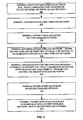
- FIG. 3 is a flowchart of several sample aspects of operations that may be performed by a wireless terminal to support concurrent operation in multiple wireless networks;
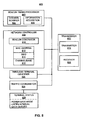
- FIG. 4 is a simplified block diagram of several sample aspects of a wireless terminal
- FIG. 5 is a simplified timing diagram of sample beacon transmission times for a pair of wireless networks
- FIG. 6 is a flowchart of several sample aspects of operations that may be performed by a wireless terminal to transfer data in an active mode of operation;
- FIG. 7 is a flowchart of several sample aspects of operations that may be performed by a wireless device such as an access point for an infrastructure network or a wireless terminal for an ad hoc network to support concurrent operation in multiple wireless networks;
- a wireless device such as an access point for an infrastructure network or a wireless terminal for an ad hoc network to support concurrent operation in multiple wireless networks;
- FIG. 8 is a simplified block diagram of several sample aspects of a wireless device such as an access point for an infrastructure network or a wireless terminal for an ad hoc network;
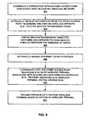
- FIG. 9 is a flowchart of several sample aspects of operations that may be performed to coordinate the transfer of data in conjunction with concurrent operation in multiple wireless networks;
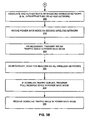
- FIG. 10 is a flowchart of several sample aspects of operations that may be performed to support concurrent operation in multiple wireless networks that were established by a given wireless device;
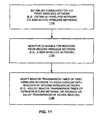
- FIG. 11 is a flowchart of several sample aspects of operations that may be performed to adjust beacon transmission times in conjunction with concurrent operation in multiple wireless networks;
- FIG. 12 is a simplified block diagram of several sample aspects of communication components.
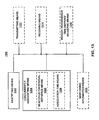
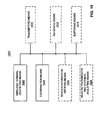
- FIGS. 13-15 are several simplified block diagrams of several sample aspects of apparatuses configured to support concurrent operation in multiple wireless networks.
- FIG. 1 illustrates sample aspects of a pair of communication systems 100A and 100B where a wireless terminal 102 may concurrently communicate with two or more wireless networks.
- the wireless terminal 102 may be associated with a first WLAN (WLAN 1) established by an access point 104 and also may be associated with a second WLAN (WLAN 2) established by an access point 106.
- the wireless terminal 102 may be associated with both WLANs (WLANs 2 and 3) established by the access point 106.
- all of the WLANs are infrastructure WLANs in that the access points 104 and 106 provide connectivity to a wide area network 108 (e.g., the Internet).
- FIG. 1B illustrates that the wireless terminal 102 also may be concurrently associated with an ad hoc wireless network (e.g., WLAN 4) and one or more other wireless networks.
- the wireless terminal 102 may join an ad hoc wireless network (WLAN 4) established by one or more other wireless terminals (e.g., wireless terminals 110 and 112), or may establish its own ad hoc wireless network.
- the one or more other wireless networks mentioned above may comprise an infrastructure wireless network (e.g., WLAN 1), another ad hoc wireless network (not shown in FIG. 1 ), or some other type of wireless network.
- the wireless terminal 102 may concurrently associate with different WLANs to enable different types of data to be transmitted or received over different wireless channels. For example, real-time traffic such as voice and video may be transmitted and received over one WLAN while best-effort traffic such as web browsing and e-mail may be transmitted and received over another WLAN.
- real-time traffic such as voice and video
- best-effort traffic such as web browsing and e-mail
- Such a division of traffic over different WLANs may provide one or more advantages in certain situations.
- a wireless device may be able to operate more efficiently or may be able to transfer data at a higher overall rate by transferring different data on different wireless channels.
- simultaneous operation on multiple WLANs may be employed, for example, in subscription management or transport management applications.
- division of traffic may enable different types of traffic to be routed over channels that are better suited to handle the different types of traffic.
- real-time traffic may be deployed in the 5 GHz UNI wireless band while best-effort traffic may be deployed in the 2.4 GHz ISM wireless band.
- the 2.4 GHz ISM band may be relatively crowded and may, as a result, suffer from interference. Consequently, a WLAN operating in such a 2.4 GHz band may lack the necessary bandwidth and quality of service to support real-time traffic. In contrast, such a WLAN may adequately support data transmissions such as best effort traffic that do not have as strict of quality of service requirements.
- Division of traffic also may enable a communication carrier to better manage subscriptions for subscribers that use the different types of traffic.
- a WLAN designated to carry real-time traffic may have a different service set identifier ("SSID") than a WLAN designated to carry best effort traffic. Consequently, different authentication credentials may be required to access the services provided by the different WLANs. This, in turn, may enable a carrier to more appropriately bill subscribers that are accessing the different types of traffic.
- SSID service set identifier
- Division of traffic between infrastructure and ad hoc WLANs also may provide one or more advantages in certain situations. For example, a user may connect to the infrastructure WLAN to access the Internet or an enterprise intranet. At the same time, the user may wish to participate in an ad hoc WLAN where the users participating in the ad hoc WLAN may not have all the necessary credentials to connect to the infrastructure WLAN and communicate via the associated access point.
- WLAN chipsets may be a common feature in consumer electronic devices such as set-top boxes, game consoles, display devices such as HDTV, and so on. Consumer electronic devices such as these may, under some circumstances, either join an infrastructure WLAN or form their own ad hoc WLAN. Consequently, applications running on a wireless terminal may be capable of joining an infrastructure WLAN and one or more ad hoc WLANs formed by the consumer devices. For example, an application such as HDTV that has a relatively high bandwidth requirement may be better served by an ad-hoc WLAN since the ad hoc WLAN may provide a one-hop route as compared to a two-hop route offered by an infrastructure WLAN.
- Concurrent use of multiple WLANs may provide one or more advantages for terminals participating in ad hoc networks. For example, in an ad hoc network a mesh point may concurrently participate in several WLANs. Consequently, the mesh point may provide connectivity across these WLANs for the ad hoc terminals.
- Concurrent WLANs may be configured in a variety of ways. For example, in some implementations each WLAN may have a unique service set identifier. Alternatively, in other implementations two or more WLANs may be associated with the same service set identifier. In the latter case, a given WLAN may be identified by, for example, a media access control ("MAC") address of an access point that established the WLAN.
- MAC media access control
- the different WLANs may be established on different wireless channels.
- these different channels may be associated with either the same wireless band or different wireless bands.
- FIG. 2 An overview of sample operations relating to concurrent operation in multiple WLANs will now be provided in the context of the flowchart of FIG. 2 .
- the operations of FIG. 2 may be described as being performed by specific components (e.g., components of the systems 100A and 100B). It should be appreciated, however, that these operations may be performed by other types of components and may be performed using a different number of components. It also should be appreciated that one or more of the operations described herein may not be employed in a given implementation.
- the wireless terminal 102 identifies a first wireless network with which it may establish wireless communication. As mentioned above, this operation may involve detecting an infrastructure WLAN or an ad hoc WLAN, or this operation may involve defining an ad hoc WLAN. Upon identification of an appropriate WLAN, the wireless terminal associates with the identified WLAN (e.g., WLAN 1) on the designated wireless channel (block 204).
- the identified WLAN e.g., WLAN 1
- the wireless device enters power save mode on the first WLAN. Consequently, any wireless device (e.g., access point 104) on the first WLAN that has data to transmit to the wireless terminal 102 will buffer the data for transmission at a later time.
- the wireless terminal 102 may monitor the associated wireless channel for any beacons that include an indication that another wireless device on the WLAN has buffered data for transmission to the wireless terminal 102.
- the wireless terminal 102 identifies a second wireless network with which it may establish wireless communication. Again, this may involve detecting an infrastructure WLAN or an ad hoc WLAN, or defining an ad hoc WLAN.
- the wireless terminal 102 associates with the identified WLAN (e.g., WLAN 2) on the designated wireless channel.
- WLAN e.g., WLAN 2
- simultaneous participation in two WLANS may result in assignment of two IP addresses to the wireless terminal 102.
- the TCP/IP stack in the wireless terminal 102 may thus support the use of multiple interfaces.
- 802.11 MAC procedures may ensure collision free operation among the WLANs. For example, prior to transmission of a beacon, an access point may follow the CSMA/CA procedure thereby ensuring that the access point will not transmit its beacon at the same time another access point transmits its beacon.
- the second WLAN is established on a different wireless channel than the first WLAN
- one or more of the techniques taught herein may be employed to facilitate reliable data transmission on each of the WLANs.
- the first and second wireless networks may be defined to avoid overlapping beacon transmission times.
- a wireless terminal may associate with one or more WLANs in a manner that facilitates receiving beacon information even when the beacons for the different WLANs are concurrently transmitted. For example, as discussed below conjunction with FIGS. 3 and 5 , a wireless terminal may select a beacon interval or select a time to associate with a given WLAN in a manner that enables the wireless terminal to receive the appropriate beacons associated with the different WLANs at different times.
- the wireless terminal 102 enters power save mode on the second WLAN.
- any wireless device e.g., access point 106 on the second WLAN that has data to transmit to the wireless terminal 102 will buffer the data for transmission at a later time.
- the wireless terminal 102 may then monitor the associated wireless channel for any beacons that include an indication that another wireless device on the second WLAN has buffered data for transmission to the wireless terminal 102.
- the wireless terminal 102 may remain in power save mode on one or both of the WLANs when it transmits or receives data via one of these WLANs.
- the state of the wireless terminal 102 as it is known to other devices on a given WLAN will be a power save state.
- the wireless terminal 102 may remain fully functional or substantially fully functional (e.g., not powered-down) during all or a portion of this time.
- the wireless terminal 102 may be powered-down to some extent most of the time. Then, when the wireless terminal 102 needs to transmit a polling message, scan for beacons, transmit data, or receive data, the wireless terminal may power on the required circuitry.
- the wireless terminal 102 may remain in the power save mode with respect to any associated WLANs. In this way, the wireless terminal 102 may transmit or receive data on one of the WLANs, yet any potential downlink traffic on another WLAN will be buffered for subsequent transmission since the devices on that WLAN will assume the wireless terminal 102 is not active and, hence, cannot receive the traffic.
- the wireless terminal when the wireless terminal is idle, it may monitor all of its associated WLANS. In addition, the wireless terminal may at some point switch to an active mode where it may elect to operate on only one WLAN at a time or it may attempt to support simultaneous operation on every WLAN.
- FIGS. 3 - 6 relate to a wireless terminal or some other type of wireless device that may concurrently associate with multiple WLANs.
- a wireless terminal For convenience, such a device will be referred to in the discussion that follows simply as a "wireless terminal.”
- FIG. 3 relates to operations that may be performed by a wireless terminal to concurrently operate in multiple WLANs.
- FIG. 4 depicts sample functional blocks of a wireless terminal.
- FIG. 5 illustrates sample beacon timing for multiple WLANs.
- FIG. 6 illustrates sample operations that a wireless terminal may perform in conjunction with the transmission or reception of data in an active operational mode.
- a wireless terminal interacts with an existing WLAN in three basic modes of operation. Initially, the wireless terminal enters a search mode to search for a suitable WLAN. Once the wireless terminal is associated with a WLAN, the wireless terminal may then switch between idle and active modes of operation.
- FIG. 3 and 6 will be discussed in the context of being performed by various components of a wireless terminal 400 as shown in FIG. 4 . It should be appreciated, however, that the illustrated components of the wireless terminal 400 are merely representative of components that may be employed here and that one or more of the operations of FIG. 3 may be performed by or in conjunction with other suitable components.
- a network identifier 402 (e.g., a network detector), in cooperation with a receiver component 404 of a transceiver 406, scans a set of wireless channels to determine whether there are any WLANs operating in the vicinity. This operation may involve, for example, acquiring any beacons that may have been transmitted by an access point of an infrastructure WLAN or one or more wireless terminals associated with an ad hoc WLAN.
- the wireless terminal 400 may search all the channels in all the supported bands as specified by a search and system selection algorithm. Additionally, as discussed below, an association between overlapping WLANs may be stored in a database.
- the network identifier 402 may extract network related information from the signals and store this information in an appropriate data memory. For example, the network identifier 402 may maintain information 408 relating to a service set identifier of a given WLAN and, if applicable, the MAC address of an access point that establish the WLAN. In addition, the network identifier 402 may maintain information 410 that identifies the channel and band designated for the WLAN. Also, in the event the detected WLAN is an ad hoc network, the network identifier 402 may maintain information 412 relating to the ad hoc network (e.g., relating to any associated wireless terminals).
- a network controller 414 may then associate and authenticate with one or more of the identified WLANs and commence idle mode operation on each WLAN.
- a network controller 414 may then associate and authenticate with one or more of the identified WLANs and commence idle mode operation on each WLAN.
- the discussion that follows will simply referred to a first WLAN with which the wireless terminal 400 has associated.
- a mode controller 416 may switch the wireless terminal 400 to power save mode on the first WLAN (e.g., immediately upon commencement of idle mode operation).
- any wireless device e.g., an infrastructure access point or an ad hoc terminal
- any wireless device may buffer the data for transmission at a later time.
- the wireless terminal 400 may wake up regularly at a negotiated listen interval and, upon detection of traffic activity, switch to an active mode of operation.
- the wireless terminal 400 may keep searching for other WLANs of interest on all of the available channels.
- the wireless terminal 400 may obtain information 418 relating to one or more sets of related WLANs.
- the information 418 may indicate, for example, that two or more WLANs (e.g., corresponding to unique service set identifiers) have overlapping coverage areas or are adapted in some other manner that facilitates concurrent operation over these WLANs.
- a pair of WLANs may be defined to support splitting of traffic flows wherein one of the WLANs is better suited to handle one type of traffic and the other WLAN is better suited to handle another type of traffic.
- the information 418 may describe various attributes of each WLAN including, for example, service set identifiers and the MAC address of an access point.
- the wireless terminal 400 may identify the presence of a mobility domain (e.g., as found in enterprise implementations or as defined in 802.11r) and may not attempt to dual-register on two identical service set identifiers of the same mobility domain.
- the information 418 may be acquired in various ways. For example, in some implementations the information 418 may be downloaded to the wireless terminal 400 when it is provisioned by a communication carrier (e.g., initially placed in service). Also, the wireless terminal 400 may acquire the information 418 from time to time depending on, for example, the location of the wireless terminal 400 and whether any WLANs have recently been established. In some aspects association of two or more WLANs may be learned after first discovery of overlapping coverage of the WLANs. Corresponding information 418 may then be stored locally for later use.
- a communication carrier e.g., initially placed in service
- the wireless terminal 400 may acquire the information 418 from time to time depending on, for example, the location of the wireless terminal 400 and whether any WLANs have recently been established. In some aspects association of two or more WLANs may be learned after first discovery of overlapping coverage of the WLANs. Corresponding information 418 may then be stored locally for later use.
- the wireless terminal 400 may elect to associate with another WLAN (e.g., on a different channel).
- the selection of the WLANs for concurrent operation is based on the related network information 418.
- a related network selector component 420 may cause the network identifier 402 to specifically scan for a designated set of WLANs.
- the network identifier 402 may simply scan for any available WLANs.
- beacon transmissions are synchronized between WLANs that have common coverage areas (e.g., via some form of coordination between a component of each WLAN).
- at least one the WLANs may be defined such that its beacons and the beacons of the other WLANs are not transmitted concurrently.
- the wireless terminal 400 may readily associate with these WLANs without taking any steps to compensate for any potential overlap of beacons.
- the wireless terminal 400 may optionally perform one or more operations in an attempt to ensure that it will be able to receive beacon information for each of the WLANs.
- an association timing selector 422 may determine an appropriate time to associate with a given WLAN based on the beacon intervals of that WLAN and another WLAN that has concurrent (e.g., overlapping) beacon transmission times.
- a listen interval selector 424 may select a listen interval for a given WLAN that facilitates reception of beacons from that WLAN and another WLAN that has overlapping beacon transmission times.
- the operations of blocks 312 and 314 may be better understood by reference to FIG. 5 .
- FIG. 5 illustrates a timing diagram 500 where a set of beacons associated with a first WLAN (designated network A in FIG. 5 ) is designated by arrows 502 and a set of beacons associated with a second WLAN (designated network B) is designated by arrows 504.
- a wireless terminal receives the beacons 502 and the beacons 504 from the two WLANs.
- beacon transmission times of the different WLANs occur at the same time or sufficiently close in time to one another whereby a wireless device does not have sufficient time to switch channels to receive the beacons on the two WLANs.
- concurrent transmission of beacons involves beacon transmissions that occur within a period of time is less than or equal to the amount of time it takes for the receiver 404 to switch from receiving beacons on one wireless channel to receiving beacons on a different wireless channel (and potentially a different frequency band).
- beacon 502A an attempt by the wireless terminal to receive one of the beacons (e.g., beacon 502A) on one WLAN results in the wireless terminal not receiving a corresponding one of the beacons (e.g., beacon 504B) on the other WLAN.
- the wireless terminal may instruct the beacon-sending devices (e.g., access points) that it will listen for its beacon information at intervals corresponding to an integer multiple of the beacon intervals of the WLANs.
- the longer arrows e.g., arrow 502A and arrow 504B
- the wireless device will only listen for beacon information every other beacon interval. It should be appreciated that the wireless device may designate longer beacon intervals for the WLANs.
- a wireless terminal may be able to offset its listening times for the different WLANs.
- the wireless terminal may always reliably receive its beacon information from each of the WLANs. That is, the wireless terminal will receive a beacon from the first WLAN at a point in time represented by the beacon 502A, then the wireless terminal will receive a beacon from the second WLAN at a point in time represented by the beacon 504A, and so on. Thus, the wireless terminal will ignore the beacons 502B and 504B that do not include information (e.g., an infrastructure traffic indication map or an ad hoc traffic indication map) for that wireless terminal.
- information e.g., an infrastructure traffic indication map or an ad hoc traffic indication map
- the offset listening times for the wireless terminal as represented by the longer arrows in FIG. 5 may be accomplished by selecting the time at which the wireless terminal associates with one of the WLANs.
- an access point may specify that the listen interval for a given wireless terminal starts at the first beacon transmitted after that wireless terminal associates with the access point.
- the wireless terminal may specify the time at which it associates with network B (e.g., by delaying the association procedure) so that the time falls after a beacon it does not want to receive (e.g., beacon 504B) and falls a sufficient time before a beacon that does want to receive (e.g., beacon 504A).
- the access point may schedule the transmission of beacon information for the wireless terminal at the desired times (e.g. at beacon 504A).
- the wireless terminal 400 may thus complete its association and authentication with the second WLAN at block 316.
- the mode controller 416 may thus switch the wireless terminal 400 to power save mode on the second WLAN at block 318.
- the wireless terminal 400 may have data that needs to be transmitted over one of the WLANs.
- the wireless device 400 may elect to remain in power save mode on both of the WLANs while a transmitter 426 of the transceiver 406 transmits the data.
- the network controller 414 and the transceiver 406 are not powered down at this time.
- the network controller 414 may cooperate with the receiver 404 to scan the designated channel to determine whether the channel is currently being used by another wireless device. Then, once the channel is free, the network controller 414 may cooperate with the transmitter 426 to acquire the channel and transmit the designated data.
- another wireless device e.g., an access point
- this wireless device may still receive any data that the wireless terminal 400 transmits to the wireless device.
- another wireless device e.g., an access point of one of the associated WLANs may have data that needs to be transmitted to the wireless terminal 400.
- the wireless device may use a beacon to inform the wireless terminal 400 that there is data queued for transmission.
- the wireless device may set an appropriate bit in a traffic indication map (e.g., TIM or ATIM) in a beacon that is transmitted in accordance with the listen interval of the wireless terminal 400.
- a traffic indication map e.g., TIM or ATIM
- the wireless terminal 400 may therefore scan for beacons at the appropriate times on each of its associated WLANs.
- the wireless terminal 400 may remain in power save mode while it scans for beacons or it may switch to active mode to scan for beacons.
- the wireless terminal may not be able to adapt its listen intervals as shown in FIG. 5 .
- some access points may not allow a listen interval that is larger than the beacon interval.
- the wireless terminal 400 may alternately receive beacons for the different WLANs. Consequently, the wireless terminal 400 will miss some of the beacons for each WLAN.
- a power save ("PS") poll generator 428 may issue a gratuitous PS poll message to the appropriate wireless device (e.g., access point) of the corresponding WLAN.
- the wireless terminal 400 may determine whether the wireless device has any data queued for transmission to the wireless terminal 400. In the event there is data queued in either of the WLANs, the wireless terminal 400 may follow a procedure described below to retrieve the data.
- PS power save
- the wireless terminal 400 may elect to prioritize which beacons it will scan for at block 322. For example, in some implementations beacons associated with a first WLAN (e.g., as defined by a service set identifier) may have higher priority than beacons associated with a second WLAN. In this case, the wireless terminal 400 may scan for beacons on the first WLAN rather than the second WLAN. Similarly, in the event the wireless terminal 400 expects data on a certain WLAN, the wireless terminal 400 may elect to scan for beacons on the channel associated with that WLAN rather than any other WLANs for a period of time.
- a first WLAN e.g., as defined by a service set identifier
- the wireless terminal 400 may scan for beacons on the first WLAN rather than the second WLAN.
- the wireless terminal 400 may elect to scan for beacons on the channel associated with that WLAN rather than any other WLANs for a period of time.
- the PS poll generator 428 In the event the wireless terminal 400 determines that there is downlink traffic queued for transmission, the PS poll generator 428 generates a PS poll message to inform the appropriate wireless device (e.g., access point) to commence transmission of the downlink traffic (block 324). In response to this message, a wireless device will transmit the data whenever the associated wireless channel is available.
- the appropriate wireless device e.g., access point
- the wireless terminal 400 may elect to remain in power save mode on both of the WLANs while its receiver 404 receives the data (block 326). As above, the receiver 404 is not actually powered down during this power save mode. Also, even though the wireless device has been informed that the wireless terminal 400 is in power save mode, the wireless device may still transmit the data to the wireless terminal 400 in response to the poll message.
- the wireless terminal 400 may elect to temporarily switch to an active mode on a given WLAN to transmit or receive traffic on that WLAN.
- the wireless terminal 400 may determine whether to switch to active mode. For example, the wireless terminal 400 may switch to active mode when it determines that it has a relatively large burst of traffic to be transmitted or received via a one of its WLANs.
- the state controller 416 may then switch from power save mode to active mode on that WLAN. However, to ensure that there are no unsolicited transmissions on any other associated WLANs, the mode controller 416 will maintain the power save mode on these other WLANs.
- the wireless terminal 400 may transmit and receive traffic without any of the overhead associated with the PS poll procedure.
- the wireless terminal 400 may transmit a set of data (e.g., a burst of data) as discussed above any time it acquires the channel (e.g., when the channel is not being used by other wireless devices).
- this wireless device may immediately transmit the corresponding set of data (e.g., a burst of data) to the wireless terminal 400 whenever the wireless device acquires the channel.
- the state controller 416 may then switch back from active mode to power save mode on the WLAN (e.g., the first WLAN). Again, the mode controller 416 may continue to maintain any other WLANs (e.g., the second WLAN) in power save mode.
- the WLAN e.g., the first WLAN
- the mode controller 416 may continue to maintain any other WLANs (e.g., the second WLAN) in power save mode.
- the PS poll generator 428 may transmit a poll message to determine whether any downlink traffic was queued for the second WLAN when the first WLAN was in the active mode (block 610). In the event there is data queued for transmission, the wireless device 400 may retrieve the data as discussed herein (block 612). Similarly, in the event the wireless terminal 400 buffered any data for transmission over the second WLAN when the first WLAN was in the active mode, the wireless terminal 400 may transmit the data at block 612. Again, the wireless terminal 400 may remain in power save mode on all of its associated WLANs during these transmissions or receptions as taught herein.
- FIGS. 7 - 11 these figures relate, in general, to a wireless device that generates beacons for a WLAN.
- a wireless device may comprise, in some instances, an access point for an infrastructure WLAN or a wireless terminal for an ad hoc WLAN.
- FIG. 7 relates to operations that may be performed by a wireless device to define beacon transmission times and to communicate with a wireless terminal that is operating in power save mode.
- FIG. 8 depicts sample functional blocks of a wireless device 800.
- Figure 9 illustrates sample operations that may be performed by a wireless device to coordinate with an access point.
- FIG. 10 illustrates sample operations that may be performed by a wireless device that establishes multiple WLANs.
- FIG. 11 illustrates sample operations that may be performed by a wireless device to adapt beacon transmission times.
- FIGS. 7 and 9 - 11 will be discussed in the context of being performed by various components of the wireless device 800 (e.g., an access point) as shown in FIG. 8 .
- the referenced components are merely representative and that the operations of these figures may be performed by or in conjunction with other suitable components.
- a beacon timing processor 802 determines the beacon transmission times of one or more existing WLANs. In some aspects this operation may be performed during initialization upon power-up or at some other time.
- the beacon timing processor 802 may comprise a channel scanner 804 that is configured to monitor a set of wireless channels (e.g., on a periodic basis).
- beacon timing information of an existing WLAN may be acquired using other techniques as described below conjunction with FIGS. 9 and 10 .
- a network controller 808 (e.g., a beacon generator component 810) defines beacon transmission times for a new WLAN to be established by the wireless device 800.
- the beacon transmission times may be defined according to a beacon start time and a beacon interval.
- the beacon generator 810 may define these beacon transmission times based on the beacon transmission times acquired at block 702. In this way, the beacons for the respective WLANs may be defined such that they do not overlap in time. In particular, non-overlapping beacons may be specified for any WLANs that may be concurrently used by a given wireless terminal.
- the network controller 808 then establishes the new WLAN associated with a MAC address 812 of the wireless device 800, a service set identifier 814, and information 816 relating to a specified wireless channel and wireless band.
- the wireless device 800 may associate with a wireless terminal that joins the new WLAN.
- the wireless terminal may enter power save mode after associating with the new WLAN.
- the wireless device 800 buffers data that it receives (e.g., via another network such as the Internet) that is destined for the wireless terminal.
- the beacon generator 810 At the appropriate interval (e.g., the beacon interval or the listen interval) the beacon generator 810 generates a beacon that indicates whether there is buffered data for the wireless terminal.
- the network controller 808 then cooperates with a transmitter 818 of a transceiver 820 to transmit the beacon over the new WLAN.
- a receiver 822 of the wireless device 800 may receive a poll message from the wireless terminal (e.g., when the wireless terminal is in power save mode). As discussed herein, the wireless terminal may have transmitted this poll message in response to a bit being set in a traffic indication map of a beacon. Alternatively, the wireless terminal may transmit this poll message (e.g., a gratuitous poll) to determine whether data was queued for the new WLAN while the wireless terminal was performing some operation on another WLAN (e.g., while an active mode on the other WLAN).
- a gratuitous poll e.g., a gratuitous poll
- the wireless terminal may be in power save mode or active mode at this time.
- the receiver 822 may receive data from the wireless terminal via the new wireless network. Again, the wireless terminal may be in power save mode or active mode at this time.
- the wireless device 800 may be implemented as an access point (e.g., access point 104 in FIG. 1 ) that coordinates with another access point (e.g., access point 106).
- the other access point may be associated with an existing WLAN.
- the access point 800 may comprise a traffic coordinator 824 and an information acquisition component 806 that are configured to optionally acquire information regarding another WLAN by, for example, communicating with a complementary component of the other access point.
- This communication may be accomplished, for example, via a back-end communication link (e.g., via the WAN 108), via a wireless channel, or via some other communication link.
- the information acquisition component 806, in conjunction with the receiver 822, may receive information such as beacon transmission times from the other access point. In some aspects this operation may be performed by the wireless device 800 during initialization upon power-up or at some other time.
- the network controller 808 may define beacon transmission times for a new WLAN based on information received from the other WLAN.
- the access points may avoid the overlap of beacons on the different WLANs by ensuring that the beacons are interleaved in time.
- the access points may regularly coordinate to ensure that relative synchronization is maintained over time between the beacon transmission times of the two WLANs to avoid beacon overlap.
- the access points may coordinate to prevent overlapping beacon transmissions by allowing a wireless terminal to define a listen interval that is different than the beacon interval.
- a wireless terminal may configure its listen intervals, for example, as described above in conjunction with FIG. 5 .
- the access points also may coordinate with one another regarding the status of the wireless terminal.
- a wireless terminal identifier 826 may identify a wireless terminal that is concurrently associated with a WLAN supported by the access point 800 and another WLAN supported by another access point. This identification operation may involve, for example, receiving information from the other access point or from the wireless terminal that indicates that the wireless terminal is concurrently associated with multiple WLANs.
- the coordination of block 910 may involve the exchange of status information relating to the wireless terminal.
- the traffic coordinator 824 may receive status information from the other access point and/or may send status information to the other access point.
- the status information relating to the wireless terminal may take various forms. For example, in some implementations the status information may indicate whether the wireless terminal is in power save mode or active mode on a particular WLAN. In some implementations the status information indicates the listen interval of the wireless terminal on a particular WLAN. In some implementations the status information indicates whether data is queued for transmission to the wireless terminal or for transmission from the wireless terminal. In some implementations the status information indicates whether the wireless terminal is current involved in a data transfer operation on a given WLAN.
- the access point 800 may maintain this wireless terminal status information in an appropriate data memory 828. That is, the data memory 828 may maintain information that was received from another WLAN or that was obtained from its WLAN (and optionally transmitted to the other WLAN).
- data transfer to and/or from the wireless terminal may be controlled based on the status information.
- the access point 800 may buffer any data it has that is destined for the wireless terminal in the event the access point 800 determines that the wireless terminal is currently transferring data on another WLAN (regardless of whether the wireless terminal is in power save mode on the WLAN of the access point 800).
- the access point 800 may buffer data for the wireless terminal if the access point 800 determines that the wireless terminal is currently in power save mode on the other WLAN or if the access point 800 determines that there is data buffered for the wireless terminal on the other WLAN.
- the access point 800 may define beacon information based on the wireless terminal status information. For example the access point 800 may adjust the timing (e.g., beacon start time and beacon interval) of its beacon transmissions based on information it receives regarding the listen interval of the wireless terminal on another WLAN.
- the wireless device 800 may establish multiple WLANs. In such cases, coordination associated with these WLANs may simply involve internal operations of the wireless device 800.
- the wireless device 800 establishes a first WLAN.
- the wireless device 800 may define the beacon transmission times for the first WLAN.
- the wireless device 800 may elect to establish a second WLAN.
- these WLANs may be associated with the same service set identifier or different service set identifiers.
- coordination associated with the different WLANs may thus involve, in part, the wireless device 800 defining the beacon transmission times of the second WLAN based on information the wireless device 800 maintains regarding the beacon transmission times of the first WLAN. Again, these beacon transmission times may be defined to avoid overlapping beacons on the different WLANs at block 1006.
- coordination associated with the different WLANs also may involve the wireless device 800 sharing information between its WLANs regarding the status of a wireless terminal that is associated with each of the WLANs. As mentioned above, the status information may be maintained in the data memory 828.
- the wireless device 800 also may utilize this status information in a similar manner as discussed above in conjunction with FIG. 9 .
- a wireless device 800 may determine whether and/or how to transfer data to and from the wireless terminal based on the status of the wireless terminal (block 1010).
- the wireless device 800 may adapt the beacon transmission times of an existing WLAN. These operations may be performed in conjunction with, for example, an infrastructure WLAN or an ad hoc WLAN.
- the wireless device 800 establishes communication with a first wireless network.
- this operation may involve an access point establishing a WLAN.
- this operation may involve a wireless station either establishing the ad hoc network or joining (e.g., associating with) the ad hoc network.
- the wireless device 800 may regularly monitor one or more designated wireless channels to determine the beacon transmission times of any neighboring WLANs. In some cases this may involve scanning all of the channels the wireless device 800 is associated with, to determine whether there's been a change in the beacon transmission times of any of the WLANs. In some cases this may involve identifying a new WLAN with which the wireless device 800 has associated.
- the wireless device 800 may adapt the beacon transmission times of the first WLAN to avoid overlap with any beacon transmission times identified at block 1104.
- adaptations of the beacon transmission times may involve advancing or delaying the currently defined transmission times of beacons associated with a given WLAN.
- the access point may adjust the beacon transmission times of the WLAN it established. In some cases the access point may adjust the beacon transmission times in a gradual manner to avoid any potential disruptions in the receptions of the beacons at any other wireless devices (e.g., wireless terminals) that are associated with the WLAN. For example, to affect a 40 millisecond shift in the beacon transmission times, the access point may perform 40 one millisecond adjustments of the beacon transmission time over a given period of time.
- the wireless terminal may adjust the timing of any beacons that it transmits for the ad hoc WLAN. For example, whenever the shared beacon generation scheme for the ad hoc WLAN indicates that this wireless terminal is to generate the next beacon for the ad hoc WLAN, the wireless terminal may transmit the beacon either before or after the previously designated beacon transmission time. This shift in the beacon transmission timing may therefore affect the timing of subsequent beacon transmissions by this wireless station or any other wireless station in the ad hoc WLAN. As in the access point case, the wireless terminal may adjust the beacon transmission times in a gradual manner (e.g., over several beacon transmissions).
- teachings herein may be applicable to different types of networks, and to the splitting of different types of traffic.
- other ways may be used to identify a network and associated network information, or to define beacon transmission times to avoid overlaps or otherwise adapt beacon timing.
- Different techniques may be used to coordinate between two or more devices to share information, and such information may be used in different ways and may relate to other aspects of a wireless terminal.
- power save mode may be implemented in different ways to control the transfer of data to a wireless station.
- FIG. 12 depicts several sample components that may be employed to facilitate communication between devices.
- a first device 1202 e.g., an access terminal
- a second device 1204 e.g., an access point
- a wireless communication link 1206 e.g., a wireless communication link
- a transmit (“TX”) data processor 1208 receives traffic data (e.g., data packets) from a data buffer 1210 or some other suitable component.
- the transmit data processor 1208 processes (e.g., encodes, interleaves, and symbol maps) each data packet based on a selected coding and modulation scheme, and provides data symbols.
- a data symbol is a modulation symbol for data
- a pilot symbol is a modulation symbol for a pilot (which is known a priori).
- a modulator 1212 receives the data symbols, pilot symbols, and possibly signaling for the reverse link, and performs modulation (e.g., OFDM or some other suitable modulation) and/or other processing as specified by the system, and provides a stream of output chips.
- a transmitter (“TMTR") 1214 processes (e.g., converts to analog, filters, amplifies, and frequency upconverts) the output chip stream and generates a modulated signal, which is then transmitted from an antenna 1216.
- the modulated signals transmitted by the device 1202 are received by an antenna 1218 of the device 1204.
- a receiver (“RCVR”) 1220 processes (e.g., conditions and digitizes) the received signal from the antenna 1218 and provides received samples.
- a demodulator (“DEMOD”) 1222 processes (e.g., demodulates and detects) the received samples and provides detected data symbols, which may be a noisy estimate of the data symbols transmitted to the device 1204 by the other device(s).
- a receive (“RX”) data processor 1224 processes (e.g., symbol demaps, deinterleaves, and decodes) the detected data symbols and provides decoded data associated with each transmitting device (e.g., device 1202).
- Traffic data is processed by a transmit (“TX") data processor 1226 to generate data symbols.
- a modulator 1228 receives the data symbols, pilot symbols, and signaling for the forward link, performs modulation (e.g., OFDM or some other suitable modulation) and/or other pertinent processing, and provides an output chip stream, which is further conditioned by a transmitter (“TMTR") 1230 and transmitted from the antenna 1218.
- modulation e.g., OFDM or some other suitable modulation
- TMTR transmitter
- signaling for the forward link may include power control commands and other information (e.g., relating to a communication channel) generated by a controller 1232 for all devices (e.g. terminals) transmitting on the reverse link to the device 1204.
- the modulated signal transmitted by the device 1204 is received by the antenna 1216, conditioned and digitized by a receiver (“RCVR”) 1234, and processed by a demodulator (“DEMOD”) 1236 to obtain detected data symbols.
- a receive (“RX”) data processor 1238 processes the detected data symbols and provides decoded data for the device 1202 and the forward link signaling.
- a controller 1240 receives power control commands and other information to control data transmission and to control transmit power on the reverse link to the device 1204.
- the controllers 1240 and 1232 direct various operations of the device 1202 and the device 1204, respectively. For example, a controller may determine an appropriate filter, reporting information about the filter, and decode information using a filter.
- Data memories 1242 and 1244 may store program codes and data used by the controllers 1240 and 1232, respectively.
- FIG. 12 also illustrates that the communication components may include one or more components that perform WLAN operations as taught herein.
- a WLAN control component 1246 may cooperate with the controller 1240 and/or other components of the device 1202 to send and receive signals to another device (e.g., device 1204) as taught herein.
- a WLAN control component 1248 may cooperate with the controller 1232 and/or other components of the device 1204 to send and receive signals to another device (e.g., device 1202).
- a wireless terminal may incorporate separate radio frequency chains (e.g., involving additional radio frequency and PHY hardware). If multiple WLANs are deployed in separate channels in the same band, separate radio frequency chains may not be employed. In this case, however, simultaneous operation may involve support for fast switching between channels.
- MAC and other upper layer software may be employed in a multitasking mode to support simultaneous operation.
- a wireless device may be configured or referred to as an access point ("AP"), NodeB, Radio Network Controller (“RNC”), eNodeB, Base Station Controller (“BSC”), Base Transceiver Station (“BTS”), Base Station (“BS”), Transceiver Function (“TF”), Radio Router, Radio Transceiver, Basic Service Set (“BSS”), Extended Service Set (“ESS”), Radio Base Station (“RBS”), or some other terminology.
- AP access point
- NodeB Radio Network Controller
- BSC Base Station Controller
- BTS Base Station
- TF Transceiver Function
- TF Transceiver Function
- RBSS Basic Service Set
- ESS Extended Service Set
- RBS Radio Base Station
- a subscriber station also may be known as a subscriber unit, a mobile station, a remote station, a remote terminal, an access terminal, a user terminal, a user agent, a user device, or user equipment.
- a subscriber station may comprise a cellular telephone, a cordless telephone, a Session Initiation Protocol ("SIP”) phone, a wireless local loop (“WLL”) station, a personal digital assistant (“PDA”), a handheld device having wireless connection capability, or some other suitable processing device connected to a wireless modem.
- SIP Session Initiation Protocol
- WLL wireless local loop
- PDA personal digital assistant
- a phone e.g., a cellular phone or smart phone
- a computer e.g., a laptop
- a portable communication device e.g., a portable computing device
- an entertainment device e.g., a music or video device, or a satellite radio
- a global positioning system device e.g., a global positioning system device, or any other suitable device that is configured to communicate via a wireless medium.
- a wireless device may comprise an access device (e.g., a cellular or Wi-Fi access point) for a communication system.
- an access device may provide, for example, connectivity for or to a network (e.g., a wide area network such as the Internet or a cellular network) via a wired or wireless communication link.
- the access device may enable another device (e.g., a Wi-Fi station) to access the network or some other functionality.
- a wireless device may communicate via one or more wireless communication links that are based on or otherwise support any suitable wireless communication technology.
- a wireless device may associate with a network.
- the network may comprise a body area network or a personal area network.
- the network may comprise a local area network or a wide area network.
- a wireless device may support or otherwise use one or more of a variety of wireless communication technologies, protocols, or standards such as, for example, CDMA, TDMA, OFDM, OFDMA, WiMAX, and WiFi.
- a wireless device may support or otherwise use one or more of a variety of corresponding modulation or multiplexing schemes.
- a wireless device may thus include appropriate components (e.g., air interfaces) to establish and communicate via one or more wireless communication links using the above or other wireless communication technologies.
- a device may comprise a wireless transceiver with associated transmitter and receiver components (e.g., transmitters 426 and 818 and receivers 404 and 822) that may include various components (e.g., signal generators and signal processors) that facilitate communication over a wireless medium.
- apparatuses 1300, 1400, and 1500 are each represented as a series of interrelated functional blocks.
- the functionality of these blocks may be implemented as a processing system including one or more processor components.
- the functionality of these blocks may be implemented using, for example, at least a portion of one or more integrated circuits (e.g., an ASIC).
- an integrated circuit may include a processor, software, other structure discussed herein, other components, or some combination thereof.
- the blocks of FIGS. 13 - 15 also may be implemented in some other manner as taught herein.
- one or more of the components represented by dashed boxes in FIGS. 13 - 15 are optional.
- the apparatuses 1300, 1400, and 1500 may include one or more modules that may perform one or more of the functions described above with regard to various figures.
- an identifying means 1302 may correspond to, for example, a network identifier as discussed herein.
- a concurrently associating means 1304 may correspond to, for example, a network controller as discussed herein.
- a beacon listen interval definition means 1306 may correspond to, for example, a listen interval selector as discussed herein.
- An association time means 1308 may correspond to, for example, an association timing selector as discussed herein.
- a maintaining information means 1310 may correspond to, for example, a memory as discussed herein.
- a transmitting means 1312, 1408, or 1510 may correspond to, for example, a transmitter as discussed herein.
- a receiving means 1314, 1410, or 1512 may correspond to, for example, a receiver as discussed herein.
- a beacon transmission time defining/adjusting means 1316 may correspond to, for example, a beacon generator as discussed herein.
- a beacon transmission time determining means 1402 may correspond to, for example, a beacon timing processor as discussed herein.
- a beacon transmission time defining means 1404 may correspond to, for example, a beacon generator as discussed herein.
- a coordination means 1406 or 1504 may correspond to, for example, a traffic coordinator as discussed herein.
- a wireless terminal identifying means 1502 may correspond to, for example, a wireless terminal identifier as discussed herein.
- a beacon information defining means 1506 and a beacon transmission time defining/adjusting means 1508 may correspond to, for example, a beacon generator as discussed herein.
- a buffering means 1514 may correspond to, for example, a network controller as discussed herein.
- any reference to an element herein using a designation such as “first,” “second,” and so forth does not generally limit the quantity or order of those elements. Rather, these designations are used herein as a convenient method of distinguishing between two or more different elements. Thus, a reference to first and second elements does not mean that only two elements may be employed there or that the first element must precede the second element in some manner. Also, unless stated otherwise a set of elements may comprise one or more elements.
- any of the various illustrative logical blocks, modules, processors, means, circuits, and algorithm steps described in connection with the aspects disclosed herein may be implemented as electronic hardware (e.g., a digital implementation, an analog implementation, or a combination of the two, which may be designed using source coding or some other technique), various forms of program or design code incorporating instructions (which may be referred to herein, for convenience, as "software” or a "software module”), or combinations of both.
- software or a “software module”
- various illustrative components, blocks, modules, circuits, and steps have been described above generally in terms of their functionality. Whether such functionality is implemented as hardware or software depends upon the particular application and design constraints imposed on the overall system. Skilled artisans may implement the described functionality in varying ways for each particular application, but such implementation decisions should not be interpreted as causing a departure from the scope of the present disclosure.
- the various illustrative logical blocks, modules, and circuits described in connection with the aspects disclosed herein may be implemented within or performed by an integrated circuit ("IC"), an access terminal, or an access point.
- the IC may comprise a general purpose processor, a digital signal processor (DSP), an application specific integrated circuit (ASIC), a field programmable gate array (FPGA) or other programmable logic device, discrete gate or transistor logic, discrete hardware components, electrical components, optical components, mechanical components, or any combination thereof designed to perform the functions described herein, and may execute codes or instructions that reside within the IC, outside of the IC, or both.
- a general purpose processor may be a microprocessor, but in the alternative, the processor may be any conventional processor, controller, microcontroller, or state machine.
- a processor may also be implemented as a combination of computing devices, e.g., a combination of a DSP and a microprocessor, a plurality of microprocessors, one or more microprocessors in conjunction with a DSP core, or any other such configuration.
- the functions described may be implemented in hardware, software, firmware, or any combination thereof. If implemented in software, the functions may be stored on or transmitted over as one or more instructions or code on a computer-readable medium.
- Computer-readable media includes both computer storage media and communication media including any medium that facilitates transfer of a computer program from one place to another.
- a storage media may be any available media that can be accessed by a computer.
- such computer-readable media can comprise RAM, ROM, EEPROM, CD-ROM or other optical disk storage, magnetic disk storage or other magnetic storage devices, or any other medium that can be used to carry or store desired program code in the form of instructions or data structures and that can be accessed by a computer.
- any connection is properly termed a computer-readable medium.
- the software is transmitted from a website, server, or other remote source using a coaxial cable, fiber optic cable, twisted pair, digital subscriber line (DSL), or wireless technologies such as infrared, radio, and microwave
- the coaxial cable, fiber optic cable, twisted pair, DSL, or wireless technologies such as infrared, radio, and microwave are included in the definition of medium.
- Disk and disc includes compact disc (CD), laser disc, optical disc, digital versatile disc (DVD), floppy disk and blu-ray disc where disks usually reproduce data magnetically, while discs reproduce data optically with lasers. Combinations of the above should also be included within the scope of computer-readable media.
Landscapes
- Engineering & Computer Science (AREA)
- Computer Networks & Wireless Communication (AREA)
- Signal Processing (AREA)
- Mobile Radio Communication Systems (AREA)
Applications Claiming Priority (2)
| Application Number | Priority Date | Filing Date | Title |
|---|---|---|---|
| US84110506P | 2006-08-29 | 2006-08-29 | |
| EP07841489A EP2064839A2 (fr) | 2006-08-29 | 2007-08-28 | Fonctionnement concurrent de plusieurs rlsfs |
Related Parent Applications (1)
| Application Number | Title | Priority Date | Filing Date |
|---|---|---|---|
| EP07841489A Division EP2064839A2 (fr) | 2006-08-29 | 2007-08-28 | Fonctionnement concurrent de plusieurs rlsfs |
Publications (1)
| Publication Number | Publication Date |
|---|---|
| EP2101534A1 true EP2101534A1 (fr) | 2009-09-16 |
Family
ID=39106293
Family Applications (3)
| Application Number | Title | Priority Date | Filing Date |
|---|---|---|---|
| EP09006267A Withdrawn EP2101534A1 (fr) | 2006-08-29 | 2007-08-28 | Opération concurrente dans plusieurs réseaux locaux sans fil |
| EP07841489A Withdrawn EP2064839A2 (fr) | 2006-08-29 | 2007-08-28 | Fonctionnement concurrent de plusieurs rlsfs |
| EP09006269A Withdrawn EP2101535A1 (fr) | 2006-08-29 | 2007-08-28 | Opération concurrente dans plusieurs réseaux locaux sans fil |
Family Applications After (2)
| Application Number | Title | Priority Date | Filing Date |
|---|---|---|---|
| EP07841489A Withdrawn EP2064839A2 (fr) | 2006-08-29 | 2007-08-28 | Fonctionnement concurrent de plusieurs rlsfs |
| EP09006269A Withdrawn EP2101535A1 (fr) | 2006-08-29 | 2007-08-28 | Opération concurrente dans plusieurs réseaux locaux sans fil |
Country Status (7)
| Country | Link |
|---|---|
| US (1) | US8223662B2 (fr) |
| EP (3) | EP2101534A1 (fr) |
| JP (1) | JP2010503286A (fr) |
| KR (1) | KR20090071577A (fr) |
| CN (1) | CN101512973A (fr) |
| TW (1) | TW200818778A (fr) |
| WO (1) | WO2008027907A2 (fr) |
Families Citing this family (64)
| Publication number | Priority date | Publication date | Assignee | Title |
|---|---|---|---|---|
| JP5090455B2 (ja) * | 2006-09-14 | 2012-12-05 | マーベル ワールド トレード リミテッド | アドホックネットワーク節電システムおよび方法 |
| US8576758B2 (en) * | 2006-09-29 | 2013-11-05 | Lenovo (Beijing) Limited | Remote wake-up system, WWAM module and terminal |
| US8750241B2 (en) * | 2006-12-08 | 2014-06-10 | Sibeam, Inc. | Concurrent association with multiple wireless networks |
| EP2048829A1 (fr) * | 2007-10-01 | 2009-04-15 | Alcatel Lucent | Balise et synchronisation de terminal mobile et son procédé |
| KR101467783B1 (ko) * | 2008-02-25 | 2014-12-03 | 엘지전자 주식회사 | 무선 개인영역 통신망과의 공존 지원 방법 |
| KR101490245B1 (ko) | 2008-02-25 | 2015-02-05 | 엘지전자 주식회사 | 광대역 무선접속 시스템의 서브채널 할당을 고려한 공존지원 방법 |
| KR101467782B1 (ko) * | 2008-02-25 | 2014-12-03 | 엘지전자 주식회사 | 이동 단말에서 공존 지원 방법 |
| JP4569668B2 (ja) * | 2008-05-23 | 2010-10-27 | ソニー株式会社 | 無線通信装置、無線通信方法、プログラム、および無線通信システム |
| WO2010037128A1 (fr) * | 2008-09-29 | 2010-04-01 | Kabushiki Kaisha Toshiba | Pré-évaluation de points d'accès multiples à un réseau |
| US8897277B2 (en) * | 2008-11-07 | 2014-11-25 | Kyocera Corporation | Device beacon for handoff management of handoffs to base stations |
| US20100118834A1 (en) * | 2008-11-07 | 2010-05-13 | Amit Kalhan | Device beacon for communication management for peer to peer communications |
| US8233875B2 (en) | 2008-11-07 | 2012-07-31 | Kyocera Corporation | Device beacon for handoff management of handoffs to access nodes |
| US8401595B2 (en) * | 2008-12-08 | 2013-03-19 | Samsung Electronics Co., Ltd. | Method and system for integrated wireless power and data communication |
| US8194583B2 (en) * | 2008-12-08 | 2012-06-05 | Samsung Electronics Co., Ltd. | Method and system of radio frequency (RF) power transmission in a wireless network |
| RU2408167C1 (ru) * | 2009-04-23 | 2010-12-27 | Автономная некоммерческая организация "Научно-исследовательский институт СИТРОНИКС" (АНО "НИИ СИТРОНИКС") | СПОСОБ НАДЕЖНОЙ РАССЫЛКИ СИНХРОКАДРОВ (БИКОНОВ) В БЕСПРОВОДНОЙ ЛОКАЛЬНОЙ mesh-СЕТИ |
| US8300613B2 (en) * | 2009-06-05 | 2012-10-30 | Intel Corporation | Techniques for detecting beacons on wireless channels |
| US8270342B2 (en) * | 2009-06-24 | 2012-09-18 | Intel Corporation | Avoiding beacon conflicts in multi-radio platforms |
| US8520694B1 (en) * | 2009-07-31 | 2013-08-27 | Sprint Spectrum L.P. | Mobile handset power conservation using connection-release buffering |
| US20110038290A1 (en) * | 2009-08-11 | 2011-02-17 | Michelle Xiaohong Gong | Device, system and method of power management in a wireless area network |
| US9439103B2 (en) * | 2010-01-14 | 2016-09-06 | Nokia Technologies Oy | Systems, methods, and apparatuses for modem coordination |
| US8248981B2 (en) * | 2010-01-21 | 2012-08-21 | Eigent Technologies, Inc. | Method and apparatus for low cost, long range, power efficient, wireless system with enhanced functionality |
| US8565109B1 (en) | 2010-01-29 | 2013-10-22 | University Of Washington Through Its Center Of Commercialization | Optimization of polling protocols in sensor networks |
| WO2012015091A1 (fr) * | 2010-07-30 | 2012-02-02 | 엘지전자 주식회사 | Appareil et procédé d'affichage d'informations de service fournies dans une zone de desserte |
| CN102404822A (zh) * | 2010-09-14 | 2012-04-04 | 和硕联合科技股份有限公司 | 无线网络装置及无线网络联机的配对方法 |
| CN103096328B (zh) * | 2011-11-02 | 2015-09-23 | 西门子公司 | 用于多链路无线数据传输的装置、系统和方法 |
| US9485714B2 (en) | 2011-11-09 | 2016-11-01 | Agency For Science, Technology And Research | Addressing multiple communication terminals in a wireless communication network |
| JP5891037B2 (ja) * | 2012-01-06 | 2016-03-22 | 任天堂株式会社 | 通信システム、通信装置、通信プログラム及び通信方法 |
| US8923137B2 (en) | 2012-02-06 | 2014-12-30 | Qualcomm Incorporated | System and method for information verification based on channel awareness |
| JP5822765B2 (ja) * | 2012-03-19 | 2015-11-24 | シャープ株式会社 | 無線通信システム、通信方法、端末装置、および基地局装置 |
| WO2013154577A1 (fr) * | 2012-04-13 | 2013-10-17 | Intel Corporation | Approvisionnement, exempt de surdébit, pour des réseaux wifi d'itinérance |
| TWI502937B (zh) | 2012-05-23 | 2015-10-01 | Qualcomm Inc | 藉由機會式時間挪用在單個實體收發機上多工多個並行操作模式的方法及系統 |
| CN103517386B (zh) | 2012-06-26 | 2017-06-20 | 华为技术有限公司 | 无线局域网的数据传输方法及设备 |
| FR2992803A1 (fr) * | 2012-06-29 | 2014-01-03 | France Telecom | Procede de transmission de donnees, point d'acces, terminal, programme d'ordinateur et signal correspondants |
| US9237481B2 (en) * | 2012-07-09 | 2016-01-12 | Intel Corporation | Methods and arrangements for traffic indication map segmentation in wireless networks |
| US20140119277A1 (en) * | 2012-10-26 | 2014-05-01 | Cambridge Silicon Radio Limited | Wireless device |
| US9426738B2 (en) * | 2012-11-14 | 2016-08-23 | Qualcomm Incorporated | Systems and methods for multi-channel concurrency |
| US9544811B2 (en) * | 2012-11-19 | 2017-01-10 | Qualcomm Incorporated | Systems and methods for beacon timing adjustment in wireless networks |
| JP5902079B2 (ja) | 2012-12-07 | 2016-04-13 | 日立マクセル株式会社 | 映像表示装置および端末装置 |
| TWI488457B (zh) * | 2012-12-17 | 2015-06-11 | Acer Inc | 校準監聽週期與監聽間隔的方法及其控制模組 |
| CN103916890B (zh) * | 2013-01-09 | 2017-05-03 | 宏碁股份有限公司 | 校准监听周期与监听间隔的方法及其控制模块 |
| US9807691B2 (en) | 2013-02-28 | 2017-10-31 | Qualcomm Incorporated | Polling beacon |
| US20140254565A1 (en) * | 2013-03-05 | 2014-09-11 | Qualcomm Incorporated | Systems and methods for multiple concurrent wlan operational modes |
| US8902923B2 (en) | 2013-03-22 | 2014-12-02 | Gainspan Corporation | Wireless device with WLAN and WPAN communication capabilities |
| US9585144B1 (en) * | 2013-05-08 | 2017-02-28 | Amazon Technologies, Inc. | Beacon synchronization between a client and a WiFi group owner |
| WO2014197716A1 (fr) | 2013-06-05 | 2014-12-11 | Huawei Technologies Co., Ltd. | Système et procédé de gestion d'un réseau sans fil |
| CN109245808B (zh) * | 2013-06-25 | 2020-09-25 | 华为技术有限公司 | 上行多用户数据传输方法及上行多用户输入输出系统 |
| CN105474673B (zh) | 2013-08-09 | 2019-03-08 | 瑞典爱立信有限公司 | 无线通信系统中的直接控制信令 |
| US9843886B2 (en) * | 2013-09-16 | 2017-12-12 | Qualcomm Incorporated | User interactive application enabled gateway |
| WO2015073543A1 (fr) * | 2013-11-12 | 2015-05-21 | Marvell World Trade Ltd. | Procédé et appareil de synchronisation de base de temps entre des dispositifs d'un réseau local sans fil (wlan) |
| US10454768B2 (en) | 2013-11-15 | 2019-10-22 | F5 Networks, Inc. | Extending policy rulesets with scripting |
| US9560593B2 (en) * | 2014-05-06 | 2017-01-31 | Qualcomm Incorporated | Merging of independent basic service set (IBSS) power save (PS) enabled networks |
| KR102318814B1 (ko) | 2015-01-20 | 2021-10-29 | 인텔 코포레이션 | 무선 네트워크에서 전력 관리 장치, 시스템 및 방법 |
| US10001964B2 (en) * | 2015-06-08 | 2018-06-19 | Intel Corporation | Systems, methods, and devices for handling Wi-Fi and bluetooth audio |
| US10075925B2 (en) | 2015-07-08 | 2018-09-11 | Blackberry Limited | Controlling transmission of a wireless device associated with multiple access points |
| KR101988861B1 (ko) * | 2016-03-02 | 2019-06-13 | 한국전자통신연구원 | 네트워크 접속 방법 및 네트워크 장치 |
| US10326700B1 (en) * | 2016-03-29 | 2019-06-18 | F5 Networks, Inc. | Hash based per subscriber DNS based traffic classification |
| US10575242B2 (en) * | 2016-07-22 | 2020-02-25 | Apple Inc. | Extended range networking |
| CN110475315B (zh) | 2019-08-19 | 2021-05-14 | Oppo广东移动通信有限公司 | 网络连接控制方法及相关产品 |
| JP6954670B2 (ja) * | 2019-11-13 | 2021-10-27 | Necプラットフォームズ株式会社 | 基地局装置、制御方法及び制御プログラム |
| US11064389B1 (en) * | 2019-12-27 | 2021-07-13 | Charter Communications Operating, Llc | Methods and apparatus for providing wireless services to a customer premises |
| CN114650587B (zh) * | 2020-12-21 | 2023-09-08 | Oppo广东移动通信有限公司 | 监听无线链路的方法、装置、无线终端及存储介质 |
| US11690015B2 (en) * | 2021-03-26 | 2023-06-27 | Qualcomm Incorporated | Reducing listen mode power consumption of a wireless local area network (WLAN) device |
| JP7830100B2 (ja) * | 2021-12-09 | 2026-03-16 | キヤノン株式会社 | 通信装置、通信方法、およびプログラム |
| CN115884444A (zh) * | 2022-10-27 | 2023-03-31 | 张春帅 | 一种多个智能设备建立即时性无线通信交互网络的方法 |
Citations (5)
| Publication number | Priority date | Publication date | Assignee | Title |
|---|---|---|---|---|
| US6259898B1 (en) * | 1998-05-05 | 2001-07-10 | Telxon Corporation | Multi-communication access point |
| US20030207698A1 (en) * | 2002-05-06 | 2003-11-06 | Extricom Ltd. | Collaboration between wireless LAN access points using wired lan infrastructure |
| US20040064592A1 (en) * | 2002-09-30 | 2004-04-01 | Takashi Ishidoshiro | Wireless Lan, method for data transmission and reception through wireless Lan, and medium storing program to control data transmission and reception |
| US20040185887A1 (en) * | 2003-03-20 | 2004-09-23 | Microsoft Corporation | Multi-radio unification protocol |
| EP1677456A1 (fr) * | 2003-10-24 | 2006-07-05 | Sony Corporation | Systeme de radio communication, appareil de radio communication, procede de radio communication et programme informatique |
Family Cites Families (15)
| Publication number | Priority date | Publication date | Assignee | Title |
|---|---|---|---|---|
| US5870673A (en) | 1996-08-30 | 1999-02-09 | Telefonaktiebolaget Lm Ericsson | Methods and systems for concurrent receipt of incoming calls from a wide area cellular network and a private radio communications network |
| US6839331B2 (en) * | 2000-11-02 | 2005-01-04 | Sharp Laboratories Of America, Inc. | Method to dynamically change all MIB parameters of a wireless data network |
| WO2004004227A1 (fr) | 2002-06-26 | 2004-01-08 | Nokia Corporation | Reseau de communication sans fil a equilibrage des charges |
| US7251488B2 (en) * | 2002-06-28 | 2007-07-31 | Interdigital Technology Corporation | Method and system for coordinating services in integrated WLAN-cellular systems |
| US7043247B2 (en) | 2002-07-01 | 2006-05-09 | Interdigital Technology Corporation | Routing header based routing in internet protocol (IP)-cellular networks |
| TWI333755B (en) | 2002-11-15 | 2010-11-21 | Interdigital Tech Corp | Wireless transmit/receive units having multiple receivers and methods |
| US6937591B2 (en) * | 2003-02-27 | 2005-08-30 | Microsoft Corporation | Quality of service differentiation in wireless networks |
| US7231530B1 (en) * | 2004-04-06 | 2007-06-12 | Cisco Technology, Inc. | System and method for saving power in a wireless network by reducing power to a wireless station for a time interval if a received packet fails an integrity check |
| EP1762041B1 (fr) * | 2004-06-29 | 2011-07-27 | Nokia Corporation | Commande d'un terminal sans fil a faible portee |
| JP2006101400A (ja) * | 2004-09-30 | 2006-04-13 | Advanced Telecommunication Research Institute International | 無線ネットワークのための制御装置及び制御方法 |
| US7917624B2 (en) * | 2004-11-18 | 2011-03-29 | Sanjay M. Gidwani | Wireless network having control plane segregation |
| US7593745B2 (en) * | 2005-01-05 | 2009-09-22 | Faraday Technology Corp. | Method for operating wireless local area network cards in a power-saving mode |
| JP2006197122A (ja) | 2005-01-12 | 2006-07-27 | Nippon Telegr & Teleph Corp <Ntt> | 無線lan端末装置 |
| EP1864517A4 (fr) * | 2005-03-14 | 2013-08-21 | Atmel Corp | Procede et appareil pour le fonctionnement d'un reseau personnel utilisant un protocole de recouvrement qui ameliore la coexistence avec un reseau local sans fil |
| US9232554B2 (en) * | 2006-07-19 | 2016-01-05 | Stmicroelectronics S.R.L. | Method and system for enabling multi-channel direct link connection in a communication network, related network and computer program product |
-
2007
- 2007-08-28 WO PCT/US2007/077017 patent/WO2008027907A2/fr not_active Ceased
- 2007-08-28 CN CNA2007800319301A patent/CN101512973A/zh active Pending
- 2007-08-28 EP EP09006267A patent/EP2101534A1/fr not_active Withdrawn
- 2007-08-28 US US11/846,319 patent/US8223662B2/en not_active Expired - Fee Related
- 2007-08-28 EP EP07841489A patent/EP2064839A2/fr not_active Withdrawn
- 2007-08-28 KR KR1020097006566A patent/KR20090071577A/ko not_active Ceased
- 2007-08-28 JP JP2009526869A patent/JP2010503286A/ja active Pending
- 2007-08-28 EP EP09006269A patent/EP2101535A1/fr not_active Withdrawn
- 2007-08-29 TW TW096132110A patent/TW200818778A/zh unknown
Patent Citations (5)
| Publication number | Priority date | Publication date | Assignee | Title |
|---|---|---|---|---|
| US6259898B1 (en) * | 1998-05-05 | 2001-07-10 | Telxon Corporation | Multi-communication access point |
| US20030207698A1 (en) * | 2002-05-06 | 2003-11-06 | Extricom Ltd. | Collaboration between wireless LAN access points using wired lan infrastructure |
| US20040064592A1 (en) * | 2002-09-30 | 2004-04-01 | Takashi Ishidoshiro | Wireless Lan, method for data transmission and reception through wireless Lan, and medium storing program to control data transmission and reception |
| US20040185887A1 (en) * | 2003-03-20 | 2004-09-23 | Microsoft Corporation | Multi-radio unification protocol |
| EP1677456A1 (fr) * | 2003-10-24 | 2006-07-05 | Sony Corporation | Systeme de radio communication, appareil de radio communication, procede de radio communication et programme informatique |
Also Published As
| Publication number | Publication date |
|---|---|
| KR20090071577A (ko) | 2009-07-01 |
| JP2010503286A (ja) | 2010-01-28 |
| CN101512973A (zh) | 2009-08-19 |
| WO2008027907A3 (fr) | 2008-06-26 |
| EP2101535A1 (fr) | 2009-09-16 |
| TW200818778A (en) | 2008-04-16 |
| WO2008027907A2 (fr) | 2008-03-06 |
| EP2064839A2 (fr) | 2009-06-03 |
| US20080056133A1 (en) | 2008-03-06 |
| US8223662B2 (en) | 2012-07-17 |
Similar Documents
| Publication | Publication Date | Title |
|---|---|---|
| US8223662B2 (en) | Concurrent operation in multiple wireless local area networks | |
| US8160001B2 (en) | Multi-function wireless terminal | |
| EP3001769B1 (fr) | Procédés permettant de répondre à une demande de coexistence co-localisée (clc) provenant d'un dispositif électronique mobile et commander une coexistence multi-radio | |
| JP7246394B2 (ja) | 低電力高速スマートスキャニングのための通信装置および通信方法 | |
| US8274956B2 (en) | Standby time improvements using sub-networks | |
| US20050025181A1 (en) | Service advisor | |
| JP5559110B2 (ja) | ワイヤレスローカルエリアネットワークにおけるハンドオフを実行するワイヤレス通信方法およびコンポーネント | |
| US9961628B2 (en) | Scan channel reduction to improve Wi-Fi system power | |
| US20210235255A1 (en) | Neighborhood awareness networking (nan) extension to 6 ghz operation | |
| MX2007000376A (es) | Escaneado de vecinos en redes inalambricas de area local. | |
| CN120153755A (zh) | 用于使用辅助无线电来改善无线性能的方法 | |
| US20080123588A1 (en) | Wireless communication method and apparatus for providing network advice to mobile stations | |
| US20260075470A1 (en) | Enabling seamless roaming in next generation wlans | |
| US20260101367A1 (en) | Update procedures for co-existence handling in wlans |
Legal Events
| Date | Code | Title | Description |
|---|---|---|---|
| PUAI | Public reference made under article 153(3) epc to a published international application that has entered the european phase |
Free format text: ORIGINAL CODE: 0009012 |
|
| AC | Divisional application: reference to earlier application |
Ref document number: 2064839 Country of ref document: EP Kind code of ref document: P |
|
| AK | Designated contracting states |
Kind code of ref document: A1 Designated state(s): AT BE BG CH CY CZ DE DK EE ES FI FR GB GR HU IE IS IT LI LT LU LV MC MT NL PL PT RO SE SI SK TR |
|
| 17P | Request for examination filed |
Effective date: 20100311 |
|
| 17Q | First examination report despatched |
Effective date: 20100407 |
|
| STAA | Information on the status of an ep patent application or granted ep patent |
Free format text: STATUS: THE APPLICATION IS DEEMED TO BE WITHDRAWN |
|
| 18D | Application deemed to be withdrawn |
Effective date: 20101019 |