EP2101538B1 - Procédé pour effectuer une synchronisation de liaison montante dans une procédure d'accès aléatoire - Google Patents
Procédé pour effectuer une synchronisation de liaison montante dans une procédure d'accès aléatoire Download PDFInfo
- Publication number
- EP2101538B1 EP2101538B1 EP09003203.8A EP09003203A EP2101538B1 EP 2101538 B1 EP2101538 B1 EP 2101538B1 EP 09003203 A EP09003203 A EP 09003203A EP 2101538 B1 EP2101538 B1 EP 2101538B1
- Authority
- EP
- European Patent Office
- Prior art keywords
- time alignment
- random access
- mobile communication
- communication terminal
- alignment timer
- Prior art date
- Legal status (The legal status is an assumption and is not a legal conclusion. Google has not performed a legal analysis and makes no representation as to the accuracy of the status listed.)
- Active
Links
Images





Classifications
-
- H—ELECTRICITY
- H04—ELECTRIC COMMUNICATION TECHNIQUE
- H04W—WIRELESS COMMUNICATION NETWORKS
- H04W74/00—Wireless channel access
- H04W74/08—Non-scheduled access, e.g. ALOHA
- H04W74/0833—Random access procedures, e.g. with 4-step access
-
- H—ELECTRICITY
- H04—ELECTRIC COMMUNICATION TECHNIQUE
- H04W—WIRELESS COMMUNICATION NETWORKS
- H04W56/00—Synchronisation arrangements
- H04W56/0005—Synchronisation arrangements synchronizing of arrival of multiple uplinks
-
- H—ELECTRICITY
- H04—ELECTRIC COMMUNICATION TECHNIQUE
- H04B—TRANSMISSION
- H04B7/00—Radio transmission systems, i.e. using radiation field
- H04B7/24—Radio transmission systems, i.e. using radiation field for communication between two or more posts
- H04B7/26—Radio transmission systems, i.e. using radiation field for communication between two or more posts at least one of which is mobile
- H04B7/2662—Arrangements for Wireless System Synchronisation
- H04B7/2671—Arrangements for Wireless Time-Division Multiple Access [TDMA] System Synchronisation
- H04B7/2678—Time synchronisation
- H04B7/2681—Synchronisation of a mobile station with one base station
-
- H—ELECTRICITY
- H04—ELECTRIC COMMUNICATION TECHNIQUE
- H04J—MULTIPLEX COMMUNICATION
- H04J11/00—Orthogonal multiplex systems, e.g. using WALSH codes
- H04J11/0023—Interference mitigation or co-ordination
- H04J11/0026—Interference mitigation or co-ordination of multi-user interference
- H04J11/003—Interference mitigation or co-ordination of multi-user interference at the transmitter
-
- H—ELECTRICITY
- H04—ELECTRIC COMMUNICATION TECHNIQUE
- H04W—WIRELESS COMMUNICATION NETWORKS
- H04W56/00—Synchronisation arrangements
- H04W56/004—Synchronisation arrangements compensating for timing error of reception due to propagation delay
- H04W56/0045—Synchronisation arrangements compensating for timing error of reception due to propagation delay compensating for timing error by altering transmission time
-
- H—ELECTRICITY
- H04—ELECTRIC COMMUNICATION TECHNIQUE
- H04W—WIRELESS COMMUNICATION NETWORKS
- H04W72/00—Local resource management
- H04W72/04—Wireless resource allocation
- H04W72/044—Wireless resource allocation based on the type of the allocated resource
- H04W72/0446—Resources in time domain, e.g. slots or frames
-
- H—ELECTRICITY
- H04—ELECTRIC COMMUNICATION TECHNIQUE
- H04W—WIRELESS COMMUNICATION NETWORKS
- H04W72/00—Local resource management
- H04W72/12—Wireless traffic scheduling
- H04W72/1263—Mapping of traffic onto schedule, e.g. scheduled allocation or multiplexing of flows
- H04W72/1268—Mapping of traffic onto schedule, e.g. scheduled allocation or multiplexing of flows of uplink data flows
-
- H—ELECTRICITY
- H04—ELECTRIC COMMUNICATION TECHNIQUE
- H04W—WIRELESS COMMUNICATION NETWORKS
- H04W72/00—Local resource management
- H04W72/20—Control channels or signalling for resource management
- H04W72/21—Control channels or signalling for resource management in the uplink direction of a wireless link, i.e. towards the network
-
- H—ELECTRICITY
- H04—ELECTRIC COMMUNICATION TECHNIQUE
- H04W—WIRELESS COMMUNICATION NETWORKS
- H04W74/00—Wireless channel access
- H04W74/002—Transmission of channel access control information
-
- H—ELECTRICITY
- H04—ELECTRIC COMMUNICATION TECHNIQUE
- H04J—MULTIPLEX COMMUNICATION
- H04J11/00—Orthogonal multiplex systems, e.g. using WALSH codes
- H04J2011/0096—Network synchronisation
-
- H—ELECTRICITY
- H04—ELECTRIC COMMUNICATION TECHNIQUE
- H04W—WIRELESS COMMUNICATION NETWORKS
- H04W74/00—Wireless channel access
- H04W74/08—Non-scheduled access, e.g. ALOHA
- H04W74/0833—Random access procedures, e.g. with 4-step access
- H04W74/0838—Random access procedures, e.g. with 4-step access using contention-free random access [CFRA]
-
- H—ELECTRICITY
- H04—ELECTRIC COMMUNICATION TECHNIQUE
- H04W—WIRELESS COMMUNICATION NETWORKS
- H04W88/00—Devices specially adapted for wireless communication networks, e.g. terminals, base stations or access point devices
- H04W88/16—Gateway arrangements
Definitions
- the present invention relates to wireless communications, and more particularly, to a method of performing uplink synchronization through a random access procedure in a wireless communication system.
- High-speed downlink packet access that can be defined as a first evolutionary stage of WCDMA provides 3GPP with a radio access technique that is highly competitive in the mid-term future.
- HSDPA high-speed downlink packet access
- new technical evolutions in 3GPP are required to secure competitiveness in the future. Reduction of cost per bit, increase of service availability, flexible use of frequency bands, simple structure and open interface, proper power consumption of a user equipment (UE), and the like are defined as requirements.
- One cell may include a plurality of UEs.
- a UE generally performs a random access procedure to access a network. The random access procedure is performed for various purposes, for example, for uplink synchronization between the UE and the network, uplink radio resource allocation request, etc.
- the random access procedure starts when the UE transmits a random access preamble.
- the UE randomly selects one random access preamble from predetermined 64 random access preambles, and transmits the selected random access preamble.
- one preamble is randomly selected from 64 random access preambles, two or more UE can simultaneously perform the random access procedure by using the same random access preamble. This is called a contention-based random access procedure.
- a dedicated random access preamble is assigned to each UE, it is called a non-contention based random access procedure.
- One of the purposes of performing the random access procedure is to perform uplink synchronization.
- the UE may perform uplink synchronization by using time alignment information transmitted from the BS, resulting in incorrect synchronization.
- the incorrect uplink synchronization performed by the UE may act as interference to another UE, which may lead to deterioration in reliability of a communication system.
- E-UTRA MAC protocol specification update R2-081389 describes the MAC architecture and the MAC entity of the E-UTRA from a functional point of view.
- the E-UTRA defines two MAC entities, one in the UE and one in the E-UTRAN.
- the UE has a configurable Time Alignment Timer.
- the Time Alignment Timer is valid only in the cell for which it was configured and started. If the Time Alignment Timer has been configured, the UE shall, when a Time Alignment Command is received, apply the Time Alignment Command and start the Time Alignment Timer (if it is not running) or restart the Time Alignment Timer (if it was already running).
- the UE When the Time Alignment Timer has expired or is not running, the UE shall, prior to any uplink transmission, use the Random Access procedure in order to obtain uplink Time Alignment. When the Time Alignment Timer expires, the UE shall release all PUCCH resources and release any assigned SRS resources.
- the present invention provides a method of performing a contention based random access procedure by a mobile communication terminal in communication with a base station according to independent claim 1.
- the present invention also relates to a mobile communication terminal configured to perform a contention based random access procedure with a base station according to independent claim 8.
- FIG. 1 shows an example of a structure of a wireless communication system according to an embodiment of the invention.
- FIG. 2 is a diagram showing an example of functional split between an evolved universal terrestrial radio access network (E-UTRAN) and an evolved packet core (EPC) according to an embodiment of the invention.
- E-UTRAN evolved universal terrestrial radio access network
- EPC evolved packet core
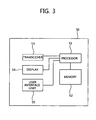
- FIG. 3 is a block diagram showing constitutional elements of an example of a user equipment according to an embodiment of the invention.
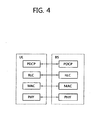
- FIG. 4 is a diagram showing an example of a radio protocol architecture for a user plane according to an embodiment of the invention.
- FIG. 5 is a diagram showing an example of a radio protocol architecture for a control plane according to an embodiment of the invention.
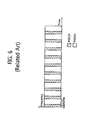
- FIG. 6 shows an example of a structure of a subframe according to an embodiment of the invention.
- FIG. 7 is a flow diagram showing a related art random access procedure.
- FIG. 8 is a flow diagram showing a random access procedure according to an embodiment of the present invention.
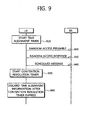
- FIG. 9 is a flow diagram showing a random access procedure according to an embodiment of the present invention.
- FIG. 1 shows an example of a structure of a wireless communication system according to an embodiment of the invention.
- the wireless communication system may have a network structure of an evolved-universal mobile telecommunications system (E-UMTS).
- E-UMTS evolved-universal mobile telecommunications system
- LTE long term evolution
- the wireless communication system can be widely deployed to provide a variety of communication services, such as voices, packet data, etc.
- an evolved-UMTS terrestrial radio access network includes at least one base station (BS) 20 which provides a control plane and a user plane.
- BS base station
- a user equipment (UE) 10 may be fixed or mobile, and may be referred to as another terminology, such as a mobile station (MS), a user terminal (UT), a subscriber station (SS), a wireless device, etc.
- the BS 20 is generally a fixed station that communicates with the UE 10 and may be referred to as another terminology, such as an evolved node-B (eNB), a base transceiver system (BTS), an access point, etc.
- eNB evolved node-B
- BTS base transceiver system
- Interfaces for transmitting user traffic or control traffic may be used between the BSs 20.
- a downlink is defined as a communication link from the BS 20 to the UE
- an uplink is defined as a communication link from the UE 10 to the BS 20.
- the BSs 20 are interconnected by means of an X2 interface.
- the BSs 20 are also connected by means of an S1 interface to an evolved packet core (EPC), more specifically, to a mobility management entity (MME)/serving gateway (S-GW) 30.
- EPC evolved packet core
- MME mobility management entity
- S-GW serving gateway
- FIG. 2 is a diagram showing an example of a functional split between the E-UTRAN and the EPC according to an embodiment of the invention.
- slashed boxes depict radio protocol layers and white boxes depict functional entities of the control plane.
- the BS performs the following functions: (1) functions for radio resource management (RRM) such as radio bearer control, radio admission control, connection mobility control, and dynamic allocation of resources to the UE; (2) Internet protocol (IP) header compression and encryption of user data streams; (3) routing of user plane data to the S-GW; (4) scheduling and transmission of paging messages; (5) scheduling and transmission of broadcast information; and (6) measurement and measurement reporting configuration for mobility and scheduling.
- RRM radio resource management
- IP Internet protocol
- the MME performs the following functions: (1) distribution of paging messages to BSs; (2) security control; (3) idle state mobility control; (4) system architecture evolution (SAE) bearer control; and (5) ciphering and integrity protection of non-access stratum (NAS) signaling.
- SAE system architecture evolution
- the S-GW performs the following functions: (1) termination of user plane packet for paging; and (2) user plane switching for the support of UE mobility.
- FIG. 3 is a block diagram showing constitutional elements of an example of a UE according to an embodiment of the invention and configured to perform the methods shown in Figs. 8-9 .
- a UE 50 includes a processor S1, a memory 52, a transceiver 53, a display 54, and a user interface unit 55. Layers of the radio interface protocol are implemented in the processor 51.
- the processor 51 provides the control plane and the user plane. The function of each layer can be implemented in the processor 51.
- the memory 52 is coupled to the processor 51 and stores an operating system, applications, and general files.
- the display 54 displays a variety of information of the UE 50 and may use a well-known element such as a liquid crystal display (LCD), an organic light emitting diode (OLED), etc.
- the user interface unit 55 can be configured with a combination of well-known user interfaces such as a keypad, a touch screen, etc.
- the transceiver 53 is coupled to the processor 51 and transmits and/or receives radio signals.
- Layers of a radio interface protocol between the UE and the network can be classified into a first layer (L1), a second layer (L2), and a third layer (L3) based on the lower three layers of the open system interconnection (OSI) model that is well-known in the communication system.
- a physical layer, or simply a PHY layer belongs to the first layer and provides an information transfer service through a physical channel.
- a radio resource control (RRC) layer belongs to the third layer and serves to control radio resources between the UE and the network. The UE and the network exchange RRC messages via the RRC layer.
- FIG. 4 is a diagram showing an example of a radio protocol architecture for the user plane according to an embodiment of the invention.
- FIG. 5 is a diagram showing an example of a radio protocol architecture for the control plane according to an embodiment of the invention. They illustrate the architecture of a radio interface protocol between the UE and the E-UTRAN.
- the user plane is a protocol stack for user data transmission.
- the control plane is a protocol stack for control signal transmission.
- a PHY layer belongs to the first layer and provides an upper layer with an information transfer service through a physical channel.
- the PHY layer is coupled with a medium access control (MAC) layer, i.e., an upper layer of the PHY layer, through a transport channel.
- MAC medium access control
- Data is transferred between the MAC layer and the PHY layer through the transport channel.
- PHY layers i.e., a PHY layer of a transmitter and a PHY layer of a receiver
- modulation is performed using an orthogonal frequency division multiplexing (OFDM) scheme and time and frequency can be utilized as a radio resource.
- OFDM orthogonal frequency division multiplexing
- the MAC layer belongs to the second layer and provides services to a radio link control (RLC) layer, i.e., an upper layer of the MAC layer, through a logical channel.
- RLC radio link control
- the RLC layer in the second layer supports reliable data transfer.
- There are three operating modes in the RLC layer that is, a transparent mode (TM), an unacknowledged mode (UM), and an acknowledged mode (AM) according to a data transfer method.
- TM transparent mode
- UM unacknowledged mode
- AM acknowledged mode
- An AM RLC provides bidirectional data transmission services and supports retransmission when the transfer of the RLC protocol data unit (PDU) fails.
- a packet data convergence protocol (PDCP) belonging to the second layer performs header compression function.
- IP Internet protocol
- the header of the IP packet may contain relatively large and unnecessary control information.
- the PDCP layer reduces the header size of the IP packet so as to efficiently transmit the IP packet.
- a radio resource control (RRC) layer belongs to the third layer and is defined only in the control plane.
- the RRC layer serves to control the logical channel, the transport channel, and the physical channel in association with configuration, reconfiguration and release of radio bearers (RBs).
- An RB is a service provided by the second layer for data transmission between the UE and the E-UTRAN.
- a non-access stratum (NAS) layer belongs to an upper layer of the RRC layer and serves to perform session management, mobility management, or the like.
- Data is transmitted from the network to the UE through a downlink transport channel.
- the downlink transport channel include a broadcast channel (BCH) for transmitting system information and a downlink-shared channel (DL-SCH) for transmitting user traffic or control messages.
- BCH broadcast channel
- DL-SCH downlink-shared channel
- User traffic of downlink multicast or broadcast service or control messages can be transmitted on the DL-SCH or a downlink multicast channel (MCH).
- Data is transmitted from the UE to the network through an uplink transport channel.
- the uplink transport channel include a random access channel (RACH) for transmitting an initial control message and an uplink-shared channel (UL-SCH) for transmitting user traffic or control message.
- RACH random access channel
- UL-SCH uplink-shared channel
- Downlink physical channels are mapped to the downlink transport channels.
- Examples of the downlink physical channels include a physical broadcast channel (PBCH) mapped to the BCH, a physical multicast channel (PMCH) mapped to the MCH, a physical downlink shared channel (PDSCH) mapped to the PCH and the DL-SCH, and a physical downlink control channel (PDCCH) for transmitting control information (e.g., downlink (DL)/uplink (UL) scheduling grant, etc.,) which is provided from the first layer and the second layer.
- the PDCCH is also referred to as a downlink L1/L2 control channel.
- Uplink physical channels are mapped to the uplink transport channels.
- uplink physical channels examples include a physical uplink shared channel (PUSCH) mapped to the UL-SCH, a physical random access channel (PRACH) mapped to the RACH, and a physical uplink control channel (PUCCH) for transmitting control information (e.g., hybrid automatic repeat request (HARQ) acknowledgment (ACK)/negative-ACK (NACK) signals, a scheduling request signal, a channel quality indicator (CQI), etc.,) which is provided from the first layer and the second layer.
- control information e.g., hybrid automatic repeat request (HARQ) acknowledgment (ACK)/negative-ACK (NACK) signals, a scheduling request signal, a channel quality indicator (CQI), etc.
- FIG. 6 shows an example of a structure of a subframe according to an embodiment of the invention.
- a subframe includes a plurality of OFDM symbols and a plurality of subcarriers.
- the subframe is a basic unit of radio resource allocation.
- One subframe consists of a plurality of resource blocks.
- One resource block includes a plurality of subcarriers (e.g., 12 subcarriers).
- the subframe can be divided into a region where a physical downlink control channel (PDCCH) (also referred to as an L1/L2 control channel) is transmitted and a region where a physical downlink shared channel (PDSCH) is transmitted.
- the PDCCH may correspond to first three OFDM symbols in the subframe.
- a time for transmitting one subframe is referred to as a transmission time interval (TTI).
- TTI transmission time interval
- 1 TTI may be 1 millisecond (ms).
- FIG. 7 is a flow diagram showing a related art random access procedure.
- the random access procedure may be performed for the following purposes: (1) an initial access process; (2) a handover process; (3) a process of transmitting downlink data to a UE that is not time synchronized; (4) a process of transmitting data in uplink by the UE that is not time synchronized; and (5) a recovery process performed when an error occurs in a wireless connection.
- a UE randomly selects a random access preamble from a plurality of available random access preambles.
- the information to generate the plurality of available random access preambles can be received as a part of system information.
- the UE transmits the randomly selected random access preamble to the BS by using a PRACH resource (step 710).
- the BS Upon receiving the random access preamble from the UE, the BS transmits a random access response to the UE through a DL-SCH (step 720).
- the random access response may include time alignment information (i.e., a time advance value or timing advance) for correcting uplink time alignment, uplink radio resource allocation, an index of the random access preamble (i.e., preamble identifier (Id)), a temporary cell-radio network temporary identifier (C-RNTI), etc.
- the random access response on the DL-SCH can be indicated by a PDCCH addressed by a random access identifier.
- the random access identifier is also referred to as a random access-radio network temporary identifier (RA-RNTI).
- time alignment information may be temporarily stored so that time alignment can be corrected by using the time alignment information when a certain condition (i.e., contention resolution, etc.) is satisfied. This process will be described below in greater detail with reference to FIG. 8 .
- the UE transmits a scheduled message to the BS through a UL-SCH by using the uplink radio resource allocation in the random access response (step 730).
- the BS Upon receiving the scheduled message, the BS transmits a contention resolution message to the UE (step 740).
- Collision occurs in the random access process because the number of available random access preambles is limited while a large number of UEs are used. That is, it is difficult for the BS to provide respective dedicated random access preambles to all UEs. Therefore, one UE needs to randomly select and transmit one of random access preambles provided also to other UEs. Accordingly, in some cases, two or more UEs may select and transmit the same random access preamble by using the same PRACH resource. This is called a contention state.
- the BS regards two or more identical random access preambles transmitted from two or more UEs as one random access preamble transmitted from one UE. Further, the BS transmits to the UEs the same random access response for the received random access preamble.
- the same random access response is received by the two or more UEs, and the respective UEs perform different operations according to one random access response. That is, by using the uplink radio resource allocation in the random access response, the UEs transmit different scheduled messages. Accordingly, the UEs may fail to transmit the scheduled message, or only a specific UE may succeed in transmitting the scheduled message according to a location or a transmit power of each UE.
- contention resolution is an operation of informing a UE of whether contention caused by collision is successful or unsuccessful when collision occurs between UEs in the random access procedure.
- contention resolution methods There are two conventional contention resolution methods, that is, a first method of using a contention resolution timer and a second method of transmitting an identifier of a UE which succeeds in contention.
- the UE In the first conventional method, it is required that the UE already has a unique cell identifier (e.g., C-RNTI) before a random access procedure is performed.
- the UE which already has its cell identifier transmits data including the cell identifier to the BS according to a random access response message, and then starts the contention resolution timer. If the UE receives the data including the cell identifier through a PDCCH before the contention resolution timer expires, the UE determines that the UE succeeds in contention and thus successfully finishes the random access procedure.
- a unique cell identifier e.g., C-RNTI
- the UE determines that the UE fails in contention. Then, the UE may re-perform the random access procedure or may provide a failure report to an upper layer.
- the second conventional method of the two contention resolution methods is used when the UE does not have its unique cell identifier before the random access procedure is performed. That is, if the UE does not have its cell identifier, the UE transmits data including an S-temporary mobile subscriber identity (S-TMSI) or a random Id which is a higher-level identifier than a cell identifier according to uplink radio resource allocation in the random access response, and then starts the contention resolution timer.
- S-TMSI S-temporary mobile subscriber identity
- Id random Id which is a higher-level identifier than a cell identifier according to uplink radio resource allocation in the random access response
- the UE determines that the random access procedure is successful. On the contrary, if the UE fails to receive the data including the higher-level identifier through the DL-SCH before the contention resolution timer expires, the UE determines that the random access procedure is unsuccessful.
- the random access procedure is one of methods for uplink time alignment.
- a time alignment correction method is performed according to the random access procedure as follows.
- a BS can measure a time alignment value by using a random access preamble transmitted from a UE, and provide time alignment information for time alignment correction to the UE.
- the UE Upon receiving the random access response, the UE applies the received time alignment information, and starts or restarts a time alignment timer.
- time alignment is maintained between the UE and the BS while the time alignment timer is running. Further, it is also assumed that time alignment is not maintained between the UE and the BS when the timer alignment timer expires.
- the BS can measure a time alignment value of the UE by using another method other than the method of using the random access preamble.
- the BS can optionally provide the time alignment information to the UE.
- the UE Upon receiving the time alignment information, the UE applies the received time alignment information, and starts or restarts the time alignment timer. When the time alignment timer expires, it is prohibited for the UE to perform uplink transmission except for transmission of the random access preamble.
- time alignment information may be applied to the UE due to collision. That is, if time alignment is achieved before the UE transmits the random access preamble, incorrect uplink transmission may be caused due to collision. Accordingly, time alignment is corrected using incorrect time alignment information.
- uplink time alignment is achieved between the UE and the BS.
- time alignment timers used in the UE and the BS are synchronized with each other.
- uplink data transmission is requested in a state where the UE does not have an uplink radio resource, and thus the UE performs a random access procedure.
- the UE transmits a random access preamble to the BS, and receives a random access response.
- the UE applies time alignment information included in the received random access response to the UE itself, and starts the time alignment timer.
- the UE may receive incorrect time alignment information. However, since the time alignment information included in the random access response is applied to the UE and thus the time alignment timer is running in the UE, the UE determines that time alignment is achieved between the UE and the BS. Therefore, if data reception is requested after the UE receives random access response information, the UE attempts uplink transmission according to the incorrect time alignment, resulting in interference to transmission of other UEs.
- the time alignment information included in the random access response is applied after contention resolution is completed. That is, the UE applies the time alignment information after collision occurs, and then can start or restart the time alignment timer.
- FIG. 8 is a flow diagram showing a random access procedure according to an embodiment of the present invention. This is a case where a UE performing the random access procedure succeeds in contention caused by collision.
- the UE operates in a state where uplink time alignment is achieved between the UE and a BS and a time alignment timer is running (step 810). That is, the UE has a valid time alignment value, and the time alignment timer is running in the UE.
- the UE When uplink data transmission is requested in a situation where there is no uplink radio resource, the UE starts a contention based random access procedure. Accordingly, the UE transmits a selected random access preamble to the BS (step 820). The BS receives the random access preamble from the UE and then transmits a random access response to the UE in response thereto (step 830).
- the random access response may include radio resource allocation for transmitting a scheduled message, a preamble identifier, time alignment information (e.g., a timing advance command), a temporary C-RNTI, etc.
- received time alignment information may be stored in a buffer and the UE maintains a previous time alignment value used before the random access procedure is performed and also maintains an operation of the time alignment timer which is currently running. In other words, the UE ignores the received time alignment information and maintains a previous time alignment value used before the random access procedure is performed and also maintains an operation of the time alignment timer that is currently running.
- the UE may apply the stored time alignment data if the mobile communication terminal time alignment timer expires before contention resolution is completed.
- the UE transmits to the BS the scheduled message including an identifier (e.g., C-RNTI, S-TMSI, random Id, etc.) by using the radio resource allocation information (i.e., UL grant information) included in the received random access response (step 840). Thereafter, the UE receives a contention resolution message before a contention resolution timer included in the UE expires (step 850).
- an identifier e.g., C-RNTI, S-TMSI, random Id, etc.
- the UE receives a contention resolution message before a contention resolution timer included in the UE expires (step 850).
- the UE determines that the UE succeeds in contention caused by collision. That is, if the received contention resolution message is a PDCCH including a cell identifier of the UE or a DL-SCH including a higher-level identifier (S-TMSI or random Id) of the UE, the UE determines the UE succeeds in contention.
- the received contention resolution message is a PDCCH including a cell identifier of the UE or a DL-SCH including a higher-level identifier (S-TMSI or random Id) of the UE
- the UE applies time alignment information obtained from random access information to a previous time alignment value. Then, the UE restarts the time alignment timer (step 860).
- FIG. 9 is a flow diagram showing a random access procedure according to an embodiment of the present invention. This is a case where a UE performing the random access procedure fails in contention caused by collision.
- the UE operates in a state where uplink time alignment is achieved between the UE and a BS and a time alignment timer is running (step 910).
- the UE transmits a selected random access preamble to the BS (step 920).
- the BS receives the random access preamble from the UE and then transmits a random access response to the UE in response thereto (step 930).
- the UE neither applies the received time alignment information nor starts the time alignment timer until contention resolution is completed.
- the received time alignment information is stored in a buffer.
- the UE maintains a previous time alignment value used before the random access procedure is performed and also maintains an operation of the time alignment timer which is currently running.
- the UE transmits to the BS a scheduled message including an identifier by using the radio resource allocation information (i.e., UL grant information) included in the received random access response (step 940).
- the radio resource allocation information i.e., UL grant information
- the UE After receiving the scheduled message, the UE starts a contention resolution timer (step 950). Unlike the embodiment of FIG. 8 , the UE cannot receive its contention resolution message from the BS after the contention resolution timer starts until the contention resolution timer expires. For example, a cell identifier or a higher-level identifier of the UE may not be included in the contention message, or the contention message including the cell identifier or the higher-level identifier of the UE may not be received by the UE before the contention resolution timer expires. In this case, the UE determines that the UE fails in contention.
- the UE When the contention resolution timer expires, the UE does not apply the received time alignment information but discards the time alignment information (step 960) but does not stop the time alignment timer. Accordingly, a previous operation of the time alignment timer is maintained without alteration. Thus, previously assigned resources (e.g., PUCCH, sounding reference symbols (SRS), any previously configured downlink assignments and uplink grants) are maintained.
- previously assigned resources e.g., PUCCH, sounding reference symbols (SRS), any previously configured downlink assignments and uplink grants
- the received time alignment information is not applied when the UE fails in contention, transmission error or interference can be reduced when uplink synchronization is incorrectly achieved.
- the methods of Figs. 8-9 may be performed in a device similar the one depicted in Fig. 3 , or in another device.
- the present invention can be implemented with hardware, software, or combination thereof.
- the present invention can be implemented with one of an application specific integrated circuit (ASIC), a digital signal processor (DSP), a programmable logic device (PLD), a field programmable gate array (FPGA), a processor, a controller, a microprocessor, other electronic units, and combination thereof, which are designed to perform the aforementioned functions.
- ASIC application specific integrated circuit
- DSP digital signal processor
- PLD programmable logic device
- FPGA field programmable gate array
- the present invention can be implemented with a module for performing the aforementioned functions.
- Software is storable in a memory unit and executed by the processor.
- Various means widely known to those skilled in the art can be used as the memory unit or the processor.
Landscapes
- Engineering & Computer Science (AREA)
- Computer Networks & Wireless Communication (AREA)
- Signal Processing (AREA)
- Mobile Radio Communication Systems (AREA)
- Time-Division Multiplex Systems (AREA)
Claims (11)
- Procédé de mise en oeuvre d'une procédure d'accès aléatoire à base de contention par un terminal de communication mobile en communication avec une station de base, comprenant :la transmission d'un préambule d'accès aléatoire à la station de base ;la réception d'une réponse d'accès aléatoire de la station de base comme une réponse au préambule d'accès aléatoire, la réponse d'accès aléatoire incluant une commande d'avance de synchronisation ;la détermination d'un statut d'un compteur d'alignement temporel de terminal de communication mobile, dans lequel le terminal de communication mobile considère qu'un alignement temporel en voie montante est maintenu tandis que le compteur d'alignement temporel de terminal de communication mobile court ;l'application de la commande d'avance de synchronisation et le démarrage du compteur d'alignement temporel de terminal de communication mobile si le compteur d'alignement temporel de terminal de communication mobile est déterminé ne pas courir à l'étape de détermination ; etl'ignorance de la commande d'avance de synchronisation si le compteur d'alignement temporel de terminal de communication mobile est déterminé courir à l'étape de détermination.
- Procédé selon la revendication 1, comprenant en outre :l'initiation d'une résolution de contention en transmettant un message programmé à la station de base.
- Procédé selon la revendication 1, l'étape d'ignorance de la commande d'avance de synchronisation comprenant :le stockage des données d'alignement temporel reçues par l'intermédiaire de la réponse d'accès aléatoire.
- Procédé selon la revendication 3, comprenant en outre :l'application des données d'alignement temporel stockées si le compteur d'alignement temporel de terminal de communication mobile expire avant que la résolution de contention ne soit terminée.
- Procédé selon la revendication 1, comprenant en outre :le rejet de l'information d'alignement temporel et le non arrêt du compteur d'alignement temporel de terminal de communication mobile si la résolution de contention est un échec.
- Procédé selon la revendication 5, l'étape de non arrêt du compteur d'alignement temporel comprenant :le maintien de ressources précédemment attribuées.
- Procédé selon la revendication 6, l'étape de maintien de ressources précédemment attribuées comprenant :le maintien d'un canal physique de contrôle de liaison montante, PUCCH et de symboles de référence sonores, SRS, de quelconques attributions en liaison descendante et octrois en liaison montante configurés.
- Terminal de communication mobile (50) configuré pour mettre en oeuvre une procédure d'accès aléatoire à base de contention avec une station de base (20), le terminal de communication mobile comprenant :un afficheur (54) ;un émetteur-récepteur (53) ; etun processeur (51) opérationnellement connecté avec l'afficheur et l'émetteur-récepteur, le processeur incluant un compteur d'alignement temporel, le processeur configuré pourtransmettre, par l'intermédiaire de l'émetteur-récepteur, un préambule d'accès aléatoire à la station de base,recevoir une réponse d'accès aléatoire de la station de base comme une réponse au préambule d'accès aléatoire, la réponse d'accès aléatoire incluant une commande d'avance de synchronisation,déterminer un statut du compteur d'alignement temporel, dans lequel le terminal de communication mobile considère qu'un alignement temporel en voie montante est maintenu tandis que le compteur d'alignement temporel court,appliquer la commande d'avance de synchronisation et démarrer le compteur d'alignement temporel si le compteur d'alignement temporel est déterminé ne pas courir ; etignorer la commande d'avance de synchronisation si le compteur d'alignement temporel est déterminé courir.
- Terminal de communication mobile selon la revendication 8, dans lequel le processeur est configuré pour rejeter l'information d'alignement temporel et ne pas arrêter le compteur d'alignement temporel si la résolution de contention est un échec.
- Terminal de communication mobile selon la revendication 9, dans lequel le processeur est configuré pour maintenir des ressources précédemment attribuées si le compteur d'alignement temporel n'est pas arrêté.
- Terminal de communication mobile selon la revendication 10, dans lequel le processeur est configuré pour maintenir un canal physique de contrôle de liaison montante, PUCCH, des symboles de référence sonores, SRS, de quelconques attributions en liaison descendante et octrois en liaison montante précédemment configurés si le compteur d'alignement temporel n'est pas arrêté.
Applications Claiming Priority (1)
| Application Number | Priority Date | Filing Date | Title |
|---|---|---|---|
| KR1020080023807A KR100925333B1 (ko) | 2008-03-14 | 2008-03-14 | 랜덤 액세스 과정에서 상향링크 동기화를 수행하는 방법 |
Publications (3)
| Publication Number | Publication Date |
|---|---|
| EP2101538A2 EP2101538A2 (fr) | 2009-09-16 |
| EP2101538A3 EP2101538A3 (fr) | 2011-11-30 |
| EP2101538B1 true EP2101538B1 (fr) | 2014-10-29 |
Family
ID=40720484
Family Applications (1)
| Application Number | Title | Priority Date | Filing Date |
|---|---|---|---|
| EP09003203.8A Active EP2101538B1 (fr) | 2008-03-14 | 2009-03-05 | Procédé pour effectuer une synchronisation de liaison montante dans une procédure d'accès aléatoire |
Country Status (7)
| Country | Link |
|---|---|
| US (4) | US7843895B2 (fr) |
| EP (1) | EP2101538B1 (fr) |
| JP (1) | JP2011509019A (fr) |
| KR (1) | KR100925333B1 (fr) |
| CN (1) | CN101946425B (fr) |
| ES (1) | ES2523726T3 (fr) |
| WO (1) | WO2009113772A1 (fr) |
Families Citing this family (81)
| Publication number | Priority date | Publication date | Assignee | Title |
|---|---|---|---|---|
| JP4772148B2 (ja) | 2007-06-15 | 2011-09-14 | シャープ株式会社 | 基地局装置、移動局装置、無線通信システムおよび無線通信方法 |
| CN101686537B (zh) * | 2007-08-08 | 2013-07-17 | 夏普株式会社 | 无线通信系统、移动台装置 |
| DK3203799T3 (en) | 2007-11-05 | 2018-11-26 | Ericsson Telefon Ab L M | Improved timing alignment in an LTE system |
| CN101448325B (zh) * | 2007-11-27 | 2012-11-21 | 电信科学技术研究院 | 一种随机接入过程中的处理方法和基站 |
| KR101375936B1 (ko) | 2008-02-01 | 2014-03-18 | 엘지전자 주식회사 | 시간동기 타이머의 만료 시 하향링크 harq의 동작 방법 |
| US9008004B2 (en) * | 2008-02-01 | 2015-04-14 | Lg Electronics Inc. | Method for sending RLC PDU and allocating radio resource in mobile communications system and RLC entity of mobile communications |
| KR101531419B1 (ko) | 2008-02-01 | 2015-06-24 | 엘지전자 주식회사 | 시간동기 타이머의 만료 시 상향링크 harq의 동작 방법 |
| JP5129863B2 (ja) | 2008-02-25 | 2013-01-30 | エルジー エレクトロニクス インコーポレイティド | 無線通信システムにおけるランダムアクセス実行方法 |
| KR100925333B1 (ko) * | 2008-03-14 | 2009-11-04 | 엘지전자 주식회사 | 랜덤 액세스 과정에서 상향링크 동기화를 수행하는 방법 |
| KR101468742B1 (ko) * | 2008-05-06 | 2014-12-04 | 엘지전자 주식회사 | 무선통신 시스템에서 데이터 전송 방법 |
| US11272449B2 (en) | 2008-06-18 | 2022-03-08 | Optis Cellular Technology, Llc | Method and mobile terminal for performing random access |
| KR100968020B1 (ko) * | 2008-06-18 | 2010-07-08 | 엘지전자 주식회사 | 랜덤 액세스 절차를 수행하는 방법 및 그 단말 |
| US8750218B2 (en) | 2008-09-29 | 2014-06-10 | Blackberry Limited | Message processing in communication systems |
| JP5323940B2 (ja) | 2008-09-29 | 2013-10-23 | ブラックベリー リミテッド | 通信システムにおける使用のためのアップリング再同調 |
| EP2613603B1 (fr) | 2009-04-23 | 2021-12-08 | InterDigital Patent Holdings, Inc. | Procédé et appareil pour accès aléatoire dans des communications sans fil à plusieurs porteuses |
| CN102227939B (zh) * | 2009-10-30 | 2013-09-25 | 华为技术有限公司 | 一种上行同步方法、基站和用户设备 |
| JP5454123B2 (ja) | 2009-12-16 | 2014-03-26 | ソニー株式会社 | ハンドオーバのための方法、端末装置及び無線通信システム |
| KR101752500B1 (ko) | 2010-01-07 | 2017-06-30 | 엘지전자 주식회사 | 무선 통신 시스템에서 시간 동기를 수신하는 방법 및 장치 |
| WO2011087416A2 (fr) | 2010-01-15 | 2011-07-21 | Telefonaktiebolaget Lm Ericsson (Publ) | Traitement de synchronisation de liaison montante |
| EP3179809B1 (fr) | 2010-03-03 | 2019-07-10 | BlackBerry Limited | Procédé et appareil pour signaler des capacités spécifiques de stations mobiles afin d'établir des sessions de transfert de données |
| EP2364041B1 (fr) * | 2010-03-03 | 2012-09-19 | Research In Motion Limited | Procédé et appareil pour signaler des capacités spécifiques de stations mobiles afin d'établir des sessions de transfert de données |
| US8478258B2 (en) * | 2010-03-05 | 2013-07-02 | Intel Corporation | Techniques to reduce false detection of control channel messages in a wireless network |
| EP2367392B1 (fr) * | 2010-03-12 | 2015-11-11 | BlackBerry Limited | Procédé et dispositif pour l'enregistrement et la transmission de données en utilisant la résolution de conflits d'accès rapide / zéro |
| EP2365717A1 (fr) * | 2010-03-12 | 2011-09-14 | Research In Motion Limited | Station de communication et procédé de transmission sur un canal d'accès aléatoire RACH |
| EP2367393B8 (fr) * | 2010-03-12 | 2015-12-30 | BlackBerry Limited | Station de communication et procédé de transmission d'informations supplémentaires sur un canal d'accès aléatoire amélioré |
| EP4539565A3 (fr) * | 2010-03-12 | 2025-06-18 | Malikie Innovations Limited | Améliorations d'avance de synchronisation pour communications cellulaires |
| EP2367394B1 (fr) * | 2010-03-12 | 2015-11-25 | BlackBerry Limited | Station de communication et procédé de transmission d'informations supplémentaires sur un accès aléatoire amélioré |
| US8504040B2 (en) * | 2010-03-19 | 2013-08-06 | Lg Electronics Inc. | Wireless/wired backhaul-aware cell selection mechanism |
| US20110267948A1 (en) | 2010-05-03 | 2011-11-03 | Koc Ali T | Techniques for communicating and managing congestion in a wireless network |
| CA2823966A1 (fr) | 2011-01-07 | 2012-07-12 | Fujitsu Limited | Procede, noeud b evolue et equipement utilisateur pour declencher un signal de reference de sondageriodique aperiodique |
| KR102073027B1 (ko) * | 2011-04-05 | 2020-02-04 | 삼성전자 주식회사 | 반송파 집적 기술을 사용하는 무선통신시스템에서 복수 개의 타임 정렬 타이머 운용 방법 및 장치 |
| EP2676475B1 (fr) | 2011-02-15 | 2022-04-06 | Samsung Electronics Co., Ltd. | Rapport de marge de puissance |
| US9615338B2 (en) | 2011-02-15 | 2017-04-04 | Samsung Electronics Co., Ltd. | Power headroom report method and apparatus of UE |
| KR101995293B1 (ko) | 2011-02-21 | 2019-07-02 | 삼성전자 주식회사 | 반송파 집적 기술을 사용하는 시분할 무선통신시스템에서 부차반송파의 활성화 또는 비활성화 방법 및 장치 |
| US8958840B2 (en) | 2011-02-21 | 2015-02-17 | Samsung Electronics Co., Ltd. | Method of efficiently reporting user equipment transmission power and apparatus thereof |
| US8923251B2 (en) * | 2011-03-24 | 2014-12-30 | Htc Corporation | Method of handling uplink time alignment |
| KR101862410B1 (ko) * | 2011-03-29 | 2018-05-29 | 엘지전자 주식회사 | 상향링크 시간 동기 관리 방법 및 장치 |
| CN105979576B (zh) | 2011-04-02 | 2019-09-13 | 华为技术有限公司 | 辅助定时提前量的获取方法和设备 |
| ES2754035T3 (es) | 2011-04-05 | 2020-04-15 | Samsung Electronics Co Ltd | Activación eficiente de portadoras en sistemas de comunicación inalámbrica basados en agregación de portadoras |
| EP2698012B1 (fr) * | 2011-04-14 | 2018-06-06 | Telefonaktiebolaget LM Ericsson (publ) | Procédés et noeuds de réseau pour définir une valeur de temporisation. |
| KR102066425B1 (ko) | 2011-05-10 | 2020-01-15 | 삼성전자 주식회사 | 반송파 집적 기술을 사용하는 무선통신시스템에서 타임 정렬 타이머를 적용하는 방법 및 장치 |
| KR101868616B1 (ko) * | 2011-05-27 | 2018-06-19 | 애플 인크. | 무선 통신 시스템에서 랜덤 액세스의 수행장치 및 방법 |
| KR101810121B1 (ko) | 2011-05-27 | 2017-12-18 | 애플 인크. | 무선 통신 시스템에서 랜덤 액세스의 수행장치 및 방법 |
| JP2013021496A (ja) * | 2011-07-11 | 2013-01-31 | Fujitsu Ltd | 移動局、及び送信制御方法 |
| US8395985B2 (en) * | 2011-07-25 | 2013-03-12 | Ofinno Technologies, Llc | Time alignment in multicarrier OFDM network |
| US9301323B2 (en) * | 2011-09-16 | 2016-03-29 | Telefonaktiebolaget Lm Ericsson (Publ) | Contention-free random access procedure in wireless networks |
| HK1199156A1 (en) * | 2011-12-08 | 2015-06-19 | 诺基亚通信公司 | Network synchronisation of devices in a d2d cluster |
| US9237537B2 (en) | 2012-01-25 | 2016-01-12 | Ofinno Technologies, Llc | Random access process in a multicarrier base station and wireless device |
| US9467945B2 (en) * | 2012-02-16 | 2016-10-11 | Telefonaktiebolaget Lm Ericsson (Publ) | Methods providing assignment messages and related mobile stations and base station subsystems |
| US9480082B2 (en) * | 2012-02-16 | 2016-10-25 | Telefonaktiebolaget Lm Ericsson (Publ) | Methods of transmitting access requests using reduced response intervals and related mobile stations and base station subsystems |
| CN103260251B (zh) * | 2012-02-17 | 2016-06-15 | 华为技术有限公司 | 数据传输方法、基站及用户设备 |
| US11943813B2 (en) | 2012-04-01 | 2024-03-26 | Comcast Cable Communications, Llc | Cell grouping for wireless communications |
| CN103379656B (zh) * | 2012-04-13 | 2017-03-22 | 普天信息技术研究院有限公司 | 一种随机接入方法以及相关装置 |
| US9924533B2 (en) * | 2012-04-16 | 2018-03-20 | Innovative Sonic Corporation | Method and apparatus for reducing signaling and delay for uplink scheduling in a wireless communication network |
| US11825419B2 (en) | 2012-04-16 | 2023-11-21 | Comcast Cable Communications, Llc | Cell timing in a wireless device and base station |
| CN104272821A (zh) * | 2012-05-10 | 2015-01-07 | 瑞典爱立信有限公司 | 上行链路定时误差减小方法和装置 |
| US11882560B2 (en) | 2012-06-18 | 2024-01-23 | Comcast Cable Communications, Llc | Carrier grouping in multicarrier wireless networks |
| WO2013189540A1 (fr) * | 2012-06-21 | 2013-12-27 | Telefonaktiebolaget L M Ericsson (Publ) | Procédure prach simplifiée utilisant une réponse d'accès aléatoire spéculative |
| US9572121B2 (en) * | 2012-08-17 | 2017-02-14 | Qualcomm Incorporated | Methods and apparatus for timing synchronization during a wireless uplink random access procedure |
| US20150305065A1 (en) * | 2012-10-19 | 2015-10-22 | Broadcom Corporation | Random access procedure and related apparatus |
| US9094904B2 (en) | 2012-10-25 | 2015-07-28 | Qualcomm Incorporated | Adaptive maintenance of uplink time alignment |
| WO2014127506A1 (fr) * | 2013-02-19 | 2014-08-28 | 华为技术有限公司 | Procédé et dispositif servant à une synchronisation de transmission d'un signal de liaison montante |
| KR101636431B1 (ko) | 2013-07-30 | 2016-07-05 | 동아에스티 주식회사 | 트리사이클릭 벤즈옥사보롤 화합물, 이의 제조방법 및 용도 |
| JP6244736B2 (ja) | 2013-08-16 | 2017-12-13 | 富士通株式会社 | 無線基地局装置および電力制御方法 |
| US9654953B2 (en) * | 2013-11-27 | 2017-05-16 | Blackberry Limited | Method and apparatus for wireless emergency alerts |
| CN105101386B (zh) * | 2014-04-18 | 2018-11-30 | 成都鼎桥通信技术有限公司 | 终端上行自同步方法及终端 |
| CN107431990B (zh) * | 2015-04-07 | 2021-03-05 | 高通股份有限公司 | 用于调整时序提前值的方法、移动通信设备和存储介质 |
| WO2017079879A1 (fr) * | 2015-11-09 | 2017-05-18 | Lenovo Innovations Limited (Hong Kong) | Accès aléatoire de communication sans fil |
| CN105554870A (zh) * | 2015-12-21 | 2016-05-04 | 海能达通信股份有限公司 | 上行同步方法及移动终端 |
| US10541802B2 (en) * | 2016-03-31 | 2020-01-21 | Telefonaktiebolaget Lm Ericsson (Publ) | Application of timing advance command in wireless communication device in enhanced coverage mode |
| US10314045B2 (en) * | 2016-08-09 | 2019-06-04 | Htc Corporation | Device and method of handling narrowband internet of things communication |
| KR102394622B1 (ko) * | 2017-09-06 | 2022-05-09 | 삼성전자주식회사 | 사물 인터넷 환경에서 상향링크 전송 타이밍을 제어하기 위한 장치 및 방법 |
| KR102460782B1 (ko) * | 2018-01-10 | 2022-10-31 | 삼성전자 주식회사 | 차세대 이동통신 시스템에서 시스템 정보 요청 시 효율적으로 단말 동작을 수행하는 방법 및 장치 |
| JP2021533592A (ja) * | 2018-06-06 | 2021-12-02 | ノキア テクノロジーズ オサケユイチア | タイミングアドバンスを決定するための方法、デバイス、およびコンピュータ可読媒体 |
| CN118158833A (zh) * | 2018-09-14 | 2024-06-07 | 三菱电机株式会社 | 用户装置、基站及通信系统 |
| WO2020220375A1 (fr) | 2019-05-02 | 2020-11-05 | Nokia Shanghai Bell Co., Ltd. | Résolution de conflit pendant une procédure d'accès aléatoire |
| US11310833B2 (en) * | 2019-08-29 | 2022-04-19 | Qualcomm, Incorporated | RACH procedure with timing alignment |
| CN112887930A (zh) * | 2021-01-25 | 2021-06-01 | 温州职业技术学院 | 一种基于物联网的传感器感测信息高速上传方法及系统 |
| US12432033B2 (en) | 2021-07-23 | 2025-09-30 | Sharp Kabushiki Kaisha | User equipment and method for timing alignment |
| CN117917165A (zh) * | 2021-09-15 | 2024-04-19 | Lg 电子株式会社 | 无线通信系统中由用户设备基于时间对准定时器发送调度请求的方法和装置 |
| WO2025234705A1 (fr) * | 2024-05-09 | 2025-11-13 | 엘지전자 주식회사 | Procédé et dispositif d'accès initial basé sur une procédure d'accès aléatoire dans un système de communication sans fil |
Family Cites Families (16)
| Publication number | Priority date | Publication date | Assignee | Title |
|---|---|---|---|---|
| JP3726986B2 (ja) * | 1997-08-07 | 2005-12-14 | ソニー株式会社 | 通信方法、送信装置、受信装置及びセルラー無線通信システム |
| DE60113044T2 (de) | 2000-06-02 | 2006-03-02 | Samsung Electronics Co., Ltd., Suwon | Verfahren zur auswahl eines zufalls-zugriffskanals in einem mobilen cdma-kommunikationssystem |
| US7047009B2 (en) | 2003-12-05 | 2006-05-16 | Flarion Technologies, Inc. | Base station based methods and apparatus for supporting break before make handoffs in a multi-carrier system |
| US7436801B1 (en) * | 2004-09-08 | 2008-10-14 | Golden Bridge Technology, Inc. | Deferred access method for uplink packet channel |
| EP1992099B1 (fr) * | 2006-02-07 | 2017-01-25 | Nokia Technologies Oy | Dispositif, procédé et progiciel assurant une synchronisation rapide et sure en liaison montante au moyen de ressources dédiées pour un équipement utilisateur nécessitant une synchronisation |
| KR101226819B1 (ko) | 2006-08-21 | 2013-01-25 | 삼성전자주식회사 | 광대역 무선 통신 시스템에서 역방향 접근채널의 프리앰블송수신 방법 및 장치 |
| WO2008041582A1 (fr) * | 2006-09-26 | 2008-04-10 | Panasonic Corporation | Dispositif de transmission radio et procédé de transmission radio |
| CN101686537B (zh) | 2007-08-08 | 2013-07-17 | 夏普株式会社 | 无线通信系统、移动台装置 |
| US20090046641A1 (en) * | 2007-08-13 | 2009-02-19 | Interdigital Patent Holdings, Inc. | Long term evolution medium access control procedures |
| DK3203799T3 (en) * | 2007-11-05 | 2018-11-26 | Ericsson Telefon Ab L M | Improved timing alignment in an LTE system |
| US8504046B2 (en) * | 2008-01-03 | 2013-08-06 | Telefonaktiebolaget Lm Ericsson (Publ) | Fast radio link recovery after handover failure |
| US8908570B2 (en) * | 2008-02-01 | 2014-12-09 | BlackBerrry Limited | Control signal management system and method |
| US8717907B2 (en) * | 2008-02-21 | 2014-05-06 | Telefonaktiebolaget L M Ericsson (Publ) | Adjustment of radio detection level for request signals based observed false detection |
| KR100925333B1 (ko) * | 2008-03-14 | 2009-11-04 | 엘지전자 주식회사 | 랜덤 액세스 과정에서 상향링크 동기화를 수행하는 방법 |
| EP2131624A1 (fr) * | 2008-06-03 | 2009-12-09 | Innovative Sonic Limited | Procédé et appareil pour gérer une ressource de transmission semi-persistante |
| US8274969B2 (en) * | 2008-10-31 | 2012-09-25 | Htc Corporation | Method for improving random access procedure in wireless communications system and related communication device |
-
2008
- 2008-03-14 KR KR1020080023807A patent/KR100925333B1/ko active Active
-
2009
- 2009-02-23 JP JP2010540599A patent/JP2011509019A/ja active Pending
- 2009-02-23 CN CN2009801051440A patent/CN101946425B/zh not_active Ceased
- 2009-02-23 WO PCT/KR2009/000836 patent/WO2009113772A1/fr not_active Ceased
- 2009-02-25 US US12/392,654 patent/US7843895B2/en active Active
- 2009-03-05 EP EP09003203.8A patent/EP2101538B1/fr active Active
- 2009-03-05 ES ES09003203.8T patent/ES2523726T3/es active Active
-
2010
- 2010-10-21 US US12/909,780 patent/US9008072B2/en active Active
-
2015
- 2015-04-07 US US14/680,323 patent/US9320001B2/en active Active
-
2016
- 2016-04-12 US US15/096,520 patent/US9985722B2/en active Active
Also Published As
| Publication number | Publication date |
|---|---|
| EP2101538A2 (fr) | 2009-09-16 |
| JP2011509019A (ja) | 2011-03-17 |
| US7843895B2 (en) | 2010-11-30 |
| KR100925333B1 (ko) | 2009-11-04 |
| US9320001B2 (en) | 2016-04-19 |
| US9008072B2 (en) | 2015-04-14 |
| CN101946425B (zh) | 2013-10-23 |
| US20160226576A1 (en) | 2016-08-04 |
| US20090232107A1 (en) | 2009-09-17 |
| US9985722B2 (en) | 2018-05-29 |
| CN101946425A (zh) | 2011-01-12 |
| ES2523726T3 (es) | 2014-12-01 |
| US20110038361A1 (en) | 2011-02-17 |
| WO2009113772A1 (fr) | 2009-09-17 |
| KR20090098421A (ko) | 2009-09-17 |
| US20150215885A1 (en) | 2015-07-30 |
| EP2101538A3 (fr) | 2011-11-30 |
Similar Documents
| Publication | Publication Date | Title |
|---|---|---|
| EP2101538B1 (fr) | Procédé pour effectuer une synchronisation de liaison montante dans une procédure d'accès aléatoire | |
| US9844078B2 (en) | Method of performing random access procedure in wireless communication system | |
| US9538490B2 (en) | Method of performing uplink synchronization in wireless communication system | |
| US8432811B2 (en) | Method of performing uplink time alignment in wireless communication system | |
| US9078236B2 (en) | Random access scheme for preventing unnecessary retransmission and user equipment for the same | |
| KR101473005B1 (ko) | 무선통신 시스템에서 상향링크 동기화를 수행하는 방법 |
Legal Events
| Date | Code | Title | Description |
|---|---|---|---|
| PUAI | Public reference made under article 153(3) epc to a published international application that has entered the european phase |
Free format text: ORIGINAL CODE: 0009012 |
|
| 17P | Request for examination filed |
Effective date: 20090305 |
|
| AK | Designated contracting states |
Kind code of ref document: A2 Designated state(s): AT BE BG CH CY CZ DE DK EE ES FI FR GB GR HR HU IE IS IT LI LT LU LV MC MK MT NL NO PL PT RO SE SI SK TR |
|
| AX | Request for extension of the european patent |
Extension state: AL BA RS |
|
| RIN1 | Information on inventor provided before grant (corrected) |
Inventor name: YOUNG DAE LEE Inventor name: SUNG DUCK CHUN Inventor name: SEUNG JUNE YI Inventor name: SUNG JUN PARK |
|
| PUAL | Search report despatched |
Free format text: ORIGINAL CODE: 0009013 |
|
| AK | Designated contracting states |
Kind code of ref document: A3 Designated state(s): AT BE BG CH CY CZ DE DK EE ES FI FR GB GR HR HU IE IS IT LI LT LU LV MC MK MT NL NO PL PT RO SE SI SK TR |
|
| AX | Request for extension of the european patent |
Extension state: AL BA RS |
|
| RIC1 | Information provided on ipc code assigned before grant |
Ipc: H04W 56/00 20090101ALN20111026BHEP Ipc: H04B 7/26 20060101ALN20111026BHEP Ipc: H04W 74/08 20090101AFI20111026BHEP |
|
| AKX | Designation fees paid |
Designated state(s): AT BE BG CH CY CZ DE DK EE ES FI FR GB GR HR HU IE IS IT LI LT LU LV MC MK MT NL NO PL PT RO SE SI SK TR |
|
| RIC1 | Information provided on ipc code assigned before grant |
Ipc: H04B 7/26 20060101ALN20130626BHEP Ipc: H04W 74/08 20090101AFI20130626BHEP Ipc: H04W 56/00 20090101ALN20130626BHEP |
|
| RIC1 | Information provided on ipc code assigned before grant |
Ipc: H04W 56/00 20090101ALN20130702BHEP Ipc: H04W 74/08 20090101AFI20130702BHEP Ipc: H04B 7/26 20060101ALN20130702BHEP |
|
| GRAP | Despatch of communication of intention to grant a patent |
Free format text: ORIGINAL CODE: EPIDOSNIGR1 |
|
| INTG | Intention to grant announced |
Effective date: 20131023 |
|
| GRAS | Grant fee paid |
Free format text: ORIGINAL CODE: EPIDOSNIGR3 |
|
| RIC1 | Information provided on ipc code assigned before grant |
Ipc: H04B 7/26 20060101ALN20140225BHEP Ipc: H04W 56/00 20090101ALN20140225BHEP Ipc: H04W 74/08 20090101AFI20140225BHEP |
|
| GRAP | Despatch of communication of intention to grant a patent |
Free format text: ORIGINAL CODE: EPIDOSNIGR1 |
|
| RIC1 | Information provided on ipc code assigned before grant |
Ipc: H04W 56/00 20090101ALN20140303BHEP Ipc: H04B 7/26 20060101ALN20140303BHEP Ipc: H04W 74/08 20090101AFI20140303BHEP |
|
| INTG | Intention to grant announced |
Effective date: 20140409 |
|
| RAP1 | Party data changed (applicant data changed or rights of an application transferred) |
Owner name: OPTIS CELLULAR TECHNOLGY, LLC |
|
| GRAS | Grant fee paid |
Free format text: ORIGINAL CODE: EPIDOSNIGR3 |
|
| GRAA | (expected) grant |
Free format text: ORIGINAL CODE: 0009210 |
|
| AK | Designated contracting states |
Kind code of ref document: B1 Designated state(s): AT BE BG CH CY CZ DE DK EE ES FI FR GB GR HR HU IE IS IT LI LT LU LV MC MK MT NL NO PL PT RO SE SI SK TR |
|
| REG | Reference to a national code |
Ref country code: GB Ref legal event code: FG4D |
|
| REG | Reference to a national code |
Ref country code: CH Ref legal event code: EP |
|
| REG | Reference to a national code |
Ref country code: DE Ref legal event code: R082 Ref document number: 602009027402 Country of ref document: DE Representative=s name: GRUENECKER, KINKELDEY, STOCKMAIR & SCHWANHAEUS, DE Ref country code: DE Ref legal event code: R082 Ref document number: 602009027402 Country of ref document: DE Representative=s name: GRUENECKER PATENT- UND RECHTSANWAELTE PARTG MB, DE |
|
| REG | Reference to a national code |
Ref country code: AT Ref legal event code: REF Ref document number: 694059 Country of ref document: AT Kind code of ref document: T Effective date: 20141115 |
|
| REG | Reference to a national code |
Ref country code: IE Ref legal event code: FG4D |
|
| REG | Reference to a national code |
Ref country code: ES Ref legal event code: FG2A Ref document number: 2523726 Country of ref document: ES Kind code of ref document: T3 Effective date: 20141201 |
|
| REG | Reference to a national code |
Ref country code: DE Ref legal event code: R096 Ref document number: 602009027402 Country of ref document: DE Effective date: 20141211 |
|
| REG | Reference to a national code |
Ref country code: NL Ref legal event code: T3 |
|
| REG | Reference to a national code |
Ref country code: SE Ref legal event code: TRGR |
|
| REG | Reference to a national code |
Ref country code: AT Ref legal event code: MK05 Ref document number: 694059 Country of ref document: AT Kind code of ref document: T Effective date: 20141029 |
|
| REG | Reference to a national code |
Ref country code: LT Ref legal event code: MG4D |
|
| PG25 | Lapsed in a contracting state [announced via postgrant information from national office to epo] |
Ref country code: LT Free format text: LAPSE BECAUSE OF FAILURE TO SUBMIT A TRANSLATION OF THE DESCRIPTION OR TO PAY THE FEE WITHIN THE PRESCRIBED TIME-LIMIT Effective date: 20141029 Ref country code: IS Free format text: LAPSE BECAUSE OF FAILURE TO SUBMIT A TRANSLATION OF THE DESCRIPTION OR TO PAY THE FEE WITHIN THE PRESCRIBED TIME-LIMIT Effective date: 20150228 Ref country code: FI Free format text: LAPSE BECAUSE OF FAILURE TO SUBMIT A TRANSLATION OF THE DESCRIPTION OR TO PAY THE FEE WITHIN THE PRESCRIBED TIME-LIMIT Effective date: 20141029 Ref country code: NO Free format text: LAPSE BECAUSE OF FAILURE TO SUBMIT A TRANSLATION OF THE DESCRIPTION OR TO PAY THE FEE WITHIN THE PRESCRIBED TIME-LIMIT Effective date: 20150129 Ref country code: PT Free format text: LAPSE BECAUSE OF FAILURE TO SUBMIT A TRANSLATION OF THE DESCRIPTION OR TO PAY THE FEE WITHIN THE PRESCRIBED TIME-LIMIT Effective date: 20150302 |
|
| PG25 | Lapsed in a contracting state [announced via postgrant information from national office to epo] |
Ref country code: PL Free format text: LAPSE BECAUSE OF FAILURE TO SUBMIT A TRANSLATION OF THE DESCRIPTION OR TO PAY THE FEE WITHIN THE PRESCRIBED TIME-LIMIT Effective date: 20141029 Ref country code: LV Free format text: LAPSE BECAUSE OF FAILURE TO SUBMIT A TRANSLATION OF THE DESCRIPTION OR TO PAY THE FEE WITHIN THE PRESCRIBED TIME-LIMIT Effective date: 20141029 Ref country code: GR Free format text: LAPSE BECAUSE OF FAILURE TO SUBMIT A TRANSLATION OF THE DESCRIPTION OR TO PAY THE FEE WITHIN THE PRESCRIBED TIME-LIMIT Effective date: 20150130 Ref country code: AT Free format text: LAPSE BECAUSE OF FAILURE TO SUBMIT A TRANSLATION OF THE DESCRIPTION OR TO PAY THE FEE WITHIN THE PRESCRIBED TIME-LIMIT Effective date: 20141029 Ref country code: HR Free format text: LAPSE BECAUSE OF FAILURE TO SUBMIT A TRANSLATION OF THE DESCRIPTION OR TO PAY THE FEE WITHIN THE PRESCRIBED TIME-LIMIT Effective date: 20141029 Ref country code: CY Free format text: LAPSE BECAUSE OF FAILURE TO SUBMIT A TRANSLATION OF THE DESCRIPTION OR TO PAY THE FEE WITHIN THE PRESCRIBED TIME-LIMIT Effective date: 20141029 |
|
| REG | Reference to a national code |
Ref country code: DE Ref legal event code: R097 Ref document number: 602009027402 Country of ref document: DE |
|
| PG25 | Lapsed in a contracting state [announced via postgrant information from national office to epo] |
Ref country code: EE Free format text: LAPSE BECAUSE OF FAILURE TO SUBMIT A TRANSLATION OF THE DESCRIPTION OR TO PAY THE FEE WITHIN THE PRESCRIBED TIME-LIMIT Effective date: 20141029 Ref country code: DK Free format text: LAPSE BECAUSE OF FAILURE TO SUBMIT A TRANSLATION OF THE DESCRIPTION OR TO PAY THE FEE WITHIN THE PRESCRIBED TIME-LIMIT Effective date: 20141029 Ref country code: SK Free format text: LAPSE BECAUSE OF FAILURE TO SUBMIT A TRANSLATION OF THE DESCRIPTION OR TO PAY THE FEE WITHIN THE PRESCRIBED TIME-LIMIT Effective date: 20141029 Ref country code: CZ Free format text: LAPSE BECAUSE OF FAILURE TO SUBMIT A TRANSLATION OF THE DESCRIPTION OR TO PAY THE FEE WITHIN THE PRESCRIBED TIME-LIMIT Effective date: 20141029 Ref country code: RO Free format text: LAPSE BECAUSE OF FAILURE TO SUBMIT A TRANSLATION OF THE DESCRIPTION OR TO PAY THE FEE WITHIN THE PRESCRIBED TIME-LIMIT Effective date: 20141029 |
|
| PLBE | No opposition filed within time limit |
Free format text: ORIGINAL CODE: 0009261 |
|
| STAA | Information on the status of an ep patent application or granted ep patent |
Free format text: STATUS: NO OPPOSITION FILED WITHIN TIME LIMIT |
|
| 26N | No opposition filed |
Effective date: 20150730 |
|
| PG25 | Lapsed in a contracting state [announced via postgrant information from national office to epo] |
Ref country code: MC Free format text: LAPSE BECAUSE OF FAILURE TO SUBMIT A TRANSLATION OF THE DESCRIPTION OR TO PAY THE FEE WITHIN THE PRESCRIBED TIME-LIMIT Effective date: 20141029 Ref country code: LU Free format text: LAPSE BECAUSE OF FAILURE TO SUBMIT A TRANSLATION OF THE DESCRIPTION OR TO PAY THE FEE WITHIN THE PRESCRIBED TIME-LIMIT Effective date: 20150305 |
|
| REG | Reference to a national code |
Ref country code: CH Ref legal event code: PL |
|
| REG | Reference to a national code |
Ref country code: IE Ref legal event code: MM4A |
|
| PG25 | Lapsed in a contracting state [announced via postgrant information from national office to epo] |
Ref country code: LI Free format text: LAPSE BECAUSE OF NON-PAYMENT OF DUE FEES Effective date: 20150331 Ref country code: IE Free format text: LAPSE BECAUSE OF NON-PAYMENT OF DUE FEES Effective date: 20150305 Ref country code: CH Free format text: LAPSE BECAUSE OF NON-PAYMENT OF DUE FEES Effective date: 20150331 |
|
| PG25 | Lapsed in a contracting state [announced via postgrant information from national office to epo] |
Ref country code: SI Free format text: LAPSE BECAUSE OF FAILURE TO SUBMIT A TRANSLATION OF THE DESCRIPTION OR TO PAY THE FEE WITHIN THE PRESCRIBED TIME-LIMIT Effective date: 20141029 |
|
| REG | Reference to a national code |
Ref country code: FR Ref legal event code: PLFP Year of fee payment: 8 |
|
| PG25 | Lapsed in a contracting state [announced via postgrant information from national office to epo] |
Ref country code: MT Free format text: LAPSE BECAUSE OF FAILURE TO SUBMIT A TRANSLATION OF THE DESCRIPTION OR TO PAY THE FEE WITHIN THE PRESCRIBED TIME-LIMIT Effective date: 20141029 |
|
| REG | Reference to a national code |
Ref country code: FR Ref legal event code: PLFP Year of fee payment: 9 |
|
| PG25 | Lapsed in a contracting state [announced via postgrant information from national office to epo] |
Ref country code: BG Free format text: LAPSE BECAUSE OF FAILURE TO SUBMIT A TRANSLATION OF THE DESCRIPTION OR TO PAY THE FEE WITHIN THE PRESCRIBED TIME-LIMIT Effective date: 20141029 Ref country code: HU Free format text: LAPSE BECAUSE OF FAILURE TO SUBMIT A TRANSLATION OF THE DESCRIPTION OR TO PAY THE FEE WITHIN THE PRESCRIBED TIME-LIMIT; INVALID AB INITIO Effective date: 20090305 |
|
| REG | Reference to a national code |
Ref country code: DE Ref legal event code: R008 Ref document number: 602009027402 Country of ref document: DE Ref country code: DE Ref legal event code: R039 Ref document number: 602009027402 Country of ref document: DE |
|
| PG25 | Lapsed in a contracting state [announced via postgrant information from national office to epo] |
Ref country code: TR Free format text: LAPSE BECAUSE OF FAILURE TO SUBMIT A TRANSLATION OF THE DESCRIPTION OR TO PAY THE FEE WITHIN THE PRESCRIBED TIME-LIMIT Effective date: 20141029 |
|
| PG25 | Lapsed in a contracting state [announced via postgrant information from national office to epo] |
Ref country code: BE Free format text: LAPSE BECAUSE OF FAILURE TO SUBMIT A TRANSLATION OF THE DESCRIPTION OR TO PAY THE FEE WITHIN THE PRESCRIBED TIME-LIMIT Effective date: 20141029 |
|
| REG | Reference to a national code |
Ref country code: FR Ref legal event code: PLFP Year of fee payment: 10 |
|
| PG25 | Lapsed in a contracting state [announced via postgrant information from national office to epo] |
Ref country code: MK Free format text: LAPSE BECAUSE OF FAILURE TO SUBMIT A TRANSLATION OF THE DESCRIPTION OR TO PAY THE FEE WITHIN THE PRESCRIBED TIME-LIMIT Effective date: 20141029 |
|
| REG | Reference to a national code |
Ref country code: DE Ref legal event code: R136 Ref document number: 602009027402 Country of ref document: DE |
|
| REG | Reference to a national code |
Ref country code: DE Ref legal event code: R040 Ref document number: 602009027402 Country of ref document: DE |
|
| P01 | Opt-out of the competence of the unified patent court (upc) registered |
Effective date: 20230523 |
|
| PGFP | Annual fee paid to national office [announced via postgrant information from national office to epo] |
Ref country code: ES Payment date: 20250415 Year of fee payment: 17 |
|
| PGFP | Annual fee paid to national office [announced via postgrant information from national office to epo] |
Ref country code: SE Payment date: 20260323 Year of fee payment: 18 |
|
| PGFP | Annual fee paid to national office [announced via postgrant information from national office to epo] |
Ref country code: GB Payment date: 20260319 Year of fee payment: 18 |
|
| PGFP | Annual fee paid to national office [announced via postgrant information from national office to epo] |
Ref country code: DE Payment date: 20260320 Year of fee payment: 18 |
|
| PGFP | Annual fee paid to national office [announced via postgrant information from national office to epo] |
Ref country code: IT Payment date: 20260320 Year of fee payment: 18 |
|
| PGFP | Annual fee paid to national office [announced via postgrant information from national office to epo] |
Ref country code: NL Payment date: 20260323 Year of fee payment: 18 |
|
| PGFP | Annual fee paid to national office [announced via postgrant information from national office to epo] |
Ref country code: FR Payment date: 20260323 Year of fee payment: 18 |