EP2101588B1 - Aqueous dough conditioning composition - Google Patents
Aqueous dough conditioning composition Download PDFInfo
- Publication number
- EP2101588B1 EP2101588B1 EP07848690A EP07848690A EP2101588B1 EP 2101588 B1 EP2101588 B1 EP 2101588B1 EP 07848690 A EP07848690 A EP 07848690A EP 07848690 A EP07848690 A EP 07848690A EP 2101588 B1 EP2101588 B1 EP 2101588B1
- Authority
- EP
- European Patent Office
- Prior art keywords
- composition
- weight
- dough
- aqueous
- salt
- Prior art date
- Legal status (The legal status is an assumption and is not a legal conclusion. Google has not performed a legal analysis and makes no representation as to the accuracy of the status listed.)
- Active
Links
Images
Classifications
-
- A—HUMAN NECESSITIES
- A21—BAKING; EDIBLE DOUGHS
- A21D—TREATMENT OF FLOUR OR DOUGH FOR BAKING, e.g. BY ADDITION OF MATERIALS; BAKING; BAKERY PRODUCTS
- A21D2/00—Treatment of flour or dough by adding materials thereto before or during baking
- A21D2/08—Treatment of flour or dough by adding materials thereto before or during baking by adding organic substances
- A21D2/14—Organic oxygen compounds
- A21D2/145—Acids, anhydrides or salts thereof
-
- A—HUMAN NECESSITIES
- A21—BAKING; EDIBLE DOUGHS
- A21D—TREATMENT OF FLOUR OR DOUGH FOR BAKING, e.g. BY ADDITION OF MATERIALS; BAKING; BAKERY PRODUCTS
- A21D10/00—Batters, dough or mixtures before baking
-
- A—HUMAN NECESSITIES
- A21—BAKING; EDIBLE DOUGHS
- A21D—TREATMENT OF FLOUR OR DOUGH FOR BAKING, e.g. BY ADDITION OF MATERIALS; BAKING; BAKERY PRODUCTS
- A21D10/00—Batters, dough or mixtures before baking
- A21D10/002—Dough mixes; Baking or bread improvers; Premixes
-
- A—HUMAN NECESSITIES
- A21—BAKING; EDIBLE DOUGHS
- A21D—TREATMENT OF FLOUR OR DOUGH FOR BAKING, e.g. BY ADDITION OF MATERIALS; BAKING; BAKERY PRODUCTS
- A21D2/00—Treatment of flour or dough by adding materials thereto before or during baking
- A21D2/08—Treatment of flour or dough by adding materials thereto before or during baking by adding organic substances
- A21D2/14—Organic oxygen compounds
- A21D2/18—Carbohydrates
- A21D2/183—Natural gums
-
- A—HUMAN NECESSITIES
- A21—BAKING; EDIBLE DOUGHS
- A21D—TREATMENT OF FLOUR OR DOUGH FOR BAKING, e.g. BY ADDITION OF MATERIALS; BAKING; BAKERY PRODUCTS
- A21D2/00—Treatment of flour or dough by adding materials thereto before or during baking
- A21D2/08—Treatment of flour or dough by adding materials thereto before or during baking by adding organic substances
- A21D2/14—Organic oxygen compounds
- A21D2/18—Carbohydrates
- A21D2/185—Biosynthetic gums
-
- A—HUMAN NECESSITIES
- A21—BAKING; EDIBLE DOUGHS
- A21D—TREATMENT OF FLOUR OR DOUGH FOR BAKING, e.g. BY ADDITION OF MATERIALS; BAKING; BAKERY PRODUCTS
- A21D8/00—Methods for preparing or baking dough
- A21D8/02—Methods for preparing dough; Treating dough prior to baking
- A21D8/04—Methods for preparing dough; Treating dough prior to baking treating dough with microorganisms or enzymes
- A21D8/042—Methods for preparing dough; Treating dough prior to baking treating dough with microorganisms or enzymes with enzymes
-
- A—HUMAN NECESSITIES
- A23—FOODS OR FOODSTUFFS; TREATMENT THEREOF, NOT COVERED BY OTHER CLASSES
- A23L—FOODS, FOODSTUFFS OR NON-ALCOHOLIC BEVERAGES, NOT OTHERWISE PROVIDED FOR; PREPARATION OR TREATMENT THEREOF
- A23L7/00—Cereal-derived products; Malt products; Preparation or treatment thereof
- A23L7/10—Cereal-derived products
- A23L7/104—Fermentation of farinaceous cereal or cereal material; Addition of enzymes or microorganisms
-
- A—HUMAN NECESSITIES
- A23—FOODS OR FOODSTUFFS; TREATMENT THEREOF, NOT COVERED BY OTHER CLASSES
- A23V—INDEXING SCHEME RELATING TO FOODS, FOODSTUFFS OR NON-ALCOHOLIC BEVERAGES AND LACTIC OR PROPIONIC ACID BACTERIA USED IN FOODSTUFFS OR FOOD PREPARATION
- A23V2002/00—Food compositions, function of food ingredients or processes for food or foodstuffs
Definitions
- the present invention relates to an aqueous dough conditioning composition and to a process for its preparation, and also to a process for making dough using the composition, and to a process for preparing baked products from such a dough.
- Dough conditioners i.e. bread improvers typically used in the preparation of baked dough products are generally provided in a dry form (e.g. powder or tablet form) or as an emulsifier based liquid composition comprising a lipid carrier. See, for example, US 3,934,040 which describes an additive composition for dough. Reference may also be made to US 3,595,671 , US 6,251,444 and US 2004/0076716 .
- a problem associated with both these forms of dough conditioner is that they are relatively difficult to pump and dose which, in turn, complicates their use in the mass production of dough and baked dough products.
- dry forms of dough conditioner can result in a dusting effect which can cause allergic reactions.
- oil based conditioners undesirably increase the fat content of a product and, additionally, the emulsifier content tends to thicken the fluid, cause instability at temperatures above 35°C, and result in excessive viscosity at temperatures below 10°C.
- WO 02/060262 describes a bread conditioner comprising isolated soy protein and xylanase.
- Aqueous compositions are perhaps a preferred form of dough conditioner inasmuch as their carrier (water) is inexpensive, low fat and results in a non-dusting product.
- Aqueous solutions of dough conditioner may also be readily pumped and dosed allowing for a convenient mass production of dough products.
- aqueous solutions or suspensions of a dough conditioner suffer from stability problems owing to denaturation/decomposition of the enzyme systems and ascorbic acid (used as an oxidant) commonly used as the active ingredients. This instability also tends to increase with ambient temperature. Due to minimum shelf life requirements, use of aqueous compositions of dough conditioners has not in the past been practical.
- a liquid bread improving composition comprising one or more polyols in an aqueous solution.
- the polyols lower water activity to such an extent that the processes which inactivate enzymes and degrade ascorbic acid and microbial infections are slowed. As a result, the shelf life of the composition is increased.
- WO 03/039261 describes an example of a "water-free" viscous liquid bread improver.
- Aqueous-based compositions are also described in WO 96/13980 and WO 04/105494 .
- these compositions require the use of an antioxidant as an essential ingredient, and this is preferably sodium metabisulphite or an equivalent sulphur containing compound.
- EP 1472930 A discloses a liquid baking additive comprising sugar, salt, ascorbic acid and enzymes. At least one phosphate salt must be included as the salt. The only example contains 10% salt (sodium phosphates and potassium phosphates) and 30% sugar. There is no disclosure of the use of sodium ascorbate, and no reference to the pH problems encountered with aqueous compositions.
- the present invention provides an aqueous dough conditioning composition which comprises water, one or more enzymes, salt in an amount of from 12% to 22% by weight of the composition, and sugar in an amount of from 13% to 23% by weight of the composition, characterised in that the composition comprises antioxidant in an amount of 0.05% by weight of the composition or less, and wherein the composition comprises an oxidant which is sodium ascorbate or a mixture of sodium ascorbate and ascorbic acid.
- the invention provides an aqueous dough containing composition which comprises water, one or more enzymes, salt in an amount of from 12% to 22% by weight of the composition, and sugar in an amount of from 13% to 23% by weight of the composition, characterised in that the composition comprises antioxidant in an amount of 0.05% by weight of the composition or less, and wherein the composition comprises an oxidant which is sodium ascorbate or a mixture of sodium ascorbate and ascorbic acid.
- the composition is substantially free of water-soluble antioxidants such as sulphur dioxide or compounds which geneiate sulphur dioxide or sulphites. More particularly, the composition is substantially free of metabisulphites, especially sodium metabisulphite.
- the composition is completely free of antioxidant, especially completely free of those antioxidants described above.
- Substantially free of antioxidant should be understood to mean that the composition contains no significant or appreciable levels of antioxidant, in contrast to the levels used heretofore in dough conditioning or bread improver compositions.
- our International Application Number PCT/GB2004/002323 (published as WO2004/105494 ) describes sodium metabisulphite levels of between 0.1% and 1% by weight of the liquid conditioning composition.
- the level of antioxidant is significantly below this, for example below 0.05% by weight, preferably below 0.01% by weight, of the aqueous composition. More preferably, the composition is free of even trace amounts of antioxidant, or components that may exert an antioxidant effect.
- the aqueous dough conditioning composition may consist of only the aforementioned ingredients or comprise one or more further components of desired. For example, if necessary, one or more oxidants may be included. The presence or absence of further components will, generally speaking, depend upon what is required in the product (for example, a dough mix for bread) to which the composition is to be added.
- the invention also provides a process for preparing an aqueous dough conditioning composition in accordance with the invention, which process comprises mixing salt and sugar with water, and adding one or more enzymes.
- further ingredients may be added to the water as necessary, depending upon the product requirements.
- An oxidant, if used, may be added before or after the enzymes.
- the invention provides the use of salt in an amount of from 12% to 22% by weight of the composition, and sugar in an amount of from 13% to 23% by weight of the composition to stabilise an aqueous dough conditioning composition comprising one or more enzymes, 0.05% by weight or less of a sulphur-containing antioxidant, and an oxidant which is sodium ascorbate or a mixture of sodium ascorbate and ascorbic acid.
- a dough comprising the dough conditioning composition as described herein can be provided.
- the invention further provides the use of an aqueous dough conditioning composition according to the invention for making a dough.
- a baked product can be made from a dough comprising the dough conditioning composition of the invention.
- a typical formulation by way of illustration is: Flour 100% Salt 2.0% Yeast 2.5% Water 62% Control Dough Conditioner 1% Aqueous Dough Conditioner 0.1 - 2.0%
- any suitable enzyme may be used as will be appreciated by those familiar with dough conditioning compositions, although preferred enzymes include one or more from lipases, galactolipases lipoxygenases, amylases, hemicellulases, maltogenic amylases, phospholipases, beta-glucanase, amyloglucosidases, glucose oxidase, hexose oxidase, laccase and transglutaminase.
- lipases, galactolipases and phospholipases are particularly preferred. One enzyme only may be used, or combinations of two or more may be employed if desired.
- the enzyme may be used in different forms.
- the enzyme may be carried on an insoluble carrier such as wheat flour or a fraction from wheat flour, such that the enzyme is effectively held in suspension in the composition.
- a thickener such as a gum or similar.
- Xanthan gum may be used. This serves to form a network in the composition which helps to keep the insoluble portion of the enzyme/carrier in suspension.
- the or each enzyme is used in solution - that is, in a water-soluble form - without an insoluble carrier.
- the enzyme may be added to the conditioning composition in the form of an aqueous solution of enzyme in water.
- the enzyme may be added in the form of a powder.
- the powder is a spray dried powder, which can be obtained, for example, by spray drying the enzyme together with a water- soluble carrier.
- Suitable water-soluble carriers include maltodextrins and milk proteins.
- the dough conditioning composition may comprise one or more enzymes in solution, yet still possess adequate stability. The required enzymes can simply be added to the composition in the chosen form, and the mixture stirred thoroughly.
- a hydrocolloid such as Xanthan gum may be used if desired, although this is not always necessary when the enzymes are used in soluble form. High shear mixing can be used if necessary, when mixing the various ingredients of the composition.
- Salt is present in an amount of from 12% to 22% (by weight of the composition), and the sugar is also present in an amount of 13% - 23% (by weight of the composition)
- Sucrose and NaCl are preferred but alternatives may include glucose, fructose and KCl. These can all be used in the amounts indicated above.
- the composition may optionally comprise an oxidant, and this is often preferable when the final product is a bread - that is, the composition is used to condition a bread dough mix.
- an oxidant may be used, although ascorbic acid is preferred.
- Other oxidants may be used instead of, or in addition to, ascorbic acid where the relevant food legislation permits.
- Alternatives include potassium bromate, potassium iodate, calcium peroxide, and azodicarbonamide, but this list is not exhaustive as will be clear to the skilled reader. It is particularly preferred to use a salt of an acid, particularly a salt of ascorbic acid, especially sodium ascorbate.
- sodium ascorbate substantially overcomes a problem which may be caused by using ascorbic acid - that of low pH, which may adversely affect the enzymes and cause premature deterioration. Whilst this problem has hitherto been addressed by neutralising with alkali, for example, sodium hydroxide (see, for instance WO 2004/105494 ), this adds an additional processing step. In contrast, the use of sodium ascorbate (or another suitable salt) circumvents the potential pH problem, and avoids the need for sodium hydroxide.
- An aqueous dough conditioning composition may comprise water, one or more enzymes, salt, sugar and an oxidant in salt form, particularly sodium ascorbate, characterised in that the composition is substantially free of antioxidant.
- Oxidant is used preferably in an amount of 1% - 16% (by weight of composition) with a preferred range 2 - 6%.
- the composition may comprise a water soluble alkali, preferably sodium hydroxide, although as noted above this is not necessarily essential.
- the composition may also comprise a hydrocolloid, an emulsifier (e.g. sodium stearoyl lactylate), a polysaccharide (e.g. starch), or other means for increasing the viscosity of the composition.
- the emulsifier should be of a food grade.
- the hydrocolloid may be Xanthan gum or a suitable equivalent.
- Said one or more enzymes may comprise lipase and the oxidant (i.e. oxidising agent), if present, may be ascorbic acid, but is preferably sodium ascorbate.
- the water ideally comprises dissolved sugar and dissolved salt, which are preferably added first.
- the pH of the composition is preferably approximately 3.0 to 8.0, more preferably 4.0 to 5.0, and most preferably about 4.5. This can be achieved using, for example, sodium ascorbate, or a mixture of ascorbic acid and sodium ascorbate.
- Sodium hydroxide may be used if necessary, although by appropriate formulation we have found it is possible to achieve the correct pH without the need for sodium hydroxide.
- one or more enzymes are added after the salt and sugar.
- a hydrocolloid may be added if desired.
- An oxidant may be added before or after the enzymes.
- a 0.25% aqueous solution of dough conditioner may be prepared in accordance with the present invention by first adding sugar and salt to water.
- the sugar and salt are dissolved in the water by stirring.
- the sugar and salt may each be added in the quantity of 12 - 23%.
- a solution has been used with 23 wt% sugar, 20 wt% salt and 57 wt% water.
- sodium ascorbate may then be added and dissolved with stirring.
- the pH of the product will be approximately 5.0 when using sodium ascorbate.
- ascorbic acid the pH of the solution can be adjusted to the value of 3.0 to 8.0 (preferably 4.0 to 5.0 and more preferably 4.5) by adding sodium hydroxide solution (or any other suitable food grade water soluble alkali).
- the required enzymes are then added and thoroughly stirred into the solution. Suitable enzymes are noted above.
- a hydrocolloid for example, Xanthan gum
- the solution is ideally mixed with a high shear mixer.
- aqueous fluid may then be stored at or below room temperature for later use as a dough conditioner (bread improving composition).
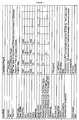
- Aqueous conditioner according to the invention was used to make bread in accordance with Figure 1 . All products were found to be satisfactory.
- the sugar and salt in the aqueous fluid serves to protect the enzymes adequately and provide sufficient stability, without the need to use an additional antioxidant.
- a hydrocolloid may be used to thicken the solution, and this can further reduce water activity and so contribute to the stability of the composition.
- ascorbic acid is widely used in dough conditioners and takes the role of an oxidant
- other oxidants may be used where food additive legislation permits (for example, in the US).
- alternatives to ascorbic acid include potassium bromate, potassium iodate, calcium peroxide, and azodicarbonamide.
- alternative antioxidants to those indicated above may be used, for example, L-cysteine hydrochloride.
- Aqueous dough conditioning compositions were formulated according to the compositions given in the above table. All values are by %wt of the total composition.
- Formulation 1 is a control composition (not according to the invention) and contains 0.1%wt sodium metabisulphite (i.e. antioxidant).
- Formulations 2-4 illustrate the invention. Formulation 2 contains no antioxidant, whereas Formulation 3 contains a fifth (20%) of the control level used in Formulation 1.
- Formulation 4 is an example of a production run, and contains no antioxidant. All of the compositions of the invention (2-4) showed excellent stability.
Landscapes
- Life Sciences & Earth Sciences (AREA)
- Engineering & Computer Science (AREA)
- Food Science & Technology (AREA)
- Health & Medical Sciences (AREA)
- Molecular Biology (AREA)
- Microbiology (AREA)
- Bakery Products And Manufacturing Methods Therefor (AREA)
- Coloring Foods And Improving Nutritive Qualities (AREA)
- Noodles (AREA)
- Agricultural Chemicals And Associated Chemicals (AREA)
- Cosmetics (AREA)
- Pharmaceuticals Containing Other Organic And Inorganic Compounds (AREA)
- Medicines Containing Plant Substances (AREA)
- Anti-Oxidant Or Stabilizer Compositions (AREA)
Priority Applications (1)
| Application Number | Priority Date | Filing Date | Title |
|---|---|---|---|
| PL07848690T PL2101588T3 (pl) | 2006-12-22 | 2007-12-21 | Wodna kompozycja kondycjonująca ciasto |
Applications Claiming Priority (2)
| Application Number | Priority Date | Filing Date | Title |
|---|---|---|---|
| GBGB0625743.0A GB0625743D0 (en) | 2006-12-22 | 2006-12-22 | Aqueous dough conditioning composition |
| PCT/GB2007/005005 WO2008078107A1 (en) | 2006-12-22 | 2007-12-21 | Aqueous dough conditioning composition |
Publications (2)
| Publication Number | Publication Date |
|---|---|
| EP2101588A1 EP2101588A1 (en) | 2009-09-23 |
| EP2101588B1 true EP2101588B1 (en) | 2010-07-28 |
Family
ID=37758924
Family Applications (1)
| Application Number | Title | Priority Date | Filing Date |
|---|---|---|---|
| EP07848690A Active EP2101588B1 (en) | 2006-12-22 | 2007-12-21 | Aqueous dough conditioning composition |
Country Status (15)
| Country | Link |
|---|---|
| US (1) | US8734887B2 (pl) |
| EP (1) | EP2101588B1 (pl) |
| CN (1) | CN101588723A (pl) |
| AT (1) | ATE475316T1 (pl) |
| AU (1) | AU2007337835B2 (pl) |
| BR (1) | BRPI0719492A2 (pl) |
| CA (1) | CA2672557C (pl) |
| DE (1) | DE602007008144D1 (pl) |
| DK (1) | DK2101588T3 (pl) |
| ES (1) | ES2347298T3 (pl) |
| GB (1) | GB0625743D0 (pl) |
| MX (1) | MX2009006805A (pl) |
| PL (1) | PL2101588T3 (pl) |
| WO (1) | WO2008078107A1 (pl) |
| ZA (1) | ZA200904218B (pl) |
Families Citing this family (2)
| Publication number | Priority date | Publication date | Assignee | Title |
|---|---|---|---|---|
| NL2009065C2 (en) * | 2012-06-26 | 2013-12-30 | Sonneveld Group B V | Liquid bread improver, method for providing thereof and method for providing bakery foods. |
| NL2036181B1 (en) * | 2023-11-03 | 2025-05-14 | Sonneveld Group B V | Water based liquid bread improver and method for providing thereof |
Family Cites Families (9)
| Publication number | Priority date | Publication date | Assignee | Title |
|---|---|---|---|---|
| US3064010A (en) * | 1960-09-12 | 1962-11-13 | Int Minerals & Chem Corp | Production of sodium isoascorbate monohydrate |
| US3701668A (en) * | 1970-06-09 | 1972-10-31 | Lewis D Morse | Composition for improving bread making and texture |
| US3708668A (en) * | 1971-06-01 | 1973-01-02 | J Tilley | Vehicle optical guidance system |
| AUPM922194A0 (en) * | 1994-11-03 | 1994-11-24 | Burns Philp Food Holdings Pty Limited | Liquid bread improver |
| DE60125805T2 (de) | 2000-09-28 | 2007-10-11 | Dsm Ip Assets B.V. | Flüssige brotverbesserungsmittel |
| FI20012151A0 (fi) | 2001-11-05 | 2001-11-05 | Danisco | Nestemäinen leivänparannusaine, sen käyttö ja valmistusmenetelmä |
| DE10318359A1 (de) * | 2003-04-23 | 2004-11-11 | Ireks Gmbh | Flüssiges Backmittel sowie Verfahren zur Herstellung von Backwaren |
| GB0312606D0 (en) | 2003-06-02 | 2003-07-09 | Cereform Ltd | Aqueous stabilization of liquid dough conditioning compositions |
| EP1547467A1 (en) * | 2003-12-22 | 2005-06-29 | Puratos N.V. | Liquid leaven composition |
-
2006
- 2006-12-22 GB GBGB0625743.0A patent/GB0625743D0/en not_active Ceased
-
2007
- 2007-12-21 MX MX2009006805A patent/MX2009006805A/es active IP Right Grant
- 2007-12-21 EP EP07848690A patent/EP2101588B1/en active Active
- 2007-12-21 AU AU2007337835A patent/AU2007337835B2/en not_active Ceased
- 2007-12-21 BR BRPI0719492-7A2A patent/BRPI0719492A2/pt not_active Application Discontinuation
- 2007-12-21 AT AT07848690T patent/ATE475316T1/de active
- 2007-12-21 WO PCT/GB2007/005005 patent/WO2008078107A1/en not_active Ceased
- 2007-12-21 US US12/520,298 patent/US8734887B2/en active Active
- 2007-12-21 PL PL07848690T patent/PL2101588T3/pl unknown
- 2007-12-21 CA CA2672557A patent/CA2672557C/en active Active
- 2007-12-21 DK DK07848690.9T patent/DK2101588T3/da active
- 2007-12-21 DE DE602007008144T patent/DE602007008144D1/de active Active
- 2007-12-21 CN CNA2007800477729A patent/CN101588723A/zh active Pending
- 2007-12-21 ES ES07848690T patent/ES2347298T3/es active Active
-
2009
- 2009-01-01 ZA ZA200904218A patent/ZA200904218B/en unknown
Also Published As
| Publication number | Publication date |
|---|---|
| BRPI0719492A2 (pt) | 2014-02-18 |
| US8734887B2 (en) | 2014-05-27 |
| CA2672557C (en) | 2013-08-06 |
| AU2007337835B2 (en) | 2013-05-09 |
| WO2008078107A1 (en) | 2008-07-03 |
| CA2672557A1 (en) | 2008-07-03 |
| GB0625743D0 (en) | 2007-02-07 |
| ATE475316T1 (de) | 2010-08-15 |
| PL2101588T3 (pl) | 2011-01-31 |
| ZA200904218B (en) | 2010-04-28 |
| DE602007008144D1 (de) | 2010-09-09 |
| AU2007337835A1 (en) | 2008-07-03 |
| US20100028491A1 (en) | 2010-02-04 |
| EP2101588A1 (en) | 2009-09-23 |
| CN101588723A (zh) | 2009-11-25 |
| ES2347298T3 (es) | 2010-10-27 |
| MX2009006805A (es) | 2009-07-03 |
| DK2101588T3 (da) | 2010-10-25 |
Similar Documents
| Publication | Publication Date | Title |
|---|---|---|
| EP1331850B1 (en) | Liquid bread improving compositions | |
| CA2012723C (en) | Bread improvers | |
| EP0468731A1 (en) | Bread improver and method of producing bread | |
| EP0966199A2 (en) | Enzyme-based bread improvers | |
| JP7722413B2 (ja) | 酵素を用いた澱粉含有食品の製造方法 | |
| EP2101588B1 (en) | Aqueous dough conditioning composition | |
| EP1633195B1 (en) | Liquid dough conditioner | |
| WO2002060262A2 (en) | Conditioner for bread | |
| JPH08266214A (ja) | パン生地の製造方法 | |
| US20050196488A1 (en) | Dough conditioner | |
| De Leyn | Functional additives | |
| JP2000300158A (ja) | 製パン改良剤 | |
| EP0669082A1 (en) | Storage-stable enzyme solutions | |
| MXPA05013051A (en) | Liquid dough conditioner | |
| JP2024143927A (ja) | 組成物、ベーカリー製品の製造方法及びベーカリー製品 | |
| EP0796559A1 (en) | A novel enzyme combination | |
| TR201515719A2 (tr) | Ekmek mayasi karişimi ve üreti̇m yöntemi̇ |
Legal Events
| Date | Code | Title | Description |
|---|---|---|---|
| PUAI | Public reference made under article 153(3) epc to a published international application that has entered the european phase |
Free format text: ORIGINAL CODE: 0009012 |
|
| 17P | Request for examination filed |
Effective date: 20090624 |
|
| AK | Designated contracting states |
Kind code of ref document: A1 Designated state(s): AT BE BG CH CY CZ DE DK EE ES FI FR GB GR HU IE IS IT LI LT LU LV MC MT NL PL PT RO SE SI SK TR |
|
| 17Q | First examination report despatched |
Effective date: 20091111 |
|
| GRAP | Despatch of communication of intention to grant a patent |
Free format text: ORIGINAL CODE: EPIDOSNIGR1 |
|
| GRAC | Information related to communication of intention to grant a patent modified |
Free format text: ORIGINAL CODE: EPIDOSCIGR1 |
|
| DAX | Request for extension of the european patent (deleted) | ||
| GRAS | Grant fee paid |
Free format text: ORIGINAL CODE: EPIDOSNIGR3 |
|
| GRAA | (expected) grant |
Free format text: ORIGINAL CODE: 0009210 |
|
| AK | Designated contracting states |
Kind code of ref document: B1 Designated state(s): AT BE BG CH CY CZ DE DK EE ES FI FR GB GR HU IE IS IT LI LT LU LV MC MT NL PL PT RO SE SI SK TR |
|
| REG | Reference to a national code |
Ref country code: GB Ref legal event code: FG4D |
|
| REG | Reference to a national code |
Ref country code: CH Ref legal event code: EP |
|
| REG | Reference to a national code |
Ref country code: IE Ref legal event code: FG4D Ref country code: NL Ref legal event code: T3 |
|
| REF | Corresponds to: |
Ref document number: 602007008144 Country of ref document: DE Date of ref document: 20100909 Kind code of ref document: P |
|
| REG | Reference to a national code |
Ref country code: SE Ref legal event code: TRGR |
|
| REG | Reference to a national code |
Ref country code: CH Ref legal event code: NV Representative=s name: KIRKER & CIE S.A. |
|
| REG | Reference to a national code |
Ref country code: DK Ref legal event code: T3 |
|
| REG | Reference to a national code |
Ref country code: ES Ref legal event code: FG2A Ref document number: 2347298 Country of ref document: ES Kind code of ref document: T3 |
|
| LTIE | Lt: invalidation of european patent or patent extension |
Effective date: 20100728 |
|
| PG25 | Lapsed in a contracting state [announced via postgrant information from national office to epo] |
Ref country code: LT Free format text: LAPSE BECAUSE OF FAILURE TO SUBMIT A TRANSLATION OF THE DESCRIPTION OR TO PAY THE FEE WITHIN THE PRESCRIBED TIME-LIMIT Effective date: 20100728 |
|
| PGFP | Annual fee paid to national office [announced via postgrant information from national office to epo] |
Ref country code: DK Payment date: 20101210 Year of fee payment: 4 |
|
| REG | Reference to a national code |
Ref country code: PL Ref legal event code: T3 |
|
| PG25 | Lapsed in a contracting state [announced via postgrant information from national office to epo] |
Ref country code: BG Free format text: LAPSE BECAUSE OF FAILURE TO SUBMIT A TRANSLATION OF THE DESCRIPTION OR TO PAY THE FEE WITHIN THE PRESCRIBED TIME-LIMIT Effective date: 20101028 Ref country code: CY Free format text: LAPSE BECAUSE OF FAILURE TO SUBMIT A TRANSLATION OF THE DESCRIPTION OR TO PAY THE FEE WITHIN THE PRESCRIBED TIME-LIMIT Effective date: 20100728 Ref country code: IS Free format text: LAPSE BECAUSE OF FAILURE TO SUBMIT A TRANSLATION OF THE DESCRIPTION OR TO PAY THE FEE WITHIN THE PRESCRIBED TIME-LIMIT Effective date: 20101128 Ref country code: PT Free format text: LAPSE BECAUSE OF FAILURE TO SUBMIT A TRANSLATION OF THE DESCRIPTION OR TO PAY THE FEE WITHIN THE PRESCRIBED TIME-LIMIT Effective date: 20101129 Ref country code: SI Free format text: LAPSE BECAUSE OF FAILURE TO SUBMIT A TRANSLATION OF THE DESCRIPTION OR TO PAY THE FEE WITHIN THE PRESCRIBED TIME-LIMIT Effective date: 20100728 |
|
| PGFP | Annual fee paid to national office [announced via postgrant information from national office to epo] |
Ref country code: LU Payment date: 20110110 Year of fee payment: 4 Ref country code: PL Payment date: 20101105 Year of fee payment: 4 |
|
| PG25 | Lapsed in a contracting state [announced via postgrant information from national office to epo] |
Ref country code: GR Free format text: LAPSE BECAUSE OF FAILURE TO SUBMIT A TRANSLATION OF THE DESCRIPTION OR TO PAY THE FEE WITHIN THE PRESCRIBED TIME-LIMIT Effective date: 20101029 |
|
| PG25 | Lapsed in a contracting state [announced via postgrant information from national office to epo] |
Ref country code: EE Free format text: LAPSE BECAUSE OF FAILURE TO SUBMIT A TRANSLATION OF THE DESCRIPTION OR TO PAY THE FEE WITHIN THE PRESCRIBED TIME-LIMIT Effective date: 20100728 Ref country code: RO Free format text: LAPSE BECAUSE OF FAILURE TO SUBMIT A TRANSLATION OF THE DESCRIPTION OR TO PAY THE FEE WITHIN THE PRESCRIBED TIME-LIMIT Effective date: 20100728 Ref country code: SK Free format text: LAPSE BECAUSE OF FAILURE TO SUBMIT A TRANSLATION OF THE DESCRIPTION OR TO PAY THE FEE WITHIN THE PRESCRIBED TIME-LIMIT Effective date: 20100728 Ref country code: CZ Free format text: LAPSE BECAUSE OF FAILURE TO SUBMIT A TRANSLATION OF THE DESCRIPTION OR TO PAY THE FEE WITHIN THE PRESCRIBED TIME-LIMIT Effective date: 20100728 |
|
| PLBE | No opposition filed within time limit |
Free format text: ORIGINAL CODE: 0009261 |
|
| STAA | Information on the status of an ep patent application or granted ep patent |
Free format text: STATUS: NO OPPOSITION FILED WITHIN TIME LIMIT |
|
| 26N | No opposition filed |
Effective date: 20110429 |
|
| PG25 | Lapsed in a contracting state [announced via postgrant information from national office to epo] |
Ref country code: MC Free format text: LAPSE BECAUSE OF NON-PAYMENT OF DUE FEES Effective date: 20101231 |
|
| REG | Reference to a national code |
Ref country code: DE Ref legal event code: R097 Ref document number: 602007008144 Country of ref document: DE Effective date: 20110429 |
|
| PG25 | Lapsed in a contracting state [announced via postgrant information from national office to epo] |
Ref country code: MT Free format text: LAPSE BECAUSE OF FAILURE TO SUBMIT A TRANSLATION OF THE DESCRIPTION OR TO PAY THE FEE WITHIN THE PRESCRIBED TIME-LIMIT Effective date: 20100728 Ref country code: IT Free format text: LAPSE BECAUSE OF NON-PAYMENT OF DUE FEES Effective date: 20101221 |
|
| REG | Reference to a national code |
Ref country code: DK Ref legal event code: EBP |
|
| REG | Reference to a national code |
Ref country code: CH Ref legal event code: PL |
|
| PG25 | Lapsed in a contracting state [announced via postgrant information from national office to epo] |
Ref country code: HU Free format text: LAPSE BECAUSE OF FAILURE TO SUBMIT A TRANSLATION OF THE DESCRIPTION OR TO PAY THE FEE WITHIN THE PRESCRIBED TIME-LIMIT Effective date: 20110129 |
|
| PG25 | Lapsed in a contracting state [announced via postgrant information from national office to epo] |
Ref country code: LI Free format text: LAPSE BECAUSE OF NON-PAYMENT OF DUE FEES Effective date: 20111231 Ref country code: CH Free format text: LAPSE BECAUSE OF NON-PAYMENT OF DUE FEES Effective date: 20111231 |
|
| PG25 | Lapsed in a contracting state [announced via postgrant information from national office to epo] |
Ref country code: DK Free format text: LAPSE BECAUSE OF NON-PAYMENT OF DUE FEES Effective date: 20120102 |
|
| REG | Reference to a national code |
Ref country code: PL Ref legal event code: LAPE |
|
| PG25 | Lapsed in a contracting state [announced via postgrant information from national office to epo] |
Ref country code: LU Free format text: LAPSE BECAUSE OF NON-PAYMENT OF DUE FEES Effective date: 20111221 Ref country code: PL Free format text: LAPSE BECAUSE OF NON-PAYMENT OF DUE FEES Effective date: 20111221 |
|
| REG | Reference to a national code |
Ref country code: AT Ref legal event code: MM01 Ref document number: 475316 Country of ref document: AT Kind code of ref document: T Effective date: 20121221 |
|
| PG25 | Lapsed in a contracting state [announced via postgrant information from national office to epo] |
Ref country code: AT Free format text: LAPSE BECAUSE OF NON-PAYMENT OF DUE FEES Effective date: 20121221 |
|
| REG | Reference to a national code |
Ref country code: FR Ref legal event code: PLFP Year of fee payment: 9 |
|
| REG | Reference to a national code |
Ref country code: FR Ref legal event code: PLFP Year of fee payment: 10 |
|
| REG | Reference to a national code |
Ref country code: FR Ref legal event code: PLFP Year of fee payment: 11 |
|
| PGFP | Annual fee paid to national office [announced via postgrant information from national office to epo] |
Ref country code: DE Payment date: 20211027 Year of fee payment: 15 Ref country code: SE Payment date: 20211110 Year of fee payment: 15 Ref country code: NL Payment date: 20211116 Year of fee payment: 15 Ref country code: IE Payment date: 20211109 Year of fee payment: 15 Ref country code: FI Payment date: 20211209 Year of fee payment: 15 Ref country code: FR Payment date: 20211115 Year of fee payment: 15 |
|
| PGFP | Annual fee paid to national office [announced via postgrant information from national office to epo] |
Ref country code: LV Payment date: 20211129 Year of fee payment: 15 Ref country code: IT Payment date: 20211110 Year of fee payment: 15 Ref country code: BE Payment date: 20211119 Year of fee payment: 15 |
|
| PGFP | Annual fee paid to national office [announced via postgrant information from national office to epo] |
Ref country code: TR Payment date: 20211220 Year of fee payment: 15 Ref country code: ES Payment date: 20220105 Year of fee payment: 15 |
|
| REG | Reference to a national code |
Ref country code: DE Ref legal event code: R119 Ref document number: 602007008144 Country of ref document: DE |
|
| PG25 | Lapsed in a contracting state [announced via postgrant information from national office to epo] |
Ref country code: LV Free format text: LAPSE BECAUSE OF NON-PAYMENT OF DUE FEES Effective date: 20221221 |
|
| REG | Reference to a national code |
Ref country code: SE Ref legal event code: EUG |
|
| REG | Reference to a national code |
Ref country code: NL Ref legal event code: MM Effective date: 20230101 |
|
| REG | Reference to a national code |
Ref country code: BE Ref legal event code: MM Effective date: 20221231 |
|
| PG25 | Lapsed in a contracting state [announced via postgrant information from national office to epo] |
Ref country code: NL Free format text: LAPSE BECAUSE OF NON-PAYMENT OF DUE FEES Effective date: 20230101 |
|
| PG25 | Lapsed in a contracting state [announced via postgrant information from national office to epo] |
Ref country code: SE Free format text: LAPSE BECAUSE OF NON-PAYMENT OF DUE FEES Effective date: 20221222 Ref country code: IE Free format text: LAPSE BECAUSE OF NON-PAYMENT OF DUE FEES Effective date: 20221221 Ref country code: DE Free format text: LAPSE BECAUSE OF NON-PAYMENT OF DUE FEES Effective date: 20230701 |
|
| PG25 | Lapsed in a contracting state [announced via postgrant information from national office to epo] |
Ref country code: FR Free format text: LAPSE BECAUSE OF NON-PAYMENT OF DUE FEES Effective date: 20221231 Ref country code: BE Free format text: LAPSE BECAUSE OF NON-PAYMENT OF DUE FEES Effective date: 20221231 |
|
| PG25 | Lapsed in a contracting state [announced via postgrant information from national office to epo] |
Ref country code: IT Free format text: LAPSE BECAUSE OF NON-PAYMENT OF DUE FEES Effective date: 20221221 |
|
| REG | Reference to a national code |
Ref country code: ES Ref legal event code: FD2A Effective date: 20240201 |
|
| PG25 | Lapsed in a contracting state [announced via postgrant information from national office to epo] |
Ref country code: ES Free format text: LAPSE BECAUSE OF NON-PAYMENT OF DUE FEES Effective date: 20221222 |
|
| PG25 | Lapsed in a contracting state [announced via postgrant information from national office to epo] |
Ref country code: FI Free format text: LAPSE BECAUSE OF NON-PAYMENT OF DUE FEES Effective date: 20221221 Ref country code: ES Free format text: LAPSE BECAUSE OF NON-PAYMENT OF DUE FEES Effective date: 20221222 |
|
| PG25 | Lapsed in a contracting state [announced via postgrant information from national office to epo] |
Ref country code: TR Free format text: LAPSE BECAUSE OF NON-PAYMENT OF DUE FEES Effective date: 20221221 |
|
| PGFP | Annual fee paid to national office [announced via postgrant information from national office to epo] |
Ref country code: GB Payment date: 20251001 Year of fee payment: 19 |