EP2103085B1 - Kommunikationsverfahren für ein paketvermitteltes netzwerk und das verfahren verwendendes netzwerk - Google Patents
Kommunikationsverfahren für ein paketvermitteltes netzwerk und das verfahren verwendendes netzwerk Download PDFInfo
- Publication number
- EP2103085B1 EP2103085B1 EP06841208A EP06841208A EP2103085B1 EP 2103085 B1 EP2103085 B1 EP 2103085B1 EP 06841208 A EP06841208 A EP 06841208A EP 06841208 A EP06841208 A EP 06841208A EP 2103085 B1 EP2103085 B1 EP 2103085B1
- Authority
- EP
- European Patent Office
- Prior art keywords
- packet
- network
- protocol
- module
- layer
- Prior art date
- Legal status (The legal status is an assumption and is not a legal conclusion. Google has not performed a legal analysis and makes no representation as to the accuracy of the status listed.)
- Active
Links
Images

Classifications
-
- H—ELECTRICITY
- H04—ELECTRIC COMMUNICATION TECHNIQUE
- H04L—TRANSMISSION OF DIGITAL INFORMATION, e.g. TELEGRAPHIC COMMUNICATION
- H04L67/00—Network arrangements or protocols for supporting network services or applications
- H04L67/50—Network services
- H04L67/60—Scheduling or organising the servicing of application requests, e.g. requests for application data transmissions using the analysis and optimisation of the required network resources
- H04L67/63—Routing a service request depending on the request content or context
Definitions
- the present invention relates generally to packet switched networks and, more specifically, to connectionless networks. Particularly, the present invention refers to application services on IP-based networks.
- packets are transmitted in discrete units of potentially variable length blocks called packets.
- Each packet contains not only data but also a header with control information.
- connectionless network the information transfer between users/terminals happens without establishing a logical connection or virtual circuit between those specific users/terminals.
- IP Internet Protocol
- TCP/IP Transmission Control Protocol/Internet Protocol
- the communications on the network are described by a five-layers model comprising the following layers: Physical, Data Link, Network, Transport and Application.
- the Network layer is responsible for the source-to-destination delivery of a packet possibly across multiple networks and the Application or "Service” layer supports the end-user, software or human, in accessing the network resources.
- the layers of the TCP/IP model can be mapped on the ISO/OSI (International Standard Organization/Open Systems Interconnection) seven-layers model.
- IP-based network follows a client-server strategy wherein an application program, the client, running on a local machine, requests a service from another application program, called server and running on a remote machine.
- an IP-based network is provided with different known devices such as, routers, switches etc., each operating at different layers of the TCP/IP protocol suite.
- IP-based network employing proxies are known.
- a proxy is a program interposed between a client and a server, which offers a network service to allow clients to make indirect network connections to other network services, by using some protocols of the Application layer of the TCP/IP model (e.g., HTTP, FTP, SIP, etc.).
- the client sends to the proxy a request and the proxy may perform several actions on the request before routing it to the destination.
- Cisco Systems, Inc. has proposed an Application Oriented Networking (AON) platform to be used in network employing TCP protocol.
- Cisco AON embeds a class of application intelligence into the network to meet the needs for multienterprise security, real time visibility, event-driven messaging, optimized delivery.
- standard routers are enhanced with supervisor engine or route processor in order to transparently redirect application traffic to the Cisco AON module.
- AON service logic can then be applied to these messages, which are subsequently forwarded to the destination application.
- Document US-A-6970913 describes a method of load-balancing according to which a forwarding agent is implemented in a router of an IP-based network comprising clients, servers and service managers. This document discloses packets exchange between the enhanced routers and the service managers in order to perform load-balancing, i.e. distributing requests to different servers, with the goal of optimizing system performance. The Applicant observes that the service managers described by document US-A-6970913 operate at the network layer of the protocol suite.
- Document US-A-6912570 describes a method for dynamically modifying a stateful inspection of data and discloses a router adapted to perform a stateful inspection of packets passing therethrough.
- stateful inspection also referred to as dynamic packet filtering
- the above indicated document refers to a method that exploits such inspection to enable an enhanced use of Quality of Service (QoS) classification based upon the high level application of the data.
- QoS Quality of Service
- value added services are services relating to the access, the control and the fruition of contents on the Internet and services adding authentication and identity information to the requests of such contents.
- the Applicant has noticed that the above trend can be met by solving the problem of finding a communication method for packet-switched networks, allowing a flexible inter-working between devices and resources operating at different layers of a layered model used to define and design communications aspects, such as, particularly, the Network layer and the Application layer of the ISO/OSI model.
- FIG. 1 shows an exemplary communications system 200 comprising a first terminal 10, a second terminal 20 and a communications network 100, which allows communication between the first 10 and the second 20 terminals. It is appreciated that the communications system 200 can operate with a different number of terminals.
- the communications system 200 is a packet-switched and connectionless network which can be designed and described by means of a layered model defining several ordered, separated but related, layers, each of which defines a segment of the process of moving information across the system.
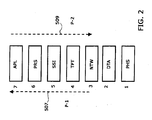
- FIG. 2 shows the known seven layers of the ISO/OSI model: Physical layer 1 (PHS), Data Link layer 2 (DTA), Network layer 3 (NTW), Transport layer 4 (TPT), Session layer 5 (SSI), Presentation Layer 6 (PRS), Application layer 7 (APL).
- PHS Physical layer 1
- DTA Data Link layer 2
- NW Network layer 3
- TPT Transport layer 4
- SSLI Session layer 5
- PRS Presentation Layer 6
- APL Application layer 7
- Each higher layer of the model can be seen as a "client” of the underlying lower “server” layer(s).
- the first terminal 10 comprises a computer such as, for example, a client computer provided with suitable hardware and software user interfaces and tools for performing a communication by network 100.
- First terminal 10 may generate a packets flow and transmit it towards the communications network 100.
- Second terminal 20 includes a respective computer such as a server computer (exemplarily, a web server) which may exchange a packets flow with the first terminal 10 via the communication network 100.
- a server computer exemplarily, a web server
- the first and the second terminals 10 and 20 may be other types of devices such as, for example, telephones allowing fruition of value added IP services.
- Communications system 200 includes, for example, a first router device 11 which, as it is known, operates in the Network layer of the above mentioned ISO/OSI model.
- the first router device 11 may route packets flows received from the first terminal 1 via a Local Area Network 22 such as, for example, an Ethernet local network towards the communication network 100.
- communications system 200 also comprises a second router device 15 which may route packets flows between a further LAN 23 (e.g. an Ethernet local network), wherein it is included, the second terminal 20 and the communication network 100.
- the first 11 and second 15 routers are conventional devices which may be provided with conventional packet switching functionalities.
- the Ethernet networks 22 and 23 are examples of networks that provide the access to the communications network 100.
- communications network 100 is an IP-based network such as the Internet which uses the TCP/IP (Transmission Control Protocol/IP) model.
- TCP/IP Transmission Control Protocol/IP
- the layers of the TCP/IP model do not match exactly with those of the ISO/OSI model.
- the TCP/IP model is made of five layers: Physical, Data Link, Network, Transport and Application.
- the Application layer of the TCP/IP model can be mapped on the Session, Presentation and Application layers of the ISO/OSI model.
- Table 1 indicates some protocols of the Internet protocol suite mapped on the 7-layers ISO/OSI model.
- the exemplary illustrated communication network 100 comprises a third router device 12 and a fourth router device 14 which route packets flows from/to the first 11 and the second 15 router device, respectively.
- Third router device 12 and fourth router device 14 operate in the Network layer of the TCP/IP suite protocol. Moreover, the third 12 and the fourth 14 router devices may operate in the Physical and/or Data Link layers. In greater detail, first, second, third and fourth router devices 11, 15, 12, 14 have access to the Network layer and are provided with software that enables them to determine which of several possible paths is the best for a particular transmission, and relay packets, and look up in corresponding routing tables.
- the communication network 100 includes a router device 13 connectable to the third router device 12 and the fourth router device 14.
- the router device 13 can be substantially analogous to the above described router devices with reference to the routing functions performed on the received packets.
- the routing functions of the router device 13 are represented in FIG.1 by means of a routing module 120.
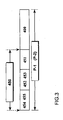
- the packet P-1 comprises data (or payload) 400 and header 450 and is, in accordance with the example considered, an IP-datagram.
- data 400 contain bits of a message or part of a message which is created in the Application layer, for example, by the first terminal 10.
- data 400 are bits representing at least part of a "Get" message of the HTTP application protocol or of an "Invite" message of the SIP application protocol.
- a whole message is formed by bits of a plurality of data 400 carried by more packets, each analogous to packet P-1.
- Header 450 includes several fields and particularly, it comprises a service type (hereinafter, called, application protocol type) identifier 451, such as bits indicating the protocol of the Application layer employed (e.g. HTTP, FTP or SIP) for encapsulating the data 400.
- application protocol type identifier 451 may identify one of the protocols of the Application layer indicated in the above Table 1.
- header 450 includes a source transport layer port 452 (e.g. the TCP or UDP address of the first terminal 10) and a destination transport layer port 453 (e.g. the TCP or UDP address of the second terminal 20).
- Header 450 further includes a source network layer address 454 (e.g. the source IP address) and a destination network layer address 455 (e.g., the destination IP address).
- the source IP address is the Internet address of the first terminal 10 and the destination IP address is the Internet address of the second terminal 20.
- router device 13 is able not only to correctly route packets but it is, advantageously, also provided with further functionalities.
- router device 13 includes an inspection module 130, which allows performing an inspection of the packet in order to access at least the application protocol type identifier 451 for identifying the protocol of the Application layer associated to the communication of the data 400.
- Inspection module 130 can operate in accordance with, for example, known packet inspection techniques such as the Stateful Packet Inspection (SPI), which is a preferred technique for the present invention, or the Deep Packet Inspection (DPI).
- SPI Stateful Packet Inspection
- DPI Deep Packet Inspection
- the Stateful Packet Inspection allows to access to the following 5-tuple of header information:
- Stateful Packet Inspection accesses to those header fields containing information encapsulated at the Network layer (e.g. header 454 and 455) and/or up to the Transport layer (i.e. headers 452, 453 and 451). Moreover, Stateful Packet Inspection can access header information encapsulated at the Data Link layer but it does not access to the information encapsulated at the Application layer, such as data 400.
- the Network layer e.g. header 454 and 455
- Transport layer i.e. headers 452, 453 and 451
- Stateful Packet Inspection can access header information encapsulated at the Data Link layer but it does not access to the information encapsulated at the Application layer, such as data 400.
- Deep Packet Inspection allows to access, in addition to the above mentioned 5-tuple, also the information encapsulated at the Application layer, such as data 400, so as to determine not only the application protocol employed but also the actual application that rely on those protocol.
- the router device 13 is also provided with a selection module 140 which allows to select among a plurality of processor devices AS1-ASN included in the communications system 100 a specific one which is associated to a protocol of the Application layer identified by the inspection module 130 inspecting a packet received at the router device 13.
- routing module 120, the inspection module 130 and the selection module 140 are hardware and/or software modules which can, preferably, reside in the router device 13 and include separated and/or shared memories, computer readable codes and processing units suitable for the implementation of the corresponding functions.
- the operations and the procedures performed by the routing, inspecting and selection modules 120, 130 and 140 correspond to computing procedures carried out on bits, data and/or information representing the concerned quantities or parameters.
- the communication network 100 also comprises the plurality of processor devices AS1-ASN, which are, preferably, Applications Servers.
- Each Application Server AS1-ASN is associated with a least one specific protocol of the Application layer such as, in accordance with the example given, at least one Application protocol of the Internet protocol suite.
- sub-groups of Application Servers AS1-ASN can be associated to the same Application protocol and/or one or more of the Application Servers AS1-ASN can be associated to more than one Application protocol.
- Each Application Server AS1-ASN can operate in the Application layer for processing a packet in accordance with a procedure or service logic defined for the Application layer.
- an Application Server is a computer and/or the software thereof which provides infrastructure and functions for supporting, developing and deploying service logics of the Application layer to process messages of the Application layer protocol (hereinafter, also "application protocol message").
- Each Application Server AS1-ASN can receive the packets flow corresponding to an application protocol message and processing each packet for accessing data 400, reconstructing the whole message and applying the corresponding service logic to the reconstructed message to produce a further message, to be re-encapsulated under the form of a processed packets flow.
- each Application Server AS1-ASN is associated to a single specific application protocol defined by the identifier 451 and, for example: the Application Server AS1 is associated to protocol HTTP; the Application Server AS2 is associated to protocol SIP and the Application Server ASN is associated to protocol FTP.
- the service logics implemented by the HTTP Application server AS1 may refer to access control and/or fruition control of contents on the Internet, or to services adding authentication and identity information to the messages requesting such contents, or to other value added services.
- Each Application Server AS1-ASN is provided with respective service logic modules and in particular: the HTTP Application Server AS1 includes service logics modules 1-150, 1-151 and 1-15M; the SIP Application Server AS2 includes service logics modules 2-150, 2-151 and 2-15M and the FTP Application Server ASN includes service logics modules N-150, N-151 and N-15M.
- Each of said service logic modules i-15j (i: 1-N; j:0-M) can apply a specific service logic to a message encapsulated in a flow of packets like packet P-1 of FIG 3 .
- the service logics applied by each of said service logic module i-15j are defined in the Application layer of the ISO/OSI model or preferably of the TCP/IP model.
- each Application Server AS1-ASN is also provided with a corresponding triggering module 1-160, 2-160...,N-160 which can trigger the procedure associated to one of the service logic modules i-15j, according to the content (e.g. one or more fields) of the application protocol message carried by the packet flow.
- a triggering module 1-160, 2-160...,N-160 which can trigger the procedure associated to one of the service logic modules i-15j, according to the content (e.g. one or more fields) of the application protocol message carried by the packet flow.
- IP-based communications system 200 and network 100 have been illustrated in FIG.1 in schematic manner and only by some of the devices normally employed in such type of network, e.g. the Internet.
- the skilled person would easy identify other sub-networks (such as, for example, core networks, metro networks and backbone networks), apparatuses and/or devices (such as, for example, core routers, backbone routers, metro routers, Multi-service PoPs, bridge devices, switches devices) to be employed for fully design the network.
- router device 13 is a core router, so as to ensure that considerable packets flows could be managed by said device.
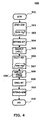
- the method has a starting step 501 (STR) and a step 502 (SND-NW) of sending on the communication network 100 at least one packet P-1 including the application protocol type identifier 451 which indicates, for example, that protocol HTTP is employed.
- sending step 502 includes a step 503 (GEN-TR) in which the first terminal 10 generates an application protocol message encapsulated in one or more packets analogous to packet P-1, and transmits it towards the communication network 100 by the local network 22.
- conventional routing steps 504 are then performed by the first router device 11 which receives packets P-1 and route them towards the third router device 12 that, in turn, forwards them to the router device 13.
- the routing module 120 of the router device 13 receives packets P-1 and activates inspection module 130 which performs a packet inspection (INSPCT) - for example, the Stateful Packet inspection - and access the application protocol type identifier 451 identifying the application protocol employed (e.g. HTTP).
- INPCT packet inspection
- application protocol type identifier 451 identifying the application protocol employed (e.g. HTTP).
- the router device 13 activates the selection module 140 starting a selection step 506 (SLCT-AS) wherein, based on the identified application protocol, the associated Application Server among the plurality AS1-ASN is determined.
- HTTP Application Server AS1 is selected.
- Router device 13 thus sends (step 507, SND-AS) the packets P-1 towards the selected HTTP Application Server AS1.
- step 507 has been indicated as an arrow that goes from Network layer (3) to the Application layer (7).
- the HTTP Application Server AS1 receives packets P-1 and starts the processing of each of them applying procedures defined in the Application layer.
- the trigger module 1-160 of the HTTP Application Server AS1 reads the received packets P-1 and reconstructs the application protocol message received.
- the trigger module 160-1 of the HTTP Application Server AS1 selects and triggers (triggering step 508' - TRG) one or more of the service logic modules i-15j.
- trigger module. 1-160 activates service logic module 1-150 when the received packets P-1 carry a pre-established Destination IP address 455 for which an authorization procedure is required.
- the selected service logic module 1-150 acts on packets P-1, for example, modifying the content of the header field 450 and/or modifying the data 400, i.e. the application protocol message carried out by packets P-1.
- service logic module 1-150 modifies packets P-1 in such a way to generate a further message formed by processed packets P-2, having a format analogous to packets P-1, but indicating an address of a web page different from the one indicated by packets P-1, in order to show a page requesting authorization credentials to the user.
- the method includes a step 509 of sending (SND-RT) from the HTTP Application Server AS1 towards the router device 13 the application protocol message resulting from the processing, which is under the form of the plurality of processed packets P-2.
- step 509 as been indicated as another arrow that goes from the Application layer (7) to the Network layer (3).
- router device 13 operates, by means of the routing module 120, standard routing of the processed packets P-2 as received from HTTP Application Server AS1 and transmits them on the communication network 100.
- the path followed by the processed packets P-2 in the communication network 100 depends on the service logic applied by the HTTP Application server. For example, packets P-2 may be transmitted towards fourth router device 14 and second router device 15, and received at the second terminal 20.
- the method 500 terminates with and end step 210 (ED).
- the routing operation performed at the routing module 120 on the processed packets P-2 may depend on the service logic applied by the specific selected Application Server AS1-ASN in step 508, since the service logic can modify not only the information carried by data 400 but, alternatively or in addition, also the content of header 450.
- communications network 100 or communications system 200 may include more than one device provided with respective inspection modules and selection modules analogous to the modules 130 and 140 above illustrated.
- the communications system 200 and/or the communication network 100 will be, advantageously, provided with a suitable number of router devices implementing the above described inspecting and selecting functions so as to ensure that all the packets flow for which the method in accordance with the invention has to be applied will meet a corresponding router device.
- a router device enhanced with the inspecting and selecting functions can be associated to several Application Servers and each Application Server can be associated to more than one enhanced router devices.
- the selection module 140 of the router device 13 may be configured so as to select one or more Application Servers of the same sub-group for the processing packets P-1, in order to balance a load among the Application Servers of the sub-group and/or increase fault tolerance.
- the selection of Application Servers among the same sub-group may be performed by a selection module 140 which implements a deep inspection.
- packets P-1 are forwarded to Application Servers selected also on the basis of the content of data 400 carried by packets P-1 and not only based on the application protocol type identifier 451.
- Each of the selected Application Servers belonging to the same sub-group behaves in a manner analogous to the one above described with reference to FIG. 4 .
- the teaching of the invention can be applied also to other type of devices operating in the Application layer of the ISO/OSI model or the TCP/IP model as defined in Table 1.
- the router device 13 can be used another device operating in the Network layer of the ISO/OSI model or TCP/IP model.
- the teaching of the invention can be also applied to communications network and systems defined and designed by means of different layered models which do not define explicitly a Network layer and an Application layer, and do not define layers which can be easily mapped on the ISO/OSI model.
- the method of the invention is applicable to communications systems/networks which can be described by a model defining at least devices operating in a high layer and devices operating in a distinct low layer.
- device operating in a high layer is meant a device configured to apply procedures on packets (i.e. service logics) supporting the user in accessing the network resources and/or producing results appreciable for the user.
- Devices operating in the low layer are devices which deal with aspects of the communications system that support the network in the communications process.
- devices and/or procedures operating at a "high" layer acts as clients of devices and/or procedures operating at a "low” layers (acting as servers).
- the user of the first terminal 10 wants to get a web page on the second terminal 20 (acting as a server) and an authorization service logic has to be applied.
- the user writes on a keyboard of the first terminal 10 a URI (Uniform Resource Identifier) of a web-site that he wants to get.
- a URI Uniform Resource Identifier
- the URI is employed by the HTTP protocol to access a document on the Internet.
- a browser application of the first terminal 10 translates such URI into an HTTP message such as, for example:
- the above indicated message is mapped over the TCP layer and then into IP packets, so as to form packets analogous to packet P-1 illustrated in FIG.3 and wherein the protocol HTTP is indicated in field 451, the Request is indicated in data field 400 and the address corresponding to the server www.ietf.org is indicated in the destination IP address field 455.
- the packets carrying the HTTP request message are intercepted (e.g., according to the destination address and the protocol type) by the router device 13, or by another enhanced router, which performs the above mentioned inspection step 505 and selection step 506 and forwards the packets to the HTTP Application Server AS1.
- the HTTP Application Server AS1 reads all the HTTP Request and activates a service logic, triggered by the URI http://www.ietf.org, as indicated with reference to step 508 and performed by the trigger module 1-160 and by the service logic module 1-150.
- service logic module 1-150 changes the content of the Request above indicated, changing the address of the web page to be retrieved on the same web server 20, in order to start an authorization procedure that requires a password.
- the HTTP Application Server AS1 forwards the HTTP message back to the router device 13 which forwards the request to the final destination e.g., to the web server 20.
- service logic applicable by one of the specific service logic modules 1-150 - 1-15M provided in the Application Server AS1 is a load-balancing logic, which allows to distribute HTTP requests between the web server 20 and at least a further server device (not shown in the figures).
- the user wants to establish a telephone communication on the communications system 200 with an agent of a call center.
- the telephone call on the IP-based communications system 200 is established, maintained and terminated employing the SIP (Session Initiation Protocol).
- SIP Session Initiation Protocol
- SIP is a control protocol, belonging to the Application Layer of the TCP/IP model, for creating, modifying and terminating multimedia communication sessions with one or more participants.
- the service logic applied in this example relates to the selection of a particular agent among the ones available at the call center.
- the user clicks on a link of a web page that triggers the start of a SIP Invite message from its terminal.
- the SIP Invite message is carried by a packets flow which undergoes a processing path analogous to the one described for the HTTP message.
- the packets flow carrying the SIP Invite message is received by the router device 13, which performs the inspecting and selecting steps, identifying the SIP protocol and selecting the associated Application Server, such as the SIP Application Server AS2, which is dedicated to the processing of SIP messages.
- the router device 13 forwards packets P-1 carrying the Invite message to the SIP Application Server AS2.
- the SIP Application Server AS2 reads the SIP Invite message and activates a service logic, triggered, for example, by the SIP URI destination of the telephone call.
- service logic module 2-151 may replace the SIP URI indicated in the Invite message with a selected URI corresponding to a default agent. If the default agent is not available, as he is involved in another call, service logic module 2-151 may select the URI of another agent among a list of available agents URI.
- the list indicating the SIP URI and the availability status of the agents may be stored in a database, which can be looked up by the Application Server AS2 in accordance with the service logic applied.
- the SIP Application Server AS2 returns to the router device 13 the packets flow P-2 carrying the SIP Invite message with the called SIP URI modified as indicated above.
- the router device 13 forwards the modified message according to the normal routing on the communications system 200.
- Following the SIP Invite message the communication between the user of the first terminal 10 and the selected agent is established, maintained and terminated in accordance with conventional techniques.
- the teachings of the present inventions allow to obtain a flexible inter-working between devices and resources operating at different layers of the model used to define and design the communication network such as, particularly, the Network layer an the Application layer of the ISO/OSI model.
- the packet exchanges between the router device 13 and one of the selected Application Server AS1-ASN realizes a flexible inter-working since it avoids an enhancing of router with Application layer functions and gives the possibility of exploiting devices which are extremely flexible and fully dedicated to application services, such as the Application Servers.
- teachings of the invention allow to reduce the complexity of the communication systems since, for example, the use of proxies is reduced and the communication systems in accordance with the invention can require only the configuration of routers, with the inspection and selection functions, and the implementing of the logic for processing the messages on the Application Servers.
- the application logic is implemented in devices, such as the Application Servers, which are distinct from the networks devices, such as the routers, is an advantage since Application Servers are more flexible and easy to program than the proprietary processing nodes embedded in conventional routers.
Landscapes
- Engineering & Computer Science (AREA)
- Computer Networks & Wireless Communication (AREA)
- Signal Processing (AREA)
- Data Exchanges In Wide-Area Networks (AREA)
Claims (15)
- Kommunikationsverfahren (500) für ein paketvermitteltes Netzwerk (100), das umfasst:a) Empfangen (504) eines Pakets (P-1) an einem Leitweglenkungsmodul (120), das auf einer unteren Schicht (NTW) eines Schichtmodells arbeitet, das Kommunikationen im Netzwerk definiert, wobei das Paket (P-1)eine Kennung umfasst, die einem Protokoll (451) zugeordnet ist, das auf einer oberen Schicht (APL) des Modells eingesetzt werden soll, die höher als die untere Schicht ist;b) Prüfen (505) des empfangenen Pakets an einem Prüfmodul (130), um das Protokoll zu identifizieren, das der Kennung zugeordnet ist;c) Auswählen (506) einer ersten Vorrichtung (AS1), die auf der oberen Schicht funktioniert und mit dem identifizierten Protokoll assoziiert ist, an einem Auswahlmodul (140);d) Senden (507) des Pakets (P-1) zur ersten Vorrichtung (AS1);e) Verarbeiten (508) des Pakets durch Anwenden an einer Prozedur der oberen Schicht der ersten Vorrichtung (AS1), um ein verarbeitetes Paket (P-2) zu erzeugen;f) Senden (509) des verarbeiteten Pakets von der ersten Vorrichtung an das Leitweglenkungsmodul (120);g) Übertragen (510) des verarbeiteten Pakets vom Leitweglenkungsmodul (120) zum Netzwerk (100).
- Kommunikationsverfahren (500) nach Anspruch 1, wobei die obere Schicht auf eine Anwendungsschicht (APL2) des ISO/OSI-Modells abgebildet werden kann.
- Kommunikationsverfahren (500) nach Anspruch 1, wobei das Leitweglenkungsmodul (120) auf einer Netzwerkschicht des ISO/OSI-Modells arbeitet oder darauf abgebildet werden kann.
- Kommunikationsverfahren (500) nach Anspruch 1, wobei das Leitweglenkungsmodul (120), das Prüfmodul (130) und das Auswahlmodul (140) in einer zweiten Vorrichtung (13) enthalten sind, die auf der unteren Schicht arbeitet.
- Kommunikationsverfahren (500) nach Anspruch 1, wobei das Prüfen (505) des Pakets umfasst:Zugreifen auf einen Header (450) des Pakets, der die Kennung (451) enthält.
- Kommunikationsverfahren (500) nach Anspruch und 5, wobei das Paket (P-1) ein IP-Datagramm (459) umfasst, und die Kennung (451) für ein Dienstprotokoll bezeichnend ist.
- Kommunikationsverfahren (500) nach Anspruch 1, das ferner vor dem Anwenden der Verfahrensschritte umfasst:An der ersten Vorrichtung (AS1) zugreifen auf Informationen, die im Paket enthalten sind und die Anwendung der Prozedur auslösen (1-160).
- Kommunikationsverfahren (500) nach Anspruch 1, das ferner umfasst:Erzeugen (503) wenigstens eines Teils des Pakets durch ein erstes Endgerät (10), undÜbertragen (502) des wenigstens einen Teils des Pakets im Netzwerk durch das erste Endgerät.
- Kommunikationsverfahren (500) nach Anspruch 8, wobei das Paket eine Zieladresse (454) eines zweiten Endgeräts (20) umfasst, dem der wenigstens eine Teil des Pakets zuzustellen ist.
- Kommunikationsverfahren (500) nach Anspruch 8, wobei das Paket (P-1) Daten (400) umfasst, die wenigstens einen Teil einer Nachricht gemäß dem Protokoll darstellen.
- Paketvermitteltes Netzwerk (100; 200), das umfasst:- mindestens eine Prozessorvorrichtung (AS1-ASN), die auf einer oberen Schicht (APL) eines Schichtmodells arbeitet, die Kommunikationen im Netzwerk definiert und zum Anwenden jeweiliger Prozeduren auf Pakete konfiguriert ist,- ein Leitweglenkungsmodul (120), das auf einer unteren Schicht (NTW) des Schichtmodells arbeitet, die niedriger als die obere Schicht ist, wobei das Leitweglenkungsmodul so ausgelegt ist, dass es die Pakete (P-1) empfängt, die eine jeweilige Kennung (451) eines entsprechenden Protokolls umfassen, das auf der oberen Schicht (APL) eingesetzt werden soll;dadurch gekennzeichnet, dass es ferner umfasst:- ein Prüfmodul (130), das so ausgelegt ist, dass es ein Paket prüft, um das Protokoll zu identifizieren, das der Kennung zugeordnet ist;- ein Auswahlmodul (140), das so ausgelegt ist, dass es auf der Basis der Kennung eine erste Vorrichtung (AS1) auswählt, die mit dem identifizierten Protokoll assoziiert und so konfiguriert ist, dass sie eine Prozedur der oberen Schicht auf das Paket anwendet, um ein verarbeitetes Paket (P-2) zu erzeugen;und wobei das Leitweglenkungsmodul (120) ferner so konfiguriert ist, dass es das Paket (P-1) an die ausgewählte erste Vorrichtung überträgt, das verarbeitete Paket empfängt und das verarbeitete Paket im Netzwerk überträgt.
- Netzwerk (100) nach Anspruch 11, wobei die erste Vorrichtung (AS1) mindestens ein Dienstmodul (1-150, 1-151) umfasst, das zum Anwenden der Prozedur konfiguriert ist.
- Netzwerk (100) nach Anspruch 12, wobei die erste Vorrichtung (AS1) ferner ein Auslösemodul (1-160) zum Zugreifen auf Informationen umfasst, die im Paket enthalten sind und die das mindestens eine Dienstlogikmodul auslösen (1-160).
- Netzwerk (200) nach Anspruch 11, das ferner ein erstes Endgerät (10) zum Erzeugen (503) wenigstens eines Teils des Pakets und Übertragen des wenigstens einen Teils des Pakets im Netzwerk umfasst.
- Netzwerk (200) nach Anspruch 11, das ferner ein zweites Endgerät (20) umfasst, dem das Paket zuzustellen ist.
Applications Claiming Priority (1)
| Application Number | Priority Date | Filing Date | Title |
|---|---|---|---|
| PCT/EP2006/012604 WO2008080429A1 (en) | 2006-12-29 | 2006-12-29 | Communications method for a packet-switched network and network employing the method |
Publications (2)
| Publication Number | Publication Date |
|---|---|
| EP2103085A1 EP2103085A1 (de) | 2009-09-23 |
| EP2103085B1 true EP2103085B1 (de) | 2012-12-05 |
Family
ID=38474244
Family Applications (1)
| Application Number | Title | Priority Date | Filing Date |
|---|---|---|---|
| EP06841208A Active EP2103085B1 (de) | 2006-12-29 | 2006-12-29 | Kommunikationsverfahren für ein paketvermitteltes netzwerk und das verfahren verwendendes netzwerk |
Country Status (5)
| Country | Link |
|---|---|
| US (1) | US8169930B2 (de) |
| EP (1) | EP2103085B1 (de) |
| CN (1) | CN101606373B (de) |
| ES (1) | ES2402668T3 (de) |
| WO (1) | WO2008080429A1 (de) |
Families Citing this family (69)
| Publication number | Priority date | Publication date | Assignee | Title |
|---|---|---|---|---|
| US8095774B1 (en) | 2007-07-05 | 2012-01-10 | Silver Peak Systems, Inc. | Pre-fetching data into a memory |
| US8392684B2 (en) | 2005-08-12 | 2013-03-05 | Silver Peak Systems, Inc. | Data encryption in a network memory architecture for providing data based on local accessibility |
| US8171238B1 (en) | 2007-07-05 | 2012-05-01 | Silver Peak Systems, Inc. | Identification of data stored in memory |
| US8929402B1 (en) | 2005-09-29 | 2015-01-06 | Silver Peak Systems, Inc. | Systems and methods for compressing packet data by predicting subsequent data |
| US8489562B1 (en) | 2007-11-30 | 2013-07-16 | Silver Peak Systems, Inc. | Deferred data storage |
| US8811431B2 (en) | 2008-11-20 | 2014-08-19 | Silver Peak Systems, Inc. | Systems and methods for compressing packet data |
| US8755381B2 (en) | 2006-08-02 | 2014-06-17 | Silver Peak Systems, Inc. | Data matching using flow based packet data storage |
| US8885632B2 (en) | 2006-08-02 | 2014-11-11 | Silver Peak Systems, Inc. | Communications scheduler |
| US8307115B1 (en) | 2007-11-30 | 2012-11-06 | Silver Peak Systems, Inc. | Network memory mirroring |
| US8837465B2 (en) | 2008-04-02 | 2014-09-16 | Twilio, Inc. | System and method for processing telephony sessions |
| EP2266269B1 (de) | 2008-04-02 | 2019-01-02 | Twilio Inc. | System und verfahren zum verarbeiten von telefoniesitzungen |
| US10805840B2 (en) | 2008-07-03 | 2020-10-13 | Silver Peak Systems, Inc. | Data transmission via a virtual wide area network overlay |
| US9717021B2 (en) | 2008-07-03 | 2017-07-25 | Silver Peak Systems, Inc. | Virtual network overlay |
| US10164861B2 (en) | 2015-12-28 | 2018-12-25 | Silver Peak Systems, Inc. | Dynamic monitoring and visualization for network health characteristics |
| US8743683B1 (en) | 2008-07-03 | 2014-06-03 | Silver Peak Systems, Inc. | Quality of service using multiple flows |
| US8626954B2 (en) * | 2008-08-28 | 2014-01-07 | Alcatel Lucent | Application-aware M:N hot redundancy for DPI-based application engines |
| EP2335402A4 (de) | 2008-10-01 | 2013-04-24 | Twilio Inc | Telefonie-web-ereignis-system und verfahren |
| JP5671484B2 (ja) | 2009-03-02 | 2015-02-18 | トゥイリオ インコーポレイテッドTwilio Inc. | マルチテナント電話ネットワークのための方法およびシステム |
| EP2249540B1 (de) * | 2009-05-04 | 2020-03-18 | Alcatel Lucent | Verfahren zur verifizierung einer benutzerassoziierung, abfangmodul und netzwerkknotenelement |
| US10530901B1 (en) * | 2009-10-02 | 2020-01-07 | Netsmart Technologies, Inc. | Data processing system with translator for different messaging protocols |
| US9210275B2 (en) | 2009-10-07 | 2015-12-08 | Twilio, Inc. | System and method for running a multi-module telephony application |
| WO2011072733A1 (en) * | 2009-12-16 | 2011-06-23 | Telefonaktiebolaget L M Ericsson (Publ) | Dynamic application charging identification |
| US20120208495A1 (en) | 2010-06-23 | 2012-08-16 | Twilio, Inc. | System and method for monitoring account usage on a platform |
| US8838707B2 (en) | 2010-06-25 | 2014-09-16 | Twilio, Inc. | System and method for enabling real-time eventing |
| US8649268B2 (en) | 2011-02-04 | 2014-02-11 | Twilio, Inc. | Method for processing telephony sessions of a network |
| US9398622B2 (en) | 2011-05-23 | 2016-07-19 | Twilio, Inc. | System and method for connecting a communication to a client |
| US20140044123A1 (en) | 2011-05-23 | 2014-02-13 | Twilio, Inc. | System and method for real time communicating with a client application |
| US9648006B2 (en) | 2011-05-23 | 2017-05-09 | Twilio, Inc. | System and method for communicating with a client application |
| US10182147B2 (en) | 2011-09-21 | 2019-01-15 | Twilio Inc. | System and method for determining and communicating presence information |
| US9130991B2 (en) | 2011-10-14 | 2015-09-08 | Silver Peak Systems, Inc. | Processing data packets in performance enhancing proxy (PEP) environment |
| US9626224B2 (en) | 2011-11-03 | 2017-04-18 | Silver Peak Systems, Inc. | Optimizing available computing resources within a virtual environment |
| US9495227B2 (en) | 2012-02-10 | 2016-11-15 | Twilio, Inc. | System and method for managing concurrent events |
| US9602586B2 (en) | 2012-05-09 | 2017-03-21 | Twilio, Inc. | System and method for managing media in a distributed communication network |
| US9247062B2 (en) | 2012-06-19 | 2016-01-26 | Twilio, Inc. | System and method for queuing a communication session |
| US8737962B2 (en) | 2012-07-24 | 2014-05-27 | Twilio, Inc. | Method and system for preventing illicit use of a telephony platform |
| US8948356B2 (en) | 2012-10-15 | 2015-02-03 | Twilio, Inc. | System and method for routing communications |
| US8938053B2 (en) | 2012-10-15 | 2015-01-20 | Twilio, Inc. | System and method for triggering on platform usage |
| US9282124B2 (en) | 2013-03-14 | 2016-03-08 | Twilio, Inc. | System and method for integrating session initiation protocol communication in a telecommunications platform |
| US9225840B2 (en) | 2013-06-19 | 2015-12-29 | Twilio, Inc. | System and method for providing a communication endpoint information service |
| US9240966B2 (en) | 2013-06-19 | 2016-01-19 | Twilio, Inc. | System and method for transmitting and receiving media messages |
| US9274858B2 (en) | 2013-09-17 | 2016-03-01 | Twilio, Inc. | System and method for tagging and tracking events of an application platform |
| US9137127B2 (en) | 2013-09-17 | 2015-09-15 | Twilio, Inc. | System and method for providing communication platform metadata |
| US9325624B2 (en) | 2013-11-12 | 2016-04-26 | Twilio, Inc. | System and method for enabling dynamic multi-modal communication |
| US9553799B2 (en) | 2013-11-12 | 2017-01-24 | Twilio, Inc. | System and method for client communication in a distributed telephony network |
| US9344573B2 (en) | 2014-03-14 | 2016-05-17 | Twilio, Inc. | System and method for a work distribution service |
| US9226217B2 (en) | 2014-04-17 | 2015-12-29 | Twilio, Inc. | System and method for enabling multi-modal communication |
| US9246694B1 (en) | 2014-07-07 | 2016-01-26 | Twilio, Inc. | System and method for managing conferencing in a distributed communication network |
| US9516101B2 (en) | 2014-07-07 | 2016-12-06 | Twilio, Inc. | System and method for collecting feedback in a multi-tenant communication platform |
| US9251371B2 (en) | 2014-07-07 | 2016-02-02 | Twilio, Inc. | Method and system for applying data retention policies in a computing platform |
| US9774687B2 (en) | 2014-07-07 | 2017-09-26 | Twilio, Inc. | System and method for managing media and signaling in a communication platform |
| US9948496B1 (en) | 2014-07-30 | 2018-04-17 | Silver Peak Systems, Inc. | Determining a transit appliance for data traffic to a software service |
| US9875344B1 (en) | 2014-09-05 | 2018-01-23 | Silver Peak Systems, Inc. | Dynamic monitoring and authorization of an optimization device |
| US9363301B2 (en) | 2014-10-21 | 2016-06-07 | Twilio, Inc. | System and method for providing a micro-services communication platform |
| US9477975B2 (en) | 2015-02-03 | 2016-10-25 | Twilio, Inc. | System and method for a media intelligence platform |
| US10419891B2 (en) | 2015-05-14 | 2019-09-17 | Twilio, Inc. | System and method for communicating through multiple endpoints |
| US9948703B2 (en) | 2015-05-14 | 2018-04-17 | Twilio, Inc. | System and method for signaling through data storage |
| US10659349B2 (en) | 2016-02-04 | 2020-05-19 | Twilio Inc. | Systems and methods for providing secure network exchanged for a multitenant virtual private cloud |
| US10686902B2 (en) | 2016-05-23 | 2020-06-16 | Twilio Inc. | System and method for a multi-channel notification service |
| US10063713B2 (en) | 2016-05-23 | 2018-08-28 | Twilio Inc. | System and method for programmatic device connectivity |
| US10432484B2 (en) | 2016-06-13 | 2019-10-01 | Silver Peak Systems, Inc. | Aggregating select network traffic statistics |
| US9967056B1 (en) | 2016-08-19 | 2018-05-08 | Silver Peak Systems, Inc. | Forward packet recovery with constrained overhead |
| US11044202B2 (en) | 2017-02-06 | 2021-06-22 | Silver Peak Systems, Inc. | Multi-level learning for predicting and classifying traffic flows from first packet data |
| US10892978B2 (en) | 2017-02-06 | 2021-01-12 | Silver Peak Systems, Inc. | Multi-level learning for classifying traffic flows from first packet data |
| US10771394B2 (en) | 2017-02-06 | 2020-09-08 | Silver Peak Systems, Inc. | Multi-level learning for classifying traffic flows on a first packet from DNS data |
| US10257082B2 (en) | 2017-02-06 | 2019-04-09 | Silver Peak Systems, Inc. | Multi-level learning for classifying traffic flows |
| US11005732B1 (en) * | 2017-08-23 | 2021-05-11 | F5 Networks, Inc. | Methods for improved service chain classification and management and devices thereof |
| US11212210B2 (en) | 2017-09-21 | 2021-12-28 | Silver Peak Systems, Inc. | Selective route exporting using source type |
| US10637721B2 (en) | 2018-03-12 | 2020-04-28 | Silver Peak Systems, Inc. | Detecting path break conditions while minimizing network overhead |
| DE102019210229A1 (de) * | 2019-07-10 | 2021-01-14 | Robert Bosch Gmbh | Verfahren und Vorrichtung zur Analyse dienste-orientierter Kommunikation |
Family Cites Families (15)
| Publication number | Priority date | Publication date | Assignee | Title |
|---|---|---|---|---|
| DE69831893T2 (de) * | 1997-04-07 | 2006-07-06 | Kabushiki Kaisha Toshiba, Kawasaki | Wegesuchvorrichtung und Rahmenübertragungsverfahren unter Verwendung von Rahmenvermittlung auf Datenverbindungsschicht |
| US6006264A (en) | 1997-08-01 | 1999-12-21 | Arrowpoint Communications, Inc. | Method and system for directing a flow between a client and a server |
| US6172980B1 (en) * | 1997-09-11 | 2001-01-09 | 3Com Corporation | Multiple protocol support |
| JP3490286B2 (ja) * | 1998-03-13 | 2004-01-26 | 株式会社東芝 | ルータ装置及びフレーム転送方法 |
| EP0975123A1 (de) * | 1998-07-15 | 2000-01-26 | Telefonaktiebolaget L M Ericsson (Publ) | Vorrichtung und Verfahren zur zuverlässichen Paketübertragung mit niedriger Verzögerung |
| US6970913B1 (en) | 1999-07-02 | 2005-11-29 | Cisco Technology, Inc. | Load balancing using distributed forwarding agents with application based feedback for different virtual machines |
| US6633560B1 (en) * | 1999-07-02 | 2003-10-14 | Cisco Technology, Inc. | Distribution of network services among multiple service managers without client involvement |
| US6912570B1 (en) | 1999-11-12 | 2005-06-28 | Cisco Technology, Inc. | Self modifying state graphs for quality of service classification |
| EP1111862A1 (de) * | 1999-12-23 | 2001-06-27 | TELEFONAKTIEBOLAGET LM ERICSSON (publ) | Verfahren und Vorrichtungen zur Bereitstellung von definierter Servicequalität in einem paketvermittelten Kommunikationsnetzwerk |
| CN1685689B (zh) * | 2002-09-30 | 2012-12-26 | 松下电器产业株式会社 | 控制家庭终端的装置、通信方法和通信系统 |
| GB0321975D0 (en) * | 2003-09-19 | 2003-10-22 | Ericsson Telefon Ab L M | Exchange protocol for combination multimedia services |
| DE102004012892B4 (de) * | 2004-03-16 | 2010-10-07 | Nokia Siemens Networks Gmbh & Co.Kg | Paketorientiertes Datenübertragungssystem mit für die jeweilige Datenübertragungsverbindung wählbaren Betriebsmodus |
| US7808983B2 (en) * | 2004-07-08 | 2010-10-05 | Cisco Technology, Inc. | Network device architecture for centralized packet processing |
| US7606147B2 (en) * | 2005-04-13 | 2009-10-20 | Zeugma Systems Inc. | Application aware traffic shaping service node positioned between the access and core networks |
| US20070147363A1 (en) * | 2005-12-23 | 2007-06-28 | Oswal Anand K | Network edge device configured for adding protocol service header identifying service encoding of IP packet payload |
-
2006
- 2006-12-29 EP EP06841208A patent/EP2103085B1/de active Active
- 2006-12-29 ES ES06841208T patent/ES2402668T3/es active Active
- 2006-12-29 US US12/448,645 patent/US8169930B2/en active Active
- 2006-12-29 CN CN2006800569088A patent/CN101606373B/zh active Active
- 2006-12-29 WO PCT/EP2006/012604 patent/WO2008080429A1/en not_active Ceased
Also Published As
| Publication number | Publication date |
|---|---|
| ES2402668T3 (es) | 2013-05-07 |
| EP2103085A1 (de) | 2009-09-23 |
| US8169930B2 (en) | 2012-05-01 |
| WO2008080429A1 (en) | 2008-07-10 |
| CN101606373B (zh) | 2013-02-13 |
| US20100054142A1 (en) | 2010-03-04 |
| CN101606373A (zh) | 2009-12-16 |
Similar Documents
| Publication | Publication Date | Title |
|---|---|---|
| EP2103085B1 (de) | Kommunikationsverfahren für ein paketvermitteltes netzwerk und das verfahren verwendendes netzwerk | |
| Zhani et al. | FlexNGIA: A flexible Internet architecture for the next-generation tactile Internet | |
| Wang et al. | ICEBERG: An Internet core network architecture for integrated communications | |
| US8462768B2 (en) | Providing session initiation protocol (SIP) call control functions to public switched telephone network (PSTN)-based call controller | |
| CN101677319A (zh) | 一种基于xmpp协议访问业务的方法、装置及系统 | |
| CN101116296A (zh) | Voip网络基础架构部件和方法 | |
| CN101410820A (zh) | 无应用接收端参与的在发送端使用预订协议促进应用同步 | |
| KR101368615B1 (ko) | 단대단 콜의 구현 방법, 단대단 콜 터미널 및 시스템 | |
| US11528326B2 (en) | Method of activating processes applied to a data session | |
| JP4696131B2 (ja) | サービスバインディングを用いアクセスドメイン上でユニキャストメッセージを介してデータトラフィックを集合する方法およびノード | |
| Wolf | In-network services for customization in next-generation networks | |
| WO2011038639A1 (zh) | 端到端即时通讯的实现方法、端到端即时通讯终端及系统 | |
| EP3843334B1 (de) | Skalierbares und robustes netzwerkmanagement für cloud-basierte nat-umgebungen | |
| Hartung et al. | Advances in network-supported media delivery in next-generation mobile systems | |
| Martini et al. | Application-driven control of network resources in multiservice optical networks | |
| EP1936866A2 (de) | Netzverkehrumlenkung in biplanaren Netzen | |
| Derakhshan et al. | Enabling cloud connectivity using SDN and NFV technologies | |
| Glasmann et al. | Resource management architecture for realtime traffic in intranets | |
| Rey et al. | Media aware overlay routing in ambient networks | |
| Kim et al. | Session and connection management for QoS-guaranteed multimedia service provisioning on IP/MPLS networks | |
| Chou et al. | Web service for tele-communication | |
| KR100794363B1 (ko) | 웹 서비스를 이용한 인터-도메인 간의 서비스품질 보장형 연결설정 방법 및 시스템 | |
| JP2025510419A (ja) | 5gネットワークにおいてイングレス/エグレスアクティブ-アクティブルーティングを実行するためのシステムおよび方法 | |
| Camarillo | A service-enabling framework for the session initiation protocol (SIP) | |
| Sabri | QoS in MPLS and IP Networks |
Legal Events
| Date | Code | Title | Description |
|---|---|---|---|
| PUAI | Public reference made under article 153(3) epc to a published international application that has entered the european phase |
Free format text: ORIGINAL CODE: 0009012 |
|
| 17P | Request for examination filed |
Effective date: 20090717 |
|
| AK | Designated contracting states |
Kind code of ref document: A1 Designated state(s): AT BE BG CH CY CZ DE DK EE ES FI FR GB GR HU IE IS IT LI LT LU LV MC NL PL PT RO SE SI SK TR |
|
| DAX | Request for extension of the european patent (deleted) | ||
| GRAP | Despatch of communication of intention to grant a patent |
Free format text: ORIGINAL CODE: EPIDOSNIGR1 |
|
| GRAS | Grant fee paid |
Free format text: ORIGINAL CODE: EPIDOSNIGR3 |
|
| GRAA | (expected) grant |
Free format text: ORIGINAL CODE: 0009210 |
|
| AK | Designated contracting states |
Kind code of ref document: B1 Designated state(s): AT BE BG CH CY CZ DE DK EE ES FI FR GB GR HU IE IS IT LI LT LU LV MC NL PL PT RO SE SI SK TR |
|
| REG | Reference to a national code |
Ref country code: GB Ref legal event code: FG4D |
|
| REG | Reference to a national code |
Ref country code: CH Ref legal event code: EP |
|
| REG | Reference to a national code |
Ref country code: AT Ref legal event code: REF Ref document number: 587815 Country of ref document: AT Kind code of ref document: T Effective date: 20121215 |
|
| REG | Reference to a national code |
Ref country code: IE Ref legal event code: FG4D |
|
| REG | Reference to a national code |
Ref country code: DE Ref legal event code: R096 Ref document number: 602006033526 Country of ref document: DE Effective date: 20130131 |
|
| REG | Reference to a national code |
Ref country code: DE Ref legal event code: R082 Ref document number: 602006033526 Country of ref document: DE Representative=s name: BOEHMERT & BOEHMERT, DE Ref country code: DE Ref legal event code: R082 Ref document number: 602006033526 Country of ref document: DE Representative=s name: BOEHMERT & BOEHMERT ANWALTSPARTNERSCHAFT MBB -, DE |
|
| REG | Reference to a national code |
Ref country code: NL Ref legal event code: T3 |
|
| REG | Reference to a national code |
Ref country code: AT Ref legal event code: MK05 Ref document number: 587815 Country of ref document: AT Kind code of ref document: T Effective date: 20121205 |
|
| PG25 | Lapsed in a contracting state [announced via postgrant information from national office to epo] |
Ref country code: FI Free format text: LAPSE BECAUSE OF FAILURE TO SUBMIT A TRANSLATION OF THE DESCRIPTION OR TO PAY THE FEE WITHIN THE PRESCRIBED TIME-LIMIT Effective date: 20121205 Ref country code: LT Free format text: LAPSE BECAUSE OF FAILURE TO SUBMIT A TRANSLATION OF THE DESCRIPTION OR TO PAY THE FEE WITHIN THE PRESCRIBED TIME-LIMIT Effective date: 20121205 Ref country code: SE Free format text: LAPSE BECAUSE OF FAILURE TO SUBMIT A TRANSLATION OF THE DESCRIPTION OR TO PAY THE FEE WITHIN THE PRESCRIBED TIME-LIMIT Effective date: 20121205 |
|
| REG | Reference to a national code |
Ref country code: ES Ref legal event code: FG2A Ref document number: 2402668 Country of ref document: ES Kind code of ref document: T3 Effective date: 20130507 |
|
| REG | Reference to a national code |
Ref country code: LT Ref legal event code: MG4D |
|
| PG25 | Lapsed in a contracting state [announced via postgrant information from national office to epo] |
Ref country code: SI Free format text: LAPSE BECAUSE OF FAILURE TO SUBMIT A TRANSLATION OF THE DESCRIPTION OR TO PAY THE FEE WITHIN THE PRESCRIBED TIME-LIMIT Effective date: 20121205 Ref country code: PL Free format text: LAPSE BECAUSE OF FAILURE TO SUBMIT A TRANSLATION OF THE DESCRIPTION OR TO PAY THE FEE WITHIN THE PRESCRIBED TIME-LIMIT Effective date: 20121205 Ref country code: CY Free format text: LAPSE BECAUSE OF FAILURE TO SUBMIT A TRANSLATION OF THE DESCRIPTION OR TO PAY THE FEE WITHIN THE PRESCRIBED TIME-LIMIT Effective date: 20121205 Ref country code: LV Free format text: LAPSE BECAUSE OF FAILURE TO SUBMIT A TRANSLATION OF THE DESCRIPTION OR TO PAY THE FEE WITHIN THE PRESCRIBED TIME-LIMIT Effective date: 20121205 Ref country code: GR Free format text: LAPSE BECAUSE OF FAILURE TO SUBMIT A TRANSLATION OF THE DESCRIPTION OR TO PAY THE FEE WITHIN THE PRESCRIBED TIME-LIMIT Effective date: 20130306 |
|
| PG25 | Lapsed in a contracting state [announced via postgrant information from national office to epo] |
Ref country code: AT Free format text: LAPSE BECAUSE OF FAILURE TO SUBMIT A TRANSLATION OF THE DESCRIPTION OR TO PAY THE FEE WITHIN THE PRESCRIBED TIME-LIMIT Effective date: 20121205 |
|
| PG25 | Lapsed in a contracting state [announced via postgrant information from national office to epo] |
Ref country code: SK Free format text: LAPSE BECAUSE OF FAILURE TO SUBMIT A TRANSLATION OF THE DESCRIPTION OR TO PAY THE FEE WITHIN THE PRESCRIBED TIME-LIMIT Effective date: 20121205 Ref country code: BG Free format text: LAPSE BECAUSE OF FAILURE TO SUBMIT A TRANSLATION OF THE DESCRIPTION OR TO PAY THE FEE WITHIN THE PRESCRIBED TIME-LIMIT Effective date: 20130305 Ref country code: MC Free format text: LAPSE BECAUSE OF NON-PAYMENT OF DUE FEES Effective date: 20121231 Ref country code: EE Free format text: LAPSE BECAUSE OF FAILURE TO SUBMIT A TRANSLATION OF THE DESCRIPTION OR TO PAY THE FEE WITHIN THE PRESCRIBED TIME-LIMIT Effective date: 20121205 Ref country code: CZ Free format text: LAPSE BECAUSE OF FAILURE TO SUBMIT A TRANSLATION OF THE DESCRIPTION OR TO PAY THE FEE WITHIN THE PRESCRIBED TIME-LIMIT Effective date: 20121205 Ref country code: BE Free format text: LAPSE BECAUSE OF FAILURE TO SUBMIT A TRANSLATION OF THE DESCRIPTION OR TO PAY THE FEE WITHIN THE PRESCRIBED TIME-LIMIT Effective date: 20121205 Ref country code: IS Free format text: LAPSE BECAUSE OF FAILURE TO SUBMIT A TRANSLATION OF THE DESCRIPTION OR TO PAY THE FEE WITHIN THE PRESCRIBED TIME-LIMIT Effective date: 20130405 |
|
| REG | Reference to a national code |
Ref country code: CH Ref legal event code: PL |
|
| PG25 | Lapsed in a contracting state [announced via postgrant information from national office to epo] |
Ref country code: PT Free format text: LAPSE BECAUSE OF FAILURE TO SUBMIT A TRANSLATION OF THE DESCRIPTION OR TO PAY THE FEE WITHIN THE PRESCRIBED TIME-LIMIT Effective date: 20130405 Ref country code: RO Free format text: LAPSE BECAUSE OF FAILURE TO SUBMIT A TRANSLATION OF THE DESCRIPTION OR TO PAY THE FEE WITHIN THE PRESCRIBED TIME-LIMIT Effective date: 20121205 |
|
| REG | Reference to a national code |
Ref country code: IE Ref legal event code: MM4A |
|
| PLBE | No opposition filed within time limit |
Free format text: ORIGINAL CODE: 0009261 |
|
| STAA | Information on the status of an ep patent application or granted ep patent |
Free format text: STATUS: NO OPPOSITION FILED WITHIN TIME LIMIT |
|
| PG25 | Lapsed in a contracting state [announced via postgrant information from national office to epo] |
Ref country code: CH Free format text: LAPSE BECAUSE OF NON-PAYMENT OF DUE FEES Effective date: 20121231 Ref country code: IE Free format text: LAPSE BECAUSE OF NON-PAYMENT OF DUE FEES Effective date: 20121229 Ref country code: DK Free format text: LAPSE BECAUSE OF FAILURE TO SUBMIT A TRANSLATION OF THE DESCRIPTION OR TO PAY THE FEE WITHIN THE PRESCRIBED TIME-LIMIT Effective date: 20121205 Ref country code: LI Free format text: LAPSE BECAUSE OF NON-PAYMENT OF DUE FEES Effective date: 20121231 |
|
| 26N | No opposition filed |
Effective date: 20130906 |
|
| REG | Reference to a national code |
Ref country code: DE Ref legal event code: R097 Ref document number: 602006033526 Country of ref document: DE Effective date: 20130906 |
|
| PG25 | Lapsed in a contracting state [announced via postgrant information from national office to epo] |
Ref country code: TR Free format text: LAPSE BECAUSE OF FAILURE TO SUBMIT A TRANSLATION OF THE DESCRIPTION OR TO PAY THE FEE WITHIN THE PRESCRIBED TIME-LIMIT Effective date: 20121205 |
|
| PG25 | Lapsed in a contracting state [announced via postgrant information from national office to epo] |
Ref country code: LU Free format text: LAPSE BECAUSE OF NON-PAYMENT OF DUE FEES Effective date: 20121229 |
|
| PG25 | Lapsed in a contracting state [announced via postgrant information from national office to epo] |
Ref country code: HU Free format text: LAPSE BECAUSE OF FAILURE TO SUBMIT A TRANSLATION OF THE DESCRIPTION OR TO PAY THE FEE WITHIN THE PRESCRIBED TIME-LIMIT Effective date: 20061229 |
|
| REG | Reference to a national code |
Ref country code: FR Ref legal event code: PLFP Year of fee payment: 10 |
|
| REG | Reference to a national code |
Ref country code: FR Ref legal event code: PLFP Year of fee payment: 11 |
|
| PG25 | Lapsed in a contracting state [announced via postgrant information from national office to epo] |
Ref country code: IT Free format text: LAPSE BECAUSE OF NON-PAYMENT OF DUE FEES Effective date: 20151229 |
|
| PG25 | Lapsed in a contracting state [announced via postgrant information from national office to epo] |
Ref country code: IT Free format text: LAPSE BECAUSE OF NON-PAYMENT OF DUE FEES Effective date: 20151229 |
|
| PGRI | Patent reinstated in contracting state [announced from national office to epo] |
Ref country code: IT Effective date: 20170710 |
|
| REG | Reference to a national code |
Ref country code: FR Ref legal event code: PLFP Year of fee payment: 12 |
|
| REG | Reference to a national code |
Ref country code: DE Ref legal event code: R079 Ref document number: 602006033526 Country of ref document: DE Free format text: PREVIOUS MAIN CLASS: H04L0029080000 Ipc: H04L0065000000 |
|
| P01 | Opt-out of the competence of the unified patent court (upc) registered |
Effective date: 20230529 |
|
| P02 | Opt-out of the competence of the unified patent court (upc) changed |
Effective date: 20230604 |
|
| PGFP | Annual fee paid to national office [announced via postgrant information from national office to epo] |
Ref country code: GB Payment date: 20251229 Year of fee payment: 20 |
|
| PGFP | Annual fee paid to national office [announced via postgrant information from national office to epo] |
Ref country code: NL Payment date: 20251223 Year of fee payment: 20 Ref country code: FR Payment date: 20251222 Year of fee payment: 20 |
|
| PGFP | Annual fee paid to national office [announced via postgrant information from national office to epo] |
Ref country code: ES Payment date: 20260119 Year of fee payment: 20 |
|
| PGFP | Annual fee paid to national office [announced via postgrant information from national office to epo] |
Ref country code: DE Payment date: 20251222 Year of fee payment: 20 |
|
| PGFP | Annual fee paid to national office [announced via postgrant information from national office to epo] |
Ref country code: IT Payment date: 20251231 Year of fee payment: 20 |