EP2103220A1 - Verfahren zur Herstellung von laminiertem Teig, Sulfhydryl-Oxidase enthaltend - Google Patents
Verfahren zur Herstellung von laminiertem Teig, Sulfhydryl-Oxidase enthaltend Download PDFInfo
- Publication number
- EP2103220A1 EP2103220A1 EP08004971A EP08004971A EP2103220A1 EP 2103220 A1 EP2103220 A1 EP 2103220A1 EP 08004971 A EP08004971 A EP 08004971A EP 08004971 A EP08004971 A EP 08004971A EP 2103220 A1 EP2103220 A1 EP 2103220A1
- Authority
- EP
- European Patent Office
- Prior art keywords
- dough
- laminated
- sox
- baked goods
- pieces
- Prior art date
- Legal status (The legal status is an assumption and is not a legal conclusion. Google has not performed a legal analysis and makes no representation as to the accuracy of the status listed.)
- Granted
Links
- 108010001535 sulfhydryl oxidase Proteins 0.000 title claims abstract description 53
- 238000000034 method Methods 0.000 title claims abstract description 16
- 238000004519 manufacturing process Methods 0.000 title claims description 17
- 239000004615 ingredient Substances 0.000 claims abstract description 11
- 235000015173 baked goods and baking mixes Nutrition 0.000 claims description 21
- 102000004190 Enzymes Human genes 0.000 claims description 19
- 108090000790 Enzymes Proteins 0.000 claims description 19
- 235000014594 pastries Nutrition 0.000 claims description 15
- 235000012830 plain croissants Nutrition 0.000 claims description 12
- 235000015895 biscuits Nutrition 0.000 claims description 8
- 239000007800 oxidant agent Substances 0.000 claims description 7
- 238000002360 preparation method Methods 0.000 claims description 6
- 230000008014 freezing Effects 0.000 claims description 5
- 238000007710 freezing Methods 0.000 claims description 5
- 239000003638 chemical reducing agent Substances 0.000 claims description 4
- 235000012495 crackers Nutrition 0.000 claims description 4
- 239000003995 emulsifying agent Substances 0.000 claims description 4
- 235000010037 flour treatment agent Nutrition 0.000 claims description 4
- 235000012149 noodles Nutrition 0.000 claims description 4
- 235000015927 pasta Nutrition 0.000 claims description 4
- 230000006641 stabilisation Effects 0.000 claims description 4
- 238000011105 stabilization Methods 0.000 claims description 4
- 241001137251 Corvidae Species 0.000 claims description 3
- 239000004390 EU approved flour treatment agent Substances 0.000 claims description 3
- 235000015108 pies Nutrition 0.000 claims description 3
- 241000490025 Schefflera digitata Species 0.000 claims 1
- 235000015250 liver sausages Nutrition 0.000 claims 1
- 238000010030 laminating Methods 0.000 abstract description 3
- 229940088598 enzyme Drugs 0.000 description 17
- CIWBSHSKHKDKBQ-JLAZNSOCSA-N Ascorbic acid Chemical compound OC[C@H](O)[C@H]1OC(=O)C(O)=C1O CIWBSHSKHKDKBQ-JLAZNSOCSA-N 0.000 description 16
- 108010015776 Glucose oxidase Proteins 0.000 description 16
- 239000004366 Glucose oxidase Substances 0.000 description 15
- 229940116332 glucose oxidase Drugs 0.000 description 15
- 235000019420 glucose oxidase Nutrition 0.000 description 15
- 230000000694 effects Effects 0.000 description 11
- 235000013312 flour Nutrition 0.000 description 11
- 229960005070 ascorbic acid Drugs 0.000 description 8
- 235000010323 ascorbic acid Nutrition 0.000 description 8
- 239000011668 ascorbic acid Substances 0.000 description 8
- 235000014121 butter Nutrition 0.000 description 7
- LOKCTEFSRHRXRJ-UHFFFAOYSA-I dipotassium trisodium dihydrogen phosphate hydrogen phosphate dichloride Chemical compound P(=O)(O)(O)[O-].[K+].P(=O)(O)([O-])[O-].[Na+].[Na+].[Cl-].[K+].[Cl-].[Na+] LOKCTEFSRHRXRJ-UHFFFAOYSA-I 0.000 description 7
- 239000002953 phosphate buffered saline Substances 0.000 description 7
- 238000003860 storage Methods 0.000 description 7
- 125000003396 thiol group Chemical group [H]S* 0.000 description 7
- MHAJPDPJQMAIIY-UHFFFAOYSA-N Hydrogen peroxide Chemical compound OO MHAJPDPJQMAIIY-UHFFFAOYSA-N 0.000 description 6
- 238000012360 testing method Methods 0.000 description 6
- 240000004808 Saccharomyces cerevisiae Species 0.000 description 5
- 235000014680 Saccharomyces cerevisiae Nutrition 0.000 description 5
- 241000209140 Triticum Species 0.000 description 5
- 235000021307 Triticum Nutrition 0.000 description 5
- 235000002639 sodium chloride Nutrition 0.000 description 5
- KIUMMUBSPKGMOY-UHFFFAOYSA-N 3,3'-Dithiobis(6-nitrobenzoic acid) Chemical compound C1=C([N+]([O-])=O)C(C(=O)O)=CC(SSC=2C=C(C(=CC=2)[N+]([O-])=O)C(O)=O)=C1 KIUMMUBSPKGMOY-UHFFFAOYSA-N 0.000 description 4
- 206010034018 Parosmia Diseases 0.000 description 4
- 108091005804 Peptidases Proteins 0.000 description 4
- 125000000151 cysteine group Chemical group N[C@@H](CS)C(=O)* 0.000 description 4
- 235000019197 fats Nutrition 0.000 description 4
- 108010002430 hemicellulase Proteins 0.000 description 4
- 238000003475 lamination Methods 0.000 description 4
- 239000000203 mixture Substances 0.000 description 4
- 239000000843 powder Substances 0.000 description 4
- 150000003839 salts Chemical class 0.000 description 4
- 235000000346 sugar Nutrition 0.000 description 4
- XLYOFNOQVPJJNP-UHFFFAOYSA-N water Substances O XLYOFNOQVPJJNP-UHFFFAOYSA-N 0.000 description 4
- 108010059892 Cellulase Proteins 0.000 description 3
- 102000035195 Peptidases Human genes 0.000 description 3
- 229940106157 cellulase Drugs 0.000 description 3
- 229940059442 hemicellulase Drugs 0.000 description 3
- 235000013336 milk Nutrition 0.000 description 3
- 239000008267 milk Substances 0.000 description 3
- 210000004080 milk Anatomy 0.000 description 3
- 230000003647 oxidation Effects 0.000 description 3
- 238000007254 oxidation reaction Methods 0.000 description 3
- 235000019833 protease Nutrition 0.000 description 3
- 235000018102 proteins Nutrition 0.000 description 3
- 102000004169 proteins and genes Human genes 0.000 description 3
- 108090000623 proteins and genes Proteins 0.000 description 3
- 108010068370 Glutens Proteins 0.000 description 2
- MTCFGRXMJLQNBG-UHFFFAOYSA-N Serine Natural products OCC(N)C(O)=O MTCFGRXMJLQNBG-UHFFFAOYSA-N 0.000 description 2
- FAPWRFPIFSIZLT-UHFFFAOYSA-M Sodium chloride Chemical compound [Na+].[Cl-] FAPWRFPIFSIZLT-UHFFFAOYSA-M 0.000 description 2
- 239000000654 additive Substances 0.000 description 2
- 230000015572 biosynthetic process Effects 0.000 description 2
- 238000010411 cooking Methods 0.000 description 2
- 238000005520 cutting process Methods 0.000 description 2
- 235000012470 frozen dough Nutrition 0.000 description 2
- RWSXRVCMGQZWBV-WDSKDSINSA-N glutathione Chemical compound OC(=O)[C@@H](N)CCC(=O)N[C@@H](CS)C(=O)NCC(O)=O RWSXRVCMGQZWBV-WDSKDSINSA-N 0.000 description 2
- 235000021312 gluten Nutrition 0.000 description 2
- 239000004519 grease Substances 0.000 description 2
- 238000004898 kneading Methods 0.000 description 2
- 238000012545 processing Methods 0.000 description 2
- 238000010025 steaming Methods 0.000 description 2
- 238000010626 work up procedure Methods 0.000 description 2
- 108010084185 Cellulases Proteins 0.000 description 1
- 102000005575 Cellulases Human genes 0.000 description 1
- 239000004131 EU approved raising agent Substances 0.000 description 1
- 108010061711 Gliadin Proteins 0.000 description 1
- 108010024636 Glutathione Proteins 0.000 description 1
- 240000005979 Hordeum vulgare Species 0.000 description 1
- 235000007340 Hordeum vulgare Nutrition 0.000 description 1
- 101100149887 Mus musculus Sox10 gene Proteins 0.000 description 1
- 108090000854 Oxidoreductases Proteins 0.000 description 1
- 102000004316 Oxidoreductases Human genes 0.000 description 1
- 239000004365 Protease Substances 0.000 description 1
- 102100037486 Reverse transcriptase/ribonuclease H Human genes 0.000 description 1
- 206010040021 Sensory abnormalities Diseases 0.000 description 1
- 239000002253 acid Substances 0.000 description 1
- 238000005899 aromatization reaction Methods 0.000 description 1
- 230000004888 barrier function Effects 0.000 description 1
- 235000008429 bread Nutrition 0.000 description 1
- 235000013339 cereals Nutrition 0.000 description 1
- 238000006243 chemical reaction Methods 0.000 description 1
- 239000003795 chemical substances by application Substances 0.000 description 1
- 238000007796 conventional method Methods 0.000 description 1
- XUJNEKJLAYXESH-UHFFFAOYSA-N cysteine Natural products SCC(N)C(O)=O XUJNEKJLAYXESH-UHFFFAOYSA-N 0.000 description 1
- 235000018417 cysteine Nutrition 0.000 description 1
- 235000013601 eggs Nutrition 0.000 description 1
- 230000008030 elimination Effects 0.000 description 1
- 238000003379 elimination reaction Methods 0.000 description 1
- 230000002255 enzymatic effect Effects 0.000 description 1
- 238000011156 evaluation Methods 0.000 description 1
- 238000002474 experimental method Methods 0.000 description 1
- 239000004744 fabric Substances 0.000 description 1
- 230000002349 favourable effect Effects 0.000 description 1
- 238000000855 fermentation Methods 0.000 description 1
- 230000004151 fermentation Effects 0.000 description 1
- 239000000796 flavoring agent Substances 0.000 description 1
- 235000019634 flavors Nutrition 0.000 description 1
- 235000010855 food raising agent Nutrition 0.000 description 1
- 229960003180 glutathione Drugs 0.000 description 1
- 108010050792 glutenin Proteins 0.000 description 1
- 230000002779 inactivation Effects 0.000 description 1
- 238000010348 incorporation Methods 0.000 description 1
- 238000002156 mixing Methods 0.000 description 1
- 238000012544 monitoring process Methods 0.000 description 1
- LCCNCVORNKJIRZ-UHFFFAOYSA-N parathion Chemical compound CCOP(=S)(OCC)OC1=CC=C([N+]([O-])=O)C=C1 LCCNCVORNKJIRZ-UHFFFAOYSA-N 0.000 description 1
- 239000008363 phosphate buffer Substances 0.000 description 1
- 235000019419 proteases Nutrition 0.000 description 1
- 238000010791 quenching Methods 0.000 description 1
- 230000000171 quenching effect Effects 0.000 description 1
- 238000005096 rolling process Methods 0.000 description 1
- 239000011780 sodium chloride Substances 0.000 description 1
- 239000007787 solid Substances 0.000 description 1
- 230000000087 stabilizing effect Effects 0.000 description 1
- 229910001220 stainless steel Inorganic materials 0.000 description 1
- 239000010935 stainless steel Substances 0.000 description 1
- 238000005728 strengthening Methods 0.000 description 1
- 239000000126 substance Substances 0.000 description 1
- 239000000758 substrate Substances 0.000 description 1
- 150000003573 thiols Chemical class 0.000 description 1
Images
Classifications
-
- A—HUMAN NECESSITIES
- A21—BAKING; EDIBLE DOUGHS
- A21D—TREATMENT OF FLOUR OR DOUGH FOR BAKING, e.g. BY ADDITION OF MATERIALS; BAKING; BAKERY PRODUCTS
- A21D8/00—Methods for preparing or baking dough
- A21D8/02—Methods for preparing dough; Treating dough prior to baking
- A21D8/04—Methods for preparing dough; Treating dough prior to baking treating dough with microorganisms or enzymes
- A21D8/042—Methods for preparing dough; Treating dough prior to baking treating dough with microorganisms or enzymes with enzymes
-
- A—HUMAN NECESSITIES
- A21—BAKING; EDIBLE DOUGHS
- A21D—TREATMENT OF FLOUR OR DOUGH FOR BAKING, e.g. BY ADDITION OF MATERIALS; BAKING; BAKERY PRODUCTS
- A21D13/00—Finished or partly finished bakery products
- A21D13/10—Multi-layered products
- A21D13/16—Multi-layered pastry, e.g. puff pastry; Danish pastry or laminated dough
-
- A—HUMAN NECESSITIES
- A23—FOODS OR FOODSTUFFS; TREATMENT THEREOF, NOT COVERED BY OTHER CLASSES
- A23L—FOODS, FOODSTUFFS OR NON-ALCOHOLIC BEVERAGES, NOT OTHERWISE PROVIDED FOR; PREPARATION OR TREATMENT THEREOF
- A23L29/00—Foods or foodstuffs containing additives; Preparation or treatment thereof
- A23L29/06—Enzymes
-
- A—HUMAN NECESSITIES
- A23—FOODS OR FOODSTUFFS; TREATMENT THEREOF, NOT COVERED BY OTHER CLASSES
- A23L—FOODS, FOODSTUFFS OR NON-ALCOHOLIC BEVERAGES, NOT OTHERWISE PROVIDED FOR; PREPARATION OR TREATMENT THEREOF
- A23L7/00—Cereal-derived products; Malt products; Preparation or treatment thereof
- A23L7/10—Cereal-derived products
- A23L7/109—Types of pasta, e.g. macaroni or noodles
-
- A—HUMAN NECESSITIES
- A23—FOODS OR FOODSTUFFS; TREATMENT THEREOF, NOT COVERED BY OTHER CLASSES
- A23P—SHAPING OR WORKING OF FOODSTUFFS, NOT FULLY COVERED BY A SINGLE OTHER SUBCLASS
- A23P20/00—Coating of foodstuffs; Coatings therefor; Making laminated, multi-layered, stuffed or hollow foodstuffs
- A23P20/20—Making of laminated, multi-layered, stuffed or hollow foodstuffs, e.g. by wrapping in preformed edible dough sheets or in edible food containers
-
- C—CHEMISTRY; METALLURGY
- C12—BIOCHEMISTRY; BEER; SPIRITS; WINE; VINEGAR; MICROBIOLOGY; ENZYMOLOGY; MUTATION OR GENETIC ENGINEERING
- C12N—MICROORGANISMS OR ENZYMES; COMPOSITIONS THEREOF; PROPAGATING, PRESERVING, OR MAINTAINING MICROORGANISMS; MUTATION OR GENETIC ENGINEERING; CULTURE MEDIA
- C12N9/00—Enzymes; Proenzymes; Compositions thereof; Processes for preparing, activating, inhibiting, separating or purifying enzymes
- C12N9/0004—Oxidoreductases (1.)
- C12N9/0051—Oxidoreductases (1.) acting on a sulfur group of donors (1.8)
-
- C—CHEMISTRY; METALLURGY
- C12—BIOCHEMISTRY; BEER; SPIRITS; WINE; VINEGAR; MICROBIOLOGY; ENZYMOLOGY; MUTATION OR GENETIC ENGINEERING
- C12Y—ENZYMES
- C12Y108/00—Oxidoreductases acting on sulfur groups as donors (1.8)
- C12Y108/03—Oxidoreductases acting on sulfur groups as donors (1.8) with oxygen as acceptor (1.8.3)
- C12Y108/03002—Thiol oxidase (1.8.3.2)
Definitions
- the present invention relates to the use of sulfhydryl oxidase (SOX) to improve the properties of laminated doughs and their biscuits.
- SOX sulfhydryl oxidase
- the invention further relates to a method of making dough, dough pieces or bakery products comprising mixing SOX with other ingredients and laminating the dough, and a laminated dough, laminated dough piece or laminated baked goods comprising SOX.
- the proportion of wheat gluten in flour is approximately 10% of the total mass. About 2.4% of these are cysteine groups. Doughs have a high solids content (flour) of about 60%. The proteins are present in partially hydrated but not dissolved form.
- US 5,942,262 describes the use of a proteinase and an enzyme which produces an oxidizing agent, eg SOX, to inactivate the proteinase, the proteinase being used to hydrolyze dough for the production of biscuits.
- SOX is thus used to control (in the sense of inactivation) the enzyme activity of the protease.
- Laminated doughs are doughs that are rolled out thinly during the dough preparation, in particular rolled out several times thinly, for example by passing through a pair of rollers.
- Examples of laminated doughs are Chinese steamed buns. In their production the dough is mixed only briefly and then developed by passing a roller pair (dough breaker) 30 to 50 times.
- Laminated dough is preferably developed with a dough breaker or similar systems.
- Another common baking process involving a lamination step is the production of croissants. Particularly in the production of frozen croissant dough pieces, a high stability and fermentation tolerance of the dough pieces is required. In the case of butter-containing pastries, this can be achieved to a slight extent by ascorbic acid, a dough-oxidative flour treatment agent. Glucose oxidase is not used here as an oxidizing agent, because it can come to aromatization and taste changes to rancidity due to the initiated nonspecific oxidation processes.
- sulfhydryl oxidase exerts a strong effect when the doughs are laminated, i. during dough preparation are rolled out thinly.
- the dough is then folded or superimposed in several layers so that at least 2 layers and by repeated lamination multiples thereof, in particular at least 4, at least 6, at least 10 or at least 30 layers.
- the dough can also be wound spirally after rolling, so that several layers lie on top of each other.
- a rotating pair of rollers is on the inner circumference of a rotating dough bowl.
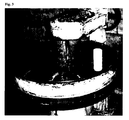
- the dough is repeatedly through the Roll pair forced and then rolled up to the wall to a lump, before he is again pulled through the pair of rollers ( Fig. 3 ).
- the invention also relates to the use of sulfhydryl oxidase for the production and / or stabilization of laminated dough or laminated dough pieces or baked goods made therefrom, or for the preparation of a baking premix for producing laminated dough.
- the dough is rolled out or laminated at least once, more preferably multiple times, e.g. twice or more, three times or more, five or more times, 10-60 times or 30-50 times.
- the lamination can be done by passing a pair of rolls, eg with a dough breaker (eg G. Paniz Indüstria de Equipamentos para Alimentaç ⁇ o Ltda, Caxias do Sul, Brasil) or comparable systems.
- a dough breaker eg G. Paniz Indüstria de Equipamentos para Alimentaç ⁇ o Ltda, Caxias do Sul, Brasil
- the distance between the rollers which defines the layer thickness, can be between about 1 and about 30 mm; this roll distance depends on the baked goods.
- the advantages of the invention arise both when no fat is introduced between the layers, as well as when introducing fat (eg butter), such as in the production of croissants or puff pastry.
- the steps of preparing the laminated dough, dough pieces or bakery products may be carried out after the addition of the SOX according to conventional methods.
- SOX glucose oxidase
- flour and water e.g. also salt, sugar, yeast and / or baking powder may be contained, optionally also fat (for example butter), milk and / or egg.
- one or more other flour treatment agents selected from the group consisting of enzymes, reducing or oxidizing agents and emulsifiers, e.g. Ascorbic acid.
- SOX SOX
- a baking premix preferably already comprises flour.
- salt, sugar, raising agents, fat, egg powder, milk powder and / or emulsifiers may already be included.
- the baking premix preferably still contains no water.
- glucose oxidase, cellulase and / or hemicellulase or other enzymes
- hemicellulase or other enzymes
- Sulfhydryl oxidase has so far been difficult to use on an industrial scale because the enzyme was not very stable by the cofactor FAD and many oxidation-sensitive cysteine groups in the enzyme molecule itself.
- the production of a more stable SOX became possible.
- SOX from brewer's yeast, Saccharomyces cerevisiae can be used as a basis.
- SOX is preferably a more stable than the wild type SOX, in particular one in DE 10309169 described SOX.
- at least one cysteine residue is preferably modified so that the SOX is more stable, in particular at least one redox-active cysteine is replaced by a serine.
- SOX is commercially available from SternEnzym GmbH & Co. KG, Ahrensburg.
- the finished pastry can be made from the dough by baking.
- Baking in the context of the present invention also includes e.g. a steaming.
- Chinese steaming buns, croissants, puff pastries, Danish pastries, baklava-like biscuits (e.g., baklava), pies, pasta / noodles, biscuits, crackers, bakery mixes, dough or dough pieces may be advantageously prepared for making the same.
- the invention also provides a laminated dough, laminated dough pieces or laminated baked goods comprising SOX. These can be produced as described above.
- the doughs, dough pieces or bakery products of the invention in one embodiment do not comprise glucose oxidase, cellulase and / or hemicellulase.
- these enzymes do not disturb or may u.U. also interact positively with SOX.
- it is laminated dough, laminated dough pieces or laminated baked goods from the group of Chinese steam buns, croissants, puff pastry and Danish pastry, baklava-like pastry (eg baklava), pies, pasta, noodles, biscuits and crackers or dough or dough pieces Production of the same.
- frozen dough pieces e.g. for croissants.
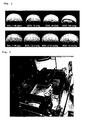
- Fig. 1 Comparison of the effect of glucose oxidase (GOX) and sulfhydryl oxidase (SOX) on the volume and shape of Chinese steamed buns .
- GOX glucose oxidase
- SOX sulfhydryl oxidase
- Dough insert (amount of dough used) 800 g Laminate 40 passes (Seewer-Rondo, roll spacing 8 mm) Long Rolls (Baguette Moulder, 1 pass Roller distance 6 mm, cloth distance stage 2) Cutting (manual, knife, smooth) 70 mm
- Fig. 1 The baking results are in Fig. 1 shown.
- the significantly greater increase in volume of SOX-produced steam bunches compared to GOX and ascorbic acid (Aac) is visible there.
- croissant doughs are much less laminated than doughs for Chinese steamed breads, and because the dough layers are separated by a grease barrier (the sandwiching grease, eg butter), the use of SOX leads to clear benefits. Compared to the standard without further baking additives, a clear increase in volume of the SOX-made croissants can be seen. In particular, when compared to glucose oxidase (GOX) or ascorbic acid (Asco) treated dough pieces also after several weeks of storage no negative change of flavor or taste.
- GOX glucose oxidase
- Asco ascorbic acid
- Flour type 550 1500.000 Yeast, fresh 75,000 sugar 120000 whole egg 75,000 milk powder 22,500 ascorbic acid 0120 salt 30,000 water 780000 Butter for touring 750000
- Dough insert (amount of dough used) 400 g Tours (laminating and 3x3 Incorporation of butter; (Seewer-Rondo, roller distance 3.5 mm) Dough quenching (2 ° C, 82% rel. 120 min Tours (as above) 1 x 3 Cutting (length x width) 20 x 10 cm (triangles)
- Unit (u) activity is defined as the amount of enzyme that reacts with 1 mM DTT as substrate at pH 7.4 and 30 ° C in phosphate buffered saline (PBS) per mole of free thiol groups per minute.
- PBS phosphate buffered saline
- DTT (10mM) in 100 ⁇ l PBS (68mM NaCl, 75mM K-phosphate buffer pH 7.4) is added to 800 ⁇ l PBS + 100 ⁇ l DTNB (4mg / 10ml PBS) selecting a concentration of DTT which results in an OD 412 of 0.6 - 0.8 after adding DTNB.
Landscapes
- Life Sciences & Earth Sciences (AREA)
- Chemical & Material Sciences (AREA)
- Engineering & Computer Science (AREA)
- Health & Medical Sciences (AREA)
- Food Science & Technology (AREA)
- Organic Chemistry (AREA)
- Zoology (AREA)
- Genetics & Genomics (AREA)
- Polymers & Plastics (AREA)
- Bioinformatics & Cheminformatics (AREA)
- Wood Science & Technology (AREA)
- Microbiology (AREA)
- Biochemistry (AREA)
- General Engineering & Computer Science (AREA)
- General Health & Medical Sciences (AREA)
- Nutrition Science (AREA)
- Biotechnology (AREA)
- Biomedical Technology (AREA)
- Molecular Biology (AREA)
- Medicinal Chemistry (AREA)
- Bakery Products And Manufacturing Methods Therefor (AREA)
Abstract
Description
- Die vorliegende Erfindung betrifft die Verwendung von Sulfhydryl-Oxidase (SOX), um die Eigenschaften von laminierten Teigen und deren Gebäcken zu verbessern. Die Erfindung betrifft ferner ein Verfahren zum Herstellen von Teig, Teiglingen oder Backwaren, bei dem man SOX mit anderen Zutaten mischt und den Teig laminiert, sowie einen laminierten Teig, laminierten Teigling oder laminierte Backwaren, der/die SOX umfasst/umfassen.
- Aus der Literatur (siehe z.B. Wrigley, C, Békés, F, and Bushuk, W, 2006. Gliadin and glutenin. AACC International) ist bekannt, dass die Struktur des Weizenklebers und somit die rheologischen Eigenschaften des Mehls von Disulfidbrücken zwischen benachbarter Thiolgruppen abhängen. Durch Oxidationsmittel wie Wasserstoffperoxid oder Glucose-Oxidase lassen sich noch freie oder durch natürliche reduzierende Substanzen wie Glutathion frei gewordene Thiolgruppen zu weiteren Disulfidbrücken oxidieren und somit die Teige verfestigen.
- Der Anteil von Weizenkleber im Mehl beträgt ca. 10 % der Gesamtmasse. Etwa 2,4 % davon sind Cysteingruppen. Teige weisen einen hohen Feststoffanteil (Mehl) von ca. 60 % auf. Die Proteine liegen in teilhydratisierter, nicht jedoch gelöster Form vor.
- Sulfhydryl-Oxidase (SOX) gehört zur Klasse der Oxidoreduktasen (EC 1.8.3.2). Sie katalysiert die Oxidation von zwei Sulfhydrylgruppen zu einer Disulfidbrücke unter Abspaltung von Wasserstoff-Peroxid nach dem Schema 2 RSH + O2 = RSSR + H2O2.
- Frühere Veröffentlichungen beschreiben die Verwendung von SOX in Kombination mit anderen Enzymen wie Glucose-Oxidase (
US 5,547,690 ,EP 0 321 811 ), Cellulasen oder Hemicellulasen (US 4, 990, 343 ,EP 0 705 538 ) als vorteilhaft zur Verbesserung des Backverhaltens von Mehlen. -
US 5,942,262 beschreibt die Verwendung einer Proteinase und eines Enzyms, das ein oxidierendes Agens herstellt, z.B. SOX, zur Inaktivierung der Proteinase, wobei die Proteinase zur Hydrolyse von Teig zur Herstellung von Keksen eingesetzt wird. Bei dieser Anwendung dient SOX also zur Kontrolle (im Sinne von Inaktivierung) der Enzymaktivität der Protease. - Eine stabilisierende Wirkung von Sulfhydryl-Oxidase ohne gleichzeitige Verwendung anderer Enzyme in Backprozessen wurde getestet, jedoch nicht gefunden (Kaufman and Fennema, 1986. Evaluation of Sulfhydryl Oxidase as a Strengthening Agent for Wheat Flour Dough Cereal Chem. 64(3), 172-176 ).
- Laminierte Teige sind Teige, die während der Teigzubereitung dünn ausgerollt werden, insbesondere mehrfach dünn ausgerollt, z.B. indem sie ein Rollenpaar passieren. Beispiele für laminierte Teige sind chinesische Dampfbrötchen. Bei deren Herstellung wird die Teigmasse nur kurz gemischt und anschließend durch 30 - 50-maliges Passieren eines Rollenpaares (dough breaker) entwickelt. Laminierter Teig wird bevorzugt mit einem dough breaker oder vergleichbaren Systemen entwickelt.
- Ein weiterer geläufiger Backprozess unter Einbeziehung eines Laminierschrittes ist die Herstellung von Croissants. Insbesondere bei der Herstellung von gefrorenen Croissant-Teiglingen ist eine hohe Stabilität und Gärtoleranz der Teiglinge erforderlich. Bei Butter-haltigen Gebäcken kann diese in geringem Maße durch Ascorbinsäure, einem in Teigen oxidativ wirkenden Mehlbehandlungsmittel erreicht werden. Glucose-Oxidase wird hier als Oxidationsmittel nicht eingesetzt, da es durch die in Gang gesetzten unspezifischen Oxidationsprozesse zu Aroma- und Geschmacksveränderungen bis hin zu Ranzigkeit kommen kann.
- Dem gegenüber stellt sich dem Fachmann das Problem, laminierte Teige, Teiglinge und deren Gebäcke mit verbesserten Eigenschaften bzw. Verfahren zu deren Herstellung bereitzustellen.
- Nun wurde überraschend gefunden, dass Sulfhydryl-Oxidase dann eine starke Wirkung entfaltet, wenn die Teige laminiert, d.h. während der Teigbereitung dünn ausgerollt werden. Der Teig wird sodann gefaltet oder in mehreren Schichten übereinander gelegt, so dass mindestens 2 Lagen und durch wiederholtes Laminieren ein Vielfaches davon entstehen, insbesondere mindestens 4, mindestens 6, mindestens 10 oder mindestens 30 Lagen. Alternativ kann der Teig nach dem Ausrollen auch spiralförmig gewickelt werden, so dass mehrere Schichten aufeinander liegen.
- In einer einfachen Ausführung steht ein rotierendes Rollenpaar am inneren Umfang einer rotieren Teigschüssel. Durch die Drehung der Schüssel wird der Teig immer wieder durch das Rollenpaar gezwungen und anschließend an der Wandung zu einem Klumpen aufgerollt, bevor er wieder durch das Rollenpaar gezogen wird (
Fig. 3 ). - Gegenstand der Erfindung ist damit ein Verfahren zum Herstellen von Teig, Teiglingen oder Backwaren, Schritte umfassend, bei denen man
- a) einen Teig aus Sulfhydryl-Oxidase (SOX) und weiteren Zutaten herstellt und
- b) den Teig laminiert.
- Gegenstand der Erfindung ist auch die Verwendung von Sulfhydryl-Oxidase zur Herstellung und/oder Stabilisierung von laminiertem Teig oder daraus hergestellten laminierten Teiglingen oder Backwaren oder zur Herstellung einer Backvormischung zur Herstellung von laminiertem Teig.
- Bevorzugt wird der Teig mindestens einmal, noch bevorzugter mehrfach ausgerollt oder laminiert, z.B. zweimal oder häufiger, dreimal oder häufiger, fünfmal oder häufiger, 10-60 mal oder 30-50 mal.
- Das Laminieren kann durch Passieren eines Rollenpaares, z.B. mit einem dough breaker (z.B. G. Paniz Indüstria de Equipamentos para Alimentação Ltda, Caxias do Sul, Brasil) oder vergleichbaren Systemen erfolgen. Der Abstand zwischen den Rollen, der die Schichtdicke definiert, kann dabei zwischen etwa 1 und etwa 30 mm betragen; dieser Rollenabstand ist von dem herzustellenden Gebäck abhängig. Die erfindungsgemäßen Vorteile ergeben sich sowohl dann, wenn zwischen die Schichten kein Fett eingebracht wird, als auch bei Einbringen von Fett (z.B. Butter), wie etwa bei der Herstellung von Croissants oder Blätterteig.
- Die Schritte der Zubereitung des laminierten Teigs, der Teiglinge oder Backwaren können - nach Zusatz der SOX - nach konventionellen Verfahren durchgeführt werden.
- Im Rahmen der Erfindung zeigte sich überraschenderweise, dass SOX, nicht aber andere Enzyme wie Glucose-Oxidase (GOX) bei der Herstellung von laminiertem Teig besonders günstige Effekte etwa auf das Backverhalten, Volumenzunahme oder Geschmacks- und Lagerungseigenschaften aufwies. Ohne durch diese Hypothese gebunden sein zu wollen, könnte es sein, dass das Laminieren den Effekt hat, dass die Proteinstränge laminar und parallel ausgerichtet werden. Es könnte sein, dass diese Ausrichtung die Bildung von Disulfidbrücken gerade durch das Enzym SOX begünstigt.
- Bevorzugt werden 1-500 milli-Einheiten (mu) SOX/kg Mehl eingesetzt, insbesondere 5-200 mu SOX/kg oder 50-100 mu SOX/kg. Dabei wird auf die in Beispiel 3 beschriebene Methode zur Bestimmung der Aktivität des Enzyms Bezug genommen.
- Normalerweise sind weitere Zutaten im Teig Mehl und Wasser, es können z.B. auch Salz, Zucker, Hefe und/oder Backpulver enthalten sein, gegebenenfalls auch Fett (z.B. Butter), Milch und/oder Ei. Als weitere Zutat oder Zutaten können auch ein oder mehrere weitere Mehlbehandlungsmittel ausgewählt aus der Gruppe bestehend aus Enzymen, Reduktions- oder Oxidationsmitteln und Emulgatoren eingesetzt werden, z.B. Ascorbinsäure. Durch die Verwendung von SOX ist es jedoch oft möglich, die standardmäßig verwendete Menge an Reduktions- und Oxidationsmittel zu verringern oder ganz darauf zu verzichten.
- Wird SOX zur Herstellung einer Backvormischung verwendet, so umfasst diese bevorzugt bereits Mehl. Optional können auch z.B. Salz, Zucker, Backtriebmittel, Fett, Eipulver, Milchpulver und/oder Emulgatoren bereits enthalten sein. Bevorzugt enthält die Backvormischung noch kein Wasser.
- Im Rahmen der vorliegenden Erfindung ist es möglich, aber überraschenderweise nicht notwendig, als weitere Zutaten für Backvormischung, Teig, Teiglinge (bzw. die daraus hergestellten Backwaren) Glucose-Oxidase, Cellulase und/oder Hemicellulase (oder andere Enzyme) einzusetzen. Es wird damit auch ein Verfahren zur Herstellung von Verfahren zum Herstellen von Teig, Teiglingen oder Backwaren bereitgestellt, bei dem man Glucose-Oxidase, Cellulase und/oder Hemicellulase (oder andere Enzyme) nicht als weitere Zutat einsetzt.
- Sulfhydryl-Oxidase konnte bislang nur wenig in technischem Maßstab eingesetzt werden, da das Enzym durch den Cofaktor FAD sowie zahlreiche oxidationsempfindliche Cysteingruppen im Enzymmolekül selbst nicht sehr stabil war. Durch den Austausch der Cysteingruppen durch Serin mittel Protein Engineering (
DE 103 09 169 ) wurde die Produktion einer stabileren SOX möglich. Als Basis kann z.B. SOX aus Bierhefe, Saccharomyces cerevisiae, verwendet werden. Im Rahmen der vorliegenden Erfindung ist SOX bevorzugt eine gegenüber dem Wildtyp stabilere SOX, insbesondere eine inDE 10309169 beschriebene SOX. In der eingesetzten SOX ist bevorzugt mindestens ein Cysteinrest so verändert, dass die SOX stabiler ist, insbesondere ist mindestens ein redoxaktives Cystein gegen ein Serin ausgetauscht. - SOX ist kommerziell erhältlich von SternEnzym GmbH & Co. KG, Ahrensburg.
- Besondere Vorteile ergeben sich erfindungsgemäß, wenn man Teiglinge herstellt, die tiefgefroren werden, z.B. bei Temperaturen von ca. -18°C oder weniger, z.B. ca. -30°C oder Einfrosten bei ca. -30°C, Lagerung bei ca. -18°C. Ein Beispiel sind Teiglinge für Croissants. Dabei umfasst das erfindungsgemäße Verfahren ferner Schritte, bei denen man
- c) einen Teigling herstellt
- d) den Teigling einfriert.
- Insbesondere bei einer längeren Lagerung von erfindungsgemäß hergestellten Teiglingen, z.B. über mehr als eine Woche, mehr als drei Wochen, mehr als zehn Wochen, tritt - anders als bei Einsatz herkömmlicher Backzusätze - hier keine negative Geschmacksveränderung auf.
- Mit oder ohne vorheriges Einfrieren kann aus dem Teigling durch Backen die fertige Backware hergestellt werden. Backen umfasst dabei im Zusammenhang mit der vorliegenden Erfindung auch z.B. ein Dämpfen.
- Zum Beispiel können erfindungsgemäß vorteilhaft chinesische Dampfbrötchen, Croissants, Blätterteiggebäck, Plundergebäck, Baklava-ähnliches Gebäck (z.B. Baklava), Pasteten, Pasta/Nudeln, Kekse, Kräcker, Backvormischungen, Teig oder Teiglinge zur Herstellung derselben hergestellt werden.
- Gegenstand der Erfindung ist auch ein laminierter Teig, laminierte Teiglinge oder laminierte Backwaren, welche SOX umfassen. Diese sind wie oben beschrieben herstellbar.
- Wie dort erörtert, umfassen die erfindungsgemäßen Teige, Teiglinge oder Backwaren in einer Ausführungsform keine Glucose-Oxidase, Cellulase und/oder Hemicellulase. Diese Enzyme stören jedoch auch nicht oder können u.U. auch positiv mit SOX zusammenwirken.
- Insbesondere handelt es sich um laminierten Teig, laminierte Teiglinge oder laminierte Backwaren aus der Gruppe von chinesischen Dampfbrötchen, Croissants, Blätterteig- und Plundergebäck, Baklava-ähnlichem Gebäck (z.B. Baklava), Pasteten, Pasta, Nudeln, Keksen und Kräckern oder Teig oder Teiglinge zur Herstellung derselben. In einer Ausführungsform handelt es sich um tiefgefrorene Teiglinge, z.B. für Croissants.
- Die sehr spezifische Wirkung von SOX auf Sulfhydryl-Gruppen und die damit einhergehende nur sehr geringe Bildung von Wasserstoff-Peroxid (ca. 1/1000 im Vergleich zu Glucose-Oxidase, bezogen auf die rheologische Wirkung) ermöglicht die Stabilisierung der laminierten Teige, Teiglinge und Backwaren ohne negative Geschmacks- und Aromaeffekte. Backversuche zeigten eine deutliche Volumenvergrößerung und Stabilisierung der hergestellten Backwaren.
-
Fig. 1 Vergleich der Wirkung von Glucose-Oxidase (GOX) und Sulfhydryl-Oxidase (SOX) auf Volumen und Form von chinesischen Dampfbrötchen. Als Grundbehandlung des Mehls (Type 550 einer Mischung aus kanadischem CWRS-Weizen und US-amerikanischen DNS-Weizen) wurden 40 ppm Ascorbinsäure eingesetzt (siehe Grundrezeptur). Dem Vergleichmuster (ganz links) wurden 40 ppm Ascorbinsäure zugesetzt, den anderen Versuchsmustern stattdessen GOX bzw. SOX in den angegebenen Konzentrationen (Units per Gramm bzw. milli-Units per Kilogramm). -
Bestandteil Menge (g) Mehl (Type 550) 1000.000 Hefe, Instant 14.000 Zucker 125.000 Ascorbinsäure 0.040 Speisesalz 13.000 Wasser 474.920 -
Kneten (Spiralkneter Diosna SP 24) 6 min langsam, 3 min schnell Teigruhe 60 min -
Teigeinlage (verwendete Teigmenge) 800 g Laminieren 40 Durchläufe (Seewer-Rondo, Walzenabstand 8 mm) Langrollen (Baguette Moulder, 1 Durchlauf Walzenabstand 6 mm, Tuchabstand Stufe 2) Schneiden (manuell, Messer, glatt) 70 mm -
Stückgare (35 °C, 82 % rel. F.) 45 min (Übergare: + 20 min) Dämpfen 20 min (Edelstahldämpfer, elektrisch, Stufe 10) - Die Backergebnisse sind in
Fig. 1 dargestellt. Insbesondere ist dort die deutlich stärkere Volumenzunahme der mit SOX hergestellten Dampfbrötchen gegenüber GOX und Ascorbinsäure (Aac) sichtbar. - Obwohl Croissant-Teige sehr viel weniger laminiert werden als Teige für chinesische Dampfbrote und zudem die Teigschichten durch eine Fettbarrieren (das zwischen den Lagen befindliche Tourierfett, z.B. Butter) voneinander getrennt sind, führt auch hier die Verwendung von SOX zu klaren Vorteilen. Gegenüber dem Standard ohne weitere Backzusätze ist eine klare Volumenzunahme der mit SOX hergestellten Croissants erkennbar. Insbesondere ist im Vergleich zu mit Glucose-Oxidase (GOX) oder auch Ascorbinsäure (Asco) behandelten Teiglingen auch nach einer mehrwöchigen Lagerung keine negative Veränderung von Aroma oder Geschmack festzustellen.
-
Bestandteil Menge (g) Mehl (Type 550) 1500.000 Hefe, frisch 75.000 Zucker 120.000 Vollei 75.000 Vollmilchpulver 22.500 Ascorbinsäure 0.120 Speisesalz 30.000 Wasser 780.000 Butter zum Tourieren 750.000 - Kneten (Spiralkneter Diosna SP 3 min langsam, 3 min schnell 24)
Teigruhe 60 min -
Teigeinlage (verwendete Teigmenge) 400 g Touren (Laminieren und 3 x 3 Einarbeitung von Butter; (Seewer-Rondo, Walzenabstand 3.5 mm) Teigruhe (2 °C, 82 % rel. F.) 120 min Touren (wie oben) 1 x 3 Schneiden (Länge x Breite) 20 x 10 cm (Dreiecke) -
Einfrosten (MiWe Gärunterbrecher) - 30 °C, 1 d Lagern (26 bzw. 70 d) - 18 °C -
Stückgare (27 °C, 75 % rel. F.) 80 min Backen (MiWe Aeromat, 175 °C) 20 min - Backvolumina (in mL pro Stück) und sensorische Auffälligkeiten nach direktem Backen bzw. nach Lagerung von 26 bzw. 70 Tagen bei -18 °C.
Testdatum Standard SOX SOX SOX 10 mu/kg 30 mu/kg 100 mu/kg 01.11.07 520 620 600 680 27.11.07 920 980 1100 950 10.01.08 900 970 1010 930 Bemerkung Keine Geruchsänderung Keine Geruchsänderung Keine Geruchsänderung Keine Geruchsänderung Testdatum GOX GOX GOX Asco 10 u/kg 40 u/kg 120 u/kg 100 mg/kg 01.11.07 660 690 680 620 27.11.07 1100 1060 1050 1100 10.01.08 1040 1050 1060 1090 Bemerkung Fremdgeruch am 10.01.08 Fremdgeruch am 10.01.08 Fremdgeruch am 27.11.07;
10.01.08: nur wenig verstärkt.leichter Fremdgeruch am 10.01.08 - Enzymatische Aktivität wird durch Überwachen der Abnahme von freien Thiol-Gruppen in reduziertem DTT bestimmt. Unter Verwendung von DTNB [5,5'-dithiol-bis(2-nitrobenzoylsäure)] wird der Thiolgehalt vor und nach Hinzufügen des Enzyms spektroskopisch bei 412 nm bestimmt (EDNTP = 13.6 mM-1 * cm -1).
- Eine Einheit(u) Aktivität wird als die Menge Enzym definiert, die mit 1 mM DTT als Substrat bei pH 7,4 und 30 °C in mit Phosphat gepufferter Salzlösung (PBS) 1 µmol freier Thiol-gruppen pro Minute umsetzt.
- DTT (10 mM) in 100 µl PBS (68 mM NaCl, 75 mM K-Phosphat-Puffer pH 7,4) wird 800 µl PBS + 100 µl DTNB (4 mg/10 ml PBS)hinzugefügt, wobei eine Konzentration von DTT ausgewählt wird, die nach Hinzufügen von DTNB zu einer OD412 von 0.6 - 0.8 führt.
- Dazu wird Enzym (50 pmol FAD gebunden) + DTT in 100 µl PBS gegeben. Die Mischung wird für 5, 10, 15, 20 oder 25 min bei 30 °C inkubiert. Die Reaktion wird durch Zugabe von 800 µl PBS + 100 µl DTNB gestoppt und die OD412 nach 30 sec gemessen.
-

Thiol-Gruppen, die pro mg Enzym und min oxidiert wurden.
Claims (14)
- Verfahren zum Herstellen von Teig, Teiglingen oder Backwaren, Schritte umfassend, bei denen mana) einen Teig aus Sulfhydryl-Oxidase (SOX) und weiteren Zutaten herstellt undb) den Teig laminiert.
- Verfahren zum Herstellen von Teiglingen oder Backwaren nach Anspruch 1, ferner Schritte umfassend, bei denen manc) einen Teigling herstellt,d) den Teigling einfriert.
- Verfahren nach einem der vorherigen Ansprüche, dadurch gekennzeichnet, dass man den Teig mehrfach laminiert.
- Verfahren nach einem der vorherigen Ansprüche, dadurch gekennzeichnet, dass als weitere Zutat oder Zutaten auch ein oder mehrere weitere Mehlbehandlungsmittel ausgewählt aus der Gruppe umfassend Enzyme, Reduktions- oder Oxidationsmittel oder Emulgatoren eingesetzt werden.
- Verfahren nach einem der vorherigen Ansprüche, dadurch gekennzeichnet, dass SOX eine gegenüber dem Wildtyp stabilere SOX ist.
- Verfahren nach einem der vorherigen Ansprüche, dadurch gekennzeichnet, dass man Backwaren ausgewählt aus der Gruppe umfassend chinesische Dampfbrötchen, Croissants, Blätterteiggebäck, Plundergebäck, Baklava-ähnliches Gebäck, Pasteten, Pasta/Nudeln, Keksen, Kräckern und Teig oder Teiglinge zur Herstellung derselben herstellt.
- Verwendung von Sulfhydryl-Oxidase (SOX) zur Stabilisierung von laminiertem Teig, laminierten Teiglingen oder laminierten Backwaren oder zur Herstellung einer Backvormischung zur Herstellung von laminiertem Teig.
- Verwendung nach Anspruch 7, dadurch gekennzeichnet, dass der Teig, der Teigling oder die Backware tiefgekühlt wird.
- Verwendung nach einem der Ansprüche 7 oder 8, dadurch gekennzeichnet, dass der Teig mehrfach laminiert ist.
- Verwendung nach einem der Ansprüche 7-9, dadurch gekennzeichnet, dass zusätzlich ein oder mehrere weitere Mehlbehandlungsmittel ausgewählt aus der Gruppe bestehend aus Enzymen, Reduktions- oder Oxidationsmitteln oder Emulgatoren eingesetzt werden.
- Verwendung nach einem der Ansprüche 7-10, dadurch gekennzeichnet, dass SOX eine gegenüber dem Wildtyp stabilere SOX ist.
- Verwendung nach einem der Ansprüche 7-11, dadurch gekennzeichnet, dass die Sulfhydryl-Oxidase zur Herstellung von Backwaren ausgewählt aus einer Gruppe umfassend chinesische Dampfbrötchen, Croissants, Blätterteiggebäck, Plundergebäck, Baklava-ähnliches Gebäck, Pasteten, Pasta/Nudeln, Keksen und Kräckern, Teig, Teiglingen oder einer Backvormischung zur Herstellung dieser Backwaren verwendet wird.
- Laminierter Teig, laminierte Teiglinge oder laminierte Backwaren, welche SOX umfassen.
- Laminierter Teig, laminierte Teiglinge oder laminierte Backwaren nach Anspruch 13, herstellbar nach einem der Ansprüche 1-6.
Priority Applications (1)
| Application Number | Priority Date | Filing Date | Title |
|---|---|---|---|
| EP08004971.1A EP2103220B1 (de) | 2008-03-17 | 2008-03-17 | Verfahren zur Herstellung von laminiertem Teig, Sulfhydryl-Oxidase enthaltend |
Applications Claiming Priority (1)
| Application Number | Priority Date | Filing Date | Title |
|---|---|---|---|
| EP08004971.1A EP2103220B1 (de) | 2008-03-17 | 2008-03-17 | Verfahren zur Herstellung von laminiertem Teig, Sulfhydryl-Oxidase enthaltend |
Publications (2)
| Publication Number | Publication Date |
|---|---|
| EP2103220A1 true EP2103220A1 (de) | 2009-09-23 |
| EP2103220B1 EP2103220B1 (de) | 2018-09-26 |
Family
ID=39712312
Family Applications (1)
| Application Number | Title | Priority Date | Filing Date |
|---|---|---|---|
| EP08004971.1A Not-in-force EP2103220B1 (de) | 2008-03-17 | 2008-03-17 | Verfahren zur Herstellung von laminiertem Teig, Sulfhydryl-Oxidase enthaltend |
Country Status (1)
| Country | Link |
|---|---|
| EP (1) | EP2103220B1 (de) |
Cited By (2)
| Publication number | Priority date | Publication date | Assignee | Title |
|---|---|---|---|---|
| CH702506A1 (de) * | 2010-01-05 | 2011-07-15 | Rondo Burgdorf Ag | Verfahren zur Herstellung eines Teigs und Vorrichtung dazu. |
| EP3984368A1 (de) * | 2020-10-13 | 2022-04-20 | Mühlenchemie GmbH & Co. KG | Enzymatisch stabilisierte pastastruktur und verfahren zur herstellung davon |
Citations (8)
| Publication number | Priority date | Publication date | Assignee | Title |
|---|---|---|---|---|
| EP0321811A1 (de) | 1987-12-21 | 1989-06-28 | Gist-Brocades N.V. | Methode zur Verbesserung von Mehlteig |
| US4990343A (en) | 1988-04-22 | 1991-02-05 | Cultor Ltd. | Enzyme product and method of improving the properties of dough and the quality of bread |
| EP0565172A1 (de) * | 1992-04-10 | 1993-10-13 | Quest International B.V. | Klonierung und Expression von einer DNS, welche eine gereifte Form eines Polypeptides mit Sulfhydryl-Oxidase-Aktivität kodiert |
| EP0705538A1 (de) | 1994-09-07 | 1996-04-10 | Gist-Brocades B.V. | Verbesserungen von Brotteig |
| US5547690A (en) | 1987-12-21 | 1996-08-20 | Gist-Brocades, N.V. | Compositions and method for improving flour dough |
| US5942262A (en) | 1996-03-19 | 1999-08-24 | Gist-Brocades | Biscuit doughs and biscuits products and methods of producing same |
| DE10309169A1 (de) | 2003-02-28 | 2004-09-16 | Heinrich-Heine-Universität Düsseldorf | Rekombinante, FAD-abhängige Sulfhydryloxidasen, Verfahren zu deren Herstellung und deren Verwendung |
| WO2005104856A1 (fr) * | 2004-03-31 | 2005-11-10 | Lesaffre Et Compagnie | Ameliorant de panification |
-
2008
- 2008-03-17 EP EP08004971.1A patent/EP2103220B1/de not_active Not-in-force
Patent Citations (8)
| Publication number | Priority date | Publication date | Assignee | Title |
|---|---|---|---|---|
| EP0321811A1 (de) | 1987-12-21 | 1989-06-28 | Gist-Brocades N.V. | Methode zur Verbesserung von Mehlteig |
| US5547690A (en) | 1987-12-21 | 1996-08-20 | Gist-Brocades, N.V. | Compositions and method for improving flour dough |
| US4990343A (en) | 1988-04-22 | 1991-02-05 | Cultor Ltd. | Enzyme product and method of improving the properties of dough and the quality of bread |
| EP0565172A1 (de) * | 1992-04-10 | 1993-10-13 | Quest International B.V. | Klonierung und Expression von einer DNS, welche eine gereifte Form eines Polypeptides mit Sulfhydryl-Oxidase-Aktivität kodiert |
| EP0705538A1 (de) | 1994-09-07 | 1996-04-10 | Gist-Brocades B.V. | Verbesserungen von Brotteig |
| US5942262A (en) | 1996-03-19 | 1999-08-24 | Gist-Brocades | Biscuit doughs and biscuits products and methods of producing same |
| DE10309169A1 (de) | 2003-02-28 | 2004-09-16 | Heinrich-Heine-Universität Düsseldorf | Rekombinante, FAD-abhängige Sulfhydryloxidasen, Verfahren zu deren Herstellung und deren Verwendung |
| WO2005104856A1 (fr) * | 2004-03-31 | 2005-11-10 | Lesaffre Et Compagnie | Ameliorant de panification |
Non-Patent Citations (2)
| Title |
|---|
| KAUFMAN; FENNEMA: "Evaluation of Sulfhydryl Oxidase as a Strengthening Agent for Wheat", FLOUR DOUGH CEREAL CHEM., vol. 64, no. 3, 1986, pages 172 - 176, XP008095975 |
| WRIGLEY, C; BEKES, F; BUSHUK, W, GLIADIN AND GLUTENIN. AACC INTERNATIONAL, 2006 |
Cited By (3)
| Publication number | Priority date | Publication date | Assignee | Title |
|---|---|---|---|---|
| CH702506A1 (de) * | 2010-01-05 | 2011-07-15 | Rondo Burgdorf Ag | Verfahren zur Herstellung eines Teigs und Vorrichtung dazu. |
| EP3984368A1 (de) * | 2020-10-13 | 2022-04-20 | Mühlenchemie GmbH & Co. KG | Enzymatisch stabilisierte pastastruktur und verfahren zur herstellung davon |
| WO2022078989A1 (en) * | 2020-10-13 | 2022-04-21 | Mühlenchemie GmbH & Co. KG | Enzymatically stabilized pasta structure and method of preparing the same |
Also Published As
| Publication number | Publication date |
|---|---|
| EP2103220B1 (de) | 2018-09-26 |
Similar Documents
| Publication | Publication Date | Title |
|---|---|---|
| DE69604491T3 (de) | Methode zur verbesserung der eigenschaften von mehlteig, sowie zusammensetzung zur teigverbesserung und verbesserte nahrungsmittel | |
| EP2285225B1 (de) | Neues verfahren zur herstellung von backfertigen gefrorenen teigen | |
| DE69830119T2 (de) | Teigzusammensetzung und derer Herstellung | |
| DE69612673T2 (de) | Verwendung von pyranose-oxidase beim backen | |
| DD230875A1 (de) | Gaerungsmittelhilfe fuer herkoemmliche backware | |
| EP1190624B1 (de) | Verwendung von Transglutaminasen zur Herstellung von Backwaren mit Roggen, Hafer, Mais oder Kartoffel | |
| DE4041533A1 (de) | Backmittel oder backmehl, sowie verfahren zur herstellung von backteigen und backwaren | |
| RU2370038C2 (ru) | Усилитель вкуса, хлебное тесто, хлебопродукты и продукты из зерновых, его содержащие, его применение в качестве заменителя поваренной соли | |
| DE69623644T2 (de) | Verwendung einer desaminierenden oxidase zum backen | |
| JP5540347B2 (ja) | 米粉パン類生地の製パン性向上方法 | |
| EP3691455B1 (de) | Verträgliche mehlzusammensetzung | |
| JP3006085B2 (ja) | 製パン改良剤及びそれを用いる製パン法 | |
| EP2103220B1 (de) | Verfahren zur Herstellung von laminiertem Teig, Sulfhydryl-Oxidase enthaltend | |
| Sahnoun et al. | Optimization of Aspergillus oryzae S2 α-amylase, ascorbic acid, and glucose oxidase combination for improved French and composite Ukrainian wheat dough properties and bread quality using a mixture design approach | |
| EP2878202B1 (de) | Verfahren zur herstellung eines teigs für kopenhagener gebäck | |
| DE69814088T2 (de) | Galactoseoxidase enthaltende zusammensetzung und ihre verwendung | |
| DE10209629B3 (de) | Backvorprodukt und Verfahren zur Herstellung von Backwaren | |
| JP2954673B2 (ja) | 製パン改良剤及びそれを用いる製パン方法 | |
| DE602004002694T2 (de) | Kohlenhydratoxidase und/oder pyranoseoxidase enthaltende backwaren | |
| EP1893027A1 (de) | Verwendung von aromahefen zur herstellung von backwaren auf der basis von getreidemahlerzeugnissen unter verzicht auf zusatzstoffe sowie verfahren zu deren herstellung | |
| EP1361796B1 (de) | Starterzubereitung für die herstellung von brot und backwaren | |
| DE602005004293T2 (de) | Verwendung von aminopeptidase in teig als backmittel | |
| DE10346764A1 (de) | Mit Transglutaminase fermentierte Vorteigprodukte und die Verwendung von Transglutaminase bei deren Herstellung | |
| EP1283678B1 (de) | Lagerstabiler vorteig, ein verfahren zu seiner herstelllung und seine verwendung | |
| DD275807B3 (de) | Verfahren zur zubereitung und verarbeitung von teigen aus weizenmehl bzw. mischungen aus weizen- und roggenmehlen zur herstellung von brot und kleingebaecken |
Legal Events
| Date | Code | Title | Description |
|---|---|---|---|
| PUAI | Public reference made under article 153(3) epc to a published international application that has entered the european phase |
Free format text: ORIGINAL CODE: 0009012 |
|
| AK | Designated contracting states |
Kind code of ref document: A1 Designated state(s): AT BE BG CH CY CZ DE DK EE ES FI FR GB GR HR HU IE IS IT LI LT LU LV MC MT NL NO PL PT RO SE SI SK TR |
|
| AX | Request for extension of the european patent |
Extension state: AL BA MK RS |
|
| 17P | Request for examination filed |
Effective date: 20100304 |
|
| AKX | Designation fees paid |
Designated state(s): AT BE BG CH CY CZ DE DK EE ES FI FR GB GR HR HU IE IS IT LI LT LU LV MC MT NL NO PL PT RO SE SI SK TR |
|
| 17Q | First examination report despatched |
Effective date: 20100910 |
|
| STAA | Information on the status of an ep patent application or granted ep patent |
Free format text: STATUS: EXAMINATION IS IN PROGRESS |
|
| GRAP | Despatch of communication of intention to grant a patent |
Free format text: ORIGINAL CODE: EPIDOSNIGR1 |
|
| STAA | Information on the status of an ep patent application or granted ep patent |
Free format text: STATUS: GRANT OF PATENT IS INTENDED |
|
| RIC1 | Information provided on ipc code assigned before grant |
Ipc: A21D 13/16 20170101ALI20180313BHEP Ipc: A21D 8/04 20060101AFI20180313BHEP Ipc: C12N 9/02 20060101ALI20180313BHEP Ipc: A23L 29/00 20160101ALI20180313BHEP Ipc: A23P 20/20 20160101ALI20180313BHEP Ipc: A23L 7/109 20160101ALI20180313BHEP |
|
| INTG | Intention to grant announced |
Effective date: 20180418 |
|
| GRAS | Grant fee paid |
Free format text: ORIGINAL CODE: EPIDOSNIGR3 |
|
| GRAA | (expected) grant |
Free format text: ORIGINAL CODE: 0009210 |
|
| STAA | Information on the status of an ep patent application or granted ep patent |
Free format text: STATUS: THE PATENT HAS BEEN GRANTED |
|
| AK | Designated contracting states |
Kind code of ref document: B1 Designated state(s): AT BE BG CH CY CZ DE DK EE ES FI FR GB GR HR HU IE IS IT LI LT LU LV MC MT NL NO PL PT RO SE SI SK TR |
|
| REG | Reference to a national code |
Ref country code: GB Ref legal event code: FG4D Free format text: NOT ENGLISH |
|
| REG | Reference to a national code |
Ref country code: CH Ref legal event code: EP |
|
| REG | Reference to a national code |
Ref country code: AT Ref legal event code: REF Ref document number: 1044932 Country of ref document: AT Kind code of ref document: T Effective date: 20181015 |
|
| REG | Reference to a national code |
Ref country code: IE Ref legal event code: FG4D Free format text: LANGUAGE OF EP DOCUMENT: GERMAN |
|
| REG | Reference to a national code |
Ref country code: DE Ref legal event code: R096 Ref document number: 502008016356 Country of ref document: DE |
|
| REG | Reference to a national code |
Ref country code: NL Ref legal event code: MP Effective date: 20180926 |
|
| PG25 | Lapsed in a contracting state [announced via postgrant information from national office to epo] |
Ref country code: GR Free format text: LAPSE BECAUSE OF FAILURE TO SUBMIT A TRANSLATION OF THE DESCRIPTION OR TO PAY THE FEE WITHIN THE PRESCRIBED TIME-LIMIT Effective date: 20181227 Ref country code: NO Free format text: LAPSE BECAUSE OF FAILURE TO SUBMIT A TRANSLATION OF THE DESCRIPTION OR TO PAY THE FEE WITHIN THE PRESCRIBED TIME-LIMIT Effective date: 20181226 Ref country code: BG Free format text: LAPSE BECAUSE OF FAILURE TO SUBMIT A TRANSLATION OF THE DESCRIPTION OR TO PAY THE FEE WITHIN THE PRESCRIBED TIME-LIMIT Effective date: 20181226 Ref country code: SE Free format text: LAPSE BECAUSE OF FAILURE TO SUBMIT A TRANSLATION OF THE DESCRIPTION OR TO PAY THE FEE WITHIN THE PRESCRIBED TIME-LIMIT Effective date: 20180926 Ref country code: LT Free format text: LAPSE BECAUSE OF FAILURE TO SUBMIT A TRANSLATION OF THE DESCRIPTION OR TO PAY THE FEE WITHIN THE PRESCRIBED TIME-LIMIT Effective date: 20180926 Ref country code: FI Free format text: LAPSE BECAUSE OF FAILURE TO SUBMIT A TRANSLATION OF THE DESCRIPTION OR TO PAY THE FEE WITHIN THE PRESCRIBED TIME-LIMIT Effective date: 20180926 |
|
| REG | Reference to a national code |
Ref country code: LT Ref legal event code: MG4D |
|
| PG25 | Lapsed in a contracting state [announced via postgrant information from national office to epo] |
Ref country code: LV Free format text: LAPSE BECAUSE OF FAILURE TO SUBMIT A TRANSLATION OF THE DESCRIPTION OR TO PAY THE FEE WITHIN THE PRESCRIBED TIME-LIMIT Effective date: 20180926 Ref country code: HR Free format text: LAPSE BECAUSE OF FAILURE TO SUBMIT A TRANSLATION OF THE DESCRIPTION OR TO PAY THE FEE WITHIN THE PRESCRIBED TIME-LIMIT Effective date: 20180926 |
|
| PG25 | Lapsed in a contracting state [announced via postgrant information from national office to epo] |
Ref country code: RO Free format text: LAPSE BECAUSE OF FAILURE TO SUBMIT A TRANSLATION OF THE DESCRIPTION OR TO PAY THE FEE WITHIN THE PRESCRIBED TIME-LIMIT Effective date: 20180926 Ref country code: EE Free format text: LAPSE BECAUSE OF FAILURE TO SUBMIT A TRANSLATION OF THE DESCRIPTION OR TO PAY THE FEE WITHIN THE PRESCRIBED TIME-LIMIT Effective date: 20180926 Ref country code: IT Free format text: LAPSE BECAUSE OF FAILURE TO SUBMIT A TRANSLATION OF THE DESCRIPTION OR TO PAY THE FEE WITHIN THE PRESCRIBED TIME-LIMIT Effective date: 20180926 Ref country code: ES Free format text: LAPSE BECAUSE OF FAILURE TO SUBMIT A TRANSLATION OF THE DESCRIPTION OR TO PAY THE FEE WITHIN THE PRESCRIBED TIME-LIMIT Effective date: 20180926 Ref country code: NL Free format text: LAPSE BECAUSE OF FAILURE TO SUBMIT A TRANSLATION OF THE DESCRIPTION OR TO PAY THE FEE WITHIN THE PRESCRIBED TIME-LIMIT Effective date: 20180926 Ref country code: CZ Free format text: LAPSE BECAUSE OF FAILURE TO SUBMIT A TRANSLATION OF THE DESCRIPTION OR TO PAY THE FEE WITHIN THE PRESCRIBED TIME-LIMIT Effective date: 20180926 Ref country code: IS Free format text: LAPSE BECAUSE OF FAILURE TO SUBMIT A TRANSLATION OF THE DESCRIPTION OR TO PAY THE FEE WITHIN THE PRESCRIBED TIME-LIMIT Effective date: 20190126 Ref country code: PL Free format text: LAPSE BECAUSE OF FAILURE TO SUBMIT A TRANSLATION OF THE DESCRIPTION OR TO PAY THE FEE WITHIN THE PRESCRIBED TIME-LIMIT Effective date: 20180926 |
|
| PG25 | Lapsed in a contracting state [announced via postgrant information from national office to epo] |
Ref country code: SK Free format text: LAPSE BECAUSE OF FAILURE TO SUBMIT A TRANSLATION OF THE DESCRIPTION OR TO PAY THE FEE WITHIN THE PRESCRIBED TIME-LIMIT Effective date: 20180926 Ref country code: PT Free format text: LAPSE BECAUSE OF FAILURE TO SUBMIT A TRANSLATION OF THE DESCRIPTION OR TO PAY THE FEE WITHIN THE PRESCRIBED TIME-LIMIT Effective date: 20190126 |
|
| REG | Reference to a national code |
Ref country code: DE Ref legal event code: R097 Ref document number: 502008016356 Country of ref document: DE |
|
| PG25 | Lapsed in a contracting state [announced via postgrant information from national office to epo] |
Ref country code: DK Free format text: LAPSE BECAUSE OF FAILURE TO SUBMIT A TRANSLATION OF THE DESCRIPTION OR TO PAY THE FEE WITHIN THE PRESCRIBED TIME-LIMIT Effective date: 20180926 |
|
| PLBE | No opposition filed within time limit |
Free format text: ORIGINAL CODE: 0009261 |
|
| STAA | Information on the status of an ep patent application or granted ep patent |
Free format text: STATUS: NO OPPOSITION FILED WITHIN TIME LIMIT |
|
| 26N | No opposition filed |
Effective date: 20190627 |
|
| PG25 | Lapsed in a contracting state [announced via postgrant information from national office to epo] |
Ref country code: MC Free format text: LAPSE BECAUSE OF FAILURE TO SUBMIT A TRANSLATION OF THE DESCRIPTION OR TO PAY THE FEE WITHIN THE PRESCRIBED TIME-LIMIT Effective date: 20180926 Ref country code: SI Free format text: LAPSE BECAUSE OF FAILURE TO SUBMIT A TRANSLATION OF THE DESCRIPTION OR TO PAY THE FEE WITHIN THE PRESCRIBED TIME-LIMIT Effective date: 20180926 |
|
| PGFP | Annual fee paid to national office [announced via postgrant information from national office to epo] |
Ref country code: DE Payment date: 20190905 Year of fee payment: 12 |
|
| REG | Reference to a national code |
Ref country code: CH Ref legal event code: PL |
|
| GBPC | Gb: european patent ceased through non-payment of renewal fee |
Effective date: 20190317 |
|
| PG25 | Lapsed in a contracting state [announced via postgrant information from national office to epo] |
Ref country code: LU Free format text: LAPSE BECAUSE OF NON-PAYMENT OF DUE FEES Effective date: 20190317 |
|
| REG | Reference to a national code |
Ref country code: BE Ref legal event code: MM Effective date: 20190331 |
|
| PG25 | Lapsed in a contracting state [announced via postgrant information from national office to epo] |
Ref country code: LI Free format text: LAPSE BECAUSE OF NON-PAYMENT OF DUE FEES Effective date: 20190331 Ref country code: CH Free format text: LAPSE BECAUSE OF NON-PAYMENT OF DUE FEES Effective date: 20190331 Ref country code: IE Free format text: LAPSE BECAUSE OF NON-PAYMENT OF DUE FEES Effective date: 20190317 Ref country code: GB Free format text: LAPSE BECAUSE OF NON-PAYMENT OF DUE FEES Effective date: 20190317 |
|
| PG25 | Lapsed in a contracting state [announced via postgrant information from national office to epo] |
Ref country code: BE Free format text: LAPSE BECAUSE OF NON-PAYMENT OF DUE FEES Effective date: 20190331 Ref country code: FR Free format text: LAPSE BECAUSE OF NON-PAYMENT OF DUE FEES Effective date: 20190331 |
|
| PG25 | Lapsed in a contracting state [announced via postgrant information from national office to epo] |
Ref country code: TR Free format text: LAPSE BECAUSE OF FAILURE TO SUBMIT A TRANSLATION OF THE DESCRIPTION OR TO PAY THE FEE WITHIN THE PRESCRIBED TIME-LIMIT Effective date: 20180926 |
|
| PG25 | Lapsed in a contracting state [announced via postgrant information from national office to epo] |
Ref country code: MT Free format text: LAPSE BECAUSE OF FAILURE TO SUBMIT A TRANSLATION OF THE DESCRIPTION OR TO PAY THE FEE WITHIN THE PRESCRIBED TIME-LIMIT Effective date: 20180926 |
|
| REG | Reference to a national code |
Ref country code: AT Ref legal event code: MM01 Ref document number: 1044932 Country of ref document: AT Kind code of ref document: T Effective date: 20190317 |
|
| REG | Reference to a national code |
Ref country code: DE Ref legal event code: R119 Ref document number: 502008016356 Country of ref document: DE |
|
| PG25 | Lapsed in a contracting state [announced via postgrant information from national office to epo] |
Ref country code: AT Free format text: LAPSE BECAUSE OF NON-PAYMENT OF DUE FEES Effective date: 20190317 |
|
| PG25 | Lapsed in a contracting state [announced via postgrant information from national office to epo] |
Ref country code: DE Free format text: LAPSE BECAUSE OF NON-PAYMENT OF DUE FEES Effective date: 20201001 |
|
| PG25 | Lapsed in a contracting state [announced via postgrant information from national office to epo] |
Ref country code: CY Free format text: LAPSE BECAUSE OF FAILURE TO SUBMIT A TRANSLATION OF THE DESCRIPTION OR TO PAY THE FEE WITHIN THE PRESCRIBED TIME-LIMIT Effective date: 20180926 |
|
| PG25 | Lapsed in a contracting state [announced via postgrant information from national office to epo] |
Ref country code: HU Free format text: LAPSE BECAUSE OF FAILURE TO SUBMIT A TRANSLATION OF THE DESCRIPTION OR TO PAY THE FEE WITHIN THE PRESCRIBED TIME-LIMIT; INVALID AB INITIO Effective date: 20080317 |