EP2105429A1 - Verfahren und Vorrichtung zur Alkylierung oder Aromastoff mit Olefin, unreine Aroma Wiederverwertung verwendend - Google Patents
Verfahren und Vorrichtung zur Alkylierung oder Aromastoff mit Olefin, unreine Aroma Wiederverwertung verwendend Download PDFInfo
- Publication number
- EP2105429A1 EP2105429A1 EP08250995A EP08250995A EP2105429A1 EP 2105429 A1 EP2105429 A1 EP 2105429A1 EP 08250995 A EP08250995 A EP 08250995A EP 08250995 A EP08250995 A EP 08250995A EP 2105429 A1 EP2105429 A1 EP 2105429A1
- Authority
- EP
- European Patent Office
- Prior art keywords
- distillation
- alkylation
- aromatic compound
- olefin
- arylalkane
- Prior art date
- Legal status (The legal status is an assumption and is not a legal conclusion. Google has not performed a legal analysis and makes no representation as to the accuracy of the status listed.)
- Withdrawn
Links
- 238000005804 alkylation reaction Methods 0.000 title claims abstract description 117
- 230000029936 alkylation Effects 0.000 title claims abstract description 103
- 238000000034 method Methods 0.000 title claims abstract description 50
- 230000008569 process Effects 0.000 title claims abstract description 50
- 150000001336 alkenes Chemical class 0.000 title claims description 56
- JRZJOMJEPLMPRA-UHFFFAOYSA-N olefin Natural products CCCCCCCC=C JRZJOMJEPLMPRA-UHFFFAOYSA-N 0.000 title claims description 53
- 125000003118 aryl group Chemical group 0.000 title description 8
- 238000004821 distillation Methods 0.000 claims abstract description 147
- 150000001491 aromatic compounds Chemical class 0.000 claims abstract description 75
- 239000003054 catalyst Substances 0.000 claims abstract description 23
- 239000007787 solid Substances 0.000 claims abstract description 9
- UHOVQNZJYSORNB-UHFFFAOYSA-N Benzene Chemical compound C1=CC=CC=C1 UHOVQNZJYSORNB-UHFFFAOYSA-N 0.000 claims description 114
- 239000012188 paraffin wax Substances 0.000 claims description 29
- 150000007824 aliphatic compounds Chemical class 0.000 claims description 22
- 125000004432 carbon atom Chemical group C* 0.000 claims description 18
- 238000007701 flash-distillation Methods 0.000 claims description 8
- 238000004064 recycling Methods 0.000 claims description 8
- 239000007791 liquid phase Substances 0.000 claims description 7
- 238000004519 manufacturing process Methods 0.000 abstract description 11
- -1 mono-olefin aliphatic compound Chemical class 0.000 abstract description 9
- 150000004996 alkyl benzenes Chemical class 0.000 description 15
- 238000010992 reflux Methods 0.000 description 14
- 239000000203 mixture Substances 0.000 description 12
- 239000000047 product Substances 0.000 description 12
- 229910052799 carbon Inorganic materials 0.000 description 11
- 238000006243 chemical reaction Methods 0.000 description 9
- 239000012530 fluid Substances 0.000 description 9
- 150000001875 compounds Chemical class 0.000 description 8
- 239000007788 liquid Substances 0.000 description 8
- 238000007670 refining Methods 0.000 description 8
- 238000012856 packing Methods 0.000 description 7
- 238000006356 dehydrogenation reaction Methods 0.000 description 6
- 150000001721 carbon Chemical group 0.000 description 5
- 239000007795 chemical reaction product Substances 0.000 description 5
- 238000004891 communication Methods 0.000 description 5
- 238000005194 fractionation Methods 0.000 description 5
- 239000003599 detergent Substances 0.000 description 4
- 230000000694 effects Effects 0.000 description 4
- OKTJSMMVPCPJKN-UHFFFAOYSA-N Carbon Chemical compound [C] OKTJSMMVPCPJKN-UHFFFAOYSA-N 0.000 description 3
- YXFVVABEGXRONW-UHFFFAOYSA-N Toluene Chemical compound CC1=CC=CC=C1 YXFVVABEGXRONW-UHFFFAOYSA-N 0.000 description 3
- 238000009835 boiling Methods 0.000 description 3
- 238000006317 isomerization reaction Methods 0.000 description 3
- 239000003350 kerosene Substances 0.000 description 3
- 238000000926 separation method Methods 0.000 description 3
- IJGRMHOSHXDMSA-UHFFFAOYSA-N Atomic nitrogen Chemical compound N#N IJGRMHOSHXDMSA-UHFFFAOYSA-N 0.000 description 2
- YNQLUTRBYVCPMQ-UHFFFAOYSA-N Ethylbenzene Chemical compound CCC1=CC=CC=C1 YNQLUTRBYVCPMQ-UHFFFAOYSA-N 0.000 description 2
- NINIDFKCEFEMDL-UHFFFAOYSA-N Sulfur Chemical compound [S] NINIDFKCEFEMDL-UHFFFAOYSA-N 0.000 description 2
- 230000002411 adverse Effects 0.000 description 2
- PNEYBMLMFCGWSK-UHFFFAOYSA-N aluminium oxide Inorganic materials [O-2].[O-2].[O-2].[Al+3].[Al+3] PNEYBMLMFCGWSK-UHFFFAOYSA-N 0.000 description 2
- VSCWAEJMTAWNJL-UHFFFAOYSA-K aluminium trichloride Chemical compound Cl[Al](Cl)Cl VSCWAEJMTAWNJL-UHFFFAOYSA-K 0.000 description 2
- 230000009286 beneficial effect Effects 0.000 description 2
- 230000008901 benefit Effects 0.000 description 2
- 230000015572 biosynthetic process Effects 0.000 description 2
- 239000004927 clay Substances 0.000 description 2
- 238000010960 commercial process Methods 0.000 description 2
- 239000010779 crude oil Substances 0.000 description 2
- 230000001419 dependent effect Effects 0.000 description 2
- 238000005265 energy consumption Methods 0.000 description 2
- 239000007789 gas Substances 0.000 description 2
- 150000002430 hydrocarbons Chemical group 0.000 description 2
- 239000012535 impurity Substances 0.000 description 2
- VNWKTOKETHGBQD-UHFFFAOYSA-N methane Chemical compound C VNWKTOKETHGBQD-UHFFFAOYSA-N 0.000 description 2
- 238000005192 partition Methods 0.000 description 2
- 239000002243 precursor Substances 0.000 description 2
- 239000000376 reactant Substances 0.000 description 2
- 238000011084 recovery Methods 0.000 description 2
- 229910052717 sulfur Inorganic materials 0.000 description 2
- 239000011593 sulfur Substances 0.000 description 2
- 150000003464 sulfur compounds Chemical class 0.000 description 2
- 239000004094 surface-active agent Substances 0.000 description 2
- 239000010457 zeolite Substances 0.000 description 2
- 244000025254 Cannabis sativa Species 0.000 description 1
- UGFAIRIUMAVXCW-UHFFFAOYSA-N Carbon monoxide Chemical compound [O+]#[C-] UGFAIRIUMAVXCW-UHFFFAOYSA-N 0.000 description 1
- 241000196324 Embryophyta Species 0.000 description 1
- KRHYYFGTRYWZRS-UHFFFAOYSA-N Fluorane Chemical compound F KRHYYFGTRYWZRS-UHFFFAOYSA-N 0.000 description 1
- UFHFLCQGNIYNRP-UHFFFAOYSA-N Hydrogen Chemical compound [H][H] UFHFLCQGNIYNRP-UHFFFAOYSA-N 0.000 description 1
- CTQNGGLPUBDAKN-UHFFFAOYSA-N O-Xylene Chemical compound CC1=CC=CC=C1C CTQNGGLPUBDAKN-UHFFFAOYSA-N 0.000 description 1
- 125000000217 alkyl group Chemical group 0.000 description 1
- 238000013459 approach Methods 0.000 description 1
- 150000004945 aromatic hydrocarbons Chemical class 0.000 description 1
- 125000003710 aryl alkyl group Chemical group 0.000 description 1
- 125000004429 atom Chemical group 0.000 description 1
- 239000002585 base Substances 0.000 description 1
- 150000001555 benzenes Chemical class 0.000 description 1
- 239000006227 byproduct Substances 0.000 description 1
- 229910002091 carbon monoxide Inorganic materials 0.000 description 1
- 230000015556 catabolic process Effects 0.000 description 1
- 239000007806 chemical reaction intermediate Substances 0.000 description 1
- 239000003245 coal Substances 0.000 description 1
- 238000009833 condensation Methods 0.000 description 1
- 230000005494 condensation Effects 0.000 description 1
- 238000006731 degradation reaction Methods 0.000 description 1
- 238000013461 design Methods 0.000 description 1
- 239000000539 dimer Substances 0.000 description 1
- HNPSIPDUKPIQMN-UHFFFAOYSA-N dioxosilane;oxo(oxoalumanyloxy)alumane Chemical group O=[Si]=O.O=[Al]O[Al]=O HNPSIPDUKPIQMN-UHFFFAOYSA-N 0.000 description 1
- 229910001683 gmelinite Inorganic materials 0.000 description 1
- 238000010438 heat treatment Methods 0.000 description 1
- 229930195733 hydrocarbon Natural products 0.000 description 1
- 229910052739 hydrogen Inorganic materials 0.000 description 1
- 239000001257 hydrogen Substances 0.000 description 1
- 229910000040 hydrogen fluoride Inorganic materials 0.000 description 1
- 230000010354 integration Effects 0.000 description 1
- 238000013508 migration Methods 0.000 description 1
- 230000005012 migration Effects 0.000 description 1
- 229910052680 mordenite Inorganic materials 0.000 description 1
- 239000003345 natural gas Substances 0.000 description 1
- YCWSUKQGVSGXJO-NTUHNPAUSA-N nifuroxazide Chemical group C1=CC(O)=CC=C1C(=O)N\N=C\C1=CC=C([N+]([O-])=O)O1 YCWSUKQGVSGXJO-NTUHNPAUSA-N 0.000 description 1
- 229910052757 nitrogen Inorganic materials 0.000 description 1
- 229910017464 nitrogen compound Inorganic materials 0.000 description 1
- 150000002830 nitrogen compounds Chemical class 0.000 description 1
- 239000003921 oil Substances 0.000 description 1
- 238000006384 oligomerization reaction Methods 0.000 description 1
- 239000003208 petroleum Substances 0.000 description 1
- 239000003209 petroleum derivative Substances 0.000 description 1
- 238000005504 petroleum refining Methods 0.000 description 1
- 238000002360 preparation method Methods 0.000 description 1
- 239000002994 raw material Substances 0.000 description 1
- 230000009467 reduction Effects 0.000 description 1
- 230000001172 regenerating effect Effects 0.000 description 1
- 238000004513 sizing Methods 0.000 description 1
- 239000002594 sorbent Substances 0.000 description 1
- 238000001179 sorption measurement Methods 0.000 description 1
- 239000013589 supplement Substances 0.000 description 1
- 238000003786 synthesis reaction Methods 0.000 description 1
- 238000011144 upstream manufacturing Methods 0.000 description 1
- XLYOFNOQVPJJNP-UHFFFAOYSA-N water Substances O XLYOFNOQVPJJNP-UHFFFAOYSA-N 0.000 description 1
- 229910001868 water Inorganic materials 0.000 description 1
- 239000008096 xylene Substances 0.000 description 1
Images


Classifications
-
- C—CHEMISTRY; METALLURGY
- C07—ORGANIC CHEMISTRY
- C07C—ACYCLIC OR CARBOCYCLIC COMPOUNDS
- C07C2/00—Preparation of hydrocarbons from hydrocarbons containing a smaller number of carbon atoms
- C07C2/54—Preparation of hydrocarbons from hydrocarbons containing a smaller number of carbon atoms by addition of unsaturated hydrocarbons to saturated hydrocarbons or to hydrocarbons containing a six-membered aromatic ring with no unsaturation outside the aromatic ring
- C07C2/64—Addition to a carbon atom of a six-membered aromatic ring
- C07C2/66—Catalytic processes
Definitions
- This invention relates to processes and apparatus for the alkylation of aromatic compound with aliphatic mono-olefin compound in which the aromatic compound is provided in a stoichiometric excess and unreacted aromatic compound is recycled.
- Alkylation of aromatic compounds produces arylalkanes that may find various commercial uses, e.g., alkylbenzenes that can be sulfonated to produce detergents.
- aromatic compound is reacted with olefin of the desired molecular weight to produce the sought arylalkane.
- the alkylation conditions comprise a catalyst such as aluminum chloride, hydrogen fluoride, or zeolitic catalysts and elevated temperature.
- the alkylation is not selective and can produce dimers, dialkylaryl compounds and diaryl compounds ("heavies") and can affect skeletal isomerization of the olefin, resulting in a loss of selectivity to the sought arylalkane structure.
- the formation of dialkylaryl compounds is particularly problematic as the reaction approaches complete conversion of the olefin and the greater concentration of the arylalkane since the likelihood has increased that an olefin molecule will react with an arylalkane molecule rather than a molecule of the aromatic compound in the feed. Accordingly, typical processes use a large excess of aromatic compound to enhance selectivity to arylalkane over dialkylaryl compound. In many instances, the mole ratio of aromatic compound to olefin is greater than 15:1.
- a first distillation in a benzene column separates a benzene stream as an overhead stream for recycling to the alkylation reactor.
- the bottoms stream from the benzene column is virtually free of benzene and is then subjected to a distillation to separate paraffins and unreacted olefin in a paraffins column.
- the paraffins-containing overhead is capable of being recycled to the paraffin dehydrogenation unit while the bottoms stream is passed to a heavy alkylate distillation column.
- heavies are separated from the lighter alkylbenzene, and a heavies-containing stream is withdrawn as a bottoms stream. If desired, the bottoms stream can be subjected to a further distillation to recover additional alkylbenzene.
- reboilers for distillation columns are conventionally heated with a thermal stream, e.g., hot oil or other thermally-stable liquid, derived from a central heater.
- a thermal stream e.g., hot oil or other thermally-stable liquid
- the capacity of a distillation column, at a given degree of separation, can thus be limited by the availability of thermal fluid.
- the benzene column consumes the greatest portion of the reboiler heat.
- the heat demand or reboiler size for the benzene distillation can provide a bottleneck to increased capacity at a given benzene to olefin feed ratio to the alkylation reactor.
- the size of the benzene column itself can pose a bottleneck.
- Fritsch, et al., in US 6,069,285 disclose the use of a benzene rectifier and a benzene fractionation column to treat effluent from an aromatic alkylation process using solid alkylation catalyst.
- the rectifier provides an overhead containing feed aromatics and a rectifier bottom stream comprising feed aromatics and enriched in alkylaromatics.
- the overhead stream from the rectifier is recycled to an on-stream alkylation reactor.
- the benzene column produces higher purity benzene-containing overhead stream that can be used to regenerate a sorption bed to treat the olefin-containing feed prior to being passed to the alkylation reactor and can be used to regenerate solid alkylation catalyst in an off-stream alkylation reactor.
- Processes and apparatus are sought to effect alkylation that reduce the size and heat demand of the distillation system to remove aromatics from the alkylation reaction product at a given production rate.
- the processes and apparatus would thus allow the debottlenecking of existing facilities and the design of new facilities with a smaller aromatics removal column.
- a lights distillation is used to recover a portion of the unreacted aromatic compound contained in the effluent from an alkylation reaction zone.
- the aromatic compound recovered by the lights distillation is recycled to the alkylation reaction zone, and the remaining portion of the unreacted aromatic compound is recovered in a subsequent distillation.
- the column size and energy requirements for the subsequent distillation are thus reduced. Because the lights distillation need not provide a relatively pure aromatic stream, the energy requirements and size of the lights distillation can be commercially viable. Often, the lights distillation is effected using less than 5 theoretical distillation trays, especially a flash distillation.
- the overhead can contain appreciable amounts of arylalkane product as well as paraffins, if paraffins are present in the alkylation reactor effluent.
- arylalkane can be reacted to produce heavies under alkylation conditions, the processes of this invention can still provide an alkylation reaction effluent without an undue amount of heavies.
- the process for the alkylation of aromatic compound of 6 to 8 carbon atoms with an aliphatic mono-olefin of 8 to 18 carbon atoms comprises:
- the distillation of step b is conducted at a lower pressure than the alkylation zone, and is often at between 80 and 250 kPa absolute.
- the pressure of the distillation of step b is sufficiently lower than that of the effluent from the alkylation zone that a significant portion of the aromatic compound in the at least a portion of the effluent fed to the first distillation zone, is vaporized.
- the processes for the alkylation of aromatic compound of 6 to 8 carbon atoms with an olefin-containing aliphatic compound of 8 to 18 carbon atoms comprise:
- the processes for the alkylation of aromatic compound of 6 to 8 carbon atoms with an olefin-containing aliphatic compound of 8 to 18 carbon atoms comprise:
- the processes of this invention can reduce the amount of aromatic compound passing to a refining system for the arylalkane. Therefore, for instance, the size of the aromatic compound distillation for an existing facility can readily be debottlenecked, and for a grass roots facility, the aromatic compound distillation can be designed to be smaller and require less reboiler demand.
- the distillation of step b does not need to achieve a high degree of separation of the aromatic compound from the arylalkane to achieve these advantages or to achieve desirable arylalkane product quality.
- the apparatus for alkylation of aromatic compound with olefin-containing aliphatic compound, the apparatus comprises:
- Figure 1 is a schematic representation of an apparatus adapted to practice a process in accordance with this invention in which two alkylation reactors are provided and the feed for the lights distillation is obtained from the effluent from the first reactor.
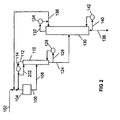
- Figure 2 is a schematic representation of an apparatus adapted to practice a process in accordance with this invention having a single alkylation reactor.
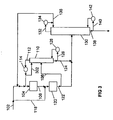
- FIG. 3 is a schematic representation of another apparatus adapted to practice a process in accordance with this invention in which two alkylation reactors are provided and the feed for the lights distillation is obtained from the effluent from the second reactor and the overhead from the lights distillation is recycled to the first reactor.
- FIG 4 is a schematic representation of still another apparatus adapted to practice a process in accordance with this invention in which a side stream cut is taken form the lights distillation. This representation illustrates further distillations to provide a purified arylalkane product.
- Aliphatic mono-olefins and aromatic compounds are used for the alkylation process.
- the selection of the olefin and aromatic compounds is dependent upon the sought alkylation product.
- the olefin-containing aliphatic compound is preferably of 8 to 18, often for detergent applications, 9 to 16, carbon atoms.
- the positioning of the olefinic bond in the molecule is not critical as most alkylation catalysts have been found to promote migration of the olefinic bond.
- the branching of the hydrocarbon backbone is often more of a concern as the structural configuration of the alkyl group on the arylalkane product can affect performance. For instance, where alkylbenzenes are sulfonated to produce surfactants, undue branching can adversely affect the biodegradability of the surfactant.
- the olefin may be unbranched or lightly branched, which as used herein, refers to an olefin having three or four primary carbon atoms and for which none of the remaining carbon atoms are quaternary carbon atoms.
- a primary carbon atom is a carbon atom which, although perhaps bonded also to other atoms besides carbon, is bonded to only one carbon atom.
- a quaternary carbon atom is a carbon atom that is bonded to four other carbon atoms.
- the olefin-containing aliphatic compound is usually a mixture of two or more olefins.
- other components may be present with the olefin-containing aliphatic compound.
- the olefin may be obtained by the dehydrogenation of a paraffinic feedstock and unreacted paraffin, which is difficult to separate from the olefin, is passed to the alkylation reactor. See, for instance, US 6,670,516 , herein incorporated by reference.
- the molar ratio of olefin to paraffin is between 1:12 to 1:8; however, such amounts of paraffin are not critical to the processes of this invention. Indeed, olefin-containing feedstocks having an essential absence of paraffins are suitable. However, the processes of this invention are particularly useful where paraffin is present as a significant portion of the energy and size of the distillation of step d is devoted to separating aromatic compound from paraffin. The processes of this invention thus have a beneficial effect in reducing the energy consumption and size of that distillation.
- the source of the paraffinic feedstock for dehydrogenation is not critical although certain sources of paraffinic feedstocks will likely result in the impurities being present.
- kerosene fractions produced in petroleum refineries either by crude oil fractionation or by conversion processes therefore form suitable feed mixture precursors. Fractions recovered from crude oil by fractionation will typically require hydrotreating for removal of sulfur and/or nitrogen prior to being fed to the subject process.
- the boiling point range of the kerosene fraction can be adjusted by prefractionation to adjust the carbon number range of the paraffins. In an extreme case the boiling point range can be limited such that only paraffins of a single carbon number predominate. Kerosene fractions contain a very large number of different hydrocarbons and the feed mixture to the subject process can therefore contain 200 or more different compounds.
- the paraffinic feedstock may alternatively be at least in part derived from oligomerization or alkylation reactions. Such feed mixture preparation methods are inherently imprecise and produce a mixture of compounds.
- the feed mixtures to the process may contain quantities of paraffins having multiple branches and paraffins having multiple carbon atoms in the branches, cycloparaffins, branched cycloparaffins, or other compounds having boiling points relatively close to the desired compound isomer.
- the feed mixtures to the process of this invention can also contain sizable quantities of aromatic hydrocarbons.
- condensate Another source of paraffins is in condensate from gas wells. Usually insufficient quantities of such condensate are available to be the exclusive source of paraffinic feedstock. However, its use to supplement other paraffinic feedstocks can be desirable. Typically these condensates contain sulfur compounds, which have restricted their use in the past. As this invention enables the use of sulfur-containing feeds, these condensates can be used to supply paraffins for alkylation.
- Paraffins may also be produced from synthesis gas (Syngas), hydrogen and carbon monoxide. This process is generally referred to as the Fischer-Tropsch process. Syngas may be made from various raw materials including natural gas and coal, thus making it an attractive source of paraffinic feedstock where petroleum distillates are not available.
- Syngas synthesis gas
- This process is generally referred to as the Fischer-Tropsch process.
- Syngas may be made from various raw materials including natural gas and coal, thus making it an attractive source of paraffinic feedstock where petroleum distillates are not available.
- the olefin-containing feed to the alkylation reactor should be sufficiently free of impurities, such as water, nitrogen compounds and sulfur compounds, that can unduly adversely affect the life of the alkylation catalyst.
- the aromatic-containing feedstock to the subject process comprises a phenyl compound, which is benzene when the process is detergent alkylation.
- the phenyl compound of the aromatic feedstock may be alkylated or otherwise substituted derivatives or of a higher molecular weight than benzene, including toluene, ethylbenzene, xylene, etc., but the product of such an alkylation may not be as suitable a detergent precursor as alkylated benzenes.
- the olefin is reacted with aromatic compound to produce arylalkane.
- aromatic compound is present in a significant stoichiometric excess to the olefin, e.g., from 6:1 or from 10:1 or 15:1 up to 50:1 and normally from 15:1 to 30:1, on a molar basis.
- the aromatic compound and the olefin are reacted under alkylation conditions in the presence of a solid alkylation catalyst.
- These alkylation conditions generally include a temperature in the range between 80° C and 200° C, most usually at a temperature not exceeding 175°C, say, 125°C to 160°C. Since the alkylation is typically conducted in the presence of a liquid phase, and preferably in either an all-liquid phase or at supercritical conditions, pressures must be sufficient to maintain reactants in the liquid phase. The requisite pressure necessarily depends upon the olefin, the aryl compound, and temperature, but normally is in the range of 1300 to 7000 kPa(g), and most usually between 2000 and 3500 kPa(g).
- the alkylation conditions do not substantially result in skeletal isomerization of the olefin.
- less than 15 mole percent, and preferably less than 10 mole percent, of the olefin, the aliphatic alkyl chain, and any reaction intermediate undergoes skeletal isomerization.
- Alkylation of the aromatic compound by the olefins is conducted in a continuous manner using one bed or two or more catalyst beds in flow series.
- a catalyst bed is termed a reactor whether in the same or a separate vessel from another bed.
- Each reactor has an inlet portion and an outlet portion.
- the reactants may be in admixture prior to entering the inlet portion of the reactor, or they may be individually introduced and mixed in the reactor.
- the catalyst may be used as a packed bed or a fluidized bed.
- the feed to the reaction zone may be passed either upflow or downflow, or even horizontally as in a radial bed reactor; however, the flows of the aromatic compound and olefin-containing aliphatic compound are co-current.
- olefin-containing feedstock may be fed into several discrete points within the reaction zone, and at each zone the aromatic compound to olefin molar ratio may be greater than 50:1.
- the total feed mixture that is, aromatic compound plus olefin, is often passed through the packed bed at a liquid hourly space velocity (LHSV) between 0.3 and 6 or 10 hr-1 depending upon, e.g., alkylation temperature and the activity of the catalyst. Lower values of LHSV within this range are preferred. It is usually desired that sufficient residence time in the reaction zone be used such that at least 98, and often at least 99.5, mole percent of the olefin is reacted.
- LHSV liquid hour
- alkylation catalysts comprise zeolites having a zeolite structure type selected from the group consisting of BEA, MOR, MTW, and NES. Such zeolites include mordenite, ZSM4, ZSM-12, ZSM-20, offretite, gmelinite, beta, NU-87, and gottardite. Clay or amorphous catalysts including silica-alumina and fluorided silica-alumina may also find utility. Further discussion of alkylation catalysts can be found in US 5,196,574 ; US 6,315,964 and US 6,617,481 .
- At least a portion of an alkylation reactor effluent is subjected to a lights distillation to recover as overhead a fraction of the unreacted aromatic compound.
- the recovered aromatic compound is recycled to the alkylation reactor.
- the use of the lights distillation reduces the amount of aromatic compound in the reaction product passed to the refining system including a distillation assembly for removing aromatic compound from the arylalkane.
- one or more alkylation reactor beds may be used with the lights distillation overhead being recycled to the inlet portion of the reactor from which the effluent is obtained for the light distillation or of an upstream alkylation reactor.
- the amount of the effluent directed to the light distillation may be as little as 20 weight percent of the total effluent or may comprise the entire effluent stream. Where it is desired to debottleneck an existing manufacturing plant, even directing a small amount of the effluent to the light distillation can be beneficial. Often at least 50, and sometimes at least 80, weight percent of the effluent is subjected to the light distillation.
- the concentration of paraffin in the alkylation zone or the alkylation zone effluent is less than 50 weight percent, and preferably less than 40, e.g., less than 35, weight percent. If more than one reactor is used, most preferably it is the effluent from the first reactor that is subjected to the lights distillation with the overhead from the lights distillation being recycled to the inlet portion of that reactor.
- the amount of the aromatic compound recovered in the overhead is often between 20 and 98, say, 60 or 75 to 98, weight percent of that in the distillation feed.
- the overhead may also contain arylalkane, unreacted olefin, aromatic by-products and paraffins, especially where the olefin is supplied in combination with paraffins.
- paraffins can lead to a higher concentration of the paraffins in the alkylation reactor at steady state conditions than in the olefin-containing feed to the alkylation reactor which needs to be taken in account in reactor sizing.
- paraffins Normally where paraffins are present, less than 60, preferably less than 40, and often between 5 and 30, weight percent of the paraffins in the distillation feed is contained in the overhead. Generally less than 60, often between 5 and 30, weight percent of the unreacted olefin-containing compound fed to the lights distillation will be in the overhead.
- the distillation equipment need not be extensive to effect such recovery, e.g., the distillation may be accomplished with less than 5 theoretical distillation plates.
- the lights distillation is preferably conducted without significant reboiler heat, and indeed, in some instances, the sought recovery of aromatic compound may be accomplished by a flash distillation due to a pressure drop of the effluent from alkylation reaction conditions without the need for a heat source.
- the feed to the lights distillation may be at any convenient temperature. For instance, it may be at or close to the temperature of the effluent from the alkylation reaction zone, or it may be heated or cooled by indirect heat exchange. Generally the temperature of the distillation feed is below 300°C, say 100° to 275°C.
- heat is externally supplied to the lights distillation, e.g., to provide for internal reflux in a fractionation column, it preferably is less than 40, more preferably less than 30, kilocalories (kcal) per kilogram of the feed to the lights distillation.
- externally supplied heat is heat supplied to the lights distillation, excluding heat supplied with the lights distillation feed.
- the bottoms temperature of the lights distillation zone is usually in the range of 80°C to 150°C, preferably between 90°C and 140°C, and the pressure in the lights distillation zone is typically between 70 and 300, preferably between 90 and 250, say, 100 and 200, kPa absolute.
- the rate of external reflux is preferably between 0.1:1 to 5:1, more preferably between 0.4:1 and 0.8:1, kilogram per kilogram of effluent fed to the lights distillation zone.
- the lights distillation may be effected in an open vessel for a flash distillation or may contain suitable trays or packing for a fractionation.
- a flash distillation may contain a demister to prevent liquid carryover in the overhead.
- Heat to the lights distillation zone may be provided by indirect heat exchange at the bottom of the zone, or by withdrawing, heating and recycling to the base of the column a portion of the liquid contained at the bottom of the lights distillation zone.
- the distillation feed may be heated, but preferably not to a temperature that may cause undue reaction or degradation of the arylalkane, e.g., below 300°C.
- composition of the overhead from the lights distillation is primarily dependent upon the composition of the distillation feed, the temperature and pressure for the lights distillation, the reflux ratio and the practical distillation plates contained in the lights distillation zone.
- the practical distillation plates are determined from the actual performance of the distillation column.
- the overhead form the lights distillation may be cooled to cause condensation and then the liquid pumped to the inlet portion of the designated alkylation reactor. If desired, a portion of the condensed liquid may be used as reflux for the lights distillation.
- the lights distillation will provide at least a bottoms stream containing arylalkane.
- one or more midcuts can also be taken. If no midcuts are taken, the composition of the bottoms stream will simply be the balance of the feed to the lights distillation column. If one or more midcuts are taken, the composition of the bottoms stream would differ.
- the bottoms stream will contain at least 80, and often at least 90 or even 95 or more, weight percent of the arylalkane in the effluent fed to the lights distillation column.
- the bottoms stream will also contain aromatic compound, e.g., at least 0.5, say, 1 to 80, weight percent of the aromatic compound in the distillation feed. Where no midcut is taken and paraffin is present, the bottoms stream will contain paraffin, usually in an amount of at least 40, say 45 to 95, weight percent of the paraffin contained in the distillation feed.
- the processes of this invention provide not only for energy efficient recycling of large amounts of aromatic compound to the alkylation reactor to provide for desired selectivities to the sought arylalkane product and for debottlenecking of existing arylalkane production facilities, but also they enable flexibility in the manner in which the arylalkane is purified. See, for instance, the discussion of Figure 4 below.
- the alkylation reactor effluent would be passed to a distillation assembly that separates as a relatively pure stream the aromatic compound contained in the effluent.
- the bottoms stream from this distillation assembly would then be passed to a distillation assembly to separate as the overhead, paraffins and unreacted olefins, and the bottoms from this second distillation assembly would be fed to a heavies distillation assembly where the arylalkane product is contained in the overhead.
- a finishing column may be used to further purify the arylalkane, especially after a clay treatment to remove color formers.
- the bottoms stream of the lights distillation is normally fed to the distillation assembly for separating the aromatic compound.
- the following disclosure references the production of alkylbenzene.
- the benzene distillation is generally conducted with a bottoms temperature of less than 300°C, preferably less than 275°C, usually between 230° and 270°C, and at a pressure at which the overhead is provided of between 5 and 300, preferably between 35 and 70, kPa gauge.
- the overhead generally contains less than 2, preferably less than 1.5, weight percent paraffins.
- the benzene distillation assembly may comprise one or more distillation columns. More than one overhead may be obtained from the benzene distillation assembly.
- a highly pure stream may be obtained for process needs such as regenerating catalysts or sorbents, e.g., having a paraffin concentration less than 1, preferably less than 0.1, weight percent.
- a lesser purity overhead may be obtained from the benzene distillation assembly, e.g., as a side draw, for use as a recycle to the alkylation reaction.
- Each column in the benzene distillation assembly may contain any convenient packing or distillation trays, but most often trays such as sieve and bubble trays, are used. Often the assembly provides at least 5, say 6 to 70, and preferably 20 to 50, theoretical distillation plates.
- the reflux ratio (herein defined as the distillate to reflux weight ratio) is often in the range of 2:1 to 1:10, preferably 1.5:1 to 1:5.
- the bottoms stream from the benzene distillation generally contains less than 1000 ppmw, preferably less than 50 ppmw, and sometimes less than 5 ppmw, benzene.
- the benzene distillation may occur in a single column or two or more distinct columns may be used.
- a stripping column may be used to remove a portion, e.g., 20 to 50 percent, of the benzene and then the bottoms from the stripping column would be subjected to rectification in a subsequent column to obtain the desired separation.
- the paraffin distillation is generally conducted with a bottoms temperature of less than 300°C, preferably less than 275°C, usually between 250°C and 275°C, and at a pressure at which overhead is provided of between 5 and 110, preferably between 10 and 50, kPa absolute.
- the column may contain any convenient packing or distillation trays, but most often sieve trays are used. Often the paraffins distillation assembly provides at least 5, say 7 to 20, theoretical distillation plates.
- the reflux ratio is often in the range of 3:1 to 1:10, preferably 1:1 to 1:3.
- the bottoms stream from the paraffins distillation generally contains less than 5000, preferably less than 500, parts by million by weight (ppmw) paraffins and preferably less than 10, often less than 1, ppmw benzene.
- the paraffins distillation may occur in a single column or two or more distinct columns may be used.
- the heavy alkylate distillation is generally conducted with a bottoms temperature of less than 300°C, preferably less than 275°C, usually between 250°C and 275°C, and at a pressure of between 0.5 and 30, preferably between 1 and 5, kPa absolute.
- the column may contain any convenient packing or distillation trays, but most often structured packing is used. Often the heavy alkylate distillation assembly provides at least 5, say 10 to 30, and preferably 10 to 20, theoretical distillation plates.
- the reflux ratio is often in the range of 2:1 to 1:5, preferably 0.2:1 to 1:1.
- the overhead from the heavy alkylate distillation generally contains less than 1000, preferably less than 100 ppmw, and sometimes less than 50 ppmw, total heavies.
- the refining system may contain additional distillation zones, e.g., to recover additional arylalkane from heavies.
- an olefin-containing feedstock is supplied via line 102 to a first alkylation reactor 104. Effluent from alkylation reactor 104 passes via line 106 to a second alkylation reactor 120. Under normal operation, at least 90 percent by weight of the olefin fed to reactor 104 is consumed in reactor 104. Accordingly, an additional supply of olefin feedstock is introduced from line 102 through line 118 into line 106 for feed to reactor 120.
- a portion of the effluent in line 106 is withdrawn via line 108 and is fed to lights distillation column 110.
- the overhead from column 110 which is primarily benzene, passes via line 112 through condenser 114 to line 104 were it is admixed with the olefin feed and a portion of the overhead of benzene column 130.
- Column 110 is a flash column and no reflux is used.
- a bottoms stream is withdrawn via line 124 from column 110. A portion of the bottoms stream is passed via line 126 through heat exchanger 128 and back to the lower portion of column 110.
- effluent is withdrawn from the reactor via line 122 and passed to benzene column 130.
- the bottoms stream from column 110 is passed via line 124 to line 122 and is also sent to column 130.
- a benzene overhead is withdrawn from column 130 via line 132 and condensed in condenser 134. A portion of the overhead is sent back to the top of column 130 and the remaining portion is passed via line 136 to line 102.
- a bottoms stream is withdrawn from column 130 via line 138. A portion of this bottoms stream is passed via line 140 through heat exchanger 142 and returned to column 130 to supply heat for the distillation.
- FIG 2 the same numerical indicators indicate the same components as are identified for Figure 1 .
- the apparatus depicted in Figure 2 differs from that in Figure 1 in that no second alkylation reactor 120 is used and the bottoms stream from column 110 is passed via line 124 to benzene distillation column 130.
- the entire effluent from alkylation reactor 104 is passed via line 106 to lights distillation column 110.
- a portion of the condensed liquid in line 112 is returned via line 202 to the top of column 110 as reflux.
- Column 110 contains structured packing.
- Figure 3 the same numerical indicators indicate the same components as are identified for Figures 1 and 2 .
- the apparatus depicted in Figure 3 differs from that in Figure 1 in that line 108 withdraws a portion of the reaction effluent not from reactor 104 but from reactor 120. A portion of the overhead from lights distillation column 110 is recycled to alkylation reactor 104. Also, a portion of the condensed liquid in line 112 is returned via line 202 to the top of column 110 as reflux. Column 110 contains packing.
- FIG 4 the same numerical indicators indicate the same components as are identified for Figure 2 .
- the apparatus depicted in Figure 4 differs from that in Figure 2 in that column 110 is a trayed, dividing wall column having partition 400.
- a midcut is removed via line 402.
- This midcut contains benzene and paraffin and is passed to benzene column 130.
- the bottoms stream from column 130 will contain little alkylbenzene and will be rich in paraffin. Thus a portion of the bottoms stream in line 138 can be returned to a paraffin dehydrogenation unit.
- the bottoms stream from lights distillation column 110 is passed via line 124 to heavies column 404.
- Heavies column 404 provides an overhead containing benzene and paraffin which is withdrawn via line 408, condensed in condenser 410 and a portion is returned via line 412 to column 404 as reflux and the remaining portion is passed via line 408 to benzene column 130.
- the bottoms stream from column 404 contains heavies such as dialkyl benzene and is withdrawn via line 414. A portion of the bottoms stream is passed via line 416, heated in heat exchanger 418, and returned to the bottom portion of column 404.
- Column 404 is also provided with partition 406, which defines a zone 426.
- Zone 426 can perform as a column within column 404.
- An alkylbenzene stream is withdrawn via line 420 from the bottom of zone 426.
- a portion of this alkylbenzene stream in line 420 is returned to the lower portion of the partitioned zone 426 via line 422 having heat exchanger 424.
- the remaining portion of the stream in line 420 is product.
Landscapes
- Chemical & Material Sciences (AREA)
- Organic Chemistry (AREA)
- Chemical Kinetics & Catalysis (AREA)
- Organic Low-Molecular-Weight Compounds And Preparation Thereof (AREA)
Priority Applications (1)
| Application Number | Priority Date | Filing Date | Title |
|---|---|---|---|
| EP08250995A EP2105429A1 (de) | 2008-03-20 | 2008-03-20 | Verfahren und Vorrichtung zur Alkylierung oder Aromastoff mit Olefin, unreine Aroma Wiederverwertung verwendend |
Applications Claiming Priority (1)
| Application Number | Priority Date | Filing Date | Title |
|---|---|---|---|
| EP08250995A EP2105429A1 (de) | 2008-03-20 | 2008-03-20 | Verfahren und Vorrichtung zur Alkylierung oder Aromastoff mit Olefin, unreine Aroma Wiederverwertung verwendend |
Publications (1)
| Publication Number | Publication Date |
|---|---|
| EP2105429A1 true EP2105429A1 (de) | 2009-09-30 |
Family
ID=39720709
Family Applications (1)
| Application Number | Title | Priority Date | Filing Date |
|---|---|---|---|
| EP08250995A Withdrawn EP2105429A1 (de) | 2008-03-20 | 2008-03-20 | Verfahren und Vorrichtung zur Alkylierung oder Aromastoff mit Olefin, unreine Aroma Wiederverwertung verwendend |
Country Status (1)
| Country | Link |
|---|---|
| EP (1) | EP2105429A1 (de) |
Citations (10)
| Publication number | Priority date | Publication date | Assignee | Title |
|---|---|---|---|---|
| US3763259A (en) * | 1971-12-15 | 1973-10-02 | Universal Oil Prod Co | Process for producing paradiisopropylbenzene |
| US4107224A (en) * | 1977-02-11 | 1978-08-15 | Mobil Oil Corporation | Manufacture of ethyl benzene |
| US4695665A (en) * | 1986-07-02 | 1987-09-22 | Uop Inc. | Process for alkylation of hydrocarbons |
| US4885424A (en) * | 1988-02-05 | 1989-12-05 | Uop | Effluent separation method for aromatic hydrocarbon alkylation process |
| US5196574A (en) | 1991-12-23 | 1993-03-23 | Uop | Detergent alkylation process using a fluorided silica-alumina |
| US6069285A (en) | 1998-06-09 | 2000-05-30 | Uop Llc | Alkylaromatic process using a solid alkylation catalyst and a benzene rectifier |
| US6187981B1 (en) | 1999-07-19 | 2001-02-13 | Uop Llc | Process for producing arylalkanes and arylalkane sulfonates, compositions produced therefrom, and uses thereof |
| US6315964B1 (en) | 1996-02-08 | 2001-11-13 | Huntsman Petrochemical Corporation | Process and system for alkylation of aromatic compounds |
| US6617481B1 (en) | 1998-12-29 | 2003-09-09 | Uop Llc | Process for producing phenyl-alkanes using an adsorptive separation section |
| US6670516B1 (en) | 2002-12-20 | 2003-12-30 | Uop Llc | Process for producing phenyl-alkanes using olefin isomerization and paraffin recycle |
-
2008
- 2008-03-20 EP EP08250995A patent/EP2105429A1/de not_active Withdrawn
Patent Citations (10)
| Publication number | Priority date | Publication date | Assignee | Title |
|---|---|---|---|---|
| US3763259A (en) * | 1971-12-15 | 1973-10-02 | Universal Oil Prod Co | Process for producing paradiisopropylbenzene |
| US4107224A (en) * | 1977-02-11 | 1978-08-15 | Mobil Oil Corporation | Manufacture of ethyl benzene |
| US4695665A (en) * | 1986-07-02 | 1987-09-22 | Uop Inc. | Process for alkylation of hydrocarbons |
| US4885424A (en) * | 1988-02-05 | 1989-12-05 | Uop | Effluent separation method for aromatic hydrocarbon alkylation process |
| US5196574A (en) | 1991-12-23 | 1993-03-23 | Uop | Detergent alkylation process using a fluorided silica-alumina |
| US6315964B1 (en) | 1996-02-08 | 2001-11-13 | Huntsman Petrochemical Corporation | Process and system for alkylation of aromatic compounds |
| US6069285A (en) | 1998-06-09 | 2000-05-30 | Uop Llc | Alkylaromatic process using a solid alkylation catalyst and a benzene rectifier |
| US6617481B1 (en) | 1998-12-29 | 2003-09-09 | Uop Llc | Process for producing phenyl-alkanes using an adsorptive separation section |
| US6187981B1 (en) | 1999-07-19 | 2001-02-13 | Uop Llc | Process for producing arylalkanes and arylalkane sulfonates, compositions produced therefrom, and uses thereof |
| US6670516B1 (en) | 2002-12-20 | 2003-12-30 | Uop Llc | Process for producing phenyl-alkanes using olefin isomerization and paraffin recycle |
Non-Patent Citations (1)
| Title |
|---|
| PUJADO: "Linear Alkylbenzene (LAB) Manufacture, Handbook of Petroleum Refining Processes", 1996, pages: 153 - 166 |
Similar Documents
| Publication | Publication Date | Title |
|---|---|---|
| US7576247B2 (en) | Processes for making detergent range alkylbenzenes | |
| US7897829B2 (en) | Olefinic feedstock treatment processes | |
| US6069285A (en) | Alkylaromatic process using a solid alkylation catalyst and a benzene rectifier | |
| EP2109595B1 (de) | Stromintegrierte verfahren zur herstellung von als reinigungsmittel zu verwendenden alkylbenzenen | |
| US8124035B2 (en) | Process and apparatus for alkylation of aromatic compound with aliphatic mono-olefin compound of 8 to 18 carbon atoms | |
| WO2008147634A1 (en) | Process for producing cumene | |
| CN101605747B (zh) | 用于制造清净剂范围烷基苯的能量集成法 | |
| US7638666B2 (en) | Processes and apparatus for making detergent range alkylbenzenes using transalkylation | |
| US7339088B1 (en) | Alkylbenzene refining process and apparatus | |
| US7632473B2 (en) | Process and apparatus for alkylation of aromatic with olefin using impure aromatic recycle | |
| CN101550050B (zh) | 利用不纯芳族化合物循环由烯烃烷基化芳族化合物的方法和装置 | |
| US20090205945A1 (en) | Process and apparatus for alkylation of benzene with aliphatic mono-olefin compound | |
| WO2008094262A1 (en) | Olefinic feedstock treatment processes |
Legal Events
| Date | Code | Title | Description |
|---|---|---|---|
| PUAI | Public reference made under article 153(3) epc to a published international application that has entered the european phase |
Free format text: ORIGINAL CODE: 0009012 |
|
| 17P | Request for examination filed |
Effective date: 20081212 |
|
| AK | Designated contracting states |
Kind code of ref document: A1 Designated state(s): AT BE BG CH CY CZ DE DK EE ES FI FR GB GR HR HU IE IS IT LI LT LU LV MC MT NL NO PL PT RO SE SI SK TR |
|
| AX | Request for extension of the european patent |
Extension state: AL BA MK RS |
|
| AKX | Designation fees paid |
Designated state(s): ES IT |
|
| REG | Reference to a national code |
Ref country code: DE Ref legal event code: 8566 |
|
| STAA | Information on the status of an ep patent application or granted ep patent |
Free format text: STATUS: THE APPLICATION IS DEEMED TO BE WITHDRAWN |
|
| 18D | Application deemed to be withdrawn |
Effective date: 20101019 |