EP2105482B1 - Verfahren zur herstellung eines emulsionslacks und filme aus dem lack - Google Patents
Verfahren zur herstellung eines emulsionslacks und filme aus dem lack Download PDFInfo
- Publication number
- EP2105482B1 EP2105482B1 EP07850667.2A EP07850667A EP2105482B1 EP 2105482 B1 EP2105482 B1 EP 2105482B1 EP 07850667 A EP07850667 A EP 07850667A EP 2105482 B1 EP2105482 B1 EP 2105482B1
- Authority
- EP
- European Patent Office
- Prior art keywords
- coating material
- titanium oxide
- photocatalyst composite
- dispersion
- composite particles
- Prior art date
- Legal status (The legal status is an assumption and is not a legal conclusion. Google has not performed a legal analysis and makes no representation as to the accuracy of the status listed.)
- Not-in-force
Links
Images




Classifications
-
- C—CHEMISTRY; METALLURGY
- C01—INORGANIC CHEMISTRY
- C01G—COMPOUNDS CONTAINING METALS NOT COVERED BY SUBCLASSES C01D OR C01F
- C01G23/00—Compounds of titanium
- C01G23/04—Oxides; Hydroxides
- C01G23/047—Titanium dioxide
-
- C—CHEMISTRY; METALLURGY
- C09—DYES; PAINTS; POLISHES; NATURAL RESINS; ADHESIVES; COMPOSITIONS NOT OTHERWISE PROVIDED FOR; APPLICATIONS OF MATERIALS NOT OTHERWISE PROVIDED FOR
- C09C—TREATMENT OF INORGANIC MATERIALS, OTHER THAN FIBROUS FILLERS, TO ENHANCE THEIR PIGMENTING OR FILLING PROPERTIES ; PREPARATION OF CARBON BLACK ; PREPARATION OF INORGANIC MATERIALS WHICH ARE NO SINGLE CHEMICAL COMPOUNDS AND WHICH ARE MAINLY USED AS PIGMENTS OR FILLERS
- C09C1/00—Treatment of specific inorganic materials other than fibrous fillers; Preparation of carbon black
- C09C1/36—Compounds of titanium
- C09C1/3607—Titanium dioxide
- C09C1/3653—Treatment with inorganic compounds
-
- C—CHEMISTRY; METALLURGY
- C09—DYES; PAINTS; POLISHES; NATURAL RESINS; ADHESIVES; COMPOSITIONS NOT OTHERWISE PROVIDED FOR; APPLICATIONS OF MATERIALS NOT OTHERWISE PROVIDED FOR
- C09C—TREATMENT OF INORGANIC MATERIALS, OTHER THAN FIBROUS FILLERS, TO ENHANCE THEIR PIGMENTING OR FILLING PROPERTIES ; PREPARATION OF CARBON BLACK ; PREPARATION OF INORGANIC MATERIALS WHICH ARE NO SINGLE CHEMICAL COMPOUNDS AND WHICH ARE MAINLY USED AS PIGMENTS OR FILLERS
- C09C1/00—Treatment of specific inorganic materials other than fibrous fillers; Preparation of carbon black
- C09C1/36—Compounds of titanium
- C09C1/3692—Combinations of treatments provided for in groups C09C1/3615 - C09C1/3684
-
- C—CHEMISTRY; METALLURGY
- C09—DYES; PAINTS; POLISHES; NATURAL RESINS; ADHESIVES; COMPOSITIONS NOT OTHERWISE PROVIDED FOR; APPLICATIONS OF MATERIALS NOT OTHERWISE PROVIDED FOR
- C09D—COATING COMPOSITIONS, e.g. PAINTS, VARNISHES OR LACQUERS; FILLING PASTES; CHEMICAL PAINT OR INK REMOVERS; INKS; CORRECTING FLUIDS; WOODSTAINS; PASTES OR SOLIDS FOR COLOURING OR PRINTING; USE OF MATERIALS THEREFOR
- C09D5/00—Coating compositions, e.g. paints, varnishes or lacquers, characterised by their physical nature or the effects produced; Filling pastes
- C09D5/02—Emulsion paints including aerosols
- C09D5/024—Emulsion paints including aerosols characterised by the additives
-
- C—CHEMISTRY; METALLURGY
- C09—DYES; PAINTS; POLISHES; NATURAL RESINS; ADHESIVES; COMPOSITIONS NOT OTHERWISE PROVIDED FOR; APPLICATIONS OF MATERIALS NOT OTHERWISE PROVIDED FOR
- C09D—COATING COMPOSITIONS, e.g. PAINTS, VARNISHES OR LACQUERS; FILLING PASTES; CHEMICAL PAINT OR INK REMOVERS; INKS; CORRECTING FLUIDS; WOODSTAINS; PASTES OR SOLIDS FOR COLOURING OR PRINTING; USE OF MATERIALS THEREFOR
- C09D7/00—Features of coating compositions, not provided for in group C09D5/00; Processes for incorporating ingredients in coating compositions
- C09D7/40—Additives
- C09D7/48—Stabilisers against degradation by oxygen, light or heat
-
- C—CHEMISTRY; METALLURGY
- C01—INORGANIC CHEMISTRY
- C01P—INDEXING SCHEME RELATING TO STRUCTURAL AND PHYSICAL ASPECTS OF SOLID INORGANIC COMPOUNDS
- C01P2004/00—Particle morphology
- C01P2004/60—Particles characterised by their size
- C01P2004/61—Micrometer sized, i.e. from 1-100 micrometer
-
- C—CHEMISTRY; METALLURGY
- C01—INORGANIC CHEMISTRY
- C01P—INDEXING SCHEME RELATING TO STRUCTURAL AND PHYSICAL ASPECTS OF SOLID INORGANIC COMPOUNDS
- C01P2006/00—Physical properties of inorganic compounds
- C01P2006/22—Rheological behaviour as dispersion, e.g. viscosity, sedimentation stability
-
- C—CHEMISTRY; METALLURGY
- C01—INORGANIC CHEMISTRY
- C01P—INDEXING SCHEME RELATING TO STRUCTURAL AND PHYSICAL ASPECTS OF SOLID INORGANIC COMPOUNDS
- C01P2006/00—Physical properties of inorganic compounds
- C01P2006/60—Optical properties, e.g. expressed in CIELAB-values
-
- C—CHEMISTRY; METALLURGY
- C08—ORGANIC MACROMOLECULAR COMPOUNDS; THEIR PREPARATION OR CHEMICAL WORKING-UP; COMPOSITIONS BASED THEREON
- C08K—Use of inorganic or non-macromolecular organic substances as compounding ingredients
- C08K3/00—Use of inorganic substances as compounding ingredients
- C08K3/18—Oxygen-containing compounds, e.g. metal carbonyls
- C08K3/20—Oxides; Hydroxides
- C08K3/22—Oxides; Hydroxides of metals
-
- C—CHEMISTRY; METALLURGY
- C08—ORGANIC MACROMOLECULAR COMPOUNDS; THEIR PREPARATION OR CHEMICAL WORKING-UP; COMPOSITIONS BASED THEREON
- C08K—Use of inorganic or non-macromolecular organic substances as compounding ingredients
- C08K9/00—Use of pretreated ingredients
- C08K9/02—Ingredients treated with inorganic substances
Definitions
- the present invention relates to a process for production of an emulsion coating material containing photocatalyst composite particles, an emulsion coating material obtained therefrom, and films made from the emulsion coating material. More particularly, the present invention relates to a process for production of an emulsion coating material comprising a photocatalyst composite complex obtained by precipitating calcium phosphate from an aqueous acidic solution in which titanium oxide is dispersed and phosphate ions and calcium ions are dissolved, whereby the calcium phosphate coats and adheres to the surface of titanium oxide.
- the present invention provides a novel emulsion coating material and films thereof which, together with the considerably enhanced productivity of photocatalyst composite particles obtained by the aforesaid process of coating calcium phosphate onto the surface of the titanium oxide, demonstrate high functionality as a result of incorporating the aforesaid photocatalyst composite particles in a coating material.
- Photocatalysts are activated when irradiated with light from the sun or a fluorescent lamp, and the like, and have the action of decomposing harmful substances such as organic substances and bacteria. Attempts have been made to take advantage of this property by coating a coating material containing a photocatalyst in the form of titanium oxide onto a base material, such as a wall, to allow the base material to demonstrate photocatalytic function. Since films formed by this coating material are able to decompose soiling (organic substances) adhered to a surface with a photocatalyst, while also allowing a hydrophilic photocatalyst to be exposed on the surface of the film, such films demonstrate the characteristic of being resistant to adherence of dirt. Thus, films containing a photocatalyst have a self-cleaning function enabling them to remove dirt autonomously.
- coating materials have recently been proposed that contain photocatalyst composite particles in which calcium phosphate such as apatite is coated onto titanium oxide (see, for example, Patent Documents 1 to 3).
- photocatalyst composite particles are produced by adding calcium chloride to a dispersion in which titanium oxide is dispersed in a pseudo body fluid containing sodium chloride, calcium chloride, potassium dihydrogen phosphate or disodium hydrogen phosphate dissolved therein.
- the apatite does not completely coat the surface of the titanium oxide but rather, is dispersed and precipitated on the titanium oxide surface. Namely, since the surface of the titanium oxide is partially exposed, there is hardly any loss of photocatalyst function. In addition, since the apatite coats the surface of the titanium oxide, the apatite serves as a spacer, and since the titanium oxide does not contact the resin component directly, decomposition of the resin component is inhibited thereby, allowing the use of an organic coating material.
- the above-mentioned photocatalyst composite particles adsorb substances even in the absence of light, while also being able to decompose these substances adsorbed in the absence of light by photocatalytic action when irradiated with light.
- the pseudo body fluid used to produce the photocatalyst composite particles contained in the coating materials described in the examples of the prior art disclosed in the above-mentioned Patent Documents 1 to 3 contains an excess of ionic species such as sodium ions, potassium ions, calcium ions or chloride ions
- the resin component may end up aggregating due to the effects of the ionic species present, thereby resulting in defective dispersion. Since the number of production steps increases as a result of having to repeatedly decant the dispersion in order to prevent aggregation of the resin component, productivity becomes poor.
- JP2005-289778 A discloses a method for manufacturing apatite-coated titanium oxide wherein an aqueous slurry of titanium dioxide having a low pH is prepared, as well as an aqueous solution containing, for example, phosphate salt and calcium salt which serve as the reactants for the apatite.
- the aqueous slurry and aqueous solution are mixed and reacted together at a pH of 5-9.
- WO 03/053576 A1 discloses a method for producing a composite particle comprising titanium dioxide which comprises a step of providing an aqueous slurry containing titanium dioxide and having a pH of 3-5; a step of providing an aqueous solution containing a compound having no photocatalytic activity such as, for example, salts of phosphates or condensed phosphates; and a further step of mixing and reacting both fluids at a pH of 4-10, more desirably at a pH of 5-9.
- aqueous solutions of a plurality of reactants for generating the sparingly soluble compound are prepared.
- calcium phosphate can be uniformly precipitated on the surface of titanium oxide by adjusting the pH of an aqueous dispersion/solution, having a pH of 4.0 or lower in which titanium oxide is dispersed and phosphate ions and calcium ions are dissolved, to a pH of 5.0 to 11.0, thereby leading to completion of the present invention.
- an object of the present invention is to provide a process for production of an emulsion coating material which enables calcium phosphate to be easily coated onto the surface of titanium oxide, is able to enhance the productivity of photocatalyst composite particles, and is able to improve the organic substance photodecomposition function and weather resistance of coating materials and films containing the photocatalyst composite particles.
- a further object of the present invention is to provide an emulsion coating material obtained by the aforesaid process, as well as films made from that emulsion coating material
- the present invention is composed of the following technical means:
- the present invention is a process as detailed herein above for production of an emulsion coating material containing photocatalyst composite particles and a resin component.
- the process comprises preparing photocatalyst composite particles in which calcium phosphate is re-precipitated and adhered to the surface of titanium oxide by adjusting the pH of an aqueous acidic dispersion/solution having a pH of 4.0 or lower, in which titanium oxide is dispersed and phosphate ions and calcium ions are dissolved, to the alkaline side of the pH of the dispersion/solution, and incorporating the resultant dispersion of photocatalyst composite particles in an aqueous organic coating material.
- the present invention is the above-mentioned emulsion coating material, wherein the photocatalyst composite particles are composed of highly functional photocatalyst composite particles in which calcium phosphate has been precipitated and adhered to the surface of titanium oxide, wherein the surface of titanium oxide is uniformly coated at high purity with the precipitated calcium phosphate, the particle size distribution of the photocatalyst composite particles as determined by the laser scattering method is constant within the range of 80 to 600nm, the ratio of calcium phosphate in said particles is 0.1 to 50 wt%, the volume-based mean particle diameter of said particles is within the range of 50 to 1000nm, and the amount of said particles in the entire emulsion coating material in terms of the ratio of the solid content of the emulsion coating material is 1 to 20 wt%.
- the present invention is a film made from the above-mentioned emulsion coating material, wherein the thickness of the film is 1 to 20 ⁇ m.
- the process for production of an emulsion coating material of the present invention is composed of a first step in which photocatalyst composite particles are produced by adhering calcium phosphate to titanium oxide, and a second step, following the first step, in which a dispersion of the photocatalyst composite particles and a resin component are mixed to produce an emulsion coating material.
- photocatalyst composite particles in which calcium phosphate is re-precipitated and adhered to the surface of titanium oxide, are produced by adjusting the pH of an aqueous acidic dispersion/solution having a pH of 4.0 or lower, in which titanium oxide is dispersed and phosphate ions and calcium ions are dissolved, to the alkaline side of the pH of the dispersion/solution, and preferably to a pH of 5.0 to 11.0.
- the form of the photocatalyst composite particles obtained in the first step when considering that calcium phosphate has an action of adsorbing proteins and various types of aqueous soiling and demonstrates superior adsorption thereto, and titanium oxide has a photocatalytic action and demonstrates a superior photocatalytic function, the form of the photocatalyst composite particles is preferably such that a portion of the surface of the titanium oxide is coated with calcium phosphate.
- the photocatalyst composite particles preferably have a hydrophilic function to allow soiling to be easily washed off by rain.
- any suitable titanium oxide may be used as the titanium oxide provided it demonstrates a photocatalytic function, and for example, titanium oxide having a particle diameter of about 1 nm to several ⁇ m is preferably used.
- porous titanium oxide is more preferably used, and in this case, since the surface area of the particles increases, even greater photocatalytic performance is obtained.
- the pore diameter of the pores of the titanium oxide is preferably 1 nm to 0.1 ⁇ m from the viewpoint of efficiently adsorbing moisture and organic components.
- the crystal type of the titanium oxide is preferably anatase since this allows the obtaining of higher photocatalytic performance.
- the form of the titanium oxide is preferably a powder, slurry, neutral titania sol or acidic titania sol and the like, and an acidic titania sol having favorable dispersibility is more preferable.
- acidic titania sols are normally not used as photocatalysts since they end up aggregating if the pH exceeds 4, in the present invention, since titanium oxide is used under acidic conditions of a pH of 4 or lower, as will be described later, an acidic titania sol can be preferably used.
- acidic titania sols include hydrochloric acid titania sols and nitric acid titania sols, a hydrochloric acidtitania sol is particularly preferably used in the process of the present invention.
- apatite refers to blue apatite, examples of which include hydroxyapatite, fluoride apatite, carbonate apatite and silver apatite.
- Calcium phosphates such as apatite have a superior ability to adsorb proteins, such as bacteria, as well as aqueous soiling (such as perspiration, finger marks and water-based ink) .
- the adsorption ability of titanium oxide is inferior to that of calcium phosphate.
- the coating rate of the calcium phosphate is preferably 1 to 99% (percent surface area). If the coating rate is less than 1%, the adsorption effect of the calcium phosphate is not adequately obtained, while if the coating rate exceeds 99%, it becomes difficult to obtain the photocatalytic effect of the titanium oxide since proportion of the exposed surface of the titanium oxide is low.
- the coating rate is more preferably about 2 to 80% and even more preferably about 5 to 70%.
- the thickness of the calcium phosphate coating it is preferably about 1 nm to 3 ⁇ m, and more preferably, about 1 nm to 2 ⁇ m from the viewpoint of photocatalytic function and cost.
- the form of the calcium phosphate there are no particular limitations on the form of the calcium phosphate, and various forms can be used.
- the calcium phosphate may be in the form of layers, fine strips or fine particles.
- the photocatalyst composite particles underlying the present invention may be in the form of having a calcium phosphate coating layer formed on a portion of the surface of titanium oxide, or in the form of having a portion of the surface of titanium oxide adhered to and coated with calcium phosphate in the form of fine strips or fine particles .
- the form in which calcium phosphate in the form of fine particles is uniformly sporadically coated over the surface of the titanium oxide is most preferable, and in this case, the coating rate as described above may be 30% or less, and for example, about 1 to 10%.
- an acid such as hydrochloric acid, sulfuric acid, nitric acid, acetic acid or formic acid is preferably used.
- Hydrochloric acid is preferably used since ionic components are easily dissipated from solvent resulting in favorable storage stability of an emulsion coating material.
- the concentration of the hydrochloric acid is preferably 1 to 10 N, and more preferably, 2 to 6 N.
- the pH of the dispersion/ solution is preferably adjusted to a pH of 1.5 to 3.0. As a result of making the pH within the above range, calcium phosphate can be adequately dissolved in the aqueous dispersion/solution.
- Photocatalyst composite particles are prepared by adjusting the pH of the previously described acidic aqueous dispersion/solution to the alkaline side of the pH of the dispersion/solution, and adhering calcium phosphate to the surface of titanium oxide by re-precipitating it thereon.
- base preferably used to adjust the pH of the dispersion/solution having a pH of 4 or lower to a pH of 5 to 11 include aqueous ammonia, sodium hydroxide and potassium hydroxide.
- Aqueous ammonia is preferably used since ionic components are easily dissipated from solvent resulting in favorable durability of films.
- the concentration of the aqueous ammonia is preferably 5 to 50%, and more preferably, 20 to 30%.
- the pH of the dispersion/solution having a pH of 4 or lower is preferably adjusted to a pH of 8.0 to 10.0.
- the pH of the dispersion/solution having a pH of 4 or lower is preferably adjusted to a pH of 8.0 to 10.0.
- An apatite photocatalyst is known as an example of the prior art in which a pseudo body fluid is used to support apatite on the surface of titanium oxide.
- a pseudo body fluid is used to support apatite on the surface of titanium oxide.
- a material in which calcium phosphate is re-precipitated and supported by using a re-precipitation method is extremely superior in terms of productivity and quality, can be volume-produced easily and in a short period of time, and the compositional ratio of the resulting product can be precisely controlled while also achieving control of particle size distribution and morphology (shape) that was unable to be achieved with the material of the prior art, thereby resulting in a constant molecular size distribution enabling decomposition activity to be simultaneously controlled and resulting in higher activity.
- the photocatalyst composite particles underlying the present invention in which calcium phosphate is supported on the surface of titanium oxide, have a particle structure in which calcium phosphate is re-precipitated on the surface of the titanium oxide by a re-precipitation method resulting in porous calcium phosphate being uniformly supported on the surface of the titanium oxide, the particle size distribution of the particles as determined by the laser scattering method is controlled to be constant within the range of 80 to 600 nm, the ratio of calcium phosphate in the material is 0.1 to 50 wt%, and the volume-based mean particle diameter of the material is within the range of 50 to 1000 nm.
- the step for producing the photocatalyst composite particles is not limited to the previously described embodiment.
- acid may be added to pure water in advance to adjust the pH to 4 or lower at the stage of preparing the dispersion/solution, followed by adding calcium chloride and phosphoric acid.
- the titanium oxide may be dispersed in water in advance. Namely, each component (calcium chloride, phosphoric acid and titanium oxide) may be added at any time provided a dispersion/solution is able to be prepared in which titanium oxide is dispersed and calcium phosphate is dissolved.
- the weight ratio of calcium phosphate to titanium oxide in photocatalyst composite particles obtained in this manner is 0.1:99.9 to 50:50, preferably 1:99 to 25:75, and more preferably 2:98 to 20:80.
- the surface of the titanium oxide can be coated without impairing the photocatalytic function thereof, thereby making it possible to prevent decomposition of the resin component contained in the aqueous coating material when in the form of the emulsion coating material.
- the photocatalyst composite particles obtained in the first step are mixed with the resin component described below to produce an emulsion coating material.
- the emulsion coating material of the present invention is obtained not by using the photocatalyst composite particles in the form of dry particles, but rather by mixing a dispersion thereof with the resin component.
- the dispersibility of the photocatalyst composite particles is dramatically improved by mixing the photocatalyst composite particles as a dispersion with the resin component and water.
- the resin component used in the second step contains an aqueous organic coating material, examples of which include synthetic resin emulsions of acrylic resin, silicone resin, acrylic-silicone resin, epoxy resin, vinyl acetate resin, polyurethane resin, polystyrene resin or fluorine resin.
- Acrylic-silicone resin emulsions are particularly preferable.
- the content of the silicone component in the acrylic-silicone resin is preferably 1 to 60% by weight and, more preferably, 5 to 40% by weight. If the content of the silicone component is excessively low, the resin becomes susceptible to decomposition by the photocatalyst composite particles as previously described. On the other hand, if the silicone content is excessively high, in the case of repeatedly coating the resulting emulsion coating material, it becomes difficult for the coating material to adhere to the previously formed film resulting in increased susceptibility to cracking of the newly formed film.
- the amount of the photocatalyst composite particles in the entire emulsion coating material in terms of the ratio of the solid content thereof is 1 to 20% by weight, more preferably 2 to 15% by weight and, even more preferably, 3 to 10% by weight. If the ratio of the solid content of the photocatalyst composite particles is below these ranges, photocatalytic effects are reduced due to the low amount of photocatalyst composite particles in the film, while on the other hand, if the ratio of the solid content of the photocatalyst composite particles exceeds these ranges, the weather resistance of the film decreases.
- the solid content of the emulsion coating material is preferably 2 to 30% by weight, more preferably 2 to 20% by weight and, even more preferably, 3 to 10% by weight. As a result of making the solid content of the emulsion coating material to be within these ranges, the thickness of the film formed becomes uniform, thereby making this preferable.
- film formation assistants such as butyl cellosolve, butyl carbitol, triethylene glycol or texanol may also be used, as necessary, in the coating material within a range that does not deviate from the gist of the present invention.
- additives such as antifoaming agents, thickeners, freezing stabilizers, lubricants, pigments, water-soluble resins, penetration assistants, ultraviolet absorbers or antioxidants may also be incorporated in the coating material, as necessary.
- Coating of an emulsion coating material obtained in this manner onto an object to be coated can be carried out by ordinary methods and means such as a brush, roller, air sprayer or airless sprayer.
- the thickness of the formed film is preferably reduced so as to adapt to expansion and contraction of the material of the object to be coated.
- the thickness of the film is preferably 1 to 20 ⁇ m, more preferably 1 to 10 ⁇ m and, even more preferably, 2 to 8 ⁇ m. As a result of making the thickness of the film within these ranges, the formation of an uneven film can be prevented, thereby allowing the obtaining of a film of uniform film thickness.
- the emulsion coating material is preferably repeatedly coated a plurality of times to ensure a uniform film thickness.
- an emulsion coating material of the present invention since photocatalyst composite particles can be easily produced without increasing the concentrations of ions such as Na + or Cl - , productivity is favorable and aggregation of the resin component is inhibited, thereby resulting in superior storage stability even when in the form of an emulsion coating material.
- productivity is favorable and aggregation of the resin component is inhibited, thereby resulting in superior storage stability even when in the form of an emulsion coating material.
- there is extremely little yellowing or deterioration of a film formed by the emulsion coating material caused by adherence of oil or moisture, and superior durability and retention of aesthetic value are obtained.
- the resulting film is stable since direct contact between the resin component and the titanium oxide is impaired even when in the form of an organic coating material.
- the present invention offers the effects indicated below.
- the pH of the dispersion/solution was adjusted to 9.0 to 10.0 with 25% aqueous ammonia followed by allowing to react while stirring for 6 hours at 23°C, precipitating calcium phosphate on the surface of titanium oxide, decanting three times, and adjusting the pH to a final pH of 9.0 with 25% aqueous ammonia to prepare the photocatalyst composite particle dispersion 1 shown in Table 1.
- the photocatalyst composite particle dispersion 2 shown in Table 1 was prepared in the same manner as the photocatalyst composite particle dispersion 1, with the exception of changing the incorporated amount of ion exchange water and using 29.4 g of hydrochloric acid titania sol ("TKS-201 (34%)", Tayca) for the photocatalytic titanium oxide.
- a pseudo body fluid was prepared using a 10% dispersion/solution of photocatalytic titanium oxide, along with NaCl, KCl, CaCl 2 , KH 2 PO 4 , Na 2 HPO 4 , and ion exchange water so that the concentration of Na + was 160 mM, K + was 3.64 mM, Ca 2+ was 5.97 mM, Cl - was 169 mM and HPO 4 2- was 3.59 mM.
- Photocatalytic titanium oxide (“Super Titania F4", Showa Titania) was then added to a concentration of 1% of the pseudo body fluid (1 L) followed by allowing to react by stirring for 6 hours at 37°C. After decanting three times, the pH was adjusted to a final pH of 9.0 with 25% aqueous ammonia to prepare the photocatalyst composite particle dispersion 3 shown in Table 1.
- Emulsion coating materials of Example 1, Example 2, Comparative Example 1 and Comparative Example 2 were produced according to the formulas shown in Table 2 using the photocatalyst composite particle dispersions 1 to 4 prepared in the manner described above.
- a resin component having the trade name "Polydurex G-659” (Asahi Kasei Chemicals, solid content: 42%) was used for the resin component.
- 0.1% of an antifoaming agent (“BYK-028", BYK)
- a film formation assistant (“Texanol", Eastman Chemical)
- SN Thickener 618 San Nopco
- the emulsion coating materials were obtained after adjusting the pH to a final pH of 9.0 with 25% aqueous ammonia.
- the viscosities (Ford Cup No. 4) of each of the resulting emulsion coating materials are shown in Table 2.
- Example 1 Comparat ive Example 1 Comparat ive Example 2 Resin component 33.0 33.0 33.0 33.0 1% dispersion Dispersion 1 66.0 - - - Dispersion 2 - 66.0 - - Dispersion 3 - - 66.0 - Dispersion 4 - - - 66.0 BYK-028 0.1 0.1 0.1 0.1 0.1 Texanol 4.0 4.0 4.0 SN Thickener 618 As suitable As suitable As suitable As suitable As suitable As suitable 25% aqueous NH 3 (final pH: 9.0) As suitable As suitable As suitable As suitable As suitable As suitable As suitable Viscosity (Ford Cup No. 4(s)) 18.3 21.1 18.2 18.1
- An aqueous primer (trade name: "Aqueous Ceramitone (beige: Japan Paint Manufacturers Association Standard Paint Colors 2003 B Edition, B15-50B (5Y5R/1) approximate color", Fujikura Kasei) was coated onto an aluminumplate (5cm ⁇ 5cm) and dried followed by spray-coating each of the emulsion coating materials of Example 1 and Comparative Examples 1 and 2 thereon to prepare test pieces.
- Pretreatment was carried out by irradiating the test pieces for 3 hours or more so that each coated surface was irradiated at an intensity of 1 mW/cm 2 using a BLB black light.
- an acrylic resin ring (outer diameter: 45 mm, inner diameter: 40 mm, height: 30 mm) was fastened to the coated surface using a non-aqueous adhesive .
- the adsorption solution was discharged and after gently washing the inside of the ring with distilled water, 30 mL of 8 ppm methylene blue aqueous solution was poured in and, again, covering and sealing with the glass cover.
- the time-based change in discoloration of the aqueous solution due to decomposition of methylene blue was measured in terms of optical absorbance by irradiating the coated surface with a BLB black light so as to be irradiated at an intensity of 1 mW/cm 2 .
- a digital colorimeter (“Miniphoto 10", Sanshin Kogyo, filter: 660 nm) was used to measure optical absorbance.
- Example 2 a decomposition test was carried out in the same manner as the methylene blue decomposition test based on measurement of optical absorbance as described above, with the exception of pouring 30 mL of an adsorption solution (8 ppm methylene blue aqueous solution) into the ring, sealing with a glass cover (50 mm ⁇ 50 mm ⁇ 0.5 mm), allowing to stand undisturbed for 12 hours or more in a dark location to allow the methylene blue aqueous solution to be adequately adsorbed by the film, discharging the adsorption solution and gently washing the inside of the ring with distilled water, followed by pouring in 30 mL of 4 ppm methylene blue aqueous solution and, again, covering and sealing with the glass cover.
- an adsorption solution 8 ppm methylene blue aqueous solution
- a glass cover 50 mm ⁇ 50 mm ⁇ 0.5 mm
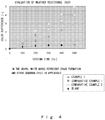
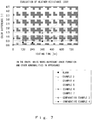
- test pieces were irradiated for 4 hours using an ultraviolet irradiation device ("Eye Super UV Tester W-151", Iwasaki Electric) at a black panel temperature of 63°C and humidity of 50% RH so that each surface of the test pieces was irradiated at an intensity of 1000 mW/cm 2 .
- an ultraviolet irradiation device "Eye Super UV Tester W-151", Iwasaki Electric
- the inside of the tank was set to a temperature of about 30°C and humidity of 98% or higher, and moisture was made to condense within the tank by holding at those conditions for 4 hours.
- gloss retention rate and color difference were evaluated every 120 hours.
- a glossimeter and color difference meter (“Model SM-T SM Color Computer", Suga Test Instruments) were used to measure gloss and color difference.
- the emulsion coating materials obtained in the examples exhibited slow deterioration of gloss and color difference, and were able to demonstrate superior photocatalytic activity.
- the emulsion coating material using hydrochloric acid titania sol demonstrated superior methylene blue decomposition and had favorable photocatalytic activity.
- the emulsion coating materials obtained in Comparative Examples 1 and 2 exhibited rapid deterioration of gloss and color difference in comparison with the examples, and demonstrated inferior photocatalytic activity.
- Photocatalyst composite particle dispersions 6 to 11 shown in Table 7 were prepared in the same manner as production of the photocatalyst composite particle dispersion 5, with the exception of adjusting to the pH values shown in Table 7 with 25% aqueous ammonia.
- Emulsion coating materials of Examples 3 to 7, Comparative Example 3 and Comparative Example 4 were produced using the photocatalyst composite particle dispersions 5 to 11 prepared above according to the formulas shown in Table 8.
- a resin component having the trade name "Polydurex H-7000" (Asahi Kasei Chemicals, solid content: 42%) was used for the resin component.
- the storage stability test consisted of investigating changes in the viscosities (Ford Cup method (seconds)) of emulsion coating materials stored for 2 months at 23°C. In addition, each of the emulsion coating materials were evaluated two months later according to the criteria indicated below. The results are shown in Table 8.
- the emulsion coating materials of the examples are able to demonstrate favorable storage stability and superior photocatalytic activity without having to decant during production.
- an emulsion coating material can be provided capable of inhibiting deterioration of coating material components by incorporating in a coating material photocatalyst composite particles obtained by forming, on the surface of titanium oxide, calcium phosphate obtained by precipitating from an aqueous acidic solution having a pH of 4.0 or lower in which is dissolved phosphate ions and calcium ions using a re-precipitation method.
- the present invention is able to provide a process for production of an emulsion coating material which, together with enhancing productivity of photocatalyst composite particles by coating calcium phosphate onto the surface of titanium oxide by a simple process, is able to improve the organic substance photodecomposition function and weather resistance of a coating material or film containing the photocatalyst composite particles.
- the present invention further provides an emulsion coating material obtained by the process of the invention, and a film made from the emulsion coating material.
- the present invention is useful for providing a novel technology for producing an emulsion coating material, enabling the production of an emulsion coating material incorporating the photocatalyst particle complex with a simple process and high productivity.
Landscapes
- Chemical & Material Sciences (AREA)
- Organic Chemistry (AREA)
- Life Sciences & Earth Sciences (AREA)
- Materials Engineering (AREA)
- Engineering & Computer Science (AREA)
- Wood Science & Technology (AREA)
- Geology (AREA)
- Inorganic Chemistry (AREA)
- General Life Sciences & Earth Sciences (AREA)
- Environmental & Geological Engineering (AREA)
- Dispersion Chemistry (AREA)
- Paints Or Removers (AREA)
- Catalysts (AREA)
- Application Of Or Painting With Fluid Materials (AREA)
- Pigments, Carbon Blacks, Or Wood Stains (AREA)
Claims (6)
- Verfahren zur Herstellung eines Emulsionsbeschichtungsmaterials, enthaltend Photokatalysatorverbundstoffteilchen und eine Harzkomponente, das Verfahren umfassend:Herstellen einer wässrigen, sauren Dispersion/ Lösung mit einem pH von 4,0 oder niedriger, in der Titanoxid dispergiert ist und Phosphationen und Calciumionen gelöst sind, wobei die Ionen andernfalls als Calciumphosphat präzipitieren würden, wenn der pH von der Dispersion/ Lösung größer als 4,0 wäre;dann Einstellen des pHs von der sauren Dispersion/Lösung in Richtung des alkalischen Bereichs des pHs von der Dispersion/Lösung, um Photokatalysatorverbundstoffteilchen zu erhalten, in denen das Calciumphosphat präzipitiert ist und an der Oberfläche von Titanoxid anhaftet; undMischen der resultierenden Dispersion von Photokatalysatorverbundstoffteilchen mit der Harzkomponente, enthaltend ein wässriges, organisches Beschichtungsmaterial, wie eine synthetische Harzemulsion, um das Emulsionsbeschichtungsmaterial herzustellen,wobei die Teilchengrößenverteilung von den Photokatalysatorverbundstoffteilchen, wie durch das Laserstreuungsverfahren bestimmt, kontrolliert wird, um konstant in dem Bereich von 80 bis 600 nm zusein, der Anteil von Calciumphosphat in den Teilchen 0,1 bis 50 Gew.-% beträgt, und der volumenbasierte mittlere Teilchendurchmesser von den Teilchen in dem Bereich von 50 bis 1000 nm liegt.
- Verfahren nach Anspruch 1, wobei der pH von der sauren Dispersion/Lösung unter Verwendung von wässrigem Ammoniak eingestellt wird.
- Verfahren nach Anspruch 1, wobei ein saures Titandioxidsol als das Titanoxid verwendet wird.
- Verfahren nach Anspruch 1, wobei der pH von der sauren Dispersion/Lösung auf einen pH von 5,0 bis 11,0 eingestellt wird.
- Emulsionsbeschichtungsmaterial, enthaltend Photokatalysatorverbundstoffteilchen und eine Harzkomponente,
die Photokatalysatorverbundstoffteilchen zusammengesetzt aus funktionalen Photokatalysatorverbundstoffteilchen, in denen Calciumphosphat präzipitiert worden ist und an der Oberfläche von Titanoxid anhaftet, wobei die Oberfläche von Titanoxid gleichmäßig mit dem präzipitierten Calciumphosphat beschichtet ist,
die Teilchengrößenverteilung von den Photokatalysatorverbundstoffteilchen, wie durch das Laserstreuungsverfahren bestimmt, konstant in dem Bereich von 80 bis 600 nm liegt, der Anteil von Calciumphosphat in den Teilchen 0,1 bis 50 Gew.-% beträgt, der volumenbasierte mittlere Teilchendurchmesser von den Teilchen in dem Bereich von 50 bis 1000 nm liegt, und die Menge der Teilchen in dem gesamten Emulsionsbeschichtungsmaterial hinsichtlich des Anteils von dem Feststoffgehalt des Emulsionsbeschichtungsmaterials 1 bis 20 Gew.-% beträgt,
wobei das Emulsionsbeschichtungsmaterial durch das Verfahren gemäß Anspruch 1 hergestellt worden ist. - Film, hergestellt aus dem Emulsionsbeschichtungsmaterial gemäß Anspruch 5, wobei die Dicke des Films 1 bis 20 µm beträgt.
Applications Claiming Priority (2)
| Application Number | Priority Date | Filing Date | Title |
|---|---|---|---|
| JP2006339215A JP5028993B2 (ja) | 2006-12-15 | 2006-12-15 | エマルジョン塗料の製造方法とこれより得られるエマルジョン塗料から形成される塗膜 |
| PCT/JP2007/074175 WO2008072748A1 (ja) | 2006-12-15 | 2007-12-15 | エマルジョン塗料の製造方法とこれより得られるエマルジョン塗料から形成される塗膜 |
Publications (3)
| Publication Number | Publication Date |
|---|---|
| EP2105482A1 EP2105482A1 (de) | 2009-09-30 |
| EP2105482A4 EP2105482A4 (de) | 2013-03-06 |
| EP2105482B1 true EP2105482B1 (de) | 2018-02-21 |
Family
ID=39511761
Family Applications (1)
| Application Number | Title | Priority Date | Filing Date |
|---|---|---|---|
| EP07850667.2A Not-in-force EP2105482B1 (de) | 2006-12-15 | 2007-12-15 | Verfahren zur herstellung eines emulsionslacks und filme aus dem lack |
Country Status (3)
| Country | Link |
|---|---|
| EP (1) | EP2105482B1 (de) |
| JP (1) | JP5028993B2 (de) |
| WO (1) | WO2008072748A1 (de) |
Families Citing this family (5)
| Publication number | Priority date | Publication date | Assignee | Title |
|---|---|---|---|---|
| EP2103349B1 (de) * | 2006-12-15 | 2016-09-07 | National Institute of Advanced Industrial Science And Technology | Nach dem repräzipitationsverfahren synthetisiertes und witterungsbeständiges fleckenunempfindliches material und herstellungsverfahren dafür |
| JP5414025B2 (ja) * | 2008-11-10 | 2014-02-12 | 地方独立行政法人 岩手県工業技術センター | 水系撥水性塗料組成物 |
| JP5544515B2 (ja) * | 2008-12-25 | 2014-07-09 | 独立行政法人産業技術総合研究所 | 耐候性・耐汚染性塗膜形成用エマルション塗料の製造方法、そのエマルション塗料及び耐候性・耐汚染性塗膜 |
| ES2647573T3 (es) * | 2009-12-29 | 2017-12-22 | W. R. Grace & Co.-Conn | Partículas inorgánicas de materiales compuestos y métodos de elaboración y uso de las mismas |
| EP3159381A4 (de) * | 2014-06-17 | 2018-02-21 | Ishihara Sangyo Kaisha, Ltd. | Titandioxidpigment und verfahren zur herstellung davon und zusammensetzung zur vermischung darin |
Family Cites Families (9)
| Publication number | Priority date | Publication date | Assignee | Title |
|---|---|---|---|---|
| JP3275032B2 (ja) * | 1997-03-03 | 2002-04-15 | 独立行政法人産業技術総合研究所 | 環境浄化材料及びその製造方法 |
| CA2316312C (en) * | 1997-12-25 | 2007-10-30 | Showa Denko Kabushiki Kaisha | Photocatalytic powder for environmental clarification, said powder-containing polymer composition and shaped article thereof, and processes for producing same |
| JP4359363B2 (ja) * | 1999-07-22 | 2009-11-04 | 独立行政法人産業技術総合研究所 | 水酸アパタイト皮膜の製造方法 |
| WO2003006159A1 (fr) * | 2001-07-10 | 2003-01-23 | Yoshiyuki Nagae | Matiere de revetement, peinture et procede de production de la matiere de revetement |
| AU2002361085A1 (en) * | 2001-12-21 | 2003-07-09 | Showa Denko K.K. | High active photocatalyst particle, method for production thereof and use thereof |
| JP4327518B2 (ja) * | 2002-06-27 | 2009-09-09 | 昭和電工株式会社 | 二酸化チタンと光触媒として不活性な縮合リン酸塩との複合粒子の製造方法 |
| JP4445789B2 (ja) * | 2004-04-05 | 2010-04-07 | 王子コーンスターチ株式会社 | アパタイト被覆用組成物及びアパタイト被覆二酸化チタンの製造方法 |
| JP2007077391A (ja) * | 2005-08-15 | 2007-03-29 | Fujikura Kasei Co Ltd | エマルション塗料及びその製造方法 |
| EP2103349B1 (de) * | 2006-12-15 | 2016-09-07 | National Institute of Advanced Industrial Science And Technology | Nach dem repräzipitationsverfahren synthetisiertes und witterungsbeständiges fleckenunempfindliches material und herstellungsverfahren dafür |
-
2006
- 2006-12-15 JP JP2006339215A patent/JP5028993B2/ja not_active Expired - Fee Related
-
2007
- 2007-12-15 WO PCT/JP2007/074175 patent/WO2008072748A1/ja not_active Ceased
- 2007-12-15 EP EP07850667.2A patent/EP2105482B1/de not_active Not-in-force
Non-Patent Citations (1)
| Title |
|---|
| None * |
Also Published As
| Publication number | Publication date |
|---|---|
| EP2105482A4 (de) | 2013-03-06 |
| JP2008150480A (ja) | 2008-07-03 |
| EP2105482A1 (de) | 2009-09-30 |
| JP5028993B2 (ja) | 2012-09-19 |
| WO2008072748A1 (ja) | 2008-06-19 |
Similar Documents
| Publication | Publication Date | Title |
|---|---|---|
| EP2105482B1 (de) | Verfahren zur herstellung eines emulsionslacks und filme aus dem lack | |
| EP3511075B1 (de) | Mischung aus von auf sichtbares licht reagierenden, photokatalytischen titanoxidfeinpartikelnpartikeln, dispersionsflüssigkeit davon, verfahren zur herstellung der dispersionsflüssigkeit, photokatalysatordünnschicht und element mit photokatalysatordünnschicht auf der oberfläche | |
| EP2484444B1 (de) | Mit einem photokatalysator beschichtetes objekt und photokatalytische beschichtungsflüssigkeit dafür | |
| US11446640B2 (en) | Visible-light-responsive photocatalytic-titanium- oxide-particulate dispersion liquid, manufacturing method therefor, and member having thin photocatalytic film on surface thereof | |
| EP1052225B1 (de) | Titandioxid und herstellungsverfahren desselben | |
| US9555399B2 (en) | Visible-light-responsive titanium oxide microparticle dispersion, method for manufacturing same, and member having surficial photocatalyst thin film formed using same dispersion | |
| EP1036826B1 (de) | Photocatalytische oxidzusammensetzung, dünnfilm und verbundmaterial | |
| US20020042343A1 (en) | Coating composition for forming titanium oxide film, process for forming titanium oxide film and photocatalyst | |
| KR19980018115A (ko) | 이산화티탄 세라믹 도료 및 그 제조방법 | |
| EP2726554B1 (de) | Behandelte anorganische teilchen | |
| JPWO1999028393A1 (ja) | 光触媒性酸化物含有組成物、薄膜および複合体 | |
| JP4619601B2 (ja) | 光触媒性コーティング組成物および光触媒性薄膜を有する製品 | |
| DE19802392A1 (de) | Beschichtungsflüssigkeit zur Erzeugung eines hydrophilen Films und Verfahren zur ihrer Herstellung | |
| EP1541231A1 (de) | Photokatalysatorapatit enthaltender film, herstellungsverfahren daf r, beschichtungsfluid und elektronische vorrichtung mit einem mit dem photokatalysatorapatit enthaltenden film berzogenen bauelement | |
| TWI430838B (zh) | 可見光應答型光觸媒及其製造方法及使用其之光觸媒塗佈劑,光觸媒分散體 | |
| EP2085142A1 (de) | Verfahren zur herstllung eines beschichtungsmittels mit photokatalytischer aktivität und danach erhaltenes beschichtungsmittel | |
| KR20050006267A (ko) | 건축 자재용의 항균 방오 도료 및 이에 따라 도장된 건축자재 | |
| EP2900843B1 (de) | Beschichtungszusammensetzung, fotokatalytischer artikel und verfahren zur herstellung davon | |
| KR101048340B1 (ko) | 투명피막 형성용 조성물 | |
| JP2003080078A (ja) | 光活性を有する化合物及びその用途 | |
| AU2016366816B2 (en) | Concentrated photoactive, neutral titanium dioxide sol | |
| JP2004161573A (ja) | 酸化チタンゾル、酸化チタン塗膜およびその形成方法 | |
| JP7074556B2 (ja) | 塗膜及び水系組成物 | |
| WO2004069946A1 (ja) | 光触媒-酸化チタン複合膜形成用塗布剤 | |
| JP2002079109A (ja) | 光半導体金属−有機物質混合体、光半導体金属含有組成物、光触媒性被膜の製造法及び光触媒性部材 |
Legal Events
| Date | Code | Title | Description |
|---|---|---|---|
| PUAI | Public reference made under article 153(3) epc to a published international application that has entered the european phase |
Free format text: ORIGINAL CODE: 0009012 |
|
| 17P | Request for examination filed |
Effective date: 20090713 |
|
| AK | Designated contracting states |
Kind code of ref document: A1 Designated state(s): AT BE BG CH CY CZ DE DK EE ES FI FR GB GR HU IE IS IT LI LT LU LV MC MT NL PL PT RO SE SI SK TR |
|
| DAX | Request for extension of the european patent (deleted) | ||
| A4 | Supplementary search report drawn up and despatched |
Effective date: 20130201 |
|
| RIC1 | Information provided on ipc code assigned before grant |
Ipc: C09C 3/06 20060101ALI20130128BHEP Ipc: B05D 7/24 20060101ALI20130128BHEP Ipc: C09C 1/36 20060101ALI20130128BHEP Ipc: C09D 5/02 20060101ALI20130128BHEP Ipc: C09D 201/00 20060101AFI20130128BHEP Ipc: C09D 7/12 20060101ALI20130128BHEP |
|
| 17Q | First examination report despatched |
Effective date: 20160414 |
|
| GRAP | Despatch of communication of intention to grant a patent |
Free format text: ORIGINAL CODE: EPIDOSNIGR1 |
|
| INTG | Intention to grant announced |
Effective date: 20171011 |
|
| GRAS | Grant fee paid |
Free format text: ORIGINAL CODE: EPIDOSNIGR3 |
|
| RIN1 | Information on inventor provided before grant (corrected) |
Inventor name: SHIBAHARA, ATSUSHI Inventor name: OHASHI, FUMIHIKO |
|
| GRAA | (expected) grant |
Free format text: ORIGINAL CODE: 0009210 |
|
| AK | Designated contracting states |
Kind code of ref document: B1 Designated state(s): AT BE BG CH CY CZ DE DK EE ES FI FR GB GR HU IE IS IT LI LT LU LV MC MT NL PL PT RO SE SI SK TR |
|
| REG | Reference to a national code |
Ref country code: GB Ref legal event code: FG4D |
|
| REG | Reference to a national code |
Ref country code: CH Ref legal event code: EP |
|
| REG | Reference to a national code |
Ref country code: AT Ref legal event code: REF Ref document number: 971698 Country of ref document: AT Kind code of ref document: T Effective date: 20180315 |
|
| REG | Reference to a national code |
Ref country code: IE Ref legal event code: FG4D |
|
| REG | Reference to a national code |
Ref country code: DE Ref legal event code: R096 Ref document number: 602007054008 Country of ref document: DE |
|
| REG | Reference to a national code |
Ref country code: NL Ref legal event code: MP Effective date: 20180221 |
|
| REG | Reference to a national code |
Ref country code: LT Ref legal event code: MG4D |
|
| REG | Reference to a national code |
Ref country code: AT Ref legal event code: MK05 Ref document number: 971698 Country of ref document: AT Kind code of ref document: T Effective date: 20180221 |
|
| PG25 | Lapsed in a contracting state [announced via postgrant information from national office to epo] |
Ref country code: NL Free format text: LAPSE BECAUSE OF FAILURE TO SUBMIT A TRANSLATION OF THE DESCRIPTION OR TO PAY THE FEE WITHIN THE PRESCRIBED TIME-LIMIT Effective date: 20180221 Ref country code: CY Free format text: LAPSE BECAUSE OF FAILURE TO SUBMIT A TRANSLATION OF THE DESCRIPTION OR TO PAY THE FEE WITHIN THE PRESCRIBED TIME-LIMIT Effective date: 20180221 Ref country code: FI Free format text: LAPSE BECAUSE OF FAILURE TO SUBMIT A TRANSLATION OF THE DESCRIPTION OR TO PAY THE FEE WITHIN THE PRESCRIBED TIME-LIMIT Effective date: 20180221 Ref country code: LT Free format text: LAPSE BECAUSE OF FAILURE TO SUBMIT A TRANSLATION OF THE DESCRIPTION OR TO PAY THE FEE WITHIN THE PRESCRIBED TIME-LIMIT Effective date: 20180221 Ref country code: ES Free format text: LAPSE BECAUSE OF FAILURE TO SUBMIT A TRANSLATION OF THE DESCRIPTION OR TO PAY THE FEE WITHIN THE PRESCRIBED TIME-LIMIT Effective date: 20180221 |
|
| PG25 | Lapsed in a contracting state [announced via postgrant information from national office to epo] |
Ref country code: LV Free format text: LAPSE BECAUSE OF FAILURE TO SUBMIT A TRANSLATION OF THE DESCRIPTION OR TO PAY THE FEE WITHIN THE PRESCRIBED TIME-LIMIT Effective date: 20180221 Ref country code: SE Free format text: LAPSE BECAUSE OF FAILURE TO SUBMIT A TRANSLATION OF THE DESCRIPTION OR TO PAY THE FEE WITHIN THE PRESCRIBED TIME-LIMIT Effective date: 20180221 Ref country code: AT Free format text: LAPSE BECAUSE OF FAILURE TO SUBMIT A TRANSLATION OF THE DESCRIPTION OR TO PAY THE FEE WITHIN THE PRESCRIBED TIME-LIMIT Effective date: 20180221 Ref country code: BG Free format text: LAPSE BECAUSE OF FAILURE TO SUBMIT A TRANSLATION OF THE DESCRIPTION OR TO PAY THE FEE WITHIN THE PRESCRIBED TIME-LIMIT Effective date: 20180521 Ref country code: GR Free format text: LAPSE BECAUSE OF FAILURE TO SUBMIT A TRANSLATION OF THE DESCRIPTION OR TO PAY THE FEE WITHIN THE PRESCRIBED TIME-LIMIT Effective date: 20180522 |
|
| PG25 | Lapsed in a contracting state [announced via postgrant information from national office to epo] |
Ref country code: IT Free format text: LAPSE BECAUSE OF FAILURE TO SUBMIT A TRANSLATION OF THE DESCRIPTION OR TO PAY THE FEE WITHIN THE PRESCRIBED TIME-LIMIT Effective date: 20180221 Ref country code: RO Free format text: LAPSE BECAUSE OF FAILURE TO SUBMIT A TRANSLATION OF THE DESCRIPTION OR TO PAY THE FEE WITHIN THE PRESCRIBED TIME-LIMIT Effective date: 20180221 Ref country code: EE Free format text: LAPSE BECAUSE OF FAILURE TO SUBMIT A TRANSLATION OF THE DESCRIPTION OR TO PAY THE FEE WITHIN THE PRESCRIBED TIME-LIMIT Effective date: 20180221 Ref country code: PL Free format text: LAPSE BECAUSE OF FAILURE TO SUBMIT A TRANSLATION OF THE DESCRIPTION OR TO PAY THE FEE WITHIN THE PRESCRIBED TIME-LIMIT Effective date: 20180221 |
|
| REG | Reference to a national code |
Ref country code: DE Ref legal event code: R097 Ref document number: 602007054008 Country of ref document: DE |
|
| PG25 | Lapsed in a contracting state [announced via postgrant information from national office to epo] |
Ref country code: DK Free format text: LAPSE BECAUSE OF FAILURE TO SUBMIT A TRANSLATION OF THE DESCRIPTION OR TO PAY THE FEE WITHIN THE PRESCRIBED TIME-LIMIT Effective date: 20180221 Ref country code: SK Free format text: LAPSE BECAUSE OF FAILURE TO SUBMIT A TRANSLATION OF THE DESCRIPTION OR TO PAY THE FEE WITHIN THE PRESCRIBED TIME-LIMIT Effective date: 20180221 Ref country code: CZ Free format text: LAPSE BECAUSE OF FAILURE TO SUBMIT A TRANSLATION OF THE DESCRIPTION OR TO PAY THE FEE WITHIN THE PRESCRIBED TIME-LIMIT Effective date: 20180221 |
|
| PLBE | No opposition filed within time limit |
Free format text: ORIGINAL CODE: 0009261 |
|
| STAA | Information on the status of an ep patent application or granted ep patent |
Free format text: STATUS: NO OPPOSITION FILED WITHIN TIME LIMIT |
|
| RIC2 | Information provided on ipc code assigned after grant |
Ipc: C09D 201/00 20060101AFI20130128BHEP Ipc: C09C 1/36 20060101ALI20130128BHEP Ipc: C09D 5/02 20060101ALI20130128BHEP Ipc: B05D 7/24 20060101ALI20130128BHEP Ipc: C09D 7/12 20181130ALI20130128BHEP Ipc: C09C 3/06 20060101ALI20130128BHEP |
|
| REG | Reference to a national code |
Ref country code: CH Ref legal event code: PK Free format text: BERICHTIGUNGEN |
|
| 26N | No opposition filed |
Effective date: 20181122 |
|
| REG | Reference to a national code |
Ref country code: CH Ref legal event code: PK Free format text: BERICHTIGUNGEN |
|
| RIC2 | Information provided on ipc code assigned after grant |
Ipc: C09D 5/02 20060101ALI20130128BHEP Ipc: C09D 7/12 20060101ALI20130128BHEP Ipc: C09C 3/06 20060101ALI20130128BHEP Ipc: B05D 7/24 20060101ALI20130128BHEP Ipc: C09C 1/36 20060101ALI20130128BHEP Ipc: C09D 201/00 20060101AFI20130128BHEP |
|
| PG25 | Lapsed in a contracting state [announced via postgrant information from national office to epo] |
Ref country code: SI Free format text: LAPSE BECAUSE OF FAILURE TO SUBMIT A TRANSLATION OF THE DESCRIPTION OR TO PAY THE FEE WITHIN THE PRESCRIBED TIME-LIMIT Effective date: 20180221 |
|
| REG | Reference to a national code |
Ref country code: CH Ref legal event code: PL |
|
| GBPC | Gb: european patent ceased through non-payment of renewal fee |
Effective date: 20181215 |
|
| PG25 | Lapsed in a contracting state [announced via postgrant information from national office to epo] |
Ref country code: MC Free format text: LAPSE BECAUSE OF FAILURE TO SUBMIT A TRANSLATION OF THE DESCRIPTION OR TO PAY THE FEE WITHIN THE PRESCRIBED TIME-LIMIT Effective date: 20180221 Ref country code: LU Free format text: LAPSE BECAUSE OF NON-PAYMENT OF DUE FEES Effective date: 20181215 |
|
| REG | Reference to a national code |
Ref country code: IE Ref legal event code: MM4A |
|
| REG | Reference to a national code |
Ref country code: BE Ref legal event code: MM Effective date: 20181231 |
|
| PG25 | Lapsed in a contracting state [announced via postgrant information from national office to epo] |
Ref country code: FR Free format text: LAPSE BECAUSE OF NON-PAYMENT OF DUE FEES Effective date: 20181231 Ref country code: IE Free format text: LAPSE BECAUSE OF NON-PAYMENT OF DUE FEES Effective date: 20181215 |
|
| PG25 | Lapsed in a contracting state [announced via postgrant information from national office to epo] |
Ref country code: BE Free format text: LAPSE BECAUSE OF NON-PAYMENT OF DUE FEES Effective date: 20181231 |
|
| PG25 | Lapsed in a contracting state [announced via postgrant information from national office to epo] |
Ref country code: LI Free format text: LAPSE BECAUSE OF NON-PAYMENT OF DUE FEES Effective date: 20181231 Ref country code: GB Free format text: LAPSE BECAUSE OF NON-PAYMENT OF DUE FEES Effective date: 20181215 Ref country code: CH Free format text: LAPSE BECAUSE OF NON-PAYMENT OF DUE FEES Effective date: 20181231 |
|
| PG25 | Lapsed in a contracting state [announced via postgrant information from national office to epo] |
Ref country code: MT Free format text: LAPSE BECAUSE OF NON-PAYMENT OF DUE FEES Effective date: 20181215 |
|
| PG25 | Lapsed in a contracting state [announced via postgrant information from national office to epo] |
Ref country code: TR Free format text: LAPSE BECAUSE OF FAILURE TO SUBMIT A TRANSLATION OF THE DESCRIPTION OR TO PAY THE FEE WITHIN THE PRESCRIBED TIME-LIMIT Effective date: 20180221 |
|
| PG25 | Lapsed in a contracting state [announced via postgrant information from national office to epo] |
Ref country code: PT Free format text: LAPSE BECAUSE OF FAILURE TO SUBMIT A TRANSLATION OF THE DESCRIPTION OR TO PAY THE FEE WITHIN THE PRESCRIBED TIME-LIMIT Effective date: 20180221 |
|
| PG25 | Lapsed in a contracting state [announced via postgrant information from national office to epo] |
Ref country code: HU Free format text: LAPSE BECAUSE OF FAILURE TO SUBMIT A TRANSLATION OF THE DESCRIPTION OR TO PAY THE FEE WITHIN THE PRESCRIBED TIME-LIMIT; INVALID AB INITIO Effective date: 20071215 |
|
| PG25 | Lapsed in a contracting state [announced via postgrant information from national office to epo] |
Ref country code: IS Free format text: LAPSE BECAUSE OF FAILURE TO SUBMIT A TRANSLATION OF THE DESCRIPTION OR TO PAY THE FEE WITHIN THE PRESCRIBED TIME-LIMIT Effective date: 20180621 |
|
| REG | Reference to a national code |
Ref country code: DE Ref legal event code: R081 Ref document number: 602007054008 Country of ref document: DE Owner name: FUJIKURA KASEI CO., LTD., JP Free format text: FORMER OWNERS: FUJIKURA KASEI CO., LTD., TOKIO/TOKYO, JP; NATIONAL INSTITUTE OF ADVANCED INDUSTRIAL SCIENCE AND TECHNOLOGY, TOKYO, JP |
|
| PGFP | Annual fee paid to national office [announced via postgrant information from national office to epo] |
Ref country code: DE Payment date: 20231031 Year of fee payment: 17 |
|
| REG | Reference to a national code |
Ref country code: DE Ref legal event code: R119 Ref document number: 602007054008 Country of ref document: DE |
|
| PG25 | Lapsed in a contracting state [announced via postgrant information from national office to epo] |
Ref country code: DE Free format text: LAPSE BECAUSE OF NON-PAYMENT OF DUE FEES Effective date: 20250701 |