EP2106047A2 - Digitales Rundfunkdienstverfahren und -system - Google Patents
Digitales Rundfunkdienstverfahren und -system Download PDFInfo
- Publication number
- EP2106047A2 EP2106047A2 EP09155408A EP09155408A EP2106047A2 EP 2106047 A2 EP2106047 A2 EP 2106047A2 EP 09155408 A EP09155408 A EP 09155408A EP 09155408 A EP09155408 A EP 09155408A EP 2106047 A2 EP2106047 A2 EP 2106047A2
- Authority
- EP
- European Patent Office
- Prior art keywords
- service
- user terminal
- service server
- message
- wireless network
- Prior art date
- Legal status (The legal status is an assumption and is not a legal conclusion. Google has not performed a legal analysis and makes no representation as to the accuracy of the status listed.)
- Withdrawn
Links
Images








Classifications
-
- H—ELECTRICITY
- H04—ELECTRIC COMMUNICATION TECHNIQUE
- H04H—BROADCAST COMMUNICATION
- H04H60/00—Arrangements for broadcast applications with a direct linking to broadcast information or broadcast space-time; Broadcast-related systems
-
- H—ELECTRICITY
- H04—ELECTRIC COMMUNICATION TECHNIQUE
- H04N—PICTORIAL COMMUNICATION, e.g. TELEVISION
- H04N21/00—Selective content distribution, e.g. interactive television or video on demand [VOD]
- H04N21/60—Network structure or processes for video distribution between server and client or between remote clients; Control signalling between clients, server and network components; Transmission of management data between server and client, e.g. sending from server to client commands for recording incoming content stream; Communication details between server and client
- H04N21/63—Control signaling related to video distribution between client, server and network components; Network processes for video distribution between server and clients or between remote clients, e.g. transmitting basic layer and enhancement layers over different transmission paths, setting up a peer-to-peer communication via Internet between remote STB's; Communication protocols; Addressing
- H04N21/647—Control signaling between network components and server or clients; Network processes for video distribution between server and clients, e.g. controlling the quality of the video stream, by dropping packets, protecting content from unauthorised alteration within the network, monitoring of network load, bridging between two different networks, e.g. between IP and wireless
-
- G—PHYSICS
- G06—COMPUTING OR CALCULATING; COUNTING
- G06Q—INFORMATION AND COMMUNICATION TECHNOLOGY [ICT] SPECIALLY ADAPTED FOR ADMINISTRATIVE, COMMERCIAL, FINANCIAL, MANAGERIAL OR SUPERVISORY PURPOSES; SYSTEMS OR METHODS SPECIALLY ADAPTED FOR ADMINISTRATIVE, COMMERCIAL, FINANCIAL, MANAGERIAL OR SUPERVISORY PURPOSES, NOT OTHERWISE PROVIDED FOR
- G06Q30/00—Commerce
- G06Q30/06—Buying, selling or leasing transactions
- G06Q30/0601—Electronic shopping [e-shopping]
-
- H—ELECTRICITY
- H04—ELECTRIC COMMUNICATION TECHNIQUE
- H04N—PICTORIAL COMMUNICATION, e.g. TELEVISION
- H04N21/00—Selective content distribution, e.g. interactive television or video on demand [VOD]
- H04N21/40—Client devices specifically adapted for the reception of or interaction with content, e.g. set-top-box [STB]; Operations thereof
- H04N21/41—Structure of client; Structure of client peripherals
- H04N21/414—Specialised client platforms, e.g. receiver in car or embedded in a mobile appliance
- H04N21/41407—Specialised client platforms, e.g. receiver in car or embedded in a mobile appliance embedded in a portable device, e.g. video client on a mobile phone, PDA, laptop
-
- H—ELECTRICITY
- H04—ELECTRIC COMMUNICATION TECHNIQUE
- H04N—PICTORIAL COMMUNICATION, e.g. TELEVISION
- H04N21/00—Selective content distribution, e.g. interactive television or video on demand [VOD]
- H04N21/40—Client devices specifically adapted for the reception of or interaction with content, e.g. set-top-box [STB]; Operations thereof
- H04N21/41—Structure of client; Structure of client peripherals
- H04N21/418—External card to be used in combination with the client device, e.g. for conditional access
- H04N21/4185—External card to be used in combination with the client device, e.g. for conditional access for payment
-
- H—ELECTRICITY
- H04—ELECTRIC COMMUNICATION TECHNIQUE
- H04N—PICTORIAL COMMUNICATION, e.g. TELEVISION
- H04N21/00—Selective content distribution, e.g. interactive television or video on demand [VOD]
- H04N21/40—Client devices specifically adapted for the reception of or interaction with content, e.g. set-top-box [STB]; Operations thereof
- H04N21/47—End-user applications
- H04N21/472—End-user interface for requesting content, additional data or services; End-user interface for interacting with content, e.g. for content reservation or setting reminders, for requesting event notification, for manipulating displayed content
-
- H—ELECTRICITY
- H04—ELECTRIC COMMUNICATION TECHNIQUE
- H04N—PICTORIAL COMMUNICATION, e.g. TELEVISION
- H04N21/00—Selective content distribution, e.g. interactive television or video on demand [VOD]
- H04N21/60—Network structure or processes for video distribution between server and client or between remote clients; Control signalling between clients, server and network components; Transmission of management data between server and client, e.g. sending from server to client commands for recording incoming content stream; Communication details between server and client
- H04N21/61—Network physical structure; Signal processing
- H04N21/6106—Network physical structure; Signal processing specially adapted to the downstream path of the transmission network
- H04N21/6112—Network physical structure; Signal processing specially adapted to the downstream path of the transmission network involving terrestrial transmission, e.g. DVB-T
-
- H—ELECTRICITY
- H04—ELECTRIC COMMUNICATION TECHNIQUE
- H04N—PICTORIAL COMMUNICATION, e.g. TELEVISION
- H04N21/00—Selective content distribution, e.g. interactive television or video on demand [VOD]
- H04N21/60—Network structure or processes for video distribution between server and client or between remote clients; Control signalling between clients, server and network components; Transmission of management data between server and client, e.g. sending from server to client commands for recording incoming content stream; Communication details between server and client
- H04N21/61—Network physical structure; Signal processing
- H04N21/6156—Network physical structure; Signal processing specially adapted to the upstream path of the transmission network
- H04N21/6181—Network physical structure; Signal processing specially adapted to the upstream path of the transmission network involving transmission via a mobile phone network
Definitions
- the present invention relates to digital broadcast services. More particularly, the present invention relates to a digital broadcast service method and system in a digital broadcast system distributing broadcast services through a broadcast distribution system and a wireless network to establish and release a connection to the wireless network.
- a mobile broadcast service can be provided through discovering a desired broadcast service by a mobile terminal, registering the service by the mobile terminal, providing control information necessary for receiving the service, transmitting the service and receiving the service by the mobile terminal.
- a mobile terminal For a mobile terminal to receive a digital broadcast service, it is necessary to perform a series of steps for service request, purchase, authentication and actual service reception, which are carried out through a wireless network.
- Actual service reception (reception of a digital broadcast) is performed through a broadcast distribution system.
- the time required for service reception is very long, whereas the time required for service request, purchase and authentication is short.
- the connection to the wireless network is continuously maintained even after the service request, the purchase and the authentication. Accordingly, resource usage related to the maintained wireless connection will have to be paid.
- An aspect of the present invention is to address at least the above-mentioned problems and/or disadvantages and to provide at least the advantages described below. Accordingly, an aspect of the present invention is to provide a digital broadcast service method and system that enable a user terminal to release and reestablish a wireless network connection as necessary during broadcast service reception.
- a digital broadcast service method using a user terminal and a service server includes establishing connections between a user terminal and a service server through a wireless network and a broadcast distribution system, performing, by the user terminal, service registration through the wireless network, purchasing, by the user terminal, a broadcast service from the service server through the wireless network, transmitting, by the user terminal, an authentication key request for the purchased broadcast service through the wireless network, and releasing the connection made through the wireless network after the performing of the service registration, the purchasing of the service, or the transmitting of the authentication key request.
- connection made through the wireless network may be released based on a trigger message indicating wireless connection release transmitted by the service server to the user terminal.
- connection made through the wireless network may be released when a preset waiting time expires after the performing of the service registration, the purchasing of the service, or the transmitting of the authentication key request.
- the waiting time may be included in service guide information transmitted by the service server through the broadcast distribution system to the user terminal.
- connection made through the wireless network may be released when the user terminal transmits a message indicating wireless connection release to the service server after the performing of the service registration, the purchasing of the service, or the transmitting of the authentication key request.
- the digital broadcast service method may further include transmitting, after releasing the connection made through the wireless network, by the service server, a trigger message indicating wireless connection reestablishment, and establishing, by the user terminal, a connection to the service server through the wireless network according to the trigger message.
- a digital broadcast service system includes a service server for connecting through a wireless network and a broadcast distribution system to a user terminal, and the user terminal for performing service registration, for purchasing a service, or for transmitting an authentication key request through the wireless network while maintaining the connection made through the broadcast distribution system to the service server, and for releasing the connection made through the wireless network after the performing of the service registration, the purchasing of the service, or the transmitting of the authentication key request.
- the service server may transmit a trigger message indicating wireless connection release to the user terminal.
- the user terminal may release the connection made through the wireless network when a preset waiting time expires after the performing of the service registration, the purchasing of the service, or the transmitting of the authentication key request.
- the waiting time may be included in service guide information transmitted by the service server through the broadcast distribution system to the user terminal or in a message transmitted by the service server to the user terminal.
- the user terminal may transmit a message indicating wireless connection release to the service server and then release the connection made through the wireless network, after the performing of the service registration, the purchasing of the service, or the transmitting of the authentication key request.
- the service server may transmit, after the connection made through the wireless network is released, a trigger message indicating wireless connection reestablishment. Then, the user terminal may establish a connection to the service server through the wireless network according to the trigger message.
- the digital broadcast service method enables the user terminal to release or reestablish a wireless network connection as necessary and contributes to saving radio resources.
- FIGs. 1A and 1 B are block diagrams illustrating a digital broadcast service system according to an exemplary embodiment of the present invention
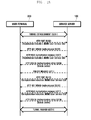
- FIGs. 2A and 2B are sequence diagrams illustrating a scheme of releasing a wireless network connection in a digital broadcast service method according to an exemplary embodiment of the present invention
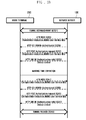
- FIGs. 3A to 3C are sequence diagrams illustrating a scheme of releasing a wireless network connection in the digital broadcast service method according to an exemplary embodiment of the present invention
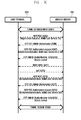
- FIGs. 4A to 4C are sequence diagrams illustrating a scheme of releasing a wireless network connection in the digital broadcast service method according to an exemplary embodiment of the present invention.
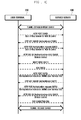
- FIGs. 5A and 5B are sequence diagrams illustrating a scheme of reestablishing a wireless network connection in the digital broadcast service method according to an exemplary embodiment of the present invention.
- FIGs. 1A and 1 B are block diagrams illustrating a digital broadcast service system according to an exemplary embodiment of the present invention.
- the digital broadcast service system includes a service server 100 and a user terminal 200 (user equipment).
- the service server 100 and the user terminal 200 may be connected together through a wireless network and a broadcast distribution system to provide value-added interactive services as well as broadcast services. That is, between the service server 100 and the user terminal 200, interactive operations related to service registration, authentication and billing are performed through the broadcast distribution system. Actual broadcasts (contents) are distributed through the broadcast distribution system.
- the service server 100 includes functional entities such as Content Creation 110, Broadcast Services (BCAST) Service Application 120, BCAST Service Distribution/Adaptation 130, BCAST Subscription Management 140, Broadcast Distribution System (BDS) Service Distribution 150, broadcast distribution system 160 and Interaction Network 170.
- BCAST Broadcast Services
- BDS Broadcast Distribution System
- the Content Creation 110 is a source of content to be broadcast.
- Broadcast content may be related to stream distribution or file distribution.
- an audio visual broadcast or an interactive broadcast requested by a user may be provided as a stream distribution service and an advertisement, game or video clip may be provided as a file distribution service.
- the BCAST Service Application 120 is an object that processes content from the Content Creation 110 in the OMA BCAST format.
- the BCAST Service Application 120 manages protected content and media encoding, interaction requests from the user terminal 200 and service elements related to the BCAST Service Distribution/Adaptation 130 and the BCAST Subscription Management 140.
- the BCAST Service Application 120 manages Right Objects (RO) enabling encryption-protected contents to be decrypted for playback, and supports content encoding.
- RO Right Objects
- the BCAST Service Distribution/Adaptation 130 distributes a service received from the BCAST Service Application 120. Before distribution, the BCAST Service Distribution/Adaptation 130 adapts a service in a bearer specific format and collects service guide sources into a complete service guide, such as an Electronic Service Guide (ESG), for distribution.
- ESG Electronic Service Guide
- the ESG includes a waiting time usage indicator and a waiting time.
- the BCAST Subscription Management 140 performs overall management of service subscribers and manages subscription and preference information of users.
- the BCAST Subscription Management 140 relates to a "BCAST Service Provisioning Function" for interaction with users.
- the BDS Service Distribution 150 adapts data to be distributed in a bearer specific format.
- the Broadcast Network 160 supports communications and transmits actual broadcasts (contents).
- the Interaction Network 170 supports one-to-one communication with a particular user terminal using technologies such as 3 rd Generation Partnership Project (3GPP) Multimedia Broadcast/Multicast Service MBMS and 3GPP2 Broadcast and Multicast Service (BCMCS).
- 3GPP 3 rd Generation Partnership Project
- MMS Multimedia Broadcast/Multicast Service
- BCMCS 3 rd Generation Partnership Project2 Broadcast and Multicast Service
- the user terminal 200 communicates with the service server 100 through a broadcast distribution system and a wireless network.
- the user terminal 200 may receive a high-speed unidirectional service related to actual broadcasts through the broadcast distribution system and may receive an interactive service related to service subscription, content purchase, service joining and billing through the wireless network.
- the user terminal 200 includes a radio communication unit 210, broadcast receiving unit 220, a Universal Subscriber Identity Module (USIM) card 230 and a control unit 240.
- a radio communication unit 210 the radio communication unit 210
- broadcast receiving unit 220 the broadcast receiving unit 220
- USB Universal Subscriber Identity Module
- control unit 240 the control unit 240.
- the radio communication unit 210 communicates with the service server 100 through a wireless network. That is, the radio communication unit 210 performs wireless communication through a wireless network supported by the service server 100, such as an MBMS or BCMCS network. Under the control of the control unit 240, the radio communication unit 210 establishes a tunnel to the service server 100 and performs operations related to service registration, service request and authentication key request (MBMS service key) through the tunnel. The radio communication unit 210 may release the tunnel and reestablish a tunnel under the control of the control unit 240.
- the broadcast receiving unit 220 receives broadcasts from the service server 100 through a broadcast distribution system.
- the broadcast receiving unit 220 receives a digital broadcast according to a standard protocol, such as Digital Video Broadcasting - Handheld (DVB-H).
- DVD-H Digital Video Broadcasting - Handheld
- broadcast signals may be transmitted in time-sliced bursts and a selected one of received signals is transmitted to the control unit 240.
- the USIM card 230 functions as an integrated circuit card and may include a storage, such as a Random Access Memory (RAM) or Read Only Memory (ROM) and a processor.
- the USIM card 230 may be a removable device.
- the USIM card 230 may be a Universal Integrated Circuit Card (UICC).
- UICC Universal Integrated Circuit Card
- the control unit 240 extracts service guide information from a received broadcast signal, and finds a waiting time usage indicator and a waiting time from the service guide information. If the waiting time usage indicator is set, the control unit 240 controls the radio communication unit 210 to release the tunnel after expiration of the waiting time.
- a physical channel accommodates a plurality of service channels.
- the physical channel is associated with a particular frequency selectable by the tuner and a service channel is associated with a broadcast program or a broadcasting station.
- Service channels in a Digital Multimedia Broadcasting (DMB) and a Digital Video Broadcasting - Terrestrial (DVB-T) may be identified by Program Identifiers (PID).
- Service channels in DVB-H may be identified by a combination of PID, an Internet Protocol (IP) address and port information.
- IP Internet Protocol
- the control unit 240 receives an authentication key associated with a purchased broadcast, decrypts the purchased broadcast using the received authentication key and reproduces the decrypted broadcast.
- the control unit 240 controls the radio communication unit 210 to perform operations related to service authentication, service request, authentication key request and service deregistration in cooperation with the service server 100.
- the user terminal 200 may further include an input unit (not illustrated) for receiving an input, a display unit (not illustrated) and an audio output unit (not illustrated) for reproducing a digital broadcast.
- the user terminal 200 may receive unidirectional services through a broadcast distribution system and further receive bidirectional services through a wireless network.
- the user terminal 200 has to establish a tunnel to the service server 100.
- the tunnel may be established using a Packet Data Protocol (PDP) context.
- PDP Packet Data Protocol
- the user terminal 200 may perform four interactive operations related to broadcast service reception through the wireless network connection.
- the four interactive operations include service registration in which a user terminal registers itself in the service server in relation to broadcast service reception, purchase requesting in which a user terminal makes a request for purchasing a desired broadcast service, authentication key requesting (for example, MBMS service key) in which a user terminal makes a request for an authentication key matched with a particular broadcast service, and service deregistration in which a user terminal deregisters itself from the service server.
- a wireless network connection and broadcast distribution system connection are continuously maintained from service registration to service deregistration.
- the present invention prevents a waste of radio resources due to maintenance of the wireless network connection and provides a scheme for saving radio resources that enables releasing of the wireless network connection whenever necessary from service registration to service deregistration.
- a wireless network connection between the service server 100 and the user terminal 200 is established through a tunnel.
- the tunnel is formed using a PDP context.
- the present invention is not limited thereto.
- a handshaking procedure for terminal authentication, registration and encryption to be performed for the first tunnel establishment is not the subject matter of the present invention. Therefore, a description thereof is omitted.
- establishment and release of a wireless network connection are used interchangeably with establishment and release of a tunnel, respectively.
- Tunnel releasing may be performed using a waiting time or an acknowledgement message.
- Tunnel releasing and reestablishment may be performed through transmission of a trigger message by the service server.
- a trigger message is transmitted using a Multimedia Internet KEYing (MIKEY) message and a portion of a solicited pull procedure (refer to 3GPP TS 33.246).
- MIKEY Multimedia Internet KEYing
- Tunnel releasing and reestablishment may be achieved by using a waiting time, an acknowledgment message, through transmission of a trigger message by the service server or a combination thereof.
- a waiting time Use of a waiting time, use of an Acknowledgement (ACK) message and use of a trigger message will be described below.
- ACK Acknowledgement
- the service server 100 transmits a preset waiting time to the user terminal 200. After transmitting a particular message to the service server 100, the user terminal 200 awaits a message or data from the user terminal 200 for the waiting time. If no message or data is received from the user terminal 200 during the waiting time, the service server 100 releases a connection to the wireless network (releases the tunnel). For setting the waiting time, the service server 100 may transmit an ESG including a waiting time, or the service server 100 may transmit a particular message including a waiting time usage indicator and a waiting time. For example, for registration, the user terminal 200 transmits a registration request message to the service server 100. The service server 100 transmits an authentication success message to the user terminal 200 as a reply to the registration request message. Here, the service server 100 may transmit an authentication success message including a waiting time usage indicator and a waiting time.
- the service server 100 uses a MIKEY message to transmit an authentication key (MBMS Service Key: MSK) to the user terminal 200.
- MIKEY message After reception of the MIKEY message, the user terminal 200 transmits an acknowledgement message associated with a particular broadcast service.
- the user terminal 200 transmits an acknowledgement message including a tunnel release intention and then releases the tunnel to the service server 100.
- the service server 100 may use a trigger message enabling the user terminal 200 to establish or release a tunnel to the service server 100.
- the format of trigger messages conforms to MIKEY messages described in 3GPP TS 33.246, and a trigger message may be transferred in a scheme based on a wireless bearer.
- the service server 100 may transmit a trigger message to a user terminal through a Short Message Service (SMS).
- SMS Short Message Service
- a MIKEY message is used to transmit an MSK.
- the MSK may be identified by a Key Domain ID and an MSK ID.
- the MSK ID is 4 bytes long, in which two bytes are for a Key Group portion and another two bytes are for a Key Number portion.
- a MIKEY message includes a header and a KEMAC field as a payload.
- the header includes a V-bit, and the KEMAC field may include an encrypted sub-payload and a Message Authentication Code (MAC).
- MAC Message Authentication Code
- a trigger message is created using Table 1 for releasing and reestablishing a service connection.
- Table 1 Trigger message Key Group part Key Number part KEMAC Encr Data Len V-bit in HDR Release Preset value (group ID) not used not used not set Connect to one service preset value (group ID) 0 0 not set Connect to multiple services 0 0 0 not set
- trigger messages are used to release or reestablish a service connection.
- the V-bit is normally set to '1'.
- the V-bit of the trigger message is preferably set to a value other than '1'. That is, the trigger message may be transmitted without setting the V-bit.
- a trigger message for connection release has a preset value in the Key Group portion of the MSK ID.
- the preset value may be an MSK group identifier indicating a broadcast service to be released or an MSK group identifier indicating a current broadcast service.
- the preset value in the Key Group portion of the MSK ID may be "Oxffff".
- the service server 100 may transmit a trigger message having a preset value in the Key Group portion of the MSK ID to the user terminal 200 to permit the user terminal 200 to release the service connection.
- a trigger message for tunnel reestablishment may be used for resumption of a broadcast service or for connecting multiple broadcast services.
- the Encr Data Len field (the length of encrypted data) of KEMAC is set to '0'.
- a trigger message indicating resumption of a broadcast service has a preset value in the Key Group portion of the MSK ID.
- the preset value may be an MSK group identifier indicating a broadcast service to be disconnected or the currently connected broadcast service.
- both the Key Group portion and the Key Number portion are set to '0'.
- the user terminal 200 Upon reception of a trigger message, the user terminal 200 releases or reestablishes the tunnel depending on the settings of the trigger message.
- the wireless network connection may be released using a waiting time, an acknowledgement message or a trigger message.
- FIGs. 2A and 2B are sequence diagrams illustrating an exemplary scheme for releasing the wireless network connection.
- the user terminal 200 releases the wireless network connection after service registration.
- the service server 100 and user terminal 200 are connected together through a wireless network connection by establishing a tunnel in step S201.
- the tunnel may be established through PDP activation.
- the user terminal 200 For registration of a broadcast service, the user terminal 200 transmits a registration request message to the service server 100 in step S203.
- the registration request message uses an HTTP POST message. That is, the user terminal 200 transmits an HTTP POST message to the service server 100 in step S203.
- the registration request message includes a registration indication indicating service registration and MBMS User Service IDs to identifying desired services.
- the service server 100 Upon reception of the registration request message, the service server 100 transmits a response message corresponding to the result of authentication of the registration request message.
- the authentication scheme is not the subject matter of the present invention. Therefore, a description thereof is omitted.
- the service server 100 transmits an authentication fail message to the user terminal 200 in step S205.
- the authentication fail message utilizes an HTTP 401 response including a WWW-Authenticate header indicating an authentication failure.
- the user terminal 200 Upon detection of the authentication failure (HTTP 401 response), the user terminal 200 transmits a registration re-request message to the service server 100 for a registration retry in step S207.
- the registration re-request message uses an HTTP POST Authorization request message. That is, the user terminal 200 transmits an HTTP POST Authorization request message to the service server 100 in step S207.
- the registration re-request message includes a registration indication and a service identifier.
- a failure message corresponding to a request message or a request message corresponding to a failure message may be unnecessary when failure does not occur, which is indicated in dotted lines in steps S205 and S207. In the following illustrations, no particular indication is given to steps that may be skipped.
- the service server 100 transmits an authentication success message to the user terminal 200 in step S209.
- the authentication success message uses an HTTP 200 OK response including an Authentication-info header and status codes indicating statuses of the service identifiers previously transmitted.
- radio resources may be saved by releasing the tunnel, whereas existing schemes maintain the tunnel and occupy radio resources.
- the service server 100 transmits a trigger message indicating tunnel release to the user terminal 200 in step S211.
- the trigger message may be transmitted through any wireless bearer, such as a short message service.
- the trigger message for tunnel release is a MIKEY message whose V-bit in the header is not set and the trigger message has a preset value in the Key Group part of the MSK ID.
- the user terminal 200 Upon reception of the trigger message, the user terminal 200 transmits a deregistration request message to the service server 100 in step S213.
- the deregistration request message uses an HTTP POST message. That is, the user terminal 200 transmits an HTTP POST message to the service server 100 in step S213.
- the deregistration request message includes a deregistration indication and MBMS User Service IDs.
- the deregistration indication indicates service deregistration and MBMS User Service IDs to identify broadcast services purchased by the user.
- the MBMS User Service IDs may identify multiple broadcast services to be deregistered.
- the service server 100 Upon reception of the deregistration request message, the service server 100 transmits a response message corresponding to the result of deregistration.
- the service server 100 transmits an authentication fail message to the user terminal 200 in step S215.
- the authentication fail message utilizes an HTTP 401 response including a WWW-Authenticate header indicating an authentication failure.
- the user terminal 200 Upon detection of deregistration failure (HTTP 401 response), the user terminal 200 transmits a deregistration re-request message to the service server 100 for a deregistration retry in step S217.
- the deregistration re-request message uses an HTTP POST Authorization request message. That is, the user terminal 200 transmits an HTTP POST Authorization request message to the service server 100 in step S217.
- the deregistration re-request message may include a deregistration indication and a service identifier.
- the service server 100 transmits a deregistration success message including status codes to the user terminal 200 in step S219.
- the deregistration success message uses an HTTP 200 OK response including an Authentication-info header.
- the status codes indicate statuses of the service identifiers previously transmitted.
- the user terminal 200 After receiving the deregistration success message, the user terminal 200 releases the tunnel to the service server 100 in step S221. While tunnel releasing terminates the connection through Interaction Network 170 to BCAST Subscription Management 140 of the service server 100, the connection through the broadcast distribution system 160 to BCAST Service Distribution/Adaptation 130 is maintained. By releasing the tunnel, occupancy of the wireless network is freed and radio resources are saved.
- the service server 100 and the user terminal 200 are connected together through an established tunnel in step S231.
- the user terminal 200 transmits a registration request message to the service server 100 in step S233.
- the registration request message uses an HTTP POST message and includes a registration indication and service identifiers (MBMS User Service IDs).
- the service server 100 Upon reception of the registration request message, the service server 100 transmits a response message corresponding to the result of authentication of the registration request message. When the authentication fails, the service server 100 transmits an authentication fail message to the user terminal 200 in step S235.
- the authentication fail message utilizes an HTTP 401 response including a WWW-Authenticate header indicating an authentication failure.
- the user terminal 200 Upon detection of the authentication failure, the user terminal 200 transmits a registration re-request message to the service server 100 for a registration retry in step S237.
- the registration re-request message uses an HTTP POST Authorization request message and includes a registration indication and service identifiers.
- the service server 100 transmits an authentication success message including status codes to the user terminal 200 in step S239.
- the authentication success message uses an HTTP 200 OK response and includes an Authentication-info header.
- the service server 100 may notify the waiting time in step S239 or broadcast an ESG including the waiting time in advance.
- the user terminal 200 After the waiting time expires, the user terminal 200 automatically releases the tunnel to thereby save radio resources. That is, after expiration of the waiting time, to release the tunnel, the user terminal 200 transmits a deregistration request message to the service server 100 in step S241.
- the deregistration request message uses an HTTP POST message. That is, the user terminal 200 transmits an HTTP POST message to the service server 100 in step S241.
- the deregistration request message includes a deregistration indication and MBMS User Service IDs.
- the deregistration indication indicates service deregistration and MBMS User Service IDs to identify broadcast services purchased by the user.
- the MBMS User Service IDs may identify multiple broadcast services to be deregistered.
- the service server 100 Upon reception of the deregistration request message, the service server 100 transmits a response message corresponding to the result of deregistration.
- the service server 100 transmits an authentication fail message to the user terminal 200 in step S243.
- the authentication fail message utilizes an HTTP 401 response including a WWW-Authenticate header indicating an authentication failure.
- the user terminal 200 Upon detection of deregistration failure (HTTP 401 response), the user terminal 200 transmits a deregistration re-request message to the service server 100 for a deregistration retry in step S245.
- the deregistration re-request message uses an HTTP POST Authorization request message. That is, the user terminal 200 transmits an HTTP POST Authorization request message to the service server 100 in step S245.
- the deregistration re-request message may include a deregistration indication and a service identifier.
- the service server 100 transmits a deregistration success message including status codes to the user terminal 200 in step S247.
- the deregistration success message uses an HTTP 200 OK response including an Authentication-info header.
- the status codes indicate statuses of the service identifiers previously transmitted.
- the user terminal 200 After receiving the deregistration success message, the user terminal 200 releases the tunnel to the service server 100 to save radio resources in step S249.
- FIGs. 3A to 3C are sequence diagrams illustrating an exemplary scheme for releasing a wireless network connection.
- the user terminal 200 releases the wireless network connection after purchasing a broadcast service.
- the service server 100 and the user terminal 200 are connected together through an established tunnel in step S301.
- the tunnel may be established through PDP activation.
- the user terminal 200 transmits a purchase request message to the service server 100 in step S303.
- the purchase request message uses an HTTP POST message. That is, the user terminal 200 transmits an HTTP POST message to the service server 100 in step S303.
- the purchase request message includes a registration indication and service identifiers (MBMS User Service IDs).
- the service identifiers identify broadcast services to be purchased. Multiple service identifiers may be transmitted.
- the service server 100 Upon reception of the purchase request message, the service server 100 transmits a response message corresponding to the result of authentication of the purchase request message. When the authentication fails, the service server 100 transmits an authentication fail message to the user terminal 200 in step S305.
- the authentication fail message utilizes an HTTP 401 response including a WWW-Authenticate header indicating an authentication failure.
- the user terminal 200 Upon detection of authentication failure (HTTP 401 response), the user terminal 200 transmits a purchase re-request message to the service server 100 for a purchase retry in step S307.
- the purchase re-request message uses an HTTP POST Authorization request message. That is, the user terminal 200 transmits an HTTP POST Authorization request message to the service server 100 in step S307.
- the purchase re-request message includes a registration indication and service identifier.
- the service server 100 transmits an authentication success message to the user terminal 200 in step S309.
- the authentication success message uses an HTTP 200 OK response, and includes an Authentication-info header and status codes indicating statuses of the service identifiers previously transmitted.
- the user terminal 200 is ready to receive a broadcast service from the service server 100.
- the service server 100 transmits a MIKEY message to the user terminal 200 in step S311.
- the MIKEY message includes an MSK related to a service identifier (MBMS User Service ID) of a purchased broadcast service.
- the service identifier is obtained from the purchase request message in step S303 or the purchase re-request message in step S307.
- the V-bit in the header is set to '1'.
- the user terminal 200 transmits an ACK message to the service server 100.
- the user terminal 200 may receive the purchased broadcast service using the received MSK. Since there is no need to occupy the wireless network, the tunnel between the service server 100 and the user terminal 200 may be released to save radio resources.
- the service server 100 transmits a trigger message indicating tunnel release to the user terminal 200 in step S313.
- the trigger message may be transmitted through any wireless bearer, such as a short message service.
- the trigger message for tunnel release is a MIKEY message whose V-bit in the header is not set and has a preset value in the Key Group portion of the MSK ID.
- the user terminal 200 Upon reception of the trigger message, the user terminal 200 transmits a deregistration request message to the service server 100 in step S315.
- the deregistration request message uses an HTTP POST message.
- the deregistration request message includes a deregistration indication and MBMS User Service IDs.
- the service server 100 Upon reception of the deregistration request message, the service server 100 transmits a response message corresponding to the result of deregistration. When the deregistration fails, the service server 100 transmits an authentication fail message to the user terminal 200 in step S317.
- the authentication fail message utilizes an HTTP 401 response including a WWW-Authenticate header indicating an authentication failure.
- the user terminal 200 Upon detection of deregistration failure (HTTP 401 response), the user terminal 200 transmits a deregistration re-request message to the service server 100 for a deregistration retry in step S319.
- the deregistration re-request message uses an HTTP POST Authorization request message, and includes a deregistration indication and a service identifier.
- the service server 100 transmits a deregistration success message including status codes to the user terminal 200 in step S321.
- the deregistration success message uses an HTTP 200 OK response including an Authentication-info header.
- the status codes indicate statuses of the service identifiers previously transmitted.
- the user terminal 200 After receiving the deregistration success message, the user terminal 200 releases the tunnel to the service server 100 in step S323. While tunnel releasing terminates the connection through Interaction Network 170 to BCAST Subscription Management 140 of the service server 100, the connection through the broadcast distribution system 160 to BCAST Service Distribution/Adaptation 130 is maintained. By tunnel releasing, occupation of the wireless network is freed and radio resources are saved.
- the service server 100 and the user terminal 200 are connected together through an established tunnel in step S331.
- the user terminal 200 transmits a purchase request message to the service server 100 in step S333.
- the service server 100 transmits an authentication fail message (HTTP 401 response) to the user terminal 200 in step S335.
- HTTP 401 response Upon detection of authentication failure, the user terminal 200 transmits a purchase re-request message (HTTP POST Authorization request message) to the service server 100 for a purchase retry in step S337.
- HTTP POST Authorization request message a purchase re-request message
- the service server 100 transmits an authentication success message (HTTP 200 OK response) to the user terminal 200 in step S339.
- the authentication success message includes an Authentication-info header and status codes indicating statuses of the service identifiers previously transmitted.
- the service server 100 transmits a MIKEY message to the user terminal 200 in step S341.
- the MIKEY message includes an MSK related to a service identifier (MBMS User Service ID) of a purchased broadcast service.
- the service identifier is obtained from the purchase request message in step S333 or the purchase re-request message in step S337.
- the V-bit in the header is set to '1'.
- the user terminal 200 transmits an ACK message to the service server 100.
- the user terminal 200 may receive a purchased broadcast through the broadcast distribution system and reproduce the purchased broadcast using the MSK received through the wireless network. For example, the user terminal 200 may descramble a received scrambled broadcast using the MSK. Since there is no need to occupy the wireless network, the tunnel between the service server 100 and the user terminal 200 may be released to save radio resources. In an exemplary implementation, the user terminal 200 automatically releases the tunnel when a preset waiting time expires after transmitting the ACK message. The service server 100 may notify the waiting time in step S339 or broadcast an ESG including the waiting time in advance.
- the user terminal 200 transmits a deregistration request message to the service server 100 in step S343.
- the deregistration request message uses an HTTP POST message, and includes a deregistration indication and MBMS User Service IDs.
- the deregistration indication indicates service deregistration and MBMS User Service IDs to identify broadcast services purchased by the user.
- MBMS User Service IDs may identify multiple broadcast services to be deregistered.
- the service server 100 Upon reception of the deregistration request message, the service server 100 transmits a response message corresponding to the result of deregistration.
- the service server 100 transmits an authentication fail message to the user terminal 200 in step S345.
- the authentication fail message utilizes an HTTP 401 response including a WWW-Authenticate header indicating an authentication failure.
- the user terminal 200 Upon detection of deregistration failure (HTTP 401 response), the user terminal 200 transmits a deregistration re-request message to the service server 100 for a deregistration retry in step S347.
- the deregistration re-request message uses an HTTP POST Authorization request message and may include a deregistration indication and a service identifier.
- the service server 100 transmits a deregistration success message including status codes to the user terminal 200 in step S349.
- the deregistration success message uses an HTTP 200 OK response including an Authentication-info header.
- the status codes indicate statuses of the service identifiers previously transmitted.
- the user terminal 200 releases the tunnel to the service server 100 to save radio resources in step S351.
- the service server 100 and the user terminal 200 are connected together through an established tunnel in step S361.
- the user terminal 200 transmits a purchase request message to the service server 100 in step S363.
- the service server 100 transmits an authentication fail message (HTTP 401 response) to the user terminal 200 in step S365.
- HTTP 401 response Upon detection of authentication failure (HTTP 401 response), the user terminal 200 transmits a purchase re-request message (HTTP POST Authorization request message) to the service server 100 for a purchase retry in step S367.
- the service server 100 transmits an authentication success message (HTTP 200 OK response) to the user terminal 200 in step S369.
- the authentication success message includes an Authentication-info header and status codes indicating statuses of the service identifiers previously transmitted.
- the service server 100 transmits a MIKEY message to the user terminal 200 in step S371.
- the MIKEY message includes an MSK related to a service identifier (MBMS User Service ID) of a purchased broadcast service.
- the service identifier is obtained from the purchase request message in step S363 or the purchase re-request message in step S367.
- the V-bit in the header is set to '1'.
- the user terminal 200 transmits an ACK message indicating tunnel release to the service server 100 in step S373.
- the user terminal 200 may reproduce the purchased broadcast using the received MSK. Since there is no need to occupy the wireless network, the tunnel between the service server 100 and the user terminal 200 may be released to save radio resources.
- the user terminal 200 transmits a deregistration request message to the service server 100 in step S375.
- the deregistration request message uses an HTTP POST message and includes a deregistration indication and MBMS User Service IDs.
- the deregistration indication indicates service deregistration and MBMS User Service IDs to identify broadcast services purchased by the user.
- MBMS User Service IDs may identify multiple broadcast services to be deregistered.
- the service server 100 Upon reception of the deregistration request message, the service server 100 transmits a response message corresponding to the result of deregistration. When the deregistration fails, the service server 100 transmits an authentication fail message to the user terminal 200 in step S377.
- the authentication fail message utilizes an HTTP 401 response including a WWW-Authenticate header indicating an authentication failure.
- the user terminal 200 Upon detection of deregistration failure (HTTP 401 response), the user terminal 200 transmits a deregistration re-request message to the service server 100 for a deregistration retry in step S379.
- the deregistration re-request message uses an HTTP POST Authorization request message and may include a deregistration indication and a service identifier.
- the service server 100 transmits a deregistration success message including status codes to the user terminal 200 in step S381.
- the deregistration success message uses an HTTP 200 OK response including an Authentication-info header.
- the status codes indicate statuses of the service identifiers previously transmitted.
- the user terminal 200 After receiving the deregistration success message, the user terminal 200 releases the tunnel to the service server 100 to save radio resources in step S383.
- An MSK request is related to update of an MSK or extension of the right associated with an MSK.
- FIGs. 4A to 4C are sequence diagrams illustrating an exemplary scheme for releasing a wireless network connection.
- the user terminal 200 releases the tunnel after requesting an MSK.
- the service server 100 and the user terminal 200 are connected together through an established tunnel in step S401.
- the user terminal 200 transmits an MSK request message to the service server 100 in step S403.
- the MSK request message uses an HTTP POST message. That is, the user terminal 200 transmits an HTTP POST message to the service server 100 in step S403.
- the MSK request message includes a list of Key Domain ID - MSK ID pairs for protecting the data transmitted as part of a purchased broadcast service.
- the service server 100 Upon reception of the MSK request message, the service server 100 transmits a response message corresponding to the result of authentication of the MSK request message. When the authentication fails, the service server 100 transmits an authentication fail message to the user terminal 200 in step S405.
- the authentication fail message utilizes an HTTP 401 response including a WWW-Authenticate header indicating an authentication failure.
- the user terminal 200 Upon detection of the authentication failure (HTTP 401 response), the user terminal 200 transmits an MSK re-request message to the service server 100 for an MSK retry in step S407.
- the MSK re-request message uses an HTTP POST Authorization request message. That is, the user terminal 200 transmits an HTTP POST Authorization request message to the service server 100 at step S407.
- the MSK re-request message includes a list of Key Domain ID - MSK ID pairs.
- the service server 100 transmits an authentication success message to the user terminal 200 in step S409.
- the authentication success message uses an HTTP 200 OK response, and includes an Authentication-info header and status codes.
- the service server 100 transmits a MIKEY message to the user terminal 200 in step S411.
- the MIKEY message includes an MSK requested by the user terminal 200.
- the V-bit in the header is set to '1'.
- the user terminal 200 transmits an ACK message to the service server 100 in step S413.
- the user terminal 200 may reproduce broadcast data received through the broadcast distribution system using the received MSK. Since there is no need to occupy the wireless network, the tunnel between the service server 100 and the user terminal 200 may be released to save radio resources.
- the service server 100 transmits a trigger message indicating tunnel release to the user terminal 200 in step S415.
- the trigger message may be transmitted through any wireless bearer, such as a short message service.
- the trigger message for tunnel release is a MIKEY message whose V-bit in the header is not set and has a preset value in the Key Group portion of the MSK ID.
- the user terminal 200 Upon reception of the trigger message, the user terminal 200 transmits a deregistration request message to the service server 100 in step S417.
- the deregistration request message uses an HTTP POST message.
- the service server 100 Upon reception of the deregistration request message, the service server 100 transmits a response message corresponding to the result of deregistration. When the deregistration fails, the service server 100 transmits an authentication fail message to the user terminal 200 in step S419.
- the authentication fail message utilizes an HTTP 401 response including a WWW-Authenticate header indicating an authentication failure.
- the user terminal 200 Upon detection of a deregistration failure (HTTP 401 response), the user terminal 200 transmits a deregistration re-request message to the service server 100 for a deregistration retry in step S421.
- the deregistration re-request message uses an HTTP POST Authorization request message, and includes a deregistration indication and a service identifier.
- the service server 100 transmits a deregistration success message including status codes to the user terminal 200 in step S423.
- the deregistration success message uses an HTTP 200 OK response.
- the user terminal 200 After receiving the deregistration success message, the user terminal 200 releases the tunnel to the service server 100 in step S425. While tunnel releasing terminates the connection through Interaction Network 170 to BCAST Subscription Management 140 of the service server 100, the connection through the broadcast distribution system 160 to BCAST Service Distribution/Adaptation 130 is maintained. By releasing the tunnel, occupancy of the wireless network is freed and radio resources are saved.
- the service server 100 and the user terminal 200 are connected together through an established tunnel in step S431.
- the user terminal 200 transmits an MSK request message (HTTP POST) to the service server 100 in step S433.
- the MSK request message includes a list of Key Domain ID - MSK ID pairs for protecting the data transmitted as part of a purchased broadcast service.
- the service server 100 transmits an authentication fail message (HTTP 401) to the user terminal 200 in step S435.
- HTTP 401 an authentication fail message
- the user terminal 200 Upon detection of authentication failure, the user terminal 200 transmits an MSK re-request message (HTTP POST Authorization request) to the service server 100 for an MSK retry in step S437.
- HTTP POST Authorization request an MSK re-request message
- the service server 100 transmits an authentication success message (HTTP 200 OK response) including status codes to the user terminal 200 in step S439.
- HTTP 200 OK response HTTP 200 OK response
- the service server 100 transmits a MIKEY message to the user terminal 200 in step S441.
- the MIKEY message includes an MSK requested by the user terminal 200.
- the service identifier is obtained from the MSK request message in step S433 or the MSK re-request message in step S437.
- the V-bit in the header is set to '1'.
- the user terminal 200 transmits an ACK message to the service server 100 in step S443.
- the user terminal 200 may reproduce a purchased broadcast using the received MSK. Since there is no need to occupy the wireless network, the tunnel between the service server 100 and the user terminal 200 may be released to save radio resources. In an exemplary implementation, the user terminal 200 automatically releases the tunnel when a preset waiting time expires after transmitting the ACK message.
- the service server 100 may notify the waiting time in step S439 or broadcast an ESG including the waiting time in advance.
- the user terminal 200 transmits a deregistration request message (HTTP POST message) to the service server 100 in step S445.
- the service server 100 Upon reception of the deregistration request message, the service server 100 transmits a response message corresponding to the result of deregistration.
- the service server 100 transmits an authentication fail message (HTTP 401 response) to the user terminal 200 in step S447.
- the authentication fail message includes a WWW-Authenticate header indicating an authentication failure.
- the user terminal 200 Upon detection of deregistration failure, the user terminal 200 transmits a deregistration re-request message to the service server 100 for a deregistration retry in step S449.
- the deregistration re-request message uses an HTTP POST Authorization request message and may include a deregistration indication and a service identifier.
- the service server 100 transmits a deregistration success message (HTTP 200 OK response) including status codes to the user terminal 200 in step S451.
- the deregistration success message includes an Authentication-info header.
- the user terminal 200 releases the tunnel to the service server 100 to save radio resources in step S453.
- the service server 100 and the user terminal 200 are connected together through an established tunnel in step S461.
- the user terminal 200 transmits an MSK request message (HTTP POST) to the service server 100 in step S463.
- the MSK request message includes a list of Key Domain ID - MSK ID pairs for protecting the data transmitted as part of a purchased broadcast service.
- the service server 100 transmits an authentication fail message (HTTP 401) to the user terminal 200 in step S465.
- HTTP 401 an authentication fail message
- the user terminal 200 Upon detection of authentication failure, the user terminal 200 transmits an MSK re-request message (HTTP POST Authorization request) to the service server 100 for an MSK retry in step S467.
- HTTP POST Authorization request an MSK re-request message
- the service server 100 transmits an authentication success message (HTTP 200 OK response) including status codes to the user terminal 200 in step S469.
- HTTP 200 OK response HTTP 200 OK response
- the service server 100 transmits a MIKEY message to the user terminal 200 in step S471.
- the MIKEY message includes an MSK requested by the user terminal 200.
- the service identifier is obtained from the MSK request message in step S463 or the MSK re-request message in step S467.
- the V-bit in the header is set to '1'.
- the user terminal 200 transmits an ACK message indicating tunnel release to the service server 100 in step S473.
- the user terminal 200 may reproduce a purchased broadcast using the received MSK. Since there is no need to occupy the wireless network, the tunnel between the service server 100 and the user terminal 200 may be released to save radio resources.
- the user terminal 200 transmits a deregistration request message to the service server 100 in step S475.
- the deregistration request message uses an HTTP POST message and includes a deregistration indication and MBMS User Service IDs.
- the deregistration indication indicates service deregistration and MBMS User Service IDs to identify broadcast services purchased by the user.
- MBMS User Service IDs may identify multiple broadcast services to be deregistered.
- the service server 100 Upon reception of the deregistration request message, the service server 100 transmits a response message corresponding to the result of deregistration.
- the service server 100 transmits an authentication fail message to the user terminal 200 in step S477.
- the authentication fail message utilizes an HTTP 401 response including a WWW-Authenticate header indicating an authentication failure.
- the user terminal 200 Upon detection of deregistration failure (HTTP 401 response), the user terminal 200 transmits a deregistration re-request message to the service server 100 for a deregistration retry in step S479.
- the deregistration re-request message uses an HTTP POST Authorization request message and may include a deregistration indication and a service identifier.
- the service server 100 transmits a deregistration success message including status codes to the user terminal 200 in step S481.
- the deregistration success message uses an HTTP 200 OK response including an Authentication-info header.
- the status codes indicate statuses of the service identifiers previously transmitted.
- the user terminal 200 After receiving the deregistration success message, the user terminal 200 releases the tunnel to the service server 100 to save radio resources in step S483.
- FIGs. 5A and 5B are sequence diagrams illustrating a scheme of reestablishing a wireless network connection.
- the wireless network connection is related to resumption of a particular broadcast service.
- the wireless network connection is related to multiple broadcast services or interactive services.
- the service server 100 transmits a trigger message to the user terminal 200 in step S501.
- a trigger message for resuming a broadcast service has a preset value in the Key Group portion of the MSK ID.
- the preset value may be an MSK group identifier indicating a broadcast service to be resumed or an MSK group identifier indicating the current broadcast service.
- the Encr Data Len field (the length of encrypted data) of KEMAC is set to '0'.
- the user terminal 200 Upon reception of the trigger message, the user terminal 200 establishes a tunnel to the service server 100 in step S503.
- the user terminal 200 transmits a registration request message to the service server 100 in step S505.
- the registration request message uses an HTTP POST message, and includes a registration indication and MBMS User Service IDs.
- the service server 100 transmits an authentication fail message to the user terminal 200 in step S507.
- the authentication fail message utilizes an HTTP 401 response including a WWW-Authenticate header indicating an authentication failure.
- the user terminal 200 Upon detection of authentication failure (HTTP 401 response), the user terminal 200 transmits a registration re-request message to the service server 100 for a registration retry in step S509.
- the registration re-request message uses an HTTP POST Authorization request message, and includes a registration indication and a service identifier.
- the service server 100 transmits an authentication success message to the user terminal 200 in step S511.
- the authentication success message uses an HTTP 200 OK response including an Authentication-info header and status codes indicating statuses of the service identifiers previously transmitted.
- the user terminal 200 transmits an MSK request message (HTTP POST) to the service server 100 in step S513.
- the MSK request message includes a list of Key Domain ID - MSK ID pairs.
- the service server 100 transmits an authentication fail message (HTTP 401) to the user terminal 200 in step S515.
- HTTP 401 an authentication fail message
- the user terminal 200 Upon detection of authentication failure, the user terminal 200 transmits an MSK re-request message (HTTP POST Authorization request) to the service server 100 for an MSK retry in step S517.
- HTTP POST Authorization request an MSK re-request message
- the service server 100 transmits an authentication success message (HTTP 200 OK) to the user terminal 200 in step S519.
- HTTP 200 OK authentication success message
- the service server 100 transmits a MIKEY message to the user terminal 200 in step S521.
- the MIKEY message includes an MSK requested by the user terminal 200.
- the service identifier is obtained from the MSK request message in step S513 or the MSK re-request message in step S517.
- the V-bit in the header is set to '1'.
- the user terminal 200 transmits an ACK message to the service server 100 in step S523.
- the wireless network connection is reestablished to provide multiple broadcast services or other interactive services to the user.
- the service server 100 and the user terminal 200 are connected together through the broadcast distribution system (not a wireless network connection).
- the service server 100 transmits a trigger message to the user terminal 200 in step S531.
- both the Key Group portion and the Key Number portion of the MSK ID are set to '0'.
- the Encr Data Len field (the length of encrypted data) of KEMAC is set to '0'.
- the user terminal 200 Upon reception of the trigger message, the user terminal 200 establishes a tunnel to the service server 100 in step S533.
- the user terminal 200 transmits a registration request message to the service server 100 in step S535.
- the registration request message uses an HTTP POST message, and includes a registration indication and MBMS User Service IDs.
- the service server 100 transmits an authentication fail message to the user terminal 200 in step S537.
- the authentication fail message utilizes an HTTP 401 response including a WWW-Authenticate header indicating an authentication failure.
- the user terminal 200 Upon detection of the authentication failure (HTTP 401 response), the user terminal 200 transmits a registration re-request message to the service server 100 for a registration retry in step S539.
- the registration re-request message uses an HTTP POST Authorization request message, and includes a registration indication and a service identifier.
- the service server 100 transmits an authentication success message including status codes to the user terminal 200 in step S541.
- the authentication success message uses an HTTP 200 OK response including an Authentication-info header.
Landscapes
- Engineering & Computer Science (AREA)
- Signal Processing (AREA)
- Multimedia (AREA)
- Business, Economics & Management (AREA)
- Finance (AREA)
- Accounting & Taxation (AREA)
- Computer Networks & Wireless Communication (AREA)
- Databases & Information Systems (AREA)
- Strategic Management (AREA)
- Human Computer Interaction (AREA)
- Theoretical Computer Science (AREA)
- Development Economics (AREA)
- Economics (AREA)
- Marketing (AREA)
- General Engineering & Computer Science (AREA)
- Physics & Mathematics (AREA)
- General Business, Economics & Management (AREA)
- General Physics & Mathematics (AREA)
- Computer Security & Cryptography (AREA)
- Mobile Radio Communication Systems (AREA)
- Two-Way Televisions, Distribution Of Moving Picture Or The Like (AREA)
Applications Claiming Priority (1)
| Application Number | Priority Date | Filing Date | Title |
|---|---|---|---|
| KR1020080028607A KR100998583B1 (ko) | 2008-03-27 | 2008-03-27 | 디지털 방송 서비스 방법 및 시스템 |
Publications (2)
| Publication Number | Publication Date |
|---|---|
| EP2106047A2 true EP2106047A2 (de) | 2009-09-30 |
| EP2106047A3 EP2106047A3 (de) | 2009-10-14 |
Family
ID=40852566
Family Applications (1)
| Application Number | Title | Priority Date | Filing Date |
|---|---|---|---|
| EP09155408A Withdrawn EP2106047A3 (de) | 2008-03-27 | 2009-03-17 | Digitales Rundfunkdienstverfahren und -system |
Country Status (3)
| Country | Link |
|---|---|
| US (1) | US20090248880A1 (de) |
| EP (1) | EP2106047A3 (de) |
| KR (1) | KR100998583B1 (de) |
Cited By (1)
| Publication number | Priority date | Publication date | Assignee | Title |
|---|---|---|---|---|
| WO2016204514A1 (en) * | 2015-06-15 | 2016-12-22 | Samsung Electronics Co., Ltd. | Service implementation method and apparatus in wireless communication system |
Families Citing this family (5)
| Publication number | Priority date | Publication date | Assignee | Title |
|---|---|---|---|---|
| CN102572708B (zh) * | 2010-12-08 | 2015-04-01 | 中国电信股份有限公司 | 多播广播业务处理方法与系统、广播多播业务平台 |
| KR101690831B1 (ko) * | 2011-01-19 | 2016-12-28 | 엘지전자 주식회사 | 방송 서비스 전송 방법, 그 수신 방법 및 그 수신 장치 |
| US9609492B2 (en) * | 2013-10-17 | 2017-03-28 | Openet Telecom Ltd. | Method and system for dynamically creating tunnels suitable for metering and managing usage data for applications and services |
| KR102824316B1 (ko) * | 2014-05-16 | 2025-06-25 | 소니그룹주식회사 | 수신 장치, 수신 방법, 송신 장치 및 송신 방법 |
| KR102605098B1 (ko) | 2023-03-24 | 2023-11-24 | 국방과학연구소 | 복합 고체 전해질, 이를 포함하는 열전지 및 이의 제조방법 |
Family Cites Families (17)
| Publication number | Priority date | Publication date | Assignee | Title |
|---|---|---|---|---|
| US6055314A (en) * | 1996-03-22 | 2000-04-25 | Microsoft Corporation | System and method for secure purchase and delivery of video content programs |
| DE19961793C1 (de) * | 1999-12-21 | 2001-01-04 | Siemens Ag | Verfahren zur Auswahl und Bezahlung von Waren mit einem mobilen Endgerät |
| JP3889919B2 (ja) * | 2000-08-31 | 2007-03-07 | 株式会社日立製作所 | 情報配信方法、情報受信方法、情報配信システム、情報配信装置、受信端末及び記憶媒体 |
| KR101464403B1 (ko) * | 2000-09-13 | 2014-11-28 | 스트라토스 오디오, 인코포레이티드 | 미디어 콘텐츠 주문 및 배달 방법 및 시스템 |
| US6865555B2 (en) * | 2001-11-21 | 2005-03-08 | Digeo, Inc. | System and method for providing conditional access to digital content |
| JP4197402B2 (ja) * | 2002-03-15 | 2008-12-17 | 株式会社日立製作所 | デジタル放送受信装置およびデジタル放送受信方法 |
| US7336925B2 (en) * | 2002-10-28 | 2008-02-26 | Nokia Corporation | Graphical indication of a proximately located device |
| US20040117857A1 (en) * | 2002-12-16 | 2004-06-17 | Chatschik Bisdikian | System and a method for personalised, transaction-oriented, interactivity over non-interactive (one way) broadcast networks |
| US20060053436A1 (en) * | 2004-09-07 | 2006-03-09 | Echostar Technologies Corporation | Wireless back channel for satellite television system |
| US20060223499A1 (en) * | 2005-03-30 | 2006-10-05 | Pecen Mark E | Broadcast subscription management method and apparatus |
| KR100723782B1 (ko) * | 2005-06-22 | 2007-05-30 | 에스케이 텔레콤주식회사 | Dmb 서비스의 가입자 관리 시스템 및 그 방법 |
| US20080002021A1 (en) * | 2006-06-30 | 2008-01-03 | Guo Katherine H | Method and apparatus for overlay-based enhanced TV service to 3G wireless handsets |
| GB0613944D0 (en) * | 2006-07-13 | 2006-08-23 | British Telecomm | Decoding media content at a wireless receiver |
| US7974615B2 (en) * | 2006-08-04 | 2011-07-05 | GM Global Technology Operations LLC | Method and system for communicating between a communications source and a mobile platform |
| US20080098450A1 (en) * | 2006-10-16 | 2008-04-24 | Toptrend Global Technologies, Inc. | Dual display apparatus and methodology for broadcast, cable television and IPTV |
| CA2672735A1 (en) * | 2006-12-13 | 2008-06-19 | Quickplay Media Inc. | Mobile media platform |
| KR101285887B1 (ko) * | 2007-03-26 | 2013-07-11 | 엘지전자 주식회사 | 디지털 방송 시스템 및 데이터 처리 방법 |
-
2008
- 2008-03-27 KR KR1020080028607A patent/KR100998583B1/ko not_active Expired - Fee Related
-
2009
- 2009-03-17 EP EP09155408A patent/EP2106047A3/de not_active Withdrawn
- 2009-03-27 US US12/413,252 patent/US20090248880A1/en not_active Abandoned
Cited By (2)
| Publication number | Priority date | Publication date | Assignee | Title |
|---|---|---|---|---|
| WO2016204514A1 (en) * | 2015-06-15 | 2016-12-22 | Samsung Electronics Co., Ltd. | Service implementation method and apparatus in wireless communication system |
| US10237704B2 (en) | 2015-06-15 | 2019-03-19 | Samsung Electronics Co., Ltd. | Service implementation method and apparatus in wireless communication system |
Also Published As
| Publication number | Publication date |
|---|---|
| US20090248880A1 (en) | 2009-10-01 |
| KR20090103182A (ko) | 2009-10-01 |
| KR100998583B1 (ko) | 2010-12-07 |
| EP2106047A3 (de) | 2009-10-14 |
Similar Documents
| Publication | Publication Date | Title |
|---|---|---|
| KR100584449B1 (ko) | 멀티캐스트 멀티미디어 방송 서비스에서 사용자 단말기를호출하기 위한 서비스 컨텍스트 관리방법 | |
| US10779163B2 (en) | Network architecture having multicast and broadcast multimedia subsystem capabilities | |
| US8307455B2 (en) | Decryption-key distribution method and authentication apparatus | |
| CN101951681B (zh) | 用于无线通信系统中的广播应用的方法和设备 | |
| RU2404512C2 (ru) | Усовершенствованное использование ресурсов для услуг широковещательной и многоадресной передачи мультимедийной информации (mbms) | |
| AU2003204003B2 (en) | Apparatus and method for multimedia broadcast/multicast service in a mobile communication system | |
| US8989075B2 (en) | Method and system for a multicast service initiation in a communication system | |
| US20040202329A1 (en) | Method and system for providing broadcast service using encryption in a mobile communication system | |
| EP1761079B1 (de) | Verfahren zur vereinfachung des prozesses der nachrichtenübermittlung | |
| EP2106047A2 (de) | Digitales Rundfunkdienstverfahren und -system | |
| KR100987207B1 (ko) | 멀티미디어 방송/다중방송 서비스를 지원하는이동통신시스템에서의 암호화 방법 | |
| US9144105B2 (en) | Deactivation method of multimedia broadcast multicast service and related device | |
| KR20070030322A (ko) | 패킷 데이터 통신 시스템에서 방송 멀티캐스트 흐름의전달을 제어하는 방법 및 장치 | |
| KR20050070020A (ko) | 대역 확산 통신 시스템 내의 액세스 노이즈를 감소시키는방법 | |
| EP1691508B1 (de) | Verfahren und Vorrichtung zur Verteilung von Benutzergeräten zu nicht-bevorzugten Frequenzen in einem multimedialen Rundruf/Vielfachruf Dienstleistungssystem. | |
| EP2090128B1 (de) | Broadcast-roaming | |
| US8159996B2 (en) | Control method for reaccessing after the terminal in the trunked system has exited the group call | |
| US20050013270A1 (en) | Method and system for de-registering a broadcast/multicast service in a high-rate packet data system | |
| JP4959564B2 (ja) | BCASTサービスを支援する無線通信システムにおけるPoCサービスの提供方法及び装置 | |
| KR100969752B1 (ko) | 이동통신 시스템에서 방송 서비스 제공 방법 | |
| WO2023006903A1 (en) | Apparatus, method, and computer program | |
| KR100953591B1 (ko) | 광대역 무선 통신 시스템의 방송 서비스 제공 장치 및 방법 | |
| US8825794B2 (en) | Apparatus and method for transmitting and receiving multicast broadcast service | |
| CN109525870A (zh) | 一种广告推播系统及伺服器 | |
| KR20100105014A (ko) | 가입자 위치정보 제공 방법 및 시스템 |
Legal Events
| Date | Code | Title | Description |
|---|---|---|---|
| PUAI | Public reference made under article 153(3) epc to a published international application that has entered the european phase |
Free format text: ORIGINAL CODE: 0009012 |
|
| PUAL | Search report despatched |
Free format text: ORIGINAL CODE: 0009013 |
|
| 17P | Request for examination filed |
Effective date: 20090317 |
|
| AK | Designated contracting states |
Kind code of ref document: A2 Designated state(s): AT BE BG CH CY CZ DE DK EE ES FI FR GB GR HR HU IE IS IT LI LT LU LV MC MK MT NL NO PL PT RO SE SI SK TR |
|
| AX | Request for extension of the european patent |
Extension state: AL BA RS |
|
| AK | Designated contracting states |
Kind code of ref document: A3 Designated state(s): AT BE BG CH CY CZ DE DK EE ES FI FR GB GR HR HU IE IS IT LI LT LU LV MC MK MT NL NO PL PT RO SE SI SK TR |
|
| AX | Request for extension of the european patent |
Extension state: AL BA RS |
|
| 17Q | First examination report despatched |
Effective date: 20091127 |
|
| AKX | Designation fees paid |
Designated state(s): DE GB NL |
|
| STAA | Information on the status of an ep patent application or granted ep patent |
Free format text: STATUS: THE APPLICATION IS DEEMED TO BE WITHDRAWN |
|
| 18D | Application deemed to be withdrawn |
Effective date: 20100408 |