EP2106078A1 - Accès contrôlé aux informations de contact d'un utilisateur - Google Patents
Accès contrôlé aux informations de contact d'un utilisateur Download PDFInfo
- Publication number
- EP2106078A1 EP2106078A1 EP08153529A EP08153529A EP2106078A1 EP 2106078 A1 EP2106078 A1 EP 2106078A1 EP 08153529 A EP08153529 A EP 08153529A EP 08153529 A EP08153529 A EP 08153529A EP 2106078 A1 EP2106078 A1 EP 2106078A1
- Authority
- EP
- European Patent Office
- Prior art keywords
- user
- contact information
- group
- filter
- file
- Prior art date
- Legal status (The legal status is an assumption and is not a legal conclusion. Google has not performed a legal analysis and makes no representation as to the accuracy of the status listed.)
- Withdrawn
Links
- 238000013475 authorization Methods 0.000 claims abstract description 37
- 238000000034 method Methods 0.000 claims abstract description 27
- 238000004891 communication Methods 0.000 claims description 35
- 238000004590 computer program Methods 0.000 claims description 9
- 230000008859 change Effects 0.000 claims description 7
- 230000008569 process Effects 0.000 claims description 6
- 230000006870 function Effects 0.000 claims description 5
- 230000009897 systematic effect Effects 0.000 claims description 3
- 230000004044 response Effects 0.000 claims 5
- 238000005516 engineering process Methods 0.000 description 7
- 230000007246 mechanism Effects 0.000 description 4
- 230000009471 action Effects 0.000 description 3
- ORILYTVJVMAKLC-UHFFFAOYSA-N Adamantane Natural products C1C(C2)CC3CC1CC2C3 ORILYTVJVMAKLC-UHFFFAOYSA-N 0.000 description 2
- 230000005540 biological transmission Effects 0.000 description 2
- 230000003993 interaction Effects 0.000 description 2
- 238000012986 modification Methods 0.000 description 2
- 230000004048 modification Effects 0.000 description 2
- 230000003213 activating effect Effects 0.000 description 1
- 230000004913 activation Effects 0.000 description 1
- 230000001419 dependent effect Effects 0.000 description 1
- 230000014509 gene expression Effects 0.000 description 1
- 230000000977 initiatory effect Effects 0.000 description 1
- 238000010295 mobile communication Methods 0.000 description 1
- 230000003287 optical effect Effects 0.000 description 1
- 230000008520 organization Effects 0.000 description 1
- 238000012545 processing Methods 0.000 description 1
- 239000004065 semiconductor Substances 0.000 description 1
- 238000000926 separation method Methods 0.000 description 1
Images


Classifications
-
- H—ELECTRICITY
- H04—ELECTRIC COMMUNICATION TECHNIQUE
- H04L—TRANSMISSION OF DIGITAL INFORMATION, e.g. TELEGRAPHIC COMMUNICATION
- H04L51/00—User-to-user messaging in packet-switching networks, transmitted according to store-and-forward or real-time protocols, e.g. e-mail
- H04L51/04—Real-time or near real-time messaging, e.g. instant messaging [IM]
-
- H—ELECTRICITY
- H04—ELECTRIC COMMUNICATION TECHNIQUE
- H04L—TRANSMISSION OF DIGITAL INFORMATION, e.g. TELEGRAPHIC COMMUNICATION
- H04L63/00—Network architectures or network communication protocols for network security
- H04L63/10—Network architectures or network communication protocols for network security for controlling access to devices or network resources
- H04L63/104—Grouping of entities
-
- H—ELECTRICITY
- H04—ELECTRIC COMMUNICATION TECHNIQUE
- H04L—TRANSMISSION OF DIGITAL INFORMATION, e.g. TELEGRAPHIC COMMUNICATION
- H04L61/00—Network arrangements, protocols or services for addressing or naming
- H04L61/45—Network directories; Name-to-address mapping
- H04L61/4552—Lookup mechanisms between a plurality of directories; Synchronisation of directories, e.g. metadirectories
-
- H—ELECTRICITY
- H04—ELECTRIC COMMUNICATION TECHNIQUE
- H04L—TRANSMISSION OF DIGITAL INFORMATION, e.g. TELEGRAPHIC COMMUNICATION
- H04L61/00—Network arrangements, protocols or services for addressing or naming
- H04L61/50—Address allocation
- H04L61/5076—Update or notification mechanisms, e.g. DynDNS
Definitions
- the present invention relates to communications and more particularly to a method, and apparatuses implementing the method for accessing contact information of a user.
- Contact refers typically to a communicative interaction between two or more parties.
- at least an originating party must posses some type of contact information that enables creation of connection to a target party.
- Contact may be made in many ways and therefore also contact information exists in many forms. For face-to-face contacts address information is necessary. Telephone calls are made by dialing subscriber numbers and emails are routed to the destination according to the email address of the message. Also the way of searching for contact information may vary. For example, an originating party may wish to initiate a call to a Marketing Manager of a particular company, without actually knowing who the person is. On the other hand, a friend may have lost a new mobile phone number of his friend and needs to acquire it for a short message on the basis of the friend's name.
- CAB Converged Address Book
- CAB converges information from a plurality of different communication technologies and facilities. Existing and applied technologies should be utilized as much as possible.
- An object of the present invention is thus to provide a solution so as to provide a simple and straightforward way for single user to provide control-lably different views to their own contact information.
- the objects of the invention are achieved by a method, an apparatus, and a computer program product for implementing the method, which are characterized by what is stated in the independent claims.
- the preferred embodiments of the invention are disclosed in the dependent claims.
- the invention is based on the idea of applying to requests for contact information of a user a user-specific authorization policy that comprises group information defining groups of users allowed to access the contact information file, and filters associated with the groups and defining a set of one or more contact information records of the contact information file available to that group.
- the method and arrangement of the invention provides a quick and easy way to provide different users with different views to centrally maintained contact information of a user.
- the present invention is applicable in a communication system that provides delivery of data steams between communicating endpoints.
- a variety of systems applying a variety of communication technologies may be used separately or in combinations to implement the embodiments of the invention.
- Communication systems and technologies evolve continuously, and embodiments of the invention will require a number of modifications obvious for a person skilled in the art. Therefore all words and expressions of this specification should be interpreted broadly, as they are intended merely to illustrate, not to restrict, the embodiments.
- Figure 1 illustrates various possibilities for communicating with one user.
- a user refers here to an operational entity whose communications are controlled by one entity.
- the communications are controlled by the person him/herself.
- the entity is a legal entity
- the communications are controlled by defined communication policies of the legal entity.
- Communication requires at least one access facility that provides a user with means to transmit information to one or more communicating parties and to receive information from one or more communication parties.
- Use of the access facility requires contact information that enables identification of the user and optionally provides other associated information, for example data applicable in identifying the user.
- Figure 1 shows a first user U1, that may be contacted with a plurality of access facilities AF1, AF2, AF3, AF4, AF5.
- the access facilities AF1, AF2, AF3 are networked telecommunication facilities that require use of communication system elements. This means that the user needs to have a communication device that, together with the software, applications, and content that are directly related to the device, functions within and is supported by a communication network.
- the communication network typically comprises at least one or more core networks that provide network services, and one or more access networks through which various users may access these core network services.
- the core network refers herein to a transmission facility composed of networks, system equipment and infrastructures configured to provide connections between access networks and between service enablers and access networks.
- An access network represents herein an implementation of network entities and interfaces that provide required transport bearer capabilities for the provision of telecommunication services to terminal equipment of the communication system.
- Terminal equipment represents herein a uniquely identifiable system entity that sources and sinks data streams of one or more defined protocol layers.
- U1 represents a user that is able to operate a plurality of terminal devices and is therefore accessible using a variety of networked telecommunication access facilities.
- contact information Cl11 and Cl12 represents here contact information for use of circuit switched telephone services.
- Cl11 comprises at least the subscriber number to the office phone and Cl12 comprises the subscriber number to the home phone.
- AF1 represents here a combination of terminal equipment, network entities and interfaces of Public Switched Telephone Network (PSTN).
- PSTN Public Switched Telephone Network
- AF2 relates to a combination of terminal equipment, network entities and interfaces of electronic mail services
- Cl13 comprises at least the email address to the company
- Cl14 comprises at least the email address used by U1 for his personal mails.
- AF3 relates to a combination of terminal equipment, network entities and interfaces for mobile communication services and Cl15 comprises at least the mobile phone number of U1.
- networked access facilities AF1, AF2, AF3 represent network entities and interfaces for circuit switched, packet switched and radio access, respectively, and they are interconnected through a core network CN.
- a variety of local communication mechanisms allow direct exchange of information between the communicating devices. Examples of such mechanisms comprise, for example, Bluetooth, Infrared Data Association (IrDA), Radio Frequency Identification (RFID), Digital Enhanced Cordless Telecommunications (DECT), Dedicated Short Range Communications (DSRC), HIPERLAN, HIPERMAN, Institute of Electrical and Electronics Engineers (IEEE) 802.11, Ultra-wideband (UWB), Institute of Electrical and Electronics Engineers (IEEE) 802.16 (WiMAX), xMax, ZigBee, Institute of Electrical and Electronics Engineers (IEEE) 802.16 (WPAN), Wireless USB.
- IrDA Infrared Data Association
- RFID Radio Frequency Identification
- DECT Digital Enhanced Cordless Telecommunications
- DSRC Dedicated Short Range Communications
- HIPERLAN HIPERMAN
- WiMAX Institute of Electrical and Electronics Engineers
- xMax ZigBee
- ZigBee Institute of Electrical and Electronics
- U1 has a mobile phone that comprises a Bluetooth device, the address of which is comprised in the contact information Cl16 for gaming purposes.
- the mobile phone of a community of players comprises an application that detects from all Bluetooth devices within the range a Bluetooth device of the member of the community and informs the mobile phone user on the possibility for local gaming instance.
- AF4 thus represents a combination of terminal equipment and interfaces for Bluetooth communication.
- Cl17 comprises address information to the office of U1 and Cl18 comprises the home address of U1
- AF5 represents home and office facilities locating in those addresses.
- a second user U2 that wishes to communicate with U1 typically has a variety of possible access facilities but in many times does not have adequate information to contact U1. For example, it may be that U2 would like to pay a visit to U1 but does not have the address of U1. Alternatively, U2 might need to deliver some urgent information to U1 that is on holiday but U2 only has the office number of U1. On the other hand, U1 may have dutifully informed all relevant parties of all his relevant numbers, but is subsequently called to work for another company. Distributing the mass of contact information in a proper manner any time a change is made is a truly laborious effort that most of the users wish to overcome.
- this is overcome by introducing to the communication system a network node NN that is made accessible through the communications system and is configured to provide a contact information service where a user may store and maintain his/her contact information through centralized contact information file.
- Figure 2 illustrates a structure of an exemplary contact information file of U1.
- the contact information elements Cl11...Cl17 are stored in a structure of records that may be parsed and the relative arrangement of information within them duly interpreted with applied software.
- the contact information file is structured to Extensible Markup Language (XML) format, but any other format fulfilling the above requirement is applicable.
- XML Extensible Markup Language
- XML is a general-purpose specification for creating custom markup languages, and allows its users to define their own elements. It has been primarily designed to facilitate sharing of structured data across different information systems, particularly via the Internet, and it may be used both to encode documents and to serialize data.
- XML specifications define a lexical grammar and requirements for parsing.
- Tag names of Figure 2 represent full records of the contact information elements Cl11...Cl17.
- the exemplary full contact information file of U1 comprises records: ⁇ first-name > first name of U1 ⁇ surname > surname of U1 ⁇ haddress> home address of U1 ⁇ hphone> home fixed line number of U1 ⁇ hmaplink> address maplink to home of U1 ⁇ hemail> home email address ⁇ company> company name ⁇ title> professional title of U1 ⁇ caddress> company address to the office of U1 ⁇ cmaplink> address maplink to the office of U1 ⁇ cemail> work email address to U1 ⁇ cfax> fax number to the office of U1 ⁇ cphone> office fixed line number ⁇ asname> name of U1's assistant ⁇ asno> office number of U1's assistant ⁇ mobile> mobile phone number of U1 ⁇ eemail> U1 email address for online shopping ⁇ Bluetooth> Bluetooth device number of U1's mobile phone ⁇ pruser> chat username of
- U1 does not want all this information to be made available to all users. On the other hand, it is equally evident that U1 does not wish to create separate views to all potential information requesters. According to the invention, U1 creates a personal group of views to which information is filtered from the full contact information file. Users may then be assigned to groups according to his/her personal preferences and they may thereafter receive a corresponding set of up to date contact information in a consistent but easily controlled manner.
- Group 'Work all' is for users that are professional contacts and need to receive the general office information, but preferably not details that may be confidential.
- Group 'Work internal' is for users that are closer contacts, like colleagues and friends, that need to be able to access also more detailed contact information, both at the office and at home.
- Group 'Home' is for closest people who will be granted access to any contact information of U1, except a completely private email address that U1 uses for his most private chat sessions.
- Group 'Commerce' is for contacts U1 has made when buying and selling goods in eBay and is allowed with very limited view, not even the full name information of U1.
- Group 'gaming' is for community of players of a particular mobile live game and in addition to first name information provides the mobile phone number and the number of the Bluetooth device within the mobile phone.
- Group 'Private' is for users in the private chat group that U1 is a member of. The views with the corresponding records made accessible to the groups are illustrated with lineation in Figure 2 .
- the network node For controlled access to the contact information file, there is also defined an authorization policy and the network node comprises, or is connected to, a functional element that performs the authorization policy.
- the authorization policy comprises at least two types of definitions and corresponding checks, one for access group memberships and one for composition of available records.
- the network node NN stores an authorization policy of U1 and also performs the authorization policy when a request for contact information of U1 is received from U2.
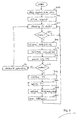
- the flow chart of Figure 3 illustrates steps of a method performed in NN when implementing an embodiment of the present invention.
- the procedure begins at a stage where NN is operable and connected to the network.
- a full set of contact information records ⁇ contact_info_U1> is stored (step 300) into the network node.
- the full contact information is an XML file that comprises elements ⁇ name>, ⁇ address>, ⁇ office>, ⁇ company>, ⁇ phone>, and ⁇ mobile>.
- the elements ⁇ name>, ⁇ address>, ⁇ office> comprise subelements ⁇ first-name>, ⁇ surname>, ⁇ street>, ⁇ number>, ⁇ city>, ⁇ state>, as follows:
- the authorization policy comprises XML files, each of which comprises a SIMPLE filter.
- SIMPLE refers in this embodiment to SIP for Instant Messaging and Presence Leverag-ing Extensions protocol that is designed to share presence and instant messaging information across different service providers' networks.
- SIMPLE uses the session initiation protocol (SIP) and existing implementations of SIP to provide presence and instant messaging service.
- SIP session initiation protocol
- the XML file is associated with a group definition such that the XML file is activated when a member of the corresponding group is the requesting user.
- the SIMPLE filter used here as an XML filter provides a mechanism for defining preferred content to be delivered and rules for when that information is to be delivered.
- a ⁇ what> element of the XML filter may be used to define the content to be delivered to the user. It does not specify the exact content but the rules that are used to construct the information.
- the ⁇ what> element may contain one or more ⁇ include> elements to add records to a filtered XML file and one or more ⁇ exclude> elements to deplete records from the filtered XML file. In this example, for office contacts records Mr. Smith's first name, surname, and contact information to the office are included, but the home address and the mobile phone number are not.
- Mr. Smith would also like to share the home address, but not the mobile phone number that is for work use only.
- Mr. Smith stores another file f2 that comprises a filter '234'
- NN checks incoming requests and if the source address of the request is 'adam.jones@nsn.com', an action for providing the view for office contacts is initiated. This is done by calling and activating filter file f1 described above.
- group definitions may be included in the ruleset, as described above, or in one or more separate XDM files.
- the conditions do not necessarily have to refer to an URI. Any other address or identity type may be applied.
- other matching criteria may be applied without deviating from the scope of protection. For example, separation to groups may be determined on the basis of domain name, or the server the request is originated from.
- NN becomes standby (step 304) for requests for U1 contact information. If (step 306) a request REQ for contact information of U1 is received (step 308) from U2, NN retrieves (step 310) the stored ruleset ⁇ con-tact_info_U1> and checks (step 312) whether a rule corresponding to U2 information included in the request exists. If (step 314) no match is detected, a default operation is initiated (step 316). In this example, a default function is to deny access from any non-familiar requester. A default operation could also comprise providing only some elementary information on U1, like name, company name and office number that have been traditionally available in printed phone books.
- step 314) If (step 314) a match is found (e.g. request received from Mr. Jones), NN retrieves (step 318) a filter file f1 and applies (step 320) f1 to the full contact information file to generate (step 322) a XML file comprising filtered contact information f: ⁇ contact_info> available to U2. NN sends (step 324) the generated f: ⁇ contact_info> file to the requesting user and returns to step 304 to standby for more requests.
- a match e.g. request received from Mr. Jones
- NN retrieves (step 318) a filter file f1 and applies (step 320) f1 to the full contact information file to generate (step 322) a XML file comprising filtered contact information f: ⁇ contact_info> available to U2.
- NN sends (step 324) the generated f: ⁇ contact_info> file to the requesting user and returns to step 304 to standby for more requests.
- the request is interpreted as a request to provide any available contact information of U1 to the requesting user U2.
- the request may identify specific records to be retrieved and the network node may provides from the group of requested records only a subset of records that are available to the requesting user U2.
- any contact information of user U1 may be stored and updated in one place and the changes to the contact information itself or to the availability of specific records may be immediately reflected to numerous other users without laborious task of adjusting each user specific view separately.
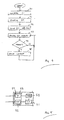
- a flow chart of Figure 4 illustrates steps of a method performed in a communication device of U1 in the embodiment of Figure 1 .
- the procedure starts when the communication device is operable and compiles (step 40) one or more pieces of contact information to be shared by means of a network node.
- the device compiles (step 41) an access policy to be implemented in the network node.
- the pieces of information and guidelines for rules of the access policy may, for example, be automatically compiled by an application from the configuration files in the device memory and/or on the basis of information input by the user through the user interface of the device.
- the generated contact information and the information for generating the access policy are sent (step 42) to the network node.
- the device becomes standby (step 43) for changes in the contact information or the access policy definitions. If (step 44) a change is detected, the device sends (step 45) information of the change to the network node.
- the contact information U1 may be made available to a numerous group of other users centrally via the network node, but the availability of separate pieces of information is controlled efficiently according to the preferences of the user, but with minimal effort to the providing user.
- FIG. 5 illustrates an exemplary hardware configuration for the implementation of embodied apparatuses, for example applicable as the network node NN, or a communication device of U1 or U2 of Figure 1 .
- the apparatus comprises a control unit 51, a processor element that comprises an arithmetic logic module, a number of special registers and control circuits.
- the apparatus also comprises a memory unit 52, a data medium where computer-readable data or programs or user data can be stored.
- the memory means typically comprise memory modules that allow both reading and writing (RAM), and memory modules whose contents can only be read (ROM).
- the apparatus also comprises an interface unit 53 with input unit 54 for inputting data for internal processing in the apparatus, and output unit 55 for outputting data from the internal processes of the apparatus.
- Examples of said input unit 54 in a network node NN comprise plug-in units acting as a gateway for information delivered to its external connection points.
- the input unit 54 may also comprise a keypad, or a touch screen, a microphone, or the like.
- Examples of said output unit 55 in the network node NN include plug-in unit feeding information to the lines connected to its external connection points.
- the output unit 55 may also comprise a screen, a touch screen, a loudspeaker, or the like.
- the interface unit 53 of a mobile station typically comprises at least a user interface unit for communicating with the user and a radio interface unit for communication over the radio access network.
- the user terminal may comprise additional interface units, for communication over another type of networks, or in another frequency, or over local communication technologies, as described above.
- control unit 51, memory unit 52, and interface block 53 are electrically interconnected to perform systematic execution of operations on received and/or stored data according to predefined, essentially programmed processes of the apparatus.
- these operations comprise functions for implementing the logical units, operations and interfaces of the network node NN as described in Figures 1 to 3 above, or of a communication device of user U1, as described in Figures 1 and 4 above.
- the units and blocks of the apparatus may be implemented as one or more integrated circuits, such as application-specific integrated circuits (ASIC).
- ASIC application-specific integrated circuits
- Other hardware embodiments are also feasible, such as a circuit built of separate logic components. A hybrid of these different may also be applied. All modifications and configurations required for implementing functionality of an embodiment may be performed as routines, which may be implemented as added or updated software routines, application circuits (ASIC) and/or programmable circuits. Software routines may be downloaded into the apparatus.
- the computer programs may be stored on a computer program distribution medium readable by a computer or a processor.
- the computer program medium may be, for example but not limited to, an electric, magnetic, optical, infrared or semiconductor system, device or transmission medium.
- the computer program medium may include at least one of the following media: a computer readable medium, a program storage medium, a record medium, a computer readable memory, a random access memory, an erasable programmable read-only memory, a computer readable software distribution package, a computer readable signal, a computer readable telecommunications signal, computer readable printed matter, and a computer readable compressed software package.
Landscapes
- Engineering & Computer Science (AREA)
- Computer Networks & Wireless Communication (AREA)
- Signal Processing (AREA)
- Computer Hardware Design (AREA)
- Computer Security & Cryptography (AREA)
- Computing Systems (AREA)
- General Engineering & Computer Science (AREA)
- Mobile Radio Communication Systems (AREA)
Priority Applications (1)
| Application Number | Priority Date | Filing Date | Title |
|---|---|---|---|
| EP08153529A EP2106078A1 (fr) | 2008-03-28 | 2008-03-28 | Accès contrôlé aux informations de contact d'un utilisateur |
Applications Claiming Priority (1)
| Application Number | Priority Date | Filing Date | Title |
|---|---|---|---|
| EP08153529A EP2106078A1 (fr) | 2008-03-28 | 2008-03-28 | Accès contrôlé aux informations de contact d'un utilisateur |
Publications (1)
| Publication Number | Publication Date |
|---|---|
| EP2106078A1 true EP2106078A1 (fr) | 2009-09-30 |
Family
ID=39683973
Family Applications (1)
| Application Number | Title | Priority Date | Filing Date |
|---|---|---|---|
| EP08153529A Withdrawn EP2106078A1 (fr) | 2008-03-28 | 2008-03-28 | Accès contrôlé aux informations de contact d'un utilisateur |
Country Status (1)
| Country | Link |
|---|---|
| EP (1) | EP2106078A1 (fr) |
Citations (2)
| Publication number | Priority date | Publication date | Assignee | Title |
|---|---|---|---|---|
| US20030084069A1 (en) * | 2001-05-29 | 2003-05-01 | David Boreham | Method and system for creating and utilizing managed roles in a directory system |
| US20070106698A1 (en) * | 2005-11-07 | 2007-05-10 | Microsoft Corporation | Server based automatically updating address book |
-
2008
- 2008-03-28 EP EP08153529A patent/EP2106078A1/fr not_active Withdrawn
Patent Citations (2)
| Publication number | Priority date | Publication date | Assignee | Title |
|---|---|---|---|---|
| US20030084069A1 (en) * | 2001-05-29 | 2003-05-01 | David Boreham | Method and system for creating and utilizing managed roles in a directory system |
| US20070106698A1 (en) * | 2005-11-07 | 2007-05-10 | Microsoft Corporation | Server based automatically updating address book |
Non-Patent Citations (1)
| Title |
|---|
| MYERS CARNEGIE MELLON J G: "IMSP -- Internet Message Support Protocol; draft-myers-imap-imsp-00.txt", IETF STANDARD-WORKING-DRAFT, INTERNET ENGINEERING TASK FORCE, IETF, CH, 1 March 1994 (1994-03-01), XP015032923, ISSN: 0000-0004 * |
Similar Documents
| Publication | Publication Date | Title |
|---|---|---|
| CN100536442C (zh) | 对通信会话进行路由的系统和方法 | |
| US7818020B1 (en) | System and method for joining communication groups | |
| US8375360B2 (en) | Provision of services over a common delivery platform such as a mobile telephony network | |
| US20070073888A1 (en) | System and method to control transactions on communication channels based on universal identifiers | |
| US9294867B2 (en) | Provision of services over a common delivery platform such as a mobile telephony network | |
| CN101635772A (zh) | 一种呼叫信息管理的方法及其系统 | |
| US8472430B2 (en) | VoIP packet prioritization | |
| US20160149970A1 (en) | Distributed programmable connection method to establish peer-to-peer multimedia interactions | |
| JP3917067B2 (ja) | Web提供システム、Web提供方法、これらに用いる端末、及び、端末制御プログラム | |
| US8291077B2 (en) | Provision of services over a common delivery platform such as a mobile telephony network | |
| US20070253407A1 (en) | Enhanced VoIP services | |
| US20150017959A1 (en) | Method for managing the establishment of a digital connection | |
| KR101922985B1 (ko) | 연락처 정보의 구독을 초대하는 장치 및 방법 | |
| US20070239685A1 (en) | Integrated user interface | |
| US8842660B2 (en) | VoIP variable metadata | |
| CN104079694A (zh) | 基于网络的通讯录实现方法及装置 | |
| KR101978972B1 (ko) | 향상된 자동 발신자 식별 해석 | |
| US20080178253A1 (en) | User Access Policy for Storing Offline | |
| KR20130012199A (ko) | 메시징 서비스와 타 서비스 간의 상호 연동을 통한 연락처 제공 방법 및 장치 | |
| US7697511B2 (en) | Selective voice switching of multiparty communications | |
| US20060161616A1 (en) | Provision of services over a common delivery platform such as a mobile telephony network | |
| EP2106078A1 (fr) | Accès contrôlé aux informations de contact d'un utilisateur | |
| EP1681832A1 (fr) | Fourniture de services à travers une plateforme commune de livraison tel qu'un réseau mobile de téléphonie | |
| CN103179209A (zh) | 基于电信网络的通讯录实现方法及装置 | |
| CN101026515A (zh) | 一种在分组网中平等接入及初试路由过滤的方法 |
Legal Events
| Date | Code | Title | Description |
|---|---|---|---|
| PUAI | Public reference made under article 153(3) epc to a published international application that has entered the european phase |
Free format text: ORIGINAL CODE: 0009012 |
|
| AK | Designated contracting states |
Kind code of ref document: A1 Designated state(s): AT BE BG CH CY CZ DE DK EE ES FI FR GB GR HR HU IE IS IT LI LT LU LV MC MT NL NO PL PT RO SE SI SK TR |
|
| AX | Request for extension of the european patent |
Extension state: AL BA MK RS |
|
| AKX | Designation fees paid | ||
| REG | Reference to a national code |
Ref country code: DE Ref legal event code: 8566 |
|
| STAA | Information on the status of an ep patent application or granted ep patent |
Free format text: STATUS: THE APPLICATION IS DEEMED TO BE WITHDRAWN |
|
| 18D | Application deemed to be withdrawn |
Effective date: 20100331 |