EP2106148A2 - Procédé et appareil pour coder/décoder des informations relatives à une mode d'intra-prédiction de vidéo - Google Patents
Procédé et appareil pour coder/décoder des informations relatives à une mode d'intra-prédiction de vidéo Download PDFInfo
- Publication number
- EP2106148A2 EP2106148A2 EP20090156745 EP09156745A EP2106148A2 EP 2106148 A2 EP2106148 A2 EP 2106148A2 EP 20090156745 EP20090156745 EP 20090156745 EP 09156745 A EP09156745 A EP 09156745A EP 2106148 A2 EP2106148 A2 EP 2106148A2
- Authority
- EP
- European Patent Office
- Prior art keywords
- sub
- ipm
- units
- information
- ipms
- Prior art date
- Legal status (The legal status is an assumption and is not a legal conclusion. Google has not performed a legal analysis and makes no representation as to the accuracy of the status listed.)
- Withdrawn
Links
Images






Classifications
-
- H—ELECTRICITY
- H04—ELECTRIC COMMUNICATION TECHNIQUE
- H04N—PICTORIAL COMMUNICATION, e.g. TELEVISION
- H04N19/00—Methods or arrangements for coding, decoding, compressing or decompressing digital video signals
- H04N19/10—Methods or arrangements for coding, decoding, compressing or decompressing digital video signals using adaptive coding
- H04N19/102—Methods or arrangements for coding, decoding, compressing or decompressing digital video signals using adaptive coding characterised by the element, parameter or selection affected or controlled by the adaptive coding
- H04N19/103—Selection of coding mode or of prediction mode
- H04N19/11—Selection of coding mode or of prediction mode among a plurality of spatial predictive coding modes
-
- H—ELECTRICITY
- H04—ELECTRIC COMMUNICATION TECHNIQUE
- H04N—PICTORIAL COMMUNICATION, e.g. TELEVISION
- H04N19/00—Methods or arrangements for coding, decoding, compressing or decompressing digital video signals
- H04N19/10—Methods or arrangements for coding, decoding, compressing or decompressing digital video signals using adaptive coding
- H04N19/169—Methods or arrangements for coding, decoding, compressing or decompressing digital video signals using adaptive coding characterised by the coding unit, i.e. the structural portion or semantic portion of the video signal being the object or the subject of the adaptive coding
- H04N19/17—Methods or arrangements for coding, decoding, compressing or decompressing digital video signals using adaptive coding characterised by the coding unit, i.e. the structural portion or semantic portion of the video signal being the object or the subject of the adaptive coding the unit being an image region, e.g. an object
- H04N19/176—Methods or arrangements for coding, decoding, compressing or decompressing digital video signals using adaptive coding characterised by the coding unit, i.e. the structural portion or semantic portion of the video signal being the object or the subject of the adaptive coding the unit being an image region, e.g. an object the region being a block, e.g. a macroblock
-
- H—ELECTRICITY
- H04—ELECTRIC COMMUNICATION TECHNIQUE
- H04N—PICTORIAL COMMUNICATION, e.g. TELEVISION
- H04N19/00—Methods or arrangements for coding, decoding, compressing or decompressing digital video signals
- H04N19/46—Embedding additional information in the video signal during the compression process
-
- H—ELECTRICITY
- H04—ELECTRIC COMMUNICATION TECHNIQUE
- H04N—PICTORIAL COMMUNICATION, e.g. TELEVISION
- H04N19/00—Methods or arrangements for coding, decoding, compressing or decompressing digital video signals
- H04N19/60—Methods or arrangements for coding, decoding, compressing or decompressing digital video signals using transform coding
- H04N19/61—Methods or arrangements for coding, decoding, compressing or decompressing digital video signals using transform coding in combination with predictive coding
Definitions
- the present invention generally relates to a method and apparatus for video coding/decoding. More particularly, the present invention relates to a method and apparatus for encoding/decoding information about an intra-prediction mode.
- Digital video compression techniques have been proposed to achieve low data rates or reduce storage areas with high video quality during transmission or storage of a video signal. These digital video compression techniques are realized by international standards such as H.261, H.263, H.264, Moving Picture Experts Group-2 (MPEG-2), and MPEG-4.
- the compression techniques achieve relatively high compression rates by Discrete Cosine Transform (DCT), Motion Compensation (MC), or the like.
- DCT Discrete Cosine Transform
- MC Motion Compensation
- the video compression techniques find their applications in efficient transmission of video data streams over various digital networks including a portable phone network, a computer network, a cable network, and a satellite network, for example. They are also employed for efficiently storing video data streams in memory media such as a hard disk, an optical disk, and a Digital Video Disk (DVD).
- DCT Discrete Cosine Transform
- MC Motion Compensation
- a communication network that delivers video data can limit data rates for encoding.
- a data channel in a satellite broadcasting system or a digital cable TV network carries data usually at a Constant Bit Rate (CBR) and the capacity of a storage medium like a disk is limited.
- CBR Constant Bit Rate
- a video coding process carries out an appropriate trade-off between video quality and the number of bits required for image compression. Because video coding is a relatively complex process, for example, when video coding is implemented in software, the video coding process needs a relatively large number of Central Processing Unit (CPU) cycles. What is worse, if video coding is performed in real time, temporal restrictions limit coding accuracy, resulting in a limited video quality.
- CPU Central Processing Unit
- Video coding is critical in a real environment.
- video coding methods have been proposed with the aim to reduce process complexity and data rates as much as possible and achieve high image quality.
- intra-prediction coding is performed spatially using neighboring pixel values. Decisions as to what neighboring pixels to use is important to improve coding efficiency. To do so, an optimal intra-prediction direction is determined and the values of pixels to be encoded are predicted using neighboring pixel values along the intra-prediction direction. An encoder notifies a decoder of the intra-prediction direction so that the decoder can calculate the predictive values of the pixels for decoding using the neighboring pixels in the same direction.
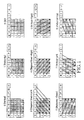
- FIG. 1 illustrates H.264 Intra-Prediction Modes (IPMs) for a block of 4x4 pixels and FIG. 2 illustrates H.264 IPMs for a block of 16x16 pixels.
- IPMs H.264 Intra-Prediction Modes
- H.264 offers nine 4x4 IPMs, Mode 0 (Vertical), Mode 1 (Horizontal), Mode 2 (DC), Mode 3 (Diagonal Down-Left), Mode 4 (Diagonal Down-Right), Mode 5 (Vertical-Right), Mode 6 (Horizontal-Down), Mode 7 (Vertical-Left), and Mode 8 (Horizontal-Up).
- the values of pixels I to L to the left of the 4x4 block are used as the predicted values of the 4x4 pixels. That is, the value of the pixel I is used as the predicted values of four pixels in the first row of the 4x4 block, the value of the pixel J is used as the predicted values of four pixels in the second row of the 4x4 block, the value of the pixel K is used as the predicted values of four pixels in the third row of the 4x4 block, and the value of the pixel L is used as the predicted values of four pixels in the fourth row of the 4x4 block.
- Residual data is acquired by calculating the differences between the predicted values and the pixel values of the current 4x4 block. Then the residual data is encoded and decoded. The video data of the 4x4 block are recovered by combining the decoded residual data with the 4x4 pixels of the current block. The cost between the recovered video data and the video data of the original 4x4 block is calculated. In the same manner, the current 4x4 block is predicted in the nine IPMs and the costs of the 4x4 block are calculated for the nine IPMs. Then an IPM with a minimum cost is selected and information indicating the selected IPM is signaled to a decoder.
- IPM information information about the IPM of a particular pixel unit (e.g. 4x4 pixel unit) is not simply encoded. Rather, the IPM information is encoded based on the correlation with the IPMs of neighboring pixel units (e.g. 4x4 pixel units).
- FIG. 3 illustrates exemplary sub-units that are intra-predicted in H.264/AVC.
- a coding unit is a 16x16 macroblock and a sub-unit is a 4x4 pixel unit being an intra-prediction coding unit.
- Intra-prediction coding is in progress for sub-unit C and sub-units A and B have been already intra-prediction encoded.
- the value of the most probable mode is compared with the value of the IPM of sub-unit C and the comparison result is transmitted. For example, in H.264/AVC, if the value of the most probable mode is equal to that of the IPM of sub-unit C, a 1-bit flag, use_most_probable_mode is set to '1' . If they are different, the flag is set to '0' and a 3-bit fixed-length codeword indicating one of the remaining eight IPMs except the most probable mode is transmitted. Specifically, if the value of the IPM of sub-unit C is greater than that of the most probable mode, the 3-bit fixed-length codeword is set to (the value of the current IPM-1).
- the most probable mode is mode 3. Because the most probable mode is different from the IPM of sub-unit C, use_most_probable_mode is set to '0' and the 3-bit fixed-length codeword is set to '011' representing 3 calculated by subtracting 1 from the value of mode 4, i.e. 4.
- IPM information about a coding unit e.g. a macroblock
- a coding unit e.g. a macroblock
- 16 bits are required for encoding the 4x4 IPM information even though the IPM of every 4x4 pixel unit is identical to the most probable mode.
- An aspect of an embodiment of the present invention is to address at least the problems and/or disadvantages described above and to provide at least the advantages described below. Accordingly, an aspect of an embodiment of the present invention is to provide a method and apparatus for encoding/decoding IPM information based on a relationship between a current block and neighboring blocks, to thereby effectively increase compression rate.
- a method for encoding IPM information in which a coding unit is received, IPMs of a plurality of sub-units included in the coding unit are determined, a relation between an IPM of each sub-unit and IPMs of neighboring sub-units of each sub-unit is checked, and information about IPMs of a plurality of sub-units according to the relations is encoded in an integrated manner.
- the IPMs of each sub-unit and the neighboring sub-units of each sub-unit can be checked, a Representative Intra Mode (RIM) of each sub-unit can be determined using the IPMs of the neighboring sub-units of each sub-unit, and it is determined whether the IPM and RIM of each sub-unit are identical.
- Information about the IPMs of sub-units with the same IPM and RIM pairs can be encoded in the integrated manner.
- Patterns each being a distribution of sub-units having the same IPM and RIM pairs can be preset and information indicating a pattern corresponding to a distribution of the sub-units with the same IPM and RIM pairs can be encoded.
- part of the sub-units included in the coding unit have same IPM and RIM pairs, information indicating a pattern corresponding to a distribution of part of the sub-units having the same IPM and RIM pairs is encoded and information indicating the IPMs of sub-units not having the same IPM and RIM pairs is encoded.
- the RIM of the each sub-unit can be an IPM with a smaller value between the IPMs of the neighboring sub-units of the each sub-unit.
- an apparatus for encoding IPM information in which an IPM decider determines IPMs of a plurality of sub-units included in a coding unit and checks a relation between an IPM of each sub-unit and IPMs of neighboring sub-units of each sub-unit, a pattern analyzer determines a pattern formed according to the relations, and an Intra-Predictive Mode Integration Pattern (IMIP) encoder encodes at least one of information indicating the pattern and information about IPMs of sub-units.
- IMIP Intra-Predictive Mode Integration Pattern
- the IPM decider checks the IPMs of each sub-unit and the neighboring sub-units of each sub-unit, determines a RIM of each sub-unit using the IPMs of the neighboring sub-units of each sub-unit, and determines whether the IPM and RIM of each sub-unit are identical.
- the pattern analyzer presets patterns each being a distribution of sub-units having the same IPM and RIM pairs, determines a pattern corresponding to a distribution of sub-units with the same IPM and RIM pairs in the coding unit, and notifies the IMIP encoder of the determined pattern.
- the IMIP encoder encoders information indicating a pattern corresponding to a distribution of all the sub-units with the same IPM and RIM pairs.
- the IMIP encoder encodes information indicating a pattern corresponding to a distribution of part of the sub-units having the same IPM and RIM pairs and encodes information indicating the IPMs of sub-units not having the same IPM and RIM pairs.
- the IMIP encoder encodes information indicating a pattern corresponding to none of the sub-units having the same IPM and RIM pairs and encodes information indicating the IPMs of the sub-units included in the coding unit.
- a method for decoding encoded IPM information in which an encoded bit stream is received, information indicating an IMIP is decoded from the bit stream, and IPMs of sub-units for IPM information was encoded in an integrated manner and/or IPMs of sub-units for IPM information was not encoded in the integrated manner are determined according to the IMIP information.
- RIMs of the sub-units included in the coding unit can be determined and set as the IPMs of the sub-units.
- IMIP information indicates that IPM information about part of sub-units included in a coding unit was encoded in the integrated manner
- RIMs of the sub-units for which IPM information was encoded in the integrated manner can be determined and set as the IPMs of the sub-units, and the IPMs of sub-units for IPM information was not encoded in the integrated manner can be determined.
- the IPMs of the sub-units included in the coding unit can be determined, on a one by one basis.
- an apparatus for decoding encoded IPM information in which a demultiplexer receives an encoded bit stream and extracting information indicating an IMIP from the bit stream, and an intra decoder determines IPMs of sub-units for IPM information was encoded in an integrated manner and selectively determines IPMs of sub-units for IPM information was not encoded in the integrated manner according to the IMIP information.
- the intra decoder determines RIMs of the sub-units included in the coding unit and sets the RIMs of the sub-units as the IPMs of the sub-units.
- the intra decoder determines RIMs of the sub-units for which IPM information was encoded in the integrated manner, sets the RIMs of the sub-units as the IPMs of the sub-units, and determines the IPMs of sub-units for IPM information was not encoded in the integrated manner.
- the intra decoder determines the IPMs of the sub-units included in the coding unit, on a one by one basis.
- a coding unit according to the embodiments of the present invention is a macroblock being an H.264/AVC coding unit for encoding the pixels of a picture.
- a coding unit e.g. macroblock
- IPM decision is made on a sub-unit for sub-unit basis.
- the sub-unit can be a block of 8x8, 4x4, or 2x2 pixels according to the H.264/AVC standard.
- IPM information coding and decoding method of the present invention is based on H.264/AVC, uses a macroblock as a coding unit, and forms a sub-unit with 8x8, 4x or 2x2 pixels, to which the present invention is not limited, it is to be clearly understood that the present invention is applicable for any other video coding and decoding.
- a picture for which encoding is in process is referred to as a Current Picture (CP) and a macroblock for which encoding is in process is referred to as a Current MacroBlock (CMB).
- CMB Current MacroBlock
- a sub-unit for which IPM information coding is in process is referred to as a Current Sub-block (CS) and an IPM determined based on the IPMs of neighboring coding units (or sub-units) is referred to as a Representative Intra Mode (RIM).
- CS Current Sub-block
- RIM Representative Intra Mode
- the IPM information coding method of the present invention integrally encodes sub-units, if IPM information about the sub-units can be encoded in an integrated manner. For instance, a pattern of sub-units of which the IPM information can be encoded in an integrated manner is defined based on the correlation and the IPM information is encoded according to the pattern.
- the sub-unit pattern allowing integrated coding of IPM information is referred to as an Intra Prediction Mode Integration Pattern (IMIP).
- IMIP Intra Prediction Mode Integration Pattern
- the IPM information decoding method of the present invention is characterized in that integrally coded information about sub-units (e.g. an IMIP) is checked and IPM information about a coding unit is decoded by applying the checked information to a predetermined condition in accordance with an encoding method.
- integrally coded information about sub-units e.g. an IMIP
- FIG. 4 is a block diagram of an intra-prediction video coding apparatus according to an embodiment of the present invention.
- the intra-prediction video coding apparatus includes an intra predictor 110, a subtractor 125, a memory 130, a residual data encoder 140, a residual data decoder 150, an adder 155, an entropy encoder 160, a controller 180, and a Multiplexer (MUX) 190.
- MUX Multiplexer
- the controller 180 indicates an IPM to the intra predictor 110.
- the IPM can be one of the IPMs illustrated in FIG. 1 .
- the intra predictor 110 predicts a CS (e.g. an 8x8 or 4x4 block) according to the IPM, referring to previously predicted pixels stored in the memory 130, for example, neighboring pixels above or to the left of the CS and calculates the cost of the IPM for the CS. In this manner, the intra predictor 110 performs intra prediction on the CS in the IPMs illustrated in FIG. 1 and calculates the costs of the respective IPMs. Then the intra predictor 110 selects an IPM with a minimum cost for the CS.
- CS e.g. an 8x8 or 4x4 block
- the controller 180 notifies the intra predictor 110 of IPMs one by one in an embodiment of the present invention, to which the present invention is not limited, it can be further contemplated that upon receipt of a command indicating intra-prediction for a sub-unit from the controller 180, the intra predictor 110 predicts the sub-unit sequentially in the IPMs.
- the intra predictor 110 determines a RIM for the CS based on the IPMs of its neighboring sub-units in an embodiment of the present invention.
- the present invention can be a minimum (min) function for selecting the minimum between two values in an embodiment of the present invention.
- the present invention is not limited to the min function and thus the RIM decision function can be a maximum (max) function for selecting the maximum between two values.
- the intra predictor 110 compares the IPMs and RIMs of the sub-units of the coding unit, detects a distribution of sub-units with IPMs equal to RIMs, determines whether the sub-unit distribution corresponds to a predetermined IMIP, and selects the IMIP. Then, the intra predictor 110 generates information indicating the selected IMIP.
- the subtractor 125 calculates the differences between the original sub-units and the intra-predicted sub-units (hereinafter, referred to as predicted sub-units) received from the intra predictor 110 and thus outputs residual data.
- the residual data encoder 140 transforms the residual data received from the subtractor 120 by a transformation scheme like DCT, quantizes the transformed residual data, and encodes the quantized residual data.
- the residual data decoder 150 decodes the encoded residual data.
- the adder 155 generates recovered units by combining the predicted sub-units received from the intra predictor 110 with the residual data received from the residual data decoder 150.
- the entropy encoder 160 entropy-encodes the residual data.
- the MUX 190 multiplexes the entropy-coded residual data, information indicating the IMIP, information indicating IPMs, and information about the entropy-coded residual data and outputs the resulting bit stream.
- the controller 180 provides overall control to each function block. To select an IPM for the CS, the controller 180 controls the operations of the intra predictor 110, the subtractor 125, the memory 130, the residual data encoder 140, the residual data decoder 150, and the adder 155.
- the controller 180 controls the intra predictor 110 to generate a plurality of predicted sub-units by predicting each sub-unit in a plurality of IPMs and controls the subtractor 125, the residual data encoder 140, and the residual data decoder 150 to encode and decode residual data between predicted sub-units and original sub-units in the IPMs, and controls the adder 155 and the memory 130 to generate and store recovered sub-units by combining the predicted sub-units with the recovered residual data.
- FIG. 5 is a detailed block diagram of the intra predictor according to an embodiment of the present invention.
- the intra predictor 110 includes an IPM decider 111, a pattern analyzer 113, and an IMIP encoder 115.
- the IPM decider 111 determines an IPM for a CS. When being notified of each IPM from the controller 180, the IPM decider 111 checks neighboring pixels according to the IPM and generates a predicted sub-unit in the IPM. For instance, the IPM decider 111 generates predicted sub-units according to the plurality of IPMs illustrated in FIG. 1 . The IPM decider 111 receives recovered sub-units corresponding to the predicted sub-units, calculates the costs of the recovered units, and checks a recovered sub-unit with a minimum cost. Then the IPM decider 111 selects an IPM that has produced the recovered unit with the minimum cost for the CS.
- the IPM decider 111 determines IPMs for the sub-units of a coding unit by repeating the above operation.
- the IPM decider 111 determines RIMs for the sub-units based on the IPMs of their neighboring coding units (or sub-units). Preferably, the IPM decider 111 can determine a RIM for the CS by computing Equation (2).
- the function of Equation (2) can be a min function. That is, the IPM decider 111 can select an IPM with a minimum identification value between the sub-units above and to the left of the CS, as the RIM of the CS.
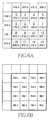
- FIG. 6A illustrates IPMs for a coding unit according to an embodiment of the present invention
- FIG. 6B illustrates RIMs for the coding unit according to an embodiment of the present invention.
- numerals on sub-units denote an order of setting IPMs for the sub-units.
- the IPM decider 111 determines IPMs for the sub-units of a coding unit as illustrated in FIG. 6A and determines RIMs for the sub-units as illustrated in FIG. 6B .
- the IPM of sub-unit 7 is IPM2 and its RIM is decided as RIM 0 with the lesser identification value between sub-units 5 and 6 above and to the left of sub-unit 7.
- the RIM setting function is a Minimum (min) function in an embodiment of the present invention, to which the present invention is not limited, the RIM setting function can be a max function.
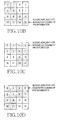
- the pattern analyzer 113 pre-defines IMIPs as illustrated in FIGs. 7 to 10 .
- the IMIPs include pattern 1 with all sub-units of a coding unit having the same IPM-RIM pairs as illustrated in FIG. 7 , pattern 2 with sub-units having the same IPM-RIM pairs in right 8x16 block areas as illustrated in FIG. 8A , pattern 3 with sub-units having the same IPM-RIM pairs in left 8x16 block areas as illustrated in FIG. 8B , pattern 4 with sub-units having the same IPM-RIM pairs in lower 8x16 block areas as illustrated in FIG. 9A , pattern 5 with sub-units having the same IPM-RIM pairs in upper 8x16 block areas as illustrated in FIG.
- pattern 6 with sub-units having the same IPM-RIM pairs in all block areas except upper left 8x8 block areas as illustrated in FIG. 10A pattern 7 with sub-units having the same IPM-RIM pairs in all block areas except upper right 8x8 block areas as illustrated in FIG. 10B
- pattern 8 with sub-units having the same IPM-RIM pairs in all block areas except lower left 8x8 block areas as illustrated in FIG. 10C pattern 9 with sub-units having the same IPM-RIM pairs in all block areas except lower right 8x8 block areas as illustrated in FIG. 10D
- the pattern analyzer 113 receives information about the IPMs and RIMs of the sub-units of the coding unit from the IPM decider 111, compares the IPMs with the RIMs for the respective sub-units, and checks a distribution of sub-units having the same IPM-RIM pairs. The pattern analyzer 113 then detects an IMIP identical to the sub-unit distribution.
- the IMIP encoder 115 receives information indicating the IMIP from the pattern analyzer 113 and encodes the IMIP information.
- the IMIP encoder 115 selectively encodes information indicating the IPMs of sub-units with pairs of different IPM and RIM in relation to the IMIP.
- the above-described intra-prediction video coding apparatus may further include a motion estimator, a motion compensator, and a deblocking filter based on H.264/AVC.
- the residual data encoder 140 and the residual data decoder 150 may further perform transformation based on DCT and quantization (inverse transformation like inverse DCT and dequantization) for particular pictures (e.g. P or B pictures based on MPEG-2 or H.264 standard.
- Predicted Pictures(P pictures) include macroblocks that may be coded with forward prediction from references made from previous I and P pictures or may be intra coded.
- Bi-directionally predicted pictures(B Pictures) include macroblocks may be coded with interpolated prediction from past and/or future I or P references)as well as for residual data according to H.264/AVC.
- intra-prediction video coding apparatus performs DCT as a transformation technique, to which the present invention is not limited, it is obvious that other various transformation techniques can be used.
- the intra-prediction video coding apparatus may further perform H.264/AVC-based video coding as well as the IPM information coding of the present invention.
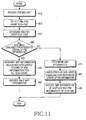
- FIG. 11 is a flowchart illustrating an IPM information coding method according to an embodiment of the present invention.
- a coding unit for example, a macroblock, is received in step 410. Every sub-unit of the coding unit is predicted and an IPM with a minimum cost is selected for the sub-unit in step 420.
- the controller 180 sequentially indicates the nine IPMs illustrated in FIG. 1 to the intra predictor 110 and at the same time, commands the intra predictor 110 to operate.
- the IPM decider 111 generates predicted sub-units of each sub-unit in the IPMs.
- the predicted units are sequentially processed in the subtractor 125, the residual data encoder 140, and the residual data decoder 150, recovered residual data is generated.
- the adder 155 generates recovered sub-units by combining the predicted sub-units with the recovered residual data. In this manner, recovered sub-units are created for the nine IPMs and stored in the memory 130.
- the intra predictor 110 calculates costs between the recovered sub-units and original sub-units and selects an IPM with a minimum cost for the sub-unit. In step 420, IPMs are determined for the sub-units of the coding unit by repeating the above operation.
- a RIM is determined for every sub-unit using the IPMs of neighboring coding units (or sub-units).
- the RIM of a CS is determined by Equation (2).
- the function of Equation (2) can be a min function.
- Step 430 can be performed by the IPM decider 111.
- the IPM decider 111 checks the IPMs of the sub-units above and to the left of the CS and selects an IPM with the lesser identification value between the IPMs as the RIM of the CS.
- numerals denote an order of setting IPMs for the sub-units of a coding unit.
- the manner in which a RIM is set for sub-unit 9 of which the IPM is a ninth determined one in the IPM determination order will be described.
- IPM2 and IPM1 have been selected for sub-unit 3 and sub-unit 8 above and to the left of sub-unit 9, respectively. Therefore, IPM1 having the lesser identification value between the IPMs of the two sub-units 3 and 8 is determined as the RIM of sub-unit 9 as illustrated in FIG. 6B .
- the pattern analyzer 113 Upon receipt of information about the IPMs and RIMs of the sub-units from the IPM decider 111, the pattern analyzer 113 compares the IPMs with the RIMs, and checks a distribution of sub-units having the same IPM-RIM pairs. The pattern analyzer 113 first determines whether the IPM is equal to the RIM for each sub-unit in step 440 and performs steps 450 and 460 if every sub-unit has the same IPM and RIM. That is, the pattern analyzer 113 determines that the sub-unit distribution corresponds to pattern 1 among predetermined IMIPs and notifies the IMIP encoder 115 of pattern 1 in step 450. Then the IMIP encoder 115 encodes only an Identification (ID) indicating pattern 1 as IPM information about the coding unit in step 460.
- ID Identification
- IPM information coding is performed in steps 470, 480 and 490.
- the pattern analyzer 113 determines which pattern among pattern 2 to pattern 10 corresponds to a distribution of sub-units with the same IPM-RIM pairs in step 470 and checks the IPMs of sub-units that are excluded from integrated IPM information coding according to the determined pattern in step 480.
- the pattern analyzer 113 provides information indicating the IMIP and information indicating the IPMs of the sub-units excluded from integrated IPM information coding to the IMIP encoder 115.
- the IMIP encoder 115 encodes the IMIP information and the IPM information in step 490.
- the IMIP encoder 115 encodes information identifying the IPM of each sub-unit to a fixed length or a variable length as the IPM information.
- IPM information about sub-units are encoded in an integrated manner, that is, information indicating an IMIP representing a pattern of sub-units with the same IPM-RIM pairs is encoded without the need for encoding information about individual IPMs of a coding unit or some sub-units of the coding unit. In this way, a plurality of IPMs are actually indicated. As a consequence, IPM information about sub-units of a coding unit can be encoded with a minimum number of bits representing the IDs of the IPMs of the coding unit. For pattern 1, only IMIP information is encoded.
- FIG. 12 is a block diagram of an intra-prediction video decoding apparatus according to an embodiment of the present invention.
- the intra-prediction video decoding apparatus includes a Demultiplexer (DEMUX) 410, an intra decoder 420, a memory 430, an entropy decoder 460, a residual data decoder 470, an adder 475, and a controller 480.
- DEMUX Demultiplexer
- the DEMUX 410 parses a coded bit stream and decodes IMIP information, and provides the decoded IMP information to the intra decoder 420.
- IMIPs are preset between the intra-prediction coding apparatus and the intra-prediction decoding apparatus. If IPM information about all sub-units of a coding unit is encoded in an integrated manner, that is, the IMIP information indicates pattern 1, the DEMUX 410 does not acquire IPM information.
- the DEMUX 410 further decodes IPM information and provides the decoded IMIP information and the decoded IPM information to the intra decoder 420.
- the DEMUX 410 also provides coded residual data to the entropy decoder 460.
- the intra decoder 420 determines IPMs for the sub-units of a coding unit based on the IMIP information and generates predicted sub-units for the sub-units using already recovered neighboring pixel values according to the IPMs.
- the intra decoder 420 determines the RIMs of the sub-units, referring to already determined IPMs of sub-units neighboring to the sub-units and determines the RIMS of the sub-units as their IPMs.
- the RIM calculation is performed in the same manner as in the intra-prediction coding apparatus or method. To do so, the RIMs are computed by a predetermined method. For example, the intra-prediction coding method uses Equation (2) for computing RIMs. Therefore, the intra decoder 420 determines the RIMs by Equation (2).
- the intra decoder 420 checks a distribution of sub-units for which IPM information was encoded in an integrated manner, computes the RIMs of the sub-units, referring to already determined IPMs of sub-units neighboring to the sub-units, and determines the RIMS of the sub-units as their IPMs. Also, the intra decoder 420 determines IPMs for the remaining sub-units for which IPM information was not encoded in the integrated manner by decoding the IPM information received from the DEMUX 410.
- the intra decoder 420 determines the IPMs of the sub-units by decoding the IPM information received from the DEMUX 410.
- the intra decoder 420 generates predicted sub-units for the sub-units using neighboring pixels according to the determined IPMs.
- the entropy decoder 460 generates quantized coefficients by entropy-decoding the received residual data.
- the residual data decoder 470 recovers residual data by de-quantization and inverse transformation of the quantized coefficients.
- the adder 475 recovers video information by combining the predicted-sub-unit data generated by the intra decoder 420 with the residual data.
- the controller 480 provides overall control to the intra-prediction video decoding apparatus by controlling each function block.
- the above-described intra-prediction video decoding apparatus may further include a motion estimator, a motion compensator, and a deblocking filter based on H.264/AVC.
- the residual data decoder 470 may further perform inverse transformation like inverse DCT and dequantization for particular pictures (e.g. P or B pictures) as well as for residual data according to H.264/AVC.
- the intra-prediction video decoding apparatus may further perform H.264/AVC-based video decoding as well as the IPM information decoding of the present invention.
- FIG. 13 is a flowchart illustrating an intra-prediction decoding method according to an embodiment of the present invention.
- the DEMUX 410 receives a bit stream in step 610 and decodes IMIP information from the bit stream in step 620.
- the DEMUX 410 determines from the IMIP information whether IP information about all sub-units of a coding unit was encoded in an integrated manner, that is, the IMIP of the coding unit is pattern 1 in step 630.
- IPMs about the sub-units are determined in steps 640 and 650. That is, the DEMUX 410 provides only the IMIP information to the intra decoder 420 and the intra decoder 420 computes the RIMs of the sub-units, referring to already determined IPMs of sub-units neighboring to the sub-units in step 640.
- the intra decoder 420 determines the RIMs of the sub-units as the IPMs of the sub-units.
- the RIM computation is performed in the same manner as in the intra-prediction coding apparatus or method. For instance, the RIMs are computed by Equation (2) in step 650.
- the DEMUX 410 provides the IMIP information and IPM information indicating the IPMs of sub-units for which IPM information was not encoded in the integrated manner to the intra decoder 420.
- the intra decoder 420 determines the IPMs of the sub-units in steps 660, 670 and 680. If the IMIP information indicates the absence of any sub-unit for which IPM information was encoded in the integrated manner, that is, the IMIP information indicates pattern 10 in step 635, steps 660 and 670 are skipped and step 680 is performed.
- the intra decoder 420 performs steps 660 and 670.
- step 660 the intra decoder 420 checks a distribution of sub-units for which IPM information was encoded in the integrated manner and determined the RIMs of the sub-units, referring to the IPMs of their neighboring sub-units. Then the intra decoder 420 sets the RIMs of the sub-units as their IPMs in step 670.
- the intra decoder 420 sequentially determines the IPMs of sub-units for which IPM information was not encoded in the integrated manner by decoding the IPM information received from the DEMUX 410.
- the determined IPMs of the sub-units are used for intra-prediction of the sub-units.
- Embodiments of the present invention can also be embodied as computer-readable codes on a computer-readable recording medium.
- the computer-readable recording medium is any data storage device that can store data which can thereafter be read by a computer system. Examples of the computer-readable recording medium include, but are not limited to, read-only memory (ROM), random-access memory (RAM), CD-ROMs, magnetic tapes, floppy disks, optical data storage devices, and carrier waves (such as data transmission through the Internet via wired or wireless transmission paths).
- the computer-readable recording medium can also be distributed over network-coupled computer systems so that the computer-readable code is stored and executed in a distributed fashion. Also, function programs, codes, and code segments for accomplishing the present invention can be easily construed as within the scope of the invention by programmers skilled in the art to which the present invention pertains.
Landscapes
- Engineering & Computer Science (AREA)
- Multimedia (AREA)
- Signal Processing (AREA)
- Compression Or Coding Systems Of Tv Signals (AREA)
Applications Claiming Priority (2)
| Application Number | Priority Date | Filing Date | Title |
|---|---|---|---|
| KR20080029291 | 2008-03-28 | ||
| KR1020080100754A KR20090103675A (ko) | 2008-03-28 | 2008-10-14 | 영상의 인트라 예측 모드 부호화/복호화 방법 및 장치 |
Publications (2)
| Publication Number | Publication Date |
|---|---|
| EP2106148A2 true EP2106148A2 (fr) | 2009-09-30 |
| EP2106148A3 EP2106148A3 (fr) | 2010-11-03 |
Family
ID=40852533
Family Applications (1)
| Application Number | Title | Priority Date | Filing Date |
|---|---|---|---|
| EP20090156745 Withdrawn EP2106148A3 (fr) | 2008-03-28 | 2009-03-30 | Procédé et appareil pour coder/décoder des informations relatives à une mode d'intra-prédiction de vidéo |
Country Status (3)
| Country | Link |
|---|---|
| US (1) | US20090245371A1 (fr) |
| EP (1) | EP2106148A3 (fr) |
| JP (1) | JP5166339B2 (fr) |
Cited By (5)
| Publication number | Priority date | Publication date | Assignee | Title |
|---|---|---|---|---|
| EP2391130A3 (fr) * | 2010-05-30 | 2012-02-15 | LG Electronics Inc. | Signalisation améliorée du mode de prédiction intra |
| CN103380622A (zh) * | 2010-12-21 | 2013-10-30 | 韩国电子通信研究院 | 帧内预测模式编码/解码方法和用于其的设备 |
| US9113168B2 (en) | 2009-05-12 | 2015-08-18 | Lg Electronics Inc. | Method and apparatus of processing a video signal |
| US10455248B2 (en) | 2008-10-06 | 2019-10-22 | Lg Electronics Inc. | Method and an apparatus for processing a video signal |
| US10491892B2 (en) | 2010-05-26 | 2019-11-26 | Lg Electronics Inc. | Method and apparatus for processing a video signal |
Families Citing this family (11)
| Publication number | Priority date | Publication date | Assignee | Title |
|---|---|---|---|---|
| CN102986227B (zh) * | 2010-07-15 | 2016-04-20 | 夏普株式会社 | 解码装置、编码装置 |
| TWI586151B (zh) | 2011-05-30 | 2017-06-01 | Jvc Kenwood Corp | An image decoding apparatus, an image decoding method, and an image decoding program recording medium |
| KR101953522B1 (ko) | 2011-06-17 | 2019-02-28 | 가부시키가이샤 제이브이씨 켄우드 | 화상 부호화 장치, 화상 부호화 방법 및 화상 부호화 프로그램, 및 화상 복호 장치, 화상 복호 방법 및 화상 복호 프로그램 |
| WO2013000324A1 (fr) * | 2011-06-28 | 2013-01-03 | Mediatek Singapore Pte. Ltd. | Procédé et appareil de codage de mode intra |
| SMT202400515T1 (it) | 2012-01-20 | 2025-01-14 | Dolby Laboratories Licensing Corp | Dispositivo di mappatura di modalità di predizione intra |
| US10863184B2 (en) * | 2012-08-15 | 2020-12-08 | Texas Instruments Incorporated | Fast intra-prediction mode selection in video coding |
| JP5957513B2 (ja) * | 2014-12-16 | 2016-07-27 | 株式会社日立製作所 | 動画像復号化方法 |
| EP3928522B1 (fr) | 2019-03-12 | 2025-05-07 | Huawei Technologies Co., Ltd. | Conception de rafraîchissement de décodage distribué en codage vidéo |
| MX2021015089A (es) | 2019-06-20 | 2022-01-18 | Jvckenwood Corp | Dispositivo de codificacion de video, metodo de codificacion de video, programa de codificacion de video, dispositivo de decodificacion de video, metodo de decodificacion de video y programa de decodificacion de video. |
| EP3993421A4 (fr) | 2019-06-25 | 2022-08-31 | Jvckenwood Corporation | Dispositif de codage d'image dynamique, procédé de codage d'image dynamique, programme de codage d'image dynamique, dispositif de décodage d'image dynamique, procédé de décodage d'image dynamique et programme de décodage d'image dynamique |
| JP2026513444A (ja) * | 2023-03-30 | 2026-04-27 | オッポ広東移動通信有限公司 | 符号化及び復号化方法、ビットストリーム、エンコーダ、デコーダ及び記憶媒体 |
Family Cites Families (16)
| Publication number | Priority date | Publication date | Assignee | Title |
|---|---|---|---|---|
| CN1882090A (zh) * | 1996-11-07 | 2006-12-20 | 松下电器产业株式会社 | 图像编码装置和图像解码装置 |
| US6765964B1 (en) * | 2000-12-06 | 2004-07-20 | Realnetworks, Inc. | System and method for intracoding video data |
| CN100481955C (zh) * | 2000-12-06 | 2009-04-22 | 真实网络公司 | 对视频数据进行内编码的方法和设备 |
| KR100642043B1 (ko) * | 2001-09-14 | 2006-11-03 | 가부시키가이샤 엔티티 도코모 | 부호화 방법, 복호 방법, 부호화 장치, 복호 장치, 화상 처리 시스템, 및 저장 매체 |
| WO2003043346A1 (fr) * | 2001-11-16 | 2003-05-22 | Ntt Docomo, Inc. | Procede de codage d'image, procede de decodage d'image, codeur et decodeur d'image, programme, signal de donnees informatiques et systeme d'emission d'image |
| US7336711B2 (en) * | 2001-11-16 | 2008-02-26 | Ntt Docomo, Inc. | Image encoding method, image decoding method, image encoder, image decode, program, computer data signal, and image transmission system |
| US7289674B2 (en) * | 2002-06-11 | 2007-10-30 | Nokia Corporation | Spatial prediction based intra coding |
| KR101017094B1 (ko) * | 2002-06-11 | 2011-02-25 | 노키아 코포레이션 | 인트라 코딩에 기반한 공간 예측 |
| JP3940657B2 (ja) * | 2002-09-30 | 2007-07-04 | 株式会社東芝 | 動画像符号化方法と装置及び動画像復号化方法と装置 |
| JP2006246431A (ja) * | 2005-02-07 | 2006-09-14 | Matsushita Electric Ind Co Ltd | 画像符号化装置および画像符号化方法 |
| JP2007116351A (ja) * | 2005-10-19 | 2007-05-10 | Ntt Docomo Inc | 画像予測符号化装置、画像予測復号装置、画像予測符号化方法、画像予測復号方法、画像予測符号化プログラム、及び画像予測復号プログラム |
| JP5044415B2 (ja) * | 2005-11-30 | 2012-10-10 | 株式会社東芝 | 画像符号化/画像復号化方法及び画像符号化/画像復号化装置 |
| JP2010135864A (ja) * | 2007-03-29 | 2010-06-17 | Toshiba Corp | 画像符号化方法及び装置並びに画像復号化方法及び装置 |
| US8428133B2 (en) * | 2007-06-15 | 2013-04-23 | Qualcomm Incorporated | Adaptive coding of video block prediction mode |
| CN101682531B (zh) * | 2007-06-22 | 2012-09-05 | 汤姆逊许可公司 | 基于竞争的网络中用于媒体访问的方法和设备 |
| JP2009111691A (ja) * | 2007-10-30 | 2009-05-21 | Hitachi Ltd | 画像符号化装置及び符号化方法、画像復号化装置及び復号化方法 |
-
2009
- 2009-03-30 EP EP20090156745 patent/EP2106148A3/fr not_active Withdrawn
- 2009-03-30 JP JP2009083462A patent/JP5166339B2/ja active Active
- 2009-03-30 US US12/414,269 patent/US20090245371A1/en not_active Abandoned
Non-Patent Citations (1)
| Title |
|---|
| None |
Cited By (42)
| Publication number | Priority date | Publication date | Assignee | Title |
|---|---|---|---|---|
| US10455248B2 (en) | 2008-10-06 | 2019-10-22 | Lg Electronics Inc. | Method and an apparatus for processing a video signal |
| US11665360B2 (en) | 2009-05-12 | 2023-05-30 | Lg Electronics Inc. | Method and apparatus for decoding a video signal |
| US10306252B2 (en) | 2009-05-12 | 2019-05-28 | Lg Electronics Inc. | Method and apparatus for decoding a video signal |
| US9113168B2 (en) | 2009-05-12 | 2015-08-18 | Lg Electronics Inc. | Method and apparatus of processing a video signal |
| US9819954B2 (en) | 2009-05-12 | 2017-11-14 | Lg Electronics Inc. | Method and apparatus for decoding a video signal |
| US10880563B2 (en) | 2009-05-12 | 2020-12-29 | Lg Electronics Inc. | Method and apparatus for decoding a video signal |
| US11240520B2 (en) | 2009-05-12 | 2022-02-01 | Lg Electronics, Inc. | Method and apparatus for decoding a video signal |
| US10491892B2 (en) | 2010-05-26 | 2019-11-26 | Lg Electronics Inc. | Method and apparatus for processing a video signal |
| US11057618B2 (en) | 2010-05-26 | 2021-07-06 | Lg Electronics Inc. | Method and apparatus for processing a video signal |
| US11297331B2 (en) | 2010-05-30 | 2022-04-05 | Lg Electronics Inc. | Enhanced intra prediction mode signaling |
| CN105141950B (zh) * | 2010-05-30 | 2018-04-13 | Lg电子株式会社 | 增强的帧内预测模式信令 |
| US9398303B2 (en) | 2010-05-30 | 2016-07-19 | Lg Electronics Inc. | Enhanced intra prediction mode signaling |
| US10390023B2 (en) | 2010-05-30 | 2019-08-20 | Lg Electronics Inc. | Enhanced intra prediction mode signaling |
| CN105141951A (zh) * | 2010-05-30 | 2015-12-09 | Lg电子株式会社 | 增强的帧内预测模式信令 |
| CN105141949A (zh) * | 2010-05-30 | 2015-12-09 | Lg电子株式会社 | 增强的帧内预测模式信令 |
| CN105141950A (zh) * | 2010-05-30 | 2015-12-09 | Lg电子株式会社 | 增强的帧内预测模式信令 |
| CN102918844B (zh) * | 2010-05-30 | 2015-11-25 | Lg电子株式会社 | 增强的帧内预测模式信令 |
| US10742997B2 (en) | 2010-05-30 | 2020-08-11 | Lg Electronics Inc. | Enhanced intra prediction mode signaling |
| EP2391130A3 (fr) * | 2010-05-30 | 2012-02-15 | LG Electronics Inc. | Signalisation améliorée du mode de prédiction intra |
| CN105141951B (zh) * | 2010-05-30 | 2018-05-04 | Lg电子株式会社 | 增强的帧内预测模式信令 |
| CN105141952B (zh) * | 2010-05-30 | 2018-07-24 | Lg电子株式会社 | 增强的帧内预测模式信令 |
| US10034003B2 (en) | 2010-05-30 | 2018-07-24 | Lg Electronics Inc. | Enhanced intra prediction mode signaling |
| US8902978B2 (en) | 2010-05-30 | 2014-12-02 | Lg Electronics Inc. | Enhanced intra prediction mode signaling |
| US11800117B2 (en) | 2010-05-30 | 2023-10-24 | Lg Electronics Inc. | Enhanced intra prediction mode signaling |
| CN105141949B (zh) * | 2010-05-30 | 2019-04-19 | Lg电子株式会社 | 用于处理视频信号的方法和装置 |
| CN102918844A (zh) * | 2010-05-30 | 2013-02-06 | Lg电子株式会社 | 增强的帧内预测模式信令 |
| US9350993B2 (en) | 2010-12-21 | 2016-05-24 | Electronics And Telecommunications Research Institute | Intra prediction mode encoding/decoding method and apparatus for same |
| EP3442234A1 (fr) * | 2010-12-21 | 2019-02-13 | Electronics and Telecommunications Research Institute | Procédé de codage/décodage à mode de prédiction intra et appareil pour celui-ci |
| US10091502B2 (en) | 2010-12-21 | 2018-10-02 | Electronics And Telecommunications Research Institute | Intra prediction mode encoding/decoding method and apparatus for same |
| US10511836B2 (en) | 2010-12-21 | 2019-12-17 | Electronics And Telecommunications Research Institute | Intra prediction mode encoding/decoding method and apparatus for same |
| CN107071430B (zh) * | 2010-12-21 | 2020-06-02 | 韩国电子通信研究院 | 视频解码设备 |
| US9838689B2 (en) | 2010-12-21 | 2017-12-05 | Electronics And Telecommunications Research Institute | Intra prediction mode encoding/decoding method and apparatus for same |
| CN107105236A (zh) * | 2010-12-21 | 2017-08-29 | 韩国电子通信研究院 | 视频解码设备 |
| US10939098B2 (en) | 2010-12-21 | 2021-03-02 | Electronics And Telecommunications Research Institute | Intra prediction mode encoding/decoding method and apparatus for same |
| CN107071430A (zh) * | 2010-12-21 | 2017-08-18 | 韩国电子通信研究院 | 视频解码设备 |
| US9648327B2 (en) | 2010-12-21 | 2017-05-09 | Electronics And Telecommunications Research Institute | Intra prediction mode encoding/decoding method and apparatus for same |
| CN103380622B (zh) * | 2010-12-21 | 2016-10-26 | 韩国电子通信研究院 | 帧内预测模式编码/解码方法和用于其的设备 |
| US11503282B2 (en) | 2010-12-21 | 2022-11-15 | Electronics And Telecommunications Research Institute | Intra prediction mode encoding/decoding method and apparatus for same |
| EP2658262A4 (fr) * | 2010-12-21 | 2016-01-06 | Korea Electronics Telecomm | Procédé de codage/décodage de mode de prédiction intra et appareil correspondant |
| CN103380622A (zh) * | 2010-12-21 | 2013-10-30 | 韩国电子通信研究院 | 帧内预测模式编码/解码方法和用于其的设备 |
| US12003707B2 (en) | 2010-12-21 | 2024-06-04 | Electronics And Telecommunications Research Institute | Intra prediction mode encoding/decoding method and apparatus for same |
| US12382025B2 (en) | 2010-12-21 | 2025-08-05 | Electronics And Telecommunications Research Institute | Intra prediction mode encoding/decoding method and apparatus for same |
Also Published As
| Publication number | Publication date |
|---|---|
| EP2106148A3 (fr) | 2010-11-03 |
| JP5166339B2 (ja) | 2013-03-21 |
| JP2009246975A (ja) | 2009-10-22 |
| US20090245371A1 (en) | 2009-10-01 |
Similar Documents
| Publication | Publication Date | Title |
|---|---|---|
| US20090245371A1 (en) | Method and apparatus for encoding/decoding information about intra-prediction mode of video | |
| EP2106145A2 (fr) | Procédé et appareil pour le codage/décodage d'intra-prédiction de vidéo | |
| US9001890B2 (en) | Method and apparatus for video intraprediction encoding and decoding | |
| US8331449B2 (en) | Fast encoding method and system using adaptive intra prediction | |
| US8005142B2 (en) | Intraprediction encoding/decoding method and apparatus | |
| AU2006320064B2 (en) | Image encoding/image decoding method and image encoding/image decoding apparatus | |
| US8605784B2 (en) | Method and apparatus for encoding video, and method and apparatus for decoding video | |
| US8165195B2 (en) | Method of and apparatus for video intraprediction encoding/decoding | |
| US8902980B2 (en) | Apparatus and method for encoding and decoding high fidelity video, and computer-readable storage medium | |
| US9143787B2 (en) | Method and apparatus for determining intra prediction mode, and method and apparatus for encoding/decoding video using same | |
| US9503725B2 (en) | Method and apparatus for encoding/decoding image for performing intraprediction using pixel value filtered according to prediction mode | |
| KR101365569B1 (ko) | 인트라 예측 부호화, 복호화 방법 및 장치 | |
| EP3644609A1 (fr) | Encodeur et décodeur d'images utilisant la prédiction unidirectionnelle | |
| US20090225843A1 (en) | Method and apparatus for encoding and decoding image | |
| KR101712351B1 (ko) | 다차원 정수 변환을 이용한 영상 부호화/복호화 장치 및 방법 | |
| KR20090095316A (ko) | 영상 인트라 예측 방법 및 장치 | |
| US20080107175A1 (en) | Method and apparatus for encoding and decoding based on intra prediction | |
| EP2036358A1 (fr) | Procédé et appareil de codage/décodage d'image | |
| KR20110073263A (ko) | 인트라 예측 부호화 방법 및 부호화 방법, 그리고 상기 방법을 수행하는 인트라 예측 부호화 장치 및 인트라 예측 복호화 장치 | |
| CN101009839A (zh) | 基于正交变换和向量量化的视频编码/解码的方法和设备 | |
| US8228985B2 (en) | Method and apparatus for encoding and decoding based on intra prediction | |
| KR20120033951A (ko) | 영상 부호화 방법과 복호화 방법 및 이를 이용한 영상 부호화 장치와 복호화 장치 | |
| KR20070077609A (ko) | 인트라 예측 모드 결정 방법 및 장치 | |
| KR101366088B1 (ko) | 인트라 예측 부호화, 복호화 방법 및 장치 | |
| KR20060060567A (ko) | 영상 축소 트랜스 코딩 방법 및 장치 |
Legal Events
| Date | Code | Title | Description |
|---|---|---|---|
| PUAI | Public reference made under article 153(3) epc to a published international application that has entered the european phase |
Free format text: ORIGINAL CODE: 0009012 |
|
| 17P | Request for examination filed |
Effective date: 20090330 |
|
| AK | Designated contracting states |
Kind code of ref document: A2 Designated state(s): AT BE BG CH CY CZ DE DK EE ES FI FR GB GR HR HU IE IS IT LI LT LU LV MC MK MT NL NO PL PT RO SE SI SK TR |
|
| AX | Request for extension of the european patent |
Extension state: AL BA RS |
|
| PUAL | Search report despatched |
Free format text: ORIGINAL CODE: 0009013 |
|
| AK | Designated contracting states |
Kind code of ref document: A3 Designated state(s): AT BE BG CH CY CZ DE DK EE ES FI FR GB GR HR HU IE IS IT LI LT LU LV MC MK MT NL NO PL PT RO SE SI SK TR |
|
| AX | Request for extension of the european patent |
Extension state: AL BA RS |
|
| AKX | Designation fees paid |
Designated state(s): DE GB NL |
|
| RAP1 | Party data changed (applicant data changed or rights of an application transferred) |
Owner name: SAMSUNG ELECTRONICS CO., LTD. Owner name: SUNGKYUNKWAN UNIVERSITY FOUNDATION FOR CORPORATE C |
|
| STAA | Information on the status of an ep patent application or granted ep patent |
Free format text: STATUS: THE APPLICATION HAS BEEN WITHDRAWN |
|
| 18W | Application withdrawn |
Effective date: 20150605 |