EP2106812B1 - Verfahren zur Herstellung und Verwendung von Tensidpolymeren - Google Patents
Verfahren zur Herstellung und Verwendung von Tensidpolymeren Download PDFInfo
- Publication number
- EP2106812B1 EP2106812B1 EP09157331.1A EP09157331A EP2106812B1 EP 2106812 B1 EP2106812 B1 EP 2106812B1 EP 09157331 A EP09157331 A EP 09157331A EP 2106812 B1 EP2106812 B1 EP 2106812B1
- Authority
- EP
- European Patent Office
- Prior art keywords
- surfactant
- polymer
- side chains
- vinyl
- reacting
- Prior art date
- Legal status (The legal status is an assumption and is not a legal conclusion. Google has not performed a legal analysis and makes no representation as to the accuracy of the status listed.)
- Not-in-force
Links
- 229920000642 polymer Polymers 0.000 title claims description 165
- 239000004094 surface-active agent Substances 0.000 title claims description 160
- 238000000034 method Methods 0.000 title claims description 50
- IAZDPXIOMUYVGZ-UHFFFAOYSA-N Dimethylsulphoxide Chemical compound CS(C)=O IAZDPXIOMUYVGZ-UHFFFAOYSA-N 0.000 claims description 82
- -1 poly(vinyl amine Chemical class 0.000 claims description 74
- 229920002307 Dextran Polymers 0.000 claims description 61
- 229920002554 vinyl polymer Polymers 0.000 claims description 58
- 230000002209 hydrophobic effect Effects 0.000 claims description 52
- 150000002482 oligosaccharides Polymers 0.000 claims description 44
- 239000000376 reactant Substances 0.000 claims description 38
- 238000002360 preparation method Methods 0.000 claims description 28
- 125000001589 carboacyl group Chemical group 0.000 claims description 20
- HNYAWMSQSBERBE-UHFFFAOYSA-N (2,5-dioxopyrrolidin-1-yl) hexanoate Chemical compound CCCCCC(=O)ON1C(=O)CCC1=O HNYAWMSQSBERBE-UHFFFAOYSA-N 0.000 claims description 19
- 239000002904 solvent Substances 0.000 claims description 19
- 230000007935 neutral effect Effects 0.000 claims description 9
- 238000009835 boiling Methods 0.000 claims description 5
- 239000012535 impurity Substances 0.000 claims description 5
- 239000013067 intermediate product Substances 0.000 claims description 4
- 229960002086 dextran Drugs 0.000 description 58
- 108090000765 processed proteins & peptides Proteins 0.000 description 45
- XLYOFNOQVPJJNP-UHFFFAOYSA-N water Chemical compound O XLYOFNOQVPJJNP-UHFFFAOYSA-N 0.000 description 45
- 229910001868 water Inorganic materials 0.000 description 41
- 239000000243 solution Substances 0.000 description 38
- ZMXDDKWLCZADIW-UHFFFAOYSA-N N,N-Dimethylformamide Chemical compound CN(C)C=O ZMXDDKWLCZADIW-UHFFFAOYSA-N 0.000 description 36
- OKKJLVBELUTLKV-UHFFFAOYSA-N Methanol Chemical compound OC OKKJLVBELUTLKV-UHFFFAOYSA-N 0.000 description 30
- 239000012620 biological material Substances 0.000 description 30
- CSCPPACGZOOCGX-UHFFFAOYSA-N Acetone Chemical compound CC(C)=O CSCPPACGZOOCGX-UHFFFAOYSA-N 0.000 description 27
- OKTJSMMVPCPJKN-UHFFFAOYSA-N Carbon Chemical compound [C] OKTJSMMVPCPJKN-UHFFFAOYSA-N 0.000 description 25
- 230000015572 biosynthetic process Effects 0.000 description 25
- 229920001542 oligosaccharide Polymers 0.000 description 25
- VLKZOEOYAKHREP-UHFFFAOYSA-N n-Hexane Chemical compound CCCCCC VLKZOEOYAKHREP-UHFFFAOYSA-N 0.000 description 24
- 150000001408 amides Chemical class 0.000 description 23
- 239000010439 graphite Substances 0.000 description 23
- 229910002804 graphite Inorganic materials 0.000 description 23
- 239000000758 substrate Substances 0.000 description 23
- JARKCYVAAOWBJS-UHFFFAOYSA-N hexanal Chemical compound CCCCCC=O JARKCYVAAOWBJS-UHFFFAOYSA-N 0.000 description 22
- 239000007943 implant Substances 0.000 description 22
- 238000001179 sorption measurement Methods 0.000 description 22
- 102000004169 proteins and genes Human genes 0.000 description 20
- 108090000623 proteins and genes Proteins 0.000 description 20
- 238000000576 coating method Methods 0.000 description 19
- 239000000203 mixture Substances 0.000 description 19
- 235000018102 proteins Nutrition 0.000 description 19
- 229920000669 heparin Polymers 0.000 description 18
- 229960002897 heparin Drugs 0.000 description 18
- 125000001570 methylene group Chemical group [H]C([H])([*:1])[*:2] 0.000 description 18
- 238000003786 synthesis reaction Methods 0.000 description 18
- ZHNUHDYFZUAESO-UHFFFAOYSA-N Formamide Chemical compound NC=O ZHNUHDYFZUAESO-UHFFFAOYSA-N 0.000 description 16
- 239000011248 coating agent Substances 0.000 description 16
- 238000005160 1H NMR spectroscopy Methods 0.000 description 15
- HTTJABKRGRZYRN-UHFFFAOYSA-N Heparin Chemical compound OC1C(NC(=O)C)C(O)OC(COS(O)(=O)=O)C1OC1C(OS(O)(=O)=O)C(O)C(OC2C(C(OS(O)(=O)=O)C(OC3C(C(O)C(O)C(O3)C(O)=O)OS(O)(=O)=O)C(CO)O2)NS(O)(=O)=O)C(C(O)=O)O1 HTTJABKRGRZYRN-UHFFFAOYSA-N 0.000 description 15
- 108010038807 Oligopeptides Proteins 0.000 description 15
- 102000015636 Oligopeptides Human genes 0.000 description 15
- 125000003277 amino group Chemical group 0.000 description 15
- 239000008280 blood Substances 0.000 description 15
- 210000004369 blood Anatomy 0.000 description 15
- IAZDPXIOMUYVGZ-WFGJKAKNSA-N Dimethyl sulfoxide Chemical compound [2H]C([2H])([2H])S(=O)C([2H])([2H])[2H] IAZDPXIOMUYVGZ-WFGJKAKNSA-N 0.000 description 14
- 238000006243 chemical reaction Methods 0.000 description 13
- 239000000047 product Substances 0.000 description 13
- WYURNTSHIVDZCO-UHFFFAOYSA-N Tetrahydrofuran Chemical compound C1CCOC1 WYURNTSHIVDZCO-UHFFFAOYSA-N 0.000 description 12
- 150000003335 secondary amines Chemical class 0.000 description 12
- VEXZGXHMUGYJMC-UHFFFAOYSA-N Hydrochloric acid Chemical compound Cl VEXZGXHMUGYJMC-UHFFFAOYSA-N 0.000 description 11
- 239000000463 material Substances 0.000 description 11
- 239000002356 single layer Substances 0.000 description 11
- 230000005661 hydrophobic surface Effects 0.000 description 10
- ZQXSMRAEXCEDJD-UHFFFAOYSA-N n-ethenylformamide Chemical compound C=CNC=O ZQXSMRAEXCEDJD-UHFFFAOYSA-N 0.000 description 10
- 102000004506 Blood Proteins Human genes 0.000 description 9
- 108010017384 Blood Proteins Proteins 0.000 description 9
- 210000004027 cell Anatomy 0.000 description 9
- 125000003104 hexanoyl group Chemical group O=C([*])C([H])([H])C([H])([H])C([H])([H])C([H])([H])C([H])([H])[H] 0.000 description 9
- 239000002244 precipitate Substances 0.000 description 9
- ADFXKUOMJKEIND-UHFFFAOYSA-N 1,3-dicyclohexylurea Chemical compound C1CCCCC1NC(=O)NC1CCCCC1 ADFXKUOMJKEIND-UHFFFAOYSA-N 0.000 description 8
- IJGRMHOSHXDMSA-UHFFFAOYSA-N Atomic nitrogen Chemical compound N#N IJGRMHOSHXDMSA-UHFFFAOYSA-N 0.000 description 8
- KFZMGEQAYNKOFK-UHFFFAOYSA-N Isopropanol Chemical compound CC(C)O KFZMGEQAYNKOFK-UHFFFAOYSA-N 0.000 description 8
- 150000002148 esters Chemical class 0.000 description 8
- 238000005259 measurement Methods 0.000 description 8
- 229920003171 Poly (ethylene oxide) Polymers 0.000 description 7
- 150000001299 aldehydes Chemical group 0.000 description 7
- 239000007864 aqueous solution Substances 0.000 description 7
- 210000002889 endothelial cell Anatomy 0.000 description 7
- 230000009467 reduction Effects 0.000 description 7
- 238000006722 reduction reaction Methods 0.000 description 7
- PYJJCSYBSYXGQQ-UHFFFAOYSA-N trichloro(octadecyl)silane Chemical compound CCCCCCCCCCCCCCCCCC[Si](Cl)(Cl)Cl PYJJCSYBSYXGQQ-UHFFFAOYSA-N 0.000 description 7
- IKHGUXGNUITLKF-UHFFFAOYSA-N Acetaldehyde Chemical compound CC=O IKHGUXGNUITLKF-UHFFFAOYSA-N 0.000 description 6
- LFQSCWFLJHTTHZ-UHFFFAOYSA-N Ethanol Chemical compound CCO LFQSCWFLJHTTHZ-UHFFFAOYSA-N 0.000 description 6
- 125000000539 amino acid group Chemical group 0.000 description 6
- 230000008859 change Effects 0.000 description 6
- 230000008878 coupling Effects 0.000 description 6
- 238000010168 coupling process Methods 0.000 description 6
- 238000005859 coupling reaction Methods 0.000 description 6
- 229920001519 homopolymer Polymers 0.000 description 6
- 150000002433 hydrophilic molecules Chemical class 0.000 description 6
- BDAGIHXWWSANSR-UHFFFAOYSA-N methanoic acid Natural products OC=O BDAGIHXWWSANSR-UHFFFAOYSA-N 0.000 description 6
- 238000001000 micrograph Methods 0.000 description 6
- OYFXZONQZDQAMM-UHFFFAOYSA-N n-(1-formamidoethyl)formamide Chemical compound O=CNC(C)NC=O OYFXZONQZDQAMM-UHFFFAOYSA-N 0.000 description 6
- 238000005292 vacuum distillation Methods 0.000 description 6
- 125000003275 alpha amino acid group Chemical group 0.000 description 5
- 230000010261 cell growth Effects 0.000 description 5
- 238000000502 dialysis Methods 0.000 description 5
- 238000005538 encapsulation Methods 0.000 description 5
- 125000000524 functional group Chemical group 0.000 description 5
- 238000005227 gel permeation chromatography Methods 0.000 description 5
- 125000002791 glucosyl group Chemical group C1([C@H](O)[C@@H](O)[C@H](O)[C@H](O1)CO)* 0.000 description 5
- 210000004517 glycocalyx Anatomy 0.000 description 5
- 230000007062 hydrolysis Effects 0.000 description 5
- 238000006460 hydrolysis reaction Methods 0.000 description 5
- 208000015181 infectious disease Diseases 0.000 description 5
- 239000000523 sample Substances 0.000 description 5
- 238000001228 spectrum Methods 0.000 description 5
- 230000002885 thrombogenetic effect Effects 0.000 description 5
- 229910021642 ultra pure water Inorganic materials 0.000 description 5
- 239000012498 ultrapure water Substances 0.000 description 5
- OZAIFHULBGXAKX-UHFFFAOYSA-N 2-(2-cyanopropan-2-yldiazenyl)-2-methylpropanenitrile Chemical compound N#CC(C)(C)N=NC(C)(C)C#N OZAIFHULBGXAKX-UHFFFAOYSA-N 0.000 description 4
- XKRFYHLGVUSROY-UHFFFAOYSA-N Argon Chemical compound [Ar] XKRFYHLGVUSROY-UHFFFAOYSA-N 0.000 description 4
- 241000894006 Bacteria Species 0.000 description 4
- 208000034309 Bacterial disease carrier Diseases 0.000 description 4
- QOSSAOTZNIDXMA-UHFFFAOYSA-N Dicylcohexylcarbodiimide Chemical compound C1CCCCC1N=C=NC1CCCCC1 QOSSAOTZNIDXMA-UHFFFAOYSA-N 0.000 description 4
- 102000009123 Fibrin Human genes 0.000 description 4
- 108010073385 Fibrin Proteins 0.000 description 4
- BWGVNKXGVNDBDI-UHFFFAOYSA-N Fibrin monomer Chemical compound CNC(=O)CNC(=O)CN BWGVNKXGVNDBDI-UHFFFAOYSA-N 0.000 description 4
- 229920002306 Glycocalyx Polymers 0.000 description 4
- 208000007536 Thrombosis Diseases 0.000 description 4
- 238000002835 absorbance Methods 0.000 description 4
- 150000001412 amines Chemical class 0.000 description 4
- 230000000694 effects Effects 0.000 description 4
- 229950003499 fibrin Drugs 0.000 description 4
- 239000012510 hollow fiber Substances 0.000 description 4
- 238000002513 implantation Methods 0.000 description 4
- 238000002329 infrared spectrum Methods 0.000 description 4
- 230000003993 interaction Effects 0.000 description 4
- 108091005601 modified peptides Proteins 0.000 description 4
- 229910052757 nitrogen Inorganic materials 0.000 description 4
- 230000001453 nonthrombogenic effect Effects 0.000 description 4
- 239000003921 oil Substances 0.000 description 4
- 238000006268 reductive amination reaction Methods 0.000 description 4
- 230000002829 reductive effect Effects 0.000 description 4
- 238000003756 stirring Methods 0.000 description 4
- SBHRWOBHKASWGU-UHFFFAOYSA-M tridodecyl(methyl)azanium;chloride Chemical compound [Cl-].CCCCCCCCCCCC[N+](C)(CCCCCCCCCCCC)CCCCCCCCCCCC SBHRWOBHKASWGU-UHFFFAOYSA-M 0.000 description 4
- 238000000108 ultra-filtration Methods 0.000 description 4
- 230000002792 vascular Effects 0.000 description 4
- IXUWMOHNVHZADV-UHFFFAOYSA-N 1-hexanoylpyrrolidine-2,5-dione Chemical compound CCCCCC(=O)N1C(=O)CCC1=O IXUWMOHNVHZADV-UHFFFAOYSA-N 0.000 description 3
- OSWFIVFLDKOXQC-UHFFFAOYSA-N 4-(3-methoxyphenyl)aniline Chemical compound COC1=CC=CC(C=2C=CC(N)=CC=2)=C1 OSWFIVFLDKOXQC-UHFFFAOYSA-N 0.000 description 3
- WEVYAHXRMPXWCK-UHFFFAOYSA-N Acetonitrile Chemical compound CC#N WEVYAHXRMPXWCK-UHFFFAOYSA-N 0.000 description 3
- YMWUJEATGCHHMB-UHFFFAOYSA-N Dichloromethane Chemical compound ClCCl YMWUJEATGCHHMB-UHFFFAOYSA-N 0.000 description 3
- 238000005033 Fourier transform infrared spectroscopy Methods 0.000 description 3
- SXRSQZLOMIGNAQ-UHFFFAOYSA-N Glutaraldehyde Chemical compound O=CCCCC=O SXRSQZLOMIGNAQ-UHFFFAOYSA-N 0.000 description 3
- 239000004698 Polyethylene Substances 0.000 description 3
- HEMHJVSKTPXQMS-UHFFFAOYSA-M Sodium hydroxide Chemical compound [OH-].[Na+] HEMHJVSKTPXQMS-UHFFFAOYSA-M 0.000 description 3
- 230000002378 acidificating effect Effects 0.000 description 3
- 239000002156 adsorbate Substances 0.000 description 3
- 235000001014 amino acid Nutrition 0.000 description 3
- 150000001413 amino acids Chemical class 0.000 description 3
- 238000012512 characterization method Methods 0.000 description 3
- 235000019253 formic acid Nutrition 0.000 description 3
- 239000011521 glass Substances 0.000 description 3
- 229960000587 glutaral Drugs 0.000 description 3
- 238000004128 high performance liquid chromatography Methods 0.000 description 3
- 150000002596 lactones Chemical group 0.000 description 3
- 239000003446 ligand Substances 0.000 description 3
- 239000007788 liquid Substances 0.000 description 3
- 238000012856 packing Methods 0.000 description 3
- 239000012071 phase Substances 0.000 description 3
- 229920000573 polyethylene Polymers 0.000 description 3
- 229920002635 polyurethane Polymers 0.000 description 3
- 239000004814 polyurethane Substances 0.000 description 3
- 230000001737 promoting effect Effects 0.000 description 3
- 238000000425 proton nuclear magnetic resonance spectrum Methods 0.000 description 3
- 239000004627 regenerated cellulose Substances 0.000 description 3
- 238000004626 scanning electron microscopy Methods 0.000 description 3
- 125000006850 spacer group Chemical group 0.000 description 3
- 238000012360 testing method Methods 0.000 description 3
- 125000000391 vinyl group Chemical group [H]C([*])=C([H])[H] 0.000 description 3
- LRKGVVJOUNKTGG-UHFFFAOYSA-N (2,5-dioxopyrrolidin-1-yl) dodecanoate Chemical compound CCCCCCCCCCCC(=O)ON1C(=O)CCC1=O LRKGVVJOUNKTGG-UHFFFAOYSA-N 0.000 description 2
- DTUSVOCDZZRHLC-UHFFFAOYSA-N 1-dodecanoylpyrrolidine-2,5-dione Chemical compound CCCCCCCCCCCC(=O)N1C(=O)CCC1=O DTUSVOCDZZRHLC-UHFFFAOYSA-N 0.000 description 2
- OWEGMIWEEQEYGQ-UHFFFAOYSA-N 100676-05-9 Natural products OC1C(O)C(O)C(CO)OC1OCC1C(O)C(O)C(O)C(OC2C(OC(O)C(O)C2O)CO)O1 OWEGMIWEEQEYGQ-UHFFFAOYSA-N 0.000 description 2
- CSDQQAQKBAQLLE-UHFFFAOYSA-N 4-(4-chlorophenyl)-4,5,6,7-tetrahydrothieno[3,2-c]pyridine Chemical compound C1=CC(Cl)=CC=C1C1C(C=CS2)=C2CCN1 CSDQQAQKBAQLLE-UHFFFAOYSA-N 0.000 description 2
- OZAIFHULBGXAKX-VAWYXSNFSA-N AIBN Substances N#CC(C)(C)\N=N\C(C)(C)C#N OZAIFHULBGXAKX-VAWYXSNFSA-N 0.000 description 2
- VTYYLEPIZMXCLO-UHFFFAOYSA-L Calcium carbonate Chemical compound [Ca+2].[O-]C([O-])=O VTYYLEPIZMXCLO-UHFFFAOYSA-L 0.000 description 2
- WWZKQHOCKIZLMA-UHFFFAOYSA-N Caprylic acid Natural products CCCCCCCC(O)=O WWZKQHOCKIZLMA-UHFFFAOYSA-N 0.000 description 2
- 102000016359 Fibronectins Human genes 0.000 description 2
- 108010067306 Fibronectins Proteins 0.000 description 2
- 108010010803 Gelatin Proteins 0.000 description 2
- 238000004566 IR spectroscopy Methods 0.000 description 2
- GUBGYTABKSRVRQ-PICCSMPSSA-N Maltose Natural products O[C@@H]1[C@@H](O)[C@H](O)[C@@H](CO)O[C@@H]1O[C@@H]1[C@@H](CO)OC(O)[C@H](O)[C@H]1O GUBGYTABKSRVRQ-PICCSMPSSA-N 0.000 description 2
- JGFZNNIVVJXRND-UHFFFAOYSA-N N,N-Diisopropylethylamine (DIPEA) Chemical compound CCN(C(C)C)C(C)C JGFZNNIVVJXRND-UHFFFAOYSA-N 0.000 description 2
- NQTADLQHYWFPDB-UHFFFAOYSA-N N-Hydroxysuccinimide Chemical compound ON1C(=O)CCC1=O NQTADLQHYWFPDB-UHFFFAOYSA-N 0.000 description 2
- 229910020889 NaBH3 Inorganic materials 0.000 description 2
- IOVCWXUNBOPUCH-UHFFFAOYSA-N Nitrous acid Chemical compound ON=O IOVCWXUNBOPUCH-UHFFFAOYSA-N 0.000 description 2
- IKHGUXGNUITLKF-XPULMUKRSA-N acetaldehyde Chemical compound [14CH]([14CH3])=O IKHGUXGNUITLKF-XPULMUKRSA-N 0.000 description 2
- 239000002253 acid Substances 0.000 description 2
- 235000004279 alanine Nutrition 0.000 description 2
- 125000000217 alkyl group Chemical group 0.000 description 2
- 230000004075 alteration Effects 0.000 description 2
- 229910052786 argon Inorganic materials 0.000 description 2
- 230000001580 bacterial effect Effects 0.000 description 2
- 230000008901 benefit Effects 0.000 description 2
- GONOPSZTUGRENK-UHFFFAOYSA-N benzyl(trichloro)silane Chemical compound Cl[Si](Cl)(Cl)CC1=CC=CC=C1 GONOPSZTUGRENK-UHFFFAOYSA-N 0.000 description 2
- 125000003178 carboxy group Chemical group [H]OC(*)=O 0.000 description 2
- 230000002612 cardiopulmonary effect Effects 0.000 description 2
- 230000004663 cell proliferation Effects 0.000 description 2
- 229920001429 chelating resin Polymers 0.000 description 2
- 239000003153 chemical reaction reagent Substances 0.000 description 2
- 230000035602 clotting Effects 0.000 description 2
- 229920001577 copolymer Polymers 0.000 description 2
- 239000013078 crystal Substances 0.000 description 2
- 230000003247 decreasing effect Effects 0.000 description 2
- 239000012153 distilled water Substances 0.000 description 2
- HFJRKMMYBMWEAD-UHFFFAOYSA-N dodecanal Chemical compound CCCCCCCCCCCC=O HFJRKMMYBMWEAD-UHFFFAOYSA-N 0.000 description 2
- 238000001035 drying Methods 0.000 description 2
- 238000001914 filtration Methods 0.000 description 2
- 210000001650 focal adhesion Anatomy 0.000 description 2
- 238000004108 freeze drying Methods 0.000 description 2
- 239000008273 gelatin Substances 0.000 description 2
- 229920000159 gelatin Polymers 0.000 description 2
- 235000019322 gelatine Nutrition 0.000 description 2
- 235000011852 gelatine desserts Nutrition 0.000 description 2
- 229920000550 glycopolymer Polymers 0.000 description 2
- 230000012010 growth Effects 0.000 description 2
- 210000003709 heart valve Anatomy 0.000 description 2
- ALBYIUDWACNRRB-UHFFFAOYSA-N hexanamide Chemical compound CCCCCC(N)=O ALBYIUDWACNRRB-UHFFFAOYSA-N 0.000 description 2
- 239000005457 ice water Substances 0.000 description 2
- 238000003384 imaging method Methods 0.000 description 2
- 150000003949 imides Chemical class 0.000 description 2
- 238000001727 in vivo Methods 0.000 description 2
- 230000010354 integration Effects 0.000 description 2
- 239000010410 layer Substances 0.000 description 2
- 239000003055 low molecular weight heparin Substances 0.000 description 2
- 229920002521 macromolecule Polymers 0.000 description 2
- 238000004519 manufacturing process Methods 0.000 description 2
- 210000004379 membrane Anatomy 0.000 description 2
- 239000012528 membrane Substances 0.000 description 2
- 239000000693 micelle Substances 0.000 description 2
- 238000000386 microscopy Methods 0.000 description 2
- 230000004048 modification Effects 0.000 description 2
- 238000012986 modification Methods 0.000 description 2
- FUZZWVXGSFPDMH-UHFFFAOYSA-N n-hexanoic acid Natural products CCCCCC(O)=O FUZZWVXGSFPDMH-UHFFFAOYSA-N 0.000 description 2
- 239000002953 phosphate buffered saline Substances 0.000 description 2
- 239000012460 protein solution Substances 0.000 description 2
- 238000010926 purge Methods 0.000 description 2
- 238000000746 purification Methods 0.000 description 2
- 238000011552 rat model Methods 0.000 description 2
- 239000011541 reaction mixture Substances 0.000 description 2
- 238000001953 recrystallisation Methods 0.000 description 2
- 229920005989 resin Polymers 0.000 description 2
- 239000011347 resin Substances 0.000 description 2
- 238000002390 rotary evaporation Methods 0.000 description 2
- BEOOHQFXGBMRKU-UHFFFAOYSA-N sodium cyanoborohydride Chemical compound [Na+].[B-]C#N BEOOHQFXGBMRKU-UHFFFAOYSA-N 0.000 description 2
- LPXPTNMVRIOKMN-UHFFFAOYSA-M sodium nitrite Chemical compound [Na+].[O-]N=O LPXPTNMVRIOKMN-UHFFFAOYSA-M 0.000 description 2
- 239000007787 solid Substances 0.000 description 2
- 230000003595 spectral effect Effects 0.000 description 2
- 238000010561 standard procedure Methods 0.000 description 2
- 239000000126 substance Substances 0.000 description 2
- 239000000725 suspension Substances 0.000 description 2
- YLQBMQCUIZJEEH-UHFFFAOYSA-N tetrahydrofuran Natural products C=1C=COC=1 YLQBMQCUIZJEEH-UHFFFAOYSA-N 0.000 description 2
- 238000011282 treatment Methods 0.000 description 2
- 210000003606 umbilical vein Anatomy 0.000 description 2
- 238000007738 vacuum evaporation Methods 0.000 description 2
- 210000003462 vein Anatomy 0.000 description 2
- 230000002861 ventricular Effects 0.000 description 2
- AKNNEGZIBPJZJG-MSOLQXFVSA-N (-)-noscapine Chemical compound CN1CCC2=CC=3OCOC=3C(OC)=C2[C@@H]1[C@@H]1C2=CC=C(OC)C(OC)=C2C(=O)O1 AKNNEGZIBPJZJG-MSOLQXFVSA-N 0.000 description 1
- LKAPTZKZHMOIRE-KVTDHHQDSA-N (2s,3s,4s,5r)-3,4-dihydroxy-5-(hydroxymethyl)oxolane-2-carbaldehyde Chemical compound OC[C@H]1O[C@H](C=O)[C@@H](O)[C@@H]1O LKAPTZKZHMOIRE-KVTDHHQDSA-N 0.000 description 1
- NNRFRJQMBSBXGO-CIUDSAMLSA-N (3s)-3-[[2-[[(2s)-2-amino-5-(diaminomethylideneamino)pentanoyl]amino]acetyl]amino]-4-[[(1s)-1-carboxy-2-hydroxyethyl]amino]-4-oxobutanoic acid Chemical compound NC(N)=NCCC[C@H](N)C(=O)NCC(=O)N[C@@H](CC(O)=O)C(=O)N[C@@H](CO)C(O)=O NNRFRJQMBSBXGO-CIUDSAMLSA-N 0.000 description 1
- 125000003088 (fluoren-9-ylmethoxy)carbonyl group Chemical group 0.000 description 1
- JKMHFZQWWAIEOD-UHFFFAOYSA-N 2-[4-(2-hydroxyethyl)piperazin-1-yl]ethanesulfonic acid Chemical compound OCC[NH+]1CCN(CCS([O-])(=O)=O)CC1 JKMHFZQWWAIEOD-UHFFFAOYSA-N 0.000 description 1
- 102000007469 Actins Human genes 0.000 description 1
- 108010085238 Actins Proteins 0.000 description 1
- 102000009027 Albumins Human genes 0.000 description 1
- 108010088751 Albumins Proteins 0.000 description 1
- 239000004215 Carbon black (E152) Substances 0.000 description 1
- 229920004934 Dacron® Polymers 0.000 description 1
- 229920000045 Dermatan sulfate Polymers 0.000 description 1
- WQZGKKKJIJFFOK-GASJEMHNSA-N Glucose Natural products OC[C@H]1OC(O)[C@H](O)[C@@H](O)[C@@H]1O WQZGKKKJIJFFOK-GASJEMHNSA-N 0.000 description 1
- 229920000544 Gore-Tex Polymers 0.000 description 1
- 239000007995 HEPES buffer Substances 0.000 description 1
- 229920002971 Heparan sulfate Polymers 0.000 description 1
- 101000829980 Homo sapiens Ral guanine nucleotide dissociation stimulator Proteins 0.000 description 1
- QNAYBMKLOCPYGJ-REOHCLBHSA-N L-alanine Chemical compound C[C@H](N)C(O)=O QNAYBMKLOCPYGJ-REOHCLBHSA-N 0.000 description 1
- 108010039918 Polylysine Proteins 0.000 description 1
- 239000004743 Polypropylene Substances 0.000 description 1
- 239000004793 Polystyrene Substances 0.000 description 1
- 102100023320 Ral guanine nucleotide dissociation stimulator Human genes 0.000 description 1
- 239000002262 Schiff base Substances 0.000 description 1
- 150000004753 Schiff bases Chemical class 0.000 description 1
- 241000191963 Staphylococcus epidermidis Species 0.000 description 1
- 241000282887 Suidae Species 0.000 description 1
- 229920006362 Teflon® Polymers 0.000 description 1
- RTAQQCXQSZGOHL-UHFFFAOYSA-N Titanium Chemical compound [Ti] RTAQQCXQSZGOHL-UHFFFAOYSA-N 0.000 description 1
- 150000007513 acids Chemical class 0.000 description 1
- 239000012190 activator Substances 0.000 description 1
- 239000000853 adhesive Substances 0.000 description 1
- 230000001070 adhesive effect Effects 0.000 description 1
- 125000003295 alanine group Chemical group N[C@@H](C)C(=O)* 0.000 description 1
- 125000003172 aldehyde group Chemical group 0.000 description 1
- 210000004102 animal cell Anatomy 0.000 description 1
- 239000003957 anion exchange resin Substances 0.000 description 1
- 125000000129 anionic group Chemical group 0.000 description 1
- 230000002965 anti-thrombogenic effect Effects 0.000 description 1
- 238000002617 apheresis Methods 0.000 description 1
- 239000012736 aqueous medium Substances 0.000 description 1
- 239000008346 aqueous phase Substances 0.000 description 1
- 238000000089 atomic force micrograph Methods 0.000 description 1
- QVGXLLKOCUKJST-UHFFFAOYSA-N atomic oxygen Chemical compound [O] QVGXLLKOCUKJST-UHFFFAOYSA-N 0.000 description 1
- 230000010065 bacterial adhesion Effects 0.000 description 1
- WQZGKKKJIJFFOK-VFUOTHLCSA-N beta-D-glucose Chemical compound OC[C@H]1O[C@@H](O)[C@H](O)[C@@H](O)[C@@H]1O WQZGKKKJIJFFOK-VFUOTHLCSA-N 0.000 description 1
- GUBGYTABKSRVRQ-QUYVBRFLSA-N beta-maltose Chemical compound OC[C@H]1O[C@H](O[C@H]2[C@H](O)[C@@H](O)[C@H](O)O[C@@H]2CO)[C@H](O)[C@@H](O)[C@@H]1O GUBGYTABKSRVRQ-QUYVBRFLSA-N 0.000 description 1
- 230000001588 bifunctional effect Effects 0.000 description 1
- 230000007227 biological adhesion Effects 0.000 description 1
- 230000003592 biomimetic effect Effects 0.000 description 1
- 230000017531 blood circulation Effects 0.000 description 1
- 210000001124 body fluid Anatomy 0.000 description 1
- 239000010839 body fluid Substances 0.000 description 1
- 239000006227 byproduct Substances 0.000 description 1
- 229910000019 calcium carbonate Inorganic materials 0.000 description 1
- 239000002775 capsule Substances 0.000 description 1
- 150000001720 carbohydrates Chemical class 0.000 description 1
- 229910052799 carbon Inorganic materials 0.000 description 1
- 239000003054 catalyst Substances 0.000 description 1
- 230000003833 cell viability Effects 0.000 description 1
- 230000001413 cellular effect Effects 0.000 description 1
- 229920002301 cellulose acetate Polymers 0.000 description 1
- BJDCWCLMFKKGEE-CMDXXVQNSA-N chembl252518 Chemical compound C([C@@](OO1)(C)O2)C[C@H]3[C@H](C)CC[C@@H]4[C@@]31[C@@H]2O[C@H](O)[C@@H]4C BJDCWCLMFKKGEE-CMDXXVQNSA-N 0.000 description 1
- LKAPTZKZHMOIRE-UHFFFAOYSA-N chitose Natural products OCC1OC(C=O)C(O)C1O LKAPTZKZHMOIRE-UHFFFAOYSA-N 0.000 description 1
- 238000004587 chromatography analysis Methods 0.000 description 1
- 238000003776 cleavage reaction Methods 0.000 description 1
- 239000002131 composite material Substances 0.000 description 1
- 150000001875 compounds Chemical class 0.000 description 1
- 238000001816 cooling Methods 0.000 description 1
- 239000007822 coupling agent Substances 0.000 description 1
- 238000001212 derivatisation Methods 0.000 description 1
- AVJBPWGFOQAPRH-FWMKGIEWSA-L dermatan sulfate Chemical compound CC(=O)N[C@H]1[C@H](O)O[C@H](CO)[C@H](OS([O-])(=O)=O)[C@@H]1O[C@H]1[C@H](O)[C@@H](O)[C@H](O)[C@H](C([O-])=O)O1 AVJBPWGFOQAPRH-FWMKGIEWSA-L 0.000 description 1
- 229940051593 dermatan sulfate Drugs 0.000 description 1
- 238000003795 desorption Methods 0.000 description 1
- 238000011161 development Methods 0.000 description 1
- 229960000633 dextran sulfate Drugs 0.000 description 1
- KZNICNPSHKQLFF-UHFFFAOYSA-N dihydromaleimide Natural products O=C1CCC(=O)N1 KZNICNPSHKQLFF-UHFFFAOYSA-N 0.000 description 1
- LOKCTEFSRHRXRJ-UHFFFAOYSA-I dipotassium trisodium dihydrogen phosphate hydrogen phosphate dichloride Chemical compound P(=O)(O)(O)[O-].[K+].P(=O)(O)([O-])[O-].[Na+].[Na+].[Cl-].[K+].[Cl-].[Na+] LOKCTEFSRHRXRJ-UHFFFAOYSA-I 0.000 description 1
- 238000004090 dissolution Methods 0.000 description 1
- 238000009826 distribution Methods 0.000 description 1
- 230000002526 effect on cardiovascular system Effects 0.000 description 1
- 238000000921 elemental analysis Methods 0.000 description 1
- 239000003480 eluent Substances 0.000 description 1
- 125000000219 ethylidene group Chemical group [H]C(=[*])C([H])([H])[H] 0.000 description 1
- 238000002618 extracorporeal membrane oxygenation Methods 0.000 description 1
- 239000000835 fiber Substances 0.000 description 1
- 239000000706 filtrate Substances 0.000 description 1
- 239000012467 final product Substances 0.000 description 1
- 239000012530 fluid Substances 0.000 description 1
- GNBHRKFJIUUOQI-UHFFFAOYSA-N fluorescein Chemical compound O1C(=O)C2=CC=CC=C2C21C1=CC=C(O)C=C1OC1=CC(O)=CC=C21 GNBHRKFJIUUOQI-UHFFFAOYSA-N 0.000 description 1
- 239000007850 fluorescent dye Substances 0.000 description 1
- 229920002313 fluoropolymer Polymers 0.000 description 1
- HTHVSMTZYMMWKO-UHFFFAOYSA-N formamide Chemical compound NC=O.NC=O HTHVSMTZYMMWKO-UHFFFAOYSA-N 0.000 description 1
- 125000002485 formyl group Chemical group [H]C(*)=O 0.000 description 1
- 239000008103 glucose Substances 0.000 description 1
- 230000007773 growth pattern Effects 0.000 description 1
- 238000001631 haemodialysis Methods 0.000 description 1
- 230000000322 hemodialysis Effects 0.000 description 1
- 238000002615 hemofiltration Methods 0.000 description 1
- XNIUOUYFSNUYAQ-UHFFFAOYSA-N hexanoic acid;1-hydroxypyrrolidine-2,5-dione Chemical compound CCCCCC(O)=O.ON1C(=O)CCC1=O XNIUOUYFSNUYAQ-UHFFFAOYSA-N 0.000 description 1
- 238000010562 histological examination Methods 0.000 description 1
- 229930195733 hydrocarbon Natural products 0.000 description 1
- 150000002430 hydrocarbons Chemical class 0.000 description 1
- 150000003840 hydrochlorides Chemical class 0.000 description 1
- 125000002887 hydroxy group Chemical group [H]O* 0.000 description 1
- 238000007654 immersion Methods 0.000 description 1
- 238000011532 immunohistochemical staining Methods 0.000 description 1
- 238000000338 in vitro Methods 0.000 description 1
- 238000011065 in-situ storage Methods 0.000 description 1
- 238000011534 incubation Methods 0.000 description 1
- 238000002188 infrared transmission spectroscopy Methods 0.000 description 1
- 239000003999 initiator Substances 0.000 description 1
- 210000004347 intestinal mucosa Anatomy 0.000 description 1
- 150000002500 ions Chemical class 0.000 description 1
- 238000010667 large scale reaction Methods 0.000 description 1
- 125000000400 lauroyl group Chemical group O=C([*])C([H])([H])C([H])([H])C([H])([H])C([H])([H])C([H])([H])C([H])([H])C([H])([H])C([H])([H])C([H])([H])C([H])([H])C([H])([H])[H] 0.000 description 1
- 239000012035 limiting reagent Substances 0.000 description 1
- 229920001684 low density polyethylene Polymers 0.000 description 1
- 239000004702 low-density polyethylene Substances 0.000 description 1
- 239000003550 marker Substances 0.000 description 1
- 238000004949 mass spectrometry Methods 0.000 description 1
- 238000011034 membrane dialysis Methods 0.000 description 1
- 230000000813 microbial effect Effects 0.000 description 1
- 230000003278 mimic effect Effects 0.000 description 1
- CMWYAOXYQATXSI-UHFFFAOYSA-N n,n-dimethylformamide;piperidine Chemical compound CN(C)C=O.C1CCNCC1 CMWYAOXYQATXSI-UHFFFAOYSA-N 0.000 description 1
- 230000014508 negative regulation of coagulation Effects 0.000 description 1
- GQPLMRYTRLFLPF-UHFFFAOYSA-N nitrous oxide Inorganic materials [O-][N+]#N GQPLMRYTRLFLPF-UHFFFAOYSA-N 0.000 description 1
- 210000000056 organ Anatomy 0.000 description 1
- 239000001301 oxygen Substances 0.000 description 1
- 229910052760 oxygen Inorganic materials 0.000 description 1
- 230000036961 partial effect Effects 0.000 description 1
- 239000008188 pellet Substances 0.000 description 1
- 238000002135 phase contrast microscopy Methods 0.000 description 1
- 238000002616 plasmapheresis Methods 0.000 description 1
- 229920002492 poly(sulfone) Polymers 0.000 description 1
- 229920002239 polyacrylonitrile Polymers 0.000 description 1
- 239000004417 polycarbonate Substances 0.000 description 1
- 229920000515 polycarbonate Polymers 0.000 description 1
- 229920000728 polyester Polymers 0.000 description 1
- 229920000656 polylysine Polymers 0.000 description 1
- 229920005597 polymer membrane Polymers 0.000 description 1
- 238000006116 polymerization reaction Methods 0.000 description 1
- 229920001155 polypropylene Polymers 0.000 description 1
- 229920002223 polystyrene Polymers 0.000 description 1
- 229920002451 polyvinyl alcohol Polymers 0.000 description 1
- 229920000915 polyvinyl chloride Polymers 0.000 description 1
- 239000004800 polyvinyl chloride Substances 0.000 description 1
- 239000013641 positive control Substances 0.000 description 1
- 239000002243 precursor Substances 0.000 description 1
- 102000004196 processed proteins & peptides Human genes 0.000 description 1
- 230000035755 proliferation Effects 0.000 description 1
- 230000000644 propagated effect Effects 0.000 description 1
- 210000001243 pseudopodia Anatomy 0.000 description 1
- 239000012521 purified sample Substances 0.000 description 1
- 238000000197 pyrolysis Methods 0.000 description 1
- 239000002296 pyrolytic carbon Substances 0.000 description 1
- 238000011160 research Methods 0.000 description 1
- 238000010079 rubber tapping Methods 0.000 description 1
- 150000003839 salts Chemical class 0.000 description 1
- 230000007017 scission Effects 0.000 description 1
- 238000000926 separation method Methods 0.000 description 1
- 229920000260 silastic Polymers 0.000 description 1
- 239000010703 silicon Substances 0.000 description 1
- 229910052710 silicon Inorganic materials 0.000 description 1
- 229920005573 silicon-containing polymer Polymers 0.000 description 1
- 229920002379 silicone rubber Polymers 0.000 description 1
- 239000004945 silicone rubber Substances 0.000 description 1
- 239000001509 sodium citrate Substances 0.000 description 1
- NLJMYIDDQXHKNR-UHFFFAOYSA-K sodium citrate Chemical compound O.O.[Na+].[Na+].[Na+].[O-]C(=O)CC(O)(CC([O-])=O)C([O-])=O NLJMYIDDQXHKNR-UHFFFAOYSA-K 0.000 description 1
- 235000010288 sodium nitrite Nutrition 0.000 description 1
- 239000007790 solid phase Substances 0.000 description 1
- 238000000527 sonication Methods 0.000 description 1
- 238000004611 spectroscopical analysis Methods 0.000 description 1
- 208000010110 spontaneous platelet aggregation Diseases 0.000 description 1
- 229910001220 stainless steel Inorganic materials 0.000 description 1
- 239000010935 stainless steel Substances 0.000 description 1
- 230000003068 static effect Effects 0.000 description 1
- 230000000638 stimulation Effects 0.000 description 1
- 210000003518 stress fiber Anatomy 0.000 description 1
- 229960002317 succinimide Drugs 0.000 description 1
- 238000005211 surface analysis Methods 0.000 description 1
- 230000003746 surface roughness Effects 0.000 description 1
- CZDYPVPMEAXLPK-UHFFFAOYSA-N tetramethylsilane Chemical compound C[Si](C)(C)C CZDYPVPMEAXLPK-UHFFFAOYSA-N 0.000 description 1
- 230000001732 thrombotic effect Effects 0.000 description 1
- 210000001519 tissue Anatomy 0.000 description 1
- 229910052719 titanium Inorganic materials 0.000 description 1
- 239000010936 titanium Substances 0.000 description 1
- ZGYICYBLPGRURT-UHFFFAOYSA-N tri(propan-2-yl)silicon Chemical compound CC(C)[Si](C(C)C)C(C)C ZGYICYBLPGRURT-UHFFFAOYSA-N 0.000 description 1
- 238000003828 vacuum filtration Methods 0.000 description 1
Images


Classifications
-
- A—HUMAN NECESSITIES
- A61—MEDICAL OR VETERINARY SCIENCE; HYGIENE
- A61L—METHODS OR APPARATUS FOR STERILISING MATERIALS OR OBJECTS IN GENERAL; DISINFECTION, STERILISATION OR DEODORISATION OF AIR; CHEMICAL ASPECTS OF BANDAGES, DRESSINGS, ABSORBENT PADS OR SURGICAL ARTICLES; MATERIALS FOR BANDAGES, DRESSINGS, ABSORBENT PADS OR SURGICAL ARTICLES
- A61L27/00—Materials for grafts or prostheses or for coating grafts or prostheses
- A61L27/28—Materials for coating prostheses
- A61L27/34—Macromolecular materials
-
- A—HUMAN NECESSITIES
- A61—MEDICAL OR VETERINARY SCIENCE; HYGIENE
- A61L—METHODS OR APPARATUS FOR STERILISING MATERIALS OR OBJECTS IN GENERAL; DISINFECTION, STERILISATION OR DEODORISATION OF AIR; CHEMICAL ASPECTS OF BANDAGES, DRESSINGS, ABSORBENT PADS OR SURGICAL ARTICLES; MATERIALS FOR BANDAGES, DRESSINGS, ABSORBENT PADS OR SURGICAL ARTICLES
- A61L29/00—Materials for catheters, medical tubing, cannulae, or endoscopes or for coating catheters
- A61L29/08—Materials for coatings
- A61L29/085—Macromolecular materials
-
- A—HUMAN NECESSITIES
- A61—MEDICAL OR VETERINARY SCIENCE; HYGIENE
- A61L—METHODS OR APPARATUS FOR STERILISING MATERIALS OR OBJECTS IN GENERAL; DISINFECTION, STERILISATION OR DEODORISATION OF AIR; CHEMICAL ASPECTS OF BANDAGES, DRESSINGS, ABSORBENT PADS OR SURGICAL ARTICLES; MATERIALS FOR BANDAGES, DRESSINGS, ABSORBENT PADS OR SURGICAL ARTICLES
- A61L31/00—Materials for other surgical articles, e.g. stents, stent-grafts, shunts, surgical drapes, guide wires, materials for adhesion prevention, occluding devices, surgical gloves, tissue fixation devices
- A61L31/08—Materials for coatings
- A61L31/10—Macromolecular materials
-
- A—HUMAN NECESSITIES
- A61—MEDICAL OR VETERINARY SCIENCE; HYGIENE
- A61L—METHODS OR APPARATUS FOR STERILISING MATERIALS OR OBJECTS IN GENERAL; DISINFECTION, STERILISATION OR DEODORISATION OF AIR; CHEMICAL ASPECTS OF BANDAGES, DRESSINGS, ABSORBENT PADS OR SURGICAL ARTICLES; MATERIALS FOR BANDAGES, DRESSINGS, ABSORBENT PADS OR SURGICAL ARTICLES
- A61L33/00—Antithrombogenic treatment of surgical articles, e.g. sutures, catheters, prostheses, or of articles for the manipulation or conditioning of blood; Materials for such treatment
- A61L33/0005—Use of materials characterised by their function or physical properties
- A61L33/0011—Anticoagulant, e.g. heparin, platelet aggregation inhibitor, fibrinolytic agent, other than enzymes, attached to the substrate
- A61L33/0017—Anticoagulant, e.g. heparin, platelet aggregation inhibitor, fibrinolytic agent, other than enzymes, attached to the substrate using a surface active agent
-
- A—HUMAN NECESSITIES
- A61—MEDICAL OR VETERINARY SCIENCE; HYGIENE
- A61L—METHODS OR APPARATUS FOR STERILISING MATERIALS OR OBJECTS IN GENERAL; DISINFECTION, STERILISATION OR DEODORISATION OF AIR; CHEMICAL ASPECTS OF BANDAGES, DRESSINGS, ABSORBENT PADS OR SURGICAL ARTICLES; MATERIALS FOR BANDAGES, DRESSINGS, ABSORBENT PADS OR SURGICAL ARTICLES
- A61L33/00—Antithrombogenic treatment of surgical articles, e.g. sutures, catheters, prostheses, or of articles for the manipulation or conditioning of blood; Materials for such treatment
- A61L33/06—Use of macromolecular materials
- A61L33/08—Polysaccharides
-
- A—HUMAN NECESSITIES
- A61—MEDICAL OR VETERINARY SCIENCE; HYGIENE
- A61L—METHODS OR APPARATUS FOR STERILISING MATERIALS OR OBJECTS IN GENERAL; DISINFECTION, STERILISATION OR DEODORISATION OF AIR; CHEMICAL ASPECTS OF BANDAGES, DRESSINGS, ABSORBENT PADS OR SURGICAL ARTICLES; MATERIALS FOR BANDAGES, DRESSINGS, ABSORBENT PADS OR SURGICAL ARTICLES
- A61L33/00—Antithrombogenic treatment of surgical articles, e.g. sutures, catheters, prostheses, or of articles for the manipulation or conditioning of blood; Materials for such treatment
- A61L33/06—Use of macromolecular materials
- A61L33/12—Polypeptides, proteins or derivatives thereof, e.g. degradation products thereof
- A61L33/128—Other specific proteins or polypeptides not covered by A61L33/122 - A61L33/126
-
- C—CHEMISTRY; METALLURGY
- C08—ORGANIC MACROMOLECULAR COMPOUNDS; THEIR PREPARATION OR CHEMICAL WORKING-UP; COMPOSITIONS BASED THEREON
- C08B—POLYSACCHARIDES; DERIVATIVES THEREOF
- C08B37/00—Preparation of polysaccharides not provided for in groups C08B1/00 - C08B35/00; Derivatives thereof
- C08B37/0006—Homoglycans, i.e. polysaccharides having a main chain consisting of one single sugar, e.g. colominic acid
- C08B37/0009—Homoglycans, i.e. polysaccharides having a main chain consisting of one single sugar, e.g. colominic acid alpha-D-Glucans, e.g. polydextrose, alternan, glycogen; (alpha-1,4)(alpha-1,6)-D-Glucans; (alpha-1,3)(alpha-1,4)-D-Glucans, e.g. isolichenan or nigeran; (alpha-1,4)-D-Glucans; (alpha-1,3)-D-Glucans, e.g. pseudonigeran; Derivatives thereof
- C08B37/0021—Dextran, i.e. (alpha-1,4)-D-glucan; Derivatives thereof, e.g. Sephadex, i.e. crosslinked dextran
-
- C—CHEMISTRY; METALLURGY
- C08—ORGANIC MACROMOLECULAR COMPOUNDS; THEIR PREPARATION OR CHEMICAL WORKING-UP; COMPOSITIONS BASED THEREON
- C08B—POLYSACCHARIDES; DERIVATIVES THEREOF
- C08B37/00—Preparation of polysaccharides not provided for in groups C08B1/00 - C08B35/00; Derivatives thereof
- C08B37/006—Heteroglycans, i.e. polysaccharides having more than one sugar residue in the main chain in either alternating or less regular sequence; Gellans; Succinoglycans; Arabinogalactans; Tragacanth or gum tragacanth or traganth from Astragalus; Gum Karaya from Sterculia urens; Gum Ghatti from Anogeissus latifolia; Derivatives thereof
- C08B37/0063—Glycosaminoglycans or mucopolysaccharides, e.g. keratan sulfate; Derivatives thereof, e.g. fucoidan
- C08B37/0075—Heparin; Heparan sulfate; Derivatives thereof, e.g. heparosan; Purification or extraction methods thereof
- C08B37/0078—Degradation products
-
- C—CHEMISTRY; METALLURGY
- C08—ORGANIC MACROMOLECULAR COMPOUNDS; THEIR PREPARATION OR CHEMICAL WORKING-UP; COMPOSITIONS BASED THEREON
- C08F—MACROMOLECULAR COMPOUNDS OBTAINED BY REACTIONS ONLY INVOLVING CARBON-TO-CARBON UNSATURATED BONDS
- C08F8/00—Chemical modification by after-treatment
Definitions
- the present invention provides comblike surfactant polymers that are useful for changing the surface properties of synthetic biomaterials, particularly implantable biomaterials.
- Synthetic biomaterials are used in synthetic implants such as vascular grafts, heart valves, and ventricular assist devices that have cardiovascular applications. Synthetic biomaterials are also used in extracorporeal systems and a wide range of invasive treatment and diagnostic systems. Unfortunately, existing biomaterials suffer from well-known problems associated with surface-induced thrombosis or clot formation, such as thrombotic occlusion and thromboemboli, and infection.
- TDMAC tridodecylmethylammonium chloride
- Zhu J. et al. (Journal of Polymer Science: Part A: Polymer Chemistry. Vol. 44, 192-199 (2006 )) describe the synthesis and characterisation of poly(vinyl amine) (PVAm)-based amphiphilic comb-like dextran glycopolymers. These glycopolymers are synthesised by a two-step method, that is dextran molecules are attached to the PVAm backbone by reacting amine groups with dextran lactone, and then, hexanoyl groups are attached by reacting the PVAm free amine groups with N-(hexanoyloxy)succinimide.
- the method disclosed in Zhu et al. does not allow for large scale preparation or productive yields.
- biomaterials and medical devices made from such biomaterials still suffer well-known problems associated with surface-induced thrombosis and infection. Accordingly, it is desirable to have new materials that can be used to coat biomaterials and to change their surface properties. Materials that are useful for preventing undesirable adhesions, such as proteins, or promoting desirable adhesions, such as endothelial cells are especially desirable. It would also be also desirable to be able to manufacture biomaterials in a reliable and cost effective manner on a large scale.
- a method for preparing at least thirty-four grams of surfactant polymer.
- the method comprises: providing a reactant polymer; and reacting the reactant polymer with i) an alkanoyl and ii) an oligosaccharide chain including an end group suitable for reacting with a side group of the reactant polymer.
- This method is defined in claim 1 which is contained hereinafter.
- the oligosaccharide chain is a neutral oligosaccharide chain with an average molecular weight of less than 7,000.
- reacting the reactant polymer with the alkanoyl and the oligosaccharide chain is carried out in an anhydrous solvent.
- comblike, surfactant polymers which are useful for changing the surface properties of biomaterials.
- Such surfactant polymers comprise a polymeric backbone of repeating monomeric units having functional groups for coupling with side chains, a plurality of hydrophobic side chains linked to the backbone via the functional groups, and a plurality of hydrophilic side chains linked to the backbone via the functional groups.
- the hydrophobic side chains comprise an alkyl group (CH 3 (CH 2 -) n ) comprising from about 2 to 18 methylene groups.
- the alkyl groups are linked to the polymeric backbone through ester linkages, secondary amine linkages, or, preferably, amide linkages.
- the hydrophilic side chain is selected from the group consisting of: a neutral oligosaccharide, which, preferably, has weight average molecular weight of less than 7000; a charged oligosaccharide, preferably a negatively charged oligosaccharide having a weight average molecular weight of less than 10,000; an oligopeptide of from about 3 to about 30 amino acid residues, the oligopeptide having an amino acid sequence which interacts with protein receptors on the surface of cells; and combinations thereof.
- a medical device in a further aspect, includes one or more surfaces coated with a surfactant polymer.
- the surfactant polymer comprises a polymeric backbone of repeating monomeric units; a plurality of hydrophobic side chains comprising from about 2 to about 18 methylene groups, the plurality of hydrophobic side chains being linked to the polymeric backbone by ester linkages, secondary amine linkages, amide linkages, or combinations thereof; and a plurality of hydrophilic side chains linked to the polymeric backbone by ester linkages, secondary amine linkages, or amide linkages, or combinations thereof.
- the hydrophilic side chains are selected from the group consisting of: neutral oligosaccharide side chains having an average molecular weight of less than 7000; charged oligosaccharide side chains having an average molecular weight of less than 10,000; an oligopeptide of from about 3 to 30 amino acid residues, the oligopeptide having an amino acid sequence which interacts with protein receptors on the surface of cells; and combinations thereof.
- the present disclosure provides comblike surfactant polymers that mimic the glycocalyx.
- the glycocalyx is the oligosaccharide-rich region on the surface of cells.
- the glycocalyx serves to prevent undesirable biological adhesions, while proteins embedded in the cell membrane glycocalyx serve to promote desirable specific adhesions.
- the comblike surfactant polymers comprise a flexible polymeric backbone which is linked to a plurality of hydrophobic side chains and to a plurality of hydrophilic side chains.
- the polymeric backbone is conformationally flexible and is formed from a reactant polymer.
- the polymeric backbone is formed from a reactant homopolymer that contains a plurality of functional side groups such as for example OH groups, COOH groups, or NH 2 groups.
- the polymeric backbone may be formed from a reactant copolymer which has a combination of functional side groups.
- the reactant copolymer may have OH side groups and NH 2 side groups.
- Suitable reactant homopolymers for forming the comblike surfactant polymer are, by way of example, polylysine, poly(vinyl alcohol) or poly (vinyl amine).
- the polymeric backbone is formed from a poly (vinyl amine).
- the hydrophobic side chains comprise from about 2 to 18 methylene groups, preferably from about 4 to about 12 methylene groups, more preferably from about 4 to about 10 methylene groups, and are linked to the polymeric backbone via an ester linkage, a secondary amine linkage, or, preferably, an amide linkage.
- the hydrophobic side chains are attached to the polymeric backbone by reacting an alkanoyl (CH 3 (CH 2 -) n CO-) or an alkanal (CH 3 (CH 2 -) n CHO) with the reactant homopolymer of the backbone using conventional procedures.
- a plurality of hydrophobic side chains may be linked to poly(vinyl amine) by standard procedures that use the corresponding N-alkanoyloxy succinimide and poly(vinyl amine) as reactants.
- the hydrophilic side chain is selected from the group consisting of a neutral oligosaccharide which preferably has a weight average molecular weight of less than 7000; a charged oligosaccharide, preferably a negatively charged oligosaccharide having a weight average molecular weight of less than 10,000; an oligopeptide of from about 3 to about 30 amino acid residues the oligopeptide having an amino acid sequence which interacts with protein receptors on the surface of cells; and combinations thereof.
- the hydrophilic side chains are linked to the polymeric backbone through an ester linkage, a secondary amine linkage, or preferably an amide linkage. In a preferred embodiment a plurality of oligopeptides and a plurality of oligosaccharides are attached to the polymeric backbone.
- the surfactant polymer preferably, comprises a plurality of hydrophilic side chains formed from oligosaccharides.
- Such surfactant polymers may be non-ionic or ionic.
- Suitable oligosaccharides include, but are not limited to, neutral oligosaccharides having a weight average molecular weight of less than about 7000. Examples of such neutral oligosaccharides include dextran, which is composed of ⁇ (1 ⁇ 6) linked glucose residues, and an oligomaltose, which is composed of ⁇ (1 ⁇ 4) linked glucose residues.
- Such oligosaccharide side chains are attached to the reactive amines of the poly(vinyl amine) by standard procedures that employ the reactant polymer and the corresponding lactone form of the oligosaccharide as reactants.
- the hydrophilic side chains may also be formed from charged oligosaccharides such as, for example, the oligosaccharides that are obtained from heparin.
- the heparin oligosaccharides are hydrated and negatively charged which provides an additional electrostatic repulsive force that further repels plasma proteins and cellular elements such as platelets.
- the heparin oligosaccharide contains the unique pentasaccharide sequence that is essential for heparin's anticoagulant activity.
- the heparin product of deaminative cleavage of heparin possesses a terminal 2,5 anhydromanose unit. In a preferred embodiment, the terminal aldehyde of the 2,5 anhydromannose is reacted with the amines on the polymeric backbone via reductive amination to form a secondary amine.
- Suitable charged oligosaccharides for forming coatings which are non-adhesive for plasma proteins include dermatan sulfate, and dextran sulfate, which are hydrated and negatively charged and serve to repulse proteins and platelets.
- these charged oligosaccharides are linked to the backbone by an amide linkage which is formed by converting the reducing end of the oligosaccharide to a lactone and then selectively reacting the lactone with the functional amine groups on the reactant homopolymer.
- the charged oligosaccharides are linked to the backbone by reductive amination, which involves a reaction between an amine group on the reactant polymer and a terminal aldehyde on the oligosaccharide.
- the resulting linkage is a secondary amine.
- the ratio of hydrophobic side chains to hydrophilic oligosaccharide chains on the polymer backbone is designed to achieve a hydrophilic to hydrophobic balance that allows the surfactant to adsorb onto the hydrophobic surface of the biomaterial and, preferably, that allows the hydrophilic side chains to extend from the surface of the biomaterial into a surrounding aqueous medium.
- the hydrophilic to hydrophobic balance depends on the density of the hydrophobic and hydrophilic side chains and the length of the hydrophobic side chains and hydrophilic side chains.
- Adhesion of the adsorbing polymer onto the hydrophobic surface of the biomaterial is enhanced by increasing the length, i.e., the number of methylene groups of the hydrophobic side chain, by increasing the density of the hydrophobic side chains relative to the hydrophilic side chains, and/or by reducing the length of the hydrophilic side chains.
- the preferred ratio of hydrophilic side chains to a hydrophobic side chains is from about 2:1 to about 1:6, more preferably from about 1:1 to about 1:5.
- hydrophobic side chains comprise 10 methylene groups and the hydrophilic side chains are dextran side chains composed of 9 glucose residues
- the preferred ratio of hydrophilic side chains to hydrophobic side chains from 3:1 to about 1:5, more preferably from about 2:1 to about 1:3.
- oligosaccharide side chains to hydrophobic side chains on the resulting surfactant polymer is low, i.e., about 1:1
- there may be some unreacted functional groups such as for example residual amine groups, which are available to bind to plasma proteins.
- unreacted functional groups are blocked or capped by further reacting the resulting surfactant polymer with organic molecules that are small relative to the hydrophilic side chains prior to application of the surfactant to the biomaterial.
- Suitable small organic molecules are, by way of example, glucose, maltose, and acetaldehyde.
- improved methods are provided that can be used to consistently (i.e. with at least a 70% probability) prepare at least thirty-four grams of surfactant polymer, with a molar percentage yield of at least 50%, and with a ratio of hydrophilic side chain to hydrophobic side chain of 1:4.3 to 1:6.5.
- Additional embodiments may encompass consistent preparation of larger amounts, such as at least forty grams or more of surfactant polymer, with productive yields, and with acceptable ratios of hydrophilic side chains to hydrophobic side chains.
- Additional embodiments may also encompass consistent preparation of higher molar percentage yields, such as at least 55%, at least 60%, or more of surfactant polymer, at a large scale and with acceptable ratios of hydrophilic side chains to hydrophobic side chains.
- the improved preparation methods include reacting a reactant polymer with an alkanoyl and a hydrophilic compound.
- the improved preparation methods include use of a reactant polymer that is poly(vinyl amine) and a hydrophilic compound that is an oligosaccharide chain including an end group suitable for reacting with a side group of the reactant polymer.
- the improved preparation methods also include reacting a reactant polymer with an alkanoyl and a hydrophilic compound in an anhydrous solvent selected from the group consisting of dimethylsulfoxide from which moisture has been removed and anhydrous dimethylsulfoxide. Moisture can be removed from dimethylsulfoxide, for example, by drying in a sealed round bottom flask over a period of 24 hours using calcium hydride, followed by vacuum distillation. Anhydrous dimethylsulfoxide can be purchased and used as received.
- dimethylsulfoxide from which moisture has been removed can be applied, for example, to preparation of the surfactant polymer poly(N-vinyl dextran aldonamide-co-N-venyl hexanoamide) from poly(vinyl amine), N-hexanoyloxy succinimide, and dextran lactone.
- the original method for preparation of surfactant polymers including for example poly(N-vinyl dextran aldonamide-co-N-vinyl hexanoamide), had included reaction of a reactant polymer with an alkanoyl or alkanal and a hydrophilic compound in a mixture of dimethylsulfoxide and methanol.
- Methanol had been included in particular for purposes of dissolving the reactant polymer, for example poly(vinyl amine), to completion, based on experimental observation that reactant polymers such as poly(vinyl amine) are more soluble in methanol than in dimethylsulfoxide.
- the original method had the drawback of yielding an undesirable precipitate.
- anhydrous solvent for example dimethylsulfoxide from which moisture has been removed
- an anhydrous solvent for example dimethylsulfoxide from which moisture has been removed
- allows for production of the surfactant polymer without yielding the undesirable precipitate and moreover provides for large scale preparation, productive yields, and an acceptable ratio of hydrophilic to hydrophobic side chains.
- the hydrophilic group e.g., dextran lactone
- undesirable acids such as dextran aldonic acid which can lead to the formation of salt complexes with the reactant polymer.
- Another example of such a change includes removing impurities from a crude preparation of the surfactant polymer in a continuous mode, for example removing impurities from a crude preparation of the surfactant polymer based on use of a hollow fiber ultrafiltration cartridge (e.g. a cartridge with a nominal molecular weight cut-off of 5000). It also may be advantageous to conduct coupling of the hydrophobic and hydrophilic compounds with the reactant polymer in a two-step method (i.e. sequential method) rather than in a one-step method (i.e. simultaneous method). An example of such a change is reacting the reactant polymer with the hydrophilic compound to obtain an intermediate product and then reacting the intermediate product with the alkanoyl to obtain the surfactant polymer.
- Surfactant polymers useful for changing the surface properties of a biomaterial may also be comprised of a polymeric backbone, a plurality of hydrophobic side chains, and a plurality of hydrophilic side chains formed from polyethylene oxide. Mono-aldehyde terminated polyethylene oxide side chains are linked to the polymeric backbone via reductive amination to form a secondary amine.
- the surfactant polymer comprises a plurality of hydrophilic oligopeptide sides chains capable of interacting with specific protein receptors on the surface of animal cells such as, for example, endothelial cells.
- the oligopeptide side chains act as ligands for binding the cells to the surface of the biomaterial.
- the oligopeptide side chains comprise from about 3 to about 30 amino acid residues.
- the oligopeptide comprises the amino acid sequence RGD, more preferably RGDS, most preferably RGDSP.
- the oligopeptide comprises one of the following amino acid sequences: (i) RRAR, (ii) RRRKRR, (iii) PPRRARVT, or (iv) PPREVVPRPRP.
- the oligopeptide comprises the sequence GSSSGRGDSPX, wherein X is alanine or another hydrophobic amino acid residue.
- the oligopeptide ligands are linked to the homopolymer backbone by an ester linkage, a secondary amine linkage, or an amide linkage.
- Comblike surfactant polymers that comprise hydrophobic side chains, oligopeptide side chains, and oligosaccharide side chains are useful for providing a glycocalyx-like coating on the surface of a biomaterial.
- Such glycocalyx-like coatings prevent adhesion of plasma proteins to the coated surface of the biomaterial as compared to an uncoated hydrophobic surface of the biomaterial.
- Such coatings promote adhesion of selected cells, particularly endothelial cells, to the coated surface of the biomaterial.
- the surfactants are used to coat one or more surfaces of a hydrophobic biomaterial, including a flexible, hydrophobic material.
- the surfactant is used to coat a surface which will come into contact with the blood or other body fluid of the patient following implantation of the device in the patient.
- the substrate is any material demonstrating biocompatibility and sufficient hydrophobicity to bind the surfactant, such as, for example, graphite and polyethylene.
- biomaterials include, for example: polystyrene, polyesters, for example: Dacron®, carbon in pyrolytic carbon; polycarbonate; polymer membranes, for example, cellulose acetate, polyacrylonitrile; fluorocarbon polymers, for example Teflon®, Impra® and Gortex®; polysulfones; polyvinyl chloride; silicone rubber for example, Silastic®; silicone polymers; polypropylene; and polyurethanes.
- Suitable biomaterials also include nonpolymeric materials, such as for example, titanium, stainless steel, silicon, glass; and mixtures or composites thereof, that have been treated in a manner which renders their surfaces hydrophobic. The selection of the biomaterial depends upon the mechanical and functional properties required for forming an implantable biomedical device.
- the surfactant polymers can be used to coat at least a portion of one or more surfaces of a medical device. As described, the surfactant polymers can be used to coat any medical device with a surface demonstrating biocompatibility and sufficient hydrophobicity to bind the surfactant. In particular, the surfactant polymers can be used to coat a portion of at least one surface of blood contacting medical devices and implantable medical devices.
- a preferred blood contacting medical device suitable for coating with surfactant polymers is an extracorporeal circuit.
- extracorporeal circuits include apparatus for hemodialysis, hemofiltration, plasmapheresis, apheresis, extracorporeal membrane oxygenation, assisted blood circulation, as well as tubing sets and connectors used in extracorporeal circuits.
- Surfactant polymers can also be used to coat a portion of at least one surface of an implantable medical device.
- implantable medical devices include for heart valves, stents, vascular grafts and catheters.
- Other examples of implantable medical devices that may be coated with the surfactant polymers include shunts, stimulation leads, patch grafts, and vascular stents.
- the comblike surfactant polymers preferably, are soluble in water and are easily applied to the surface of the biomaterial. Application is achieved by immersing the biomaterial in a solution, preferably an aqueous solution, comprising the surfactant polymer.
- the surfactant spontaneously attaches to the hydrophobic surface of the polymeric biomaterial to provide a monolayer which alters the surface properties of the hydrophobic surface.
- the monolayer is bonded to the biomaterial via hydrophobic interactions and is able to withstand a shear stress of 75 dynes/cm 2 as determined using a rotating disc system followed by infrared spectroscopic surface analysis.
- the surfactant may be air dried and stored in the dry state.
- the surfactant polymers can be used to improve properties of surfaces, particularly the surfaces of medical devices, in a variety of ways.
- the present disclosure thus provides various methods for preventing undesirable activity on the surfaces of medical devices by coating at least a portion of a surface of the medical device with a surfactant polymer.
- the surfactant polymers can include surfactant polymers that include Group A, Group B, or Group C surfactant polymers, as described in the Examples section herein.
- the present disclosure provides a method of reducing the thrombogenicity of a hydrophobic surface by coating a portion of the surface with surfactant polymer.
- the present disclosure provides a method for preventing the encapsulation of an implantable medical device by coating a surface of the implantable medical device with the surfactant polymer prior to implantation of the device. Encapsulation is the generally undesirable formation of a fibrin sheath around an implanted object.
- the present disclosure also provides a method of preventing bacterial colonization of a medical device by coating a surface of the medical device with surfactant polymer. Bacterial colonization may be prevented on both blood contacting medical devices and implantable medical devices. Bacterial colonization is understood by those skilled in the art as the first stage of microbial infection during which bacteria adhere to a host tissue.
- Examples 1-5 describe original methods for preparation of surfactants comprising a poly(vinyl) backbone linked by amide linkages to a plurality of neutral oligosaccharide side chains and a plurality of hydrophobic side chains (Group A surfactants).
- Acetaldehyde, formamide, formic acid, hexanoic acid N-hydroxy succinimide and dicyclohexylcarbodiimide were purchased from Aldrich Chemical Co. and used as received.
- Dimethyl formamide (DMF) and dimethyl sulfoxide (“DMSO”) were purchased from Aldrich Chemical Co. and freshly distilled before use.
- Strong anionic exchange resin Amberlite IR-400 was rinsed with distilled water.
- GPC Gel permeation chromatography
- PVAm poly(vinyl amine)
- poly (N-vinyl formamide) was used as the precursor.
- the synthesis of PVAm involved the following four steps: (i) synthesis of bisformamide; formamide formamide: ethylidene bisformamide to N-vinyl (ii) pyrolysis and of ethylidene (iii) polymerization of N-vinyl formamide to poly(N-vinyl formamide) and (iv) hydrolysis of poly(N-vinyl formamide) to PVAm, which exchange chromatography. The is precipitated as a PVAm.
- acetaldehyde was condensed with formamide under acidic conditions to generate ethylidene bisformamide, which was purified by recrystallization.
- ethylidene bisformamide was pyrolyzed to N-vinyl formamide and formamide. These two compounds are both liquids at ambient temperature, with very similar boiling points, but separation is not necessary.
- the N-vinyl formamide in the mixture was polymerized in isopropanol solution using AIBN as initiator.
- Poly (N-vinyl formamide) is water soluble with average molecular weight -10,000 as determined by GPC using dextrans as standards.
- poly(N-vinyl formamide) was hydrolyzed to PVAm under basic conditions, and then precipitated in concentrated HCl solution as PVAm•HCl.
- the hydrolysis was carried out under basic, rather than acidic, conditions in order to achieve complete conversion. Under acidic conditions, positive charges build up along the polymer chain during hydrolysis, which then limits further hydrolysis of the remaining formamide. Under basic conditions, no charges build up during hydrolysis, and complete conversion can be realized. No amide peaks were observed in the IR spectrum of PVAm•HCl, instead, very strong - NH 3 + peaks occur, indicating complete conversion of poly(N-vinyl formamide) to PVAm-HC1.
- the details of the synthesis were as follows:
- PVAm Poly (vinyl amine) (PVAm) .
- PVAm was obtained by passing the aqueous solution of PVAm HCl through a strong anionic exchange column (Amberlite IR-400), followed by lyophilizing the eluate.
- IR KBr
- the PVAm is readily soluble in water and methanol. From the 1 H-NMR of PVAm in D 2 O, the peak integration of -CH 2 -, -CH- agree with the predicted molecular structure.
- the proton resonance peak of -NH 2 was not observed for PVAm in D 2 O, because of rapid proton exchange between -NH 2 and any H 2 O in D 2 O.
- the proton resonance peak of -NH 2 (2.6 ppm) was observed when using vigorously dried DMSO-D 6 as solvent. However, after adding a drop of D 2 O into the PVAm-DMSO-D 6 solution, the peak disappears.
- the proton peaks of -CH 2 - and -CH- are broad because of the poor solubility of PVAm in DMSO. In addition, the proton peak of the trace H 2 O is shifted, probably due to the interaction between H 2 O and DMSO.
- PVAm poly(vinyl)-co-PNVH) (1:1.06) was prepared by reacting amino groups of PVAm with dextran lactone and N-hexanoyloxy succinimide simultaneously at a molar feed ratio of dextran lactone to N-hexanoyloxy succinimide of 1:1. Specifically, 0.54 g (0.4 mmol) of dextran lactone in 6 mL DMSO was added to a 2 mL methanol solution containing 34.2 mg of PVAm (0.8 mmol amino groups) and 85.2 mg (0.4 mmol) of N-hexanoyl succinimide. After stirring for 4 h at room temperature, the solution was heated to 70 °C. with an oil bath and stirred for 2 days.
- PVAm was reacted simultaneously with dextran lactone and N-lauroyloxy succinimide.
- the molar feed ratio of dextran lactone to N-lauroyloxy succinimide was 1:2.
- PVAM was reacted simultaneously with dextran lactone and N-lauroyl succinimide.
- the molar feed ratio of dextran lactone to N-lauroyl succinimide was 1:1.
- the surfactant polymers of examples 1-3 were characterized by Fourier transform infrared (FTIR) and 1 H-NMR spectroscopies and elemental analysis to confirm purity and structure. The results were as follows:
- the 1 H-NMR spectra of the purified surfactants show proton peaks derived from PVAm, dextran and hexanoyl groups, confirming the expected composition for the surfactants.
- compositions for PNVDA-co-PNVHs prepared from the 3 different molar feed ratios were estimated, based on proton integration of 1 H-NMR spectra. Both theoretical and experimentally determined compositions are listed in Table 1. The measured compositions are, as expected, lower than the extreme theoretical values calculated by assuming syndiotactic
- the surfactant polymers with varied hydrophilic/ hydrophobic balances were designated as PNVDA-co-PNVH (1:1), PNVDA-co-PNVH (1:3.7), and PNVDA-co-PNVH (1:5).
- PNVDA-co-PNVH (1:1) and PNVDA-co-PNVH (1:3.7) are soluble in water, DMF and DMSO, while PNVDA-co-PNVH (1:5) is not readily soluble in water, but is soluble in DMSO. However, PNVDA-co-PNVH (1:5) becomes partially soluble in water with vigorous sonication (1.5 h). An opaque solution can be prepared at low concentration ( ⁇ 1 mg/ml).
- a surfactant's surface activity is characterized by its efficiency and effectiveness.
- the efficiency is defined by the negative logarithm of the bulk concentration (mol/L) necessary to reduce the surface tension by 20 dyn/cm, designated as pC 20.
- the pC 20 of PNVDA-co-PNVH (1: 1) and PNVDA-co-PNVH (1:3.7) are estimated to be 4.9 and 5.2 respectively, based on an average molecular weight of 50,000 for the surfactant polymers, estimated from the molecular weight of PVAm and the surfactant compositions.
- Effectiveness is defined by the extent of surface tension reduction attained at the critical micelle concentration, ⁇ CMC . No CMC was observed for either PNVDA-co-PNVH (1:1) or PNVDA-co-PNVH (1:3.7). However, the maximum surface tension reduction of 31 dyn/cm was approximately the same for both surfactants.
- the surfactant polymers of examples 1-5 were attached to the hydrophobic surfaces of graphite substrates and polyethylene substrates by immersing the substrates in aqueous solutions containing from about 1 to 2 mg/ml of one of the surfactant polymers.
- FIG. 3a obtained after ⁇ 25 minutes, show strands of surfactant polymer adsorbed on the surface.
- the strands broaden ( FIG. 3b, c ) and by ⁇ 7 hours ( FIG. 3d ) most of the surface is covered. Residual surface roughness disappears by 20 hours leaving a complete and compact monolayer.
- the thickness of the adsorbed surfactant polymer increases slightly with increasing surface coverage up to a maximum of 7-12 ⁇ . This indicates a single monolayer on the surface.
- Evidence that the adsorption is stable was obtained from observing no discernible change in the monolayer after keeping pure water over the adsorbed surfactant for 1-2 hours and scanning with high AFM imaging forces.
- Surfactant polymer ordering on graphite propagated laterally, with preferential adsorption at the edge of previously adsorbed polymer. This indicates a self assembling property as well as a surface induced assembly.
- Epitaxial growth patterns were observed for three surfactant polymers that contained a relatively high concentration of methylene groups relative to glucose residues, i.e., the surfactant polymers of examples 3, 4 and 5.
- Surfactant polymers with relatively low concentrations of methylene groups to sugar residues, i.e., the surfactant polymers of examples 1 and 6 adsorb to the surface, but not in an ordered pattern.
- alkanoyl chains may bind in registry to achieve energy minimization, but are spaced too far apart to induce the polymer backbone to extend.
- enthalpic energy gained from epitaxial adsorption of alkanoyl side chains offsets the entropy loss in extending the polymer backbone and forcing dextran side chains into close proximity.
- a monolayer of the surfactant polymer of example 2 was also attached to a low density polyethylene substrate by immersing the substrate in an aqueous solution comprising 1-2 mg /ml of the surfactant polymer for 24 hours. Thereafter the monolayer was air dried, and the stability of the monolayer determined by causing pure water to flow at a rate of 1 ml/min across the modified surface for 4 days and then examining the modified substrate. The desorption of the monolayer from the substrate under these conditions, as determined by water contact measurements and by infrared spectroscopy, was negligible.
- the hydrophilic nature of the modified surfaces of the surfactant polymer-coated substrates was confirmed by measurement of low water contact angles.
- Water contact angle measurements were carried out by a sessile-drop method using a Rame-Hart goniometer at room temperature. Advancing contact angles were measured by placing a 2 ⁇ l water drop on the surface using a microsyringe attachment. Adding second drop to the first one yields another advancing contact angle.
- Underwater contact angle measurements were done on some of the films by captive bubble (air in water) method. The water contact angles on polyethylene substrates dropped from 92° to 30°-55° when coated with the surfactant polymers of examples 1-5.
- a confluent layer of the surfactant polymer of example 3 was attached to a the surface of a graphite substrate by immersion of the substrate in a an aqueous solution containing 2 mg/ml of the surfactant polymer for 24 hours. Thereafter, using a laminar flow cell, a 50% solution of fresh human platelet poor plasma in phosphate buffered saline (pH 7.4) anticoagulated with sodium citrate, was adsorbed on graphite samples, under static conditions for 30 minutes at 37 °C. This provided a rigorous in vitro test, since the solution contained all plasma proteins in blood at a concentration that was sufficient to cover a surface with proteins every second of exposure. The protein solution was replaced by PBS and the samples were rinsed under a controlled shear stress of 10 dynes/cm 2 for 5 minutes. Samples were air-dried overnight and under partial vacuum.
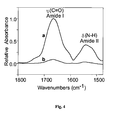
- Protein adsorption was quantified from the relative IR (ATR mode) absorbance intensity of the characteristic protein Amide I (1650 cm -1 ) and Amide II (1550 cm -1 ) bands.
- IR ATR mode
- spectra were normalized to a sharp negative peak (1590 cm -1 ) characteristic of the graphite, followed by digital subtraction of water vapor and the graphite substrate.
- the Amide I and II bands are attributed entirely to adsorbed proteins, whereas on modified graphite amide bonds in the surfactant polymer and adsorbed proteins contribute to the absorbance.
- the absorbance due to adsorbed protein is isolated and determined. As shown in the FIG.
- Amide I and II protein bands are very strong on bare graphite and almost negligible on the surfactant modified graphite. It is estimated that plasma protein adsorption was suppressed by at least 90% on the polymer-coated surface, compared with the bare graphite, which is consistent with a stable adsorbed surfactant polymer. The results also show that the layer is effective in suppressing protein adsorption from human plasma protein solution onto the coated substrate.
- Examples 6 and 7 describe the preparation of surfactants comprising a poly(vinyl) backbone linked by secondary amine linkages to a plurality of heparin side chains and a plurality of hydrophobic side chains (Group B surfactants).
- Group B surfactants were prepared by simultaneously reacting PVAm with different molar ratios of alkyl aldehydes and nitrous acid-depolymerized heparin which has an aldehyde end group. Heparin is analogous to the oligosaccharide portion of heparan sulfate, which is abundant on endothelial cell glycocalyx. Formation of the surfactant polymers results from reductive amination between the amines on the polymer and the reactive aldehydes on the alkyl aldehydes and modified heparin molecules.
- Nitrous acid de-polymerized heparin (origin: intestinal mucosa, porcine) with a M w of 5503 and an aldehyde content of 186 ⁇ mol/g was purchased from Pharmacia Hepar, Inc.
- Acetaldehyde, hexanal (98%), sodium cyanoborohydride (NaBH 3 CN, 95%) and dimethyl formamide (DMF) were purchased from Aldrich Chemical Co. and used as received.
- Laurinaldehyde ( ⁇ 97%) was purchased from Fluka Chemik and used as received.
- Maltonolactone and poly(vinyl amine) (PVAm) were prepared according to the methods reported previously. All other reagents and solvents were used as received unless otherwise specified.
- PVAm-co-PNVHepA (PNVHA-co-PNVHepA) was prepared by reacting PVAm with hexanal and nitrous acid depolymerized heparin at a molar feed ration of 1:10 either simultaneously or sequentially.
- the PVAm was dissolved in methanol and a suitable amount of alkyl aldehyde added to the solution. Thereafter a methanol/water solution containing a suitable amount of heparin and the catalyst NaBH 3 CN was added to the PVAm-alkyl aldehyde mixture. The reaction was allowed to proceed for 48 hours at room temperature. Thereafter, the reaction was terminated and the surfactant recovered.
- PVAm PVAm was prepared as described in example 6 except that the PVAm was further reacted with maltonolactone to block any unreacted amine groups on the polymer.
- the molar feed ratios of hexanal, heparin and maltonolactone were 7:1:2 and 6:2:2.
- Examples 8-10 describe the preparation of surfactants comprising a poly(vinyl) backbone linked by secondary amine linkages to a plurality of peptide side chains and a plurality of hydrophobic side chains (Group C surfactants).
- Group C surfactants were prepared by simultaneously reacting PVAm with different molar ratios of alkyl aldehydes and with peptides linked to a spacer molecule having a reactive aldehyde at the free end thereof.
- a suitable spacer molecule is a glutaric dialdehyde molecule that reacts with the free amine end of the peptide and the amine group on the polymer.
- Another suitable spacer molecules include poly (ethylene oxide) (PEO) dialdehyde spacer or other similar bifunctional molecule.
- the peptide itself is synthesized to either have a free carboxyl end group or an end that is capped.
- Synthesis of the poly(vinyl amine) (PVAm) surfactant polymer requires two steps: (1) modifying the peptide to create a terminal aldehyde group; and (2) simultaneously coupling the modified peptide and an alkyl aldehyde to the polymer backbone using a standard Schiff base reaction with reduction to a secondary amine.
- the surfactant polymer comprises two different types of hydrophilic side chains, one being a peptide and the other being an oligosaccharide.
- the molar amount of peptide and saccharide can be varied, but the total molar amount of hydrophilic groups should result in a 1:0.5 to 1:2 ratio with hexanal, for solubility reasons.
- the initial peptide was synthesized with a solid phase peptide synthesizer (SPPS), utilizing common solvents, packing resins and capped amino acids.
- SPPS solid phase peptide synthesizer
- the peptide was then purified by preparatory scale-high performance liquid chromatography (HPLC and characterized for composition by mass spectroscopy and HPLC. An average yield per batch is about 60-80 mg of pure (>98%) product. The product was then stored in a -20 0 C. freezer to minimize moisture uptake.
- the raw product was further purified by dialyzing against ultrapure water using Spectra Pro 3 regenerated cellulose membranes with 3500 molecular weight cutoff. The purified sample was then lyophilized to obtain the final surfactant product.
- peptide surfactant polymers with peptide to hexanal ratios between (1:0.5) and (1:2) would be the desirable range.
- a surfactant polymer comprising a plurality of hydrophobic side chains, a plurality of oligosaccharide side chains, and a plurality of peptide chains were prepared by reacting the modified peptide and, dextran lactone, and hexanal simultaneously with the PVAm as described above in example 8.
- the molar ratios of the peptide, dextran lactone, and hexanal were 1:1:3
- a surfactant polymer comprising hydrophobic side chains, peptide side chains, and oligosaccharide side chains was prepared by reacting the modified peptide, maltolactone, and hexanal simultaneously with the PVAm as described above in example 8.
- the molar feed ratios of the peptide, dextran lactone, and hexanal were 3:1:6.
- the purity of the peptide surfactant polymers after dialysis was verified using IR spectroscopy, which showed that no residual aldehyde peak (at 1740 cm -1 ) was present in the spectrum.
- the final peptide-to-hexanal ratio was determined using 1 H-NMR spectroscopy. This was done by taking the integrals of the proton peaks that correspond to each ligand and calculating the final value.
- the surfactant polymers were shown to be surface active on hydrophobic materials, such as octadecyltrichlorosilane (OTS)-derivatized glass.
- OTS octadecyltrichlorosilane
- the surfactant was first dissolved in a water/acetonitrile mixture, then the OTS glass was submerged in the solution for 24 hour adsorption. The sample was removed, dried overnight and water contact angle measurements were taken. Typically, the water contact angle dropped from 110 degrees to 20-30 degrees, indicating the successful adsorption of surfactant to the surface.
- the surfactant-coated OTS was then placed in a low flow chamber where water is constantly flowing over the sample for 24 hours. This procedure tests the adhesion stability of the surfactant on the hydrophobic OTS surface. After drying the sample, contact angle measurements are again taken. Typically the water contact angle increase only about 10 degrees, to about 30-40 degrees, indicating that the surfactant remains firmly attached to the hydropho
- the surfaces with adsorbed peptide surfactant polymers of examples 9 and 10 were shown to promote endothelial cell growth and proliferation.
- Human umbilical vein endothelial cells (HUVEQ) in HEPES buffer were added to containers having OTS samples coated with the surfactant polymers of examples 8-10.
- Phase contrast and fluorescent microscopic images were taken after 3, 24 and 72 hours of incubation time. The results at 72 hours for the phase contrast images are shown in FIG. 5 .
- fibronectin coated OTS serves as a positive control for HUVEC growth and proliferation. No cell growth was observed on surfaces coated with the surfactant polymer of example 2 or maltose linear surfactants, as shown by phase contrast microscopy.
- the degree of antithrombogenic properties of the foreign surface was determined by the number of platelets adsorbed to the surface of the blood pump. Tests were conducted using a MEDTRONIC ® blood pump for 6 hours to carry out a cardiopulmonary bypass in pigs. One blood pump was uncoated, whereas the other blood pump was coated with poly(N-vinyl dextran aldonamide-co-N-vinyl hexanoamide)) Platelet adsorption was examined using epifluorecsent microscopy and scanning electron microscopy (SEM). For the epifluorescent microscopy, platelets were visualized by selective immunohistochemical staining with antibodies to platelets labeled with fluoresceine.
- Epifluorescent microphotographs clearly indicated that the surfactant polymer coating significantly reduced adsorption of platelets to the surface of the blood pump after the cardiopulmonary bypass.
- the SEM microphotographs also confirmed that the coating prevented platelet adsorption to the blood contacting surfaces. In both cases, this was indicated by the presence of a large number of platelets on the uncoated blood contacting surface compared with the absence of platelets on the coated blood contacting surface. Additionally SEM's shows that platelets adsorbed to the uncoated surface are activated and they are promoting clot formation on the surface. This was indicated by platelet aggregation and the formation of pseudopodia.
- a biomimetic coating of the surfactant polymer was shown to decrease bacterial colonization on an implanted surface by preventing from bacterial adhesion and fibrin encapsulation of the surface.
- Epifluorescent microphotographs were obtained of coated and uncoated polyurethane surfaces exposed to bacterial suspension in plasma. After exposure to the bacterial suspension, the bacteria were stained with fluorescent marker. The uncoated surface showed numerous bacteria adsorbed to the surface. However, the number of adsorbed bacteria present on the coated surface was significantly lower.
- Examples 14 and 15 describe improved methods for preparation of surfactants polymers.
- an improved method was developed for preparing surfactant polymer.
- This method was essentially the same as the original method as described above in example 1, except with regard to the synthesis of N-hexanoyloxy succinimide and the reaction of the amino groups of PVAm with dextran lactone and N-hexanoyloxy succinimide, as further described below.
- THF and hexane were used here instead of DMF given that THF and hexane have lower boiling points than DMF, which allows for faster and easier subsequent removal of the solvents.
- the by-product DCU has a lower solubility in hexane than in DMF, and thus use of hexane allows for more rapid removal of DCU.
- the precipitate was washed with acetone for three more times, and then was filtered and dried under vacuum overnight to give 69.18 g (78.2% yield) light yellow raw product.
- the final surfactant polymer was purified by extensive dialysis against water using hollow fiber ultrafiltration cartridge (NMWC 5000) and obtained after lyophilization.
- DMSO from which moisture had been removed was used here instead of a combination of DMSO and methanol in order to provide for consistent preparation of the surfactant polymer at a large scale, with productive yields, and with acceptable ratios of hydrophilic side chains to hydrophobic side chains.
- a hollow fiber ultrafiltration cartridge was used instead of a regenerated cellulose tubular membrane dialysis bag in order to provide for continuous removal of impurity, to decrease usage of high quality Mili-Q water, and to accomplish more rapid removal of impurity.
- Poly (N-vinyl dextran aldonamide-co-N-vinyl hexanoamide was prepared essentially as described in Example 14, except with regard to the molar feed ratio of dextran lactone to N-hexanoyloxy succinimide, the type of DMSO, and amounts of reactants, as further described below.
- the batch sizes i.e. desired mass yields of surfactant polymer
- the average molar percentage yields for the original method and the improved method were 49.62% and 61.94%, respectively.
- Acceptable ratios of hydrophilic to hydrophobic side chains were 1:4.3 to 1:6.5.
Landscapes
- Health & Medical Sciences (AREA)
- Chemical & Material Sciences (AREA)
- Life Sciences & Earth Sciences (AREA)
- General Health & Medical Sciences (AREA)
- Public Health (AREA)
- Veterinary Medicine (AREA)
- Epidemiology (AREA)
- Animal Behavior & Ethology (AREA)
- Materials Engineering (AREA)
- Engineering & Computer Science (AREA)
- Medicinal Chemistry (AREA)
- Surgery (AREA)
- Chemical Kinetics & Catalysis (AREA)
- Organic Chemistry (AREA)
- Polymers & Plastics (AREA)
- Hematology (AREA)
- Biochemistry (AREA)
- Molecular Biology (AREA)
- Dermatology (AREA)
- Oral & Maxillofacial Surgery (AREA)
- Transplantation (AREA)
- Vascular Medicine (AREA)
- Heart & Thoracic Surgery (AREA)
- General Chemical & Material Sciences (AREA)
- Addition Polymer Or Copolymer, Post-Treatments, Or Chemical Modifications (AREA)
- Materials For Medical Uses (AREA)
Claims (4)
- Ein Verfahren zur Herstellung von mindestens vierunddreißig Gramm eines Tensidpolymers bei einer molaren prozentualen Ausbeute von mindestens 50% und mit einem Verhältnis der hydrophilen zu hydrophoben Seitenketten von 1:4,3 bis 1: 6,5 umfassenda) Bereitstellen eines Eduktpolymers undb) Umsetzen des Eduktpolymers miti) einem Alkanoyl undii) einer Oligosaccharidkette einschließlich einer Endgruppe, die geeignet ist mit einer Seitengruppe des Eduktpolymers zu reagieren,worin die Oligosaccharidkette eine neutrale Oligosaccharidkette mit einem mittleren Molekulargewicht von weniger als 7.000 ist,
worin das Umsetzen des Eduktpolymers mit dem Alkanoyl und der Oligosaccharidkette in einem wasserfreien Lösungsmittel durchgeführt wird, ausgewählt aus der Gruppe, bestehend aus Dimethylsulfoxid, aus dem Feuchtigkeit entfernt wurde, und wasserfreiem Dimethylsulfoxid, und
worin das Eduktpolymer Polyvinylamin ist, das Alkanoyl N-hexyanoyloxysuccinimid ist und die Oligosaccharidkette einschließlich einer Endgruppe, die geeignet ist mit einer Seitengruppe des Eduktpolymers zu reagieren, Dextranlacton ist. - Das Verfahren gemäß Anspruch 1, worin Umsetzen des Eduktpolymers mit dem Alkanoyl und der Oligosaccharidkette ferner umfasst, Umsetzen des Eduktpolymers mit der Oligosaccharidkette, um ein Zwischenprodukt zu erhalten, und anschließendes Umsetzen des Zwischenprodukts mit dem Alkanoyl, um das Tensidpolymer zu erhalten.
- Verfahren gemäß Anspruch 1 oder 2, das Verfahren ferner umfassend Verwendung eines Lösungsmittels, das einen Siedepunkt aufweist, der niedriger als 75 Grad Celsius ist, zur Vorbereitung des Alkanoyls.
- Das Verfahren gemäß einem der Ansprüche 1 bis 3, das Verfahren ferner umfassend Entfernen von Verunreinigungen aus einem Rohansatz des Tensidpolymers in kontinuierlicher Form.
Applications Claiming Priority (1)
| Application Number | Priority Date | Filing Date | Title |
|---|---|---|---|
| US12/062,768 US8163302B2 (en) | 1998-04-29 | 2008-04-04 | Methods of making and using surfactant polymers |
Publications (3)
| Publication Number | Publication Date |
|---|---|
| EP2106812A2 EP2106812A2 (de) | 2009-10-07 |
| EP2106812A3 EP2106812A3 (de) | 2009-11-11 |
| EP2106812B1 true EP2106812B1 (de) | 2016-01-13 |
Family
ID=40935663
Family Applications (1)
| Application Number | Title | Priority Date | Filing Date |
|---|---|---|---|
| EP09157331.1A Not-in-force EP2106812B1 (de) | 2008-04-04 | 2009-04-03 | Verfahren zur Herstellung und Verwendung von Tensidpolymeren |
Country Status (2)
| Country | Link |
|---|---|
| US (2) | US8163302B2 (de) |
| EP (1) | EP2106812B1 (de) |
Families Citing this family (9)
| Publication number | Priority date | Publication date | Assignee | Title |
|---|---|---|---|---|
| US9289540B2 (en) * | 2009-05-08 | 2016-03-22 | Greatbatch Ltd. | Surface modification for coating |
| US20100316787A1 (en) | 2009-06-12 | 2010-12-16 | Greatbatch Ltd. | Biomimetic Coating Method |
| EP2570183A1 (de) * | 2011-09-15 | 2013-03-20 | InstrAction GmbH | Sorptionsmittel mit einer aliphatischen Einheit auf dessen Oberfläche zur Reinigung organischer Moleküle |
| US9395468B2 (en) | 2012-08-27 | 2016-07-19 | Ocular Dynamics, Llc | Contact lens with a hydrophilic layer |
| JP6100893B2 (ja) * | 2013-05-27 | 2017-03-22 | Jsr株式会社 | 無機材料で構成される表面用の表面処理剤、表面が改質された器具および装置、該器具および装置の製造方法 |
| CN105917270A (zh) | 2013-11-15 | 2016-08-31 | 视觉力学有限责任公司 | 具有亲水层的接触透镜 |
| JP6774947B2 (ja) | 2014-12-09 | 2020-10-28 | タンジブル サイエンス インコーポレイテッド | 生体適合性層を有する医療デバイスコーティング |
| JP6245374B2 (ja) * | 2015-07-31 | 2017-12-13 | 三菱ケミカル株式会社 | ビニルアミン単位含有重合体水溶液の使用方法 |
| WO2023088777A1 (en) * | 2021-11-22 | 2023-05-25 | Basf Se | Compositions comprising polymers, polymers, and their use |
Family Cites Families (3)
| Publication number | Priority date | Publication date | Assignee | Title |
|---|---|---|---|---|
| WO1994011411A1 (en) | 1992-11-19 | 1994-05-26 | Case Western Reserve University | Nonthrombogenic implant surfaces |
| US5914182A (en) * | 1996-06-03 | 1999-06-22 | Gore Hybrid Technologies, Inc. | Materials and methods for the immobilization of bioactive species onto polymeric substrates |
| US6759388B1 (en) | 1999-04-29 | 2004-07-06 | Nanomimetics, Inc. | Surfactants that mimic the glycocalyx |
-
2008
- 2008-04-04 US US12/062,768 patent/US8163302B2/en not_active Expired - Fee Related
-
2009
- 2009-04-03 EP EP09157331.1A patent/EP2106812B1/de not_active Not-in-force
-
2012
- 2012-03-16 US US13/422,150 patent/US9125969B2/en not_active Expired - Fee Related
Also Published As
| Publication number | Publication date |
|---|---|
| EP2106812A2 (de) | 2009-10-07 |
| EP2106812A3 (de) | 2009-11-11 |
| US20120245288A1 (en) | 2012-09-27 |
| US9125969B2 (en) | 2015-09-08 |
| US8163302B2 (en) | 2012-04-24 |
| US20080262614A1 (en) | 2008-10-23 |
Similar Documents
| Publication | Publication Date | Title |
|---|---|---|
| US7276474B2 (en) | Methods of making and using surfactant polymers | |
| EP2106812B1 (de) | Verfahren zur Herstellung und Verwendung von Tensidpolymeren | |
| AU2009290833B2 (en) | Immobilised biological entities | |
| US10842880B2 (en) | Immobilised biological entities | |
| CN1455687A (zh) | 疏水性多组分肝素结合物,其制备方法及其应用 | |
| EP1086149B1 (de) | Oberflächenaktive stoffe die glycocalyx imitieren | |
| AU776564B2 (en) | Surface modification of substrates | |
| RU2173563C2 (ru) | Способ нанесения на поверхность предметов покрытия на основе гиалуроновой кислоты, ее производных и полусинтетических полимеров | |
| WO2025140547A1 (zh) | 一种医疗制品及其制备方法 | |
| HK1174861A (en) | Immobilised biological entities | |
| HK1174861B (en) | Immobilised biological entities | |
| HK1159530B (en) | Immobilised biological entities |
Legal Events
| Date | Code | Title | Description |
|---|---|---|---|
| PUAI | Public reference made under article 153(3) epc to a published international application that has entered the european phase |
Free format text: ORIGINAL CODE: 0009012 |
|
| AK | Designated contracting states |
Kind code of ref document: A2 Designated state(s): AT BE BG CH CY CZ DE DK EE ES FI FR GB GR HR HU IE IS IT LI LT LU LV MC MK MT NL NO PL PT RO SE SI SK TR |
|
| PUAL | Search report despatched |
Free format text: ORIGINAL CODE: 0009013 |
|
| RIC1 | Information provided on ipc code assigned before grant |
Ipc: A61L 27/34 20060101AFI20090813BHEP Ipc: A61L 31/10 20060101ALI20091001BHEP Ipc: A61L 29/16 20060101ALI20091001BHEP Ipc: A61L 29/08 20060101ALI20091001BHEP |
|
| AK | Designated contracting states |
Kind code of ref document: A3 Designated state(s): AT BE BG CH CY CZ DE DK EE ES FI FR GB GR HR HU IE IS IT LI LT LU LV MC MK MT NL NO PL PT RO SE SI SK TR |
|
| 17P | Request for examination filed |
Effective date: 20100319 |
|
| 17Q | First examination report despatched |
Effective date: 20100624 |
|
| GRAP | Despatch of communication of intention to grant a patent |
Free format text: ORIGINAL CODE: EPIDOSNIGR1 |
|
| INTG | Intention to grant announced |
Effective date: 20150716 |
|
| GRAS | Grant fee paid |
Free format text: ORIGINAL CODE: EPIDOSNIGR3 |
|
| GRAA | (expected) grant |
Free format text: ORIGINAL CODE: 0009210 |
|
| AK | Designated contracting states |
Kind code of ref document: B1 Designated state(s): AT BE BG CH CY CZ DE DK EE ES FI FR GB GR HR HU IE IS IT LI LT LU LV MC MK MT NL NO PL PT RO SE SI SK TR |
|
| REG | Reference to a national code |
Ref country code: GB Ref legal event code: FG4D |
|
| REG | Reference to a national code |
Ref country code: CH Ref legal event code: EP |
|
| REG | Reference to a national code |
Ref country code: IE Ref legal event code: FG4D |
|
| REG | Reference to a national code |
Ref country code: AT Ref legal event code: REF Ref document number: 770065 Country of ref document: AT Kind code of ref document: T Effective date: 20160215 |
|
| REG | Reference to a national code |
Ref country code: DE Ref legal event code: R096 Ref document number: 602009035785 Country of ref document: DE |
|
| REG | Reference to a national code |
Ref country code: FR Ref legal event code: PLFP Year of fee payment: 8 |
|
| REG | Reference to a national code |
Ref country code: LT Ref legal event code: MG4D |
|
| REG | Reference to a national code |
Ref country code: NL Ref legal event code: MP Effective date: 20160113 |
|
| REG | Reference to a national code |
Ref country code: AT Ref legal event code: MK05 Ref document number: 770065 Country of ref document: AT Kind code of ref document: T Effective date: 20160113 |
|
| PG25 | Lapsed in a contracting state [announced via postgrant information from national office to epo] |
Ref country code: NL Free format text: LAPSE BECAUSE OF FAILURE TO SUBMIT A TRANSLATION OF THE DESCRIPTION OR TO PAY THE FEE WITHIN THE PRESCRIBED TIME-LIMIT Effective date: 20160113 |
|
| PG25 | Lapsed in a contracting state [announced via postgrant information from national office to epo] |
Ref country code: ES Free format text: LAPSE BECAUSE OF FAILURE TO SUBMIT A TRANSLATION OF THE DESCRIPTION OR TO PAY THE FEE WITHIN THE PRESCRIBED TIME-LIMIT Effective date: 20160113 Ref country code: FI Free format text: LAPSE BECAUSE OF FAILURE TO SUBMIT A TRANSLATION OF THE DESCRIPTION OR TO PAY THE FEE WITHIN THE PRESCRIBED TIME-LIMIT Effective date: 20160113 Ref country code: NO Free format text: LAPSE BECAUSE OF FAILURE TO SUBMIT A TRANSLATION OF THE DESCRIPTION OR TO PAY THE FEE WITHIN THE PRESCRIBED TIME-LIMIT Effective date: 20160413 Ref country code: HR Free format text: LAPSE BECAUSE OF FAILURE TO SUBMIT A TRANSLATION OF THE DESCRIPTION OR TO PAY THE FEE WITHIN THE PRESCRIBED TIME-LIMIT Effective date: 20160113 Ref country code: IT Free format text: LAPSE BECAUSE OF FAILURE TO SUBMIT A TRANSLATION OF THE DESCRIPTION OR TO PAY THE FEE WITHIN THE PRESCRIBED TIME-LIMIT Effective date: 20160113 Ref country code: GR Free format text: LAPSE BECAUSE OF FAILURE TO SUBMIT A TRANSLATION OF THE DESCRIPTION OR TO PAY THE FEE WITHIN THE PRESCRIBED TIME-LIMIT Effective date: 20160414 |
|
| PG25 | Lapsed in a contracting state [announced via postgrant information from national office to epo] |
Ref country code: AT Free format text: LAPSE BECAUSE OF FAILURE TO SUBMIT A TRANSLATION OF THE DESCRIPTION OR TO PAY THE FEE WITHIN THE PRESCRIBED TIME-LIMIT Effective date: 20160113 Ref country code: LT Free format text: LAPSE BECAUSE OF FAILURE TO SUBMIT A TRANSLATION OF THE DESCRIPTION OR TO PAY THE FEE WITHIN THE PRESCRIBED TIME-LIMIT Effective date: 20160113 Ref country code: BE Free format text: LAPSE BECAUSE OF NON-PAYMENT OF DUE FEES Effective date: 20160430 Ref country code: IS Free format text: LAPSE BECAUSE OF FAILURE TO SUBMIT A TRANSLATION OF THE DESCRIPTION OR TO PAY THE FEE WITHIN THE PRESCRIBED TIME-LIMIT Effective date: 20160513 Ref country code: PT Free format text: LAPSE BECAUSE OF FAILURE TO SUBMIT A TRANSLATION OF THE DESCRIPTION OR TO PAY THE FEE WITHIN THE PRESCRIBED TIME-LIMIT Effective date: 20160513 Ref country code: SE Free format text: LAPSE BECAUSE OF FAILURE TO SUBMIT A TRANSLATION OF THE DESCRIPTION OR TO PAY THE FEE WITHIN THE PRESCRIBED TIME-LIMIT Effective date: 20160113 Ref country code: LV Free format text: LAPSE BECAUSE OF FAILURE TO SUBMIT A TRANSLATION OF THE DESCRIPTION OR TO PAY THE FEE WITHIN THE PRESCRIBED TIME-LIMIT Effective date: 20160113 Ref country code: PL Free format text: LAPSE BECAUSE OF FAILURE TO SUBMIT A TRANSLATION OF THE DESCRIPTION OR TO PAY THE FEE WITHIN THE PRESCRIBED TIME-LIMIT Effective date: 20160113 |
|
| REG | Reference to a national code |
Ref country code: DE Ref legal event code: R097 Ref document number: 602009035785 Country of ref document: DE |
|
| PG25 | Lapsed in a contracting state [announced via postgrant information from national office to epo] |
Ref country code: EE Free format text: LAPSE BECAUSE OF FAILURE TO SUBMIT A TRANSLATION OF THE DESCRIPTION OR TO PAY THE FEE WITHIN THE PRESCRIBED TIME-LIMIT Effective date: 20160113 Ref country code: DK Free format text: LAPSE BECAUSE OF FAILURE TO SUBMIT A TRANSLATION OF THE DESCRIPTION OR TO PAY THE FEE WITHIN THE PRESCRIBED TIME-LIMIT Effective date: 20160113 |
|
| PLBE | No opposition filed within time limit |
Free format text: ORIGINAL CODE: 0009261 |
|
| STAA | Information on the status of an ep patent application or granted ep patent |
Free format text: STATUS: NO OPPOSITION FILED WITHIN TIME LIMIT |
|
| PG25 | Lapsed in a contracting state [announced via postgrant information from national office to epo] |
Ref country code: RO Free format text: LAPSE BECAUSE OF FAILURE TO SUBMIT A TRANSLATION OF THE DESCRIPTION OR TO PAY THE FEE WITHIN THE PRESCRIBED TIME-LIMIT Effective date: 20160113 Ref country code: SK Free format text: LAPSE BECAUSE OF FAILURE TO SUBMIT A TRANSLATION OF THE DESCRIPTION OR TO PAY THE FEE WITHIN THE PRESCRIBED TIME-LIMIT Effective date: 20160113 Ref country code: CZ Free format text: LAPSE BECAUSE OF FAILURE TO SUBMIT A TRANSLATION OF THE DESCRIPTION OR TO PAY THE FEE WITHIN THE PRESCRIBED TIME-LIMIT Effective date: 20160113 |
|
| REG | Reference to a national code |
Ref country code: CH Ref legal event code: PL |
|
| 26N | No opposition filed |
Effective date: 20161014 |
|
| GBPC | Gb: european patent ceased through non-payment of renewal fee |
Effective date: 20160413 |
|
| PG25 | Lapsed in a contracting state [announced via postgrant information from national office to epo] |
Ref country code: BE Free format text: LAPSE BECAUSE OF FAILURE TO SUBMIT A TRANSLATION OF THE DESCRIPTION OR TO PAY THE FEE WITHIN THE PRESCRIBED TIME-LIMIT Effective date: 20160113 Ref country code: LU Free format text: LAPSE BECAUSE OF FAILURE TO SUBMIT A TRANSLATION OF THE DESCRIPTION OR TO PAY THE FEE WITHIN THE PRESCRIBED TIME-LIMIT Effective date: 20160403 |
|
| REG | Reference to a national code |
Ref country code: IE Ref legal event code: MM4A |
|
| PG25 | Lapsed in a contracting state [announced via postgrant information from national office to epo] |
Ref country code: LI Free format text: LAPSE BECAUSE OF NON-PAYMENT OF DUE FEES Effective date: 20160430 Ref country code: CH Free format text: LAPSE BECAUSE OF NON-PAYMENT OF DUE FEES Effective date: 20160430 Ref country code: GB Free format text: LAPSE BECAUSE OF NON-PAYMENT OF DUE FEES Effective date: 20160413 |
|
| PG25 | Lapsed in a contracting state [announced via postgrant information from national office to epo] |
Ref country code: SI Free format text: LAPSE BECAUSE OF FAILURE TO SUBMIT A TRANSLATION OF THE DESCRIPTION OR TO PAY THE FEE WITHIN THE PRESCRIBED TIME-LIMIT Effective date: 20160113 Ref country code: BG Free format text: LAPSE BECAUSE OF FAILURE TO SUBMIT A TRANSLATION OF THE DESCRIPTION OR TO PAY THE FEE WITHIN THE PRESCRIBED TIME-LIMIT Effective date: 20160413 |
|
| REG | Reference to a national code |
Ref country code: FR Ref legal event code: PLFP Year of fee payment: 9 |
|
| PG25 | Lapsed in a contracting state [announced via postgrant information from national office to epo] |
Ref country code: IE Free format text: LAPSE BECAUSE OF NON-PAYMENT OF DUE FEES Effective date: 20160403 |
|
| REG | Reference to a national code |
Ref country code: FR Ref legal event code: PLFP Year of fee payment: 10 |
|
| PG25 | Lapsed in a contracting state [announced via postgrant information from national office to epo] |
Ref country code: HU Free format text: LAPSE BECAUSE OF FAILURE TO SUBMIT A TRANSLATION OF THE DESCRIPTION OR TO PAY THE FEE WITHIN THE PRESCRIBED TIME-LIMIT; INVALID AB INITIO Effective date: 20090403 Ref country code: CY Free format text: LAPSE BECAUSE OF FAILURE TO SUBMIT A TRANSLATION OF THE DESCRIPTION OR TO PAY THE FEE WITHIN THE PRESCRIBED TIME-LIMIT Effective date: 20160113 |
|
| PG25 | Lapsed in a contracting state [announced via postgrant information from national office to epo] |
Ref country code: TR Free format text: LAPSE BECAUSE OF FAILURE TO SUBMIT A TRANSLATION OF THE DESCRIPTION OR TO PAY THE FEE WITHIN THE PRESCRIBED TIME-LIMIT Effective date: 20160113 Ref country code: MT Free format text: LAPSE BECAUSE OF NON-PAYMENT OF DUE FEES Effective date: 20160430 Ref country code: MK Free format text: LAPSE BECAUSE OF FAILURE TO SUBMIT A TRANSLATION OF THE DESCRIPTION OR TO PAY THE FEE WITHIN THE PRESCRIBED TIME-LIMIT Effective date: 20160113 Ref country code: MC Free format text: LAPSE BECAUSE OF FAILURE TO SUBMIT A TRANSLATION OF THE DESCRIPTION OR TO PAY THE FEE WITHIN THE PRESCRIBED TIME-LIMIT Effective date: 20160113 |
|
| PGFP | Annual fee paid to national office [announced via postgrant information from national office to epo] |
Ref country code: FR Payment date: 20230309 Year of fee payment: 15 |
|
| PGFP | Annual fee paid to national office [announced via postgrant information from national office to epo] |
Ref country code: DE Payment date: 20230307 Year of fee payment: 15 |
|
| REG | Reference to a national code |
Ref country code: DE Ref legal event code: R082 Ref document number: 602009035785 Country of ref document: DE Representative=s name: WITHERS & ROGERS LLP, DE |
|
| REG | Reference to a national code |
Ref country code: DE Ref legal event code: R119 Ref document number: 602009035785 Country of ref document: DE |
|
| PG25 | Lapsed in a contracting state [announced via postgrant information from national office to epo] |
Ref country code: DE Free format text: LAPSE BECAUSE OF NON-PAYMENT OF DUE FEES Effective date: 20241105 |
|
| PG25 | Lapsed in a contracting state [announced via postgrant information from national office to epo] |
Ref country code: FR Free format text: LAPSE BECAUSE OF NON-PAYMENT OF DUE FEES Effective date: 20240430 |
|
| PG25 | Lapsed in a contracting state [announced via postgrant information from national office to epo] |
Ref country code: FR Free format text: LAPSE BECAUSE OF NON-PAYMENT OF DUE FEES Effective date: 20240430 Ref country code: DE Free format text: LAPSE BECAUSE OF NON-PAYMENT OF DUE FEES Effective date: 20241105 |