EP2108704A1 - Androgenetische Alopezie - Google Patents
Androgenetische Alopezie Download PDFInfo
- Publication number
- EP2108704A1 EP2108704A1 EP08006933A EP08006933A EP2108704A1 EP 2108704 A1 EP2108704 A1 EP 2108704A1 EP 08006933 A EP08006933 A EP 08006933A EP 08006933 A EP08006933 A EP 08006933A EP 2108704 A1 EP2108704 A1 EP 2108704A1
- Authority
- EP
- European Patent Office
- Prior art keywords
- chr20
- seq
- nos
- nucleic acid
- acid molecule
- Prior art date
- Legal status (The legal status is an assumption and is not a legal conclusion. Google has not performed a legal analysis and makes no representation as to the accuracy of the status listed.)
- Withdrawn
Links
- 201000004384 Alopecia Diseases 0.000 title claims abstract description 128
- 206010068168 androgenetic alopecia Diseases 0.000 title claims abstract description 115
- 201000002996 androgenic alopecia Diseases 0.000 title claims abstract description 109
- 150000007523 nucleic acids Chemical class 0.000 claims abstract description 170
- 102000039446 nucleic acids Human genes 0.000 claims abstract description 166
- 108020004707 nucleic acids Proteins 0.000 claims abstract description 166
- IQFYYKKMVGJFEH-XLPZGREQSA-N Thymidine Chemical group O=C1NC(=O)C(C)=CN1[C@@H]1O[C@H](CO)[C@@H](O)C1 IQFYYKKMVGJFEH-XLPZGREQSA-N 0.000 claims abstract description 76
- OIRDTQYFTABQOQ-KQYNXXCUSA-N adenosine group Chemical group [C@@H]1([C@H](O)[C@H](O)[C@@H](CO)O1)N1C=NC=2C(N)=NC=NC12 OIRDTQYFTABQOQ-KQYNXXCUSA-N 0.000 claims abstract description 57
- NYHBQMYGNKIUIF-UUOKFMHZSA-N Guanosine Chemical group C1=NC=2C(=O)NC(N)=NC=2N1[C@@H]1O[C@H](CO)[C@@H](O)[C@H]1O NYHBQMYGNKIUIF-UUOKFMHZSA-N 0.000 claims abstract description 56
- 238000000034 method Methods 0.000 claims abstract description 42
- 230000002068 genetic effect Effects 0.000 claims abstract description 39
- DWRXFEITVBNRMK-UHFFFAOYSA-N Beta-D-1-Arabinofuranosylthymine Natural products O=C1NC(=O)C(C)=CN1C1C(O)C(O)C(CO)O1 DWRXFEITVBNRMK-UHFFFAOYSA-N 0.000 claims abstract description 38
- IQFYYKKMVGJFEH-UHFFFAOYSA-N beta-L-thymidine Natural products O=C1NC(=O)C(C)=CN1C1OC(CO)C(O)C1 IQFYYKKMVGJFEH-UHFFFAOYSA-N 0.000 claims abstract description 38
- 239000003550 marker Substances 0.000 claims abstract description 38
- 229940104230 thymidine Drugs 0.000 claims abstract description 38
- 239000002773 nucleotide Substances 0.000 claims abstract description 32
- 125000003729 nucleotide group Chemical group 0.000 claims abstract description 32
- 230000000295 complement effect Effects 0.000 claims abstract description 31
- UHDGCWIWMRVCDJ-UHFFFAOYSA-N 1-beta-D-Xylofuranosyl-NH-Cytosine Natural products O=C1N=C(N)C=CN1C1C(O)C(O)C(CO)O1 UHDGCWIWMRVCDJ-UHFFFAOYSA-N 0.000 claims abstract description 28
- 239000002126 C01EB10 - Adenosine Substances 0.000 claims abstract description 28
- MIKUYHXYGGJMLM-GIMIYPNGSA-N Crotonoside Natural products C1=NC2=C(N)NC(=O)N=C2N1[C@H]1O[C@@H](CO)[C@H](O)[C@@H]1O MIKUYHXYGGJMLM-GIMIYPNGSA-N 0.000 claims abstract description 28
- UHDGCWIWMRVCDJ-PSQAKQOGSA-N Cytidine Natural products O=C1N=C(N)C=CN1[C@@H]1[C@@H](O)[C@@H](O)[C@H](CO)O1 UHDGCWIWMRVCDJ-PSQAKQOGSA-N 0.000 claims abstract description 28
- NYHBQMYGNKIUIF-UHFFFAOYSA-N D-guanosine Natural products C1=2NC(N)=NC(=O)C=2N=CN1C1OC(CO)C(O)C1O NYHBQMYGNKIUIF-UHFFFAOYSA-N 0.000 claims abstract description 28
- 229960005305 adenosine Drugs 0.000 claims abstract description 28
- UHDGCWIWMRVCDJ-ZAKLUEHWSA-N cytidine Chemical group O=C1N=C(N)C=CN1[C@H]1[C@H](O)[C@@H](O)[C@H](CO)O1 UHDGCWIWMRVCDJ-ZAKLUEHWSA-N 0.000 claims abstract description 28
- 229940029575 guanosine Drugs 0.000 claims abstract description 28
- 238000012360 testing method Methods 0.000 claims abstract description 26
- DRTQHJPVMGBUCF-XVFCMESISA-N Uridine Chemical compound O[C@@H]1[C@H](O)[C@@H](CO)O[C@H]1N1C(=O)NC(=O)C=C1 DRTQHJPVMGBUCF-XVFCMESISA-N 0.000 claims abstract description 20
- 230000002759 chromosomal effect Effects 0.000 claims abstract description 18
- 108091092878 Microsatellite Proteins 0.000 claims abstract description 17
- 239000000203 mixture Substances 0.000 claims abstract description 14
- DRTQHJPVMGBUCF-PSQAKQOGSA-N beta-L-uridine Natural products O[C@H]1[C@@H](O)[C@H](CO)O[C@@H]1N1C(=O)NC(=O)C=C1 DRTQHJPVMGBUCF-PSQAKQOGSA-N 0.000 claims abstract description 10
- DRTQHJPVMGBUCF-UHFFFAOYSA-N uracil arabinoside Natural products OC1C(O)C(CO)OC1N1C(=O)NC(=O)C=C1 DRTQHJPVMGBUCF-UHFFFAOYSA-N 0.000 claims abstract description 10
- 229940045145 uridine Drugs 0.000 claims abstract description 10
- 238000001514 detection method Methods 0.000 claims abstract description 9
- 210000003917 human chromosome Anatomy 0.000 claims abstract description 8
- 108700028369 Alleles Proteins 0.000 claims description 78
- 210000004027 cell Anatomy 0.000 claims description 47
- 230000014509 gene expression Effects 0.000 claims description 29
- 239000000523 sample Substances 0.000 claims description 27
- 239000013598 vector Substances 0.000 claims description 27
- 238000009396 hybridization Methods 0.000 claims description 25
- 101000613575 Homo sapiens Paired box protein Pax-1 Proteins 0.000 claims description 22
- 102100040851 Paired box protein Pax-1 Human genes 0.000 claims description 22
- 108020004414 DNA Proteins 0.000 claims description 21
- 238000004458 analytical method Methods 0.000 claims description 21
- 210000004209 hair Anatomy 0.000 claims description 14
- 238000003556 assay Methods 0.000 claims description 13
- 108090000765 processed proteins & peptides Proteins 0.000 claims description 11
- 108091028043 Nucleic acid sequence Proteins 0.000 claims description 10
- 229920001184 polypeptide Polymers 0.000 claims description 10
- 102000004196 processed proteins & peptides Human genes 0.000 claims description 10
- 210000001519 tissue Anatomy 0.000 claims description 8
- 210000003491 skin Anatomy 0.000 claims description 6
- 238000001712 DNA sequencing Methods 0.000 claims description 4
- 230000004075 alteration Effects 0.000 claims description 4
- 210000004369 blood Anatomy 0.000 claims description 4
- 239000008280 blood Substances 0.000 claims description 4
- 239000013068 control sample Substances 0.000 claims description 4
- 210000003754 fetus Anatomy 0.000 claims description 4
- 210000003780 hair follicle Anatomy 0.000 claims description 4
- 108091027305 Heteroduplex Proteins 0.000 claims description 3
- 208000005652 acute fatty liver of pregnancy Diseases 0.000 claims description 2
- 238000003776 cleavage reaction Methods 0.000 claims description 2
- 230000003297 denaturating effect Effects 0.000 claims description 2
- 238000001502 gel electrophoresis Methods 0.000 claims description 2
- 239000011544 gradient gel Substances 0.000 claims description 2
- 210000004400 mucous membrane Anatomy 0.000 claims description 2
- 210000003097 mucus Anatomy 0.000 claims description 2
- 210000002381 plasma Anatomy 0.000 claims description 2
- 210000003296 saliva Anatomy 0.000 claims description 2
- 230000007017 scission Effects 0.000 claims description 2
- 210000002966 serum Anatomy 0.000 claims description 2
- 210000002700 urine Anatomy 0.000 claims description 2
- 210000001215 vagina Anatomy 0.000 claims description 2
- 125000003275 alpha amino acid group Chemical group 0.000 claims 1
- 210000000349 chromosome Anatomy 0.000 description 26
- 230000010076 replication Effects 0.000 description 22
- 108090000623 proteins and genes Proteins 0.000 description 21
- 230000000694 effects Effects 0.000 description 14
- 230000003676 hair loss Effects 0.000 description 13
- 208000024963 hair loss Diseases 0.000 description 10
- ZHNUHDYFZUAESO-UHFFFAOYSA-N Formamide Chemical compound NC=O ZHNUHDYFZUAESO-UHFFFAOYSA-N 0.000 description 8
- 230000003993 interaction Effects 0.000 description 8
- 210000004761 scalp Anatomy 0.000 description 8
- FAPWRFPIFSIZLT-UHFFFAOYSA-M Sodium chloride Chemical compound [Na+].[Cl-] FAPWRFPIFSIZLT-UHFFFAOYSA-M 0.000 description 7
- 238000011161 development Methods 0.000 description 7
- 230000018109 developmental process Effects 0.000 description 7
- 238000009826 distribution Methods 0.000 description 7
- 108091033319 polynucleotide Proteins 0.000 description 7
- 102000040430 polynucleotide Human genes 0.000 description 7
- 239000002157 polynucleotide Substances 0.000 description 7
- 230000001105 regulatory effect Effects 0.000 description 7
- 241000701022 Cytomegalovirus Species 0.000 description 6
- 230000003321 amplification Effects 0.000 description 6
- 238000013459 approach Methods 0.000 description 6
- 102000054766 genetic haplotypes Human genes 0.000 description 6
- 238000003205 genotyping method Methods 0.000 description 6
- 230000035772 mutation Effects 0.000 description 6
- 238000003199 nucleic acid amplification method Methods 0.000 description 6
- 102000004169 proteins and genes Human genes 0.000 description 6
- 230000009261 transgenic effect Effects 0.000 description 6
- 108091034117 Oligonucleotide Proteins 0.000 description 5
- 208000037265 diseases, disorders, signs and symptoms Diseases 0.000 description 5
- 238000005516 engineering process Methods 0.000 description 5
- 239000003623 enhancer Substances 0.000 description 5
- 210000003527 eukaryotic cell Anatomy 0.000 description 5
- 238000002474 experimental method Methods 0.000 description 5
- 230000006870 function Effects 0.000 description 5
- 238000010369 molecular cloning Methods 0.000 description 5
- 238000003753 real-time PCR Methods 0.000 description 5
- 241000894006 Bacteria Species 0.000 description 4
- 241000699666 Mus <mouse, genus> Species 0.000 description 4
- 238000002105 Southern blotting Methods 0.000 description 4
- 210000001766 X chromosome Anatomy 0.000 description 4
- 238000012098 association analyses Methods 0.000 description 4
- 230000000903 blocking effect Effects 0.000 description 4
- 239000003153 chemical reaction reagent Substances 0.000 description 4
- 239000013604 expression vector Substances 0.000 description 4
- 238000011534 incubation Methods 0.000 description 4
- 210000004962 mammalian cell Anatomy 0.000 description 4
- 150000003839 salts Chemical class 0.000 description 4
- 238000012163 sequencing technique Methods 0.000 description 4
- 238000013518 transcription Methods 0.000 description 4
- 230000035897 transcription Effects 0.000 description 4
- 238000011830 transgenic mouse model Methods 0.000 description 4
- 108091032973 (ribonucleotides)n+m Proteins 0.000 description 3
- 241000972773 Aulopiformes Species 0.000 description 3
- 108091026890 Coding region Proteins 0.000 description 3
- 108020004635 Complementary DNA Proteins 0.000 description 3
- 241000699660 Mus musculus Species 0.000 description 3
- 208000037065 Subacute sclerosing leukoencephalitis Diseases 0.000 description 3
- 206010042297 Subacute sclerosing panencephalitis Diseases 0.000 description 3
- 150000001413 amino acids Chemical group 0.000 description 3
- 238000010367 cloning Methods 0.000 description 3
- 201000010099 disease Diseases 0.000 description 3
- 210000001671 embryonic stem cell Anatomy 0.000 description 3
- 230000001965 increasing effect Effects 0.000 description 3
- 238000011835 investigation Methods 0.000 description 3
- 210000003470 mitochondria Anatomy 0.000 description 3
- 238000012986 modification Methods 0.000 description 3
- 230000004048 modification Effects 0.000 description 3
- 238000012107 replication analysis Methods 0.000 description 3
- 235000019515 salmon Nutrition 0.000 description 3
- 239000011780 sodium chloride Substances 0.000 description 3
- 230000008685 targeting Effects 0.000 description 3
- 238000005406 washing Methods 0.000 description 3
- 101150029129 AR gene Proteins 0.000 description 2
- 102000007469 Actins Human genes 0.000 description 2
- 108010085238 Actins Proteins 0.000 description 2
- 102000001493 Cyclophilins Human genes 0.000 description 2
- 108010068682 Cyclophilins Proteins 0.000 description 2
- KCXVZYZYPLLWCC-UHFFFAOYSA-N EDTA Chemical compound OC(=O)CN(CC(O)=O)CCN(CC(O)=O)CC(O)=O KCXVZYZYPLLWCC-UHFFFAOYSA-N 0.000 description 2
- 102000004190 Enzymes Human genes 0.000 description 2
- 108090000790 Enzymes Proteins 0.000 description 2
- 102100028091 Homeobox protein Nkx-3.2 Human genes 0.000 description 2
- 241000282412 Homo Species 0.000 description 2
- 101000578251 Homo sapiens Homeobox protein Nkx-3.2 Proteins 0.000 description 2
- 241000699670 Mus sp. Species 0.000 description 2
- 229930193140 Neomycin Natural products 0.000 description 2
- 108010022394 Threonine synthase Proteins 0.000 description 2
- 108700029229 Transcriptional Regulatory Elements Proteins 0.000 description 2
- 241000700605 Viruses Species 0.000 description 2
- 239000003098 androgen Substances 0.000 description 2
- 108010080146 androgen receptors Proteins 0.000 description 2
- 230000005540 biological transmission Effects 0.000 description 2
- 230000015572 biosynthetic process Effects 0.000 description 2
- 210000002459 blastocyst Anatomy 0.000 description 2
- 239000000872 buffer Substances 0.000 description 2
- 230000001413 cellular effect Effects 0.000 description 2
- 230000008859 change Effects 0.000 description 2
- 239000002299 complementary DNA Substances 0.000 description 2
- 102000004419 dihydrofolate reductase Human genes 0.000 description 2
- 208000035475 disorder Diseases 0.000 description 2
- 210000002257 embryonic structure Anatomy 0.000 description 2
- 230000007717 exclusion Effects 0.000 description 2
- 230000002538 fungal effect Effects 0.000 description 2
- 238000010363 gene targeting Methods 0.000 description 2
- 230000007614 genetic variation Effects 0.000 description 2
- 210000004602 germ cell Anatomy 0.000 description 2
- 230000012010 growth Effects 0.000 description 2
- 210000003128 head Anatomy 0.000 description 2
- 230000006872 improvement Effects 0.000 description 2
- 238000010348 incorporation Methods 0.000 description 2
- 230000000977 initiatory effect Effects 0.000 description 2
- 230000010354 integration Effects 0.000 description 2
- 210000002510 keratinocyte Anatomy 0.000 description 2
- 101150066555 lacZ gene Proteins 0.000 description 2
- 238000007477 logistic regression Methods 0.000 description 2
- 238000004519 manufacturing process Methods 0.000 description 2
- 210000004379 membrane Anatomy 0.000 description 2
- 239000012528 membrane Substances 0.000 description 2
- 229960004927 neomycin Drugs 0.000 description 2
- 238000003752 polymerase chain reaction Methods 0.000 description 2
- 102000054765 polymorphisms of proteins Human genes 0.000 description 2
- 238000002360 preparation method Methods 0.000 description 2
- 238000003908 quality control method Methods 0.000 description 2
- 238000011002 quantification Methods 0.000 description 2
- 238000011160 research Methods 0.000 description 2
- 238000003757 reverse transcription PCR Methods 0.000 description 2
- 239000001509 sodium citrate Substances 0.000 description 2
- NLJMYIDDQXHKNR-UHFFFAOYSA-K sodium citrate Chemical compound O.O.[Na+].[Na+].[Na+].[O-]C(=O)CC(O)(CC([O-])=O)C([O-])=O NLJMYIDDQXHKNR-UHFFFAOYSA-K 0.000 description 2
- 229910000162 sodium phosphate Inorganic materials 0.000 description 2
- 238000011895 specific detection Methods 0.000 description 2
- 238000007619 statistical method Methods 0.000 description 2
- 238000003786 synthesis reaction Methods 0.000 description 2
- 210000001541 thymus gland Anatomy 0.000 description 2
- 241000251468 Actinopterygii Species 0.000 description 1
- 208000007848 Alcoholism Diseases 0.000 description 1
- 241001203868 Autographa californica Species 0.000 description 1
- 244000063299 Bacillus subtilis Species 0.000 description 1
- 235000014469 Bacillus subtilis Nutrition 0.000 description 1
- 206010004446 Benign prostatic hyperplasia Diseases 0.000 description 1
- 241000283690 Bos taurus Species 0.000 description 1
- 241000282472 Canis lupus familiaris Species 0.000 description 1
- 241000282693 Cercopithecidae Species 0.000 description 1
- 241000699800 Cricetinae Species 0.000 description 1
- 241000699802 Cricetulus griseus Species 0.000 description 1
- 101150074155 DHFR gene Proteins 0.000 description 1
- 238000007400 DNA extraction Methods 0.000 description 1
- 238000000018 DNA microarray Methods 0.000 description 1
- 229920002307 Dextran Polymers 0.000 description 1
- 102100024746 Dihydrofolate reductase Human genes 0.000 description 1
- 241000255581 Drosophila <fruit fly, genus> Species 0.000 description 1
- 206010059866 Drug resistance Diseases 0.000 description 1
- 208000032928 Dyslipidaemia Diseases 0.000 description 1
- 241000196324 Embryophyta Species 0.000 description 1
- YQYJSBFKSSDGFO-UHFFFAOYSA-N Epihygromycin Natural products OC1C(O)C(C(=O)C)OC1OC(C(=C1)O)=CC=C1C=C(C)C(=O)NC1C(O)C(O)C2OCOC2C1O YQYJSBFKSSDGFO-UHFFFAOYSA-N 0.000 description 1
- 241000588724 Escherichia coli Species 0.000 description 1
- 108700039887 Essential Genes Proteins 0.000 description 1
- 108091060211 Expressed sequence tag Proteins 0.000 description 1
- 208000034826 Genetic Predisposition to Disease Diseases 0.000 description 1
- 108700039691 Genetic Promoter Regions Proteins 0.000 description 1
- 102100031181 Glyceraldehyde-3-phosphate dehydrogenase Human genes 0.000 description 1
- HTTJABKRGRZYRN-UHFFFAOYSA-N Heparin Chemical compound OC1C(NC(=O)C)C(O)OC(COS(O)(=O)=O)C1OC1C(OS(O)(=O)=O)C(O)C(OC2C(C(OS(O)(=O)=O)C(OC3C(C(O)C(O)C(O3)C(O)=O)OS(O)(=O)=O)C(CO)O2)NS(O)(=O)=O)C(C(O)=O)O1 HTTJABKRGRZYRN-UHFFFAOYSA-N 0.000 description 1
- 241000238631 Hexapoda Species 0.000 description 1
- 206010060378 Hyperinsulinaemia Diseases 0.000 description 1
- 206010020772 Hypertension Diseases 0.000 description 1
- 206010022489 Insulin Resistance Diseases 0.000 description 1
- 102100034343 Integrase Human genes 0.000 description 1
- 108091092195 Intron Proteins 0.000 description 1
- 241000194035 Lactococcus lactis Species 0.000 description 1
- 238000003657 Likelihood-ratio test Methods 0.000 description 1
- 208000017170 Lipid metabolism disease Diseases 0.000 description 1
- 241001465754 Metazoa Species 0.000 description 1
- 102000005431 Molecular Chaperones Human genes 0.000 description 1
- 108010006519 Molecular Chaperones Proteins 0.000 description 1
- 241001529936 Murinae Species 0.000 description 1
- 241000187480 Mycobacterium smegmatis Species 0.000 description 1
- 206010028980 Neoplasm Diseases 0.000 description 1
- 238000000636 Northern blotting Methods 0.000 description 1
- 108091093105 Nuclear DNA Proteins 0.000 description 1
- 208000008589 Obesity Diseases 0.000 description 1
- 108700026244 Open Reading Frames Proteins 0.000 description 1
- 108091092740 Organellar DNA Proteins 0.000 description 1
- 241000283973 Oryctolagus cuniculus Species 0.000 description 1
- 238000012408 PCR amplification Methods 0.000 description 1
- 238000010222 PCR analysis Methods 0.000 description 1
- 102000002508 Peptide Elongation Factors Human genes 0.000 description 1
- 108010068204 Peptide Elongation Factors Proteins 0.000 description 1
- 241000286209 Phasianidae Species 0.000 description 1
- 206010060862 Prostate cancer Diseases 0.000 description 1
- 208000004403 Prostatic Hyperplasia Diseases 0.000 description 1
- 208000000236 Prostatic Neoplasms Diseases 0.000 description 1
- 241000589540 Pseudomonas fluorescens Species 0.000 description 1
- 241000589776 Pseudomonas putida Species 0.000 description 1
- 108010092799 RNA-directed DNA polymerase Proteins 0.000 description 1
- 241000700159 Rattus Species 0.000 description 1
- 108091081062 Repeated sequence (DNA) Proteins 0.000 description 1
- 241000293869 Salmonella enterica subsp. enterica serovar Typhimurium Species 0.000 description 1
- 241000710961 Semliki Forest virus Species 0.000 description 1
- 238000012300 Sequence Analysis Methods 0.000 description 1
- 241000607715 Serratia marcescens Species 0.000 description 1
- 241000256248 Spodoptera Species 0.000 description 1
- 108091081024 Start codon Proteins 0.000 description 1
- 235000014897 Streptococcus lactis Nutrition 0.000 description 1
- 241000187398 Streptomyces lividans Species 0.000 description 1
- 241000282887 Suidae Species 0.000 description 1
- QAOWNCQODCNURD-UHFFFAOYSA-L Sulfate Chemical compound [O-]S([O-])(=O)=O QAOWNCQODCNURD-UHFFFAOYSA-L 0.000 description 1
- 108091023040 Transcription factor Proteins 0.000 description 1
- 102000040945 Transcription factor Human genes 0.000 description 1
- 108700019146 Transgenes Proteins 0.000 description 1
- 241000700618 Vaccinia virus Species 0.000 description 1
- JLCPHMBAVCMARE-UHFFFAOYSA-N [3-[[3-[[3-[[3-[[3-[[3-[[3-[[3-[[3-[[3-[[3-[[5-(2-amino-6-oxo-1H-purin-9-yl)-3-[[3-[[3-[[3-[[3-[[3-[[5-(2-amino-6-oxo-1H-purin-9-yl)-3-[[5-(2-amino-6-oxo-1H-purin-9-yl)-3-hydroxyoxolan-2-yl]methoxy-hydroxyphosphoryl]oxyoxolan-2-yl]methoxy-hydroxyphosphoryl]oxy-5-(5-methyl-2,4-dioxopyrimidin-1-yl)oxolan-2-yl]methoxy-hydroxyphosphoryl]oxy-5-(6-aminopurin-9-yl)oxolan-2-yl]methoxy-hydroxyphosphoryl]oxy-5-(6-aminopurin-9-yl)oxolan-2-yl]methoxy-hydroxyphosphoryl]oxy-5-(6-aminopurin-9-yl)oxolan-2-yl]methoxy-hydroxyphosphoryl]oxy-5-(6-aminopurin-9-yl)oxolan-2-yl]methoxy-hydroxyphosphoryl]oxyoxolan-2-yl]methoxy-hydroxyphosphoryl]oxy-5-(5-methyl-2,4-dioxopyrimidin-1-yl)oxolan-2-yl]methoxy-hydroxyphosphoryl]oxy-5-(4-amino-2-oxopyrimidin-1-yl)oxolan-2-yl]methoxy-hydroxyphosphoryl]oxy-5-(5-methyl-2,4-dioxopyrimidin-1-yl)oxolan-2-yl]methoxy-hydroxyphosphoryl]oxy-5-(5-methyl-2,4-dioxopyrimidin-1-yl)oxolan-2-yl]methoxy-hydroxyphosphoryl]oxy-5-(6-aminopurin-9-yl)oxolan-2-yl]methoxy-hydroxyphosphoryl]oxy-5-(6-aminopurin-9-yl)oxolan-2-yl]methoxy-hydroxyphosphoryl]oxy-5-(4-amino-2-oxopyrimidin-1-yl)oxolan-2-yl]methoxy-hydroxyphosphoryl]oxy-5-(4-amino-2-oxopyrimidin-1-yl)oxolan-2-yl]methoxy-hydroxyphosphoryl]oxy-5-(4-amino-2-oxopyrimidin-1-yl)oxolan-2-yl]methoxy-hydroxyphosphoryl]oxy-5-(6-aminopurin-9-yl)oxolan-2-yl]methoxy-hydroxyphosphoryl]oxy-5-(4-amino-2-oxopyrimidin-1-yl)oxolan-2-yl]methyl [5-(6-aminopurin-9-yl)-2-(hydroxymethyl)oxolan-3-yl] hydrogen phosphate Polymers Cc1cn(C2CC(OP(O)(=O)OCC3OC(CC3OP(O)(=O)OCC3OC(CC3O)n3cnc4c3nc(N)[nH]c4=O)n3cnc4c3nc(N)[nH]c4=O)C(COP(O)(=O)OC3CC(OC3COP(O)(=O)OC3CC(OC3COP(O)(=O)OC3CC(OC3COP(O)(=O)OC3CC(OC3COP(O)(=O)OC3CC(OC3COP(O)(=O)OC3CC(OC3COP(O)(=O)OC3CC(OC3COP(O)(=O)OC3CC(OC3COP(O)(=O)OC3CC(OC3COP(O)(=O)OC3CC(OC3COP(O)(=O)OC3CC(OC3COP(O)(=O)OC3CC(OC3COP(O)(=O)OC3CC(OC3COP(O)(=O)OC3CC(OC3COP(O)(=O)OC3CC(OC3COP(O)(=O)OC3CC(OC3COP(O)(=O)OC3CC(OC3CO)n3cnc4c(N)ncnc34)n3ccc(N)nc3=O)n3cnc4c(N)ncnc34)n3ccc(N)nc3=O)n3ccc(N)nc3=O)n3ccc(N)nc3=O)n3cnc4c(N)ncnc34)n3cnc4c(N)ncnc34)n3cc(C)c(=O)[nH]c3=O)n3cc(C)c(=O)[nH]c3=O)n3ccc(N)nc3=O)n3cc(C)c(=O)[nH]c3=O)n3cnc4c3nc(N)[nH]c4=O)n3cnc4c(N)ncnc34)n3cnc4c(N)ncnc34)n3cnc4c(N)ncnc34)n3cnc4c(N)ncnc34)O2)c(=O)[nH]c1=O JLCPHMBAVCMARE-UHFFFAOYSA-N 0.000 description 1
- 230000004913 activation Effects 0.000 description 1
- 230000002730 additional effect Effects 0.000 description 1
- 230000032683 aging Effects 0.000 description 1
- 201000007930 alcohol dependence Diseases 0.000 description 1
- 229960000723 ampicillin Drugs 0.000 description 1
- AVKUERGKIZMTKX-NJBDSQKTSA-N ampicillin Chemical compound C1([C@@H](N)C(=O)N[C@H]2[C@H]3SC([C@@H](N3C2=O)C(O)=O)(C)C)=CC=CC=C1 AVKUERGKIZMTKX-NJBDSQKTSA-N 0.000 description 1
- 102000001307 androgen receptors Human genes 0.000 description 1
- 210000004102 animal cell Anatomy 0.000 description 1
- 238000012093 association test Methods 0.000 description 1
- 230000001580 bacterial effect Effects 0.000 description 1
- 230000027455 binding Effects 0.000 description 1
- 230000003115 biocidal effect Effects 0.000 description 1
- 239000000090 biomarker Substances 0.000 description 1
- 238000001574 biopsy Methods 0.000 description 1
- 210000001124 body fluid Anatomy 0.000 description 1
- 239000010839 body fluid Substances 0.000 description 1
- 201000011510 cancer Diseases 0.000 description 1
- 238000004113 cell culture Methods 0.000 description 1
- 238000012761 co-transfection Methods 0.000 description 1
- 239000003086 colorant Substances 0.000 description 1
- 150000001875 compounds Chemical class 0.000 description 1
- 238000012790 confirmation Methods 0.000 description 1
- 208000029078 coronary artery disease Diseases 0.000 description 1
- 238000013480 data collection Methods 0.000 description 1
- 230000003247 decreasing effect Effects 0.000 description 1
- 238000003745 diagnosis Methods 0.000 description 1
- 239000010432 diamond Substances 0.000 description 1
- 108020001096 dihydrofolate reductase Proteins 0.000 description 1
- 238000001962 electrophoresis Methods 0.000 description 1
- 230000013020 embryo development Effects 0.000 description 1
- 210000002308 embryonic cell Anatomy 0.000 description 1
- 230000002996 emotional effect Effects 0.000 description 1
- 238000010195 expression analysis Methods 0.000 description 1
- 230000001605 fetal effect Effects 0.000 description 1
- 210000002950 fibroblast Anatomy 0.000 description 1
- 235000019688 fish Nutrition 0.000 description 1
- 238000009472 formulation Methods 0.000 description 1
- 230000004927 fusion Effects 0.000 description 1
- 108020001507 fusion proteins Proteins 0.000 description 1
- 102000037865 fusion proteins Human genes 0.000 description 1
- 238000003633 gene expression assay Methods 0.000 description 1
- 238000007429 general method Methods 0.000 description 1
- 238000010353 genetic engineering Methods 0.000 description 1
- 239000011521 glass Substances 0.000 description 1
- ZDXPYRJPNDTMRX-UHFFFAOYSA-N glutamine Natural products OC(=O)C(N)CCC(N)=O ZDXPYRJPNDTMRX-UHFFFAOYSA-N 0.000 description 1
- 108020004445 glyceraldehyde-3-phosphate dehydrogenase Proteins 0.000 description 1
- PCHJSUWPFVWCPO-UHFFFAOYSA-N gold Chemical compound [Au] PCHJSUWPFVWCPO-UHFFFAOYSA-N 0.000 description 1
- 239000010931 gold Substances 0.000 description 1
- 229910052737 gold Inorganic materials 0.000 description 1
- 230000003779 hair growth Effects 0.000 description 1
- 210000004919 hair shaft Anatomy 0.000 description 1
- 229960002897 heparin Drugs 0.000 description 1
- 229920000669 heparin Polymers 0.000 description 1
- 238000002744 homologous recombination Methods 0.000 description 1
- 230000006801 homologous recombination Effects 0.000 description 1
- 230000003451 hyperinsulinaemic effect Effects 0.000 description 1
- 201000008980 hyperinsulinism Diseases 0.000 description 1
- 238000003364 immunohistochemistry Methods 0.000 description 1
- 238000011065 in-situ storage Methods 0.000 description 1
- 230000001939 inductive effect Effects 0.000 description 1
- 239000012212 insulator Substances 0.000 description 1
- 238000002955 isolation Methods 0.000 description 1
- 238000011901 isothermal amplification Methods 0.000 description 1
- 229960000318 kanamycin Drugs 0.000 description 1
- 229930027917 kanamycin Natural products 0.000 description 1
- SBUJHOSQTJFQJX-NOAMYHISSA-N kanamycin Chemical compound O[C@@H]1[C@@H](O)[C@H](O)[C@@H](CN)O[C@@H]1O[C@H]1[C@H](O)[C@@H](O[C@@H]2[C@@H]([C@@H](N)[C@H](O)[C@@H](CO)O2)O)[C@H](N)C[C@@H]1N SBUJHOSQTJFQJX-NOAMYHISSA-N 0.000 description 1
- 229930182823 kanamycin A Natural products 0.000 description 1
- 238000002372 labelling Methods 0.000 description 1
- 239000002502 liposome Substances 0.000 description 1
- 210000004698 lymphocyte Anatomy 0.000 description 1
- 238000007885 magnetic separation Methods 0.000 description 1
- 210000001161 mammalian embryo Anatomy 0.000 description 1
- 239000000463 material Substances 0.000 description 1
- 238000001840 matrix-assisted laser desorption--ionisation time-of-flight mass spectrometry Methods 0.000 description 1
- 201000001441 melanoma Diseases 0.000 description 1
- MYWUZJCMWCOHBA-VIFPVBQESA-N methamphetamine Chemical compound CN[C@@H](C)CC1=CC=CC=C1 MYWUZJCMWCOHBA-VIFPVBQESA-N 0.000 description 1
- 210000000472 morula Anatomy 0.000 description 1
- 238000007857 nested PCR Methods 0.000 description 1
- 230000007935 neutral effect Effects 0.000 description 1
- 108091027963 non-coding RNA Proteins 0.000 description 1
- 102000042567 non-coding RNA Human genes 0.000 description 1
- 235000020824 obesity Nutrition 0.000 description 1
- 239000003960 organic solvent Substances 0.000 description 1
- 210000001672 ovary Anatomy 0.000 description 1
- 230000037361 pathway Effects 0.000 description 1
- 230000008447 perception Effects 0.000 description 1
- 230000002974 pharmacogenomic effect Effects 0.000 description 1
- 238000005375 photometry Methods 0.000 description 1
- 238000000053 physical method Methods 0.000 description 1
- 239000013612 plasmid Substances 0.000 description 1
- 230000008488 polyadenylation Effects 0.000 description 1
- 230000003234 polygenic effect Effects 0.000 description 1
- 239000003755 preservative agent Substances 0.000 description 1
- 230000002250 progressing effect Effects 0.000 description 1
- 230000012846 protein folding Effects 0.000 description 1
- 238000012175 pyrosequencing Methods 0.000 description 1
- 230000002285 radioactive effect Effects 0.000 description 1
- 230000022532 regulation of transcription, DNA-dependent Effects 0.000 description 1
- 238000003571 reporter gene assay Methods 0.000 description 1
- 230000001177 retroviral effect Effects 0.000 description 1
- 238000010839 reverse transcription Methods 0.000 description 1
- 210000003705 ribosome Anatomy 0.000 description 1
- 102210065756 rs1160312 Human genes 0.000 description 1
- 102220421511 rs2208312 Human genes 0.000 description 1
- 102210027870 rs6047663 Human genes 0.000 description 1
- 102210065661 rs6113382 Human genes 0.000 description 1
- 238000005185 salting out Methods 0.000 description 1
- 238000012216 screening Methods 0.000 description 1
- 230000028327 secretion Effects 0.000 description 1
- 239000006152 selective media Substances 0.000 description 1
- 238000000926 separation method Methods 0.000 description 1
- 230000037432 silent mutation Effects 0.000 description 1
- AJPJDKMHJJGVTQ-UHFFFAOYSA-M sodium dihydrogen phosphate Chemical compound [Na+].OP(O)([O-])=O AJPJDKMHJJGVTQ-UHFFFAOYSA-M 0.000 description 1
- 239000001488 sodium phosphate Substances 0.000 description 1
- 239000007787 solid Substances 0.000 description 1
- 241000894007 species Species 0.000 description 1
- 230000009870 specific binding Effects 0.000 description 1
- 230000006641 stabilisation Effects 0.000 description 1
- 238000011105 stabilization Methods 0.000 description 1
- 238000010561 standard procedure Methods 0.000 description 1
- 210000000130 stem cell Anatomy 0.000 description 1
- 238000003860 storage Methods 0.000 description 1
- 238000013517 stratification Methods 0.000 description 1
- 230000035882 stress Effects 0.000 description 1
- 238000006467 substitution reaction Methods 0.000 description 1
- 229910021653 sulphate ion Inorganic materials 0.000 description 1
- 239000013589 supplement Substances 0.000 description 1
- 238000002198 surface plasmon resonance spectroscopy Methods 0.000 description 1
- 208000001608 teratocarcinoma Diseases 0.000 description 1
- 230000005030 transcription termination Effects 0.000 description 1
- 108091006106 transcriptional activators Proteins 0.000 description 1
- 230000002103 transcriptional effect Effects 0.000 description 1
- 230000014621 translational initiation Effects 0.000 description 1
- RYFMWSXOAZQYPI-UHFFFAOYSA-K trisodium phosphate Chemical compound [Na+].[Na+].[Na+].[O-]P([O-])([O-])=O RYFMWSXOAZQYPI-UHFFFAOYSA-K 0.000 description 1
- 208000001072 type 2 diabetes mellitus Diseases 0.000 description 1
- 241000701366 unidentified nuclear polyhedrosis viruses Species 0.000 description 1
- 241001515965 unidentified phage Species 0.000 description 1
- 241001430294 unidentified retrovirus Species 0.000 description 1
- 238000011144 upstream manufacturing Methods 0.000 description 1
- 210000004291 uterus Anatomy 0.000 description 1
- 239000013603 viral vector Substances 0.000 description 1
- 238000011179 visual inspection Methods 0.000 description 1
- 238000001262 western blot Methods 0.000 description 1
Images

Classifications
-
- C—CHEMISTRY; METALLURGY
- C12—BIOCHEMISTRY; BEER; SPIRITS; WINE; VINEGAR; MICROBIOLOGY; ENZYMOLOGY; MUTATION OR GENETIC ENGINEERING
- C12Q—MEASURING OR TESTING PROCESSES INVOLVING ENZYMES, NUCLEIC ACIDS OR MICROORGANISMS; COMPOSITIONS OR TEST PAPERS THEREFOR; PROCESSES OF PREPARING SUCH COMPOSITIONS; CONDITION-RESPONSIVE CONTROL IN MICROBIOLOGICAL OR ENZYMOLOGICAL PROCESSES
- C12Q1/00—Measuring or testing processes involving enzymes, nucleic acids or microorganisms; Compositions therefor; Processes of preparing such compositions
- C12Q1/68—Measuring or testing processes involving enzymes, nucleic acids or microorganisms; Compositions therefor; Processes of preparing such compositions involving nucleic acids
- C12Q1/6876—Nucleic acid products used in the analysis of nucleic acids, e.g. primers or probes
- C12Q1/6883—Nucleic acid products used in the analysis of nucleic acids, e.g. primers or probes for diseases caused by alterations of genetic material
-
- C—CHEMISTRY; METALLURGY
- C12—BIOCHEMISTRY; BEER; SPIRITS; WINE; VINEGAR; MICROBIOLOGY; ENZYMOLOGY; MUTATION OR GENETIC ENGINEERING
- C12Q—MEASURING OR TESTING PROCESSES INVOLVING ENZYMES, NUCLEIC ACIDS OR MICROORGANISMS; COMPOSITIONS OR TEST PAPERS THEREFOR; PROCESSES OF PREPARING SUCH COMPOSITIONS; CONDITION-RESPONSIVE CONTROL IN MICROBIOLOGICAL OR ENZYMOLOGICAL PROCESSES
- C12Q2600/00—Oligonucleotides characterized by their use
- C12Q2600/158—Expression markers
-
- C—CHEMISTRY; METALLURGY
- C12—BIOCHEMISTRY; BEER; SPIRITS; WINE; VINEGAR; MICROBIOLOGY; ENZYMOLOGY; MUTATION OR GENETIC ENGINEERING
- C12Q—MEASURING OR TESTING PROCESSES INVOLVING ENZYMES, NUCLEIC ACIDS OR MICROORGANISMS; COMPOSITIONS OR TEST PAPERS THEREFOR; PROCESSES OF PREPARING SUCH COMPOSITIONS; CONDITION-RESPONSIVE CONTROL IN MICROBIOLOGICAL OR ENZYMOLOGICAL PROCESSES
- C12Q2600/00—Oligonucleotides characterized by their use
- C12Q2600/172—Haplotypes
Definitions
- the present invention relates to a genetic marker for androgenetic alopecia characterised in that the genetic marker is located in a chromosomal region of human chromosome 20p11 and wherein the genetic marker is selected from the group consisting of a single nucleotide polymorphism (SNP), variable number of tandem repeat (VNTR), microsatellites or short tandem repeats (STR).
- SNP single nucleotide polymorphism
- VNTR variable number of tandem repeat
- STR short tandem repeats
- the invention also relates to a nucleic acid molecule selected from the group consisting of (a) a nucleic acid molecule consisting of at least 17 consecutive nucleotides of any one of SEQ ID NOs:1 to 292; wherein the at least 17 consecutive nucleotides contain an adenosine at position 201 of any one of SEQ ID NOs:1 to 77, a guanosine at position 201 of any one of SEQ ID NOs:78 to 149, a thymidine at position 201 of any one of SEQ ID NOs:150 to 219 or a cytidine at position 201 of any one of SEQ ID NOs:220 to 292; (b) a nucleic acid molecule the complementary strand of which hybridises under stringent conditions to the nucleic acid molecule of (a), wherein said nucleic acid molecule has at a position corresponding to position 201 of any one of SEQ ID NOs:1 to 77 an adenosine
- the invention also relates to a nucleic acid molecule selected from the group consisting of (a) a nucleic acid molecule consisting of at least 17 consecutive nucleotides of any one of SEQ ID NOs:1 to 292; wherein the at least 17 consecutive nucleotides contain an adenosine at position 201 of any one of SEQ ID NOs:78, 79, 83, 86, 87, 90, 91, 93, 94, 96, 98 to 109, 111, 112, 116 to 123, 126, 128 to 142, 144 to 149, 151, 155, 158 to 160, 162, 165, 176, 177, 182, 184, 204, 207, 212, 217, 221, 226, 228, 230, 232, 233, 235, 239, 242, 243, 251, 253, 254, 259, 261 or 264, a cytidine at position 201 of any one of SEQ ID NOs
- the invention also relates to methods for testing for a predisposition or presence of androgenetic alopecia comprising testing a sample obtained from a prospective patient or from a person suspected of carrying a predisposition for androgenetic alopecia. Further, the invention relates to a diagnostic composition for the detection of androgenetic alopecia or a predisposition therefore as well as to a kit.
- Androgenetic alopecia is the most common form of hair loss in humans, occurring both in men and women. In men, this condition is commonly known as male pattern baldness (MPB), as hair is lost in a well-defined pattern, beginning above both temples. Over time, the hairline recedes and hair also thins at the crown (near the top of the head), often progressing to partial or complete baldness. In Caucasians, MBP is noticeable in about 20% of men aged 20, and increases steadily with age, so that a male in his 90s has a 90% chance of having some degree of MPB. In women, onset of androgenetic alopecia tends to occur later and in a milder form ( Hanneken et al.
- the negative psychosocial effects associated with hair loss include decreased self-esteem, dissatisfaction with body image or appearance, self-consciousness, perception of aging, and often emotional stress.
- androgenetic alopecia has a considerable effect on the quality of life for many of those affected.
- MIM 600082 benign prostatic hyperplasia
- B.I. Cancer Epidemiol Biomarkers Prev 9, 523-527 (2) coronary heart disease ( Lotufo et al., (2000) J.E. Arch Intern Med 160, 165-171 ); (3) hyperinsulinemia; and (4) insulin-resistance-associated disorders, such as obesity (MIM 601665), hypertension (MIM 145500), and dyslipidemia ( Matilainen et al, (2000) S. Lancet 356, 1165-1166 ).
- MBP is also a risk factor for clinical prostate cancer (MIM 176807) ( Oh et al., (1998) Urology 51, 744-748 ).
- Variations in the AR gene are assumed to lead to increased activity of androgen receptors in hair follicles, which can lead to a shorter cycle of hair growth and the growth of shorter and thinner strands of hair. Additionally, there is a delay in the growth of new hair to replace hair shafts that are shed.
- the technical problem underlying the present invention was the provision of means and methods useful in the diagnosis of androgenetic alopecia or a predisposition thereto.
- the present invention relates to a genetic marker for androgenetic alopecia characterised in that the genetic marker is located in a chromosomal region of human chromosome 20p11 and wherein the genetic marker is selected from the group consisting of a single nucleotide polymorphism (SNP), variable number of tandem repeat (VNTR), microsatellites or short tandem repeats (STR).
- SNP single nucleotide polymorphism
- VNTR variable number of tandem repeat
- STR short tandem repeats
- genetic marker in accordance with the present invention refers to a DNA sequence at a genomic locus that varies due to mutation and that is associated with a disease.
- a genetic marker may be a short DNA sequence, such as a sequence surrounding a single base-pair change (single nucleotide polymorphism), or a long one, like for example microsatellites.
- AGA alopecia
- single nucleotide polymorphism in accordance with the present invention refers to a DNA sequence variation occurring when a single nucleotide - A, T, C, or G - in the genome differs between paired chromosomes in an individual or between members of a species. Almost all common SNPs have only two alleles. For a variation to be considered a SNP, it must occur in at least 1% of the population. Within a population, SNPs can be assigned a minor allele frequency, which is the lowest allele frequency at a locus that is observed in a particular population. Single nucleotide polymorphisms may fall within coding sequences of genes, non-coding regions of genes, or in the intergenic regions between genes.
- SNPs within a coding sequence will not necessarily change the amino acid sequence of the protein that is produced, due to degeneracy of the genetic code.
- a SNP in which both forms lead to the same polypeptide sequence is termed synonymous or a silent mutation. If a different polypeptide sequence is produced they are non-synonymous. SNPs that are not in protein-coding regions nonetheless can affect gene splicing, transcription factor binding, or the sequence of non-coding RNA.
- VNTR variable number of tandem repeats
- microsatellites or "short tandem repeats” (STR) relates to polymorphic loci present in nuclear and organellar DNA consisting typically of repeating units of 1 to 10 base pairs in length. The repeated sequences are directly adjacent to each other and in the same orientation. Microsatellites and STRs are characterised by a high allelic variability due to an increased rate of mutation compared to other neutral regions of DNA.
- GWAS genome-wide association study
- the chromosome 20p11 locus was found to have a strong effect on the development of early onset androgenetic alopecia.
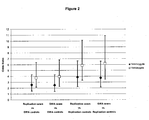
- Analysis of two of the associated SNPs on chromosome 20p11 (rs2180439 and rs6113491) for interaction with the primary associated SNP at the AR locus (rs1041668) did not provide evidence for an interaction with the AR locus (see Example 5).
- the chromosome 20p11 locus therefore, shows no evident connection to the androgen pathway.
- SNPs have been shown to be associated with androgenetic alopecia (P ⁇ 0.05). These SNPs are located at position 201 of any one of SEQ ID NOs: 1, 7, 23, 27, 30, 36, 39, 41, 42, 43, 51, 53, 60, 61, 62, 74, 77, 86, 92, 103, 104, 105, 106, 111, 116, 117, 118, 121, 132, 136, 141, 145, 153, 156, 157, 166, 175, 183, 198, 200, 208, 215, 255, 257, 258, 259, 270, 278, 286, 289, 290, and 292.
- the human genome has been analyzed in detail by the Human HapMap Project and the correlation between the alleles of two SNPs (at high correlation two SNPs are in linkage disequilibrium) in a genomic region is well known and the information is publicly available at www.hapmap.org.
- the inventors defined 240 additionally SNPs which are in linkage disequilibrium with at least one of the 52 associated SNPs.
- the risk alleles of the 240 SNPs are clearly defined by the risk alleles of the 52 associated SNPs and can therefore be used as a substitute of these. Any of the genetic markers within the chromosomal region can thus be used by the skilled person to determine the presence or predisposition for androgenetic alopecia.
- the chromosomal region of human chromosome 20p11 consists of the region having the sequence of SEQ ID NO:1 at the 5'end and the sequence of SEQ ID NO:292 at the 3' end.
- the chromosomal region is enclosed between the sequence as defined by SEQ ID NO:1 at the 5' end and the sequence as defined by SEQ ID NO:292 at the 3' end.
- the chromosomal region spans from position chr20:21692914 to position chr20:22200475 (the genomic positions are based on NCBI build 36).
- the chromosomal region of human chromosome 20p11 comprises at least one of SEQ ID NOs:1 to 292.
- the genetic marker is a SNP selected from the group consisting of the SNPs comprised in any one of SEQ ID NOs:1 to 292.
- SEQ ID NOs:1 to 292 and the respective SNPs have been summarised in table 1.
- Table 1 further details the position of the respective SNPs in the chromosomal region 20p11 and the corresponding alleles.
- Table 1 SNPs associated with androgenetic alopecia on chromosome 20p11
- the invention relates to a nucleic acid molecule selected from the group consisting of (a) a nucleic acid molecule consisting of at least 17 consecutive nucleotides of any of SEQ ID NOs:1 to 292; wherein the at least 17 consecutive nucleotides contain an adenosine at position 201 of any one of SEQ ID NOs:1 to 77, a guanosine at position 201 of any one of SEQ ID NOs:78 to 149, a thymidine at position 201 of any one of SEQ ID NOs:150 to 219 or a cytidine at position 201 of any one of SEQ ID NOs:220 to 292; (b) a nucleic acid molecule the complementary strand of which hybridises under stringent conditions to the nucleic acid molecule of (a), wherein said nucleic acid molecule has at a position corresponding to position 201 of any one of SEQ ID NOs:1 to 77 an adenosine,
- the nucleic acid molecules contain the respective risk alleles associated with the presence or predisposition for androgenetic alopecia.
- the invention relates to a nucleic acid molecule selected from the group consisting of (a) a nucleic acid molecule consisting of at least 17 consecutive nucleotides of any of SEQ ID NOs:1 to 292; wherein the at least 17 consecutive nucleotides contain an adenosine at position 201 of any one of SEQ ID NOs:78, 79, 83, 86, 87, 90, 91, 93, 94, 96, 98 to 109, 111, 112, 116 to 123, 126, 128 to 142, 144 to 149, 151, 155, 158 to 160, 162, 165, 176, 177, 182, 184, 204, 207, 212, 217, 221, 226, 228, 230, 232, 233, 235, 239, 242, 243, 251, 253, 254, 259, 261 or 264, a cytidine at position 201 of any one of SEQ ID NOs:3,
- the nucleic acid molecules contain the respective non-risk alleles associated with the absence of androgenetic alopecia or the absence of a predisposition for androgenetic alopecia.
- the nucleic acid molecules of the present invention consist most preferably of at least 17 nucleotides, but may also consist of at least 19, 25, 50, 100, 150, 200 or more nucleotides.
- the present invention encompasses a large number of nucleic acid molecules, which all contain as a common denominator the nucleotide at position 201 of any one of SEQ ID NOs:1 to 292.
- the 17-mer of the invention may contain as a common denominator the nucleotide at position 201 of any one of SEQ ID NOs:1 to 292, wherein the said nucleotide at position 201 may be located within the 17-mer at position 1, 2, 3, 4, 5, 6, 7, 8, 9, 10, 11, 12, 13, 14, 15, 16 or 17 of the 17-mer if viewed from its 5'end.
- the nucleic acid molecules of the present invention are characterized as being associated with androgenetic alopecia.
- the sequences of any one of SEQ ID NOs:1 to 292 were uniformly chosen to contain the 200bp upstream and the 200bp downstream of the position of the respective risk allele or non-risk allele at the genetic locus, hence said alleles are uniformly located at position 201 of any of SEQ ID NOs:1 to 292.
- risk allele in accordance with the present invention refers to the alleles with a higher frequency in the affected group than in the control group, whereas the term “non-risk allele” refers to the alleles with higher frequency in the non affected control groups.
- Both the risk alleles as well as the non-risk alleles can be unambiguously identified with information of position and the sequences contained in the SEQ ID NOs:1 to 292 as provided in the present application.
- table 1 details the individual risk alleles and non-risk alleles in the corresponding SEQ ID NOs as well as their position in the chromosomal region 20p11.
- SNPs at the chromosome 20p11 locus showed association with androgenetic alopecia (P ⁇ 0.05). These SNPs are located at position 201 of any one of SEQ ID NOs:1, 7, 23, 27, 30, 36, 39, 41, 42, 43, 51, 53, 60, 61, 62, 74, 77, 86, 92, 103, 104, 105, 106, 111, 116, 117, 118, 121, 132, 136, 141, 145, 153, 156, 157, 166, 175, 183, 198, 200, 208, 215, 255, 257, 258, 259, 270, 278, 286, 289, 290, and 292.
- the human genome has been analyzed in detail by the Human HapMap Project and the linkage disequilibrium between two SNPs in a genomic region is well known and the information is publicly available at www.hapmap.org.
- the inventors defined 240 additionally SNPs which are in linkage disequilibrium with at least one of the 52 associated SNPs.
- the risk alleles of the 240 SNPs are clearly defined by the risk alleles of the 52 associated SNPs and can therefore be used as a substitute of these. Any of these 292 genetic markers within the chromosomal region can thus be used by the skilled person to determine the presence or predisposition for androgenetic alopecia.
- hybridises/hybridising refers to a pairing of a nucleic acid molecule to a (partially) complementary strand of this nucleic acid molecule which thereby form a hybrid.
- hybridisation conditions are referred to in standard text books such as Molecular Cloning A Laboratory Manual, Cold Spring Harbor Laboratory (1989) N.Y .
- Preferred in accordance with the present invention are nucleic acid molecules capable of hybridising under stringent hybridisation conditions to the nucleic acid molecules of the invention that are associated with androgenetic alopecia, i.e. that do not cross hybridise to unrelated nucleic acid molecules.
- Nucleic acid hybridisation will be affected by such conditions as salt concentration, temperature, or organic solvents, in addition to the base composition, length of the complementary strands and the number of nucleotide base mismatches between the hybridising nucleic acids, as will be readily appreciated by those skilled in the art.
- Stringent temperature conditions will generally include temperatures in excess of 30°C, typically 37°C, and preferably in excess of 45°C.
- Stringent salt conditions will ordinarily be less than 1000 mM, typically less than 500 mM and preferably less than 200 mM. However, the combination of parameters is much more important than the measure of any single parameter; see, e.g., Wetmur and Davidson, 1968.
- Probe sequences may also hybridise specifically to duplex DNA under certain conditions to form triplex or higher order DNA complexes.
- the preparation of such probes and suitable hybridisation conditions are well known in the art.
- Nucleic acid molecules capable of hybridising to the nucleic acid molecules of the invention are preferably at least 70%, more preferably at least 75%, at least 80%, at least 85%, at least 90%, at least 95% or 100% identical to the nucleic acid sequences of the invention.
- stringent hybridisation conditions refer to conditions which comprise, e.g. an overnight incubation at 65°C in 4x SSC (600 mM NaCl, 60 mM sodium citrate) followed by washing at 65°C in 0.1x SSC for one hour.
- hybridization conditions can comprise e.g. an overnight incubation at 42°C in a solution comprising 50% formamide, 5x SSC (750 mM NaCl, 75 mM sodium citrate), 50 mM sodium phosphate (pH 7.6), 5x Denhardt's solution, 10% dextran sulphate, and 20 ⁇ g/ml denatured, sheared salmon sperm DNA, followed by washing the filters in 0.1 x SSC at about 65°C.
- Said conditions for hybridization are also known by a person skilled in the art as “highly stringent conditions for hybridization”. Also contemplated are nucleic acid molecules that hybridize to the oligo- or polynucleotides of the invention at lower stringency hybridization conditions ("low stringency conditions for hybridization"). Changes in the stringency of hybridization and signal detection are primarily accomplished through the manipulation of formamide concentration (lower percentages of formamide result in lowered stringency), salt conditions, or temperature.
- washes performed following stringent hybridization can be done at higher salt concentrations (e.g. 5X SSC).
- blocking reagents include Denhardt's reagent, BLOTTO, heparin, denatured salmon sperm DNA, and commercially available proprietary formulations.
- the inclusion of specific blocking reagents may require modification of the hybridization conditions described above, due to problems with compatibility. Such modifications can generally be effected by the skilled person without further ado.
- a hybridization complex may be formed in solution (e.g., Cot or Rot analysis) or between one nucleic acid sequence present in solution and another nucleic acid sequence immobilized on a solid support (e.g., membranes, filters, chips, pins or glass slides to which, e.g., cells have been fixed).
- a solid support e.g., membranes, filters, chips, pins or glass slides to which, e.g., cells have been fixed.
- the genetic marker is a SNP selected from the group consisting of the SNPs defined by any one of SEQ ID NOs:1, 7, 23, 27, 30, 36, 39, 41, 42, 43, 51, 53, 60, 61, 62, 74, 77, 86, 92, 103, 104, 105, 106, 111, 116, 117, 118, 121, 132, 136, 141, 145, 153, -156, 157, 166, 175, 183, 198, 200, 208, 215, 255, 257, 258, 259, 270, 278, 286, 289, 290 or 292.
- the genetic marker is a SNP selected from the group consisting of the SNPs defined by any one of SEQ ID NOs: 51, 105, 157, 175 or 198.
- the nucleic acid molecule is genomic DNA.
- This preferred embodiment of the invention reflects the fact that usually the analysis would be carried out on the basis of genomic DNA from body fluid, cells or tissue isolated from the person under investigation.
- the invention further relates to a nucleic acid molecule which is complementary to the nucleic acid molecule of the invention.
- complementary nucleic acid molecule refers to a nucleic acid molecule the sequence of which is uniquely fitting to (e.g. hybridising to/complementary to preferably 100%) the sequence of the nucleic acid molecule of the invention. That is, the "complementary nucleic acid molecule” will be uniquely fitting to the nucleic acid molecule of the invention having the risk-allele, where said nucleic acid molecule of the invention has an adenosine at position 201 of any one of SEQ ID NOs:1 to 77, a guanosine at position 201 of any one of SEQ ID NOs:78 to 149, a thymidine at position 201 of any one of SEQ ID NOs:150 to 219 or a cytidine at position 201 of any one of SEQ ID NOs:220 to 292, but will not be fitting to the sequences containing the non-risk allele as defined in SEQ ID NOs:1 to 292 at position 201.
- the "complementary nucleic acid molecule” will be uniquely fitting to the nucleic acid molecule of the invention having the non-risk allele, where said nucleic acid molecule of the invention has an adenosine at position 201 of any one of SEQ ID NOs:78, 79, 83, 86, 87, 90, 91, 93, 94, 96, 98 to 109, 111, 112, 116 to 123, 126, 128 to 142, 144 to 149, 151, 155, 158 to 160, 162, 165, 176, 177, 182, 184, 204, 207, 212, 217, 221, 226, 228, 230, 232, 233, 235, 239, 242, 243, 251, 253, 254, 259, 261 or 264, a cytidine at position 201 of any one of SEQ ID NOs:3, 7, 25, 34, 35, 38, 39, 48, 50, 51, 54, 57,
- Complementary nucleic acid molecules are for example useful in the analysis of the genetic setup in the recited positions in hybridisation assays, such as in Southern blot analysis of DNA preparations, but also in PCRs or primer extension protocols respectively.
- a 17mer exactly complementary either to a sequence having the non-risk allele or to a sequence having the risk allele associated with androgenetic alopecia may be used to differentiate between the polymorphic variants. This is because a nucleic acid molecule labelled with a detectable label not exactly complementary to the DNA in the analyzed sample will not give rise to a detectable signal, if appropriate hybridization and washing conditions are chosen.
- nucleic acid molecule of the invention as well as the complementary nucleic acid molecule may be detectably labelled.
- Detectable labels include radioactive labels such as 3 H, or 32 P or fluorescent labels. Labelling of nucleic acids is well understood in the art and described, for example, in Sambrook and Russel "Molecular Cloning, A Laboratory Manual", Cold Spring Harbor Laboratory, N.Y. (2001 ).
- complementary nucleic acid molecules are also associated with androgenetic alopecia, they may be directly analysed for the presence of the respective complementary nucleotide at position 201 of the nucleic acid molecule of the invention, which is indicative of the presence or predisposition for androgenetic alopecia.
- a thymidine at position 201 of a complementary nucleic acid molecule to any one of SEQ ID NOs:1 to 77, a cytidine at position 201 of a complementary nucleic acid molecule to any one of SEQ ID NOs:78 to 149, an adenosine at position 201 of a complementary nucleic acid molecule to any one of SEQ ID NOs:150 to 219 or a guanosine at position 201 of a complementary nucleic acid molecule to any one of SEQ ID NOs:220 to 292 would be indicative of the presence or predisposition for androgenetic alopecia.
- complementary nucleic acid molecules of the nucleic acid molecule of the invention being indicative of a reduced risk for androgenetic alopecia or the absence of androgenetic alopecia or a predisposition for this condition.
- the invention also relates to a vector comprising the nucleic acid molecule of the invention as described above.
- vector in accordance with the present invention refers to a vector that is a plasmid, cosmid, virus, bacteriophage or another vector conventionally used e.g. in genetic engineering. Incorporation of the nucleic acid into a vector offers the possibility of introducing the nucleic acid molecule efficiently into the cells and preferably the DNA of a recipient.
- the recipient may be a single cell such as cell from a cell line. Such a measure renders it possible to express, when expression vectors are chosen, the respective nucleic acid molecule in the recipient.
- incorporation of the nucleic acid molecule into an expression vector opens up the way to a permanently elevated level of the encoded protein in any cell or a subset of selected cells of the recipient.
- chromosomal loci may be modified when using specific targeting vectors comprising a nucleic acid molecule to be replaced for the homologous chromosomal sequence of the host cell.
- Typical targeting vectors contain a positive selectable marker and the replacement construct, with two regions of homology to the target sequence located on either side. When transfected into cells, a double crossover event will replace the target sequences with the replacement construct sequences.
- the nucleic acid molecule may be inserted into several commercially available vectors.
- Non-limiting examples include vectors compatible with an expression in mammalian cells like pREP (Invitrogen), pcDNA3 (Invitrogen), pCEP4 (Invitrogen), pMC1neo (Stratagene), pXT1 (Stratagene), pSG5 (Stratagene), EBO-pSV2neo, pBPV-1, pdBPVMMTneo, pRSVgpt, pRSVneo, pSV2-dhfr, pIZD35, pLXIN, pSIR (Clontech), pIRES-EGFP (Clontech), pEAK-10 (Edge Biosystems) pTriEx-Hygro (Novagen), pCINeo (Promega), Okayama-Berg cDNA expression vector pcDV1 (Pharmacia), pR
- the polynucleotide of the present invention referred to above may also be inserted into vectors such that a translational fusion with another polynucleotide is generated.
- the other polynucleotide may encode a protein which may e.g. increase the solubility and/or facilitate the purifcation of the fusion protein.
- Non-limiting examples include pET32, pET41, pET43.
- the vectors may also contain an additional expressible polynucleotide coding for one or more chaperones to facilitate correct protein folding.
- Suitable bacterial expression hosts comprise e. g. strains derived from BL21 (such as BL21 (DE3), BL21(DE3)PtysS, BL21(DE3)RIL, BL21 (DE3)PRARE) or Rosetta®.
- vectors can contain one or more origin of replication (ori) and inheritance systems for cloning or expression, one or more markers for selection in the host, e. g., antibiotic resistance, and one or more expression cassettes.
- the coding sequences inserted in the vector can e.g. be synthesized by standard methods, or isolated from natural sources. Ligation of the coding sequences to transcriptional regulatory elements and/or to other amino acid encoding sequences can be carried out using established methods. Transcriptional regulatory elements (parts of an expression cassette) ensuring expression in eukaryotic cells are well known to those skilled in the art.
- These elements comprise regulatory sequences ensuring the initiation of the transcription (e. g. translation initiation codon, promoters, enhancers, and/or insulators), internal ribosomal entry sites (IRES) ( Owens Proc. Natl. Acad. Sci. USA 2001, 98: 1471 ) and optionally poly-A signals ensuring termination of transcription and stabilization of the transcript.
- Additional regulatory elements may include transcriptional as well as translational enhancers, and/or naturally-associated or heterologous promoter regions.
- the nucleic acid molecule is operatively linked to such expression control sequences allowing expression in eukaryotic cells.
- the vector may further comprise nucleotide sequences encoding secretion signals as further regulatory elements.
- leader sequences capable of directing the expressed polypeptide to a cellular compartment may be added to the coding sequence of the polynucleotide of the invention.
- Such leader sequences are well known in the art.
- regulatory elements ensuring the initiation of transcription comprise the cytomegalovirus (CMV) promoter, SV40-promoter, RSV-promoter (Rous sarcome virus), the lacZ promoter, the gai10 promoter, human elongation factor 1a-promoter, CMV enhancer, CaM-kinase promoter, the Autographa californica multiple nuclear polyhedrosis virus (AcMNPV) polyhedral promoter or the SV40-enhancer.
- CMV cytomegalovirus
- SV40-promoter RSV-promoter
- RSV-promoter Rousarcome virus
- lacZ the lacZ promoter
- the gai10 promoter the gai10 promoter
- human elongation factor 1a-promoter human elongation factor 1a-promoter
- CMV enhancer CMV enhancer
- CaM-kinase promoter the Autographa californica multiple nuclear polyhedrosis virus
- Examples for further regulatory elements in prokaryotes and eukaryotic cells comprise transcription termination signals, such as SV40-poly-A site or the tk-poly-A site or the SV40, lacZ and AcMNPV polyhedral polyadenylation signals, downstream of the polynucleotide.
- transcription termination signals such as SV40-poly-A site or the tk-poly-A site or the SV40, lacZ and AcMNPV polyhedral polyadenylation signals, downstream of the polynucleotide.
- elements such as origin of replication, drug resistance gene, regulators (as part of an inducible promoter) may also be included. Additional elements might include enhancers, Kozak sequences and intervening sequences flanked by donor and acceptor sites for RNA splicing.
- LTRs long terminal repeats
- CMV cytomegalovirus
- cellular elements can also be used (e.g., the human actin promoter).
- the co-transfection with a selectable marker such as dhfr, gpt, neomycin, hygromycin, ampicillin and kanamycin allows the identification and isolation of the transfected cells.
- the transfected nucleic acid can also be amplified to express large amounts of the encoded (poly)peptide.
- the DHFR (dihydrofolate reductase) marker is useful to develop cell lines that carry several hundred or even several thousand copies of the gene of interest.
- Another useful selection marker is the enzyme glutamine synthase (GS) ( Murphy et al., Biochem J. 1991, 227:277 ; Bebbington et al., Bio/Technology 1992, 10:169 ).
- the mammalian cells are grown in selective medium and the cells with the highest resistance are selected.
- the expression vectors will preferably include at least one selectable marker.
- selectable markers include dihydrofolate reductase, G418 or neomycin resistance for eukaryotic cell culture.
- Specifically-designed vectors allow the shuttling of DNA between different hosts, such as bacteria- fungal cells or bacteria-animal cells (e. g. the Gateway® system available at Invitrogen).
- nucleic acid molecules of the invention as described herein above may be designed for direct introduction or for introduction via liposomes, phage vectors or viral vectors (e.g. adenoviral, retroviral) into the cell. Additionally, baculoviral systems or systems based on Vaccinia Virus or Semliki Forest Virus can be used as eukaryotic expression system for the nucleic acid molecules of the invention.
- the present invention also relates to a host genetically engineered with the nucleic acid molecule of the invention or with the vector comprising the nucleic acid molecule of the invention as described above.
- introduction of the nucleic acid molecule of the invention or the vector comprising the nucleic acid molecule of the invention leads to integration of the nucleic acid molecule into the genome of the host.
- nucleic acid molecules of the invention may be introduced into the genome of the host by homologous recombination using techniques well known to the person skilled in the art.
- integration of the nucleic acid molecules of the invention into the genome regulatory effects of the particular SNPs, such as for example transcriptional regulation of neighbouring genes, may be investigated in suitable hosts.
- the host cell may be any prokaryote or eukaryotic cell.
- Suitable prokaryotes/bacteria are those generally used for cloning like E. coli (e.g., E coli strains BL21(DE3), HB101, DH5 ⁇ , XL1 Blue, Y1090 and JM101), Salmonella typhimurium, Serratia marcescens, Pseudomonas putida, Pseudomonas fluorescens, Streptomyces lividans, Lactococcus lactis, Mycobacterium smegmatis or Bacillus subtilis.
- a suitable eukaryotic host cell may be an animal cell such as a mammalian cell, an amphibian cell, a fish cell, an insect cell such as Drosophila S2 and Spodoptera Sf9 cells, a fungal cell or a plant cell.
- Mammalian host cells that could be used include, human Hela, HEK293, H9, Bowes melanoma cells and Jurkat cells, mouse NIH3T3 and C127 cells, Cos 1, Cos 7 and CV1, quail QC1-3 cells, mouse L cells, Chinese hamster ovary (CHO) cells or non-human embryonic stem cells.
- primary mammalian cells such as the immortalised keratinocyte cell line HaCaT, primary keratinocytes, primary hair folllicle cells or mouse embryonic fibroblasts (MEF).
- primary mammalian cells such as the immortalised keratinocyte cell line HaCaT, primary keratinocytes, primary hair folllicle cells or mouse embryonic fibroblasts (MEF).
- Appropriate culture mediums and conditions for the above-described host cells are well known in the art.
- a method for the production of a transgenic non-human animal comprises introduction of the aforementioned nucleic acid molecule or targeting vector into a germ cell, an embryonic cell, stem cell or an egg or a cell derived thereof.
- the non-human animal can be used in accordance with the invention in a method for identifying potential roles of the risk alleles of the nucleic acid molecule of the invention. Production of transgenic embryos and screening of those can be performed, e.g., as described by A. L. Joyner Ed., Gene Targeting, A Practical Approach (1993), Oxford University Press .
- the DNA of the embryonic membranes of embryos can be analyzed using, e.g., PCR amplification and sequencing or Southern blots with an appropriate probe; see supra.
- a general method for making transgenic non-human animals is described in the art, see for example WO 94/24274 .
- ES cells embryonal stem cells'
- Murine ES cells such as AB-1 line grown on mitotically inactive SNL76/7 cell feeder layers ( McMahon and Bradley, Cell 62:1073-1085 (1990 )) essentially as described ( Robertson, E. J. (1987) in Teratocarcinomas and Embryonic Stem Cells: A Practical Approach.
- E. J. Robertson, ed. (Oxford: IRL Press), p. 71-112 ) may be used for homologous gene targeting.
- Other suitable ES lines include, but are not limited to, the E14 line ( Hooper et al., Nature 326:292-295 (1987 )), the D3 line ( Doetschman et al., J. Embryol. Exp. Morph. 87:27-45 (1985 )), the CCE line ( Robertson et al., Nature 323:445-448 (1986 )), and the AK-7 line ( Zhuang et al., Cell 77:875-884 (1994 )).
- the success of generating a mouse line from ES cells bearing a specific targeted mutation depends on the pluripotence of the ES cells (i.e., their ability, once injected into a host developing embryo, such as a blastocyst or morula, to participate in embryogenesis and contribute to the germ cells of the resulting animal).
- the blastocysts containing the injected ES cells are allowed to develop in the uteri of pseudopregnant non-human females and are born, e.g. as chimeric mice.
- the resultant transgenic mice are backcrossed and screened for the presence of the correctly targeted transgene(s), usually by PCR or Southern blot analysis on tail biopsy DNA of offspring so as to identify transgenic mice.
- the transgenic non-human animals may, for example, be transgenic mice, rats, hamsters, dogs, monkeys, rabbits, pigs, or cows.
- said transgenic non-human animals are mice.
- the invention further relates to a method for testing for a predisposition or presence of androgenetic alopecia comprising testing a sample obtained from a prospective patient or from a person suspected of carrying a predisposition for androgenetic alopecia, the method comprising determining (a) the presence of a risk allele of a genetic marker according to any one of claims 1 to 4; (b) the presence and quantity of a nucleic acid molecule of any one of claims 5 to 8; (c) the presence of a risk allele within the nucleic acid molecule of any one of claims 5 or 7 as compared to the non-risk allele, wherein said risk allele is characterised in that it is an adenosine at position 201 of any one of SEQ ID NOs:1 to 77, a guanosine at position 201 of any one of SEQ ID NOs:78 to 149, a thymidine at position 201 of any one of SEQ ID NOs:150 to 219 or a
- Methods for testing a sample for the presence of the nucleic acid molecule of the invention include, but are not limited to, nucleic acid amplification and oligonucleotide extension, sequencing or hybridization assays.
- nucleic acid amplification assays examples include without limitation PCR, (including nested PCR, RT-PCR, PCR extension assays, Nucleic Acid Sequence Base Amplification (NASBA), single-strand confirmation polymorphism (SSCP) PCR), amplification refractory mutation systems (ARMSTM) and amplification refractory mutation system linear extension (ALEXTM) assays. Details of such methods can be found in art, see, for example, Newton et al., Nucleic Acids Res.
- PCR including nested PCR, RT-PCR, PCR extension assays, Nucleic Acid Sequence Base Amplification (NASBA), single-strand confirmation polymorphism (SSCP) PCR), amplification refractory mutation systems (ARMSTM) and amplification refractory mutation system linear extension (ALEXTM) assays. Details of such methods can be found in art, see, for example, Newton et al., Nucleic Acids Res.
- sequencing assays comprise without limitation approaches of sequence analysis by direct sequencing, fluorescent SSCP in an automated DNA sequencer and Pyrosequencing. These procedures are common in the art, see e.g. Adams et al. (Ed.), "Automated DNA Sequencing and Analysis", Academic Press, 1994 ; Alphey, “DNA Sequencing: From Experimental Methods to Bioinformatics", Springer Verlag Publishing, 1997 ; Ramon et al., J. Transl. Med. 1 (2003) 9 ; Meng et al., J. Clin. Endocrinol. Metab. 90 (2005) 3419-3422 .
- hybridization assays comprise without limitation Northern and Southern blot assays, heteroduplex analysis, detection of mutations by sequence specific oligonucleotide hybridization, allele-specific oligonucleotide hybridization on DNA chips, assays based on Illumina's ® technology, assays based on the BeadArray ® technology, see, for example, Barnes et al., Nucleic Acids Res. 33 (2005) 5914-5923 ; Fan et al., Biotechniques 39 (2005) 583-588 ; Shen et al., Mutat. Res.-Fund. Mol. M. 573 (2005) 70-82 ; Steemers and Gunderson, Pharmacogenomics, 6 (2005) 777-782 .
- said determining of the presence of said genetic marker, said nucleic acid molecule or the presence of said risk allele comprises PCR based techniques, RFLP-or AFLP based techniques, DNA sequencing-based techniques, hybridization-based techniques, single-strand conformation polymorphism analysis (SSCA), denaturating gradient gel electrophoresis (DGGE), mismatch cleavage detection, heteroduplex analysis, primer extension-based techniques, and 5'-nuclease assay-based techniques. Said techniques are well known to the person skilled in the art.
- the method further comprises detecting an alteration in the expression of a nucleic acid molecule encoding a polypeptide having PAX1 function, wherein said nucleic acid molecule comprises (a) a nucleic acid molecule encoding a polypeptide having the amino acid sequence of SEQ ID NO:293; (b) a nucleic acid molecule having the DNA sequence of SEQ ID NO:294; (c) a nucleic acid molecule having the sequence of SEQ ID NO:294, wherein each thymidine is replaced by uridine; wherein the alteration of expression as compared to the amount of nucleic acid molecule expression in the control sample is indicative of androgenetic alopecia or a predisposition for androgenetic alopecia.
- the transcriptional activator PAX1 (paired box 1) is a member of the paired box-containing class of developmental control genes and is located in the chromosomal region 20p11.2. PAX1 is involved in the generation of the vertebral column.
- the term "a polypeptide having PAX1 function" in accordance with the present invention refers to a polypeptide having or essentially having PAX1 function, wherein said function can be determined e.g. by its trans-activating capacity in reporter gene assays or by its activation of NKX3-2 (BAPX1), a downstream gene of PAX1.
- the expression levels of a nucleic acid molecule encoding a polypeptide having PAX1 function can be measured by any method known that can provide quantitative information regarding the levels to be measured.
- the methods preferably are highly sensitive and provide reproducible results.
- methods based upon the polymerase chain reaction (real-time PCR) and related amplification technologies, such as NASBA and other isothermal amplification technologies may be used.
- a suitable approach may be, for example, real-time PCR employing the relative quantification approach using GAPDH or ⁇ -actin as housekeeping gene.
- Amounts of purified protein in solution can be determined by physical methods, e.g. photometry. Methods of quantifying a particular protein in a mixture rely on specific binding, e.g of antibodies. Specific detection and quantitation methods exploiting the specificity of antibodies comprise immunohistochemistry (in situ) and surface plasmon resonance. Western blotting combines separation of a mixture of proteins by electrophoresis and specific detection with antibodies.
- PAX1 is located in proximity to the locus identified to be associated with androgenetic alopecia. Furthermore, as shown in Example 6, PAX1 was found to be expressed at considerable levels in the scalp. These expression data are compatible with a role of this gene in the development of androgenetic alopecia.
- the sample is blood, serum, plasma, fetal tissue, saliva, urine, mucosal tissue, mucus, vaginal tissue, fetal tissue obtained from the vagina, skin, hair, hair follicle or another human tissue.
- the invention relates to a diagnostic composition for the detection of androgenetic alopecia or a predisposition for androgenetic alopecia comprising the nucleic acid molecules, the vector or the host cell of the invention.
- the term "diagnostic composition” relates to compositions for diagnosing a predisposition of individual patients for androgenetic alopecia.
- the diagnostic composition of the invention comprises at least one of the nucleic acid molecules, the vector or the host cell recited above. Said composition may further comprise appropriate buffer(s), and enzymes such as reverse transcriptase, thermostable polymerases etc.
- the diagnostic composition of the invention may be used to test for the presence of the nucleic acid molecule of the invention using methods well known in the art. Such methods have been described above and are also described, e. g. in Sambrook and Russel "Molecular Cloning, A Laboratory Manual", Cold Spring Harbor Laboratory, N.Y. (2001 ).
- the invention also relates to a Kit comprising the nucleic acid molecules of the invention, the complementary nucleic acid molecules, the vector containing the nucleic acid molecule or the host of the invention.
- the various components of the kit may be packaged in one or more containers such as one or more vials.
- the vials may, in addition to the components, comprise preservatives or buffers for storage.
- Figure 1 Genome-wide scan for association with AGA and details of the region 21,571,171 - 22,321,597 on chromosome 20p11.
- Negative log 10 association P are displayed for the GWAS (with rs2180439 indicated in red) and for an analysis stratified for rs2180439 (d).
- the LD measured by r 2 between each SNP genotyped in the region and rs2180439 is shown.
- LD displayed by GOLD heatmap and haplotype blocks indicated by black triangles were analyzed using Haploview software. High D' is indicated in red, low D' is indicated in blue.
- Figure 2 Genotype odds ratios of rs2180439 with increasing phenotypic divergence between cases and controls. All cases had AGA that was representative of the most severely affected 10% of the distribution for the respective age class. Thereof, cases used in the GWAS were the most severely affecteds and cases used in the replication step were less extreme. Controls of the GWAS were population based where males with extreme AGA had been excluded. Controls of the replication step represented the least-affected 20% of the distribution for their age class. ORs for heterozygotes (C/T) are indicated by filled diamond, ORs for homozygotes (T/T) are indicated by open squares, 95% Cls are indicated by bars.
- FIG. 3 Expression of BQ013595, BE789145, and PAX1 in human tissues. Expression levels were determined by real time PCR, normalized by cyclophilin and displayed relative to the strongest expression (PAX1 in adult thymus). PAX1 expression is detectable in scalp.
- FIG 4 Global distribution of the rs2180439 risk allele. Genotype data of the HGDP-CEPH Diversity Panel was extracted from the HGDP-CEPH Diversity Panel Database Supplement 2 at http://www.cephb.fr/hgdp-cephdb/. Worldwide distribution of the AGA risk allele T is indicated by the proportion of black shading in pie charts. Lower risk allele frequencies were observed in Oceanians and Native Americans
- the 296 unrelated individuals with the strongest hair loss (mean ⁇ SD age [in years] 33.3 ⁇ 4.9, Hamilton/Norwood grades: median VI, lower quartile V, upper quartile VII) were selected for GWAS and 319 independent unrelated affecteds (mean ⁇ SD age [in years] 33.4 ⁇ 5.1, Hamilton/Norwood grades: median V, lower quartile V, upper quartile VI) were selected for the replication step.
- 234 non-affected males were >60 years of age and without AGA (mean ⁇ SD age [in years] 67.6 ⁇ 5.9), representing the least affected 20% of the distribution for this age class.
- 491 of the 754 affecteds were part of 352 nuclear families comprising of parents with one to four affected sons.
- hair status information was available: 16 individuals with grade I (Hamilton/Norwood classification), 21 individuals with grade II, one individual with grade IIa, eight individuals with grade III, 21 individuals with grade III vertex, four individuals with grade IIIa, ten individuals with grade IV, one individual with grade IVa, eleven individuals with grade V, 27 individuals with grade VI, and nine individuals with grade VII.
- Females were included in the GWAS control sample as they were considered to show the representative AGA risk allele frequencies for population controls. The study was approved by the Ethics Committees of the Universities of Bonn, Düsseldorf and Essen, and informed consent was obtained from all participating individuals. All participants were of German descent.
- EDTA anticoagulated venous blood samples were collected from all individuals. Lymphocyte DNA from German AGA affecteds, non-affecteds, families, and Australian samples was isolated by salting out with saturated NaCl solution ( Miller SA, et al. (1988), Nucleic Acids Res 16:1215 ) and DNA from German population-based controls was isolated using a Chemagic Magnetic Separation Module I (Chemagen, Baesweiler, Germany) according to the manufacturer recommendations. Genomic DNAs were diluted to working concentrations of 50 ng/ ⁇ l for genome-wide genotyping and 2.5 ng/ ⁇ l for the replication step.
- SNPs were excluded with a minor allele frequency (MAF) ⁇ 0.01 in controls and a Hardy-Weinberg-Equilibrium (HWE) P ⁇ 10 -7 in controls.
- 531,695 SNPs passed quality criteria and were used for association analysis.
- the best SNPs were selected based on the P values of the Cochran-Armitage trend test for the autosomes and the pseudoautosomal region and based on the allele frequency difference test for chromosomes X, Y, and the mitochondrion.
- four tagging SNPs of chromosome 20p11 were selected using the pairwise tagging algorithm of Haploview software ( Barrett JC, et al.
- Genotyping for the replication step in the German and Australian samples was performed using the MassArray system on a Sequenom Compact MALDI-TOF device (Sequenom Inc., San Diego, CA, USA). Primer sequences and PCR/assay conditions can be obtained from the authors upon request. SNP call rates were >95.0% and samples with call rates ⁇ 95% were excluded from the analysis.
- Genome-wide association analysis at single marker level was performed by Cochran-Armitage trend test for the autosomes and the pseudoautosomal region and by the allele frequency difference test for chromosomes X, Y, and the mitochondrion.
- P ⁇ 5 x 10 -7 were assumed to be genome-wide significant as suggested by The Wellcome Trust Case Control Consortium (2007), Nature 447:661-678 .
- Haplotype and family based analysis of the chromosome 20 locus was conducted with FAMHAP software ( Becker T, et al. (2005), Ann Hum Genet 69:747-756 ).
- RNA from hair follicles, skin and scalp was extracted (RNeasy Micro Kit, Qiagen). Quality and quantity of the RNA was analyzed on a NanoDrop ND-1000 spectrophotometer (Peqlab Biotechnologie, Er Weg, Germany) and reverse transcription was performed using SuperScript First Strand Synthesis System for RT-PCR (Invitrogen, Düsseldorf, Germany) with oligo dT primers.
- cDNAs were adjusted in an initial real-time PCR experiment using the TaqMan Endogenous Controls Human Cyc (Cyclophilin, 4326316E; Applied Biosystems, Darmstadt, Germany) in which 5 ⁇ l of the MTC-cDNAs were set as reference.
- rs10992241 on chromosome 9 showed significance.
- C putative risk allele
- T GWAS
- rs10992241 was not considered to be truly associated.
- b GWAS cases were the most extremely affected.
- c GWAS controls are population based, the most extreme AGA affected having been excluded; replication controls are males >60 years of age without AGA and representing the least affected 20%.
- d ORs were not calculated for the combined samples since the composition of the two control samples differed as regards the exclusion of AGA cases. e Twelve GWAS samples were excluded in the combined analysis due to a call rate ⁇ 95% for the reduced SNP set.
- TDT transmission disequilibrium test
- German GWAS cases (extreme) and controls (containing affecteds) differed from the replication cases (less extreme) and controls (unaffecteds).
- Correlation of effect size and phenotypic difference supports an association between rs2180439 and AGA. However, this relation was less clear for the heterozygotes.
- Two expressed sequence tags, BQ013595 and BE789145 map to the associated region on 20p11 ( Fig. 1 ). Since a gene contributing to the development of AGA would be expected to be expressed in the human scalp, we quantified the expression of BQ013595 and BE789145 in various human tissues including skin, hair and scalp. In addition, we included the closest reference sequence gene, PAX1 (paired box 1). BE789145 was not detectable in skin, hair or scalp and BQ013595 showed very low expression in hair and scalp. PAX1 was found to be expressed at very low levels in hair and skin, but showed considerable expression in the scalp ( Fig. 3 ). Although PAX1 is located outside of the associated LD block, the expression data might suggest that PAX1 confers the AGA relevant effect at this locus and that a regulatory variant within the associated LD block may modulate its expression.
- the AGA risk allele T of rs2180439 has a frequency of 0.57 in our population based control sample of 383 individuals (before exclusion of the AGA affected controls for the GWAS step).
- the etiological fraction for rs2180439 is estimated at 0.32, underlining the importance of this locus in the development of AGA.
- the frequency of the risk allele varies world-wide from 0.03 to 0.86 ( Fig. 4 ). This may account in part for population specific differences in AGA prevalence, but it does not explain the lower prevalence reported in South-East Asian populations ( Paik, J.H., et al. (2001) N.I.
Landscapes
- Chemical & Material Sciences (AREA)
- Life Sciences & Earth Sciences (AREA)
- Proteomics, Peptides & Aminoacids (AREA)
- Health & Medical Sciences (AREA)
- Organic Chemistry (AREA)
- Wood Science & Technology (AREA)
- Analytical Chemistry (AREA)
- Zoology (AREA)
- Genetics & Genomics (AREA)
- Engineering & Computer Science (AREA)
- Pathology (AREA)
- Immunology (AREA)
- Microbiology (AREA)
- Molecular Biology (AREA)
- Biotechnology (AREA)
- Biophysics (AREA)
- Physics & Mathematics (AREA)
- Biochemistry (AREA)
- Bioinformatics & Cheminformatics (AREA)
- General Engineering & Computer Science (AREA)
- General Health & Medical Sciences (AREA)
- Measuring Or Testing Involving Enzymes Or Micro-Organisms (AREA)
- Medicines That Contain Protein Lipid Enzymes And Other Medicines (AREA)
Priority Applications (4)
| Application Number | Priority Date | Filing Date | Title |
|---|---|---|---|
| EP08006933A EP2108704A1 (de) | 2008-04-07 | 2008-04-07 | Androgenetische Alopezie |
| EP09731128.6A EP2281060B1 (de) | 2008-04-07 | 2009-04-07 | Androgenetischer haarausfall |
| US12/936,853 US20110104691A1 (en) | 2008-04-07 | 2009-04-07 | Androgenetic alopecia |
| PCT/EP2009/002564 WO2009124720A1 (en) | 2008-04-07 | 2009-04-07 | Androgenetic alopecia |
Applications Claiming Priority (1)
| Application Number | Priority Date | Filing Date | Title |
|---|---|---|---|
| EP08006933A EP2108704A1 (de) | 2008-04-07 | 2008-04-07 | Androgenetische Alopezie |
Publications (1)
| Publication Number | Publication Date |
|---|---|
| EP2108704A1 true EP2108704A1 (de) | 2009-10-14 |
Family
ID=39731613
Family Applications (2)
| Application Number | Title | Priority Date | Filing Date |
|---|---|---|---|
| EP08006933A Withdrawn EP2108704A1 (de) | 2008-04-07 | 2008-04-07 | Androgenetische Alopezie |
| EP09731128.6A Not-in-force EP2281060B1 (de) | 2008-04-07 | 2009-04-07 | Androgenetischer haarausfall |
Family Applications After (1)
| Application Number | Title | Priority Date | Filing Date |
|---|---|---|---|
| EP09731128.6A Not-in-force EP2281060B1 (de) | 2008-04-07 | 2009-04-07 | Androgenetischer haarausfall |
Country Status (3)
| Country | Link |
|---|---|
| US (1) | US20110104691A1 (de) |
| EP (2) | EP2108704A1 (de) |
| WO (1) | WO2009124720A1 (de) |
Cited By (2)
| Publication number | Priority date | Publication date | Assignee | Title |
|---|---|---|---|---|
| KR102061317B1 (ko) | 2018-11-22 | 2020-01-02 | 주식회사 다우진유전자연구소 | 단일염기다형성을 이용한 탈모 예측용 키트 및 이를 이용한 탈모 예측 방법 |
| KR102151713B1 (ko) * | 2019-07-15 | 2020-09-04 | 주식회사 테라젠바이오 | 탈모의 위험도를 예측하기 위한 조성물, 마이크로어레이, 및 키트, 및 이를 이용한 방법 |
Families Citing this family (5)
| Publication number | Priority date | Publication date | Assignee | Title |
|---|---|---|---|---|
| KR101933601B1 (ko) * | 2017-04-25 | 2019-04-01 | 연세대학교 산학협력단 | 탈모 예측용 snp 프라이머 및 이의 용도 |
| RU2713374C1 (ru) * | 2018-12-06 | 2020-02-04 | Федеральное государственное бюджетное учреждение "Государственный научный центр дерматовенерологии и косметологии" Министерства здравоохранения Российской Федерации (ФГБУ "ГНЦДК" Минздрава России) | Способ прогнозирования андрогенной алопеции у мужчин |
| KR102464776B1 (ko) * | 2020-09-11 | 2022-11-09 | 서울대학교산학협력단 | 여성형 탈모증 관련 유전자 다형성 마커 및 이의 용도 |
| KR102559726B1 (ko) * | 2020-09-11 | 2023-07-27 | 서울대학교산학협력단 | 유전자 다형성 마커 기반 여성형 탈모증 위험도 예측 모델 |
| CN117821584A (zh) * | 2024-03-06 | 2024-04-05 | 首都医科大学附属北京积水潭医院 | 一种雄激素性脱发风险基因变异检测试剂盒及其应用 |
Citations (1)
| Publication number | Priority date | Publication date | Assignee | Title |
|---|---|---|---|---|
| WO1994024274A1 (en) | 1993-04-21 | 1994-10-27 | The University Of Edinburgh | Isolation, selection and propagation of animal transgenic stem cells |
-
2008
- 2008-04-07 EP EP08006933A patent/EP2108704A1/de not_active Withdrawn
-
2009
- 2009-04-07 US US12/936,853 patent/US20110104691A1/en not_active Abandoned
- 2009-04-07 WO PCT/EP2009/002564 patent/WO2009124720A1/en not_active Ceased
- 2009-04-07 EP EP09731128.6A patent/EP2281060B1/de not_active Not-in-force
Patent Citations (1)
| Publication number | Priority date | Publication date | Assignee | Title |
|---|---|---|---|---|
| WO1994024274A1 (en) | 1993-04-21 | 1994-10-27 | The University Of Edinburgh | Isolation, selection and propagation of animal transgenic stem cells |
Non-Patent Citations (60)
| Title |
|---|
| "Automated DNA Sequencing and Analysis", 1994, ACADEMIC PRESS |
| "Gene Targeting, A Practical Approach", 1993, OXFORD UNIVERSITY PRESS |
| "Molecular Cloning A Laboratory Manual", 1989, COLD SPRING HARBOR LABORATORY |
| "PCR Applications: Protocols for Functional Genomics", 1999, ACADEMIC PRESS |
| "PCR Cloning Protocols: From Molecular Cloning to Genetic", 2002, HUMANA PRESS |
| "Protocols for Oligonucleotides and Analogs: Synthesis and Properties (Methods in Molecular Biology, 20", 1993, HUMANA PRESS |
| "The Wellcome Trust Case Control Consortium", NATURE, vol. 447, 2007, pages 661 - 678 |
| ALPHEY: "DNA Sequencing: From Experimental Methods to Bioinformatics", 1997, SPRINGER VERLAG PUBLISHING |
| BARNES ET AL., NUCLEIC ACIDS RES., vol. 33, 2005, pages 5914 - 5923 |
| BARRETT JC ET AL., BIOINFORMATICS, vol. 21, 2005, pages 263 - 265 |
| BEBBINGTON ET AL., BIO/TECHNOLOGY, vol. 10, 1992, pages 169 |
| BECKER T ET AL., ANN HUM GENET, vol. 69, 2005, pages 747 - 756 |
| BLONDAL ET AL., NUCLEIC ACIDS RES, vol. 31, 2003, pages 155 |
| CONSORTIUM TWTCC, NATURE, vol. 447, 2007, pages 661 - 678 |
| CORDELL HJ; CLAYTON DG, AM J HUM GENET, vol. 70, 2002, pages 124 - 141 |
| DATABASE DBSNP [online] 21 September 2001 (2001-09-21), "rs2424407", XP002495450, retrieved from HTTP://WWW.NCBI.NLM.NIH.GOV/SNP/SNP_SS.CGI?SUBSNP_ID=3395026 Database accession no. rs2424407 * |
| DOETSCHMAN ET AL., J. EMBRYOL. EXP. MORPH., vol. 87, 1985, pages 27 - 45 |
| ELLIS JA ET AL., J INVEST DERMATOL, vol. 110, 1998, pages 849 - 853 |
| ELLIS JUSTINE A ET AL: "Polymorphism of the androgen receptor gene is associated with male pattern baldness", JOURNAL OF INVESTIGATIVE DERMATOLOGY, vol. 116, no. 3, March 2001 (2001-03-01), pages 452 - 455, XP002495449, ISSN: 0022-202X * |
| ELLIS, J.A. ET AL., HUM GENET, vol. 121, 2007, pages 451 - 457 |
| ELLIS, J.A. ET AL., J INVEST DERMATOL, vol. 116, 2001, pages 452 - 455 |
| ELLIS, JA ET AL., J INVEST DERMATOL, vol. 110, 1998, pages 849 - 853 |
| FAN ET AL., BIOTECHNIQUES, vol. 39, 2005, pages 583 - 588 |
| FRAZER KA ET AL., NATURE, vol. 449, 2007, pages 851 - 861 |
| HAMILTON JB, ANN N Y ACAD SCI, vol. 53, 1951, pages 708 - 728 |
| HANNEKEN ET AL., HAUTARZT, vol. 54, 2003, pages 703 - 712 |
| HAQUE ET AL., DIAGN. MOL. PATHOL., vol. 7, 1998, pages 248 - 252 |
| HAWK ET AL., B.I. CANCER EPIDEMIOL BIOMARKERS PREV, vol. 9, 2000, pages 523 - 527 |
| HILLMER ET AL., AM J HUM GENET, vol. 77, 2005, pages 140 - 148 |
| HILLMER, A.M. ET AL., AM J HUM GENET, vol. 82, 2008, pages 737 - 743 |
| HOOPER ET AL., NATURE, vol. 326, 1987, pages 292 - 295 |
| KAKAVAS ET AL., J. CLIN. LAB. ANAL., vol. 20, 2006, pages 1 - 7 |
| KNAPP M; BECKER T, HUM HERED, vol. 56, 2003, pages 2 - 9 |
| KOSTER W; HAPPLE R, J AM ACAD DERMATOL, vol. 11, 1984, pages 921 - 926 |
| KUSTER W; HAPPLE R, J AM ACAD DERMATOL, vol. 11, 1984, pages 921 - 926 |
| LOTUFO ET AL., J.E. ARCH INTERN MED, vol. 160, 2000, pages 165 - 171 |
| MATILAINEN ET AL., S. LANCET, vol. 356, 2000, pages 1165 - 1166 |
| MCMAHON; BRADLEY, CELL, vol. 62, 1990, pages 1073 - 1085 |
| MENG ET AL., J. CLIN. ENDOCRINOL. METAB., vol. 90, 2005, pages 3419 - 3422 |
| MILLER SA ET AL., NUCLEIC ACIDS RES, vol. 16, 1988, pages 1215 |
| MURPHY ET AL., BIOCHEM J., vol. 227, 1991, pages 277 |
| NEWTON ET AL., NUCLEIC ACIDS RES., vol. 17, 1989, pages 2503 - 2516 |
| NORWOOD OT, SOUTH MED J, vol. 68, 1975, pages 1359 - 1365 |
| NYHOLT DR ET AL., J INVEST DERMATOL, vol. 121, 2003, pages 1561 - 1564 |
| NYHOLT, DR ET AL., J INVEST DERMATOL, vol. 121, 2003, pages 1561 - 1564 |
| OH ET AL., UROLOGY, vol. 51, 1998, pages 744 - 748 |
| OWENS, PROC. NATL. ACAD. SCI. USA, vol. 98, 2001, pages 1471 |
| PAIK, J.H. ET AL., N.I. BR J DERMATOL, vol. 145, 2001, pages 95 - 99 |
| PISSARD ET AL., CLIN. CHEM., vol. 48, 2002, pages 769 - 772 |
| RAMON ET AL., J. TRANSL. MED., vol. 1, 2003, pages 9 |
| RISCH, N.; MERIKANGAS, K., SCIENCE, vol. 273, 1996, pages 1516 - 1517 |
| ROBERTSON ET AL., NATURE, vol. 323, 1986, pages 445 - 448 |
| ROBERTSON, E. J.: "Teratocarcinomas and Embryonic Stem Cells: A Practical Approach.", 1987, IRL PRESS, pages: 71 - 112 |
| SAMBROOK; RUSSEL: "Molecular Cloning, A Laboratory Manual", 2001, COLD SPRING HARBOR LABORATORY |
| SCHMERMUND A ET AL., AM HEART J, vol. 144, 2002, pages 212 - 218 |
| SHEN ET AL., MUTAT. RES.-FUND. MOL. M., vol. 573, 2005, pages 70 - 82 |
| STEEMERS ET AL., NATURE METH., vol. 3, 2006, pages 31 - 33 |
| STEEMERS; GUNDERSON, PHARMACOGENOMICS, vol. 6, 2005, pages 777 - 782 |
| ZHAO H ET AL., AM J HUM GENET, vol. 67, 2000, pages 936 - 946 |
| ZHUANG ET AL., CELL, vol. 77, 1994, pages 875 - 884 |
Cited By (2)
| Publication number | Priority date | Publication date | Assignee | Title |
|---|---|---|---|---|
| KR102061317B1 (ko) | 2018-11-22 | 2020-01-02 | 주식회사 다우진유전자연구소 | 단일염기다형성을 이용한 탈모 예측용 키트 및 이를 이용한 탈모 예측 방법 |
| KR102151713B1 (ko) * | 2019-07-15 | 2020-09-04 | 주식회사 테라젠바이오 | 탈모의 위험도를 예측하기 위한 조성물, 마이크로어레이, 및 키트, 및 이를 이용한 방법 |
Also Published As
| Publication number | Publication date |
|---|---|
| WO2009124720A1 (en) | 2009-10-15 |
| EP2281060A1 (de) | 2011-02-09 |
| US20110104691A1 (en) | 2011-05-05 |
| EP2281060B1 (de) | 2014-02-19 |
Similar Documents
| Publication | Publication Date | Title |
|---|---|---|
| EP2281060B1 (de) | Androgenetischer haarausfall | |
| JP6203217B2 (ja) | 緑内障進行リスクの判定方法 | |
| EP2185726B1 (de) | Neue einzelnukleotid-polymorphismen und kombinationen neuer und bekannter polymorphismen zur bestimmung der allelspezifischen expression des igf2-gens | |
| Gheduzzi et al. | ABCC6 mutations in Italian families affected by pseudoxanthoma elasticum (PXE) | |
| WO2005018436A2 (en) | Methods for the diagnosis, prognosis and treatment of metabolic syndrome | |
| EP2287340A2 (de) | Verfahren zur Diagnose und Behandlung einer Geisteskrankheit | |
| EP1978028A1 (de) | Verwendung von Genvarianten der humanen MEIS1-, BTBD9-, MAP2K5-, LBXCOR1-, PTPRD- und A2BP1-Gene für Diagnose und therapeutische Ansätze zum Ruhelose-Beine-Syndrom (RLS) | |
| EP2310530A2 (de) | Verfahren zur diagnose und vorhersage von zerebellarer ataxie | |
| US20100254946A1 (en) | Maintenance of hair growth and treatment of hair-loss | |
| EP2501825B1 (de) | Verfahren zur Diagnose von Hautkrankheiten | |
| WO2009103992A1 (en) | Genetic variation associated with coeliac disease | |
| EP1403380A1 (de) | Humanes fettleibigkeit Suszeptibilitätsgen und deren Verwendungen | |
| US8518644B2 (en) | Method of judging inflammatory disease by using single nucleotide polymorphism | |
| US20110307965A1 (en) | Methods and compositions for detecting canine dilated cardiomyopathy (dcm) | |
| US20090148430A1 (en) | Human obesity susceptibilty gene encoding potassium ion channels and uses thereof | |
| US7771942B2 (en) | Genetic marker for prostate cancer | |
| JP4845486B2 (ja) | 糖尿病性腎症感受性遺伝子、および糖尿病性腎症の予防または治療剤の有効成分のスクリーニング方法 | |
| US20070202502A1 (en) | Assay For Bipolar Affective Disorder | |
| Urbanek et al. | The genetics of polycystic ovary syndrome: a model for the analysis of complex genetic diseases | |
| WO2006007377A9 (en) | Methods of screening for bridge-1-mediated disorders, including type ii diabetes | |
| Aðalsteinsson | Investigation of DNA methylation in type 2 diabetes genetic risk loci | |
| Freeman et al. | References and Notes | |
| JP2002218997A (ja) | 気管支喘息発症危険因子の検出方法 | |
| JP2005027595A (ja) | 気管支喘息発症危険因子の検出方法 | |
| WO2009036976A1 (en) | Use of the human photomedin-2 / olfactomedin-like 2b gene (olfml2b), its gene variants and its protein for diagnostic and therapeutic approaches to heart diseases |
Legal Events
| Date | Code | Title | Description |
|---|---|---|---|
| PUAI | Public reference made under article 153(3) epc to a published international application that has entered the european phase |
Free format text: ORIGINAL CODE: 0009012 |
|
| AK | Designated contracting states |
Kind code of ref document: A1 Designated state(s): AT BE BG CH CY CZ DE DK EE ES FI FR GB GR HR HU IE IS IT LI LT LU LV MC MT NL NO PL PT RO SE SI SK TR |
|
| AX | Request for extension of the european patent |
Extension state: AL BA MK RS |
|
| AKX | Designation fees paid | ||
| STAA | Information on the status of an ep patent application or granted ep patent |
Free format text: STATUS: THE APPLICATION IS DEEMED TO BE WITHDRAWN |
|
| 18D | Application deemed to be withdrawn |
Effective date: 20100415 |
|
| REG | Reference to a national code |
Ref country code: DE Ref legal event code: 8566 |