EP2108708A1 - Auslaugungsverfahren und Verfahren zur Gewinnung von Nickel oder Cobalt - Google Patents
Auslaugungsverfahren und Verfahren zur Gewinnung von Nickel oder Cobalt Download PDFInfo
- Publication number
- EP2108708A1 EP2108708A1 EP20090165952 EP09165952A EP2108708A1 EP 2108708 A1 EP2108708 A1 EP 2108708A1 EP 20090165952 EP20090165952 EP 20090165952 EP 09165952 A EP09165952 A EP 09165952A EP 2108708 A1 EP2108708 A1 EP 2108708A1
- Authority
- EP
- European Patent Office
- Prior art keywords
- cobalt
- leaching
- oxide ore
- nickel
- ore
- Prior art date
- Legal status (The legal status is an assumption and is not a legal conclusion. Google has not performed a legal analysis and makes no representation as to the accuracy of the status listed.)
- Granted
Links
- PXHVJJICTQNCMI-UHFFFAOYSA-N Nickel Chemical compound [Ni] PXHVJJICTQNCMI-UHFFFAOYSA-N 0.000 title claims abstract description 276
- 239000010941 cobalt Substances 0.000 title claims abstract description 146
- 229910017052 cobalt Inorganic materials 0.000 title claims abstract description 146
- GUTLYIVDDKVIGB-UHFFFAOYSA-N cobalt atom Chemical compound [Co] GUTLYIVDDKVIGB-UHFFFAOYSA-N 0.000 title claims abstract description 146
- 238000002386 leaching Methods 0.000 title claims abstract description 137
- 229910052759 nickel Inorganic materials 0.000 title claims abstract description 135
- 238000000034 method Methods 0.000 title claims description 51
- XEEYBQQBJWHFJM-UHFFFAOYSA-N Iron Chemical compound [Fe] XEEYBQQBJWHFJM-UHFFFAOYSA-N 0.000 claims abstract description 199
- QAOWNCQODCNURD-UHFFFAOYSA-N Sulfuric acid Chemical compound OS(O)(=O)=O QAOWNCQODCNURD-UHFFFAOYSA-N 0.000 claims abstract description 167
- 238000006243 chemical reaction Methods 0.000 claims abstract description 95
- 229910052742 iron Inorganic materials 0.000 claims abstract description 85
- 239000003638 chemical reducing agent Substances 0.000 claims abstract description 35
- 159000000000 sodium salts Chemical class 0.000 claims abstract description 18
- 239000011777 magnesium Substances 0.000 claims description 55
- 229910052749 magnesium Inorganic materials 0.000 claims description 53
- FYYHWMGAXLPEAU-UHFFFAOYSA-N Magnesium Chemical compound [Mg] FYYHWMGAXLPEAU-UHFFFAOYSA-N 0.000 claims description 49
- 238000006386 neutralization reaction Methods 0.000 claims description 44
- 239000002245 particle Substances 0.000 claims description 28
- GEHJYWRUCIMESM-UHFFFAOYSA-L sodium sulfite Chemical compound [Na+].[Na+].[O-]S([O-])=O GEHJYWRUCIMESM-UHFFFAOYSA-L 0.000 claims description 24
- 239000007788 liquid Substances 0.000 claims description 17
- 239000003795 chemical substances by application Substances 0.000 claims description 12
- 239000000203 mixture Substances 0.000 claims description 12
- 230000003472 neutralizing effect Effects 0.000 claims description 12
- 235000010265 sodium sulphite Nutrition 0.000 claims description 12
- 238000000926 separation method Methods 0.000 claims description 7
- 239000002562 thickening agent Substances 0.000 claims description 6
- 239000002002 slurry Substances 0.000 abstract description 18
- 229910001813 natrojarosite Inorganic materials 0.000 abstract description 12
- 229910000428 cobalt oxide Inorganic materials 0.000 abstract description 8
- IVMYJDGYRUAWML-UHFFFAOYSA-N cobalt(ii) oxide Chemical compound [Co]=O IVMYJDGYRUAWML-UHFFFAOYSA-N 0.000 abstract description 8
- XLYOFNOQVPJJNP-UHFFFAOYSA-N water Substances O XLYOFNOQVPJJNP-UHFFFAOYSA-N 0.000 description 36
- 230000000052 comparative effect Effects 0.000 description 16
- 239000011734 sodium Substances 0.000 description 13
- FAPWRFPIFSIZLT-UHFFFAOYSA-M Sodium chloride Chemical compound [Na+].[Cl-] FAPWRFPIFSIZLT-UHFFFAOYSA-M 0.000 description 12
- 238000011084 recovery Methods 0.000 description 11
- 239000002893 slag Substances 0.000 description 11
- 238000002474 experimental method Methods 0.000 description 10
- 229910000863 Ferronickel Inorganic materials 0.000 description 9
- DGAQECJNVWCQMB-PUAWFVPOSA-M Ilexoside XXIX Chemical compound C[C@@H]1CC[C@@]2(CC[C@@]3(C(=CC[C@H]4[C@]3(CC[C@@H]5[C@@]4(CC[C@@H](C5(C)C)OS(=O)(=O)[O-])C)C)[C@@H]2[C@]1(C)O)C)C(=O)O[C@H]6[C@@H]([C@H]([C@@H]([C@H](O6)CO)O)O)O.[Na+] DGAQECJNVWCQMB-PUAWFVPOSA-M 0.000 description 8
- 238000001556 precipitation Methods 0.000 description 8
- 229910052708 sodium Inorganic materials 0.000 description 8
- PMZURENOXWZQFD-UHFFFAOYSA-L Sodium Sulfate Chemical compound [Na+].[Na+].[O-]S([O-])(=O)=O PMZURENOXWZQFD-UHFFFAOYSA-L 0.000 description 7
- 229910052938 sodium sulfate Inorganic materials 0.000 description 7
- 239000007787 solid Substances 0.000 description 7
- 239000000126 substance Substances 0.000 description 7
- 239000011780 sodium chloride Substances 0.000 description 6
- 229910000360 iron(III) sulfate Inorganic materials 0.000 description 5
- VTYYLEPIZMXCLO-UHFFFAOYSA-L Calcium carbonate Chemical compound [Ca+2].[O-]C([O-])=O VTYYLEPIZMXCLO-UHFFFAOYSA-L 0.000 description 4
- 239000007832 Na2SO4 Substances 0.000 description 4
- 229910017709 Ni Co Inorganic materials 0.000 description 4
- LSNNMFCWUKXFEE-UHFFFAOYSA-N Sulfurous acid Chemical compound OS(O)=O LSNNMFCWUKXFEE-UHFFFAOYSA-N 0.000 description 4
- 239000003673 groundwater Substances 0.000 description 4
- 229910052751 metal Inorganic materials 0.000 description 4
- 239000002184 metal Substances 0.000 description 4
- UPWOEMHINGJHOB-UHFFFAOYSA-N oxo(oxocobaltiooxy)cobalt Chemical compound O=[Co]O[Co]=O UPWOEMHINGJHOB-UHFFFAOYSA-N 0.000 description 4
- 230000001376 precipitating effect Effects 0.000 description 4
- OKKJLVBELUTLKV-UHFFFAOYSA-N Methanol Chemical compound OC OKKJLVBELUTLKV-UHFFFAOYSA-N 0.000 description 3
- 238000003723 Smelting Methods 0.000 description 3
- HEMHJVSKTPXQMS-UHFFFAOYSA-M Sodium hydroxide Chemical compound [OH-].[Na+] HEMHJVSKTPXQMS-UHFFFAOYSA-M 0.000 description 3
- 229910052784 alkaline earth metal Inorganic materials 0.000 description 3
- 150000001342 alkaline earth metals Chemical class 0.000 description 3
- QVGXLLKOCUKJST-UHFFFAOYSA-N atomic oxygen Chemical compound [O] QVGXLLKOCUKJST-UHFFFAOYSA-N 0.000 description 3
- 150000001869 cobalt compounds Chemical class 0.000 description 3
- 230000000694 effects Effects 0.000 description 3
- 239000000395 magnesium oxide Substances 0.000 description 3
- CPLXHLVBOLITMK-UHFFFAOYSA-N magnesium oxide Inorganic materials [Mg]=O CPLXHLVBOLITMK-UHFFFAOYSA-N 0.000 description 3
- 239000000463 material Substances 0.000 description 3
- 229910052760 oxygen Inorganic materials 0.000 description 3
- 239000001301 oxygen Substances 0.000 description 3
- 235000011152 sodium sulphate Nutrition 0.000 description 3
- 238000003756 stirring Methods 0.000 description 3
- BVKZGUZCCUSVTD-UHFFFAOYSA-L Carbonate Chemical compound [O-]C([O-])=O BVKZGUZCCUSVTD-UHFFFAOYSA-L 0.000 description 2
- LFQSCWFLJHTTHZ-UHFFFAOYSA-N Ethanol Chemical compound CCO LFQSCWFLJHTTHZ-UHFFFAOYSA-N 0.000 description 2
- CSNNHWWHGAXBCP-UHFFFAOYSA-L Magnesium sulfate Chemical compound [Mg+2].[O-][S+2]([O-])([O-])[O-] CSNNHWWHGAXBCP-UHFFFAOYSA-L 0.000 description 2
- CDBYLPFSWZWCQE-UHFFFAOYSA-L Sodium Carbonate Chemical compound [Na+].[Na+].[O-]C([O-])=O CDBYLPFSWZWCQE-UHFFFAOYSA-L 0.000 description 2
- 229910000831 Steel Inorganic materials 0.000 description 2
- RAHZWNYVWXNFOC-UHFFFAOYSA-N Sulphur dioxide Chemical compound O=S=O RAHZWNYVWXNFOC-UHFFFAOYSA-N 0.000 description 2
- 229910052783 alkali metal Inorganic materials 0.000 description 2
- 150000001340 alkali metals Chemical class 0.000 description 2
- 238000009835 boiling Methods 0.000 description 2
- 229910000019 calcium carbonate Inorganic materials 0.000 description 2
- AXCZMVOFGPJBDE-UHFFFAOYSA-L calcium dihydroxide Chemical compound [OH-].[OH-].[Ca+2] AXCZMVOFGPJBDE-UHFFFAOYSA-L 0.000 description 2
- 239000000920 calcium hydroxide Substances 0.000 description 2
- 229910001861 calcium hydroxide Inorganic materials 0.000 description 2
- BRPQOXSCLDDYGP-UHFFFAOYSA-N calcium oxide Chemical compound [O-2].[Ca+2] BRPQOXSCLDDYGP-UHFFFAOYSA-N 0.000 description 2
- 239000000292 calcium oxide Substances 0.000 description 2
- ODINCKMPIJJUCX-UHFFFAOYSA-N calcium oxide Inorganic materials [Ca]=O ODINCKMPIJJUCX-UHFFFAOYSA-N 0.000 description 2
- 150000004649 carbonic acid derivatives Chemical class 0.000 description 2
- 238000005265 energy consumption Methods 0.000 description 2
- 239000007789 gas Substances 0.000 description 2
- 238000000227 grinding Methods 0.000 description 2
- XLYOFNOQVPJJNP-UHFFFAOYSA-M hydroxide Chemical compound [OH-] XLYOFNOQVPJJNP-UHFFFAOYSA-M 0.000 description 2
- 150000004679 hydroxides Chemical class 0.000 description 2
- AEIXRCIKZIZYPM-UHFFFAOYSA-M hydroxy(oxo)iron Chemical compound [O][Fe]O AEIXRCIKZIZYPM-UHFFFAOYSA-M 0.000 description 2
- ZLNQQNXFFQJAID-UHFFFAOYSA-L magnesium carbonate Chemical compound [Mg+2].[O-]C([O-])=O ZLNQQNXFFQJAID-UHFFFAOYSA-L 0.000 description 2
- 239000001095 magnesium carbonate Substances 0.000 description 2
- 229910000021 magnesium carbonate Inorganic materials 0.000 description 2
- VTHJTEIRLNZDEV-UHFFFAOYSA-L magnesium dihydroxide Chemical compound [OH-].[OH-].[Mg+2] VTHJTEIRLNZDEV-UHFFFAOYSA-L 0.000 description 2
- 239000000347 magnesium hydroxide Substances 0.000 description 2
- 229910001862 magnesium hydroxide Inorganic materials 0.000 description 2
- AXZKOIWUVFPNLO-UHFFFAOYSA-N magnesium;oxygen(2-) Chemical compound [O-2].[Mg+2] AXZKOIWUVFPNLO-UHFFFAOYSA-N 0.000 description 2
- 150000002739 metals Chemical class 0.000 description 2
- 238000010979 pH adjustment Methods 0.000 description 2
- 229920000642 polymer Polymers 0.000 description 2
- 229910001220 stainless steel Inorganic materials 0.000 description 2
- 239000010935 stainless steel Substances 0.000 description 2
- 239000010959 steel Substances 0.000 description 2
- 238000005406 washing Methods 0.000 description 2
- RWSOTUBLDIXVET-UHFFFAOYSA-N Dihydrogen sulfide Chemical compound S RWSOTUBLDIXVET-UHFFFAOYSA-N 0.000 description 1
- CWYNVVGOOAEACU-UHFFFAOYSA-N Fe2+ Chemical group [Fe+2] CWYNVVGOOAEACU-UHFFFAOYSA-N 0.000 description 1
- UCKMPCXJQFINFW-UHFFFAOYSA-N Sulphide Chemical compound [S-2] UCKMPCXJQFINFW-UHFFFAOYSA-N 0.000 description 1
- RTAQQCXQSZGOHL-UHFFFAOYSA-N Titanium Chemical compound [Ti] RTAQQCXQSZGOHL-UHFFFAOYSA-N 0.000 description 1
- 150000001298 alcohols Chemical class 0.000 description 1
- UYJXRRSPUVSSMN-UHFFFAOYSA-P ammonium sulfide Chemical compound [NH4+].[NH4+].[S-2] UYJXRRSPUVSSMN-UHFFFAOYSA-P 0.000 description 1
- 238000000975 co-precipitation Methods 0.000 description 1
- 230000001609 comparable effect Effects 0.000 description 1
- 230000003247 decreasing effect Effects 0.000 description 1
- 230000001419 dependent effect Effects 0.000 description 1
- 229910052598 goethite Inorganic materials 0.000 description 1
- XLYOFNOQVPJJNP-ZSJDYOACSA-N heavy water Substances [2H]O[2H] XLYOFNOQVPJJNP-ZSJDYOACSA-N 0.000 description 1
- 229910000037 hydrogen sulfide Inorganic materials 0.000 description 1
- SZVJSHCCFOBDDC-UHFFFAOYSA-N iron(II,III) oxide Inorganic materials O=[Fe]O[Fe]O[Fe]=O SZVJSHCCFOBDDC-UHFFFAOYSA-N 0.000 description 1
- 229910021519 iron(III) oxide-hydroxide Inorganic materials 0.000 description 1
- 229910052943 magnesium sulfate Inorganic materials 0.000 description 1
- 238000005065 mining Methods 0.000 description 1
- 230000035484 reaction time Effects 0.000 description 1
- 229910000029 sodium carbonate Inorganic materials 0.000 description 1
- HYHCSLBZRBJJCH-UHFFFAOYSA-M sodium hydrosulfide Chemical compound [Na+].[SH-] HYHCSLBZRBJJCH-UHFFFAOYSA-M 0.000 description 1
- 229910052979 sodium sulfide Inorganic materials 0.000 description 1
- GRVFOGOEDUUMBP-UHFFFAOYSA-N sodium sulfide (anhydrous) Chemical compound [Na+].[Na+].[S-2] GRVFOGOEDUUMBP-UHFFFAOYSA-N 0.000 description 1
- 239000010936 titanium Substances 0.000 description 1
- 229910052719 titanium Inorganic materials 0.000 description 1
Images
Classifications
-
- C—CHEMISTRY; METALLURGY
- C22—METALLURGY; FERROUS OR NON-FERROUS ALLOYS; TREATMENT OF ALLOYS OR NON-FERROUS METALS
- C22B—PRODUCTION AND REFINING OF METALS; PRETREATMENT OF RAW MATERIALS
- C22B23/00—Obtaining nickel or cobalt
- C22B23/04—Obtaining nickel or cobalt by wet processes
- C22B23/0407—Leaching processes
- C22B23/0415—Leaching processes with acids or salt solutions except ammonium salts solutions
- C22B23/043—Sulfurated acids or salts thereof
-
- Y—GENERAL TAGGING OF NEW TECHNOLOGICAL DEVELOPMENTS; GENERAL TAGGING OF CROSS-SECTIONAL TECHNOLOGIES SPANNING OVER SEVERAL SECTIONS OF THE IPC; TECHNICAL SUBJECTS COVERED BY FORMER USPC CROSS-REFERENCE ART COLLECTIONS [XRACs] AND DIGESTS
- Y02—TECHNOLOGIES OR APPLICATIONS FOR MITIGATION OR ADAPTATION AGAINST CLIMATE CHANGE
- Y02P—CLIMATE CHANGE MITIGATION TECHNOLOGIES IN THE PRODUCTION OR PROCESSING OF GOODS
- Y02P10/00—Technologies related to metal processing
- Y02P10/20—Recycling
Definitions
- This invention relates to processes for leaching and for recovering nickel or cobalt from an oxide ore.
- Non-Patent Document 1 Non-Patent Document 2
- Non-Patent Document 3 a pressure leaching process where a sulfuric acid solution containing nickel or cobalt is obtained at a high temperature and a high pressure
- Non-Patent Document 2 during leaching an oxide ore containing nickel, cobalt, magnesium and iron by sulfuric acid at an atmospheric pressure, not only nickel and cobalt but also iron are leached; specifically, attempting to leach each of nickel and cobalt to 80 wt% or more, iron is also leached to 15 wt% or more.
- an oxide ore containing nickel or cobalt contains iron 10 to 40 times as much as nickel, the process described in the publication may lead to increase in consumption of sulfuric acid in leaching and a higher iron concentration in a leachate, which may lead to a higher cost for removing the iron.
- the process has a problem in a cost.
- Non-Patent Document 4 (a recent research report on atmospheric leaching) has described that under a mixed gas atmosphere of CO/CO 2 (30/70 vol%) and a temperature of 700 °C, nickel and cobalt compounds may be reduced into metals and iron may be converted into magnetite, to leach 80 wt% to 90 wt% of nickel and 20 wt% to 30 wt% of iron at a temperature of 30 °C to 70 °C.
- This process requires leaching at a temperature of 700 °C under a reduction atmosphere, leading to significant energy consumption. Thus, the process has many problems in its practical use.
- Non-Patent Document 3 has described that an oxide ore can be pressure-leached by sulfuric acid at a high temperature and a high pressure, to achieve an improved leaching rate for nickel or cobalt while minimizing iron leaching. Therefore, it results in reduction in the amount of sulfuric acid and in a cost for removing iron.
- the process is sulfuric acid leaching at a high temperature and a high pressure
- the use of an autoclave is essential and the autoclave should be made of an expensive material such as titanium.
- an energy consumption is increased.
- a scale adheres and grows on the inside wall of the autoclave, an operation should be sometimes stopped for removing the scale, leading to reduction in an operation rate.
- an objective of the present invention is to provide processes for leaching and recovering nickel or cobalt from an oxide ore containing nickel or cobalt and iron, by which a higher leaching rate or recovery rate for cobalt can be improved.
- a process for leaching nickel or cobalt from an oxide ore containing nickel or cobalt and iron comprising: a leaching step where a reducing agent containing iron and sulfuric acid are added to the oxide ore to obtain a sulfuric acid leachate containing nickel or cobalt and a leaching residue.
- the reducing agent containing iron is used to reduce a cobalt component in the oxide ore.
- a leaching rate for cobalt can be improved while ensuring stability in the process.
- a process for leaching nickel or cobalt from an oxide ore containing nickel or cobalt and iron comprising: a classification step where the oxide ore is classified into a small particle oxide ore and a large particle oxide ore; a leaching step where a reducing agent and sulfuric acid are added to the small particle oxide ore to obtain a sulfuric acid leachate containing nickel or cobalt and a leaching residue; and a reaction step where the sulfuric acid leachate containing the leaching residue is reacted with the large particle oxide ore to obtain a reaction solution containing nickel or cobalt and a reaction residue containing iron.
- Leaching cobalt is more difficult for the small particle oxide ore than the large particle oxide ore. Therefore, in the above aspect, the ore is first classified into the small particle oxide ore and the large particle oxide ore. Then, the small particle oxide ore obtained is leached, and then the sulfuric acid leachate obtained is reacted with the large particle oxide ore to obtain the reaction solution containing nickel or cobalt. Thus, since the small particle oxide ore in which cobalt is difficult to be leached is separated and is introduced into the process during the step where consumption rates of the reducing agent and sulfuric acid are low, a leaching rate for cobalt can be significantly improved.
- the large particle oxide ore generally contains magnesium more than the small particle oxide ore. Therefore, by introducing the large particle oxide ore into the reaction step as described above, the reaction in the reaction step can be effectively accelerated.
- both the leaching step and the reaction step may be performed at a temperature of 90 °C or higher. Having such process, a leaching rate for cobalt can be further improved. Also, both the leaching step and the reaction step may be performed at an atmospheric pressure. Having such process, increase in a facility cost can be prevented.
- a process for recovering nickel or cobalt from an oxide ore containing nickel or cobalt and iron comprising: a leaching step where sulfuric acid, a sodium salt and a reducing agent are added to the oxide ore to obtain a sulfuric acid leachate containing nickel or cobalt and a leaching residue; a reaction step where the sulfuric acid leachate containing the leaching residue is reacted with magnesium for adjusting a pH to obtain a reaction solution containing nickel or cobalt and a reaction residue containing iron; and a neutralization step where the reaction solution containing the reaction residue is neutralized with a neutralizing agent to obtain a neutralization solution containing nickel or cobalt and a neutralization residue containing iron.
- sulfuric acid, a sodium salt and iron in the leaching step, sulfuric acid, a sodium salt and iron can be reacted to generate Natrojarosite while using sulfuric acid and a reducing agent to reduce a cobalt component in the oxide ore, to improve a leaching rate for nickel or cobalt.
- a pH can be adjusted using magnesium. Since iron can be precipitated before the neutralization step, increase in cost due to treating iron in the neutralization step can be prevented. Thus, a recovery rate for nickel or cobalt can be more efficiently improved.
- the process may comprise classifying the oxide ore into a small particle oxide ore and a large particle oxide ore containing magnesium before the leaching step; leaching nickel or cobalt from the small particle oxide ore in the leaching step; and reacting the sulfuric acid leachate containing the leaching residue with magnesium contained in the large particle oxide ore to adjust a pH in the reaction step.
- a leaching rate for nickel or cobalt can be further improved.
- the process may further comprise separating the neutralization solution and the neutralization residue by solid-liquid separation using a thickener with a flocculant after the neutralization step.
- both the leaching step and the reaction step may be performed at a temperature of 90 °C or higher. Having such process, a leaching rate for cobalt can be further improved. Furthermore, both the leaching step and the reaction step may be performed at an atmospheric pressure. Having such process, increase in a facility cost can be prevented.
- atmospheric pressure encompasses a pressure near the atmospheric pressure.
- a leaching rate or a recovering rate for nickel or cobalt in a process for leaching or recovering nickel or cobalt from an oxide ore containing nickel or cobalt and iron, a leaching rate or a recovering rate for nickel or cobalt can be improved by reducing a cobalt component in the oxide ore with sulfuric acid and a reducing agent.
- oxides ores whose compositions are shown in Table 1 may be used. Two kinds of oxide ores described in Table 1 may be derived from different mines. (Table 1) Table 1 Oxide ore No. Ni Co Fe Mg No-1 1.65 0.077 25.4 10.8 No-2 1.71 0.235 22.7 11.1
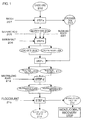
- Fig. 1 a flow chart illustrating recovery of nickel and cobalt from an oxide ore containing nickel, cobalt and iron is shown.
- step a an oxide ore 202 is classified into an over-size ore and an under-size ore.
- the under-size ore is treated with water 207 to obtain a slurry ore 204, and the over-size ore is crushed into a crushed ore 203.
- step b (leaching step)
- sulfuric acid 205 and a reducing agent 220 are added to the slurry ore 204 to reduce a trivalent cobalt oxide, and to leach the ore with sulfuric acid 205 to obtain a sulfuric acid leachate 208 containing nickel and cobalt and a leaching residue 209.
- the leaching residue 209 contains Natrojarosite generated by a reaction of iron leached from the slurry ore 204 with sulfuric acid 205 and a sodium salt 206.
- step c by reacting free sulfuric acid in the sulfuric acid leachate 208 containing the leaching residue 209 with magnesium contained in the crushed ore 203 obtained by crushing in the classification step, free sulfuric acid is consumed for adjusting a pH to obtain a reaction solution 210 and a reaction residue 211.
- a pH adjustment by precipitating Natrojarosite in the reaction residue 211, an iron concentration in the reaction solution 210 can be reduced.
- step d neutralization step
- a neutralizing agent 212 is added to the reaction solution 210 containing the reaction residue 211 for pH adjustment to obtain a neutralization solution 213 and a neutralization residue 214.
- the added amount of the neutralizing agent 212 can be reduced.
- step e solid-liquid separation step
- a flocculant 215 is added to the neutralization solution 213 containing the neutralization residue 214 and then by employing a thickener, solid-liquid separation is performed to separate the neutralization solution 213 and the neutralization residue 214.
- the neutralization solution 214 is processed in the step of recovering nickel and cobalt to recover nickel and cobalt.
- Step a Classification step
- An oxide ore 202 such as two kinds of oxide ores No. 1 and No. 2 derived from different mines containing nickel, cobalt, magnesium and iron is classified into an over-size ore and an under-size ore by a simple apparatus such as a vibrating screen.
- the under-size ore is treated with water 207 to obtain a slurry ore 204, and the over-size ore is crushed by an apparatus such as ball mill to obtain a crushed ore 203.
- a classification size by a vibrating screen for example, a mesh of 0.5 mm to 2 mm both inclusive may be used from the view of improving process stability.
- Water 207 may be, in addition to river water or ground water commonly used, marine water.
- the process may be carried out around a mine from the view of an economical efficiency including a cost. Looking around an area where the mine is operated, it is not always easy to ensure adequate water such as river water and ground water.
- a sodium salt contained in the marine water may be utilized to obtain an effect to be able to control the residual amount of iron leached from an oxide ore in a leachate or a reaction solution in the leaching step or the reaction step as a later step.
- Step b Leaching step
- the slurry ore 204 obtained in step a can be leached, for example, by adding sulfuric acid 205 and a reducing agent 220 at an atmospheric pressure and a temperature of not less than 90 °C and not more than 100 °C, to obtain a sulfuric acid leachate 208 containing nickel, cobalt, magnesium and iron and a leaching residue 209.
- Leaching at a 90 °C or higher can improve a leaching rate for nickel and cobalt in the slurry ore 204.
- a leaching time for nickel and cobalt in the slurry ore can be reduced and increasing a leaching rate for nickel and cobalt.
- leaching nickel and cobalt contained in the slurry ore at 100 °C or lower leaching nickel and cobalt at a temperature equal to or lower than the boiling point of water can be performed.
- a container of the apparatus for pressurizing an apparatus for leaching nickel and cobalt may not be pressurized. Consequently, an increase in a facility cost can be prevented.
- a leaching temperature is defined as 90 °C or higher in the above description, for instance, a temperature of 70 °C or higher may be appropriately selected.
- nickel and cobalt in the slurry ore 204 may be leached at more than 100°C.
- nickel and cobalt in the slurry ore 204 may be leached under a pressure other than an atmospheric pressure.
- the added amount of sulfuric acid may be 0.5 to 0.8 times both inclusive of that of the used oxide ore 202.
- sulfuric acid in 0.5 times or more amount nickel and cobalt can be sufficiently leached, and with sulfuric acid in about 0.8 times amount, a leaching rate for nickel and cobalt is in equilibrium. Therefore, using sulfuric acid in 0.8 times or less amount, the amount of excessive sulfuric acid (free sulfuric acid) may be reduced.
- increase in a cost for recovering nickel and cobalt can be reduced.
- iron powder As the reducing agent 220, iron powder, sodium sulfite and a mixture thereof are employed. Among these, iron such as iron powder may be used. When using iron powder as the reducing agent 220, it can exert good effect as the reducing agent 220 in a smaller amount. Furthermore, since iron powder is inexpensive, while increase in a process cost can be reduced, a leaching rate for nickel and cobalt can be improved stably.
- a particle size of the iron powder may be a diameter of about 1 mm, and iron with its surface being not oxidized may be used. In addition to iron powder, iron scrap obtained by grinding by a grinder may be used.
- the added amount of the reducing agent 220 may be appropriately selected, depending on its type. When using iron powder, it may be added in an amount within a range of 0.1 wt% to 1 wt%, particularly 0.2 wt% to 0.5 wt% to the amount of the oxide ore 202. In addition, when using sodium sulfite, it may be added in an amount within a range of 1 wt% to 10 wt%, particularly 5 wt% to 8 wt% to the amount of the oxide ore 202. By adding within the above range, iron powder as the reducing agent 220 may be adequately effective to further efficiently improve a leaching rate of nickel and cobalt, particularly of cobalt. Thus, while reducing a cost, a recovery rate for nickel and cobalt may be further improved.
- the reducing agent 220 may be adequately effective to further efficiently improve a leaching rate of nickel and cobalt, particularly of cobalt.
- a recovery rate for nickel and cobalt may be further improved.
- Addition of a reducing agent would be effective for improving a leaching rate of nickel and cobalt, particularly of cobalt because of the following reason.
- cobalt in the oxide ore 202 exists as a bivalent oxide (CoO) and a trivalent oxide (Co 2 O 3 ), and a ratio of these oxides would be dependent on a mining place. Binding state between cobalt and oxygen is stronger and more stable in Co 2 O 3 than in CoO. It is, therefore, not easy to decompose the bond between cobalt and oxygen in a trivalent cobalt oxide contained in the slurry ore 204 with sulfuric acid 205.
- iron powder when using iron powder as the reducing agent 220, it can exert a comparable effect as the reducing agent 220 in a smaller amount of the reducing agent 220. Furthermore, since iron powder is inexpensive, when using iron powder as the reducing agent, increase in a process cost can be prevented while improving a leaching rate for nickel and cobalt.
- step b by using the under-size ore classified in the classification step, the following effect can be obtained.
- leaching of nickel and cobalt in the oxide ore is more difficult in the under-size ore.
- the crushed ore 203 from the over-size ore contains magnesium in a higher content compared to the under-size ore, free sulfuric acid used for leaching may be consumed.
- a sodium salt 206 such as sodium sulfate and sodium chloride is added in step b.
- An added content of sodium derived from the sodium salt 206 may be about 0.01 to 0.05 times of a content of an oxide ore 202.
- an additional sodium salt 206 is not necessary because marine water contains sodium in about 10 g/L.
- iron leached from the oxide ore can be reacted with sodium sulfate in the sulfuric acid leachate 208 to reduce an iron concentration in the sulfuric acid leachate 208.
- FeO(OH) ⁇ (oxide ore) + 3/2H 2 SO 4 1/2Fe 2 (SO 4 ) 3 ⁇ (liquid) + 2H 2 O
- Fe 2 (SO 4 ) 3 ⁇ (liquid) + 1/3Na 2 SO 4 + 4H 2 O 2/3NaFe 3 (SO 4 ) 2 (OH) 6 ⁇ (solid) + 2H 2 SO 4
- Fe 2 (SO 4 ) 3 ⁇ (liquid) + 2/3NaCl + 4H 2 O 2/3NaFe 3 (SO 4 ) 2 (OH) 6 ⁇ (solid) + 2/3HCl + 5/3H 2 SO 4
- iron in the oxide ore is leached with excessive sulfuric acid and combined with sodium in the sulfuric acid leachate to generate Natrojarosite, resulting in precipitation of part of iron leached.
- iron leached from the oxide ore is contained in a leachate, so that increase in its amount involved in the next reaction step can be reduced. So, in reaction step, iron can be sufficiently removed by precipitation as Natrojarosite. Consequently, in the neutralization step after the reaction process, increase in a cost for precipitating iron in a neutralization solution can be prevented.
- a leaching rate for nickel and cobalt with sulfuric acid 205 can be improved at the same time.
- nickel and cobalt can be more efficiently leached.
- a leaching time may be 1 hour to 10 hours both inclusive; for example, 3 hours to 6 hours.
- a facility for the leaching step may be a vessel with a stirrer commonly used, which may be made of, for example, stainless steel or a rubber-lined steel. Therefore, nickel and cobalt can be leached from the oxide ore 202 without using, for example, a titanium-lined autoclave which is used in pressure leaching at a high temperature and a high pressure, resulting in leaching nickel and cobalt while preventing increase in a cost for recovering nickel and cobalt.
- Step c Reaction process
- the sulfuric acid leachate 208 and the leaching residue 209 obtained in step b is reacted with the crushed ore 203 from the over-size ore obtained in step a, for instance, at an atmospheric pressure and a temperature of not less than 90 °C and not more than 100 °C in accordance with equations (4) to (7) described later.
- a reaction solution 210 containing nickel, cobalt, magnesium and a small amount of iron and a reaction residue 211 can be obtained.
- the reducing agent 220 may be added.
- the reducing agent 220 may not be added in step b or alternatively may be added both in step b and in this step.
- the reducing agent 220 for instance, iron powder, sodium sulfite and a mixture thereof may be used.
- iron powder it may be added in an amount within a range of not less than 0.1 wt% and not more than 1 wt%, particularly not less than 0.2 wt% and not more than 0.5 wt% to the amount of the oxide ore 202.
- a particle size of the iron powder may be a diameter of about 1 mm, and iron with its surface being not oxidized may be used.
- sodium sulfite when using sodium sulfite, it may be added in an amount within a range of not less than 1 wt% and not more than 10 wt%, particularly not less than 5 wt% and not more than 8 wt% to the amount of the oxide ore 202.
- iron powder sodium sulfite and a mixture thereof
- other reducing agents including iron other than iron powder such as iron scrap formed by grinding by a grinder; alcohols such as methanol and ethanol; and reducing gases such as sulfur dioxide.
- the crushed ore 203 may be added as a solid as it is, or alternatively added as a slurry with water.
- water may be selected from river water, ground water and marine water.
- the water may contain a sodium salt 206 such as sodium sulfate and sodium chloride.
- the reaction can be performed at a temperature of 90 °C or higher to improve a leaching rate of nickel and cobalt contained in the crushed ore 203. Also, an efficiency for removing iron leached in step b as Natrojarosite by precipitation can be improved.
- the reaction at a temperature of 100 °C or lower may be a reaction in accordance with a chemical equation described later at a temperature equal to or lower than the boiling point of water. It is, therefore, not necessary to pressurize a reaction container in an apparatus for the reaction. Consequently, increase in a facility cost can be prevented.
- the reaction may be performed as a reaction in accordance with a chemical equation described later.
- the reaction in accordance with the chemical equation described later may be performed at a pressure other than an atmospheric pressure.
- an iron concentration in the sulfuric acid leachate 208 in step b is 30 g/L to 90 g/L.
- free sulfuric acid is contained in 30 g/L or more, the free sulfuric acid reacts with magnesium contained in the crushed ore 203 to reduce an iron concentration to 1/10 or less and a free sulfuric acid concentration to 1/3 or less, respectively, compared with those in the sulfuric acid leachate 208 before the reaction.
- Iron and magnesium contained in the oxide ore 202 may allow the above reaction to more efficiently proceed. For example, when a component ratio of magnesium/iron is 0.125 or more, the amount of iron contained in the oxide ore 202 is relatively smaller, so that in accordance with equation (1), a relatively smaller amount of iron is leached from the oxide ore in the leaching step. Thus, an iron concentration in the reaction solution can be also reduced. Furthermore, since a relatively larger amount of magnesium is contained in the oxide ore 202, the amount of magnesium reacting with free sulfuric acid brought from the sulfuric acid leachate 208 into the reaction step is relatively larger. Therefore, in accordance with the reaction of equation (4), free sulfuric acid in the sulfuric acid leachate 208 can be sufficiently consumed with magnesium.
- iron and magnesium contained in the oxide ore 202 may allow iron to be sufficiently precipitated in accordance with equations (5) to (7), resulting in reduction in an iron concentration remaining in the reaction solution 210.
- the amount of iron remaining in the reaction solution 210 and thus brought in the neutralization step may be reduced. Therefore, increase in a cost for precipitating iron in the neutralization step may be prevented.
- nickel and cobalt can be recovered while preventing increase in a cost for recovering nickel and cobalt.
- a component ratio of magnesium/iron there is not a particular upper limit to a component ratio of magnesium/iron; for example, 0.75 or more may be acceptable.
- the oxide ore 202 used in the present embodiment is a limonite ore containing iron and magnesium in 20 wt% to 50 wt% both inclusive and 2.5 wt% to 15 wt% both inclusive, respectively.
- a component ratio of magnesium/iron is never 0.75 or more.
- the reason why the crushed ore 203 from the over-size ore is used is the crushed ore 203 from the over-size ore contains more magnesium than the under-size ore so that the reactions of equations (4) to (7) more effectively proceed.
- a reaction time may be 3 hours to 10 hours both inclusive or 4 hours to 6 hours both inclusive; that is, the reactions of equations (4) to (7) can be completed in a shorter time than the case where an oxide ore before classification is used.
- the crushed ore 203 from the over-size ore contains nickel and cobalt, free sulfuric acid may be reacted with magnesium to adjust a pH while leaching nickel and cobalt in the crushed ore 203, to further improve a recovery rate for nickel and cobalt.
- a recovery rate for nickel and cobalt can be further improved.
- a facility for this reaction may be a container with a stirrer commonly used, which may be made of, for example, stainless steel or a rubber-lined steel. Therefore, the reaction in this step can be performed without using an expensive facility, for example, a titanium-lined autoclave that is used in a reaction at a high temperature and a high pressure, resulting in preventing increase in a cost for recovering nickel and cobalt.
- this step may be performed using a ferronickel slag that contains nickel in a relatively higher content among some ferronickel slag used in the neutralization step, together with the crushed ore from the over-size ore.
- the slag may be used in a range such that a final pH during the reaction is less than 3. With a pH of less than 3, the solution contains free sulfuric acid, which can prevent reduction in a leaching efficiency for nickel from an oxide ore.
- this step may be performed using, for example, an oxide ore with a relatively lower nickel content and a relatively higher magnesium content whose nickel and magnesium contents are 1 wt% or less and 15 wt% or more, respectively, that is, which is generally not used for recovering nickel and cobalt.
- an oxide ore often exists in, for example, a deeper layer in a nickel and cobalt mine, and is characterized in that it has a relatively lower iron content. Therefore, by using the above oxide ore in step c, nickel and cobalt may be leached into a sulfuric acid solution while adjusting a pH with magnesium, to prevent amount of leached iron from being increased. As a result, while improving a recovery rate for nickel and cobalt, a cost for recovering nickel and cobalt can be reduced. Also, a magnesium-containing substance other than an oxide ore may be used.
- an oxide ore with a lower content of nickel and a higher content of magnesium may be used together with an oxide ore containing magnesium from an over-size ore classified in step a.
- a magnesium-containing substance other than an oxide ore may be used together with an oxide ore containing magnesium from an over-size ore classified in step a.
- a magnesium-containing substance other than an oxide ore may be used together with the oxide ore with a lower content of nickel and a higher content of magnesium.
- an oxide ore containing magnesium from an over-size ore classified in step a may be used together with the above oxide ore with a lower content of nickel and a higher content of magnesium as well as a magnesium-containing substance other than an oxide ore.
- Step d Neutralization step
- a pH may be adjusted to 2 to 6 both inclusive, or alternatively, a neutralization reaction may be performed at a pH within a range of 3 to 5 both inclusive.
- a neutralization solution 213 with an iron concentration of 1 g/L or less which also contains nickel, cobalt and magnesium, and a neutralization residue 214.
- iron With a pH of 2 or higher, iron may be sufficiently precipitated.
- a pH of 6 or lower With a pH of 6 or lower, most of iron can be removed by precipitation while preventing coprecipitation of nickel and cobalt. Thus, a recovery rate for nickel and cobalt can be improved.
- a neutralization reaction may be performed using the reaction solution 210, the reaction residue 211 and the neutralizing agent 212 at an atmospheric pressure, or alternatively at a pressure other than an atmospheric pressure.
- neutralizing agent 212 hydroxides of an alkali metal such as sodium hydroxide; carbonates of an alkali metal such as sodium carbonate; hydroxides of an alkaline earth metal such as calcium hydroxide and magnesium hydroxide; oxides of an alkaline earth metal such as calcium oxide and magnesium oxide; carbonates of an alkaline earth metal such as calcium carbonate and magnesium carbonate, which are commonly used, may be employed. Also, a ferronickel slag having a composition shown in Table 1 may be used. Further, the above neutralizing agents may be used alone or in combination of two or more.
- the term "ferronickel slag” refers to a slag containing magnesium obtained during smelting ferronickel using a magnesium-containing ore containing nickel in 2 wt% or more by pyrometallurgical smelting process.
- the amount of a ferronickel slag generated by pyrometallurgical smelting process is about 30 to 35 parts to 1 part of nickel 1, but only a part of the slag is effectively used.
- magnesium contained in the ferronickel slag can be effectively utilized as a neutralizing agent while neutralizing the reaction solution 210 and the reaction residue 211.
- nickel and cobalt can be recovered.
- any agent such as calcium hydroxide, magnesium hydroxide, calcium oxide, magnesium oxide, calcium carbonate and magnesium carbonate can be used as the neutralizing agent 212 as long as it can neutralize the reaction solution 210 and the reaction residue 211.
- Step e Solid-liquid separation step
- the neutralization solution 213 and the neutralization residue 214 obtained in step d are separated by adding a flocculant 215.
- the flocculant 215 may be, for example, a polymer flocculant.
- the solid-liquid separation may be performed by a commonly used thickener method; specifically, by countercurrent washing method with a 6 or more stage thickener.
- the neutralization solution 213 and the neutralization residue 214 are efficiently separated into a solid and a liquid such that nickel and cobalt in the neutralization solution is recovered in a high yield of 99 wt% or more and the neutralization solution 213 containing nickel, cobalt and magnesium contains iron in a low concentration of 1 g/L or less.
- the flocculant 215 may be, besides a polymer flocculant, any flocculant as long as it can separate the neutralization solution 213 from the neutralization residue 214.
- solid-liquid separation into the neutralization solution 213 and the neutralization residue 214 may be performed using another type of solid-liquid separator.
- nickel and cobalt can be efficiently recovered from an oxide ore.
- step a where the oxide ore containing nickel and cobalt is classified is performed in the above embodiment, the step a may be omitted.
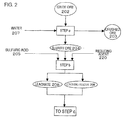
- Fig. 2 is a flow chart illustrating a step according to the present embodiment. Fig. 2 shows the process till step b (leaching step). Then, by performing step c and the subsequent steps described in first embodiment, the sulfuric acid leachate 208 and the leaching residue 209 are processed, to recover nickel and cobalt. Such a process is also effective as described in the above embodiment.
- nickel may be recovered from an oxide ore containing nickel and iron
- cobalt may be recovered from an oxide ore containing cobalt and iron
- Table 2 and Table 3 show the conditions and the results of examples and comparative examples.
- Table 2 Ex. Oxide ore No. Oxide ore component (wt%) Ore classification rate (wt%) Water Sodium salt added Reducing agent Sulfuric acid/Ore Temperature °C Ni Co Fe Mg -2mm +2mm Material Na/Ore Material Process Reducing agent/Ore Leaching Reaction Comp Ex. 1 No-1 1.65 0.077 25.4 10.8 64 36 Marine None 0 None None None 0 0.73 95 95 Ex. 1 No-1 1.65 0.077 25.4 10.8 64 36 Marine None 0 Iron powder Atmospheric leaching 0.003 0.73 95 95 Ex.
- Example 1 to Example 5 and Comparative Example 1 an oxide ore No. 1 (Ni : 2.65 %, Co: 0.077 %, Fe : 25.4 %, Mg : 10.8%) was used.
- Example 6 to Example 10 and Comparative Example 2 an oxide ore No. 2 (Ni : 1.71 %, Co : 0.2357 %, Fe : 22.7 %, Mg : 11.1 %) from a different mine from that for oxide ore No. 1 was used.
- the oxide ore No. 1 was classified by a 2 mm screen into a -2 mm oxide ore and a +2 mm oxide ore in 64 wt% and 36 wt%, respectively.
- the whole amount of the +2 mm oxide ore was crushed into a -2 mm ore.
- To the -2 mm oxide ore was added marine water to obtain a 28 wt% concentration slurry ore.
- 98 wt% concentration sulfuric acid was added in a 0.73 times amount to the whole amount of the oxide ore before classification, and the mixture was stirred for 6 hours at a temperature of 95 °C and an atmospheric pressure to leach the mixture.
- the oxide ore No. 2 was classified with a 2 mm screen into a -2 mm oxide ore and a +2 mm oxide ore in 61 wt% and 39 wt%, respectively.
- the whole amount of the +2 mm oxide ore was crushed into a -2 mm ore.
- To the -2 mm oxide ore was added marine water to obtain a slurry with a concentration of 28 wt%.
- 98 wt% concentration sulfuric acid was added in 0.73 times amount to the total amount of the oxide ore before classification. Then, the mixture was leached by stirring for 6 hours at a temperature of 95 °C and an atmospheric pressure.
- a leaching rate after the reaction was checked to obtain the results: Ni : 87.0 %, Co : 13.3 %, Fe : 4.5 % and Mg : 80.4 %, and concentrations in the reaction solution were Ni : 6.56 g/L, Co : 0.17 g/L, Fe : 4.39 g/L and Mg : 35.30 g/L.
- a leaching rate of nickel was satisfactory while a leaching rate of cobalt was insufficient.
Landscapes
- Engineering & Computer Science (AREA)
- Chemical & Material Sciences (AREA)
- Manufacturing & Machinery (AREA)
- Materials Engineering (AREA)
- Mechanical Engineering (AREA)
- Metallurgy (AREA)
- Organic Chemistry (AREA)
- Manufacture And Refinement Of Metals (AREA)
Applications Claiming Priority (2)
| Application Number | Priority Date | Filing Date | Title |
|---|---|---|---|
| JP2004108203 | 2004-03-31 | ||
| EP05720833A EP1731623A4 (de) | 2004-03-31 | 2005-03-15 | Auslaugungsverfahren und verfahren zur gewinnung von nickel oder cobalt |
Related Parent Applications (1)
| Application Number | Title | Priority Date | Filing Date |
|---|---|---|---|
| EP05720833A Division EP1731623A4 (de) | 2004-03-31 | 2005-03-15 | Auslaugungsverfahren und verfahren zur gewinnung von nickel oder cobalt |
Publications (2)
| Publication Number | Publication Date |
|---|---|
| EP2108708A1 true EP2108708A1 (de) | 2009-10-14 |
| EP2108708B1 EP2108708B1 (de) | 2014-09-17 |
Family
ID=35125096
Family Applications (2)
| Application Number | Title | Priority Date | Filing Date |
|---|---|---|---|
| EP05720833A Withdrawn EP1731623A4 (de) | 2004-03-31 | 2005-03-15 | Auslaugungsverfahren und verfahren zur gewinnung von nickel oder cobalt |
| EP20090165952 Expired - Lifetime EP2108708B1 (de) | 2004-03-31 | 2005-03-15 | Auslaugungsverfahren und Verfahren zur Gewinnung von Nickel oder Cobalt |
Family Applications Before (1)
| Application Number | Title | Priority Date | Filing Date |
|---|---|---|---|
| EP05720833A Withdrawn EP1731623A4 (de) | 2004-03-31 | 2005-03-15 | Auslaugungsverfahren und verfahren zur gewinnung von nickel oder cobalt |
Country Status (4)
| Country | Link |
|---|---|
| EP (2) | EP1731623A4 (de) |
| JP (2) | JP4456110B2 (de) |
| BR (1) | BRPI0505977B1 (de) |
| WO (1) | WO2005098061A1 (de) |
Families Citing this family (28)
| Publication number | Priority date | Publication date | Assignee | Title |
|---|---|---|---|---|
| BRPI0505544B1 (pt) * | 2005-11-10 | 2014-02-04 | Processo de lixiviação combinada | |
| FR2905383B1 (fr) | 2006-09-06 | 2008-11-07 | Eramet Sa | Procede de traitement hydrometallurgique d'un minerai de nickel et de cobalt lateritique,et procede de preparation de concentres intermediaires ou de produits commerciaux de nickel et/ou de cobalt l'utilisant. |
| CN101910430B (zh) * | 2007-12-24 | 2012-07-04 | Bhp比利通Ssm开发有限公司 | 从红土矿石中选择性地浸提钴 |
| US8268039B2 (en) | 2008-03-19 | 2012-09-18 | Bhp Billiton Ssm Development Pty Ltd. | Process for atmospheric leaching of laterite ores using hypersaline leach solution |
| WO2009114903A1 (en) * | 2008-03-20 | 2009-09-24 | Bhp Billiton Ssm Development Pty Ltd | Process for the recovery of nickel and/or cobalt from high ferrous content laterite ores |
| US8361191B2 (en) | 2010-04-01 | 2013-01-29 | Search Minerals, Inc. | Low acid leaching of nickel and cobalt from lean iron-containing nickel ores |
| EP2553129B1 (de) * | 2010-04-01 | 2019-06-19 | Incor Technologies Limited | Geringe säurelaugung von nickel und kobalt aus nickelerzen mit geringem eisengehalt |
| JP5577926B2 (ja) * | 2010-08-03 | 2014-08-27 | 住友金属鉱山株式会社 | ニッケル及びコバルトの浸出方法、及びリチウムイオン電池からの有価金属の回収方法 |
| CN102658234B (zh) * | 2012-04-10 | 2015-03-25 | 西北有色地质研究院 | 消泡剂在石煤型钒矿选矿抛尾-湿法冶金的应用方法 |
| JP5904100B2 (ja) * | 2012-11-20 | 2016-04-13 | 住友金属鉱山株式会社 | 中和スラリーの沈降分離方法、並びにニッケル酸化鉱石の湿式製錬方法 |
| JP5880488B2 (ja) * | 2013-06-17 | 2016-03-09 | 住友金属鉱山株式会社 | ヘマタイトの製造方法、並びにそのヘマタイト |
| CN104789799A (zh) * | 2014-12-31 | 2015-07-22 | 金川集团股份有限公司 | 常压酸浸和中等压力浸出相结合处理红土镍矿的方法 |
| CN104789797A (zh) * | 2014-12-31 | 2015-07-22 | 金川集团股份有限公司 | 一种从低品位红土镍矿中回收镍、钴、铁、硅和镁的新方法 |
| CN104805308A (zh) * | 2014-12-31 | 2015-07-29 | 金川集团股份有限公司 | 一种从低品位红土镍矿中回收镍、钴、铁、硅和镁的新方法 |
| CN104789798A (zh) * | 2014-12-31 | 2015-07-22 | 金川集团股份有限公司 | 常压酸浸和中等压力浸出相结合处理红土镍矿的方法 |
| CN104651634A (zh) * | 2014-12-31 | 2015-05-27 | 金川集团股份有限公司 | 一种从红土镍矿中回收镍、钴和铁的方法 |
| CN104630504A (zh) * | 2014-12-31 | 2015-05-20 | 金川集团股份有限公司 | 一种从褐铁矿中回收镍的方法 |
| CN104805307A (zh) * | 2014-12-31 | 2015-07-29 | 金川集团股份有限公司 | 一种从低品位红土镍矿中回收镍、钴和铁的新方法 |
| CN104805309A (zh) * | 2014-12-31 | 2015-07-29 | 金川集团股份有限公司 | 一种从红土镍矿中回收镍、钴和铁的方法 |
| CN104831087A (zh) * | 2014-12-31 | 2015-08-12 | 金川集团股份有限公司 | 一种通过联合浸出工艺从低品位红土镍矿中回收镍、钴、铁和硅的方法 |
| CN104630501A (zh) * | 2014-12-31 | 2015-05-20 | 金川集团股份有限公司 | 一种通过联合浸出工艺从低品位红土镍矿中回收镍、钴、铁和硅的方法 |
| CN104762493A (zh) * | 2014-12-31 | 2015-07-08 | 金川集团股份有限公司 | 常压酸浸和中等压力浸出相结合处理红土镍矿的方法 |
| CN104805306A (zh) * | 2014-12-31 | 2015-07-29 | 金川集团股份有限公司 | 一种从低品位红土镍矿中回收镍、钴和铁的新方法 |
| CN104593584A (zh) * | 2015-02-03 | 2015-05-06 | 赣州逸豪优美科实业有限公司 | 一种机械活化强化钴白合金浸钴工艺 |
| CN104726717B (zh) * | 2015-04-01 | 2017-04-19 | 云南驰宏锌锗股份有限公司 | 一种逆锑净化钴渣回收钴的方法 |
| CN106244811B (zh) * | 2016-08-24 | 2018-04-06 | 盛隆资源再生(无锡)有限公司 | 一种铜铁含量低、锡镍含量高的电镀污泥的回收利用方法 |
| CN109280768A (zh) * | 2018-12-04 | 2019-01-29 | 浙江中金格派锂电产业股份有限公司 | 钴精矿及钴中间品混合浸出-除铁同步进行的生产方法 |
| JP7273269B1 (ja) * | 2022-07-28 | 2023-05-15 | 住友金属鉱山株式会社 | ニッケル酸化鉱石の湿式製錬方法 |
Citations (7)
| Publication number | Priority date | Publication date | Assignee | Title |
|---|---|---|---|---|
| US4415542A (en) * | 1982-06-21 | 1983-11-15 | Compagne Francaise D'entreprises Minieres, Metallurgiques Et D'investissements | Controlling scale composition during acid pressure leaching of laterite and garnierite ore |
| US4548794A (en) * | 1983-07-22 | 1985-10-22 | California Nickel Corporation | Method of recovering nickel from laterite ores |
| EP0547744A1 (de) * | 1991-10-09 | 1993-06-23 | PACIFIC METALS Co., Ltd. | Verfahren zur Rückgewinnung von Metallen aus Oxid-enthaltenden Erzen |
| JPH0681050A (ja) | 1991-10-31 | 1994-03-22 | Taiheiyo Kinzoku Kk | ニッケル、コバルトの回収方法 |
| JP2000234130A (ja) | 1999-02-12 | 2000-08-29 | Taiheiyo Kinzoku Kk | 酸化鉱石から有価金属を回収する方法 |
| WO2001032943A2 (en) * | 1999-11-03 | 2001-05-10 | Bhp Minerals International, Inc. | Atmospheric leach process for the recovery of nickel and cobalt from limonite and saprolite ores |
| WO2003093517A1 (en) * | 2002-04-29 | 2003-11-13 | Qni Technology Pty Ltd | Atmospheric pressure leach process for lateritic nickel ore |
Family Cites Families (4)
| Publication number | Priority date | Publication date | Assignee | Title |
|---|---|---|---|---|
| CA1023560A (en) * | 1974-05-10 | 1978-01-03 | Inco Limited | Leaching of oxide materials containing non-ferrous values |
| CA1043576A (en) * | 1975-06-10 | 1978-12-05 | Inco Limited | Two stage leaching of limonitic ore and sea nodules |
| CA1050278A (en) * | 1975-06-10 | 1979-03-13 | Inco Limited | Leaching limonitic ores |
| US6350420B1 (en) * | 1999-10-15 | 2002-02-26 | Bhp Minerals International, Inc. | Resin-in-pulp method for recovery of nickel and cobalt |
-
2005
- 2005-03-15 BR BRPI0505977 patent/BRPI0505977B1/pt not_active IP Right Cessation
- 2005-03-15 EP EP05720833A patent/EP1731623A4/de not_active Withdrawn
- 2005-03-15 JP JP2006516883A patent/JP4456110B2/ja not_active Expired - Fee Related
- 2005-03-15 EP EP20090165952 patent/EP2108708B1/de not_active Expired - Lifetime
- 2005-03-15 WO PCT/JP2005/004578 patent/WO2005098061A1/ja not_active Ceased
-
2009
- 2009-01-09 JP JP2009003888A patent/JP4538073B2/ja not_active Expired - Lifetime
Patent Citations (7)
| Publication number | Priority date | Publication date | Assignee | Title |
|---|---|---|---|---|
| US4415542A (en) * | 1982-06-21 | 1983-11-15 | Compagne Francaise D'entreprises Minieres, Metallurgiques Et D'investissements | Controlling scale composition during acid pressure leaching of laterite and garnierite ore |
| US4548794A (en) * | 1983-07-22 | 1985-10-22 | California Nickel Corporation | Method of recovering nickel from laterite ores |
| EP0547744A1 (de) * | 1991-10-09 | 1993-06-23 | PACIFIC METALS Co., Ltd. | Verfahren zur Rückgewinnung von Metallen aus Oxid-enthaltenden Erzen |
| JPH0681050A (ja) | 1991-10-31 | 1994-03-22 | Taiheiyo Kinzoku Kk | ニッケル、コバルトの回収方法 |
| JP2000234130A (ja) | 1999-02-12 | 2000-08-29 | Taiheiyo Kinzoku Kk | 酸化鉱石から有価金属を回収する方法 |
| WO2001032943A2 (en) * | 1999-11-03 | 2001-05-10 | Bhp Minerals International, Inc. | Atmospheric leach process for the recovery of nickel and cobalt from limonite and saprolite ores |
| WO2003093517A1 (en) * | 2002-04-29 | 2003-11-13 | Qni Technology Pty Ltd | Atmospheric pressure leach process for lateritic nickel ore |
Non-Patent Citations (4)
| Title |
|---|
| ISIJ INTERNATIONAL, vol. 43, no. 2, 2003, pages 181 - 186 |
| JOURNAL OF METALS, March 1960 (1960-03-01), pages 206 |
| PROC. AUSTRALAS. INST. METALL. NO. 265, March 1978 (1978-03-01) |
| THE METAL. SOC, 1988, pages 447 |
Also Published As
| Publication number | Publication date |
|---|---|
| EP1731623A4 (de) | 2008-09-17 |
| BRPI0505977A (pt) | 2006-10-24 |
| BRPI0505977B1 (pt) | 2013-07-16 |
| JPWO2005098061A1 (ja) | 2008-02-28 |
| EP1731623A1 (de) | 2006-12-13 |
| WO2005098061A1 (ja) | 2005-10-20 |
| EP2108708B1 (de) | 2014-09-17 |
| WO2005098061A8 (ja) | 2006-09-21 |
| JP2009102742A (ja) | 2009-05-14 |
| JP4456110B2 (ja) | 2010-04-28 |
| JP4538073B2 (ja) | 2010-09-08 |
Similar Documents
| Publication | Publication Date | Title |
|---|---|---|
| EP2108708B1 (de) | Auslaugungsverfahren und Verfahren zur Gewinnung von Nickel oder Cobalt | |
| US12286686B2 (en) | Co-processing of copper sulphide concentrate with nickel laterite ore | |
| EP1627087B1 (de) | Verfahren zur rückgewinnung von wertmetallen aus grundmetalloxide enthaltendem werkstoff | |
| US7871584B2 (en) | Consecutive or simultaneous leaching of nickel and cobalt containing ores | |
| EP1752550B1 (de) | Verfahren zur gewinnung von nickel und cobalt | |
| EP1777304B1 (de) | Verfahren zur gewinnung von nickel oder cobalt | |
| EP3279344B1 (de) | Verfahren zur herstellung von nickel- und kobalt-mischsulfid und hydrometallurgisches verfahren mit nickeloxiderz | |
| EP2912649B1 (de) | Rückgewinnung von metallwerten aus oxiden von manganhaltigen materialien | |
| US8361191B2 (en) | Low acid leaching of nickel and cobalt from lean iron-containing nickel ores | |
| EP1731622B1 (de) | Laugverfahren zur gewinnung von nickel oder kobalt | |
| EP3252177A1 (de) | Nassschmelzverfahren für nickeloxiderz | |
| Antuñano et al. | Development of a combined solid and liquid wastes treatment integrated into a high purity ZnO hydrometallurgical production process from Waelz oxide | |
| EP3395968A1 (de) | Verfahren zur entfernung eines sulfidierungsmittels | |
| Baumgartner et al. | The recovery of manganese products from ferromanganese slag using a hydrometallurgical route | |
| US20150368120A1 (en) | Treatment of manganese-containing materials | |
| AU2011235562B2 (en) | Low acid leaching of nickel and cobalt from lean iron-containing nickel ores | |
| JP3407738B1 (ja) | 酸化鉱石からニッケル、コバルトを回収する方法 | |
| MX2013015102A (es) | Tratamiento previo a la cianuración convencional para recuperar plata a partir de minerales de mangano- argentíferos que contienen plata. |
Legal Events
| Date | Code | Title | Description |
|---|---|---|---|
| PUAI | Public reference made under article 153(3) epc to a published international application that has entered the european phase |
Free format text: ORIGINAL CODE: 0009012 |
|
| AC | Divisional application: reference to earlier application |
Ref document number: 1731623 Country of ref document: EP Kind code of ref document: P |
|
| AK | Designated contracting states |
Kind code of ref document: A1 Designated state(s): FR |
|
| 17P | Request for examination filed |
Effective date: 20091026 |
|
| 17Q | First examination report despatched |
Effective date: 20091124 |
|
| GRAP | Despatch of communication of intention to grant a patent |
Free format text: ORIGINAL CODE: EPIDOSNIGR1 |
|
| INTG | Intention to grant announced |
Effective date: 20140414 |
|
| RAP1 | Party data changed (applicant data changed or rights of an application transferred) |
Owner name: PACIFIC METALS CO., LTD. |
|
| GRAS | Grant fee paid |
Free format text: ORIGINAL CODE: EPIDOSNIGR3 |
|
| GRAA | (expected) grant |
Free format text: ORIGINAL CODE: 0009210 |
|
| AC | Divisional application: reference to earlier application |
Ref document number: 1731623 Country of ref document: EP Kind code of ref document: P |
|
| AK | Designated contracting states |
Kind code of ref document: B1 Designated state(s): FR |
|
| REG | Reference to a national code |
Ref country code: FR Ref legal event code: PLFP Year of fee payment: 11 |
|
| PLBE | No opposition filed within time limit |
Free format text: ORIGINAL CODE: 0009261 |
|
| STAA | Information on the status of an ep patent application or granted ep patent |
Free format text: STATUS: NO OPPOSITION FILED WITHIN TIME LIMIT |
|
| 26N | No opposition filed |
Effective date: 20150618 |
|
| REG | Reference to a national code |
Ref country code: FR Ref legal event code: PLFP Year of fee payment: 12 |
|
| REG | Reference to a national code |
Ref country code: FR Ref legal event code: PLFP Year of fee payment: 13 |
|
| REG | Reference to a national code |
Ref country code: FR Ref legal event code: PLFP Year of fee payment: 14 |
|
| PGFP | Annual fee paid to national office [announced via postgrant information from national office to epo] |
Ref country code: FR Payment date: 20240215 Year of fee payment: 20 |