EP2109321A2 - Adaptive Filterung für bittiefenskalierbares Video-Codec - Google Patents
Adaptive Filterung für bittiefenskalierbares Video-Codec Download PDFInfo
- Publication number
- EP2109321A2 EP2109321A2 EP09251080A EP09251080A EP2109321A2 EP 2109321 A2 EP2109321 A2 EP 2109321A2 EP 09251080 A EP09251080 A EP 09251080A EP 09251080 A EP09251080 A EP 09251080A EP 2109321 A2 EP2109321 A2 EP 2109321A2
- Authority
- EP
- European Patent Office
- Prior art keywords
- bit depth
- video
- filter
- encoder
- adaptive filtering
- Prior art date
- Legal status (The legal status is an assumption and is not a legal conclusion. Google has not performed a legal analysis and makes no representation as to the accuracy of the status listed.)
- Ceased
Links
- 230000003044 adaptive effect Effects 0.000 title claims abstract description 34
- 238000001914 filtration Methods 0.000 title claims abstract description 29
- 238000013507 mapping Methods 0.000 claims description 28
- 238000000034 method Methods 0.000 claims description 23
- 239000011159 matrix material Substances 0.000 description 5
- 230000005540 biological transmission Effects 0.000 description 4
- 238000005314 correlation function Methods 0.000 description 3
- 238000005311 autocorrelation function Methods 0.000 description 2
- 230000006835 compression Effects 0.000 description 2
- 238000007906 compression Methods 0.000 description 2
- 238000012986 modification Methods 0.000 description 2
- 230000004048 modification Effects 0.000 description 2
- 230000003287 optical effect Effects 0.000 description 2
- 239000004065 semiconductor Substances 0.000 description 2
- 241000023320 Luma <angiosperm> Species 0.000 description 1
- 238000004364 calculation method Methods 0.000 description 1
- 230000001419 dependent effect Effects 0.000 description 1
- 238000009795 derivation Methods 0.000 description 1
- 230000006870 function Effects 0.000 description 1
- 230000002452 interceptive effect Effects 0.000 description 1
- OSWPMRLSEDHDFF-UHFFFAOYSA-N methyl salicylate Chemical compound COC(=O)C1=CC=CC=C1O OSWPMRLSEDHDFF-UHFFFAOYSA-N 0.000 description 1
- 230000008520 organization Effects 0.000 description 1
Images


Classifications
-
- H—ELECTRICITY
- H04—ELECTRIC COMMUNICATION TECHNIQUE
- H04N—PICTORIAL COMMUNICATION, e.g. TELEVISION
- H04N19/00—Methods or arrangements for coding, decoding, compressing or decompressing digital video signals
- H04N19/30—Methods or arrangements for coding, decoding, compressing or decompressing digital video signals using hierarchical techniques, e.g. scalability
- H04N19/36—Scalability techniques involving formatting the layers as a function of picture distortion after decoding, e.g. signal-to-noise [SNR] scalability
-
- H—ELECTRICITY
- H04—ELECTRIC COMMUNICATION TECHNIQUE
- H04N—PICTORIAL COMMUNICATION, e.g. TELEVISION
- H04N19/00—Methods or arrangements for coding, decoding, compressing or decompressing digital video signals
- H04N19/10—Methods or arrangements for coding, decoding, compressing or decompressing digital video signals using adaptive coding
- H04N19/102—Methods or arrangements for coding, decoding, compressing or decompressing digital video signals using adaptive coding characterised by the element, parameter or selection affected or controlled by the adaptive coding
- H04N19/117—Filters, e.g. for pre-processing or post-processing
-
- H—ELECTRICITY
- H04—ELECTRIC COMMUNICATION TECHNIQUE
- H04N—PICTORIAL COMMUNICATION, e.g. TELEVISION
- H04N19/00—Methods or arrangements for coding, decoding, compressing or decompressing digital video signals
- H04N19/30—Methods or arrangements for coding, decoding, compressing or decompressing digital video signals using hierarchical techniques, e.g. scalability
-
- H—ELECTRICITY
- H04—ELECTRIC COMMUNICATION TECHNIQUE
- H04N—PICTORIAL COMMUNICATION, e.g. TELEVISION
- H04N19/00—Methods or arrangements for coding, decoding, compressing or decompressing digital video signals
- H04N19/46—Embedding additional information in the video signal during the compression process
-
- H—ELECTRICITY
- H04—ELECTRIC COMMUNICATION TECHNIQUE
- H04N—PICTORIAL COMMUNICATION, e.g. TELEVISION
- H04N19/00—Methods or arrangements for coding, decoding, compressing or decompressing digital video signals
- H04N19/60—Methods or arrangements for coding, decoding, compressing or decompressing digital video signals using transform coding
- H04N19/61—Methods or arrangements for coding, decoding, compressing or decompressing digital video signals using transform coding in combination with predictive coding
-
- H—ELECTRICITY
- H04—ELECTRIC COMMUNICATION TECHNIQUE
- H04N—PICTORIAL COMMUNICATION, e.g. TELEVISION
- H04N19/00—Methods or arrangements for coding, decoding, compressing or decompressing digital video signals
- H04N19/80—Details of filtering operations specially adapted for video compression, e.g. for pixel interpolation
Definitions
- This relates generally to scalable video codecs.
- Scalable video codecs enable different picture quality levels to be delivered to different customers, depending on what type of service they prefer. Lower quality video services may be less expensive than higher quality video services.
- a lower bit depth may be called a baseline layer and a higher bit depth may be called an enhancement layer.
- an encoder and decoder may be provided as one unit. In some cases, only an encoder may be provided and, in other cases, only a decoder may be provided.
- the scalable video coder enables the system to operate with at least the baseline layer. Thus, in low cost systems, only the baseline layer may be utilized and, in higher cost, more advanced systems, the enhancement layer may be utilized.
- inverse tone mapping may be utilized to increase the bit depth of the baseline layer to the bit depth of the enhancement layer.
- the baseline layer may be 8 bits per pixel and the enhancement may be 10, 12, or higher bits per pixel.
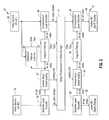
- a scalable video codec includes an encoder 10 that communicates over a video transmission or a video storage 14 with a decoder 12.
- Figure 1 shows an encoder from one codec with a decoder from another codec.
- a network computer may communicate over the network with another computer.
- Each computer may have a codec which includes both an encoder and a decoder so that information may be encoded at one node, transmitted over the network to the other node, which then decodes the encoded information.
- the codec shown in Figure 1 is a scalable video codec (SVC). This means that it is capable of encoding and/or decoding information with different bit depths.
- Video sources 16 and 26 may be connected to the encoder 10. The video source 16 may use N-bit video data, while the video source 26 may provide M-bit video data, where the bit depth M is greater than the bit depth N. In other embodiments, more than two sources with more than two bit depths may be provided.
- the information from a video source is provided to an encoder.
- the information is provided to a baseline encoder 18.
- an enhancement layer encoder 28 is utilized.
- the baseline encoded information from the baseline encoder 18 is inverse tone mapped to increase its bit depth to M-bits for use in enhancement layer encoding.
- the N-bit video is provided, in one embodiment, to an inverse tone mapping unit 20.
- the inverse tone mapping 20 increases the bit depth and produces an M-bit output to adaptive filtering 24.
- the adaptive filtering 24 adaptively filters the increased bit depth video.
- An improved quality M-bit video output from filtering 24 is provided to the enhancement layer encoder 28.
- the encoder of Figure 1 may be consistent with the H.264 (advanced video codec (AVC) and MPEG-4 Part 10), compression standard, for example.
- the H.264 standard has been prepared by the Joint Video Team (JVT), which includes ITU-T SG16 Q.6, also known as VCEG (Video Coding Expert Group), and of the ISO-IEC JTC1/SC29/WG11 (2003), known as MPEG (Motion Picture Expert Group).
- JVT Joint Video Team
- JVT Joint Video Team
- VCEG Video Coding Expert Group
- MPEG Motion Picture Expert Group
- H.264 is designed for applications in the area of digital TV broadcast, direct broadcast satellite video, digital subscriber line video, interactive storage media, multimedia messaging, digital terrestrial TV broadcast, and remote video surveillance, to mention a few examples.
- While one embodiment may be consistent with H.264 video coding, the present invention is not so limited. Instead, embodiments may be used in a variety of video compression systems including MPEG-2 (ISO/IEC 13818-1 (2000) MPEG-2 available from International Organization for Standardization, Geneva, Switzerland) and VC1 (SMPTE 421 M (2006) available from SMPTE White Plains, NY 10601).
- MPEG-2 ISO/IEC 13818-1 (2000) MPEG-2 available from International Organization for Standardization, Geneva, Switzerland
- VC1 SMPTE 421 M (2006) available from SMPTE White Plains, NY 10601.
- Adaptive filtering 24 may be achieved by a Wiener filter in one embodiment.
- a Wiener filter is a filter that achieves the least mean square error among the source signal and the predicted signal modeled through the random noise.
- "Adaptive filtering" means that filtering is content dependent or based on an analysis of pixel intensities in a portion of a picture, a picture as a whole, or a plurality of successive pictures. For example, the type of video information that is received, be it graphics or stream view video, results in different taps in the Wiener filter for different types of video.
- adaptive filter taps are the result of an examination of the intensity of each pixel in a given picture portion, picture, or series of pictures.
- the adaptive filtering 24 receives an input from a statistical feature collector 22.
- the statistical feature collector 22 receives inputs from the video source 26 and inverse tone mapping 20, in one embodiment.
- the statistical feature collector 22 calculates the weight c i , which is applied to a reconstructed mapped pixel y i .
- the weight c i is used to calculate the filter taps for the adaptive filtering 24.
- the statistical feature collector 22 analyzes each pixel of an M-bit depth picture and determines how groups of pixels across a region of a picture or across multiple pictures vary in intensity to determine what type of video is being received and what adaptive filtering should be done. Based on this information, it sets the filter taps for the adaptive filtering 22.
- the encoder provides information over the video transmission or video storage 14 for use by a decoder.
- the information that may be provided may include the baseline (BL) layer video stream, the inverse tone mapping (ITM) information, the filter taps from the adaptive filtering 24, and the enhancement layer (EL) video stream. Some of this information may be included in a packet header. For example, the inverse tone mapping (ITM) information and the filter tap information may be provided in an appropriate header in packetized data transmission.
- the baseline decoder 30 Upon receipt of the appropriate information in the decoder 12, the baseline decoder 30 decodes the information for N-bit video display by the display 32. However, if, instead, enhancement layer equipment is provided, a higher bit depth display 40 may be provided. (Generally, two displays would not be included).
- the baseline decoder output which is N-bits, is converted to M-bit video using inverse tone mapping unit 34, which is also fed ITM information about the inverse tone mapping that was done in the encoder 10.
- the adaptive filtering 36 is done, in some embodiments, by extracting information from the header about the filter taps used in the adaptive filtering 24 in the encoder 10. The adaptive filtering 36 improves the quality of the M-bit video information received from the tone mapping unit 34.
- the adaptive filtering 36 then provides the information to the enhancement layer decoder 38.
- Figure 2 corresponds to Figure 1 , with the difference being that instead of using inverse tone mapping, a particular type of inverse tone mapping, called inverse block-based scaling, is accomplished in unit 42.
- the corresponding unit 44 is used for inverse block-based scaling in the decoder.
- the inverse block-based scaling unit in the decoder receives scaling information from the scaling unit 42 in the encoder. Otherwise, the operation is basically the same as that of Figure 1 .
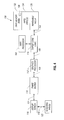
- the inverse tone mapping is done by an inverse piecewise linear mapping unit 46 which provides information through the video transmission or video storage 14 to an inverse video piecewise linear mapping unit 48 in the decoder. Otherwise, the operation is as already described.
- any type of tone mapping may be utilized to increase the bit density of the baseline layer video. That information is then subjected to adaptive filtering to increase its quality, before providing the information to the enhancement layer encoder.
- the adaptive filtering using a Wiener filter improves the quality of the enhancement layer video.
- the feature collector 22 may set the filter taps for adaptive filtering 24 to an error based on the difference between current and predicted pictures.
- the Wiener filter is a well known optimal linear filter that copes with pictures degraded by Gaussian noise, blurring, and distortion.
- the information about the Wiener filter taps may then be applied as global information at the picture level and this is block based free and has no serial dependency from reconstructed neighboring pixels in some embodiments.
- the derivation of the filter taps by the collector 22 is as follows.
- E[] is the expectation of the square of the residual signal for the pixels of interest which could be the pixels from a sequence of pictures, a picture, or some region inside a picture.
- E error k 2 E ⁇ z k - x k 2 ⁇ E ⁇ j ⁇ S y i ⁇ c i 2 + E x k 2 - 2 ⁇ E ⁇ j ⁇ S y i ⁇ c i ⁇ x k
- the statistical feature selector 34 determines the weight c i , using the equations [6 and 7] to fill out the matrix of equation [8] and then does the calculation of equation [9] to determine the weight c i .
- the equation [9] is the final answer of the value c i that indicates the taps for the Wiener filter. In some embodiments, the same filter taps are used across the entire picture, but the taps may vary from frame to frame or picture to picture.
- Equation [6] and [10] can be obtained at the video decoder side, but the cross-correlation in Equations [7] and [11] is derived at video encoder side because of the higher bit depth input data ⁇ x ⁇ is only available at video encoder side.
- the filter taps derived in Equation [9] are transmitted from video encoder to video decoder.
- the transmitting of the cross-correlation function is sufficient in some cases because video decoder could derive the filter taps with the reception of cross-correlation function plus the decoded inverse tone mapped data ⁇ y ⁇ at its own hand.
- the filter taps may also be derived per luma and per chroma channel respectively. Better coding efficiency is achieved for chroma picture based on the filter taps derived with only chroma pixel.
- the one chroma table may be shared by both Cb and Cr channels, or two individual tables may be used for Cb and Cr respectively.
- More accurate statistical information to improve coding efficiency may be achieved further by skipping the pixels close to the picture border in one embodiment.
- the right hand side of Equations [10-11] expresses this skipping.
- equations [10 and 11] are two dimensional approximations of equations [6 and 7], excluding edge pixels near the pixel borders. This may improve picture quality because, at the picture borders, the absence of neighbors results in dimensioned value data.
- the encoders and decoders depicted in Figures 1-3 may, in one embodiment, be part of a graphics processor 112.
- the encoders and decoders shown in Figures 1-3 may be implemented in hardware and, in other embodiments, they may be implemented in software or firmware.
- the pertinent code may be stored in any suitable semiconductor, magnetic or optical memory, including the main memory 132.
- source code 139 may be stored in a machine readable medium, such as main memory 132, for execution by a processor, such as the processor 100 or the graphics processor 112.
- a computer system 130 may include a hard drive 134 and a removable medium 136, coupled by a bus 104 to a chipset core logic 110.
- the core logic may couple to the graphics processor 112 (via bus 105) and the main processor 100 in one embodiment.
- the graphics processor 112 may also be coupled by a bus 106 to a frame buffer 114.
- the frame buffer 114 may be coupled by a bus 107 to a display screen 118, in turn coupled to conventional components by a bus 108, such as a keyboard or mouse 120.
- the blocks indicated in Figures 1 to 3 may constitute hardware or software components.
- the figures may indicate a sequence of instructions that may be stored in a computer readable medium such as a semiconductor integrated circuit memory, an optical storage device, or a magnetic storage device.
- the instructions are executable by a computer or processor-based system that retrieves the instructions from the storage and executes them.
- the instructions may be firmware, which may be stored in an appropriate storage medium.
- One result of the execution of such instructions is the improvement of quality of pictures that are ultimately displayed on a display screen.
- references throughout this specification to "one embodiment” or “an embodiment” mean that a particular feature, structure, or characteristic described in connection with the embodiment is included in at least one implementation encompassed within the present invention. Thus, appearances of the phrase “one embodiment” or “in an embodiment” are not necessarily referring to the same embodiment. Furthermore, the particular features, structures, or characteristics may be instituted in other suitable forms other than the particular embodiment illustrated and all such forms may be encompassed within the clauses of the present application.
Landscapes
- Engineering & Computer Science (AREA)
- Multimedia (AREA)
- Signal Processing (AREA)
- Compression Or Coding Systems Of Tv Signals (AREA)
- Image Processing (AREA)
- Picture Signal Circuits (AREA)
Applications Claiming Priority (1)
| Application Number | Priority Date | Filing Date | Title |
|---|---|---|---|
| US12/082,561 US8184693B2 (en) | 2008-04-11 | 2008-04-11 | Adaptive filtering for bit-depth scalable video codec |
Publications (2)
| Publication Number | Publication Date |
|---|---|
| EP2109321A2 true EP2109321A2 (de) | 2009-10-14 |
| EP2109321A3 EP2109321A3 (de) | 2010-06-16 |
Family
ID=40852542
Family Applications (1)
| Application Number | Title | Priority Date | Filing Date |
|---|---|---|---|
| EP09251080A Ceased EP2109321A3 (de) | 2008-04-11 | 2009-04-09 | Adaptive Filterung für bittiefenskalierbares Video-Codec |
Country Status (3)
| Country | Link |
|---|---|
| US (2) | US8184693B2 (de) |
| EP (1) | EP2109321A3 (de) |
| CN (1) | CN101557522A (de) |
Cited By (6)
| Publication number | Priority date | Publication date | Assignee | Title |
|---|---|---|---|---|
| EP2111047A3 (de) * | 2008-04-16 | 2010-07-28 | Intel Corporation | Tone-Mapping für in Bezug auf die Bittiefe skalierbaren Videocodierer |
| EP2603000A1 (de) * | 2011-12-08 | 2013-06-12 | Dolby Laboratories Licensing Corporation | Geführte Prädiktionsfilterung in geschichteter VDR Bildcodierung |
| WO2014009844A1 (en) * | 2012-07-13 | 2014-01-16 | Koninklijke Philips N.V. | Improved hdr image encoding and decoding methods and devices |
| GB2516424A (en) * | 2013-07-15 | 2015-01-28 | Nokia Corp | A method, an apparatus and a computer program product for video coding and decoding |
| EP3018906A1 (de) * | 2014-11-05 | 2016-05-11 | Dolby Laboratories Licensing Corp. | Systeme und verfahren zum entzerren von bildartefakten |
| WO2017066580A1 (en) * | 2015-10-14 | 2017-04-20 | Qualcomm Incorporated | Hdr and wcg coding architecture with sdr backwards compatibility in a single bitstream for video coding |
Families Citing this family (8)
| Publication number | Priority date | Publication date | Assignee | Title |
|---|---|---|---|---|
| US8437571B2 (en) * | 2009-04-30 | 2013-05-07 | Hewlett-Packard Development Company, L.P. | Method and system for adaptive context-embedded prediction |
| WO2013185336A1 (en) * | 2012-06-15 | 2013-12-19 | Intel Corporation | Adaptive filtering for scalable video coding |
| US9607364B2 (en) | 2013-11-22 | 2017-03-28 | Dolby Laboratories Licensing Corporation | Methods and systems for inverse tone mapping |
| CN105850114B (zh) * | 2013-12-27 | 2019-05-21 | 汤姆逊许可公司 | 用于图像的逆色调映射的方法 |
| GB2554667B (en) * | 2016-09-30 | 2021-10-20 | Apical Ltd | Image processing |
| KR102127760B1 (ko) * | 2018-11-30 | 2020-06-29 | 고려대학교 산학협력단 | 단일 영상을 기반으로 한 인버스 톤 매핑의 최적화 장치 및 방법, 상기 방법을 수행하기 위한 기록 매체 |
| CN110191340B (zh) * | 2019-06-03 | 2021-05-14 | Oppo广东移动通信有限公司 | 视频帧处理方法、装置、设备及存储介质 |
| JP6811931B2 (ja) * | 2019-06-20 | 2021-01-13 | Kddi株式会社 | 画像復号装置、画像復号方法及びプログラム |
Citations (1)
| Publication number | Priority date | Publication date | Assignee | Title |
|---|---|---|---|---|
| EP1841230A1 (de) | 2006-03-27 | 2007-10-03 | Matsushita Electric Industrial Co., Ltd. | Adaptives Wiener-Filter zur Videokodierung |
Family Cites Families (8)
| Publication number | Priority date | Publication date | Assignee | Title |
|---|---|---|---|---|
| JP2008536414A (ja) * | 2005-04-13 | 2008-09-04 | ゴットフリート・ヴィルヘルム・ライプニッツ・ウニヴェルジテート・ハノーヴァー | ビデオの拡張された符号化方法及び装置 |
| US8014445B2 (en) * | 2006-02-24 | 2011-09-06 | Sharp Laboratories Of America, Inc. | Methods and systems for high dynamic range video coding |
| EP2127391A2 (de) * | 2007-01-09 | 2009-12-02 | Nokia Corporation | Adaptive interpolationsfilter für videokodierung |
| US8085852B2 (en) * | 2007-06-26 | 2011-12-27 | Mitsubishi Electric Research Laboratories, Inc. | Inverse tone mapping for bit-depth scalable image coding |
| CN101822059B (zh) * | 2007-10-15 | 2012-11-28 | 汤姆森许可贸易公司 | 可缩放视频的层间残差预测的方法和设备 |
| US8432968B2 (en) * | 2007-10-15 | 2013-04-30 | Qualcomm Incorporated | Scalable video coding techniques for scalable bitdepths |
| US8208560B2 (en) * | 2007-10-15 | 2012-06-26 | Intel Corporation | Bit depth enhancement for scalable video coding |
| KR101509070B1 (ko) * | 2007-10-16 | 2015-04-06 | 톰슨 라이센싱 | 비트 깊이 크기 조정 능력에 관한 아티팩트 제거 방법 및 장치 |
-
2008
- 2008-04-11 US US12/082,561 patent/US8184693B2/en not_active Expired - Fee Related
-
2009
- 2009-04-09 EP EP09251080A patent/EP2109321A3/de not_active Ceased
- 2009-04-10 CN CN200910132774.9A patent/CN101557522A/zh active Pending
-
2012
- 2012-05-08 US US13/466,256 patent/US8457197B2/en not_active Expired - Fee Related
Patent Citations (1)
| Publication number | Priority date | Publication date | Assignee | Title |
|---|---|---|---|---|
| EP1841230A1 (de) | 2006-03-27 | 2007-10-03 | Matsushita Electric Industrial Co., Ltd. | Adaptives Wiener-Filter zur Videokodierung |
Non-Patent Citations (1)
| Title |
|---|
| YU, Y. ET AL.: "Improving Compression Performance in Bit Depth SVC with a Prediction Filter", JVT MEETING; 83. MPEG MEETING, 22 January 2008 (2008-01-22) |
Cited By (14)
| Publication number | Priority date | Publication date | Assignee | Title |
|---|---|---|---|---|
| US9338475B2 (en) | 2008-04-16 | 2016-05-10 | Intel Corporation | Tone mapping for bit-depth scalable video codec |
| EP2111047A3 (de) * | 2008-04-16 | 2010-07-28 | Intel Corporation | Tone-Mapping für in Bezug auf die Bittiefe skalierbaren Videocodierer |
| EP2698998A1 (de) * | 2008-04-16 | 2014-02-19 | Intel Corporation | Tone-Mapping für in Bezug auf die Bittiefe skalierbaren Videocodierer |
| US8897581B2 (en) | 2011-12-08 | 2014-11-25 | Dolby Laboratories Licensing Corporation | Guided post-prediction filtering in layered VDR coding |
| EP2603000A1 (de) * | 2011-12-08 | 2013-06-12 | Dolby Laboratories Licensing Corporation | Geführte Prädiktionsfilterung in geschichteter VDR Bildcodierung |
| WO2014009844A1 (en) * | 2012-07-13 | 2014-01-16 | Koninklijke Philips N.V. | Improved hdr image encoding and decoding methods and devices |
| US9516351B2 (en) | 2012-07-13 | 2016-12-06 | Koninklijke Philips N.V. | HDR image encoding and decoding methods and devices |
| US10027965B2 (en) | 2012-07-13 | 2018-07-17 | Koninklijke Philips N.V. | HDR image encoding and decoding methods and devices |
| GB2516424A (en) * | 2013-07-15 | 2015-01-28 | Nokia Corp | A method, an apparatus and a computer program product for video coding and decoding |
| US10547867B2 (en) | 2013-07-15 | 2020-01-28 | Nokia Technologies Oy | Method, an apparatus and a computer program product for video coding and decoding |
| US9747673B2 (en) | 2014-11-05 | 2017-08-29 | Dolby Laboratories Licensing Corporation | Systems and methods for rectifying image artifacts |
| EP3018906A1 (de) * | 2014-11-05 | 2016-05-11 | Dolby Laboratories Licensing Corp. | Systeme und verfahren zum entzerren von bildartefakten |
| WO2017066580A1 (en) * | 2015-10-14 | 2017-04-20 | Qualcomm Incorporated | Hdr and wcg coding architecture with sdr backwards compatibility in a single bitstream for video coding |
| US10200701B2 (en) | 2015-10-14 | 2019-02-05 | Qualcomm Incorporated | HDR and WCG coding architecture with SDR backwards compatibility in a single bitstream for video coding |
Also Published As
| Publication number | Publication date |
|---|---|
| CN101557522A (zh) | 2009-10-14 |
| US8457197B2 (en) | 2013-06-04 |
| US8184693B2 (en) | 2012-05-22 |
| EP2109321A3 (de) | 2010-06-16 |
| US20090257486A1 (en) | 2009-10-15 |
| US20120224622A1 (en) | 2012-09-06 |
Similar Documents
| Publication | Publication Date | Title |
|---|---|---|
| US8457197B2 (en) | Adaptive filtering for bit-depth scalable video codec | |
| EP2698998B1 (de) | Tone-Mapping für in Bezug auf die Bittiefe skalierbaren Videocodierer | |
| AU2020210276B2 (en) | Method, apparatus and system for encoding and decoding video data | |
| US9247253B2 (en) | In-loop adaptive wiener filter for video coding and decoding | |
| US5568200A (en) | Method and apparatus for improved video display of progressively refreshed coded video | |
| US8873871B2 (en) | Image processing apparatus and method | |
| US20100008417A1 (en) | Video encoding techniques | |
| US20150110175A1 (en) | High frequency emphasis in coding signals | |
| US10542265B2 (en) | Self-adaptive prediction method for multi-layer codec | |
| US20160029030A1 (en) | Transmitting and receiving a composite image | |
| US9264736B2 (en) | Encoding method, decoding method, encoding device, and decoding device | |
| US20060159181A1 (en) | Method for encoding and decoding video signal | |
| Mir et al. | Adaptive residual mapping for an efficient extension layer coding in two-layer HDR video coding | |
| Netravali et al. | A high quality digital HDTV codec | |
| US20050259750A1 (en) | Method and encoder for encoding a digital video signal | |
| US7804899B1 (en) | System and method for improving transrating of MPEG-2 video | |
| Kwatra et al. | A new architecture for adaptive intrafield transform compression of NTSC composite video signal |
Legal Events
| Date | Code | Title | Description |
|---|---|---|---|
| PUAI | Public reference made under article 153(3) epc to a published international application that has entered the european phase |
Free format text: ORIGINAL CODE: 0009012 |
|
| 17P | Request for examination filed |
Effective date: 20090424 |
|
| AK | Designated contracting states |
Kind code of ref document: A2 Designated state(s): AT BE BG CH CY CZ DE DK EE ES FI FR GB GR HR HU IE IS IT LI LT LU LV MC MK MT NL NO PL PT RO SE SI SK TR |
|
| PUAL | Search report despatched |
Free format text: ORIGINAL CODE: 0009013 |
|
| AK | Designated contracting states |
Kind code of ref document: A3 Designated state(s): AT BE BG CH CY CZ DE DK EE ES FI FR GB GR HR HU IE IS IT LI LT LU LV MC MK MT NL NO PL PT RO SE SI SK TR |
|
| AX | Request for extension of the european patent |
Extension state: AL BA RS |
|
| RIC1 | Information provided on ipc code assigned before grant |
Ipc: G06T 5/20 20060101ALI20100512BHEP Ipc: G06T 5/00 20060101ALI20100512BHEP Ipc: H04N 7/50 20060101ALI20100512BHEP Ipc: H04N 7/26 20060101AFI20090722BHEP |
|
| 17Q | First examination report despatched |
Effective date: 20100713 |
|
| APBK | Appeal reference recorded |
Free format text: ORIGINAL CODE: EPIDOSNREFNE |
|
| APBN | Date of receipt of notice of appeal recorded |
Free format text: ORIGINAL CODE: EPIDOSNNOA2E |
|
| APBR | Date of receipt of statement of grounds of appeal recorded |
Free format text: ORIGINAL CODE: EPIDOSNNOA3E |
|
| APAF | Appeal reference modified |
Free format text: ORIGINAL CODE: EPIDOSCREFNE |
|
| APBT | Appeal procedure closed |
Free format text: ORIGINAL CODE: EPIDOSNNOA9E |
|
| STAA | Information on the status of an ep patent application or granted ep patent |
Free format text: STATUS: THE APPLICATION HAS BEEN REFUSED |
|
| 18R | Application refused |
Effective date: 20191011 |