EP2109589B1 - Herstellung von wasserstoff und methan aus abwasserströmen - Google Patents
Herstellung von wasserstoff und methan aus abwasserströmen Download PDFInfo
- Publication number
- EP2109589B1 EP2109589B1 EP07859187.2A EP07859187A EP2109589B1 EP 2109589 B1 EP2109589 B1 EP 2109589B1 EP 07859187 A EP07859187 A EP 07859187A EP 2109589 B1 EP2109589 B1 EP 2109589B1
- Authority
- EP
- European Patent Office
- Prior art keywords
- wastewater
- hydrogen
- methane
- production
- stream
- Prior art date
- Legal status (The legal status is an assumption and is not a legal conclusion. Google has not performed a legal analysis and makes no representation as to the accuracy of the status listed.)
- Not-in-force
Links
- 239000002351 wastewater Substances 0.000 title claims description 72
- VNWKTOKETHGBQD-UHFFFAOYSA-N methane Chemical compound C VNWKTOKETHGBQD-UHFFFAOYSA-N 0.000 title claims description 69
- 239000001257 hydrogen Substances 0.000 title claims description 40
- 229910052739 hydrogen Inorganic materials 0.000 title claims description 40
- UFHFLCQGNIYNRP-UHFFFAOYSA-N Hydrogen Chemical compound [H][H] UFHFLCQGNIYNRP-UHFFFAOYSA-N 0.000 title claims description 37
- 238000004519 manufacturing process Methods 0.000 title claims description 31
- 238000000034 method Methods 0.000 claims description 33
- 239000010865 sewage Substances 0.000 claims description 27
- 241000894006 Bacteria Species 0.000 claims description 22
- 238000010438 heat treatment Methods 0.000 claims description 7
- 238000011081 inoculation Methods 0.000 claims description 6
- 238000009877 rendering Methods 0.000 claims description 6
- 244000000010 microbial pathogen Species 0.000 claims description 4
- 238000000855 fermentation Methods 0.000 claims description 2
- 230000004151 fermentation Effects 0.000 claims description 2
- QTBSBXVTEAMEQO-UHFFFAOYSA-N Acetic acid Chemical compound CC(O)=O QTBSBXVTEAMEQO-UHFFFAOYSA-N 0.000 description 24
- CURLTUGMZLYLDI-UHFFFAOYSA-N Carbon dioxide Chemical compound O=C=O CURLTUGMZLYLDI-UHFFFAOYSA-N 0.000 description 9
- 230000001580 bacterial effect Effects 0.000 description 9
- 230000005611 electricity Effects 0.000 description 8
- 230000009286 beneficial effect Effects 0.000 description 6
- 239000002245 particle Substances 0.000 description 6
- 241001148471 unidentified anaerobic bacterium Species 0.000 description 6
- 238000006243 chemical reaction Methods 0.000 description 5
- 238000012423 maintenance Methods 0.000 description 5
- 238000004064 recycling Methods 0.000 description 5
- QGZKDVFQNNGYKY-UHFFFAOYSA-N Ammonia Chemical compound N QGZKDVFQNNGYKY-UHFFFAOYSA-N 0.000 description 4
- 239000001569 carbon dioxide Substances 0.000 description 4
- 229910002092 carbon dioxide Inorganic materials 0.000 description 4
- 238000010586 diagram Methods 0.000 description 4
- 150000004665 fatty acids Chemical class 0.000 description 4
- 239000007789 gas Substances 0.000 description 4
- 239000008187 granular material Substances 0.000 description 4
- 239000010802 sludge Substances 0.000 description 4
- 239000000758 substrate Substances 0.000 description 4
- 150000001413 amino acids Chemical class 0.000 description 3
- 230000000712 assembly Effects 0.000 description 3
- 238000000429 assembly Methods 0.000 description 3
- 230000015572 biosynthetic process Effects 0.000 description 3
- 150000001720 carbohydrates Chemical class 0.000 description 3
- 150000002431 hydrogen Chemical class 0.000 description 3
- 244000052769 pathogen Species 0.000 description 3
- 239000007787 solid Substances 0.000 description 3
- 230000001954 sterilising effect Effects 0.000 description 3
- 241000193447 Thermoanaerobacter thermohydrosulfuricus Species 0.000 description 2
- 150000001298 alcohols Chemical class 0.000 description 2
- 229910021529 ammonia Inorganic materials 0.000 description 2
- 235000014633 carbohydrates Nutrition 0.000 description 2
- 150000004653 carbonic acids Chemical class 0.000 description 2
- 239000003795 chemical substances by application Substances 0.000 description 2
- 235000014113 dietary fatty acids Nutrition 0.000 description 2
- 239000003925 fat Substances 0.000 description 2
- 229930195729 fatty acid Natural products 0.000 description 2
- 239000000194 fatty acid Substances 0.000 description 2
- 230000002349 favourable effect Effects 0.000 description 2
- 239000012530 fluid Substances 0.000 description 2
- 239000000446 fuel Substances 0.000 description 2
- 230000007062 hydrolysis Effects 0.000 description 2
- 238000006460 hydrolysis reaction Methods 0.000 description 2
- 238000002347 injection Methods 0.000 description 2
- 239000007924 injection Substances 0.000 description 2
- 239000002054 inoculum Substances 0.000 description 2
- 230000014759 maintenance of location Effects 0.000 description 2
- 230000000813 microbial effect Effects 0.000 description 2
- 244000005700 microbiome Species 0.000 description 2
- 230000001717 pathogenic effect Effects 0.000 description 2
- 239000000047 product Substances 0.000 description 2
- 102000004169 proteins and genes Human genes 0.000 description 2
- 108090000623 proteins and genes Proteins 0.000 description 2
- 239000010801 sewage sludge Substances 0.000 description 2
- 238000004659 sterilization and disinfection Methods 0.000 description 2
- 239000000126 substance Substances 0.000 description 2
- 235000000346 sugar Nutrition 0.000 description 2
- 150000008163 sugars Chemical class 0.000 description 2
- XLYOFNOQVPJJNP-UHFFFAOYSA-N water Substances O XLYOFNOQVPJJNP-UHFFFAOYSA-N 0.000 description 2
- QTBSBXVTEAMEQO-UHFFFAOYSA-M Acetate Chemical compound CC([O-])=O QTBSBXVTEAMEQO-UHFFFAOYSA-M 0.000 description 1
- UGFAIRIUMAVXCW-UHFFFAOYSA-N Carbon monoxide Chemical compound [O+]#[C-] UGFAIRIUMAVXCW-UHFFFAOYSA-N 0.000 description 1
- 241000193403 Clostridium Species 0.000 description 1
- 241000192700 Cyanobacteria Species 0.000 description 1
- 241000193448 Ruminiclostridium thermocellum Species 0.000 description 1
- 241000186339 Thermoanaerobacter Species 0.000 description 1
- 241001147775 Thermoanaerobacter brockii Species 0.000 description 1
- 241000186337 Thermoanaerobacter ethanolicus Species 0.000 description 1
- QVGXLLKOCUKJST-UHFFFAOYSA-N atomic oxygen Chemical compound [O] QVGXLLKOCUKJST-UHFFFAOYSA-N 0.000 description 1
- 229910002091 carbon monoxide Inorganic materials 0.000 description 1
- 230000005465 channeling Effects 0.000 description 1
- 230000000052 comparative effect Effects 0.000 description 1
- 238000001816 cooling Methods 0.000 description 1
- 238000011161 development Methods 0.000 description 1
- 230000029087 digestion Effects 0.000 description 1
- 238000010790 dilution Methods 0.000 description 1
- 239000012895 dilution Substances 0.000 description 1
- 239000006185 dispersion Substances 0.000 description 1
- 239000003651 drinking water Substances 0.000 description 1
- 235000020188 drinking water Nutrition 0.000 description 1
- 238000005516 engineering process Methods 0.000 description 1
- 238000002309 gasification Methods 0.000 description 1
- 239000010842 industrial wastewater Substances 0.000 description 1
- 238000001802 infusion Methods 0.000 description 1
- 239000000463 material Substances 0.000 description 1
- 239000000203 mixture Substances 0.000 description 1
- 239000001301 oxygen Substances 0.000 description 1
- 229910052760 oxygen Inorganic materials 0.000 description 1
- 230000000704 physical effect Effects 0.000 description 1
- 238000011112 process operation Methods 0.000 description 1
- 238000011160 research Methods 0.000 description 1
- 238000004062 sedimentation Methods 0.000 description 1
- 238000000926 separation method Methods 0.000 description 1
- 230000035939 shock Effects 0.000 description 1
- 239000000243 solution Substances 0.000 description 1
- 241000894007 species Species 0.000 description 1
- 239000013589 supplement Substances 0.000 description 1
- 230000009469 supplementation Effects 0.000 description 1
- 238000012546 transfer Methods 0.000 description 1
- 230000007306 turnover Effects 0.000 description 1
- 238000004065 wastewater treatment Methods 0.000 description 1
Images

Classifications
-
- C—CHEMISTRY; METALLURGY
- C02—TREATMENT OF WATER, WASTE WATER, SEWAGE, OR SLUDGE
- C02F—TREATMENT OF WATER, WASTE WATER, SEWAGE, OR SLUDGE
- C02F3/00—Biological treatment of water, waste water, or sewage
- C02F3/28—Anaerobic digestion processes
- C02F3/2806—Anaerobic processes using solid supports for microorganisms
-
- C—CHEMISTRY; METALLURGY
- C12—BIOCHEMISTRY; BEER; SPIRITS; WINE; VINEGAR; MICROBIOLOGY; ENZYMOLOGY; MUTATION OR GENETIC ENGINEERING
- C12M—APPARATUS FOR ENZYMOLOGY OR MICROBIOLOGY; APPARATUS FOR CULTURING MICROORGANISMS FOR PRODUCING BIOMASS, FOR GROWING CELLS OR FOR OBTAINING FERMENTATION OR METABOLIC PRODUCTS, i.e. BIOREACTORS OR FERMENTERS
- C12M21/00—Bioreactors or fermenters specially adapted for specific uses
- C12M21/04—Bioreactors or fermenters specially adapted for specific uses for producing gas, e.g. biogas
-
- C—CHEMISTRY; METALLURGY
- C12—BIOCHEMISTRY; BEER; SPIRITS; WINE; VINEGAR; MICROBIOLOGY; ENZYMOLOGY; MUTATION OR GENETIC ENGINEERING
- C12M—APPARATUS FOR ENZYMOLOGY OR MICROBIOLOGY; APPARATUS FOR CULTURING MICROORGANISMS FOR PRODUCING BIOMASS, FOR GROWING CELLS OR FOR OBTAINING FERMENTATION OR METABOLIC PRODUCTS, i.e. BIOREACTORS OR FERMENTERS
- C12M25/00—Means for supporting, enclosing or fixing the microorganisms, e.g. immunocoatings
- C12M25/16—Particles; Beads; Granular material; Encapsulation
- C12M25/20—Fluidized bed
-
- C—CHEMISTRY; METALLURGY
- C12—BIOCHEMISTRY; BEER; SPIRITS; WINE; VINEGAR; MICROBIOLOGY; ENZYMOLOGY; MUTATION OR GENETIC ENGINEERING
- C12M—APPARATUS FOR ENZYMOLOGY OR MICROBIOLOGY; APPARATUS FOR CULTURING MICROORGANISMS FOR PRODUCING BIOMASS, FOR GROWING CELLS OR FOR OBTAINING FERMENTATION OR METABOLIC PRODUCTS, i.e. BIOREACTORS OR FERMENTERS
- C12M41/00—Means for regulation, monitoring, measurement or control, e.g. flow regulation
- C12M41/12—Means for regulation, monitoring, measurement or control, e.g. flow regulation of temperature
-
- C—CHEMISTRY; METALLURGY
- C02—TREATMENT OF WATER, WASTE WATER, SEWAGE, OR SLUDGE
- C02F—TREATMENT OF WATER, WASTE WATER, SEWAGE, OR SLUDGE
- C02F11/00—Treatment of sludge; Devices therefor
- C02F11/02—Biological treatment
- C02F11/04—Anaerobic treatment; Production of methane by such processes
-
- Y—GENERAL TAGGING OF NEW TECHNOLOGICAL DEVELOPMENTS; GENERAL TAGGING OF CROSS-SECTIONAL TECHNOLOGIES SPANNING OVER SEVERAL SECTIONS OF THE IPC; TECHNICAL SUBJECTS COVERED BY FORMER USPC CROSS-REFERENCE ART COLLECTIONS [XRACs] AND DIGESTS
- Y02—TECHNOLOGIES OR APPLICATIONS FOR MITIGATION OR ADAPTATION AGAINST CLIMATE CHANGE
- Y02E—REDUCTION OF GREENHOUSE GAS [GHG] EMISSIONS, RELATED TO ENERGY GENERATION, TRANSMISSION OR DISTRIBUTION
- Y02E50/00—Technologies for the production of fuel of non-fossil origin
- Y02E50/30—Fuel from waste, e.g. synthetic alcohol or diesel
Definitions
- This invention relates to production of hydrogen and methane from wastewater streams and, more particularly, to the treatment of wastewater so as to facilitate the production of hydrogen and methane in a fluidised bed biofilm reactor.
- Raw or untreated sewage wastewater contains many different species of pathogenic organisms which are harmful to humans, particularly in underdeveloped regions where inhabitants use national rivers as a source of drinking water and to cook and wash in. Often the water is collected downstream from an outlet of a sewage or wastewater treatment facility.
- One method of sterilising large volumes of sewage on a continuous basis involves the direct injection of pressurized steam into the sewage. This is done by direct injection or in an infusion chamber.
- biogas gas produced by micro organisms, usually anaerobic bacteria
- steam sterilization is not selective and also removes many potentially beneficial micro organisms that are normally involved in the production of the hydrogen and methane which are the main components of biogas.
- Bacteria used to produce biogas are well known In the art. Typically they. are anaerobic bacteria and they may be mesophilic or thermophilic. Examples of two groups of anaerobic thermophilic bacteria are those of the genus Thermoanaerobacter, particularly T. ethanolicus, T. thermohydrosulfuricus and T . brockii, and Clostridium, particularly C. thermocellum and C. thermohydrosulfuricum.
- fluidised bed bioreactors are becoming more common.
- fluidised bed systems have a single inlet at the base of the fluidised bed.
- the bed of a bioreactor is fluidised by increasing the inlet velocity of the fluid at the bottom of the bioreactor.
- a single inlet gives rise to a fluid flow that is parallel to the long (vertical) axis of the bioreactor at the base of bioreactor but is prone to become restricted to channels of least resistance. These channels usually form on the side of the bioreactor, very close to the walls of the bioreactor vessel.
- Perez et al. (Comparative performance of high rate anaerobic thermophilic technologies treating industrial wastewater, Water Research, vol. 32, 1998, p. 559-564 ) disclose a one-step process wherein distillery wastewater is treated under anaerobic thermophilic conditions utilizing a fluidised bed reactor at laboratory-scale for the production of methane and hydrogen. The wastewater is heated to 55°C and maintained at this temperature for biogas production.
- a process for the production of hydrogen and methane from wastewater streams thus, at least partly, rendering said wastewater safe for use in a bioreactor process plant and rendering the wastewater suitable for the production of biological gasses, said method comprising receiving a primary untreated wastewater stream, heating said untreated wastewater stream to a first predetermined temperature for a predetermined time to, in use, inactivate pathogenic micro-organisms in the wastewater stream, allowing the heated wastewater to cool to a second predetermined temperature which, in use, facilitates growth, in the wastewater stream, of anaerobic thermophilic bacteria, maintaining the second predetermined temperature of the wastewater stream while passing said stream through a fluidised bed biofilm reactor within which are desired anaerobic thermophilic bacteria, decanting, clarifying and separating fermentation products produced in the reactor from the wastewater outflow from the biorector and returning the treated wastewater to the environment.
- the first predetermined temperature is approximately 95 °C, for the predetermined time at which the wastewater to be maintained at the first predetermined temperature to be between 10 and 20 minutes, for the second predetermined temperature to be not less than 70°C and preferably between 70°C and 80°C.
- wastewater stream is continuously enriched, by inoculation, with appropriate anaerobic thermophilic bacteria after it has cooled to its second predetermined temperature and for the appropriate anaerobic thermophilic bacteria to have a high capacity for hydrogen and/or methane production.
- thermophilic bacteria to be used to provide at least part of the energy required to heat the untreated wastewater stream to its first predetermined temperature and/or to maintain the second predetermined temperature of the wastewater stream and for excess hydrogen and/or methane to be used in a variety of other applications such as, for example, to generate electricity.
- the invention extends to a bioreactor for use in a process for the production of hydrogen and methane from wastewater streams thus, at least partly, rendering said wastewater safe for use in a bioreactor process plant and rendering the wastewater suitable for the production of biological gasses, the reactor having a primary untreated wastewater stream inlet, a heater for heating the untreated wastewater stream to a first predetermined temperature for a predetermined time to, in use, inactivate pathogenic micro-organisms in the wastewater stream, a cooling circuit within which the heated wastewater cools to a second predetermined temperature, a fluidised bed biofilm reactor containing desired anaerobic thermophilic bacteria and an outflow for treated wastewater into the environment, the wastewater in the fluidised biofilm reactor having a retention time within said reactor sufficient to maintain wastewater in the reactor substantially at the second predetermined temperature.
- the first predetermined temperature is approximately 95°C, for the predetermined time at which the wastewater to be maintained at the first predetermined temperature to be between 10 and 20 minutes, for the second predetermined temperature to be not less than 70°C and preferably between 70°C and 80°C.
- wastewater stream is continuously enriched, by inoculation, with appropriate anaerobic thermophilic bacteria after it has cooled to its second predetermined temperature and for the appropriate anaerobic thermophilic bacteria to have a high capacity for hydrogen and/or methane production.
- the reactor has a wastewater heater which utilises at least some of the hydrogen and/or methane produced by the anaerobic thermophilic bacteria to provide at least part of the energy required to heat the untreated wastewater stream to its first predetermined temperature and/or to maintain the second predetermined temperature of the wastewater stream and for excess hydrogen and/or methane to be used in a variety of other applications such as, for example, to generate electricity.
- a wastewater heater which utilises at least some of the hydrogen and/or methane produced by the anaerobic thermophilic bacteria to provide at least part of the energy required to heat the untreated wastewater stream to its first predetermined temperature and/or to maintain the second predetermined temperature of the wastewater stream and for excess hydrogen and/or methane to be used in a variety of other applications such as, for example, to generate electricity.
- the invention also extends to a fluidised bed biofilm reactor for use in the above-described process, the bioreactor having at least one vertical flow inlet and additionally one or more, preferably at least three, non-vertical or side flow inlets.
- the side flow inlets are oriented at between 30 and 90 degrees to the vertical axis of the fluidised bed system and for the side flow inlets, when not horizontally orientated, to be directed towards the top of the fluidised mass in the bed.
- openings of the side flow inlets into the fluidised bed reactor are flush with the fluidised bed system interior surface alternatively, for the openings of the side flow inlets into the fluidised bed reactor to project beyond the interior surface of the reactor.
- wastewater from a sewage works is used to generate biogas in the form of hydrogen and methane.
- Sewage works represent ideal sites for the production of biogas in the form of hydrogen and methane that can be used to generate electricity to supplement the supply of the existing power supply grids.
- Suitable solid oxide fuel cells (SOFCs) stacks can readily generate electricity from low pressure gas streams containing hydrogen, methane and carbon monoxide.
- SOFCs solid oxide fuel cells
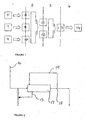
- FIG. 1 a general flow diagram of a process for the production of biogas is illustrated In Figure 1 .
- the process comprises four stages namely a hydrolysis stage (1), an acidogenesis stage (2), an acetogenesis stage (3) and a methanogenesis stage (4).
- carbohydrates (5) are converted into sugars (6)
- fats (7) are converted into fatty acids (8)
- proteins (9) are converted into amino acids (10).
- acidogenesis stage (2) the sugars (6), fatty acids (8) and amino acids (10) are converted Into carbonic acids and alcohols (11) and hydrogen, carbon dioxide and ammonia (12).
- the carbonic acids and alcohols (11) and hydrogen, carbon dioxide and ammonia (12) are in tum converted into hydrogen, acetic acid and carbon dioxide (13) in the acetogenesis stage (3) and, In the methanogenesis stage (4) the methane and more carbon dioxide (14) are formed.
- the hydrogen and methane form the basis of the biogas.
- FIG. 2 a flow diagram of a process for the production of a biogas (15) from a wastewater stream (16) according to the invention is shown.
- the conversion of wastewater (16) to biogas takes place in a fluidised bed biofilm bioreactor (17) and it follows the path illustrated in Figure 1 .
- the wastewater stream (16) is heated to 95°C and maintained at this temperature for 10 to 20 minutes before being allowed to cool to between 70 and 80°C which is the temperature range for hydrogen and methane producing extreme thermophilic anaerobic bacterial consortia in the reactor (17).
- the thermophilic anaerobic bacterial consortium is also enriched by inoculating the stream flowing into the reactor (17) with an inoculum obtained from the reactor outflow (18).
- the inoculation is in the form of a recycling loop (19). It is envisaged that at least some of the biogas produced by the reactor will be used to provide energy to heat the wastewater stream (16).
- this pretreatment and operational temperature facilitates the selective enrichment of the sewage stream with extreme thermophilic anaerobic bacteria consortia.
- This pretreatment and operational temperatures used also remove many of the harmful pathogenic micro-organisms from the sewage stream.
- the heated sewage and surviving bacterial inoculum then passed through a series of fluidised bed biofilm bioreactor-decanter-clarifier-gas separator assemblies that are designed to facilitate the following processes: 1) generation of hydrogen and acetic acid from the COD in the sewage stream, 2) separation of the acetic acid containing solution from the suspended solids, 3) recycling of the suspend solid fraction back into the fluidised bed bioreactor, 4) collection of hydrogen.
- the acetate containing effluent can be used to: 1) generate methane in a series of fluidised bed biofilm bioreactor-decanter-clarifier-gas separator assemblies or 2) generate hydrogen in a photofermenter containing selected cyanobacteria.
- the fluidised bed bioreactor assemblies can be operated as chemostats that promote on a continuous basis the selection of extreme thermophilic anaerobic bacterial biofilm consortia that are pre-adapted to the chemical and physical nature of the primary sludge and which in addition have high reaction rates and capacities for the conversion of: 1) COD in the primary sewage sludge influent stream into hydrogen and acetic acid, 2) conversion of acetic acid into methane.
- the acetic acid containing effluent streams can be split into methane producing bioreactor and hydrogen producing photofermenters.
- the method of the invention has the following features:
- a fluidised bed biofilm reactor (20) comprises a reactor vessel (21) having an inlet manifold (22) which receives wastewater form a wastewater heater (not shown) via a conduit (23). Wastewater is heated in the heater to a temperature of 95°C for a period of between 10 and 20 minutes after which the wastewater is allowed to cool to a temperature of between 70 and 80°C before being pumped into the reactor (21) by a pump (24) in the conduit (23).
- the manifold (22) splits into five branches (25) of which three are shown. Each branch (25) terminates in a nozzle (26).which projects into the reactor vessel (21). In this embodiment there are five nozzles (26), one central nozzle which feeds into the bottom of the reactor vessel (21) and four circumferentially spaced nozzles mounted in the sides of the reactor vessel (21). All of the nozzles (26) are orientated operatively upwardly and, in use, direct the wastewater inflow towards a biofilm (27) where thermophilic anaerobic bacteria convert carbohydrates, fats and proteins in the wastewater into biogas which collects in the domed top (28) of the reactor vessel (21) and is led off via a conduit (29). Treated wastewater is led off via a conduit (30) to be returned to the environment.
- the temperature in the reactor (21) is between 70 and 80°C and the wastewater in the reactor has a retention time which allows the temperature to be maintained.
Landscapes
- Life Sciences & Earth Sciences (AREA)
- Health & Medical Sciences (AREA)
- Chemical & Material Sciences (AREA)
- Engineering & Computer Science (AREA)
- Organic Chemistry (AREA)
- Zoology (AREA)
- Bioinformatics & Cheminformatics (AREA)
- Wood Science & Technology (AREA)
- Microbiology (AREA)
- Genetics & Genomics (AREA)
- General Health & Medical Sciences (AREA)
- Sustainable Development (AREA)
- Biochemistry (AREA)
- General Engineering & Computer Science (AREA)
- Biotechnology (AREA)
- Biomedical Technology (AREA)
- Molecular Biology (AREA)
- Hydrology & Water Resources (AREA)
- General Chemical & Material Sciences (AREA)
- Analytical Chemistry (AREA)
- Biodiversity & Conservation Biology (AREA)
- Physics & Mathematics (AREA)
- Environmental & Geological Engineering (AREA)
- Water Supply & Treatment (AREA)
- Thermal Sciences (AREA)
- Immunology (AREA)
- Oil, Petroleum & Natural Gas (AREA)
- Purification Treatments By Anaerobic Or Anaerobic And Aerobic Bacteria Or Animals (AREA)
- Apparatus Associated With Microorganisms And Enzymes (AREA)
- Preparation Of Compounds By Using Micro-Organisms (AREA)
- Treatment Of Sludge (AREA)
Claims (4)
- Verfahren zur Herstellung von Wasserstoff und Methan aus Abwasserströmen, demzufolge, zumindest teilweise, dieses Abwasser sicher zum Gebrauch in einer Bioreaktor-Aufbereitungsanlage gemacht wird und das Abwasser für die Produktion von biologischen Gasen geeignet gemacht wird,
wobei dieses Verfahren die Aufnahme eines anfänglich unbehandelten Abwasserstroms (16), das Erhitzen dieses unbehandelten Abwasserstroms auf eine erste vorbestimmte Temperatur von 95 °C für zwischen 10 und 20 Minuten, um im Betrieb krankheitserregende Mikroorganismen in dem Abwasserstrom zu inaktivieren, das Abkühlenlassen des erhitzten Abwassers auf eine zweite vorbestimmte Temperatur, die im Betrieb ein Wachstum von anaeroben, thermophilen Bakterien im Abwasserstrom ermöglicht, das Aufrechterhalten der zweiten vorbestimmten Temperatur des Abwasserstroms während dieser Strom durch einen Wirbelschichtreaktor mit Biofilm (17, 21) geleitet wird, in welchem sich die gewünschten anaeroben, thermophilen Bakterien befinden, das Dekantieren, das Klären und das Abtrennen von Gärungsprodukten, die in dem Reaktor vom Ablauf des Abwassers (18) aus dem Bioreaktor produziert werden, und die Rückgabe des behandelten Abwassers in die Umwelt umfasst,
wobei in dem Verfahren Wasserstoff und/oder Methan, das von den anaeroben, thermophilen Bakterien hergestellt wird, genutzt wird, um zumindest einen Teil der Energie, die zum Erhitzen des unbehandelten Abwassers auf seine erste vorbestimmte Temperatur und/oder zum Aufrechterhalten der zweiten vorbestimmten Temperatur des Abwasserstroms benötigt wird; bereitzustellen. - Verfahren zur Herstellung von Wasserstoff und Methan aus Abwasserströmen wie in Anspruch 1 beansprucht, in dem die zweite vorbestimmte Temperatur nicht geringer als 70 °C, vorzugsweise zwischen 70 °C und 80 °C, ist.
- Verfahren zur Herstellung von Wasserstoff und Methan aus Abwasserströmen wie in irgendeinem der vorstehenden Ansprüche beansprucht, in dem der Abwasserstrom (16), nachdem er auf seine zweite vorbestimmte Temperatur abgekühlt ist, kontinuierlich mit geeigneten anaeroben, thermophilen Bakterien angereichert wird, wobei der Abwasserstrom vorzugsweise durch Inokulation angereichert wird.
- Verfahren zur Herstellung von Wasserstoff und Methan aus Abwasserströmen wie in Anspruch 3 beansprucht, wobei die geeigneten anaeroben, thermophilen Bakterien eine hohe Kapazität zur Wasserstoff- und/oder Methanproduktion haben.
Applications Claiming Priority (2)
| Application Number | Priority Date | Filing Date | Title |
|---|---|---|---|
| ZA200605326 | 2006-12-28 | ||
| PCT/IB2007/004100 WO2008081292A2 (en) | 2006-12-28 | 2007-12-27 | Production of hydrogen and methane from wastewater streams |
Publications (2)
| Publication Number | Publication Date |
|---|---|
| EP2109589A2 EP2109589A2 (de) | 2009-10-21 |
| EP2109589B1 true EP2109589B1 (de) | 2014-04-02 |
Family
ID=39345542
Family Applications (1)
| Application Number | Title | Priority Date | Filing Date |
|---|---|---|---|
| EP07859187.2A Not-in-force EP2109589B1 (de) | 2006-12-28 | 2007-12-27 | Herstellung von wasserstoff und methan aus abwasserströmen |
Country Status (4)
| Country | Link |
|---|---|
| EP (1) | EP2109589B1 (de) |
| ES (1) | ES2477329T3 (de) |
| WO (1) | WO2008081292A2 (de) |
| ZA (1) | ZA200903628B (de) |
Families Citing this family (1)
| Publication number | Priority date | Publication date | Assignee | Title |
|---|---|---|---|---|
| CN103601345B (zh) * | 2013-12-04 | 2016-08-17 | 祝爱民 | 一种无动力生活污水处理方法 |
Family Cites Families (5)
| Publication number | Priority date | Publication date | Assignee | Title |
|---|---|---|---|---|
| DE2924465C2 (de) * | 1979-06-18 | 1982-03-25 | Wolf-Dietrich 2055 Wohltorf Grosse | Verfahren und Vorrichtung zur anaeroben Behandlung von Abwasser |
| US4845034A (en) * | 1985-01-22 | 1989-07-04 | Houston Industries Incorporated | Biochemically reacting substrates in subterranean cavities |
| IT1219082B (it) * | 1988-03-07 | 1990-04-24 | Manifattura San Valeriano Spa | Procedimento e impianto per lo smaltimento e il riciclo di rifiuti solidi urbani mediante fermentazione anaerobica |
| US5076927A (en) * | 1988-03-09 | 1991-12-31 | Hunter Robert M | Biocatalyzed partial demineralization of acidic metal sulfate solutions |
| ATE555844T1 (de) * | 2004-05-13 | 2012-05-15 | Nouveau Inc | Methode zum herstellen eines getränks von fermentationsdestillationsrückständen |
-
2007
- 2007-12-27 EP EP07859187.2A patent/EP2109589B1/de not_active Not-in-force
- 2007-12-27 ES ES07859187.2T patent/ES2477329T3/es active Active
- 2007-12-27 WO PCT/IB2007/004100 patent/WO2008081292A2/en not_active Ceased
-
2009
- 2009-05-26 ZA ZA200903628A patent/ZA200903628B/xx unknown
Non-Patent Citations (3)
| Title |
|---|
| CHARLES S RABKIN ET AL: "Thermophilic bacteria: a New cause of Human Disease", JOURNAL OF CLINICAL MICROBIOLOGY, 1 April 1985 (1985-04-01), pages 553 - 557, XP055073939, Retrieved from the Internet <URL:http://jcm.asm.org/content/21/4/553.full.pdf> [retrieved on 20130802] * |
| METCALF & EDDY: "Wastewater Engineering, Treatment and Reuse, 4th edition", 2003, MC GRAW HILL, Boston, ISBN: 0-07-041878-0, pages: 1529 - 1530 * |
| OTAJEVWO ET AL: "Cultural Conditions Necessary for Optimal Cellulase Yield by Cellulolytic Bacterial Organisms as They Relate to Residual Sugars Released in Broth Medium", MODERN APPLIED SCIENCE, vol. 5, no. 3, 2 June 2011 (2011-06-02), XP055073950, ISSN: 1913-1844, DOI: 10.5539/mas.v5n3p141 * |
Also Published As
| Publication number | Publication date |
|---|---|
| ZA200903628B (en) | 2010-07-28 |
| WO2008081292A2 (en) | 2008-07-10 |
| ES2477329T3 (es) | 2014-07-16 |
| WO2008081292A3 (en) | 2008-10-23 |
| EP2109589A2 (de) | 2009-10-21 |
Similar Documents
| Publication | Publication Date | Title |
|---|---|---|
| US7556737B2 (en) | Anaerobic phased solids digester for biogas production from organic solid wastes | |
| US5540839A (en) | Process for degrading organic matter | |
| US20120021477A1 (en) | Method for the Fixation of CO2 and for Treating Organic Waste by Coupling an Anaerobic Digestion System and a Phytoplankton Microorganism Production System | |
| CN100335424C (zh) | 两段厌氧有机物处理工艺及其系统 | |
| WO2011017420A2 (en) | Multi-phase, gas-lift bioreactor for generation of biogas or biofuel from organic material | |
| Qi et al. | High-strength fermentable wastewater reclamation through a sequential process of anaerobic fermentation followed by microalgae cultivation | |
| Aivasidis et al. | Biochemical reaction engineering and process development in anaerobic wastewater treatment | |
| EP2109589A2 (de) | Herstellung von wasserstoff und methan aus abwasserströmen | |
| CN205061828U (zh) | 一种利用菌藻提高低cod废水热值的超临界系统 | |
| KR100853287B1 (ko) | 축산폐수처리 소화시스템 및 이를 이용한 처리소화방법 | |
| CN104529084B (zh) | 一种工业废水的低温厌氧处理装置及其处理工艺 | |
| CN204385030U (zh) | 一种工业废水的低温厌氧处理装置 | |
| CN212269777U (zh) | 生化综合厌氧餐厨垃圾处理系统 | |
| JPH1066996A (ja) | メタン生成方法及びメタン生成装置 | |
| RU2500628C2 (ru) | Способ переработки органических субстратов в удобрения и газообразный энергоноситель | |
| KR101273937B1 (ko) | 메탄균 농축 장치 | |
| CN120622673B (zh) | 一种培养颗粒污泥的方法 | |
| Sharma et al. | 8 Bioreactors Designs | |
| KR20230161677A (ko) | 하·폐수처리시설에서 발생한 이산화탄소와 처리수 내 질소 및 인을 이용한 미세조류 배양기술 및 방법 | |
| Tunçay | Investigating the operational conditions for enhancement of dark fermentative hydrogen production in batch and sequencing batch reactors | |
| Kalala | Development and Testing of a Bioreactor for Production of Hydrogen | |
| Sbarciog et al. | Simple approaches to start-up anaerobic digestion systems for biogas production | |
| Lyberatos et al. | Ioannis V. Skiadas, Michael Kornaros, Katerina Stamatelatou and Kostas Angelopoulos | |
| Li et al. | Review on Engineering of Fermentative Bio-Hydrogen Production | |
| Yin et al. | Enhanced Biohydrogen Production by Low-Strength Ultrasonication in Anaerobic Digestion Process |
Legal Events
| Date | Code | Title | Description |
|---|---|---|---|
| PUAI | Public reference made under article 153(3) epc to a published international application that has entered the european phase |
Free format text: ORIGINAL CODE: 0009012 |
|
| 17P | Request for examination filed |
Effective date: 20090728 |
|
| AK | Designated contracting states |
Kind code of ref document: A2 Designated state(s): AT BE BG CH CY CZ DE DK EE ES FI FR GB GR HU IE IS IT LI LT LU LV MC MT NL PL PT RO SE SI SK TR |
|
| 17Q | First examination report despatched |
Effective date: 20091229 |
|
| DAX | Request for extension of the european patent (deleted) | ||
| GRAP | Despatch of communication of intention to grant a patent |
Free format text: ORIGINAL CODE: EPIDOSNIGR1 |
|
| INTG | Intention to grant announced |
Effective date: 20131018 |
|
| GRAS | Grant fee paid |
Free format text: ORIGINAL CODE: EPIDOSNIGR3 |
|
| GRAA | (expected) grant |
Free format text: ORIGINAL CODE: 0009210 |
|
| AK | Designated contracting states |
Kind code of ref document: B1 Designated state(s): AT BE BG CH CY CZ DE DK EE ES FI FR GB GR HU IE IS IT LI LT LU LV MC MT NL PL PT RO SE SI SK TR |
|
| REG | Reference to a national code |
Ref country code: GB Ref legal event code: FG4D |
|
| REG | Reference to a national code |
Ref country code: CH Ref legal event code: EP Ref country code: AT Ref legal event code: REF Ref document number: 660000 Country of ref document: AT Kind code of ref document: T Effective date: 20140415 |
|
| REG | Reference to a national code |
Ref country code: IE Ref legal event code: FG4D |
|
| REG | Reference to a national code |
Ref country code: DE Ref legal event code: R096 Ref document number: 602007035951 Country of ref document: DE Effective date: 20140515 |
|
| REG | Reference to a national code |
Ref country code: NL Ref legal event code: T3 |
|
| REG | Reference to a national code |
Ref country code: ES Ref legal event code: FG2A Ref document number: 2477329 Country of ref document: ES Kind code of ref document: T3 Effective date: 20140716 |
|
| REG | Reference to a national code |
Ref country code: AT Ref legal event code: MK05 Ref document number: 660000 Country of ref document: AT Kind code of ref document: T Effective date: 20140402 |
|
| REG | Reference to a national code |
Ref country code: LT Ref legal event code: MG4D |
|
| PG25 | Lapsed in a contracting state [announced via postgrant information from national office to epo] |
Ref country code: CZ Free format text: LAPSE BECAUSE OF FAILURE TO SUBMIT A TRANSLATION OF THE DESCRIPTION OR TO PAY THE FEE WITHIN THE PRESCRIBED TIME-LIMIT Effective date: 20140402 Ref country code: IS Free format text: LAPSE BECAUSE OF FAILURE TO SUBMIT A TRANSLATION OF THE DESCRIPTION OR TO PAY THE FEE WITHIN THE PRESCRIBED TIME-LIMIT Effective date: 20140802 Ref country code: GR Free format text: LAPSE BECAUSE OF FAILURE TO SUBMIT A TRANSLATION OF THE DESCRIPTION OR TO PAY THE FEE WITHIN THE PRESCRIBED TIME-LIMIT Effective date: 20140703 Ref country code: LT Free format text: LAPSE BECAUSE OF FAILURE TO SUBMIT A TRANSLATION OF THE DESCRIPTION OR TO PAY THE FEE WITHIN THE PRESCRIBED TIME-LIMIT Effective date: 20140402 Ref country code: BG Free format text: LAPSE BECAUSE OF FAILURE TO SUBMIT A TRANSLATION OF THE DESCRIPTION OR TO PAY THE FEE WITHIN THE PRESCRIBED TIME-LIMIT Effective date: 20140702 Ref country code: CY Free format text: LAPSE BECAUSE OF FAILURE TO SUBMIT A TRANSLATION OF THE DESCRIPTION OR TO PAY THE FEE WITHIN THE PRESCRIBED TIME-LIMIT Effective date: 20140402 Ref country code: FI Free format text: LAPSE BECAUSE OF FAILURE TO SUBMIT A TRANSLATION OF THE DESCRIPTION OR TO PAY THE FEE WITHIN THE PRESCRIBED TIME-LIMIT Effective date: 20140402 |
|
| PG25 | Lapsed in a contracting state [announced via postgrant information from national office to epo] |
Ref country code: LV Free format text: LAPSE BECAUSE OF FAILURE TO SUBMIT A TRANSLATION OF THE DESCRIPTION OR TO PAY THE FEE WITHIN THE PRESCRIBED TIME-LIMIT Effective date: 20140402 Ref country code: PL Free format text: LAPSE BECAUSE OF FAILURE TO SUBMIT A TRANSLATION OF THE DESCRIPTION OR TO PAY THE FEE WITHIN THE PRESCRIBED TIME-LIMIT Effective date: 20140402 Ref country code: AT Free format text: LAPSE BECAUSE OF FAILURE TO SUBMIT A TRANSLATION OF THE DESCRIPTION OR TO PAY THE FEE WITHIN THE PRESCRIBED TIME-LIMIT Effective date: 20140402 Ref country code: SE Free format text: LAPSE BECAUSE OF FAILURE TO SUBMIT A TRANSLATION OF THE DESCRIPTION OR TO PAY THE FEE WITHIN THE PRESCRIBED TIME-LIMIT Effective date: 20140402 |
|
| PG25 | Lapsed in a contracting state [announced via postgrant information from national office to epo] |
Ref country code: PT Free format text: LAPSE BECAUSE OF FAILURE TO SUBMIT A TRANSLATION OF THE DESCRIPTION OR TO PAY THE FEE WITHIN THE PRESCRIBED TIME-LIMIT Effective date: 20140804 |
|
| REG | Reference to a national code |
Ref country code: DE Ref legal event code: R097 Ref document number: 602007035951 Country of ref document: DE |
|
| PG25 | Lapsed in a contracting state [announced via postgrant information from national office to epo] |
Ref country code: RO Free format text: LAPSE BECAUSE OF FAILURE TO SUBMIT A TRANSLATION OF THE DESCRIPTION OR TO PAY THE FEE WITHIN THE PRESCRIBED TIME-LIMIT Effective date: 20140402 Ref country code: SK Free format text: LAPSE BECAUSE OF FAILURE TO SUBMIT A TRANSLATION OF THE DESCRIPTION OR TO PAY THE FEE WITHIN THE PRESCRIBED TIME-LIMIT Effective date: 20140402 Ref country code: BE Free format text: LAPSE BECAUSE OF FAILURE TO SUBMIT A TRANSLATION OF THE DESCRIPTION OR TO PAY THE FEE WITHIN THE PRESCRIBED TIME-LIMIT Effective date: 20140402 Ref country code: EE Free format text: LAPSE BECAUSE OF FAILURE TO SUBMIT A TRANSLATION OF THE DESCRIPTION OR TO PAY THE FEE WITHIN THE PRESCRIBED TIME-LIMIT Effective date: 20140402 Ref country code: DK Free format text: LAPSE BECAUSE OF FAILURE TO SUBMIT A TRANSLATION OF THE DESCRIPTION OR TO PAY THE FEE WITHIN THE PRESCRIBED TIME-LIMIT Effective date: 20140402 |
|
| PLBE | No opposition filed within time limit |
Free format text: ORIGINAL CODE: 0009261 |
|
| STAA | Information on the status of an ep patent application or granted ep patent |
Free format text: STATUS: NO OPPOSITION FILED WITHIN TIME LIMIT |
|
| 26N | No opposition filed |
Effective date: 20150106 |
|
| REG | Reference to a national code |
Ref country code: DE Ref legal event code: R097 Ref document number: 602007035951 Country of ref document: DE Effective date: 20150106 |
|
| PG25 | Lapsed in a contracting state [announced via postgrant information from national office to epo] |
Ref country code: SI Free format text: LAPSE BECAUSE OF FAILURE TO SUBMIT A TRANSLATION OF THE DESCRIPTION OR TO PAY THE FEE WITHIN THE PRESCRIBED TIME-LIMIT Effective date: 20140402 Ref country code: LU Free format text: LAPSE BECAUSE OF FAILURE TO SUBMIT A TRANSLATION OF THE DESCRIPTION OR TO PAY THE FEE WITHIN THE PRESCRIBED TIME-LIMIT Effective date: 20141227 |
|
| REG | Reference to a national code |
Ref country code: CH Ref legal event code: PL |
|
| REG | Reference to a national code |
Ref country code: IE Ref legal event code: MM4A |
|
| PG25 | Lapsed in a contracting state [announced via postgrant information from national office to epo] |
Ref country code: IE Free format text: LAPSE BECAUSE OF NON-PAYMENT OF DUE FEES Effective date: 20141227 Ref country code: CH Free format text: LAPSE BECAUSE OF NON-PAYMENT OF DUE FEES Effective date: 20141231 Ref country code: LI Free format text: LAPSE BECAUSE OF NON-PAYMENT OF DUE FEES Effective date: 20141231 |
|
| REG | Reference to a national code |
Ref country code: FR Ref legal event code: PLFP Year of fee payment: 9 |
|
| PG25 | Lapsed in a contracting state [announced via postgrant information from national office to epo] |
Ref country code: MC Free format text: LAPSE BECAUSE OF FAILURE TO SUBMIT A TRANSLATION OF THE DESCRIPTION OR TO PAY THE FEE WITHIN THE PRESCRIBED TIME-LIMIT Effective date: 20140402 |
|
| PG25 | Lapsed in a contracting state [announced via postgrant information from national office to epo] |
Ref country code: HU Free format text: LAPSE BECAUSE OF FAILURE TO SUBMIT A TRANSLATION OF THE DESCRIPTION OR TO PAY THE FEE WITHIN THE PRESCRIBED TIME-LIMIT; INVALID AB INITIO Effective date: 20071227 Ref country code: MT Free format text: LAPSE BECAUSE OF FAILURE TO SUBMIT A TRANSLATION OF THE DESCRIPTION OR TO PAY THE FEE WITHIN THE PRESCRIBED TIME-LIMIT Effective date: 20140402 Ref country code: TR Free format text: LAPSE BECAUSE OF FAILURE TO SUBMIT A TRANSLATION OF THE DESCRIPTION OR TO PAY THE FEE WITHIN THE PRESCRIBED TIME-LIMIT Effective date: 20140402 |
|
| REG | Reference to a national code |
Ref country code: FR Ref legal event code: PLFP Year of fee payment: 10 |
|
| PGFP | Annual fee paid to national office [announced via postgrant information from national office to epo] |
Ref country code: NL Payment date: 20161221 Year of fee payment: 10 |
|
| PGFP | Annual fee paid to national office [announced via postgrant information from national office to epo] |
Ref country code: ES Payment date: 20161221 Year of fee payment: 10 Ref country code: IT Payment date: 20161220 Year of fee payment: 10 |
|
| REG | Reference to a national code |
Ref country code: FR Ref legal event code: PLFP Year of fee payment: 11 |
|
| REG | Reference to a national code |
Ref country code: NL Ref legal event code: MM Effective date: 20180101 |
|
| PG25 | Lapsed in a contracting state [announced via postgrant information from national office to epo] |
Ref country code: NL Free format text: LAPSE BECAUSE OF NON-PAYMENT OF DUE FEES Effective date: 20180101 |
|
| PG25 | Lapsed in a contracting state [announced via postgrant information from national office to epo] |
Ref country code: IT Free format text: LAPSE BECAUSE OF NON-PAYMENT OF DUE FEES Effective date: 20171227 |
|
| PGFP | Annual fee paid to national office [announced via postgrant information from national office to epo] |
Ref country code: GB Payment date: 20181203 Year of fee payment: 12 Ref country code: FR Payment date: 20181218 Year of fee payment: 12 |
|
| PGFP | Annual fee paid to national office [announced via postgrant information from national office to epo] |
Ref country code: DE Payment date: 20181220 Year of fee payment: 12 |
|
| REG | Reference to a national code |
Ref country code: ES Ref legal event code: FD2A Effective date: 20190704 |
|
| PG25 | Lapsed in a contracting state [announced via postgrant information from national office to epo] |
Ref country code: ES Free format text: LAPSE BECAUSE OF NON-PAYMENT OF DUE FEES Effective date: 20171228 |
|
| REG | Reference to a national code |
Ref country code: DE Ref legal event code: R119 Ref document number: 602007035951 Country of ref document: DE |
|
| GBPC | Gb: european patent ceased through non-payment of renewal fee |
Effective date: 20191227 |
|
| PG25 | Lapsed in a contracting state [announced via postgrant information from national office to epo] |
Ref country code: GB Free format text: LAPSE BECAUSE OF NON-PAYMENT OF DUE FEES Effective date: 20191227 Ref country code: FR Free format text: LAPSE BECAUSE OF NON-PAYMENT OF DUE FEES Effective date: 20191231 Ref country code: DE Free format text: LAPSE BECAUSE OF NON-PAYMENT OF DUE FEES Effective date: 20200701 |