EP2111074A1 - Procédé, système et dispositif de réseau pour obtenir une priorité de resélection de cellule - Google Patents
Procédé, système et dispositif de réseau pour obtenir une priorité de resélection de cellule Download PDFInfo
- Publication number
- EP2111074A1 EP2111074A1 EP08869377A EP08869377A EP2111074A1 EP 2111074 A1 EP2111074 A1 EP 2111074A1 EP 08869377 A EP08869377 A EP 08869377A EP 08869377 A EP08869377 A EP 08869377A EP 2111074 A1 EP2111074 A1 EP 2111074A1
- Authority
- EP
- European Patent Office
- Prior art keywords
- terminal
- priority
- information
- priority list
- private
- Prior art date
- Legal status (The legal status is an assumption and is not a legal conclusion. Google has not performed a legal analysis and makes no representation as to the accuracy of the status listed.)
- Withdrawn
Links
Images
Classifications
-
- H—ELECTRICITY
- H04—ELECTRIC COMMUNICATION TECHNIQUE
- H04W—WIRELESS COMMUNICATION NETWORKS
- H04W48/00—Access restriction; Network selection; Access point selection
- H04W48/20—Selecting an access point
-
- H—ELECTRICITY
- H04—ELECTRIC COMMUNICATION TECHNIQUE
- H04W—WIRELESS COMMUNICATION NETWORKS
- H04W36/00—Hand-off or reselection arrangements
- H04W36/34—Reselection control
-
- H—ELECTRICITY
- H04—ELECTRIC COMMUNICATION TECHNIQUE
- H04W—WIRELESS COMMUNICATION NETWORKS
- H04W48/00—Access restriction; Network selection; Access point selection
- H04W48/08—Access restriction or access information delivery, e.g. discovery data delivery
-
- H—ELECTRICITY
- H04—ELECTRIC COMMUNICATION TECHNIQUE
- H04J—MULTIPLEX COMMUNICATION
- H04J11/00—Orthogonal multiplex systems, e.g. using WALSH codes
- H04J11/0069—Cell search, i.e. determining cell identity [cell-ID]
-
- H—ELECTRICITY
- H04—ELECTRIC COMMUNICATION TECHNIQUE
- H04W—WIRELESS COMMUNICATION NETWORKS
- H04W36/00—Hand-off or reselection arrangements
- H04W36/24—Reselection being triggered by specific parameters
-
- H—ELECTRICITY
- H04—ELECTRIC COMMUNICATION TECHNIQUE
- H04W—WIRELESS COMMUNICATION NETWORKS
- H04W48/00—Access restriction; Network selection; Access point selection
- H04W48/16—Discovering, processing access restriction or access information
Definitions
- the present invention relates to communication technologies, and in particular, to a method, a system, and a network device for obtaining cell reselection priority.
- GSM Global System For Mobile Communication
- 2G 2 nd Generation
- WCDMA Wideband Code Division Multiple Access
- CDMA2000 Code Division Multiple Access 2000
- TD-SCDMA Time Division-Synchronous CDMA
- LTE Long Term Evolution
- WiMAX World Interoperability for Microwave Access
- a method, a system, and a network device for obtaining cell reselection priority are disclosed according to aspects of the present invention so that the terminal can obtain public priority and private priority and can provide relevant information for the processes such as cell reselection and cell search.
- a method for obtaining cell reselection priority includes the steps of a network obtaining information for calculating priority; and the network determining a private priority list specific to a terminal according to the information, and delivering the determined private priority list specific to the terminal through special signaling; or the terminal obtaining all or part of the information for calculating the priority from the network, and determining the private priority list specific to the terminal according to the obtained information; or the network and the terminal determining the private priority list specific to the terminal according to the obtained information.
- a system for obtaining cell reselection priority includes a network-side entity, adapted to: obtain information for calculating priority, determine a public priority list and a terminal-specific private priority list according to the information, and deliver the public priority list and the private priority list specific to the terminal.
- a network device is disclosed according to a still further aspect.
- the network device includes an information obtaining unit, adapted to obtain information for calculating priority; a priority determining unit, adapted to determine a private priority list according to the information obtained by the information obtaining unit; and a priority delivering unit, adapted to deliver the private priority list.
- a network and/or a terminal determines the private priority of the cell, frequency, or system; and when the network determines the private priority, the network delivers the determined private priority list specific to the terminal through special signaling.
- the network delivers the information about the determined priority or the independently determined private priority list specific to the terminal; and the terminal can determine a private priority list according to the information or the private priority list determined by the network in view of the information stored by the terminal. Therefore, relevant information is provided for the processes such as cell reselection and cell search, the power consumption caused by terminal measurement is reduced, and energy efficiency is accomplished.
- the terminal When cell reselection is required, the terminal evaluates cell reselection to determine the cell to be reselected according to the private priority list of the cell, frequency or system, the exclusive conditions which currently affect cell reselection, or further according to the public priority list. In this way, it is certain that the terminal can select a proper cell.
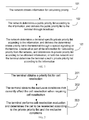
- FIG. 1 is a flowchart of a method for a terminal to obtain cell reselection priority in an embodiment of the present invention
- FIG. 2 is a flowchart of a cell reselection method in an embodiment of the present invention
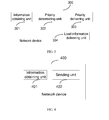
- FIG. 3 shows a structure of a network device in a first embodiment of network device in the present invention
- FIG. 4 shows a structure of a network device in a second embodiment of network device in the present invention
- FIG. 5 shows a structure of a terminal in a first terminal embodiment in the present invention.
- FIG. 6 shows a structure of a terminal in a second terminal embodiment in the present invention.
- the reselection of different-frequency and different-system cells is principally based on priority.
- the corresponding priority is formulated for different frequencies and systems.
- the terminal decides to reside on a specific cell according to priority. That is, the terminal measures the frequency or system of higher priority first. If the cell of the frequency or system of higher priority meets the cell reselection conditions, the terminal reselects the cell; otherwise, the terminal measures the cell of lower priority.
- the terminal resides on a lower-priority cell, the terminal measures the cell of the frequency of system of higher priority periodically. If the higher-priority cell meets the reselection conditions, the terminal reselects the higher-priority cell.
- Priority falls into two types: public priority and private priority.
- Public priority refers to the priority which is specific to a cell, frequency or system and is the same to all terminals in a cell.
- Private priority refers to priority specific to a terminal. Different terminals in a cell may have different private priority.
- a priority level may be assigned to each frequency layer or system adjacent to the serving cell, thus generating a private priority list and a public priority list.
- the priority of a cell, frequency, or system depends on many factors.
- the factors include but are not limited to:
- Such information may be stored on different network entities or terminals. Therefore, methods and systems for obtaining cell reselection priority under the present invention may be implemented in different ways.
- a network and/or a terminal determines the private priority of the cell, frequency, or system; and, when the network determines the private priority, the network delivers the determined private priority list specific to the terminal through special signaling.
- the network-side entity that determines the public priority list may be an eNB, and the network-side entity that determines the private priority list may be an eNB or a Mobile Management Entity (MME).
- MME Mobile Management Entity
- the terminal may be further adapted to determine a new private priority list according to the existing private priority list and the information stored in the terminal for calculating priority.
- the network-side entity may be further adapted to: determine a public priority list according to the obtained information for calculating priority, and deliver the public priority list to the terminal through broadcast channel.
- the network-side entity may also be adapted to notify the terminal of the algorithm for calculating the priority so that the terminal can determine the private priority list according to the algorithm when delivering all or part of the information to the terminal.
- the network-side entity includes an eNB and/or an MME.
- a method for obtaining cell reselection priority is disclosed in an embodiment of the present invention. As shown in FIG. 1 , the method includes the following:
- Block 101 The network obtains the information for calculating priority.
- the information may be one of or any combination of the information items listed above.
- Block 102 The network determines a public priority list according to the obtained information, then delivers the public priority list to a terminal through broadcast channel. This block is optional.
- the network-side eNB may calculate the public priority of the cell, frequency or system according to the information, for example, cell bandwidth, and service provider policy, for calculating priority, and generate a public priority list and deliver it to the terminal.
- the features of different systems may be considered in calculating the public priority, for example, the order of priority of different systems may be set to: LTE > WCDMA > GSM.
- Block 103 The network determines a terminal-specific private priority list according to the information, and delivers the determined private priority list specific to the terminal through special signaling.
- the terminal obtains all or part of the information for calculating priority from the network, and determines its private priority list according to the obtained information.
- the network and the terminal determine the terminal-specific private priority list according to the obtained information.
- the process of the network determining the private priority, the process of the terminal determining the private priority, and the process of the network and the terminal determining the private priority are detailed below, taking an LTE system as an example.
- the network-side eNB determines the private priority.
- the eNB When the terminal enters the Radio Resource Control Connected (RRC_CONNECTED) state, the eNB obtains the information for calculating priority.
- the information includes the information stored by the eNB and the information obtained from the MME.
- the information stored by the eNB includes the cell bandwidth information; and the information obtained by the eNB from the MME includes: terminal capability, subscription information, service provider policy, history service information, and whether the network is shared.
- the eNB calculates and generates a private priority list specific to the terminal, and sends the private priority list specific to the terminal through special signaling.
- the special signaling may be an RRC Connection Release Request or an RRC Connection Reconfiguration.
- the eNB calculates and generates a public priority list according to the obtained information such as cell bandwidth and service provider policy, and delivers the public priority list through broadcast channel.
- the features of different systems may be considered in calculating the public priority, for example, the order of priority of different systems may be set to: LTE > WCDMA > GSM.
- Example 1 It is assumed that a terminal is in a macro cell; one of the neighboring cells is a macro cell which is not overloaded, and the terminal supports all services provided by the neighboring cell; another neighboring cell is a home base station cell.
- Table 1 sets out the information which is obtained by the eNB for calculating priority: Table 1 Factor Priority level (0-5) and its meaning Priority weight Description Subscription information 0: Proper 20% If the terminal has not 3: Default subscribed to the service of 5: No the cell, the cell is of the subscription lowest priority or excluded Terminal capabilities 0: Proper 20% If the terminal capabilities do 3: Default not support the service of the 5. Not supported cell, the cell is of the lowest priority or excluded Service provider's policy 3: Default 20% Service provider policy History service information 3: Default 10% History service information Network sharing 3: Default 10% Whether the Network is shared Cell bandwidth 3: Default 10% Cell bandwidth Support of broadcast and multicast services 3: Default 10% Broadcast and multicast services
- Example 2 It is assumed that the terminal is in a macro cell. There are three neighboring cells, two of which are macro cells on different frequency layers in the LTE system; one of the two macro cells (cell 1) is overloaded, and the terminal capabilities support all the services provided by cell 1; the other neighboring cell (cell 2) is not overloaded; and there is a neighboring cell (cell 3) in the WCDMA system, and the terminal has not subscribed to the WCDMA service.
- Table 2 sets out the information which is obtained by the eNB for calculating priority: Table 2 Factor Priority level (0-5) and its meaning Priority weight Description Subscription 0: Proper 20% If the terminal has not information 3: Default subscribed to the service of the 5: No subscription cell, the cell is of the lowest priority or excluded Terminal 0: Proper 20% If the terminal capabilities do capabilities 3: Default not support the service of the 5. Not supported cell, the cell is of the lowest priority or excluded Service provider policy 3: Default 20% Service provider policy History service information 3: Default 10% History service information Network sharing 3: Default 10% Whether the Network is shared Cell bandwidth 3: Default 10% Cell bandwidth Support of broadcast and multicast services 3: Default 10% Broadcast and multicast services
- the network-side MME determines the private priority.
- the MME obtains the information for calculating priority, including: terminal capabilities, subscription information, service provider policy, history service information, and whether the network is shared. According to such information, the MME calculates and generates a private priority list specific to the terminal. When the terminal enters the RRC_CONNECTED state, the MME delivers the private priority list specific to the terminal through special signaling.
- the special signaling may be a NAS message such as Attach process signaling or Tracking/Location/Route Area (TA/LA/RA) update process signaling.
- the eNB calculates and generates a public priority list according to the obtained information such as cell bandwidth and service provider policy, and delivers the public priority list through broadcast channel.
- the terminal is in a macro cell; there are three neighboring cells, two of which are macro cells on different frequency layers in the LTE system.
- One of the two macro cells (cell 1) is overloaded, and the terminal capabilities support all the services provided by cell 1; the other neighboring cell (cell 2) is not overloaded; and there is a neighboring cell (cell 3) in the WCDMA system, while the terminal has not subscribed to the WCDMA service.
- Table 3 sets out the information which is obtained by the MME for calculating priority: Table 3 Factor Priority level (0-5) and its meaning Priority weight Description Subscription 0: Proper 25% If the terminal has not information 3: Default subscribed to the service of the 5: No subscription cell, the cell is of the lowest priority or excluded Terminal 0: Proper 25% If the terminal capabilities do capabilities 3: Default not support the service of the 5. Not supported cell, the cell is of the lowest priority or excluded Service provider policy 3: Default 20% Service provider policy History service information 3: Default 10% History service information Network sharing 3: Default 10% Whether the Network is shared or not Support of broadcast and multicast services 3: Default 10% Broadcast and multicast services
- the terminal determines the private priority.
- the network (including the eNB and the MME) obtains the relevant information.
- Such information may be the information inaccessible to the terminal, for example, cell bandwidth, service provider policy, and whether the network is shared.
- the network delivers the obtained information (optionally including the algorithm for calculating the priority) to the terminal through broadcast and/or special signaling.
- the terminal formulates a private priority list for cell reselection in view of the received information and the information stored by the terminal, for example, terminal capabilities, subscription information, history service information, mobility or history mobility information.
- the terminal may calculate the priority of the cell according to the algorithm delivered by the network.
- the terminal may calculate the priority of the cell according to its own algorithm.
- the terminal is in a macro cell; there are three neighboring cells, two of which are macro cells on different frequency layers in the LTE system are macro cells.
- One of the two cells (cell 1) is overloaded, and the terminal capabilities support all the services provided by the cell; the other neighboring cell (cell 2) is not overloaded; and there is a neighboring cell (cell 3) in the WCDMA system, yet the terminal has not subscribed to the WCDMA service.
- the algorithm obtained by the terminal from the network calculates the priority according to the priority weight.
- Table 4 sets out the information parameters for calculating the priority: Table 4 Factor Cell1 Cell2 Cell3 Description Service provider policy High (LTE) High (LTE) Medium (WCDMA) Service provider policy Network sharing Supported Supported Not supported Whether the network is shared or not Cell bandwidth 10 MHz 20 MHz 5 MHz Cell bandwidth
- Table 5 sets out the information which is obtained by the terminal from the network, and the information stored by the terminal for calculating priority: Table 5 Factor Priority level (0-5) and its meaning Priority weight Description Subscription 0: Proper 25% If the terminal has not information 3: Default subscribed to the service of the 5: No subscription cell, the cell is of the lowest priority or excluded Terminal 0: Proper 25% If the terminal capabilities do capabilities 3: Default not support the service of the 5. Not supported cell, the cell is of the lowest priority or excluded Service provider policy 3: Default 20% Service provider policy History service information 3: Default 10% History service information Network sharing 3: Default 10% Whether the network is shared Support of broadcast and multicast services 3: Default 10% Broadcast and multicast services
- the eNB and the terminal determine the private priority jointly.
- the eNB obtains the information required for calculating the priority.
- information includes the information stored by the eNB and the information obtained from the MME.
- the information stored by the eNB includes the cell bandwidth information; and the information obtained by the eNB from the MME includes: terminal capability, subscription information, service provider policy, history service information, and whether the network is shared.
- the eNB calculates out and generates a private priority list specific to the terminal, and sends the private priority list specific to the terminal through special signaling.
- the special signaling may be an RRC Connection Release Request or an RRC Connection Reconfiguration.
- the terminal calculates the private priority list.
- the eNB calculates and generates a public priority list according to the obtained information such as cell bandwidth and service provider policy, and delivers the public priority list through broadcast channel.
- the features of different systems may be considered in calculating the public priority, for example, the order of priority of different systems may be set to: LTE > WCDMA > GSM.
- the terminal is in a macro cell; there are three neighboring cells, two of which are macro cells on different frequency layers in the LTE system.
- One of the two cells (cell 1) is overloaded, and the terminal capabilities support all the services provided by the cell; the other (cell 2) is not overloaded; and there is a neighboring cell (cell 3) in the WCDMA system, yet the terminal has not subscribed to the WCDMA service.
- Table 6 sets out the information which is obtained by the eNB for calculating priority: Table 6 Factor Priority level (0-5) Priority weight Description Service provider policy 3: Default 50% Service provider policy Network sharing 3: Default 25% Whether the network is shared Cell bandwidth 3: Default 25% Broadcast and multicast services 1.
- the eNB calculates and generates a priority list according to the information inaccessible to the terminal.
- the MME and the terminal jointly determine the private priority.
- the MME obtains the information required for calculating priority. According to the obtained information or according to the information inaccessible to the terminal (for example, service provider policy, and network sharing) in the obtained information, the MME calculates and generates a private priority list specific to the terminal. When the terminal enters the RRC_CONNECTED state, the MME delivers the private priority list specific to the terminal through special signaling.
- the special signaling may be a NAS message such as Attach process signaling or TA/LA/RA update process signaling.
- a network and/or a terminal determines the private priority of the cell, frequency, or system.
- the network delivers the determined private priority list specific to the terminal through special signaling.
- the terminal and/or the network determines the private priority
- the network delivers the information about the determined priority or the independently determined private priority list specific to the terminal; and the terminal can determine a private priority list according to the received information or the private priority list determined by the network in view of the information stored by the terminal. Therefore, relevant information is provided for the processes such as cell reselection and cell search, the power consumption caused by terminal measurement is reduced, and energy efficiency is accomplished.
- the network may deliver the public priority list to the terminal through broadcast so that the terminal may combine the private priority level with the public priority level in the evaluation of cell reselection.
- the algorithm for calculating priority is not limited to the weight-based algorithm; other algorithms such as function-based algorithms may also apply.
- function-based algorithms various factors may be input into a function, and the corresponding priority level is output.
- a validity period for example, one hour, or one day
- a validity scope for example, valid only within this TA/LA/RA, or valid only in this cell
- the validity period and/or the validity scope may also be sent together to the terminal as information in the private priority list.
- the public priority policy may be sent by the MME or eNB to the terminal through special signaling, or sent by the eNB to the terminal through broadcast.
- the terminal When cell reselection is required and the terminal is in idle mode, the terminal evaluates cell reselection to determine the cell to be reselected according to the private priority list of the cell, frequency or system, the exclusive conditions which currently affect cell reselection, or further according to the public priority list. In this way, it will assure the terminal to select a proper cell.
- FIG. 2 is a flowchart of a cell reselection method in an embodiment of the present invention. The method includes the following:
- Block 201 The terminal obtains a priority list for cell reselection.
- the network and/or the terminal determines the private priority list of the terminal according to the information for calculating priority, and the network determines the public priority list and delivers it to the terminal through broadcast.
- Block 202 When cell reselection is required, the terminal obtains the exclusive conditions that currently affect cell reselection. Such conditions include: home base station; or load of the cell, frequency or system; or combination thereof.
- the network may broadcast the delivered load indication of the cell, frequency or system to obtain the load information.
- the network delivers the load indication of the cell, frequency or system only when the load of the cell, frequency or system changes from normal to overload or from overload to normal.
- the network indicates the terminal in the cell through paging when the load of the neighboring cell, frequency or system changes (for example, when the load of the cell, frequency or system changes from normal to overload or from overload to normal).
- Block 203 The terminal determines the cell to be reselected according to the private priority list and the exclusive conditions.
- the terminal may perform cell reselection evaluation by considering only the private priority list instead of the public priority list, namely, according to the private priority list and the exclusive conditions.
- the terminal may also perform cell reselection evaluation by considering the public priority list and the exclusive conditions.
- the terminal may perform cell reselection evaluation by considering the private priority list and the public priority list, namely, according to the private priority list, the public priority list and the exclusive conditions to determine the cell to be reselected.
- the terminal may set out the exclusive conditions (for example, home base station, and load information of the cell, frequency or system) in the priority-related factors separately, then check whether the private priority list carries the exclusive conditions. If the private priority list carries the exclusive conditions, the terminal considers the exclusive conditions first and then performs cell reselection evaluation according to the order of priority. The cell that meets the requirements is reselected, as detailed below with examples.
- the exclusive conditions for example, home base station, and load information of the cell, frequency or system
- the terminal receives a public priority list and a private priority list.
- Table 8 Factor Priority level (0-5) and its meaning Description Home base station Highest (0) If a neighboring cell is a home base station accessible to the terminal, this cell is preferred; if the cell reselection criteria are fulfilled, this cell is preferred; otherwise, other factors are considered Load (may include residing load and service load) Lowest (5, in the case of overload) If the neighboring cell, the frequency or the system is overloaded, the cell, the frequency or the system is of the lowest priority or excluded Speed/migration information The terminal obtains its own speed and performs cell reselection evaluation in view of the priority
- Example 1 It is assumed that a terminal is in a macro cell; one of the neighboring cells is a macro cell which is not overloaded, and the terminal supports all services provided by the neighboring cell; another neighboring cell is a home base station cell.
- the private priority list obtained by the terminal is (2, 0), and the public priority list obtained is (0, 0).
- the public priority list is ignored, and the private priority list is applied to perform cell reselection evaluation.
- Example 2 It is assumed that the terminal is in a macro cell; there are three neighboring cells, two of which are macro cells on different frequency layers in the LTE system One of the two cells (cell 1) is overloaded, and the terminal capabilities support all the services provided by the cell; the other neighboring cell (cell 2) is not overloaded; and there is a neighboring cell (cell 3) in the WCDMA system, yet the terminal has not subscribed to the WCDMA service.
- the terminal After obtaining the priority list, the terminal ignores the public priority list, and applies the private priority list (5, 2, 5) to perform cell reselection evaluation.
- the terminal takes all priority-related factors into account to obtain the priority level and perform cell reselection factor, namely, without setting out the exclusive conditions.
- such a method of determining priority is applicable not only to cell reselection, but also to cell selection.
- the terminal may prefer the residing cell according to the information stored in the terminal. If no information is stored, the terminal may measure the frequency-layer cell of higher priority first according to the broadcast priority level.
- the network device 300 includes: an information obtaining unit 301, a priority determining unit 302, and a priority delivering unit 303.
- the information obtaining unit 301 is adapted to obtain information for calculating priority.
- the priority determining unit 302 is adapted to determine a private priority list according to the information obtained by the information obtaining unit 301.
- the priority delivering unit 303 is adapted to deliver the private priority list through special signaling.
- the priority determining unit 302 is adapted to determine a public priority list according to the information obtained by the information obtaining unit 301. Accordingly, the priority delivering unit 303 is adapted to deliver the public priority list through broadcast.
- the network device in this embodiment may further include a load information delivering unit 304, which is adapted to deliver the load information of the cell, frequency or system through broadcast.
- the network device in another embodiment of the present invention is shown in FIG. 4 .
- the network device 400 in this embodiment includes an information obtaining unit 401 and a sending unit 402.
- the information obtaining unit 401 is adapted to obtain information for calculating priority.
- the sending unit 402 is adapted to: deliver all or part of the information obtained by the information obtaining unit through broadcast and/or special signaling, and deliver the algorithm for calculating priority.
- the network device in the foregoing two embodiments may be an eNB or MME in the LTE system.
- a terminal is disclosed in an embodiment of the present invention. As shown in FIG. 5 , the terminal includes: a priority list receiving unit 501, a condition obtaining unit 502, and an evaluating unit 503.
- the priority list receiving unit 501 is adapted to receive the private priority list from the network through special signaling.
- the condition obtaining unit 502 is adapted to obtain exclusive conditions when cell reselection is required.
- the evaluating unit 503 is adapted to determine the cell to be reselected according to the private priority list and the exclusive conditions.
- the terminal in this embodiment may further include a storing unit 504 and a priority determining unit 505.
- the storing unit 504 is adapted to store information for calculating priority.
- the priority determining unit 505 is adapted to determine a new private priority list according to the private priority list received by the priority list receiving unit 501 and the information stored in the storing unit 504. In this way, the evaluating unit 503 determines the cell to be reselected according to the new private priority list and the exclusive conditions.
- the priority list receiving unit 501 can be further adapted to receive the public priority list from the network through broadcast. Accordingly, the evaluating unit 503 can be further adapted to determine the cell to be reselected according to the private priority list, the public priority list, and the exclusive conditions.
- the terminal 600 includes: a receiving unit 601, a storing unit 602, and a priority determining unit 603.
- the receiving unit 601 is adapted to receive the information delivered by the network for calculating priority through broadcast or special signaling.
- the storing unit 602 is adapted to store the information for calculating priority.
- the priority determining unit 603 is adapted to determine a private priority list according to the information received by the receiving unit 601 and the information stored by the storing unit 602.
- the receiving unit 601 is further adapted to receive the algorithm delivered by the network for calculating priority.
- the priority determining unit 603 can determine the private priority list according to the information received by the receiving unit 601, the algorithm for calculating priority, and the information stored by the storing unit 602.
- the terminal in this embodiment may further include a condition obtaining unit and an evaluating unit (not illustrated in the figure).
- the condition obtaining unit is adapted to obtain exclusive conditions when cell reselection is required.
- the evaluating unit is adapted to determine the cell to be reselected according to the private priority list determined by the priority determining unit 603 and the exclusive conditions.
- the receiving unit 601 in this embodiment may further be adapted to receive the public priority list from the network through broadcast. Accordingly, the evaluating unit may further be adapted to determine the cell to be reselected according to the private priority list, the public priority list, and the exclusive conditions.
- the program may be stored in a computer-readable storage medium such as ROM/RAM, magnetic disk, and compact disk.
Landscapes
- Engineering & Computer Science (AREA)
- Computer Networks & Wireless Communication (AREA)
- Signal Processing (AREA)
- Computer Security & Cryptography (AREA)
- Mobile Radio Communication Systems (AREA)
Applications Claiming Priority (2)
| Application Number | Priority Date | Filing Date | Title |
|---|---|---|---|
| CN2008100028181A CN101478744B (zh) | 2008-01-04 | 2008-01-04 | 获取小区重选优先级的方法及系统 |
| PCT/CN2008/073891 WO2009086785A1 (fr) | 2008-01-04 | 2008-12-31 | Procédé, système et dispositif de réseau pour obtenir une priorité de resélection de cellule |
Publications (2)
| Publication Number | Publication Date |
|---|---|
| EP2111074A1 true EP2111074A1 (fr) | 2009-10-21 |
| EP2111074A4 EP2111074A4 (fr) | 2010-04-07 |
Family
ID=40839364
Family Applications (1)
| Application Number | Title | Priority Date | Filing Date |
|---|---|---|---|
| EP08869377A Withdrawn EP2111074A4 (fr) | 2008-01-04 | 2008-12-31 | Procédé, système et dispositif de réseau pour obtenir une priorité de resélection de cellule |
Country Status (6)
| Country | Link |
|---|---|
| US (1) | US9642062B2 (fr) |
| EP (1) | EP2111074A4 (fr) |
| KR (2) | KR20120065425A (fr) |
| CN (1) | CN101478744B (fr) |
| BR (1) | BRPI0822235A2 (fr) |
| WO (1) | WO2009086785A1 (fr) |
Cited By (11)
| Publication number | Priority date | Publication date | Assignee | Title |
|---|---|---|---|---|
| WO2010017012A1 (fr) * | 2008-08-06 | 2010-02-11 | Interdigital Patent Holdings, Inc. | Procédures pour un fonctionnement en mode veille à évolution à long terme |
| EP2262310A4 (fr) * | 2008-04-09 | 2011-07-06 | Huawei Tech Co Ltd | Procédé, terminal et système de resélection de cellules |
| WO2011107886A1 (fr) * | 2010-03-05 | 2011-09-09 | France Telecom | Procédé et appareil pour assister la sélection d'une cellule de réseau d'un réseau sans fil |
| EP2632205A1 (fr) * | 2012-02-24 | 2013-08-28 | Research In Motion Limited | Procédés et dispositifs sans fil de surveillance de cellules voisines |
| WO2013186143A1 (fr) * | 2012-06-13 | 2013-12-19 | Nokia Siemens Networks Oy | Équilibrage de charge dans un réseau et entre des réseaux |
| JP2014535237A (ja) * | 2011-11-04 | 2014-12-25 | エルジー エレクトロニクス インコーポレイティド | 無線通信システムにおける最高優先順位を適用するセル再選択方法及びこれをサポートする装置 |
| CN105007606A (zh) * | 2014-04-24 | 2015-10-28 | 中兴通讯股份有限公司 | 小区选择重选参数确定方法、基站、终端及通信系统 |
| EP3018944A1 (fr) * | 2014-11-04 | 2016-05-11 | Acer Incorporated | Procédé de manipulation de resélection de cellule |
| GB2542820A (en) * | 2015-09-30 | 2017-04-05 | British Telecomm | Base station |
| EP3295709A4 (fr) * | 2015-05-13 | 2018-12-05 | Nokia Solutions and Networks Oy | Mécanisme de commande de resélection de cellule dans un mode de communication multi-connectivité |
| EP4096305A4 (fr) * | 2020-01-20 | 2023-01-11 | Beijing Xiaomi Mobile Software Co., Ltd. | Procédés et appareils de transmission d'informations et de resélection de cellule, dispositif de communication et support de stockage |
Families Citing this family (65)
| Publication number | Priority date | Publication date | Assignee | Title |
|---|---|---|---|---|
| CN101772110B (zh) * | 2009-01-06 | 2015-01-28 | 中兴通讯股份有限公司 | 一种家庭基站小区间的重选方法 |
| PL2396995T3 (pl) * | 2009-02-11 | 2013-10-31 | Nokia Solutions & Networks Oy | Sposób, urządzenie oraz produkt programu komputerowego dla ponownego wyboru komórki w oparciu o priorytet w środowisku z wieloma rat |
| CN101998632A (zh) * | 2009-08-14 | 2011-03-30 | 华为技术有限公司 | 一种寻呼方法及设备 |
| CN102045686B (zh) * | 2009-10-14 | 2015-08-12 | 株式会社Ntt都科摩 | 一种无线通信网络中支持移动性管理的方法及设备 |
| EP2494820B1 (fr) * | 2009-10-30 | 2022-10-12 | Nokia Technologies Oy | Priorité d'attente en mode inactif |
| CN102065495A (zh) * | 2009-11-13 | 2011-05-18 | 大唐移动通信设备有限公司 | 一种选择目标小区的方法、系统及一种基站 |
| CN102316431A (zh) * | 2010-06-29 | 2012-01-11 | 中国移动通信集团公司 | 一种网络信令拥塞控制方法及其装置 |
| CN103155647B (zh) * | 2010-10-21 | 2016-05-18 | Lg电子株式会社 | 在无线通信系统中调整用于避免idc干扰的小区重新选择优先级的方法及其设备 |
| CN101984710A (zh) * | 2010-11-12 | 2011-03-09 | 中兴通讯股份有限公司 | 一种语音通话结束后查找小区的方法、装置和终端 |
| CN103262608B (zh) * | 2010-12-17 | 2016-08-17 | 西门子公司 | 一种切换控制方法、装置及系统 |
| KR101472100B1 (ko) | 2010-12-22 | 2014-12-11 | 주식회사 케이티 | 무선통신 시스템에서 기지국 장비 및 데이터 처리 방법 |
| CN102625389B (zh) | 2011-01-31 | 2015-09-30 | 华为技术有限公司 | 一种移动通信网络的接入方法、装置和系统 |
| WO2012125094A1 (fr) * | 2011-03-11 | 2012-09-20 | Telefonaktiebolaget L M Ericsson (Publ) | Procédés et appareils dans des systèmes de communication |
| US20120309391A1 (en) * | 2011-06-03 | 2012-12-06 | Qin Zhang | Methods and apparatus for adaptive network selection |
| CN102857981B (zh) * | 2011-06-29 | 2017-09-29 | 中兴通讯股份有限公司 | 一种实现小区重选的方法及装置 |
| KR101311512B1 (ko) | 2011-08-09 | 2013-09-25 | 주식회사 케이티 | 상향 링크 신호 처리 방법, 하향 링크 신호 처리 방법 및 이를 수행하는 무선 유닛 |
| CN102932877A (zh) * | 2011-08-09 | 2013-02-13 | 中兴通讯股份有限公司 | 一种多模单待终端确定有效小区的方法及多模单待终端 |
| KR101289879B1 (ko) | 2011-08-16 | 2013-07-24 | 주식회사 케이티 | 디지털 신호 처리 장치, 신호 처리 시스템 및 신호 처리 방법 |
| CN102958001B (zh) * | 2011-08-25 | 2018-03-13 | 华为技术有限公司 | 网络拥塞控制方法和装置 |
| CN103024848A (zh) * | 2011-09-23 | 2013-04-03 | 中兴通讯股份有限公司 | 一种驻留小区选择方法和基站 |
| KR101311523B1 (ko) * | 2011-10-26 | 2013-09-25 | 주식회사 케이티 | 이종 망 간의 망 부하 분산 방법 |
| KR101311524B1 (ko) | 2011-10-27 | 2013-09-25 | 주식회사 케이티 | 이종 망의 경계 주변에 위치하는 단말의 망 천이 방법 |
| CN107197481B (zh) | 2011-11-15 | 2020-08-28 | 三星电子株式会社 | 在移动通信系统中分布空闲用户设备的方法以及设备 |
| KR101262340B1 (ko) | 2011-11-30 | 2013-05-08 | 주식회사 케이티 | 시스템 정보 제공 장치 및 그 방법 |
| CN102638818B (zh) * | 2011-12-12 | 2018-08-14 | 南京中兴软件有限责任公司 | 一种优先级重选评估方法及系统 |
| KR101406490B1 (ko) * | 2011-12-12 | 2014-06-12 | 주식회사 엘지유플러스 | 무선랜 접속 장치에 접속하는 통신 단말기 및 그 제어방법 |
| CN104081830A (zh) * | 2011-12-23 | 2014-10-01 | 诺基亚通信公司 | 信息向ue的传输以用于升级对特定小区的选择 |
| US20130201870A1 (en) * | 2012-02-06 | 2013-08-08 | Vivek Gupta | Handling dual priority applications in a wireless communication network |
| CN103313322B (zh) * | 2012-03-15 | 2017-05-31 | 华为技术有限公司 | 重定向方法及用户设备 |
| CN103369615B (zh) * | 2012-04-06 | 2019-12-31 | 中兴通讯股份有限公司 | 一种多模终端信息处理方法及多模终端 |
| WO2013170413A1 (fr) * | 2012-05-14 | 2013-11-21 | 富士通株式会社 | Procédé et dispositif de resélection de cellule |
| US11405841B2 (en) * | 2012-07-20 | 2022-08-02 | Qualcomm Incorporated | Using UE environmental status information to improve mobility handling and offload decisions |
| CN103582070B (zh) * | 2012-07-30 | 2016-12-21 | 中国移动通信集团公司 | 一种多模终端搜索网络的方法及多模终端 |
| US9094886B2 (en) | 2012-08-06 | 2015-07-28 | Telefonaktiebolaget L M Ericsson (Publ) | Method and apparatus to postpone UE from handover to an overloaded radio network from another radio network |
| US20140106749A1 (en) * | 2012-10-12 | 2014-04-17 | Nokia Siemens Networks Oy | Method, apparatus, computer program product, computer readable medium and system for cell reselection |
| US9900815B2 (en) | 2012-10-30 | 2018-02-20 | Lg Electronics Inc. | Method for handling frequency priority based on terminal supporting characteristics in wireless communication system and apparatus for supporting same |
| US20150304918A1 (en) * | 2012-10-30 | 2015-10-22 | Lg Electronics Inc. | Cell reselection method based on priority handling in wireless communication system, and apparatus for supporting same |
| US9847863B2 (en) * | 2013-01-30 | 2017-12-19 | Telefonaktiebolaget Lm Ericsson (Publ) | Paging procedures using an enhanced control channel |
| WO2015010267A1 (fr) | 2013-07-24 | 2015-01-29 | Telefonaktiebolaget L M Ericsson(Publ) | Procédés et dispositifs pour la sélection de cellule |
| CN104378802A (zh) * | 2013-08-12 | 2015-02-25 | 中兴通讯股份有限公司 | 驻留小区处理方法、装置、终端及基站 |
| US20150079966A1 (en) * | 2013-09-19 | 2015-03-19 | Wipro Limited | Methods for facilitating telecommunication network administration and devices thereof |
| US9736765B2 (en) | 2014-04-28 | 2017-08-15 | Intel IP Corporation | Load balancing in a wireless cellular network based on user equipment mobility |
| CN105101321B (zh) * | 2014-05-20 | 2020-01-14 | 中兴通讯股份有限公司 | 小区重选方法、装置及系统 |
| US9655022B2 (en) * | 2014-10-30 | 2017-05-16 | Acer Incorporated | Method of cell reselection |
| CN105813134B (zh) * | 2014-12-30 | 2020-01-03 | 杭州华为数字技术有限公司 | 频率优先级调整方法和装置 |
| US9474002B2 (en) * | 2015-02-06 | 2016-10-18 | Qualcomm Incorporated | Priority-based cell reselection |
| US9854591B2 (en) * | 2015-04-09 | 2017-12-26 | Intel IP Corporation | Device, system and method of cell specific probability load balancing |
| US10470196B2 (en) * | 2015-08-21 | 2019-11-05 | Hfi Innovation Inc. | Method for load redistribution in mobile communication systems |
| CN105357735B (zh) * | 2015-09-28 | 2020-08-11 | 北京小米移动软件有限公司 | 一种接入小区的方法及装置 |
| CN106612526A (zh) * | 2015-10-21 | 2017-05-03 | 中兴通讯股份有限公司 | 一种小区重选方法和装置 |
| CN105306826A (zh) * | 2015-11-20 | 2016-02-03 | 小米科技有限责任公司 | 相机功能设置方法及装置 |
| WO2018152735A1 (fr) * | 2017-02-23 | 2018-08-30 | 华为技术有限公司 | Procédé et appareil de recherche de cellule |
| CN111770517B (zh) * | 2017-09-15 | 2023-05-23 | Oppo广东移动通信有限公司 | 配置频率优先级的方法、终端设备、基站和核心网设备 |
| WO2019091639A1 (fr) * | 2017-11-07 | 2019-05-16 | Telefonaktiebolaget Lm Ericsson (Publ) | Nœuds et procédé de détermination d'identificateur (id) de réseau mobile terrestre public (rmtp) cible et d'id de cellule cible |
| CN108882321B (zh) * | 2018-06-13 | 2021-01-29 | Oppo广东移动通信有限公司 | 一种小区重选方法、终端及计算机可读存储介质 |
| CN110831084B (zh) * | 2018-08-10 | 2021-09-07 | 维沃移动通信有限公司 | 一种小区重选方法及终端 |
| CN108924891B (zh) * | 2018-08-20 | 2021-01-08 | 奇酷互联网络科技(深圳)有限公司 | 一种小区确定方法、用户设备和具有存储功能的装置 |
| CN111372289B (zh) * | 2018-12-26 | 2022-03-22 | 中国电信股份有限公司 | 共享网络的重选方法、网络设备以及系统、存储介质 |
| CN111526541B (zh) * | 2019-02-02 | 2023-06-02 | 大唐移动通信设备有限公司 | 一种进行小区切换的方法及设备 |
| KR102854555B1 (ko) | 2019-12-10 | 2025-09-02 | 삼성전자주식회사 | 무선 통신 시스템에서 셀을 재선택하기 위한 방법 및 장치 |
| WO2022082445A1 (fr) * | 2020-10-20 | 2022-04-28 | 北京小米移动软件有限公司 | Procédé et appareil de détermination de priorité de fréquence, procédé et appareil de délivrance d'informations, ainsi que dispositif et support |
| US11570677B2 (en) * | 2021-01-12 | 2023-01-31 | T-Mobile Innovations Llc | User equipment (UE) roaming based on network performance |
| US11683674B1 (en) * | 2021-04-22 | 2023-06-20 | T-Mobile Usa, Inc. | Accelerated cell search and selection |
| CN114980229B (zh) * | 2022-05-13 | 2024-04-26 | 深圳市佳贤通信科技股份有限公司 | 一种基于plmn的小区公共重选优先级广播方法 |
| CN120751513A (zh) * | 2025-08-29 | 2025-10-03 | 中国星网网络创新研究院有限公司 | 一种rrc重建搜网方法、重建方法和装置 |
Family Cites Families (11)
| Publication number | Priority date | Publication date | Assignee | Title |
|---|---|---|---|---|
| FI104780B (fi) | 1997-02-28 | 2000-03-31 | Nokia Mobile Phones Ltd | Solukkoradiojärjestelmän solujen priorisointi |
| FI107982B (fi) * | 1997-05-06 | 2001-10-31 | Nokia Mobile Phones Ltd | Solun valinta käyttöprofiilin perusteella solukkoradiojärjestelmässä |
| US7826844B2 (en) | 2002-01-16 | 2010-11-02 | Qualcomm Incorporated | Method and apparatus for efficient selection and acquisition of a wireless communications system |
| US7082305B2 (en) * | 2002-11-22 | 2006-07-25 | Telefonaktiebolaget Lm Ericsson (Publ) | Method and apparatus for generating a neighbor cell list |
| KR100639334B1 (ko) * | 2004-11-12 | 2006-10-30 | 엘지전자 주식회사 | 다중모드 이동통신 단말기에서의 주파수 밴드에 따른우선순위 셀 선택 방법 |
| JP4720977B2 (ja) * | 2005-02-14 | 2011-07-13 | 日本電気株式会社 | 基地局制御装置、移動体通信システム、および近隣セルリストフィルタリング方法 |
| CN100444687C (zh) * | 2005-03-10 | 2008-12-17 | 大唐移动通信设备有限公司 | 移动通信系统中切换目标小区选择方法 |
| CN100455112C (zh) * | 2005-07-07 | 2009-01-21 | 华为技术有限公司 | 一种基于用户优先级的小区重选方法 |
| TW200822773A (en) * | 2006-11-01 | 2008-05-16 | Interdigital Tech Corp | LTE reselectable-only cells and cell info list for handover |
| US20080176564A1 (en) * | 2007-01-22 | 2008-07-24 | Nokia Corporation | Apparatus, method and computer program product providing inter-rat measurement control based on connection data rate |
| KR20090045039A (ko) * | 2007-10-30 | 2009-05-07 | 엘지전자 주식회사 | 우선순위에 기반한 셀 재선택 방법 |
-
2008
- 2008-01-04 CN CN2008100028181A patent/CN101478744B/zh active Active
- 2008-12-31 EP EP08869377A patent/EP2111074A4/fr not_active Withdrawn
- 2008-12-31 KR KR1020127010740A patent/KR20120065425A/ko not_active Ceased
- 2008-12-31 KR KR1020107013018A patent/KR20100087382A/ko not_active Ceased
- 2008-12-31 BR BRPI0822235-5A patent/BRPI0822235A2/pt not_active IP Right Cessation
- 2008-12-31 WO PCT/CN2008/073891 patent/WO2009086785A1/fr not_active Ceased
-
2010
- 2010-07-02 US US12/829,981 patent/US9642062B2/en active Active
Cited By (33)
| Publication number | Priority date | Publication date | Assignee | Title |
|---|---|---|---|---|
| EP2858425A1 (fr) * | 2008-04-09 | 2015-04-08 | Huawei Technologies Co., Ltd. | Resélection de cellules par un terminal d'un réseau de communication mobile comprenant un système LTE et un système non-LTE |
| EP2262310A4 (fr) * | 2008-04-09 | 2011-07-06 | Huawei Tech Co Ltd | Procédé, terminal et système de resélection de cellules |
| US10051540B2 (en) | 2008-04-09 | 2018-08-14 | Huawei Technologies Co., Ltd. | Method, terminal, and system for cell reselection |
| US8041355B2 (en) | 2008-04-09 | 2011-10-18 | Huawei Technologies Co., Ltd. | Method, terminal, and system for cell reselection |
| US8185111B2 (en) | 2008-04-09 | 2012-05-22 | Huawei Technologies Co., Ltd. | Method, terminal, and system for cell reselection |
| EP2493247A1 (fr) * | 2008-04-09 | 2012-08-29 | Huawei Technologies Co., Ltd. | Produit de logiciel pour la resélection de cellules par un terminal |
| US8412197B2 (en) | 2008-04-09 | 2013-04-02 | Huawei Technologies Co., Ltd. | Method, terminal, and system for cell reselection |
| EP3637864A1 (fr) * | 2008-04-09 | 2020-04-15 | Huawei Technologies Co., Ltd. | Resélection de cellules par un terminal d'un réseau de communication mobile comprenant un système lte et un système non-lte |
| US9247493B2 (en) | 2008-04-09 | 2016-01-26 | Huawei Technologies Co., Ltd. | Method, terminal, and system for cell reselection |
| US10334497B2 (en) | 2008-04-09 | 2019-06-25 | Huawei Technologies Co., Ltd. | Method, terminal, and system for cell reselection |
| US8639246B2 (en) | 2008-04-09 | 2014-01-28 | Huawei Technologies Co., Ltd. | Method, terminal, and system for cell reselection |
| EP3364696A1 (fr) * | 2008-04-09 | 2018-08-22 | Huawei Technologies Co., Ltd. | Resélection de cellules par un terminal d'un réseau de communication mobile comprenant un système lte et un système non-lte |
| WO2010017012A1 (fr) * | 2008-08-06 | 2010-02-11 | Interdigital Patent Holdings, Inc. | Procédures pour un fonctionnement en mode veille à évolution à long terme |
| US9042883B2 (en) | 2008-08-06 | 2015-05-26 | Interdigital Patent Holdings, Inc. | Procedures for operating in long term evolution idle mode |
| US10292074B2 (en) | 2008-08-06 | 2019-05-14 | Interdigital Patent Holdings, Inc. | Procedures for operating in long term evolution idle mode |
| US9585067B2 (en) | 2008-08-06 | 2017-02-28 | Interdigital Patent Holdings, Inc. | Procedures for operating in long term evolution idle mode |
| WO2011107886A1 (fr) * | 2010-03-05 | 2011-09-09 | France Telecom | Procédé et appareil pour assister la sélection d'une cellule de réseau d'un réseau sans fil |
| JP2014535237A (ja) * | 2011-11-04 | 2014-12-25 | エルジー エレクトロニクス インコーポレイティド | 無線通信システムにおける最高優先順位を適用するセル再選択方法及びこれをサポートする装置 |
| WO2013124330A1 (fr) * | 2012-02-24 | 2013-08-29 | Research In Motion Limited | Procédés et dispositifs sans fil permettant de surveiller des cellules voisines |
| US8903383B2 (en) | 2012-02-24 | 2014-12-02 | Blackberry Limited | Method in a device, and a wireless device |
| EP2632205A1 (fr) * | 2012-02-24 | 2013-08-28 | Research In Motion Limited | Procédés et dispositifs sans fil de surveillance de cellules voisines |
| WO2013186143A1 (fr) * | 2012-06-13 | 2013-12-19 | Nokia Siemens Networks Oy | Équilibrage de charge dans un réseau et entre des réseaux |
| EP3136782A4 (fr) * | 2014-04-24 | 2017-04-19 | ZTE Corporation | Procédé de détermination de paramètres de sélection et de nouvelle sélection, station de base, terminal, système et support de stockage |
| CN105007606A (zh) * | 2014-04-24 | 2015-10-28 | 中兴通讯股份有限公司 | 小区选择重选参数确定方法、基站、终端及通信系统 |
| US10299179B2 (en) | 2014-04-24 | 2019-05-21 | Zte Corporation | Selection and reselection parameter determination method, base station, terminal, system and storage medium |
| EP3018944A1 (fr) * | 2014-11-04 | 2016-05-11 | Acer Incorporated | Procédé de manipulation de resélection de cellule |
| US10182383B2 (en) | 2014-11-04 | 2019-01-15 | Acer Incorporated | Method of handling cell reselection |
| US9907003B2 (en) | 2014-11-04 | 2018-02-27 | Acer Incorporated | Method of handling cell reselection |
| EP3295709A4 (fr) * | 2015-05-13 | 2018-12-05 | Nokia Solutions and Networks Oy | Mécanisme de commande de resélection de cellule dans un mode de communication multi-connectivité |
| US10813019B2 (en) | 2015-05-13 | 2020-10-20 | Nokia Solutions And Networks Oy | Cell reselection control mechanism in multi-connectivity communication mode |
| GB2542820A (en) * | 2015-09-30 | 2017-04-05 | British Telecomm | Base station |
| EP4096305A4 (fr) * | 2020-01-20 | 2023-01-11 | Beijing Xiaomi Mobile Software Co., Ltd. | Procédés et appareils de transmission d'informations et de resélection de cellule, dispositif de communication et support de stockage |
| US12408103B2 (en) | 2020-01-20 | 2025-09-02 | Beijing Xiaomi Mobile Software Co., Ltd. | Methods and apparatuses for cell reselection and information transmission |
Also Published As
| Publication number | Publication date |
|---|---|
| CN101478744A (zh) | 2009-07-08 |
| EP2111074A4 (fr) | 2010-04-07 |
| KR20120065425A (ko) | 2012-06-20 |
| BRPI0822235A2 (pt) | 2015-06-23 |
| KR20100087382A (ko) | 2010-08-04 |
| US20100273485A1 (en) | 2010-10-28 |
| US9642062B2 (en) | 2017-05-02 |
| WO2009086785A1 (fr) | 2009-07-16 |
| CN101478744B (zh) | 2010-10-20 |
Similar Documents
| Publication | Publication Date | Title |
|---|---|---|
| EP2111074A1 (fr) | Procédé, système et dispositif de réseau pour obtenir une priorité de resélection de cellule | |
| US8688166B2 (en) | Call establishment in highly congested network environment | |
| US11071056B2 (en) | Apparatus, method, and system for cell selection | |
| EP3624488B1 (fr) | Système de communication | |
| EP2196059B1 (fr) | Commande d'accès pendant de relocalisation d'équipment utilisateur dans une femtostation de base | |
| US9743344B2 (en) | Telecommunications networks | |
| CN102457918B (zh) | 确定目标小区的方法和设备 | |
| EP1835780B1 (fr) | Partage de charge dans des réseaux d'accès radio mobiles en utilisant les paramètres modifiés pour la resélection de cellule par le signal dédié | |
| EP3025550B1 (fr) | Procédé et dispositif pour la sélection de cellule dans un réseau d'accès radio partagé | |
| CN101562848B (zh) | 一种载频重选的方法和装置 | |
| US20130189993A1 (en) | Cell reselection method and user equipment | |
| US20180324656A1 (en) | Cell reselection method and appratus | |
| EP2314087A2 (fr) | Procédé d exécution d'une mise à jour de localisation d'une station mobile en mode au repos | |
| CN103650590B (zh) | 一种小区重选方法及设备 | |
| WO2018228392A1 (fr) | Procédé et dispositif de communication | |
| US8682320B2 (en) | Methods and arrangements for handling a setup of an S1 application protocol signalling connection | |
| CN102340844A (zh) | 切换过程中确定目标基站的方法、ue及mme | |
| US20240073761A1 (en) | Method for using slice information, and teminal | |
| US9526052B2 (en) | Cell reselection method and apparatus, base station | |
| CN103781174B (zh) | 寻呼方法、移动性管理网元及通信系统 | |
| CN101094483A (zh) | 寻呼区域管理方法及其系统 | |
| EP2438695A2 (fr) | Augmentation de l'intervalle de temps entre les recherches consécutives de la signalisation de cellules voisines basées sur une technologie sans fil différente | |
| KR101444433B1 (ko) | Cs 폴백 서비스 제공 방법 및 이를 수행하는 기지국 장치 |
Legal Events
| Date | Code | Title | Description |
|---|---|---|---|
| PUAI | Public reference made under article 153(3) epc to a published international application that has entered the european phase |
Free format text: ORIGINAL CODE: 0009012 |
|
| 17P | Request for examination filed |
Effective date: 20090902 |
|
| AK | Designated contracting states |
Kind code of ref document: A1 Designated state(s): AT BE BG CH CY CZ DE DK EE ES FI FR GB GR HR HU IE IS IT LI LT LU LV MC MT NL NO PL PT RO SE SI SK TR |
|
| A4 | Supplementary search report drawn up and despatched |
Effective date: 20100304 |
|
| RIC1 | Information provided on ipc code assigned before grant |
Ipc: H04W 48/20 20090101ALI20100226BHEP Ipc: H04W 36/08 20090101AFI20090803BHEP Ipc: H04W 48/18 20090101ALI20100226BHEP Ipc: H04W 8/22 20090101ALN20100226BHEP |
|
| 17Q | First examination report despatched |
Effective date: 20100528 |
|
| DAX | Request for extension of the european patent (deleted) | ||
| 17Q | First examination report despatched |
Effective date: 20150424 |
|
| STAA | Information on the status of an ep patent application or granted ep patent |
Free format text: STATUS: THE APPLICATION IS DEEMED TO BE WITHDRAWN |
|
| 18D | Application deemed to be withdrawn |
Effective date: 20150905 |