EP2112781A1 - Bündeleinheit in einem DSL-Netzwerk - Google Patents
Bündeleinheit in einem DSL-Netzwerk Download PDFInfo
- Publication number
- EP2112781A1 EP2112781A1 EP08007883A EP08007883A EP2112781A1 EP 2112781 A1 EP2112781 A1 EP 2112781A1 EP 08007883 A EP08007883 A EP 08007883A EP 08007883 A EP08007883 A EP 08007883A EP 2112781 A1 EP2112781 A1 EP 2112781A1
- Authority
- EP
- European Patent Office
- Prior art keywords
- client
- bundling unit
- dslam
- lines
- signal
- Prior art date
- Legal status (The legal status is an assumption and is not a legal conclusion. Google has not performed a legal analysis and makes no representation as to the accuracy of the status listed.)
- Withdrawn
Links
- 238000004891 communication Methods 0.000 claims abstract description 9
- 230000009471 action Effects 0.000 claims description 42
- 238000000034 method Methods 0.000 claims description 18
- 238000004590 computer program Methods 0.000 claims description 7
- 238000010586 diagram Methods 0.000 description 3
- 238000005516 engineering process Methods 0.000 description 3
- 238000012546 transfer Methods 0.000 description 3
- 230000005540 biological transmission Effects 0.000 description 2
- 230000006870 function Effects 0.000 description 2
- 238000012986 modification Methods 0.000 description 2
- 230000004048 modification Effects 0.000 description 2
- 230000008569 process Effects 0.000 description 2
- 102100029272 5-demethoxyubiquinone hydroxylase, mitochondrial Human genes 0.000 description 1
- 101150012579 ADSL gene Proteins 0.000 description 1
- 102100020775 Adenylosuccinate lyase Human genes 0.000 description 1
- 108700040193 Adenylosuccinate lyases Proteins 0.000 description 1
- 101000770593 Homo sapiens 5-demethoxyubiquinone hydroxylase, mitochondrial Proteins 0.000 description 1
- 230000003466 anti-cipated effect Effects 0.000 description 1
- 230000003139 buffering effect Effects 0.000 description 1
- 239000000969 carrier Substances 0.000 description 1
- 230000008859 change Effects 0.000 description 1
- 230000007423 decrease Effects 0.000 description 1
- 230000000694 effects Effects 0.000 description 1
- 239000004973 liquid crystal related substance Substances 0.000 description 1
- 230000005012 migration Effects 0.000 description 1
- 238000013508 migration Methods 0.000 description 1
- 238000007639 printing Methods 0.000 description 1
- 230000004044 response Effects 0.000 description 1
Images



Classifications
-
- H—ELECTRICITY
- H04—ELECTRIC COMMUNICATION TECHNIQUE
- H04L—TRANSMISSION OF DIGITAL INFORMATION, e.g. TELEGRAPHIC COMMUNICATION
- H04L12/00—Data switching networks
- H04L12/28—Data switching networks characterised by path configuration, e.g. LAN [Local Area Networks] or WAN [Wide Area Networks]
- H04L12/2854—Wide area networks, e.g. public data networks
- H04L12/2856—Access arrangements, e.g. Internet access
- H04L12/2869—Operational details of access network equipments
- H04L12/2898—Subscriber equipments
-
- H—ELECTRICITY
- H04—ELECTRIC COMMUNICATION TECHNIQUE
- H04L—TRANSMISSION OF DIGITAL INFORMATION, e.g. TELEGRAPHIC COMMUNICATION
- H04L12/00—Data switching networks
- H04L12/02—Details
- H04L12/16—Arrangements for providing special services to substations
- H04L12/18—Arrangements for providing special services to substations for broadcast or conference, e.g. multicast
- H04L12/185—Arrangements for providing special services to substations for broadcast or conference, e.g. multicast with management of multicast group membership
-
- H—ELECTRICITY
- H04—ELECTRIC COMMUNICATION TECHNIQUE
- H04L—TRANSMISSION OF DIGITAL INFORMATION, e.g. TELEGRAPHIC COMMUNICATION
- H04L12/00—Data switching networks
- H04L12/02—Details
- H04L12/16—Arrangements for providing special services to substations
- H04L12/18—Arrangements for providing special services to substations for broadcast or conference, e.g. multicast
- H04L12/1886—Arrangements for providing special services to substations for broadcast or conference, e.g. multicast with traffic restrictions for efficiency improvement, e.g. involving subnets or subdomains
-
- H—ELECTRICITY
- H04—ELECTRIC COMMUNICATION TECHNIQUE
- H04L—TRANSMISSION OF DIGITAL INFORMATION, e.g. TELEGRAPHIC COMMUNICATION
- H04L45/00—Routing or path finding of packets in data switching networks
- H04L45/24—Multipath
- H04L45/245—Link aggregation, e.g. trunking
-
- Y—GENERAL TAGGING OF NEW TECHNOLOGICAL DEVELOPMENTS; GENERAL TAGGING OF CROSS-SECTIONAL TECHNOLOGIES SPANNING OVER SEVERAL SECTIONS OF THE IPC; TECHNICAL SUBJECTS COVERED BY FORMER USPC CROSS-REFERENCE ART COLLECTIONS [XRACs] AND DIGESTS
- Y02—TECHNOLOGIES OR APPLICATIONS FOR MITIGATION OR ADAPTATION AGAINST CLIMATE CHANGE
- Y02D—CLIMATE CHANGE MITIGATION TECHNOLOGIES IN INFORMATION AND COMMUNICATION TECHNOLOGIES [ICT], I.E. INFORMATION AND COMMUNICATION TECHNOLOGIES AIMING AT THE REDUCTION OF THEIR OWN ENERGY USE
- Y02D30/00—Reducing energy consumption in communication networks
- Y02D30/50—Reducing energy consumption in communication networks in wire-line communication networks, e.g. low power modes or reduced link rate
Definitions
- the invention relates to a bundling unit in a DSL network.
- DSL Digital Subscriber Line
- ADSL asymmetric DSL
- VDSL VDSL
- SDSL symmetric DSL
- HDSL HDSL
- DSL traffic is managed by a so-called DSL Access Module (DSLAM), being an intermediate between a client and the network.
- DSL Access Module DSL Access Module
- DSL Access Module DSL Access Module
- DSL networks are nowadays used for all kinds of data transport, such as for distributing television signals to clients. This means that the transmission of TV signals does no longer require a separate coaxial TV cable network.
- a bundling unit for facilitating communication between a plurality of clients and a DSLAM in a DSL network to transmit at least one signal from the DSLAM to at least one client upon request, wherein the bundling unit is arranged to communicate with the DSLAM via a first set of lines and with the clients via a second set of lines, and the bundling unit is arranged to
- the bundling unit is further arranged to
- the signal is a multicast signal.
- the multicast signal may comprise at least one of a television signal, a radio signal, a data signal.
- the bundling unit further comprises or has access to a memory comprising client subscription information.
- the client subscription information may comprise information to verify which television signals the client is allowed to receive or information about a fixed bandwidth assigned to a client.
- the bundling device further comprises a plurality of client connectors to communicate with the at least one client via the second set of lines respectively.
- Each client connector may be associated with a single client.
- the bundling device further comprises a plurality of DSLAM connectors to communicate with the DSLAM via the first set of lines respectively.
- Each DSLAM connector may be associated with a single line of the first set of lines.
- the bundling unit comprises more client connectors than DSLAM connectors.
- the embodiments make it possible to serve a first number of clients using a second number of DSLAM connectors, the second number being less than the first number. For instance, the number of DSLAM connectors docs not need to exceed the number of available television signals available on the DSLAM. Also, it may be anticipated that not all clients request bandwidth at the same time.
- the bundling unit comprises less client connectors than DSLAM connectors. This allows providing a relatively high bandwidth to a number of available clients.
- action b2 may further comprise
- a computer program product comprising data and instructions that can be loaded by a computer arrangement, allowing said computer arrangement to perform the methods according to the above.
- a data carrier provided with such a computer program product.
- Fig. 1 schematically depicts a DSLAM 1 according to the prior art, which is on one side connected to a number of clients CL1, CL2, CL3, CL4, and on the other hand is connected to a further network NW, such as the PSTN-network, the Internet and the like.
- NW such as the PSTN-network, the Internet and the like.
- Each client CL1, CL2, CL3, CL4 may comprise a television set TV, personal computer or the like to process the received television signals and display the television signals.
- each client has its own line L1, L2, L3, L4 connecting the client CL1, CL2, CL3, CL4 to the DSLAM. This means that each client CL1, CL2, CL3, CL4 can only use the bandwidth provided by its associated line.
- the client When setting up or disconnecting a connection between a client and the DSLAM 1 protocols are used that arc known by the skilled person.
- the client sends IGMP messages, such as a join message, leave message, to the DSLAM 1 in order to request or abandon multicast (television) channels.
- IGMP messages such as a join message, leave message
- the invention is based on the insight that this network architecture does not allow an efficient use of the total available bandwidth provided by lines L1, L2, L3, L4 for a few reasons.
- the lines L1, L2, L3, L4 are not used all of the time. So, the first client C1 using first line L1, can not use the bandwidth of line L2 associated with the second client C2 when client CL2 is not using the second line L2.
- a bundling unit BU is provided to manage the DSL traffic and make sure that the available capacity of lines L1, L2, L3, L4 is used in a more efficient way.
- the bundling unit BU may be located in the vicinity of the clients CL1, CL2, CL3, CL4 so that lines L1, L2, L3, L4 that are now used in a more efficient way cover most of the distance between the clients CL1, CL2, CL3, CL4 and the DSLAM 1.
- the clients CL1, CL2, CL3, CL4 may for instance be located in a hotel, a hospital, a block of flats, etc.
- the bundling unit BU may be located in or near the hotel, hospital, block of flats etc.
- Fig. 2 schematically depicts an embodiment comprising the bundling unit BU. Corresponding reference symbols indicate corresponding parts as in Fig. 1 .
- Fig. 2 further comprises a bundling unit BU which is connected to each client CL1, CL2, CL3, CL4 via separate lines L1', L2', L3', L4'.
- the bundling unit BU is connected with the DSLAM via lines L1, L2, L3, L4.
- the bundling unit BU may be formed as a computer, such as explained below with reference to Fig. 3 .
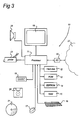
- FIG. 3 an overview is given of a computer arrangement 10 that may function as bundling unit BU according to the embodiments.
- the computer arrangement 10 comprises a processor 11 for carrying out arithmetic operations.
- the processor 11 is connected to a plurality of memory components, including a hard disk 12, Read Only Memory (ROM) 13, Electrically Erasable Programmable Read Only Memory (EEPROM) 14, and Random Access Memory (RAM) 15. Not all of these memory types need necessarily be provided. Moreover, these memory components need not be located physically close to the processor 11 but may be located remote from the processor 11.
- ROM Read Only Memory
- EEPROM Electrically Erasable Programmable Read Only Memory
- RAM Random Access Memory
- the processor 11 may also be connected to devices for inputting instructions, data etc. by a user, like a keyboard 16, and a mouse 17.
- Other input devices such as a touch screen, a track ball and/or a voice converter, known to persons skilled in the art may be provided too.
- a reading unit 19 connected to the processor 11. may be provided.
- the reading unit 19 is arranged to read data from and possibly write data on a data carrier like a floppy disk 20 or a CDROM 21.
- Other data carriers may be tapes, DVD, CD-, DVD-R, memory sticks etc. as is known to persons skilled in the art.
- the processor 11 may also be connected to a printer 23 for printing output data on paper, as well as to a display 18, for instance, a monitor or LCD (Liquid Crystal Display) screen, or any other type of display known to persons skilled in the art.
- a printer 23 for printing output data on paper
- a display 18 for instance, a monitor or LCD (Liquid Crystal Display) screen, or any other type of display known to persons skilled in the art.
- LCD Liquid Crystal Display
- the processor 11 may be connected to a loudspeaker 29.
- the processor 11 may be arranged to communicate with remote computer arrangements 10, for instance via network 27, such as the Public Switched Telephone Network (PSTN), a Local Area Network (LAN), a Wide Area Network (WAN), an IP network etc. by means of I/O device 25.
- PSTN Public Switched Telephone Network
- LAN Local Area Network
- WAN Wide Area Network
- IP network etc.
- the data carrier 20, 21 may comprise a computer program product in the form of data and instructions arranged to provide the processor with the capacity to perform a method in accordance with the embodiments.
- a computer program product may, alternatively, be downloaded via network 27.
- the processor 11 may be implemented as stand alone system, or as a plurality of parallel operating processors each arranged to carry out subtasks of a larger computer program, or as one or more main processors with several sub-processors. Parts of the functionality of the invention may even be carried out by remote processors communicating with processor 11 through the network 27.
- the memory components may comprise programming lines and instructions readable and executable by the processor 11, to provide the processor with functionality according to the embodiments.
- the bundling unit BU may be arranged to function as one or more DSL modems and a router to which all clients CL1, CL2, CL3, CL4 are connected and one or more DSL modems to which the DSLAM is connected via lines L1, L2, L3, L4.
- these DSL modems facing the clients CL1, CL2, CL3, CL4 are not always necessary.
- the modems may be used to talk to modems in the DSLAM 1.
- Fig. 4 provides a more schematic view than Fig. 3 of an embodiment of the bundling unit BU, showing processor 11, being connected to memory components 12, 13, 14, 15 and I/O device 25.
- the I/O device 25 facilitates communication with the DSLAM 10 (not shown) via lines L1, L2, L3, L4 and facilitates communication with the clients CL1, CL2, CL3, CL4 via lines L1', L2', L3', L4'.
- the bundling unit BU may comprise a plurality, such as a first, second, third and fourth client connector 31, 32, 33, 34 to communicate with the clients CL1, CL2, CL3, CL4 via lines L1', L2', L3', L4' respectively.
- Bundling unit BU further comprises a plurality, such as a first, second, third, fourth DSLAM connector 41, 42,43,44 to communicate with the DSLAM 10 via lines L1, L2, L3, L4 respectively.
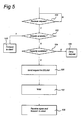
- the processor 11 may be arranged to provide the bundling unit BU with the functionality according to a method as described below with reference to Fig. 5 .
- the bundling unit BU waits to receive a request from one of the clients CL1, CL2, CL3, CL4 via the respective client connector 31, 32, 33, 34.
- the request may be a request to receive a certain television signal (a particular channel).
- the bundling unit BU remains waiting according to action 100. Once a request is received from for instance the first client CL1 via the first client connector 31, the bundling unit BU checks in action 102 if the requested television signal is already available on one of the lines L1, L2, L3, L4 at the bundling unit BU.
- the bundling unit BU proceeds to action 103, in which the already available television signal is forwarded to the first client CL1 via first client connector 31. This way, no additional bandwidth is required on lines L1, L2, L3, L4.
- the bundling unit BU proceeds to action 104, in which the bundling unit BU verifies if enough bandwidth or capacity is available on the lines L1, L2, L3, L4 connecting the bundling unit BU to the DSLAM 10. This action may be performed by evaluating for each line how much of the total bandwidth is already in use and compare the remaining bandwidth of each line with the bandwidth that is required for fulfilling the request.
- action 104 may further comprise redistributing signals already received via the first set of lines L1, L2, L3, L4 over the first set of lines L1, L2, L3, L4 to create bandwidth on one line for the requested signal, if possible.
- the bundling unit BU may re-distribute the signals already received via the first set of lines L1, L2, L3, L4 over the first set of lines L1, L2, L3, L4 to create bandwidth to meet the request. For instance, the bundling unit BU may decide to move the signal received via the first line L1 to the second line L2.
- the first line L1 is now able to meet the request and can be used for the transmission of for instance the HDTV signal. This embodiment enables a more efficient use of the first set of lines L1,L2,L3, L4.
- Moving a signal from one line to another line may be done by sending appropriate (IGMP) messages to the DSLAM 10, such as for instance sending a leave message via the first line and a join message via the other line.
- IGMP appropriate
- action 104 may comprise verifying if enough bandwidth or capacity is available and possibly creating available bandwidth or capacity by redistributing signals.
- the request is denied, and a deny message is transmitted to the first client CL1 via first client connector 31 in action 105.
- the bundling unit BU sends a request to the DSLAM 10 to request for the requested television signal via one of the available DSLAM connectors 41, 42, 43, 44. It is noted that the bundling unit BU does not necessary use the first line L1 to process a request from the first client CL1. According to the embodiments, the lines L1, L2, L3, L4 are no associated with one particular client CL1, CL2, CL3, CL4.
- the bundling unit BU waits to receive the requested television signal, and, in action 108, the bundling unit BU receives and forwards the requested television signal to the first client CL1 via one of the DSLAM 10 connectors and the client connector 31 respectively.
- a further action 101 may be provided in between actions 100 and 102.
- the bundling unit BU may verify if the client CL1 the request was received from is allowed to receive the requested television channel.
- the bundling unit BU may comprise or have access to client subscription information, in which for each client subscription information is stored. This client subscription information can be used to verify which television signals the client is allowed to receive. If the client is not allowed to receive the requested television signal, the bundl ing unit BU may continue with action 105 in which the request is denied. If the client is allowed to receive the requested television signal, the bundling unit BU continues with action 102.
- the client subscription information may comprise a fixed bandwidth assigned to each client in order to guarantee a minimum service for that client. Based on the assigned bandwidth, a request may be refused, if meeting the request would result in exceeding the assigned bandwidth.
- the clients subscription information may be stored in memory 12, 13, 14, 15 comprised by the bundling unit BU, but may also be stored at a remote memory, for instance at the DSLAM 10, that is accessible by the bundling unit BU.
- the number of clients CL1, CL2, CL3, CL4 is four. However, it will be understood that this is just an example and that in fact the bundling unit BU may be used to serve any number of clients equal or exceeding two.
- the number of lines L1, L2, L3, L4 connecting the bundling unit BU to the DSLAM 10 equal the number of clients CL1, CL2, CL3, CL4. However, this is not necessarily the case.
- the number of clients CL1, CL2, CL3, CL4 may be higher than the number of lines L1, L2, L3, L4 connecting the bundling unit BU to the DSLAM 10, anticipating that not all clients will require bandwidth at the same time.
- the number of lines connecting the bundling unit BU to the DSLAM 10 may be higher than the number of clients CL1, CL2, CL3, CL4, for instance in the case that not all clients CL1, CL2, CL3, CL4 are subscribed to the television service.
- the number of available television signals is limited, for instance 32, no more than 32 lines connecting the bundling unit BU to the DSLAM 10 are necessary for television signals, while the number of clients may exceed 32.
- the bundling unit BU is further arranged to:
- the bundling unit BU has knowledge about which clients CL1, CL2, CL3, CL4 receive which television signals.
- the bundling unit BU may be arranged to send an information message to a client CL1 to be displayed on the television set TV of that client CL1 informing the client CL1 of the television signals that arc being transmitted by the bundling unit BU to the clients CL1, CL2, CL3, CL4.
- the information message may comprise a list of television signals that are being transmitted by the bundling unit BU to the other clients CL2, CL3, CL4 (i.e. not comprising the recipient of the information message) or all clients CL1, CL2, CL3, CL4.
- the list may only comprise television signals that arc transmitted to at least a predetermined threshold number of clients. In the example according to the figures the predetermined threshold number may be two.
- the list may also only comprise the television signals that are transmitted most, such as a list of the three or five most watched television signals.
- the information message may only be sent to clients that do not already watch the television signals comprised in the list of television signals in the information message.
- the information message may inform a client CL1 of television programs that are being watched by the other clients CL2, CL3, CL4, so the client CL1 is informed of other popular programs.
- the effect of this may be that the informed client may change to one of the television signal comprised in the information message, thereby creating more available bandwidth on the lines L1, L2, L3, L4 between the bundling unit BU and the DSLAM 10.
- the information message may be sent as part of action 104 if not enough bandwidth is available.
- the bundling unit BU may further be arranged to facilitate exchange of program files between clients CL1, CL2, CL3, CL4 connected to the same bundling unit BU.
- Each client CL1, CL2, CL3, CL4 may be arranged to record television signals and store them as program files on memory ME, such as memory associated with the television set TV, external memory, or memory associated with a set-top box.
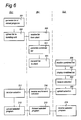
- FIG. 6 showing an exemplary flow diagram with actions as performed by a providing client CL1, a bundling unit BU and a requesting client CL2.
- the providing client CL1 i.e. memory ME and/or the television set TV associated with the providing client CL1, may be arranged to generate a list of stored program files in action 201.
- the providing client CL1 uploads this list to the bundling unit BU via line L1'.
- the bundling unit BU is arranged to receive this list in action 203.
- the bundling unit BU may be arranged to receive similar lists from different providing clients CL2, CL3, CL4, although this is not shown in Fig. 6 .
- the bundling unit BU In action 204, the bundling unit BU generates a combined list of stored program files, being a combination of all lists received from the different providing clients in action 203. In action 205, this combined list is transmitted to at least one client, in this example client CL2, via line L2'. Of course, the bundling unit BU may also transmit the combined list to other clients.
- actions 204 and 205 may be repeated every time a new list is received from one of the providing clients.
- the combined list is received by requesting client CL2 in action 206 and subsequently displayed by the requesting client C2 in action 207.
- Action 207 may for instance be performed upon request of a user associated with the requesting client CL2.
- the requesting client CL2 may be arranged to receive a selection made by the user from the combined list displayed in action 207. The selection may for instance be received via a remote control, controlling the television set TV.
- the selection is then uploaded to the bundling unit BU in action 209 via line L2'.
- the bundling unit BU receives the selection and forwards the selection to the providing client, in this case providing client CL1.
- the appropriate providing client may be determined by the bundling unit BU by consulting stored copies of the lists received from the different providing clients in action 203.
- the providing client CL1 receives the selection and in response, uploads the selected program file to the bundling unit BU in action 212, the bundling unit BU in turn forwarding the program file to the requesting client CL2 in action 213.
- the program file is received by the requesting client CL2 in action 214.
- Action 214 may further comprise displaying the received program file and/or storing the received program file on memory associated with the requesting client C L2.
- the transfer of the program file may be a streaming feed allowing immediate displaying on the receiving side (possibly using buffering techniques). In case no immediate real-time displaying is required, the transfer may use other transfer techniques and protocols.
- a client may be both a providing client as a requesting client, i.e. a client may share certain programs with the other clients and at the same time request other programs from the other clients.
- exchanging program files may be provided with security measures as passwords and the like to make sure that users can decide which program files may be shared by other clients (by assigning a password known to (some) other clients or not assigning a password at all) and which program files may not be shared (by assigning a secret password).
- security measures as passwords and the like to make sure that users can decide which program files may be shared by other clients (by assigning a password known to (some) other clients or not assigning a password at all) and which program files may not be shared (by assigning a secret password).
- a bundling unit BU for facilitating communication between a plurality of clients CL1, CL2, CL3, CL4, wherein the bundling unit BU is arranged to communicate with the clients CL1, CL2, CL3, CL4 via a set of lines L1', L2', L3', L4', and the bundling unit (BU) is arranged to
- the bundling unit BU may be arranged for facilitating communication between a plurality of clients CL1, CL2, CL3, CL4 and a DSLAM 10 in a DSL network to transmit at least one signal from the DSLAM 10 to at least one client CL1, CL2, CL3, CL4 upon request, wherein the bundling unit BU is arranged to communicate with the DSLAM 10 via a first set of lines L1, L2, L3, L4 and with the clients CL1, CL2, CL3, CL4 via a second set of lines L1', L2', L3', L4', and the bundling unit BU is arranged to a) receive a request for a signal from a client (100);
- the associated television signal only needs to be transmitted once by the DSLAM 10 to the bundling unit BU. This reduces the amount of bandwidth used on lines L1, L2, L3, L4. So, the bundling unit BU is used to bundle different channels to avoid unnecessary multicast messages being transmitted by the DSLAM 10.
- the two television signals are not necessarily transmitted via a single line, i.e. the line associated with the client.
- the bundling unit BU is now capable of using two lines for handling the request for two television signals, if a second line is available.
- the embodiments at least partially compensate the disadvantage of reduced bandwidth experienced by a client being relatively far away from the DSLAM 10.
- the relevant distance is the distance between the bundling unit BU and the DSLAM 1, as this is usually the longest, though this will be still be shorter than distance A or B. So, a higher throughput can be achieved over a line L1, L2 L3, L4, such as a twisted pair cable.
- the embodiments can be integrated in existing infrastructure, such as existing ADSL2+ infrastructure, without requiring serious modifications in the architecture. Migration to newer technologies can be postponed due to the provided higher (experienced) bandwidth.
Landscapes
- Engineering & Computer Science (AREA)
- Computer Networks & Wireless Communication (AREA)
- Signal Processing (AREA)
- Two-Way Televisions, Distribution Of Moving Picture Or The Like (AREA)
Priority Applications (1)
| Application Number | Priority Date | Filing Date | Title |
|---|---|---|---|
| EP08007883A EP2112781A1 (de) | 2008-04-24 | 2008-04-24 | Bündeleinheit in einem DSL-Netzwerk |
Applications Claiming Priority (1)
| Application Number | Priority Date | Filing Date | Title |
|---|---|---|---|
| EP08007883A EP2112781A1 (de) | 2008-04-24 | 2008-04-24 | Bündeleinheit in einem DSL-Netzwerk |
Publications (1)
| Publication Number | Publication Date |
|---|---|
| EP2112781A1 true EP2112781A1 (de) | 2009-10-28 |
Family
ID=39717783
Family Applications (1)
| Application Number | Title | Priority Date | Filing Date |
|---|---|---|---|
| EP08007883A Withdrawn EP2112781A1 (de) | 2008-04-24 | 2008-04-24 | Bündeleinheit in einem DSL-Netzwerk |
Country Status (1)
| Country | Link |
|---|---|
| EP (1) | EP2112781A1 (de) |
Cited By (3)
| Publication number | Priority date | Publication date | Assignee | Title |
|---|---|---|---|---|
| WO2013085485A1 (en) * | 2011-12-05 | 2013-06-13 | Adaptive Spectrum And Signal Alignment, Inc. | Systems and methods for traffic aggregation on multiple wan backhauls and multiple distinct lan networks |
| US10848398B2 (en) | 2011-11-10 | 2020-11-24 | Assia Spe, Llc | Method, apparatus, and system for optimizing performance of a communication unit by a remote server |
| US11197196B2 (en) | 2014-12-04 | 2021-12-07 | Assia Spe, Llc | Optimized control system for aggregation of multiple broadband connections over radio interfaces |
Citations (4)
| Publication number | Priority date | Publication date | Assignee | Title |
|---|---|---|---|---|
| EP1134932A1 (de) * | 2000-03-17 | 2001-09-19 | Alcatel | System zum Empfang von Mehrfachdaten |
| WO2004075480A1 (en) * | 2003-02-19 | 2004-09-02 | Wireless Lan Systems Oy | A remote digital subscriber line access multiplexer |
| EP1819093A1 (de) * | 2004-12-30 | 2007-08-15 | Huawei Technologies Co., Ltd. | Verfahren und system zur multicast-implementierung unter verwendung eines slave-zugriffsmodus während des zugriffs auf die digitale teilnehmeranschlussleitung |
| WO2007116411A1 (en) * | 2006-04-11 | 2007-10-18 | Link Fusion Ltd. | METHOD AND APPARATUS FOR PROVISIONING ENSURED QoS TRIPLE PLAY SERVICES OVER EXISTING COPPER INFRASTRUCTURE |
-
2008
- 2008-04-24 EP EP08007883A patent/EP2112781A1/de not_active Withdrawn
Patent Citations (4)
| Publication number | Priority date | Publication date | Assignee | Title |
|---|---|---|---|---|
| EP1134932A1 (de) * | 2000-03-17 | 2001-09-19 | Alcatel | System zum Empfang von Mehrfachdaten |
| WO2004075480A1 (en) * | 2003-02-19 | 2004-09-02 | Wireless Lan Systems Oy | A remote digital subscriber line access multiplexer |
| EP1819093A1 (de) * | 2004-12-30 | 2007-08-15 | Huawei Technologies Co., Ltd. | Verfahren und system zur multicast-implementierung unter verwendung eines slave-zugriffsmodus während des zugriffs auf die digitale teilnehmeranschlussleitung |
| WO2007116411A1 (en) * | 2006-04-11 | 2007-10-18 | Link Fusion Ltd. | METHOD AND APPARATUS FOR PROVISIONING ENSURED QoS TRIPLE PLAY SERVICES OVER EXISTING COPPER INFRASTRUCTURE |
Non-Patent Citations (2)
| Title |
|---|
| BEES, DUNCAN: "Flexible Bandwidth Services with DSL Bonding", TECHNOLOGY WHITE PAPER, August 2002 (2002-08-01), pages 1 - 23, XP002495657, Retrieved from the Internet <URL:http://www.pmc-sierra.com/cgi-bin/document.pl?docnum=2021395> [retrieved on 20080912] * |
| SCOTT SHOAF ET AL: "IGMP Capabilities in Broadband Network Architectures", INTERNET CITATION, XP002459905, Retrieved from the Internet <URL:http://www.juniper.net/solutions/literature/app_note/350060.pdf> [retrieved on 20071126] * |
Cited By (5)
| Publication number | Priority date | Publication date | Assignee | Title |
|---|---|---|---|---|
| US10848398B2 (en) | 2011-11-10 | 2020-11-24 | Assia Spe, Llc | Method, apparatus, and system for optimizing performance of a communication unit by a remote server |
| WO2013085485A1 (en) * | 2011-12-05 | 2013-06-13 | Adaptive Spectrum And Signal Alignment, Inc. | Systems and methods for traffic aggregation on multiple wan backhauls and multiple distinct lan networks |
| US9819595B2 (en) | 2011-12-05 | 2017-11-14 | John Cioffi | Systems and methods for traffic aggregation on multiple WAN backhauls and multiple distinct LAN networks |
| US10530695B2 (en) | 2011-12-05 | 2020-01-07 | Assia Spe, Llc | Systems and methods for traffic aggregation on multiple WAN backhauls and multiple distinct LAN networks |
| US11197196B2 (en) | 2014-12-04 | 2021-12-07 | Assia Spe, Llc | Optimized control system for aggregation of multiple broadband connections over radio interfaces |
Similar Documents
| Publication | Publication Date | Title |
|---|---|---|
| US10334319B2 (en) | System and method of cloud-based manifest processing | |
| US8316405B2 (en) | Presence information sharing apparatus, presence information sharing method, presence information sharing program and presence information sharing system | |
| US12088960B2 (en) | Enabling sub-meetings in encrypted video conferences | |
| US7920580B2 (en) | Coordinated multi-network data services | |
| US9317712B2 (en) | Providing secure communication and/or sharing of personal data via a broadband gateway | |
| US10171534B2 (en) | Placeshifting of adaptive media streams | |
| US11800058B2 (en) | Generating composite presentation content in video conferences | |
| JP2018518092A (ja) | データ送信方法及びシステム並びに関連装置 | |
| US9001700B2 (en) | Scheduling and resourcing allocation across multiple domains | |
| JP3940135B2 (ja) | リソース管理システム及び方法並びにプログラム及びプログラムを記録した記録媒体 | |
| EP2112781A1 (de) | Bündeleinheit in einem DSL-Netzwerk | |
| Fischer et al. | Cooperative QoS management for multimedia applications | |
| JP2010154086A (ja) | 通信制御装置、通信制御装置の通信制御方法、制御プログラム、および、記録媒体 | |
| US8239909B2 (en) | Method of securing resources in a video and audio streaming delivery system | |
| JP3652670B2 (ja) | マルチキャスト映像配信システム及び同システムにおけるリクエスト受付処理プログラム | |
| US9071569B1 (en) | System, method, and computer program for content metadata and authorization exchange between content providers and service providers | |
| US20210120051A1 (en) | Method for conducting an audio and/or video conference | |
| US11349891B1 (en) | Hybrid static and dynamic multicast configuration for media serving environment | |
| US8880737B1 (en) | Smart immediate leave for internet group management protocol (IGMP) system | |
| KR20080001073A (ko) | 다자간 미디어 공유 시스템, 그 공유방법 및 그 제어공유방법 | |
| US20240205177A1 (en) | Notetaking and highlighting messages within chat channels | |
| US20240205179A1 (en) | Notetaking and highlighting messages within chat channels | |
| US12537706B2 (en) | Chat channel highlights | |
| US12301640B2 (en) | Sharing virtual whiteboard content | |
| US20250088607A1 (en) | Content stream distribution for videoconferencing via dynamic mesh technology |
Legal Events
| Date | Code | Title | Description |
|---|---|---|---|
| PUAI | Public reference made under article 153(3) epc to a published international application that has entered the european phase |
Free format text: ORIGINAL CODE: 0009012 |
|
| AK | Designated contracting states |
Kind code of ref document: A1 Designated state(s): AT BE BG CH CY CZ DE DK EE ES FI FR GB GR HR HU IE IS IT LI LT LU LV MC MT NL NO PL PT RO SE SI SK TR |
|
| AX | Request for extension of the european patent |
Extension state: AL BA MK RS |
|
| 17P | Request for examination filed |
Effective date: 20100428 |
|
| 17Q | First examination report despatched |
Effective date: 20100525 |
|
| AKX | Designation fees paid |
Designated state(s): AT BE BG CH CY CZ DE DK EE ES FI FR GB GR HR HU IE IS IT LI LT LU LV MC MT NL NO PL PT RO SE SI SK TR |
|
| STAA | Information on the status of an ep patent application or granted ep patent |
Free format text: STATUS: THE APPLICATION IS DEEMED TO BE WITHDRAWN |
|
| 18D | Application deemed to be withdrawn |
Effective date: 20111228 |