EP2114896B1 - Gegen strahlen schützende verbindungen und damit im zusammenhang stehende verfahren - Google Patents
Gegen strahlen schützende verbindungen und damit im zusammenhang stehende verfahren Download PDFInfo
- Publication number
- EP2114896B1 EP2114896B1 EP07845428.7A EP07845428A EP2114896B1 EP 2114896 B1 EP2114896 B1 EP 2114896B1 EP 07845428 A EP07845428 A EP 07845428A EP 2114896 B1 EP2114896 B1 EP 2114896B1
- Authority
- EP
- European Patent Office
- Prior art keywords
- optionally substituted
- radioprotector
- radiation
- compound
- cells
- Prior art date
- Legal status (The legal status is an assumption and is not a legal conclusion. Google has not performed a legal analysis and makes no representation as to the accuracy of the status listed.)
- Not-in-force
Links
- 0 CN1CC*CC1 Chemical compound CN1CC*CC1 0.000 description 13
Images


Classifications
-
- C—CHEMISTRY; METALLURGY
- C07—ORGANIC CHEMISTRY
- C07D—HETEROCYCLIC COMPOUNDS
- C07D235/00—Heterocyclic compounds containing 1,3-diazole or hydrogenated 1,3-diazole rings, condensed with other rings
- C07D235/02—Heterocyclic compounds containing 1,3-diazole or hydrogenated 1,3-diazole rings, condensed with other rings condensed with carbocyclic rings or ring systems
- C07D235/04—Benzimidazoles; Hydrogenated benzimidazoles
-
- C—CHEMISTRY; METALLURGY
- C07—ORGANIC CHEMISTRY
- C07D—HETEROCYCLIC COMPOUNDS
- C07D235/00—Heterocyclic compounds containing 1,3-diazole or hydrogenated 1,3-diazole rings, condensed with other rings
- C07D235/02—Heterocyclic compounds containing 1,3-diazole or hydrogenated 1,3-diazole rings, condensed with other rings condensed with carbocyclic rings or ring systems
- C07D235/04—Benzimidazoles; Hydrogenated benzimidazoles
- C07D235/06—Benzimidazoles; Hydrogenated benzimidazoles with only hydrogen atoms, hydrocarbon or substituted hydrocarbon radicals, directly attached in position 2
- C07D235/10—Radicals substituted by halogen atoms or nitro radicals
-
- A—HUMAN NECESSITIES
- A61—MEDICAL OR VETERINARY SCIENCE; HYGIENE
- A61P—SPECIFIC THERAPEUTIC ACTIVITY OF CHEMICAL COMPOUNDS OR MEDICINAL PREPARATIONS
- A61P35/00—Antineoplastic agents
-
- A—HUMAN NECESSITIES
- A61—MEDICAL OR VETERINARY SCIENCE; HYGIENE
- A61P—SPECIFIC THERAPEUTIC ACTIVITY OF CHEMICAL COMPOUNDS OR MEDICINAL PREPARATIONS
- A61P39/00—General protective or antinoxious agents
-
- A—HUMAN NECESSITIES
- A61—MEDICAL OR VETERINARY SCIENCE; HYGIENE
- A61P—SPECIFIC THERAPEUTIC ACTIVITY OF CHEMICAL COMPOUNDS OR MEDICINAL PREPARATIONS
- A61P39/00—General protective or antinoxious agents
- A61P39/06—Free radical scavengers or antioxidants
-
- A—HUMAN NECESSITIES
- A61—MEDICAL OR VETERINARY SCIENCE; HYGIENE
- A61P—SPECIFIC THERAPEUTIC ACTIVITY OF CHEMICAL COMPOUNDS OR MEDICINAL PREPARATIONS
- A61P43/00—Drugs for specific purposes, not provided for in groups A61P1/00-A61P41/00
-
- C—CHEMISTRY; METALLURGY
- C07—ORGANIC CHEMISTRY
- C07D—HETEROCYCLIC COMPOUNDS
- C07D235/00—Heterocyclic compounds containing 1,3-diazole or hydrogenated 1,3-diazole rings, condensed with other rings
- C07D235/02—Heterocyclic compounds containing 1,3-diazole or hydrogenated 1,3-diazole rings, condensed with other rings condensed with carbocyclic rings or ring systems
- C07D235/04—Benzimidazoles; Hydrogenated benzimidazoles
- C07D235/20—Two benzimidazolyl-2 radicals linked together directly or via a hydrocarbon or substituted hydrocarbon radical
-
- C—CHEMISTRY; METALLURGY
- C07—ORGANIC CHEMISTRY
- C07D—HETEROCYCLIC COMPOUNDS
- C07D403/00—Heterocyclic compounds containing two or more hetero rings, having nitrogen atoms as the only ring hetero atoms, not provided for by group C07D401/00
- C07D403/14—Heterocyclic compounds containing two or more hetero rings, having nitrogen atoms as the only ring hetero atoms, not provided for by group C07D401/00 containing three or more hetero rings
Definitions
- the invention relates to radioprotectors, processes for their preparation and their use in protecting biological materials from radiation damage.
- radioprotectors may be used to protect certain normal tissues or structures from radiation damage. Radioprotectors also have uses in decreasing the effects of irradiation in non-medical scenarios, both civil and military.
- the invention relates in particular to radioprotector compounds substituted with fluorine and/or chlorine and, relative to known radioprotector compounds, that exhibit reduced cytotoxicity activity.
- DNA is the crucial target in the cytotoxic effects of ionising radiation.
- ds DNA double-stranded breaks are particularly important.
- the DNA damage results from both direct ionisation in the DNA molecule (direct effect) and by indirect effects mediated by the radiolysis products of water. Carbon-centred radicals on the deoxyribose moiety of DNA are thought to be important precursors of strand breaks.
- Ionising radiation also induces damage in DNA bases. If the level of cellular DNA damage is sufficient, the consequence of irradiation is cell kill, and thus ionising radiation is used as a mode of cancer therapy. For irradiated normal tissues, the cell killing can result in temporary or permanent impairment of tissue and organ function.
- radioprotectors which to be effective, generally need to be administered prior to radiation exposure
- mitigants/mitigators which can be effective if administered after irradiation, but before the appearance of symptoms
- treatments which are generally administered after the appearance of symptoms.
- a sub-class of the prophylactic radioprotectors are drugs that reduce the extent of the initial radiation-induced DNA damage, and it is this sub-class that is the major focus of the present invention.
- radioprotectors resides primarily in two distinct arenas. One of these relates to the need to protect normal tissues in cancer radiotherapy patients, and the other concerns the need to assuage the consequences of unplanned irradiation associated with civil scenarios, such as radiation accidents and radiation terrorism, as well as irradiation in military contexts.
- tumour radiotherapy The treatment of tumours with ionising radiation (hereinafter referred to as "cancer radiotherapy") is used extensively in cancer therapy.
- the goal of such treatment is the destruction of tumour cells and inhibition of tumour cell growth presumably through DNA damage, while minimising damage to non-tumour cells and tissues.
- the potential for damage to non-tumour cells in the vicinity of the tumour limits the radiation dose that can be administered, which in turn often limits the effectiveness of radiotherapy against certain tumours. This is especially the case in relation to brain tumours and tumours in the abdominal cavity.
- Cancer radiotherapy is a very significant public health activity. Given the incidence of cancer in the population and the international assessment that more than 50% of cancer patients benefit from inclusion of radiotherapy in their treatment, more than 10% of the population are likely to experience cancer radiotherapy in their lifetime.
- curative external beam radiotherapy involves fractionation of the radiation dose.
- An example of a conventional schedule would be a total of 60 Grays given in thirty 2 Gray fractions. Since cells have the capacity to repair radiation damage between fractions, the fractionated treatment results in much less cell-kill than a single dose of 60 Gray. However, normal cells generally have a greater repair capacity than do tumour cells, so the "sparing" effect of fractionation is more marked for normal tissues. In short, fractionation improves the therapeutic ratio.
- Radioprotectors have received much less attention than radiosensitisers at the clinical level.
- the nuclear era spawned considerable effort in the development of radioprotectors with more than 4000 compounds being synthesised and tested at the Walter Reed Army Institute of Research in the United States of America in the 1960's.
- the mean lethal dose of radiation required to kill 50% of humans 60 days after whole-body irradiation is between 3.25 and 4Gy without supportive care, and 6-7Gy when antibiotics and transfusion support are provided (1).
- the mortality is largely attributed to the haematopoietic syndrome, a consequence of hypoplasia or aplasia of the bone marrow. Cytopenias develop as a result of radiation-induced and normal attrition of mature functional cells, combined with the failure of replacement because of radiation-induced depletion of haematopoietic stem cells and progenitors.
- cytopenia generally correlate with radiation dose and prognosis, but the kinetics of depletion and recovery of blood cells also varies between the erythropoiesis, myelopoiesis and thrombopoiesis lineages, thrombopoiesis being the slowest.
- the gastrointestinal syndrome results from ablation of stem cells in intestinal crypts, which in turn leads to denudation of the intestinal mucosa.
- This injury occurs after whole-body doses in the range of 3-15Gy and in rodents doses at the upper end of this range usually result in death within about 1 week after irradiation.
- Countermeasures against unplanned irradiation include a wide range of potential molecular and cellular interventions.
- the mechanistic simplicity of chemical radioprotection- that is, reduction of radiation-induced DNA damage - is attractive because of its widespread potential.
- the possible need for protection of individuals at risk of exposure to low radiation doses, to thereby minimise long-term radiation effects such as mutagenesis and carcinogenesis is particularly important.
- Such individuals would include emergency personnel involved in response to unplanned exposures, as well as those subject to occupational exposure to ionising radiation.
- a further group would be patients exposed to ionizing radiation during diagnostic medical procedures conducted in diagnostic radiology and nuclear medicine departments of hospitals and outpatient facilities.
- the concentration required for radioprotection must be non-toxic regardless of the potency of the radioprotector. If the radioprotector is delivered systemically, then this lack of toxicity requirement includes not just the cells and tissues to be protected from the radiation, but extends to the toxicity to the subject as a whole. In the case of Hoechst 33342 toxicity limits the extent to which it is useful as a radioprotector.
- radioprotectors in cancer radiotherapy.
- WR2727 are relatively small, diffusible molecules which do not avidly bind to tissue components and can therefore penetrate effectively through cell layers, so that they can reach the tumour via the circulation.
- radioprotectors that have limited penetration through cell layers. Such a property enables radioprotectors to be applied locally or topically to critical radiosensitive normal tissues in the vicinity of the tumour. Limited penetration restricts the extent to which the radioprotector reaches the capillary bed and is taken up into the circulation thereby reaching the tumour by systemic delivery in sufficient concentrations to confer significant radioprotection to the tumour.
- DNA-binding ligands such as Hoechst 33342
- perfusion of Hoechst 33342 is considered a surrogate marker for perfusion of oxygen.
- vasculature in particular the endothelial cells
- most radioresistant cells in the tumour are those viable cells that are most distant from the capillaries. The radioresistance of these cells is due to their hypoxic state, which in turn reflects their remoteness from the capillaries.
- radioprotectors having limited diffusion when administered intravenously, will be delivered more efficiently to critical radiosensitive cells in animal tissues, than to the subpopulation of cells in tumours (ie. hypoxic cells) which limit the effectiveness of radiotherapy generally.
- tumours ie. hypoxic cells
- the use of such radioprotectors would be expected to enable higher radiation doses to be used, with increased probability of killing the hypoxic cells in the tumour.
- the potential of the combination of these radiobiological features and the characteristics of DNA-binding radioprotectors can only be useful in cancer radiotherapy provided that an over-riding and necessary requirement of the radioprotectors exists, namely that the radioprotectors are sufficiently potent as to confer demonstrable radioprotection at non-toxic concentrations, when applied topically or systemically.
- a further practical requirement is that the extent of the limited penetration is sufficient to prevent significant systemic uptake following topical application, but not so pronounced so as to prevent sufficient concentrations from reaching the cells that determine the radiosensitivity of the tissue to be protected from the effects of ionising radiation, by topical or local application.
- DMF dose modification factor
- Tawar et al J. Med. Chem. 2003 46(18):3785-3792 discusses the influence of phenyl ring disubstitution on bisbenzimidazole and terbenzimidazole radioprotector cytotoxicity.
- radioprotectors that can be used in cancer radiotherapy, in protection of biological material from effects of radiation exposure and/or in protection of humans or animals from the effects of unplanned irradiation, which demonstrate reduced cytotoxicity but that retain radioprotective potency, and preferably that penetrate through cell layers to a limited extent.
- such compounds may be administered topically to protect tissues such as the skin, oral mucosa, oesophageal mucosa, rectal mucosa, vaginal mucosa and bladder epithelium, as well as parenterally to protect organs such as the lung and brain.
- a pharmaceutical composition comprising a radioprotector compound as mentioned above and one or more pharmaceutically acceptable carriers and/or diluents.
- the term "electron donating group” is used herein in its broadest sense and generally encompasses those substituents having a negative Hammett substituent constant ⁇ , as defined by the Hammett equation.
- Most usually Hammett substituent constants are derived from ionisation constants of substituted benzoic acids relative to that of unsubstituted benzoic acid, and extensive compilations have been reported (see for example C. Hansch, A. Ieo and R.W. Taft, Chemical Reviews 91, 165-195, 1991 , the disclosure ofwhich is included herein in its entirety by way of reference).
- Electron donating groups include, but are not limited to, optionally substituted alkyl, optionally substituted alkenyl, NHR', NR' 2 , OR' and SR', wherein R' is hydrogen, optionally substituted alkyl or optionally substituted alkenyl.
- R' is hydrogen, optionally substituted alkyl or optionally substituted alkenyl.
- the electron donating group is NHR' or NR' 2 . It is postulated that the presence of at least one electron donating group increases radioprotective activity of the compound in question.
- the protection conferred by the compounds according to the invention is achieved by electron donation (reduction) by the radioprotector of transient radiation induced oxidizing species on the DNA. Since the radioprotectors may contain basic groups, protonation of these groups at physiological pH would be expected to substantially diminish this electron donating ability. The inventors have further speculated that inclusion of electron withdrawing groups such as fluorine and chlorine may reduce the basicity of the benzimidazole moiety, to thereby reduce cytotoxicity, but without significant loss of radioprotective activity.
- electron withdrawing groups such as fluorine and chlorine may reduce the basicity of the benzimidazole moiety, to thereby reduce cytotoxicity, but without significant loss of radioprotective activity.
- alkyl used either alone or in phrases such as "optionally substituted alkyl", “optionally substituted alkylamino” or “optionally substituted alkylene” is intended to encompass straight chain, branched or mono- or poly- cyclic alkyl, which is preferably C 1 to C 30 alkyl or cycloalkyl.
- straight chain and branched alkyl examples include methyl, ethyl, propyl, isopropyl, butyl, isobutyl, sec-butyl, tert-butyl, amyl, isoamyl, sec-amyl, 1,2-dimethylpropyl, 1,1-dimethylpropyl, hexyl, 4-methylpentyl, 1-methylpentyl, 2-methylpentyl, 3-methylpentyl, 1,1-dimethylbutyl, 2,2-dimethylbutyl, 3,3-dimethylbutyl, 1,2-dimethylbutyl, 1,3-dimethylbutyl, 1,2,2,-trimethylpropyl, 1,1,2-trimethylpropyl, heptyl, 5-methylhexyl, 1-methylhexyl, 2,2-dimethylpentyl, 3,3-dimethylpentyl, 4,4-dimethylpentyl, 1,2-dimethylpentyl, 1,3
- cyclic alkyl examples include cyclopropyl, cyclobutyl, cyclopentyl, cyclohexyl, cycloheptyl, cyclooctyl, cyclononyl and cyclodecyl and the like.
- alkenyl used either alone or in compound words such as “optionally substituted alkenyl” denotes groups formed from straight chain, branched or mono- or poly-cyclic alkenes including ethylenically mono- or poly- unsaturated alkyl or cycloalkyl groups as defined above, preferably C 2-30 alkenyl.
- alkenyl examples include vinyl, allyl, 1-methylvinyl, butenyl, isobutenyl, 3-methyl-2-butenyl, 1-pentenyl, cyclopentenyl, 1-methyl-cyclopentenyl, 1-hexenyl, 3-hexenyl, cyclohexenyl, 1-heptenyl, 3-heptenyl, 1-octenyl, cyclooctenyl, 1-nonenyl, 2-nonenyl, 3-nonenyl, 1-decenyl, 3-decenyl, 1,3-butadienyl, 1-4,pentadienyl, 1,3-cyclopentadienyl, 1,3-hexadienyl, 1,4-hexadienyl, 1,3-cyclohexadienyl, 1,4-cyclohexaidenyl, 1,3-cycloheptadienyl, 1,3,5-cycloheptatrienyl
- optionally substituted ring which may contain heteroatoms is used herein in its broadest sense to refer to a saturated or unsaturated, homogenous or heterogeneous cyclic groups, such as, cycloalkyl, cycloalkenyl, cycloalkynyl, aryl or heterocyclyl which may contain heteroatoms selected from oxygen, nitrogen and sulphur. Examples of cycloalkyl and cycloalkenyl are described above.
- Suitable aryl includes single, polynuclear, conjugated and fused residues of aromatic hydrocarbons, such as, phenyl, biphenyl, terphenyl, quaterphenyl, phenoxyphenyl, naphthyl, tetrahydronaphthyl, anthracenyl, dihydroanthracenyl, benzanthracenyl, dibenzanthracenyl, phenanthrenyl and the like.
- aromatic hydrocarbons such as, phenyl, biphenyl, terphenyl, quaterphenyl, phenoxyphenyl, naphthyl, tetrahydronaphthyl, anthracenyl, dihydroanthracenyl, benzanthracenyl, dibenzanthracenyl, phenanthrenyl and the like.
- heterocyclyl examples include N-containing heterocyclic groups, such as, unsaturated 3 to 6 membered heteromonocyclic groups containing 1 to 4 nitrogen atoms, for example, pyrrolyl, pyrrolinyl, imidazolyl, pyrazolyl, pyridyl, pyrimidinyl, pyrazinyl, pyridazinyl, triazolyl or tetrazolyl; saturated 3 to 6-membered heteromonocyclic groups containing 1 to 4 nitrogen atoms, such as, pyrrolidinyl, imidazolidinyl, piperidino or piperazinyl; unsaturated condensed heterocyclic groups containing 1 to 5 nitrogen atoms, such as, indolyl, isoindolyl, indolizinyl, benzimidazolyl, quinolyl, isoquinolyl, indazolyl, benzotriazolyl or tetrazolopyridaziny
- optionally substituted means that a group may or may not be further substituted with one or more groups selected from alkyl, alkenyl, alkynyl, aryl, halo, haloalkyl, haloalkenyl, haloalkynyl, haloaryl, hydroxy, alkoxy, alkenyloxy, alkynyloxy, aryloxy, carboxy, benzyloxy haloalkoxy, haloalkenyloxy, haloalkynyloxy, haloaryloxy, nitro, nitroalkyl, nitroalkenyl, nitroalkynyl, nitroaryl, nitroheterocyclyl, azido, amino, alkylamino, alkenylamino, alkynylamino, arylamino, benzylamino, acyl, alkenylacyl, alkynylacyl, arylacyl, acylamino, acy
- salts of the compound of formula (I) are preferably pharmaceutically acceptable, but it will be appreciated that non-pharmaceutically acceptable salts also fall within the scope of the present invention, since these are useful as intermediates in the preparation of pharmaceutically acceptable salts.
- pharmaceutically acceptable salts include salts of pharmaceutically acceptable cations such as sodium, potassium, lithium, calcium, magnesium, ammonium and alkylammonium; acid addition salts of pharmaceutically acceptable inorganic acids such as hydrochloric, orthophosphoric, sulphuric, phosphoric, nitric, carbonic, boric, sulfamic and hydrobromic acids; or salts of pharmaceutically acceptable organic acids such as acetic, propionic, butyric, tartaric, maleic, hydroxymaleic, fumaric, citric, lactic, mucic, gluconic, benzoic, succinic, oxalic, phenylacetic, methanesulphonic, trihalomethanesulphonic, toluenesulphonic,
- pharmaceutically acceptable derivative any pharmaceutically acceptable salt, hydrate, solvate or any other compound which, upon administration to the subject, is capable of providing (directly or indirectly) a compound of formula (I) or an active metabolite or residue thereof.
- pro-drug is used herein in its broadest sense to include those compounds which are converted in vivo to compounds of formula (I).
- tautomer is used herein in its broadest sense to include compounds of formula (I) which are capable of existing in a state of equilibrium between two isomeric forms. Such compounds may differ in the bond connecting two atoms or groups and the position of these atoms or groups in the compound. This term in particular encompasses keto-enol tautomers.
- the compounds of the invention may be electrically neutral or be in the form of polycations with associated anions for electrical neutrality.
- Suitable associated anions include sulphate, tartrate, citrate, chloride, nitrate, nitrite, phosphate, perchlorate, halosulfonate or trihalomethylsulfonate.
- Preferred compounds of formula (I) are those wherein X is alkylamino, Y and Z are N and wherein one or both of R 2 and R 3 are an electron donating group, with at least one of R 1 to R 5 (if not an electron donating group) being F or Cl. Most preferably at least one of R 1 to R 5 is F.
- Particularly preferred electron donating groups include -N(CH 3 ) 2 , -NH(CH 3 ), -OCH 3 and-OCH 2 CH 3 .
- R 1 and/or R 5 is F or Cl (preferably F) when R 2 or R 3 is an electron donating group.
- structures K to W Structures of some preferred compounds according to the invention are provided below as structures K to W:
- a method of protecting a subject or biological material from radiation damage, or of reducing radiation damage to a subject which comprises administering to the subject, or exposing the biological material to, an effective amount of a radioprotector compound according to the invention, such as falling with formula (I).
- DMF Dose Modification Factor
- the radiation damage may result from exposure to a radiation source, such as, ionising radiation.
- ionising radiation refers to photons having enough energy to ionise a bond, such as, ⁇ , ⁇ and ⁇ rays from radioactive nuclei and x-rays.
- biological material is used herein in its broadest sense and includes any composition of matter which comprises at least one biologically-derived or derivable component.
- Biological material contemplated by the present invention includes proteins and other proteinaceous material including extracts of or including proteins and chemically modified proteins or extracts thereof; tissue fluids, tissue extracts or organs; animal, plant or microbiological tissue, fluid or extracts including products therefrom; biologically derived non-proteinaceous material such as, but not limited to, lipids, carbohydrates, hormones and vitamins including extracts and derivatives thereof; recombinant products including genetic material such as chromosomal material, genomic DNA, cDNA, mRNA, tRNA, ribosomes and nuclear material; and whole animal, plant or microbiological cells or extracts thereof.
- the biological material of the invention can take the form of cells, tissues or organs or indeed of peptides, proteins or nucleic acids (for example) derived from a plant, animal or microorganism source, as well as those synthetically produced which mimic or are similar to naturally derived materials.
- the radioprotector compound can be used to protect from radiation damage for example in experimental systems, in whole live or dead organisms or on ex vivo cells, tissues or organs that may be returned to the original host, or transplanted into a new host, after therapy.
- the biological material can take the form of a human or animal subject such as an experimental animal (eg. mouse, rat, guinea pig, rabbit), a companion animal (eg. cat, dog), an agricultural animal (eg. horse, cattle, sheep, donkey, goat, pig), a reptile, avian or captive wild animal.
- an experimental animal eg. mouse, rat, guinea pig, rabbit
- a companion animal eg. cat, dog
- an agricultural animal eg. horse, cattle, sheep, donkey, goat, pig
- a reptile, avian or captive wild animal e.
- the subject is a mammal and most preferably the subject is a human.
- a significant application for the radioprotector compounds of the invention is for use in conjunction with radiotherapy in human subjects.
- the compounds can also be used to offer protection from exposure to, or from continuing exposure to, unplanned radiation such as in a terrorism, military or occupational context.
- the biological material (including to the human or animal subject) is exposed to the radioprotector compound for a sufficient period of time in advance of anticipated radiation exposure or continuing radiation exposure, such as between about 1 minute and about 3 days, preferably between about 10 minutes and about 6 hours, more preferably between about 20 minutes and about 4 hours and most preferably between about 30 minutes and about 2 hours.
- the time of administration of the radioprotector compound prior to radiation exposure is sufficient to allow association of the compound with DNA in the biological material.
- the radioprotector compound is administered preferentially to cells, tissues or organs likely to be exposed to radiation but that are intended to be protected from such radiation exposure.
- the compounds will preferably be administered preferentially to normal (non-tumour) tissues or cells surrounding a tumour or lesion that are likely to be exposed to radiation in the course of radiotherapy.
- Preferential administration can be achieved by way of direct application to the desired tumour or cells or, for example, by utilising a system for targeting specific cells or tissues.
- cancer radiotherapy comprises administering to a subject in need of such therapy an effective amount of a radioprotector compound of the invention and subjecting the locus of the tumour to a radiation source.
- cancer radiotherapy is used herein in its broadest sense and includes radiotherapy involving tumours or lesions, which may be either benign or malignant.
- the compounds of the invention may be used advantageously in therapy in combination with other medicaments, such as chemotherapeutic agents, for example, radiomimetic agents which are cytotoxic agents that damage DNA in such a way that the lesions produced in DNA are similar to those resulting from ionising radiation.
- chemotherapeutic agents for example, radiomimetic agents which are cytotoxic agents that damage DNA in such a way that the lesions produced in DNA are similar to those resulting from ionising radiation.
- radiomimetic agents which cause DNA strand breaks include bleomycin, doxorubicin, adriamycin, 5FU, neocarcinostatin, alkylating agents and other agents that produce DNA adducts. It is anticipated that the radioprotectors of the present invention will protect DNA from damage by some of these agents, in the same way as they protect against the effects of ionising radiation.
- the radioprotector would be administered systemically together with the chemotherapeutic agent, since this could compromise the action of this agent on the tumour.
- topical application to problem tissues could be advantageous.
- oral mucositis is a problem side-effect for cytotoxic agents, such as, doxorubicin and administration of the present radioprotector as a mouth-wash before administration of the chemotherapeutic agent could ameliorate this side-effect without compromising the action of this agent on a tumour not located in the oral cavity.
- the gastrointestinal tract could be protected by oral administration, the lungs by aerosol inhalation or the bladder by intravesical delivery, for example, via a catheter of the radioprotector.
- the compound of formula (I) is utilised in conjunction with another medicament, such as, a radiomimetic agent.
- Bone marrow transplantation generally involves obtaining and storing bone marrow samples from a subject in anticipation of a deterioration of their condition. A rather drastic form of chemotherapy (i.e. a high dose) is then administered. This chemotherapy is such that it would normally be lethal due to the destruction of normal stem cells, but the subject is rescued by the administration of their own haemopoietic stem cells. The problem with this procedure is that the initial sample of stem cells is likely to be contaminated with tumour cells and various procedures are used therefore to purge the bone marrow preparations of the tumour cells.
- Radioprotectors conjugated for example to a haemopoietic growth factor may be used in this context by being added to a suspension of bone marrow cells. The suspension may then be irradiated in the expectation that the normal bone marrow cells, but not the tumour cells, would be preferentially protected from the cell-killing effects of the radiation.
- the compounds of formula (I) may be administered for therapy by any suitable route, including oral, rectal, nasal, topical (including buccal and sublingual), vaginal, intravesical and parenteral (including subcutaneous, intramuscular, intravenous, intrasternal and intradermal).
- administration will be by the rectal, topical, vaginal or parenteral route, however it will be appreciated that the preferred route will vary with the condition and age of the subject, the tissue/tumour being treated, its location within the subject and the judgement of the physician or veterinarian.
- the compound of formula (I) may be administered directly into tissues surrounding or proximal to tumours to be irradiated.
- the present invention also discloses a radioprotective composition which comprises a compound of formula (I) as defined above in association with a pharmaceutically or veterinarily acceptable carrier.
- compositions comprise at least one compound of formula (I) together with one or more pharmaceutically acceptable carriers, diluents, adjuvants and/or excipients and optionally other medicaments.
- Each carrier, diluent, adjuvant and/or excipient must be pharmaceutically "acceptable” in the sense of being compatible with the other ingredients of the composition and not injurious to the subject.
- Compositions include those suitable for oral, rectal, nasal, topical (including buccal and sublingual), vaginal, intravesical or parenteral (including subcutaneous, intramuscular, intravenous and intradermal) administration.
- the compositions may conveniently be presented in unit dosage form and may be prepared by methods well known in the art of pharmacy.
- Such methods include the step of bringing into association the active ingredient with the carrier, which constitutes one or more accessory ingredients.
- the compositions are prepared by uniformly and intimately bringing into association the active ingredient with liquid carriers, diluents, adjuvants and/or excipients or finely divided solid carriers or both, and then if necessary shaping the product. Further details of conventional pharmaceutical compositions are explained in Remington's Pharmaceutical Sciences, 18th Edition, Mack Publishing Co., Easton, PA, USA , the disclosure of which is included in its entirety by way of reference.
- compositions suitable for oral administration may be presented as discrete units such as capsules, sachets or tablets each containing a predetermined amount of the active ingredient; as a powder or granules; as a solution or a suspension in an aqueous or non-aqueous liquid; or as an oil-in-water liquid emulsion or a water-in-oil liquid emulsion.
- the active ingredient may also be presented as a bolus, electuary or paste.
- a tablet may be made by compression or moulding, optionally with one or more accessory ingredients.
- Compressed tablets may be prepared by compressing in a suitable machine the active ingredient in a free-flowing form such as a powder or as granules, optionally mixed with a binder (e.g. cross-linked povidone, cross-linked sodium carboxymethyl cellulose), inert diluent, preservative, disintegrant (e.g. sodium starch glycollate), surface-active agent and/or dispersing agent.
- a binder e.g. cross-linked povidone, cross-linked sodium carboxymethyl cellulose
- inert diluent e.g. cross-linked sodium carboxymethyl cellulose
- preservative e.g. sodium starch glycollate
- disintegrant e.g. sodium starch glycollate
- surface-active agent e.g. sodium starch glycollate
- the tablets may optionally be coated or scored and may be formulated so as to provide slow or controlled release of the active ingredient therein using, for example, hydroxypropylmethyl cellulose in varying proportions to provide the desired release profile. Tablets may optionally be provided with an enteric coating, to provide release in parts of the gut other than the stomach.
- compositions suitable for topical administration in the mouth include lozenges comprising the active ingredient in a flavoured basis, usually sucrose and acacia or tragacanth gum; pastilles comprising the active ingredient in an inert basis such as gelatin and glycerin, or sucrose and acacia gum; and mouthwashes or sprays comprising the active ingredient in a suitable liquid carrier.
- the active ingredient may be in the form of a cream, ointment, jelly, solution or suspension.
- the active ingredient may be in the form of a solution or suspension in a suitable sterile aqueous or non-aqueous vehicle.
- Additives for instance buffers, preservatives including bactericidal and fungicidal agents, such as phenyl mercuric acetate or nitrate, benzalkonium chloride or chlorohexidine and thickening agents such as hypromellose may also be included.
- compositions for rectal administration may be presented as a suppository with a suitable non-irritating excipient which is solid at ordinary temperatures but liquid at the rectal temperature and will therefore melt in the rectum to release the active ingredient.
- suitable non-irritating excipients include cocoa butter or a salicylate.
- Nasal compositions may be presented topically as nose drops or sprays or systemically in a form suitable for absorption through the nasal mucosa and/or the alveolar cells in the lungs.
- compositions suitable for vaginal administration may be presented as pessaries, tampons, creams, gels, pastes, foams or spray formulations containing in addition to the active ingredient such carriers as are known in the art to be appropriate.
- compositions suitable for parenteral administration include aqueous and non-aqueous isotonic sterile injection solutions which may contain anti-oxidants, buffers, bacteriostats and solutes which render the composition isotonic with the blood of the intended subject; and aqueous and non-aqueous sterile suspensions which may include suspending agents and thickening agents.
- the compositions may be presented in unit-dose or multi-dose sealed containers, for example, ampoules and vials, and may be stored in a freeze-dried (lyophilized) condition requiring only the addition of the sterile liquid carrier, for example water for injections, immediately prior to use.
- Extemporaneous injection solutions and suspensions may be prepared from sterile powders, granules and tablets of the kind previously described.
- Preferred unit dosage compositions are those containing a daily dose or unit, daily sub-dose, as hereinabove described, or an appropriate fraction thereof, of an active ingredient.
- the compounds of the invention may be administered for example in amounts of between about 0.01mg to about 500mg per kg body weight of the subject per day (or preferably per incidence of radiation exposure), preferably between about 0.1mg to about 100mg, more preferably between about 1.0mg to about 10mg per kg body weight of the subject per day or per incidence of radiation exposure.
- the compound of formula (I) may also be presented for use in the form of veterinary compositions, which may be prepared, for example, by methods that are conventional in the art.
- veterinary compositions include those adapted for:
- compositions may include other agents conventional in the art having regard to the type of composition in question, for example, those suitable for oral administration may include such further agents as binders, sweeteners, thickeners, flavouring agents, disintegrating agents, coating agents, preservatives, lubricants and/or time delay agents.
- Suitable sweeteners include sucrose, lactose, glucose, aspartame or saccharin.
- Suitable disintegrating agents include corn starch, methylcellulose, polyvinylpyrrolidone, xanthan gum, bentonite, alginic acid or agar.
- Suitable flavouring agents include peppermint oil, oil of wintergreen, cherry, orange or raspberry flavouring.
- Suitable coating agents include polymers or copolymers of acrylic acid and/or methacrylic acid and/or their esters, waxes, fatty alcohols, zein, shellac or gluten.
- Suitable preservatives include sodium benzoate, vitamin E, alpha-tocopherol, ascorbic acid, methyl paraben, propyl paraben or sodium bisulphite.
- Suitable lubricants include magnesium stearate, steric acid, sodium oleate, sodium chloride or talc.
- Suitable time delay agents include glyceryl monostearate or glyce
- radioprotectors An important application of the radioprotectors is in cancer radiotherapy. Many of the normal tissues which are a problem in radiotherapy such as the skin, oral mucosa, oesophageal mucosa, rectal mucosa, vaginal mucosa and bladder epithelium can be topically protected by the radioprotectors of the present invention.
- radioprotectors There are two distinct settings for such topical radioprotectors. Firstly, there is potential to decrease the distressing acute reactions that often occur in the normal tissues noted above. Although these acute reactions can be transient, their amelioration will obviously be of benefit to a subject. A different setting is the situation where acute reactions limit the dose of radiation that can be delivered to the tumour. An example is in the accelerated fractionation regime, in which acute reactions can be dose-limiting. Thus, the application of radioprotectors can enable the use of higher radiation doses, and hence improve prospects for cure.
- the pharmaco-distribution properties of the radioprotectors of the present invention offer other ways of achieving an improved therapeutic ratio. Examples include tumours in the brain and lung.
- endothelial cells are thought to be an important radiosensitive target in terms of the detrimental effects of radiation on normal brain tissue.
- the administration of the radioprotector would protect the important endothelial cells in the normal brain.
- the corresponding cells in the tumour would also be protected, but these cells are well oxygenated and therefore are the most radiosensitive cells in the tumour.
- the more distant cells in the tumour, which are hypoxic, would therefore be out of reach of the radioprotector, if administered at an appropriate interval prior to irradiation. This means that the normal endothelial cells and oxic (radiosensitive) cells of the tumour would be protected equally.
- the radioprotector In the case of tumours in the lung, the radioprotector would be delivered to alveolar cells. Although the endothelial cells of the lung tumour may also be protected, the more distant cells in the tumour would not. Moreover, the circulation of some lung tumours is provided not by the pulmonary artery but from the bronchial circulation, which will not be accessed until the next pass of the radioprotector in the circulation and hence exposed to lower concentrations.
- the targeting of radioprotectors may also achieve improved therapeutic ratios in radiotherapy.
- a suitable example is the conjugation of the radioprotector to haemopoietic growth factor to achieve preferential radioprotection of haemopoietic stem cells in the context of total body irradiation and bone marrow transplantation.
- the radioprotectors can be used prophylactly in high risk radiation situations.
- the haemopoietic growth factor conjugate described above may be administered for this purpose.
- radioprotectors represented by formula (I) can be used prophylactically in situations where there is a risk of exposure to radiation, or to mitigate against the effects of continuing exposure.
- the compounds may be administered parentally (preferably subcutaneously) or orally, without any consideration for the concern associated with the cancer radiotherapy setting, namely delivery of the radioprotector to the tumour.
- R b initially represents O.
- This nitroamine compound (an example of which has previously been reported by Kelly et al (5)) is reduced to the diamine, for example by catalytic hydrogenation, wherein R b represents H.
- the diamine is then immediately coupled to the desired aldehyde in the presence of metabisulphite to produce the intended bis-benzimidazole.
- Specific examples of compounds produced according to Scheme 1 are provided below.
- Mass spectra were recorded on a Micromass Quattro II mass spectrometer and accurate mass analyses were carried out by the School of Chemistry at the University of Melbourne on a Finnigan LTQ-FT model high resolution mass spectrometer.
- Thin layer chromatography was carried out using Merck silica gel 60 F 254 aluminium sheets or Merck neutral aluminium oxide 150 F 254 sheets. Flash column chromatography was carried out using Ajax silica gel 230 - 400 mesh.
- Step 1 Preparation of 2-fluoro-5-methylaminobenzonitrile and 5-dimethylamino-2-fluorobenzonitrile
- reaction mixture was basified with NaOH (0.4 g) then partitioned between ether (50 ml) and water (50 ml) and the aqueous layer re-extracted with ether (50 ml).
- the combined ether extract was washed with brine (50 ml), dried over MgSO 4 and evaporated to give an orange oil (289 mg), which was subjected to column chromatography (silica gel, 30 x 190 mm) eluting with 100% dichloromethane, affording 2-fluoro-5-methylaminobenzaldehyde (viii) as a yellow crystalline solid (162 mg, 52%), mp 36-38 °C.
- reaction mixture was basified with NaOH (0.4 g) then partitioned between ether (50 ml) and water (50 ml) and the aqueous layer re-extracted with ether (50 ml).
- the combined ether extract was washed with brine (50 ml), dried over MgSO 4 and evaporated to give an orange oil (323 mg), which was subjected to column chromatography (silica gel, 30 x 170 mm) eluting with 100% dichloromethane, affording 5-dimethylamino-2-fluorobenzaldehyde (ix) as a bright yellow-green oil (228 mg, 68%).
- reaction mixture was then partitioned between ether (50 ml) and water (50 ml) and the aqueous layer re-extracted with ether (50 ml).
- the combined ether extract was washed with 5% sodium bicarbonate solution (34 ml), then brine, dried (MgSO 4 ) and evaporated to give a mixture of the desired aldehyde and unhydrolysed imine (0.511 g).
- the material was filtered through a plug of silica gel using 100% dichloromethane to give pure 2,5-difluoro-4-methylaminobenzaldehyde (x). (0.481 g, 94%), mp 133-138 °C.
- the assay involves the transformed human keratinocyte cell line (FEP 1811) (as described by Smith et al (6)) and evaluation of cytotoxicity and radioprotective activity using the clonogenic survival endpoint.
- FEP 1811 transformed human keratinocyte cell line
- the details are described in detail in Martin et al (4) (the disclosure of which is included herein in its entirety by way of reference), but briefly, mid-log phase monolayer cultures are incubated with various concentrations of the test drugs for one hour, after which the monolayers are washed and dispersed into single cell suspensions using pronase, and finally appropriate numbers of cells are dispensed into Petri dishes. Colonies are counted after eight days incubation.
- the monolayer cultures are irradiated in a 137 Cs-Gamma-cell radiation source to a dose of 12Gy.
- the irradiation (with a dose rate of 0.6Gy per minute) is started 30 minutes after addition of the test drug.
- incubation of cultures is continued until the total time of exposure to the drug reaches 60 minutes.
- Cultures are then washed and plated for clonogenic survival as described for the cytotoxicity experiments.
- the experiments include untreated cultures as controls, and the plating efficiency of these controls is used to adjust that of the test cultures, in order to calculate the overall clonogenic survival.
- PF protection factor
Landscapes
- Chemical & Material Sciences (AREA)
- Organic Chemistry (AREA)
- Health & Medical Sciences (AREA)
- Life Sciences & Earth Sciences (AREA)
- Chemical Kinetics & Catalysis (AREA)
- Animal Behavior & Ethology (AREA)
- General Chemical & Material Sciences (AREA)
- Medicinal Chemistry (AREA)
- Nuclear Medicine, Radiotherapy & Molecular Imaging (AREA)
- Pharmacology & Pharmacy (AREA)
- Veterinary Medicine (AREA)
- Public Health (AREA)
- General Health & Medical Sciences (AREA)
- Toxicology (AREA)
- Bioinformatics & Cheminformatics (AREA)
- Engineering & Computer Science (AREA)
- Biochemistry (AREA)
- Medicines That Contain Protein Lipid Enzymes And Other Medicines (AREA)
- Acyclic And Carbocyclic Compounds In Medicinal Compositions (AREA)
- Pharmaceuticals Containing Other Organic And Inorganic Compounds (AREA)
Claims (11)
- Radioprotektorverbindung, ausgewählt aus:


- Radioprotektorverbindung der Formel (I)
 X für Alkylamino steht;Y und Z für N stehen;und R1 bis R11 gleich oder verschieden sein können und aus Fluor, Chlor, Wasserstoff und einer elektronenspendenden Gruppe ausgewählt sind oder zwei beliebige der Reste R1 bis R11 und NH zusammen mit den Kohlenstoffatomen, an die sie gebunden sind, einen gegebenenfalls substituierten Ring bilden, der Heteroatome enthalten kann, mit der Maßgabe, dass wenigstens einer der Reste R1 bis R11 für Fluor oder Chlor steht; weiterhin dadurch gekennzeichnet, dass einer oder beide der Reste R2 und R3 für eine elektronenspendende Gruppe stehen, wobei mindestens einer der Reste R1 bis R5 (falls es sich hierbei nicht um eine elektronenspendende Gruppe handelt) für Fluor steht;wobei die elektronenspendende Gruppe ausgewählt ist aus gegebenenfalls substituiertem Alkyl, gegebenenfalls substituiertem Alkenyl, NHR', NR'2, OR' und SR', wobei R' für Wasserstoff, gegebenenfalls substituiertes Alkyl oder gegebenenfalls substituiertes Alkenyl steht;und Salze und/oder Tautomere davon.
 - Verbindung der Formel (I) nach Anspruch 2, wobei:X für Alkylamino steht;Y und Z für N stehen;R3 für N(R)2 oder NHR steht, wobei R für C1- bis C4-Alkyl steht;R1 für Fluor steht; undR2 und R4 bis R11 für Wasserstoff stehen.
- Verbindung nach einem der Ansprüche 1 bis 3 zur Verwendung als Medikament.
- Pharmazeutische Zusammensetzung, umfassend eine Verbindung nach einem der Ansprüche 1 bis 3 und einen oder mehrere pharmazeutisch unbedenkliche Träger und/oder Verdünnungsmittel.
- Radioprotektorverbindung der Formel (I)
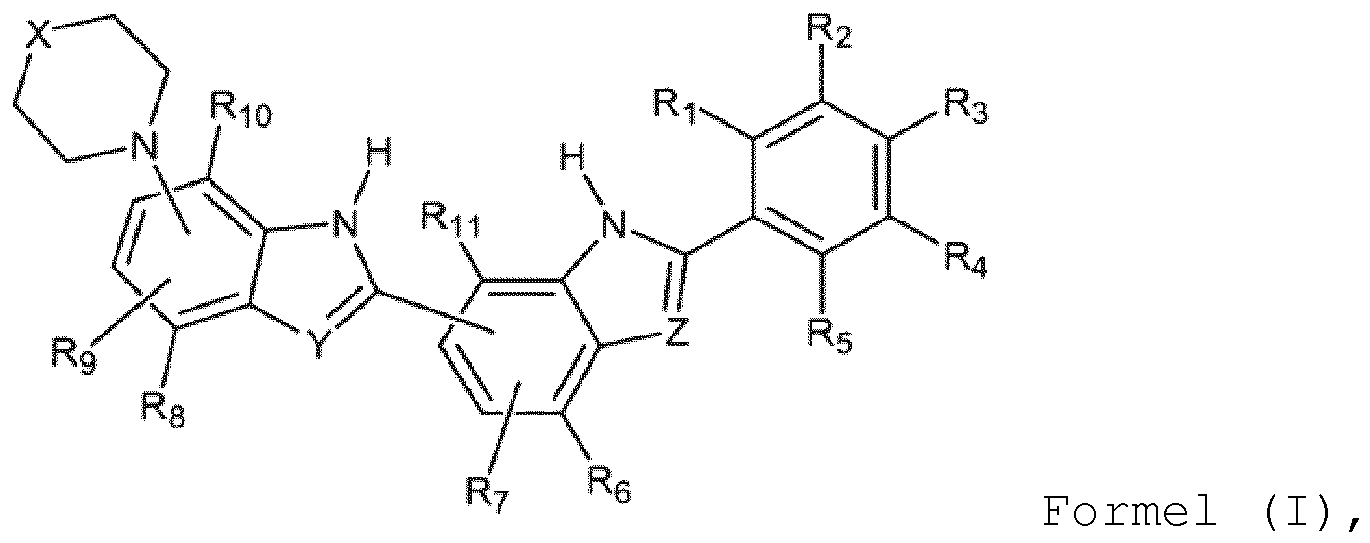 X für gegebenenfalls substituiertes Alkylamino oder gegebenenfalls substituiertes Alkyl steht;Y und Z gleich oder verschieden sind und ausgewählt sind aus N und C(R'), wobei R' für Wasserstoff, gegebenenfalls substituiertes Alkyl oder gegebenenfalls substituiertes Alkenyl steht;und R1 bis R11 gleich oder verschieden sein können und ausgewählt sind aus Fluor, Chlor, Wasserstoff und einer elektronenspendenden Gruppe oder zwei beliebige der Reste R1 bis R11 und NH zusammen mit den Kohlenstoffatomen, an die sie gebunden sind, einen gegebenenfalls substituierten Ring bilden, der Heteroatome enthalten kann, mit der Maßgabe, dass mindestens einer der Reste R1 bis R11 für Fluor oder Chlor steht;wobei die elektronenspendende Gruppe ausgewählt ist aus gegebenenfalls substituiertem Alkyl, gegebenenfalls substituiertem Alkenyl, NHR', NR'2, OR' und SR';und Salze und/oder Tautomere davon;zur Verwendung als Radioprotektor.
 - Radioprotektorverbindung zur Verwendung nach Anspruch 6, wobei die Radioprotektorverbindung wie in einem der Ansprüche 1-3 definiert ist.
- Radioprotektorverbindung zur Verwendung nach Anspruch 6 oder 7 zur Verwendung als Radioprotektor in Verbindung mit Krebsradiotherapie.
- Verwendung einer Radioprotektorverbindung der Formel (I)
 X für gegebenenfalls substituiertes Alkylamino oder gegebenenfalls substituiertes Alkyl steht;Y und Z gleich oder verschieden sind und ausgewählt sind aus N und C(R'), wobei R' für Wasserstoff, gegebenenfalls substituiertes Alkyl oder gegebenenfalls substituiertes Alkenyl steht;und R1 bis R11 gleich oder verschieden sein können und ausgewählt sind aus Fluor, Chlor, Wasserstoff und einer elektronenspendenden Gruppe oder zwei beliebige der Reste R1 bis R11 und NH zusammen mit den Kohlenstoffatomen, an die sie gebunden sind, einen gegebenenfalls substituierten Ring bilden, der Heteroatome enthalten kann, mit der Maßgabe, dass mindestens einer der Reste R1 bis R11 für Fluor oder Chlor steht;wobei die elektronenspendende Gruppe ausgewählt ist aus gegebenenfalls substituiertem Alkyl, gegebenenfalls substituiertem Alkenyl, NHR', NR'2, OR' und SR';und Salze und/oder Tautomere davon;bei der Herstellung eines Medikaments zur Verwendung als Radioprotektor.
 - Verwendung einer Radioprotektorverbindung nach Anspruch 9, wobei die Radioprotektorverbindung wie in einem der Ansprüche 1-3 definiert ist.
- Verwendung einer Radioprotektorverbindung nach Anspruch 9 oder 10 bei der Herstellung eines Medikaments zur Verwendung als Radioprotektor in Verbindung mit Krebsradiotherapie.
Applications Claiming Priority (2)
| Application Number | Priority Date | Filing Date | Title |
|---|---|---|---|
| AU2006907254A AU2006907254A0 (en) | 2006-12-21 | Novel Compounds and Methods | |
| PCT/AU2007/001990 WO2008074091A1 (en) | 2006-12-21 | 2007-12-21 | Radioprotector compounds and related methods |
Publications (3)
| Publication Number | Publication Date |
|---|---|
| EP2114896A1 EP2114896A1 (de) | 2009-11-11 |
| EP2114896A4 EP2114896A4 (de) | 2010-02-17 |
| EP2114896B1 true EP2114896B1 (de) | 2015-07-22 |
Family
ID=39535900
Family Applications (1)
| Application Number | Title | Priority Date | Filing Date |
|---|---|---|---|
| EP07845428.7A Not-in-force EP2114896B1 (de) | 2006-12-21 | 2007-12-21 | Gegen strahlen schützende verbindungen und damit im zusammenhang stehende verfahren |
Country Status (13)
| Country | Link |
|---|---|
| US (1) | US8796277B2 (de) |
| EP (1) | EP2114896B1 (de) |
| JP (1) | JP5639763B2 (de) |
| KR (1) | KR101518078B1 (de) |
| CN (1) | CN101605763B (de) |
| AU (1) | AU2007335185B2 (de) |
| CA (1) | CA2673417C (de) |
| DK (1) | DK2114896T3 (de) |
| ES (1) | ES2550589T3 (de) |
| IL (1) | IL199427A (de) |
| NZ (1) | NZ577845A (de) |
| PT (1) | PT2114896E (de) |
| WO (1) | WO2008074091A1 (de) |
Families Citing this family (6)
| Publication number | Priority date | Publication date | Assignee | Title |
|---|---|---|---|---|
| US7906655B2 (en) * | 2008-08-07 | 2011-03-15 | Bristol-Myers Squibb Company | Hepatitis C virus inhibitors |
| WO2011123890A1 (en) | 2010-04-06 | 2011-10-13 | Peter Maccallum Cancer Institute | Radioprotector compounds and methods |
| GB201506658D0 (en) | 2015-04-20 | 2015-06-03 | Cellcentric Ltd | Pharmaceutical compounds |
| GB201506660D0 (en) | 2015-04-20 | 2015-06-03 | Cellcentric Ltd | Pharmaceutical compounds |
| KR102317644B1 (ko) * | 2020-04-13 | 2021-10-26 | 부산대학교 산학협력단 | 글리메피리드를 유효성분으로 함유하는 방사선 치료 민감제 조성물 |
| MX2023003357A (es) * | 2020-09-22 | 2023-06-30 | Rythera Therapeutics Inc | Composicion y metodo para la prevencion y el tratamiento de lesiones cutaneas por radiacion. |
Family Cites Families (2)
| Publication number | Priority date | Publication date | Assignee | Title |
|---|---|---|---|---|
| DE1670684A1 (de) * | 1966-04-01 | 1970-12-03 | Hoechst Ag | Verfahren zur Herstellung von basisch substituierten Bis-benzimidazol-derivaten |
| AUPN449295A0 (en) | 1995-07-28 | 1995-08-24 | Inner And Eastern Health Care Network, The | Radioprotectors |
-
2007
- 2007-12-21 PT PT78454287T patent/PT2114896E/pt unknown
- 2007-12-21 KR KR1020097015377A patent/KR101518078B1/ko not_active Expired - Fee Related
- 2007-12-21 DK DK07845428.7T patent/DK2114896T3/en active
- 2007-12-21 AU AU2007335185A patent/AU2007335185B2/en not_active Ceased
- 2007-12-21 WO PCT/AU2007/001990 patent/WO2008074091A1/en not_active Ceased
- 2007-12-21 NZ NZ577845A patent/NZ577845A/en not_active IP Right Cessation
- 2007-12-21 ES ES07845428.7T patent/ES2550589T3/es active Active
- 2007-12-21 JP JP2009541697A patent/JP5639763B2/ja not_active Expired - Fee Related
- 2007-12-21 EP EP07845428.7A patent/EP2114896B1/de not_active Not-in-force
- 2007-12-21 US US12/520,356 patent/US8796277B2/en not_active Expired - Fee Related
- 2007-12-21 CA CA2673417A patent/CA2673417C/en not_active Expired - Fee Related
- 2007-12-21 CN CN200780049844.3A patent/CN101605763B/zh not_active Expired - Fee Related
-
2009
- 2009-06-18 IL IL199427A patent/IL199427A/en not_active IP Right Cessation
Also Published As
| Publication number | Publication date |
|---|---|
| JP5639763B2 (ja) | 2014-12-10 |
| DK2114896T3 (en) | 2015-10-26 |
| CN101605763B (zh) | 2016-03-09 |
| CA2673417C (en) | 2015-09-15 |
| EP2114896A4 (de) | 2010-02-17 |
| US20100022557A1 (en) | 2010-01-28 |
| JP2010513323A (ja) | 2010-04-30 |
| IL199427A (en) | 2017-03-30 |
| PT2114896E (pt) | 2015-11-04 |
| CA2673417A1 (en) | 2008-06-26 |
| AU2007335185A1 (en) | 2008-06-26 |
| KR20090107039A (ko) | 2009-10-12 |
| EP2114896A1 (de) | 2009-11-11 |
| WO2008074091A1 (en) | 2008-06-26 |
| KR101518078B1 (ko) | 2015-05-06 |
| ES2550589T3 (es) | 2015-11-10 |
| CN101605763A (zh) | 2009-12-16 |
| AU2007335185B2 (en) | 2013-06-27 |
| NZ577845A (en) | 2012-03-30 |
| US8796277B2 (en) | 2014-08-05 |
Similar Documents
| Publication | Publication Date | Title |
|---|---|---|
| US6548505B1 (en) | Radioprotectors | |
| USRE46943E1 (en) | Radioprotector compounds and methods | |
| EP2114896B1 (de) | Gegen strahlen schützende verbindungen und damit im zusammenhang stehende verfahren | |
| KR20060124696A (ko) | 쿠커비트[7-12]우릴에 의해 부분적으로 인캡슐레이팅된다핵 금속 착물 | |
| US12427196B2 (en) | Macromolecular prodrugs for light-emitting diodes and uses thereof | |
| CN111499623B (zh) | 一类非核苷抗肿瘤药物的噻唑酮脲衍生物及其药物用途 |
Legal Events
| Date | Code | Title | Description |
|---|---|---|---|
| PUAI | Public reference made under article 153(3) epc to a published international application that has entered the european phase |
Free format text: ORIGINAL CODE: 0009012 |
|
| 17P | Request for examination filed |
Effective date: 20090721 |
|
| AK | Designated contracting states |
Kind code of ref document: A1 Designated state(s): AT BE BG CH CY CZ DE DK EE ES FI FR GB GR HU IE IS IT LI LT LU LV MC MT NL PL PT RO SE SI SK TR |
|
| A4 | Supplementary search report drawn up and despatched |
Effective date: 20100119 |
|
| DAX | Request for extension of the european patent (deleted) | ||
| 17Q | First examination report despatched |
Effective date: 20100507 |
|
| GRAP | Despatch of communication of intention to grant a patent |
Free format text: ORIGINAL CODE: EPIDOSNIGR1 |
|
| INTG | Intention to grant announced |
Effective date: 20150212 |
|
| GRAS | Grant fee paid |
Free format text: ORIGINAL CODE: EPIDOSNIGR3 |
|
| GRAA | (expected) grant |
Free format text: ORIGINAL CODE: 0009210 |
|
| AK | Designated contracting states |
Kind code of ref document: B1 Designated state(s): AT BE BG CH CY CZ DE DK EE ES FI FR GB GR HU IE IS IT LI LT LU LV MC MT NL PL PT RO SE SI SK TR |
|
| REG | Reference to a national code |
Ref country code: GB Ref legal event code: FG4D |
|
| REG | Reference to a national code |
Ref country code: CH Ref legal event code: EP |
|
| REG | Reference to a national code |
Ref country code: IE Ref legal event code: FG4D |
|
| REG | Reference to a national code |
Ref country code: AT Ref legal event code: REF Ref document number: 737811 Country of ref document: AT Kind code of ref document: T Effective date: 20150815 |
|
| REG | Reference to a national code |
Ref country code: DE Ref legal event code: R096 Ref document number: 602007042290 Country of ref document: DE |
|
| REG | Reference to a national code |
Ref country code: DK Ref legal event code: T3 Effective date: 20151023 |
|
| REG | Reference to a national code |
Ref country code: PT Ref legal event code: SC4A Free format text: AVAILABILITY OF NATIONAL TRANSLATION Effective date: 20151020 |
|
| REG | Reference to a national code |
Ref country code: SE Ref legal event code: TRGR Ref country code: ES Ref legal event code: FG2A Ref document number: 2550589 Country of ref document: ES Kind code of ref document: T3 Effective date: 20151110 |
|
| REG | Reference to a national code |
Ref country code: FR Ref legal event code: PLFP Year of fee payment: 9 |
|
| REG | Reference to a national code |
Ref country code: LT Ref legal event code: MG4D |
|
| REG | Reference to a national code |
Ref country code: NL Ref legal event code: FP |
|
| PG25 | Lapsed in a contracting state [announced via postgrant information from national office to epo] |
Ref country code: LT Free format text: LAPSE BECAUSE OF FAILURE TO SUBMIT A TRANSLATION OF THE DESCRIPTION OR TO PAY THE FEE WITHIN THE PRESCRIBED TIME-LIMIT Effective date: 20150722 Ref country code: LV Free format text: LAPSE BECAUSE OF FAILURE TO SUBMIT A TRANSLATION OF THE DESCRIPTION OR TO PAY THE FEE WITHIN THE PRESCRIBED TIME-LIMIT Effective date: 20150722 |
|
| PG25 | Lapsed in a contracting state [announced via postgrant information from national office to epo] |
Ref country code: IS Free format text: LAPSE BECAUSE OF FAILURE TO SUBMIT A TRANSLATION OF THE DESCRIPTION OR TO PAY THE FEE WITHIN THE PRESCRIBED TIME-LIMIT Effective date: 20151122 Ref country code: PL Free format text: LAPSE BECAUSE OF FAILURE TO SUBMIT A TRANSLATION OF THE DESCRIPTION OR TO PAY THE FEE WITHIN THE PRESCRIBED TIME-LIMIT Effective date: 20150722 |
|
| REG | Reference to a national code |
Ref country code: GR Ref legal event code: EP Ref document number: 20150402183 Country of ref document: GR Effective date: 20151209 |
|
| REG | Reference to a national code |
Ref country code: DE Ref legal event code: R097 Ref document number: 602007042290 Country of ref document: DE |
|
| PG25 | Lapsed in a contracting state [announced via postgrant information from national office to epo] |
Ref country code: CZ Free format text: LAPSE BECAUSE OF FAILURE TO SUBMIT A TRANSLATION OF THE DESCRIPTION OR TO PAY THE FEE WITHIN THE PRESCRIBED TIME-LIMIT Effective date: 20150722 Ref country code: EE Free format text: LAPSE BECAUSE OF FAILURE TO SUBMIT A TRANSLATION OF THE DESCRIPTION OR TO PAY THE FEE WITHIN THE PRESCRIBED TIME-LIMIT Effective date: 20150722 Ref country code: SK Free format text: LAPSE BECAUSE OF FAILURE TO SUBMIT A TRANSLATION OF THE DESCRIPTION OR TO PAY THE FEE WITHIN THE PRESCRIBED TIME-LIMIT Effective date: 20150722 |
|
| PLBE | No opposition filed within time limit |
Free format text: ORIGINAL CODE: 0009261 |
|
| STAA | Information on the status of an ep patent application or granted ep patent |
Free format text: STATUS: NO OPPOSITION FILED WITHIN TIME LIMIT |
|
| PG25 | Lapsed in a contracting state [announced via postgrant information from national office to epo] |
Ref country code: RO Free format text: LAPSE BECAUSE OF FAILURE TO SUBMIT A TRANSLATION OF THE DESCRIPTION OR TO PAY THE FEE WITHIN THE PRESCRIBED TIME-LIMIT Effective date: 20150722 |
|
| 26N | No opposition filed |
Effective date: 20160425 |
|
| PG25 | Lapsed in a contracting state [announced via postgrant information from national office to epo] |
Ref country code: SI Free format text: LAPSE BECAUSE OF FAILURE TO SUBMIT A TRANSLATION OF THE DESCRIPTION OR TO PAY THE FEE WITHIN THE PRESCRIBED TIME-LIMIT Effective date: 20150722 |
|
| REG | Reference to a national code |
Ref country code: FR Ref legal event code: PLFP Year of fee payment: 10 |
|
| PGFP | Annual fee paid to national office [announced via postgrant information from national office to epo] |
Ref country code: DE Payment date: 20161213 Year of fee payment: 10 Ref country code: FR Payment date: 20161128 Year of fee payment: 10 Ref country code: MC Payment date: 20161128 Year of fee payment: 10 Ref country code: DK Payment date: 20161212 Year of fee payment: 10 Ref country code: FI Payment date: 20161212 Year of fee payment: 10 Ref country code: LU Payment date: 20161213 Year of fee payment: 10 Ref country code: CH Payment date: 20161213 Year of fee payment: 10 Ref country code: IE Payment date: 20161209 Year of fee payment: 10 Ref country code: NL Payment date: 20161212 Year of fee payment: 10 |
|
| PGFP | Annual fee paid to national office [announced via postgrant information from national office to epo] |
Ref country code: ES Payment date: 20161129 Year of fee payment: 10 Ref country code: AT Payment date: 20161125 Year of fee payment: 10 Ref country code: GR Payment date: 20161130 Year of fee payment: 10 Ref country code: PT Payment date: 20161220 Year of fee payment: 10 Ref country code: BE Payment date: 20161124 Year of fee payment: 10 Ref country code: IT Payment date: 20161221 Year of fee payment: 10 Ref country code: SE Payment date: 20161213 Year of fee payment: 10 |
|
| PG25 | Lapsed in a contracting state [announced via postgrant information from national office to epo] |
Ref country code: HU Free format text: LAPSE BECAUSE OF FAILURE TO SUBMIT A TRANSLATION OF THE DESCRIPTION OR TO PAY THE FEE WITHIN THE PRESCRIBED TIME-LIMIT; INVALID AB INITIO Effective date: 20071221 Ref country code: BG Free format text: LAPSE BECAUSE OF FAILURE TO SUBMIT A TRANSLATION OF THE DESCRIPTION OR TO PAY THE FEE WITHIN THE PRESCRIBED TIME-LIMIT Effective date: 20150722 |
|
| PG25 | Lapsed in a contracting state [announced via postgrant information from national office to epo] |
Ref country code: CY Free format text: LAPSE BECAUSE OF FAILURE TO SUBMIT A TRANSLATION OF THE DESCRIPTION OR TO PAY THE FEE WITHIN THE PRESCRIBED TIME-LIMIT Effective date: 20150722 |
|
| REG | Reference to a national code |
Ref country code: AT Ref legal event code: UEP Ref document number: 737811 Country of ref document: AT Kind code of ref document: T Effective date: 20150722 |
|
| PG25 | Lapsed in a contracting state [announced via postgrant information from national office to epo] |
Ref country code: MT Free format text: LAPSE BECAUSE OF FAILURE TO SUBMIT A TRANSLATION OF THE DESCRIPTION OR TO PAY THE FEE WITHIN THE PRESCRIBED TIME-LIMIT Effective date: 20150722 Ref country code: TR Free format text: LAPSE BECAUSE OF FAILURE TO SUBMIT A TRANSLATION OF THE DESCRIPTION OR TO PAY THE FEE WITHIN THE PRESCRIBED TIME-LIMIT Effective date: 20150722 |
|
| PGFP | Annual fee paid to national office [announced via postgrant information from national office to epo] |
Ref country code: GB Payment date: 20171220 Year of fee payment: 11 |
|
| REG | Reference to a national code |
Ref country code: DE Ref legal event code: R119 Ref document number: 602007042290 Country of ref document: DE |
|
| REG | Reference to a national code |
Ref country code: DK Ref legal event code: EBP Effective date: 20171231 |
|
| PG25 | Lapsed in a contracting state [announced via postgrant information from national office to epo] |
Ref country code: FI Free format text: LAPSE BECAUSE OF NON-PAYMENT OF DUE FEES Effective date: 20171221 Ref country code: PT Free format text: LAPSE BECAUSE OF NON-PAYMENT OF DUE FEES Effective date: 20180621 |
|
| REG | Reference to a national code |
Ref country code: CH Ref legal event code: PL |
|
| REG | Reference to a national code |
Ref country code: NL Ref legal event code: MM Effective date: 20180101 |
|
| REG | Reference to a national code |
Ref country code: AT Ref legal event code: MM01 Ref document number: 737811 Country of ref document: AT Kind code of ref document: T Effective date: 20171221 |
|
| PG25 | Lapsed in a contracting state [announced via postgrant information from national office to epo] |
Ref country code: SE Free format text: LAPSE BECAUSE OF NON-PAYMENT OF DUE FEES Effective date: 20171222 |
|
| REG | Reference to a national code |
Ref country code: IE Ref legal event code: MM4A |
|
| PG25 | Lapsed in a contracting state [announced via postgrant information from national office to epo] |
Ref country code: NL Free format text: LAPSE BECAUSE OF NON-PAYMENT OF DUE FEES Effective date: 20180101 Ref country code: LU Free format text: LAPSE BECAUSE OF NON-PAYMENT OF DUE FEES Effective date: 20171221 |
|
| REG | Reference to a national code |
Ref country code: FR Ref legal event code: ST Effective date: 20180831 |
|
| REG | Reference to a national code |
Ref country code: BE Ref legal event code: FP Effective date: 20151021 Ref country code: BE Ref legal event code: MM Effective date: 20171231 |
|
| PG25 | Lapsed in a contracting state [announced via postgrant information from national office to epo] |
Ref country code: DE Free format text: LAPSE BECAUSE OF NON-PAYMENT OF DUE FEES Effective date: 20180703 Ref country code: IT Free format text: LAPSE BECAUSE OF NON-PAYMENT OF DUE FEES Effective date: 20171221 Ref country code: FR Free format text: LAPSE BECAUSE OF NON-PAYMENT OF DUE FEES Effective date: 20180102 Ref country code: IE Free format text: LAPSE BECAUSE OF NON-PAYMENT OF DUE FEES Effective date: 20171221 |
|
| PG25 | Lapsed in a contracting state [announced via postgrant information from national office to epo] |
Ref country code: AT Free format text: LAPSE BECAUSE OF NON-PAYMENT OF DUE FEES Effective date: 20171221 Ref country code: CH Free format text: LAPSE BECAUSE OF NON-PAYMENT OF DUE FEES Effective date: 20171231 Ref country code: LI Free format text: LAPSE BECAUSE OF NON-PAYMENT OF DUE FEES Effective date: 20171231 Ref country code: BE Free format text: LAPSE BECAUSE OF NON-PAYMENT OF DUE FEES Effective date: 20171231 Ref country code: GR Free format text: LAPSE BECAUSE OF NON-PAYMENT OF DUE FEES Effective date: 20180705 |
|
| PG25 | Lapsed in a contracting state [announced via postgrant information from national office to epo] |
Ref country code: DK Free format text: LAPSE BECAUSE OF NON-PAYMENT OF DUE FEES Effective date: 20171231 |
|
| PG25 | Lapsed in a contracting state [announced via postgrant information from national office to epo] |
Ref country code: MC Free format text: LAPSE BECAUSE OF NON-PAYMENT OF DUE FEES Effective date: 20180102 |
|
| REG | Reference to a national code |
Ref country code: ES Ref legal event code: FD2A Effective date: 20190703 |
|
| PG25 | Lapsed in a contracting state [announced via postgrant information from national office to epo] |
Ref country code: ES Free format text: LAPSE BECAUSE OF NON-PAYMENT OF DUE FEES Effective date: 20171222 |
|
| GBPC | Gb: european patent ceased through non-payment of renewal fee |
Effective date: 20181221 |
|
| PG25 | Lapsed in a contracting state [announced via postgrant information from national office to epo] |
Ref country code: GB Free format text: LAPSE BECAUSE OF NON-PAYMENT OF DUE FEES Effective date: 20181221 |