EP2116520B1 - Verfahren zur herstellung eines wabensegment-verbundkörpers - Google Patents
Verfahren zur herstellung eines wabensegment-verbundkörpers Download PDFInfo
- Publication number
- EP2116520B1 EP2116520B1 EP08703377A EP08703377A EP2116520B1 EP 2116520 B1 EP2116520 B1 EP 2116520B1 EP 08703377 A EP08703377 A EP 08703377A EP 08703377 A EP08703377 A EP 08703377A EP 2116520 B1 EP2116520 B1 EP 2116520B1
- Authority
- EP
- European Patent Office
- Prior art keywords
- honeycomb
- honeycomb segment
- end faces
- bonding material
- bonded body
- Prior art date
- Legal status (The legal status is an assumption and is not a legal conclusion. Google has not performed a legal analysis and makes no representation as to the accuracy of the status listed.)
- Active
Links
Images


Classifications
-
- B—PERFORMING OPERATIONS; TRANSPORTING
- B28—WORKING CEMENT, CLAY, OR STONE
- B28B—SHAPING CLAY OR OTHER CERAMIC COMPOSITIONS; SHAPING SLAG; SHAPING MIXTURES CONTAINING CEMENTITIOUS MATERIAL, e.g. PLASTER
- B28B1/00—Producing shaped prefabricated articles from the material
- B28B1/002—Producing shaped prefabricated articles from the material assembled from preformed elements
-
- B—PERFORMING OPERATIONS; TRANSPORTING
- B28—WORKING CEMENT, CLAY, OR STONE
- B28B—SHAPING CLAY OR OTHER CERAMIC COMPOSITIONS; SHAPING SLAG; SHAPING MIXTURES CONTAINING CEMENTITIOUS MATERIAL, e.g. PLASTER
- B28B11/00—Apparatus or processes for treating or working the shaped or preshaped articles
- B28B11/24—Apparatus or processes for treating or working the shaped or preshaped articles for curing, setting or hardening
- B28B11/243—Setting, e.g. drying, dehydrating or firing ceramic articles
-
- C—CHEMISTRY; METALLURGY
- C04—CEMENTS; CONCRETE; ARTIFICIAL STONE; CERAMICS; REFRACTORIES
- C04B—LIME, MAGNESIA; SLAG; CEMENTS; COMPOSITIONS THEREOF, e.g. MORTARS, CONCRETE OR LIKE BUILDING MATERIALS; ARTIFICIAL STONE; CERAMICS; REFRACTORIES; TREATMENT OF NATURAL STONE
- C04B28/00—Compositions of mortars, concrete or artificial stone, containing inorganic binders or the reaction product of an inorganic and an organic binder, e.g. polycarboxylate cements
- C04B28/24—Compositions of mortars, concrete or artificial stone, containing inorganic binders or the reaction product of an inorganic and an organic binder, e.g. polycarboxylate cements containing alkyl, ammonium or metal silicates; containing silica sols
-
- C—CHEMISTRY; METALLURGY
- C04—CEMENTS; CONCRETE; ARTIFICIAL STONE; CERAMICS; REFRACTORIES
- C04B—LIME, MAGNESIA; SLAG; CEMENTS; COMPOSITIONS THEREOF, e.g. MORTARS, CONCRETE OR LIKE BUILDING MATERIALS; ARTIFICIAL STONE; CERAMICS; REFRACTORIES; TREATMENT OF NATURAL STONE
- C04B35/00—Shaped ceramic products characterised by their composition; Ceramics compositions; Processing powders of inorganic compounds preparatory to the manufacturing of ceramic products
- C04B35/515—Shaped ceramic products characterised by their composition; Ceramics compositions; Processing powders of inorganic compounds preparatory to the manufacturing of ceramic products based on non-oxide ceramics
- C04B35/56—Shaped ceramic products characterised by their composition; Ceramics compositions; Processing powders of inorganic compounds preparatory to the manufacturing of ceramic products based on non-oxide ceramics based on carbides or oxycarbides
- C04B35/565—Shaped ceramic products characterised by their composition; Ceramics compositions; Processing powders of inorganic compounds preparatory to the manufacturing of ceramic products based on non-oxide ceramics based on carbides or oxycarbides based on silicon carbide
-
- C—CHEMISTRY; METALLURGY
- C04—CEMENTS; CONCRETE; ARTIFICIAL STONE; CERAMICS; REFRACTORIES
- C04B—LIME, MAGNESIA; SLAG; CEMENTS; COMPOSITIONS THEREOF, e.g. MORTARS, CONCRETE OR LIKE BUILDING MATERIALS; ARTIFICIAL STONE; CERAMICS; REFRACTORIES; TREATMENT OF NATURAL STONE
- C04B35/00—Shaped ceramic products characterised by their composition; Ceramics compositions; Processing powders of inorganic compounds preparatory to the manufacturing of ceramic products
- C04B35/71—Ceramic products containing macroscopic reinforcing agents
- C04B35/78—Ceramic products containing macroscopic reinforcing agents containing non-metallic materials
- C04B35/80—Fibres, filaments, whiskers, platelets, or the like
-
- C—CHEMISTRY; METALLURGY
- C04—CEMENTS; CONCRETE; ARTIFICIAL STONE; CERAMICS; REFRACTORIES
- C04B—LIME, MAGNESIA; SLAG; CEMENTS; COMPOSITIONS THEREOF, e.g. MORTARS, CONCRETE OR LIKE BUILDING MATERIALS; ARTIFICIAL STONE; CERAMICS; REFRACTORIES; TREATMENT OF NATURAL STONE
- C04B37/00—Joining burned ceramic articles with other burned ceramic articles or other articles by heating
- C04B37/003—Joining burned ceramic articles with other burned ceramic articles or other articles by heating by means of an interlayer consisting of a combination of materials selected from glass, or ceramic material with metals, metal oxides or metal salts
- C04B37/005—Joining burned ceramic articles with other burned ceramic articles or other articles by heating by means of an interlayer consisting of a combination of materials selected from glass, or ceramic material with metals, metal oxides or metal salts consisting of glass or ceramic material
-
- C—CHEMISTRY; METALLURGY
- C04—CEMENTS; CONCRETE; ARTIFICIAL STONE; CERAMICS; REFRACTORIES
- C04B—LIME, MAGNESIA; SLAG; CEMENTS; COMPOSITIONS THEREOF, e.g. MORTARS, CONCRETE OR LIKE BUILDING MATERIALS; ARTIFICIAL STONE; CERAMICS; REFRACTORIES; TREATMENT OF NATURAL STONE
- C04B38/00—Porous mortars, concrete, artificial stone or ceramic ware; Preparation thereof
- C04B38/0006—Honeycomb structures
-
- C—CHEMISTRY; METALLURGY
- C04—CEMENTS; CONCRETE; ARTIFICIAL STONE; CERAMICS; REFRACTORIES
- C04B—LIME, MAGNESIA; SLAG; CEMENTS; COMPOSITIONS THEREOF, e.g. MORTARS, CONCRETE OR LIKE BUILDING MATERIALS; ARTIFICIAL STONE; CERAMICS; REFRACTORIES; TREATMENT OF NATURAL STONE
- C04B38/00—Porous mortars, concrete, artificial stone or ceramic ware; Preparation thereof
- C04B38/0006—Honeycomb structures
- C04B38/0016—Honeycomb structures assembled from subunits
- C04B38/0019—Honeycomb structures assembled from subunits characterised by the material used for joining separate subunits
-
- F—MECHANICAL ENGINEERING; LIGHTING; HEATING; WEAPONS; BLASTING
- F01—MACHINES OR ENGINES IN GENERAL; ENGINE PLANTS IN GENERAL; STEAM ENGINES
- F01N—GAS-FLOW SILENCERS OR EXHAUST APPARATUS FOR MACHINES OR ENGINES IN GENERAL; GAS-FLOW SILENCERS OR EXHAUST APPARATUS FOR INTERNAL-COMBUSTION ENGINES
- F01N3/00—Exhaust or silencing apparatus having means for purifying, rendering innocuous, or otherwise treating exhaust
- F01N3/08—Exhaust or silencing apparatus having means for purifying, rendering innocuous, or otherwise treating exhaust for rendering innocuous
- F01N3/10—Exhaust or silencing apparatus having means for purifying, rendering innocuous, or otherwise treating exhaust for rendering innocuous by thermal or catalytic conversion of noxious components of exhaust
- F01N3/24—Exhaust or silencing apparatus having means for purifying, rendering innocuous, or otherwise treating exhaust for rendering innocuous by thermal or catalytic conversion of noxious components of exhaust characterised by constructional aspects of converting apparatus
- F01N3/28—Construction of catalytic reactors
- F01N3/2803—Construction of catalytic reactors characterised by structure, by material or by manufacturing of catalyst support
- F01N3/2825—Ceramics
- F01N3/2828—Ceramic multi-channel monoliths, e.g. honeycombs
-
- F—MECHANICAL ENGINEERING; LIGHTING; HEATING; WEAPONS; BLASTING
- F26—DRYING
- F26B—DRYING SOLID MATERIALS OR OBJECTS BY REMOVING LIQUID THEREFROM
- F26B21/00—Arrangements for supplying or controlling air or other gases for drying solid materials or objects
- F26B21/006—Arrangements for supplying or controlling air or other gases for drying solid materials or objects with the air or gases passing through hollow spaces or cores within the materials or objects to be dried, e.g. tubes, pipes or bottles
-
- C—CHEMISTRY; METALLURGY
- C04—CEMENTS; CONCRETE; ARTIFICIAL STONE; CERAMICS; REFRACTORIES
- C04B—LIME, MAGNESIA; SLAG; CEMENTS; COMPOSITIONS THEREOF, e.g. MORTARS, CONCRETE OR LIKE BUILDING MATERIALS; ARTIFICIAL STONE; CERAMICS; REFRACTORIES; TREATMENT OF NATURAL STONE
- C04B2111/00—Mortars, concrete or artificial stone or mixtures to prepare them, characterised by specific function, property or use
- C04B2111/00474—Uses not provided for elsewhere in C04B2111/00
- C04B2111/00793—Uses not provided for elsewhere in C04B2111/00 as filters or diaphragms
-
- C—CHEMISTRY; METALLURGY
- C04—CEMENTS; CONCRETE; ARTIFICIAL STONE; CERAMICS; REFRACTORIES
- C04B—LIME, MAGNESIA; SLAG; CEMENTS; COMPOSITIONS THEREOF, e.g. MORTARS, CONCRETE OR LIKE BUILDING MATERIALS; ARTIFICIAL STONE; CERAMICS; REFRACTORIES; TREATMENT OF NATURAL STONE
- C04B2235/00—Aspects relating to ceramic starting mixtures or sintered ceramic products
- C04B2235/02—Composition of constituents of the starting material or of secondary phases of the final product
- C04B2235/30—Constituents and secondary phases not being of a fibrous nature
- C04B2235/34—Non-metal oxides, non-metal mixed oxides, or salts thereof that form the non-metal oxides upon heating, e.g. carbonates, nitrates, (oxy)hydroxides, chlorides
- C04B2235/3418—Silicon oxide, silicic acids or oxide forming salts thereof, e.g. silica sol, fused silica, silica fume, cristobalite, quartz or flint
-
- C—CHEMISTRY; METALLURGY
- C04—CEMENTS; CONCRETE; ARTIFICIAL STONE; CERAMICS; REFRACTORIES
- C04B—LIME, MAGNESIA; SLAG; CEMENTS; COMPOSITIONS THEREOF, e.g. MORTARS, CONCRETE OR LIKE BUILDING MATERIALS; ARTIFICIAL STONE; CERAMICS; REFRACTORIES; TREATMENT OF NATURAL STONE
- C04B2235/00—Aspects relating to ceramic starting mixtures or sintered ceramic products
- C04B2235/02—Composition of constituents of the starting material or of secondary phases of the final product
- C04B2235/30—Constituents and secondary phases not being of a fibrous nature
- C04B2235/34—Non-metal oxides, non-metal mixed oxides, or salts thereof that form the non-metal oxides upon heating, e.g. carbonates, nitrates, (oxy)hydroxides, chlorides
- C04B2235/3427—Silicates other than clay, e.g. water glass
-
- C—CHEMISTRY; METALLURGY
- C04—CEMENTS; CONCRETE; ARTIFICIAL STONE; CERAMICS; REFRACTORIES
- C04B—LIME, MAGNESIA; SLAG; CEMENTS; COMPOSITIONS THEREOF, e.g. MORTARS, CONCRETE OR LIKE BUILDING MATERIALS; ARTIFICIAL STONE; CERAMICS; REFRACTORIES; TREATMENT OF NATURAL STONE
- C04B2235/00—Aspects relating to ceramic starting mixtures or sintered ceramic products
- C04B2235/02—Composition of constituents of the starting material or of secondary phases of the final product
- C04B2235/30—Constituents and secondary phases not being of a fibrous nature
- C04B2235/34—Non-metal oxides, non-metal mixed oxides, or salts thereof that form the non-metal oxides upon heating, e.g. carbonates, nitrates, (oxy)hydroxides, chlorides
- C04B2235/349—Clays, e.g. bentonites, smectites such as montmorillonite, vermiculites or kaolines, e.g. illite, talc or sepiolite
-
- C—CHEMISTRY; METALLURGY
- C04—CEMENTS; CONCRETE; ARTIFICIAL STONE; CERAMICS; REFRACTORIES
- C04B—LIME, MAGNESIA; SLAG; CEMENTS; COMPOSITIONS THEREOF, e.g. MORTARS, CONCRETE OR LIKE BUILDING MATERIALS; ARTIFICIAL STONE; CERAMICS; REFRACTORIES; TREATMENT OF NATURAL STONE
- C04B2235/00—Aspects relating to ceramic starting mixtures or sintered ceramic products
- C04B2235/02—Composition of constituents of the starting material or of secondary phases of the final product
- C04B2235/50—Constituents or additives of the starting mixture chosen for their shape or used because of their shape or their physical appearance
- C04B2235/52—Constituents or additives characterised by their shapes
- C04B2235/5208—Fibers
- C04B2235/5216—Inorganic
- C04B2235/522—Oxidic
- C04B2235/5228—Silica and alumina, including aluminosilicates, e.g. mullite
-
- C—CHEMISTRY; METALLURGY
- C04—CEMENTS; CONCRETE; ARTIFICIAL STONE; CERAMICS; REFRACTORIES
- C04B—LIME, MAGNESIA; SLAG; CEMENTS; COMPOSITIONS THEREOF, e.g. MORTARS, CONCRETE OR LIKE BUILDING MATERIALS; ARTIFICIAL STONE; CERAMICS; REFRACTORIES; TREATMENT OF NATURAL STONE
- C04B2235/00—Aspects relating to ceramic starting mixtures or sintered ceramic products
- C04B2235/60—Aspects relating to the preparation, properties or mechanical treatment of green bodies or pre-forms
- C04B2235/606—Drying
-
- C—CHEMISTRY; METALLURGY
- C04—CEMENTS; CONCRETE; ARTIFICIAL STONE; CERAMICS; REFRACTORIES
- C04B—LIME, MAGNESIA; SLAG; CEMENTS; COMPOSITIONS THEREOF, e.g. MORTARS, CONCRETE OR LIKE BUILDING MATERIALS; ARTIFICIAL STONE; CERAMICS; REFRACTORIES; TREATMENT OF NATURAL STONE
- C04B2235/00—Aspects relating to ceramic starting mixtures or sintered ceramic products
- C04B2235/70—Aspects relating to sintered or melt-casted ceramic products
- C04B2235/96—Properties of ceramic products, e.g. mechanical properties such as strength, toughness, wear resistance
- C04B2235/9607—Thermal properties, e.g. thermal expansion coefficient
-
- C—CHEMISTRY; METALLURGY
- C04—CEMENTS; CONCRETE; ARTIFICIAL STONE; CERAMICS; REFRACTORIES
- C04B—LIME, MAGNESIA; SLAG; CEMENTS; COMPOSITIONS THEREOF, e.g. MORTARS, CONCRETE OR LIKE BUILDING MATERIALS; ARTIFICIAL STONE; CERAMICS; REFRACTORIES; TREATMENT OF NATURAL STONE
- C04B2237/00—Aspects relating to ceramic laminates or to joining of ceramic articles with other articles by heating
- C04B2237/02—Aspects relating to interlayers, e.g. used to join ceramic articles with other articles by heating
- C04B2237/04—Ceramic interlayers
- C04B2237/08—Non-oxidic interlayers
- C04B2237/083—Carbide interlayers, e.g. silicon carbide interlayers
-
- C—CHEMISTRY; METALLURGY
- C04—CEMENTS; CONCRETE; ARTIFICIAL STONE; CERAMICS; REFRACTORIES
- C04B—LIME, MAGNESIA; SLAG; CEMENTS; COMPOSITIONS THEREOF, e.g. MORTARS, CONCRETE OR LIKE BUILDING MATERIALS; ARTIFICIAL STONE; CERAMICS; REFRACTORIES; TREATMENT OF NATURAL STONE
- C04B2237/00—Aspects relating to ceramic laminates or to joining of ceramic articles with other articles by heating
- C04B2237/30—Composition of layers of ceramic laminates or of ceramic or metallic articles to be joined by heating, e.g. Si substrates
- C04B2237/32—Ceramic
- C04B2237/36—Non-oxidic
- C04B2237/365—Silicon carbide
Definitions
- the present invention relates to a method of producing a honeycomb segment bonded body in which a plurality of honeycomb segments is integrally bonded by a plurality of bonding material layers.
- a honeycomb structure is often used as a collecting filter for an exhaust gas.
- a diesel particulate filter (DPF) made of SiC is prepared by integrally bonding together 16 base materials (honeycomb segments) bonded so as to prevent cracking due to thermal shock, by a bonding material (a ceramic cement material). See for example EP-A-1739288 .
- a bonding material a ceramic cement material
- the filter base materials are bonded and then dried to solidify by a hot air drier.
- JP-A-2004-291270 corresponding to EP-A-1625923 a bonding method of a segmented ceramic honeycomb structure is disclosed in which the bonding material near the end faces of a layered article is dried for a purpose of preventing the kink or crack of the bonding material near the end faces, and then the whole layered article is dried.
- the movement of the bonding material texture or the honeycomb segments during the drying is not noted, and hence when 12 or more honeycomb segments are bonded by the ceramic bonding material, the fluctuations of the characteristics of the bonding material layers are generated, depending on the bonded portions.
- the honeycomb segments non-uniformly move accompanying the contraction or hardening of the bonding material, depending on the bonded portions during the drying, whereby the textures of the dried bonding material layers become non-uniform, depending on the bonded portions, and the fluctuations of the characteristics of the bonding material layers are generated, depending on the bonded portions.
- the drying of the bonding material occurs similarly in the respective bonded portions, but the proceeding of the drying varies inside and outside the bonded article, and the behaviors of the drying contraction and hardening of the bonding material accompanying the drying vary.
- the movement of the honeycomb segments accompanying the drying contraction and hardening of the bonding material is not homogeneous, and hence the fluctuations are generated not only in the proceeding of the formation of the bonding layers but also in the characteristics of the layers.
- the honeycomb segments harden while moving in a direction in which a bonding interval decreases.
- the one side of the honeycomb segment has already hardened, and hence the honeycomb segment cannot move so as to match the contraction of the bonding material, but hardens.
- the honeycomb segments conversely move in a direction in which the bonding interval increases, thereby generating the fluctuations not only in the textures of the bonding material layers but also in the characteristics thereof.
- An object of the present invention is to provide a method of producing a honeycomb segment bonded body which prevents fluctuations from being generated in a bonding texture among a plurality of honeycomb segments integrally bonded together by bonding material layers formed of a bonding material, to prevent fluctuations from being generated in strength characteristics.
- the present inventors have found that when honeycomb segments are bonded together and the end faces of the honeycomb segments are heated and dried, the above problems can be solved. That is, according to the present invention, the method of producing a honeycomb segment bonded body set ant in claim 1 is provided.
- step (ii) of the method of producing the honeycomb segment the end faces of the honeycomb segments are preferably heated until 1% or more of the water content by mass of the whole honeycomb segment bonded body has flow.
- the bonding material contains plate-like particles.
- honeycomb segments are integrally bonded together at the plurality of mutual bonding faces by use of the bonding material, and the end faces of the integrated honeycomb segment bonded body are heated and dried before the hardening of the bonding material ends. Afterward, the whole body is heated, whereby the movement of the honeycomb segments accompanying the drying contraction and hardening of the bonding material can be homogenized, non-uniformity in the proceeding of the formation of the bonding material layers can be decreased, and the non-uniformity of the characteristics of the honeycomb segments can be decreased.
- 1 honeycomb segment bonded body
- 2 partition wall
- 3 cell
- 5 bonding material layer
- 7 outer peripheral wall
- 8 end face
- 10 honeycomb segment
- 11 test piece
- 15 drier
- 16 trowel
- 20 vertically receiving plate
- 21 laterally receiving plate.
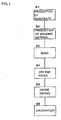
- Fig. 1 shows producing steps of a honeycomb segment bonded body 1 to which a producing method of the present invention is applied.
- a base material honeycomb segments 10) is prepared (S1).
- a bonding material is prepared (S2).
- the base materials are bonded together by using the bonding material (S3), and then the end faces of the materials are dried (S4).
- the whole honeycomb segment bonded body 1 is dried (S5), and then calcinated (S6). During the whole drying, hot air drying, microwave drying or the like may be used.
- S5 a base material
- S6 the whole honeycomb segment bonded body 1
- Fig. 2 shows a honeycomb segment 10 to which the method of producing the honeycomb segment bonded body 1 of the present invention is applied and which is the base material prepared in S1 of Fig. 1 .
- the honeycomb segment 10 is made of a ceramic material, and has an outer peripheral wall 7, partition walls 2 formed inside the outer peripheral wall 7, and a plurality of cells 3 partitioned by the partition walls 2.
- a part of the cells 3 is preferably plugged in end faces 8 of the honeycomb segment 10.
- the adjacent cells 3 are alternately plugged in the end faces 8 on opposite sides, and the end faces 8 are preferably plugged so as to form a checkered pattern. Since the end faces are plugged in this manner, for example, a fluid to be treated flowing into one of the end faces 8 passes through the partition walls 2, and is discharged from the other end face 8, and the porous partition walls 2 function as a filter when the fluid to be treated passes through the partition walls 2, whereby a target can be removed.
- the honeycomb segment 10 is preferably made of at least one selected from the group consisting of cordierite, mullite, alumina, aluminum titanate, lithium aluminum silicate, silicon carbide, silicon nitride and a silicon carbide-metal silicon composite phase.
- silicon carbide or a silicon-silicon carbide based composite phase is preferably used because the material has a high thermal resistance.
- cordierite is preferably used because the material has a small coefficient of thermal expansion and a satisfactory resistance to thermal shock.
- the honeycomb segment bonded body 1 is made of metal silicon (Si) and silicon carbide (SiC) and an Si content defined by Si/(Si+SiC) in the honeycomb segment bonded body 1 is excessively small, an effect produced by the addition of Si cannot be obtained, and hence the body has a low strength.
- the content exceeds 50 mass%, effects produced by thermal resistance and high thermal conductivity as the characteristics of SiC cannot be obtained.
- the content of Si is preferably 5 to 50 mass%, further preferably 10 to 40 mass%.
- a binder such as methyl cellulose or hydroxypropoxyl methyl cellulose, an organic pore former, a surfactant, water and the like are added to the above material to prepare a kneaded clay having plasticity, and the kneaded clay is, for example, extruded, to form a square-pole-like formed honeycomb article having a large number of cells 3 partitioned by the partition walls 2 and extending through the article in an axial direction.
- This article is dried by, for example, microwaves, hot air and the like, calcinated so as to remove the binder and the organic pore former, and then fired, whereby the honeycomb segment 10 can be manufactured.
- plugging portions for plugging the cells 3 in the end faces 8 preferably include, as a main crystal phase, at least one crystal phase selected from suitable examples of the main crystal phase of the above partition walls 2, and further preferably include, as the main crystal phase, a crystal phase of a type similar to that of the main crystal phase of the honeycomb segment bonded body 1.
- Fig. 3 shows a bonding method of the honeycomb segment bonded body 1 as one embodiment of the present invention.
- This honeycomb segment bonded body 1 has a constitution in which a plurality of ceramic porous honeycomb segments 10 each having a large number of cells 3 partitioned by the partition walls 2 and extending through the segment in an axial direction are bonded via bonding material layers 5 ( Fig. 1 : S3).
- the honeycomb segments 10 are stacked in a receiving area A formed by a vertical receiving plate 20 and a lateral receiving plate 21 and having an L-shaped section, while outer peripheral walls 7 of the honeycomb segments are bonding faces and each bonding material layer 5 is interposed between the bonding faces.
- the honeycomb segment is stacked so as to dispose two faces of the segment along the vertical receiving plate 20 and the lateral receiving plate 21.
- the bonding material of the bonding material layers 5 prepared in S2 of Fig. 1 includes inorganic particles and an inorganic adhesive as main components, and an organic binder, a surfactant, a resin balloon, water and the like as sub-components.
- inorganic particles plate-like particles, spherical particles, lump-like particles, fibrous particles, needle-like particles or the like may be used, and as the inorganic adhesive, colloidal silica (silica sol), colloidal alumina (alumina sol), various types of oxide sol, ethyl silicate, water glass, silica polymer, aluminum phosphate or the like may be used.
- the bonding material preferably includes, as the main component, ceramic particles common to the constituent component of the honeycomb segment 10, preferably does not include fibrous particles such as ceramic fiber particles from a viewpoint of a health issue or the like, and preferably includes the plate-like particles.
- the plate-like particles for example, mica, talc, boron nitride, glass flakes or the like may be used.
- the predetermined number of the honeycomb segments 10 (16 segments in the present embodiment) are stacked, and then the whole segments are simultaneously finally pressurized in the directions of arrows F1 and F2 via the honeycomb segment 10 positioned as the outermost layer.
- the two faces of the stacked body are covered with the vertical receiving plate 20 and the lateral receiving plate 21, and hence the other two faces of the body are entirely and simultaneously pressurized finally in the directions of the arrows F1 and F2.
- an air cylinder, a hydraulic cylinder or the like is used as a pressurizing power.
- a plurality of honeycomb segments 10 are bonded together via the bonding material layers 5, to form the honeycomb segment bonded body 1.
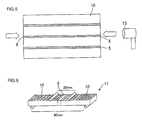
- the end faces 8 of the honeycomb segments 10 integrally bonded together by the bonding material are heated ( Fig. 1 : S4). That is, the end faces 8 of the integrated honeycomb segment bonded body 1 are heated and dried before the hardening of the bonding material ends. Specifically, as shown in Fig. 5 , both the end faces 8 of the honeycomb segment bonded body 1 are heated. In particular, when the end faces 8 are simultaneously heated, both the end faces 8 are substantially simultaneously immobilized with similar movement, and hence the fluctuations of the texture of the bonding material layer can effectively be suppressed. Then, the end faces 8 of the honeycomb segments 10 may be heated until 1% or more of water content of the whole honeycomb segment bonded body 1 flies. The end faces 8 are dried with hot air at 140°C or more by a drier 15 or the like. Furthermore, the end faces 8 are dried for 60 seconds or more. contact with a heated heating member such as a trowel 16.
- a heated heating member such as a trowel 16.
- the honeycomb segments are preferably more immediately immobilized, and the temperature of the hot air is more effectively high.
- the end faces are dried with the hot air at a comparatively low temperature, that is, a temperature lower than the hot air temperature of 140°C, for example, 80°C to 120°C, the end faces are insufficiently dried, and it is not possible to obtain an immobilization effect for suppressing the movement of the honeycomb segments during the drying, the effect being an object of the present application.
- the hot air has a temperature of 140°C or more, and the temperature is preferably as high as possible, and more preferably 180°C or more. Furthermore, the end faces of the honeycomb segments are dried after removing the excessive bonding material so that the honeycomb segments are more immediately immobilized in a case where the bonding material protrudes during the bonding.
- the honeycomb segments are left to stand at room temperature until a water absorbing step from the bonding material to the honeycomb segments stabilizes, and then the end faces of the honeycomb segments are dried, whereby the fluctuations of the bonding layers are further effectively decreased.
- a distance between a hot air blowing port and each end face 8 of the bonded body is more preferably as short as possible, as long as the hot air can be applied to the end face stably and uniformly during an operation.
- the distance is determined so that the hot air is concentrated on the end faces of the bonded body as much as possible. That is, the hot air is more preferably contrived so that the hot air does not hit the side surface of the bonded body or so that the hot air vertically hits the end faces of the bonded body.
- the whole honeycomb segment bonded body 1 is heated to dry ( Fig. 1 : S5) and then calcinated ( Fig. 1 : S6). That is, both the end faces 8 are heated in advance to homogenize the movement of the honeycomb segments 10 accompanying the drying contraction and hardening of the base material, whereby the fluctuations (non-uniformity) of the proceeding of the formation of the bonding material layers 5 are decreased, and the fluctuations of the characteristics of the bonding material layers 5 among the honeycomb segments 10 can be decreased.
- the bonding material which does not include an inorganic fiber such as ceramic fiber is used, the characteristics of the bonding material layers 5 easily become non-uniform.
- the characteristics of the bonding material layers 5 can be made uniform during the bonding. In consequence, the thermal shock resistance of the honeycomb segment bonded body 1 can be improved. Furthermore, the outer periphery of the body is ground into a cylindrical shape, and the outer peripheral surface of the body is coated with a coating material, followed by a thermal treatment at about 700°C for about two hours, whereby a honeycomb structure can be obtained.
- each honeycomb segment As a material of each honeycomb segment, SiC powder and metal Si powder were mixed at a mass ratio of 80:20, and a pore former, an organic binder, a surfactant and water were added to this mixture, to prepare a kneaded clay having plasticity.
- This clay was extruded and dried to obtain a formed ceramic article having a partition wall thickness of 310 ⁇ m, a cell density of about 46.5 cells/cm 2 (300 cells/square inch), a square sectional shape with one side of 35 mm, and a length of 178 mm. Both end faces of cells of this formed ceramic article were plugged so that the end faces had a checkered pattern. That is, the end portions of the adjacent cells were alternately plugged on opposite sides.
- honeycomb segment As a plugging material, a material similar to that of the honeycomb segment was used. Both the end faces of the cells were plugged and dried, and the article was degreased at about 400°C in the atmosphere, and then fired at about 1450°C in Ar inert atmosphere, thereby obtaining the honeycomb segment having a porous structure in which SiC crystal particles were combined with one another by Si.
- a bonding material 1 was obtained by mixing 41 mass% of SiC fine particles, 16.5 mass% of SiC coarse particles, 22 mass% of mica, 20 mass% of colloidal silica, 0.5 mass% of bentonite, 1.5 mass% of organic pore former (additional compounding based on 100 mass % of total main components of SiC fine particles, SiC coarse particles, mica, colloidal silica and bentonite), 0.4 mass% of organic binder (additional compounding based on 100 mass % of total main components of SiC fine particle, SiC coarse particles, mica, colloidal silica and bentonite) and 0.04 mass% of dispersant (additional compounding based on 100 mass % of total main components of SiC fine particle, SiC coarse particles, mica, colloidal silica and bentonite), further mixing this mixture with water, and kneading the resultant material by a mixer for 30 minutes, to obtain a paste-like bonding material.
- a bonding material 2 was obtained by mixing 43 mass% of SiC fine particles, 35 mass% of aluminosilicate fiber, 21 mass% of colloidal silica, 1 mass% of bentonite, 1.0 mass% of organic pore former (additional compounding based on 100 mass % of total main components of SiC fine particles, aluminosilicate fiber, colloidal silica and bentonite), 0.4 mass% of organic binder (additional compounding based on 100 mass % of total main components of SiC fine particles, aluminosilicate fiber, colloidal silica and bentonite) and 0.04 mass% of dispersant (additional compounding based on 100 mass % of total main components of SiC fine particles, aluminosilicate fiber, colloidal silica and bentonite), and regulating the resultant mixture in the same manner as in the bond
- Bonding faces of the honeycomb segment were coated with the bonding material 1, and the honeycomb segments were successively bonded while being pressurized one by one.
- This step was repeated to prepare three types of bonded bodies, that is, a body of 12 honeycomb segments as a combination of 3 vertical rows ⁇ 4 lateral rows (3 ⁇ 4 rows) of segments, a body of 16 honeycomb segments as a combination of 4 vertical rows ⁇ 4 lateral rows (4 ⁇ 4 rows) of segments and a body of 36 honeycomb segments as a combination of 6 vertical rows ⁇ 6 lateral rows (6 ⁇ 6 rows) of segments.
- Both end faces of each body were simultaneously heated at a hot air temperature of 250°C by a drier for 5 minutes, and the body was dried by a hot air drier at 140°C for 2 hours, and thermally treated by an electric furnace at 700°C for 0.5 hour, to obtain bonded bodies (Examples 1 to 3). Bonded bodies (Examples 4 to 6) were obtained by using the bonding material 2 by a similar method.
- Bonded bodies (Comparative Examples 1 to 6) were obtained by a method similar to that of the above examples The bonding materials 1, 2 were used. The step of heating both end faces of each body simultaneously by a drier at a hot air temperature of 250°C for 5 minutes was omitted.
- Bonded bodies (Examples 7 to 15, Comparative Examples 7 to 15) were obtained by using the bonding material 1 and changing conditions of a hot air temperature and a heating time during the simultaneous heating of both the end faces of each bonded body as shown in Table 1.
- the mass of the whole bonded body was measured before or after the end faces of the bonded body were dried, to measure the amount of flied water.
- the flied amount the decrease of the mass of the bonded body after the drying of the end faces thereof with respect to the amount of the water included in the bonded body before the drying was calculated and represented by a percentage.
- a test piece 11 having a width of 15 mm, a thickness of 10 mm and a length of 70 mm as shown in Fig. 6 was cut and prepared from each bonded portion substantially in the center of the bonded body in a length direction, and the four-point bending strength was measured with an outer span of 60 mm and an inner span of 20 mm.
- the ratios (the minimum values/the maximum values) between the maximum values and the minimum values in a set of all the resultant strength values were calculated and compared.
- the ratios were evaluated in accordance with the values of the being strength ratios, that is, a ratio of 0.8 or more was evaluated as a double circle, a ratio of 0.5 to less than 0.8 was evaluated as a circle, a ratio of 0.1 to less than 0.5 was evaluated as a triangle, and a ratio of less than 0.1 was evaluated as a cross.
- the amount of the flied water was 1.0% or more, the ratio of the minimum strength with respect to the maximum strength was close to 1, and the fluctuations of the strength depending on the bonded portions were small.
- the amount of the flied water was smaller than 0.4 %, the ratio of the minimum strength with respect to the maximum strength was smaller than 0.4, and the fluctuations of the strength depending on the bonded portions were large.
- a bonded body including 16 honeycomb segments as a combination of 4 vertical rows of segments and 4 lateral rows of segments was prepared by using the bonding material 1 on conditions similar to those of the bonded bodies (Examples 2, 5 and 7, Comparative Examples 2, 5 and 9), and was dried by a hot air drier at 140°C. Afterward, the outer periphery of the body was ground into a cylindrical shape, and the outer peripheral surface of the body was coated with a coating material, followed by a thermal treatment at 700°C for 2 hours, whereby a honeycomb structure was obtained. The resultant honeycomb structure was subjected to an immediate heating test (a burner spalling test) at a test temperature of 900°C, and the presence/absence of crack in the tested honeycomb structure was observed. The structure which was not cracked was evaluated as a circle, the slightly cracked structure was evaluated as a triangle, and the cracked structure was evaluated as a cross.
- an immediate heating test a burner spalling test
- the drying of the bonding material occurs similarly in the respective bonded portions.
- the honeycomb segment bonded article is enlarged (a large number of honeycomb segments are bonded together)
- the proceeding of the drying varies inside and outside the body, and the behaviors of the accompanying drying contraction and hardening of the bonded body vary.
- the movement of the honeycomb segments accompanying the drying contraction and hardening of the bonded body is not homogeneous, and hence fluctuations are generated not only in the proceeding of the formation of the bonding material layers but also in the characteristics of the layers.
- both the end faces of the bonded body are heated in advance to homogenize the drying conditions of the respective bonded portions.
- the movement of the honeycomb segments accompanying the drying contraction and hardening of the base material is homogenized, whereby the fluctuations of the proceeding of the formation of the bonding material layers are decreased, and the fluctuations of the characteristics of the bonding material layers are also decreased.
- a method of producing a honeycomb segment bonded body of the present invention is useful as, for example, a method of producing a diesel particulate filter (DPF) for collecting and removing a particulate matter (particulates) included in an exhaust gas from a diesel engine or the like.
- DPF diesel particulate filter
Landscapes
- Chemical & Material Sciences (AREA)
- Engineering & Computer Science (AREA)
- Ceramic Engineering (AREA)
- Structural Engineering (AREA)
- Materials Engineering (AREA)
- Organic Chemistry (AREA)
- Chemical Kinetics & Catalysis (AREA)
- Manufacturing & Machinery (AREA)
- Mechanical Engineering (AREA)
- General Engineering & Computer Science (AREA)
- Inorganic Chemistry (AREA)
- Health & Medical Sciences (AREA)
- Toxicology (AREA)
- Combustion & Propulsion (AREA)
- Filtering Materials (AREA)
- Ceramic Products (AREA)
- Drying Of Solid Materials (AREA)
- Laminated Bodies (AREA)
Claims (3)
- Verfahren zur Herstellung eines Wabensegmentverbundkörpers (1), das folgende Schritte umfasst: (i) das einstückige Verbinden von Wabensegmenten (10), die jeweils eine Vielzahl von Zellen (3) aufweisen, die durch Trennwände (2) getrennt sind und sich in axialer Richtung entlang einer Vielzahl von Verbindungsflächen in Reihen von 3 x 4 oder mehr durch das Segment (10) erstrecken, unter Verwendung eines Haftmaterials (7); (ii) das Erhitzen und Trocknen der Endflächen (8) des einstückigen Wabensegmentverbundkörpers, um die Wabensegmente (10) an den Endflächen zu fixieren, und (iii) das anschließende Erhitzen und Trocknen des gesamten Körpers, wobei in Schritt (ii) beide Endflächen des Wabensegmentverbundkörpers gleichzeitig durch Heißluft mit 140 °C oder mehr 60 s lang oder länger getrocknet werden.
- Verfahren zur Herstellung eines Wabensegmentverbundkörpers nach Anspruch 1, worin in Schritt (ii) die Endflächen der Wabensegmente erhitzt werden, bis 1 Gew.-% oder mehr des Wassergehalts des gesamten Wabensegmentverbundkörpers abgeflossen ist.
- Verfahren zur Herstellung eines Wabensegmentverbundkörpers nach Anspruch 1 oder 2, worin das Haftmaterial plattenähnliche Teilchen enthält.
Applications Claiming Priority (2)
| Application Number | Priority Date | Filing Date | Title |
|---|---|---|---|
| JP2007009558 | 2007-01-18 | ||
| PCT/JP2008/050522 WO2008088013A1 (ja) | 2007-01-18 | 2008-01-17 | ハニカムセグメント接合体の製造方法 |
Publications (3)
| Publication Number | Publication Date |
|---|---|
| EP2116520A1 EP2116520A1 (de) | 2009-11-11 |
| EP2116520A4 EP2116520A4 (de) | 2010-08-25 |
| EP2116520B1 true EP2116520B1 (de) | 2012-08-15 |
Family
ID=39636014
Family Applications (1)
| Application Number | Title | Priority Date | Filing Date |
|---|---|---|---|
| EP08703377A Active EP2116520B1 (de) | 2007-01-18 | 2008-01-17 | Verfahren zur herstellung eines wabensegment-verbundkörpers |
Country Status (3)
| Country | Link |
|---|---|
| EP (1) | EP2116520B1 (de) |
| JP (1) | JP5478072B2 (de) |
| WO (1) | WO2008088013A1 (de) |
Families Citing this family (4)
| Publication number | Priority date | Publication date | Assignee | Title |
|---|---|---|---|---|
| US10173933B2 (en) | 2013-05-06 | 2019-01-08 | Corning Incorporated | Rapid drying of ceramic greenwares |
| JP6423160B2 (ja) | 2014-03-04 | 2018-11-14 | 日本碍子株式会社 | ハニカム構造体 |
| JP7215943B2 (ja) * | 2019-03-19 | 2023-01-31 | 日本碍子株式会社 | ハニカム構造体の製造方法 |
| JP7141357B2 (ja) * | 2019-03-19 | 2022-09-22 | 日本碍子株式会社 | ハニカム構造体の製造方法 |
Family Cites Families (12)
| Publication number | Priority date | Publication date | Assignee | Title |
|---|---|---|---|---|
| JP2006035224A (ja) * | 1998-07-28 | 2006-02-09 | Ibiden Co Ltd | セラミック構造体 |
| JP2001130970A (ja) * | 1999-08-24 | 2001-05-15 | Ibiden Co Ltd | セラミック成形体の乾燥方法 |
| JP4293753B2 (ja) * | 2002-03-19 | 2009-07-08 | 日本碍子株式会社 | ハニカムフィルター |
| JP4112899B2 (ja) * | 2002-05-20 | 2008-07-02 | 日本碍子株式会社 | ハニカム構造体の製造方法 |
| JP4476557B2 (ja) * | 2003-03-25 | 2010-06-09 | 日本碍子株式会社 | セラミックス構造体の接合方法 |
| EP1790623B1 (de) * | 2003-11-12 | 2009-05-13 | Ibiden Co., Ltd. | Verfahren zur Herstellung der Keramikstruktur |
| JP4331575B2 (ja) * | 2003-11-26 | 2009-09-16 | 日本碍子株式会社 | ハニカム構造体及びその製造方法、並びに接合材 |
| JP4927405B2 (ja) * | 2005-03-23 | 2012-05-09 | 日本碍子株式会社 | 目封止ハニカム構造体の製造方法 |
| WO2007000825A1 (ja) * | 2005-06-27 | 2007-01-04 | Ibiden Co., Ltd. | ハニカム構造体 |
| WO2007096986A1 (ja) * | 2006-02-24 | 2007-08-30 | Ibiden Co., Ltd. | 端面加熱装置、ハニカム集合体の端面乾燥方法、及び、ハニカム構造体の製造方法 |
| WO2007108076A1 (ja) * | 2006-03-17 | 2007-09-27 | Ibiden Co., Ltd. | 乾燥装置、セラミック成形体の乾燥方法及びハニカム構造体の製造方法 |
| WO2007122707A1 (ja) * | 2006-04-19 | 2007-11-01 | Ibiden Co., Ltd. | ハニカム構造体の製造方法 |
-
2008
- 2008-01-17 EP EP08703377A patent/EP2116520B1/de active Active
- 2008-01-17 WO PCT/JP2008/050522 patent/WO2008088013A1/ja not_active Ceased
- 2008-01-17 JP JP2008554076A patent/JP5478072B2/ja active Active
Also Published As
| Publication number | Publication date |
|---|---|
| EP2116520A4 (de) | 2010-08-25 |
| EP2116520A1 (de) | 2009-11-11 |
| JP5478072B2 (ja) | 2014-04-23 |
| JPWO2008088013A1 (ja) | 2010-05-13 |
| WO2008088013A1 (ja) | 2008-07-24 |
Similar Documents
| Publication | Publication Date | Title |
|---|---|---|
| US8039086B2 (en) | Bonding material, process for producing the same, and honeycomb structure made with the same | |
| EP1698604B1 (de) | Keramikstrukturkörper | |
| EP2008985B1 (de) | Verbundelement und Wabenstruktur daraus | |
| JP4267947B2 (ja) | ハニカム構造体 | |
| EP2119487B1 (de) | Wabenstruktur und herstellungsverfahren dafür | |
| EP2123617B1 (de) | Verbindungsmaterialzusammensetzung, verfahren zur herstellung der verbindungsmaterialzusammensetzung, verbundener gegenstand und verfahren zur herstellung des verbundenen gegenstands | |
| US8101270B2 (en) | Bonding material for honeycomb structure and honeycomb structure utilizing the material | |
| EP1939261B1 (de) | Verbundener Körper und Herstellungsverfahren dafür | |
| EP2138475B1 (de) | Verbindungsmaterialzusammensetzung, herstellungsverfahren dafür und verbundener artikel und herstellungsverfahren dafür | |
| EP1600433B1 (de) | Wabenstruktur | |
| JP4997068B2 (ja) | 接合体及びその製造方法 | |
| WO2013125713A1 (ja) | ハニカム構造体 | |
| US20090035512A1 (en) | Honeycomb structure, process for producing the same, and bonding material | |
| EP2116520B1 (de) | Verfahren zur herstellung eines wabensegment-verbundkörpers | |
| EP2112129B1 (de) | Verbundener körper und herstellungsverfahren dafür | |
| EP2119689B1 (de) | Verfahren zur herstellung eines wabensegment-verbundartikels | |
| EP2133198B1 (de) | Wabenstruktur, verfahren zur herstellung der wabenstruktur, verbindungszusammensetzung und verfahren zur herstellung der verbindungszusammensetzung | |
| JP5280917B2 (ja) | ハニカム構造体 | |
| EP2127720B1 (de) | Wabenstruktur | |
| EP2119688A1 (de) | Wabensegment-verbundkörper für dpf und verbindungsmaterial für den verbundkörper | |
| EP1790408B1 (de) | Wabenstruktur |
Legal Events
| Date | Code | Title | Description |
|---|---|---|---|
| PUAI | Public reference made under article 153(3) epc to a published international application that has entered the european phase |
Free format text: ORIGINAL CODE: 0009012 |
|
| 17P | Request for examination filed |
Effective date: 20090717 |
|
| AK | Designated contracting states |
Kind code of ref document: A1 Designated state(s): AT BE BG CH CY CZ DE DK EE ES FI FR GB GR HR HU IE IS IT LI LT LU LV MC MT NL NO PL PT RO SE SI SK TR |
|
| DAX | Request for extension of the european patent (deleted) | ||
| A4 | Supplementary search report drawn up and despatched |
Effective date: 20100726 |
|
| RIC1 | Information provided on ipc code assigned before grant |
Ipc: B01D 39/00 20060101ALI20100720BHEP Ipc: F26B 3/00 20060101ALI20100720BHEP Ipc: B28B 11/24 20060101ALI20100720BHEP Ipc: C04B 35/565 20060101ALI20100720BHEP Ipc: F01N 3/022 20060101ALI20100720BHEP Ipc: C04B 37/00 20060101AFI20080805BHEP Ipc: B01D 39/20 20060101ALI20100720BHEP Ipc: C04B 38/00 20060101ALI20100720BHEP Ipc: F26B 3/06 20060101ALI20100720BHEP Ipc: B01D 46/24 20060101ALI20100720BHEP |
|
| 17Q | First examination report despatched |
Effective date: 20110324 |
|
| GRAP | Despatch of communication of intention to grant a patent |
Free format text: ORIGINAL CODE: EPIDOSNIGR1 |
|
| RIC1 | Information provided on ipc code assigned before grant |
Ipc: C04B 37/00 20060101AFI20120130BHEP Ipc: F01N 3/28 20060101ALI20120130BHEP Ipc: C04B 35/565 20060101ALI20120130BHEP Ipc: C04B 35/80 20060101ALI20120130BHEP Ipc: C04B 28/24 20060101ALI20120130BHEP Ipc: F26B 21/00 20060101ALI20120130BHEP Ipc: B28B 1/00 20060101ALI20120130BHEP Ipc: B28B 11/24 20060101ALI20120130BHEP Ipc: C04B 38/00 20060101ALI20120130BHEP |
|
| RTI1 | Title (correction) |
Free format text: METHOD OF PRODUCING HONEYCOMB SEGMENT BONDED BODY |
|
| GRAS | Grant fee paid |
Free format text: ORIGINAL CODE: EPIDOSNIGR3 |
|
| GRAA | (expected) grant |
Free format text: ORIGINAL CODE: 0009210 |
|
| AK | Designated contracting states |
Kind code of ref document: B1 Designated state(s): AT BE BG CH CY CZ DE DK EE ES FI FR GB GR HR HU IE IS IT LI LT LU LV MC MT NL NO PL PT RO SE SI SK TR |
|
| REG | Reference to a national code |
Ref country code: GB Ref legal event code: FG4D Ref country code: CH Ref legal event code: EP Ref country code: AT Ref legal event code: REF Ref document number: 570726 Country of ref document: AT Kind code of ref document: T Effective date: 20120815 |
|
| REG | Reference to a national code |
Ref country code: IE Ref legal event code: FG4D |
|
| REG | Reference to a national code |
Ref country code: DE Ref legal event code: R096 Ref document number: 602008017998 Country of ref document: DE Effective date: 20121011 |
|
| REG | Reference to a national code |
Ref country code: NL Ref legal event code: VDEP Effective date: 20120815 |
|
| REG | Reference to a national code |
Ref country code: AT Ref legal event code: MK05 Ref document number: 570726 Country of ref document: AT Kind code of ref document: T Effective date: 20120815 |
|
| PG25 | Lapsed in a contracting state [announced via postgrant information from national office to epo] |
Ref country code: AT Free format text: LAPSE BECAUSE OF FAILURE TO SUBMIT A TRANSLATION OF THE DESCRIPTION OR TO PAY THE FEE WITHIN THE PRESCRIBED TIME-LIMIT Effective date: 20120815 Ref country code: HR Free format text: LAPSE BECAUSE OF FAILURE TO SUBMIT A TRANSLATION OF THE DESCRIPTION OR TO PAY THE FEE WITHIN THE PRESCRIBED TIME-LIMIT Effective date: 20120815 Ref country code: IS Free format text: LAPSE BECAUSE OF FAILURE TO SUBMIT A TRANSLATION OF THE DESCRIPTION OR TO PAY THE FEE WITHIN THE PRESCRIBED TIME-LIMIT Effective date: 20121215 Ref country code: NO Free format text: LAPSE BECAUSE OF FAILURE TO SUBMIT A TRANSLATION OF THE DESCRIPTION OR TO PAY THE FEE WITHIN THE PRESCRIBED TIME-LIMIT Effective date: 20121115 Ref country code: LT Free format text: LAPSE BECAUSE OF FAILURE TO SUBMIT A TRANSLATION OF THE DESCRIPTION OR TO PAY THE FEE WITHIN THE PRESCRIBED TIME-LIMIT Effective date: 20120815 Ref country code: FI Free format text: LAPSE BECAUSE OF FAILURE TO SUBMIT A TRANSLATION OF THE DESCRIPTION OR TO PAY THE FEE WITHIN THE PRESCRIBED TIME-LIMIT Effective date: 20120815 |
|
| PG25 | Lapsed in a contracting state [announced via postgrant information from national office to epo] |
Ref country code: LV Free format text: LAPSE BECAUSE OF FAILURE TO SUBMIT A TRANSLATION OF THE DESCRIPTION OR TO PAY THE FEE WITHIN THE PRESCRIBED TIME-LIMIT Effective date: 20120815 Ref country code: PL Free format text: LAPSE BECAUSE OF FAILURE TO SUBMIT A TRANSLATION OF THE DESCRIPTION OR TO PAY THE FEE WITHIN THE PRESCRIBED TIME-LIMIT Effective date: 20120815 Ref country code: SI Free format text: LAPSE BECAUSE OF FAILURE TO SUBMIT A TRANSLATION OF THE DESCRIPTION OR TO PAY THE FEE WITHIN THE PRESCRIBED TIME-LIMIT Effective date: 20120815 Ref country code: PT Free format text: LAPSE BECAUSE OF FAILURE TO SUBMIT A TRANSLATION OF THE DESCRIPTION OR TO PAY THE FEE WITHIN THE PRESCRIBED TIME-LIMIT Effective date: 20121217 Ref country code: BE Free format text: LAPSE BECAUSE OF FAILURE TO SUBMIT A TRANSLATION OF THE DESCRIPTION OR TO PAY THE FEE WITHIN THE PRESCRIBED TIME-LIMIT Effective date: 20120815 Ref country code: SE Free format text: LAPSE BECAUSE OF FAILURE TO SUBMIT A TRANSLATION OF THE DESCRIPTION OR TO PAY THE FEE WITHIN THE PRESCRIBED TIME-LIMIT Effective date: 20120815 Ref country code: GR Free format text: LAPSE BECAUSE OF FAILURE TO SUBMIT A TRANSLATION OF THE DESCRIPTION OR TO PAY THE FEE WITHIN THE PRESCRIBED TIME-LIMIT Effective date: 20121116 |
|
| PG25 | Lapsed in a contracting state [announced via postgrant information from national office to epo] |
Ref country code: NL Free format text: LAPSE BECAUSE OF FAILURE TO SUBMIT A TRANSLATION OF THE DESCRIPTION OR TO PAY THE FEE WITHIN THE PRESCRIBED TIME-LIMIT Effective date: 20120815 |
|
| PG25 | Lapsed in a contracting state [announced via postgrant information from national office to epo] |
Ref country code: EE Free format text: LAPSE BECAUSE OF FAILURE TO SUBMIT A TRANSLATION OF THE DESCRIPTION OR TO PAY THE FEE WITHIN THE PRESCRIBED TIME-LIMIT Effective date: 20120815 Ref country code: DK Free format text: LAPSE BECAUSE OF FAILURE TO SUBMIT A TRANSLATION OF THE DESCRIPTION OR TO PAY THE FEE WITHIN THE PRESCRIBED TIME-LIMIT Effective date: 20120815 Ref country code: CZ Free format text: LAPSE BECAUSE OF FAILURE TO SUBMIT A TRANSLATION OF THE DESCRIPTION OR TO PAY THE FEE WITHIN THE PRESCRIBED TIME-LIMIT Effective date: 20120815 Ref country code: RO Free format text: LAPSE BECAUSE OF FAILURE TO SUBMIT A TRANSLATION OF THE DESCRIPTION OR TO PAY THE FEE WITHIN THE PRESCRIBED TIME-LIMIT Effective date: 20120815 Ref country code: ES Free format text: LAPSE BECAUSE OF FAILURE TO SUBMIT A TRANSLATION OF THE DESCRIPTION OR TO PAY THE FEE WITHIN THE PRESCRIBED TIME-LIMIT Effective date: 20121126 |
|
| PG25 | Lapsed in a contracting state [announced via postgrant information from national office to epo] |
Ref country code: IT Free format text: LAPSE BECAUSE OF FAILURE TO SUBMIT A TRANSLATION OF THE DESCRIPTION OR TO PAY THE FEE WITHIN THE PRESCRIBED TIME-LIMIT Effective date: 20120815 Ref country code: SK Free format text: LAPSE BECAUSE OF FAILURE TO SUBMIT A TRANSLATION OF THE DESCRIPTION OR TO PAY THE FEE WITHIN THE PRESCRIBED TIME-LIMIT Effective date: 20120815 Ref country code: CY Free format text: LAPSE BECAUSE OF FAILURE TO SUBMIT A TRANSLATION OF THE DESCRIPTION OR TO PAY THE FEE WITHIN THE PRESCRIBED TIME-LIMIT Effective date: 20120815 |
|
| PLBE | No opposition filed within time limit |
Free format text: ORIGINAL CODE: 0009261 |
|
| STAA | Information on the status of an ep patent application or granted ep patent |
Free format text: STATUS: NO OPPOSITION FILED WITHIN TIME LIMIT |
|
| 26N | No opposition filed |
Effective date: 20130516 |
|
| PG25 | Lapsed in a contracting state [announced via postgrant information from national office to epo] |
Ref country code: BG Free format text: LAPSE BECAUSE OF FAILURE TO SUBMIT A TRANSLATION OF THE DESCRIPTION OR TO PAY THE FEE WITHIN THE PRESCRIBED TIME-LIMIT Effective date: 20121115 |
|
| PG25 | Lapsed in a contracting state [announced via postgrant information from national office to epo] |
Ref country code: MC Free format text: LAPSE BECAUSE OF NON-PAYMENT OF DUE FEES Effective date: 20130131 |
|
| REG | Reference to a national code |
Ref country code: CH Ref legal event code: PL |
|
| REG | Reference to a national code |
Ref country code: DE Ref legal event code: R097 Ref document number: 602008017998 Country of ref document: DE Effective date: 20130516 |
|
| GBPC | Gb: european patent ceased through non-payment of renewal fee |
Effective date: 20130117 |
|
| REG | Reference to a national code |
Ref country code: IE Ref legal event code: MM4A |
|
| PG25 | Lapsed in a contracting state [announced via postgrant information from national office to epo] |
Ref country code: LI Free format text: LAPSE BECAUSE OF NON-PAYMENT OF DUE FEES Effective date: 20130131 Ref country code: CH Free format text: LAPSE BECAUSE OF NON-PAYMENT OF DUE FEES Effective date: 20130131 |
|
| PG25 | Lapsed in a contracting state [announced via postgrant information from national office to epo] |
Ref country code: GB Free format text: LAPSE BECAUSE OF NON-PAYMENT OF DUE FEES Effective date: 20130117 |
|
| PG25 | Lapsed in a contracting state [announced via postgrant information from national office to epo] |
Ref country code: IE Free format text: LAPSE BECAUSE OF NON-PAYMENT OF DUE FEES Effective date: 20130117 |
|
| PG25 | Lapsed in a contracting state [announced via postgrant information from national office to epo] |
Ref country code: MT Free format text: LAPSE BECAUSE OF FAILURE TO SUBMIT A TRANSLATION OF THE DESCRIPTION OR TO PAY THE FEE WITHIN THE PRESCRIBED TIME-LIMIT Effective date: 20120815 |
|
| PG25 | Lapsed in a contracting state [announced via postgrant information from national office to epo] |
Ref country code: TR Free format text: LAPSE BECAUSE OF FAILURE TO SUBMIT A TRANSLATION OF THE DESCRIPTION OR TO PAY THE FEE WITHIN THE PRESCRIBED TIME-LIMIT Effective date: 20120815 |
|
| PG25 | Lapsed in a contracting state [announced via postgrant information from national office to epo] |
Ref country code: LU Free format text: LAPSE BECAUSE OF NON-PAYMENT OF DUE FEES Effective date: 20130117 Ref country code: HU Free format text: LAPSE BECAUSE OF FAILURE TO SUBMIT A TRANSLATION OF THE DESCRIPTION OR TO PAY THE FEE WITHIN THE PRESCRIBED TIME-LIMIT; INVALID AB INITIO Effective date: 20080117 |
|
| REG | Reference to a national code |
Ref country code: FR Ref legal event code: PLFP Year of fee payment: 9 |
|
| REG | Reference to a national code |
Ref country code: FR Ref legal event code: PLFP Year of fee payment: 10 |
|
| REG | Reference to a national code |
Ref country code: FR Ref legal event code: PLFP Year of fee payment: 11 |
|
| PGFP | Annual fee paid to national office [announced via postgrant information from national office to epo] |
Ref country code: FR Payment date: 20191216 Year of fee payment: 13 |
|
| PG25 | Lapsed in a contracting state [announced via postgrant information from national office to epo] |
Ref country code: FR Free format text: LAPSE BECAUSE OF NON-PAYMENT OF DUE FEES Effective date: 20210131 |
|
| PGFP | Annual fee paid to national office [announced via postgrant information from national office to epo] |
Ref country code: DE Payment date: 20251203 Year of fee payment: 19 |