EP2118280B1 - Selection et enrichissement de proteines faisant appel a une compartimentalisation in vitro - Google Patents
Selection et enrichissement de proteines faisant appel a une compartimentalisation in vitro Download PDFInfo
- Publication number
- EP2118280B1 EP2118280B1 EP08730500A EP08730500A EP2118280B1 EP 2118280 B1 EP2118280 B1 EP 2118280B1 EP 08730500 A EP08730500 A EP 08730500A EP 08730500 A EP08730500 A EP 08730500A EP 2118280 B1 EP2118280 B1 EP 2118280B1
- Authority
- EP
- European Patent Office
- Prior art keywords
- activity
- polynucleotide
- target gene
- adaptor
- gene
- Prior art date
- Legal status (The legal status is an assumption and is not a legal conclusion. Google has not performed a legal analysis and makes no representation as to the accuracy of the status listed.)
- Not-in-force
Links
Images

Classifications
-
- C—CHEMISTRY; METALLURGY
- C12—BIOCHEMISTRY; BEER; SPIRITS; WINE; VINEGAR; MICROBIOLOGY; ENZYMOLOGY; MUTATION OR GENETIC ENGINEERING
- C12N—MICROORGANISMS OR ENZYMES; COMPOSITIONS THEREOF; PROPAGATING, PRESERVING, OR MAINTAINING MICROORGANISMS; MUTATION OR GENETIC ENGINEERING; CULTURE MEDIA
- C12N9/00—Enzymes; Proenzymes; Compositions thereof; Processes for preparing, activating, inhibiting, separating or purifying enzymes
- C12N9/14—Hydrolases (3)
- C12N9/16—Hydrolases (3) acting on ester bonds (3.1)
- C12N9/22—Ribonucleases [RNase]; Deoxyribonucleases [DNase]
-
- C—CHEMISTRY; METALLURGY
- C12—BIOCHEMISTRY; BEER; SPIRITS; WINE; VINEGAR; MICROBIOLOGY; ENZYMOLOGY; MUTATION OR GENETIC ENGINEERING
- C12N—MICROORGANISMS OR ENZYMES; COMPOSITIONS THEREOF; PROPAGATING, PRESERVING, OR MAINTAINING MICROORGANISMS; MUTATION OR GENETIC ENGINEERING; CULTURE MEDIA
- C12N15/00—Mutation or genetic engineering; DNA or RNA concerning genetic engineering, vectors, e.g. plasmids, or their isolation, preparation or purification; Use of hosts therefor
- C12N15/09—Recombinant DNA-technology
- C12N15/10—Processes for the isolation, preparation or purification of DNA or RNA
- C12N15/1034—Isolating an individual clone by screening libraries
- C12N15/1058—Directional evolution of libraries, e.g. evolution of libraries is achieved by mutagenesis and screening or selection of mixed population of organisms
-
- C—CHEMISTRY; METALLURGY
- C12—BIOCHEMISTRY; BEER; SPIRITS; WINE; VINEGAR; MICROBIOLOGY; ENZYMOLOGY; MUTATION OR GENETIC ENGINEERING
- C12N—MICROORGANISMS OR ENZYMES; COMPOSITIONS THEREOF; PROPAGATING, PRESERVING, OR MAINTAINING MICROORGANISMS; MUTATION OR GENETIC ENGINEERING; CULTURE MEDIA
- C12N15/00—Mutation or genetic engineering; DNA or RNA concerning genetic engineering, vectors, e.g. plasmids, or their isolation, preparation or purification; Use of hosts therefor
- C12N15/09—Recombinant DNA-technology
- C12N15/10—Processes for the isolation, preparation or purification of DNA or RNA
- C12N15/1034—Isolating an individual clone by screening libraries
- C12N15/1075—Isolating an individual clone by screening libraries by coupling phenotype to genotype, not provided for in other groups of this subclass
Definitions
- IVC in vitro compartmentalization
- the ability to stably create as many as 10 9 ⁇ 10 10 individual aqueous droplets in a single emulsion where each droplet contains a different molecule from a library of molecules could provide a rapid screening method for target genes encoding a desired phenotype in an extensive sequence space.
- Doi et al. described a screening method for selecting and enriching for a genotype expressing a restriction endonuclease phenotype.
- Doi et al. used a DNA polymerase to incorporate dUTP-biotin to the sticky ends generated by restriction endonuclease cleavage permitting strepavidin affinity purification. Only 10-fold enrichment of a single polynucleotide was achieved in one round of in vitro compartmentalization. Consequently, a large number of rounds of enrichment were required to select an active phenotype, FokI, from a randomized FokI library.
- IVC methods utilize binding of nucleic acid to proteins they express.
- International Application No. WO 02/089498 discloses methods for selecting nucleic acid molecules of interest from libraries of nucleic acid molecules and methods for selecting nucleic acids that encode polypeptides that are fused to nucleic acid peptide binding sequences.
- International Application No. WO 2005/030957 discloses a method which makes it possible to allocate nucleic acids to the polypeptides coded thereby and to select and isolate nucleic acids coding for peptides with selected properties. Disclosure is directed to the use of (cytosin-5)-methyl transferases and to the use of fusion polypeptides or nucleic acid fusion polypeptide complexes covalently bonded thereto.
- US 2006/0210982 discloses a method for screening a nucleic acid library for a nucleic acid encoding a protein that interacts with a target substance.
- the method comprises producing a library of assigning molecules each comprising a protein and a nucleic acid encoding the protein linked to each other via a linker cleavable under a condition that does not change a nucleotide sequence of the nucleic acid.
- WO 02/22869 discloses a method for selecting an enzyme having replicase activity in which a pool of nucleic acids comprising members each encoding a replicase or a variant of the replicase is subdivided into compartments, such that each compartment comprises a nucleic acid member of the pool together with the replicase or variant encoded by the nucleic acid member. Nucleic acid amplification is then allowed to occur and amplification of the nucleic acid member by the replicas is detected.
- a method for selection and enrichment of a target gene, wherein the method includes providing a library of polynucleotide fragments in which one or more polynucleotide fragments comprise a target gene encoding a protein with a desired activity.
- the polynucleotides in the library are encapsulated in a plurality of aqueous droplets in an emulsion, wherein each of the aqueous droplets in the plurality of droplets contains (i) a mixture of enzymes with transcription and translation activity, and (ii) one or more polynucleotide fragments from the library of polynucleotide fragments.
- the target gene from the library is transcribed and translated to provide a protein that has an activity that permits the polynucleotide fragment to become covalently linked to a polynucleotide adaptor in a reaction catalyzed by a ligase.
- ligation preferably occurs between complementary sticky ends on the polynucleotide fragment and the polynucleotides adaptor
- ligation may also be achieved through blunt-end ligation provided that the blunt end on the polynucleotide fragment is ligatable. This can for example be achieved through the activity of a restriction endonuclease.
- the target gene can then be selectively amplified using an adaptor-specific primer.
- the adaptor-specific primer preferably has a sequence that is present in the adaptor only and not in the polynucleotide fragment.
- the primer may have a sequence that is in large part located in the adaptor but overlaps with a short sequence (for example, less than 20 nucleotides) at the terminus of the polynucleotide fragment.
- target genes include those that encode proteins with activities selected from the group consisting of: ligase activity such as RNA or DNA ligase activity; polynucleotide cleavage activity such as restriction endonuclease activity, nicking endonuclease activity or homing endonuclease activity; transcription or translation activity such as tRNA synthetase activity or RNA polymerase activity; and reverse transcription activity.
- ligase activity such as RNA or DNA ligase activity
- polynucleotide cleavage activity such as restriction endonuclease activity, nicking endonuclease activity or homing endonuclease activity
- transcription or translation activity such as tRNA synthetase activity or RNA polymerase activity
- reverse transcription activity such as tRNA synthetase activity or RNA polymerase activity.
- a second primer is utilized in polymerase-dependent amplification that may hybridize to a sequence common in all the polynucleotide fragments in the library where the sequence is located at the opposite end of the polynucleotide from the adaptor-ligated end.
- the specific sequence is also external to the gene.
- the aqueous droplets are disrupted after transcription and transition of the target gene and before ligation of the adaptor to the polynucleotide fragment. In another embodiment, the aqueous droplets may be disrupted after ligation and before amplifying the gene.
- certain aqueous droplets may include a plurality of polynucleotide fragments wherein the plurality of fragments further includes a plurality of genes.
- each of the aqueous droplets described above may further contain one or more of a second polynucleotide fragment, not from the library, containing a gene encoding a defined second protein.
- the gene encoding the defined second protein has polynucleotide cleavage activity.
- each of the aqueous droplets described above contains a reagent enzyme with polymerase-cleavage activity.
- an additional round or rounds of selection and enrichment may be desirable, in which case, the product of amplification is encapsulated in a plurality of aqueous droplets in an emulsion in the presence of a mixture of enzymes for transcribing and translating the gene, allowing the target gene to be expressed and permitting ligation to a second or additional polynucleotide adaptor and amplifying the target gene using a primer specific for the second adaptor.
- the adaptor used in each round preferably differs from the adaptor in the previous round. However, in another embodiment, the adaptor may be reused provided that it is removed from the amplified target gene prior to the next round of encapsulation.
- enrichment of the target gene after one round of section may be at least 50-fold, 70-fold or 100-fold.
- individual polynucleotide fragments in the library contain a recognition sequence for at least one of a restriction endonuclease and a nicking endonuclease in a region of the fragment outside the gene sequence.
- a sticky end is formed on the polynucleotide fragment by cleaving the polynucleotide fragment with the protein expressed by the target gene optionally in combination with a second enzyme activity provided by an enzyme reagent or by a protein encoded by a second polynucleotide fragment.
- the expression and/or activity of the protein encoded by a gene on the second polynucleotide may depend on the protein expressed by the target gene.
- this activity enables a restriction endonuclease encoded by a gene on the second polynucleotide fragment to be transcribed and translated and to cleave the polynucleotide fragment containing the target tRNA synthetase gene to generate a sticky end for ligating to an adaptor thus causing selection and enrichment of the target gene.
- the protein expressed by the target gene is a restriction endonuclease that cleaves DNA to form a blunt end on the polynucleotide fragment.
- a second enzyme activity is provided to convert the blunt end to a sticky end where the second enzyme activity may be a nicking endonuclease.
- An adaptor with a compatible sticky end can then be ligated to the polynucleotide fragment containing the target gene.
- the protein expressed by the target gene has nicking endonuclease activity, and the second enzyme activity is a restriction endonuclease activity. The activity of the two enzymes results in creation of a sticky end on the polynucleotide for ligation to an adaptor and subsequent amplification.
- the library of polynucleotide fragments contains genomic DNA (gDNA).
- the target gene is a naturally occurring gene, where the method additionally includes cloning the naturally occurring target gene from the amplified DNA thereby providing a means for readily obtaining new naturally occurring genes from the environment with targeted functionalities.
- the target gene is a mutagenized gene having a desired cleavage, synthetic or ligation protein activity.
- target genes from genomic libraries or mutagenized libraries include those encoding proteins with an activity selected from ligase activity such as RNA or DNA ligase activity; polynucleotide-cleavage activity such as restriction endonuclease activity, nicking endonuclease activity or homing endonuclease activity; transcription or transl-ation activity such as tRNA synthetase activity or RNA polymerase activity; and reverse transcription activity
- Examples of activities that may be selected for include a change in a desired specificity from that found in a naturally occurring protein.
- a change in cleavage-site specificity for a restriction endonuclease may be sought.
- the desired unnatural cleavage site would be introduced at or near the terminus of the polynucleotide fragment in the library so that a target gene would be selected and enriched only if the encoded protein cleaved at the desired unnatural site to generate a sticky end for ligation to an adaptor.
- Another example includes selecting and enriching for an enhanced polynucleotide cleavage activity.
- a target gene may be selected and enriched for on account of the ability of the encoded protein to cleave a DNA sequence at an unnatural distance from its recognition site compared with a wild-type protein.
- Embodiments of the invention have been exemplified by the cloning from nature of a novel restriction endonuclease, here named TspMI. Additional embodiments of the invention further include a vector containing the gene encoding TspMI and a host cell transformed with the vector.
- a composition is provided where the composition is an emulsion of a hydrophilic solution in a hydrophobic liquid, the hydrophilic solution forming a plurality of droplets, each of the droplets containing: (i) a mixture of enzymes with transcription and translation activity; and (ii) a polynucleotide fragment from a library of polynucleotide fragments, the polynucleotide fragment having a sticky end or a recognition site for an enzyme capable of cleaving the polynucleotide to create a sticky end.
- the droplets in the emulsion may further include a polynucleotide adaptor with a sticky end, the sticky end being complementary to the sticky end created or present on the polynucleotide fragment.
- the droplets in the emulsion may further include a restriction endonuclease reagent.
- the droplets in the emulsion may include a plurality of polynucleotide fragments, wherein one of the polynucleotide fragments encodes a restriction endonuclease reagent.
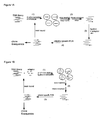
- Figure 1A shows a diagram of the in vitro selection and enrichment of a target gene encoding a restriction endonuclease.
- a library of DNA fragments together with transcription and translation reagents are dispersed into aqueous droplets in an emulsion (1). If an active restriction endonuclease is expressed in vitro in the droplets, cleavage of the terminus of the DNA fragment containing the encoding gene occurs at the endonuclease recognition sequence on the polynucleotide fragments to generate a sticky end. This is denoted by -X.
- the reaction in the emulsion is quenched by, for example, heating and/or adding EDTA.
- the emulsion is broken by adding water-saturated ether. DNA fragments are recovered from the aqueous phase (2).
- Figure 1B shows selection of a target gene that encodes a protein with ligase activity.
- a library of DNA fragments together with transcription and translation reagents and polynucleotide adaptors are dispersed into aqueous droplets in an emulsion. Ligation occurs in individual droplets that contain DNA fragments that encode the ligase activity (-X-). Ligation does not occur inside those droplets where there is no ligase-encoding genes (1). After an effective time period for transcription and translation, the reaction is stopped and the emulsion broken. DNA polynucleotides are recovered from the emulsion (2). Adaptor-specific PCR amplification is performed after which the recovered amplified DNA either enters the next round of selection or is cloned (3).
- Figure 1C shows coupled selection of an enzyme.
- a library of polynucleotides, adaptors, in vitro transcription and translation reagents minus a particular tRNA synthetase and a second polynucleotide fragment encoding a restriction endonuclease are emulsified into aqueous droplet. If a target gene encoding protein with the particular tRNA synthetase activity is expressed in a droplet, the second polynucleotide encoding the restriction endonuclease will also be transcribed and translated (1). This endonuclease can cleave a site outside the target gene on the polynucleotide fragment containing the target gene to generate a sticky end.
- the reaction is stopped and the droplets are disrupted.
- DNA fragments are recovered from the emulsion (2).
- a ligation step is required to ligate the adaptor to the cleaved DNA fragment (3).
- Adaptor-specific PCR is performed using the recovered DNA fragments (4).
- template DNA with adaptor ligated is preferentially amplified.
- the PCR product is used for the next round of selection or cloned.
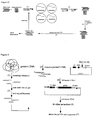
- Figure 2 provides a diagram of genomic library construction for in vitro selection of an enzyme.
- Genomic DNA is sheared using a nebulizer to create fragments having a size of less than 5Kb (1) after which the DNA fragments are size-selected (1K-3K) on a gel and end-repaired using a PhusionTM polymerase (Finnzymes, Espoo, Finland) (2).
- the fragments are then phosphorylated with T4 polynucleotide kinase (3) and inserted into a pLT7K vector ( Kong et al. Nucleic Acid Res 28:3216-3223 (2000 )) (4) at a cloning site corresponding to an NruI cut site (5).
- a preparation of droplets is made where droplets contain a single vector and amplification reagents for performing emulsion PCR.
- the emulsion is then disrupted and the amplification products form the library of polynucleotides for selection and enrichment for a target gene (6).
- the library of polynucleotides are mixed with reagents for transcription and translation (PURETM system, Genome Institute, Japan) and encapsulated in aqueous droplets in an emulsion. If a restriction endonuclease is encoded by the DNA fragment derived from the genome, then cleavage will occur and will be identified as described in Figure 1A .
- the gene to be cloned from the genome is a ligase
- enrichment of the ligase gene will occur as described in 1B.
- an enzyme may be cloned from its natural hosts within as few as three rounds of selection (7).
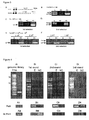
- Figures 3A-F show examples of enrichment of a target gene compared to a second template.
- Lane E shows the product of transcription and translation in the emulsion followed by ligation with an adaptor and PCR amplification.
- the amplification product is substantially enriched with respect to green fluorescent protein (GFP) when compared with the positive control.
- GFP green fluorescent protein
- Lane NC is a negative control that shows the product of amplification of the two genes in the absence of ligation and without use of an emulsion.
- Lane PC is a positive control that shows the product of amplification of both genes in the presence of a restriction endonuclease and a ligase so that all fragments are ligated and amplified.
- GFP is overwhelmingly represented compared to PstI.
- Figure 3A shows a schematic of DNA templates used in the mode! libraries.
- the target gene is PstI-open reading frame-encoding PstI restriction endonuclease while the control is the gene encoding GFP.
- the PstI and genes differ in size.
- Figure 3B shows the results of a first cycle of amplification on a starting mixture of PstI and GFP in a ratio of 1:100.
- the lanes from left to right are E, NC, PC as explained above.
- Figures 3C and D show the results of a first cycle and a second cycle of amplification, respectively, where the starting mixture contains PstI and GFP genes in a ratio of 1:1000.
- the lanes from left to right are E, NC, PC as explained above.
- Figure 3E and F shows the results of a first cycle and second cycle of amplification, respectively, where the starting mixture contains PstI and GFP in a ratio of 1:10 4 and 1:10 5 .
- the lanes from left to right are E and PC for each ratio. Residual amounts of GFP in E may result from the occasional presence of both genes in a single droplet where the restriction endonuclease produced by PstI gene acts on GFP also.
- Figures 4A-D show genomic selection of the PstI gene from Providencia stuartii.
- Figure 4Ai shows the starting genomic library.
- the smear between 1 kb and 3 kb contains amplified genomic templates generated in emulsions before enrichment.
- the single band in Lane 2 corresponds to empty plasmids.
- 4Aii and 4Aiii shows the result of amplification of the genomic library using a PstI gene-specific primer and a M.PstII-specific primer, respectively.
- Figure 4B shows the genomic library after a first round of gene selection and enrichment in E.
- NC is the total DNA from 4Ai.
- 4Bii shows enhanced amounts of the PstI gene after emulsion selection. Enrichment is not observed for M.PstII in 4Biii.
- Figure 4C shows the genomic library after a second round of gene selection and enrichment in E. NC corresponds to amplification of total DNA fragments resulting from break up of the emulsion after the first round of selection.
- 4Cii shows enhanced amounts of the PstI gene after emulsion selection.
- M.PstII gene is no longer detected using an M.PstI gene-specific primer (4Ciii).
- Figure 4D shows the genomic library after a third round of gene selection and enrichment in E. NC corresponds to amplification of total DNA fragments resulting from break up of the emulsion after the second round of selection.
- 4Dii shows enhanced amounts of the PstI gene after emulsion selection. M.PstII gene is no longer detected using an M.PstI gene-specific primer (4Diii).
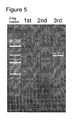
- FIG. 5 shows genomic selection of the TspMI gene from Thermus sp. on a 1% agarose gel. Lanes 1st, 2 nd and 3rd show the adaptor-specific PCR amplification after each round of selection. Bands in the 3rd lane were cloned and confirmed to encode the TspMI gene.
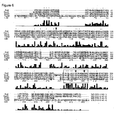
- Figure 6 shows the multiple alignment between AvaI (SEQ ID NO:1), NspIII (SEQ ID NO:2), BsoBI (SEQ ID NO:3) and the TspMI (SEQ ID NO:4) family.
- Predicted catalytic motifs EXK are shown in the box.
- the catalytic residue histidine is highlighted by the arrow between position 110 and 120.
- TspMI is remotely similar to other protein sequences except the highly conserved region for catalysis.
- Arrows between positions 290 and 310 show the residues responsible for degenerate base recognition in the BsoBI family.
- FIG. 7 shows the nucleotide sequence of TspMI (SEQ ID NO:5).
- In vitro compartmentalization offers a powerful method of directed evolution if selection and enrichment of the target gene can be optimized to allow efficient recovery from within the extensive sequence space.
- an approach to selection and enrichment has been developed that involves the ligation of adaptor molecules to polynucleotides from which target genes have been expressed and optionally modified. This approach provides as much as or greater than 100-fold enrichment during each round of selection and can be applied to a broad range of genes encoding selectable enzymatic activities.
- emulsions which may be produced from any suitable combination of immiscible liquids.
- hydrophilic solvents form "aqueous" droplets of microscopic or colloidal size.
- Droplets are also referred to as "microcapsules” in the art.
- the aqueous droplets in the colloid can be formed from any hydrophilic material suitable for forming an emulsion, containing biochemical components in a stable form; and providing an environment in which the described reactions can occur.
- the hydrophobic liquid in which the droplets are suspended contains none of the reactants.
- the emulsion may be stabilized by addition of one or more surface-active agents (surfactants).
- surfactants are termed emulsifying agents and act at the hydrophilic/hydrophobic interface to prevent (or at least delay) separation of the phases.
- Many hydrophobic liquids such as oils and many emulsifiers can be used for the generation of biphasic emulsions; a recent compilation listed over 16,000 surfactants, many of which are used as emulsifying agents ( Ash, M. and Ash, I. Handbook of industrial surfactants. Gower Publishing Ltd: Aldershot, Hampshire, UK (1993 ); and Schick, Nonionic surfactants. Marcel Dekker: N.Y. (1996 )) such as sorbitan monooleate (SPAN.RTM. 80; ICI)) and polyoxyethylenesorbitan monooleate (TWEEN.RTM. 80; ICI)).
- anionic surfactants may also be beneficial.
- Suitable surfactants include sodium cholate and sodium taurocholate. Particularly preferred is sodium deoxycholate, preferably at a concentration of 0.5% w/v, or below. Addition of an anionic surfactant to the mixtures to be emulsified ensures that reactions proceed only after compartmentalization.
- stirrers such as magnetic stir-bars, propeller and turbine stirrers, paddle devices and whisks
- homogenizers including rotor-stator homogenizers, high-pressure valve homogenizers and jet homogenizers
- colloid mills ultrasound and "membrane emulsification" devices
- the volume of the aqueous droplets is preferably of the order of between 5.2x10 -22 m 3 and 5.2.x10 -16 m 3 corresponding to a sphere of diameter between 0.1 ⁇ m and 10 ⁇ m, more preferably between about 5.2x10 -19 m 3 and 6.5x10 -17 m 3 (1 ⁇ m and 5 ⁇ m), for example, 2-6 ⁇ m.
- Aqueous droplets formed in emulsions are generally stable with little if any exchange of genetic elements or gene products between droplets.
- the technology exists to create emulsions with volumes all the way up to industrial scales of thousands of litres ( Becher, Emulsions: theory and practice. Reinhold: N.Y. (1957 ); Sherman, Emulsion science. Academic Press: London, U.K. (1968 ); and Lissant, ed. "Emulsions and emulsion technology" in Surfactant Science, Marcel Dekker: N.Y. (1974 and 1984 editions ).
- a "polynucleotide fragment” refers to a double-stranded or single-stranded molecule or construct selected from the group consisting of a DNA molecule, an RNA molecule or a portion of RNA and a portion of DNA, a double strand hybrid consisting of a single-stranded RNA and a single-stranded DNA, or a partially or wholly artificial nucleic acid molecule consisting of exclusively synthetic or a mixture of naturally-occurring and synthetic bases. Any one of the foregoing may be linked to a polypeptide or other molecular group or construct at one end such that the other end is a sticky end or capable of conversion to a sticky end for ligating to an adaptor molecule.
- the "other" molecular group or construct may be selected from the group consisting of nucleic acids, polymeric substances, particularly beads, for example, poiystyrene beads, magnetic substances such as magnetic beads, labels such as fluorophores or isotopic labels, chemical reagents, binding agents such as macrocycles and the like.
- the polynucleotide fragment may include suitable regulatory sequences such as those required for efficient expression of the gene product, for example, promoters, enhancers, translational initiation sequences, polyadenylation sequences, splice sites and the like.
- a “library of polynucleotide fragments” refers to a plurality of polynucleotide fragments having gene sequences that vary between individual polynucleotide fragments.
- one or more of the gene sequences encode a desired protein activity where these gene sequences are referred to as "the target gene".
- the target gene is capable of encoding a protein having a desired enzyme activity or binding activity where the activity is required for ligation of an adaptor to the end of the polynucleotide containing the target gene by means of sticky ends.
- Methods of selection and enrichment are conducted for purposes of obtaining one or more target genes from the population of genetic elements in the polynucleotide fragments.
- the library of polynucleotide fragments contains one or more polynucleotide fragments containing gene sequences that encode a desired protein activity. In the absence of a target gene, selection and enrichment of the target gene cannot occur.
- a “mixture of enzymes” refers to transcription and translation systems that involved multiple enzymes, the systems being commercially available (see for example, the NEB catalog, Ipswich, MA) and optionally additional reagent enzymes.
- Ligation refers to covalent linkage of two polynucleotides.
- ligation requires a polynucleotide fragment containing a target gene encoding a protein activity; a polynucleotide adaptor usually with sticky ends; and a protein with ligase activity if the protein with ligase activity is not encoded by the target gene.
- Additional components might optionally include a restriction endonuclease reagent or gene for cleaving a polynucleotide fragment to make a sticky end and/or a nicking endonuclease reagent or gene for use with a blunt end-cleaving restriction endonuclease.
- a restriction endonuclease is not always required for causing ligation as the polynucleotide library may be characterized in that all fragments have a sticky end but only those fragments encoding ligase activity will be selected for by adaptor-dependent selection.
- ligation of adaptors is a prerequisite for selection and enrichment by IVC. Ligation may occur between the polynucleotide fragment and the adaptor if the target gene is expressed either because the target gene encodes a protein with ligase activity or endonuclease activity or the target gene must be expressed to permit a restriction endonuclease to create a sticky end on the polynucleotide fragment containing the target gene or the target gene has another activity that permits a ligase to join an adaptor to the polynucleotide by ligating sticky ends.
- Enhanced activity is a term of art referring to an increase in an activity that can be selected for using embodiments of the method described herein.
- “Sticky ends” refer to defined ends of double-stranded polynucleotide fragments in which there is a single stand overhang that is capable of covalently binding to a complementary single strand of a polynucleotide adaptor in the presence of a DNA or RNA ligase. "Sticky ends” may be generated on double-stranded RNA, double-stranded DNA or double-stranded RNA/DNA hybrids. The sticky ends may be formed by enzymatic cleavage by, for example but not limited to, a restriction endonuclease or may be formed by chemical synthesis.
- Amplification refers to any primer-based replication of a DNA sequence known in the art.
- amplification may be by the polymerase chain reaction ( Saiki et al., Science 239:487-91 (1988 )) or by using one of a variety of other gene amplification techniques including: Q beta replicase amplification ( Cahill et al. Clin. Chem. 37:1482-5 (1991 ); Chetverin et al. Progress Nucleic Acid Research Mol. Biol. 51:225-70 (1995 ); and Katanaev et al.
- a library of polynucleotide fragments may express a protein from a target gene, which is selected from the library by its ability to become ligated to an adaptor, where the ligation event relies on expression of the target gene.
- the target gene can then be enriched by adaptor-specific amplification.
- Example 1 describes how model selections were carried out using libraries of an excess of a GFP gene spiked with various amount of the gene encoding the PstI restriction endonuclease (recognition sequence CTGCA ⁇ G) to generate a four-base 3'-overhang. After amplification, more than 50-fold enrichment was observed, more specifically, 100-fold enrichment in a single round of selection ( Figure 3 ). Multiple rounds of selection were carried out to achieve successive enrichment.
- PstI restriction endonuclease recognition sequence CTGCA ⁇ G
- the enrichment of the target gene provided confidence that the embodiments were also suitable for selecting and enriching for novel genes from the genome of an organism.
- the Example below describes how the target gene encoding for PstI, a test restriction endonuclease that was already known, and a previously undescribed restriction endonuclease, TspMI, were selected and enriched from the genomes of the bacteria in which they occur ( Providencia stuartii genome (PstI) and Thermus sp. (TspMI)). Libraries were constructed from the gDNA of a single bacterial species. In three rounds of iterative in vitro selections, the endonuclease gene became the single dominating DNA species in the resulting library. TspMI was subsequently cloned and sequenced for the first time.
- Embodiments of the method provide an improved system for cloning restriction endonucleases which are known to be difficult to clone using standard techniques.
- the expressed restriction endonuclease encoded by a target gene in a polynucleotide fragment cleaves the polynucleotide at a specific site outside the putative gene. If the restriction endonuclease is expressed, a sticky end or a blunt end is created on the polynucleotide fragment.
- restriction endonuclease cleaves DNA to generate a blunt end
- an additional nicking endonuclease may be incorporated in the aqueous droplet and an appropriate recognition and nicking site may be introduced between the gene and the restriction endonuclease cleavage site in the polynucleotide fragment. In this way, a sticky end is created on the polynucleotide fragment after blunt end cleavage by the target gene product.
- a ligase may be added either to the aqueous droplet or to disrupted emulsion as a reagent to facilitate ligation between the adaptor which has a complementary sticky end to the polynucleotide and the polynucleotide fragment containing the target gene. Amplification is then carried out to provide a preparation of DNA in which the target gene has been enriched.
- restriction endonuclease may be involved in adaptor-dependent selection and enrichment not only for cloning a restriction endonuclease but also for selection and enrichment of a variety of other genes in sevaral ways. These include:
- the observed selectivity and enrichment of target genes are applicable not just to restriction endonucleases but to a variety of other enzymes limited only by the experimental design that requires ligation of an adaptor to the polynucleotide fragment encoding the target gene.
- the use of adaptors allows for an efficient search for desired proteins in the vast sequence space.
- Sources of the polynucleotide fragment may be a library of randomly mutagenized genes.
- the library may be a collection of different genes derived from an in vivo sample where, for example, the in vivo sample is a cell, an organism, or a population of different organisms, for example, micro-organisms from a soil sample.
- a library of polynucleotide fragments may be generated by, for example, the strategy described below for DNA.
- the gDNA of a single bacterial species is sheared into ORF-sized fragments (for example 1-3Kb).
- the DNA fragments are then blunt-ended as required and ligated to known sequences at either end (for example a T7 promoter and a specific restriction endonuclease recognition/cleavage sequence plus additional sequence).
- the genomic fragments can then be amplified by emulsion PCR ( Zheng et al. Nucleic Acid Research 35:e83 (2007 )) to incorporate the restriction endonuclease recognition/cleavage sequence outside the gene.
- the amplified linear fragments are then incorporated into the IVC.
- the restriction endonuclease gene becomes the single dominating DNA species in the resulting library.
- the PstI gene from Providencia stuartii and the TspMI gene from a Thermus species were cloned (see Example).
- the method may be modified for those endonucleases which generate shorter overhangs or blunt ends.
- a recognition site of a nicking enzyme can be placed in proximity to the blunt end so that cleavage of the polynucleotide by the nicking enzyme results in a sticky end.
- Frequent cutters such as those recognizing 4-base sites, sometimes fall outside of the application range since they tend to destroy their own genes. These enzymes are not toxic in living bacteria since a companion DNA methyltransferase protects the host. Nevertheless, it appears that the selective disadvantage of having self-destructing sites has driven a significant proportion of frequent cutters to lose the recognition sites within their genes.
- Table 1 lists the statistics of those restriction endonuclease genes having their own recognition sites within their genes. For example, for a gene of 1kb in size, the probability that it does not have a particular 4-base site is approximately e -4 (i.e., 0.018) according to the Poisson distribution. This sharply contrasts with the observation that over half of the 4-base recognizing restriction endonuclease genes do not have their own sites in their coding sequences (Table 1)
- the target gene can be cloned using standard cloning techniques. ( Sambrook, et al. Molecular cloning: a laboratory manual. Cold Spring Harbor Laboratory Press: New York (1989 )). However, alternative techniques may be employed, as will be apparent to those skilled in the art. For example, the genetic information incorporated in the gene product may be incorporated into a suitable expression vector, and expressed therefrom.
- Selection and enrichment of mutants that cleave at an increased distance from the recognition site can be achieved by designing a DNA sequence with a predetermined number of nucleotides downstream of the recognition site that results in a target sticky end for ligating an adaptor.
- This may be achieved by incorporating one or more polynucleotide fragments from a library and a polynucleotide fragment that contains a gene for a restriction endonuclease together with a mixture of enzymes for transcription and translation into individual aqueous droplets in an emulsion absent a single transcription or translation protein encoded by the target gene.
- the library may be a genomic library or a library of mutagenized target genes. The selection process relies on the production of the protein encoded by the target gene by the transcription translation mixture in the absence of the protein encoded by the target gene.
- the polynucleotide encoding the restriction endonuclease can be transcribed and translated in a transcription and translation mix containing the protein encoded by the target gene.
- the protein with restriction endonuclease activity can then cleave the polynucleotide fragment from the library contained in the same droplet thereby producing a sticky end on the polynucleotide fragment for ligating to an adaptor either inside or outside the aqueous droplet.
- the target gene can then be amplified using adaptor-specific primers.
- Emulsions can be used to efficiently screen for randomly mutagenized proteins having functionality.
- Traditional screening libraries of genes result in selection of mutants by various criteria.
- the mutants may be selected from a mixture in the library because of factors tangentially related to functionality such as translation efficiency, folding efficiency, preference for a particular buffer or catalytic efficiency. Many of these complicating factors can be avoided by using an emulsion selection and enrichment step.
- Individual genes are separated in discrete aqueous droplets in the presence of a transcription and translation system.
- the predominant criterion that determines the selection of a polynucleotide fragment is whether a protein is expressed and if so whether that protein has activity that results in a sticky end on the polynucleotide fragment and ligation of an adaptor to the polynucleotide fragment by means of the sticky ends.
- Differentiation between different degrees of enzyme activity or specificity may be achieved within individual droplets or after amplification.
- multiple rounds of selection can provide an increase in the recovery of variants possessing a desired property.
- PCRs were carried out using the high-fidelity PhusionTM polymerase (Finnzymes, Espoo, Finland) according to the manufacturer's instructions. All oligos were synthesized at New England Biolabs (NEB, Ipswich, MA) (see Table 3 for oligo details). DNA purifications, if not otherwise specified, used the spin-column procedure (Qiagen Inc., Valencia, CA). Enzymes, if not otherwise specified, are all from NEB, Ipswich, MA.
- the PstI gene was first cloned into the pLT7K vector ( Kong et al., Nucleic Acids Res 28:3216-3223 (2000 )) and then amplified from the plasmid.
- the GFP gene was amplified from the pIVEX-GFP vector (Roche, Basel, Switzerland). The 5'-untranslated regions upstream of the T7 promoter were the same for both templates. Both reverse primers had two tandem repeats of the PstI recognition site (CTGCAG) ( Figure 2A ). PCR products were gel purified. The concentration of purified DNA was determined by A260 readings and by gel electrophoresis. Model libraries were constructed by mixing the PstI and GFP templates in variable molar ratios, 1:100, 1:103, 1:104 and 1:105, with a final concentration of 10 ng/ ⁇ l.
- Bacterial strains were obtained from the NEB (Ipswich, MA) strain collection. About 10 ⁇ g of purified gDNA was sheared using a nebulizer (Invitrogen, Carlsbad, CA, K7025-05) according to the manufacturer's instructions. Sheared gDNA was precipitated by isopropanol, re-suspended in water and size-selected from 1 kb to 3 kb by agarose gel electrophoresis. The ends of size-selected gDNA were heterogeneous and were blunted using PhusionTM polymerase (3' ⁇ 5' exo+) with dNTP at 72°C for 2 hours (Finnzymes, Espoo, Finland). Purified blunt-ended gDNA fragments were phosphorylated using T4 polynucleotide kinase at 37°C for 1 hour.
- Vector pYZ6 was derived from pIVEX2.4 (Roche, Basel, Switzerland), with the following modifications: (1) the NruI site (TCG ⁇ CGA) and the MscI site (TGG ⁇ CCA) have been added to the multiple cloning region immediately after the ribosome-binding site to allow the insertion of blunt-ended DNA fragments; (2) two PstI sites were added after the multiple cloning region (two TspMI sites in the TspMI genomic selection). Circular pYZ6 plasmid was linearized by NruI digestion and purified. Ligation between the gDNA fragments and pYZ6 was carried out using T4 ligase in the presence of NruI (1 U/10 ⁇ l) at room temperature overnight. DNA was purified from the ligation mixture. 1 ⁇ l purified DNA was transformed into chemical competent cells (NEB, Ipswich, MA, TurboTM) to judge the library quality and estimate the extent of coverage of the genome.
- NEB chemical competent cells
- Emulsion PCR was then performed to "clonally" amplify linear DNA templates from the ligated gDNA using primers 561 and 825III ( Williams et al., Nat Methods 3:545-550 (2006 )).
- 200 ⁇ l of the aqueous PCR mix was added to 400 ⁇ l stirring oil mix (4.5% v/v Span 80 (Fluka, Sigma-Aldrich, St. Louis, MO), 0.45% v/v Tween 80 (Sigma-Aldrich, St. Louis, MO), 0.05% Triton-X100 (EM BioSciences, San Diego, CA) in light mineral oii (Sigma-Aldrich, St.
- the reconstituted PURETM system (Post Genome Institute, Japan) was used for in vitro transcription/translation reactions. 50 ⁇ l of chilled aqueous mix (25 ⁇ l solution A from PURETM system, 10 ⁇ l solution B PURETM system, 14 ⁇ l H 2 O, 1 ⁇ l library) was added to 450 ⁇ l stirring oil mix (0.5% v/v Triton X-100 (EM Biosciences, San Diego, CA) and 4.5% v/v Span 80 (Fluka, Sigma-Aldrich, St. Louis, MO) in light mineral oil (Sigma-Aldrich, St.
- Adaptors were excised from purified DNA by restriction enzyme digestions (see Table 3). 2 ⁇ l out of 10 ⁇ l ligation mix was used for adaptor-specific PCR (initial 98°C 60 s, 30 cycles of 98°C 10 s, 55°C 20 s, 72°C 60 s, final extension 72°C 7 min). Forward primers used in successive rounds of selection were nested to increase the specificity of PCR. After PCR, DNA was spin-column purified and was used for the next round of selection.
- restriction endonuclease genes relies on their ability to generate sticky ends which are later used for ligation and PCR amplification, as illustrated in Figure 1A .
- DNA templates for in vitro selection were engineered so that at one end there were the necessary elements for efficient transcription and translation (T7 promoter, ribosome binding site) and at the other end there were two tandemly repeated PstI recognition sites as the substrates ( Figure 3A ).
- DNA templates mixed with the in vitro transcription/translation system were dispersed into up to 10 10 aqueous droplets as artificial cells ( Tawfik et al., Nat Biotechnol 16:652-656 (1998 )).
- model libraries which consisted of two DNA templates, one had the PstI open reading frame (ORF) and the other had the GFP ORF.
- the two templates were mixed in variable molar ratios with decreasing concentration of the PstI template.
- the PstI template was about 1.3kb in size and the GFP template was about 1.2kb ( Figure 3A ).
- Approximately 10 10 (1 ⁇ l of model library at 10ng/ ⁇ l) template molecules were used when starting all model selections. The same amount was also used in the control experiments.
- the initial library was digested with pure PstI enzyme, followed by adaptor ligation and PCR amplification.
- FIGS 3C and 3D show two rounds of selection using the 1:1000 library. After the first round, the PstI template was enriched by more than 100 fold ( Figure 3C , Lane E). The purified DNA after the first PCR was directly used in the next round of selection, after which the PstI template had become the dominant DNA species in the library ( Figure 3D , Lane E). Selections using the 1:10 4 and 1:10 5 libraries are shown in Figures 3E and 3F .
- DNA bands after selection were excised and purified on an agarose gel. Selected DNA was then digested with the restriction enzyme (PstI in PstI selection and XmaI in TspMI selection) and ligated into pLT7K. pLT7K was designed to accommodate toxic genes ( Kong et al., Nucleic Acids Res 28:3216-3223 (2000 )). Ligated DNA was transformed into NEB TurboTM (Ipswich, MA) and plated onto LB-Amp plates. Plates were grown at 37°C overnight. Individual clones were picked and grown in LB media with ampicillin. Plasmids were extracted by the mini-prep procedure and sequenced.
- restriction endonuclease genes are effectively enriched from the model libraries, we continued to challenge the system with more complex libraries.
- a controi experiment utilizing in vitro selection provided libraries constructed from a bacterial genome where we knew an active restriction endonuclease gene existed.
- the size of a typical bacterial genome varies from less than 1M bases to close to 10M bases.
- the size of a typical Type II restriction endonuclease gene is around 1kb.
- the library complexity constructed from a bacterial gDNA was therefore calculated to be 10 5 .
- We selected the known PstI gene from its native host Providencia stuartii and later a new thermostable endonuclease TspMI gene from a Thermus sp.
- FIG. 2 A schematic diagram for the genomic library construction is shown in Figure 2 .
- pure genomic DNA gDNA
- Fragmented gDNA was then size-selected (1k-3k), blunt-ended and phosphorylated.
- the resulting gDNA fragments were ligated with the linearized vector which had the necessary elements for in vitro transcription/translation and selection.
- the ligated gDNA with the vector was then "clonally" amplified by using emulsion PCR ( Williams et al., Nat Methods 3:545-550 (2006 )). Amplified linear gDNA templates were used directly in the in vitro selection.
- the advantages of using emulsion PCR include reducing amplification bias and increasing the quality of the genomic library.
- FIG. 4 shows the whole process of genomic selection.
- the starting genomic library is shown in Figures 4Ai-4Aiii , in which both PstI and the M.PstII fragment are present. Notice that the band intensities do not necessarily reflect their proportional abundance in the genomic library since there may be differences in individual PCR efficiencies.
- the gel in Figure 4Bi shows the results of the first adaptor-specific PCR for the emulsified genomic library and the negative control. There is no apparent difference between the two PCRs. However, individual PCR on the two reference genes suggests that the PstI gene was enriched in the emulsified library but not in the negative control. The control gene, M.PstII, was clearly not amplified ( Figure 4Bii and 4Biii ). The fact that less M.PstII is present in the emulsified library than in the negative control may be due to greater DNA sample loss in the emulsion selection.
- Lane E in Figure 4Bi was purified and used for the next round of selection ( Figure 4(Ci) ), after which only the desired PstI gene was present in the emulsified sample, and other contaminating genes, such as M.PstII, were diluted away ( Figure 4Ciii . Although it seems that only PstI-bearing templates survived the second selection, it was not enough to stand out on the gel.
- Lane E in Figure 4Ci was purified and put into a third round of selection, after which a band of ⁇ 1.5 kb appeared in the emulsified library but not in the negative control ( Figure 4Di ). Individual PCRs on the reference genes supported a consistent enrichment in the third round. It was later confirmed that this 1.5 kb band harbored the complete PstI genomic fragment.
- the ⁇ 1.5 kb band from the third selection was gel-purified, digested with PstI enzyme, and cloned into pLT7K for sequencing.
- the plasmid pLT7K was engineered to accommodate extremely toxic genes by combining controlled repression of the cloned gene and an antisense promoter to counter the lethal effects of basal expression ( Kong et al., Nucleic Acids Res 28:3216-3223 (2000 )).
- thermostable endonuclease TspMI recognition sequence C ⁇ CCGGG
- TspMI recognition sequence C ⁇ CCGGG
- in vitro selection differs slightly from the selection of PstI gene in that: (1) in the library construction, the ligation steps between the genomic fragments and the vector were performed in the presence of NruI and MscI enzymes individually to minimize the chance that either enzyme cuts inside the TspMI gene which would destroy the target gene to be selected; (2) the emulsion reaction was first incubated at 37°C for in vitro transcription/translation and later moved to 65°C briefly for efficient DNA cleavage; (3) since the TspMI enzyme cannot be deactivated by heat, only quenching buffer was used to stop the reaction and the process of DNA recovery was performed on ice. For comparison, traditional methylase selection ( Szomolanyi et al., Gene 10:219-225 (1980 )) was also performed to map the genomic region harboring the TspMI restriction-modification system.
- Figure 5 shows the adaptor-specific PCR after each round of selection using the library derived from the NruI ligation.
- XmaI recognition sequence C ⁇ CCGGG
- isoschizomer of TspMI an isoschizomer of TspMI
- cloned into the vector, pLT7K cloned into the vector, pLT7K.
- Sequenced clones with inserts contained an ORF of ⁇ 1.1 kb. This ORF coincided with the endonuclease gene acquired from the traditional methylase selection approach and later was confirmed to encode the active TspMI endonuclease gene.
- the TspMI restriction-modification system is interesting in several ways. It contains the usual R and M genes as well as a nicking endonuclease gene (V gene) that is often found with m5C DNA methyltransferases. These endonucleases recognize the G-T mismatches that are formed following cytosine deamination, a spontaneous event that would be mutagenic if uncorrected. On the basis of sequence comparison, the TspMI gene appeared to be a member of a new family of genes recognizing CCCGGG, since it is quite dissimilar to the known families of genes represented by SmaI and XmaI (Table 2).
- M.TspMI is an m5C methyltransferase showing only limited similarity to M.NmeAI (Cm5CGG).
- Figure 6 shows a multiple alignment of TspMI and BsoBI together with two other related enzymes, AvaI and NspIII that also recognize C ⁇ YCGRG.
- thermophile m5 C vesicatoria unknown XmaI (C ⁇ CCGGG) Xanthomonas malvacearum unknown Cfr9I Citrobacter freundii C m4 CCGG Pac25I Pseudomonas alcaligenes unknown XcyI Xanthomonas cyanopsidis 13D5 C m4 CCGG MhuORF2537P Methanospirillum hungatei JF-1 unknown StpORF334P Symbiobacterium thermophilum unknown XaxGORFAP Xanthomonas axonopodis pv. glycines plasmid AG1 unknown TspMI (C ⁇ CCGGG) Unidentified thermophile m5 C
- M.TspMI is an m5C methyltransferase showing limited similarity to M.NmeAI (Cm5CGG). Enzymes shown in bold have been characterized biochemically, the others are predicted on the basis of sequence similarity to XmaI or SmaI. Table 3. Primers used in enrichment for target genes.
- Primers 561, 590 and 625 anneal to upstream region of the T7 promoter.
- Primer 825III anneals to the downstream region of the cloning site.
- 590 was the nested primer of 561 and 625 was the nested primer of 590. **Adaptor-specific primers -
- Adaptor I was gel-purified from a digestion of ⁇ X174 DNA with PstI and DraIII.
- the specific amplification primer was 174_p1.
- Adaptor II was gel-purified from the digestions of pUC19 DNA with PstI and SapI.
- the specific amplification primer was pUC19_p1.
- Adaptor III was gel-purified from the digestions of pBR322 DNA with PstI and BsaI.
- the specific amplification primer is adaIII1.
- Adaptor I was gel-purified from the digestions of pUC19 DNA with XmaI and BglI.
- the specific amplification primer is Bamp.
- Adaptor II was gel-purified from the digestions of pUC19 DNA with XmaI and SapI.
- the specific amplification primer is Samp.
- Adaptor III was gel-purified from the digestions of pBC4 DNA with XmaI and BsaI.
- the specific amplification primer is BC4_4260. All DNA substrates and enzymes were from NEB, Ipswich, MA.
Landscapes
- Life Sciences & Earth Sciences (AREA)
- Health & Medical Sciences (AREA)
- Genetics & Genomics (AREA)
- Chemical & Material Sciences (AREA)
- Engineering & Computer Science (AREA)
- Bioinformatics & Cheminformatics (AREA)
- Organic Chemistry (AREA)
- Zoology (AREA)
- Wood Science & Technology (AREA)
- Biomedical Technology (AREA)
- Biotechnology (AREA)
- General Engineering & Computer Science (AREA)
- Molecular Biology (AREA)
- Microbiology (AREA)
- Biochemistry (AREA)
- General Health & Medical Sciences (AREA)
- Biophysics (AREA)
- Plant Pathology (AREA)
- Bioinformatics & Computational Biology (AREA)
- Physics & Mathematics (AREA)
- Crystallography & Structural Chemistry (AREA)
- Medicinal Chemistry (AREA)
- Ecology (AREA)
- Measuring Or Testing Involving Enzymes Or Micro-Organisms (AREA)
- Enzymes And Modification Thereof (AREA)
- Micro-Organisms Or Cultivation Processes Thereof (AREA)
- Investigating Or Analysing Biological Materials (AREA)
Claims (29)
- Méthode consistant à :(a) fournir une bibliothèque de fragments polynucléotidiques dans laquelle un ou plusieurs fragments polynucléotidiques comprend(comprennent) : un gène cible codant pour une protéine exerçant une activité désirée ;(b) encapsuler la bibliothèque de fragments dans une pluralité de gouttelettes aqueuses en une émulsion, dans laquelle chacune des gouttelettes aqueuses de la pluralité des gouttelettes contient :(i) un mélange d'enzymes à activité transcription et traduction ; et(ii) un ou plusieurs fragment(s) de polynucléotides provenant de la bibliothèque de fragments polynucléotidiques ;(c) permettre au gène cible provenant de la bibliothèque d'être transcrit et traduit de manière telle que l'expression du gène cible permette au fragment de polynucléotide de se lier par covalence à un adaptateur de polynucléotide par une ligase ; et(d) amplifier le gène cible en utilisant une amorce adaptateur-spécifique.
- Méthode selon la revendication 1 consistant, en outre, à : désunir la pluralité des gouttelettes aqueuses après la transcription et la traduction du gène cible et avant la ligature de l'adaptateur au fragment de polynucléotide.
- Méthode selon la revendication 1 consistant, en outre, à : désunir la pluralité des gouttelettes aqueuses après la ligature et avant l'amplification du gène.
- Méthode selon la revendication 1, dans laquelle l'expression du gène cible permet la ligature du fragment de polynucléotide à l'adaptateur au moyen d'extrémités cohésives complémentaires sur le fragment de polynucléotide et l'adaptateur de polynucléotide.
- Méthode selon la revendication 1, dans laquelle chacune des gouttelettes aqueuses contient, en outre, (iii) un ou plusieurs d'un second fragment polynucléotidique, ne provenant pas de la bibliothèque, codant pour une seconde protéine définie.
- Méthode selon la revendication 5, dans laquelle l'un ou plusieurs fragment(s) du second polynucléotide comprend (comprennent) : au moins un gène codant pour une protéine à activité de clivage des polynucléotides.
- Méthode selon la revendication 1 consistant, en outre, à :(e) encapsuler le gène cible amplifié et un mélange d'enzymes pour la transcription et la traduction du gène dans une pluralité de gouttelettes aqueuses en une seconde émulsion ;(f) permettre au gène cible d'être exprimé et permettre la ligature à un second adaptateur de polynucléotides par une ligase ;(g) amplifier le gène cible en utilisant une amorce spécifique du second adaptateur ; et(h) répéter optionnellement les étapes (e) à (g).
- Méthode selon la revendication 7, dans laquelle la répétition optionnelle des étapes (e) à (g) inclut le remplacement du second adaptateur par l'adaptateur de la revendication 1 ou par un troisième adaptateur, pour la ligature au fragment de polynucléotide, dans laquelle le troisième adaptateur a une séquence polynucléotidique différente de celle du second adaptateur dont la séquence polynucléotidique diffère de celle du premier adaptateur.
- Méthode selon la revendication 1, dans laquelle le gène cible de l'étape (d) fournit un enrichissement au moins 50 fois plus fort du gène cible dans la bibliothèque des fragments polynucléotidiques.
- Méthode selon la revendication 1, dans laquelle les fragments polynucléotidiques dans la bibliothèque possèdent une séquence de reconnaissance pour au moins une parmi une endonucléase de restriction et une endonucléase responsable de cassures monocaténaires dans une région du fragment hors de la séquence de gènes.
- Méthode selon la revendication 1 comprenant, en outre : la formation d'une extrémité cohésive sur l'un ou plusieurs fragment(s) de polynucléotides en clivant l'un ou plusieurs fragments polynucléotidiques avec la protéine exprimée par le gène cible, dans laquelle le clivage inclut optionnellement une seconde activité enzymatique fournie par un réactif enzymatique ou par une protéine codée par un gène dans un second fragment polynucléotidique.
- Méthode selon la revendication 1, dans laquelle la bibliothèque de fragments polynucléotidiques contient de l'ADN génomique.
- Méthode selon la revendication 7, dans laquelle le gène cible est un gène se produisant naturellement et la méthode comprend, en outre : (i) le clonage du gène cible se produisant naturellement à partir de l'ADN amplifié.
- Méthode selon la revendication 1, dans laquelle le gène cible est un gène mutagénisé ayant une activité protéinique de clivage, synthétique ou de ligature désirée.
- Méthode selon la revendication 1, dans laquelle la protéine codée par le gène cible a une activité ligase.
- Méthode selon la revendication 1, dans laquelle la protéine codée par le gène cible a une activité de clivage des polynucléotides.
- Méthode selon la revendication 16, dans laquelle l'activité de clivage des polynucléotides est sélectionnée parmi l'activité de clivage d'endonucléase de restriction, l'activité endonucléase de cassures monocaténaires et l'activité endonucléase de homing.
- Méthode selon la revendication 1, dans laquelle la protéine codée par le gène cible a une activité de transcription ou de traduction.
- Méthode selon la revendication 18, dans laquelle la protéine codée par le gène cible a une activité ARNt-synthétase.
- Méthode selon la revendication 1, dans laquelle la protéine codée par le gène cible a une activité transcriptase inverse.
- Méthode selon la revendication 13, dans laquelle le gène cible code pour une protéine ayant une activité sélectionnée parmi le groupe constitué par : une activité ligase, une activité de clivage de polynucléotides, une activité de transcription ou de traduction et une activité de transcription inverse.
- Méthode selon la revendication 14, dans laquelle le gène cible code pour une protéine ayant une activité sélectionnée parmi le groupe constitué par : une activité ligase, une activité de clivage de polynucléotides, une activité de transcription ou de traduction et une activité de transcription inverse.
- Méthode selon la revendication 1, dans laquelle la protéine a une activité de clivage de polynucléotides non naturelles cibles.
- Méthode selon la revendication 1, dans laquelle l'activité de la protéine comprend : (i) la liaison à un site de reconnaissance dans un ADN, et (ii) le clivage de l'ADN à une distance de la séquence de reconnaissance qui ne se produit pas naturellement.
- Méthode selon la revendication 1, dans laquelle chaque gouttelette aqueuse comprend une pluralité de fragments polynucléotidiques, dans laquelle au moins un des fragments polynucléotidiques comprend un gène codant pour une protéine ayant une activité endonucléase de restriction.
- Méthode selon la revendication 5, dans laquelle la seconde protéine définie est une endonucléase de restriction.
- Méthode selon la revendication 26, dans laquelle le gène cible code pour une protéine sélectionnée parmi une l'ARNt-synthétase et une transcriptase inverse.
- Méthode selon la revendication 1, dans laquelle la pluralité de gouttelettes comprend chacune : un réactif des endonucléases de restriction.
- Méthode selon la revendication 23, dans laquelle le fragment polynucléotidique comprend un ARN, et l'ARN code pour une protéine ayant une activité transcriptase inverse.
Applications Claiming Priority (2)
| Application Number | Priority Date | Filing Date | Title |
|---|---|---|---|
| US90325807P | 2007-02-23 | 2007-02-23 | |
| PCT/US2008/054709 WO2008103900A2 (fr) | 2007-02-23 | 2008-02-22 | Sélection et enrichissement de protéines faisant appel à une compartimentalisation in vitro |
Publications (2)
| Publication Number | Publication Date |
|---|---|
| EP2118280A2 EP2118280A2 (fr) | 2009-11-18 |
| EP2118280B1 true EP2118280B1 (fr) | 2010-12-01 |
Family
ID=39521829
Family Applications (1)
| Application Number | Title | Priority Date | Filing Date |
|---|---|---|---|
| EP08730500A Not-in-force EP2118280B1 (fr) | 2007-02-23 | 2008-02-22 | Selection et enrichissement de proteines faisant appel a une compartimentalisation in vitro |
Country Status (7)
| Country | Link |
|---|---|
| US (3) | US8153358B2 (fr) |
| EP (1) | EP2118280B1 (fr) |
| JP (1) | JP2010518863A (fr) |
| CN (1) | CN101617046A (fr) |
| AT (1) | ATE490319T1 (fr) |
| DE (1) | DE602008003757D1 (fr) |
| WO (1) | WO2008103900A2 (fr) |
Families Citing this family (9)
| Publication number | Priority date | Publication date | Assignee | Title |
|---|---|---|---|---|
| US8524457B2 (en) | 2009-09-22 | 2013-09-03 | William Patterson | Method for the selection of specific affinity binders by homogeneous noncompetitive assay |
| PL389135A1 (pl) * | 2009-09-28 | 2011-04-11 | Michał Lower | Sposób i sonda DNA do otrzymywania endonukleaz restrukcyjnych, zwłaszcza o pożądanej specyficzności sekwencyjnej |
| JP5882234B2 (ja) * | 2010-02-25 | 2016-03-09 | アドバンスト リキッド ロジック インコーポレイテッドAdvanced Liquid Logic, Inc. | 核酸ライブラリーの作製方法 |
| CN103119165B (zh) | 2010-09-27 | 2017-04-12 | 威泊根私人有限公司 | 制备富集文库的方法 |
| WO2013009927A2 (fr) | 2011-07-11 | 2013-01-17 | Advanced Liquid Logic, Inc. | Actionneurs de gouttelettes et techniques pour dosages à base de gouttelettes |
| EP2970959B1 (fr) * | 2013-03-15 | 2018-05-30 | Lineage Biosciences, Inc. | Procédés et compositions d'étiquetage et d'analyse d'échantillons |
| WO2015189336A1 (fr) * | 2014-06-11 | 2015-12-17 | Samplix S.A.R.L. | Enrichissement de séquence nucléotidique par exclusion par tri de gouttelettes |
| CN105297143A (zh) * | 2015-09-22 | 2016-02-03 | 江苏大学 | 基于乳液不对称PCR的ssDNA次级文库的制备方法 |
| WO2018118968A1 (fr) * | 2016-12-19 | 2018-06-28 | Editas Medicine, Inc. | Méthodes de criblage faisant appel à une émulsion |
Family Cites Families (15)
| Publication number | Priority date | Publication date | Assignee | Title |
|---|---|---|---|---|
| GB9608540D0 (en) | 1996-04-25 | 1996-07-03 | Medical Res Council | Isolation of enzymes |
| ATE358177T1 (de) | 1997-07-07 | 2007-04-15 | Medical Res Council | Ein in vitro sortierverfahren |
| GB0022458D0 (en) * | 2000-09-13 | 2000-11-01 | Medical Res Council | Directed evolution method |
| GB0110549D0 (en) * | 2001-04-30 | 2001-06-20 | Gendaq Ltd | Selection method |
| US20030049603A1 (en) | 2001-09-05 | 2003-03-13 | Guy Gorochov | Methods for construction and screening of libraries of chemokine variants |
| AU2003272438B2 (en) * | 2002-09-20 | 2009-04-02 | New England Biolabs, Inc. | Helicase dependent amplification of nucleic acids |
| WO2004067742A1 (fr) * | 2003-01-31 | 2004-08-12 | Keio University | Molecules affectees clivables et procede de criblage utilisant lesdites molecules |
| US20040209299A1 (en) * | 2003-03-07 | 2004-10-21 | Rubicon Genomics, Inc. | In vitro DNA immortalization and whole genome amplification using libraries generated from randomly fragmented DNA |
| GB0307403D0 (en) * | 2003-03-31 | 2003-05-07 | Medical Res Council | Selection by compartmentalised screening |
| GB0307428D0 (en) * | 2003-03-31 | 2003-05-07 | Medical Res Council | Compartmentalised combinatorial chemistry |
| US20060078893A1 (en) | 2004-10-12 | 2006-04-13 | Medical Research Council | Compartmentalised combinatorial chemistry by microfluidic control |
| JP4430076B2 (ja) * | 2003-10-01 | 2010-03-10 | イーティーエイチ・チューリッヒ | ポリペプチドの試験管内進化方法 |
| EP1691792A4 (fr) | 2003-11-24 | 2008-05-28 | Yeda Res & Dev | Compositions et procedes de tri i in vitro /i de banques moleculaires et cellulaires |
| US20050221339A1 (en) * | 2004-03-31 | 2005-10-06 | Medical Research Council Harvard University | Compartmentalised screening by microfluidic control |
| US20080004436A1 (en) * | 2004-11-15 | 2008-01-03 | Yeda Research And Development Co. Ltd. At The Weizmann Institute Of Science | Directed Evolution and Selection Using in Vitro Compartmentalization |
-
2008
- 2008-02-22 EP EP08730500A patent/EP2118280B1/fr not_active Not-in-force
- 2008-02-22 JP JP2009551028A patent/JP2010518863A/ja active Pending
- 2008-02-22 CN CN200880005815.1A patent/CN101617046A/zh active Pending
- 2008-02-22 DE DE602008003757T patent/DE602008003757D1/de active Active
- 2008-02-22 US US12/035,872 patent/US8153358B2/en active Active
- 2008-02-22 WO PCT/US2008/054709 patent/WO2008103900A2/fr not_active Ceased
- 2008-02-22 AT AT08730500T patent/ATE490319T1/de not_active IP Right Cessation
-
2012
- 2012-03-08 US US13/415,504 patent/US8551734B2/en not_active Expired - Fee Related
-
2013
- 2013-08-13 US US13/966,018 patent/US8753847B2/en not_active Expired - Fee Related
Non-Patent Citations (1)
| Title |
|---|
| LEVY MATTHEW ET AL: "Direct selection of trans-acting ligase ribozymes by in vitro compartmentalization.", RNA (NEW YORK, N.Y.) OCT 2005 LNKD- PUBMED:16131588, vol. 11, no. 10, October 2005 (2005-10-01), pages 1555 - 1562, ISSN: 1355-8382 * |
Also Published As
| Publication number | Publication date |
|---|---|
| DE602008003757D1 (de) | 2011-01-13 |
| US8551734B2 (en) | 2013-10-08 |
| US20080206832A1 (en) | 2008-08-28 |
| JP2010518863A (ja) | 2010-06-03 |
| US8153358B2 (en) | 2012-04-10 |
| US8753847B2 (en) | 2014-06-17 |
| CN101617046A (zh) | 2009-12-30 |
| EP2118280A2 (fr) | 2009-11-18 |
| US20120172236A1 (en) | 2012-07-05 |
| WO2008103900A2 (fr) | 2008-08-28 |
| ATE490319T1 (de) | 2010-12-15 |
| US20130331300A1 (en) | 2013-12-12 |
| WO2008103900A3 (fr) | 2008-10-30 |
Similar Documents
| Publication | Publication Date | Title |
|---|---|---|
| US8753847B2 (en) | Selection and enrichment of proteins using in vitro compartmentalization | |
| KR102523543B1 (ko) | 열안정성 cas9 뉴클레아제 | |
| US20190330659A1 (en) | Scarless dna assembly and genome editing using crispr/cpf1 and dna ligase | |
| CN113584015B (zh) | 合成子的形成 | |
| EP1176204B1 (fr) | Nucléase | |
| US20210371856A1 (en) | Modular universal plasmid design strategy for the assembly and editing of multiple dna constructs for multiple hosts | |
| US9228179B2 (en) | Polymerase | |
| US20120270754A1 (en) | Iterative Nucleic Acid Assembly Using Activation of Vector-Encoded Traits | |
| CA3082922C (fr) | Complexe pour edition genique sur et presentant peu d'effets secondaires, et acide nucleique codant celui-ci | |
| CN107922931A (zh) | 热稳定的Cas9核酸酶 | |
| CN103710323A (zh) | 用于dna断裂和标记的固定化的转座酶复合体 | |
| US20080004436A1 (en) | Directed Evolution and Selection Using in Vitro Compartmentalization | |
| CN111699254A (zh) | 使用crispr在棒状杆菌属中进行基因组编辑 | |
| WO2019072596A1 (fr) | Nucléases cas9 thermostables à activité hors cible réduite | |
| US11261483B2 (en) | Programmable DNA-guided artificial restriction enzymes | |
| Zheng et al. | Selection of restriction endonucleases using artificial cells | |
| AU2007234569C1 (en) | Reassortment by fragment ligation | |
| Zeng et al. | Near-zero background cloning of PCR products | |
| EP1838851B1 (fr) | Procede de mutagenese de polypeptide | |
| EP1179596A1 (fr) | Nucléase | |
| Zheng et al. | Endonuclease activity of RecJ from extremely alkaliphilic Bacillus alcalophilus | |
| US20250320476A1 (en) | A DNA Assembly Mix And Method Of Uses Thereof | |
| Poluri et al. | Expanding the synthetic protein universe by guided evolutionary concepts | |
| Khezri et al. | An Efficient Approach for Two Distal Point Site-Directed Mutagenesis from Randomly Ligated PCR Products | |
| Rothschild et al. | CRISPR/Cas9-Assisted Transformation-Efficient Reaction (CRATER) for near-perfect selective transformation |
Legal Events
| Date | Code | Title | Description |
|---|---|---|---|
| PUAI | Public reference made under article 153(3) epc to a published international application that has entered the european phase |
Free format text: ORIGINAL CODE: 0009012 |
|
| 17P | Request for examination filed |
Effective date: 20090825 |
|
| AK | Designated contracting states |
Kind code of ref document: A2 Designated state(s): AT BE BG CH CY CZ DE DK EE ES FI FR GB GR HR HU IE IS IT LI LT LU LV MC MT NL NO PL PT RO SE SI SK TR |
|
| 17Q | First examination report despatched |
Effective date: 20100122 |
|
| GRAP | Despatch of communication of intention to grant a patent |
Free format text: ORIGINAL CODE: EPIDOSNIGR1 |
|
| DAX | Request for extension of the european patent (deleted) | ||
| GRAS | Grant fee paid |
Free format text: ORIGINAL CODE: EPIDOSNIGR3 |
|
| GRAA | (expected) grant |
Free format text: ORIGINAL CODE: 0009210 |
|
| AK | Designated contracting states |
Kind code of ref document: B1 Designated state(s): AT BE BG CH CY CZ DE DK EE ES FI FR GB GR HR HU IE IS IT LI LT LU LV MC MT NL NO PL PT RO SE SI SK TR |
|
| REG | Reference to a national code |
Ref country code: GB Ref legal event code: FG4D |
|
| REG | Reference to a national code |
Ref country code: CH Ref legal event code: EP |
|
| REG | Reference to a national code |
Ref country code: IE Ref legal event code: FG4D |
|
| REF | Corresponds to: |
Ref document number: 602008003757 Country of ref document: DE Date of ref document: 20110113 Kind code of ref document: P |
|
| REG | Reference to a national code |
Ref country code: NL Ref legal event code: VDEP Effective date: 20101201 |
|
| PG25 | Lapsed in a contracting state [announced via postgrant information from national office to epo] |
Ref country code: NO Free format text: LAPSE BECAUSE OF FAILURE TO SUBMIT A TRANSLATION OF THE DESCRIPTION OR TO PAY THE FEE WITHIN THE PRESCRIBED TIME-LIMIT Effective date: 20110301 |
|
| PG25 | Lapsed in a contracting state [announced via postgrant information from national office to epo] |
Ref country code: NL Free format text: LAPSE BECAUSE OF FAILURE TO SUBMIT A TRANSLATION OF THE DESCRIPTION OR TO PAY THE FEE WITHIN THE PRESCRIBED TIME-LIMIT Effective date: 20101201 Ref country code: SE Free format text: LAPSE BECAUSE OF FAILURE TO SUBMIT A TRANSLATION OF THE DESCRIPTION OR TO PAY THE FEE WITHIN THE PRESCRIBED TIME-LIMIT Effective date: 20101201 Ref country code: FI Free format text: LAPSE BECAUSE OF FAILURE TO SUBMIT A TRANSLATION OF THE DESCRIPTION OR TO PAY THE FEE WITHIN THE PRESCRIBED TIME-LIMIT Effective date: 20101201 Ref country code: AT Free format text: LAPSE BECAUSE OF FAILURE TO SUBMIT A TRANSLATION OF THE DESCRIPTION OR TO PAY THE FEE WITHIN THE PRESCRIBED TIME-LIMIT Effective date: 20101201 Ref country code: LV Free format text: LAPSE BECAUSE OF FAILURE TO SUBMIT A TRANSLATION OF THE DESCRIPTION OR TO PAY THE FEE WITHIN THE PRESCRIBED TIME-LIMIT Effective date: 20101201 Ref country code: HR Free format text: LAPSE BECAUSE OF FAILURE TO SUBMIT A TRANSLATION OF THE DESCRIPTION OR TO PAY THE FEE WITHIN THE PRESCRIBED TIME-LIMIT Effective date: 20101201 Ref country code: CY Free format text: LAPSE BECAUSE OF FAILURE TO SUBMIT A TRANSLATION OF THE DESCRIPTION OR TO PAY THE FEE WITHIN THE PRESCRIBED TIME-LIMIT Effective date: 20101201 Ref country code: SI Free format text: LAPSE BECAUSE OF FAILURE TO SUBMIT A TRANSLATION OF THE DESCRIPTION OR TO PAY THE FEE WITHIN THE PRESCRIBED TIME-LIMIT Effective date: 20101201 Ref country code: BG Free format text: LAPSE BECAUSE OF FAILURE TO SUBMIT A TRANSLATION OF THE DESCRIPTION OR TO PAY THE FEE WITHIN THE PRESCRIBED TIME-LIMIT Effective date: 20110301 |
|
| PG25 | Lapsed in a contracting state [announced via postgrant information from national office to epo] |
Ref country code: GR Free format text: LAPSE BECAUSE OF FAILURE TO SUBMIT A TRANSLATION OF THE DESCRIPTION OR TO PAY THE FEE WITHIN THE PRESCRIBED TIME-LIMIT Effective date: 20110302 |
|
| PG25 | Lapsed in a contracting state [announced via postgrant information from national office to epo] |
Ref country code: BE Free format text: LAPSE BECAUSE OF FAILURE TO SUBMIT A TRANSLATION OF THE DESCRIPTION OR TO PAY THE FEE WITHIN THE PRESCRIBED TIME-LIMIT Effective date: 20101201 Ref country code: PT Free format text: LAPSE BECAUSE OF FAILURE TO SUBMIT A TRANSLATION OF THE DESCRIPTION OR TO PAY THE FEE WITHIN THE PRESCRIBED TIME-LIMIT Effective date: 20110401 Ref country code: EE Free format text: LAPSE BECAUSE OF FAILURE TO SUBMIT A TRANSLATION OF THE DESCRIPTION OR TO PAY THE FEE WITHIN THE PRESCRIBED TIME-LIMIT Effective date: 20101201 Ref country code: IS Free format text: LAPSE BECAUSE OF FAILURE TO SUBMIT A TRANSLATION OF THE DESCRIPTION OR TO PAY THE FEE WITHIN THE PRESCRIBED TIME-LIMIT Effective date: 20110401 Ref country code: ES Free format text: LAPSE BECAUSE OF FAILURE TO SUBMIT A TRANSLATION OF THE DESCRIPTION OR TO PAY THE FEE WITHIN THE PRESCRIBED TIME-LIMIT Effective date: 20110312 Ref country code: CZ Free format text: LAPSE BECAUSE OF FAILURE TO SUBMIT A TRANSLATION OF THE DESCRIPTION OR TO PAY THE FEE WITHIN THE PRESCRIBED TIME-LIMIT Effective date: 20101201 |
|
| PG25 | Lapsed in a contracting state [announced via postgrant information from national office to epo] |
Ref country code: SK Free format text: LAPSE BECAUSE OF FAILURE TO SUBMIT A TRANSLATION OF THE DESCRIPTION OR TO PAY THE FEE WITHIN THE PRESCRIBED TIME-LIMIT Effective date: 20101201 Ref country code: RO Free format text: LAPSE BECAUSE OF FAILURE TO SUBMIT A TRANSLATION OF THE DESCRIPTION OR TO PAY THE FEE WITHIN THE PRESCRIBED TIME-LIMIT Effective date: 20101201 Ref country code: PL Free format text: LAPSE BECAUSE OF FAILURE TO SUBMIT A TRANSLATION OF THE DESCRIPTION OR TO PAY THE FEE WITHIN THE PRESCRIBED TIME-LIMIT Effective date: 20101201 |
|
| PG25 | Lapsed in a contracting state [announced via postgrant information from national office to epo] |
Ref country code: MC Free format text: LAPSE BECAUSE OF NON-PAYMENT OF DUE FEES Effective date: 20110228 |
|
| PLBE | No opposition filed within time limit |
Free format text: ORIGINAL CODE: 0009261 |
|
| STAA | Information on the status of an ep patent application or granted ep patent |
Free format text: STATUS: NO OPPOSITION FILED WITHIN TIME LIMIT |
|
| PG25 | Lapsed in a contracting state [announced via postgrant information from national office to epo] |
Ref country code: DK Free format text: LAPSE BECAUSE OF FAILURE TO SUBMIT A TRANSLATION OF THE DESCRIPTION OR TO PAY THE FEE WITHIN THE PRESCRIBED TIME-LIMIT Effective date: 20101201 |
|
| 26N | No opposition filed |
Effective date: 20110902 |
|
| REG | Reference to a national code |
Ref country code: IE Ref legal event code: MM4A |
|
| REG | Reference to a national code |
Ref country code: DE Ref legal event code: R097 Ref document number: 602008003757 Country of ref document: DE Effective date: 20110902 |
|
| PG25 | Lapsed in a contracting state [announced via postgrant information from national office to epo] |
Ref country code: MT Free format text: LAPSE BECAUSE OF FAILURE TO SUBMIT A TRANSLATION OF THE DESCRIPTION OR TO PAY THE FEE WITHIN THE PRESCRIBED TIME-LIMIT Effective date: 20101201 Ref country code: IT Free format text: LAPSE BECAUSE OF FAILURE TO SUBMIT A TRANSLATION OF THE DESCRIPTION OR TO PAY THE FEE WITHIN THE PRESCRIBED TIME-LIMIT Effective date: 20101201 |
|
| PG25 | Lapsed in a contracting state [announced via postgrant information from national office to epo] |
Ref country code: IE Free format text: LAPSE BECAUSE OF NON-PAYMENT OF DUE FEES Effective date: 20110222 |
|
| REG | Reference to a national code |
Ref country code: CH Ref legal event code: PL |
|
| PG25 | Lapsed in a contracting state [announced via postgrant information from national office to epo] |
Ref country code: LI Free format text: LAPSE BECAUSE OF NON-PAYMENT OF DUE FEES Effective date: 20120229 Ref country code: CH Free format text: LAPSE BECAUSE OF NON-PAYMENT OF DUE FEES Effective date: 20120229 |
|
| PG25 | Lapsed in a contracting state [announced via postgrant information from national office to epo] |
Ref country code: LU Free format text: LAPSE BECAUSE OF NON-PAYMENT OF DUE FEES Effective date: 20110222 |
|
| PG25 | Lapsed in a contracting state [announced via postgrant information from national office to epo] |
Ref country code: TR Free format text: LAPSE BECAUSE OF FAILURE TO SUBMIT A TRANSLATION OF THE DESCRIPTION OR TO PAY THE FEE WITHIN THE PRESCRIBED TIME-LIMIT Effective date: 20101201 |
|
| PG25 | Lapsed in a contracting state [announced via postgrant information from national office to epo] |
Ref country code: HU Free format text: LAPSE BECAUSE OF FAILURE TO SUBMIT A TRANSLATION OF THE DESCRIPTION OR TO PAY THE FEE WITHIN THE PRESCRIBED TIME-LIMIT Effective date: 20101201 |
|
| REG | Reference to a national code |
Ref country code: FR Ref legal event code: PLFP Year of fee payment: 9 |
|
| PGFP | Annual fee paid to national office [announced via postgrant information from national office to epo] |
Ref country code: FR Payment date: 20160108 Year of fee payment: 9 |
|
| REG | Reference to a national code |
Ref country code: FR Ref legal event code: ST Effective date: 20171031 |
|
| PG25 | Lapsed in a contracting state [announced via postgrant information from national office to epo] |
Ref country code: FR Free format text: LAPSE BECAUSE OF NON-PAYMENT OF DUE FEES Effective date: 20170228 |
|
| PGFP | Annual fee paid to national office [announced via postgrant information from national office to epo] |
Ref country code: DE Payment date: 20200210 Year of fee payment: 13 Ref country code: GB Payment date: 20200213 Year of fee payment: 13 |
|
| REG | Reference to a national code |
Ref country code: DE Ref legal event code: R119 Ref document number: 602008003757 Country of ref document: DE |
|
| GBPC | Gb: european patent ceased through non-payment of renewal fee |
Effective date: 20210222 |
|
| PG25 | Lapsed in a contracting state [announced via postgrant information from national office to epo] |
Ref country code: DE Free format text: LAPSE BECAUSE OF NON-PAYMENT OF DUE FEES Effective date: 20210901 Ref country code: GB Free format text: LAPSE BECAUSE OF NON-PAYMENT OF DUE FEES Effective date: 20210222 |
|
| P01 | Opt-out of the competence of the unified patent court (upc) registered |
Effective date: 20230516 |
|
| PGFP | Annual fee paid to national office [announced via postgrant information from national office to epo] |
Ref country code: LT Payment date: 20231221 Year of fee payment: 17 |
|
| REG | Reference to a national code |
Ref country code: LT Ref legal event code: MM4D Effective date: 20250222 |
|
| PG25 | Lapsed in a contracting state [announced via postgrant information from national office to epo] |
Ref country code: LT Free format text: LAPSE BECAUSE OF NON-PAYMENT OF DUE FEES Effective date: 20250222 |