EP2120167A1 - System und Verfahren zum automatischen Entwerfen eines Blogeintrags - Google Patents
System und Verfahren zum automatischen Entwerfen eines Blogeintrags Download PDFInfo
- Publication number
- EP2120167A1 EP2120167A1 EP09160072A EP09160072A EP2120167A1 EP 2120167 A1 EP2120167 A1 EP 2120167A1 EP 09160072 A EP09160072 A EP 09160072A EP 09160072 A EP09160072 A EP 09160072A EP 2120167 A1 EP2120167 A1 EP 2120167A1
- Authority
- EP
- European Patent Office
- Prior art keywords
- blog entry
- draft
- triggering event
- automatically
- draft blog
- Prior art date
- Legal status (The legal status is an assumption and is not a legal conclusion. Google has not performed a legal analysis and makes no representation as to the accuracy of the status listed.)
- Ceased
Links
Images




Classifications
-
- G—PHYSICS
- G06—COMPUTING OR CALCULATING; COUNTING
- G06F—ELECTRIC DIGITAL DATA PROCESSING
- G06F16/00—Information retrieval; Database structures therefor; File system structures therefor
- G06F16/90—Details of database functions independent of the retrieved data types
- G06F16/95—Retrieval from the web
- G06F16/958—Organisation or management of web site content, e.g. publishing, maintaining pages or automatic linking
Definitions
- the present disclosure relates generally to "weblogs" or “blogs”, and more particularly to systems and methods for drafting blog entries.
- a "weblog” or “blog” generally refers to a webpage or website maintained by a writer or “blogger” who updates the webpage or website with new blog entries.
- the blogger may express his/her thoughts and ideas in individual blog entries, and publish those blog entries for access by readers virtually worldwide via the Internet. More recently, the popularity of blogs and blogging has increased to the point that virtually anyone with Internet access and a desire to publish his/her thoughts can start and maintain a blog on virtually any subject. Typically, blog entries are presented in reverse chronological order, with the most recent blog entry appearing at the top of a list of such blog entries.
- Individual blog entries may be text-based, or a combination of text and photos, and may also include various links to audio, video, or audiovisual multimedia.
- the blog webpage may also accept comments from readers which may be posted to the blog. While many blogs are accessible to the general public, other blogs may be accessible only to a limited number of authorized participants.
- a method executable on a wireless mobile device for automatically drafting blog entries comprising: defining a triggering event for generating a draft blog entry; detecting the triggering event; and upon detection of the triggering event, automatically generating the draft blog entry in a predetermined format.
- the triggering event may comprise capturing an image, video clip, sound clip, or browsing a webpage having a URL on the wireless mobile device, and the method further comprises automatically inserting the captured image, video clip, sound clip or webpage URL into the draft blog entry in the predetermined format.
- the method may further comprise automatically generating text for insertion into the draft blog entry in the predetermined format.
- some of the text may be generated in dependence upon data relating to the defined triggering event.
- the method may further comprise providing a user interface for editing the automatically generated text prior to posting the draft blog entry.
- the method may further comprise uploading the draft blog entry for posting to a web site, in response to receipt of a user input.
- the uploading may occur in response to a user-initiated request subsequent to the generation of the draft blog entry.
- the generation of the draft blog entry or entries may occur when the device is not in wireless coverage, such as when the device is being an airplane or subway.
- Sending the draft blog entry or entries can be delayed to a time at which the device is back in coverage, or a time at which the device is in an area of free wireless coverage, for example.
- the generation of the draft blog entry or entries may occur while the user is travelling on vacation, and the user can advantageously postpone editing and posting the draft blog entry or entries to a later time that is more convenient to the user, such as the end of the day or when the user is waiting in line for a tour, for example.
- the method may further comprise: obtaining one or more of GPS coordinates, speed or direction upon automatically generating a draft blog entry; and storing the obtained GPS coordinates, speed or direction within the draft blog entry in the predetermined format.
- the method may further comprise generating a blogging tour map based on the GPS coordinates inserted into a plurality of draft blog entries, the blogging tour map comprising a plurality of nodes, each node representing a blog entry, and connected by paths to indicate an order of blog entries.
- the method may further comprise providing selectable nodes in the blogging tour map, each selectable node linked to a corresponding draft blog entry and adapted to display data relating to the corresponding draft blog entry.
- a system for automatically drafting blog entries on a wireless mobile device including processing means and memory adapted to: define a triggering event for generating a draft blog entry; detect the triggering event; and upon detection of the triggering event, automatically generate a draft blog entry in a predetermined format.
- the triggering event may comprise capturing an image, video clip, sound clip, or browsing a webpage having a URL on the wireless mobile device, and the system is further adapted to automatically insert the captured image, video clip, sound clip, or visiting a webpage URL into the draft blog entry in the predetermined format.
- system may further be adapted to automatically generate text for insertion into the draft blog entry in the predetermined format.
- system may be further adapted to generate some of the text in dependence upon the defined triggering event.
- system may be further adapted to provide a user interface for editing the automatically generated text prior to posting the draft blog entry.
- system may be further adapted to upload the draft blog entry for posting to a website.
- system may be further adapted to: obtain one or more of GPS coordinates, speed or direction upon automatically generating a draft blog entry; and store the obtained GPS coordinates within the draft blog entry in the predetermined format.
- system may be further adapted to generate a blogging tour map based on the GPS coordinates inserted into a plurality of draft blog entries, the blogging tour map comprising a plurality of nodes, each node representing a blog entry, and connected by paths to indicate the order of blog entries.
- system may be further adapted to provide selectable nodes in the blogging tour map, each selectable node linked to a blog entry and adapted to display data relating to the blog entry.
- a data processor readable medium storing data processor code that when loaded into a device adapts the device to perform a method of automatically drafting blog entries, the data processor readable medium comprising: code for defining a triggering event for generating a draft blog entry; code for detecting the triggering event; and code for automatically generating a draft blog entry in a predetermined format upon detection of the triggering event.
- the triggering event may comprise capturing an image, video clip, sound clip, or browsing a webpage having a URL on the wireless mobile device
- the data processor readable medium further comprises code for automatically inserting the captured image, video clip, sound clip, or webpage URL into the draft blog entry in the predetermined format.
- the data processor readable medium may further comprise code for automatically generating text for insertion into the draft blog entry in the predetermined format.
- the data processor readable medium may further comprise code for automatically generating text for insertion into the draft blog entry in the predetermined format.
- the data processor readable medium may further comprise code for generating some of the text in dependence upon the defined triggering event.
- the data processor readable medium may further comprise code for providing a user interface for editing the automatically generated text prior to posting the draft blog entry.
- the data processor readable medium may further comprise: code for obtaining GPS coordinates upon automatically generating a draft blog entry; and code for storing the obtained GPS coordinates within the draft blog entry in the predetermined format.
- the data processor readable medium may further comprise code for generating a blogging tour map based on the GPS coordinates inserted into a plurality of draft blog entries, the blogging tour map comprising a plurality of nodes, each node representing a blog entry, and connected by paths to indicate the order of blog entries.
- the data processor readable medium may further comprise code for providing selectable nodes in the blogging tour map, each selectable node linked to a blog entry and adapted to display data relating to the blog entry.
- the present disclosure relates to a system and method for blogging. More particularly, the present disclosure describes a system and method for automatically drafting blog entries in response to a triggering event.
- FIG. 1 is a schematic block diagram of an illustrative wireless mobile device 100.
- the wireless mobile device 100 may comprise a number of components, including a main processor 102 which controls the overall operation of wireless mobile device 100.
- Communication functions, including data and voice communications, may be performed through a communication subsystem 104.
- the communication subsystem 104 may receive messages from and send messages to a wireless network 200.
- the main processor 102 may also interact with additional subsystems such as a random access memory (RAM) 106, a flash memory 108, a display 110, an auxiliary input/output (I/O) subsystem 112, a data port 114, a keyboard 116, a trackball 117, a speaker 118, a microphone 120, short-range communications 122, GPS subsystem 124, SIM/RUIM/USIM card 125 connected via a SIM/RUIM/USIM interface 128, and a camera module 126 with camera logic 127.
- the keyboard 116 may comprise a virtual keyboard or a physical keyboard or both.
- the display 110 may comprise a touchscreen display.
- the display 110 and the keyboard 116 may be used for both communication-related functions, such as entering a text message for transmission over the network 200, and device-resident functions such as a calculator or task list.
- the trackball 117 may be used for various navigation functions, such as navigating through a graphical user interface (GUI) menu displayed on display 110.
- GUI graphical user interface
- the trackball 117 may also be configured with a secondary actuation feature, such as allowing for the trackball to be depressed, to allow selection of a highlighted item.
- operating system software used by the main processor 102 is typically stored in a persistent store such as flash memory 108.
- a persistent store such as flash memory 108.
- the operating system, specific device applications, or parts thereof may be temporarily loaded into a volatile store, such as the RAM 106, for processing by main processor 102.
- the wireless mobile device 100 may send and receive communication signals over the wireless network 200 after required network registration or activation procedures have been completed.
- Network access may be associated with a subscriber or user of the wireless mobile device 100.
- the wireless mobile device 100 may be a battery-powered device and may include a battery interface 132 for receiving one or more rechargeable batteries 130.
- the battery 130 may be a smart battery with an embedded microprocessor.
- the battery interface 132 is coupled to a regulator (not shown), which assists the battery 130 in providing power V+ to the wireless mobile device 100.
- the battery 130 may be used to power all components and modules in the wireless mobile device 100.
- the communication device 100 may be solar powered or otherwise powered with or without use of a battery.
- the main processor 102 in addition to its operating system functions, enables execution of various software applications 134 on the wireless mobile device 100.
- the software applications 134 may include a messaging application 136.
- the messaging application 136 can be any suitable software program that allows a subscriber or user of the wireless mobile device 100 to send and receive wireless text communications. Various alternatives exist for the messaging application 136 as is well known to those skilled in the art. Messages that have been sent or received by the user are typically stored in local storage such as flash memory 108 of the wireless mobile device 100, or in some other suitable storage element in the wireless mobile device 100. In an alternative embodiment, some of the sent and received messages may be stored remotely from the wireless mobile device 100 such as in a data store of an associated host system that the wireless mobile device 100 communicates with.
- the messaging application 136 may include a Message List user interface that is configured to allow a user to see a list of message objects (i.e. email messages) in a convenient list form. This will be described in detail further below.
- the communications device 100 may use a SIM/RUIM/USIM card 125 (i.e. Subscriber Identity Module or a Removable User Identity Module or a Universal Subscriber Identity Module, etc.), which is inserted into a SIM/RUIM/USIM interface 128, to communicate with a network.
- SIM/RUIM/USIM card 125 is one type of a conventional "smart card" that can be used to identify a user of the communications device 100 and to personalize the communications device 100, among other things. Without the SIM/RUIM/USIM card 125, the communications device 100 may not be fully operational for communication with the wireless network 200, in some embodiments.
- SIM/RUIM/USIM card 125 By inserting the SIM/RUIM/USIM card 125 into the SIM/RUIM/USIM interface 128, a user can access subscribed services.
- subscribed services may include, for example, web browsing and messaging such as email, voice mail, Short Message Service (SMS), and Multimedia Messaging Services (MMS).
- SMS Short Message Service
- MMS Multimedia Messaging Services
- Camera module 126 may be adapted to capture a still or video image through a lens onto a light sensitive image sensor such as a charge coupled device (CCD) sensor array or a complementary metal oxide semiconductor (CMOS) sensor array.
- the camera lens may be a fixed focus lens, or a variable focus lens with or without zoom features and controlled by camera logic 126A to focus an image onto the CCD or CMOS sensor array.
- the size and pixel density of the CCD or CMOS sensor array may be suitably selected for the image resolution required for a particular application.
- Camera logic 126A may also control the camera lens aperture and/or shutter speed by incorporating a suitable light exposure meter.
- Image capture using camera module 126 and image application 149 may be initiated by a user controlling a dedicated camera shutter, or a context dependent programmable button or key (on keyboard 116, for example) that may act as a camera shutter button.
- Image application module 149 is also adapted to perform various other functions on captured images and video clips including processing, display, playback and storage.
- image application module 149 may access microphone 120 to record sound together with a video clip to create an audio-visual piece, or record sound clips separately for sound only.
- the video clip or sound clip may be controlled using function-specific application modules, such as a video camera application module 149A for recording the video clips, or sound recorder application module 149B for recording sound or voice.
- wireless mobile device 100 may include a blogging module 148 that may be operatively integrated with main processor 102, RAM 106, display 110, messaging application 136, Internet browser 138, image application module 149, GPS Subsystem 124, and various other device subsystems and software applications.
- GPS subsystem 124 may be integrated with camera module 126 and image application module 149 to provide geographic coordinates at the time of image capture, which may correspond with the time at which a draft blog entry is created.
- Blogging module 148 functions will be described in more detail further below.
- the wireless mobile device 100 may further include a device state module 140, an address book module 142, a Personal Information Manager (PIM) module 144, and various other modules 150. Additional software applications may also be loaded onto the wireless mobile device 100 through at least one of the wireless network 200, the auxiliary I/O subsystem 112, the data port 114, the short-range communications subsystem 122, or the various other device subsystems 124.
- PIM Personal Information Manager
- the wireless mobile device 100 may include a display 110, a keyboard 116, and other input or navigation means such as a trackball 117.
- the display 110 may be configured to display various screens allowing the user of device 100 to view screen outputs from the various software applications 134, including the blogging module 148.
- Display 110 may also be configured to provide a touch-sensitive screen input in response to a prompt or query displayed on display 110.
- a camera lens 127 may be provided on the back of wireless mobile device 100 to facilitate capture of an image or video by camera module 126 and camera logic 126A.
- network environment 300 may include a device server 310 operatively connected to the wireless mobile device 100 via a wireless carrier network 320, a Wi-Fi Network 322, or another suitable access point.
- Any data transferred between device server 310 and wireless mobile device 100 may be encrypted using algorithms such as Triple Data Encryption Standard (Triple DES) and Advanced Encryption Standard (AES) to secure wireless communications.
- Triple DES Triple Data Encryption Standard
- AES Advanced Encryption Standard
- An Internet server 330 may also be provided in the network environment 300 such that device 100 may access the Internet 340.
- the Internet 340 provides access to blog servers 350, 360 which may host one or more blogs maintained by the user of wireless mobile device 100.
- blogs hosted on blog servers 350, 360 may be accessed for reading and writing to on wireless mobile device 100 using blogging module 148.
- blogging module 148 is adapted to allow a user to write a blog entry on wireless mobile device 100 for upload to one of the blog servers 350, 360.
- blogging module 148 is operatively integrated with various components, subsystems and software applications in wireless mobile device 100. With this integration, blogging module 148 is adapted to provide a simplified user interface for reading, writing and managing blog entries, and may facilitate automated drafting of blog entries upon occurrence of certain pre-determined triggering events.
- screen 400A includes a menu bar with a number of menu options including Write 402, Manage 404, and Comments 406.
- Manage 404 is currently selected, allowing the user to view and manage a list of draft blog entries 412 which have been saved as local drafts, as indicated at 410. "Img00033" is currently selected, as shown by highlighting 416.
- GPS status indicator 408 showing that the GPS function of wireless mobile device 100 is currently off.
- blogging module 148 and GPS subsystem 124 may be integrated such that one or more of GPS coordinates, speed and direction may be captured at the time of writing a blog entry.
- GPS subsystem 124 may provide the GPS coordinates, speed and direction at the geographic location that each blog entry 412 was first created.
- the speed and direction may be calculated from the rate of change of GPS coordinates and the direction of the change, and is applicable if the wireless mobile device 100 is in motion at the time (e.g. on a train or in a car).
- the GPS coordinates, speed and direction data may then be stored together with the blog entry for use in various applications.
- GPS subsystem 124 may be adapted to provide a reverse GPS lookup by referring to GPS Map 146 for a location name corresponding to the geographic coordinates. This location name may then be stored together with the blog entry for use in various applications.
- An illustrative application of GPS integration with blogging module 148 will be discussed in more detail further below.
- blogging module 148 may be adapted to automatically generate a draft blog entry upon occurrence of a triggering event.
- the triggering event(s) may be predefined so that the blogging module 148 monitors for occurrence of such events when placed into an auto-drafting mode. For example, when blogging module 148 is placed into an auto-draft mode, taking an image with camera module 126 may trigger blogging module 148 to automatically draft a blog entry.
- the triggering event may comprise capturing a video clip with sound using camera module 126 and microphone 120.
- Another example of a triggering event may comprise capturing a sound clip such as a voice note without an accompanying image or video clip using sound recorder application 149B.
- the draft blog entries 412 may be named according to the image name assigned by camera module 126, for example.
- blogging module 148 may be adapted to copy the captured image into the draft and also insert automatically generated text in a predetermined format. Automatic insertion of text will be discussed in more detail further below. If the GPS feature is turned on, then the GPS coordinates of the location at which blogging module 148 is triggered to generate a draft blog entry may be saved together with the draft blog entry 412. As previously discussed, a reverse GPS lookup function may be used to retrieve a location name corresponding to the GPS coordinates, and this location name may be saved together with the draft blog entry 412. An illustrative GPS application is discussed further below.
- blogging module 148 is adapted such that draft blog entries 412 may be edited prior to being posted.
- screen 400B shows a draft blog entry 412 entitled "Img00029" currently being edited. The date and time that "Img2029" was captured may also be automatically included.
- Screen 400B also shows menu option Write 402 selected, and also shows input fields for a Title 420, title field 422, and a Body.
- Body input field 426 is shown with some text 427 that has been inserted into the body input field 426, and cursor 428 shows the current input position.
- a top part of an image 429 is also shown in body input field 426, indicating that body input field is adapted to receive images as well as text.
- draft blog entries 412 may be edited prior to being posted, they may be uploaded for posting after the actual triggering event or sequence of triggering events.
- text 427 may be created automatically for insertion into body input field 426 when creating a draft blog entry 412.
- the inserted text 427 may be standard text inserted for all draft blog entries 412, or may be text specific to data relating to the triggering event.
- the generated text may include a URL, filename, or other information specific to the triggering event.
- the triggering event itself may comprise visiting a webpage and obtaining the webpage URL and title, if any, extracted from the webpage HTML.
- the trigger may comprise loading a webpage having a URL.
- the trigger may be based on browsing the webpage for at least a predetermined threshold time period, which may be configurable according to user preference. If the user spends very little time on a webpage before clicking to the next page or closing the browser, then the web page may be an index page or other page that would not be of interest for the blog, and therefore a draft blog entry is not created.
- blogging module 148 when visiting a number of webpages in sequence may trigger the automatic generation of draft blog pages to be created for the last X webpages, wherein X is a predetermined number which may be set to a default number, such as 10, for example, and which may be modified according to user preference, in some embodiments.
- FIG. 4C shown is another illustrative blogging module user interface screen 400C, which in the illustrative example is screen 400B of FIG. 4B which has been scrolled down (e.g. using trackball 117) to show more of body input field 426.
- image 429 is now fully displayed in body input field 426.
- FIG. 4C further includes text 430 appearing in body input field 426 below image 429, and cursor 428 appearing in position over the additional text 430.
- the text 430 may comprise standard text that is automatically inserted for every draft blog entry 412, but this may be edited or deleted as desired.
- FIG. 4D shown is another illustrative blogging module user interface screen 400D, which in this illustrative example in this screen 400C of FIG. 4C which has been scrolled down further.
- a "Categories" label 431 appears below body input field 426.
- a user selectable option at 432 to "Add Category" is also shown below body input field 426 towards the right.
- These categories may be defined by the blogs on blog servers 350, 360, or may be user defined to define a new category. If a category is selected, the selected category is saved with the draft blog entry 412.
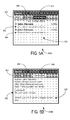
- FIG. 5A shown is an illustrative blogging comment moderation user interface screen 500A in which the Comments 406 menu option is selected.
- a reader named John Stevens has sent two comments 502, 504 in response to a blog posted by the blogger.
- these comments 502, 504 may be sent to the blogger in an e-mail message format to be received by blogging module 148, and listed in a list 505 when Comments 406 is the selected menu option.
- Blogging module 148 may be further adapted to provide a locally generated user interface (i.e. the application and user interface originates on the wireless mobile device 100) for viewing and moderating the comments. This is now described in more detail.
- FIG. 5B shows an illustrative blogging comment moderation user interface screen 500B in which one of the comments 502 has been opened for viewing the full text 506.
- other information such as the Author of the comment, the originating email address, the sending URL, and the blog post to which the comment relates may also be shown.
- FIG. 5C shows another illustrative blogging comment moderation user interface screen 500C which is screen 500B of FIG. 5B scrolled further down.
- options are provided at the bottom of screen 500C to Approve 508, 510, or identify as spam 512 in the comments received from John Stevens. This allows the blogger to approve the blog message for posting, delete the blog, or to mark this comment received from reader John Stevens as spam.
- the spam option is selected. Thus, this comment is not approved for posting to the blog, and the email address from which the comment originates may be blocked.
- FIG. 5D shows another illustrative blogging comment moderation user interface screen 500D displaying a second comment 504 from reader John Stevens. Again, the blogger can approve, delete or mark as spam the second comment 504.
- Comments received by blogging module 148 may thus be immediately reviewed by a blogger to receive feedback from a recent blog post. Furthermore, using a comment moderation user interface locally resident on the wireless mobile device 100 allows the comments to be quickly moderated and posted to the blog or deleted.
- GPS coordinates stored with each blog entry may be used to create a blogging tour route map 600, where each location of a blog entry is indicated by a node 602A - 602J.
- location information may be based on triangulation of cellular base stations, or based on a relative location such as distance and direction from a prior location.
- these nodes 602A - 602J are logically connected in sequence by paths, to indicate the order of the blog entries.
- a number at each node may provide the order in which the nodes are connected, or alternatively a date and time stamp may be shown adjacent each node, or shown upon hovering a pointer over the node. It will be appreciated, however, that these paths may not be aligned with the actual physical route taken between locations where blog entries were made. Rather, they show graphically the sequence of blog entries made over the course of a tour.
- each node 602A - 602J appearing on route map 600 may be associated with a blog entry such that, by hovering over or selecting a node (node 602F for example), data associated with the blog entry such as corresponding label (604F) appears.
- the label 604F may provide, for example, the blog entry date, time, the location name, and GPS coordinates of that location.
- selecting a node may cause the associated blog entry to open for viewing.
- method 700 begins at block 702 where method 700 defines a triggering events for a draft blog entry. Method 700 then proceeds to block 704, where method 700 detects for the triggering event.
- method 700 automatically drafts a blog entry in a predetermined format.
- method 700 proceeds to block 708 where method 700 automatically inserts the captured image into the draft blog entry in the predetermined format.
- Method 700 may then proceed to block 710, where method 700 automatically generates text for insertion into the draft blog entry in the predetermined format. Some of the text may be automatically generated independence upon the defining triggering event.
- Method 700 may then proceed to block 712, where method 700 obtains GPS coordinates upon the automatically drafting a blog entry. Method 700 then proceeds to block 714 and inserts the obtained GPS coordinates within the draft blog entry in the predetermined format. Method 700 then ends.
- FIG. 8 shown is a schematic flow chart of an illustrative method 800 in accordance with an embodiment. As shown, at that 800 begins at block 802 where method 800 receives one or more blocking comments for any blog entry.
- Method 800 then proceeds to block 804, where method 800 displays of the one or more blocking comments in a blogging comment moderation user interface.
- Method 800 then proceeds to block 808 where, upon selection of one of the blogging comments, method 800 opens the selected blogging comment for moderation using one of a number of menu options.
- Method 800 then proceeds to block 808, where method 800 receives the one or more blocking comments as e-mail, and provides for selection as menu options one or more of approve, delete or mark as spam.
- Method 800 then proceeds to block 810, where upon selection of approve, method 800 posts the selected blogging comments to the associated blog entry.
- Method 800 then proceeds to block 812, where upon selection of delete, method 800 delete as the selected blogging comment.
- Method 800 then proceeds to block 814, where method 800 displays in the opened blocking comments the sender's data including one or more of the sender's name, e-mail address, or the sending URL.
- Method 800 then proceeds to block 816, where upon selection of marking as spam, method 800 and so one or more of the sender's name, e-mail address, or sending URL to a spam list for blocking. Method 800 then ends.
Landscapes
- Engineering & Computer Science (AREA)
- Databases & Information Systems (AREA)
- Theoretical Computer Science (AREA)
- Data Mining & Analysis (AREA)
- Physics & Mathematics (AREA)
- General Engineering & Computer Science (AREA)
- General Physics & Mathematics (AREA)
- Information Transfer Between Computers (AREA)
Applications Claiming Priority (1)
| Application Number | Priority Date | Filing Date | Title |
|---|---|---|---|
| US5244408P | 2008-05-12 | 2008-05-12 |
Publications (1)
| Publication Number | Publication Date |
|---|---|
| EP2120167A1 true EP2120167A1 (de) | 2009-11-18 |
Family
ID=41010417
Family Applications (1)
| Application Number | Title | Priority Date | Filing Date |
|---|---|---|---|
| EP09160072A Ceased EP2120167A1 (de) | 2008-05-12 | 2009-05-12 | System und Verfahren zum automatischen Entwerfen eines Blogeintrags |
Country Status (3)
| Country | Link |
|---|---|
| US (3) | US8175583B2 (de) |
| EP (1) | EP2120167A1 (de) |
| CA (1) | CA2665886C (de) |
Cited By (3)
| Publication number | Priority date | Publication date | Assignee | Title |
|---|---|---|---|---|
| CN102457556A (zh) * | 2010-10-29 | 2012-05-16 | 卓望数码技术(深圳)有限公司 | 用于在移动终端上发布博客的方法、装置和系统 |
| US20120150871A1 (en) * | 2010-12-10 | 2012-06-14 | Microsoft Corporation | Autonomous Mobile Blogging |
| CN111626021A (zh) * | 2020-04-20 | 2020-09-04 | 腾讯科技(深圳)有限公司 | 一种演示文稿生成方法及装置 |
Families Citing this family (13)
| Publication number | Priority date | Publication date | Assignee | Title |
|---|---|---|---|---|
| US10296561B2 (en) | 2006-11-16 | 2019-05-21 | James Andrews | Apparatus, method and graphical user interface for providing a sound link for combining, publishing and accessing websites and audio files on the internet |
| KR101465668B1 (ko) * | 2008-06-24 | 2014-11-26 | 삼성전자주식회사 | 단말 및 그의 블로깅 방법 |
| US20100005135A1 (en) * | 2008-07-02 | 2010-01-07 | Telenav, Inc. | General purpose mobile location-blogging system |
| US9686341B1 (en) * | 2009-08-20 | 2017-06-20 | A9.Com, Inc. | Review trends |
| US9055113B2 (en) * | 2010-08-20 | 2015-06-09 | Arbor Networks, Inc. | Method and system for monitoring flows in network traffic |
| US8499235B2 (en) | 2010-08-28 | 2013-07-30 | Hewlett-Packard Development Company, L.P. | Method of posting content to a web site |
| US20140047016A1 (en) * | 2010-10-21 | 2014-02-13 | Bindu Rama Rao | Server infrastructure, mobile client device and app for mobile blogging and sharing |
| US20120253492A1 (en) * | 2011-04-04 | 2012-10-04 | Andrews Christopher C | Audio commenting system |
| US20140044307A1 (en) * | 2012-08-10 | 2014-02-13 | Qualcomm Labs, Inc. | Sensor input recording and translation into human linguistic form |
| US20140143350A1 (en) * | 2012-11-19 | 2014-05-22 | Sap Ag | Managing email feedback |
| US10375185B2 (en) * | 2015-11-24 | 2019-08-06 | Go Daddy Operating Company, LLC | Website creation from location and communication data |
| US10489447B2 (en) * | 2015-12-17 | 2019-11-26 | Fuji Xerox Co., Ltd. | Method and apparatus for using business-aware latent topics for image captioning in social media |
| DE102016122397B4 (de) * | 2016-11-21 | 2020-08-06 | Amphenol-Tuchel Electronics Gmbh | Steckverbinderpanel für den Einbau in ein Gerätegehäuse sowie Gerät mit einem Gerätegehäuse mit diesem Steckverbinderpanel |
Citations (1)
| Publication number | Priority date | Publication date | Assignee | Title |
|---|---|---|---|---|
| US20060284981A1 (en) * | 2005-06-20 | 2006-12-21 | Ricoh Company, Ltd. | Information capture and recording system |
Family Cites Families (8)
| Publication number | Priority date | Publication date | Assignee | Title |
|---|---|---|---|---|
| US7069003B2 (en) * | 2003-10-06 | 2006-06-27 | Nokia Corporation | Method and apparatus for automatically updating a mobile web log (blog) to reflect mobile terminal activity |
| US20050138067A1 (en) * | 2003-12-19 | 2005-06-23 | Fuji Xerox Co., Ltd. | Indexing for contexual revisitation and digest generation |
| JP2006301884A (ja) * | 2005-04-19 | 2006-11-02 | Sony Ericsson Mobilecommunications Japan Inc | 携帯通信装置 |
| US20070106627A1 (en) * | 2005-10-05 | 2007-05-10 | Mohit Srivastava | Social discovery systems and methods |
| US20070162845A1 (en) * | 2006-01-09 | 2007-07-12 | Apple Computer, Inc. | User interface for webpage creation/editing |
| US20090042545A1 (en) * | 2007-08-06 | 2009-02-12 | Tamir Avital | System and a method for unifying the social realities of the online internet and real world of the mobile phone |
| KR101465668B1 (ko) * | 2008-06-24 | 2014-11-26 | 삼성전자주식회사 | 단말 및 그의 블로깅 방법 |
| US20110040604A1 (en) * | 2009-08-13 | 2011-02-17 | Vertical Acuity, Inc. | Systems and Methods for Providing Targeted Content |
-
2009
- 2009-05-12 EP EP09160072A patent/EP2120167A1/de not_active Ceased
- 2009-05-12 US US12/464,531 patent/US8175583B2/en active Active
- 2009-05-12 CA CA2665886A patent/CA2665886C/en active Active
-
2012
- 2012-04-26 US US13/457,124 patent/US8270953B2/en active Active
- 2012-09-14 US US13/615,853 patent/US8457610B2/en active Active
Patent Citations (1)
| Publication number | Priority date | Publication date | Assignee | Title |
|---|---|---|---|---|
| US20060284981A1 (en) * | 2005-06-20 | 2006-12-21 | Ricoh Company, Ltd. | Information capture and recording system |
Non-Patent Citations (2)
| Title |
|---|
| PUJIANTO C ET AL: "Towards Automatic Mobile Blogging", IEEE INTERNATIONAL CONFERENCE ON MULTIMEDIA, 1 July 2006 (2006-07-01), pages 2033 - 2036, XP031033265, ISBN: 978-1-4244-0366-0 * |
| WILLIAM BAMFORD ET AL: "Location-based Mobile Blogging", ICTTA '06, 2006 INTERNATIONAL CONFERENCE ON INFORMATION & COMMUNICATION TECHNOLOGIES: FROM THEORY TO APPLICATIONS, DAMASCUS, SYRIA, vol. 1, 24 April 2006 (2006-04-24) - 28 April 2006 (2006-04-28), pages 111 - 116, XP002552083, ISBN: 978-0-7803-9521-3 * |
Cited By (5)
| Publication number | Priority date | Publication date | Assignee | Title |
|---|---|---|---|---|
| CN102457556A (zh) * | 2010-10-29 | 2012-05-16 | 卓望数码技术(深圳)有限公司 | 用于在移动终端上发布博客的方法、装置和系统 |
| US20120150871A1 (en) * | 2010-12-10 | 2012-06-14 | Microsoft Corporation | Autonomous Mobile Blogging |
| US8655889B2 (en) * | 2010-12-10 | 2014-02-18 | Microsoft Corporation | Autonomous mobile blogging |
| CN111626021A (zh) * | 2020-04-20 | 2020-09-04 | 腾讯科技(深圳)有限公司 | 一种演示文稿生成方法及装置 |
| CN111626021B (zh) * | 2020-04-20 | 2022-08-12 | 腾讯科技(深圳)有限公司 | 一种演示文稿生成方法及装置 |
Also Published As
| Publication number | Publication date |
|---|---|
| US20090280783A1 (en) | 2009-11-12 |
| US8270953B2 (en) | 2012-09-18 |
| CA2665886C (en) | 2015-06-30 |
| US8457610B2 (en) | 2013-06-04 |
| US8175583B2 (en) | 2012-05-08 |
| US20120214438A1 (en) | 2012-08-23 |
| US20130005314A1 (en) | 2013-01-03 |
| CA2665886A1 (en) | 2009-11-12 |
Similar Documents
| Publication | Publication Date | Title |
|---|---|---|
| CA2665886C (en) | System and method for automatically drafting a blog entry | |
| US12277185B2 (en) | System and method for controlling and organizing metadata associated with on-line content | |
| US12326892B2 (en) | Systems and methods for processing and organizing electronic content | |
| JP5611829B2 (ja) | 情報処理装置の動作制御システム及び動作制御方法 | |
| US8279173B2 (en) | User interface for selecting a photo tag | |
| US20090055484A1 (en) | System and method for representation of electronic mail users using avatars | |
| US9203949B2 (en) | System and method for integrating image upload objects with a message list | |
| US20110199511A1 (en) | Image photographing system and image photographing method | |
| EP1990744B1 (de) | Benutzerschnittstelle zur Bearbeitung von Fotoetiketten | |
| CN104335235A (zh) | 用户事件内容、关联的装置和方法 | |
| CN104756055B (zh) | 信息处理装置、时间序列信息管理方法、以及程序 | |
| EP2040185B1 (de) | Benutzerschnittstelle zur Auswahl eines Fotoetiketts | |
| KR20140097668A (ko) | 온라인 기반의 모바일 포토북 서비스 제공 방법 | |
| US20240430314A1 (en) | Systems for and methods of collaborative data sharing | |
| JP5601125B2 (ja) | エディタプログラム、エディタ画面表示方法及びエディタプログラムを搭載した情報処理装置 | |
| CN116917851A (zh) | 用于显示带有浮动图标的屏幕截图的方法和系统 |
Legal Events
| Date | Code | Title | Description |
|---|---|---|---|
| PUAI | Public reference made under article 153(3) epc to a published international application that has entered the european phase |
Free format text: ORIGINAL CODE: 0009012 |
|
| 17P | Request for examination filed |
Effective date: 20090512 |
|
| AK | Designated contracting states |
Kind code of ref document: A1 Designated state(s): AT BE BG CH CY CZ DE DK EE ES FI FR GB GR HR HU IE IS IT LI LT LU LV MC MK MT NL NO PL PT RO SE SI SK TR |
|
| 17Q | First examination report despatched |
Effective date: 20100203 |
|
| STAA | Information on the status of an ep patent application or granted ep patent |
Free format text: STATUS: THE APPLICATION HAS BEEN REFUSED |
|
| 18R | Application refused |
Effective date: 20101117 |