EP2120392A1 - Verfahren zur authentifizierung von zertifikaten, vorrichtung zur ausstellung von zertifikaten und authentifizierungsvorrichtung - Google Patents
Verfahren zur authentifizierung von zertifikaten, vorrichtung zur ausstellung von zertifikaten und authentifizierungsvorrichtung Download PDFInfo
- Publication number
- EP2120392A1 EP2120392A1 EP08710933A EP08710933A EP2120392A1 EP 2120392 A1 EP2120392 A1 EP 2120392A1 EP 08710933 A EP08710933 A EP 08710933A EP 08710933 A EP08710933 A EP 08710933A EP 2120392 A1 EP2120392 A1 EP 2120392A1
- Authority
- EP
- European Patent Office
- Prior art keywords
- certificate
- communication
- terminal device
- authentication
- sub
- Prior art date
- Legal status (The legal status is an assumption and is not a legal conclusion. Google has not performed a legal analysis and makes no representation as to the accuracy of the status listed.)
- Granted
Links
Images










Classifications
-
- G—PHYSICS
- G06—COMPUTING OR CALCULATING; COUNTING
- G06F—ELECTRIC DIGITAL DATA PROCESSING
- G06F21/00—Security arrangements for protecting computers, components thereof, programs or data against unauthorised activity
- G06F21/30—Authentication, i.e. establishing the identity or authorisation of security principals
- G06F21/31—User authentication
- G06F21/33—User authentication using certificates
-
- H—ELECTRICITY
- H04—ELECTRIC COMMUNICATION TECHNIQUE
- H04L—TRANSMISSION OF DIGITAL INFORMATION, e.g. TELEGRAPHIC COMMUNICATION
- H04L63/00—Network architectures or network communication protocols for network security
- H04L63/08—Network architectures or network communication protocols for network security for authentication of entities
- H04L63/0823—Network architectures or network communication protocols for network security for authentication of entities using certificates
-
- H—ELECTRICITY
- H04—ELECTRIC COMMUNICATION TECHNIQUE
- H04W—WIRELESS COMMUNICATION NETWORKS
- H04W12/00—Security arrangements; Authentication; Protecting privacy or anonymity
- H04W12/06—Authentication
- H04W12/069—Authentication using certificates or pre-shared keys
Definitions
- the present invention relates to a certificate authenticating method that authenticates a certificate issued to be used for using a service on a different network, a certificate issuing device and an authentication device.
- the single sign-on scheme involves forwarding the authentication result by an assertion and requires only one authentication to use a plurality of communication services.
- an assertion can be used only on-line, and therefore, there remains the problem that the user cannot use the service when the originally used communication ID cannot be used or a sub ID different from the original communication ID is used to establish communication.
- the patent literature 1 proposes that an IPv6 router, which is a NW service authentication device on an IPv6 network, authenticates a NW access terminal, and an authentication station connected to the NW service authentication device issues a digital certificate that indicates the authentication result to the NW access terminal, thereby enabling the NW access terminal to be automatically authenticated based on the digital certificate when the NW access terminal is to receive authentication for a service on an IPv4 network.
- the NW service authentication device and the digital certificate issuing device have to be directly connected to each other, and another NW service authentication device has to be able to directly communicate with the digital certificate issuing device via a secure communication path.
- Patent literature 1 Japanese Patent Application Laid-Open No. 2006-25010
- An object of the present invention is to provide a certificate authenticating method that allows a terminal device capable of connecting to a communication service on a first network by using a communication ID to connect to a second network, and also to provide a certificate issuing device and an authentication device.
- a certificate authenticating method that authenticates a terminal device capable of connecting to a first network by using a communication ID to allow the terminal device to connect a second network, comprises:
- the need of certificate validity check can be eliminated by a technique of issuing and using a certificate with a designated validity period, so that authentication means can be used when connection to a communication service cannot be established.
- the technique of issuing a disposable certificate is implemented by combining (a) a technique of issuing a certificate with a short validity period, which is implemented by online certificate issue, and (b) a certificate using technique that can limit the number of authentications by retaining the usage history on the system for the short validity period of the certificate.
- a technique according to the present invention is to carry out authentication by making communication ID managing means and sub ID managing means cooperate with each other.
- the cooperation is achieved by the local area function and the communication network function using cooperative IDs to exchange information about their status.
- the cooperation is achieved by obtaining information about the status of the NAT function that carries out conversion between global IP addresses and private IP addresses and the status of the DHCP function.
- a third party institution issues a digital certificate that proves that the NW access terminal can use information retained in the NW service relay device, thereby enabling the NW access terminal to be authenticated for another NW service.
- a NW service authentication device a digital certificate issuing device and another NW service authentication device are managed separately, a NW access terminal can mediate in the communication therebetween to obtain a digital certificate and thus can obtain authentication for another NW service.
- Fig. 1 shows a configuration of a certificate issuing system according to a first embodiment of the present invention.
- reference symbols NW1 and NW2 each denote a communication network
- reference numeral 4 denotes a terminal device
- reference numeral 5 denotes a communication ID checking device
- reference numeral 6 denotes a communication ID/sub ID checking device
- reference numeral 7 denotes a certificate issuing device
- reference numeral 8 denotes an authentication device.
- the communication ID checking device 5 and the communication ID/sub ID checking device 6 are connected directly to the certificate issuing device 7. Alternatively, however, either or both thereof can be connected to the certificate issuing device 7 via the network NW1.
- NW1 and NW2 are wide area networks, such as the public telephone network and the Internet, and are different communication networks for which the same communication ID cannot be used.
- the certificate issuing device 7 is connected to the NW1, and the authentication device 8 is connected to the NW2, whereas the terminal device 4 can be used on any of the NW1 and NW2.
- the terminal device 4 can communicate with a device connected to a particular network, the NW1 in this example, using a sub ID that is different from the communication ID thereof in the NW1.
- the terminal device 4 is a telephone or a personal computer connected to the NW1 via PBX, HGW or the like (not shown) and has a communication ID storing part 41, a certificate storing part 42, a certificate issue requesting part 43 and an authentication requesting part 44.
- the communication ID storing part 41 stores the communication ID (the global IP address, for example) in the NW1.
- the certificate storing part 42 stores a certificate issued by the certificate issuing device 7 and a key pair, specifically, a public key and a private key, in the terminal device 4.
- the certificate issue requesting part 43 reads the communication ID from the communication ID storing part 41, transmits a certificate issue request including at least the (separately stored) sub ID (private IP address, for example) along with the communication ID to the certificate issuing device 7 via the NW1, receives a certificate transmitted from the certificate issuing device 7 via the NW1 and retains the certificate in the certificate storing part 42.
- the authentication requesting part 44 transmits an authentication request insulating at least the sub ID to the authentication device 8 via the NW2. Then, when the authentication requesting part 44 receives a challenge from the authentication device 8 via the NW2, the authentication requesting part 44 determines whether the authentication request is the first one. If the authentication request is the first one, the authentication requesting part 44 generates a response to the challenge using the private key of the terminal device 4, reads the certificate from the certificate storing part 42 and transmits the certificate, the public key of the terminal device 4 and the response to the authentication device 8 via the NW2.
- the authentication requesting part 44 If the authentication request is the second or subsequent one, the authentication requesting part 44 generates a response to the challenge using the private key of the terminal device 4, transmits the response and the public key of the terminal device 4 to the authentication device 8 via the NW2, and receives the authentication result transmitted from the authentication device 8 via the NW2.
- the communication ID checking device 5 checks whether or not a predetermined communication ID in the NW1 is in use by cooperating with an exchange or an internet service provider (ISP) (not shown) on the NW1. The check is carried out in response to an external request, for example, a request from the certificate issuing device 7. If the communication ID is in use, the communication ID checking device 5 sends back the OK check result. Otherwise, the communication ID checking device 5 sends back the NG check result.
- the communication ID/sub ID checking device 6 checks whether or not a predetermined sub ID and a predetermined communication ID in the NW1 are associated with each other. The check is carried out in response to an external request, for example, a request from the certificate issuing device 7. If the sub ID and the communication ID are associated with each other, the communication ID/sub ID checking device 6 sends back the OK check result. Otherwise, the communication ID/sub ID checking device 6 sends back the NG check result.
- the certificate issuing device 7 includes a communication ID check requesting part 7A, a communication ID/sub ID check requesting part 7B, a certificate generating part 7C, a storing part 7D and a controlling part 7E.
- the communication ID check requesting part 7A requests the communication ID checking device 5 to check whether or not the communication ID included in the certificate issue request is in use.
- the communication ID/sub ID check requesting part 7B requests the communication ID/sub ID checking device 6 to check whether or not the communication ID and the sub ID included in the certificate issue request are associated with each other.
- the certificate generating part 7C If both the check results from the communication ID checking device 5 and the communication ID/sub ID checking device 6 are OK, the certificate generating part 7C generates a certificate CTF including at least the communication ID and sub ID of the terminal device 4, the ID of the certificate issuing device and the validity period (which is typically short, such as one to two days) as shown in Fig. 2B and transmits the certificate to the terminal device 4 via the NW1. If either of the check results is NG, the terminal device 4 is informed that the issue is denied via the NW1.
- the storing part 7D previously stores information required for communication with the terminal device, information required for generation of the certificate or the like or stores information used in the certificate issuing process as required.
- the controlling part 7E controls the communication between the certificate issuing device 7 and other devices (the terminal device 4, the communication ID checking device 5 and the communication ID/sub ID checking device 6) and processings carried out by the communication ID check requesting part 7A, the communication ID/sub ID check requesting part 7B, the certificate generating part 7C and the storing part 7D.
- the authentication device 8 includes a challenge generating part 8A, a storing part 8B, a response validating part 8C, a validity period determining part 8D and a controlling part 8E.
- the challenge generating part 8A When an authentication request including at least the sub ID, for example, is received from the terminal device 4 via another network, the NW2 in this example, the challenge generating part 8A generates a challenge based on the well-known challenge and response method used for authentication, stores the challenge in the storing part 8B and transmits the challenge to the terminal device 4 via the NW2.
- the authentication device 8 receives the response to the challenge, the public key of the terminal device 4 and the certificate CTF from the terminal device 4 via the NW2 and stores them in the storing part 8B.
- the response validating part 8C validates the received response using the public key of the terminal device 4 and the stored challenge. If the validation succeeds, the validity period determining part 8D determined whether the date of reception is within the validity period included in the certificate CTF. If the date of reception is within the validity period, the OK authentication result for the certificate CTF is transmitted to the terminal device 4 via the NW2. If the response validation fails, the NG authentication result is transmitted to the terminal device 4.
- the terminal device 4 can connect to a desired service providing server (not shown) on the NW2 via the authentication device using the sub ID. If the terminal device 4 is to directly connect to a desired service providing server on the NW2, the authentication device 8 can transmit the OK authentication result and a digital signature of the authentication device 8 to the terminal device 4, and the terminal device 4 can present the digital signature to connect to the desired service providing server using the sub ID, for example. As described above, the terminal device 4 can connect to a desired service providing server on the NW2 using the sub ID.
- the controlling part 8E controls the communication with another device (the terminal device 4 in this example) and processing carried out by the challenge generating part 8A, the storing part 8B, the response validating part 8C and the validity period determining part 8D.
- the terminal device 4 is connected to the NW1 in this embodiment, any number of terminal devices can be connected to the certificate issuing system according to the present invention.
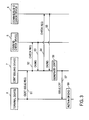
- Fig. 3 is a diagram for illustrating a main flow of a certificate issuing process of the certificate issuing system according to the first embodiment of the present invention.
- the certificate issue requesting part 43 in the terminal device 4 reads the communication ID from the communication ID storing part 41 and transmits a certificate issue request including at least the sub ID along with the communication ID to the certificate issuing device 7 via the NW1 (step S1).
- the certificate issuing device 7 receives the certificate issue request from the terminal device 4 via the NW1, the certificate issuing device 7 requests the communication ID checking device 5 to check whether or not the communication ID included in the certificate issue request is in use (step S2).
- the communication ID checking device 5 checks whether or not the communication ID included in the certificate issue request is in use on the NW1 in cooperation with the NW1 and sends the OK check result back to the certificate issuing device 7 if the communication ID is in use or sends the NG check result back to the certificate issuing device 7 if the communication ID is not in use (step S3).
- a communication managing device (not shown) on the NW1, such as an exchanger and an ISP, carries out management of the communication ID as one of communication network functions, and the communication ID checking device 5 obtains information on whether or not the communication ID is in use from the communication managing device.
- the certificate issuing device 7 receives the check result from the communication ID checking device 5 and requests the communication ID/sub ID checking device 6 to check whether or not the communication ID and the sub ID included in the certificate issue request are associated with each other (step S4).
- the communication ID/sub ID checking device 6 checks whether or not the communication ID and the sub ID included in the certificate issue request are associated with each other and sends the OK check result back to the certificate issuing device 7 if the communication ID and the sub ID are associated with each other or sends the NG check result back to the certificate issuing device 7 if the communication ID and the sub ID are not associated with each other (step S5).
- the certificate issuing device 7 receives the check result from the communication ID/sub ID checking device 6. If both the check result from the communication ID/sub ID checking device 6 and the check result from the communication ID checking device 5 are OK, the certificate issuing device 7 generates a certificate CTF including at least the ID of the certificate issuing device 7, the communication ID and the sub ID of the terminal device 4 and the validity period and transmits the certificate CTF to the terminal device 4 via the NW1. If either of the check results is NG, the certificate issuing device 7 informs the terminal device 4 that the issue is denied via the NW1 (step S6).
- the certificate issue requesting part 43 in the terminal device 4 receives the certificate CTF transmitted from the certificate issuing device 7 via the NW1 (step S7) and retains the received certificate CTF in the certificate storing part 42. Alternatively, in the case where the terminal device 4 is informed that the issue is denied, the process is ended (step S8).
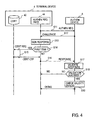
- Fig. 4 is a diagram for illustrating a main flow of a certificate authentication process of the certificate issuing system according to the first embodiment of the present invention.
- the authentication requesting part 44 in the terminal device 4 transmits an authentication request including at least the sub ID to the authentication device 8 via the NW2 (step S11).
- the authentication device 8 receives the authentication request from the terminal device 4 via the NW2, the authentication device 8 generates a challenge, stores the challenge in the storing part 8B and transmits the challenge to the terminal device 4 via the NW2 (step S12).
- the authentication requesting part 44 in the terminal device 4 receives the challenge from the authentication device 8 via the NW2, the authentication requesting part 44 generates a response to the challenge using the private key of the terminal device 4 (step S13) and determines whether the authentication request is the first one (step S14). Then, if the authentication request is the first one, the authentication requesting part 44 reads the certificate CTF from the certificate storing part 42 (step S15) and transmits the certificate CTF, the public key of the terminal device 4 and the response to the authentication device 8 via the NW2 (step S16). If the authentication request is the second or subsequent one, the authentication requesting part 44 transmits the response to the challenge along with the public key of the terminal device 4 to the authentication device 8 via the NW2 (step S16). That is, in the case where the authentication request is the second or subsequent one, transmission of the certificate is omitted.
- the authentication device 8 receives the response to the challenge and the public key of the terminal device 4 or receives the response to the challenge and the public key of the terminal device 4 and the certificate from the terminal device 4 via the NW2.
- the received information includes the certificate CTF
- the certificate is stored in the storing part 8B
- the response validating part 8C validates the received response using the public key of the terminal device 4 and the challenge read from the storing part 8B (step S17). Then, it is determined whether or not the validation succeeds. If the validation fails, the authentication device 8 transmits the NG authentication result to the terminal device 4 via the NW2 (step S18). If the validation succeeds, it is determined whether the validity period included in the stored certificate CTF is expired. If the validity period is not expired, the OK authentication result is transmitted to the terminal device 4 via the NW2, or if the validity period is expired, the NG authentication result is transmitted to the terminal device 4 via the NW2 (step S19).
- step S19 the certificate CTF at the time of the first authentication stored in the storing part 8B is retrieved based on the sub ID (or the communication ID), and the validity period of the read certificate CTF is checked.
- the authentication requesting part 44 in the terminal device receives the authentication result from the authentication device 8 via the NW2.
- a certificate having a short validity period is issued simply by checking the access of the terminal device 4 to the certificate issuing device 7 via the NW1 and the association between the communication ID and the sub ID, without the need of identification of the user.
- the authentication device 8 connected to the NW2 which is different from the NW1 to which the certificate issuing device 7 is connected, can carry out authentication, so that various services can be used even in the case where the original communication ID cannot be used, for example, even in the case where the terminal device 4 is roaming.
- the certificate issuing device 7 retains the check result(s) in the storing part 7D when the certificate issuing device 7 receives the check result from the communication ID checking device 5 and/or the check result from the communication ID/sub ID checking device 6, searches for the retained check result(s) using the communication ID or both the communication ID and the sub ID in response to the second or subsequent certificate issue request, generates a certificate CTF by referring to the check result that indicates whether or not the communication ID is in use or the check result that indicates whether or not the communication ID and the sub ID are associated with each other if there is the check result, and transmits the certificate CTF to the terminal device 4.
- Fig. 5 is a diagram for illustrating a main flow of a certificate issuing process of the certificate issuing system according to the second embodiment of the present invention.
- the certificate issuing process will be described in detail.
- the certificate issuing device 7 transmits a check request to the communication ID checking device 5 (step S2B).
- the certificate issuing device 7 receives the check result that indicates whether or not the communication ID is in use from the communication ID checking device 5 (step S3A)
- the certificate issuing device 7 retains the check result in the storing part 7D (step S3B).
- the certificate issuing device 7 searches for the check result that indicates whether or not the communication ID and the sub ID are associated with each other (Step S4A). If the check result is retained, the certificate issuing device 7 reads the check result, and the process proceeds to step S6. If the check result that indicates the association is not retained, the certificate issuing device transmits a check request to the communication ID/sub ID checking device 6 to check whether or not the communication ID and the sub ID are associated with each other (step S4B), receives the check result (step S5A), and retains the check result in the storing part 7D (step S5B). If the communication ID is in use, and the communication ID and the sub ID are properly associated with each other, the certificate issuing device 7 generates a certificate CTF and transmits the certificate CTF to the terminal device 4 (steps S6 and S7).
- the certificate authentication process is the same as in the first embodiment. According to this embodiment, the query to the communication ID checking device 5 and/or the communication ID/sub ID checking device 6 in response to the second or subsequent certificate issue request from the same terminal device 4 is not necessary, and therefore, the certificate can be issued more quickly.
- the certificate issuing device 7 requests, via the terminal device 4, the communication ID checking device 5 and/or the communication ID/sub ID checking device 6 to check whether or not the communication ID included in the certificate issue request is in use and/or whether or not the communication ID and the sub ID included in the certificate issue request are associated with each other.
- Fig. 6 is a diagram for illustrating a main flow of a certificate issuing process of the certificate issuing system according to the third embodiment of the present invention. In the following, the certificate issuing process will be described in detail.
- the certificate issuing device 7 receives the certificate issue request from the terminal device 4 via the NW1 (step S1)
- the certificate issuing device 7 transmits a check request to the terminal device 4 via the NW1 to check whether or not the communication ID included in the certificate issue request is in use (step S2a).
- the terminal device 4 When the terminal device 4 receives the check request to check whether or not the communication ID included in the certificate issue request is in use, which is transmitted from the certificate issuing device 7 via the NW1, the terminal device 4 redirects the check request to the communication ID checking device 5 (step S2b).
- the communication ID checking device 5 checks whether or not the communication ID included in the certificate issue request is in use on the NW1 in corporation with the NW1 and transmits the OK check result to the certificate issuing device 7 if the communication ID is in use or the NG check result to the certificate issuing device 7 if the communication ID is not in use (step S3).
- the certificate issuing device 7 receives the check result from the communication ID checking device 5 and transmits a check request to the terminal device 4 via the NW1 to check whether or not the communication ID and the sub ID included in the certificate issue request are associated with each other (step S4a).
- the terminal device 4 receives the check request to check whether or not the communication ID and the sub ID included in the certificate issue request are associated with each other, which is transmitted from the certificate issuing device 7 via the NW1, the terminal device 4 redirects the check request to the communication ID/sub ID checking device 6 (step S4b).
- the communication ID/sub ID checking device 6 checks whether or not the communication ID and the sub ID included in the certificate issue request are associated with each other and transmits the OK check result to the certificate issuing device 7 if the communication ID and the sub ID are associated with each other or the NG check result to the certificate issuing device 7 if the communication ID and the sub ID are not associated with each other (step S5).
- the certificate issuing device 7 generates a certificate CTF based on the check result from the communication ID checking device 5 that indicates that the communication ID is in use and the check result from the communication ID/sub ID checking device 6 that indicates that the communication ID and the sub ID are properly associated with each other (step S6) and transmits the certificate CTF to the terminal device 4 (step S7).
- the communication ID checking device 5 and the communication ID/sub ID checking device 6 directly respond to the certificate issuing device 7.
- steps S3' and S5' shown by the dashed line the communication ID checking device 5 and the communication ID/sub ID checking device 6 can respond to the certificate issuing device 7 via the terminal device 4 that redirects the response.
- the certificate authentication process is the same as in the first embodiment.
- the certificate issuing device 7 can transmits the check request to the communication ID checking device 5 and/or the communication ID/sub ID checking device 6 via the terminal device 4 even when the communication ID checking device 5 and/or the communication ID/sub ID checking device 6 reside in the same HGW as the terminal device 4.
- this embodiment can be applied to the second embodiment.
- the NW1 adds the communication ID of the terminal device 4 to the certificate issue request from the terminal device 4.
- Fig. 7 shows a configuration of a certificate issuing system according to the fourth embodiment of the present invention.
- the certificate issuing system differs from the system according to the first embodiment in that the system further includes a communication ID adding device 9 that adds the communication ID of the terminal device 4 to the certificate issue request from the terminal device 4.
- the communication ID adding device 9 is typically provided in a PBX or HGW in which the terminal device 4 resides (not shown).
- the terminal device 4 does not have the communication ID storing part 41 shown in Fig. 1 , and a communication ID storing device 9A is connected to the communication ID adding device 9.
- the certificate issue requesting part 43 transmits a certificate issue request that does not include the communication ID but include at least the sub ID to the certificate issuing device 7 via the communication ID adding device 9.
- the communication ID adding device 9 adds the communication ID read from the communication ID storing device 9A to the certificate issue request and transmits the certificate issue request to the certificate issuing device 7.
- the certificate issue requesting part 43 in the terminal device 4 receives the certificate CTF transmitted from the certificate issuing device 7 via the NW1 and retains the certificate CTF in the certificate storing part 42.
- Fig. 8 is a diagram for illustrating a main flow of a certificate issuing process of the certificate issuing system according to the fourth embodiment of the present invention.
- the certificate issue requesting part 43 in the terminal device 4 transmits a certificate issue request including at least the sub ID to the certificate issuing device 7 via the NW1.
- the communication ID adding device 9 receives the certificate issue request, adds the communication ID of the terminal device 4 read from the communication ID storing device 9A, transmits the certificate issue request to the certificate issuing device 7.
- the following operation and the certificate authentication process are the same as those in the first embodiment, and descriptions thereof will be omitted.
- the communication ID storing part 41 that stores the communication ID in the terminal device 4 is not necessary.
- this embodiment can be applied to the second and third embodiments.
- the certificate is transmitted to the terminal device via a third communication network that differs from the NW1.
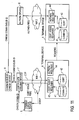
- Fig. 9 shows a configuration of a certificate issuing system according to the fifth embodiment of the present invention.
- the certificate issuing system differs from the system according to the first embodiment in that the system further includes a third communication network NW3, for example, an electronic mail network.
- the terminal device 4 has a second communication ID storing part (communication ID3 storing part) 45 that stores a communication ID on the NW3 (a communication ID3) (an e-mail address, for example) of the terminal device 4 in addition to the communication ID storing part 41, the certificate storing part 42 and the authentication requesting part 44.
- the terminal device 4 reads the communication ID from the communication ID storing part 41 and the communication ID3 from the communication ID3 storing part 45 and transmits a certificate issue request including at least the sub ID as well as the communication ID and the communication ID3 to the certificate issuing device 7 via the NW1.
- the terminal device 4 has the certificate issue requesting part 43 that receives the certificate CTF from the certificate issuing device 7 via the NW3 and retains the certificate CTF in the certificate storing part 42.
- the certificate issuing device 7 When the certificate issuing device 7 receives the certificate issue request including at least the communication ID, the communication ID3 and the sub ID from the terminal device 4 via the NW1, the certificate issuing device 7 requests the communication ID checking device 5 to check whether or not the communication ID included in the certificate issue request is in use. Furthermore, the certificate issuing device 7 requests the communication ID/sub ID checking device 6 to check whether or not the communication ID and the sub ID included in the certificate issue request are associated with each other. If the check results from the communication ID checking device 5 and the communication ID/sub ID checking device 6 are OK, the certificate issuing device 7 generates a certificate including at least the ID of the certificate issuing device 7, the sub ID of the terminal device 4 and the validity period and transmits the certificate to the terminal device 4 via the NW3.
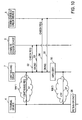
- Fig. 10 is a diagram for illustrating a main flow of a certificate issuing process of the certificate issuing system according to the fifth embodiment of the present invention.
- the certificate issue requesting part 43 in the terminal device 4 reads the communication ID from the communication ID storing part 41, reads the communication ID3 from the communication ID3 storing part 45 and transmits a certificate issue request including at least the communication ID, the communication ID3 and the sub ID to the certificate issuing device 7 via the NW1 (step S1).
- the certificate issuing device 7 When the certificate issuing device 7 receives the certificate issue request from the terminal device 4 via the NW1 (step S1), the certificate issuing device 7 checks whether or not the communication ID included in the certificate issue request is in use and whether or not the communication ID and the sub ID are associated with each other in the same manner as in the first embodiment (steps S2 to S5). If both the check results are OK, the certificate issuing device 7 generates a certificate CTF including at least the ID of the certificate issuing device 7, the communication ID and the sub ID of the terminal device 4 and the validity period (step S6) and transmits the certificate CTF to the terminal device 4 via the NW3 by designating the communication ID3 as the destination (step S7). If either of the check results is NG, the certificate issuing device 7 informs the terminal device 4 that the issue is denied via the NW3.
- the certificate issue requesting part 43 in the terminal device 4 receives the certificate CTF from the certificate issuing device 7 via the NW3 and retains the received certificate in the certificate storing part 42. If the terminal device 4 is informed that the issue is denied, the process is ended (step S8).
- the certificate authentication process is the same as in the first embodiment.
- the terminal device 4 can be identified by three IDs, the communication ID, the communication ID3 and the sub ID, so that a certificate with higher reliability can be issued.
- this embodiment can be applied to the second to fourth embodiments.
- Fig. 11 shows a configuration of a certificate issuing system according to the sixth embodiment of the present invention.
- the certificate issuing system differs from the system according to the first embodiment in that the authentication device 8 is connected to the communication ID checking device 5 and/or the communication ID/sub ID checking device 6 by a dedicated line, for example.
- Fig. 11 shows an example in which the authentication device 8 is connected to the communication ID/sub ID checking device 6.
- the authentication device 8 receives the response to the challenge, the public key of the terminal device and the certificate from the terminal device 4 via the NW2 and stores them.
- the authentication device 8 validates the received response using the public key of the terminal device 4 and the stored challenge. If the validation fails, the authentication device 8 transmits the NG authentication result to the terminal device 4 via the NW2. If the validation succeeds, and the validity period included in the stored certificate is not expired, the authentication device 8 requests the communication ID checking device 5 and/or the communication ID/sub ID checking device 6 to check the communication ID and/or the relationship between the communication ID and the sub ID. In the example shown in Fig. 11 , the communication ID/sub ID checking device 6 is requested to check whether or not the communication ID and the sub ID are associated with each other. If the check result is OK, the authentication device 8 transmits the OK authentication result to the terminal device 4 via the NW2.
- Fig. 12 is a diagram for illustrating a main flow of a certificate authentication process of the certificate issuing system according to the sixth embodiment of the present invention shown in Fig 11 .
- the certificate authentication process will be described in detail. From where the terminal device 4 transmits the authentication request to the authentication device 8, up to where the authentication device 8 validates the response, the process is the same as in the first embodiment.
- the authentication device 8 further requests the communication ID/sub ID checking device 6 to check whether or not the communication ID and the sub ID included in the certificate CTF are associated with each other in step S20A.
- step S20B in response to the request from the authentication device 8, the communication ID/sub ID checking device 6 checks whether or not the communication ID and the sub ID included in the certificate CTF are associated with each other and sends the OK check result back to the authentication device 8 if the communication ID and the sub ID are associated with each other or the NG check result back to the authentication device 8 if the communication ID and the sub ID are not associated with each other.
- the authentication device 8 receives the check result from the communication ID/sub ID checking device 6. If the check result is OK, the authentication device 8 transmits the OK authentication result to the terminal device 4 via the NW2. If the check result is NG, the authentication device 8 transmits the NG authentication result to the terminal device 4 via the NW2.
- the authentication requesting part 44 in the terminal device 4 receives the authentication result from the authentication device 8 via the NW2.
- the association between the communication ID and the sub ID that is, the validity of the certificate CTF, at the time point when the terminal device 4 requests for authentication can be checked.
- this embodiment can be applied to the second to fifth embodiments.
- the terminal device 4 additionally has a function of registering expiration information on a certificate CTF
- the authentication device 8 additionally has a function of checking whether or not certificate expiration information is registered during authentication of a certificate CTF.
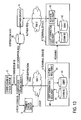
- Fig. 13 shows a configuration of a certificate issuing system according to the seventh embodiment of the present invention.
- the certificate issuing system differs from the system according to the first embodiment in that the system further includes an expiration information storing device 10 in which expiration information on a certificate CTF is registered.
- the certificate issuing device 7 and the authentication device 8 are connected to the expiration information storing device 10.
- the terminal device 4 has a certificate expiration requesting part 46 that reads the communication ID from the communication ID storing part 41 and transmits a certificate expiration request including at least the communication ID and the sub ID to the certificate issuing device 7 via the NW1 in addition to the communication ID storing part 41, the certificate storing part 42, the certificate issue requesting part 43 (not shown) and the authentication requesting part 44.
- the certificate issuing device 7 additionally has a certificate expiration information generating part 7F as shown by the dashed line in Fig. 2A .
- the communication ID check requesting part 7A requests the communication ID checking device 5 to check whether or not the communication ID included in the certificate expiration request is in use, and the communication ID/sub ID check requesting part 7B requests the communication ID/sub ID checking device 6 to check whether or not the communication ID and the sub ID included in the certificate expiration request are associated with each other.
- the certificate expiration information generating part 7F generates expiration information on the certificate including the communication ID and the sub ID and registers the expiration information in the expiration information storing device 10.
- the authentication device 8 additionally has an expiration information checking part 8F as shown by the dashed line in Fig. 2C .
- the challenge generating part 8A When the authentication request including at least the sub ID is received from the terminal device 4 via the NW2, the challenge generating part 8A generates a challenge, stores the challenge in the storing part 8B and transmits the challenge to the terminal device 4 via the NW2.
- the authentication device 8 receives the response to the challenge, the public key of the terminal device and the certificate CTF from the terminal device 4 via the NW2 and stores them.
- the response validating part 8C validates the received response using the public key of the terminal device 4 and the stored challenge. If the validation fails, the authentication device 8 transmits the NG authentication result to the terminal device 4 via the NW2.
- the expiration information checking part 8F checks whether or not there is expiration information on a certificate including at least the communication ID and the sub ID included in the certificate CTF in the expiration information storing device 10. If there is not the expiration information, the authentication device 8 transmits the OK authentication result to the terminal device 4 via the NW2, or if there is the expiration information listed therein, the authentication device 8 transmits the NG authentication result to the terminal device 4 via the NW2.
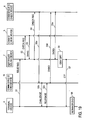
- Fig. 14 is a diagram for illustrating a main flow of a certificate expiration process of the certificate issuing system according to the seventh embodiment of the present invention.
- the certificate expiration process will be described in detail.
- the certificate expiration requesting part 46 in the terminal device 4 reads the communication ID from the communication ID storing part 41 and transmits the sub ID certificate expiration request including at least the communication ID and the sub ID to the certificate issuing device 7 via the NW1(step S31).
- the certificate issuing device 7 When the certificate issuing device 7 receives the certificate expiration request from the terminal device 4 via the NW1, the certificate issuing device 7 requests the communication ID checking device 5 to check whether or not the communication ID included in the certificate expiration request is in use (step S32). In response to the request from the certificate issuing device 7, the communication ID checking device 5 checks whether or not the communication ID included in the certificate expiration request is in use in corporation with the NW1 and sends the OK check result back to the certificate issuing device 7 if the communication ID is in use or the NG check result back to the certificate issuing device 7 if the communication ID is not in use (step S33).
- the certificate issuing device 7 receives the check result from the communication ID checking device 5 and requests the communication ID/sub ID checking device 6 to check whether or not the communication ID and the sub ID included in the certificate expiration request are associated with each other (step S34).
- the communication ID/sub ID checking device 6 checks whether or not the communication ID and the sub ID included in the certificate expiration request are associated with each other and sends the OK check result back to the certificate issuing device 7 if the communication ID and the sub ID are associated with each other or the NG check result back to the certificate issuing device 7 if the communication ID and the sub ID are not associated with each other (step S35).
- the certificate issuing device 7 receives the check result from the communication ID/sub ID checking device 6. If both the check results from the communication ID/sub ID checking device 6 and the communication ID checking device 5 are OK, the certificate issuing device 7 generates expiration information on the certificate including at least the communication ID and the sub ID of the terminal device 4 and registers the expiration information in the expiration information storing device 10. If either of the check results is NG, the process is ended (step S36).
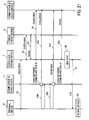
- Fig. 15 is a diagram for illustrating a main flow of a certificate authentication process of the certificate issuing system according to the seventh embodiment of the present invention. In the following, the certificate authentication process will be described in detail. From where the terminal device 4 transmits the authentication request to the authentication device 8, up to where the authentication device 8 validates the response, the process is the same as shown in Fig. 12 .
- the authentication device 8 further requests the expiration information storing device 10 to check whether or not there is expiration information on a certificate including at least the communication ID and the sub ID included in the certificate (step S20C).
- the expiration information storing device 10 checks whether or not there is expiration information on a certificate including at least the communication ID and the sub ID and sends the check result that indicates that there is the relevant information back to the authentication device 8 if there is the expiration information or the check result that indicates that there is not the relevant information back to the authentication device 8 if there is not the expiration information (step S20D).
- the authentication device 8 receives the check result from the expiration information storing device 10. If there is not the relevant information, the authentication device 8 transmits the OK authentication result to the terminal device 4 via the NW2. If there is the relevant information, the authentication device 8 transmits the NG authentication result to the terminal device 4 via the NW2.
- the authentication requesting part 44 in the terminal device 4 receives the authentication result from the authentication device 8 via the NW2.
- the terminal device 4 or in other words the user can request expiration of a certificate
- the authentication device 8 can check the validity of a certificate CTF in response to the request for authentication of the certificate by using the expiration information storing device 10 in which the expiration information is registered.
- this embodiment can be applied to the second to sixth embodiments.
- Fig. 16 shows a configuration of a certificate issuing system according to the eighth embodiment of the present invention.
- the terminal device 4 has the communication ID storing part 41, the certificate storing part 42, the certificate issue requesting part 43 and the authentication requesting part 44.
- the terminal device 4 further has a certificate managing part 47 that manages the usage history of each certificate retained in the certificate storing part 42, such as the user, the destination of use, the location of use, the time of use and the purpose of use, and reads the optimal certificate to be transmitted to the authentication device 8 from the certificate storing part 42 based on the usage history and the application described in the certificate itself.
- a certificate managing part 47 that manages the usage history of each certificate retained in the certificate storing part 42, such as the user, the destination of use, the location of use, the time of use and the purpose of use, and reads the optimal certificate to be transmitted to the authentication device 8 from the certificate storing part 42 based on the usage history and the application described in the certificate itself.
- the configuration of the certificate issuing system according to this embodiment is the same as in the first embodiment except the points described above. According to this embodiment, when a plurality of certificates is retained in the certificate storing part 42, an optimal one can be selected semiautomatically. Of course, this embodiment can be applied to the second to seventh embodiments.
- the terminal device 4 can retain the certificate with higher security.
- Fig. 17 shows a configuration of a certificate issuing system according to the ninth embodiment of the present invention.
- the terminal device 4 has the communication ID storing part 41, the certificate storing part 42, the certificate issue requesting part 43 and the authentication requesting part 44.
- the terminal device 4 further has a tamper-proof part 48, and the certificate storing part 42 is provided in the tamper-proof part 48.
- the tamper-proof part 48 is a device, such as a trusted platform module (TPM) and a subscriber identification module (SIM), or an IC card, for example.
- TPM trusted platform module
- SIM subscriber identification module
- the configuration of the certificate issuing system according to this embodiment is the same as in the first embodiment except the points described above.
- the certificate and the key pair, the public key and the private key of the terminal device 4 are retained in the tamper-proof part 48, and therefore, the contents thereof cannot be tampered by an external third party as well as the user himself/herself. Therefore, the reliability of the certificate is improved.
- this embodiment can be applied to the second to eighth embodiments.
- Fig. 18 shows a configuration of a certificate issuing system according to a tenth embodiment of the present invention.
- the certificate issuing system differs from the system according to the first embodiment in that the terminal device 4 is connected to the NW1 via a communication ID/sub ID converting device 11.
- the communication ID/sub ID checking device 6 checks whether or not a predetermined sub ID and a predetermined communication ID on the NW1 are associated with each other in cooperation with the communication ID/sub ID converting device 11 disposed between the terminal device 4 and the NW1.
- the communication ID/sub ID converting device 11 is a PBX, a HGW or the like that carries out conversion between a master number and a sub number and conversion between a private IP address and a global IP address.
- Fig. 19 is a diagram for illustrating a main flow of a certificate issuing process of the certificate issuing system according to the tenth embodiment of the present invention.
- the certificate issuing device 7 receives the certificate issue request from the terminal device 4 (step S1), inquires of the communication ID checking device 5 whether or not the communication ID is in use (steps S2 and S3), and then requests the communication ID/sub ID checking device 6 to check whether or not the communication ID and the sub ID included in the certificate issue request are associated with each other (step S4).
- the communication ID/sub ID checking device 6 transmits a check request for checking whether or not the communication ID and the sub ID included in the certificate issue request are associated with each other to the communication ID/sub ID converting device 11 via the NW1 (step S5a).
- the communication ID/sub ID converting device 11 receives the request from the communication ID/sub ID checking device 6, carries out the challenge and response check on the terminal device 4 having the sub ID included in the certificate issue request as described above (steps S5b and S5c), and transmits the OK check result to the communication ID/sub ID checking device 6 via the NW1 if the check succeeds or the NG check result to the communication ID/sub ID checking device 6 via the NW1 if the check fails (step S5d).
- Fig. 20 is a diagram for illustrating a main flow of another certificate issuing process of the certificate issuing system according to the tenth embodiment of the present invention. In the following, the certificate issuing process will be described in detail.
- the certificate issuing device 7 receives the certificate issue request from the terminal device 4 (step S1), inquires of the communication ID checking device 5 whether or not the communication ID is in use (steps S2 and S3), and then requests the communication ID/sub ID checking device 6 to check whether or not the communication ID and the sub ID included in the certificate issue request are associated with each other (step S4).
- the communication ID/sub ID checking device 6 transmits a check request for checking the terminal device 4, which includes a challenge and is destined for the communication ID included in the certificate issue request, to the communication ID/sub ID converting device 11 via the NW1 (step S5a).
- the communication ID/sub ID converting device 11 automatically converts the destination of the check request from the communication ID to the sub ID and transmits the check request to the terminal device 4 (step S5b).
- the terminal device 4 calculates the response to the challenge, and transmits a reply including at least the response and the public key to the communication ID/sub ID converting device 11 (step S5c).
- the communication ID/sub ID converting device 11 automatically converts the sub ID of the source of the reply to the communication ID and transmits the reply to the communication ID/sub ID checking device 6 via the NW1 (step S5d).
- the communication ID/sub ID checking device 6 receives the reply to the check request concerning the terminal device 4 from the communication ID/sub ID converting device 11, the communication ID/sub ID checking device 6 validates the response to the challenge and transmits the OK check result to the certificate issuing device 7 if the response is proper (step S5e).
- the following operation is the same as in the first embodiment.
- Fig. 21 is a diagram for illustrating a main flow of another certificate issuing process of the certificate issuing system according to the tenth embodiment of the present invention. In the following, the certificate issuing process will be described in detail.
- the certificate issuing device 7 receives the certificate issue request from the terminal device 4 (step S1), inquires of the communication ID checking device 5 whether or not the communication ID is in use (steps S2 and S3), and then requests the communication ID/sub ID checking device 6 to check whether or not the communication ID and the sub ID included in the certificate issue request are associated with each other (step S4).
- the communication ID/sub ID checking device 6 transmits a check request for checking the terminal device 4, which includes a challenge and is destined for the communication ID included in the certificate issue request, to the communication ID/sub ID converting device 11 via the NW1 (step S5a).
- the communication ID/sub ID converting device 11 automatically converts the destination of the check request from the communication ID to the sub ID and transmits the check request to the terminal device 4 (step S5b).
- the terminal device 4 forwards (redirects) the check request to the communication ID/sub ID converting device 11.
- the communication ID/sub ID converting device 11 calculates the response to the challenge, and transmits a reply including at least the response and the public key to the terminal device 4 (step S5c).
- the terminal device 4 When the terminal device 4 receives the reply, the terminal device 4 forwards (redirects) the reply to the communication ID/sub ID converting device 11.
- the communication ID/sub ID converting device 11 automatically converts the source of the reply from the sub ID to the communication ID and transmits the reply to the communication ID/sub ID checking device 6 via the NW1 (step S5d).
- the communication ID/sub ID checking device 6 receives the reply to the check request concerning the terminal device 4 from the communication ID/sub ID converting device 11, the communication ID/sub ID checking device 6 transmits the OK check result to the certificate issuing device 7 (step S5e).
- the certificate authentication process is the same as in the first embodiment. According to this embodiment, it can be checked whether or not a predetermined sub ID and a predetermined communication ID on a particular network are associated with each other by using the communication ID/sub ID converting device 11 disposed between the terminal device 4 and the NW1.
- this embodiment can be applied to the second to ninth embodiments.
- Fig. 22 shows a configuration of a certificate issuing system according to the eleventh embodiment of the present invention.
- the certificate issuing system differs from the system according to the first embodiment in that a communication ID charging device 12 that checks the charging to the terminal device in response to a request for check of the bill of the charge to a predetermined communication ID and checks the credit in response to a request for billing of the charge to the predetermined communication ID is provided on a previously determined network.
- the certificate issuing device 7 further has a communication ID charge checking part 7G as shown by the dashed line in Fig. 2A .
- the certificate issuing device 7 checks whether or not the communication ID included in the certificate issue request is in use and whether or not the communication ID and the sub ID are associated with each other, as in the first embodiment. If both the check results are OK, the certificate issuing device 7 requests the communication ID charging device 12 to check the bill of the charge involved in the issue of the certificate to the communication ID included in the certificate issue request and to bill the charge. If both the replies from the communication ID charging device 12 are OK, the certificate issuing device 7 generates a certificate CTF including at least the ID of the certificate issuing device 7, the communication ID of the terminal device 4, the sub ID and the validity period and transmits the certificate CTF to the terminal device 4 via the NW1.
- Fig. 23 is a diagram for illustrating a main flow of a certificate issuing process of the certificate issuing system according to the eleventh embodiment of the present invention.
- the certificate issuing process will be described in detail.
- the terminal device 4 transmits the certificate issue request to the certificate issuing device 7 (step S1)
- the certificate issuing device 7 receives the check results from the communication ID checking device 5 and the communication ID/sub ID checking device 6 (steps S2 to S5). If both the check results are OK, the certificate issuing device 7 requests the communication ID charging device 12 to check the bill of the charge involved in the issue of the certificate to the communication ID included in the certificate issue request and to bill the charge (step S9a).
- the communication ID charging device 12 In response to the request from the certificate issuing device 7, the communication ID charging device 12 requests the terminal device 4 to check the charging involved in the issue of the certificate (step S9b). If the reply from the terminal device 4 is OK (step S9c), the communication ID charging device 12 checks the credit of the communication ID or, in other words, checks the balance of the account at a banking institution associated with the communication ID (step S9d) and transmits the check result to the certificate issuing device 7 (step S9e).
- the certificate issuing device 7 If both the replies from the communication ID charging device 12 concerning the check of the bill of the charge and the billing of the charge are OK, the certificate issuing device 7 generates a certificate CTF including at least the ID of the certificate issuing device 7, the communication ID, the sub ID and the validity period (step S6) and transmits the certificate CTF to the terminal device 4 via the NW1 (step S7).
- the certificate authentication process is the same as in the first embodiment. According to this embodiment, issue of a certificate to the communication ID included in the certificate can be charged, and thus, a service that sells a certificate as a paid ticket can be offered.
- this embodiment can be applied to the second to tenth embodiments.
- a network that is the source of a certificate can be billed for the charge involved in the authentication of the certificate.
- Fig. 24 shows a configuration of a certificate issuing system according to the twelfth embodiment of the present invention.
- the certificate issuing system differs from the system according to the eleventh embodiment in that a roaming charging device 13 that forwards the request for check of the bill of the charge involved in the authentication of the certificate and the request for billing of the charge to the network NW1 associated with the communication ID included in the certificate and receives the replies to the requests is provided on a previously determined network.
- the authentication device 8 further has a roaming charging checking part 8G as shown by the dashed line in Fig. 2C .
- the authentication device 8 When the authentication device 8 receives the authentication request from the terminal device 4 via the NW2, the authentication device 8 checks the terminal device, the certificate and the validity period as in the first embodiment and then requests the roaming charging device 13 to check the bill of the charge involved in the authentication of the certificate and to bill the charge. If both the replies from the roaming charging device 13 are OK, the authentication device 8 transmits the OK authentication result to the terminal device 4 via the NW2.
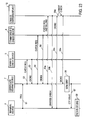
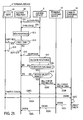
- Fig. 25 is a diagram for illustrating a main flow of a certificate authentication process of the certificate issuing system according to the twelfth embodiment of the present invention.
- the certificate authentication process will be described in detail. From where the terminal device 4 transmits the authentication request to the authentication device 8, up to where the authentication device 8 validates the response (steps S11 to S18), the process is the same as the process shown in Fig. 12 .
- step S18 If it is determined in step S18 that the validation succeeds, and it is determined in step S19 that the validity period is not expired, the authentication device 8 requests the roaming charging device 13 to check the bill of the charge involved in the authentication of the certificate CTF including the communication ID and to bill the charge (step S20E).
- the roaming charging device 13 forwards the requests for checking the bill of the charge and for billing the charge to the communication ID charging device 12 on the network NW1 associated with the communication ID included in the certificate (step S20F).
- the communication ID charging device 12 requests the terminal device 4 to check the charging involved in the authentication of the certificate (step S20G). If the terminal device 4 responds by an OK reply (step S20H), the communication ID charging device 12 further checks the credit of the communication ID or, in other words, checks the balance of the account at a banking institution associated with the communication ID (step S20I) and transmits the check result to the roaming charging device 13 (step S20J).
- the roaming charging device 13 forwards the check results concerning the check of the bill of the charge and the billing of the charge to the authentication device 8 (step S20K).
- the authentication device 8 transmits the OK authentication result to the terminal device 4 via the NW2 if both the replies concerning the check of the bill of the charge and the billing from the roaming charging device 13 are OK, or otherwise, transmits the NG authentication result to the terminal device 4 via the NW2 (step S20L).
- the fee for the roaming service to access the NW2 by using the certificate issued on the NW1 can be charged on the NW1.
- the terminal device 4 transmits a certificate issue request and a certificate expiration request that include at least the sub ID thereof, and the certificate issue request and the certificate expiration request include both the communication ID and the sub ID when the requests finally reach the certificate issuing device 7.
- the certificate issue request and the certificate expiration request may include only the communication ID when the requests finally reach the certificate issuing device 7.
- the communication ID included in the certificate issue request and the certificate expiration request may be read from the communication ID storing part 41 by the certificate issue requesting part 43 in the terminal device 4 and added to the requests or may be added to the requests by the communication ID adding device 9 on the NW1 as described in the fourth embodiment.
- the certificate issuing device 7 When the certificate issuing device 7 receives the certificate issue request including only the communication ID from the terminal device 4 via the NW1, the certificate issuing device 7 requests the communication ID checking device 5 to check whether or not the communication ID included in the certificate issue request is in use. If the check result from the communication ID checking device 5 is OK, the certificate issuing device 7 generates a certificate CTF including at least the ID of the certificate issuing device 7, the communication ID of the terminal device 4 and the validity period and transmits the certificate CTF to the terminal device 4 via the NW1. When the certificate issuing device 7 receives the certificate expiration request including only the communication ID from the terminal device 4 via the NW1, the certificate issuing device 7 requests the communication ID checking device 5 to check whether or not the communication ID included in the certificate expiration request is in use. If the check result from the communication ID checking device 5 is OK, the certificate issuing device 7 generates expiration information on the certificate CTF including the communication ID and additionally registers the expiration information in the expiration information storing device 10.
- the certificate issuing process and the certificate authentication process are basically the same as in the first embodiment except that the communication ID/sub ID checking device 6 is not accessed.
- the certificate expiration process and the certificate authentication process involved therein are also basically the same as in the seventh embodiment except that the communication ID/sub ID checking device 6 is not accessed.
- the authentication device 8 connected to the NW2 which is different from the NW1 to which the certificate issuing device 7 is connected, can carry out authentication. Therefore, even if the original communication ID cannot be used, for example, even if the terminal device 4 is roaming, various services can be used.
Landscapes
- Engineering & Computer Science (AREA)
- Computer Security & Cryptography (AREA)
- Theoretical Computer Science (AREA)
- Computer Hardware Design (AREA)
- Signal Processing (AREA)
- General Engineering & Computer Science (AREA)
- Computer Networks & Wireless Communication (AREA)
- Software Systems (AREA)
- Computing Systems (AREA)
- General Physics & Mathematics (AREA)
- Physics & Mathematics (AREA)
- Mobile Radio Communication Systems (AREA)
- Management, Administration, Business Operations System, And Electronic Commerce (AREA)
Applications Claiming Priority (2)
| Application Number | Priority Date | Filing Date | Title |
|---|---|---|---|
| JP2007027985 | 2007-02-07 | ||
| PCT/JP2008/052054 WO2008096825A1 (ja) | 2007-02-07 | 2008-02-07 | 証明書認証方法、証明書発行装置及び認証装置 |
Publications (4)
| Publication Number | Publication Date |
|---|---|
| EP2120392A1 true EP2120392A1 (de) | 2009-11-18 |
| EP2120392A4 EP2120392A4 (de) | 2010-01-27 |
| EP2120392B1 EP2120392B1 (de) | 2016-02-03 |
| EP2120392B8 EP2120392B8 (de) | 2016-03-30 |
Family
ID=39681729
Family Applications (1)
| Application Number | Title | Priority Date | Filing Date |
|---|---|---|---|
| EP08710933.6A Active EP2120392B8 (de) | 2007-02-07 | 2008-02-07 | Verfahren zur authentifizierung von zertifikaten, vorrichtung zur ausstellung von zertifikaten und authentifizierungsvorrichtung |
Country Status (4)
| Country | Link |
|---|---|
| US (1) | US8775796B2 (de) |
| EP (1) | EP2120392B8 (de) |
| JP (1) | JP4892008B2 (de) |
| WO (1) | WO2008096825A1 (de) |
Cited By (2)
| Publication number | Priority date | Publication date | Assignee | Title |
|---|---|---|---|---|
| EP2790374A1 (de) * | 2013-04-11 | 2014-10-15 | Fujitsu Limited | Zertifikaterzeugungsverfahren, Zertifikaterzeugungsvorrichtung und Informationsverarbeitungsvorrichtung |
| WO2016198241A1 (en) * | 2015-06-11 | 2016-12-15 | Siemens Aktiengesellschaft | Authorization apparatus and method for an authorized issuing of an authentication token for a device |
Families Citing this family (19)
| Publication number | Priority date | Publication date | Assignee | Title |
|---|---|---|---|---|
| CN100593936C (zh) * | 2008-05-09 | 2010-03-10 | 西安西电捷通无线网络通信有限公司 | 一种基于wapi的漫游认证方法 |
| JP4377450B1 (ja) * | 2009-03-12 | 2009-12-02 | パナソニック株式会社 | 帳票リーダ装置および帳票認証方法 |
| WO2010103754A1 (ja) * | 2009-03-12 | 2010-09-16 | パナソニック株式会社 | 帳票リーダ装置、帳票認証方法およびプログラム |
| US8555054B2 (en) | 2009-10-12 | 2013-10-08 | Palo Alto Research Center Incorporated | Apparatus and methods for protecting network resources |
| JP2011175591A (ja) * | 2010-02-25 | 2011-09-08 | Kddi R & D Laboratories Inc | ネットワーク認証システム、ネットワーク認証方法およびプログラム |
| US9141780B2 (en) * | 2010-11-22 | 2015-09-22 | Smsc Holdings S.A.R.L. | Method and system for authenticating communication |
| US9344282B2 (en) * | 2011-03-22 | 2016-05-17 | Microsoft Technology Licensing, Llc | Central and implicit certificate management |
| JP5953991B2 (ja) * | 2012-07-03 | 2016-07-20 | 富士通株式会社 | 通信制御方法、通信制御装置、通信機器、及びプログラム |
| JP6167667B2 (ja) * | 2013-05-23 | 2017-07-26 | 富士通株式会社 | 認証システム、認証方法、認証プログラムおよび認証装置 |
| EP3008653A4 (de) * | 2013-06-13 | 2017-01-25 | Intel Corporation | Sichere batterieauthentifizierung |
| EP2958291B1 (de) * | 2014-06-18 | 2021-04-14 | Swisscom AG | Verfahren und System zur Authentifizierung von Netzwerkvorrichtungen |
| US9794252B2 (en) * | 2014-10-15 | 2017-10-17 | Ricoh Company, Ltd. | Information processing system and device control method |
| US9705752B2 (en) | 2015-01-29 | 2017-07-11 | Blackrock Financial Management, Inc. | Reliably updating a messaging system |
| US9998287B2 (en) * | 2015-03-06 | 2018-06-12 | Comcast Cable Communications, Llc | Secure authentication of remote equipment |
| CN106454836B (zh) * | 2015-08-06 | 2021-12-31 | 中兴通讯股份有限公司 | 一种增强设备证书使用安全的方法及装置 |
| WO2018138713A1 (en) * | 2017-01-29 | 2018-08-02 | Beame. Io Ltd. | Establishing an ad-hoc secure connection between two electronic computing devices using a self-expiring locally transmitted information packet |
| US12470540B2 (en) * | 2024-03-06 | 2025-11-11 | Schneider Electric USA, Inc. | Centralized certificate management for certificate pinning |
| WO2026069431A1 (ja) * | 2024-09-24 | 2026-04-02 | Ntt株式会社 | 提示装置、管理装置、検証装置、検証方法およびプログラム |
| WO2026069430A1 (ja) * | 2024-09-24 | 2026-04-02 | Ntt株式会社 | 提示装置、管理装置、検証装置、検証方法およびプログラム |
Family Cites Families (18)
| Publication number | Priority date | Publication date | Assignee | Title |
|---|---|---|---|---|
| JPH0511192A (ja) * | 1991-07-08 | 1993-01-19 | Nikon Corp | レーザ走査顕微鏡 |
| AU2001295913A1 (en) * | 2000-10-17 | 2002-04-29 | Ishii, Mieko | Personal information protective method, personal information protective system, processing device, portable transmitter/receiver, and program |
| EP1436938B1 (de) * | 2001-10-12 | 2016-09-07 | Geo Trust, Inc. | Verfahren zum automatisierten identifizierung, verarbeiten und ausgeben digitaler zertifikate |
| JP2003188873A (ja) | 2001-12-14 | 2003-07-04 | Kanazawa Inst Of Technology | 認証方法、およびその方法を利用可能な認証装置、ユーザシステムおよび認証システム |
| US7849173B1 (en) * | 2001-12-31 | 2010-12-07 | Christopher Uhlik | System for on-demand access to local area networks |
| US6973086B2 (en) * | 2002-01-28 | 2005-12-06 | Nokia Corporation | Method and system for securing mobile IPv6 home address option using ingress filtering |
| JP2004272380A (ja) * | 2003-03-05 | 2004-09-30 | Nippon Telegr & Teleph Corp <Ntt> | グループ認証方法及びシステム、サービス提供装置、認証装置、サービス提供プログラム及びそれを記録した記録媒体、認証プログラム及びそれを記録した記録媒体 |
| JP2004343442A (ja) * | 2003-05-15 | 2004-12-02 | Nippon Telegr & Teleph Corp <Ntt> | 開示用識別子流通方法及びシステム、開示用識別子証明装置 |
| US7861288B2 (en) | 2003-07-11 | 2010-12-28 | Nippon Telegraph And Telephone Corporation | User authentication system for providing online services based on the transmission address |
| DE602004008667T2 (de) * | 2003-07-25 | 2008-06-05 | Ricoh Co., Ltd. | Authentifizierungs-System- und Verfahren unter Verwendung von individualisierten und nicht-individualisierten Zertifikaten |
| JP4291213B2 (ja) | 2004-05-26 | 2009-07-08 | 日本電信電話株式会社 | 認証方法、認証システム、認証代行サーバ、ネットワークアクセス認証サーバ、プログラム、及び記録媒体 |
| JP4409377B2 (ja) * | 2004-07-06 | 2010-02-03 | 東日本電信電話株式会社 | 通信システム及びサービス提供方法 |
| JP4468453B2 (ja) * | 2004-09-20 | 2010-05-26 | パナソニック株式会社 | 往復経路確認の最適化 |
| US9185108B2 (en) * | 2005-05-06 | 2015-11-10 | Symantec Corporation | Token sharing system and method |
| US20060291422A1 (en) * | 2005-06-27 | 2006-12-28 | Nokia Corporation | Mobility management in a communication system of at least two communication networks |
| JP4890105B2 (ja) * | 2006-05-31 | 2012-03-07 | 三菱電機株式会社 | 認証装置、認証代行装置、およびユーザ認証方法 |
| JP4551367B2 (ja) * | 2006-07-07 | 2010-09-29 | 日本電信電話株式会社 | サービスシステムおよびサービスシステム制御方法 |
| CN101193106B (zh) * | 2006-11-17 | 2011-09-28 | 鸿富锦精密工业(深圳)有限公司 | 调制解调器及其凭证选择方法 |
-
2008
- 2008-02-07 WO PCT/JP2008/052054 patent/WO2008096825A1/ja not_active Ceased
- 2008-02-07 EP EP08710933.6A patent/EP2120392B8/de active Active
- 2008-02-07 JP JP2008557157A patent/JP4892008B2/ja active Active
- 2008-02-07 US US12/523,420 patent/US8775796B2/en active Active
Cited By (5)
| Publication number | Priority date | Publication date | Assignee | Title |
|---|---|---|---|---|
| EP2790374A1 (de) * | 2013-04-11 | 2014-10-15 | Fujitsu Limited | Zertifikaterzeugungsverfahren, Zertifikaterzeugungsvorrichtung und Informationsverarbeitungsvorrichtung |
| US9438583B2 (en) | 2013-04-11 | 2016-09-06 | Fujitsu Limited | Certificate generation method, certificate generation apparatus, information processing apparatus, and communication device |
| WO2016198241A1 (en) * | 2015-06-11 | 2016-12-15 | Siemens Aktiengesellschaft | Authorization apparatus and method for an authorized issuing of an authentication token for a device |
| CN107683599A (zh) * | 2015-06-11 | 2018-02-09 | 西门子公司 | 用于设备的认证令牌的授权发布的授权装置和方法 |
| US10511587B2 (en) | 2015-06-11 | 2019-12-17 | Siemens Aktiengesellschaft | Authorization apparatus and method for an authorized issuing of an authentication token for a device |
Also Published As
| Publication number | Publication date |
|---|---|
| JPWO2008096825A1 (ja) | 2010-05-27 |
| WO2008096825A1 (ja) | 2008-08-14 |
| US20110185171A1 (en) | 2011-07-28 |
| EP2120392B1 (de) | 2016-02-03 |
| EP2120392A4 (de) | 2010-01-27 |
| US8775796B2 (en) | 2014-07-08 |
| EP2120392B8 (de) | 2016-03-30 |
| JP4892008B2 (ja) | 2012-03-07 |
Similar Documents
| Publication | Publication Date | Title |
|---|---|---|
| US8775796B2 (en) | Certificate authenticating method, certificate issuing device, and authentication device | |
| CN100583873C (zh) | 站鉴权地接入本地数据网、尤其是无线电数据网的方法和装置 | |
| US7221935B2 (en) | System, method and apparatus for federated single sign-on services | |
| US7457848B2 (en) | Over-network resource distribution system and mutual authentication system | |
| US8621206B2 (en) | Authority-neutral certification for multiple-authority PKI environments | |
| EP1680720B1 (de) | Methode und system zum authentifizieren eines benutzers eines datenverarbeitungssystems | |
| US7735126B2 (en) | Certificate based authentication authorization accounting scheme for loose coupling interworking | |
| CA2530891C (en) | Apparatus and method for a single sign-on authentication through a non-trusted access network | |
| US20030079124A1 (en) | Secure method for getting on-line status, authentication, verification, authorization, communication and transaction services for web-enabled hardware and software, based on uniform telephone address | |
| US7448075B2 (en) | Method and a system for authenticating a user at a network access while the user is making a connection to the Internet | |
| US20050177619A1 (en) | Method and apparatus in a telecommunications system | |
| US20030206533A1 (en) | Terminal and repository in a telecommunications system | |
| KR101276092B1 (ko) | 보안 정보 저장 장치와 적어도 하나의 제3자 사이의 통신방법 및 시스템, 그리고 이에 대응되는 개체, 장치 및제3자 | |
| US8621582B2 (en) | Authentication system | |
| JP2008500666A (ja) | 無線サービスを提供する方法 | |
| US20110173105A1 (en) | Utilizing AAA/HLR infrastructure for Web-SSO service charging | |
| US20110047270A1 (en) | Network connection service providing device | |
| KR20070011595A (ko) | Ip 네트워크에서의 콘텐츠에 기초한 빌링을 위한 방법 및시스템 | |
| CN100583789C (zh) | 用于经由无线局域网的业务选择的方法、系统与设备 | |
| US20080194229A1 (en) | Method For Wireless Access To The Internet For Pre-Paid Users | |
| US20050210288A1 (en) | Method and apparatus for eliminating dual authentication for enterprise access via wireless LAN services | |
| RU2253187C2 (ru) | Система и способ для локального обеспечения выполнения установленных правил для провайдеров услуг сети интернет | |
| CN102083066A (zh) | 统一安全认证的方法和系统 | |
| US20060183463A1 (en) | Method for authenticated connection setup | |
| US7310510B2 (en) | Method for ascertaining a billing tariff for billing for a data transfer |
Legal Events
| Date | Code | Title | Description |
|---|---|---|---|
| PUAI | Public reference made under article 153(3) epc to a published international application that has entered the european phase |
Free format text: ORIGINAL CODE: 0009012 |
|
| 17P | Request for examination filed |
Effective date: 20090717 |
|
| AK | Designated contracting states |
Kind code of ref document: A1 Designated state(s): AT BE BG CH CY CZ DE DK EE ES FI FR GB GR HR HU IE IS IT LI LT LU LV MC MT NL NO PL PT RO SE SI SK TR |
|
| A4 | Supplementary search report drawn up and despatched |
Effective date: 20091228 |
|
| RIC1 | Information provided on ipc code assigned before grant |
Ipc: H04L 29/06 20060101ALI20091218BHEP Ipc: G06F 21/00 20060101AFI20091218BHEP |
|
| DAX | Request for extension of the european patent (deleted) | ||
| 17Q | First examination report despatched |
Effective date: 20121213 |
|
| GRAP | Despatch of communication of intention to grant a patent |
Free format text: ORIGINAL CODE: EPIDOSNIGR1 |
|
| INTG | Intention to grant announced |
Effective date: 20150825 |
|
| GRAS | Grant fee paid |
Free format text: ORIGINAL CODE: EPIDOSNIGR3 |
|
| GRAA | (expected) grant |
Free format text: ORIGINAL CODE: 0009210 |
|
| RIN1 | Information on inventor provided before grant (corrected) |
Inventor name: ORIHARA, SHINGO Inventor name: KAWASHIMA, MASAHISA Inventor name: TSURUOKA, YUKIO Inventor name: KARASAWA, KEI Inventor name: TAKAHASHI, KENJI |
|
| RAP1 | Party data changed (applicant data changed or rights of an application transferred) |
Owner name: NIPPON TELEGRAPH AND TELEPHONE COMPANY |
|
| AK | Designated contracting states |
Kind code of ref document: B1 Designated state(s): AT BE BG CH CY CZ DE DK EE ES FI FR GB GR HR HU IE IS IT LI LT LU LV MC MT NL NO PL PT RO SE SI SK TR |
|
| REG | Reference to a national code |
Ref country code: GB Ref legal event code: FG4D |
|
| REG | Reference to a national code |
Ref country code: AT Ref legal event code: REF Ref document number: 773992 Country of ref document: AT Kind code of ref document: T Effective date: 20160215 Ref country code: CH Ref legal event code: EP |
|
| REG | Reference to a national code |
Ref country code: FR Ref legal event code: PLFP Year of fee payment: 9 |
|
| REG | Reference to a national code |
Ref country code: IE Ref legal event code: FG4D |
|
| RAP2 | Party data changed (patent owner data changed or rights of a patent transferred) |
Owner name: NIPPON TELEGRAPH AND TELEPHONE CORPORATION |
|
| REG | Reference to a national code |
Ref country code: DE Ref legal event code: R096 Ref document number: 602008042246 Country of ref document: DE |
|
| REG | Reference to a national code |
Ref country code: LT Ref legal event code: MG4D Ref country code: NL Ref legal event code: MP Effective date: 20160203 |
|
| REG | Reference to a national code |
Ref country code: AT Ref legal event code: MK05 Ref document number: 773992 Country of ref document: AT Kind code of ref document: T Effective date: 20160203 |
|
| PG25 | Lapsed in a contracting state [announced via postgrant information from national office to epo] |
Ref country code: HR Free format text: LAPSE BECAUSE OF FAILURE TO SUBMIT A TRANSLATION OF THE DESCRIPTION OR TO PAY THE FEE WITHIN THE PRESCRIBED TIME-LIMIT Effective date: 20160203 Ref country code: NO Free format text: LAPSE BECAUSE OF FAILURE TO SUBMIT A TRANSLATION OF THE DESCRIPTION OR TO PAY THE FEE WITHIN THE PRESCRIBED TIME-LIMIT Effective date: 20160503 Ref country code: ES Free format text: LAPSE BECAUSE OF FAILURE TO SUBMIT A TRANSLATION OF THE DESCRIPTION OR TO PAY THE FEE WITHIN THE PRESCRIBED TIME-LIMIT Effective date: 20160203 Ref country code: GR Free format text: LAPSE BECAUSE OF FAILURE TO SUBMIT A TRANSLATION OF THE DESCRIPTION OR TO PAY THE FEE WITHIN THE PRESCRIBED TIME-LIMIT Effective date: 20160504 Ref country code: FI Free format text: LAPSE BECAUSE OF FAILURE TO SUBMIT A TRANSLATION OF THE DESCRIPTION OR TO PAY THE FEE WITHIN THE PRESCRIBED TIME-LIMIT Effective date: 20160203 |
|
| PG25 | Lapsed in a contracting state [announced via postgrant information from national office to epo] |
Ref country code: IS Free format text: LAPSE BECAUSE OF FAILURE TO SUBMIT A TRANSLATION OF THE DESCRIPTION OR TO PAY THE FEE WITHIN THE PRESCRIBED TIME-LIMIT Effective date: 20160603 Ref country code: NL Free format text: LAPSE BECAUSE OF FAILURE TO SUBMIT A TRANSLATION OF THE DESCRIPTION OR TO PAY THE FEE WITHIN THE PRESCRIBED TIME-LIMIT Effective date: 20160203 Ref country code: BE Free format text: LAPSE BECAUSE OF NON-PAYMENT OF DUE FEES Effective date: 20160229 Ref country code: LV Free format text: LAPSE BECAUSE OF FAILURE TO SUBMIT A TRANSLATION OF THE DESCRIPTION OR TO PAY THE FEE WITHIN THE PRESCRIBED TIME-LIMIT Effective date: 20160203 Ref country code: AT Free format text: LAPSE BECAUSE OF FAILURE TO SUBMIT A TRANSLATION OF THE DESCRIPTION OR TO PAY THE FEE WITHIN THE PRESCRIBED TIME-LIMIT Effective date: 20160203 Ref country code: PT Free format text: LAPSE BECAUSE OF FAILURE TO SUBMIT A TRANSLATION OF THE DESCRIPTION OR TO PAY THE FEE WITHIN THE PRESCRIBED TIME-LIMIT Effective date: 20160603 Ref country code: PL Free format text: LAPSE BECAUSE OF FAILURE TO SUBMIT A TRANSLATION OF THE DESCRIPTION OR TO PAY THE FEE WITHIN THE PRESCRIBED TIME-LIMIT Effective date: 20160203 Ref country code: SE Free format text: LAPSE BECAUSE OF FAILURE TO SUBMIT A TRANSLATION OF THE DESCRIPTION OR TO PAY THE FEE WITHIN THE PRESCRIBED TIME-LIMIT Effective date: 20160203 Ref country code: LT Free format text: LAPSE BECAUSE OF FAILURE TO SUBMIT A TRANSLATION OF THE DESCRIPTION OR TO PAY THE FEE WITHIN THE PRESCRIBED TIME-LIMIT Effective date: 20160203 |
|
| REG | Reference to a national code |
Ref country code: CH Ref legal event code: PL |
|
| PG25 | Lapsed in a contracting state [announced via postgrant information from national office to epo] |
Ref country code: LI Free format text: LAPSE BECAUSE OF NON-PAYMENT OF DUE FEES Effective date: 20160229 Ref country code: CH Free format text: LAPSE BECAUSE OF NON-PAYMENT OF DUE FEES Effective date: 20160229 Ref country code: DK Free format text: LAPSE BECAUSE OF FAILURE TO SUBMIT A TRANSLATION OF THE DESCRIPTION OR TO PAY THE FEE WITHIN THE PRESCRIBED TIME-LIMIT Effective date: 20160203 Ref country code: EE Free format text: LAPSE BECAUSE OF FAILURE TO SUBMIT A TRANSLATION OF THE DESCRIPTION OR TO PAY THE FEE WITHIN THE PRESCRIBED TIME-LIMIT Effective date: 20160203 |
|
| REG | Reference to a national code |
Ref country code: DE Ref legal event code: R097 Ref document number: 602008042246 Country of ref document: DE |
|
| PG25 | Lapsed in a contracting state [announced via postgrant information from national office to epo] |
Ref country code: CZ Free format text: LAPSE BECAUSE OF FAILURE TO SUBMIT A TRANSLATION OF THE DESCRIPTION OR TO PAY THE FEE WITHIN THE PRESCRIBED TIME-LIMIT Effective date: 20160203 Ref country code: SK Free format text: LAPSE BECAUSE OF FAILURE TO SUBMIT A TRANSLATION OF THE DESCRIPTION OR TO PAY THE FEE WITHIN THE PRESCRIBED TIME-LIMIT Effective date: 20160203 Ref country code: RO Free format text: LAPSE BECAUSE OF FAILURE TO SUBMIT A TRANSLATION OF THE DESCRIPTION OR TO PAY THE FEE WITHIN THE PRESCRIBED TIME-LIMIT Effective date: 20160203 |
|
| REG | Reference to a national code |
Ref country code: IE Ref legal event code: MM4A |
|
| PLBE | No opposition filed within time limit |
Free format text: ORIGINAL CODE: 0009261 |
|
| STAA | Information on the status of an ep patent application or granted ep patent |
Free format text: STATUS: NO OPPOSITION FILED WITHIN TIME LIMIT |
|
| PG25 | Lapsed in a contracting state [announced via postgrant information from national office to epo] |
Ref country code: BE Free format text: LAPSE BECAUSE OF FAILURE TO SUBMIT A TRANSLATION OF THE DESCRIPTION OR TO PAY THE FEE WITHIN THE PRESCRIBED TIME-LIMIT Effective date: 20160203 |
|
| 26N | No opposition filed |
Effective date: 20161104 |
|
| PG25 | Lapsed in a contracting state [announced via postgrant information from national office to epo] |
Ref country code: IE Free format text: LAPSE BECAUSE OF NON-PAYMENT OF DUE FEES Effective date: 20160207 |
|
| REG | Reference to a national code |
Ref country code: FR Ref legal event code: PLFP Year of fee payment: 10 |
|
| PG25 | Lapsed in a contracting state [announced via postgrant information from national office to epo] |
Ref country code: SI Free format text: LAPSE BECAUSE OF FAILURE TO SUBMIT A TRANSLATION OF THE DESCRIPTION OR TO PAY THE FEE WITHIN THE PRESCRIBED TIME-LIMIT Effective date: 20160203 Ref country code: BG Free format text: LAPSE BECAUSE OF FAILURE TO SUBMIT A TRANSLATION OF THE DESCRIPTION OR TO PAY THE FEE WITHIN THE PRESCRIBED TIME-LIMIT Effective date: 20160503 |
|
| PG25 | Lapsed in a contracting state [announced via postgrant information from national office to epo] |
Ref country code: MT Free format text: LAPSE BECAUSE OF FAILURE TO SUBMIT A TRANSLATION OF THE DESCRIPTION OR TO PAY THE FEE WITHIN THE PRESCRIBED TIME-LIMIT Effective date: 20160203 |
|
| REG | Reference to a national code |
Ref country code: FR Ref legal event code: PLFP Year of fee payment: 11 |
|
| PG25 | Lapsed in a contracting state [announced via postgrant information from national office to epo] |
Ref country code: HU Free format text: LAPSE BECAUSE OF FAILURE TO SUBMIT A TRANSLATION OF THE DESCRIPTION OR TO PAY THE FEE WITHIN THE PRESCRIBED TIME-LIMIT; INVALID AB INITIO Effective date: 20080207 Ref country code: CY Free format text: LAPSE BECAUSE OF FAILURE TO SUBMIT A TRANSLATION OF THE DESCRIPTION OR TO PAY THE FEE WITHIN THE PRESCRIBED TIME-LIMIT Effective date: 20160203 |
|
| PG25 | Lapsed in a contracting state [announced via postgrant information from national office to epo] |
Ref country code: MC Free format text: LAPSE BECAUSE OF FAILURE TO SUBMIT A TRANSLATION OF THE DESCRIPTION OR TO PAY THE FEE WITHIN THE PRESCRIBED TIME-LIMIT Effective date: 20160203 Ref country code: MT Free format text: LAPSE BECAUSE OF FAILURE TO SUBMIT A TRANSLATION OF THE DESCRIPTION OR TO PAY THE FEE WITHIN THE PRESCRIBED TIME-LIMIT Effective date: 20160229 Ref country code: TR Free format text: LAPSE BECAUSE OF FAILURE TO SUBMIT A TRANSLATION OF THE DESCRIPTION OR TO PAY THE FEE WITHIN THE PRESCRIBED TIME-LIMIT Effective date: 20160203 Ref country code: LU Free format text: LAPSE BECAUSE OF NON-PAYMENT OF DUE FEES Effective date: 20160207 |
|
| REG | Reference to a national code |
Ref country code: DE Ref legal event code: R081 Ref document number: 602008042246 Country of ref document: DE Owner name: NTT, INC., JP Free format text: FORMER OWNER: NIPPON TELEGRAPH AND TELEPHONE CO., TOKYO, JP Ref country code: DE Ref legal event code: R082 Ref document number: 602008042246 Country of ref document: DE Representative=s name: DENNEMEYER & ASSOCIATES RECHTSANWALTSGESELLSCH, DE |
|
| PGFP | Annual fee paid to national office [announced via postgrant information from national office to epo] |
Ref country code: GB Payment date: 20260219 Year of fee payment: 19 |
|
| PGFP | Annual fee paid to national office [announced via postgrant information from national office to epo] |
Ref country code: DE Payment date: 20260218 Year of fee payment: 19 |
|
| PGFP | Annual fee paid to national office [announced via postgrant information from national office to epo] |
Ref country code: IT Payment date: 20260224 Year of fee payment: 19 |
|
| PGFP | Annual fee paid to national office [announced via postgrant information from national office to epo] |
Ref country code: FR Payment date: 20260218 Year of fee payment: 19 |