EP2124282B1 - Reformer-system, brennstoffzellensystem und betriebsverfahren dafür - Google Patents
Reformer-system, brennstoffzellensystem und betriebsverfahren dafür Download PDFInfo
- Publication number
- EP2124282B1 EP2124282B1 EP08711295.9A EP08711295A EP2124282B1 EP 2124282 B1 EP2124282 B1 EP 2124282B1 EP 08711295 A EP08711295 A EP 08711295A EP 2124282 B1 EP2124282 B1 EP 2124282B1
- Authority
- EP
- European Patent Office
- Prior art keywords
- reforming catalyst
- temperature
- fuel
- fuel cell
- introducing
- Prior art date
- Legal status (The legal status is an assumption and is not a legal conclusion. Google has not performed a legal analysis and makes no representation as to the accuracy of the status listed.)
- Active
Links
Images



Classifications
-
- H—ELECTRICITY
- H01—ELECTRIC ELEMENTS
- H01M—PROCESSES OR MEANS, e.g. BATTERIES, FOR THE DIRECT CONVERSION OF CHEMICAL ENERGY INTO ELECTRICAL ENERGY
- H01M8/00—Fuel cells; Manufacture thereof
- H01M8/04—Auxiliary arrangements, e.g. for control of pressure or for circulation of fluids
-
- H—ELECTRICITY
- H01—ELECTRIC ELEMENTS
- H01M—PROCESSES OR MEANS, e.g. BATTERIES, FOR THE DIRECT CONVERSION OF CHEMICAL ENERGY INTO ELECTRICAL ENERGY
- H01M8/00—Fuel cells; Manufacture thereof
- H01M8/06—Combination of fuel cells with means for production of reactants or for treatment of residues
- H01M8/0606—Combination of fuel cells with means for production of reactants or for treatment of residues with means for production of gaseous reactants
- H01M8/0612—Combination of fuel cells with means for production of reactants or for treatment of residues with means for production of gaseous reactants from carbon-containing material
-
- C—CHEMISTRY; METALLURGY
- C01—INORGANIC CHEMISTRY
- C01B—NON-METALLIC ELEMENTS; COMPOUNDS THEREOF; METALLOIDS OR COMPOUNDS THEREOF NOT COVERED BY SUBCLASS C01C
- C01B3/00—Hydrogen; Gaseous mixtures containing hydrogen; Separation of hydrogen from mixtures containing it; Purification of hydrogen; Reversible storage of hydrogen
- C01B3/02—Production of hydrogen; Production of gaseous mixtures containing hydrogen
- C01B3/32—Production of hydrogen; Production of gaseous mixtures containing hydrogen by reaction of gaseous or liquid organic compounds with gasifying agents, e.g. water, carbon dioxide or air
- C01B3/34—Production of hydrogen; Production of gaseous mixtures containing hydrogen by reaction of gaseous or liquid organic compounds with gasifying agents, e.g. water, carbon dioxide or air by reaction of hydrocarbons with gasifying agents
- C01B3/38—Production of hydrogen; Production of gaseous mixtures containing hydrogen by reaction of gaseous or liquid organic compounds with gasifying agents, e.g. water, carbon dioxide or air by reaction of hydrocarbons with gasifying agents using catalysts
-
- C—CHEMISTRY; METALLURGY
- C01—INORGANIC CHEMISTRY
- C01B—NON-METALLIC ELEMENTS; COMPOUNDS THEREOF; METALLOIDS OR COMPOUNDS THEREOF NOT COVERED BY SUBCLASS C01C
- C01B3/00—Hydrogen; Gaseous mixtures containing hydrogen; Separation of hydrogen from mixtures containing it; Purification of hydrogen; Reversible storage of hydrogen
- C01B3/02—Production of hydrogen; Production of gaseous mixtures containing hydrogen
- C01B3/32—Production of hydrogen; Production of gaseous mixtures containing hydrogen by reaction of gaseous or liquid organic compounds with gasifying agents, e.g. water, carbon dioxide or air
- C01B3/34—Production of hydrogen; Production of gaseous mixtures containing hydrogen by reaction of gaseous or liquid organic compounds with gasifying agents, e.g. water, carbon dioxide or air by reaction of hydrocarbons with gasifying agents
- C01B3/38—Production of hydrogen; Production of gaseous mixtures containing hydrogen by reaction of gaseous or liquid organic compounds with gasifying agents, e.g. water, carbon dioxide or air by reaction of hydrocarbons with gasifying agents using catalysts
- C01B3/382—Processes with two or more reaction steps, of which at least one is catalytic, e.g. steam reforming and partial oxidation
-
- C—CHEMISTRY; METALLURGY
- C01—INORGANIC CHEMISTRY
- C01B—NON-METALLIC ELEMENTS; COMPOUNDS THEREOF; METALLOIDS OR COMPOUNDS THEREOF NOT COVERED BY SUBCLASS C01C
- C01B3/00—Hydrogen; Gaseous mixtures containing hydrogen; Separation of hydrogen from mixtures containing it; Purification of hydrogen; Reversible storage of hydrogen
- C01B3/02—Production of hydrogen; Production of gaseous mixtures containing hydrogen
- C01B3/32—Production of hydrogen; Production of gaseous mixtures containing hydrogen by reaction of gaseous or liquid organic compounds with gasifying agents, e.g. water, carbon dioxide or air
- C01B3/34—Production of hydrogen; Production of gaseous mixtures containing hydrogen by reaction of gaseous or liquid organic compounds with gasifying agents, e.g. water, carbon dioxide or air by reaction of hydrocarbons with gasifying agents
- C01B3/38—Production of hydrogen; Production of gaseous mixtures containing hydrogen by reaction of gaseous or liquid organic compounds with gasifying agents, e.g. water, carbon dioxide or air by reaction of hydrocarbons with gasifying agents using catalysts
- C01B3/384—Production of hydrogen; Production of gaseous mixtures containing hydrogen by reaction of gaseous or liquid organic compounds with gasifying agents, e.g. water, carbon dioxide or air by reaction of hydrocarbons with gasifying agents using catalysts with external heating of the catalyst
-
- H—ELECTRICITY
- H01—ELECTRIC ELEMENTS
- H01M—PROCESSES OR MEANS, e.g. BATTERIES, FOR THE DIRECT CONVERSION OF CHEMICAL ENERGY INTO ELECTRICAL ENERGY
- H01M8/00—Fuel cells; Manufacture thereof
- H01M8/04—Auxiliary arrangements, e.g. for control of pressure or for circulation of fluids
- H01M8/04007—Auxiliary arrangements, e.g. for control of pressure or for circulation of fluids related to heat exchange
- H01M8/04014—Heat exchange using gaseous fluids; Heat exchange by combustion of reactants
- H01M8/04022—Heating by combustion
-
- H—ELECTRICITY
- H01—ELECTRIC ELEMENTS
- H01M—PROCESSES OR MEANS, e.g. BATTERIES, FOR THE DIRECT CONVERSION OF CHEMICAL ENERGY INTO ELECTRICAL ENERGY
- H01M8/00—Fuel cells; Manufacture thereof
- H01M8/04—Auxiliary arrangements, e.g. for control of pressure or for circulation of fluids
- H01M8/04223—Auxiliary arrangements, e.g. for control of pressure or for circulation of fluids during start-up or shut-down; Depolarisation or activation, e.g. purging; Means for short-circuiting defective fuel cells
- H01M8/04228—Auxiliary arrangements, e.g. for control of pressure or for circulation of fluids during start-up or shut-down; Depolarisation or activation, e.g. purging; Means for short-circuiting defective fuel cells during shut-down
-
- H—ELECTRICITY
- H01—ELECTRIC ELEMENTS
- H01M—PROCESSES OR MEANS, e.g. BATTERIES, FOR THE DIRECT CONVERSION OF CHEMICAL ENERGY INTO ELECTRICAL ENERGY
- H01M8/00—Fuel cells; Manufacture thereof
- H01M8/04—Auxiliary arrangements, e.g. for control of pressure or for circulation of fluids
- H01M8/04298—Processes for controlling fuel cells or fuel cell systems
- H01M8/043—Processes for controlling fuel cells or fuel cell systems applied during specific periods
- H01M8/04303—Processes for controlling fuel cells or fuel cell systems applied during specific periods applied during shut-down
-
- H—ELECTRICITY
- H01—ELECTRIC ELEMENTS
- H01M—PROCESSES OR MEANS, e.g. BATTERIES, FOR THE DIRECT CONVERSION OF CHEMICAL ENERGY INTO ELECTRICAL ENERGY
- H01M8/00—Fuel cells; Manufacture thereof
- H01M8/04—Auxiliary arrangements, e.g. for control of pressure or for circulation of fluids
- H01M8/04298—Processes for controlling fuel cells or fuel cell systems
- H01M8/04313—Processes for controlling fuel cells or fuel cell systems characterised by the detection or assessment of variables; characterised by the detection or assessment of failure or abnormal function
- H01M8/0432—Temperature; Ambient temperature
- H01M8/04365—Temperature; Ambient temperature of other components of a fuel cell or fuel cell stacks
-
- H—ELECTRICITY
- H01—ELECTRIC ELEMENTS
- H01M—PROCESSES OR MEANS, e.g. BATTERIES, FOR THE DIRECT CONVERSION OF CHEMICAL ENERGY INTO ELECTRICAL ENERGY
- H01M8/00—Fuel cells; Manufacture thereof
- H01M8/04—Auxiliary arrangements, e.g. for control of pressure or for circulation of fluids
- H01M8/04298—Processes for controlling fuel cells or fuel cell systems
- H01M8/04313—Processes for controlling fuel cells or fuel cell systems characterised by the detection or assessment of variables; characterised by the detection or assessment of failure or abnormal function
- H01M8/0432—Temperature; Ambient temperature
- H01M8/04373—Temperature; Ambient temperature of auxiliary devices, e.g. reformers, compressors, burners
-
- H—ELECTRICITY
- H01—ELECTRIC ELEMENTS
- H01M—PROCESSES OR MEANS, e.g. BATTERIES, FOR THE DIRECT CONVERSION OF CHEMICAL ENERGY INTO ELECTRICAL ENERGY
- H01M8/00—Fuel cells; Manufacture thereof
- H01M8/04—Auxiliary arrangements, e.g. for control of pressure or for circulation of fluids
- H01M8/04298—Processes for controlling fuel cells or fuel cell systems
- H01M8/04694—Processes for controlling fuel cells or fuel cell systems characterised by variables to be controlled
- H01M8/04701—Temperature
- H01M8/04738—Temperature of auxiliary devices, e.g. reformer, compressor, burner
-
- H—ELECTRICITY
- H01—ELECTRIC ELEMENTS
- H01M—PROCESSES OR MEANS, e.g. BATTERIES, FOR THE DIRECT CONVERSION OF CHEMICAL ENERGY INTO ELECTRICAL ENERGY
- H01M8/00—Fuel cells; Manufacture thereof
- H01M8/04—Auxiliary arrangements, e.g. for control of pressure or for circulation of fluids
- H01M8/04298—Processes for controlling fuel cells or fuel cell systems
- H01M8/04694—Processes for controlling fuel cells or fuel cell systems characterised by variables to be controlled
- H01M8/04746—Pressure; Flow
- H01M8/04776—Pressure; Flow at auxiliary devices, e.g. reformer, compressor, burner
-
- H—ELECTRICITY
- H01—ELECTRIC ELEMENTS
- H01M—PROCESSES OR MEANS, e.g. BATTERIES, FOR THE DIRECT CONVERSION OF CHEMICAL ENERGY INTO ELECTRICAL ENERGY
- H01M8/00—Fuel cells; Manufacture thereof
- H01M8/04—Auxiliary arrangements, e.g. for control of pressure or for circulation of fluids
- H01M8/04298—Processes for controlling fuel cells or fuel cell systems
- H01M8/04694—Processes for controlling fuel cells or fuel cell systems characterised by variables to be controlled
- H01M8/04955—Shut-off or shut-down of fuel cells
-
- H—ELECTRICITY
- H01—ELECTRIC ELEMENTS
- H01M—PROCESSES OR MEANS, e.g. BATTERIES, FOR THE DIRECT CONVERSION OF CHEMICAL ENERGY INTO ELECTRICAL ENERGY
- H01M8/00—Fuel cells; Manufacture thereof
- H01M8/06—Combination of fuel cells with means for production of reactants or for treatment of residues
-
- H—ELECTRICITY
- H01—ELECTRIC ELEMENTS
- H01M—PROCESSES OR MEANS, e.g. BATTERIES, FOR THE DIRECT CONVERSION OF CHEMICAL ENERGY INTO ELECTRICAL ENERGY
- H01M8/00—Fuel cells; Manufacture thereof
- H01M8/24—Grouping of fuel cells, e.g. stacking of fuel cells
- H01M8/241—Grouping of fuel cells, e.g. stacking of fuel cells with solid or matrix-supported electrolytes
- H01M8/2425—High-temperature cells with solid electrolytes
-
- H—ELECTRICITY
- H01—ELECTRIC ELEMENTS
- H01M—PROCESSES OR MEANS, e.g. BATTERIES, FOR THE DIRECT CONVERSION OF CHEMICAL ENERGY INTO ELECTRICAL ENERGY
- H01M8/00—Fuel cells; Manufacture thereof
- H01M8/24—Grouping of fuel cells, e.g. stacking of fuel cells
- H01M8/2457—Grouping of fuel cells, e.g. stacking of fuel cells with both reactants being gaseous or vaporised
-
- C—CHEMISTRY; METALLURGY
- C01—INORGANIC CHEMISTRY
- C01B—NON-METALLIC ELEMENTS; COMPOUNDS THEREOF; METALLOIDS OR COMPOUNDS THEREOF NOT COVERED BY SUBCLASS C01C
- C01B2203/00—Integrated processes for the production of hydrogen or synthesis gas
- C01B2203/02—Processes for making hydrogen or synthesis gas
- C01B2203/0205—Processes for making hydrogen or synthesis gas containing a reforming step
- C01B2203/0227—Processes for making hydrogen or synthesis gas containing a reforming step containing a catalytic reforming step
- C01B2203/0233—Processes for making hydrogen or synthesis gas containing a reforming step containing a catalytic reforming step the reforming step being a steam reforming step
-
- C—CHEMISTRY; METALLURGY
- C01—INORGANIC CHEMISTRY
- C01B—NON-METALLIC ELEMENTS; COMPOUNDS THEREOF; METALLOIDS OR COMPOUNDS THEREOF NOT COVERED BY SUBCLASS C01C
- C01B2203/00—Integrated processes for the production of hydrogen or synthesis gas
- C01B2203/02—Processes for making hydrogen or synthesis gas
- C01B2203/0205—Processes for making hydrogen or synthesis gas containing a reforming step
- C01B2203/0227—Processes for making hydrogen or synthesis gas containing a reforming step containing a catalytic reforming step
- C01B2203/0244—Processes for making hydrogen or synthesis gas containing a reforming step containing a catalytic reforming step the reforming step being an autothermal reforming step, e.g. secondary reforming processes
-
- C—CHEMISTRY; METALLURGY
- C01—INORGANIC CHEMISTRY
- C01B—NON-METALLIC ELEMENTS; COMPOUNDS THEREOF; METALLOIDS OR COMPOUNDS THEREOF NOT COVERED BY SUBCLASS C01C
- C01B2203/00—Integrated processes for the production of hydrogen or synthesis gas
- C01B2203/06—Integration with other chemical processes
- C01B2203/066—Integration with other chemical processes with fuel cells
-
- C—CHEMISTRY; METALLURGY
- C01—INORGANIC CHEMISTRY
- C01B—NON-METALLIC ELEMENTS; COMPOUNDS THEREOF; METALLOIDS OR COMPOUNDS THEREOF NOT COVERED BY SUBCLASS C01C
- C01B2203/00—Integrated processes for the production of hydrogen or synthesis gas
- C01B2203/08—Methods of heating or cooling
- C01B2203/0805—Methods of heating the process for making hydrogen or synthesis gas
-
- C—CHEMISTRY; METALLURGY
- C01—INORGANIC CHEMISTRY
- C01B—NON-METALLIC ELEMENTS; COMPOUNDS THEREOF; METALLOIDS OR COMPOUNDS THEREOF NOT COVERED BY SUBCLASS C01C
- C01B2203/00—Integrated processes for the production of hydrogen or synthesis gas
- C01B2203/10—Catalysts for performing the hydrogen forming reactions
- C01B2203/1041—Composition of the catalyst
- C01B2203/1047—Group VIII metal catalysts
-
- C—CHEMISTRY; METALLURGY
- C01—INORGANIC CHEMISTRY
- C01B—NON-METALLIC ELEMENTS; COMPOUNDS THEREOF; METALLOIDS OR COMPOUNDS THEREOF NOT COVERED BY SUBCLASS C01C
- C01B2203/00—Integrated processes for the production of hydrogen or synthesis gas
- C01B2203/10—Catalysts for performing the hydrogen forming reactions
- C01B2203/1041—Composition of the catalyst
- C01B2203/1047—Group VIII metal catalysts
- C01B2203/1052—Nickel or cobalt catalysts
- C01B2203/1058—Nickel catalysts
-
- C—CHEMISTRY; METALLURGY
- C01—INORGANIC CHEMISTRY
- C01B—NON-METALLIC ELEMENTS; COMPOUNDS THEREOF; METALLOIDS OR COMPOUNDS THEREOF NOT COVERED BY SUBCLASS C01C
- C01B2203/00—Integrated processes for the production of hydrogen or synthesis gas
- C01B2203/12—Feeding the process for making hydrogen or synthesis gas
- C01B2203/1205—Composition of the feed
- C01B2203/1211—Organic compounds or organic mixtures used in the process for making hydrogen or synthesis gas
- C01B2203/1217—Alcohols
- C01B2203/1223—Methanol
-
- C—CHEMISTRY; METALLURGY
- C01—INORGANIC CHEMISTRY
- C01B—NON-METALLIC ELEMENTS; COMPOUNDS THEREOF; METALLOIDS OR COMPOUNDS THEREOF NOT COVERED BY SUBCLASS C01C
- C01B2203/00—Integrated processes for the production of hydrogen or synthesis gas
- C01B2203/12—Feeding the process for making hydrogen or synthesis gas
- C01B2203/1205—Composition of the feed
- C01B2203/1211—Organic compounds or organic mixtures used in the process for making hydrogen or synthesis gas
- C01B2203/1217—Alcohols
- C01B2203/1229—Ethanol
-
- C—CHEMISTRY; METALLURGY
- C01—INORGANIC CHEMISTRY
- C01B—NON-METALLIC ELEMENTS; COMPOUNDS THEREOF; METALLOIDS OR COMPOUNDS THEREOF NOT COVERED BY SUBCLASS C01C
- C01B2203/00—Integrated processes for the production of hydrogen or synthesis gas
- C01B2203/12—Feeding the process for making hydrogen or synthesis gas
- C01B2203/1205—Composition of the feed
- C01B2203/1211—Organic compounds or organic mixtures used in the process for making hydrogen or synthesis gas
- C01B2203/1235—Hydrocarbons
- C01B2203/1241—Natural gas or methane
-
- C—CHEMISTRY; METALLURGY
- C01—INORGANIC CHEMISTRY
- C01B—NON-METALLIC ELEMENTS; COMPOUNDS THEREOF; METALLOIDS OR COMPOUNDS THEREOF NOT COVERED BY SUBCLASS C01C
- C01B2203/00—Integrated processes for the production of hydrogen or synthesis gas
- C01B2203/12—Feeding the process for making hydrogen or synthesis gas
- C01B2203/1205—Composition of the feed
- C01B2203/1211—Organic compounds or organic mixtures used in the process for making hydrogen or synthesis gas
- C01B2203/1235—Hydrocarbons
- C01B2203/1247—Higher hydrocarbons
-
- C—CHEMISTRY; METALLURGY
- C01—INORGANIC CHEMISTRY
- C01B—NON-METALLIC ELEMENTS; COMPOUNDS THEREOF; METALLOIDS OR COMPOUNDS THEREOF NOT COVERED BY SUBCLASS C01C
- C01B2203/00—Integrated processes for the production of hydrogen or synthesis gas
- C01B2203/16—Controlling the process
- C01B2203/1614—Controlling the temperature
- C01B2203/1619—Measuring the temperature
-
- C—CHEMISTRY; METALLURGY
- C01—INORGANIC CHEMISTRY
- C01B—NON-METALLIC ELEMENTS; COMPOUNDS THEREOF; METALLOIDS OR COMPOUNDS THEREOF NOT COVERED BY SUBCLASS C01C
- C01B2203/00—Integrated processes for the production of hydrogen or synthesis gas
- C01B2203/16—Controlling the process
- C01B2203/1614—Controlling the temperature
- C01B2203/1623—Adjusting the temperature
-
- C—CHEMISTRY; METALLURGY
- C01—INORGANIC CHEMISTRY
- C01B—NON-METALLIC ELEMENTS; COMPOUNDS THEREOF; METALLOIDS OR COMPOUNDS THEREOF NOT COVERED BY SUBCLASS C01C
- C01B2203/00—Integrated processes for the production of hydrogen or synthesis gas
- C01B2203/16—Controlling the process
- C01B2203/169—Controlling the feed
-
- Y—GENERAL TAGGING OF NEW TECHNOLOGICAL DEVELOPMENTS; GENERAL TAGGING OF CROSS-SECTIONAL TECHNOLOGIES SPANNING OVER SEVERAL SECTIONS OF THE IPC; TECHNICAL SUBJECTS COVERED BY FORMER USPC CROSS-REFERENCE ART COLLECTIONS [XRACs] AND DIGESTS
- Y02—TECHNOLOGIES OR APPLICATIONS FOR MITIGATION OR ADAPTATION AGAINST CLIMATE CHANGE
- Y02E—REDUCTION OF GREENHOUSE GAS [GHG] EMISSIONS, RELATED TO ENERGY GENERATION, TRANSMISSION OR DISTRIBUTION
- Y02E60/00—Enabling technologies; Technologies with a potential or indirect contribution to GHG emissions mitigation
- Y02E60/30—Hydrogen technology
- Y02E60/50—Fuel cells
Definitions
- the present invention relates to a reformer system provided with a reformer that generate a reformed gas by reforming a source fuel through the use of a reforming catalyst, a fuel cell system additionally provided with a solid oxide fuel cell using the reformed gas as a fuel, and an operation method of the fuel cell system.
- the present invention is achieved in consideration of such circumstances, and aims at providing a reformer system, a fuel cell system, and an operation method of the fuel cell system, which make it possible to avoid damage given to a fuel cell at the stop of power generation in a solid oxide fuel cell, with a simple constitution.
- the reformer system is a reformer system provided with a reformer generating a reformed gas used as a fuel for a solid oxide fuel cell by reforming a source fuel through the use of a reforming catalyst, wherein the system is provided with a source fuel introducing means for introducing a source fuel into the reforming catalyst, a heating means for heating the reforming catalyst, an air introducing means for introducing air into the reforming catalyst, a temperature detecting means for detecting the temperature of the reforming catalyst, and a control means for reducing the amount of the source fuel introduced to the source fuel introducing means and performing, before the temperature detected by the temperature detecting means falls to an unreformed gas generation temperature, at least one of the control over the heating means to heat the reforming catalyst and the control over the air introducing means to introduce air into the reforming catalyst, at the stop of power generation in a fuel cell.
- the fuel cell system is a fuel cell system provided with a reformer generating a reformed gas by reforming a source fuel through the use of a reforming catalyst, and a solid oxide fuel cell using the reformed gas as a fuel, wherein the system is provided with a source fuel introducing means for introducing a source fuel into the reforming catalyst, a heating means for heating the reforming catalyst, an air introducing means for introducing air into the reforming catalyst, a temperature detecting means for detecting the temperature of the reforming catalyst, and a control means for reducing the amount of the source fuel introduced to the source fuel introducing means and performing, before the temperature detected by the temperature detecting means falls to an unreformed gas generation temperature, at least one of the control over the heating means to heat the reforming catalyst and the control over the air introducing means to introduce air into the reforming catalyst, at the stop of power generation in a fuel cell.
- the operation method of a fuel cell system is an operation method of a fuel cell system provided with a reformer that generates a reformed gas by reforming a source fuel through the use of a reforming catalyst, and a solid oxide fuel cell that uses the reformed gas as a fuel, wherein the method reduces the amount of source fuel introduced to the reforming catalyst and, before the temperature of the reforming catalyst falls to an unreformed gas generation temperature, performs at least one of heating the reforming catalyst and introducing air into the reforming catalyst, at the stop of the power generation in the fuel cell.
- the control means preferably makes the heating means change the amount of heating the reforming catalyst depending on the reduction in the amount of the source fuel introduced by the source fuel introducing means. Further, in the reformer system according to the present invention, the control means preferably makes the air introducing means change the amount of air to be introduced depending on the reduction in the amount of the source fuel introduced by the source fuel introducing means. These can raise the temperature of the reforming catalyst to surely prevent the generation of the unreformed gas.
- the heating means is preferably a heater, a burner or a burner off-gas.
- the heater, burner or burner off-gas can heat the reforming catalyst to raise the temperature of the reforming catalyst surely and easily.
- the temperature detecting means preferably detects the temperature of the reforming catalyst on the central axis line of the flow path of the source fuel introduced by the source fuel introducing means. This makes it possible to detect accurately the temperature of a part where the reforming reaction of the source fuel mainly occurs in the reforming catalyst.
- the reformer 2 subjects the source fuel and steam (water) to a steam reforming reaction through the use of the reforming catalyst 2a to generate a reformed gas containing hydrogen. Since the steam reforming reaction is an endothermal reaction, the reformer 2 utilizes exhaust heat of the fuel cell 3 for the steam reforming reaction.
- the reforming catalyst 2a catalysts known as a steam reforming catalyst can be used. That is, examples of the steam reforming catalyst include ruthenium-based catalysts and nickel-based catalysts.
- the source fuel can suitably be selected and used from hydrocarbon-based fuels known as the raw material of a reformed gas in the field of solid oxide fuel cells, that is, compounds containing carbon and hydrogen in a molecule (other elements such as oxygen may also be contained), or mixtures thereof, for example, compounds containing carbon and hydrogen in a molecule such as hydrocarbons, alcohols, and the like. More specifically, they include hydrocarbons such as methane, ethane, propane, butane, natural gas, LPG (liquefied petroleum gas), city gas, gasoline, naphtha, kerosene and light oil, alcohols such as methanol and ethanol, ethers such as dimethyl ether, and the like.
- hydrocarbons such as methane, ethane, propane, butane, natural gas, LPG (liquefied petroleum gas), city gas, gasoline, naphtha, kerosene and light oil
- alcohols such as methanol and ethanol
- ethers such as dimethyl ether, and the
- the fuel cell 3 generates power by means of multiple cells called SOFC (Solid Oxide Fuel Cells).
- SOFC Solid Oxide Fuel Cells
- the cell is constituted by arranging an electrolyte composed of a solid oxide between a fuel electrode and an air electrode.
- the electrolyte is composed, for example, of yttria-stabilized zirconia (YSZ), which conducts oxide ions at a temperature of 800°C to 1000°C.
- the fuel electrode consists, for example, of a mixture of nickel and YSZ, by which oxide ions and hydrogen in the reformed gas are reacted to generate electrons and water.
- the air electrode is composed, for example, of lanthanum strontium manganite, by which oxygen in air and electrons are reacted to generate oxide ions.
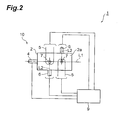
- the fuel cell system 1 is provided with a source fuel introducing device (source fuel introducing means) 4 for introducing a source fuel and steam (water) into the reforming catalyst 2a, heaters (heating means) 5 for heating the reforming catalyst 2a, air introducing devices (air introducing means) 6 for introducing air into the reforming catalyst 2a, and an air introducing device for a cathode (air introducing means for a cathode) (not shown) for introducing air into a cathode (air electrode).
- the source fuel introducing device 4 has a source fuel introducing pipe for introducing a source fuel and steam, an introduction amount regulating valve for regulating the introduction amount of the source fuel and steam, and the like.
- Respective air introducing devices 6 and the air introducing device for a cathode have an air introducing pipe for introducing air, an introduction amount regulating valve for regulating an air introducing amount, and the like.
- the heater 5 is, for example, a ceramic heater buried in the reforming catalyst 2a.
- the fuel cell system 1 is provided with temperature detectors (temperature detecting means) 7 for detecting the temperature of the reforming catalyst 2a, a temperature detector 8 for detecting the cell temperature of the fuel cell 3, and a control device (control means) 9 for controlling the whole system.
- Temperature detectors 7, 8 are, for example, thermocouples.
- the temperature measuring junction of respective temperature detectors 7 is disposed, between a heater 5 and an air introducing pipe of the air introducing device 6 that faces with each other along a direction approximately perpendicular to a central axis line (the central axis line of a flow path of the source fuel introduced by the source fuel introducing device 4) L1, on the intersection point of the central axis line L1 and a central axis line (the central axis line of a flow path of the air introduced by the air introducing device 6) L2. That is, respective temperature detectors 6 are disposed so as to correspond to the heater 5 and the air introducing device 6 facing with each other.
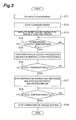
- the control device 9 determines whether or not the temperature of the reforming catalyst 2a detected by respective temperature detectors 7 is not more than T R (Step S14).
- T R is a temperature between the unreformed gas generation temperature and the temperature of the reforming catalyst 2a at the rated operation, and for example, when the source fuel is kerosene, it is a temperature of 400°C to 700°C.
- T R is suitably set every temperature detector 7.
- the unreformed gas generation temperature means a temperature at which the source fuel is not completely reformed by the reforming catalyst 2a and hydrocarbon gas having two or more carbons (unreformed gas) that could damage the cell of the fuel cell 3 begin to be generated and be mixed with the reformed gas, and is previously set depending on the introduction amount of fuel.
- carbon monoxide contained in the reformed gas reacts with oxide ions at the fuel electrode to form electrons and carbon dioxide.
- Step S 15 the control device 9 executes at least one of a heater output processing and a air introduction processing below (Step S 15). Meanwhile, whether either of the heater output processing alone, the air introduction processing alone, and both of heater output processing and air introduction processing is executed is determined on a case-by-case basis so as to give the optimal result from the standpoint of economical efficiency, response property of the temperature rise of the reforming catalyst 2a, and the like.
- an air introduction processing is performed to realize the autothermal reforming (ATR), and, in a stage where the temperature of the reforming catalyst 2a falls to a prescribed temperature or less, both of the heater output processing and the air introduction processing are performed to include the assist by the heater 5.
- the heater output processing alone is performed while taking the temperature of the reforming catalyst 2a into consideration, or both the heater output processing and the air introduction processing are continued while taking the output control into consideration.
- the above processing at Step S 15 is the same as the processing at Step S25 in hot standby mode described later.
- the control device 9 For the prescribed temperature, multiple levels are set as a temperature higher than one that allows the unreformed gas to generate, depending on the gradually reducing introduction amount of the source fuel and steam, and the control device 9 changes the output of the heater 5 every time the temperature falls to respective prescribed temperatures or less. As described above, the control device 9 directs the heater 5 to change the heating amount to the reforming catalyst 2a depending on the reduction in the amount of the source fuel introduced to the source fuel by the source fuel introducing device 4. This can raise the temperature of the reforming catalyst 2a and surely prevent the generation of the unreformed gas.
- the control device 9 controls an air introducing device 6 corresponding to the temperature detector 7 that detected a temperature of T R or less, and the air introducing device 6 starts the introduction of air into the reforming catalyst 2a.
- This can easily raise the temperature of the reforming catalyst 2a. That is, the air introducing device 6 raises the temperature of the reforming catalyst 2a by introducing air into the reforming catalyst 2a.
- the source fuel introducing device 4 introduces the source fuel and water into the reforming catalyst 2a to realize an effective steam reforming reaction, and, at the stop of the power generation in the fuel cell 3, the air introducing device 6 introduces air into the reforming catalyst 2a to realize ATR.
- the control device 9 determines whether or not the temperature of the reforming catalyst 2a detected by the temperature detector 7 is a prescribed temperature or less.
- the control device 9 executes a processing of increasing O 2 /C (the combustion ratio of the introduced fuel).
- O 2 /C the combustion ratio of the introduced fuel
- multiple levels are set as a temperature higher than one that allows the unreformed gas to generate, depending on the gradually reducing introduction amount of the source fuel and steam, and the processing of increasing O 2 /C is executed every time when the temperature falls to respective temperatures or less.
- the processing of increasing O 2 /C means, for example, a processing in which the air introducing device 6 increases the air introducing amount into the reforming catalyst 2a.
- the control device 9 directs the air introducing device 6 to change the air introducing amount depending on the reduction in the amount of the source fuel introduced by the source fuel introducing device 4. This can raise the temperature of the reforming catalyst 2a, and surely prevent the generation of the unreformed gas.
- the control device 9 determines whether or not the cell temperature of the fuel cell 3 detected by the temperature detector 8 is T C 1 or less (Step S16).
- T C 1 is a temperature at which the fuel cell 3 does not need the reformed gas as a reducing gas for the fuel electrode, and is from 100°C to 500°C, preferably from 100°C to 300°C, and more preferably from 100°C to 200°C.
- the control device 9 controls a device that is operating among the source fuel introducing device 4, and the heater 5 and the air introducing device 6, and then at the same time when the introduction of the source fuel and steam is stopped by the source fuel introducing device 4, the output of the heater 5 and the introduction of air by the air introducing device 6 are stopped (Step S 17).
- the control device 9 determines whether or not the cell temperature of the fuel cell 3 detected by the temperature detector 8 is T C 2 or less (Step S 18).
- the T C 2 is a temperature at which the fuel cell 3 does not need the introduction of air into the cathode, and is preferably form 50°C to 200°C, more preferably from 50°C to 100°C.
- the control device 9 stops the operation of the whole system (Step S 19), and the fuel cell system 1 goes into the cold standby mode.
- the hot standby mode means that the power generation in the fuel cell 3 is stopped and, that the fuel cell system 1 stands by in a state where the cell temperature of the fuel cell 3 is an operative temperature.
- the hot standby mode is adopted when the stop time of the power generation in the fuel cell 3 is comparatively short, because a long time is not needed for starting the fuel cell system 1.
- control device 9 gives a hot standby command (Step S21) to stop the current sweep from the fuel cell 3 (Step S22). That is, the control device 9 controls the fuel cell 3 to stop the power generation in the fuel cell.
- control device 9 controls the source fuel introducing device 4 to reduce the amount of the source fuel and steam introduced to the reforming catalyst 2a (Step S23).
- the introduction amount of the source fuel and steam is reduced by a prescribed amount.
- the control device 9 determines whether or not such conditions are fulfilled that the temperature of the reforming catalyst 2a detected by respective temperature detectors 7 is T R or less, and that the cell temperature of the fuel cell 3 detected by the temperature detector 8 is T C 3 or more (Step S24).
- T C 3 is an operative temperature of the cell and, for example, when the electrolyte is consisting of YSZ, is a temperature of 800°C to 1000°C, at which YSZ conducts oxide ions.
- Step S24 when the condition is fulfilled, in order to prevent the generation of the unreformed gas in the reformer 2, the control device 9 executes at least one of the aforementioned heater output processing and air introduction processing (Step S25) to return to the determination processing at Step S24.
- the control device 9 determines whether or not the cell temperature of the fuel cell 3 detected by the temperature detector 8 is less than T C 3 (Step S26).
- the control device 9 controls the source fuel introducing device 4, and the source fuel introducing device 4 increases the introduction amount of the source fuel and steam to the reforming catalyst 2a (Step S27) to return to the determination processing at Step S24.
- the introduction amount of the source fuel and steam is increased by a prescribed amount reduced in the processing at Step S23, which is less than the prescribed amount.
- the determination processing at Step S26 when the cell temperature of the fuel cell 3 is T C 3 or more, the flow returns to the determination processing at Step S24.
- the reformed gas supplied from the reformer 2 to the fuel cell 3 is burned in a combustion chamber of the fuel cell 3, and the fuel cell system 1 goes into the hot standby mode.
- the fuel cell system 1, and the operation method thereof at the stop of the power generation in the fuel cell 3, the introduction amount of the source fuel to the reforming catalyst 2a of the reformer 2 is reduced.
- the temperature of the reforming catalyst 2a falls to an unreformed gas generation temperature
- at least one of the heating of the reforming catalyst 2a and the air introduction into the reforming catalyst 2a is performed. This raises the temperature of the reforming catalyst 2a, and at the stop of the power generation in the fuel cell 3, the generation of the unreformed gas is prevented and thus, the reformed gas is supplied to the fuel cell 3. Accordingly, at the stop of the power generation in the fuel cell 3, it is possible to avoid damage on the fuel cell 3 with a simple constitution.
- the temperature detector 7 detects the temperature of the reforming catalyst 2a on the central axis line L1. As the result, the temperature of a portion where the reforming reaction mainly occurs on the reforming catalyst 2a can accurately be detected.
- the heater 5 and the air introducing device 6 may be one, respectively.
- the air introducing device 6 may use the source fuel introducing pipe of the source fuel introducing device 4 as the air introducing pipe.
- a burner or a burner off-gas pipe may be adopted in place of the heater 5 to heat the reforming catalyst 2a.
- a burner or burner off-gas also can surely and easily raise the temperature of the reforming catalyst 2a by heating the reforming catalyst 2a, in the same way as the heater 5.
- the fuel cell system 1 when going into the cold standby mode, it is also possible to lower the output to an arbitrary partial load before the stop processing of the current sweep (Step S12), to execute the stop processing of the current sweep (Step S12), and to execute the stop process of the cold standby mode as was described using Fig. 3 .
- the electric power generated before executing the stop processing of the current sweep (Step S12) may be stored in a capacitor, or consumed by a loading device.
- the reformer 2 may be used to realize ATR or a partial oxidation reforming reaction.
- the reforming catalyst 2a catalysts known as an autothermal reforming catalyst or a partial oxidation reforming catalyst may be used. That is, examples of the autothermal reforming catalyst include rhodium-based catalysts, and examples of the partial oxidation reforming catalyst include platinum-based catalysts.
Landscapes
- Chemical & Material Sciences (AREA)
- Chemical Kinetics & Catalysis (AREA)
- Engineering & Computer Science (AREA)
- General Chemical & Material Sciences (AREA)
- Sustainable Energy (AREA)
- Sustainable Development (AREA)
- Manufacturing & Machinery (AREA)
- Electrochemistry (AREA)
- Life Sciences & Earth Sciences (AREA)
- Organic Chemistry (AREA)
- Combustion & Propulsion (AREA)
- Health & Medical Sciences (AREA)
- General Health & Medical Sciences (AREA)
- Inorganic Chemistry (AREA)
- Fuel Cell (AREA)
- Hydrogen, Water And Hydrids (AREA)
Claims (7)
- Reformersystem bereitgestellt mit einem Reformer zur Erzeugung eines reformierten Gases, welches als ein Brennstoff einer Festoxidbrennstoffzelle verwendet wird, durch Reformieren eines Ausgangsbrennstoffes durch die Verwendung eines Reformierkatalysators, umfassend:eine Ausgangsbrennstoffeinführeinrichtung zum Einführen des Ausgangsbrennstoffes in den Reformierkatalysator,eine Heizeinrichtung zur Erwärmung des Reformierkatalysators,eine Lufteinführeinrichtung zum Einführen von Luft in den Reformierkatalysator,eine Temperaturerfassungseinrichtung, zur Erfassung der Temperatur des Reformierkatalysatorseine Kontrolleinrichtung zur Verringerung der Menge des Ausgangsbrennstoffes, welcher in der Ausgangsbrennstoffeinführeinrichtung eingeführt wird, und Durchführen, bevor die von der Temperaturerfassungseinrichtung erfasste Temperatur auf eine ein unreformiertes Gas erzeugende Temperatur fällt, wenigstens einer Kontrolle aus der Kontrolle über die Heizeinrichtung zur Erwärmung des Reformierkatalysators und der Kontrolle über die Lufteinführeinrichtung zum Einführen von Luft in den Reformierkatalysator, beim Beenden der Stromerzeugung in einer Brennstoffzelle.
- Reformersystem nach Anspruch 1, wobei die Kontrolleinrichtung die Heizeinrichtung regelt, um die Heizmenge des Reformierkatalysators zu ändern, abhängig von der Verringerung der Menge des Ausgangsbrennstoffes, welche durch die Ausgangsbrennstoffeinführeinrichtung eingeführt wird.
- Reformersystem nach Anspruch 1, wobei die Kontrolleinrichtung die Lufteinführeinrichtung regelt, um die Einführmenge an Luft abhängig von der Verringerung der Menge des Ausgangsbrennstoffes, welche von der Ausgangsbrennstoffeinführeinrichtung eingeführt wird, zu verändern.
- Reformersystem nach Anspruch 1, wobei die Heizeinrichtung ein Heizer, Brenner oder ein Brennerabgas ist.
- Reformersystem nach Anspruch 1, wobei die Temperaturerfassungseinrichtung die Temperatur des Reformierkatalysators auf einer zentralen Achsenlinie eines Flussweges des Ausgangsbrennstoffes erfasst, welcher durch die Ausgangsbrennstoffeinführeinrichtung eingeführt wird.
- Brennstoffzellensystem bereitgestellt mit einem Reformer zur Erzeugung eines reformierten Gases durch Reformieren eines Ausgangsbrennstoffes unter Verwendung eines Reformierkatalysators und mit einer Festoxidbrennstoffzelle unter Verwendung des reformierten Gases als ein Brennstoff, umfassend:eine Ausgangsbrennstoffeinführeinrichtung zum Einführen des Ausgangsbrennstoffes in den Reformierkatalysator,eine Heizeinrichtung zur Erwärmung des Reformierkatalysators,eine Lufteinführeinrichtung zum Einführen von Luft in den Reformierkatalysator,eine Temperaturerfassungseinrichtung zur Erfassung der Temperatur des Reformierkatalysators, undeine Kontrolleinrichtung zur Verringerung der Menge des Ausgangsbrennstoffes, welche in die Ausgangsbrennstoffeinführeinrichtung eingeführt wird, und zum Durchführen, bevor die von der Temperaturerfassungseinrichtung erfasste Temperatur auf eine ein unreformiertes Gas erzeugende Temperatur fällt, mindestens einer Kontrolle aus der Kontrolle über die Heizeinrichtung zur Erwärmung des Reformierkatalysators und der Kontrolle über die Lufteinführeinrichtung zum Einführen von Luft in den Reformierkatalysator, beim Beenden der Stromerzeugung in einer Brennstoffzelle.
- Verfahren zum Betreiben eines Brennstoffzellensystems bereitgestellt mit einem Reformer zur Erzeugung eines reformierten Gases durch Reformieren eines Ausgangsbrennstoffes mit einem Reformierkatalysator und mit einer Festoxidbrennstoffzelle unter Verwendung des reformierten Gases als ein Brennstoff,
wobei bei Beendung der Stromerzeugung in der Brennstoffzelle die Menge des in den Reformierkatalysator eingeführten Ausgangsbrennstoffes verringert ist und wenigstens eines der Erwärmung des Reformierkatalysators und der Einführung von Luft in den Reformierkatalysator durchgeführt wird, bevor die Temperatur des Reformierkatalysators auf eine ein unreformiertes Gas erzeugende Temperatur fällt.
Applications Claiming Priority (2)
| Application Number | Priority Date | Filing Date | Title |
|---|---|---|---|
| JP2007036705A JP5064830B2 (ja) | 2007-02-16 | 2007-02-16 | 改質器システム、燃料電池システム、及びその運転方法 |
| PCT/JP2008/052456 WO2008099893A1 (ja) | 2007-02-16 | 2008-02-14 | 改質器システム、燃料電池システム、及びその運転方法 |
Publications (3)
| Publication Number | Publication Date |
|---|---|
| EP2124282A1 EP2124282A1 (de) | 2009-11-25 |
| EP2124282A4 EP2124282A4 (de) | 2012-05-09 |
| EP2124282B1 true EP2124282B1 (de) | 2013-05-22 |
Family
ID=39690120
Family Applications (1)
| Application Number | Title | Priority Date | Filing Date |
|---|---|---|---|
| EP08711295.9A Active EP2124282B1 (de) | 2007-02-16 | 2008-02-14 | Reformer-system, brennstoffzellensystem und betriebsverfahren dafür |
Country Status (8)
| Country | Link |
|---|---|
| US (1) | US20100119894A1 (de) |
| EP (1) | EP2124282B1 (de) |
| JP (1) | JP5064830B2 (de) |
| KR (1) | KR101361597B1 (de) |
| CN (2) | CN101611513B (de) |
| CA (1) | CA2678397C (de) |
| TW (1) | TWI473339B (de) |
| WO (1) | WO2008099893A1 (de) |
Families Citing this family (23)
| Publication number | Priority date | Publication date | Assignee | Title |
|---|---|---|---|---|
| JP5037214B2 (ja) | 2007-05-01 | 2012-09-26 | Jx日鉱日石エネルギー株式会社 | 改質器システム、燃料電池システム、及びその運転方法 |
| US9017436B2 (en) * | 2008-08-26 | 2015-04-28 | Dcns | Fuel processing systems with thermally integrated componentry |
| JP5353133B2 (ja) * | 2008-09-11 | 2013-11-27 | カシオ計算機株式会社 | 発電システム |
| JP5325661B2 (ja) * | 2009-06-09 | 2013-10-23 | Jx日鉱日石エネルギー株式会社 | 間接内部改質型固体酸化物形燃料電池の停止方法 |
| JP5325666B2 (ja) * | 2009-06-16 | 2013-10-23 | Jx日鉱日石エネルギー株式会社 | 間接内部改質型固体酸化物形燃料電池の停止方法 |
| JP5325660B2 (ja) * | 2009-06-05 | 2013-10-23 | Jx日鉱日石エネルギー株式会社 | 間接内部改質型固体酸化物形燃料電池の停止方法 |
| JP5325662B2 (ja) * | 2009-06-11 | 2013-10-23 | Jx日鉱日石エネルギー株式会社 | 間接内部改質型固体酸化物形燃料電池の停止方法 |
| JP5325641B2 (ja) * | 2009-04-08 | 2013-10-23 | Jx日鉱日石エネルギー株式会社 | 間接内部改質型固体酸化物形燃料電池の停止方法 |
| KR20120007023A (ko) * | 2009-04-08 | 2012-01-19 | 제이엑스 닛코닛세키에너지주식회사 | 간접 내부 개질형 고체 산화물형 연료 전지의 정지 방법 |
| JP4761259B2 (ja) * | 2009-05-28 | 2011-08-31 | Toto株式会社 | 固体電解質型燃料電池 |
| WO2011036886A1 (ja) * | 2009-09-25 | 2011-03-31 | パナソニック株式会社 | 燃料電池システム、及び燃料電池システムの運転方法 |
| BR112014002629A2 (pt) | 2011-08-04 | 2017-05-02 | A Stuart Martin | forno de arco de plasma e aplicações |
| CN103918117A (zh) * | 2011-11-09 | 2014-07-09 | 吉坤日矿日石能源株式会社 | 固体氧化物燃料电池系统及其启动控制方法 |
| JP6100012B2 (ja) | 2013-02-06 | 2017-03-22 | 三菱日立パワーシステムズ株式会社 | 発電システム及び発電システムの運転方法 |
| EP3065855B1 (de) | 2013-11-06 | 2022-06-29 | Watt Fuel Cell Corp. | Flüssigbrennstoff-cpox-reformer und brennstoffzellensysteme sowie stromerzeugungsverfahren |
| EP3065854A2 (de) | 2013-11-06 | 2016-09-14 | Watt Fuel Cell Corp. | Reformer mit perowskit als struktureller komponente |
| JP6549601B2 (ja) | 2013-11-06 | 2019-07-24 | ワット・フューエル・セル・コーポレイションWatt Fuel Cell Corp. | ガス状燃料cpox改質器と燃料セルの統合システム、及び電気を生成する方法 |
| EP3065861A2 (de) | 2013-11-06 | 2016-09-14 | Watt Fuel Cell Corp. | Chemischer reaktor mit verteiler zur verwaltung eines zustroms eines gasförmigen reaktionsmediums |
| JP6253795B2 (ja) | 2013-11-06 | 2017-12-27 | ワット・フューエル・セル・コーポレイションWatt Fuel Cell Corp. | ガス状燃料cpox改質器及びcpox改質の方法 |
| CN105705226B (zh) | 2013-11-06 | 2018-03-27 | 瓦特燃料电池公司 | 液体燃料催化部分氧化重整器和催化部分氧化重整方法 |
| WO2015172132A1 (en) | 2014-05-09 | 2015-11-12 | Cunningham Stephen L | Arc furnace smeltering system & method |
| JP6521233B2 (ja) * | 2015-03-24 | 2019-05-29 | Toto株式会社 | 固体酸化物形燃料電池システム |
| KR102213213B1 (ko) * | 2020-08-28 | 2021-02-08 | 에스퓨얼셀(주) | 연료전지 시스템 |
Family Cites Families (13)
| Publication number | Priority date | Publication date | Assignee | Title |
|---|---|---|---|---|
| JP3546658B2 (ja) * | 1997-09-03 | 2004-07-28 | 株式会社豊田中央研究所 | メタノールの改質方法 |
| JP3978778B2 (ja) * | 2002-07-05 | 2007-09-19 | 日産自動車株式会社 | 燃料電池発電システム及びその運転方法 |
| US7008711B2 (en) * | 2003-01-27 | 2006-03-07 | Gas Technology Institute | Thermally integrated fuel cell power system |
| JP2004311337A (ja) * | 2003-04-10 | 2004-11-04 | Nissan Motor Co Ltd | 燃料電池システムとその起動方法 |
| US7192666B2 (en) * | 2003-12-05 | 2007-03-20 | Microsoft Corporation | Apparatus and method for heating fuel cells |
| CN100522798C (zh) * | 2004-01-15 | 2009-08-05 | 松下电器产业株式会社 | 氢生成装置及其运转方法和燃料电池系统及其运转方法 |
| JP2005302631A (ja) * | 2004-04-15 | 2005-10-27 | Matsushita Electric Ind Co Ltd | 燃料電池発電システム |
| WO2005112175A1 (ja) * | 2004-05-19 | 2005-11-24 | Matsushita Electric Industrial Co., Ltd. | 燃料電池システム |
| JP2006076839A (ja) * | 2004-09-10 | 2006-03-23 | Matsushita Electric Ind Co Ltd | 水素精製装置およびそれを用いた燃料電池システム |
| WO2006049299A1 (ja) * | 2004-11-08 | 2006-05-11 | Matsushita Electric Industrial Co., Ltd. | 燃料電池システム |
| US20060147771A1 (en) * | 2005-01-04 | 2006-07-06 | Ion America Corporation | Fuel cell system with independent reformer temperature control |
| JP5063340B2 (ja) * | 2005-02-18 | 2012-10-31 | パナソニック株式会社 | 燃料電池システムおよびその運転方法 |
| US7736399B2 (en) * | 2006-11-07 | 2010-06-15 | Delphi Technologies, Inc. | Electrically-heated metal vaporizer for fuel/air preparation in a hydrocarbon reformer assembly |
-
2007
- 2007-02-16 JP JP2007036705A patent/JP5064830B2/ja active Active
-
2008
- 2008-02-14 WO PCT/JP2008/052456 patent/WO2008099893A1/ja not_active Ceased
- 2008-02-14 EP EP08711295.9A patent/EP2124282B1/de active Active
- 2008-02-14 US US12/527,097 patent/US20100119894A1/en not_active Abandoned
- 2008-02-14 KR KR1020097018642A patent/KR101361597B1/ko not_active Expired - Fee Related
- 2008-02-14 CN CN2008800050910A patent/CN101611513B/zh active Active
- 2008-02-14 CA CA2678397A patent/CA2678397C/en not_active Expired - Fee Related
- 2008-02-14 CN CN201210170176.2A patent/CN102701150B/zh active Active
- 2008-02-15 TW TW97105464A patent/TWI473339B/zh not_active IP Right Cessation
Also Published As
| Publication number | Publication date |
|---|---|
| KR101361597B1 (ko) | 2014-02-12 |
| CN102701150A (zh) | 2012-10-03 |
| CN101611513B (zh) | 2012-07-04 |
| CA2678397C (en) | 2015-01-06 |
| TWI473339B (zh) | 2015-02-11 |
| EP2124282A1 (de) | 2009-11-25 |
| EP2124282A4 (de) | 2012-05-09 |
| KR20090109572A (ko) | 2009-10-20 |
| CN102701150B (zh) | 2014-10-01 |
| CA2678397A1 (en) | 2008-08-21 |
| JP2008204655A (ja) | 2008-09-04 |
| WO2008099893A1 (ja) | 2008-08-21 |
| JP5064830B2 (ja) | 2012-10-31 |
| TW200847517A (en) | 2008-12-01 |
| US20100119894A1 (en) | 2010-05-13 |
| CN101611513A (zh) | 2009-12-23 |
Similar Documents
| Publication | Publication Date | Title |
|---|---|---|
| EP2124282B1 (de) | Reformer-system, brennstoffzellensystem und betriebsverfahren dafür | |
| JP5164441B2 (ja) | 燃料電池システムの起動方法 | |
| JP5037214B2 (ja) | 改質器システム、燃料電池システム、及びその運転方法 | |
| EP2278650B1 (de) | Verfahren für den betrieb eines festoxidbrennstoffzellensystems mit indirektem internem reformer | |
| US20130011758A1 (en) | Indirect internal reforming solid oxide fuel cell system | |
| JP5134250B2 (ja) | 改質器システム、燃料電池システム、及びその運転方法 | |
| JP2009176660A (ja) | 間接内部改質型固体酸化物形燃料電池の停止方法 | |
| JP5134251B2 (ja) | 改質器システム、燃料電池システム、及びその運転方法 | |
| JP5291915B2 (ja) | 間接内部改質型固体酸化物形燃料電池とその運転方法 | |
| JP5307592B2 (ja) | 間接内部改質型固体酸化物形燃料電池システムの運転方法 | |
| JP2008084571A (ja) | 間接内部改質型固体酸化物形燃料電池システム | |
| JP5690812B2 (ja) | 燃料電池システム及び燃料電池システムの運転方法 |
Legal Events
| Date | Code | Title | Description |
|---|---|---|---|
| PUAI | Public reference made under article 153(3) epc to a published international application that has entered the european phase |
Free format text: ORIGINAL CODE: 0009012 |
|
| 17P | Request for examination filed |
Effective date: 20090825 |
|
| AK | Designated contracting states |
Kind code of ref document: A1 Designated state(s): AT BE BG CH CY CZ DE DK EE ES FI FR GB GR HR HU IE IS IT LI LT LU LV MC MT NL NO PL PT RO SE SI SK TR |
|
| DAX | Request for extension of the european patent (deleted) | ||
| A4 | Supplementary search report drawn up and despatched |
Effective date: 20120410 |
|
| RIC1 | Information provided on ipc code assigned before grant |
Ipc: H01M 8/04 20060101ALI20120402BHEP Ipc: C01B 3/38 20060101ALI20120402BHEP Ipc: H01M 8/12 20060101ALI20120402BHEP Ipc: H01M 8/06 20060101AFI20120402BHEP |
|
| GRAP | Despatch of communication of intention to grant a patent |
Free format text: ORIGINAL CODE: EPIDOSNIGR1 |
|
| RAP1 | Party data changed (applicant data changed or rights of an application transferred) |
Owner name: JX NIPPON OIL & ENERGY CORPORATION |
|
| GRAS | Grant fee paid |
Free format text: ORIGINAL CODE: EPIDOSNIGR3 |
|
| GRAA | (expected) grant |
Free format text: ORIGINAL CODE: 0009210 |
|
| AK | Designated contracting states |
Kind code of ref document: B1 Designated state(s): AT BE BG CH CY CZ DE DK EE ES FI FR GB GR HR HU IE IS IT LI LT LU LV MC MT NL NO PL PT RO SE SI SK TR |
|
| REG | Reference to a national code |
Ref country code: GB Ref legal event code: FG4D |
|
| REG | Reference to a national code |
Ref country code: CH Ref legal event code: EP |
|
| REG | Reference to a national code |
Ref country code: AT Ref legal event code: REF Ref document number: 613644 Country of ref document: AT Kind code of ref document: T Effective date: 20130615 |
|
| REG | Reference to a national code |
Ref country code: IE Ref legal event code: FG4D |
|
| REG | Reference to a national code |
Ref country code: DE Ref legal event code: R096 Ref document number: 602008024755 Country of ref document: DE Effective date: 20130718 |
|
| REG | Reference to a national code |
Ref country code: AT Ref legal event code: MK05 Ref document number: 613644 Country of ref document: AT Kind code of ref document: T Effective date: 20130522 |
|
| REG | Reference to a national code |
Ref country code: LT Ref legal event code: MG4D |
|
| PG25 | Lapsed in a contracting state [announced via postgrant information from national office to epo] |
Ref country code: IS Free format text: LAPSE BECAUSE OF FAILURE TO SUBMIT A TRANSLATION OF THE DESCRIPTION OR TO PAY THE FEE WITHIN THE PRESCRIBED TIME-LIMIT Effective date: 20130922 Ref country code: FI Free format text: LAPSE BECAUSE OF FAILURE TO SUBMIT A TRANSLATION OF THE DESCRIPTION OR TO PAY THE FEE WITHIN THE PRESCRIBED TIME-LIMIT Effective date: 20130522 Ref country code: AT Free format text: LAPSE BECAUSE OF FAILURE TO SUBMIT A TRANSLATION OF THE DESCRIPTION OR TO PAY THE FEE WITHIN THE PRESCRIBED TIME-LIMIT Effective date: 20130522 Ref country code: LT Free format text: LAPSE BECAUSE OF FAILURE TO SUBMIT A TRANSLATION OF THE DESCRIPTION OR TO PAY THE FEE WITHIN THE PRESCRIBED TIME-LIMIT Effective date: 20130522 Ref country code: NO Free format text: LAPSE BECAUSE OF FAILURE TO SUBMIT A TRANSLATION OF THE DESCRIPTION OR TO PAY THE FEE WITHIN THE PRESCRIBED TIME-LIMIT Effective date: 20130822 Ref country code: SE Free format text: LAPSE BECAUSE OF FAILURE TO SUBMIT A TRANSLATION OF THE DESCRIPTION OR TO PAY THE FEE WITHIN THE PRESCRIBED TIME-LIMIT Effective date: 20130522 Ref country code: ES Free format text: LAPSE BECAUSE OF FAILURE TO SUBMIT A TRANSLATION OF THE DESCRIPTION OR TO PAY THE FEE WITHIN THE PRESCRIBED TIME-LIMIT Effective date: 20130902 Ref country code: GR Free format text: LAPSE BECAUSE OF FAILURE TO SUBMIT A TRANSLATION OF THE DESCRIPTION OR TO PAY THE FEE WITHIN THE PRESCRIBED TIME-LIMIT Effective date: 20130823 Ref country code: SI Free format text: LAPSE BECAUSE OF FAILURE TO SUBMIT A TRANSLATION OF THE DESCRIPTION OR TO PAY THE FEE WITHIN THE PRESCRIBED TIME-LIMIT Effective date: 20130522 Ref country code: PT Free format text: LAPSE BECAUSE OF FAILURE TO SUBMIT A TRANSLATION OF THE DESCRIPTION OR TO PAY THE FEE WITHIN THE PRESCRIBED TIME-LIMIT Effective date: 20130923 |
|
| REG | Reference to a national code |
Ref country code: NL Ref legal event code: VDEP Effective date: 20130522 |
|
| PG25 | Lapsed in a contracting state [announced via postgrant information from national office to epo] |
Ref country code: BG Free format text: LAPSE BECAUSE OF FAILURE TO SUBMIT A TRANSLATION OF THE DESCRIPTION OR TO PAY THE FEE WITHIN THE PRESCRIBED TIME-LIMIT Effective date: 20130822 Ref country code: HR Free format text: LAPSE BECAUSE OF FAILURE TO SUBMIT A TRANSLATION OF THE DESCRIPTION OR TO PAY THE FEE WITHIN THE PRESCRIBED TIME-LIMIT Effective date: 20130522 Ref country code: PL Free format text: LAPSE BECAUSE OF FAILURE TO SUBMIT A TRANSLATION OF THE DESCRIPTION OR TO PAY THE FEE WITHIN THE PRESCRIBED TIME-LIMIT Effective date: 20130522 |
|
| PG25 | Lapsed in a contracting state [announced via postgrant information from national office to epo] |
Ref country code: LV Free format text: LAPSE BECAUSE OF FAILURE TO SUBMIT A TRANSLATION OF THE DESCRIPTION OR TO PAY THE FEE WITHIN THE PRESCRIBED TIME-LIMIT Effective date: 20130522 |
|
| PG25 | Lapsed in a contracting state [announced via postgrant information from national office to epo] |
Ref country code: EE Free format text: LAPSE BECAUSE OF FAILURE TO SUBMIT A TRANSLATION OF THE DESCRIPTION OR TO PAY THE FEE WITHIN THE PRESCRIBED TIME-LIMIT Effective date: 20130522 Ref country code: DK Free format text: LAPSE BECAUSE OF FAILURE TO SUBMIT A TRANSLATION OF THE DESCRIPTION OR TO PAY THE FEE WITHIN THE PRESCRIBED TIME-LIMIT Effective date: 20130522 Ref country code: SK Free format text: LAPSE BECAUSE OF FAILURE TO SUBMIT A TRANSLATION OF THE DESCRIPTION OR TO PAY THE FEE WITHIN THE PRESCRIBED TIME-LIMIT Effective date: 20130522 Ref country code: BE Free format text: LAPSE BECAUSE OF FAILURE TO SUBMIT A TRANSLATION OF THE DESCRIPTION OR TO PAY THE FEE WITHIN THE PRESCRIBED TIME-LIMIT Effective date: 20130522 Ref country code: CZ Free format text: LAPSE BECAUSE OF FAILURE TO SUBMIT A TRANSLATION OF THE DESCRIPTION OR TO PAY THE FEE WITHIN THE PRESCRIBED TIME-LIMIT Effective date: 20130522 |
|
| PG25 | Lapsed in a contracting state [announced via postgrant information from national office to epo] |
Ref country code: RO Free format text: LAPSE BECAUSE OF FAILURE TO SUBMIT A TRANSLATION OF THE DESCRIPTION OR TO PAY THE FEE WITHIN THE PRESCRIBED TIME-LIMIT Effective date: 20130522 Ref country code: NL Free format text: LAPSE BECAUSE OF FAILURE TO SUBMIT A TRANSLATION OF THE DESCRIPTION OR TO PAY THE FEE WITHIN THE PRESCRIBED TIME-LIMIT Effective date: 20130522 Ref country code: IT Free format text: LAPSE BECAUSE OF FAILURE TO SUBMIT A TRANSLATION OF THE DESCRIPTION OR TO PAY THE FEE WITHIN THE PRESCRIBED TIME-LIMIT Effective date: 20130522 |
|
| PLBE | No opposition filed within time limit |
Free format text: ORIGINAL CODE: 0009261 |
|
| STAA | Information on the status of an ep patent application or granted ep patent |
Free format text: STATUS: NO OPPOSITION FILED WITHIN TIME LIMIT |
|
| 26N | No opposition filed |
Effective date: 20140225 |
|
| REG | Reference to a national code |
Ref country code: DE Ref legal event code: R097 Ref document number: 602008024755 Country of ref document: DE Effective date: 20140225 |
|
| PG25 | Lapsed in a contracting state [announced via postgrant information from national office to epo] |
Ref country code: MC Free format text: LAPSE BECAUSE OF FAILURE TO SUBMIT A TRANSLATION OF THE DESCRIPTION OR TO PAY THE FEE WITHIN THE PRESCRIBED TIME-LIMIT Effective date: 20130522 Ref country code: LU Free format text: LAPSE BECAUSE OF FAILURE TO SUBMIT A TRANSLATION OF THE DESCRIPTION OR TO PAY THE FEE WITHIN THE PRESCRIBED TIME-LIMIT Effective date: 20140214 |
|
| REG | Reference to a national code |
Ref country code: CH Ref legal event code: PL |
|
| PG25 | Lapsed in a contracting state [announced via postgrant information from national office to epo] |
Ref country code: CH Free format text: LAPSE BECAUSE OF NON-PAYMENT OF DUE FEES Effective date: 20140228 Ref country code: LI Free format text: LAPSE BECAUSE OF NON-PAYMENT OF DUE FEES Effective date: 20140228 |
|
| REG | Reference to a national code |
Ref country code: IE Ref legal event code: MM4A |
|
| PG25 | Lapsed in a contracting state [announced via postgrant information from national office to epo] |
Ref country code: IE Free format text: LAPSE BECAUSE OF NON-PAYMENT OF DUE FEES Effective date: 20140214 |
|
| REG | Reference to a national code |
Ref country code: FR Ref legal event code: PLFP Year of fee payment: 9 |
|
| PG25 | Lapsed in a contracting state [announced via postgrant information from national office to epo] |
Ref country code: MT Free format text: LAPSE BECAUSE OF FAILURE TO SUBMIT A TRANSLATION OF THE DESCRIPTION OR TO PAY THE FEE WITHIN THE PRESCRIBED TIME-LIMIT Effective date: 20130522 |
|
| PG25 | Lapsed in a contracting state [announced via postgrant information from national office to epo] |
Ref country code: CY Free format text: LAPSE BECAUSE OF FAILURE TO SUBMIT A TRANSLATION OF THE DESCRIPTION OR TO PAY THE FEE WITHIN THE PRESCRIBED TIME-LIMIT Effective date: 20130522 |
|
| PG25 | Lapsed in a contracting state [announced via postgrant information from national office to epo] |
Ref country code: TR Free format text: LAPSE BECAUSE OF FAILURE TO SUBMIT A TRANSLATION OF THE DESCRIPTION OR TO PAY THE FEE WITHIN THE PRESCRIBED TIME-LIMIT Effective date: 20130522 Ref country code: HU Free format text: LAPSE BECAUSE OF FAILURE TO SUBMIT A TRANSLATION OF THE DESCRIPTION OR TO PAY THE FEE WITHIN THE PRESCRIBED TIME-LIMIT; INVALID AB INITIO Effective date: 20080214 |
|
| REG | Reference to a national code |
Ref country code: DE Ref legal event code: R081 Ref document number: 602008024755 Country of ref document: DE Owner name: KYOCERA CORPORATION, JP Free format text: FORMER OWNER: JX NIPPON OIL & ENERGY CORP., TOKIO/TOKYO, JP Ref country code: DE Ref legal event code: R082 Ref document number: 602008024755 Country of ref document: DE Representative=s name: GRUENECKER PATENT- UND RECHTSANWAELTE PARTG MB, DE |
|
| REG | Reference to a national code |
Ref country code: FR Ref legal event code: PLFP Year of fee payment: 10 |
|
| REG | Reference to a national code |
Ref country code: DE Ref legal event code: R082 Ref document number: 602008024755 Country of ref document: DE Representative=s name: GRUENECKER PATENT- UND RECHTSANWAELTE PARTG MB, DE Ref country code: DE Ref legal event code: R081 Ref document number: 602008024755 Country of ref document: DE Owner name: KYOCERA CORPORATION, JP Free format text: FORMER OWNER: KYOCERA CORPORATION, KYOTO-SHI, KYOTO, JP |
|
| REG | Reference to a national code |
Ref country code: GB Ref legal event code: 732E Free format text: REGISTERED BETWEEN 20170518 AND 20170524 |
|
| REG | Reference to a national code |
Ref country code: FR Ref legal event code: CA Effective date: 20170606 Ref country code: FR Ref legal event code: TP Owner name: KYOCERA CORPORATION, JP Effective date: 20170606 |
|
| REG | Reference to a national code |
Ref country code: FR Ref legal event code: PLFP Year of fee payment: 11 |
|
| P01 | Opt-out of the competence of the unified patent court (upc) registered |
Effective date: 20230505 |
|
| PGFP | Annual fee paid to national office [announced via postgrant information from national office to epo] |
Ref country code: GB Payment date: 20241227 Year of fee payment: 18 |
|
| PGFP | Annual fee paid to national office [announced via postgrant information from national office to epo] |
Ref country code: FR Payment date: 20241231 Year of fee payment: 18 |
|
| PGFP | Annual fee paid to national office [announced via postgrant information from national office to epo] |
Ref country code: DE Payment date: 20241231 Year of fee payment: 18 |