EP2125698B1 - d9-VENLAFAXINE DEUTERE - Google Patents
d9-VENLAFAXINE DEUTERE Download PDFInfo
- Publication number
- EP2125698B1 EP2125698B1 EP08732084.2A EP08732084A EP2125698B1 EP 2125698 B1 EP2125698 B1 EP 2125698B1 EP 08732084 A EP08732084 A EP 08732084A EP 2125698 B1 EP2125698 B1 EP 2125698B1
- Authority
- EP
- European Patent Office
- Prior art keywords
- venlafaxine
- acid
- methoxyphenyl
- ethyl
- hydrochloride
- Prior art date
- Legal status (The legal status is an assumption and is not a legal conclusion. Google has not performed a legal analysis and makes no representation as to the accuracy of the status listed.)
- Not-in-force
Links
- 0 *c1ccc(C(CN(*)*)C2(CCCCC2)O)cc1 Chemical compound *c1ccc(C(CN(*)*)C2(CCCCC2)O)cc1 0.000 description 6
Images







Classifications
-
- C—CHEMISTRY; METALLURGY
- C07—ORGANIC CHEMISTRY
- C07C—ACYCLIC OR CARBOCYCLIC COMPOUNDS
- C07C211/00—Compounds containing amino groups bound to a carbon skeleton
- C07C211/62—Quaternary ammonium compounds
- C07C211/64—Quaternary ammonium compounds having quaternised nitrogen atoms bound to carbon atoms of six-membered aromatic rings
-
- A—HUMAN NECESSITIES
- A61—MEDICAL OR VETERINARY SCIENCE; HYGIENE
- A61P—SPECIFIC THERAPEUTIC ACTIVITY OF CHEMICAL COMPOUNDS OR MEDICINAL PREPARATIONS
- A61P25/00—Drugs for disorders of the nervous system
-
- C—CHEMISTRY; METALLURGY
- C07—ORGANIC CHEMISTRY
- C07B—GENERAL METHODS OF ORGANIC CHEMISTRY; APPARATUS THEREFOR
- C07B59/00—Introduction of isotopes of elements into organic compounds ; Labelled organic compounds per se
-
- C—CHEMISTRY; METALLURGY
- C07—ORGANIC CHEMISTRY
- C07C—ACYCLIC OR CARBOCYCLIC COMPOUNDS
- C07C215/00—Compounds containing amino and hydroxy groups bound to the same carbon skeleton
- C07C215/46—Compounds containing amino and hydroxy groups bound to the same carbon skeleton having hydroxy groups bound to carbon atoms of at least one six-membered aromatic ring and amino groups bound to acyclic carbon atoms or to carbon atoms of rings other than six-membered aromatic rings of the same carbon skeleton
- C07C215/64—Compounds containing amino and hydroxy groups bound to the same carbon skeleton having hydroxy groups bound to carbon atoms of at least one six-membered aromatic ring and amino groups bound to acyclic carbon atoms or to carbon atoms of rings other than six-membered aromatic rings of the same carbon skeleton with rings other than six-membered aromatic rings being part of the carbon skeleton
-
- C—CHEMISTRY; METALLURGY
- C07—ORGANIC CHEMISTRY
- C07C—ACYCLIC OR CARBOCYCLIC COMPOUNDS
- C07C217/00—Compounds containing amino and etherified hydroxy groups bound to the same carbon skeleton
- C07C217/54—Compounds containing amino and etherified hydroxy groups bound to the same carbon skeleton having etherified hydroxy groups bound to carbon atoms of at least one six-membered aromatic ring and amino groups bound to acyclic carbon atoms or to carbon atoms of rings other than six-membered aromatic rings of the same carbon skeleton
- C07C217/74—Compounds containing amino and etherified hydroxy groups bound to the same carbon skeleton having etherified hydroxy groups bound to carbon atoms of at least one six-membered aromatic ring and amino groups bound to acyclic carbon atoms or to carbon atoms of rings other than six-membered aromatic rings of the same carbon skeleton with rings other than six-membered aromatic rings being part of the carbon skeleton
-
- C—CHEMISTRY; METALLURGY
- C07—ORGANIC CHEMISTRY
- C07D—HETEROCYCLIC COMPOUNDS
- C07D265/00—Heterocyclic compounds containing six-membered rings having one nitrogen atom and one oxygen atom as the only ring hetero atoms
- C07D265/04—1,3-Oxazines; Hydrogenated 1,3-oxazines
- C07D265/12—1,3-Oxazines; Hydrogenated 1,3-oxazines condensed with carbocyclic rings or ring systems
- C07D265/14—1,3-Oxazines; Hydrogenated 1,3-oxazines condensed with carbocyclic rings or ring systems condensed with one six-membered ring
- C07D265/16—1,3-Oxazines; Hydrogenated 1,3-oxazines condensed with carbocyclic rings or ring systems condensed with one six-membered ring with only hydrogen or carbon atoms directly attached in positions 2 and 4
-
- C—CHEMISTRY; METALLURGY
- C07—ORGANIC CHEMISTRY
- C07B—GENERAL METHODS OF ORGANIC CHEMISTRY; APPARATUS THEREFOR
- C07B2200/00—Indexing scheme relating to specific properties of organic compounds
- C07B2200/05—Isotopically modified compounds, e.g. labelled
-
- C—CHEMISTRY; METALLURGY
- C07—ORGANIC CHEMISTRY
- C07B—GENERAL METHODS OF ORGANIC CHEMISTRY; APPARATUS THEREFOR
- C07B2200/00—Indexing scheme relating to specific properties of organic compounds
- C07B2200/07—Optical isomers
-
- C—CHEMISTRY; METALLURGY
- C07—ORGANIC CHEMISTRY
- C07B—GENERAL METHODS OF ORGANIC CHEMISTRY; APPARATUS THEREFOR
- C07B2200/00—Indexing scheme relating to specific properties of organic compounds
- C07B2200/13—Crystalline forms, e.g. polymorphs
-
- C—CHEMISTRY; METALLURGY
- C07—ORGANIC CHEMISTRY
- C07C—ACYCLIC OR CARBOCYCLIC COMPOUNDS
- C07C2601/00—Systems containing only non-condensed rings
- C07C2601/12—Systems containing only non-condensed rings with a six-membered ring
- C07C2601/14—The ring being saturated
Definitions
- the present invention is directed to inhibitors of the uptake of monoamine neurotransmitters and pharmaceutically acceptable salts and prodrugs thereof, the chemical synthesis thereof, and the medical use of such compounds for the treatment and/or management of psychotropic disorders, anxiety disorder, generalized anxiety disorder, depression, post-traumatic stress disorder, obsessive-compulsive disorder, panic disorder, hot flashes, senile dementia, migraine, hepatopulmonary syndrome, chronic pain, nociceptive pain, neuropathic pain, painful diabetic retinopathy, bipolar depression, obstructive sleep apnea, psychiatric disorders, premenstrual dysphoric disorder, social phobia, social anxiety disorder, urinary incontinence, anorexia, bulimia nervosa, obesity, ischemia, head injury, calcium overload in brain cells, drug dependence, attention deficit hyperactivity disorder, fibromyalgia, irritable bowel syndrome, and/or premature ejaculation.
- Venlafaxine (Effexor ® ) (1-[2-dimethylamino-1-(4-methoxy-phenyl)-ethyl]-cyclohexanol) is a therapeutic agent whose efficacy is hypothesized to act through inhibition of serotonin reuptake and, potentially, norepinephrine reuptake in neuronal cells. Norepinephrine activity modulation is purported to occur at higher doses of venlafaxine than those required for serotonin activity modulation. Venlafaxine also has the potential to modulate dopamine activity, though the interaction in vitro is weak and the clinical relevance of this interaction is unknown.
- the drug substance is sold as a 50/50 racemic mixture of Rand S-enantiomers.
- Venlafaxine is converted in vivo by oxidative and conjugative degradation to multiple metabolites, at least 48 of which are documented.
- the major metabolic pathways include phase I metabolism leading to demethylation at the oxygen and/or nitrogen centers and cyclohexyl ring hydroxylation, as well as phase II metabolism including glucuronidation of the hydroxylated metabolites.
- phase I metabolism leading to demethylation at the oxygen and/or nitrogen centers and cyclohexyl ring hydroxylation
- phase II metabolism including glucuronidation of the hydroxylated metabolites.
- venlafaxine is metabolized by polymorphically-expressed isozymes of cytochrome P 450 including CYPs 2C19 and 2D6, and because it can act as an inhibitor of CYP2D6, its application in polypharmacy is necessarily complex and has potential for adverse events.
- CYPs are involved in the metabolism of medications that are typically prescribed concurrently with venlafaxine.
- Venlafaxine also suffers from a short half-life relative to the majority of serotonin reuptake inhibitors. The half-life of venlafaxine in humans is ⁇ 5 hours, while its active metabolite has a T 1/2 of ⁇ 11 hours.
- venlafaxine As a consequence of its 5 - 11 hour pharmacological half-life, those taking venlafaxine are at significant risk of SRI discontinuation symptoms if the drug is abruptly discontinued. Furthermore, in order to overcome its short half-life, the drug must be taken 2 (BID) or 3 (TID) times a day. An extended release formulation of Venlafaxine is also available; however, it does not significantly increase the carryover of drug to the next day. Most other serotonin reuptake inhibitors (SRIs) have half-lives ⁇ 24 hours. The half-life of the primary active metabolite, O-desmethylvenlafaxine (“ODV”), is longer than that of the parent compound; however, it is still desirable and beneficial to increase the half-life of ODV.
- ODV O-desmethylvenlafaxine
- WO2007/064697 and its US equivalent, US2007/149622 describe substituted phenethylamines with serotoninergic and/or norepinephrinergic activity which are deuterium enriched.
- the effects of the deuterium isotope effect on the metabolism of drugs and xenobiotics is described in Foster, A.B., "Deuterium isotope effects in the metabolism od frugs and xenobiotics: implications for drug design", Advances in Drug Research, Academic Press, London, GB, Vol. 14, 1 January 1985, pages 1-40, XP009086953, ISSN: 0065-2490 .
- a polymorph of the hydrochloride salt of d 9 -1-[2-dimethylamino-1-(4-methoxyphenyl)-ethyl]-cyclohexanol hydrochloride having the structural formula: wherein said polymorph exhibits high-intensity diffraction peaks at diffraction angles (2 ⁇ ) of 6.683, 10.201, 13.441, 15.517, 18.198, 19.719, 20.258, 21.68, 22.658, 25.543, 28.022, and 35.02 in X-ray powder diffraction analysis.
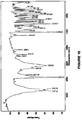
- a polymorph as described above wherein said polymorph has an x-ray diffraction spectrum substantially the same as shown in Figure 2 .
- polymorph as described wherein said polymorph has an X-ray powder diffraction spectrum having characteristic peaks expressed in degrees (2 ⁇ ) at approximately: 2-theta RI 2 -theta RI 2-theta RI 6.683 15.5 22.658 24.8 31.379 8.2 10.201 93.6 23.923 2.7 31.978 9.1 13.441 27.8 25.322 9.6 32.28 10.5 15.014 7.6 25.543 22.4 32.701 6.5 15.517 66.2 26.502 6.7 32.981 2.3 16.458 1.5 27.122 9.5 34.12 9.1 16.84 10.3 27.557 5.5 35.02 33.4 17.206 2.7 28.022 20.9 36.024 3.1 18.198 41 28.64 4.4 36.842 2.6 19.719 34.1 29.241 10.6 37.5 6.7 20.258 100 29.659 7.1 38.341 3.9 21.68 71.2 31.079 11.9 38.753 1.2
- the polymorph of the present invention or a pharmaceutically acceptable salt, solvate, or prodrug thereof may be provided as a pharmaceutical composition, in combination with one or more pharmaceutically acceptable excipients or carriers.
- the polymorph of the present invention or a pharmaceutically acceptable salt, solvate, or prodrug thereof may be used in a method for treating, preventing, or ameliorating one or more symptoms of a monoamine-mediated disorder, which comprises administering to a subject a therapeutically effective amount of at least the polymorph of the present invention or a pharmaceutically acceptable salt, solvate, or prodrug thereof.
- the polymorph of the present invention or a pharmaceutically acceptable salt, solvate, or prodrug thereof may be used in a method for treating, preventing, or ameliorating one or more symptoms of the following disorders, including, but not limited to: psychotropic disorders, anxiety disorders, generalized anxiety disorder, depression, post-traumatic stress disorder, obsessive-compulsive disorder, panic disorder, hot flashes, senile dementia, migraine, hepatopulmonary syndrome, chronic pain, nociceptive pain, neuropathic pain, painful diabetic retinopathy, bipolar depression, obstructive sleep apnea, psychiatric disorders, premenstrual dysphoric disorder, social phobia, social anxiety disorder, urinary incontinence, anorexia, bulimia nervosa, obesity, ischemia, head injury, calcium overload in brain cells, drug dependence, Gilles de la Tourette syndrome, Shy Drager syndrome, vasomotor flushing, chronic fatigue syndrome, cognition enhancement, attention deficit hyperactivity disorder, fibromyal
- the polymorph of the present invention or a pharmaceutically acceptable salt, solvate, or prodrug thereof may be used in methods of modulating a target selected from the group consisting of a serotonin receptor, a norepinephrine receptor, a serotonin transporter, and a norepinephrine transporter.
- deuterium enrichment refers to the percentage of incorporation of deuterium at a given position in a molecule in the place of hydrogen. For example, deuterium enrichment of 1% at a given position means that 1% of molecules in a given sample contain deuterium at the specified position. Because the naturally occurring distribution of deuterium is about 0.0156%, deuterium enrichment at any position in a compound synthesized using non-enriched starting materials is about 0.0156%. The deuterium enrichment can be determined using conventional analytical methods known to one of ordinary skill in the art, including mass spectrometry and nuclear magnetic resonance spectroscopy.
- is/arc deuterium when used to describe a given position in a molecule such as R 1 , R 2 , R 3 , R 4 , R 5 , R 6 , R 7 , R 8 , R 9 , R i0 , R 11 , R 12 , R 13 , R 14 , R 15 , R 16 , R 17 , R 18 , R 19 , R 20 , R 21 , R 22 , R 23 , R 24 , R 25 and R 26 or the symbol "D,” when used to represent a given position in a drawing of a molecular structure, means that the specified position is enriched with deuterium above the naturally occurring distribution of deuterium.
- the deuterium enrichment is of no less than 1%, no less than 5%, no less than 10%, no less than 20%, no less than 50%, no less than 70%, no less than 80%, no less than 90%, and no less than 98% of deuterium at the specified position.
- a monoamine-mediated disorder refers to a disorder that is characterized by abnormal serotonin and/or norepinephrine levels, and when the levels of these neurotransmitters are modified, leads to the amelioration of other abnormal biological processes.
- a monoamine -mediated disorder may be completely or partially mediated by abnormal serotonin, and/or norepinephrine receptors and/or transporters.
- a monoamine -mediated disorder is one in which modulation of serotonin-norepinephrine reuptake activity results in some effect on the underlying condition, disorder, or disease, e.g., administration of an SNRI results in some improvement in at least some of the patients being treated.
- halogen includes fluorine, chlorine, bromine, and iodine.
- LG refers to any atom (or group of atoms) that is stable in its anion or neutral form after it has been displaced by a nucleophile and as such would be obvious to one of ordinary skill and knowledge in the art.
- leaving group includes but is not limited to: water, methanol, ethanol, chloride, bromide, iodide, an alkyl sulfonate, for example methanesulfonate, ethane sulfonate and the like, an arylsulfonate, for example benzenesulfonate, tolylsulfonate and the like, a perhaloalkanesulfonate, for example trifluoromethanesulfonate, trichloromethanesulfonate and the like, an alkylcarboxylate, for example acetate and the like, a perhaloalkylcarboxylate, for example trifluoroacetate, trichloroacetate and the like, an arylcarboxylate, for example benzoate and the like, an N-hydroxyimide anion, for example N-hydroxyrnaleimide anion, Nhydroxysuccinimide anion, N
- protecting group or "removable protecting group” refers to a group which, when bound to a functionality, such as the oxygen atom of a hydroxyl or carboxyl group, or the nitrogen atom of an amino group, prevents reactions from occurring at that functional group, and which can be removed by a conventional chemical or enzymatic step to reestablish the functional group ( Greene and Wuts, Protective Groups in Organic Synthesis, 3rd Ed., John Wiley & Sons, New York, NY, 1999 ).
- the animal body expresses various enzymes, such as the cytochrome P 450 enzymes or CYPs, esterases, proteases, reductases, dehydrogenases, and monoamine oxidases, to react with and convert these foreign substances to more polar intermediates or metabolites for renal excretion.
- enzymes such as the cytochrome P 450 enzymes or CYPs, esterases, proteases, reductases, dehydrogenases, and monoamine oxidases.
- Some of the most common metabolic reactions of pharmaceutical compounds involve the oxidation of a carbon-hydrogen (C-H) bond to either a carbon-oxygen (C-O) or carbon-carbon (C-C) ⁇ -bond.
- the resultant metabolites may be stable or unstable under physiological conditions, and can have substantially different pharmacokinetic, pharmacodynamic, and acute and long-term toxicity profiles relative to the parent compounds. For most drugs, such oxidations are generally rapid and ultimately lead to administration of multiple or high daily doses.
- the Arrhenius equation states that the fraction of molecules that have enough energy to overcome an energy barrier, that is, those with energy at least equal to the activation energy, depends exponentially on the ratio of the activation energy to thermal energy (RT), the average amount of thermal energy that molecules possess at a certain temperature.
- the transition state in a reaction is a short lived state (on the order of 10 -14 sec) along the reaction pathway during which the original bonds have stretched to their limit.
- the activation energy E act for a reaction is the energy required to reach the transition state of that reaction. Reactions that involve multiple steps will necessarily have a number of transition states, and in these instances, the activation energy for the reaction is equal to the energy difference between the reactants and the most unstable transition state. Once the transition state is reached, the molecules can either revert, thus reforming the original reactants, or new bonds form giving rise to the products. This dichotomy is possible because both pathways, forward and reverse, result in the release of energy.
- a catalyst facilitates a reaction process by lowering the activation energy leading to a transition state. Enzymes are examples of biological catalysts that reduce the energy necessary to achieve a particular transition state.
- a carbon-hydrogen bond is by nature a covalent chemical bond. Such a bond forms when two atoms of similar electronegativity share some of their valence electrons, thereby creating a force that holds the atoms together. This force or bond strength can be quantified and is expressed in units of energy, and as such, covalent bonds between various atoms can be classified according to how much energy must be applied to the bond in order to break the bond or separate the two atoms.
- the bond strength is directly proportional to the absolute value of the ground-state vibrational energy of the bond.
- This vibrational energy which is also known as the zero-point vibrational energy, depends on the mass of the atoms that form the bond.
- the absolute value of the zero-point vibrational energy increases as the mass of one or both of the atoms making the bond increases. Since deuterium (D) has twice the mass of hydrogen (H), it follows that a C-D bond is stronger than the corresponding C-H bond.
- Compounds with C-D bonds are frequently indefinitely stable in H 2 O, and have been widely used for isotopic studies. If a C-H bond is broken during a rate-determining step in a chemical reaction (i.e.
- DKIE Deuterium Kinetic Isotope Effect
- the magnitude of the DKIE can be expressed as the ratio between the rates of a given reaction in which a C-H bond is broken, and the same reaction where deuterium is substituted for hydrogen.
- the DKIE can range from about 1 (no isotope effect) to very large numbers, such as 50 or more, meaning that the reaction can be fifty, or more, times slower when deuterium is substituted for hydrogen.
- High DKIE values may be due in part to a phenomenon known as tunneling, which is a consequence of the uncertainty principle.
- Tunneling is ascribed to the small mass of a hydrogen atom, and occurs because transition states involving a proton can sometimes form in the absence of the required activation energy. Because deuterium has more mass than hydrogen, it statistically has a much lower probability of undergoing this phenomenon. Substitution of tritium for hydrogen results in yet a stronger bond than deuterium and gives numerically larger isotope effects
- deuterium is a stable and non-radioactive isotope of hydrogen. It was the first isotope to be separated from its element in pure form and has twice the mass of hydrogen, and makes up about 0.02% of the total mass of hydrogen (in this usage meaning all hydrogen isotopes) on earth.
- deuterium oxide (D 2 O or "heavy water") is formed. D 2 O looks and tastes like H 2 O, but has different physical properties. It boils at 101.41 °C and freezes at 3.79 °C. Its heat capacity, heat of fusion, heat of vaporization, and entropy are all higher than H 2 O. It is more viscous and has different solubilizng properties than H 2 O.
- the animals also become very aggressive; males becoming almost unmanageable. When about 30%, of the body water has been replaced with D 2 O, the animals refuse to eat and become comatose. Their body weight drops sharply and their metabolic rates drop far below normal, with death occurring at about 30 to about 35% replacement with D 2 O. The effects are reversible unless more than thirty percent of the previous body weight has been lost due to D 2 O. Studies have also shown that the use of D 2 O can delay the growth of cancer cells and enhance the cytotoxicity of certain antineoplastic agents.
- Tritium is a radioactive isotope of hydrogen, used in research, fusion reactors, neutron generators and radiopharmaceuticals. Mixing tritium with a phosphor provides a continuous light source, a technique that is commonly used in wristwatches, compasses, rifle sights and exit signs. It was discovered by Rutherford, Oliphant and Harteck in 1934, and is produced naturally in the upper atmosphere when cosmic rays react with H 2 molecules. Tritium is a hydrogen atom that has 2 neutrons in the nucleus and has an atomic weight close to 3. It occurs naturally in the environment in very low concentrations, most commonly found as T 2 O, a colorless and odorless liquid.
- PK pharmacokinetics
- PD pharmacodynamics
- toxicity profiles have been demonstrated previously with some classes of drugs.
- the DKIE was used to decrease the hepatotoxicity of halothane by presumably limiting the production of reactive species such as trifluoroacetyl chloride.
- this method may not be applicable to all drug classes.
- deuterium incorporation can lead to metabolic switching.
- the concept of metabolic switching asserts that xenogens, when sequestered by Phase I enzymes, may bind transiently and rebind in a variety of conformations prior to the chemical reaction (e.g., oxidation).
- Venlafaxine is a substituted phenethylamine-based SNRI.
- the carbon-hydrogen bonds of venlafaxine contain a naturally occurring distribution of hydrogen isotopes, namely 1H or protium (about 99.9844%), 2H or deuterium (about 0.0156%), and 3H or tritium (in the range between about 0.5 and 67 tritium atoms per 1018 protium atoms).
- Increased levels of deuterium incorporation may produce a detectable Kinetic Isotope Effect (KIE) that could affect the pharmacokinetic, pharmacologic and/or toxicologic profiles of such SNRIs in comparison with the compound having naturally occurring levels of deuterium.
- KIE Kinetic Isotope Effect
- novel approach to designing and synthesizing new analogs of venlafaxine and related compounds through incorporation of deuterium disclosed herein may generate novel monoamine reuptake inhibitors with unexpected and non-obvious improvements of pharmacological, pharmacokinetic and toxicological properties in comparison to the non-isotopically enriched monoamine reuptake inhibitors.
- the equipotent metabolite O-demethylated venlafaxine (ODV) has a half-life averaging 11 hours.
- O-demethylated venlafaxine (ODV) has a half-life averaging 11 hours.
- Various deuteration patterns can be used to a) alter the ratio of active metabolites, b) reduce or eliminate unwanted metabolites, c) increase the half-life of the parent drug, and /or d) increase the half-life of active metabolites and create a more effective drug and a safer drug for polypharmacy, whether the polypharmacy be intentional or not.
- High doses of venalxafine are often prescribed in order to reach levels capable of inhibiting norepinephrine reuptake. Unfortunately, high doses are also associated with hypertension.
- venlafaxine is known to display linear kinetics at the low end of the dose range, 75 mg/day, but displays non-linear kinetics at the high end of the dose range, ⁇ 400 mg/day, as a result of the saturation of clearance mechanisms. This non-linearity produces an ascending, rather than a flat, dose-response curve for venlafaxine.
- the deuteration approach has strong potential to slow metabolism through the previously saturated mechanism allowing linear, more predictable ADMET responses throughout the dose range (which would also be lower via this invention). This leads to lesser intcrpaticnt variability of the type that can lead to the hypertensive effects.
- the compounds disclosed herein have the potential to uniquely maintain the beneficial aspects of the non-isotopically enriched drugs while substantially increasing the half-life (T 1/2 ), lowering the maximum plasma concentration (C max ) of the minimum efficacious dose (MED), lowering the efficacious dose and thus decreasing the non-mechanism-related toxicity, and/or lowering the probability of drug-drug interactions.
- These drugs also have strong potential to reduce the cost-of-goods (COG) owing to the ready availability of inexpensive sources of deuterated reagents combined with previously mentioned potential for lowering the therapeutic dose.
- a pharmaceutically acceptable acid addition salt of a compound has a structural formula selected from the group consisting of:
- a compound of the present invention may expose a patient to a maximum of about 0.000005% D 2 O or about 0.00001% DHO, assuming that all of the C-D bonds in the compound as disclosed hereinare metabolized and released as D 2 O or DHO.
- This quantity is a small fraction of the naturally occurring background levels of D 2 O or DHO in circulation.
- the levels of D 2 O shown to cause toxicity in animals is much greater than even the maximum limit of exposure because of the deuterium enriched compound as disclosed herein.
- the deuterium-enriched compound of the present invention should not cause any additional toxicity because of the use of deuterium.
- the deuterated compound of the present invention maintains the beneficial aspects of the corresponding non-isotopically enriched molecules while substantially increasing the maximum tolerated dose, decreasing toxicity, increasing the half-life (T 1/2 ), lowering the maximum plasma concentration (C max ) of the minimum efficacious dose (MED), lowering the efficacious dose and thus decreasing the non-mechanism-related toxicity, and/or lowering the probability of drug-drug interactions.
- Isotopic hydrogen can be introduced into a compound as disclosed herein by synthetic techniques that employ deuterated reagents, whereby incorporation rates are predetermined; and/or by exchange techniques, wherein incorporation rates are determined by equilibrium conditions, and may be highly variable depending on the reaction conditions.
- Synthetic techniques where tritium or deuterium is directly and specifically inserted by tritiated or deuterated reagents of known isotopic content, may yield high tritium or deuterium abundance, but can be limited by the chemistry required.
- Exchange techniques on the other hand, may yield lower tritium or deuterium incorporation, often with the isotope being distributed over many sites on the molecule.
- Phenol 4 reacts with methyl iodide and a deprotonating agent, such as potassium carbonate, to give ether 5 , which reacts with cyclohexanone 6 in the presence of a deprotonating agent, such as sodium hydroxide, and a phase transfer catalyst, such tetra-n-butyl ammonium hydrogen sulfate, to give nitrile 7 .
- a deprotonating agent such as sodium hydroxide
- a phase transfer catalyst such tetra-n-butyl ammonium hydrogen sulfate
- Compound 8 reacts with excess methyl iodide to give the corresponding quaternary salt II (similar to the reaction step shown in scheme 2) which is demethylated with a nucleophile, such as 2-aminoethanol or 3-aminopropanol, at an elevated temperature to produce the compound of formula I as the free base.
- a nucleophile such as 2-aminoethanol or 3-aminopropanol
- Deuterium can be incorporated to different positions synthetically, according to the synthetic procedures as shown in Scheme 1, by using appropriate deuterated intermediates. For example, to introduce deuterium at one or more positions selected from R 1 , R 2 , R 3 , R 11 , R 12 , R 13 , R 14 , R 15 , and R 16 , methyl iodide with the corresponding deuterium substitutions can be used.
- Deuterium can be incorporated to different positions synthetically, according to the synthetic procedures as shown in Scheme 1, by using appropriate deuterated intermediates. For example, to introduce deuterium at one or more positions selected from R 28 , R 29 , R 30 , R 49 , R 50 , R 51 , R 52 , R 53 , R 54 , R 55 , R 56 , and R 57 methyl iodide with the corresponding deuterium substitutions can be used.
- Compound 10 is prepared as in Scheme 1 and reacts with formic acid and formaldehyde at an elevated temperature to produce the compound of formula III.
- the compound of formula III reacts with formic acid and a deprotonating agent, such as sodium hydroxide or sodium formate, to produce the compound of formula I.
- a deprotonating agent such as sodium hydroxide or sodium formate
- the hydrochloride salt ofthe compound of formula I can be prepared by methods known in the art.
- Deuterium can be incorporated to different positions synthetically, according to the synthetic procedures as shown in Scheme 3, by using appropriate deuterated intermediates.
- deuterium at one or more positions selected from R 68 , R 69 , R 80 , R 81 , and R 82 formic acid and formaldehyde with the corresponding deuterium substitutions can be used.
- methyl iodide with the corresponding deuterium substitutions can be used.
- Deuterium can be incorporated to different positions synthetically, according to the synthetic procedures as shown in Scheme 4, by using appropriate deuterated intermediates as described in Schemes 1-3.
- the compounds disclosed herein may contain one or more chiral centers, chiral axes, and/or chiral planes, as described in " Stereochemistry of Carbon Compounds" Eliel and Wilen, John Wiley & Sons, New York, 1994, pp. 1119-1190 .
- Such chiral centers, chiral axes, and chiral planes may be of either the (R) or (S) configuration, or may be a mixture thereof.
- Another method for characterizing a composition containing a compound having at least one chiral center is by the effect of the composition on a beam of polarized light.
- a beam of plane polarized light is passed through a solution of a chiral compound, the plane of polarization of the light that emerges is rotated relative to the original plane.
- This phenomenon is known as optical activity, and compounds that rotate the plane of polarized light are said to be optically active.
- One enantiomer of a compound will rotate the beam of polarized light in one direction, and the other enantiomer will rotate the beam of light in the opposite direction.
- compositions described herein include compositions containing between 0 and 100% of the (+) and/or (-) enantiomer of compound of the present invention.
- the compound may exist as one or mixture of geometric cis / trans (or Z/E) isomers.
- structural isomers arc interconvertible via a low energy barrier, the compound may exist as a single tautomer or a mixture of tautomers. This can take the form of proton tautomerism in the compound that contains for example, an imino, keto, or oxime group; or so-called valence tautomerism in the compound that contain an aromatic moiety. It follows that a single compound may exhibit more than one type of isomerism.
- the compound of the present invention may be enantiomerically pure, such as a single enantiomer or a single diastereomer, or be stereoisomeric mixtures, such as a mixture of enantiomers, a racemic mixture, or a diastereomeric mixture.
- administration of a compound in its (R) form is equivalent, for compounds that undergo epimerization in vivo, to administration of the compound in its (S) form.
- the compound of the present invention may also disclosed as a pharmaceutically acceptable salt ( See, Berge et al., J. Pharm. Sci. 1977, 66, 1-19 ; and " Handbook of Pharmaceutical Salts, Properties, and Use,” Stah and Wermuth, Ed.; Wiley-VCH and VHCA, Zurich, 2002 ).
- Suitable acids for use in the preparation of pharmaceutically acceptable acid addition salts include, but are not limited to, acetic acid, 2,2-dichloroacetic acid, acylated amino acids, adipic acid, alginic acid, ascorbic acid, L-aspartic acid, benzenesulfonic acid, benzoic acid, 4-acetamidobenzoic acid, boric acid, (+)-camphoric acid, camphorsulfonic acid, (+)-(1S)-camphor-10-sulfonic acid, capric acid, caproic acid, caprylic acid, cinnamic acid, citric acid, cyclamic acid, cyclohexanesulfamic acid, dodecylsulfuric acid, ethane-1,2-disulfonic acid, ethanesulfonic acid, 2-hydroxy-ethanesulfonic acid, formic acid, fumaric acid, galactaric acid, gentisic acid, glucoheptonic
- Suitable bases for use in the preparation of pharmaceutically acceptable basic addition salts including, but not limited to, inorganic bases, such as magnesium hydroxide, calcium hydroxide, potassium hydroxide, zinc hydroxide, or sodium hydroxide; and organic bases, such as primary, secondary, tertiary, and quaternary, aliphatic and aromatic amines, including L-arginine, benethamine, benzathine, choline, deanol, diethanolamine, diethylamine, dimethylamine, dipropylamine, diisopropylamine, 2-(diethylamino)-ethanol, ethanolamine, ethylamine, ethylenediamine, isopropylamine, N-methyl-glucamine, hydrabamine, 1H-imidazole, L-lysine, morpholine, 4-(2-hydroxyethyl)-morpholine, methylamine, piperidine, piperazine, propylamine, pyrrolidine, 1-(2-hydroxyeth
- the compound of the present invention may also be designed as a prodrug, which is a functional derivative of the compound and is readily convertible into the parent compound in vivo.
- Prodrugs are often useful because, in some situations, they may be easier to administer than the parent compound. They may, for instance, be bioavailable by oral administration whereas the parent compound is not.
- the prodrug may also have enhanced solubility in pharmaceutical compositions over the parent compound.
- a prodrug may be converted into the parent drug by various mechanisms, including enzymatic processes and metabolic hydrolysis. See Harper, Progress in Drug Research 1962, 4, 221-294 ; Morozowich et al. in "Design of Biopharmaceutical Properties through Prodrugs and Analogs," Roche Ed., APHA Acad. Pharm. Sci.
- compositions comprising a compound of the present invention as an active ingredient, or a pharmaceutically acceptable salt, solvate, or prodrug thereof, in combination with one or more pharmaceutically acceptable excipients or carriers.
- compositions in modified release dosage forms which comprise a compound of the present invention and one or more release controlling excipients or carriers as described herein.
- Suitable modified release dosage vehicles include, but are not limited to, hydrophilic or hydrophobic matrix devices, water-soluble separating layer coatings, enteric coatings, osmotic devices, multiparticulate devices, and combinations thereof.
- the pharmaceutical compositions may also comprise non-release controlling excipients or carriers.
- compositions in enteric coated dosage forms which comprise a compound of the present invention and one or more release controlling excipients or carriers for use in an enteric coated dosage form.
- the pharmaceutical compositions may also comprise non-release controlling excipients or carriers.
- compositions in effervescent dosage forms which comprise a compound of the present invention and one or more release controlling excipients or carriers for use in an effervescent dosage form.
- the pharmaceutical compositions may also comprise non-release controlling excipients or carriers.
- compositions in a dosage form that has an instant releasing component and at least one delayed releasing component, and is capable of giving a discontinuous release of the compound in the form of at least two consecutive pulses separated in time from 0.1 up to 24 hours.
- the pharmaceutical compositions comprise a compound of the present invention and one or more release controlling and non-release controlling excipients or carriers, such as those excipients or carriers suitable for a disruptable semi-permeable membrane and as swellable substances.
- compositions in a dosage form for oral administration to a subject which comprise a compound of the present invention and one or more pharmaceutically acceptable excipients or carriers, enclosed in an intermediate reactive layer comprising a gastric juicc-rcsistant polymeric layered material partially neutralized with alkali and having cation exchange capacity and a gastric juice-resistant outer layer.
- compositions comprise about 0.1 to about 1000 mg, about 1 to about 500 mg, about 2 to about 100 mg, about 1 mg, about 2 mg, about 3 mg, about 5 mg, about 10 mg, about 20 mg, about 30 mg, about 40 mg, about 50 mg, about 100 mg, about 500 mg of the compound of the present invention.
- compositions may be in the form of immediate-release capsules for oral administration, and may further comprise cellulose, iron oxides, lactose, magnesium stearate, and sodium starch glycolate.
- compositions may be in the form of delayed-release capsules for oral administration, and may further comprise cellulose, ethylcellulose, gelatin, hypromellose, iron oxide, and titanium dioxide.
- compositions may be in the form of enteric coated delayed-release tablets for oral administration, and may further comprise carnauba wax, crospovidone, diacetylated monoglycerides, ethylcellulose, hydroxypropyl cellulose, hypromellose phthalate, magnesium stearate, mannitol, sodium hydroxide, sodium stearyl fumaratc, talc, titanium dioxide, and yellow ferric oxide.
- compositions may be in the form of enteric coated delayed-release tablets for oral administration, and may further comprise calcium stearate, crospovidone, hydroxypropyl methylcellulose, iron oxide, mannitol, methacrylic acid copolymer, polysorbatc 80, povidonc, propylene glycol, sodium carbonate, sodium lauryl sulfate, titanium dioxide, and triethyl citrate.
- compositions comprising a compound of the present invention may be formulated in various dosage forms for oral, parenteral, and topical administration.
- the pharmaceutical compositions may also be formulated as a modified release dosage form, including delayed-, extended-, prolonged-, sustained-, pulsatile-, controlled-, accelerated-, fast-, targeted-, programmed-release, and gastric retention dosage forms.
- dosage forms can be prepared according to conventional methods and techniques known to those skilled in the art (see, Remington: The Science and Practice of Pharmacy, supra; Modified-Release Drug Delivery Technology, Rathbonc ct al., Eds., Drugs and the Pharmaceutical Science, Marcel Dckkcr, Inc.: New York, NY, 2002; Vol. 126 ).
- compositions disclosed herein may be administered at once, or multiple times at intervals of time. It is understood that the precise dosage and duration of treatment may vary with the age, weight, and condition of the patient being treated, and may be determined empirically using known testing protocols or by extrapolation from in vivo or in vitro test or diagnostic data. It is further understood that for any particular individual, specific dosage regimens should be adjusted over time according to the individual need and the professional judgment of the person administering or supervising the administration of the formulations.
- the compounds may be administered chronically, that is, for an extended period of time, including throughout the duration of the patient's life in order to ameliorate or otherwise control or limit the symptoms of the patient's disease or condition.
- the compounds may be given continuously or temporarily suspended for a certain length of time (i.e., a "drug holiday").
- a maintenance dose is administered if necessary. Subsequently, the dosage or the frequency of administration, or both, can be reduced, as a function of the symptoms, to a level at which the improved disorder is retained. Patients can, however, require intermittent treatment on a long-term basis upon any recurrence of symptoms.
- Any of the pharmaceutical formulation describe herein can comprise (as the activc component) at least one of the hydrochloride salt Forms A-F of formula I, or further contain (as the active component) substantially only one or more of the hydrochloride, salt Forms A-F of formula I.
- hydrochloride salt Forms A-F of the compound of d 9 -venlafaxine have been characterized using X-ray powder diffractometry.
- the hydrochloride salt Form A of d 9 -1-[2-dimethylamino-1-(4-methoxyphenyl)-ethyl]cyclohexanol (d 9 -venlafaxine) of the present disclosure is characterized in that the crystal provides high-intensity diffraction peaks at diffraction angles of 2-theta (2 ⁇ ) in a X-ray powder diffraction spectrum of about 6.703, 8.321, 12.681, 13.5, 15.54, 18.918, 20.359, 21.161, 21.762, 25.04, and 28.518.
- the hydrochloride salt Form B of d 9 -1-[2-dimethylamino-1-(4-methoxyphenyl)-ethyl]cyclohexanol (d 9 -venlafaxine) of the present disclosure is characterized in that the crystal provides high-intensity diffraction peaks at diffraction angles of 2-theta (2 ⁇ ) in a X-ray powder diffraction spectrum of about 6.683, 10.201, 13.441, 15.517, 18.198, 19.719, 20.258, 21.68, 22.658, 25.543, 28.022, and 35.02.
- the hydrochloride salt Form C of d 9 -1-[2-dimethylamino-1-(4-methoxyphenyl)-ethyl]cyclohexanol (d 9 -venlafaxine) of the present disclosure is characterized in that the crystal provides high-intensity diffraction peaks at diffraction angles of 2-theta (2 ⁇ ) in a X-ray powder diffraction spectrum of about 6.718, 8.335, 12.68, 13.5, 15.539, 16.282, 18.902, 19.737, 20.34, 21.161, 21.758, 25.02, 25.601, 26.261, 28.518, 31.54, 33.198, 33.937, and 35.159.
- the hydrochloride salt Form D of d 9 -1-[2-dimethylamino-1-(4-methoxyphenyl)-ethyl]cyclohexanol (d 9 -venlafaxine) of the present disclosure is characterized in that the crystal provides high-intensity diffraction peaks at diffraction angles of 2-theta (2 ⁇ ) in a X-ray powder diffraction spectrum of about 6.74, 7.421, 8.341, 10.219, 12.7, 13.502, 17.9, 15.541, 20.36, 21.221, 21.761, 25.078, 31.04, 34.018, and 35.139.
- the hydrochloride salt Form E of d 9 -1-[2-dimethylamino-1-(4-methoxyphenyl)-ethyl]cyclohexanol (d 9 -venlafaxine) of the present disclosure is characterized in that the crystal provides high-intensity diffraction peaks at diffraction angles of 2-theta (2 ⁇ ) in a X-ray powder diffraction spectrum of about 5.597, 7.182, 9.078, 9.557, 11.201, 14.46, 14.76, 16.86, 17.497, 19.201, 19.619, 20.241, 20.66, 21.76, 22.596, 23.06, 24.4, 25.02, 26.519, 26.842, 31.52, and 35.438.
- the hydrochloride salt Form F of d 9 -1-[2-dimethylamino-1-(4-methoxyphenyl)-ethyl]cyclohexanol (d 9 -venlafaxine) of the present disclosure is characterized in that the crystal provides high-intensity diffraction peaks at diffraction angles of 2-theta (2 ⁇ ) in a X-ray powder diffraction spectrum of about 5.581, 7.186, 11.22, 14.499, 14.802, 16.882, 19.242, 20.317, 21.798, 22.637, and 35.445.
- FIGURES 7-12 In the infrared absorption spectra FIGURES 7-12 the horizontal axis shows the wavenumber in cm -1 and the vertical axis shows the transmittance in percent (%).
- hydrochloride salt of d 9 -1-[2-dimethylamino-1-(4-methoxyphenyl)-ethyl]-cyclohexanol (d 9 -venlafaxine) has been characterized by X-ray powder diffractometry.
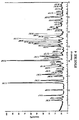
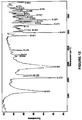
- the hydrochloride crystals of d 9 -1-[2-dimethylamino-1-(4-methoxyphenyl)-ethyl]-cyclohexanol provide powder X-ray diffraction spectrums substantially the same as the powder X-ray diffraction spectrums shown in FIGURES 1-6 , respectively.
- a powder X-ray diffraction spectrum may be obtained with a measurement error depending on measurement conditions.
- intensities in a powder X-ray diffraction spectrum may fluctuate depending on measurement conditions.
- the salts of the present diclosure are not limited to the crystals that provide X-ray powder diffraction spectrum completely identical to the X-ray powder diffraction spectrums shown in FIGURES 1-6 , and that any crystals providing X-ray powder diffraction spectrums substantially the same as the aforementioned X-ray powder diffraction spectrums fall within the scope of the present diclosure.
- Those skilled in the field of X-ray powder diffractometry can readily judge the substantial identity of X-ray powder diffraction spectrums.
- a measurement error of diffraction angle for a usual X-ray powder diffractometry is about 5% or less, and such degree of a measurement error should be taken into account as to diffraction angles. Furthermore, it should be understood that intensities may fluctuate depending on experimental conditions.
- the hydrochloride salt Form A of d 9 -venlafaxine is characterized in that the crystal provides high-intensity diffraction peaks at diffraction angles of about 2-theta, [% relative intensity]: 6.703 [29.3], 8.321 [19], 12.681 [77.5], 13.5 [47.9], 15.54 [17.7], 18.918 [24.4], 20.359 [100], 21.161 [38.3], 21.762 [26.1], 25.04 [27.8], and 28.518 [18.2].
- the hydrochloride salt Form A of the present diclosure provides a X-ray powder diffraction spectrum substantially the same as the X-ray diffraction spectrum shown in FIGURE 1 .
- the compound of the present invention is characterized in that the crystal provides high-intensity diffraction peaks at diffraction angles of about 2-thcta, [% relative intensity]: 6.683 [15.5], 10.201 [93.6], 13.441 [27.8], 15.517 [66.2], 18.198 [41], 19.719 [34.1], 20.258 [100], 21.68 [71.2], 22.658 [24.8], 25.543 [22.4],28.022 [20.9], and 35.02 [33.4].
- the compound of the present invention provides a x-ray powder diffraction spectrum substantially the same as the X-ray diffraction spectrum shown in FIGURE 2 .
- the hydrochloride salt Form C of d 9 -venlafaxine is characterized in that the crystal provides high-intensity diffraction peaks at diffraction angles of about 2-theta, [% relative intensity]: 6.718 [21.4], 8.335 [20.6], 12.68 [80], 13.5 [40.7], 15.539 [20.2], 16.282 [24.3], 18.902 [48.9], 19.737 [17.4], 20.34 [100], 21.161 [79.4], 21.758 [30.5], 25.02 [31.5], 25.601 [18.9], 26.261 [15.2], 28.518 [30.2], 31.54 [18.7], 33.198 [14.2], 33.937 [16.5], and 35.159 [21.3].
- the hydrochloride salt Form C of d 9 -venlafaxine provides a X-ray powder diffraction spectrum substantially the same as the X-ray diffraction spectrum shown in FIGURE 3 .
- the hydrochloride salt Form D of d 9 -venlafaxine is characterized in that the crystal provides high-intensity diffraction peaks at diffraction angles of about 2-thcta, [% relative intensity]: 6.74 [21.2], 7.421 [14], 8.341 [35.5], 10.219 [23], 12.7 [99.5], 13.502 [40.7], 17.9 [17.5], 15.541 [37.3], 20.36 [100], 21.221 [23.7], 21.761 [41], 25.078 [26.3], 31.04 [17.7], 34.018 [14.8], and 35.139 [22.7].
- the hydrochloride salt Form D of the d 9 -venlafaxine provides a X-ray powder diffraction spectrum substantially the same as the X-ray diffraction spectrum shown in FIGURE 4 .
- the hydrochloride salt Form E of d 9 -venlafaxine is characterized in that the crystal provides high-intensity diffraction peaks at diffraction angles of about 2-theta, [% relative intensity]: 5.597 [28], 7.182 [36.2], 9.078 [24.1], 9.557 [14.9], 11.201 [100], 14.46 [40.2], 14.76 [40.4], 16.86 [71.7], 17.497 [15.7], 19.201 [66.5], 19.619 [19.6], 20.241 [35.2], 20.66 [19.6], 21.76 [22.5], 22.596 [26.4], 23.06 [13.2], 24.4 [15.3], 25.02 [12.1], 26.519 [13.5], 26.842 [18.7], 31.52 [12.6], and 35.438 [17.9].
- the hydrochloride salt Form E of d 9 -venlafaxine provides a X-ray powder diffraction spectrum substantially the same as the X-ray dif
- the hydrochloride salt Form F of d 9 -venlafaxine is characterized in that the crystal provides high-intensity diffraction peaks at diffraction angles of about 2-theta, [% relative intensity]: 5.581 [26.1], 7.186 [18.3],11.22 [100], 14.499 [18.8], 14.802 [20.5], 16.882 [63.9], 19.242 [38.4], 20.317 [51.6], 21.798 [17.5], 22.637 [26.3], and 35.445 [16.2].
- the hydrochloride salt Form F of d 9 -venlafaxine provides a X-ray powder diffraction spectrum substantially the same as the X-ray diffraction spectrum shown in FIGURE 6 .
- X-ray powder diffraction pattern is only one of many ways to characterize the arrangement of atoms comprising the hydrochloride salt of d 9 -1-[2-dimethylamino-1-(4-methoxyphenyl)-ethyl]-cyclohexanol (d 9 -venlafaxine, Forms A-F).
- Other methods are well known in the art, such as, single X-ray crystal diffraction, may be used to identify aforementioned salt forms of d 9 -venlafaxine
- the hydrochloride salt Forms A-F have high crystallinity, i.e., substantially free of amorphous material. Such salts provide more reproducible dosing results.
- the hydrochloride salt Forms A-F arc substantially hygroscopically stable, which alleviates potential problems associated with weight changes ofthe active ingredient during the manufacture of capsules or tablets.
- the hydrochloride Forms A-F also have a low tendency for concentrated aqueous solution to form viscous mixtures upon standing.
- the hydrochloride salt Forms A-F have rapid kinetic aqueous solubility which simplifies aqueous dosing and make them suitable for injectable dosage forms. Furthermore, the hydrochloride salt Forms A-F with enhanced solubility characteristics facilitate the dissolution of solid dosage forms in a timely manner.
- hydrochloride salt Forms A-F have greater kinetic solubility than the free base of the compound d 9 -venlafaxine, Additionally, the hydrochloride salt Forms A-F of the compound d 9 -venlafaxine are more stable in air and can be used without deliquescence.
- Form B is the compound of the present invention. The other forms are for reference only.
- d 9 -(4-Methoxyphenyl)-acetic acid can be prepared according to known literature procedures Ouk et al., Green Chemistry, 2002, 4(5), 431-435 , by reacting d 6 -(4-hydroxyphenyl)-acetic acid (1 equiv, Cambridge Isotopes Laboratories), K 2 CO 3 (0.04 equiv) and d 6 -carbonic acid dimethyl ester (1.25 equiv, Cambridge Isotopes Laboratories) at 160°C until completion.
- the title compound is prepared according to the procedure described in Yardley et al., Journal of Medicinal Chemistry 1990, 33(10), 2899-2905 .
- a solution of d 15 -2-(4-methoxyphenyl)-N,N-dimethyl-acetamide (1 equiv) in THF is treated with n-butyllithium (1 equiv) at -78°C.
- the mixture is stirred for 90 minutes at -78°C; a THF solution of d 10 -cyclohexanone (1.2 equiv, Sigma-Aldrich) is added, and stirring is maintained until completion.
- the reaction is quenched by addition of D 2 O (2 equiv), the mixture is warmed to room temperature and the solvent is removed under reduced pressure and the crude residue is purified by silica gel column chromatography.
- d 3 -Iodomethane (8.70 g, 60 mmol) was added to a stirred solution of (4-hydroxyphenyl)-acetonitrile (4.50 g, 30 mmol) in acetone (30 mL) containing potassium carbonate (6.21 g, 45 mmol) at ambient temperature, and the mixture was heated at reflux overnight, cooled to ambient temperature, filtered, and concentrated to give the crude product, which was purified by flash chromatography using hcxanes-cthyl acetate to afford the desired product, d 3 -(4-methoxyphenyl)-acetonitrile, as a light yellow oil.
- Tetra- n -butyl ammonium hydrogen sulfate (0.10 g, 0.29 mmol) and 2N NaOH (1.2 mL) were added sequentially to a vigorously stirred d 3 -(4-methoxyphenyl)-acetonitrile (0.85 g, 5.66 mmol) at 0°C, and stirring was maintained for 30 minutes.
- Cyclohexanone (0.67 g, 6.8 mmol) was added to this mixture at 0-5°C over 10 minute. The reaction mixture was allowed to warm to ambient temperature and vigorous stirring was continued for an additional 1 hour.
- d 3 -(1-Hydroxycyclohexyl)-(4-methoxyphenyl)-acetonitrile (400.0 mg, 1.61 mmol) was reduced on an H-CubeTM continuous-flow hydrogenation reactor (Thales Nanotechnology, Budapest, Hungary) equipped with a Raney Ni catalyst cartridge (eluent: 2.0M ammonia in methanol, flow rate: 1 mL/min, temperature: 80°C, pressure: 80 bar) to yield the desired product, d 3 -1-[2-amino-1-(4-methoxyphenyl)-ethyl]-cyclohexanol, as a clear colorless oil.
- Example 6 The title compound was prepared as in Example 6 by substituting d 10 -cyclohexanone (Sigma-Aldrich) for cyclohexanone and 2N NaOD in D 2 O for 2N NaOH in water. The final product was purified by recrystallization from ethyl acetate-hexanes.
- d 14 -(1-Hydroxycyclohexyl)-(4-methoxyphenyl)-acetonitrile (570.0 mg, 2.21 mmol) was reduced on an H-CubeTM continuous-flow hydrogenation reactor (Thales Nanotechnology, Budapest, Hungary) equipped with a Raney Ni catalyst cartridge (eluent: 2.0M ammonia in methanol, flow rate: 1 mL/min, temperature: 80°C, pressure: 80 bar) to yield the desired product, d 14 -1-[2-amino-1-(4-methoxyphenyl)-ethyl]-cyclohexanol, as a clear colorless oil.
- the title compound is prepared from d 14 -venlafaxine according to Example 20.
- the title compound is prepared from d 26 -venlafaxine according to Example 20.
- the filtrate was used to provide d 9 -(R)-venlafaxine (see Example 18).
- Chiral separation was preformed at ambient temperature on an Agilent 1100 HPLC equipped with a Chirobiotic V chiral column (Astec), 250 x 4.6 mm column. Isocratic gradient: 5 mM ammonium acetate in water (60%) and tetrahydrofuran (40%); Flowrate: 1 mL/min; Run time: 30 minutes; Injection volume: 10 ⁇ L injection (1 mg/mL). UV wavelength: 229 nm. All samples were dissolved in acetonitrile-water (1:1).
- d 9 -(S)-venlafaxine di-p-toluoyl-L tartarate salt was suspended in dichloromethane (25 mL) and treated with 2N NaOH until pH 13. The layers were separated and the aqueous layer was extracted with dichloromethane. The combined organic layers were washed with brine, dried over sodium sulfate, filtered, and concentrated to give d 9 -(S)-venlafaxine as a white solid Yield: 0.71g.
- d 9 -(S)-venlafaxine (0.69g, 2.46 mol) was dissolved in ether (30 mL) and treated with a solution of 2N HCl in ether (1.7mL) at 0-5 °C for 10 minutes. The precipitate was filtered, washed with ether, and recrystallized from a mixture of ether and methanol to give d 9 -(S)-venlafaxine HCl salt as a white solid (optical purity > 99.5% by chiral HPLC).
- Example 23 The filtrate obtained in Example 23 was concentrated under reduced pressure, and the resulting residue (1.80g) was dissolved in dichloromethane and treated with 2N aqueous sodium hydroxide as in Example 23, washed with brine, and concentrated to give a white solid (1.01g), which was dissolved in ethyl acetate (15mL) and treated with (+)-di- p- toluoyl-D-tartaric acid in ethyl acetate (10 mL). The mixture was stirred at room temperature for 4 hours.
- the title compound can be prepared according to the procedure of Example 7, by substituting the water reservoir with a deuterium oxide reservoir for the generation of deuterium gas.
- d 9 -Venlafaxine hydrochloride (500mg) was dissolved in isopropanol (8 mL) at about 60°C, and subsequently cooled to 0-5°C in ice-water bath and kept at that temperature for about 3 hours. The solid was filtered, washed with cold isopropanol and dried under high vacuum to give d 9 -venlafaxine hydrochloride Form A (248mg).
- d 9 -Venlafaxine hydrochloride (150mg) was triturated in a vial with acetone at about 60°C for about 1 hour and cooled to 0-5°C for about 1 hour. The solid was filtered, washed with cold acetone and dried at 50°C on rotary evaporator to a constant weight to give ds-venlafaxine hydrochloride Form B (102mg).
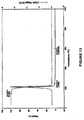
- a sample of d 9 -venlafaxine hydrochloride Form B was heated at 10°C/min from ambient to approximately 700°C and then in regular mode to 1000°C, in a nitrogen atmosphere (25 cc/min). The results are shown in FIGURE 13 .
- a sample of d 9 -venlafaxine hydrochloride Form E was analyzed by infrared spectroscopy. The results are shown in FIGURE 11 .
- a sample of d 9 -venlafaxine hydrochloride Form E was heated at 10°C/min from ambient to approximately 700°C and then in regular mode to 1000°C, in a nitrogen atmosphere (25 cc/min). The results are shown in FIGURE 15 .
- d 9 -Venlafaxine hydrochloride Form A (68mg) was heated at 205°C for 2 hours and cooled to ambient temperature. The crystals that formed at the top of the flask were collected. Characteristic X-ray powder diffraction peaks (2-theta, [% relative intensity]): 5.581 [26.1], 7.186 [18.3], 11.22 [100], 14.499 [18.8], 14.802 [20.5], 16.882 [63.9], 19.242 [38.4], 20.317 [51.6], 21.798 [17.5], 22.637 [26.3], and 35.445 [16.2].
- a sample of d 9 -venlafaxine hydrochloride Form F was analyzed by infrared spectroscopy. The results are shown in FIGURE 12 .
- Liver microsomal stability assays were conducted at 1 mg per mL liver microsome protein with an NADPH-generating system in 2%NaHCO 3 (2.2 mM NADPH, 25.6 mM glucose 6-phosphate, 6 units per mL glucose 6-phosphate dehydrogenase and 3.3 mM MgCl 2 ).
- Test compounds were prepared as solutions in 20% acetonitrile-water and added to the assay mixture (final assay concentration 5 microgram per mL) and incubated at 37°C. Final concentration of acetonitrile in the assay were ⁇ 1%.
- the degradation half-life of ( ⁇ )-d 3 -venlafaxine, (R)-d 3 -venlafaxine, (S)-d 3 -venlafaxine, ( ⁇ )-d 8 -venlafaxine, ( ⁇ )-d 9 -venlafaxine, (R)-d 9 -venlafaxine, (S)-d 9 -venlafaxine, d 14 -venlafaxine, and d 20 -venlafaxine were increased by 50-300% as compared to non-isotopically enriched venlafaxine.
- Example 41 In vitro metabolism using human cytochrome P 450 enzymes
- the cytochrome P 450 enzymes are expressed from the corresponding human cDNA using a baculovirus expression system (BD Biosciences).
- Monoamine oxidase A activity is measured spectrophotometrically by monitoring the increase in absorbance at 314 nm on oxidation of kynuramine with formation of 4-hydroxyquinoline. The measurements are carried out, at 30°C, in 50mM NaP i buffer, pH 7.2, containing 0.2% Triton X-100 (monoamine oxidase assay buffer), plus 1 mM kynuramine, and the desired amount of enzyme in 1 mL total volume.
- the pharmacological profile of compounds as described herein or the non-isotopically enriched compounds or standards or controls can be demonstrated as follows.
- the preferred exemplified compounds exhibit a K i value less than 1 micromolar, more preferably less than 500 nanomolar at the Serotonin transporter as determined using the scintillation proximity assay (SPA) described below. See WO 2005/060949 .
- the preferred exemplified compounds selectively inhibit the Serotonin transporter relative to the Norepinephrine and dopamine transporters by a factor of at least five using such SPAs.
- Example 44 Generation of stable cell lines expressing the human dopamine, norepinephrine and serotonin transporters
- Standard molecular cloning techniques are used to generate stable cell-lines expressing the human dopamine, norepinephrine and serotonin transporters.
- the polymerase chain reaction (PCR) is used in order to isolate and amplify each of the three full-length cDNAs from an appropriate cDNA library.
- PCR Primers for the following neurotransmitter transporters are designed using published sequence data.
- the PCR products are cloned into a mammalian expression vector, such as for example pcDNA3.1 (Invitrogen), using standard ligation techniques, followed by co-transfection of HEK293 cells using a commercially available lipofection reagent (Lipofectamine TM - Invitrogen) following the manufacturer's protocol.
- Example 45 In vitro SPA binding assay for the norepinephrine transporter
- the assay is preformed according to the procedure described in Gobel et al, Journal of Pharmacological and Toxicological Methods 1999, 42(4), 237-244 .
- Compounds as described herein or the corresponding non-isotopically enriched compounds are serotonin/norepinephrine reuptake inhibitors; 3 H-nisoxetine binding to norepinephrine re-uptake sites in a cell line transfected with DNA encoding human norepinephrine transporter binding protein has been used to determine the affinity of ligands at the norepinephrine transporter.
- Cell pastes from large scale production of HEK-293 cells expressing cloned human norepinephrine transporters are homogenized in 4 volumes of 50 millimolar Tris-HCl containing 300 millimolar NaCl and 5 millimolar KCl, pH 7.4.
- the homogenate is centrifuged twice (40,000g, 10 minutes, 4°C) with pellet re-suspension in 4 volumes of Tris-HCl buffer containing the above reagents after the first spin, and 8 volumes after the second spin.
- the suspended homogenate is centrifuged (100g, 10 minutes, 4°C), the supernatant is kept and re-centrifuged (40,000g, 20 minutes, 4°C).
- the pellet is re-suspended in Tris-HCl buffer containing the above reagents along with 10% w/v sucrose and 0.1 millimolar phenylmethylsulfonyl fluoride (PMSF).
- the membrane preparation is stored in aliquots (1.0 milliliter) at -80°C until required.
- the protein concentration of the membrane preparation is determined using a Bicinchoninic acid (BCA) protein assay reagent kit (available from Pierce).
- BCA Bicinchoninic acid
- Each well of a 96 well microtiter plate is set up to contain 50 microliters of 2 nanomolar [N-methyl- 3 H]-Nisoxetine hydrochloride (70-87 Ci/millimole, from NEN Life Science Products), 75 microliters Assay buffer (50 millimolar Tris-HCl pH 7.4 containing 300 millimolar NaCl and 5 millimolar KCl), 25 microliter of diluted compounds of Formula I or the corresponding non-isotopically enriched compounds, assay buffer (total binding) or 10 micromolar Desipramine HCl (non- specific binding), 50 microliter wheat germ agglutinin coated poly (vinyltoluene) (WGA PVT) SPA Beads (Amersham Biosciences RPNQ0001) (10 milligram/milliliter), 50 microliter membrane (0.2 milligram protein per milliliter).
- Assay buffer 50 millimolar Tris-HCl pH 7.4 containing 300 millimolar NaCl and 5 millimolar
- microtiter plates are incubated at room temperature for 10 hours prior to reading in a Trilux scintillation counter.
- the results arc analyzed using an automatic spline-fitting program (Multicalc, Packard, Milton Keynes, UK) to provide K i values for each of the test compounds.
- Example 46 In vitro SPA binding assay for the Serotonin transporter
- the assay is preformed according to the procedure described in Ramamoorthy et al, J. Biol. Chem. 1998, 273(4), 2458-2466 .
- Membrane preparation is essentially similar to that for the norepinephrine transporter containing membranes as described above.
- the membrane preparation is stored in aliquots (1 milliliter) at -70°C until required.
- the protein concentration of the membrane preparation is determined using a BCA protein assay reagent kit.
- Each well of a 96 well microtiter plate is set up to contain 50 microliters of 2 nanomolar [ 3 H]-citalopram (60-86Ci/millimole, Amersham Biosciences), 75 microliters Assay buffer (50 millimolar Tris-HCl pH 7.4 containing 150 millimolar NaCl and 5 millimolar KCl), 25 microliters of diluted compounds of Formula 1 or the corresponding non-isotopically enriched compounds, assay buffer (total binding) or 100 micromolar fluoxetine (non- specific binding), 50 microliters WGA PVT SPA Beads (40 milligram/milliliter), 50 microliters membrane preparation (0.4 milligram protein per milliliter).
- Assay buffer 50 millimolar Tris-HCl pH 7.4 containing 150 millimolar NaCl and 5 millimolar KCl
- 25 microliters of diluted compounds of Formula 1 or the corresponding non-isotopically enriched compounds 25 microliters of diluted compounds of Formula 1 or the
- microtiter plates are incubated at room temperature for 10 hours prior to reading in a Trilux scintillation counter.
- the results are analyzed using an automatic spline-fitting program (Multicalc, Packard, Milton Keynes, UK) to provide K i (nanomolar) values for each of the test compounds.
- the assay is preformed according to the procedure described in Ramamoorthy ct al, J. Biol. Chem. 1998, 273(4), 2458-2466 .
- test compound to compete with [ 3 H]-WIN35,428 for its binding sites on human cell membranes containing cloned human dopamine transporter has been used as a measure of the ability of such test compounds to block dopamine uptake via its specific transporter.
- Membrane preparation is performed in the same manner as membranes containing cloned human Scrotonin transporter as described above.
- Each well of a 96 well microtiter plate is set up to contain 50 microliters of 4 nanomolar [ 3 H]-WIN35,428 (84-87 Ci/millimole, from NEN Life Science Products), 5 microliters Assay buffer (50 millimolar Tris-HCl pH 7.4 containing 150 millimolar NaCl and 5 millimolar KCl), 25 microliters of diluted compounds as described herein or the corresponding non-isotopically enriched compounds, assay buffer (total binding) or 100 micromolar nomifensine (non-specific binding), 50 microliters WGA PVT SPA Beads (10 milligram/milliliter), 50 microliters membrane preparation (0.2 milligram protein per milliliter).
- microtiter plates are incubated at room temperature for 120 minutes prior to reading in a Trilux scintillation counter.
- the results are analyzed using an automatic spline-fitting program (Multicale, Packard, Milton Keynes, UK) to provide K i values for each of the test compounds.
- Example 48 In vivo assay for behavioral despair in rats
- the assay is performed according to the procedure described in Porsolt et al, Archives Internationales de Pharmacodynamie et de Therapie, 1977, 229(2), 327-336 .
Landscapes
- Chemical & Material Sciences (AREA)
- Organic Chemistry (AREA)
- Health & Medical Sciences (AREA)
- Nuclear Medicine, Radiotherapy & Molecular Imaging (AREA)
- Pharmacology & Pharmacy (AREA)
- Neurosurgery (AREA)
- Biomedical Technology (AREA)
- Chemical Kinetics & Catalysis (AREA)
- General Chemical & Material Sciences (AREA)
- Medicinal Chemistry (AREA)
- Bioinformatics & Cheminformatics (AREA)
- Engineering & Computer Science (AREA)
- Neurology (AREA)
- Life Sciences & Earth Sciences (AREA)
- Animal Behavior & Ethology (AREA)
- General Health & Medical Sciences (AREA)
- Public Health (AREA)
- Veterinary Medicine (AREA)
- Acyclic And Carbocyclic Compounds In Medicinal Compositions (AREA)
- Organic Low-Molecular-Weight Compounds And Preparation Thereof (AREA)
- Pharmaceuticals Containing Other Organic And Inorganic Compounds (AREA)
Claims (3)
- Polymorphe du sel chlorhydrate du chlorhydrate de d9-1-[2-diméthylamino-1-(4-méthoxyphényl)-éthyl]-cyclohexanol ayant la formule structurale :

- Polymorphe selon la revendication 1, dans lequel le polymorphe présente un spectre de diffraction des rayons X sensiblement identique à celui représenté sur la figure 2.
- Polymorphe selon la revendication 1, dans lequel ledit polymorphe présente un spectre de diffraction des rayons X sur poudre ayant des pics caractéristiques exprimés en degrés (2θ) à approximativement :
2-thêta IR 2-thêta IR 2-thêta IR 6,683 15,5 22,658 24,8 31,379 8,2 10,201 93,6 23,923 2,7 31,978 9,1 13,441 27,8 25,322 9,6 32,28 10,5 15,014 7,6 25,543 22,4 32,701 6,5 15,517 66,2 26,502 6,7 32,981 2,3 16,458 1,5 27,122 9,5 34,12 9,1 16,84 10,3 27,557 5,5 35,02 33,4 17,206 2,7 28,022 20,9 36,024 3,1 18,198 41 28,64 4,4 36,842 2,6 19,719 34,1 29,241 10,6 37,5 6,7 20,258 100 29,659 7,1 38,341 3,9 21,68 71,2 31,079 11,9 38,753 1,2
Priority Applications (6)
| Application Number | Priority Date | Filing Date | Title |
|---|---|---|---|
| EP16183223.3A EP3130580A1 (fr) | 2007-03-15 | 2008-03-13 | Prèparattion de venlafaxines deutérés |
| EP17169980.4A EP3269706A1 (fr) | 2007-03-15 | 2008-03-13 | Phénétylamine substituée ayant une activité sérotoninergique et/ou norépinéphrinergique |
| EP16179352.6A EP3103790B1 (fr) | 2007-03-15 | 2008-03-13 | Phénétylamine substituée ayant une activité sérotoninergique et/ou norépinéphrinergique |
| SI200831714A SI2125698T1 (sl) | 2007-03-15 | 2008-03-13 | Devterirani d9-venlafaksin |
| HRP20161581TT HRP20161581T1 (hr) | 2007-03-15 | 2008-03-13 | DEUTERIRANI d9-VENLAFAKSI |
| EP12176584.6A EP2514740B1 (fr) | 2007-03-15 | 2008-03-13 | O-desmethylvenlafaxines deuteres a action sérotoninergique et/ou norepinephrinergique |
Applications Claiming Priority (3)
| Application Number | Priority Date | Filing Date | Title |
|---|---|---|---|
| US89504907P | 2007-03-15 | 2007-03-15 | |
| US94439907P | 2007-06-15 | 2007-06-15 | |
| PCT/US2008/056780 WO2008140859A1 (fr) | 2007-03-15 | 2008-03-13 | Phénéthylamines substituées à action sérotoninergique et/ou norépinéphrinergique |
Related Child Applications (6)
| Application Number | Title | Priority Date | Filing Date |
|---|---|---|---|
| EP16179352.6A Division EP3103790B1 (fr) | 2007-03-15 | 2008-03-13 | Phénétylamine substituée ayant une activité sérotoninergique et/ou norépinéphrinergique |
| EP16179352.6A Division-Into EP3103790B1 (fr) | 2007-03-15 | 2008-03-13 | Phénétylamine substituée ayant une activité sérotoninergique et/ou norépinéphrinergique |
| EP12176584.6A Division EP2514740B1 (fr) | 2007-03-15 | 2008-03-13 | O-desmethylvenlafaxines deuteres a action sérotoninergique et/ou norepinephrinergique |
| EP12176584.6A Division-Into EP2514740B1 (fr) | 2007-03-15 | 2008-03-13 | O-desmethylvenlafaxines deuteres a action sérotoninergique et/ou norepinephrinergique |
| EP16183223.3A Division EP3130580A1 (fr) | 2007-03-15 | 2008-03-13 | Prèparattion de venlafaxines deutérés |
| EP17169980.4A Division EP3269706A1 (fr) | 2007-03-15 | 2008-03-13 | Phénétylamine substituée ayant une activité sérotoninergique et/ou norépinéphrinergique |
Publications (2)
| Publication Number | Publication Date |
|---|---|
| EP2125698A1 EP2125698A1 (fr) | 2009-12-02 |
| EP2125698B1 true EP2125698B1 (fr) | 2016-08-31 |
Family
ID=39595792
Family Applications (5)
| Application Number | Title | Priority Date | Filing Date |
|---|---|---|---|
| EP12176584.6A Not-in-force EP2514740B1 (fr) | 2007-03-15 | 2008-03-13 | O-desmethylvenlafaxines deuteres a action sérotoninergique et/ou norepinephrinergique |
| EP17169980.4A Withdrawn EP3269706A1 (fr) | 2007-03-15 | 2008-03-13 | Phénétylamine substituée ayant une activité sérotoninergique et/ou norépinéphrinergique |
| EP16183223.3A Withdrawn EP3130580A1 (fr) | 2007-03-15 | 2008-03-13 | Prèparattion de venlafaxines deutérés |
| EP08732084.2A Not-in-force EP2125698B1 (fr) | 2007-03-15 | 2008-03-13 | d9-VENLAFAXINE DEUTERE |
| EP16179352.6A Not-in-force EP3103790B1 (fr) | 2007-03-15 | 2008-03-13 | Phénétylamine substituée ayant une activité sérotoninergique et/ou norépinéphrinergique |
Family Applications Before (3)
| Application Number | Title | Priority Date | Filing Date |
|---|---|---|---|
| EP12176584.6A Not-in-force EP2514740B1 (fr) | 2007-03-15 | 2008-03-13 | O-desmethylvenlafaxines deuteres a action sérotoninergique et/ou norepinephrinergique |
| EP17169980.4A Withdrawn EP3269706A1 (fr) | 2007-03-15 | 2008-03-13 | Phénétylamine substituée ayant une activité sérotoninergique et/ou norépinéphrinergique |
| EP16183223.3A Withdrawn EP3130580A1 (fr) | 2007-03-15 | 2008-03-13 | Prèparattion de venlafaxines deutérés |
Family Applications After (1)
| Application Number | Title | Priority Date | Filing Date |
|---|---|---|---|
| EP16179352.6A Not-in-force EP3103790B1 (fr) | 2007-03-15 | 2008-03-13 | Phénétylamine substituée ayant une activité sérotoninergique et/ou norépinéphrinergique |
Country Status (16)
| Country | Link |
|---|---|
| US (4) | US20080234257A1 (fr) |
| EP (5) | EP2514740B1 (fr) |
| AR (1) | AR065728A1 (fr) |
| AU (1) | AU2008251773A1 (fr) |
| CA (1) | CA2680912C (fr) |
| CY (1) | CY1118174T1 (fr) |
| DK (1) | DK2125698T3 (fr) |
| ES (3) | ES2716048T3 (fr) |
| HR (1) | HRP20161581T1 (fr) |
| HU (1) | HUE031070T2 (fr) |
| LT (1) | LT2125698T (fr) |
| PL (1) | PL2125698T3 (fr) |
| PT (1) | PT2125698T (fr) |
| SI (1) | SI2125698T1 (fr) |
| TW (1) | TW200846305A (fr) |
| WO (1) | WO2008140859A1 (fr) |
Families Citing this family (21)
| Publication number | Priority date | Publication date | Assignee | Title |
|---|---|---|---|---|
| US20100076087A1 (en) * | 2005-10-06 | 2010-03-25 | Auspex Pharmaceuticals, Inc. | Methods of reduction of interpatient variability |
| HUE027865T2 (en) | 2005-12-01 | 2016-11-28 | Auspex Pharmaceuticals Inc | Substituted phenyl ethylamines with serotonergic and / or norepinephrine activity |
| WO2008140859A1 (fr) | 2007-03-15 | 2008-11-20 | Auspex Pharmaceuticals, Inc. | Phénéthylamines substituées à action sérotoninergique et/ou norépinéphrinergique |
| WO2010028130A2 (fr) * | 2008-09-03 | 2010-03-11 | Concert Pharmaceuticals, Inc. | Composés antidépresseurs |
| ES2343050B1 (es) * | 2008-12-16 | 2011-06-14 | Chemo Iberica, S.A. | Procedimiento para la preparacion de desvenlafaxina y sus sales de adicion de acido farmaceuticamente aceptables. |
| WO2010085589A2 (fr) * | 2009-01-22 | 2010-07-29 | G&H Brands Llc | Produit médicamenteux désensibilisateur |
| EP2483406A2 (fr) | 2009-09-30 | 2012-08-08 | President and Fellows of Harvard College | Procédés de modulation de l'autophagie par la modulation de produits géniques inhibant l'autophagie |
| CN104684555A (zh) | 2012-09-18 | 2015-06-03 | 奥斯拜客斯制药有限公司 | 囊泡单胺转运体2的氘化苯并喹啉抑制剂的制剂药代动力学 |
| US8987327B1 (en) * | 2013-10-11 | 2015-03-24 | Eugene Lipov | Kits and methods for treating post traumatic stress disorder (PTSD) and hot flashes |
| US10166183B2 (en) | 2014-02-07 | 2019-01-01 | Auspex Pharmaceuticals, Inc. | Pharmaceutical formulations |
| US9561233B2 (en) | 2014-03-13 | 2017-02-07 | Demerx, Inc. | Use of ibogaine for the treatment of pain |
| US20170071975A1 (en) * | 2014-05-12 | 2017-03-16 | Steerwasher, Llc | Compositions and methods for treating depressive disorders |
| US9592239B2 (en) | 2014-09-12 | 2017-03-14 | Demerx, Inc. | Methods and compositions for ibogaine treatment of impulse control disorder, anxiety-related disorders, violence and/or anger, or regulating food intake |
| HRP20221106T1 (hr) | 2015-03-06 | 2022-11-25 | Auspex Pharmaceuticals, Inc. | Postupci liječenja abnormalnih nevoljnih poremećaja pokreta |
| TWI678202B (zh) * | 2016-12-14 | 2019-12-01 | 陸汝斌 | 組合物用於製備治療酒癮或酒精濫用之藥物的用途 |
| PL3505157T3 (pl) | 2017-12-29 | 2022-04-11 | Celon Pharma S.A. | Kompozycja ketaminy w postaci suchego proszku do podawania dopłucnego w leczeniu depresji opornej na leczenie |
| CN110218157B (zh) * | 2018-03-01 | 2022-08-23 | 江苏恒瑞医药股份有限公司 | 一种r-氯胺酮及其可药用盐的制备方法 |
| CN108440315A (zh) * | 2018-03-12 | 2018-08-24 | 钦州学院 | 氘代o-去甲基文拉法辛及其制备方法和用途 |
| KR20240096817A (ko) | 2020-05-19 | 2024-06-26 | 사이빈 아이알엘 리미티드 | 중수소화된 트립타민 유도체 및 사용 방법 |
| KR20250065690A (ko) | 2022-09-14 | 2025-05-13 | 더 보드 오브 트러스티스 오브 더 릴랜드 스탠포드 주니어 유니버시티 | 이보가 알칼로이드의 조성물 및 치료 방법 |
| CN116500172B (zh) * | 2023-06-29 | 2023-09-05 | 成都普康唯新生物科技有限公司 | 一种酸性底物中胺类溶剂的检测方法 |
Family Cites Families (104)
| Publication number | Priority date | Publication date | Assignee | Title |
|---|---|---|---|---|
| US3536809A (en) | 1969-02-17 | 1970-10-27 | Alza Corp | Medication method |
| US3598123A (en) | 1969-04-01 | 1971-08-10 | Alza Corp | Bandage for administering drugs |
| US3845770A (en) | 1972-06-05 | 1974-11-05 | Alza Corp | Osmatic dispensing device for releasing beneficial agent |
| US3916899A (en) | 1973-04-25 | 1975-11-04 | Alza Corp | Osmotic dispensing device with maximum and minimum sizes for the passageway |
| US4008719A (en) | 1976-02-02 | 1977-02-22 | Alza Corporation | Osmotic system having laminar arrangement for programming delivery of active agent |
| US4069346A (en) | 1977-02-14 | 1978-01-17 | The Dow Chemical Company | Compositions and methods for anesthetizing an animal using deuterated analogues of halothane and chloroform |
| US4328245A (en) | 1981-02-13 | 1982-05-04 | Syntex (U.S.A.) Inc. | Carbonate diester solutions of PGE-type compounds |
| US4410545A (en) | 1981-02-13 | 1983-10-18 | Syntex (U.S.A.) Inc. | Carbonate diester solutions of PGE-type compounds |
| US4409239A (en) | 1982-01-21 | 1983-10-11 | Syntex (U.S.A.) Inc. | Propylene glycol diester solutions of PGE-type compounds |
| IE56324B1 (en) | 1982-12-13 | 1991-06-19 | American Home Prod | Phenethylamine derivatives and intermediates therefor |
| US4535186A (en) * | 1983-04-19 | 1985-08-13 | American Home Products Corporation | 2-Phenyl-2-(1-hydroxycycloalkyl or 1-hydroxycycloalk-2-enyl)ethylamine derivatives |
| HU196714B (en) | 1984-10-04 | 1989-01-30 | Monsanto Co | Process for producing non-aqueous composition comprising somatotropin |
| IE58110B1 (en) | 1984-10-30 | 1993-07-14 | Elan Corp Plc | Controlled release powder and process for its preparation |
| US5073543A (en) | 1988-07-21 | 1991-12-17 | G. D. Searle & Co. | Controlled release formulations of trophic factors in ganglioside-lipsome vehicle |
| US5612059A (en) | 1988-08-30 | 1997-03-18 | Pfizer Inc. | Use of asymmetric membranes in delivery devices |
| IT1229203B (it) | 1989-03-22 | 1991-07-25 | Bioresearch Spa | Impiego di acido 5 metiltetraidrofolico, di acido 5 formiltetraidrofolico e dei loro sali farmaceuticamente accettabili per la preparazione di composizioni farmaceutiche in forma a rilascio controllato attive nella terapia dei disturbi mentali organici e composizioni farmaceutiche relative. |
| PH30995A (en) | 1989-07-07 | 1997-12-23 | Novartis Inc | Sustained release formulations of water soluble peptides. |
| US5120548A (en) | 1989-11-07 | 1992-06-09 | Merck & Co., Inc. | Swelling modulated polymeric drug delivery device |
| US5585112A (en) | 1989-12-22 | 1996-12-17 | Imarx Pharmaceutical Corp. | Method of preparing gas and gaseous precursor-filled microspheres |
| IT1246382B (it) | 1990-04-17 | 1994-11-18 | Eurand Int | Metodo per la cessione mirata e controllata di farmaci nell'intestino e particolarmente nel colon |
| US5733566A (en) | 1990-05-15 | 1998-03-31 | Alkermes Controlled Therapeutics Inc. Ii | Controlled release of antiparasitic agents in animals |
| SE9002043D0 (sv) | 1990-06-07 | 1990-06-07 | Astra Ab | Improved method for synthesis |
| US5543390A (en) | 1990-11-01 | 1996-08-06 | State Of Oregon, Acting By And Through The Oregon State Board Of Higher Education, Acting For And On Behalf Of The Oregon Health Sciences University | Covalent microparticle-drug conjugates for biological targeting |
| US5580578A (en) | 1992-01-27 | 1996-12-03 | Euro-Celtique, S.A. | Controlled release formulations coated with aqueous dispersions of acrylic polymers |
| TW333456B (en) | 1992-12-07 | 1998-06-11 | Takeda Pharm Ind Co Ltd | A pharmaceutical composition of sustained-release preparation the invention relates to a pharmaceutical composition of sustained-release preparation which comprises a physiologically active peptide. |
| US5591767A (en) | 1993-01-25 | 1997-01-07 | Pharmetrix Corporation | Liquid reservoir transdermal patch for the administration of ketorolac |
| US6274552B1 (en) | 1993-03-18 | 2001-08-14 | Cytimmune Sciences, Inc. | Composition and method for delivery of biologically-active factors |
| US5523092A (en) | 1993-04-14 | 1996-06-04 | Emory University | Device for local drug delivery and methods for using the same |
| US5985307A (en) | 1993-04-14 | 1999-11-16 | Emory University | Device and method for non-occlusive localized drug delivery |
| US6440457B1 (en) * | 1993-05-27 | 2002-08-27 | Alza Corporation | Method of administering antidepressant dosage form |
| US6087324A (en) | 1993-06-24 | 2000-07-11 | Takeda Chemical Industries, Ltd. | Sustained-release preparation |
| PT639374E (pt) * | 1993-06-28 | 2002-07-31 | American Home Prod | Novos tratamentos utilizado derivados fenetilo |
| US6004534A (en) | 1993-07-23 | 1999-12-21 | Massachusetts Institute Of Technology | Targeted polymerized liposomes for improved drug delivery |
| TW344661B (en) | 1993-11-24 | 1998-11-11 | Lilly Co Eli | Pharmaceutical composition for treatment of incontinence |
| US6334997B1 (en) * | 1994-03-25 | 2002-01-01 | Isotechnika, Inc. | Method of using deuterated calcium channel blockers |
| US6221335B1 (en) | 1994-03-25 | 2001-04-24 | Isotechnika, Inc. | Method of using deuterated calcium channel blockers |
| CN1087725C (zh) | 1994-03-25 | 2002-07-17 | 同位素技术有限公司 | 用氘代方法增强药物效果 |
| IT1270594B (it) | 1994-07-07 | 1997-05-07 | Recordati Chem Pharm | Composizione farmaceutica a rilascio controllato di moguisteina in sospensione liquida |
| US5759542A (en) | 1994-08-05 | 1998-06-02 | New England Deaconess Hospital Corporation | Compositions and methods for the delivery of drugs by platelets for the treatment of cardiovascular and other diseases |
| US5660854A (en) | 1994-11-28 | 1997-08-26 | Haynes; Duncan H | Drug releasing surgical implant or dressing material |
| US6316652B1 (en) | 1995-06-06 | 2001-11-13 | Kosta Steliou | Drug mitochondrial targeting agents |
| US5798119A (en) | 1995-06-13 | 1998-08-25 | S. C. Johnson & Son, Inc. | Osmotic-delivery devices having vapor-permeable coatings |
| AU6242096A (en) | 1995-06-27 | 1997-01-30 | Takeda Chemical Industries Ltd. | Method of producing sustained-release preparation |
| TW448055B (en) | 1995-09-04 | 2001-08-01 | Takeda Chemical Industries Ltd | Method of production of sustained-release preparation |
| JP2909418B2 (ja) | 1995-09-18 | 1999-06-23 | 株式会社資生堂 | 薬物の遅延放出型マイクロスフイア |
| US6039975A (en) | 1995-10-17 | 2000-03-21 | Hoffman-La Roche Inc. | Colon targeted delivery system |
| US5980945A (en) | 1996-01-16 | 1999-11-09 | Societe De Conseils De Recherches Et D'applications Scientifique S.A. | Sustained release drug formulations |
| US20030215507A1 (en) * | 1996-03-25 | 2003-11-20 | Wyeth | Extended release formulation |
| US6274171B1 (en) * | 1996-03-25 | 2001-08-14 | American Home Products Corporation | Extended release formulation of venlafaxine hydrochloride |
| TW345603B (en) | 1996-05-29 | 1998-11-21 | Gmundner Fertigteile Gmbh | A noise control device for tracks |
| US6264970B1 (en) | 1996-06-26 | 2001-07-24 | Takeda Chemical Industries, Ltd. | Sustained-release preparation |
| US6419961B1 (en) | 1996-08-29 | 2002-07-16 | Takeda Chemical Industries, Ltd. | Sustained release microcapsules of a bioactive substance and a biodegradable polymer |
| HUP0000116A3 (en) | 1996-10-01 | 2000-08-28 | Stanford Res Inst Int | Taste-masked microcapsule compositions and methods of manufacture |
| CA2217134A1 (fr) | 1996-10-09 | 1998-04-09 | Sumitomo Pharmaceuticals Co., Ltd. | Formulation a liberation-retard |
| DE69730093T2 (de) | 1996-10-31 | 2006-07-20 | Takeda Pharmaceutical Co. Ltd. | Zubereitung mit verzögerter Freisetzung |
| US6131570A (en) | 1998-06-30 | 2000-10-17 | Aradigm Corporation | Temperature controlling device for aerosol drug delivery |
| WO1998027980A2 (fr) | 1996-12-20 | 1998-07-02 | Takeda Chemical Industries, Ltd. | Procede de production d'une preparation a liberation prolongee |
| US5891474A (en) | 1997-01-29 | 1999-04-06 | Poli Industria Chimica, S.P.A. | Time-specific controlled release dosage formulations and method of preparing same |
| US6120751A (en) | 1997-03-21 | 2000-09-19 | Imarx Pharmaceutical Corp. | Charged lipids and uses for the same |
| US6060082A (en) | 1997-04-18 | 2000-05-09 | Massachusetts Institute Of Technology | Polymerized liposomes targeted to M cells and useful for oral or mucosal drug delivery |
| US6342507B1 (en) | 1997-09-05 | 2002-01-29 | Isotechnika, Inc. | Deuterated rapamycin compounds, method and uses thereof |
| US6884429B2 (en) | 1997-09-05 | 2005-04-26 | Isotechnika International Inc. | Medical devices incorporating deuterated rapamycin for controlled delivery thereof |
| EP0991660B8 (fr) | 1997-10-08 | 2006-04-05 | Isotechnika,Inc. | ANALOGUES DE CYCLOSPORINE DEUTERES et non-deuteres ET LEUR UTILISATION COMME IMMUNOMODULATEURS |
| US6350458B1 (en) | 1998-02-10 | 2002-02-26 | Generex Pharmaceuticals Incorporated | Mixed micellar drug deliver system and method of preparation |
| US6613358B2 (en) | 1998-03-18 | 2003-09-02 | Theodore W. Randolph | Sustained-release composition including amorphous polymer |
| US6048736A (en) | 1998-04-29 | 2000-04-11 | Kosak; Kenneth M. | Cyclodextrin polymers for carrying and releasing drugs |
| KR19990085365A (ko) | 1998-05-16 | 1999-12-06 | 허영섭 | 지속적으로 약물 조절방출이 가능한 생분해성 고분자 미립구 및그 제조방법 |
| US6579899B1 (en) * | 1998-07-16 | 2003-06-17 | Massachusetts Institute Of Technology | Composition for treatment of stress |
| US6333342B1 (en) | 1998-11-04 | 2001-12-25 | Isotechnika, Inc | Methods of pharmacological treatment using S(−) amlodipine |
| US6248363B1 (en) | 1999-11-23 | 2001-06-19 | Lipocine, Inc. | Solid carriers for improved delivery of active ingredients in pharmaceutical compositions |
| US6271359B1 (en) | 1999-04-14 | 2001-08-07 | Musc Foundation For Research Development | Tissue-specific and pathogen-specific toxic agents and ribozymes |
| US6071918A (en) * | 1999-07-21 | 2000-06-06 | Dupont Pharmaceuticals Company | Combination of an opioid antagonist and a selective serotonin reuptake inhibitor for treatment of alcoholism and alcohol dependence |
| WO2001012175A1 (fr) * | 1999-08-13 | 2001-02-22 | Vela Pharmaceuticals Inc. | Utilisations de compositions pour le traitement ou la prevention de troubles du sommeil au moyen de doses tres faibles de cyclobenzaprine |
| US20050233459A1 (en) * | 2003-11-26 | 2005-10-20 | Melker Richard J | Marker detection method and apparatus to monitor drug compliance |
| PT1104760E (pt) * | 1999-12-03 | 2003-06-30 | Pfizer Prod Inc | Compostos de sulfamoil-heteroarilpirazole como agentes analgesicos e anti-inflamatorios |
| EP1134290A3 (fr) * | 2000-03-14 | 2004-01-02 | Pfizer Products Inc. | Modèles pharmacophores pour l'identification de l'efficacité inhibitoire à CYP2D6 des inhibiteurs sélectifs de récaptage de sérotonine |
| AP2001002264A0 (en) | 2000-08-30 | 2001-09-30 | Pfizer Prod Inc | Sustained release formulations for growth hormone secretagogues. |
| US20020183553A1 (en) * | 2000-10-19 | 2002-12-05 | Ben-Zion Dolitzky | Crystalline venlafaxine base and novel polymorphs of venlafaxine hydrochloride, processes for preparing thereof |
| US20050054942A1 (en) * | 2002-01-22 | 2005-03-10 | Melker Richard J. | System and method for therapeutic drug monitoring |
| EP1864967A1 (fr) * | 2001-02-12 | 2007-12-12 | Wyeth | Procédé de fabrication d'O-desméthyl-venlafaxine |
| AU2002303427A1 (en) | 2001-04-24 | 2002-11-05 | East Carolina University | Compositions and formulations with a non-glucocorticoid steroid and/or a ubiquinone and kit for treatment of respiratory and lung disease |
| IL146462A (en) * | 2001-11-13 | 2015-02-26 | Lycored Bio Ltd | Prolonged-release preparations containing as an active compound and analapaxin hydrochloride |
| TW200413273A (en) * | 2002-11-15 | 2004-08-01 | Wako Pure Chem Ind Ltd | Heavy hydrogenation method of heterocyclic rings |
| EP1729754B1 (fr) | 2003-12-12 | 2008-07-02 | Eli Lilly And Company | Inhibiteurs selectifs du recaptage de la norepinephrine pour traiter les bouffees de chaleur |
| DE10359154A1 (de) | 2003-12-16 | 2005-07-28 | Krka Tovarna Zdravil, D.D. | Verfahren zur Herstellung von Venlafaxin und Venlafaxinhydrochlorid der Form I |
| US20050181071A1 (en) * | 2004-02-18 | 2005-08-18 | Binder Michael R. | Method for the treatment of clinical depression |
| US20050261278A1 (en) | 2004-05-21 | 2005-11-24 | Weiner David M | Selective serotonin receptor inverse agonists as therapeutics for disease |
| CA2580694A1 (fr) | 2004-09-23 | 2006-03-30 | Alexander Michalow | Methodes permettant de reguler les systemes de neurotransmetteurs en induisant des contre-adaptations |
| US20060135443A1 (en) | 2004-10-18 | 2006-06-22 | Bionaut Pharmaceuticals, Inc. | Use of Na*/K*-ATPase inhibitors and antagonists thereof |
| WO2007016315A2 (fr) | 2005-07-28 | 2007-02-08 | Dr. Reddy's Laboratories Ltd. | Compositions de venlafaxine a liberation prolongee |
| US20080033011A1 (en) * | 2005-07-29 | 2008-02-07 | Concert Pharmaceuticals Inc. | Novel benzo[d][1,3]-dioxol derivatives |
| US9191396B2 (en) * | 2005-09-08 | 2015-11-17 | International Business Machines Corporation | Identifying source of malicious network messages |
| US20100076087A1 (en) | 2005-10-06 | 2010-03-25 | Auspex Pharmaceuticals, Inc. | Methods of reduction of interpatient variability |
| EP1948248A2 (fr) * | 2005-11-06 | 2008-07-30 | Katz-Brull, Rachel | Imagerie par resonance magnetique et moyen de spectroscopie et procedes associes |
| HUE027865T2 (en) * | 2005-12-01 | 2016-11-28 | Auspex Pharmaceuticals Inc | Substituted phenyl ethylamines with serotonergic and / or norepinephrine activity |
| US7750168B2 (en) * | 2006-02-10 | 2010-07-06 | Sigma-Aldrich Co. | Stabilized deuteroborane-tetrahydrofuran complex |
| US20090312435A1 (en) * | 2006-08-30 | 2009-12-17 | Auspex Pharmaceuticals, Inc | Substituted phenethylamines with serotoninergic and/or norepinephrinergic activity |
| WO2008140859A1 (fr) | 2007-03-15 | 2008-11-20 | Auspex Pharmaceuticals, Inc. | Phénéthylamines substituées à action sérotoninergique et/ou norépinéphrinergique |
| WO2008141033A1 (fr) * | 2007-05-08 | 2008-11-20 | Auspex Pharmaceuticals Inc. | Naphtalènes substitués |
| US20090028873A1 (en) * | 2007-07-27 | 2009-01-29 | Auspex Pharmaceuticals, Inc. | Substituted cyclohexanols |
| US20090069431A1 (en) * | 2007-09-12 | 2009-03-12 | Protia, Llc | Deuterium-enriched milnacipran |
| US20090076162A1 (en) * | 2007-09-17 | 2009-03-19 | Protia, Llc | Deuterium-enriched desvenlafaxine |
| US20100007087A1 (en) * | 2008-07-09 | 2010-01-14 | John Michael Pryke | Six fold game board and method of folding game board |
| WO2010028130A2 (fr) | 2008-09-03 | 2010-03-11 | Concert Pharmaceuticals, Inc. | Composés antidépresseurs |
-
2008
- 2008-03-13 WO PCT/US2008/056780 patent/WO2008140859A1/fr not_active Ceased
- 2008-03-13 SI SI200831714A patent/SI2125698T1/sl unknown
- 2008-03-13 HU HUE08732084A patent/HUE031070T2/en unknown
- 2008-03-13 CA CA2680912A patent/CA2680912C/fr active Active
- 2008-03-13 US US12/048,012 patent/US20080234257A1/en not_active Abandoned
- 2008-03-13 EP EP12176584.6A patent/EP2514740B1/fr not_active Not-in-force
- 2008-03-13 AR ARP080101040A patent/AR065728A1/es not_active Application Discontinuation
- 2008-03-13 PT PT87320842T patent/PT2125698T/pt unknown
- 2008-03-13 EP EP17169980.4A patent/EP3269706A1/fr not_active Withdrawn
- 2008-03-13 ES ES12176584T patent/ES2716048T3/es active Active
- 2008-03-13 HR HRP20161581TT patent/HRP20161581T1/hr unknown
- 2008-03-13 DK DK08732084.2T patent/DK2125698T3/en active
- 2008-03-13 TW TW097108816A patent/TW200846305A/zh unknown
- 2008-03-13 EP EP16183223.3A patent/EP3130580A1/fr not_active Withdrawn
- 2008-03-13 ES ES16179352.6T patent/ES2693948T3/es active Active
- 2008-03-13 PL PL08732084T patent/PL2125698T3/pl unknown
- 2008-03-13 ES ES08732084.2T patent/ES2605371T3/es active Active
- 2008-03-13 LT LTEP08732084.2T patent/LT2125698T/lt unknown
- 2008-03-13 AU AU2008251773A patent/AU2008251773A1/en not_active Abandoned
- 2008-03-13 EP EP08732084.2A patent/EP2125698B1/fr not_active Not-in-force
- 2008-03-13 EP EP16179352.6A patent/EP3103790B1/fr not_active Not-in-force
-
2014
- 2014-12-03 US US14/559,520 patent/US10421710B2/en active Active
-
2016
- 2016-10-31 CY CY20161101104T patent/CY1118174T1/el unknown
-
2019
- 2019-09-10 US US16/566,197 patent/US20200172469A1/en not_active Abandoned
-
2020
- 2020-08-21 US US16/999,367 patent/US20210101863A1/en not_active Abandoned
Non-Patent Citations (1)
| Title |
|---|
| FOSTER A B: "Deuterium isotope effects in the metabolism of drugs and xenobiotics: implications for drug design", ADVANCES IN DRUG RESEARCH, ACADEMIC PRESS, LONDON, GB, vol. 14, 1 January 1985 (1985-01-01), pages 1 - 40, XP009086953, ISSN: 0065-2490 * |
Also Published As
| Publication number | Publication date |
|---|---|
| EP2514740B1 (fr) | 2018-12-19 |
| ES2693948T3 (es) | 2018-12-14 |
| US20080234257A1 (en) | 2008-09-25 |
| US20150152042A1 (en) | 2015-06-04 |
| US10421710B2 (en) | 2019-09-24 |
| CA2680912C (fr) | 2017-11-14 |
| SI2125698T1 (sl) | 2016-12-30 |
| AU2008251773A1 (en) | 2008-11-20 |
| US20200172469A1 (en) | 2020-06-04 |
| EP2514740A1 (fr) | 2012-10-24 |
| DK2125698T3 (en) | 2016-11-07 |
| HRP20161581T1 (hr) | 2016-12-30 |
| EP3130580A1 (fr) | 2017-02-15 |
| ES2605371T3 (es) | 2017-03-14 |
| US20210101863A1 (en) | 2021-04-08 |
| ES2716048T3 (es) | 2019-06-07 |
| PT2125698T (pt) | 2016-12-12 |
| EP3269706A1 (fr) | 2018-01-17 |
| TW200846305A (en) | 2008-12-01 |
| EP2125698A1 (fr) | 2009-12-02 |
| HUE031070T2 (en) | 2017-06-28 |
| CA2680912A1 (fr) | 2008-11-20 |
| EP3103790A1 (fr) | 2016-12-14 |
| EP3103790B1 (fr) | 2018-05-09 |
| CY1118174T1 (el) | 2017-06-28 |
| PL2125698T3 (pl) | 2017-03-31 |
| LT2125698T (lt) | 2016-10-10 |
| AR065728A1 (es) | 2009-06-24 |
| WO2008140859A1 (fr) | 2008-11-20 |
Similar Documents
| Publication | Publication Date | Title |
|---|---|---|
| EP2125698B1 (fr) | d9-VENLAFAXINE DEUTERE | |
| US7638651B2 (en) | Substituted cyclohexanones | |
| EP2155697B1 (fr) | Pipérazines substituées | |
| US20080280991A1 (en) | Substituted naphthalenes | |
| US20090028873A1 (en) | Substituted cyclohexanols | |
| US20100076087A1 (en) | Methods of reduction of interpatient variability | |
| WO2008151179A2 (fr) | Phénéthylamines substituées | |
| WO2010054286A2 (fr) | Composés d'hydroxyphénylamine substitués | |
| CA2631581C (fr) | Phenetylamines substituees a l'activite serotoninergique et/ou norepinephrinergique | |
| HK1228884A1 (en) | Preparation of deuterated venlafaxines | |
| HK1227381A1 (en) | Substituted phenethylamines with serotoninergic and/or norepinephrinergic activity | |
| US20090005309A1 (en) | Substituted piperidines | |
| HK1216635A1 (en) | Substituted phenethylamines with serotoninergic and/or norepinephrinergic activity |
Legal Events
| Date | Code | Title | Description |
|---|---|---|---|
| PUAI | Public reference made under article 153(3) epc to a published international application that has entered the european phase |
Free format text: ORIGINAL CODE: 0009012 |
|
| 17P | Request for examination filed |
Effective date: 20090923 |
|
| AK | Designated contracting states |
Kind code of ref document: A1 Designated state(s): AT BE BG CH CY CZ DE DK EE ES FI FR GB GR HR HU IE IS IT LI LT LU LV MC MT NL NO PL PT RO SE SI SK TR |
|
| DAX | Request for extension of the european patent (deleted) | ||
| 17Q | First examination report despatched |
Effective date: 20100716 |
|
| REG | Reference to a national code |
Ref country code: HK Ref legal event code: DE Ref document number: 1139125 Country of ref document: HK |
|
| RIC1 | Information provided on ipc code assigned before grant |
Ipc: C07D 265/16 20060101ALI20160120BHEP Ipc: C07C 215/64 20060101ALI20160120BHEP Ipc: C07C 217/74 20060101AFI20160120BHEP Ipc: C07B 59/00 20060101ALI20160120BHEP Ipc: C07C 211/64 20060101ALI20160120BHEP |
|
| GRAP | Despatch of communication of intention to grant a patent |
Free format text: ORIGINAL CODE: EPIDOSNIGR1 |
|
| INTG | Intention to grant announced |
Effective date: 20160406 |
|
| GRAS | Grant fee paid |
Free format text: ORIGINAL CODE: EPIDOSNIGR3 |
|
| GRAA | (expected) grant |
Free format text: ORIGINAL CODE: 0009210 |
|
| AK | Designated contracting states |
Kind code of ref document: B1 Designated state(s): AT BE BG CH CY CZ DE DK EE ES FI FR GB GR HR HU IE IS IT LI LT LU LV MC MT NL NO PL PT RO SE SI SK TR |
|
| REG | Reference to a national code |
Ref country code: CH Ref legal event code: EP Ref country code: CH Ref legal event code: NV Representative=s name: NOVAGRAAF INTERNATIONAL SA, CH Ref country code: GB Ref legal event code: FG4D |
|
| REG | Reference to a national code |
Ref country code: IE Ref legal event code: FG4D |
|
| REG | Reference to a national code |
Ref country code: HK Ref legal event code: WD Ref document number: 1139125 Country of ref document: HK |
|
| REG | Reference to a national code |
Ref country code: DE Ref legal event code: R096 Ref document number: 602008045985 Country of ref document: DE |
|
| REG | Reference to a national code |
Ref country code: CH Ref legal event code: PCOW Free format text: NEW ADDRESS: 3333 NORTH TORREY PINE COURT, SUITE 400, LA JOLLA, CA 92037 (US) |
|
| REG | Reference to a national code |
Ref country code: AT Ref legal event code: REF Ref document number: 824857 Country of ref document: AT Kind code of ref document: T Effective date: 20161015 |
|
| RAP2 | Party data changed (patent owner data changed or rights of a patent transferred) |
Owner name: AUSPEX PHARMACEUTICALS, INC. |
|
| REG | Reference to a national code |
Ref country code: DK Ref legal event code: T3 Effective date: 20161104 |
|
| REG | Reference to a national code |
Ref country code: SE Ref legal event code: TRGR |
|
| REG | Reference to a national code |
Ref country code: NL Ref legal event code: FP |
|
| REG | Reference to a national code |
Ref country code: HR Ref legal event code: TUEP Ref document number: P20161581 Country of ref document: HR |
|
| REG | Reference to a national code |
Ref country code: RO Ref legal event code: EPE |
|
| REG | Reference to a national code |
Ref country code: PT Ref legal event code: SC4A Ref document number: 2125698 Country of ref document: PT Date of ref document: 20161212 Kind code of ref document: T Free format text: AVAILABILITY OF NATIONAL TRANSLATION Effective date: 20161125 |
|
| REG | Reference to a national code |
Ref country code: NO Ref legal event code: T2 Effective date: 20160831 |
|
| REG | Reference to a national code |
Ref country code: HR Ref legal event code: T1PR Ref document number: P20161581 Country of ref document: HR |
|
| REG | Reference to a national code |
Ref country code: EE Ref legal event code: FG4A Ref document number: E012987 Country of ref document: EE Effective date: 20161231 |
|
| REG | Reference to a national code |
Ref country code: GR Ref legal event code: EP Ref document number: 20160402667 Country of ref document: GR Effective date: 20170130 |
|
| REG | Reference to a national code |
Ref country code: ES Ref legal event code: FG2A Ref document number: 2605371 Country of ref document: ES Kind code of ref document: T3 Effective date: 20170314 |
|
| REG | Reference to a national code |
Ref country code: FR Ref legal event code: PLFP Year of fee payment: 10 |
|
| REG | Reference to a national code |
Ref country code: DE Ref legal event code: R097 Ref document number: 602008045985 Country of ref document: DE |
|
| REG | Reference to a national code |
Ref country code: HU Ref legal event code: AG4A Ref document number: E031070 Country of ref document: HU |
|
| REG | Reference to a national code |
Ref country code: SK Ref legal event code: T3 Ref document number: E 23026 Country of ref document: SK |
|
| PLBE | No opposition filed within time limit |
Free format text: ORIGINAL CODE: 0009261 |
|
| STAA | Information on the status of an ep patent application or granted ep patent |
Free format text: STATUS: NO OPPOSITION FILED WITHIN TIME LIMIT |
|
| 26N | No opposition filed |
Effective date: 20170601 |
|
| REG | Reference to a national code |
Ref country code: HR Ref legal event code: ODRP Ref document number: P20161581 Country of ref document: HR Payment date: 20180222 Year of fee payment: 11 |
|
| REG | Reference to a national code |
Ref country code: FR Ref legal event code: PLFP Year of fee payment: 11 |
|
| PGFP | Annual fee paid to national office [announced via postgrant information from national office to epo] |
Ref country code: NL Payment date: 20180321 Year of fee payment: 11 Ref country code: CZ Payment date: 20180309 Year of fee payment: 11 Ref country code: GB Payment date: 20180321 Year of fee payment: 11 Ref country code: DK Payment date: 20180321 Year of fee payment: 11 Ref country code: LT Payment date: 20180221 Year of fee payment: 11 Ref country code: FI Payment date: 20180322 Year of fee payment: 11 Ref country code: RO Payment date: 20180223 Year of fee payment: 11 Ref country code: DE Payment date: 20180322 Year of fee payment: 11 Ref country code: CH Payment date: 20180321 Year of fee payment: 11 Ref country code: LU Payment date: 20180321 Year of fee payment: 11 |
|
| PGFP | Annual fee paid to national office [announced via postgrant information from national office to epo] |
Ref country code: PL Payment date: 20180220 Year of fee payment: 11 Ref country code: GR Payment date: 20180316 Year of fee payment: 11 Ref country code: SI Payment date: 20180227 Year of fee payment: 11 Ref country code: BG Payment date: 20180115 Year of fee payment: 11 Ref country code: PT Payment date: 20180308 Year of fee payment: 11 Ref country code: SE Payment date: 20180321 Year of fee payment: 11 Ref country code: BE Payment date: 20180321 Year of fee payment: 11 Ref country code: TR Payment date: 20180313 Year of fee payment: 11 Ref country code: HR Payment date: 20180222 Year of fee payment: 11 Ref country code: LV Payment date: 20180313 Year of fee payment: 11 Ref country code: FR Payment date: 20180330 Year of fee payment: 11 Ref country code: IE Payment date: 20180323 Year of fee payment: 11 Ref country code: SK Payment date: 20180309 Year of fee payment: 11 Ref country code: HU Payment date: 20180314 Year of fee payment: 11 Ref country code: AT Payment date: 20180322 Year of fee payment: 11 Ref country code: MC Payment date: 20180314 Year of fee payment: 11 Ref country code: IS Payment date: 20180220 Year of fee payment: 11 Ref country code: EE Payment date: 20180321 Year of fee payment: 11 |
|
| PGFP | Annual fee paid to national office [announced via postgrant information from national office to epo] |
Ref country code: ES Payment date: 20180430 Year of fee payment: 11 Ref country code: NO Payment date: 20180323 Year of fee payment: 11 |
|
| PGFP | Annual fee paid to national office [announced via postgrant information from national office to epo] |
Ref country code: IT Payment date: 20180327 Year of fee payment: 11 |
|
| PGFP | Annual fee paid to national office [announced via postgrant information from national office to epo] |
Ref country code: MT Payment date: 20180220 Year of fee payment: 11 |
|
| PGFP | Annual fee paid to national office [announced via postgrant information from national office to epo] |
Ref country code: CY Payment date: 20180307 Year of fee payment: 11 |
|
| REG | Reference to a national code |
Ref country code: AT Ref legal event code: UEP Ref document number: 824857 Country of ref document: AT Kind code of ref document: T Effective date: 20160831 |
|
| REG | Reference to a national code |
Ref country code: HR Ref legal event code: PBON Ref document number: P20161581 Country of ref document: HR Effective date: 20190313 |
|
| REG | Reference to a national code |
Ref country code: DE Ref legal event code: R119 Ref document number: 602008045985 Country of ref document: DE |
|
| REG | Reference to a national code |
Ref country code: LT Ref legal event code: MM4D Effective date: 20190313 |
|
| REG | Reference to a national code |
Ref country code: EE Ref legal event code: MM4A Ref document number: E012987 Country of ref document: EE Effective date: 20190331 |
|
| REG | Reference to a national code |
Ref country code: DK Ref legal event code: EBP Effective date: 20190331 Ref country code: NO Ref legal event code: MMEP |
|
| REG | Reference to a national code |
Ref country code: SE Ref legal event code: EUG |
|
| PG25 | Lapsed in a contracting state [announced via postgrant information from national office to epo] |
Ref country code: CZ Free format text: LAPSE BECAUSE OF NON-PAYMENT OF DUE FEES Effective date: 20190313 Ref country code: RO Free format text: LAPSE BECAUSE OF NON-PAYMENT OF DUE FEES Effective date: 20190313 Ref country code: FI Free format text: LAPSE BECAUSE OF NON-PAYMENT OF DUE FEES Effective date: 20190313 Ref country code: PT Free format text: LAPSE BECAUSE OF NON-PAYMENT OF DUE FEES Effective date: 20190913 Ref country code: LT Free format text: LAPSE BECAUSE OF NON-PAYMENT OF DUE FEES Effective date: 20190313 Ref country code: SE Free format text: LAPSE BECAUSE OF NON-PAYMENT OF DUE FEES Effective date: 20190314 Ref country code: MC Free format text: LAPSE BECAUSE OF NON-PAYMENT OF DUE FEES Effective date: 20190401 Ref country code: CY Free format text: LAPSE BECAUSE OF NON-PAYMENT OF DUE FEES Effective date: 20190313 |
|
| REG | Reference to a national code |
Ref country code: CH Ref legal event code: PL |
|
| REG | Reference to a national code |
Ref country code: NL Ref legal event code: MM Effective date: 20190401 |
|
| REG | Reference to a national code |
Ref country code: AT Ref legal event code: MM01 Ref document number: 824857 Country of ref document: AT Kind code of ref document: T Effective date: 20190313 |
|
| GBPC | Gb: european patent ceased through non-payment of renewal fee |
Effective date: 20190313 |
|
| PG25 | Lapsed in a contracting state [announced via postgrant information from national office to epo] |
Ref country code: LV Free format text: LAPSE BECAUSE OF NON-PAYMENT OF DUE FEES Effective date: 20190313 Ref country code: LU Free format text: LAPSE BECAUSE OF NON-PAYMENT OF DUE FEES Effective date: 20190313 |
|
| REG | Reference to a national code |
Ref country code: SK Ref legal event code: MM4A Ref document number: E 23026 Country of ref document: SK Effective date: 20190313 |
|
| REG | Reference to a national code |
Ref country code: BE Ref legal event code: MM Effective date: 20190331 |
|
| REG | Reference to a national code |
Ref country code: SI Ref legal event code: KO00 Effective date: 20191111 |
|
| PG25 | Lapsed in a contracting state [announced via postgrant information from national office to epo] |
Ref country code: DE Free format text: LAPSE BECAUSE OF NON-PAYMENT OF DUE FEES Effective date: 20191001 Ref country code: AT Free format text: LAPSE BECAUSE OF NON-PAYMENT OF DUE FEES Effective date: 20190313 Ref country code: LI Free format text: LAPSE BECAUSE OF NON-PAYMENT OF DUE FEES Effective date: 20190331 Ref country code: SK Free format text: LAPSE BECAUSE OF NON-PAYMENT OF DUE FEES Effective date: 20190313 Ref country code: EE Free format text: LAPSE BECAUSE OF NON-PAYMENT OF DUE FEES Effective date: 20190331 Ref country code: BG Free format text: LAPSE BECAUSE OF NON-PAYMENT OF DUE FEES Effective date: 20190930 Ref country code: NO Free format text: LAPSE BECAUSE OF NON-PAYMENT OF DUE FEES Effective date: 20190331 Ref country code: HR Free format text: LAPSE BECAUSE OF NON-PAYMENT OF DUE FEES Effective date: 20190313 Ref country code: GB Free format text: LAPSE BECAUSE OF NON-PAYMENT OF DUE FEES Effective date: 20190313 Ref country code: CH Free format text: LAPSE BECAUSE OF NON-PAYMENT OF DUE FEES Effective date: 20190331 Ref country code: NL Free format text: LAPSE BECAUSE OF NON-PAYMENT OF DUE FEES Effective date: 20190401 Ref country code: IE Free format text: LAPSE BECAUSE OF NON-PAYMENT OF DUE FEES Effective date: 20190313 Ref country code: HU Free format text: LAPSE BECAUSE OF NON-PAYMENT OF DUE FEES Effective date: 20190314 |
|
| PG25 | Lapsed in a contracting state [announced via postgrant information from national office to epo] |
Ref country code: SI Free format text: LAPSE BECAUSE OF NON-PAYMENT OF DUE FEES Effective date: 20190314 Ref country code: IS Free format text: LAPSE BECAUSE OF FAILURE TO SUBMIT A TRANSLATION OF THE DESCRIPTION OR TO PAY THE FEE WITHIN THE PRESCRIBED TIME-LIMIT Effective date: 20191001 Ref country code: GR Free format text: LAPSE BECAUSE OF NON-PAYMENT OF DUE FEES Effective date: 20191007 Ref country code: BE Free format text: LAPSE BECAUSE OF NON-PAYMENT OF DUE FEES Effective date: 20190331 Ref country code: FR Free format text: LAPSE BECAUSE OF NON-PAYMENT OF DUE FEES Effective date: 20190331 Ref country code: IT Free format text: LAPSE BECAUSE OF NON-PAYMENT OF DUE FEES Effective date: 20190313 |
|
| PG25 | Lapsed in a contracting state [announced via postgrant information from national office to epo] |
Ref country code: DK Free format text: LAPSE BECAUSE OF NON-PAYMENT OF DUE FEES Effective date: 20190331 |
|
| REG | Reference to a national code |
Ref country code: ES Ref legal event code: FD2A Effective date: 20200727 |
|
| PG25 | Lapsed in a contracting state [announced via postgrant information from national office to epo] |
Ref country code: ES Free format text: LAPSE BECAUSE OF NON-PAYMENT OF DUE FEES Effective date: 20190314 |
|
| PG25 | Lapsed in a contracting state [announced via postgrant information from national office to epo] |
Ref country code: PL Free format text: LAPSE BECAUSE OF NON-PAYMENT OF DUE FEES Effective date: 20190313 |
|
| PG25 | Lapsed in a contracting state [announced via postgrant information from national office to epo] |
Ref country code: MT Free format text: LAPSE BECAUSE OF FAILURE TO SUBMIT A TRANSLATION OF THE DESCRIPTION OR TO PAY THE FEE WITHIN THE PRESCRIBED TIME-LIMIT Effective date: 20190313 |
|
| PG25 | Lapsed in a contracting state [announced via postgrant information from national office to epo] |
Ref country code: TR Free format text: LAPSE BECAUSE OF NON-PAYMENT OF DUE FEES Effective date: 20190313 |