EP2127236B1 - Pan-implementierung in einem infrastrukturnetz - Google Patents
Pan-implementierung in einem infrastrukturnetz Download PDFInfo
- Publication number
- EP2127236B1 EP2127236B1 EP07869178.9A EP07869178A EP2127236B1 EP 2127236 B1 EP2127236 B1 EP 2127236B1 EP 07869178 A EP07869178 A EP 07869178A EP 2127236 B1 EP2127236 B1 EP 2127236B1
- Authority
- EP
- European Patent Office
- Prior art keywords
- pan
- pan segment
- segment
- lan
- wireless device
- Prior art date
- Legal status (The legal status is an assumption and is not a legal conclusion. Google has not performed a legal analysis and makes no representation as to the accuracy of the status listed.)
- Not-in-force
Links
- 238000000034 method Methods 0.000 claims description 28
- 230000006855 networking Effects 0.000 claims description 22
- 238000004891 communication Methods 0.000 claims description 20
- 230000004044 response Effects 0.000 claims description 19
- 230000008569 process Effects 0.000 claims description 4
- 238000013459 approach Methods 0.000 description 8
- 230000015654 memory Effects 0.000 description 7
- 230000002093 peripheral effect Effects 0.000 description 7
- 230000005540 biological transmission Effects 0.000 description 5
- 238000012545 processing Methods 0.000 description 3
- 239000000523 sample Substances 0.000 description 3
- 230000015572 biosynthetic process Effects 0.000 description 2
- 230000001413 cellular effect Effects 0.000 description 2
- 238000010586 diagram Methods 0.000 description 2
- 230000006870 function Effects 0.000 description 2
- 230000000977 initiatory effect Effects 0.000 description 2
- 238000007726 management method Methods 0.000 description 2
- 230000003287 optical effect Effects 0.000 description 2
- 101100172132 Mus musculus Eif3a gene Proteins 0.000 description 1
- 238000013500 data storage Methods 0.000 description 1
- 238000012423 maintenance Methods 0.000 description 1
- 238000012986 modification Methods 0.000 description 1
- 230000004048 modification Effects 0.000 description 1
- 230000011664 signaling Effects 0.000 description 1
- 238000012546 transfer Methods 0.000 description 1
Images

Classifications
-
- H—ELECTRICITY
- H04—ELECTRIC COMMUNICATION TECHNIQUE
- H04W—WIRELESS COMMUNICATION NETWORKS
- H04W84/00—Network topologies
- H04W84/02—Hierarchically pre-organised networks, e.g. paging networks, cellular networks, WLAN [Wireless Local Area Network] or WLL [Wireless Local Loop]
- H04W84/10—Small scale networks; Flat hierarchical networks
- H04W84/12—WLAN [Wireless Local Area Networks]
Definitions
- the invention relates generally to wireless communication and, more particularly, to techniques for providing PAN functionality within a LAN framework.
- LAN local area network
- PAN personal area network
- US patent application published as US 2006/0215601 A1 discloses devices on a Personal Area Network which use a wireless medium shared with a wireless local area network.
- the international patent application with publication number WO 02/39674 A1 discloses a Bluetooth network access point with one or more auxiliary transceivers.
- the present invention relates to a networking architecture that allows a wireless user device to maintain a simultaneous connection to both a local area network (LAN) and a personal area network (PAN).
- a wireless access point (AP) is used to provide wireless access to the LAN for one or more wireless user devices within a coverage region thereof.
- a protocol is implemented that allows one or more wireless devices within range of the AP to request that the AP also establish a PAN for devices in the region. After the PAN has been established, other devices in the region are permitted to join the PAN. Communication between the members of the PAN may occur through the AP or through direct wireless links. Access to the LAN will typically require some level of user authentication.
- Communication within the PAN does not require user authentication (or, in some embodiments, requires a lower level of authentication).
- Communication within the PAN may follow a signaling scheme that is substantially the same as the scheme used within the LAN, with some modifications to identify the signals as PAN traffic.
- the user devices may each utilize a single wireless networking module to support both LAN and PAN operation.
- Fig. 1 is a block diagram illustrating an example wireless networking arrangement 10 in accordance with an embodiment of the present invention.
- the wireless networking arrangement 10 includes: a corporate network 12, a dynamic host configuration protocol (DHCP) server 14, an authentication server 16, a wireless access point (AP) 18, and a plurality of wireless devices 20, 22, 24, 26, 28, 30.
- the AP 18 is operative for providing, among other things, wireless access to the corporate network 12 for one or more of the wireless devices 20, 22, 24, 26, 28, 30.
- the AP 18 is also operative for managing the creation, maintenance, and termination of personal area networks (PANs) within the region.
- PANs personal area networks
- the AP 18 may be coupled to one or more antennas 36 to facilitate the transmission and/or reception of wireless signals. Any type of antenna(s) may be used including, for example, a dipole, a patch, a helical antenna, an antenna array, and/or others. Multiple input/multiple output (MIMO) techniques may also be used.
- MIMO Multiple input/multiple output
- the authentication server 16 provides authentication services for the corporate network 12. That is, the authentication server 16 may determine whether a user or device attempting to access the corporate network 12 is authorized to do so. Any type of authentication may be performed.
- the DHCP server 14 is operative for, among other things, automatically assigning internet protocol (IP) addresses to devices that are connected to the corporate network 12.
- IP internet protocol
- the corporate network 12 may be any type of private or public LAN-type network.
- the corporate network 12 may be connected to one or more other networks (e.g., the Internet, the public switched telephone network (PSTN), another private or public network, etc.) for providing additional access choices to users.
- PSTN public switched telephone network
- the wireless devices 20, 22, 24, 26, 28, 30 may include any of a wide variety of different device types.
- some devices may include: a laptop, desktop, palmtop, or tablet computer having wireless networking functionality, a personal digital assistant (PDA) having wireless networking functionality, a cellular telephone or other handheld wireless communicator, a computer peripheral (e.g., a printer, a scanner, a projector, a data storage device, a cordless mouse, cordless keyboard, cordless speakers, cordless headphones, etc.) having wireless networking functionality, an audio device having wireless networking functionality, a multimedia device having wireless networking functionality, a camera having wireless networking functionality, an appliance having wireless networking functionality, and/or others. Any number of wireless devices may be connected to the AP 18 at a particular point in time.
- each of the wireless devices 20, 22, 24, 26, 28, 30 may be coupled to one or more antennas 38 to facilitate the transmission and/or reception of wireless signals.
- Any type of antenna(s) may be used including, for example, a dipole, a patch, a helical antenna, an antenna array, and/or others.
- the AP 18 and the wireless devices 20, 22, 24, 26, 28, 30 may follow any of a plurality of different wireless networking standards.
- the AP 18 and the wireless devices 20, 22, 24, 26, 28, 30 are configured in accordance with an IEEE 802.11x wireless networking standard (e.g., in an extended basic service set (EBSS) mode, etc.).
- EBSS extended basic service set
- the PAN functionality described below may be added to the AP 18 and the devices 20, 22, 24, 26, 28, 30 to operate within the framework of the associated standard.
- the AP 18 and the wireless devices 20, 22, 24, 26, 28, 30 each include a radio frequency (RF) transceiver subsystem for converting baseband signals to RF transmit signals during transmit operations and to convert RF receive signals to baseband signals during receive operations.
- RF radio frequency
- the AP 18 and the wireless devices 20, 22, 24, 26, 28, 30 may also each include controller functionality (implemented, for example, within one or more digital processing devices) for performing baseband processing functions and higher level (e.g., MAC, etc.) digital communication functions for the units.
- controller functionality implemented, for example, within one or more digital processing devices
- Any type of digital processing devices may be used including, for example, a general purpose microprocessor, a digital signal processor (DSP), a reduced instruction set computer (RISC), a complex instruction set computer (CISC), a field programmable gate array (FPGA), an application specific integrated circuit (ASIC), and/or others, including combinations of the above.
- DSP digital signal processor
- RISC reduced instruction set computer
- CISC complex instruction set computer
- FPGA field programmable gate array
- ASIC application specific integrated circuit
- each of the wireless devices 20, 22, 24, 26, 28, 30 can maintain a direct wireless link with the AP 18. Some of the devices 20, 22, 24, 26, 28, 30 may be authorized to access the corporate network 12 via AP 18, while others are not.
- the AP 18 may first contact the authentication server 16 to initiate an authentication process to determine whether the device/user is authorized to access the network 12. If the requesting device/user is authenticated by the authentication server 16, the AP 18 may then permit the access.
- a PAN is a network that typically involves intercommunication between relatively closely spaced devices associated with a single user or a small group of users.
- the device may send a PAN establishment request to the AP 18.
- the AP 18 may then initiate the PAN and advertise the existence of the PAN within its beacon transmissions and/or probe response messages.
- Other devices may then join the existing PAN by sending a PAN segment join request to the AP 18.
- the members of each existing PAN may also be identified within the beacons and/or probe response messages.
- wireless device 24 may initiate a PAN 32 that is later joined by device 20 and device 22.
- Device 24 is thus the PAN host of PAN 32 and devices 20 and 22 are the PAN clients.
- wireless device 28 may initiate a PAN 34 that is joined by device 26 and device 30.
- Device 28 is the PAN host of PAN 34 and devices 26 and 30 are the PAN clients.
- a wireless device may participate in multiple different PAN segments, as either a PAN host or a PAN client.
- a device/user will typically have to first be authenticated.
- authentication is not required for participation within a PAN. That is, a wireless device may initiate or join a PAN and communicate therein without having to first pass an authentication procedure. If a device would also like to communicate with the corporate network 12, however, the device must first be authenticated.
- the standard 802.11 authentication process may be used.
- a lower level of security may be used within a PAN than is used within the corresponding LAN.
- some of the devices connected to the AP 18 may be communicating with the corporate network 12 but may not be part of a PAN, other devices may be part of a PAN, but not be communicating with the corporate network 12, while still other devices may be simultaneously communicating with the corporate network 12 while also being part of an established PAN.
- the AP 18 will not pass any PAN-segment communications through to the corporate network 12.
- PAN-based communication is only permitted between the PAN host and a PAN client within a PAN segment. That is, PAN-based communication is not permitted between the PAN clients of a PAN.
- PAN-based communication may occur through the AP 18 and/or by a direct wireless link between members of the PAN.
- PAN host 24 may communicate with PAN client 20 by first sending a packet to the AP 18 which then forwards the packet to device 20 or, in some embodiments, the device 24 may be able to transmit the packet directly to device 20.
- the direct link between PAN devices may be established using, for example, the direct link setup (DLS) functionality of IEEE 802.11e.
- DLS direct link setup
- communications within a PAN may utilize a slightly modified version of the signal normally used for the underlying standard.
- the PAN communications may use an IEEE 802.11 data packet that has been modified to include a PAN segment ID field that identifies the associated PAN and possibly the destination device.
- Communications with the conventional LAN may utilize the normal signal format for the standard (e.g., normal IEEE 802.11x packets).
- access to the wireless medium is achieved in substantially the same manner for a wireless device communicating within a PAN as it is for a device communicating within the LAN.
- the devices that make up a PAN each maintain a wireless connection to the AP 18 and are configured according to the underlying wireless standard, these devices may use the same medium access techniques that the LAN devices would normally use.
- a carrier sense multiple access with collision avoidance (CSMA/CA) approach may be used.
- CSMA/CA carrier sense multiple access with collision avoidance
- a random backoff interval may be initiated by each device wishing to transmit when a clear channel is detected. If the backoff period for a device expires before a new carrier is detected, the device is permitted to immediately transmit.
- Acknowledgement messages may also be used when a transmission is successfully received.
- a request-to-send/clear-to-send (RTS/CTS) exchange may be used to reserve the network medium for the subsequent transmission.
- RTS/CTS request-to-send/clear-to-send
- a network allocation vector (NAV) may be set by other devices in the network to keep track of when the device is not permitted to transmit. Other techniques for managing access to the wireless medium may alternatively be used.
- a computer peripheral device may establish a PAN and thus become the PAN host.
- Computer devices that want to use the peripheral may then join the PAN and communicate with the peripheral using PAN segment communications.
- PAN host 24 may be a printer and PAN clients 20 and 22 may be laptops that want to use the printer.
- PAN host 28 may be a projector in a conference room and PAN clients 26 and 30 may be laptops of users that are giving a presentation using the projector.
- a computer may establish a PAN and act as PAN host and the various peripherals that the corresponding user wishes to use may act as the PAN clients.
- the PAN host 24 may be a laptop and PAN clients 20 and 22 may be a printer and a scanner.
- the PAN host and the PAN clients may be computers or PDAs (or other devices) that wish to communicate with one another without having to pass the network authentication procedure.
- devices 20, 22, and 24 may be laptops of three parties within a conference room that wish to exchange files.
- Device 24 initiates the PAN as PAN host and devices 20 and 22 then join the PAN as PAN clients.
- Device 24 is then able to transmit files to and receive files from the devices 20 and 22. None of the devices 20, 22, and 24 need to be authenticated. Other usage scenarios are also possible.
- a series of PAN management messages may be defined that can be passed between wireless devices and a corresponding AP.
- the following messages may be used:
- the AP may automatically terminate the corresponding PAN.
- the AP may first ask the PAN host (or user thereof) whether it is okay to allow the requesting device to join the PAN as a PAN client. If the PAN host does not want the device to join the PAN, it may indicate this to the AP and the AP will deny the request.
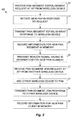
- Fig. 2 is a flowchart illustrating an example method 40 for initiating and managing a PAN using a wireless AP that is also operative for providing access to a LAN in accordance with an embodiment of the present invention.
- the AP first receives a PAN segment establishment request from a wireless device within range of the AP (block 42).
- the AP initiates a new PAN as a virtual subnet within the network (block 44).
- the requesting device is made the PAN host of the new PAN segment.
- the AP transmits a PAN segment establishment response to the wireless device indicating that the PAN has been established (block 46).
- the AP will store information about the newly established PAN in a memory for future use (block 48).
- the AP will then include ID information for the new PAN segment within subsequent beacon signals (block 50). Alternatively, or in addition, the AP will include the ID information of the new PAN segment within subsequent probe response messages. In this manner, other wireless devices within the coverage region of the AP will be informed of the existence of the new PAN.
- another wireless device within the coverage region of the AP may send a PAN segment join request to the AP indicating a desire to join the new PAN segment (block 52).
- the AP may then add the other wireless device to the PAN (block 54).
- the other wireless device is now a PAN client.
- the AP may send a PAN segment join response to the device indicating that the device is now part of the PAN (block 56).
- the information stored in the memory for the PAN may be updated with the ID of the new member (block 58).
- communication may be initiated between the PAN host and the new device.
- the communication may take place through the AP and/or by direct wireless link (e.g., using DLS, etc.). Any of a variety of different medium access techniques may be used by a PAN host or a PAN client to access the medium during PAN-based communication.
- an AP after a PAN segment join request is received from a wireless device, an AP will first ask the PAN host whether the requesting device should be allowed to join the PAN before allowing the device to join. If the requesting device is not permitted to join the PAN, the PAN segment join response will indicate a rejection of the join request.
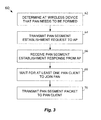
- Fig. 3 is a flowchart illustrating an example method 60 for requesting the formation of a PAN segment from a wireless device in the vicinity of an AP in accordance with an embodiment of the present invention.
- the wireless device first determines that a PAN segment needs to be established within the framework of the LAN (block 62).
- the wireless device may be a PDA associated with a user who wishes to print a document on a local printer having wireless capability.
- the wireless device may be a laptop associated with a first user who wishes to transfer a file to the laptop of another user in close proximity.
- the wireless device may be a peripheral that is to perform a service for user devices within a small region.
- many alternative scenarios also exist.
- the wireless device After determining that a PAN is needed, the wireless device transmits a PAN segment establishment request to a local AP indicating a desire to establish a PAN (block 64). The wireless device may then receive a PAN segment establishment response indicating whether the PAN was established (block 66). The wireless device may then wait for another wireless device to join the new PAN segment (block 68). After another device has joined the PAN, the first wireless device (i.e., the PAN host) may transmit a PAN segment packet to the new device (block 70).
- the first wireless device i.e., the PAN host
- the PAN host may transmit a PAN segment packet to the new device (block 70).
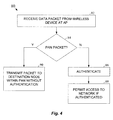
- Fig. 4 is a flowchart illustrating an example method 80 for operating a wireless AP in accordance with an embodiment of the present invention.
- a data packet is first received from a wireless device at the AP (block 82).
- the AP determines whether the packet is a LAN-based packet or a PAN-based packet (block 84). In at least one embodiment, the AP may determine whether the packet is a PAN packet based on whether the packet has a PAN segment ID field. Other techniques may alternatively be used. If the packet is a LAN packet (block 84-N), the AP may determine whether the corresponding device/user has already been authenticated and, if not, the AP will initiate an authentication procedure for the device/user (block 86).
- the AP will then grant the wireless device access to the main network (block 88). If the received data packet is a PAN packet (block 84-Y), the AP may simply re-transmit the packet to a destination node identified within the packet without requiring authentication (block 90). In another possible approach, the AP may perform a different type of authentication for the PAN packet than is used for a LAN packet (e.g., a less complex authentication).
- features of the invention may be embodied within laptop, palmtop, desktop, and tablet computers having wireless capability; personal digital assistants (PDAs) having wireless capability; cellular telephones and other handheld wireless communicators; pagers; satellite communicators; cameras having wireless capability; audio/video devices having wireless capability; network interface cards (NICs) and other network interface structures; base stations; wireless access points; integrated circuits; as instructions and/or data structures stored on machine readable media; and/or in other formats.
- PDAs personal digital assistants
- NICs network interface cards
- Examples of different types of machine readable media include floppy diskettes, hard disks, optical disks, compact disc read only memories (CD-ROMs), digital video disks (DVDs), Bluray disks, magneto-optical disks, read only memories (ROMs), random access memories (RAMs), erasable programmable ROMs (EPROMs), electrically erasable programmable ROMs (EEPROMs), magnetic or optical cards, flash memory, and/or other types of media suitable for storing electronic instructions or data.
- the term "logic” may include, by way of example, software or hardware and/or combinations of software and hardware.
Landscapes
- Engineering & Computer Science (AREA)
- Computer Networks & Wireless Communication (AREA)
- Signal Processing (AREA)
- Mobile Radio Communication Systems (AREA)
Claims (12)
- Verfahren, das folgendes umfasst:das Bestimmen an einer drahtlosen Vorrichtung (20, 22, 24, 26, 28, 30), dass ein persönliches Netzwerk (Personal Area Network, PAN) (32, 34) erzeugt werden muss; unddas Übermitteln einer Erzeugungsanforderung für ein PAN-Segment durch die drahtlose Vorrichtung (20, 22, 24, 26, 28, 30) direkt an einen einzelnen drahtlosen Zugangspunkt (Access Point, AP) (18), wobei der genannte AP (18) eine Logik aufweist, um den Zugang und eine Benutzerauthentifizierung für ein lokales Netzwerk (Local Area Network, LAN) (12) bereitzustellen; undwobei das LAN (12) und das PAN (32, 34) einen einzigen drahtlosen Netzwerkstandard verwenden; unddas Empfangen einer Antwort auf eine Erzeugungsanforderung für ein PAN-Segment von dem genannten AP (18), wobei die Antwort anzeigt, dass ein PAN-Segment erzeugt worden ist, dadurch gekennzeichnet, dass der genannte AP (18) eine andere Stufe der Benutzerauthentifizierung für den Zugang einer drahtlosen Vorrichtung (20, 22, 24, 26, 28, 30) auf das genannte LAN (12) als für die Kommunikation innerhalb des genannten PAN-Segments (32, 34) aufweist; und wobei das Verfahren ferner folgendes umfasst:das Warten der drahtlosen Vorrichtung auf mindestens eine weitere drahtlose Vorrichtung (20, 22, 24, 26, 28, 30), die sich in direkter Kommunikation mit dem genannten AP befindet, welche dem genannten erzeugten PAN-Segment (32, 34) beitritt; unddas Übermitteln eines Pakets des PAN-Segments direkt von dem genannten AP (18) an die mindestens eine andere drahtlose Vorrichtung (20, 22, 24, 26, 28, 30) in dem genannten PAN-Segment (32, 34), wobei sich das genannte Paket des PAN-Segments (32, 34) von dem genannten LAN (12) unterscheidet.
- Verfahren nach Anspruch 1, wobei:der genannte AP (18) eine Benutzerauthentifizierung für eine drahtlose Vorrichtung (20, 22, 24, 26, 28, 30) anfordert für einen Zugang zu dem genannten LAN (12), wobei er jedoch keine Benutzerauthentifizierung für eine drahtlose Vorrichtung (20, 22, 24, 26, 28, 30) für die Kommunikation innerhalb des genannten PAN-Segments (32, 34) erfordert.
- Verfahren nach Anspruch 1, wobei:die genannte drahtlose Vorrichtung (20, 22, 24, 26, 28, 30) so konfiguriert ist, dass sie Zugang zu dem genannten LAN (12) zur gleichen Zeit aufweist, zu dem sie Teil des genannten PAN-Segments (32, 34) ist.
- Verfahren nach Anspruch 1, wobei:die genannte drahtlose Vorrichtung (20, 22, 24, 26, 28, 30) und der genannte AP (18) jeweils gemäß einem Funknetzwerkstandard 802.11e des Institute of Electrical and Electronic Engineers (IEEE) konfiguriert sind, wobei es sich bei dem genannten Paket des PAN-Segments um ein IEEE 802.11e-Paket handelt, das so modifiziert ist, dass es das Bezeichnerfeld (ID-Feld) des genannten PAN-Segments aufweist.
- Verfahren nach Anspruch 5, wobei:der genannte AP (18) drahtlosen Zugang für die mindestens eine weitere drahtlose Vorrichtung (20, 22, 24, 26, 28, 30) innerhalb des genannten PAN-Segments (32, 34) bereitstellt sowie drahtlosen Zugang für die drahtlose Vorrichtung (20, 22, 24, 26, 28, 30) innerhalb des LAN (12).
- Vorrichtung (20, 22, 24, 26, 28, 30), die folgendes umfasst:ein Funkfrequenz(HF)-Transceiver-Teilsystem; undeine Steuereinrichtung, die mit dem HF-Transceiver-Teilsystem gekoppelt ist, wobei die genannte Steuereinrichtung so angeordnet ist, dass sie:bestimmt, dass ein persönliches Netzwerk (Personal Area Network, PAN) (32, 34) erzeugt werden muss; undbewirkt, dass eine Erzeugungsanforderung für ein PAN-Segment durch die Vorrichtung über das genannte HF-Transceiver-Teilsystem (28) direkt zu einem einzelnen drahtlosen Zugangspunkt (Access Point, AP) (18) übermittelt wird, wobei der genannte AP (18) eine Logik aufweist, um den Zugang und eine Benutzerauthentifizierung für ein lokales Netzwerk (Local Area Network, LAN) (12) bereitzustellen; undwobei das LAN (12) und das PAN (32, 34) einen einzigen drahtlosen Netzwerkstandard verwenden; undeine von dem genannten AP (18) empfangene Antwort auf die Erzeugung eines PAN-Segments, welche anzeigt, dass ein PAN-Segment erzeugt worden ist, verarbeitet; dadurch gekennzeichnet, dass der genannte AP (18) eine andere Stufe der Benutzerauthentifizierung für den Zugang einer drahtlosen Vorrichtung (20, 22, 24, 26, 28, 30) auf das genannte LAN (12) als für die Kommunikation innerhalb des genannten PAN-Segments (32, 34) aufweist; undwobei die genannte Steuereinrichtung ferner so angeordnet ist, dass sie:darauf wartet, dass mindestens eine weitere drahtlose Vorrichtung (20, 22, 24, 26, 28, 30), die sich in direkter Kommunikation mit dem genannten AP befindet, dem genannten erzeugten PAN-Segment (32, 34) beitritt; undbewirkt, dass ein Paket des PAN-Segments direkt von dem genannten AP (18) über das genannte HF-Transceiver-Teilsystem an die mindestens eine andere drahtlose Vorrichtung (20, 22, 24, 26, 28, 30) in dem genannten PAN-Segment (32, 34) übermittelt wird, wobei das genannte Paket des PAN-Segments (32, 34) ein ID-Feld des PAN-Segments aufweist, welches das genannte erzeugte PAN-Segment (32, 34) identifiziert, wobei sich das genannte PAN-Segment (32, 34) von dem genannten LAN (12) unterscheidet.
- Vorrichtung (20, 22, 24, 26, 28, 30) nach Anspruch 6, wobei:die genannte Vorrichtung (20, 22, 24, 26, 28, 30) so konfiguriert ist, dass sie zu der gleichen Zeit, in der sie Teil des genannten PAN-Segments (32, 34) ist, eine Verbindung mit dem genannten LAN (12) aufrechterhält.
- Vorrichtung (20, 22, 24, 26, 28, 30) nach Anspruch 6, wobei:die genannte Vorrichtung (20, 22, 24, 26, 28, 30) so konfiguriert ist, dass sie innerhalb des genannten LAN (12) und des genannten PAN-Segments (32, 34) unter Verwendung eines gemeinsamen drahtlosen Netzwerkmoduls kommuniziert.
- Vorrichtung (20, 22, 24, 26, 28, 30) nach Anspruch 6, wobei:die genannte Vorrichtung (20, 22, 24, 26, 28, 30) und der genannte AP (18) jeweils gemäß einem Funknetzwerkstandard 802.11e des Institute of Electrical and Electronic Engineers (IEEE) konfiguriert sind, wobei es sich bei dem genannten Paket des PAN-Segments um ein IEEE 802.11e-Paket handelt, das so modifiziert ist, dass es das Bezeichnerfeld (ID-Feld) des genannten PAN-Segments aufweist.
- Artikel, der ein computerlesbares Speichermedium umfasst, auf dem Anweisungen gespeichert sind, die, wenn sie durch eine Computerplattform (20, 22, 24, 26, 28, 30) ausgeführt werden, so funktionsfähig sind, dass sie:bestimmen, dass ein persönliches Netzwerk (Personal Area Network, PAN) (32, 34) für eine drahtlose Vorrichtung erzeugt werden muss; undbewirken, dass eine Erzeugungsanforderung für ein PAN-Segment über ein HF-Transceiver-Teilsystem von der Computerplattform (20, 22, 24, 26, 28, 30) direkt zu einem einzelnen drahtlosen Zugangspunkt (Access Point, AP) (18) übermittelt wird, wobei der genannte AP (18) eine Logik aufweist, um den Zugang und eine Benutzerauthentifizierung für ein lokales Netzwerk (Local Area Network, LAN) (12) bereitzustellen; undwobei das LAN (12) und das PAN (32, 34) einen einzigen drahtlosen Netzwerkstandard verwenden; undeine von dem genannten AP (18) empfangene Antwort auf die Erzeugung eines PAN-Segments, welche anzeigt, dass ein PAN-Segment erzeugt worden ist, verarbeiten; dadurch gekennzeichnet, dass der genannte AP (18) eine andere Stufe der Benutzerauthentifizierung für den Zugang einer drahtlosen Vorrichtung (20, 22, 24, 26, 28, 30) auf das genannte LAN (12) als für die Kommunikation innerhalb des genannten PAN-Segments (32, 34) aufweist; und wobei die Anweisungen, wenn sie durch eine Computerplattform (20, 22, 24, 26, 28, 30) ausgeführt werden, so funktionsfähig sind, dass sie:darauf warten, dass mindestens eine weitere drahtlose Vorrichtung (20, 22, 24, 26, 28, 30), die sich in direkter Kommunikation mit dem genannten AP (18) befindet, dem genannten erzeugten PAN-Segment (32, 34) beitritt; undbewirken, dass ein Paket des PAN-Segments direkt von dem genannten AP (18) über das genannte HF-Transceiver-Teilsystem an die mindestens eine andere drahtlose Vorrichtung (20, 22, 24, 26, 28, 30) in dem genannten PAN-Segment (32, 34) übermittelt wird, wobei das genannte Paket des PAN-Segments (32, 34) ein ID-Feld des PAN-Segments aufweist, welches das genannte erzeugte PAN-Segment (32, 34) identifiziert, wobei sich das genannte PAN-Segment (32, 34) von dem genannten LAN (12) unterscheidet.
- Artikel nach Anspruch 10, wobei:der genannte AP (18) drahtlosen Zugang für die mindestens eine weitere drahtlose Vorrichtung (20, 22, 24, 26, 28, 30) in dem genannten PAN-Segment (32, 34) bereitstellt sowie drahtlosen Zugang für die drahtlose Vorrichtung (20, 22, 24, 26, 28, 30) innerhalb des LAN (12).
- System, das folgendes umfasst:mindestens eine Dipolantenne (38);die Vorrichtung nach einem der Ansprüche 6 bis 9, wobei das Funkfrequenz(HF)-Transceiver-Teilsystem mit der genannten mindestens einen Dipolantenne (38) gekoppelt ist.
Applications Claiming Priority (2)
| Application Number | Priority Date | Filing Date | Title |
|---|---|---|---|
| US11/648,205 US8077684B2 (en) | 2006-12-29 | 2006-12-29 | Personal area network implementation within an infrastructure network |
| PCT/US2007/087306 WO2008082895A1 (en) | 2006-12-29 | 2007-12-12 | Personal area network implementation within an infrastructure network |
Publications (3)
| Publication Number | Publication Date |
|---|---|
| EP2127236A1 EP2127236A1 (de) | 2009-12-02 |
| EP2127236A4 EP2127236A4 (de) | 2011-02-16 |
| EP2127236B1 true EP2127236B1 (de) | 2014-03-05 |
Family
ID=39583866
Family Applications (1)
| Application Number | Title | Priority Date | Filing Date |
|---|---|---|---|
| EP07869178.9A Not-in-force EP2127236B1 (de) | 2006-12-29 | 2007-12-12 | Pan-implementierung in einem infrastrukturnetz |
Country Status (5)
| Country | Link |
|---|---|
| US (1) | US8077684B2 (de) |
| EP (1) | EP2127236B1 (de) |
| CN (1) | CN101569141B (de) |
| TW (1) | TWI385975B (de) |
| WO (1) | WO2008082895A1 (de) |
Families Citing this family (12)
| Publication number | Priority date | Publication date | Assignee | Title |
|---|---|---|---|---|
| US8077684B2 (en) | 2006-12-29 | 2011-12-13 | Intel Corporation | Personal area network implementation within an infrastructure network |
| KR101585067B1 (ko) * | 2009-10-28 | 2016-01-13 | 삼성전자주식회사 | 최적화된 망접속 구조를 갖는 통신 시스템 |
| US8582481B2 (en) * | 2010-01-21 | 2013-11-12 | Ajou University Industry-Academic Cooperation Foundation | LoWMob and DLoWMob system |
| CN102281627B (zh) * | 2010-06-13 | 2016-08-03 | 中兴通讯股份有限公司 | 一种管理个人网的方法及系统 |
| US8787222B2 (en) * | 2010-07-16 | 2014-07-22 | Samsung Electronics Co., Ltd. | Access point and method for connecting wireless communication |
| US20120246229A1 (en) * | 2011-03-21 | 2012-09-27 | Microsoft Corporation | Notifying Participants that a Conference is Starting |
| US9526024B2 (en) | 2014-08-07 | 2016-12-20 | At&T Intellectual Property I, L.P. | Personal virtual core networks |
| WO2019113012A1 (en) * | 2017-12-05 | 2019-06-13 | RELAY WIRELESS NETWORK, LLC d/b/a AERWAVE | Adaptive and dynamic network provisioning |
| GB2583429B (en) * | 2018-01-23 | 2021-04-28 | Motorola Solutions Inc | Device identification within a personal area network |
| JP7302215B2 (ja) * | 2019-03-20 | 2023-07-04 | 富士フイルムビジネスイノベーション株式会社 | 接続管理装置 |
| TWI715017B (zh) * | 2019-04-23 | 2021-01-01 | 瑞昱半導體股份有限公司 | 無線連線設定傳遞方法 |
| WO2023283024A1 (en) * | 2021-07-09 | 2023-01-12 | Arris Enterprises Llc | Multiple coexisting personal area networks having different handshaking |
Family Cites Families (10)
| Publication number | Priority date | Publication date | Assignee | Title |
|---|---|---|---|---|
| KR100364368B1 (ko) * | 2000-10-18 | 2002-12-12 | 엘지전자 주식회사 | 블루투스 기술을 이용한 사설 네트워크 및 이를 이용한통신 방법 |
| WO2002039674A1 (en) | 2000-11-08 | 2002-05-16 | Telefonaktiebolaget Lm Ericsson (Publ) | Network access point with auxiliary transceiver |
| JP3858746B2 (ja) * | 2001-05-08 | 2006-12-20 | ソニー株式会社 | 無線通信システム、無線通信制御装置及び無線通信制御方法、並びにコンピュータ・プログラム |
| US8050360B2 (en) * | 2002-06-12 | 2011-11-01 | Intellectual Ventures I Llc | Direct link relay in a wireless network |
| US6791500B2 (en) * | 2002-12-12 | 2004-09-14 | Research In Motion Limited | Antenna with near-field radiation control |
| JP4587446B2 (ja) * | 2003-08-07 | 2010-11-24 | キヤノン株式会社 | ネットワークシステム、並びにスイッチ装置及び経路管理サーバ及びそれらの制御方法、及び、コンピュータプログラム及びコンピュータ可読記憶媒体 |
| US8208449B2 (en) * | 2004-01-05 | 2012-06-26 | Broadcom Corporation | Multi-mode WLAN/PAN MAC |
| US7571111B2 (en) * | 2004-03-29 | 2009-08-04 | United Parcel Service Of America, Inc. | Computer system for monitoring actual performance to standards in real time |
| EP1864517A4 (de) * | 2005-03-14 | 2013-08-21 | Atmel Corp | Verfahren und vorrichtung zum betrieb eines drahtlosen pan-netzwerks unter verwendung eines overlay-protokolls, das koexistenz mit einem drahtlosen lan-netzwerk verbessert |
| US8077684B2 (en) | 2006-12-29 | 2011-12-13 | Intel Corporation | Personal area network implementation within an infrastructure network |
-
2006
- 2006-12-29 US US11/648,205 patent/US8077684B2/en not_active Expired - Fee Related
-
2007
- 2007-11-21 TW TW096144073A patent/TWI385975B/zh not_active IP Right Cessation
- 2007-12-12 WO PCT/US2007/087306 patent/WO2008082895A1/en not_active Ceased
- 2007-12-12 EP EP07869178.9A patent/EP2127236B1/de not_active Not-in-force
- 2007-12-12 CN CN200780048189.XA patent/CN101569141B/zh not_active Expired - Fee Related
Also Published As
| Publication number | Publication date |
|---|---|
| CN101569141B (zh) | 2014-10-29 |
| EP2127236A1 (de) | 2009-12-02 |
| CN101569141A (zh) | 2009-10-28 |
| TWI385975B (zh) | 2013-02-11 |
| TW200841642A (en) | 2008-10-16 |
| US20080159242A1 (en) | 2008-07-03 |
| WO2008082895A1 (en) | 2008-07-10 |
| EP2127236A4 (de) | 2011-02-16 |
| US8077684B2 (en) | 2011-12-13 |
Similar Documents
| Publication | Publication Date | Title |
|---|---|---|
| CN101569141B (zh) | 基础设施网络之内的个域网实现方式 | |
| JP7490676B2 (ja) | 拡張ダイレクトリンク通信のための通信装置、および通信方法 | |
| US10542440B2 (en) | Integrated wireless local area network for spectrum sharing | |
| KR100483021B1 (ko) | 무선랜과 셀룰러 망의 연동 시스템 및 방법, 그프로그램이 저장된 기록매체 | |
| US7343162B2 (en) | Wireless communication method, wireless communication apparatus, and wireless communication system | |
| US9578663B2 (en) | Method and apparatus for setting up link at high-speed in wireless communication system | |
| RU2534737C2 (ru) | Взаимодействие сетей с передачей обслуживания одной радиосистемы | |
| CN1883225B (zh) | 切换装置、系统和方法 | |
| JP6498443B6 (ja) | 無線lanシステムにおけるフィルタ処理に基づく走査方法及び装置 | |
| US20070213029A1 (en) | System and Method for Provisioning of Emergency Calls in a Shared Resource Network | |
| TW200402964A (en) | Wireless LAN with dynamic channel access management | |
| TW200536320A (en) | Methods and systems for reducing mac layer handoff latency in wireless networks | |
| WO2016109921A1 (zh) | 数据传输的方法、站点、接入点和接入控制器 | |
| US7707297B2 (en) | System for creating a wireless IP network connection after pre-allocating wireless network bandwidth available to a computing device | |
| WO2016011337A1 (en) | Methods and procedures for wifi sticky client and peer-to-peer client interference mitigation (wispim) | |
| US12568555B2 (en) | Method and apparatus for BSS transition support for EPCS | |
| US20080009307A1 (en) | System and method for optimized wireless client communication | |
| TW200522590A (en) | Autonomic reassociation of clients in a wireless local area network | |
| US8750273B1 (en) | Tunneled direct link setup optimization | |
| EP4340459A1 (de) | System und verfahren für ein zugangsprotokoll | |
| EP3905736A1 (de) | Vorrichtungserkennungsverfahren, -einrichtung und -system | |
| EP4651570A1 (de) | Assoziationstransfer | |
| EP4362522A1 (de) | System und verfahren zur entauthentifizierung oder trennung für eine verbindung | |
| US20250150433A1 (en) | Epoch scheme for station privacy | |
| WO2024131875A1 (en) | Method and apparatus for dealing with network allocation vector setup in multi-access-point system |
Legal Events
| Date | Code | Title | Description |
|---|---|---|---|
| PUAI | Public reference made under article 153(3) epc to a published international application that has entered the european phase |
Free format text: ORIGINAL CODE: 0009012 |
|
| 17P | Request for examination filed |
Effective date: 20090702 |
|
| AK | Designated contracting states |
Kind code of ref document: A1 Designated state(s): AT BE BG CH CY CZ DE DK EE ES FI FR GB GR HU IE IS IT LI LT LU LV MC MT NL PL PT RO SE SI SK TR |
|
| DAX | Request for extension of the european patent (deleted) | ||
| RIC1 | Information provided on ipc code assigned before grant |
Ipc: H04L 12/66 20060101ALI20101220BHEP Ipc: H04B 7/26 20060101AFI20101220BHEP Ipc: H04L 12/28 20060101ALI20101220BHEP |
|
| A4 | Supplementary search report drawn up and despatched |
Effective date: 20110119 |
|
| 17Q | First examination report despatched |
Effective date: 20110826 |
|
| REG | Reference to a national code |
Ref country code: DE Ref legal event code: R079 Ref document number: 602007035443 Country of ref document: DE Free format text: PREVIOUS MAIN CLASS: H04L0012280000 Ipc: H04B0007260000 |
|
| RIC1 | Information provided on ipc code assigned before grant |
Ipc: H04L 12/28 20060101ALI20130507BHEP Ipc: H04W 84/12 20090101ALI20130507BHEP Ipc: H04B 7/26 20060101AFI20130507BHEP Ipc: H04L 12/66 20060101ALI20130507BHEP |
|
| GRAP | Despatch of communication of intention to grant a patent |
Free format text: ORIGINAL CODE: EPIDOSNIGR1 |
|
| INTG | Intention to grant announced |
Effective date: 20131016 |
|
| GRAS | Grant fee paid |
Free format text: ORIGINAL CODE: EPIDOSNIGR3 |
|
| GRAA | (expected) grant |
Free format text: ORIGINAL CODE: 0009210 |
|
| AK | Designated contracting states |
Kind code of ref document: B1 Designated state(s): AT BE BG CH CY CZ DE DK EE ES FI FR GB GR HU IE IS IT LI LT LU LV MC MT NL PL PT RO SE SI SK TR |
|
| REG | Reference to a national code |
Ref country code: GB Ref legal event code: FG4D |
|
| REG | Reference to a national code |
Ref country code: CH Ref legal event code: EP |
|
| REG | Reference to a national code |
Ref country code: AT Ref legal event code: REF Ref document number: 655469 Country of ref document: AT Kind code of ref document: T Effective date: 20140315 |
|
| REG | Reference to a national code |
Ref country code: IE Ref legal event code: FG4D |
|
| REG | Reference to a national code |
Ref country code: DE Ref legal event code: R096 Ref document number: 602007035443 Country of ref document: DE Effective date: 20140417 |
|
| REG | Reference to a national code |
Ref country code: NL Ref legal event code: T3 |
|
| REG | Reference to a national code |
Ref country code: AT Ref legal event code: MK05 Ref document number: 655469 Country of ref document: AT Kind code of ref document: T Effective date: 20140305 |
|
| PG25 | Lapsed in a contracting state [announced via postgrant information from national office to epo] |
Ref country code: LT Free format text: LAPSE BECAUSE OF FAILURE TO SUBMIT A TRANSLATION OF THE DESCRIPTION OR TO PAY THE FEE WITHIN THE PRESCRIBED TIME-LIMIT Effective date: 20140305 |
|
| REG | Reference to a national code |
Ref country code: LT Ref legal event code: MG4D |
|
| PG25 | Lapsed in a contracting state [announced via postgrant information from national office to epo] |
Ref country code: FI Free format text: LAPSE BECAUSE OF FAILURE TO SUBMIT A TRANSLATION OF THE DESCRIPTION OR TO PAY THE FEE WITHIN THE PRESCRIBED TIME-LIMIT Effective date: 20140305 Ref country code: AT Free format text: LAPSE BECAUSE OF FAILURE TO SUBMIT A TRANSLATION OF THE DESCRIPTION OR TO PAY THE FEE WITHIN THE PRESCRIBED TIME-LIMIT Effective date: 20140305 Ref country code: CY Free format text: LAPSE BECAUSE OF FAILURE TO SUBMIT A TRANSLATION OF THE DESCRIPTION OR TO PAY THE FEE WITHIN THE PRESCRIBED TIME-LIMIT Effective date: 20140305 Ref country code: SE Free format text: LAPSE BECAUSE OF FAILURE TO SUBMIT A TRANSLATION OF THE DESCRIPTION OR TO PAY THE FEE WITHIN THE PRESCRIBED TIME-LIMIT Effective date: 20140305 |
|
| PG25 | Lapsed in a contracting state [announced via postgrant information from national office to epo] |
Ref country code: LV Free format text: LAPSE BECAUSE OF FAILURE TO SUBMIT A TRANSLATION OF THE DESCRIPTION OR TO PAY THE FEE WITHIN THE PRESCRIBED TIME-LIMIT Effective date: 20140305 |
|
| PG25 | Lapsed in a contracting state [announced via postgrant information from national office to epo] |
Ref country code: EE Free format text: LAPSE BECAUSE OF FAILURE TO SUBMIT A TRANSLATION OF THE DESCRIPTION OR TO PAY THE FEE WITHIN THE PRESCRIBED TIME-LIMIT Effective date: 20140305 Ref country code: BG Free format text: LAPSE BECAUSE OF FAILURE TO SUBMIT A TRANSLATION OF THE DESCRIPTION OR TO PAY THE FEE WITHIN THE PRESCRIBED TIME-LIMIT Effective date: 20140605 Ref country code: RO Free format text: LAPSE BECAUSE OF FAILURE TO SUBMIT A TRANSLATION OF THE DESCRIPTION OR TO PAY THE FEE WITHIN THE PRESCRIBED TIME-LIMIT Effective date: 20140305 Ref country code: CZ Free format text: LAPSE BECAUSE OF FAILURE TO SUBMIT A TRANSLATION OF THE DESCRIPTION OR TO PAY THE FEE WITHIN THE PRESCRIBED TIME-LIMIT Effective date: 20140305 Ref country code: IS Free format text: LAPSE BECAUSE OF FAILURE TO SUBMIT A TRANSLATION OF THE DESCRIPTION OR TO PAY THE FEE WITHIN THE PRESCRIBED TIME-LIMIT Effective date: 20140705 Ref country code: BE Free format text: LAPSE BECAUSE OF FAILURE TO SUBMIT A TRANSLATION OF THE DESCRIPTION OR TO PAY THE FEE WITHIN THE PRESCRIBED TIME-LIMIT Effective date: 20140305 |
|
| PG25 | Lapsed in a contracting state [announced via postgrant information from national office to epo] |
Ref country code: PL Free format text: LAPSE BECAUSE OF FAILURE TO SUBMIT A TRANSLATION OF THE DESCRIPTION OR TO PAY THE FEE WITHIN THE PRESCRIBED TIME-LIMIT Effective date: 20140305 Ref country code: SK Free format text: LAPSE BECAUSE OF FAILURE TO SUBMIT A TRANSLATION OF THE DESCRIPTION OR TO PAY THE FEE WITHIN THE PRESCRIBED TIME-LIMIT Effective date: 20140305 Ref country code: ES Free format text: LAPSE BECAUSE OF FAILURE TO SUBMIT A TRANSLATION OF THE DESCRIPTION OR TO PAY THE FEE WITHIN THE PRESCRIBED TIME-LIMIT Effective date: 20140305 |
|
| REG | Reference to a national code |
Ref country code: DE Ref legal event code: R097 Ref document number: 602007035443 Country of ref document: DE |
|
| PG25 | Lapsed in a contracting state [announced via postgrant information from national office to epo] |
Ref country code: PT Free format text: LAPSE BECAUSE OF FAILURE TO SUBMIT A TRANSLATION OF THE DESCRIPTION OR TO PAY THE FEE WITHIN THE PRESCRIBED TIME-LIMIT Effective date: 20140707 |
|
| PLBE | No opposition filed within time limit |
Free format text: ORIGINAL CODE: 0009261 |
|
| STAA | Information on the status of an ep patent application or granted ep patent |
Free format text: STATUS: NO OPPOSITION FILED WITHIN TIME LIMIT |
|
| PG25 | Lapsed in a contracting state [announced via postgrant information from national office to epo] |
Ref country code: DK Free format text: LAPSE BECAUSE OF FAILURE TO SUBMIT A TRANSLATION OF THE DESCRIPTION OR TO PAY THE FEE WITHIN THE PRESCRIBED TIME-LIMIT Effective date: 20140305 |
|
| 26N | No opposition filed |
Effective date: 20141208 |
|
| REG | Reference to a national code |
Ref country code: DE Ref legal event code: R097 Ref document number: 602007035443 Country of ref document: DE Effective date: 20141208 |
|
| PG25 | Lapsed in a contracting state [announced via postgrant information from national office to epo] |
Ref country code: IT Free format text: LAPSE BECAUSE OF FAILURE TO SUBMIT A TRANSLATION OF THE DESCRIPTION OR TO PAY THE FEE WITHIN THE PRESCRIBED TIME-LIMIT Effective date: 20140305 |
|
| PG25 | Lapsed in a contracting state [announced via postgrant information from national office to epo] |
Ref country code: SI Free format text: LAPSE BECAUSE OF FAILURE TO SUBMIT A TRANSLATION OF THE DESCRIPTION OR TO PAY THE FEE WITHIN THE PRESCRIBED TIME-LIMIT Effective date: 20140305 |
|
| PG25 | Lapsed in a contracting state [announced via postgrant information from national office to epo] |
Ref country code: LU Free format text: LAPSE BECAUSE OF FAILURE TO SUBMIT A TRANSLATION OF THE DESCRIPTION OR TO PAY THE FEE WITHIN THE PRESCRIBED TIME-LIMIT Effective date: 20141212 |
|
| REG | Reference to a national code |
Ref country code: CH Ref legal event code: PL |
|
| REG | Reference to a national code |
Ref country code: IE Ref legal event code: MM4A |
|
| REG | Reference to a national code |
Ref country code: FR Ref legal event code: ST Effective date: 20150831 |
|
| PG25 | Lapsed in a contracting state [announced via postgrant information from national office to epo] |
Ref country code: IE Free format text: LAPSE BECAUSE OF NON-PAYMENT OF DUE FEES Effective date: 20141212 Ref country code: CH Free format text: LAPSE BECAUSE OF NON-PAYMENT OF DUE FEES Effective date: 20141231 Ref country code: LI Free format text: LAPSE BECAUSE OF NON-PAYMENT OF DUE FEES Effective date: 20141231 |
|
| PG25 | Lapsed in a contracting state [announced via postgrant information from national office to epo] |
Ref country code: FR Free format text: LAPSE BECAUSE OF NON-PAYMENT OF DUE FEES Effective date: 20141231 |
|
| PG25 | Lapsed in a contracting state [announced via postgrant information from national office to epo] |
Ref country code: MC Free format text: LAPSE BECAUSE OF FAILURE TO SUBMIT A TRANSLATION OF THE DESCRIPTION OR TO PAY THE FEE WITHIN THE PRESCRIBED TIME-LIMIT Effective date: 20140305 |
|
| PG25 | Lapsed in a contracting state [announced via postgrant information from national office to epo] |
Ref country code: GR Free format text: LAPSE BECAUSE OF FAILURE TO SUBMIT A TRANSLATION OF THE DESCRIPTION OR TO PAY THE FEE WITHIN THE PRESCRIBED TIME-LIMIT Effective date: 20140606 |
|
| PG25 | Lapsed in a contracting state [announced via postgrant information from national office to epo] |
Ref country code: HU Free format text: LAPSE BECAUSE OF FAILURE TO SUBMIT A TRANSLATION OF THE DESCRIPTION OR TO PAY THE FEE WITHIN THE PRESCRIBED TIME-LIMIT; INVALID AB INITIO Effective date: 20071212 Ref country code: MT Free format text: LAPSE BECAUSE OF FAILURE TO SUBMIT A TRANSLATION OF THE DESCRIPTION OR TO PAY THE FEE WITHIN THE PRESCRIBED TIME-LIMIT Effective date: 20140305 Ref country code: TR Free format text: LAPSE BECAUSE OF FAILURE TO SUBMIT A TRANSLATION OF THE DESCRIPTION OR TO PAY THE FEE WITHIN THE PRESCRIBED TIME-LIMIT Effective date: 20140305 |
|
| PGFP | Annual fee paid to national office [announced via postgrant information from national office to epo] |
Ref country code: DE Payment date: 20181127 Year of fee payment: 12 Ref country code: NL Payment date: 20181213 Year of fee payment: 12 |
|
| PGFP | Annual fee paid to national office [announced via postgrant information from national office to epo] |
Ref country code: GB Payment date: 20181212 Year of fee payment: 12 |
|
| REG | Reference to a national code |
Ref country code: DE Ref legal event code: R119 Ref document number: 602007035443 Country of ref document: DE |
|
| REG | Reference to a national code |
Ref country code: NL Ref legal event code: MM Effective date: 20200101 |
|
| GBPC | Gb: european patent ceased through non-payment of renewal fee |
Effective date: 20191212 |
|
| PG25 | Lapsed in a contracting state [announced via postgrant information from national office to epo] |
Ref country code: NL Free format text: LAPSE BECAUSE OF NON-PAYMENT OF DUE FEES Effective date: 20200101 |
|
| PG25 | Lapsed in a contracting state [announced via postgrant information from national office to epo] |
Ref country code: DE Free format text: LAPSE BECAUSE OF NON-PAYMENT OF DUE FEES Effective date: 20200701 Ref country code: GB Free format text: LAPSE BECAUSE OF NON-PAYMENT OF DUE FEES Effective date: 20191212 |