EP2128109A1 - Fluide de barrage sans corps solides - Google Patents
Fluide de barrage sans corps solides Download PDFInfo
- Publication number
- EP2128109A1 EP2128109A1 EP08157067A EP08157067A EP2128109A1 EP 2128109 A1 EP2128109 A1 EP 2128109A1 EP 08157067 A EP08157067 A EP 08157067A EP 08157067 A EP08157067 A EP 08157067A EP 2128109 A1 EP2128109 A1 EP 2128109A1
- Authority
- EP
- European Patent Office
- Prior art keywords
- cement
- solution
- iron
- set cement
- precipitate
- Prior art date
- Legal status (The legal status is an assumption and is not a legal conclusion. Google has not performed a legal analysis and makes no representation as to the accuracy of the status listed.)
- Withdrawn
Links
Images




Classifications
-
- C—CHEMISTRY; METALLURGY
- C04—CEMENTS; CONCRETE; ARTIFICIAL STONE; CERAMICS; REFRACTORIES
- C04B—LIME, MAGNESIA; SLAG; CEMENTS; COMPOSITIONS THEREOF, e.g. MORTARS, CONCRETE OR LIKE BUILDING MATERIALS; ARTIFICIAL STONE; CERAMICS; REFRACTORIES; TREATMENT OF NATURAL STONE
- C04B22/00—Use of inorganic materials as active ingredients for mortars, concrete or artificial stone, e.g. accelerators or shrinkage compensating agents
- C04B22/08—Acids or salts thereof
- C04B22/12—Acids or salts thereof containing halogen in the anion
-
- C—CHEMISTRY; METALLURGY
- C04—CEMENTS; CONCRETE; ARTIFICIAL STONE; CERAMICS; REFRACTORIES
- C04B—LIME, MAGNESIA; SLAG; CEMENTS; COMPOSITIONS THEREOF, e.g. MORTARS, CONCRETE OR LIKE BUILDING MATERIALS; ARTIFICIAL STONE; CERAMICS; REFRACTORIES; TREATMENT OF NATURAL STONE
- C04B22/00—Use of inorganic materials as active ingredients for mortars, concrete or artificial stone, e.g. accelerators or shrinkage compensating agents
- C04B22/08—Acids or salts thereof
- C04B22/16—Acids or salts thereof containing phosphorus in the anion, e.g. phosphates
-
- C—CHEMISTRY; METALLURGY
- C09—DYES; PAINTS; POLISHES; NATURAL RESINS; ADHESIVES; COMPOSITIONS NOT OTHERWISE PROVIDED FOR; APPLICATIONS OF MATERIALS NOT OTHERWISE PROVIDED FOR
- C09K—MATERIALS FOR MISCELLANEOUS APPLICATIONS, NOT PROVIDED FOR ELSEWHERE
- C09K8/00—Compositions for drilling of boreholes or wells; Compositions for treating boreholes or wells, e.g. for completion or for remedial operations
- C09K8/42—Compositions for cementing, e.g. for cementing casings into boreholes; Compositions for plugging, e.g. for killing wells
- C09K8/428—Compositions for cementing, e.g. for cementing casings into boreholes; Compositions for plugging, e.g. for killing wells for squeeze cementing, e.g. for repairing
Definitions
- This invention relates to the repair of cracks, micro-annuli and other voids in cement sheaths.
- the invention relates to the injection of solids-free salt solutions into an area with damaged cement.
- cement structures in wellbores such as cement sheaths and cement plugs, can be damaged resulting in failures i.e. micro-annuli, cracks, and other voids, in the cement.
- Micro-cement systems such as SqueezeCRETETM (Schlumberger) are used to repair cracks and other voids in cement sheaths. These formulations are able to penetrate cracks with widths down to about 120 microns. However the size and concentration of the micro-cement particles do not allow penetration into cracks of smaller size. Nano-sized based sealants have improved penetration ( EP application no. 07119640.6 ) compared with micro-cement based sealing technologies but it is difficult to retard the setting reaction. Alkali swellable latex (ASL) solutions also have better penetration than micro-cement systems and will set only in contact with the cement (or other high pH source). However the long term durability of the ASL solutions have not been established.
- the current invention aims to avoid the disadvantages of previous solutions by providing a repair fluid that can penetrate small gaps in cement structures of wellbores and for which the resultant solid formed are known to have long term durability.
- a first aspect of the invention comprises a method of repairing a set cement in a wellbore comprising:
- the method comprises providing the solution in substantially solids-free form.
- the method comprises providing a solution which reacts with calcium, hydroxide and or sulphate ions in the interstitial water of the set cement.
- the solution preferably comprises one or more of alkali metal silicates, magnesium chloride, iron chlorides or other iron salts, aluminium chloride, alkali metal aluminates, magnesium phosphate, potassium phosphate, sodium fluoride and/or sodium phosphate solutions.
- the solution may be an iron (III) chloride solution.
- the solution may further comprise water soluble polymers.
- the method comprises injecting a spacer fluid into the well before contacting the cement with the salt solution.
- a squeeze cementing operation can be performed after injecting the salt solution into the well and allowing the solution to contact the set cement.
- the method may be performed in a high temperature environment. For example in temperatures up to at least 350°C.
- a second aspect of the invention comprises a composition for repairing a set cement structure in a well as described above comprising a solution of at least one salt capable of reacting with a set cement to form a solid phase comprising a precipitate or an expanded phase of the cement.
- the solids free metal solution such as an iron III chloride solution is pumped down into a wellbore and through one or more holes in a casing or tubing to contact a damaged cement sheath.
- the low viscosity, solids free solution can penetrate easily into small gaps in the cement sheath.
- the set cement comprises a set cement matrix with small pores distributed throughout the set cement and the calcium and hydroxide ions are present in the interstitial water of the set cement.
- the iron (III) hydroxide formed will block the voids in the cement and prevent unwanted fluid flow through the cement sheath.
- a spacer fluid can be used to separate the salt solution from other sources.
- the spacer fluid may be fresh water or any other low viscosity solids free solutions, provided the solution does not precipitate with the salt solution or with the cement.
- salt solutions are also applicable for repairing cement e.g. sodium silicate, iron (II) chloride, iron (III) sulphate, iron (II) sulphate, sodium aluminate, magnesium chloride, sodium phosphate.
- the salt solution used should react with the hydroxide ions or calcium ions or sulphate ions present in the set cement to form a precipitate. It is preferred that salt solutions are solids-free i.e. contain no appreciable content of suspended solids, and thus contain essentially only dissolved substances. This allows the solution to penetrate into small gaps of the cement.
- Other solutions that may be used to repair gaps by forming a precipitate with the hydroxide, calcium and/or sulphate ions of the interstitial water of the cement include:
- the magnesium hydroxide may exist in two forms. If the magnesium replaces the calcium within the cement the magnesium hydroxide will have a larger volume than the calcium hydroxide and the ion exchange will thus cause the cement to expand to close the crack or micro-annulus. If the magnesium hydroxide precipitates directly in the crack then this will form a seal.
- secondary ettringite a calcium sulphoaluminate hydrate
- Nickel chloride When nickel chloride is used the presence of hydroxide ions from the set cement will result in a gel of nickel hydroxide forming.
- the volume of gel formed for a given concentration of ions can be increased significantly by the incorporation of polynaphthalene sulphonate (PNS) - it has been shown that 1g of nickel hydroxide can absorb about 2g of PNS (M. Michaux unpublished work).
- PNS polynaphthalene sulphonate
- the concept of using PNS to increase the volume of precipitated gel may also be applicable to other salt solutions, i.e. in the precipitation of Mg(OH) 2 .
- Sodium or potassium aluminate - Contact of sodium (or potassium) aluminate with set cement may lead to the precipitation of calcium aluminate hydrate or calcium sulphoaluminate hydrate.
- the precipitation of the salts would lead to blockage of the micro-annuli or cracks.
- the reaction may be increased by incorporating a lithium salt into the sodium aluminate solution, as lithium salts are known to be accelerators of calcium aluminate cements.
- Iron (III) sulphate - This salt can cause precipitation of iron (III) hydroxide when in contact with the hydroxide ions of the cement.
- Aluminium chloride - Aluminium chloride will also precipitate in the presence of hydroxides. However, the use of these salts may lead to corrosion problems.
- Advantages of the inventions are that as the solution used is free from solids it is able to penetrate into very small gaps from where it may react with cement.
- the system will only set up when the solution is in contact with the cement that needs to be repaired, a spacer may be used to separate the solution from other cation and anion sources.
- the minerals formed from the reaction with the cement are known to have long term durability.
- Example 1 A cement system is formulated at a density of 1890 kgm -3 with class G well cement.
- the system contains 2.7 L/tonne silicone antifoam agent, 6.7 L/tonne polynaphthalene sulphonate dispersant and 0.03% bwoc (by weight of cement) biopolymer anti-settling agent.
- the slurry is cured in small plastic pots in a water bath for 3 days at 60°C. The pots are removed from the water bath and kept at ambient temperature for 4 days. A layer of water is kept on top of the cement at all times to prevent drying. Water is poured off the cement surface and the surface is scratched with a spatula to remove the debris and carbonation products. 10ml of different solutions are then poured onto the surface of the cement samples and the bottles resealed and allowed to stand at ambient conditions. Visual observation of the samples is made periodically.
- Table 1 Solution Sodium metasilicate Distilled Water 1 30 g 70 g 2 20 g 80 g 3 15 g 85 g 4 10 g 90 g Sodium Polysilicate Distilled water Equivalent solid:water mass ratio 6 40 g 10.7 g 30:70 7 25 g 23 g 20:80 8 20 g 30.6 g 15:85 9 12.5 g 35 g 10:90 NaH 2 PO 4 .2H 2 O A 19.5 g 30.5 g 30:70 Na 3 PO 4 B 8 92 8:92
- the sodium metasilicate, Na 2 SiO 3 (anhydrous salt), was prepared as various solutions to cover a range of concentrations (solutions 1-4).
- the sodium polysilicate solution has a SiO 2 to Na 2 O weight ratio of 3.3. This is a solution of 38g sodium silicate in 62g water. Solutions 6-9 were formulated to give the same sodium silicate concentration as for the sodium metasilicate solutions.
- the sodium dihydrogen phosphate (NaH 2 PO 4 .2H 2 O) solution was formulated to give the same mass concentration as the highest sodium silicate concentration.
- the trisodium phosphate (Na 3 PO 4 ) solution was formulated just below saturation (solubility in water is 10.8 mass % at 20°C).
- the FeCl 3 solution was obtained by diluting a concentrated solution of FeCl 3 .
- the equivalent quantity of anhydrous FeCl 3 in 50g of the final solution was 7.5g.
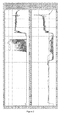
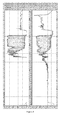
- Example 2 A similar procedure to that in Example 2 was performed except that the samples were prepared for analysis in a Turbiscan device (http://www.turbiscan.com/home/lab_present1.htm). Cement was cured in the Turbiscan sample jars and then brine was placed on top of the cement and the sample jar placed in the Turbiscan device. The Turbiscan measures the optical transmission and back scattering from the samples every 40 microns from top to bottom. The device repeats the measurements at pre-defined intervals to allow a time lapse image of changes in the fluid to be seen. The results are shown in Fig 1 to 4 . All tests were run at 27°C. The top graph is transmission the bottom graph is back scattering signal. Time is in days, hours, minutes seconds. X axis is the distance from bottom of the cell.
- Iron III chloride solution ( Figure 2 ). A solution comprising 7.5g FeCl 3 in 42.5g distilled water is placed on top of set cement. This test was run over a period of 15 days. There is a rapid decrease in transmission coefficient over the entire depth of the brine sample during the first 17 hours. After 2 days there is virtually no transmission through the brine indicating that there has been significant precipitation throughout the brine. The 17 hour trace shows that the highest concentration of precipitate is near the cement surface.
- Figure 3 shows a repeat test using iron (III) chloride solution but with measurements made every two hours. The build up of precipitation from the cement surface upwards and the decrease of transmission coefficient with time is clearly visible. The baseline transmission coefficients of the iron chloride solutions are lower than for the other brines due to the colour of the brine.
- Magnesium Chloride ( Figure 4 ) A solution comprising 16g MgCl 2 .6H 2 O in 34g distilled water is placed on top of set cement. There is a decrease in transmission coefficient with time but it is less marked than with the other solutions.
- Example 4 - Fissure blocking tests Tests were prepared to simulate a fissure in a cement sheath to evaluate the effectiveness of the brines in blocking small fissures in cement.
- Figure 5 shows a diagram of the sample preparation.
- a conventional 1890 kg/m 3 class G well cement system was prepared and cured for 3 days at 60°C in a cylindrical mould.
- a 37 mm diameter cylinder was then cored from the mould and subsequently cut lengthways ( Figure 5A ).
- the width of the saw cut 1 is approximately 2 mm.
- the two half cylinders were then placed with their flat faces together ( Figure 5B ); the missing width due to the saw cut means that the cross section is now not perfectly circular.
- the assembly B was embedded in plaster to firmly hold the two pieces together.
- the test consists of a small slot 3 that is filed into one flat face of one of the cylinders to provide a channel the length of the sample as shown in Figure 6 .
- the assembly is then inserted in the rubber sleeve 4 of the Hassler cell.
- Figure 7 shows the equipment setup for the experiment comprising a high pressure liquid chromatography (HPLC) pump 5, a Hassler cell 6 and a confining pressure pump 7.
- HPLC high pressure liquid chromatography
- the pump 5 is a Pharmacia model P-500 HPLC pump.
- the Hassler cell 6 is from Temco model DCH0-1.0 with a working pressure of 34 MPa.
- the confining pressure pump 7 is an Ametek Portable Hydraulic Pressure Tester, model T620.
- P1 is an analogue pressure gauge 8 to give an indication of the confining pressure.
- P2 and P3 were Validyne pressure transducers 9, 10 with CD23 signal conditioners that were connected to a Kipp and Zonen chart recorder 11.
- P3 was a 25 psi full scale transducer 10 that could be isolated from the system by a valve 12 when pressures increased.
- P2 was a 200 psi pressure transducer 9.
- the pressure transducers were calibrated against an Ametek Jofra Instruments PPCE pressure calibrator.
- the displacement cylinder 13 was used so that brine would not be pumped through the HPLC pump 5. When required the cylinder 13 was filled with brine and water pumped into the top by the HPLC pump 5 to displace the brine through the cement sample. The cylinder was bypassed when pumping water only. There would be a little dilution of the brine at the top brine water interface, but the cylinder is never completely emptied so the dilution does not affect the results.
- test procedure is as follows: the test sample is loaded into cell; a 3 MPa confining pressure is applied; water is flowed at different rates and pressures are measured; pressure transducer P3 is isolated if necessary; brine is added to the displacement cylinder, and pumping through the core is started; pressure is monitored; pumping is stopped for a given time; pumping is restarted and maximum pressure obtained is determined.
- Test 1 Sodium metasilicate solution
- the sodium metasilicate solution contained 20g of sodium metasilicate in 80g distilled water.
- the height of the channel obtained from water flow measurements is shown in Table 3.
- the sodium metasilicate solution was then injected into the slot and left for 3 days. When flow was restarted there was a slight increase in pressure to 1.2psi which then decreased to 0.8psi as the partial blockage was removed.
- iron salts are the preferred salts to make brines for this application.
- Silicate solutions were not as effective as the iron salts when it came to blocking the fissures even though they produced precipitate in contact with cement.
- Example 5 The invention is also applicable to high temperature environments.
- a solids free iron (III) chloride solution was added to a cement sample.
- the cement sample had been aged at 200°C for one year and then sat around in water for more than two years.
- the cement phase that is present at temperatures of 200°C is the same as the cement phase that will be present at temperatures up to at least 350°C. Therefore from this test it appears that the solids free metal solutions may be capable of forming precipitates in very high temperature environments. Because the solution only reacts when in contact with the cement there are no retardation issues when the method is carried out in a very high temperature environment, i.e. at least 350°C.
- This invention can also be applied to non-Portland cement based sealants in the well or to composite sealants (mixtures of Portland cement and other materials). In each case it requires that either the cation or anion or both in the brine solution will precipitate when in contact with the sealant that is already in the wellbore.
Landscapes
- Chemical & Material Sciences (AREA)
- Engineering & Computer Science (AREA)
- Ceramic Engineering (AREA)
- Materials Engineering (AREA)
- Organic Chemistry (AREA)
- Life Sciences & Earth Sciences (AREA)
- General Life Sciences & Earth Sciences (AREA)
- Inorganic Chemistry (AREA)
- Structural Engineering (AREA)
- Curing Cements, Concrete, And Artificial Stone (AREA)
Priority Applications (4)
| Application Number | Priority Date | Filing Date | Title |
|---|---|---|---|
| EP08157067A EP2128109A1 (fr) | 2008-05-28 | 2008-05-28 | Fluide de barrage sans corps solides |
| US12/993,335 US8839866B2 (en) | 2008-05-28 | 2009-05-25 | Solids free sealing fluid |
| PCT/EP2009/003683 WO2009152923A1 (fr) | 2008-05-28 | 2009-05-25 | Fluide d'étanchéité sans solides |
| CA2725373A CA2725373C (fr) | 2008-05-28 | 2009-05-25 | Fluide d'etancheite sans solides |
Applications Claiming Priority (1)
| Application Number | Priority Date | Filing Date | Title |
|---|---|---|---|
| EP08157067A EP2128109A1 (fr) | 2008-05-28 | 2008-05-28 | Fluide de barrage sans corps solides |
Publications (1)
| Publication Number | Publication Date |
|---|---|
| EP2128109A1 true EP2128109A1 (fr) | 2009-12-02 |
Family
ID=39926698
Family Applications (1)
| Application Number | Title | Priority Date | Filing Date |
|---|---|---|---|
| EP08157067A Withdrawn EP2128109A1 (fr) | 2008-05-28 | 2008-05-28 | Fluide de barrage sans corps solides |
Country Status (4)
| Country | Link |
|---|---|
| US (1) | US8839866B2 (fr) |
| EP (1) | EP2128109A1 (fr) |
| CA (1) | CA2725373C (fr) |
| WO (1) | WO2009152923A1 (fr) |
Cited By (2)
| Publication number | Priority date | Publication date | Assignee | Title |
|---|---|---|---|---|
| RU2472724C1 (ru) * | 2011-08-04 | 2013-01-20 | Федеральное государственное бюджетное образовательное учреждение высшего профессионального образования "Тихоокеанский государственный университет" | Способ получения быстросхватывающего цемента |
| WO2026010904A1 (fr) * | 2024-07-01 | 2026-01-08 | Schlumberger Technology Corporation | Utilisation de nanomatériau d'étanchéité dans des systèmes à géopolymère |
Families Citing this family (2)
| Publication number | Priority date | Publication date | Assignee | Title |
|---|---|---|---|---|
| KR101714715B1 (ko) * | 2014-03-11 | 2017-03-09 | 제일모직 주식회사 | 봉지재 조성물, 봉지재, 및 전자 소자 |
| WO2016016477A1 (fr) * | 2014-08-01 | 2016-02-04 | Services Petroliers Schlumberger | Procédés de traitement de puits |
Citations (2)
| Publication number | Priority date | Publication date | Assignee | Title |
|---|---|---|---|---|
| WO2000066878A1 (fr) * | 1999-04-30 | 2000-11-09 | The Regents Of The University Of California | Procede et composition pour l'etanchement en conditions de fond |
| US20060086501A1 (en) * | 2004-10-21 | 2006-04-27 | Halliburton Energy Services, Inc. | Methods of using a swelling agent in a wellbore |
Family Cites Families (9)
| Publication number | Priority date | Publication date | Assignee | Title |
|---|---|---|---|---|
| US4662448A (en) | 1986-04-25 | 1987-05-05 | Atlantic Richfield Company | Well treatment method using sodium silicate to seal formation |
| US5088555A (en) * | 1990-12-03 | 1992-02-18 | Mobil Oil Corporation | Consolidation agent and method |
| US5377757A (en) * | 1992-12-22 | 1995-01-03 | Mobil Oil Corporation | Low temperature epoxy system for through tubing squeeze in profile modification, remedial cementing, and casing repair |
| US5890840A (en) | 1995-12-08 | 1999-04-06 | Carter, Jr.; Ernest E. | In situ construction of containment vault under a radioactive or hazardous waste site |
| US6105673A (en) | 1996-11-05 | 2000-08-22 | Harris; Todd K. | Patching of injection and production well annular casing leaks for restoring mechanical integrity |
| RU2166613C2 (ru) * | 1998-10-02 | 2001-05-10 | Общество с ограниченной ответственностью "Волго-Уральский научно-исследовательский и проектный институт нефти и газа" | Способ уплотнения крепи газовых скважин |
| US7063153B2 (en) * | 2002-06-20 | 2006-06-20 | Eoff Larry S | Methods and compositions for cementing wells |
| US7299875B2 (en) * | 2004-06-08 | 2007-11-27 | Halliburton Energy Services, Inc. | Methods for controlling particulate migration |
| EP2055683B1 (fr) | 2007-10-30 | 2011-05-25 | PRAD Research and Development N.V. | Composition d'étanchéité |
-
2008
- 2008-05-28 EP EP08157067A patent/EP2128109A1/fr not_active Withdrawn
-
2009
- 2009-05-25 WO PCT/EP2009/003683 patent/WO2009152923A1/fr not_active Ceased
- 2009-05-25 US US12/993,335 patent/US8839866B2/en active Active
- 2009-05-25 CA CA2725373A patent/CA2725373C/fr active Active
Patent Citations (2)
| Publication number | Priority date | Publication date | Assignee | Title |
|---|---|---|---|---|
| WO2000066878A1 (fr) * | 1999-04-30 | 2000-11-09 | The Regents Of The University Of California | Procede et composition pour l'etanchement en conditions de fond |
| US20060086501A1 (en) * | 2004-10-21 | 2006-04-27 | Halliburton Energy Services, Inc. | Methods of using a swelling agent in a wellbore |
Cited By (2)
| Publication number | Priority date | Publication date | Assignee | Title |
|---|---|---|---|---|
| RU2472724C1 (ru) * | 2011-08-04 | 2013-01-20 | Федеральное государственное бюджетное образовательное учреждение высшего профессионального образования "Тихоокеанский государственный университет" | Способ получения быстросхватывающего цемента |
| WO2026010904A1 (fr) * | 2024-07-01 | 2026-01-08 | Schlumberger Technology Corporation | Utilisation de nanomatériau d'étanchéité dans des systèmes à géopolymère |
Also Published As
| Publication number | Publication date |
|---|---|
| CA2725373A1 (fr) | 2009-12-23 |
| WO2009152923A1 (fr) | 2009-12-23 |
| CA2725373C (fr) | 2017-02-28 |
| US8839866B2 (en) | 2014-09-23 |
| US20110114315A1 (en) | 2011-05-19 |
Similar Documents
| Publication | Publication Date | Title |
|---|---|---|
| US7866394B2 (en) | Compositions and methods of cementing in subterranean formations using a swelling agent to inhibit the influx of water into a cement slurry | |
| Omosebi et al. | Investigating temperature effect on degradation of well cement in HPHT carbonic acid environment | |
| US8434552B2 (en) | Squeeze composition for restoring isolation | |
| RU2551605C2 (ru) | Способ текущего ремонта подземных скважин | |
| WO2015130284A1 (fr) | Accélérateur de ciment passivé | |
| CA2555348A1 (fr) | Compositions de ciment a resistance a la corrosion amelioree et procedes de cimentation dans des formations souterraines | |
| EP2128109A1 (fr) | Fluide de barrage sans corps solides | |
| EP2092158B1 (fr) | Procédé de cimentage de forages | |
| CN113354360A (zh) | 一种深井用混凝土及其制备方法 | |
| US7357834B2 (en) | Cement composition for use with a formate-based drilling fluid comprising an alkaline buffering agent | |
| AU2017100604A4 (en) | Method of limiting or reducing permeability of a matrix to liquid or gas flow | |
| CN115160997A (zh) | 堵漏材料、堵漏钻井液、堵漏钻井液配制方法和堵漏方法 | |
| RU2618540C1 (ru) | Активаторы схватывания цемента для цементных композиций с замедленным схватыванием и связанные с ними способы | |
| US20240018845A1 (en) | Geopolymer well bore placement and sealing | |
| RU2655669C2 (ru) | Вспенивание цементных композиций замедленного схватывания, содержащих пемзу и гашеную известь | |
| Gargari et al. | BACHELOR’S THESIS | |
| BRPI1016134B1 (pt) | Método de manutenção de um poço cimentado em contato com uma formação subterrânea |
Legal Events
| Date | Code | Title | Description |
|---|---|---|---|
| PUAI | Public reference made under article 153(3) epc to a published international application that has entered the european phase |
Free format text: ORIGINAL CODE: 0009012 |
|
| AK | Designated contracting states |
Kind code of ref document: A1 Designated state(s): AT BE BG CH CY CZ DE DK EE ES FI FR GB GR HR HU IE IS IT LI LT LU LV MC MT NL NO PL PT RO SE SI SK TR |
|
| AX | Request for extension of the european patent |
Extension state: AL BA MK RS |
|
| 17P | Request for examination filed |
Effective date: 20100517 |
|
| RAP1 | Party data changed (applicant data changed or rights of an application transferred) |
Owner name: SCHLUMBERGER TECHNOLOGY B.V. Owner name: SERVICES PETROLIERS SCHLUMBERGER Owner name: PRAD RESEARCH AND DEVELOPMENT N.V. Owner name: SCHLUMBERGER HOLDINGS LIMITED |
|
| 17Q | First examination report despatched |
Effective date: 20100618 |
|
| AKX | Designation fees paid |
Designated state(s): AT BE BG CH CY CZ DE DK EE ES FI FR GB GR HR HU IE IS IT LI LT LU LV MC MT NL NO PL PT RO SE SI SK TR |
|
| STAA | Information on the status of an ep patent application or granted ep patent |
Free format text: STATUS: THE APPLICATION HAS BEEN WITHDRAWN |
|
| 18W | Application withdrawn |
Effective date: 20101022 |