EP2129057B1 - Système de distribution vidéo et procédé de distribution vidéo - Google Patents
Système de distribution vidéo et procédé de distribution vidéo Download PDFInfo
- Publication number
- EP2129057B1 EP2129057B1 EP08704005.1A EP08704005A EP2129057B1 EP 2129057 B1 EP2129057 B1 EP 2129057B1 EP 08704005 A EP08704005 A EP 08704005A EP 2129057 B1 EP2129057 B1 EP 2129057B1
- Authority
- EP
- European Patent Office
- Prior art keywords
- bandwidth
- user terminal
- video distribution
- controller
- distribution server
- Prior art date
- Legal status (The legal status is an assumption and is not a legal conclusion. Google has not performed a legal analysis and makes no representation as to the accuracy of the status listed.)
- Active
Links
Images



Classifications
-
- H—ELECTRICITY
- H04—ELECTRIC COMMUNICATION TECHNIQUE
- H04L—TRANSMISSION OF DIGITAL INFORMATION, e.g. TELEGRAPHIC COMMUNICATION
- H04L65/00—Network arrangements, protocols or services for supporting real-time applications in data packet communication
- H04L65/60—Network streaming of media packets
- H04L65/61—Network streaming of media packets for supporting one-way streaming services, e.g. Internet radio
-
- H—ELECTRICITY
- H04—ELECTRIC COMMUNICATION TECHNIQUE
- H04L—TRANSMISSION OF DIGITAL INFORMATION, e.g. TELEGRAPHIC COMMUNICATION
- H04L65/00—Network arrangements, protocols or services for supporting real-time applications in data packet communication
- H04L65/1066—Session management
- H04L65/1101—Session protocols
- H04L65/1104—Session initiation protocol [SIP]
-
- H—ELECTRICITY
- H04—ELECTRIC COMMUNICATION TECHNIQUE
- H04L—TRANSMISSION OF DIGITAL INFORMATION, e.g. TELEGRAPHIC COMMUNICATION
- H04L65/00—Network arrangements, protocols or services for supporting real-time applications in data packet communication
- H04L65/80—Responding to QoS
Definitions
- the present invention relates to a system for and a method of distributing video using an IP (Internet Protocol) network.
- IP Internet Protocol
- Background art Video distribution systems have been suffering problems in that they fail to provide sufficiently guaranteed QoS (Quality of Service) and, as a result, cannot guarantee a bandwidth that is required for distributing video content and do not necessarily render services that operate stably.
- QoS Quality of Service
- Patent document 1 JP-A No. 2003-051846 .
- a content server sends a bandwidth reservation request to a region manager, and, if the region manager is able to accept the bandwidth reservation request, the region manager sends a bandwidth reservation setting request to a bandwidth controller.
- Patent document 2 JP-A No. 2005-12655 ) has been proposed because the control between the content server and the region manager in the invention disclosed in Patent document 1 is complex and it has cost and flexibility problems that remain to be solved because general-purpose protocols are not applied.
- a SIP (Session Initiation Protocol) session control subsystem acquires information about a bandwidth needed for viewing content from the content distribution subsystem, and sends a bandwidth reservation request to a bandwidth control subsystem, and the content distribution subsystem transmits the content to the terminal in the bandwidth that is secured by the bandwidth control subsystem.
- SIP Session Initiation Protocol
- a method, system, apparatus and machine-readable medium for managing bandwidth in a communication network via a Turbo Button Service are provided.
- the communication network includes a Regional/Access Network (RAN).
- the bandwidth management includes varying the bandwidth according to the usage requirement.
- the method comprises invoking a request for the TBS. The invocation of the request results in a change in a default bandwidth associated with a user's access connection.
- WO 01/55912 A1 discloses a broadcast system for streaming media.
- a tiered hierarchy of network components each receive broadcast media streams, store popular content, and serve media to clients.
- the system allows for real-time client-side authentication, stream selection, and stream access denial using data (e.g., metafile) provided between network components sharing a real-time streaming protocol communication.
- data e.g., metafile
- the video distribution server can determine a bandwidth to be used to distribute the video content taking into consideration that the bandwidth that is currently available for use and the bandwidth that is needed to receive video content by negotiation with the user terminal. However, if the bandwidth has already been set in advance, it is difficult to apply such a flexible approach to selecting a desired bandwidth.
- a video distribution server determines a bandwidth required to distribute video through negotiation with a user terminal when the video distribution server receives a distribution start request from the user terminal. According to a process of reserving a bandwidth based on the SIP, it is necessary to reserve a bandwidth for distributing video when a session is established. Before the session is established, it is necessary to acquire information required to reserve the bandwidth, and a portal server, etc. needs to be provided with the same information as the information which the video distribution server possesses regarding about a bandwidth that is required to distribute each item of video content.
- the SIP session control subsystem acquires information about a bandwidth that is required to view video content from the content distribution subsystem, and sends a bandwidth reservation request to the bandwidth control subsystem, and the content distribution subsystem transmits the video content to the terminal in the bandwidth reserved by the bandwidth control subsystem.
- the SIP session control subsystem acquires bandwidth information from the content distribution subsystem, accumulates the acquired bandwidth information, and reserves a bandwidth based on the accumulated bandwidth information. Therefore, the SIP session control subsystem needs a unique configuration and still suffers cost and flexibility problems.
- a NGN Next Generation Network
- IMS IP Multimedia Subsystems
- the present invention has been made in view of the problems of the background art described above. It is an object of the present invention to provide a high-quality video distribution service which guarantees QoS on a NGN without significantly modifying portal servers and video distribution server of the background art.
- a video distribution system comprises a user terminal, a bandwidth controller, a SIP session controller, and a video distribution server which are interconnected through an IP network.
- a bandwidth that is required for distributing video content is determined by a negotiation with the user terminal at the time a distribution start request is received from the user terminal.
- a minimum bandwidth for sending a control signal for video distribution according to the RTSP or the like is secured.
- the video distribution server receives the distribution start request and finds a bandwidth that is required for distributing a video content, a required bandwidth is newly secured. Therefore, the portal server, etc. does not need to have information about the bandwidth that is required for the distribution of video content.
- a bandwidth that is used can flexibly set by taking into consideration the bandwidth that is available for use and the capability of the user terminal.
- the bandwidth can efficiently be utilized as only the required bandwidth is secured.
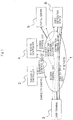
- Fig. 1 is a block diagram of a configuration according to the first exemplary embodiment of the present invention.
- the present exemplary embodiment comprises IP network 1 which is an NGN, user terminal 2, bandwidth controller 3, SIP session controller 4, portable server 5, and video distribution server 6.
- IP network 1 which is an NGN
- user terminal 2 bandwidth controller 3, SIP session controller 4, portable server 5, and video distribution server 6.
- User terminal 2, bandwidth controller 3, SIP session controller 4, portable server 5, and video distribution server 6 are interconnected through IP network 1.
- Each of user terminal 2, bandwidth controller 3, SIP session controller 4, portable server 5, and video distribution server 6 includes a CPU, a main memory, an output device, an input device, an external storage, etc., and is assumed to be of a computer configuration for installing programs and data stored in a recording medium such as a CD-ROM or the like into external storage through an optical disk drive or the like, reading the programs and data from external storage into the main memory, and processing the programs and data with the CPU for thereby performing various functions.
- a recording medium such as a CD-ROM or the like
- optical disk drive or the like read the programs and data from external storage into the main memory
- processing the programs and data with the CPU for thereby performing various functions.
- they are not limited to the above configuration insofar as they have equivalent functions where any of the functions may be hardware-implemented.
- IP network 1 includes devices such as routers or the like which have a function to secure a specified communication bandwidth in response to a request from bandwidth controller 3.
- User terminal 2 is a communication terminal provided as a PC (Personal Computer) or a dedicated STB (Set Top Box). User terminal 2 is operated by the user to acquire content desired by the user from video distribution server 6 through IP network 1 and display the content on the output device which may be a display or the like.
- PC Personal Computer
- STB Set Top Box
- User terminal 2 has a function to, when the user is to acquire content, access portal server 5 which is a WWW server according to the HTTP or HTTPS and acquire session information of the content desired by the user and meta information about the content. For acquiring the content, user terminal 2 sends an SIP request and receives an SIP response based on the SIP (Session Initiation Protocol), and cooperates with video distribution server 6 and SIP session controller 4 to reserve a bandwidth required to receive the content.
- SIP Session Initiation Protocol
- SIP session controller 4 controls the establishment and end of a session between user terminal 2 and video distribution server 6, and controls bandwidth controller 3 to reserve a bandwidth required to distribute the requested content from video distribution server 6.
- bandwidth controller 3 controls devices such as routers or the like that are present on a route between user terminal 2 and video distribution server 6, and secures a bandwidth for a communication path on the route.
- Portal server 5 is generally configured as a WWW server, and provides user terminal 2 with an electronic program table of contents that can be viewed by the user and also with the session information of the content desired by the user and the meta information about the content.
- Video distribution server 6 cooperates with SIP session controller 4 according to the SIP, and establishes a session with user terminal 2 and secures a bandwidth required to distribute the content to user terminal 2. After having secured the bandwidth, video distribution server 6 controls the content distribution according to the RTSP (Real Time Streaming Protocol) or the like, and distributes the content data to user terminal 2 according to a protocol such as the RTP (Real time Transport Protocol).
- RTSP Real Time Streaming Protocol
- RTP Real time Transport Protocol
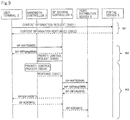
- Fig. 2 is a flowchart of an operation of the present exemplary embodiment
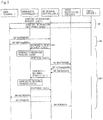
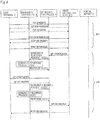
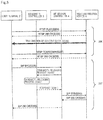
- Figs. 3 through 5 are sequence diagrams showing specific details of the operation of the present exemplary embodiment. The operation of the present exemplary embodiment will be described in detail below with reference to Figs. 1 through 5 .
- the operation of the present exemplary embodiment is generally shown in the flowchart of Fig. 2 , and detailed sequences of the steps shown in Fig. 2 are illustrated in the sequence diagrams of Figs. 3 through 5 .
- the numbers 201 through 207 shown on the right margins of the sequence diagrams of Figs. 3 through 5 correspond to the respective steps shown in the flowchart of Fig. 2 .
- a sequence process for distributing video content on a bandwidth-guaranteed basis is as follows:
- user terminal 2 acquires session information such as addresses for accessing video distribution server 6 and meta information such as the title of the content.
- User terminal 2 accesses portal server 5 according to the HTTP or HTTPS and requests that information regarding be viewed (S301).
- Portal server 5 sends content information including session information such as SIP URI for establishing a session with video distribution server 6 and meta information such as the title of the content, to user terminal 2 (S302).
- step 202 user terminal 2 requests SIP session controller 4 to establish a session with video distribution server 6, using the session information acquired from portal server 5.
- User terminal 2 sends an SIP INVITE message to SIP session controller 4 (S303).
- SIP session controller 4 sends SIP 100 Trying as a temporary response to SIP INVITE in S303 to user terminal 2 (S304).
- step 203 based on the request from user terminal 2, SIP session controller 4 establishes a session with video distribution server 6, and requests that bandwidth controller 3 reserve a bandwidth for the distribution of video content control in a communication path between user terminal 2 and video distribution server 6.
- SIP session controller 4 sends a bandwidth reserving request for sending and receiving an RTSP (Real Time Streaming Protocol) signal for video distribution control to bandwidth controller 3 (S305).
- RTSP Real Time Streaming Protocol
- Bandwidth controller 3 performs a bandwidth reservation process on the routers on IP network 1 (S306). When the bandwidth reservation is successful, bandwidth controller 3 sends a confirmation response to SIP session controller 4 (S307).
- SIP session controller 4 sends SIP INVITE as a request to establish a session to video distribution server 6 (S308).
- Video distribution server 6 sends SIP 100 Trying as a temporary response to SIP INVITE to SIP session controller 4 (S309).
- Video distribution server 6 sends SIP 200 OK as a success response to SIP INVITE to SIP session controller 4 (S310).
- SIP session controller 4 sends a bandwidth securing request to bandwidth controller 3 (S311).
- bandwidth controller 3 In response to the bandwidth securing request, bandwidth controller 3 operates devices such as routers or the like in IP network 1 to perform a bandwidth securing process (S312). When a bandwidth is successfully secured, bandwidth controller 3 sends a success response to SIP session controller 4 (S313).
- SIP session controller 4 sends SIP 200 OK as a success response to SIP INVITE in S3 to user terminal 2 (S314).
- SIP 200 OK user terminal 2 sends SIP ACK indicating acknowledgement of the successful session establishment to SIP session controller 4 (S315).
- SIP session controller 4 sends SIP ACK in response to the successful session establishment message (S310) from video distribution server 6 (S316).
- step 204 when user terminal 2 successfully establishes the session with video distribution server 6, user terminal 2 requests video distribution server 6 to start distributing the content.
- user terminal 2 establishes a TCP (Transmission Control Protocol) session for using the RTSP (Real Time Streaming Protocol) with video distribution server 6.
- RTSP Real Time Streaming Protocol
- User terminal 2 sends TCP SYN to video distribution server 6 (S317), and video distribution server 6 sends TCP SYN ACK in response to TCP SYN to user terminal 2 (S318).
- User terminal 2 sends TCP ACK to video distribution server 6 (S319), whereupon the TCP session is established between user terminal 2 and video distribution server 6.
- TCP session is established, user terminal 2 requests that video distribution server 6 start distributing the video according to the RTSP.
- User terminal 2 sends RTSP DESCRIBE to video distribution server 6 (S320), and video distribution server 6 sends TRSP 200 OK in response to RTSP DESCRIBE to user terminal 2 (S321). Functions that can be used are exchanged by communications in S320, S321. Thereafter, user terminal 2 sends RTSP SETUP to video distribution server 6 (S322) to perform a negotiation about the transmission process and ports.
- step 205 video distribution server 6 changes the bandwidth secured for SIP session controller 4 in step 203 to a fraction of bandwidth that is needed for distributing video content.
- Video distribution server 6 sends SIP UPDATE as a bandwidth changing request for changing the bandwidth secured in step 203 to a fraction of the bandwidth that is needed for distributing video content, to SIP session controller 4 (S323).
- SIP session controller 4 requests bandwidth controller 3 to make a bandwidth reservation for video distribution (S324).
- Bandwidth controller 3 operates routers or the like in IP network 1 to perform a bandwidth reserving process (S325). When a bandwidth is successfully reserved, bandwidth controller 3 sends a confirmation response to SIP session controller 4 (S326). When the bandwidth reservation is successful and it is found that the bandwidth can be secured, SIP session controller 4 sends SIP UPDATE to user terminal 2 (S327), indicating a change in the bandwidth that can be used.
- SIP session controller 4 In response to SIP UPDATE in S327, user terminal 2 sends SIP 200 OK to SIP session controller 4 (S328). SIP session controller 4 sends a request to secure the bandwidth reserved in S324, S325, S326 to bandwidth controller 3 (S329).
- Bandwidth controller 3 operates routers or the like in IP network 1 to perform a bandwidth securing process (S330). When the bandwidth is successfully secured, bandwidth controller 3 sends a confirmation response to SIP session controller 4 (S331). When the bandwidth for the distribution of video content is successfully secured, SIP session controller 4 sends SIP 200 OK as a success response to SIP UPDATE in S323 to video distribution server 6 (S332).
- Video distribution server 6 sends RTSP 200 OK as a success response to RTSP SETUP in S322 to user terminal 2 (S333).
- step 206 when securing of the bandwidth for the distribution of video content is completed, video distribution server 6 starts distributing the content based on the request from user terminal 2.
- User terminal 2 sends RTSP PLAY as a playback start request to video distribution server 6 (S334), and video distribution server 6 sends RTSP 200 OK as a success response to RTSP PLAY in S34 to user terminal 2 (S335).
- Video distribution server 6 sends the data of the video content to user terminal 2 according to the RTP or the like (S336).
- user terminal 2 sends RTSP TERDOWN to video distribution server 6 (S337).
- video distribution server 6 sends RTSP 200 OK as a response to S337 to user terminal 2 (S338), the video distribution is ended, cutting off the RTSP session.
- the SIP session is ended and the secured bandwidth is released in step 207.
- User terminal 2 sends SIP BYE as a session ending request to SIP session controller 4 (S339).
- SIP session controller 4 sends a bandwidth releasing request to bandwidth controller 3 (S340).
- bandwidth controller 3 In response to the bandwidth releasing request, bandwidth controller 3 operates routers or the like in IP network 1 to perform a process of releasing the bandwidth secured for the session (S341). When the bandwidth is successfully released, bandwidth controller 3 sends a confirmation response to SIP session controller 4 (S342).
- SIP session controller 4 sends SIP BYE as a session ending request to video distribution server 6 (S343).
- Video distribution server 6 sends SIP 20 OK as a response to SIP BYE in S343 to SIP session controller 4 (S344), whereupon the SIP session between SIP session controller 4 and video distribution server 6 is ended.
- SIP session controller 4 sends SIP 200 OK as a response to SIP BYE in S339 to user terminal 2 (S345), whereupon the SIP session between SIP session controller 4 and user terminal 2 is ended.
- the SIP session controller secures a minimum bandwidth for sending a control signal for video distribution according to the RTSP or the like.
- video distribution server 6 receives a distribution start request and finds a bandwidth that is required for distributing video content, video distribution server 6 newly secures the required bandwidth. Therefore, portal server 5, etc. does not need to have information about a bandwidth required for the content.
- portal server 5, etc. does not need to have information about a bandwidth required for the content.
- a bandwidth that is used can flexibly set by taking into consideration the bandwidth that is available for use and the capability of the user terminal 2. The bandwidth can efficiently be utilized as only the required bandwidth is secured.
- content information may be stored in a storage medium in user terminal 2, rather than being acquired from portal server 5.
- content information may be acquired via an optical disk, an external memory, or the like, or may be acquired according to any desired process.
- the bandwidth reserving process in step 202, step 203, and step 206 may be omitted.
- step 202 and step 203 A specific operation in step 202 and step 203 according to such an example will be described below with reference to Fig. 6 .
- step 202 user terminal 2 requests SIP session controller 4 to establish a session with video distribution server 6, using the session information acquired from portal server 5.
- User terminal 2 sends an SIP INVITE message to SIP session controller 4 (S601).
- SIP session controller 4 sends SIP 100 Trying as a temporary response to SIP INVITE in S303 to user terminal 2 (S602).
- step 203 based on the request from user terminal 2, SIP session controller 4 establishes a session with video distribution server 6, and requests that bandwidth controller 3 reserve a bandwidth for the distribution of video content control in a communication path between user terminal 2 and video distribution server 6.
- SIP session controller 4 sends a bandwidth securing request for sending and receiving an RTSP (Real Time Streaming Protocol) signal for video distribution control to bandwidth controller 3 (S305).
- RTSP Real Time Streaming Protocol
- bandwidth controller 3 In response to the bandwidth securing request, bandwidth controller 3 operates devices such as routers or the like in IP network 1 to perform a bandwidth securing process (S604). When a bandwidth is successfully secured, bandwidth controller 3 sends a success response to SIP session controller 4 (S605).
- SIP session controller 4 sends SIP INVITE as a request to establish a session to video distribution server 6 (S606).
- Video distribution server 6 sends SIP 100 Trying as a temporary response to SIP INVITE to SIP session controller 4 (S607).
- Video distribution server 6 sends SIP 200 OK as a success response to SIP INVITE to SIP session controller 4 (S608).
- SIP session controller 4 sends SIP 200 OK as a success response to SIP INVITE in S601 to user terminal 2 (S609).
- SIP 200 OK user terminal 2 sends SIP ACK indicating acknowledgement of the successful session establishment to SIP session controller 4 (S610).
- SIP session controller 4 sends SIP ACK in response to the successful session establishment message (S308) from video distribution server 6 (S611).
- video distribution server 5 may send information about a required bandwidth to user terminal 2 according to the RTSP in step 204, and user terminal 2 may send a request to change the bandwidth in step 205.
- step 204 and step 205 A specific operation in step 204 and step 205 according to such an example will be described below with reference to Fig. 7 .
- step 204 when user terminal 2 successfully establishes the session with video distribution server 6, user terminal 2 requests video distribution server 6 to start distributing the content, and acquires information about a bandwidth required to distribute the content.
- user terminal 2 establishes a TCP (Transmission Control Protocol) session for using the RTSP (Real Time Streaming Protocol) with video distribution server 6.
- RTSP Real Time Streaming Protocol
- User terminal 2 sends TCP SYN to video distribution server 6 (S701), and video distribution server 6 sends TCP SYN ACK in response to TCP SYN to user terminal 2 (S702).
- User terminal 2 sends TCP ACK to video distribution server 6 (S703), whereupon the TCP session is established between user terminal 2 and video distribution server 6.
- TCP session is established, user terminal 2 requests video distribution server 6 to start distributing the video according to the RTSP.
- User terminal 2 sends RTSP DESCRIBE to video distribution server 6 (S704), and video distribution server 6 sends TRSP 200 OK in response to RTSP DESCRIBE to user terminal 2 (S705).
- TRSP 200 OK video distribution server 6 sends information about a bandwidth required to distribute the content to user terminal 2.
- user terminal 2 sends RTSP SETUP to video distribution server 6 (S706) to perform a negotiation about a transmission process and ports.
- step 205 a process of changing the bandwidth secured for SIP session controller 4 by user terminal 2 in step 303 to a fraction of the bandwidth that is needed for distributing video content is performed.
- User terminal 2 sends SIP UPDATE as a bandwidth changing request for changing the bandwidth secured in step 203 to a fraction of the bandwidth that is needed for distributing video content, using the information, acquired in step 204, about the bandwidth required to distribute the content, to SIP session controller 4 (S707).
- SIP session controller 4 requests bandwidth controller 3 to make a bandwidth reservation for video distribution (S708).
- Bandwidth controller 3 operates routers or the like in IP network 1 to perform a bandwidth reserving process (S709). When a bandwidth is successfully reserved, bandwidth controller 3 sends a confirmation response to SIP session controller 4 (S710). When the bandwidth reservation is successful and it is found that the bandwidth can be secured, SIP session controller 4 sends SIP UPDATE to video distribution server 6 (S711), indicating a change in the bandwidth that can be used.
- Video distribution server 6 sends SIP 200 OK as a response to SIP UPDATE in S711 to SIP session controller 4 (S712).
- SIP session controller 4 sends a request to secure the bandwidth reserved in S708, S709, S71 0 to bandwidth controller 3 (S713).
- Bandwidth controller 3 operates routers or the like in IP network 1 to perform a bandwidth securing process (S714). When the bandwidth is successfully secured, bandwidth controller 3 sends a confirmation response to SIP session controller 4 (S715). When the bandwidth for the distribution of video content is successfully secured, SIP session controller 4 sends SIP 200 OK as a success response to SIP UPDATE in S707 to user terminal 2(S716).
- Video distribution server 6 sends RTSP 200 OK as a success response to RTSP SETUP in S706 to user terminal 2 (S717).
- Fig. 1 shows a configuration of the present exemplary embodiment.
- the configuration of the present exemplary embodiment is identical to the configuration of the first exemplary embodiment. Therefore, only those features which are different from the first exemplary embodiment will be described below.
- SIP session controller 4 controls the establishment and end of a session between user terminal 2 and video distribution server 6, and controls bandwidth controller 3 to reserve a bandwidth required to distribute the requested content from video distribution server 6 and also to perform a priority control process for enabling a packet of a particular kind to preferentially flow in a communication path.
- bandwidth controller 3 controls devices such as routers or the like that are present on a route between user terminal 2 and video distribution server 6 to reserve a bandwidth for a communication path on the route and perform a priority control process.
- Fig. 8 is a flowchart of an operation of the present exemplary embodiment
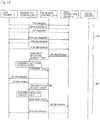
- Figs. 9 and 10 are sequence diagrams showing specific details of the operation of the present exemplary embodiment. The operation of the present exemplary embodiment will be described in detail below with reference to Figs. 9 and 10 .
- the operation of the present exemplary embodiment is generally shown in the flowchart of Fig. 8 , and detailed sequences of the steps shown in Fig. 2 are illustrated in the sequence diagrams of Figs. 9 and 10 .
- the numbers 801 through 805 shown on the right margins of the sequence diagrams of Figs. 9 and 10 correspond to the respective steps shown in the flowchart of Fig. 8 .
- the specific sequence is illustrated as a process of realizing each of the above steps, part of the sequence for executing each step may be omitted or changed in order.
- the protocols may be replaced with different protocols insofar as they can achieve the same functions.
- a sequence process for distributing video content on a bandwidth-guaranteed basis is as follows:
- SIP session controller 4 requests bandwidth controller 3 to enable a RTSP signal packet for video distribution control to flow preferentially (S905).
- Bandwidth controller 3 performs a priority control process on the routers in IP network 1. When the priority control process is successful, bandwidth controller 3 sends a confirmation response to SIP session controller 4 (S907).
- SIP session controller 4 sends SIP INVITE as a request to establish a session to video distribution server 6 (S908).
- Video distribution server 6 sends SIP 100 Trying as a temporary response to SIP INVITE to SIP session controller 4 (S909).
- Video distribution server 6 sends SIP 200 OK as a success response to SIP INVITE to SIP session controller 4 (S910).
- SIP session controller 4 When a bandwidth is successfully secured, SIP session controller 4 sends SIP 200 OK as a success response to SIP INVITE in S3 to user terminal 2 (S911). In response to SIP 200 OK, user terminal 2 sends SIP ACK indicating acknowledgement of the successful session establishment to SIP session controller 4 (S912).
- SIP session controller 4 sends SIP ACK in response to the successful session establishment message (S908) from video distribution server 6 (S913).
- step 804 when user terminal 2 successfully establishes the session with video distribution server 6, user terminal 2 requests video distribution server 6 to start distributing the content.
- step 805 video distribution server 6 secures a bandwidth required to distribute video for SIP session controller 4.
- Video distribution server 6 sends SIP UPDATE sends SIP UPDATE as a bandwidth securing request for securing a fraction of the bandwidth that is needed for distributing video content, to SIP session controller 4 (S920).
- SIP session controller 4 requests bandwidth controller 3 to make a bandwidth reservation for video distribution (S921),
- Bandwidth controller 3 operates routers or the like in IP network 1 to perform a bandwidth reserving process (S922). When a bandwidth is successfully reserved, bandwidth controller 3 sends a confirmation response to SIP session controller 4 (S923). When the bandwidth reservation is successful and it is found that the bandwidth can be secured, SIP session controller 4 sends SIP UPDATE to user terminal 2 (S924), indicating a change in the bandwidth that can be used.
- SIP session controller 4 sends a request to secure the bandwidth reserved in S921, S922, S923 to bandwidth controller 3 (S926).
- Bandwidth controller 3 operates routers or the like in IP network 1 to perform a bandwidth securing process (S927). When the bandwidth is successfully secured, bandwidth controller 3 sends a confirmation response to SIP session controller 4 (S928). When the bandwidth for the distribution of video content is successfully secured, SIP session controller 4 sends SIP 200 OK as a success response to SIP UPDATE in S23 to video distribution server 6 (S929).
- Video distribution server 6 sends RTSP 200 OK as a success response to RTSP SETUP in S22 to user terminal 2 (S930).
- the SIP session controller when an SIP session is established, the SIP session controller performs only a priority control process for enabling a control signal for video distribution, according to the RTSP or the like, to preferentially flow in the communication path.
- video distribution server 6 receives a distribution start request and finds a bandwidth that is required for distributing video content, video distribution server 6 secures the required bandwidth. Therefore, portal server 5, etc. does not need to have information about the bandwidth that is needed for distributing video content.
- a bandwidth that is used can be flexibly set by taking into consideration the bandwidth that is available for use and the capability of the user terminal 2. The bandwidth can efficiently be utilized since only the required bandwidth is secured.
Landscapes
- Engineering & Computer Science (AREA)
- Multimedia (AREA)
- Computer Networks & Wireless Communication (AREA)
- Signal Processing (AREA)
- Data Exchanges In Wide-Area Networks (AREA)
- Two-Way Televisions, Distribution Of Moving Picture Or The Like (AREA)
- Telephonic Communication Services (AREA)
Claims (2)
- Procédé de distribution vidéo à réaliser dans un système de distribution vidéo incluant un terminal utilisateur (2), un dispositif de commande de largeur de bande (3), un dispositif de commande de session de protocole d'ouverture de session, SIP, (4), et un serveur de distribution vidéo (6) qui sont connectés par le biais d'un réseau IP (1), dans lequel :ledit terminal utilisateur (2) effectue une demande d'établissement de session auprès dudit dispositif de commande de session SIP (4) d'après des informations de contenu incluant des informations de session telles qu'un identifiant de ressource uniforme URI, SIP, pour établir une session avec le serveur de distribution vidéo (6) et des méta informations telles que le titre du contenu ;lorsque ledit dispositif de commande de session SIP (4) reçoit ladite demande d'établissement de session, ledit dispositif de commande de session SIP (4) établit une session entre ledit terminal utilisateur (2) et ledit serveur de distribution vidéo (6), et effectue une demande d'obtention de largeur de bande pour demander audit dispositif de commande de largeur de bande (3) de réserver une largeur de bande pour la distribution de contenu vidéo dans une voie de communication entre ledit terminal utilisateur (2) et ledit serveur de distribution vidéo (6) ;lorsqu'une session est établie entre ledit terminal utilisateur (2) et ledit serveur de distribution vidéo (6), ledit dispositif de commande de largeur de bande (3), lors de la réception de ladite demande d'obtention de largeur de bande, obtient la largeur de bande pour la distribution de contenu vidéo dans la voie de communication entre ledit terminal utilisateur (2) et ledit serveur de distribution vidéo (6) ;ledit terminal utilisateur (2) effectue une demande auprès dudit serveur de distribution vidéo (6) pour démarrer la distribution vidéo du contenu demandé, et ledit serveur de distribution vidéo (6) envoie des informations concernant une largeur de bande requise pour distribuer le contenu demandé audit terminal utilisateur (2) ;ledit terminal utilisateur (2) ou ledit serveur de distribution vidéo (6) effectue une demande de changement de largeur de bande pour demander audit dispositif de commande de session SIP (4) de changer la largeur de bande obtenue pour la distribution de contenu vidéo à l'aide desdites informations concernant une largeur de bande requise pour distribuer le contenu demandé ;lorsque ledit dispositif de commande de session SIP (4) reçoit ladite demande de changement de largeur de bande, ledit dispositif de commande de session SIP (4) effectue une demande de changement de largeur de bande pour demander audit dispositif de commande de largeur de bande (3) de changer la précédente largeur de bande réservée pour la distribution de contenu vidéo qui est obtenue dans la voie de communication entre ledit terminal utilisateur (2) et ledit serveur de distribution vidéo (6) à la largeur de bande requise pour distribuer le contenu demandé ; etlorsque ledit dispositif de commande de largeur de bande (3) reçoit ladite demande de changement de largeur de bande, ledit dispositif de commande de largeur de bande (3) change la largeur de bande qui est obtenue dans la voie de communication entre ledit terminal utilisateur (2) et ledit serveur de distribution vidéo (6) à la largeur de bande demandée.
- Système de distribution vidéo incluant un terminal utilisateur (2), un dispositif de commande de largeur de bande (3), un dispositif de commande de session de protocole d'ouverture de session, SIP, (4), et un serveur de distribution vidéo (6) qui sont connectés par le biais d'un réseau IP (1), dans lequel
ledit terminal utilisateur (2) est adapté pour effectuer une demande d'établissement de session auprès dudit dispositif de commande de session SIP (4) d'après des informations de contenu incluant des informations de session telles qu'un identifiant de ressource uniforme, URI, SIP, pour établir une session avec le serveur de distribution vidéo (6) et des méta informations telles que le titre du contenu ;
ledit dispositif de commande de session SIP (4) est adapté, lors de la réception de ladite demande d'établissement de session, pour établir une session entre ledit terminal utilisateur (2) et ledit serveur de distribution vidéo (6), et effectuer une demande d'obtention de largeur de bande pour demander audit dispositif de commande de largeur de bande (3) de réserver une largeur de bande pour la distribution de contenu vidéo dans une voie de communication entre ledit terminal utilisateur (2) et ledit serveur de distribution vidéo (6) ;
ledit dispositif de commande de largeur de bande (3) est adapté, lorsqu'une session est établie entre ledit terminal utilisateur (2) et ledit serveur de distribution vidéo (6), pour obtenir, lors de la réception de ladite demande d'obtention de largeur de bande, la largeur de bande pour la distribution de contenu vidéo dans la voie de communication entre ledit terminal utilisateur (2) et ledit serveur de distribution vidéo (6) ;
ledit terminal utilisateur (2) est en outre adapté pour effectuer une demande auprès dudit serveur de distribution vidéo (6) pour démarrer la distribution vidéo du contenu demandé, et ledit serveur de distribution vidéo (6) est adapté pour envoyer des informations concernant une largeur de bande requise pour distribuer le contenu demandé audit terminal utilisateur (2) ;
ledit terminal utilisateur (2) ou ledit serveur de distribution vidéo (6) est en outre adapté pour effectuer une demande de changement de largeur de bande pour demander audit dispositif de commande de session SIP (4) de changer la largeur de bande obtenue pour la distribution de contenu vidéo à l'aide desdites informations concernant une largeur de bande requise pour distribuer le contenu demandé ;
ledit dispositif de commande de session SIP (4) est en outre adapté, lors de la réception de ladite demande de changement de largeur de bande, pour effectuer une demande de changement de largeur de bande pour demander audit dispositif de commande de largeur de bande (3) de changer la précédente largeur de bande réservée pour la distribution de contenu vidéo qui est obtenue dans la voie de communication entre ledit terminal utilisateur (2) et ledit serveur de distribution vidéo (6) à la largeur de bande requise pour distribuer le contenu demandé ; et
ledit dispositif de commande de largeur de bande (3) est en outre adapté, lors de la réception de ladite demande de changement de largeur de bande, pour changer la largeur de bande qui est obtenue dans la voie de communication entre ledit terminal utilisateur (2) et ledit serveur de distribution vidéo (6) à la largeur de bande demandée.
Applications Claiming Priority (2)
| Application Number | Priority Date | Filing Date | Title |
|---|---|---|---|
| JP2007016380 | 2007-01-26 | ||
| PCT/JP2008/051196 WO2008091009A1 (fr) | 2007-01-26 | 2008-01-28 | Système de distribution vidéo et procédé de distribution vidéo |
Publications (3)
| Publication Number | Publication Date |
|---|---|
| EP2129057A1 EP2129057A1 (fr) | 2009-12-02 |
| EP2129057A4 EP2129057A4 (fr) | 2013-08-07 |
| EP2129057B1 true EP2129057B1 (fr) | 2019-01-16 |
Family
ID=39644578
Family Applications (1)
| Application Number | Title | Priority Date | Filing Date |
|---|---|---|---|
| EP08704005.1A Active EP2129057B1 (fr) | 2007-01-26 | 2008-01-28 | Système de distribution vidéo et procédé de distribution vidéo |
Country Status (5)
| Country | Link |
|---|---|
| US (1) | US8438605B2 (fr) |
| EP (1) | EP2129057B1 (fr) |
| JP (2) | JP5088328B2 (fr) |
| CN (3) | CN101595695B (fr) |
| WO (1) | WO2008091009A1 (fr) |
Families Citing this family (19)
| Publication number | Priority date | Publication date | Assignee | Title |
|---|---|---|---|---|
| US8159941B2 (en) * | 2008-08-28 | 2012-04-17 | Alcatel Lucent | In-band DPI media reservation modifications to RFC 3313 |
| JP2010062741A (ja) * | 2008-09-02 | 2010-03-18 | Sharp Corp | 通信システム、アクセス端末、変換機、中継装置および通信方法 |
| US20120198024A1 (en) * | 2009-10-08 | 2012-08-02 | Nec Corporation | Content distribution system |
| WO2011043017A1 (fr) * | 2009-10-08 | 2011-04-14 | 日本電気株式会社 | Système de distribution de contenu |
| CN102684891B (zh) * | 2011-03-10 | 2015-06-17 | 株式会社日立制作所 | 数据分发系统及数据分发服务器 |
| EP3062485A1 (fr) * | 2011-07-18 | 2016-08-31 | Huawei Technologies Co., Ltd. | Procédé et dispositif de transmission de données de flux multimédia dans un système informatique en nuage |
| CN103108255A (zh) * | 2011-11-15 | 2013-05-15 | 苏州达联信息科技有限公司 | 一种视频分发网络集中控制协议及实现装置 |
| JP2013232697A (ja) | 2012-04-27 | 2013-11-14 | Sony Corp | コンテンツ転送装置及びコンテンツ転送方法、コンテンツ再生装置及びコンテンツ再生方法、コンテンツ配信システム、並びにコンピューター・プログラム |
| CN104580012B (zh) * | 2013-10-14 | 2018-08-07 | 深圳市腾讯计算机系统有限公司 | 一种内容分发网络节点的选择方法及装置 |
| KR102343331B1 (ko) | 2015-07-07 | 2021-12-24 | 삼성전자주식회사 | 통신 시스템에서 비디오 서비스를 제공하는 방법 및 장치 |
| US10382820B2 (en) * | 2016-04-01 | 2019-08-13 | Huawei Technologies Co., Ltd. | Apparatus and method for bandwidth allocation as a function of a sensed characteristic of a user |
| US10764206B2 (en) * | 2016-08-04 | 2020-09-01 | International Business Machines Corporation | Adjusting network bandwidth based on an analysis of a user's cognitive state |
| CN108206938B (zh) * | 2016-12-20 | 2021-01-29 | 成都鼎桥通信技术有限公司 | 一种公安信息网的视频分发方法 |
| CN108400952A (zh) * | 2017-02-06 | 2018-08-14 | 成都鼎桥通信技术有限公司 | 历史视频调度转发方法、设备及系统 |
| US10652627B2 (en) * | 2017-03-31 | 2020-05-12 | Intel Corporation | Controlling digital video bandwidth utilization with a virtualized communication hub |
| CN107426115A (zh) * | 2017-09-21 | 2017-12-01 | 广州数源畅联科技有限公司 | 一种多控制端共享弹性带宽的开启与关闭系统及其方法 |
| CN107659666A (zh) * | 2017-11-03 | 2018-02-02 | 山东师范大学 | 基于移动用户的实时视频分发系统及方法 |
| CN109218104B (zh) * | 2018-09-30 | 2021-12-07 | 天地伟业技术有限公司 | 一种基于Onvif协议实现QoS网络优化的方法及装置 |
| CN113079355A (zh) * | 2021-03-29 | 2021-07-06 | 西安万像电子科技有限公司 | 图像传输方法和装置、存储介质及电子设备 |
Family Cites Families (20)
| Publication number | Priority date | Publication date | Assignee | Title |
|---|---|---|---|---|
| CN1363184A (zh) * | 1999-12-22 | 2002-08-07 | 皇家菲利浦电子有限公司 | 从消费电子设备远程传输多媒体内容 |
| WO2001055912A1 (fr) * | 2000-01-28 | 2001-08-02 | Ibeam Broadcasting Corporation | Procede et dispositif d'authentification cote client et de selection de flux dans un systeme de distribution de contenu |
| JP2007016380A (ja) | 2000-05-31 | 2007-01-25 | Oji Paper Co Ltd | 成形加工原紙及びそれを用いた紙製成形容器もしくはその製造方法 |
| EP1287651B1 (fr) * | 2000-06-08 | 2012-02-22 | Thomson Licensing | Multidiffusion atm pour la distribution d'informations par l'intermediaire d'un reseau |
| JP2003051846A (ja) * | 2001-08-08 | 2003-02-21 | Nippon Telegr & Teleph Corp <Ntt> | 帯域制御方法、ネットワークサービスシステム、コンテンツサーバ装置、帯域管理装置及びコンテンツ管理装置 |
| DE10228597A1 (de) * | 2001-11-29 | 2003-06-12 | Nec Europe Ltd | Verfahren zum Übertragen von zeitsynchronen Daten |
| JP4100182B2 (ja) * | 2003-01-30 | 2008-06-11 | 松下電器産業株式会社 | 通信端末装置及びその制御方法 |
| JP3922575B2 (ja) | 2003-06-20 | 2007-05-30 | 日本電信電話株式会社 | SIPセッション制御によるCDNにおけるQoS保証方法とQoS保証システムおよび端末装置とコンテンツ配信サブシステムとSIPセッション制御サブシステムならびにプログラム |
| CN1243432C (zh) * | 2003-06-26 | 2006-02-22 | 中国科学院计算技术研究所 | 一种ip视频电话系统会话和媒体授权方法 |
| CN100550817C (zh) * | 2004-02-15 | 2009-10-14 | 华为技术有限公司 | 实现组播带宽扩展的数字用户线接入复用器及其数据传输方法 |
| JP2005236618A (ja) * | 2004-02-19 | 2005-09-02 | Nec Corp | 通信帯域制御システム及びアクセスゲートウェイ並びにホームゲートウェイ |
| JP2005328508A (ja) * | 2004-04-15 | 2005-11-24 | Sharp Corp | 帯域要求システム |
| CN1278519C (zh) * | 2004-07-30 | 2006-10-04 | 华为技术有限公司 | 将终端能力变化通知给网络的方法 |
| JP2006270576A (ja) * | 2005-03-24 | 2006-10-05 | Matsushita Electric Ind Co Ltd | 通信端末及びネットワーク制御装置 |
| US7978842B2 (en) * | 2005-03-30 | 2011-07-12 | Cisco Technology, Inc. | Method and system for managing bandwidth in communication networks |
| US20070094691A1 (en) * | 2005-10-24 | 2007-04-26 | Gazdzinski Robert F | Method and apparatus for on-demand content transmission and control over networks |
| US8640176B2 (en) * | 2006-02-16 | 2014-01-28 | At&T Intellectual Property I, L.P. | Apparatus and method for providing television services using an aggregator |
| CN101496387B (zh) * | 2006-03-06 | 2012-09-05 | 思科技术公司 | 用于移动无线网络中的接入认证的系统和方法 |
| JP4643712B2 (ja) * | 2006-08-01 | 2011-03-02 | 株式会社日立製作所 | 回線ごとにQoSを制御する通信制御装置、通信システム及びその制御方法 |
| EP1944922A1 (fr) * | 2007-01-10 | 2008-07-16 | Alcatel Lucent | Méthode pour assurer la qualité du service |
-
2008
- 2008-01-28 CN CN200880003190.5A patent/CN101595695B/zh not_active Expired - Fee Related
- 2008-01-28 CN CN201110319599.1A patent/CN102438008B/zh not_active Expired - Fee Related
- 2008-01-28 WO PCT/JP2008/051196 patent/WO2008091009A1/fr not_active Ceased
- 2008-01-28 JP JP2008555123A patent/JP5088328B2/ja active Active
- 2008-01-28 CN CN201210104174.3A patent/CN102664879B/zh not_active Expired - Fee Related
- 2008-01-28 US US12/524,195 patent/US8438605B2/en active Active
- 2008-01-28 EP EP08704005.1A patent/EP2129057B1/fr active Active
-
2012
- 2012-07-23 JP JP2012162963A patent/JP5522209B2/ja active Active
Non-Patent Citations (1)
| Title |
|---|
| None * |
Also Published As
| Publication number | Publication date |
|---|---|
| HK1168481A1 (zh) | 2012-12-28 |
| WO2008091009A1 (fr) | 2008-07-31 |
| CN101595695A (zh) | 2009-12-02 |
| JP5522209B2 (ja) | 2014-06-18 |
| CN102664879A (zh) | 2012-09-12 |
| CN102438008A (zh) | 2012-05-02 |
| JP2012253790A (ja) | 2012-12-20 |
| US8438605B2 (en) | 2013-05-07 |
| US20100100914A1 (en) | 2010-04-22 |
| CN102438008B (zh) | 2016-06-22 |
| EP2129057A4 (fr) | 2013-08-07 |
| CN101595695B (zh) | 2012-11-14 |
| HK1175604A1 (zh) | 2013-07-26 |
| JP5088328B2 (ja) | 2012-12-05 |
| CN102664879B (zh) | 2015-11-25 |
| JPWO2008091009A1 (ja) | 2010-05-20 |
| EP2129057A1 (fr) | 2009-12-02 |
Similar Documents
| Publication | Publication Date | Title |
|---|---|---|
| EP2129057A1 (fr) | Système de distribution vidéo et procédé de distribution vidéo | |
| RU2552176C2 (ru) | Управление сеансом связи для передачи медиапотока | |
| US8832287B2 (en) | Control method, authenticating method for electronic device and streaming media server | |
| US8762465B2 (en) | Method for providing a content-sharing service, and device therefor | |
| JP5064414B2 (ja) | Ipマルチメディアサブシステムを基盤とする双方向メディアセッション確立システム、方法、および、装置 | |
| US20090254960A1 (en) | Method for a clustered centralized streaming system | |
| EP2314048A1 (fr) | Commutation rapide de contenus dans un système de communication | |
| JP5472614B2 (ja) | コンテンツ配信システム | |
| JP2005012655A (ja) | SIPセッション制御によるCDNにおけるQoS保証方法とQoS保証システムおよび端末装置とコンテンツ配信サブシステムとSIPセッション制御サブシステムならびにプログラム | |
| CN111107445A (zh) | 一种媒体协议流优化方法及系统 | |
| US20120011266A1 (en) | Method and apparatus for providing a real time streaming protocol session | |
| JP2019507511A (ja) | 複数のメディアタイトルを再生する方法、適合メディアソース装置、メディアプレーヤ装置、メディア委譲装置、及び構成可能且つ適合されたコンピュータプログラム | |
| US8504655B1 (en) | Proxy delegation for content delivery | |
| WO2010028601A1 (fr) | Procédé, système et équipement pour transmettre des contenus multimédia à l'aide de fichiers | |
| US20120144000A1 (en) | Content delivery system | |
| EP2472406A1 (fr) | Système de distribution de contenu | |
| US20240430319A1 (en) | Data channel management in an interactive live streaming network | |
| KR102158019B1 (ko) | Ars 서비스 제공 방법 및 장치 | |
| US20120203903A1 (en) | Content distribution system | |
| CN106657061B (zh) | 一种将rtsp转换为对象存储的方式 | |
| HK1133965A (en) | Video distribution system and video distribution method | |
| JP2005275690A (ja) | 認証代行方法及び配信管理装置並びに認証代行方法のプログラム | |
| HK1168481B (en) | Video distribution system and video distribution method | |
| HK1175604B (en) | Video distribution system and video distribution method | |
| JP4510632B2 (ja) | データ取得源管理方法及びシステム |
Legal Events
| Date | Code | Title | Description |
|---|---|---|---|
| PUAI | Public reference made under article 153(3) epc to a published international application that has entered the european phase |
Free format text: ORIGINAL CODE: 0009012 |
|
| 17P | Request for examination filed |
Effective date: 20090826 |
|
| AK | Designated contracting states |
Kind code of ref document: A1 Designated state(s): AT BE BG CH CY CZ DE DK EE ES FI FR GB GR HR HU IE IS IT LI LT LU LV MC MT NL NO PL PT RO SE SI SK TR |
|
| REG | Reference to a national code |
Ref country code: HK Ref legal event code: DE Ref document number: 1133965 Country of ref document: HK |
|
| DAX | Request for extension of the european patent (deleted) | ||
| A4 | Supplementary search report drawn up and despatched |
Effective date: 20130708 |
|
| RIC1 | Information provided on ipc code assigned before grant |
Ipc: H04L 12/70 20130101AFI20130703BHEP Ipc: H04N 7/173 20110101ALI20130703BHEP |
|
| 17Q | First examination report despatched |
Effective date: 20130805 |
|
| RIC1 | Information provided on ipc code assigned before grant |
Ipc: H04L 29/06 20060101AFI20130726BHEP Ipc: H04N 7/173 20110101ALI20130726BHEP |
|
| REG | Reference to a national code |
Ref country code: HK Ref legal event code: WD Ref document number: 1133965 Country of ref document: HK |
|
| STAA | Information on the status of an ep patent application or granted ep patent |
Free format text: STATUS: EXAMINATION IS IN PROGRESS |
|
| GRAP | Despatch of communication of intention to grant a patent |
Free format text: ORIGINAL CODE: EPIDOSNIGR1 |
|
| STAA | Information on the status of an ep patent application or granted ep patent |
Free format text: STATUS: GRANT OF PATENT IS INTENDED |
|
| INTG | Intention to grant announced |
Effective date: 20180904 |
|
| GRAS | Grant fee paid |
Free format text: ORIGINAL CODE: EPIDOSNIGR3 |
|
| GRAA | (expected) grant |
Free format text: ORIGINAL CODE: 0009210 |
|
| STAA | Information on the status of an ep patent application or granted ep patent |
Free format text: STATUS: THE PATENT HAS BEEN GRANTED |
|
| AK | Designated contracting states |
Kind code of ref document: B1 Designated state(s): AT BE BG CH CY CZ DE DK EE ES FI FR GB GR HR HU IE IS IT LI LT LU LV MC MT NL NO PL PT RO SE SI SK TR |
|
| REG | Reference to a national code |
Ref country code: GB Ref legal event code: FG4D |
|
| REG | Reference to a national code |
Ref country code: CH Ref legal event code: EP |
|
| REG | Reference to a national code |
Ref country code: IE Ref legal event code: FG4D |
|
| REG | Reference to a national code |
Ref country code: DE Ref legal event code: R096 Ref document number: 602008058760 Country of ref document: DE |
|
| REG | Reference to a national code |
Ref country code: AT Ref legal event code: REF Ref document number: 1090576 Country of ref document: AT Kind code of ref document: T Effective date: 20190215 |
|
| REG | Reference to a national code |
Ref country code: NL Ref legal event code: MP Effective date: 20190116 |
|
| REG | Reference to a national code |
Ref country code: LT Ref legal event code: MG4D |
|
| PG25 | Lapsed in a contracting state [announced via postgrant information from national office to epo] |
Ref country code: NL Free format text: LAPSE BECAUSE OF FAILURE TO SUBMIT A TRANSLATION OF THE DESCRIPTION OR TO PAY THE FEE WITHIN THE PRESCRIBED TIME-LIMIT Effective date: 20190116 |
|
| REG | Reference to a national code |
Ref country code: AT Ref legal event code: MK05 Ref document number: 1090576 Country of ref document: AT Kind code of ref document: T Effective date: 20190116 |
|
| PG25 | Lapsed in a contracting state [announced via postgrant information from national office to epo] |
Ref country code: SE Free format text: LAPSE BECAUSE OF FAILURE TO SUBMIT A TRANSLATION OF THE DESCRIPTION OR TO PAY THE FEE WITHIN THE PRESCRIBED TIME-LIMIT Effective date: 20190116 Ref country code: PT Free format text: LAPSE BECAUSE OF FAILURE TO SUBMIT A TRANSLATION OF THE DESCRIPTION OR TO PAY THE FEE WITHIN THE PRESCRIBED TIME-LIMIT Effective date: 20190516 Ref country code: NO Free format text: LAPSE BECAUSE OF FAILURE TO SUBMIT A TRANSLATION OF THE DESCRIPTION OR TO PAY THE FEE WITHIN THE PRESCRIBED TIME-LIMIT Effective date: 20190416 Ref country code: LT Free format text: LAPSE BECAUSE OF FAILURE TO SUBMIT A TRANSLATION OF THE DESCRIPTION OR TO PAY THE FEE WITHIN THE PRESCRIBED TIME-LIMIT Effective date: 20190116 Ref country code: ES Free format text: LAPSE BECAUSE OF FAILURE TO SUBMIT A TRANSLATION OF THE DESCRIPTION OR TO PAY THE FEE WITHIN THE PRESCRIBED TIME-LIMIT Effective date: 20190116 Ref country code: PL Free format text: LAPSE BECAUSE OF FAILURE TO SUBMIT A TRANSLATION OF THE DESCRIPTION OR TO PAY THE FEE WITHIN THE PRESCRIBED TIME-LIMIT Effective date: 20190116 Ref country code: FI Free format text: LAPSE BECAUSE OF FAILURE TO SUBMIT A TRANSLATION OF THE DESCRIPTION OR TO PAY THE FEE WITHIN THE PRESCRIBED TIME-LIMIT Effective date: 20190116 |
|
| PG25 | Lapsed in a contracting state [announced via postgrant information from national office to epo] |
Ref country code: IS Free format text: LAPSE BECAUSE OF FAILURE TO SUBMIT A TRANSLATION OF THE DESCRIPTION OR TO PAY THE FEE WITHIN THE PRESCRIBED TIME-LIMIT Effective date: 20190516 Ref country code: BG Free format text: LAPSE BECAUSE OF FAILURE TO SUBMIT A TRANSLATION OF THE DESCRIPTION OR TO PAY THE FEE WITHIN THE PRESCRIBED TIME-LIMIT Effective date: 20190416 Ref country code: LV Free format text: LAPSE BECAUSE OF FAILURE TO SUBMIT A TRANSLATION OF THE DESCRIPTION OR TO PAY THE FEE WITHIN THE PRESCRIBED TIME-LIMIT Effective date: 20190116 Ref country code: GR Free format text: LAPSE BECAUSE OF FAILURE TO SUBMIT A TRANSLATION OF THE DESCRIPTION OR TO PAY THE FEE WITHIN THE PRESCRIBED TIME-LIMIT Effective date: 20190417 Ref country code: HR Free format text: LAPSE BECAUSE OF FAILURE TO SUBMIT A TRANSLATION OF THE DESCRIPTION OR TO PAY THE FEE WITHIN THE PRESCRIBED TIME-LIMIT Effective date: 20190116 |
|
| REG | Reference to a national code |
Ref country code: CH Ref legal event code: PL |
|
| PG25 | Lapsed in a contracting state [announced via postgrant information from national office to epo] |
Ref country code: LU Free format text: LAPSE BECAUSE OF NON-PAYMENT OF DUE FEES Effective date: 20190128 |
|
| REG | Reference to a national code |
Ref country code: BE Ref legal event code: MM Effective date: 20190131 Ref country code: DE Ref legal event code: R097 Ref document number: 602008058760 Country of ref document: DE |
|
| REG | Reference to a national code |
Ref country code: IE Ref legal event code: MM4A |
|
| PG25 | Lapsed in a contracting state [announced via postgrant information from national office to epo] |
Ref country code: IT Free format text: LAPSE BECAUSE OF FAILURE TO SUBMIT A TRANSLATION OF THE DESCRIPTION OR TO PAY THE FEE WITHIN THE PRESCRIBED TIME-LIMIT Effective date: 20190116 Ref country code: SK Free format text: LAPSE BECAUSE OF FAILURE TO SUBMIT A TRANSLATION OF THE DESCRIPTION OR TO PAY THE FEE WITHIN THE PRESCRIBED TIME-LIMIT Effective date: 20190116 Ref country code: MC Free format text: LAPSE BECAUSE OF FAILURE TO SUBMIT A TRANSLATION OF THE DESCRIPTION OR TO PAY THE FEE WITHIN THE PRESCRIBED TIME-LIMIT Effective date: 20190116 Ref country code: EE Free format text: LAPSE BECAUSE OF FAILURE TO SUBMIT A TRANSLATION OF THE DESCRIPTION OR TO PAY THE FEE WITHIN THE PRESCRIBED TIME-LIMIT Effective date: 20190116 Ref country code: DK Free format text: LAPSE BECAUSE OF FAILURE TO SUBMIT A TRANSLATION OF THE DESCRIPTION OR TO PAY THE FEE WITHIN THE PRESCRIBED TIME-LIMIT Effective date: 20190116 Ref country code: AT Free format text: LAPSE BECAUSE OF FAILURE TO SUBMIT A TRANSLATION OF THE DESCRIPTION OR TO PAY THE FEE WITHIN THE PRESCRIBED TIME-LIMIT Effective date: 20190116 Ref country code: RO Free format text: LAPSE BECAUSE OF FAILURE TO SUBMIT A TRANSLATION OF THE DESCRIPTION OR TO PAY THE FEE WITHIN THE PRESCRIBED TIME-LIMIT Effective date: 20190116 Ref country code: CZ Free format text: LAPSE BECAUSE OF FAILURE TO SUBMIT A TRANSLATION OF THE DESCRIPTION OR TO PAY THE FEE WITHIN THE PRESCRIBED TIME-LIMIT Effective date: 20190116 |
|
| PLBE | No opposition filed within time limit |
Free format text: ORIGINAL CODE: 0009261 |
|
| STAA | Information on the status of an ep patent application or granted ep patent |
Free format text: STATUS: NO OPPOSITION FILED WITHIN TIME LIMIT |
|
| PG25 | Lapsed in a contracting state [announced via postgrant information from national office to epo] |
Ref country code: BE Free format text: LAPSE BECAUSE OF NON-PAYMENT OF DUE FEES Effective date: 20190131 |
|
| 26N | No opposition filed |
Effective date: 20191017 |
|
| PG25 | Lapsed in a contracting state [announced via postgrant information from national office to epo] |
Ref country code: CH Free format text: LAPSE BECAUSE OF NON-PAYMENT OF DUE FEES Effective date: 20190131 Ref country code: LI Free format text: LAPSE BECAUSE OF NON-PAYMENT OF DUE FEES Effective date: 20190131 |
|
| PG25 | Lapsed in a contracting state [announced via postgrant information from national office to epo] |
Ref country code: IE Free format text: LAPSE BECAUSE OF NON-PAYMENT OF DUE FEES Effective date: 20190128 |
|
| PG25 | Lapsed in a contracting state [announced via postgrant information from national office to epo] |
Ref country code: SI Free format text: LAPSE BECAUSE OF FAILURE TO SUBMIT A TRANSLATION OF THE DESCRIPTION OR TO PAY THE FEE WITHIN THE PRESCRIBED TIME-LIMIT Effective date: 20190116 |
|
| PG25 | Lapsed in a contracting state [announced via postgrant information from national office to epo] |
Ref country code: TR Free format text: LAPSE BECAUSE OF FAILURE TO SUBMIT A TRANSLATION OF THE DESCRIPTION OR TO PAY THE FEE WITHIN THE PRESCRIBED TIME-LIMIT Effective date: 20190116 |
|
| PG25 | Lapsed in a contracting state [announced via postgrant information from national office to epo] |
Ref country code: MT Free format text: LAPSE BECAUSE OF NON-PAYMENT OF DUE FEES Effective date: 20190128 |
|
| PG25 | Lapsed in a contracting state [announced via postgrant information from national office to epo] |
Ref country code: CY Free format text: LAPSE BECAUSE OF FAILURE TO SUBMIT A TRANSLATION OF THE DESCRIPTION OR TO PAY THE FEE WITHIN THE PRESCRIBED TIME-LIMIT Effective date: 20190116 |
|
| PG25 | Lapsed in a contracting state [announced via postgrant information from national office to epo] |
Ref country code: HU Free format text: LAPSE BECAUSE OF FAILURE TO SUBMIT A TRANSLATION OF THE DESCRIPTION OR TO PAY THE FEE WITHIN THE PRESCRIBED TIME-LIMIT; INVALID AB INITIO Effective date: 20080128 |
|
| REG | Reference to a national code |
Ref country code: DE Ref legal event code: R079 Ref document number: 602008058760 Country of ref document: DE Free format text: PREVIOUS MAIN CLASS: H04L0029060000 Ipc: H04L0065000000 |
|
| PGFP | Annual fee paid to national office [announced via postgrant information from national office to epo] |
Ref country code: GB Payment date: 20260123 Year of fee payment: 19 |
|
| PGFP | Annual fee paid to national office [announced via postgrant information from national office to epo] |
Ref country code: DE Payment date: 20260121 Year of fee payment: 19 |
|
| PGFP | Annual fee paid to national office [announced via postgrant information from national office to epo] |
Ref country code: FR Payment date: 20260123 Year of fee payment: 19 |