EP2130487A1 - Glukosemessgerät, System mit Glukosemessgerät, Verfahren für den Betrieb eines Glukosemessgeräts und Computerprogrammprodukt - Google Patents
Glukosemessgerät, System mit Glukosemessgerät, Verfahren für den Betrieb eines Glukosemessgeräts und Computerprogrammprodukt Download PDFInfo
- Publication number
- EP2130487A1 EP2130487A1 EP08104228A EP08104228A EP2130487A1 EP 2130487 A1 EP2130487 A1 EP 2130487A1 EP 08104228 A EP08104228 A EP 08104228A EP 08104228 A EP08104228 A EP 08104228A EP 2130487 A1 EP2130487 A1 EP 2130487A1
- Authority
- EP
- European Patent Office
- Prior art keywords
- glucose meter
- measurement
- glucose
- time
- memory
- Prior art date
- Legal status (The legal status is an assumption and is not a legal conclusion. Google has not performed a legal analysis and makes no representation as to the accuracy of the status listed.)
- Withdrawn
Links
Images



Classifications
-
- A—HUMAN NECESSITIES
- A61—MEDICAL OR VETERINARY SCIENCE; HYGIENE
- A61B—DIAGNOSIS; SURGERY; IDENTIFICATION
- A61B5/00—Measuring for diagnostic purposes; Identification of persons
- A61B5/74—Details of notification to user or communication with user or patient; User input means
- A61B5/7475—User input or interface means, e.g. keyboard, pointing device, joystick
-
- A—HUMAN NECESSITIES
- A61—MEDICAL OR VETERINARY SCIENCE; HYGIENE
- A61B—DIAGNOSIS; SURGERY; IDENTIFICATION
- A61B5/00—Measuring for diagnostic purposes; Identification of persons
- A61B5/145—Measuring characteristics of blood in vivo, e.g. gas concentration or pH-value ; Measuring characteristics of body fluids or tissues, e.g. interstitial fluid or cerebral tissue
- A61B5/14532—Measuring characteristics of blood in vivo, e.g. gas concentration or pH-value ; Measuring characteristics of body fluids or tissues, e.g. interstitial fluid or cerebral tissue for measuring glucose, e.g. by tissue impedance measurement
-
- G—PHYSICS
- G01—MEASURING; TESTING
- G01N—INVESTIGATING OR ANALYSING MATERIALS BY DETERMINING THEIR CHEMICAL OR PHYSICAL PROPERTIES
- G01N33/00—Investigating or analysing materials by specific methods not covered by groups G01N1/00 - G01N31/00
- G01N33/48—Biological material, e.g. blood, urine; Haemocytometers
- G01N33/483—Physical analysis of biological material
- G01N33/487—Physical analysis of biological material of liquid biological material
- G01N33/48785—Electrical and electronic details of measuring devices for physical analysis of liquid biological material not specific to a particular test method, e.g. user interface or power supply
- G01N33/48792—Data management, e.g. communication with processing unit
-
- G—PHYSICS
- G16—INFORMATION AND COMMUNICATION TECHNOLOGY [ICT] SPECIALLY ADAPTED FOR SPECIFIC APPLICATION FIELDS
- G16H—HEALTHCARE INFORMATICS, i.e. INFORMATION AND COMMUNICATION TECHNOLOGY [ICT] SPECIALLY ADAPTED FOR THE HANDLING OR PROCESSING OF MEDICAL OR HEALTHCARE DATA
- G16H40/00—ICT specially adapted for the management or administration of healthcare resources or facilities; ICT specially adapted for the management or operation of medical equipment or devices
- G16H40/60—ICT specially adapted for the management or administration of healthcare resources or facilities; ICT specially adapted for the management or operation of medical equipment or devices for the operation of medical equipment or devices
- G16H40/63—ICT specially adapted for the management or administration of healthcare resources or facilities; ICT specially adapted for the management or operation of medical equipment or devices for the operation of medical equipment or devices for local operation
-
- A—HUMAN NECESSITIES
- A61—MEDICAL OR VETERINARY SCIENCE; HYGIENE
- A61B—DIAGNOSIS; SURGERY; IDENTIFICATION
- A61B2562/00—Details of sensors; Constructional details of sensor housings or probes; Accessories for sensors
- A61B2562/02—Details of sensors specially adapted for in-vivo measurements
- A61B2562/0295—Strip shaped analyte sensors for apparatus classified in A61B5/145 or A61B5/157
Definitions
- the invention relates to a glucose meter for measuring the glucose level in a blood sample of a user and to a method for operating such a glucose meter, to a system with such a glucose meter and a computer program product.
- the quantitative determination of analytes, in particular the glucose level in the blood is of great importance in the diagnosis and in the continuous control of diseases such as diabetes.
- individuals suffering from diabetes should regularly check the glucose level in their blood in order to adopt the glucose intake.
- Such self-monitoring home blood glucose meters have some drawbacks. In particular, they only provide the blood glucose measurements either at the time of fasting or after a meal. However, the measurement results largely depend on the time when the measurement is made as compared to the time of glucose intake. Users therefore can get confused and may have difficulties to properly interpret the measurement results.
- WO2007/019384 discloses such a biosensor which has a post meal test time alarm.
- the meter includes a user input mechanism which is adapted to allow the user to activate a so-called post meal test time alarm indicating the user to make a measurement at the specific time period after having taken a meal.
- EP-1 733 677 is directed to a biosensor and a meter for measuring the glucose level in the blood.
- the device has an alarm feature reminding the user to make a measurement at predetermined times.
- US2003/0211617 also discloses a blood glucose meter that will remind the user to test the blood glucose after a programmable waiting time when a hypoglycemic event is detected.
- US-7 241 256 discloses a glucose meter offering a possibility to enter lifestyle data which will be stored in a memory. In particular a specific time and food categories related to a meal can be selected.
- US-7 228 163 discloses a glucose meter having the possibility to enter a record of caloric intake.
- Insulin insufficiency or insulin resistance may lead to a too high blood glucose level.
- a so-called oral glucose tolerance test (OGTT) is normally used to determine if a patient is diabetic or pre-diabetic.
- OGTT oral glucose tolerance test
- the user is instructed to take a 75g glucose drink and to measure the blood glucose levels at 2 hours after the intake of the drink.
- the patient is found to be diabetic if the blood glucose level measured 2 hours after the intake of the drink is above 200mg/dl.
- the patient is considered to be pre-diabetic and having an impaired glucose tolerance if the blood glucose level is between 140 and 200mg/dl measured 2 hours after the drink intake.
- the OGTT result is a good indication for early detection and early intervention in case of pre-diabetic or diabetic patients.
- the OGTT method is generally accepted to be a good method and tool for detecting diabetes and pre-diabetes. It provides a standardised amount of glucose to be consumed by a user. Healthcare professionals are able to know the users physical insulin response about 2 hours after intake of such amount of glucose. Therewith, it can be determined if a user is diabetic or pre-diabetic. OGTT are, however not done on a self monitoring basis.
- Hb A1c Glucosecylate-haemoglobin
- a further object of the invention is to provide a glucose meter which can help the users or the healthcare professionals to understand the relation between specific measurements and the times of meal intake.
- the glucose meter furthermore shall allow the user and/or health care professional to better manage the blood glucose level.
- the glucose meter for measuring the glucose level in a blood sample of a user in accordance with the present invention is intended for measurements of the glucose level in a sample of blood applied to a biosensor which can be inserted into the glucose meter.
- a biosensor which can be inserted into the glucose meter.
- Such meters are known in the art and are not disclosed in more detail.
- a biosensor is disclosed in WO91/09139 .
- the glucose meter of the present invention comprises a memory for storing at least two measurement results of a glucose level measurement made at a specific time and the associated time when the measurement has been made.
- the glucose meter further comprises an instruction interface for providing the user with specific instructions.
- This instruction interface typically can be a display. It could, however, also be formed as an audible instruction interface.
- the glucose meter is adapted to be operated in a so-called OGTT operation mode.
- OGTT operation mode When the glucose meter is operated in this OGTT operation mode, the following steps are carried out:
- the glucose meter is further adapted to output user instructions to take a specified amount of glucose, in particular glucose drink.
- this instruction can be displayed immediately after making the first measurement.
- the glucose meter can be operable in a so-called normal measurement mode.
- a so-called normal measurement mode a single measurement or a series of single measurements of a glucose level is made.
- the glucose meter may be advantageously provided with switching means for switching between the OGTT mode and the normal measurement mode.
- the switching means may be formed by an operating button for starting the OGTT measurement. If this OGTT button is not pressed or activated, by default the device operates in a normal measurement mode. Switching by means of operation of a touch screen is also possible.
- the glucose meter according to the present invention can be further provided with a meal time input interface which is operatively connected with processing means of the glucose meter.
- the processing means are operating in such a way that upon activation of the meal time input interface, the current time and/or date is stored in the memory.
- the input interface typically can be a single button. Alternatives such as an interface on a touch screen are conceivable. When the button is pressed, the actual time and/or date is stored. This interface can be used as a means for storing the time and/or date when a meal is taken.
- it can be automatically determined on the basis of activation of the meal time input whether a specific measurement has been made after or before a meal intake.
- This information can be stored and displayed together with the measurement result.
- measurements made within two hours after activation of the meal time input are considered to have been made after meal.
- a glucose meter with a meal time input interface having such additional information possibilities might be advantageous as such.
- the glucose meter may be provided with means for forming averages of several measurement results. In particular, averages can be formed for after meal and before meal measurements, respectively.
- the measurements can be made at shorter times, e.g. during 30 minute intervals, so that during the two hours after intake of the glucose drink, four measurements can be made.
- the glucose meter further can be provided with a memory which is adapted to store the values of a plurality of glucose level measurement made on a plurality of different days.
- the glucose monitor in this case can comprise processing means which allow formation of averages of a plurality of such measurements which are stored in the memory. Typically, 1, 7, 14 or 30 day averages can be formed. Data with special marks such as measurement with a control solution, deleted data, irregular ambient temperature or out of range readings can be disregarded for averaging.
- the glucose meter can be further provided with a communication interface which allows the exchange of data with an external device such as a display or an external data processing unit.
- an external device such as a display or an external data processing unit.
- the data processing unit could be a computer located at a caregiver's premises or a server which can be accessed by a caregiver.
- This external device can form a system for diabetes management together with the glucose monitor.
- the glucose meter according to the present invention or the system can be provided with a graphic display which is adapted for display of a two dimensional graph. This allows displaying e.g. the profile of the glucose level in a function of time. Typically, changes in the glucose level can be followed.
- the glucose meter further can have processing means which are adapted to determine an OGTT test result area when the meter is operating in the OGTT mode.
- the surface defined by the curve of glucose level as a function of time is an important information for a caregiver. By automatically calculating this surface, additional valuable information can be achieved.
- the OGTT test result area is defined as the area below the curve of the glucose level in function of the time, less the area corresponding to the fasting glucose level.
- a further aspect of the invention relates to a method for operating a glucose meter.
- a first step user instructions to carry out a first measurement are optionally displayed on a user interface of the glucose meter.
- measurement values of the glucose level of a first measurement and the associated time and/or date are stored in a memory of the glucose meter.
- the current time and/or date can be stored in the memory upon activation of a meal time input interface which is operatively connected with a processing means of the glucose meter.
- a 2D graph which shows the values of a plurality of measurements of the glucose level as a function of the measurement time and the measurement date is displayed.
- times when a meal time input interface has been activated are also registered and displayed.
- the glucose meter and the method of the present invention provide the user and/or the caregiver with a tool for more reliably measuring glucose levels and therefore for a better management of diabetes.
- a further aspect of the invention refers to a computer program product which generates a 2D graph as described above when the program is running on a computer.
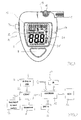
- FIG. 1 shows a glucose meter 10 with a housing 9.
- a test strip 1 known to those skilled in the art can be inserted into a test strip port 19 in a manner which is also known to those skilled in the art.
- the glucose meter 10 is provided with a display 12.
- the display 12 formed as a LCD display panel is designed to output user instructions in a way which will be disclosed hereinafter.
- the glucose meter 10 is further provided with an electronic port 18 which can be e.g. a USB connector. This port 18 can be used for data exchange with an external device if no test strip 1 is present in the test strip port 19.
- An on/off key 8 allows start/stop operation of the device. In combination with operating keys 20, different functions or menu entries can be selected or made.
- the glucose meter 10 is provided with a meal time input interface in the form of a meal key 14.
- a meal key 14 When the meal key 14 is pressed, a fork and knife symbol is displayed in a food display area 21.
- the time and/or date of activation of the meal key 14 is stored in a memory within the glucose meter. This time and/or date is an indication of the time of food intake and is displayed in the time/date field 24.
- an OGTT display area 25 information about OGTT measurements (see also Figure 5b ) may be displayed.
- an OGTT instruction area 26 a user may be instructed to take a standard glucose drink.
- a plate and cake icon in a meal display area 21' indicates if a specific measurement result has been made before or after a meal intake. In particular, in the meal display area 21' it can be indicated whether a specific glucose measurement has been made after or before meal intake.
- the decision criterion may be whether the meal key 14 has been pressed less than two hours before the measurement. If the meal record has been pressed within two hours before the measurement, the glucose result is displayed and marked as "after meal” measurement. If no activation of the meal key 14 has been made within two hours before the measurement, the result is marked as "before meal”.
- the information "after meal” / "before meal” may be stored together with the measurement results and may give the patient further indications about the effect of meal intake to the glucose level.
- averages of glucose measurements it is possible to form averages of glucose measurements. Typically, averages of measurements made on several days can be calculated. It is particularly advantageous to make averages of "before meal” measurements and averages of "after meal” measurements, respectively. This will give the user more reliable information about the effect of meal intake to his or her glucose level.
- measurements of 1, 7, 14 and/or 30 days can be taken into consideration for forming of averages. Since the measurements are stored with their respective time and/or date, averages can also be built based on measurements equally spaced from the time of meal intake. Typically one to three "before meal” and one to three “after meal” measurements are performed during one day.
- FIG. 2 schematically shows the separate components of the glucose meter 10.
- a processing means 15 by way of example a HT49RU80 LCD microcontroller unit (provided by Holdtek Semiconductors) can be used.
- the processing means 15 is in operative connection with an infrared port 17, the LCD display 12, a memory 11, the USB port 18 and a customized multifunctional IC 22 for controlling the key input 23 and for A/D conversion of the signal from the biosensor or test strip 1.
- the infrared 17 allows the data communication with an external device.
- the memory 11 allows storing measurement values of the glucose level, the time and/or date associated with such measurement and times of operation of the meal key 14.
- other communication ports e.g. Bluetooth or FireWire, are also possible.
- Switches 23 operated by the user (key switch) or controlled e.g. by magnetic force (reed switch) are used for control of the meter.
- a user may press the key to activate the meter or to change the operation mode or function of the meter.
- the reed switch may be used to automatically change the operation mode, e.g. when the device is put into a docking station (not shown) having a magnet and an IR receiver. Automatic data transmission through an IR connection can be performed therewith.
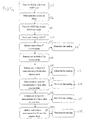
- FIG 3 shows the operation of the device in context with activation of the meal key 14.
- a user intends to have a meal in a step M1
- he presses the main key 8 in order to turn on the meter (step M2).
- the meal key 14 is pressed and held for about 2 seconds (step M3).
- a sound is generated and the fork/knife icon is activated in the display field 21 (step M4).
- the glucose meter 10 memorises the time and/or date of activation of the meal key 14 and consequently of food intake (step M5).
- steps M1 and step M6 are not carried out by the meter and only steps M2 to M5 are in relation with the operation of the glucose meter 10.
- the meal time registration shown in figure 4 can be used in context with operation of the glucose monitor 10 in the normal mode, e.g. when no OGTT measurement is carried out.
- glucose measurements are made upon insertion of a test strip 1 into the test strip port 19.
- a measurement is made and the respective result of the glucose level and the associated time and/or date is stored in the memory 11 (see figure 2 ).
- figure 4 shows a flashing fork/knife symbol in the food display area 21 and the time and/or date of activation of the meal key in the time/date field 24.
- Selection of the normal and the OGTT mode can be made by means of the operating keys 20 and main key 8 (see figure 1 ).
- FIG 5a shows operation of a first embodiment of a glucose meter 10 in the OGTT mode.
- a separate OGTT key is used to start the OGTT mode.
- a user wishes to have an OGTT made.
- the user presses the main key 8 (see figure 1 ) in order to turn on the glucose meter.
- the user presses a separate OGTT button not shown in figure 1 (step 03).
- an OGTT symbol is displayed in an OGTT display area 25 and/or activation of the OGTT mode is confirmed by an alarm.
- step 05 the user is instructed to carry out a first measurement.
- This instruction is displayed on the display of the glucose meter.
- audible instructions may be given.
- a test strip By inserting a test strip into the test strip port, a measurement is automatically started.
- the specific way of measurement is known to those skilled in the art and therefore not explained in more detail in context with the present invention. It may also include entry of specific codes related to the test strip.
- the values of the glucose measurement are stored in the memory in step 06.
- step 07 The user is subsequently instructed to drink a 75g glucose drink (step 07). Instruction is made by an appropriate display of the instruction on the display in an OGTT instruction area 26.
- steps 08 to O15 users are instructed to carry out a second, third, fourth and fifth measurement in 30 minute time intervals after the glucose drink intake. Corresponding measurement results of the glucose level are stored in the memory. After the memorisation of the fifth reading in step O15, the OGTT measurement is terminated. Five blood glucose levels and the associated times have been stored in the memory.
- the measurements in the OGTT mode shown in figure 5a are activated by pressing an OGTT button (not shown in figure 1 ) and by subsequently inserting a measurement strip for each of the measurements.
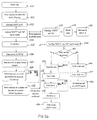
- FIG 5b shows an alternative operation flow chart for an OGTT.
- This operation is carried out with the device shown in figure 1 .
- Operation of the measurement is started by inserting a measurement strip in a step 021.
- an operation mode may be selected by using the operation keys 20 and by confirmation of a specific mode by pressing the main key 8.
- Operation modes are selected in step 022.
- Operation in an OGTT mode is confirmed by pressing operation key 8 in step 023.
- an operation step 024 an OGTT symbol is shown and a time symbol "0h" is displayed in the OGTT display area 25. The time symbol indicates that this in an initial measurement. Display is accompanied by a sound.
- a subsequent step 025 the user is entering blood onto the strip. Measurements are subsequently made and the data of the measurement are saved in step 026. The measurement time "0h" is associated with the saved data.
- the strip 1 is removed from the meter 10 or the main button 8 is pressed as an indication that the measurement has been completed.
- a drink icon is displayed in the OGTT instruction area 26. The user is thereby reminded to have a drink of 75g glucose. This display may be accompanied by an audible signal.
- step 029 the user confirms intake of 75g glucose/300ml drink by pressing the main key 8.
- step 032 Operation of the measurement is continued by pressing any key in operation step 031.
- step 032 a measurement strip icon is displayed in order to instruct the user to insert a strip.
- step 033 a code check is made in step 034.
- code checks are known to those skilled in the art in context with blood glucose measuring devices. It is therefore not explained in detail.
- step 035 blood is entered onto the strip and measurements are made. Measurement data are saved in step 036, associated with time and/or date information indicating the measurement time "2 hours”.
- step 031 If in step 031 no key is pressed, an audible signal is provided during one minute, step 040, and a continuous flashing is indicated on the display for another two minutes in step 041. If no key is pressed within this period of time, the device is switched into a sleep mode and the OGTT mode is automatically ended, step 042.
- a plurality of glucose level measurements are made and stored together with the associated time and/or date. This allows displaying a plurality of glucose level measurements L as a function of time on the display 12 or, alternatively, on an external display or operating unit by means of data exchange through infrared port 17 and/or USB port 18.
- FIG. 6 Such a graph displayed on an external device is shown in figure 6 .
- an approximated graph G1 in the form of an average circadian glucose pattern can be displayed.
- each dot L represents a glucose reading.
- times of meal intake T may be displayed as a grey column in the graphic representation shown in figure 6 .
- the glucose pattern G1 and the times of meal intake T allow the verification of the glucose level in context with meal intake.
- Figure 7 shows an enlarged view of the glucose profile during the first 4 hours after meal intake.
- measurements of the glucose level are made at/before intake of the standard glucose drink, i.e. at the times of fasting and subsequently at 30 minute intervals, at the time of fasting and 2 hours thereafter, or at individual time intervals according to Figure 5b .
- Figure 8 schematically shows a curve of glucose levels measured during such an OGTT mode.
- the first measurement is made at t 1 i.e. at fasting.
- a second measurement (indicated by a dot) is made after 30 minutes, a third measurement is made after 60 minutes, a fourth measurement is made after 90 minutes and a final measurement is made at time t 2 after 120 minutes.
- the area below the approximated curve running through the measurement values of the first to fifth measurement is defined as the area of OGTT result.
- the fasting glucose reading taken at t 1 can be used as the baseline for an optional determination of the area.
- the five specific measurement results acquired during the OGTT can be used to fit the curve and to determine the respective values of a, b, and c.
- Figure 9 shows a graphic display of these three values determined at different dates. The tendency of these values is helpful information for the user and particularly for the caregiver.
- the display of the area is, however, optional.
- the OGTT profile allows to assess the risk of a patient suffering from diabetes or also to manage success or efficiency of a therapy or a diet.
- glucose meter is provided with other means known to those skilled in the art such as power supply, electronic connections and the like which do not need to be explained in detail and which are known to those skilled in the art.
Landscapes
- Health & Medical Sciences (AREA)
- Engineering & Computer Science (AREA)
- Life Sciences & Earth Sciences (AREA)
- Biomedical Technology (AREA)
- Physics & Mathematics (AREA)
- Biophysics (AREA)
- General Health & Medical Sciences (AREA)
- Medical Informatics (AREA)
- Pathology (AREA)
- Molecular Biology (AREA)
- Public Health (AREA)
- Heart & Thoracic Surgery (AREA)
- Optics & Photonics (AREA)
- Surgery (AREA)
- Animal Behavior & Ethology (AREA)
- Chemical & Material Sciences (AREA)
- Veterinary Medicine (AREA)
- Hematology (AREA)
- Urology & Nephrology (AREA)
- Human Computer Interaction (AREA)
- Food Science & Technology (AREA)
- Medicinal Chemistry (AREA)
- Analytical Chemistry (AREA)
- Biochemistry (AREA)
- General Physics & Mathematics (AREA)
- Immunology (AREA)
- Databases & Information Systems (AREA)
- Primary Health Care (AREA)
- Epidemiology (AREA)
- General Business, Economics & Management (AREA)
- Business, Economics & Management (AREA)
- Emergency Medicine (AREA)
- Investigating Or Analysing Biological Materials (AREA)
Priority Applications (1)
| Application Number | Priority Date | Filing Date | Title |
|---|---|---|---|
| EP08104228A EP2130487A1 (de) | 2008-06-03 | 2008-06-03 | Glukosemessgerät, System mit Glukosemessgerät, Verfahren für den Betrieb eines Glukosemessgeräts und Computerprogrammprodukt |
Applications Claiming Priority (1)
| Application Number | Priority Date | Filing Date | Title |
|---|---|---|---|
| EP08104228A EP2130487A1 (de) | 2008-06-03 | 2008-06-03 | Glukosemessgerät, System mit Glukosemessgerät, Verfahren für den Betrieb eines Glukosemessgeräts und Computerprogrammprodukt |
Publications (1)
| Publication Number | Publication Date |
|---|---|
| EP2130487A1 true EP2130487A1 (de) | 2009-12-09 |
Family
ID=39850783
Family Applications (1)
| Application Number | Title | Priority Date | Filing Date |
|---|---|---|---|
| EP08104228A Withdrawn EP2130487A1 (de) | 2008-06-03 | 2008-06-03 | Glukosemessgerät, System mit Glukosemessgerät, Verfahren für den Betrieb eines Glukosemessgeräts und Computerprogrammprodukt |
Country Status (1)
| Country | Link |
|---|---|
| EP (1) | EP2130487A1 (de) |
Cited By (6)
| Publication number | Priority date | Publication date | Assignee | Title |
|---|---|---|---|---|
| WO2011157368A1 (en) * | 2010-06-18 | 2011-12-22 | Roche Diagnostics Gmbh | Methods and apparatus for decentralized diabetes monitoring |
| CN102621327A (zh) * | 2012-03-28 | 2012-08-01 | 中山市创源电子有限公司 | 一种智能型血糖仪 |
| JP2012184937A (ja) * | 2011-03-03 | 2012-09-27 | Gunze Ltd | 計測表示装置 |
| CN103040475A (zh) * | 2011-10-17 | 2013-04-17 | 希森美康株式会社 | 葡萄糖耐量分析装置、葡萄糖耐量分析系统及存储介质 |
| WO2017131328A1 (ko) * | 2016-01-29 | 2017-08-03 | 주식회사 아이센스 | 임신성 당뇨병 환자를 위한 식사 시간 정보의 제공 방법 |
| WO2018119663A1 (zh) * | 2016-12-27 | 2018-07-05 | 创新精密仪器有限公司 | 糖尿病检测方法及糖尿病检测系统 |
Citations (12)
| Publication number | Priority date | Publication date | Assignee | Title |
|---|---|---|---|---|
| WO1991009139A1 (en) | 1989-12-15 | 1991-06-27 | Boehringer Mannheim Corporation | Redox mediator reagent and biosensor |
| WO2003057027A2 (en) * | 2001-12-27 | 2003-07-17 | Medtronic Minimed, Inc. | System for monitoring physiological characteristics |
| US20030211617A1 (en) | 2002-05-07 | 2003-11-13 | International Business Machines Corporation | Blood glucose meter that reminds the user to test after a hypoglycemic event |
| WO2006072035A1 (en) * | 2004-12-29 | 2006-07-06 | Lifescan Scotland Limited | Method of inputting data into an analyte testing device |
| EP1733677A1 (de) | 2005-06-18 | 2006-12-20 | Roche Diagnostics GmbH | Blutzuckermessgerät mit Signaleinrichtung |
| WO2007019384A1 (en) | 2005-08-05 | 2007-02-15 | Bayer Healthcare Llc | Meter having post-meal test-time alarm |
| WO2007019289A1 (en) * | 2005-08-05 | 2007-02-15 | Bayer Healthcare Llc | Meter having multi-level user interface |
| US7228163B2 (en) | 2000-08-28 | 2007-06-05 | Animas Technologies, Llc | Methods of monitoring glucose levels in a subject and uses thereof |
| US7241256B2 (en) | 2003-08-30 | 2007-07-10 | Erth Technologies, Inc. | Centrifuge |
| WO2007132376A2 (en) * | 2006-05-09 | 2007-11-22 | Koninklijke Philips Electronics N.V. | Assay device |
| US20070276209A1 (en) * | 2004-04-30 | 2007-11-29 | Fumiaki Emoto | Blood-Sugar Level Measuring Device |
| EP1918837A1 (de) * | 2006-10-31 | 2008-05-07 | F. Hoffmann-La Roche AG | Verfahren zur Verarbeitung einer chronologischen Sequenz bei der Messung eines zeitabhängigen Parameters |
-
2008
- 2008-06-03 EP EP08104228A patent/EP2130487A1/de not_active Withdrawn
Patent Citations (12)
| Publication number | Priority date | Publication date | Assignee | Title |
|---|---|---|---|---|
| WO1991009139A1 (en) | 1989-12-15 | 1991-06-27 | Boehringer Mannheim Corporation | Redox mediator reagent and biosensor |
| US7228163B2 (en) | 2000-08-28 | 2007-06-05 | Animas Technologies, Llc | Methods of monitoring glucose levels in a subject and uses thereof |
| WO2003057027A2 (en) * | 2001-12-27 | 2003-07-17 | Medtronic Minimed, Inc. | System for monitoring physiological characteristics |
| US20030211617A1 (en) | 2002-05-07 | 2003-11-13 | International Business Machines Corporation | Blood glucose meter that reminds the user to test after a hypoglycemic event |
| US7241256B2 (en) | 2003-08-30 | 2007-07-10 | Erth Technologies, Inc. | Centrifuge |
| US20070276209A1 (en) * | 2004-04-30 | 2007-11-29 | Fumiaki Emoto | Blood-Sugar Level Measuring Device |
| WO2006072035A1 (en) * | 2004-12-29 | 2006-07-06 | Lifescan Scotland Limited | Method of inputting data into an analyte testing device |
| EP1733677A1 (de) | 2005-06-18 | 2006-12-20 | Roche Diagnostics GmbH | Blutzuckermessgerät mit Signaleinrichtung |
| WO2007019384A1 (en) | 2005-08-05 | 2007-02-15 | Bayer Healthcare Llc | Meter having post-meal test-time alarm |
| WO2007019289A1 (en) * | 2005-08-05 | 2007-02-15 | Bayer Healthcare Llc | Meter having multi-level user interface |
| WO2007132376A2 (en) * | 2006-05-09 | 2007-11-22 | Koninklijke Philips Electronics N.V. | Assay device |
| EP1918837A1 (de) * | 2006-10-31 | 2008-05-07 | F. Hoffmann-La Roche AG | Verfahren zur Verarbeitung einer chronologischen Sequenz bei der Messung eines zeitabhängigen Parameters |
Cited By (11)
| Publication number | Priority date | Publication date | Assignee | Title |
|---|---|---|---|---|
| WO2011157368A1 (en) * | 2010-06-18 | 2011-12-22 | Roche Diagnostics Gmbh | Methods and apparatus for decentralized diabetes monitoring |
| CN102933138A (zh) * | 2010-06-18 | 2013-02-13 | 霍夫曼-拉罗奇有限公司 | 用于分散式糖尿病监视的方法和设备 |
| US8775095B2 (en) | 2010-06-18 | 2014-07-08 | Roche Diagnostics Operations, Inc. | Methods and apparatus for decentralized diabetes monitoring |
| CN102933138B (zh) * | 2010-06-18 | 2015-03-18 | 霍夫曼-拉罗奇有限公司 | 用于分散式糖尿病监视的方法和设备 |
| JP2012184937A (ja) * | 2011-03-03 | 2012-09-27 | Gunze Ltd | 計測表示装置 |
| CN103040475A (zh) * | 2011-10-17 | 2013-04-17 | 希森美康株式会社 | 葡萄糖耐量分析装置、葡萄糖耐量分析系统及存储介质 |
| CN103040475B (zh) * | 2011-10-17 | 2015-02-11 | 希森美康株式会社 | 葡萄糖耐量分析装置、葡萄糖耐量分析系统及存储介质 |
| US9560999B2 (en) | 2011-10-17 | 2017-02-07 | Sysmex Corporation | Glucose tolerance analyzer, glucose tolerance analyzing system, and storage medium |
| CN102621327A (zh) * | 2012-03-28 | 2012-08-01 | 中山市创源电子有限公司 | 一种智能型血糖仪 |
| WO2017131328A1 (ko) * | 2016-01-29 | 2017-08-03 | 주식회사 아이센스 | 임신성 당뇨병 환자를 위한 식사 시간 정보의 제공 방법 |
| WO2018119663A1 (zh) * | 2016-12-27 | 2018-07-05 | 创新精密仪器有限公司 | 糖尿病检测方法及糖尿病检测系统 |
Similar Documents
| Publication | Publication Date | Title |
|---|---|---|
| US20250020630A1 (en) | Analyte monitoring methods and systems | |
| AU2009201094B2 (en) | Analyte test meter | |
| EP2384696B1 (de) | Verfahren zur Dateneingabe in eine Vorrichtung zum Testen von Analyten | |
| US9625413B2 (en) | Analyte monitoring devices and methods therefor | |
| TWI504895B (zh) | 操作分析物測量裝置的方法 | |
| TWI345163B (en) | Analyte testing device | |
| TWI417543B (zh) | 具有一包含複數個預定使用者特徵位準之多重位準使用者介面之計量器及其使用方法 | |
| US20100331650A1 (en) | Episodic blood glucose monitoring system with an interactive graphical user interface and methods thereof | |
| EP2130487A1 (de) | Glukosemessgerät, System mit Glukosemessgerät, Verfahren für den Betrieb eines Glukosemessgeräts und Computerprogrammprodukt | |
| EP2537467B1 (de) | Messvorrichtung zum Assoziieren eines Test mit Zeitstempel entsprechend vor oder nach einer Mahlzeit | |
| US9087149B2 (en) | Handheld diabetes management device having testing in pairs blood glucose test | |
| US9451907B2 (en) | Measuring apparatus | |
| HK1135007A (en) | Analyte testing method and system | |
| HK1162898B (en) | Method of inputting data into an analyte testing device |
Legal Events
| Date | Code | Title | Description |
|---|---|---|---|
| PUAI | Public reference made under article 153(3) epc to a published international application that has entered the european phase |
Free format text: ORIGINAL CODE: 0009012 |
|
| AK | Designated contracting states |
Kind code of ref document: A1 Designated state(s): AT BE BG CH CY CZ DE DK EE ES FI FR GB GR HR HU IE IS IT LI LT LU LV MC MT NL NO PL PT RO SE SI SK TR |
|
| AX | Request for extension of the european patent |
Extension state: AL BA MK RS |
|
| AKY | No designation fees paid | ||
| REG | Reference to a national code |
Ref country code: DE Ref legal event code: 8566 |
|
| STAA | Information on the status of an ep patent application or granted ep patent |
Free format text: STATUS: THE APPLICATION IS DEEMED TO BE WITHDRAWN |
|
| 18D | Application deemed to be withdrawn |
Effective date: 20100610 |