EP2131502A2 - Codage et décodage de Viterbi de codes convolutionnels circulaires - Google Patents
Codage et décodage de Viterbi de codes convolutionnels circulaires Download PDFInfo
- Publication number
- EP2131502A2 EP2131502A2 EP09161920A EP09161920A EP2131502A2 EP 2131502 A2 EP2131502 A2 EP 2131502A2 EP 09161920 A EP09161920 A EP 09161920A EP 09161920 A EP09161920 A EP 09161920A EP 2131502 A2 EP2131502 A2 EP 2131502A2
- Authority
- EP
- European Patent Office
- Prior art keywords
- control information
- sequence
- coding
- section
- assembled
- Prior art date
- Legal status (The legal status is an assumption and is not a legal conclusion. Google has not performed a legal analysis and makes no representation as to the accuracy of the status listed.)
- Granted
Links
Images



Classifications
-
- H—ELECTRICITY
- H03—ELECTRONIC CIRCUITRY
- H03M—CODING; DECODING; CODE CONVERSION IN GENERAL
- H03M13/00—Coding, decoding or code conversion, for error detection or error correction; Coding theory basic assumptions; Coding bounds; Error probability evaluation methods; Channel models; Simulation or testing of codes
- H03M13/37—Decoding methods or techniques, not specific to the particular type of coding provided for in groups H03M13/03 - H03M13/35
- H03M13/39—Sequence estimation, i.e. using statistical methods for the reconstruction of the original codes
- H03M13/3994—Sequence estimation, i.e. using statistical methods for the reconstruction of the original codes using state pinning or decision forcing, i.e. the decoded sequence is forced through a particular trellis state or a particular set of trellis states or a particular decoded symbol
-
- H—ELECTRICITY
- H03—ELECTRONIC CIRCUITRY
- H03M—CODING; DECODING; CODE CONVERSION IN GENERAL
- H03M13/00—Coding, decoding or code conversion, for error detection or error correction; Coding theory basic assumptions; Coding bounds; Error probability evaluation methods; Channel models; Simulation or testing of codes
- H03M13/03—Error detection or forward error correction by redundancy in data representation, i.e. code words containing more digits than the source words
- H03M13/23—Error detection or forward error correction by redundancy in data representation, i.e. code words containing more digits than the source words using convolutional codes, e.g. unit memory codes
- H03M13/235—Encoding of convolutional codes, e.g. methods or arrangements for parallel or block-wise encoding
-
- H—ELECTRICITY
- H03—ELECTRONIC CIRCUITRY
- H03M—CODING; DECODING; CODE CONVERSION IN GENERAL
- H03M13/00—Coding, decoding or code conversion, for error detection or error correction; Coding theory basic assumptions; Coding bounds; Error probability evaluation methods; Channel models; Simulation or testing of codes
- H03M13/37—Decoding methods or techniques, not specific to the particular type of coding provided for in groups H03M13/03 - H03M13/35
- H03M13/39—Sequence estimation, i.e. using statistical methods for the reconstruction of the original codes
- H03M13/41—Sequence estimation, i.e. using statistical methods for the reconstruction of the original codes using the Viterbi algorithm or Viterbi processors
- H03M13/4123—Sequence estimation, i.e. using statistical methods for the reconstruction of the original codes using the Viterbi algorithm or Viterbi processors implementing the return to a predetermined state
-
- H—ELECTRICITY
- H03—ELECTRONIC CIRCUITRY
- H03M—CODING; DECODING; CODE CONVERSION IN GENERAL
- H03M13/00—Coding, decoding or code conversion, for error detection or error correction; Coding theory basic assumptions; Coding bounds; Error probability evaluation methods; Channel models; Simulation or testing of codes
- H03M13/37—Decoding methods or techniques, not specific to the particular type of coding provided for in groups H03M13/03 - H03M13/35
- H03M13/39—Sequence estimation, i.e. using statistical methods for the reconstruction of the original codes
- H03M13/41—Sequence estimation, i.e. using statistical methods for the reconstruction of the original codes using the Viterbi algorithm or Viterbi processors
- H03M13/413—Sequence estimation, i.e. using statistical methods for the reconstruction of the original codes using the Viterbi algorithm or Viterbi processors tail biting Viterbi decoding
-
- H—ELECTRICITY
- H03—ELECTRONIC CIRCUITRY
- H03M—CODING; DECODING; CODE CONVERSION IN GENERAL
- H03M13/00—Coding, decoding or code conversion, for error detection or error correction; Coding theory basic assumptions; Coding bounds; Error probability evaluation methods; Channel models; Simulation or testing of codes
- H03M13/63—Joint error correction and other techniques
- H03M13/6306—Error control coding in combination with Automatic Repeat reQuest [ARQ] and diversity transmission, e.g. coding schemes for the multiple transmission of the same information or the transmission of incremental redundancy
-
- H—ELECTRICITY
- H03—ELECTRONIC CIRCUITRY
- H03M—CODING; DECODING; CODE CONVERSION IN GENERAL
- H03M13/00—Coding, decoding or code conversion, for error detection or error correction; Coding theory basic assumptions; Coding bounds; Error probability evaluation methods; Channel models; Simulation or testing of codes
- H03M13/63—Joint error correction and other techniques
- H03M13/6312—Error control coding in combination with data compression
-
- H—ELECTRICITY
- H03—ELECTRONIC CIRCUITRY
- H03M—CODING; DECODING; CODE CONVERSION IN GENERAL
- H03M13/00—Coding, decoding or code conversion, for error detection or error correction; Coding theory basic assumptions; Coding bounds; Error probability evaluation methods; Channel models; Simulation or testing of codes
- H03M13/65—Purpose and implementation aspects
- H03M13/6522—Intended application, e.g. transmission or communication standard
- H03M13/6525—3GPP LTE including E-UTRA
-
- H—ELECTRICITY
- H04—ELECTRIC COMMUNICATION TECHNIQUE
- H04L—TRANSMISSION OF DIGITAL INFORMATION, e.g. TELEGRAPHIC COMMUNICATION
- H04L1/00—Arrangements for detecting or preventing errors in the information received
- H04L1/004—Arrangements for detecting or preventing errors in the information received by using forward error control
- H04L1/0041—Arrangements at the transmitter end
-
- H—ELECTRICITY
- H04—ELECTRIC COMMUNICATION TECHNIQUE
- H04L—TRANSMISSION OF DIGITAL INFORMATION, e.g. TELEGRAPHIC COMMUNICATION
- H04L1/00—Arrangements for detecting or preventing errors in the information received
- H04L1/004—Arrangements for detecting or preventing errors in the information received by using forward error control
- H04L1/0056—Systems characterized by the type of code used
- H04L1/0059—Convolutional codes
-
- H—ELECTRICITY
- H04—ELECTRIC COMMUNICATION TECHNIQUE
- H04L—TRANSMISSION OF DIGITAL INFORMATION, e.g. TELEGRAPHIC COMMUNICATION
- H04L1/00—Arrangements for detecting or preventing errors in the information received
- H04L1/004—Arrangements for detecting or preventing errors in the information received by using forward error control
- H04L1/0056—Systems characterized by the type of code used
- H04L1/0071—Use of interleaving
-
- H—ELECTRICITY
- H04—ELECTRIC COMMUNICATION TECHNIQUE
- H04L—TRANSMISSION OF DIGITAL INFORMATION, e.g. TELEGRAPHIC COMMUNICATION
- H04L1/00—Arrangements for detecting or preventing errors in the information received
- H04L1/004—Arrangements for detecting or preventing errors in the information received by using forward error control
- H04L1/0072—Error control for data other than payload data, e.g. control data
-
- H—ELECTRICITY
- H04—ELECTRIC COMMUNICATION TECHNIQUE
- H04L—TRANSMISSION OF DIGITAL INFORMATION, e.g. TELEGRAPHIC COMMUNICATION
- H04L1/00—Arrangements for detecting or preventing errors in the information received
- H04L1/12—Arrangements for detecting or preventing errors in the information received by using return channel
- H04L1/16—Arrangements for detecting or preventing errors in the information received by using return channel in which the return channel carries supervisory signals, e.g. repetition request signals
- H04L1/18—Automatic repetition systems, e.g. Van Duuren systems
- H04L1/1867—Arrangements specially adapted for the transmitter end
- H04L1/1896—ARQ related signaling
-
- H—ELECTRICITY
- H03—ELECTRONIC CIRCUITRY
- H03M—CODING; DECODING; CODE CONVERSION IN GENERAL
- H03M13/00—Coding, decoding or code conversion, for error detection or error correction; Coding theory basic assumptions; Coding bounds; Error probability evaluation methods; Channel models; Simulation or testing of codes
- H03M13/03—Error detection or forward error correction by redundancy in data representation, i.e. code words containing more digits than the source words
- H03M13/05—Error detection or forward error correction by redundancy in data representation, i.e. code words containing more digits than the source words using block codes, i.e. a predetermined number of check bits joined to a predetermined number of information bits
- H03M13/09—Error detection only, e.g. using cyclic redundancy check [CRC] codes or single parity bit
-
- H—ELECTRICITY
- H03—ELECTRONIC CIRCUITRY
- H03M—CODING; DECODING; CODE CONVERSION IN GENERAL
- H03M13/00—Coding, decoding or code conversion, for error detection or error correction; Coding theory basic assumptions; Coding bounds; Error probability evaluation methods; Channel models; Simulation or testing of codes
- H03M13/63—Joint error correction and other techniques
- H03M13/635—Error control coding in combination with rate matching
- H03M13/6356—Error control coding in combination with rate matching by repetition or insertion of dummy data, i.e. rate reduction
Definitions
- the present invention relates to a coding apparatus, coding processing target sequence forming method, and Viterbi decoding apparatus.
- the information signal may be transmitted as error information due to channel distortion and the influence of noise and so on.
- the transmitter performs coding processing and the receiver performs decoding processing.
- a convolutional code is known in particular.
- FIG.1 illustrates a configuration example of a convolutional encoder.
- Termination and “tail-biting” are known as a method of dividing an information signal sequence into a plurality of coding blocks each comprised of a predetermined number of bits and transmitting these coding blocks individually.
- the termination method assumes that the initial state of the encoder is known (generally, a signal sequence comprised of K-1 zero-value signals). This is equivalent to attaching a known signal to the heads of the above-noted coding blocks that are inputted in the encoder. Further, the termination method attaches a known signal (which is generally a signal sequence comprised of K-1 zero-value signals) to the tail ends of the above-noted coding blocks inputted in the encoder, so that it is pessible to uniquely determine the state of the encoder at the time when coding processing of the coding blocks inputted in the encoder is finished. Therefore, if the decoder knows the above-noted known signals in advance, the decoder can identify the initial state and the end state corresponding to the coding blocks included in the received signal.
- a known signal which is generally a signal sequence comprised of K-1 zero-value signals
- the tail-biting method assumes that a sequence comprised of the initial values of a plurality of registers included in the encoder is the same as the signal sequence which is comprised of K-1 signals and attached to the tail ends of coding blocks.
- the initial state and the end state of the encoder are the same.
- the initial state (end state) is not always fixed, and, consequently, the decoder cannot predict in which state the initial state (end state) is.
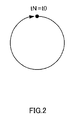
- the state transition of a convolutional encoder is represented by a trellis diagram.
- the initial state and the end state of an encoder are the same, and, consequently, the trellis diagram is assumed to be cyclic as shown in FIG.2 .
- the surviving path metric p j,t+1 of the surviving path p j,t+1 of S i is calculated by ⁇ i,t + ⁇ (y t ,b ij ).
- the above-noted processing in (3) is performed for all of states S j at point t+1.
- a codeword transmitted by the tail-biting method requires a greater amount of calculations and longer processing time on the receiving side than a codeword transmitted by the termination method. This is because, as described above, the decoder cannot predict the initial state (end state) by the tail-biting method.
- the decoder is demanded to reduce the amount of processing.
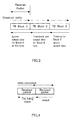
- Non-Patent Document 1 discloses performing the decoding processing shown in FIG.3 .
- the construction of trellis diagram by ACS calculation is repeated a plurality of times (three times in FIG.3 ) with respect to coding block 0 ("TB block 0" in FIG.3 ), which is a received packet.
- TB block 0 coding block 0
- a feature of the tail-biting is utilized that the initial state and the end state of an encoder are the same.
- a traceback is performed for the trellis diagram acquired by repeating the ACS calculation a plurality of times.
- a training period is provided.
- training is the same as traceback in tracking back the surviving paths, the training differs from trace back in not using the tracking r esult as a decoding result (i.e., in not outputting the tracking result as a decoding result).
- Non-Patent document 2, Non-Patent Document 3 and Patent Document 1 disclose performing the processing shown in FIG.4 .
- a tail-biting check is performed at every timing ACS calculation is performed one time for a received packet (i.e, one loop of coding block length).
- the tail-biting check refers to the processing of tracking surviving paths like a traceback and checking whether the initial state and the end state match,
- the decoding result is outputted if the initial state and the end state match, and the ACS calculation is repeated if the initial state and the end state do not match.
- Viterbi decoding processing utilizes the feature that the initial state and the end state of an encoder adopting the tail-biting method are equivalent, thereby performing decoding processing of a received packet using received packet as the ACS calculation repeating unit.
- Patent Document 1 Japanese Patent Application No. 2923430 , "Operational Method of Circular Viterbi Decoder"
- a control information sequence includes a plurality of control information blocks and that there are control information blocks comprised of bit sequences that can be predicted on the receiving side.
- the present inventor has found that, even in a case where a control information sequence is encoded and transmitted by the tail-biting coding scheme, it is possible to limit the number of possible states in an encoder by rearranging the control information sequence. Further, the present inventor has found that, by limiting the number of possible states in an encoder, it is possible to realize low delay processing with a reduced amount of processing on the receiving side and prevent the degradation of the accuracy of decoding due to truncation error, and has arrived at the present, inventlion.
- transmitting apparatus 100 of the present embodiment is provided with transmission data generating section 110, control information generating section 120, control information rearranging section 130, encoding section 140, signal multiplexing section 150 and transmitting section 160.
- Transmission data generating section 110 generates a transmission data sequence and outputs the transmission data sequence to signal multiplexing section 150.
- Control information generating section 120 generates a control information sequence and outputs the control information sequence to control information rearranging section 130.
- the control information sequence refers to the coding processing unit in encoding section 140, which will be described later.
- the control information sequence includes a plurality of control information blocks. The order of the control information blocks in the control information sequence is determined by communication standards and so on.
- FIG.6 illustrates a format example of a control information sequence.
- FIG.6 illustrates a downlink control information sequence.
- the horizontal axis represents the time axis.
- FIG.6 illustrates a state where: format identification information (flag for format differentiation) is placed in period A; a distributed transmission flag is placed in period B; information about resource block assignment is placed in period C; and transport format identification information is placed in period D.
- format identification information flag for format differentiation
- FIG.6 illustrates a state where: a hybrid automatic repeat request ("HARQ") process number is placed in period E; a retransmission sequence number is placed in period E; a TPC (Transfer Protocol Command) is placed in period G; a cyclic redundancy check (CRC) code (used with UE ID) is placed in period H; and padding bits that are inserted to make the number of bits included in the control information sequence suit the coding processing unit, are placed in period I.
- HARQ hybrid automatic repeat request
- TPC Transfer Protocol Command
- CRC cyclic redundancy check
- Format 0 Flag for for at 0/form at 1A differentiation, Hopping flag, Resource block assignment and hopping resource allocation, Modulation and cording scheme and redundancy version, New data indicator, TPC command, Cyclic shift, UL index, Downlink Assignment Index (DAI), CQI request.
- Format 1 Resource allocation header, Resource block assignment, Modulation and cording scheme, HARQ process number, New data indicator, Redundancy version, TPC command, Downlink Assignment Index.
- Format 1A Flag for form at 0/form at 1A differentiation, Localized/Distributed VRB assignment flag, Resource block assignment, Modulation and cording scheme, HARQ process number, New data indicator, Redundancy version, TPC command, Downlink Assignment Index.
- Format 1B Localized/Distributed VRB assignment flag, Resource block assignment, Modulation and cording scheme, HARQ process number, New data indicator, Redundancy version, TPC command, Downlink Assignment Index, TPMI information for precoding, PMI confirmation for precoding.
- Format 1C 1 bit indicates the gap value, Resource block assignment, Transport block size index.
- Format 1D Localized/Distributed VRB assignment flag, Resource block assignment, Modulation and cording scheme, HARQ process number, New data indicator, Redundancy version, TPC command, Downlink Assignment Index, TPMI information for precoding, Downlink power offset.
- Format 2 Resource allocation header, Resource block assignment, TPC command, Downlink Assignment Index, HARQ process number, Transport block to codeword swap flag.
- Format 2A Resource allocation header, Resource block assignment, TPC command, Downlink Assignment Index, HARQ process number, Transport block to codeword swap flag.
- Format 3 TPC command number 1, TPC command number 2, ..., TPC command number N.
- Format 3A TPC command number 1, TPC command number 2, ..., TPC command number M.
- Control information rearranging section 130 rearranges the inputted control information sequence.
- control information rearranging section 130 forms an assembled sequence grouping control information blocks comprised of bit sequences t hat can be predicted on the receiving side, and allocates this assembled sequence in a predetermined position in the control information sequence.
- the control information blocks in the assembled sequence are allocated in the tail end of the control information sequence.
- the control information blocks in the assembled sequence are arranged in such an order that the accuracy of prediction with respect to bit sequences forming the control information blocks increases, Further, outside the assembled sequence, for example, the control information block of the highest importance (which is highly demanded to be transmitted without error) is allocated to the adjacency of the control information block of the lowest accuracy of prediction in the assembled sequence.
- allocation is determined per control information block, it is equally possible to determine allocation per bit.
- control information sequence is rearranged to form a coding target sequence, and this coding target sequence is inputted in encoding section 140.
- bits that can be predicted on the receiving side can be classified into the four main broad categories shown below.
- Padding bits refers to a known bit sequence attached to a control information sequence to make the number of bits included in the control information sequence suit the coding processing unit. Therefore, the receiving side can identify this bit sequence before decoding.
- the receiving side can predict that candidates of the bit sequence patterns included in this control information block are the bit sequence patterns other than the unused bit sequence patterns.
- bit sequence pattern 11 is unassigned.
- NDI New Data Indicator
- This NDI refers to information showing whether a transmission data sequence is new or retransmission.
- the receiving side stores whether transmission of a date sequence that was previously received succeeds or fails (i.e., whether ACK is returned or NACK is returned to the transmitting side), so that it is possible to estimate whether a data sequence that is currently received is new or retransmission, that is, it is possible to estimate an NDI.
- a control information block representing an NDI is comprised of a bit sequence that can be predicted on the receiving side.
- RV Redundancy Version
- RV is uniquely determined based on the number of retransmissions. Therefore, the receiving side stores in advance the number of times retransmission data is retransmitted, so that it is possible to estimate the RV of the retransmission data that is currently received.
- a HARQ process number refers to a number assigned per basic block in HARQ.
- the receiving side receives a transmission data sequence assigned a certain HARQ process number and returns a NACK to the transmitting side
- the receiving side does not receive transmission data sequence for retransmission having that H ARQ process number until the RTT (Round Trip Time) elapses from the time the NACK was returned. That is, the HARQ process number received between the current time and the RTT before the current time, cannot be the HARQ process number of the transmission data sequence to be received this time.
- the HARQ process number is comprised of a bit sequence that can be predicted on the receiving side.
- Transmission format identification information refers to information representing the payload size of the transmission data sequence.
- the transmission format identification information of the retransmission data sequence is always comprised of a bit sequence in which all forming bits are known constant. Therefore, except for the initial transmission, the receiving side can identify transmission format identification information.
- ACK/NACK identification information i.e, information about a signal that occurs in uneven probabilities
- a system adopting ARQ is designed such that ACK is provided approximately 90 percent of the time. Therefore, the receiving side receiving ACK/NACK identification information can predict that ACK is provided oftentimes.
- encoding section 140 encodes the coding target sequence using the tail-biting convolutional coding scheme.
- Encoding section 140 is provided with information acquiring section 142 and convolutional coding section 144.
- Information acquiring section 142 acquires the coding target sequence outputted from information rearranging section 130.
- Convolutional coding section 144 encodes the coding target sequence acquired in information acquiring section 142 using the tail-biting convolutional coding scheme, and outputs the resulting codeword to signal multiplexing section 150.
- Signal multiplexing section 150 multiplexes the transmission data sequence generated in transmission data generating section 110 and the codeword acquired in coding section 140, and outputs the resulting multiplexed signal to transmitting section 160.
- Transmitting section 160 transmits the multiplexed signal from signal multiplexing section 150.
- transmitting section 160 is provided with serial/parallel (S/P) conversion section 162, IFFT (Inverse Fast Fourier Transform) section 164, CP (Cyclic Prefix) attaching section 166 and radio transmission section 168, and forms OFDM signals with multiplexed signals and transmits the OFDM signals.
- S/P serial/parallel
- IFFT Inverse Fast Fourier Transform
- CP Cyclic Prefix
- S/P conversion section 162 converts the multiplexed signal from signal multiplexing section 150 into a plurality of parallel signals.
- IFFT section 164 performs an IFFT of the plurality of parallel signals acquired in S/P conversion section 162 and forms an OFDM signal.
- CP attaching section 166 attaches a CP to the OFDM signal acquired in IFFT section 164.
- Radio transmission section 168 performs wireless processing (such as D/A conversion and up-conversion) of the OFDM signal attached a CP, and transmits the resulting radio signal via an antenna.
- wireless processing such as D/A conversion and up-conversion
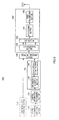
- receiving apparatus is provided with bit estimation material storage section 210, predictable bit estimating section 220, trellis calculation start position determining section 230, surviving path calculation processing section 240 and control information rearranging section 250.
- Bit estimation material storage section 210 stores bit estimation material information, which is used in bit estimation processing in predictable bit estimating section 220.
- bit estimation material storage section 210 is provided with past information memory section 212, unassigned bit pattern memory section 214 and information occurrence probability distribution memory section 216.
- Past information memory section 212 memorizes, for example, retransmission count information that represents the number of retransmissions increased every time the transmission data sequence is retransmitted and that is managed on a per transmission data sequence basis, and N ACK transmission information (including the H ARQ process number and transmission timing information).
- Unassigned bit pattern memory section 214 memorizes, for example, unassigned bit pattern information (i.e. unassigned bit patterns in control information blocks).
- Information occurrence probability distribution memory section 216 memorizes information about the distribution of the probabilities of occurrence of information that occurs in uneven probabilities such as ACK and NACK.
- Predictable bit estimating section 220 estimates the bit values of an assembled data sequence included in the received coding data sequence and comprised of predictable bit sequences, based on the bit estimation material information stored in bit estimation material storage section 210.
- the system determines in advance the position of the assembled sequence to allocate in the control information sequence, and, consequently, trellis calculation start position determining section 230 outputs information about the position of the assembled sequence to allocate, to surviving path calculation processing section 240 as trellis calculation start position information.
- Surviving path calculation processing section 240 calculates surviving paths by ACS calculation of transition states other than the transition states matching the bit values estimated in predictable bit estimating section 220 on the trellis diagram. Surviving path calculation processing section 240 performs ACS calculation by setting the start point at the point corresponding to the assembled data sequence on the trellis diagram, based on the trellis calculation start position information.
- surviving path calculation processing section 240 is provided with branch metric calculating section 242, ACS calculating section 244, path metric memory section 246 and surviving path memory section 248.
- Branch metric calculating section 242 calculates branch metrics using the received sequence received as input, and outputs the calculated branch metrics to ACS calculating section 244.
- the received sequence includes the control information sequence transmitted from transmitting apparatus 100.
- the transition states at the point corresponding to the assembled data sequence are limited based on the bit values estimated in predictable bit estimating section 220, so that branch metric calculating section 242 calculates only the branch metrics associated with the possible transition states at the point.
- ACS calculating section 244 performs ACS calculation using the branch metrics calculated in branch metric calculating section 242.
- the path metrics of the surviving paths acquired at each point are temporarily held in path metric memory section 246.
- ACS calculating section 244 calculates the path metrics of the current surviving paths using the current branch metrics of the current surviving paths to be calculated and the path metrics calculated at the point previous to the current point a nd held in path metric memory section 246. Further, ACS calculating section 244 makes path metric memory section 246 hold the calculated path metrics of the surviving paths, and outputs the surviving paths and information associated with the surviving paths (i.e. branch metrics and path metrics of the surviving paths), to surviving path memory section 248.
- Surviving path memory section 248 stores the surviving paths calculated in ACS calculating section 244.
- Control information rearranging section 250 performs rearrangement processing for the path of the maximum likelihood amongst the surviving paths held in surviving path memory section 248 such that the order of the control information sequence rearranged in control information rearranging section 130 is rearranged to the original order.
- control information generating section 120 In transmitting apparatus 100, control information generating section 120 generates a control information sequence. For example, as shown in FIG.6 , this control information sequence is formed such that control information blocks comprised of "bit sequences that can be predicted on the receiving side" are scattered. Allocation of these control information blocks is determined by communication standards and so on.
- control information sequence generated in control information generating section 120 is rearranged in control information rearranging section 130.
- FIG.8 illustrates rearrangement processing in control information rearranging section 130.
- control information blocks comprised of bit sequences that can be predicted on the receiving side are gathered into one block in control information rearranging section 130.
- This one block is the assembled sequence and corresponds to a group of the control information blocks allocated in periods E, F and I in FIG.8 .
- control information blocks in the assembled sequence are arranged in such an order that the accuracy of prediction with respect to the bit sequences forming the control information blocks increases. That is, in FIG.8 , the accuracy of prediction increases in ascending order of E, F and I or in ascending order of I, F and E. Whether these control information blocks are arranged in ascending order along the positive direction in the time domain or along the negative direction in the time domain, is determined based on the direction in which receiving apparatus 200 performs ACS calculation on the trellis.
- the accuracy of prediction increases in ascending order of E, F and I.
- control information blocks i.e. A, B, C, D, G and H
- these control information blocks can be rearranged.
- control information block I has the lowest accuracy of prediction in the control information blocks included in the assembled sequence
- "adjacency of the control information block of the lowest accuracy of prediction in the control information blocks included in the assembled sequence (corresponding to control information block E in FIG.8 )" is equivalent to the head position of the control information sequence. That is, in this case, the importance of control information block A is the highest.
- control information sequence rearranged as above is encoded using the tail-biting coding scheme in encoding section 140, and multiplexed with the transmission data sequence in signal multiplexing section 150.
- the resulting multiplexed signal is transmitted to receiving apparatus 200 via transmitting section 160.
- a radio signal transmitted from transmitting apparatus 100 is received in receiving apparatus 200.
- the reception sequence is inputted in surviving path calculation processing section 240.
- Surviving path calculation processing section 240 calculates surviving paths by limiting the transition states on the trellis diagram using the bit values estimated in predictable bit estimating section 220 and then performing ACS calculation.
- the start point of this ACS calculation is determined based on trellis calculation start position information. To be more specific, the point corresponding to the control information block of the highest accuracy of prediction in the assembled sequence is set the start point. That is, the point at which the possible transition states are the most limited (i.e. the point at which the number of transition state candidates is the minimum) is set the start point. Further, surviving path calculation processing section 240 sequentially performs ACS calculation at points corresponding to the control information blocks in the assembled sequence, and then performs ACS calculation at points corresponding to control information blocks outside the assembled sequence.
- FIG.9 illustrates ACS calculation processing in surviving path calculation processing section 240.
- the bit sequences forming the assembled sequence are already estimated, By this means, it is possible to limit the transition states at points corresponding to the assembled sequence.
- the possible transition states at point tN are limited to the transition state 00.
- the possible transition at the point tN-1 are limited to the transition states 00 and 01.
- point t1 corrsponds to the control information blocks outside the assembled sequence and therefore corresponds to unpredictable bits.
- the bits corresponding to point t1 are inputted in the encoder in a state where the assembled sequence is registered in the register group. Therefore, even if the bits corresponding to point t1 are unpredictable bits, the possible transition states at point t1 are limited to the transition states 00 and 01.
- the ACS calculation in surviving path calculation processing section 240 starts at t0, and the calculation is performed in the order of t1, t2, ..., tN-1.
- limiting the transition states in a trellis diagram is equivalent to using the termination coding scheme and shortening the constraint length K. Therefore, even if repetitive processing is performed upon performing Viterbi decoding of a codeword after tail-biting convolutional coding like a conventional method, it is possible to reduce the amount of processing (specifically, the amount of processing upon trellis construction and the amount of traceback processing).
- surviving path calculation processing section 240 As preprocessing for the above-noted surviving path calculation processing in surviving path calculation processing section 240, prediction bit estimation processing and trellis calculation start position determination processing are performed.
- Control information block determined uniquely based on the number of retransmissions
- Predictable bit estimating section 220 estimates predictable bits based on the retransmission count information memorized in past information memory section 212.
- Information determined uniquely based on the retransmission count information includes, for example, the above-noted NDI associated with the retransmission sequence number in (c), the redundancy version information in (d) and the transmission format idenification information. in (f).
- the NDI associated with a retransmission sequence number is the information showing whether the transmission data sequence is new or retransmission, and, consequently, it is possible to predict the NDI based on whether or not the corresponding previous data is wrong, that is, based on the number of retransmissions zero (corresponding to new transmission) or the number of retransmissions one or more.
- redundancy version information is uniquely determined based on the number of retransmissions. Therefore, it is possible to estimate redundancy version information based on retransmission count information.
- Predictable bit estimating section 220 limits the HARQ process number included in the control information sequence based on the NACK transmission information memorized in past information memory section 212.
- receiving apparatus 200 does not receive the transmission data sequence and control information sequence associated with NACK transmission information (including HARQ process number and transmission timing information) before an RTT passes from the transmission timing of NACK. Therefore, it is possible to rule out the HARQ process number associated with this NACK transmission information, from candidates of the HARQ process number included in a control information sequence received before the RTT passes from the transmission timing of that NACK. As a result, it is possible to limit the transition states at the point corresponding to the control information block showing the HARQ process number.
- Control information block including an unused bit pattern, which is not used amongst bit patterns that can be represented with the number of assigned bits
- Predictable bit estimating section 220 limits the transition states at the point corresponding to a control information block, based on the unassigned bit pattern information memorized in unassigned bit pattern memory section 214.
- predictable bit estimating section 220 can limit the transition states at the point corresponding to this control information block, to transition states other than 11.
- Control information block storing ACK/NACK identification information
- a system adopting ARQ is designed such that ACK is provided approximately 90 percent of the time. Therefore, predictable bit estimating section 220 limits the transition states at the point corresponding to this control information block, to the transition states associated with the ACK.
- the trellis calculation start position changes according to the position to which the transmitting side allocates an assembled sequence in control information blocks. This position to allocate the assembled sequence is determined in advance by information exchange and so on between transmitting apparatus 100 and receiving apparatus 200.
- trellis calculation start position determining section 230 determines the start point of the ACS calculation and such, based on allocation information of the assembled sequence.
- control information rearranging section 130 receives as input a control information sequence in which a plurality of control information blocks are arranged in a predetermined order, and forms a coding processing target sequence by rearranging the order of the plurality of control information blocks to form an assembled sequence grouping control information blocks comprised of predictable bit sequences in the plurality of control information blocks, and to allocate the assembled sequence to a predetermined position in the control information sequence.
- encoding section 140 encodes the coding target sequence using the tail-biting convolutional coding scheme.
- control information rearranging section 130 allocates the control information block of the highest importance in the control information blocks outside the assembled sequence, to the adjacency of the assembled sequence.
- control information block of the highest importance can be allocated to a position of good decoding characteristics, so that it is possible to improve the transmission characteristics of the control information block.
- control information rearranging section 130 receives as input a control information sequence in which a plurality of control information blocks are arranged in a predetermined order, rearranges the order of the plurality of control information blocks to form an assembled sequence grouping control information blocks comprised of predictable bit sequences in the plurality of control information blocks, and allocates the assembled sequence to a predetermined position in the control information sequence to form a coding processing target sequence.
- control information generating section 120 when control information generating section 120 generates a coding processing target data sequence including, in a predetermined position, an assembled data sequence grouping "bits that can be predicted on the receiving side", control information rearranging section 130 is not necessary.
- information acquiring section 142 needs to acquire a coding processing target data sequence including, in a predetermined position, an assembled data sequence grouping "bits that can be predicted on the receiving side" and convolutional coding section 144 needs to encode the coding target data sequence using the tail-biting coding scheme.
- the predetermined position to allocate the assembled data sequence grouping "bits that can be predicted on the receiving side" is preferably next to a known bit sequence such as padding bits.
- prediclable bit estimating section 220 estimates bit values of an assembled data sequence included in a coding data sequence and comprised of predictable bit sequences
- surviving path calculation processing section 240 limits the transition states on a trellis diagram using the bit values estimated in predictable bit estimating section 220 and then calculates surviving paths by ACS calculation.
Landscapes
- Engineering & Computer Science (AREA)
- Physics & Mathematics (AREA)
- Probability & Statistics with Applications (AREA)
- Theoretical Computer Science (AREA)
- Computer Networks & Wireless Communication (AREA)
- Signal Processing (AREA)
- Error Detection And Correction (AREA)
Applications Claiming Priority (1)
| Application Number | Priority Date | Filing Date | Title |
|---|---|---|---|
| JP2008148225A JP4922242B2 (ja) | 2008-06-05 | 2008-06-05 | 符号化装置、符号化方法、及びビタビ復号装置 |
Publications (3)
| Publication Number | Publication Date |
|---|---|
| EP2131502A2 true EP2131502A2 (fr) | 2009-12-09 |
| EP2131502A3 EP2131502A3 (fr) | 2011-11-30 |
| EP2131502B1 EP2131502B1 (fr) | 2014-10-29 |
Family
ID=40792599
Family Applications (1)
| Application Number | Title | Priority Date | Filing Date |
|---|---|---|---|
| EP09161920.5A Active EP2131502B1 (fr) | 2008-06-05 | 2009-06-04 | Codage et décodage de Viterbi de codes convolutionnels circulaires |
Country Status (3)
| Country | Link |
|---|---|
| US (1) | US8276036B2 (fr) |
| EP (1) | EP2131502B1 (fr) |
| JP (1) | JP4922242B2 (fr) |
Cited By (2)
| Publication number | Priority date | Publication date | Assignee | Title |
|---|---|---|---|---|
| US8995583B2 (en) | 2010-07-30 | 2015-03-31 | Telefonaktiebolaget L M Ericsson (Publ) | Decoding technique for tail-biting codes |
| CN107615839A (zh) * | 2015-05-15 | 2018-01-19 | 华为技术有限公司 | 处理子信令段的方法、处理装置、接入点和站点 |
Families Citing this family (5)
| Publication number | Priority date | Publication date | Assignee | Title |
|---|---|---|---|---|
| JP5752783B2 (ja) * | 2010-03-31 | 2015-07-22 | サムスン エレクトロニクス カンパニー リミテッド | マルチ−セルtdd通信システムにおける応答信号の送信に対するリソースインデクシング |
| US9634802B2 (en) * | 2013-08-30 | 2017-04-25 | Qualcomm Incorporated | Resource mapping to handle bursty interference |
| US10868569B2 (en) * | 2017-05-08 | 2020-12-15 | Qualcomm Incorporated | PBCH signal design and efficient continuous monitoring and polar decoding |
| US10680749B2 (en) * | 2017-07-01 | 2020-06-09 | Intel Corporation | Early-termination of decoding convolutional codes |
| CN113973037B (zh) * | 2020-07-24 | 2024-07-30 | 晶晨半导体(上海)股份有限公司 | 解调方法、装置、设备以及计算机可读存储介质 |
Citations (1)
| Publication number | Priority date | Publication date | Assignee | Title |
|---|---|---|---|---|
| JP2008148225A (ja) | 2006-12-13 | 2008-06-26 | Nec Corp | リング型ネットワークおよびリング型ネットワークのフェアネス実行プログラム |
Family Cites Families (19)
| Publication number | Priority date | Publication date | Assignee | Title |
|---|---|---|---|---|
| US5182753A (en) * | 1990-03-20 | 1993-01-26 | Telefonaktiebolaget L M Ericsson | Method of transmitting signaling messages in a mobile radio communication system |
| JP2715398B2 (ja) * | 1991-11-25 | 1998-02-18 | 松下電器産業株式会社 | 誤り訂正符復号化装置 |
| US5369671A (en) * | 1992-05-20 | 1994-11-29 | Hughes Aircraft Company | System and method for decoding tail-biting code especially applicable to digital cellular base stations and mobile units |
| US5404355A (en) * | 1992-10-05 | 1995-04-04 | Ericsson Ge Mobile Communications, Inc. | Method for transmitting broadcast information in a digital control channel |
| US5355376A (en) | 1993-02-11 | 1994-10-11 | At&T Bell Laboratories | Circular viterbi decoder |
| US5577053A (en) * | 1994-09-14 | 1996-11-19 | Ericsson Inc. | Method and apparatus for decoder optimization |
| US5910182A (en) * | 1996-05-03 | 1999-06-08 | Ericsson Inc. | Data communications systems and methods using interspersed error detection bits |
| US5920597A (en) * | 1996-09-16 | 1999-07-06 | Ericsson Inc. | Decoding technique for tail biting codes |
| US5991635A (en) * | 1996-12-18 | 1999-11-23 | Ericsson, Inc. | Reduced power sleep modes for mobile telephones |
| US6498936B1 (en) * | 1999-01-22 | 2002-12-24 | Ericsson Inc. | Methods and systems for coding of broadcast messages |
| BR0012670B1 (pt) * | 1999-07-22 | 2014-08-12 | Siemens Ag | Procedimento para a proteção contra falhas de um fluxo de bits de dados |
| JP4256047B2 (ja) * | 2000-01-17 | 2009-04-22 | 株式会社東芝 | 地上デジタルテレビジョン放送マイクロ波中継伝送方式 |
| JP3514213B2 (ja) * | 2000-05-17 | 2004-03-31 | 日本電気株式会社 | 直接連接畳込み符号器、及び、直接連接畳込み符号化方法 |
| US7240270B2 (en) * | 2001-04-30 | 2007-07-03 | Nokia Corporation | Method of transmitting signaling messages in a mobile telecommunications network |
| US7693110B2 (en) * | 2004-09-16 | 2010-04-06 | Motorola, Inc. | System and method for downlink signaling for high speed uplink packet access |
| US7512870B2 (en) * | 2006-08-30 | 2009-03-31 | Cisco Technology, Inc. | Method and system for improving the performance of a trellis-based decoder |
| KR101429786B1 (ko) * | 2006-10-04 | 2014-08-18 | 모토로라 모빌리티 엘엘씨 | 데이터를 인코딩 및 디코딩하는 방법 및 장치 |
| US20090041166A1 (en) * | 2007-08-09 | 2009-02-12 | Mbit Wireless, Inc. | Method and apparatus to improve information decoding when its characteristics are known a priori |
| WO2009040653A2 (fr) * | 2007-09-26 | 2009-04-02 | Nokia Corporation | Limitation de signalisation de plusieurs tailles de charge utile destinées à des attributions de ressources |
-
2008
- 2008-06-05 JP JP2008148225A patent/JP4922242B2/ja active Active
-
2009
- 2009-06-04 EP EP09161920.5A patent/EP2131502B1/fr active Active
- 2009-06-05 US US12/479,572 patent/US8276036B2/en active Active
Patent Citations (1)
| Publication number | Priority date | Publication date | Assignee | Title |
|---|---|---|---|---|
| JP2008148225A (ja) | 2006-12-13 | 2008-06-26 | Nec Corp | リング型ネットワークおよびリング型ネットワークのフェアネス実行プログラム |
Non-Patent Citations (1)
| Title |
|---|
| R. Y. SHAO; S. LIN; M. FOSSORIER: "Two decoding algorithms for tail biting codes", IEEE TRANS. ON COMM., vol. 51, no. 10, October 2003 (2003-10-01), pages 1658 - 1665 |
Cited By (5)
| Publication number | Priority date | Publication date | Assignee | Title |
|---|---|---|---|---|
| US8995583B2 (en) | 2010-07-30 | 2015-03-31 | Telefonaktiebolaget L M Ericsson (Publ) | Decoding technique for tail-biting codes |
| CN107615839A (zh) * | 2015-05-15 | 2018-01-19 | 华为技术有限公司 | 处理子信令段的方法、处理装置、接入点和站点 |
| EP3294020A4 (fr) * | 2015-05-15 | 2018-06-20 | Huawei Technologies Co., Ltd. | Procédé de traitement de segment de sous-signalisation, dispositif de traitement, point d'accès, et station |
| CN107615839B (zh) * | 2015-05-15 | 2020-03-31 | 华为技术有限公司 | 处理子信令段的方法、处理装置、接入点和站点 |
| US10623140B2 (en) | 2015-05-15 | 2020-04-14 | Huawei Technologies Co., Ltd. | Method for processing signaling sub-segment, processing apparatus, access point, and station |
Also Published As
| Publication number | Publication date |
|---|---|
| US8276036B2 (en) | 2012-09-25 |
| JP2009296345A (ja) | 2009-12-17 |
| US20090307560A1 (en) | 2009-12-10 |
| EP2131502B1 (fr) | 2014-10-29 |
| JP4922242B2 (ja) | 2012-04-25 |
| EP2131502A3 (fr) | 2011-11-30 |
Similar Documents
| Publication | Publication Date | Title |
|---|---|---|
| JP6108239B2 (ja) | アップリンク制御情報を送信するための方法および装置 | |
| US8276036B2 (en) | Coding apparatus, coding processing target sequence forming method and viterbi decoding apparatus | |
| JP5330402B2 (ja) | トランスポートブロックサイズの決定方法及びこれを用いた信号伝送方法 | |
| CN108631960B (zh) | 一种数据传输方法和相关设备 | |
| US9363047B2 (en) | Technique of encoding HARQ feedback information with two separate codewords with unequal error protection for DTX and ACK/NACK | |
| US11088780B2 (en) | Low complexity blind detection of code rate | |
| WO2009096658A1 (fr) | Procédé de détermination de taille de bloc de transport et procédé de transmission de signaux utilisant ledit procédé | |
| CN115173999B (zh) | 用于处理控制信息的系统和方法 | |
| CN103414543B (zh) | 一种调整harq缓存量的方法及终端 | |
| US8780930B2 (en) | System and method for removing PDCCH detection errors in a telecommunications network | |
| US20110296283A1 (en) | Wireless communication apparatus | |
| CN116388937B (zh) | 一种基于Raptor码的上行滑动窗HARQ方法 | |
| EP2507931A2 (fr) | Procédé et système de transmission de données | |
| EP2850764A1 (fr) | Système et procédé d'élimination d'erreurs de détection pdcch dans un réseau de télécommunications | |
| KR20080112733A (ko) | 이동 통신 시스템에서 채널 정보 송수신 및 채널 부호화 |
Legal Events
| Date | Code | Title | Description |
|---|---|---|---|
| PUAI | Public reference made under article 153(3) epc to a published international application that has entered the european phase |
Free format text: ORIGINAL CODE: 0009012 |
|
| 17P | Request for examination filed |
Effective date: 20090604 |
|
| AK | Designated contracting states |
Kind code of ref document: A2 Designated state(s): AT BE BG CH CY CZ DE DK EE ES FI FR GB GR HR HU IE IS IT LI LT LU LV MC MK MT NL NO PL PT RO SE SI SK TR |
|
| PUAL | Search report despatched |
Free format text: ORIGINAL CODE: 0009013 |
|
| AK | Designated contracting states |
Kind code of ref document: A3 Designated state(s): AT BE BG CH CY CZ DE DK EE ES FI FR GB GR HR HU IE IS IT LI LT LU LV MC MK MT NL NO PL PT RO SE SI SK TR |
|
| AX | Request for extension of the european patent |
Extension state: AL BA RS |
|
| RIC1 | Information provided on ipc code assigned before grant |
Ipc: H03M 13/23 20060101ALI20111027BHEP Ipc: H03M 13/41 20060101AFI20111027BHEP |
|
| 17Q | First examination report despatched |
Effective date: 20130506 |
|
| REG | Reference to a national code |
Ref country code: DE Ref legal event code: R079 Ref document number: 602009027407 Country of ref document: DE Free format text: PREVIOUS MAIN CLASS: H03M0013410000 Ipc: H03M0013090000 |
|
| RIC1 | Information provided on ipc code assigned before grant |
Ipc: H03M 13/09 20060101AFI20140317BHEP Ipc: H03M 13/41 20060101ALI20140317BHEP Ipc: H03M 13/39 20060101ALI20140317BHEP Ipc: H04L 1/00 20060101ALI20140317BHEP Ipc: H03M 13/23 20060101ALI20140317BHEP Ipc: H03M 13/00 20060101ALI20140317BHEP Ipc: H04L 1/18 20060101ALI20140317BHEP |
|
| GRAP | Despatch of communication of intention to grant a patent |
Free format text: ORIGINAL CODE: EPIDOSNIGR1 |
|
| INTG | Intention to grant announced |
Effective date: 20140519 |
|
| RIN1 | Information on inventor provided before grant (corrected) |
Inventor name: SEKI, YUTA |
|
| GRAS | Grant fee paid |
Free format text: ORIGINAL CODE: EPIDOSNIGR3 |
|
| GRAA | (expected) grant |
Free format text: ORIGINAL CODE: 0009210 |
|
| AK | Designated contracting states |
Kind code of ref document: B1 Designated state(s): AT BE BG CH CY CZ DE DK EE ES FI FR GB GR HR HU IE IS IT LI LT LU LV MC MK MT NL NO PL PT RO SE SI SK TR |
|
| REG | Reference to a national code |
Ref country code: GB Ref legal event code: FG4D |
|
| REG | Reference to a national code |
Ref country code: CH Ref legal event code: EP |
|
| REG | Reference to a national code |
Ref country code: AT Ref legal event code: REF Ref document number: 693997 Country of ref document: AT Kind code of ref document: T Effective date: 20141115 |
|
| REG | Reference to a national code |
Ref country code: IE Ref legal event code: FG4D |
|
| REG | Reference to a national code |
Ref country code: DE Ref legal event code: R096 Ref document number: 602009027407 Country of ref document: DE Effective date: 20141211 |
|
| REG | Reference to a national code |
Ref country code: AT Ref legal event code: MK05 Ref document number: 693997 Country of ref document: AT Kind code of ref document: T Effective date: 20141029 |
|
| REG | Reference to a national code |
Ref country code: NL Ref legal event code: VDEP Effective date: 20141029 |
|
| REG | Reference to a national code |
Ref country code: LT Ref legal event code: MG4D |
|
| PG25 | Lapsed in a contracting state [announced via postgrant information from national office to epo] |
Ref country code: ES Free format text: LAPSE BECAUSE OF FAILURE TO SUBMIT A TRANSLATION OF THE DESCRIPTION OR TO PAY THE FEE WITHIN THE PRESCRIBED TIME-LIMIT Effective date: 20141029 Ref country code: NO Free format text: LAPSE BECAUSE OF FAILURE TO SUBMIT A TRANSLATION OF THE DESCRIPTION OR TO PAY THE FEE WITHIN THE PRESCRIBED TIME-LIMIT Effective date: 20150129 Ref country code: FI Free format text: LAPSE BECAUSE OF FAILURE TO SUBMIT A TRANSLATION OF THE DESCRIPTION OR TO PAY THE FEE WITHIN THE PRESCRIBED TIME-LIMIT Effective date: 20141029 Ref country code: PT Free format text: LAPSE BECAUSE OF FAILURE TO SUBMIT A TRANSLATION OF THE DESCRIPTION OR TO PAY THE FEE WITHIN THE PRESCRIBED TIME-LIMIT Effective date: 20150302 Ref country code: LT Free format text: LAPSE BECAUSE OF FAILURE TO SUBMIT A TRANSLATION OF THE DESCRIPTION OR TO PAY THE FEE WITHIN THE PRESCRIBED TIME-LIMIT Effective date: 20141029 Ref country code: NL Free format text: LAPSE BECAUSE OF FAILURE TO SUBMIT A TRANSLATION OF THE DESCRIPTION OR TO PAY THE FEE WITHIN THE PRESCRIBED TIME-LIMIT Effective date: 20141029 Ref country code: IS Free format text: LAPSE BECAUSE OF FAILURE TO SUBMIT A TRANSLATION OF THE DESCRIPTION OR TO PAY THE FEE WITHIN THE PRESCRIBED TIME-LIMIT Effective date: 20150228 |
|
| PG25 | Lapsed in a contracting state [announced via postgrant information from national office to epo] |
Ref country code: SE Free format text: LAPSE BECAUSE OF FAILURE TO SUBMIT A TRANSLATION OF THE DESCRIPTION OR TO PAY THE FEE WITHIN THE PRESCRIBED TIME-LIMIT Effective date: 20141029 Ref country code: LV Free format text: LAPSE BECAUSE OF FAILURE TO SUBMIT A TRANSLATION OF THE DESCRIPTION OR TO PAY THE FEE WITHIN THE PRESCRIBED TIME-LIMIT Effective date: 20141029 Ref country code: HR Free format text: LAPSE BECAUSE OF FAILURE TO SUBMIT A TRANSLATION OF THE DESCRIPTION OR TO PAY THE FEE WITHIN THE PRESCRIBED TIME-LIMIT Effective date: 20141029 Ref country code: PL Free format text: LAPSE BECAUSE OF FAILURE TO SUBMIT A TRANSLATION OF THE DESCRIPTION OR TO PAY THE FEE WITHIN THE PRESCRIBED TIME-LIMIT Effective date: 20141029 Ref country code: CY Free format text: LAPSE BECAUSE OF FAILURE TO SUBMIT A TRANSLATION OF THE DESCRIPTION OR TO PAY THE FEE WITHIN THE PRESCRIBED TIME-LIMIT Effective date: 20141029 Ref country code: GR Free format text: LAPSE BECAUSE OF FAILURE TO SUBMIT A TRANSLATION OF THE DESCRIPTION OR TO PAY THE FEE WITHIN THE PRESCRIBED TIME-LIMIT Effective date: 20150130 Ref country code: AT Free format text: LAPSE BECAUSE OF FAILURE TO SUBMIT A TRANSLATION OF THE DESCRIPTION OR TO PAY THE FEE WITHIN THE PRESCRIBED TIME-LIMIT Effective date: 20141029 |
|
| REG | Reference to a national code |
Ref country code: DE Ref legal event code: R097 Ref document number: 602009027407 Country of ref document: DE |
|
| PG25 | Lapsed in a contracting state [announced via postgrant information from national office to epo] |
Ref country code: SK Free format text: LAPSE BECAUSE OF FAILURE TO SUBMIT A TRANSLATION OF THE DESCRIPTION OR TO PAY THE FEE WITHIN THE PRESCRIBED TIME-LIMIT Effective date: 20141029 Ref country code: DK Free format text: LAPSE BECAUSE OF FAILURE TO SUBMIT A TRANSLATION OF THE DESCRIPTION OR TO PAY THE FEE WITHIN THE PRESCRIBED TIME-LIMIT Effective date: 20141029 Ref country code: EE Free format text: LAPSE BECAUSE OF FAILURE TO SUBMIT A TRANSLATION OF THE DESCRIPTION OR TO PAY THE FEE WITHIN THE PRESCRIBED TIME-LIMIT Effective date: 20141029 Ref country code: RO Free format text: LAPSE BECAUSE OF FAILURE TO SUBMIT A TRANSLATION OF THE DESCRIPTION OR TO PAY THE FEE WITHIN THE PRESCRIBED TIME-LIMIT Effective date: 20141029 Ref country code: CZ Free format text: LAPSE BECAUSE OF FAILURE TO SUBMIT A TRANSLATION OF THE DESCRIPTION OR TO PAY THE FEE WITHIN THE PRESCRIBED TIME-LIMIT Effective date: 20141029 |
|
| PG25 | Lapsed in a contracting state [announced via postgrant information from national office to epo] |
Ref country code: IT Free format text: LAPSE BECAUSE OF FAILURE TO SUBMIT A TRANSLATION OF THE DESCRIPTION OR TO PAY THE FEE WITHIN THE PRESCRIBED TIME-LIMIT Effective date: 20141029 |
|
| PLBE | No opposition filed within time limit |
Free format text: ORIGINAL CODE: 0009261 |
|
| STAA | Information on the status of an ep patent application or granted ep patent |
Free format text: STATUS: NO OPPOSITION FILED WITHIN TIME LIMIT |
|
| 26N | No opposition filed |
Effective date: 20150730 |
|
| PG25 | Lapsed in a contracting state [announced via postgrant information from national office to epo] |
Ref country code: MC Free format text: LAPSE BECAUSE OF FAILURE TO SUBMIT A TRANSLATION OF THE DESCRIPTION OR TO PAY THE FEE WITHIN THE PRESCRIBED TIME-LIMIT Effective date: 20141029 |
|
| REG | Reference to a national code |
Ref country code: CH Ref legal event code: PL |
|
| PG25 | Lapsed in a contracting state [announced via postgrant information from national office to epo] |
Ref country code: LU Free format text: LAPSE BECAUSE OF FAILURE TO SUBMIT A TRANSLATION OF THE DESCRIPTION OR TO PAY THE FEE WITHIN THE PRESCRIBED TIME-LIMIT Effective date: 20150604 Ref country code: SI Free format text: LAPSE BECAUSE OF FAILURE TO SUBMIT A TRANSLATION OF THE DESCRIPTION OR TO PAY THE FEE WITHIN THE PRESCRIBED TIME-LIMIT Effective date: 20141029 |
|
| REG | Reference to a national code |
Ref country code: IE Ref legal event code: MM4A |
|
| PG25 | Lapsed in a contracting state [announced via postgrant information from national office to epo] |
Ref country code: IE Free format text: LAPSE BECAUSE OF NON-PAYMENT OF DUE FEES Effective date: 20150604 Ref country code: LI Free format text: LAPSE BECAUSE OF NON-PAYMENT OF DUE FEES Effective date: 20150630 Ref country code: CH Free format text: LAPSE BECAUSE OF NON-PAYMENT OF DUE FEES Effective date: 20150630 |
|
| REG | Reference to a national code |
Ref country code: FR Ref legal event code: PLFP Year of fee payment: 8 |
|
| PG25 | Lapsed in a contracting state [announced via postgrant information from national office to epo] |
Ref country code: MT Free format text: LAPSE BECAUSE OF FAILURE TO SUBMIT A TRANSLATION OF THE DESCRIPTION OR TO PAY THE FEE WITHIN THE PRESCRIBED TIME-LIMIT Effective date: 20141029 |
|
| PG25 | Lapsed in a contracting state [announced via postgrant information from national office to epo] |
Ref country code: HU Free format text: LAPSE BECAUSE OF FAILURE TO SUBMIT A TRANSLATION OF THE DESCRIPTION OR TO PAY THE FEE WITHIN THE PRESCRIBED TIME-LIMIT; INVALID AB INITIO Effective date: 20090604 Ref country code: BG Free format text: LAPSE BECAUSE OF FAILURE TO SUBMIT A TRANSLATION OF THE DESCRIPTION OR TO PAY THE FEE WITHIN THE PRESCRIBED TIME-LIMIT Effective date: 20141029 |
|
| REG | Reference to a national code |
Ref country code: FR Ref legal event code: PLFP Year of fee payment: 9 |
|
| PG25 | Lapsed in a contracting state [announced via postgrant information from national office to epo] |
Ref country code: TR Free format text: LAPSE BECAUSE OF FAILURE TO SUBMIT A TRANSLATION OF THE DESCRIPTION OR TO PAY THE FEE WITHIN THE PRESCRIBED TIME-LIMIT Effective date: 20141029 |
|
| PG25 | Lapsed in a contracting state [announced via postgrant information from national office to epo] |
Ref country code: BE Free format text: LAPSE BECAUSE OF FAILURE TO SUBMIT A TRANSLATION OF THE DESCRIPTION OR TO PAY THE FEE WITHIN THE PRESCRIBED TIME-LIMIT Effective date: 20141029 |
|
| REG | Reference to a national code |
Ref country code: FR Ref legal event code: PLFP Year of fee payment: 10 |
|
| PG25 | Lapsed in a contracting state [announced via postgrant information from national office to epo] |
Ref country code: MK Free format text: LAPSE BECAUSE OF FAILURE TO SUBMIT A TRANSLATION OF THE DESCRIPTION OR TO PAY THE FEE WITHIN THE PRESCRIBED TIME-LIMIT Effective date: 20141029 |
|
| P01 | Opt-out of the competence of the unified patent court (upc) registered |
Effective date: 20230509 |
|
| PGFP | Annual fee paid to national office [announced via postgrant information from national office to epo] |
Ref country code: DE Payment date: 20250618 Year of fee payment: 17 |
|
| PGFP | Annual fee paid to national office [announced via postgrant information from national office to epo] |
Ref country code: GB Payment date: 20250618 Year of fee payment: 17 |
|
| PGFP | Annual fee paid to national office [announced via postgrant information from national office to epo] |
Ref country code: FR Payment date: 20250624 Year of fee payment: 17 |