EP2134018A1 - Procédé de récupération de données perdues et/ou corrompues - Google Patents
Procédé de récupération de données perdues et/ou corrompues Download PDFInfo
- Publication number
- EP2134018A1 EP2134018A1 EP08156794A EP08156794A EP2134018A1 EP 2134018 A1 EP2134018 A1 EP 2134018A1 EP 08156794 A EP08156794 A EP 08156794A EP 08156794 A EP08156794 A EP 08156794A EP 2134018 A1 EP2134018 A1 EP 2134018A1
- Authority
- EP
- European Patent Office
- Prior art keywords
- data
- decoder
- receiver device
- maximum
- lost
- Prior art date
- Legal status (The legal status is an assumption and is not a legal conclusion. Google has not performed a legal analysis and makes no representation as to the accuracy of the status listed.)
- Ceased
Links
Images


Classifications
-
- H—ELECTRICITY
- H04—ELECTRIC COMMUNICATION TECHNIQUE
- H04L—TRANSMISSION OF DIGITAL INFORMATION, e.g. TELEGRAPHIC COMMUNICATION
- H04L1/00—Arrangements for detecting or preventing errors in the information received
- H04L1/004—Arrangements for detecting or preventing errors in the information received by using forward error control
- H04L1/0045—Arrangements at the receiver end
- H04L1/0047—Decoding adapted to other signal detection operation
- H04L1/005—Iterative decoding, including iteration between signal detection and decoding operation
-
- H—ELECTRICITY
- H04—ELECTRIC COMMUNICATION TECHNIQUE
- H04L—TRANSMISSION OF DIGITAL INFORMATION, e.g. TELEGRAPHIC COMMUNICATION
- H04L1/00—Arrangements for detecting or preventing errors in the information received
- H04L1/004—Arrangements for detecting or preventing errors in the information received by using forward error control
- H04L1/0045—Arrangements at the receiver end
- H04L1/0054—Maximum-likelihood or sequential decoding, e.g. Viterbi, Fano, ZJ algorithms
-
- H—ELECTRICITY
- H04—ELECTRIC COMMUNICATION TECHNIQUE
- H04L—TRANSMISSION OF DIGITAL INFORMATION, e.g. TELEGRAPHIC COMMUNICATION
- H04L1/00—Arrangements for detecting or preventing errors in the information received
- H04L1/004—Arrangements for detecting or preventing errors in the information received by using forward error control
- H04L1/0056—Systems characterized by the type of code used
- H04L1/0057—Block codes
Definitions
- the present invention relates to a method for recovery of lost and/or corrupted data which is transmitted from a transmitter device to a receiver device.
- the transmitted data can be audio or video streams, for instance. From a transmitter device which makes these data available, the data is transmitted e.g. to a mobile receiver device.
- the mobile receiver device can be, for instance, a mobile phone, a PDA or another mobile end device.
- data can also be transmitted from a transmitter device to a stationary receiver device.
- DVB-H standards used for the transmission of data to mobile end devices
- MBMS mobile end devices
- DVB-SH standards used for the transmission of data to mobile end devices
- a known method for recovery of lost and/or corrupted data is the Low Density Parity Check (LDPC) method or the Low Density Parity Check Code. This method is applied on a so-called erasure channel. Apart from an application by coding on the level of the physical layer, further applications exist in the field of a Packet Erasure Channel (PEC).
- LDPC Low Density Parity Check
- PEC Packet Erasure Channel
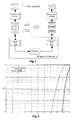
- Fig. 1 schematically illustrates an example of the recovery of lost and/or corrupted data according to the state of the art.
- Fig. 1 depicts a case where it is desired to transmit a number k of information packets from a transmitter device (left-hand side) to a receiver device (right-hand side).
- the packets are secured by an error correction code (e.g. a turbo code) and an error detection code (e.g. by a Cyclic Redundancy Check, CRC) so that corrupted packets can be removed.
- an error correction code e.g. a turbo code
- CRC Cyclic Redundancy Check
- the transmission channel is seen as a so-called erasure channel, the packets representing the transmission units.
- the received codeword packets are decoded by the packet-level decoder so that the lost and/or corrupted data can be recovered.
- the recovery of lost and/or corrupted data can be realized by a redundancy of the data.
- the encoding process handled by the packet-level encoder is usually performed in a bit-wise (or byte-wise) manner using an encoder with a Generic Binary Linear Block Code.
- the decoding will subsequently be performed by solving the equation system which is defined by the parity-check matrix H of the code. Decoders of this type which are based on Gaussian elimination, are too complex even for transmission of moderate data rates.
- the use of a Low Density Parity Check Code as a linear block code will offer two major advantages:
- the used maximum-likelihood decoder can be replaced by an iterative decoder. This imposes an upper limit on the ability to recover lost and/or corrupted data.
- LDPC codes it is possible to simplify the maximum-likelihood decoder by exploiting the sparseness of the parity check matrix.
- CER Codeword Error Rate
- the data is first coded by an encoder connected to the transmitter device.
- Said encoder can be e.g. a packet-level encoder.
- the data is transmitted by the transmitter device via a transmission device to the receiver device.
- a transmitter device as defined in the context of the present invention is any device which is suitable for transmission of data from the transmitter device to the receiver device and/or vice versa.
- the transmitter device can be provided by using a mobile broadcasting system (e.g. DVB-H or MBMS).
- the transmission of data can be carried by UMTS, for instance.
- the transmitted data is decoded through a Low Density Parity Check method wherein, during decoding, lost and/or corrupted data is recovered.
- a decoding step use is made of an iterative decoder.
- a maximum-likelihood decoder use is made of a maximum-likelihood decoder; particularly, the second decoding step is performed exclusively when the data cannot be sufficiently recovered by the iterative decoder.
- the method will start with the first decoding step performed by the iterative decoder.
- the recovered data is delivered.
- the second decoding step which is performed by the maximum-likelihood decoder. This makes it possible to reduce the number of times that the maximum-likelihood decoder is used. Considering, for instance, the performance developments according to Fig.
- the iterative decoder will in 2% of the cases not be capable to recover the lost and/or corrupted data. Consequently, in the illustrated example, the maximum-likelihood decoder would be used in only 2% of the cases. Since the iterative decoder is used in the other 98% of the cases and since this decoder is faster and simpler in operation, the method of the invention accomplishes a considerable simplification in the recovery of lost and/or corrupted data. Particularly, the method is applicable also in receiver devices which include a processor with lower performance capabilities, which e.g. is not suited for a continuous operation in the Maximum-Likelihood Method.
- the proposed method makes it possible to reach the performance of a maximum-likelihood decoder by use of less complex means.
- Both the encoder, which is connected to the transmitter device, and the decoder, which is connected to the receiver device, can be realized in hardware or software.
- the encoder and/or the decoder can be realized as software which is implemented in the transmitter device and/or the receiver device.
- the coding and decoding of the data is carried out on the packet level, i.e. in the network layer of the OSI layer model.
- a low-density parity-check matrix shall be used at the decoder. Those data packets which could be recovered neither by the iterative decoder nor by the maximum-likelihood decoder, are considered to have not been correctly transmitted so that renewed transmission of the data packets by the transmitter device can be initiated.
- an abortion parameter is defined, wherein the computations for recovery of lost and/or corrupted data by the maximum-likelihood decoder are aborted if the value ⁇ in the structured Gaussian elimination performed by the maximum-likelihood decoder exceeds the amount of the selected abortion parameter.
- the abortion parameter preferably defines an upper bound for the size of the used matrix on which Gaussian elimination is applied.
- a maximum-likelihood decoder for use with Low Density Parity Check Codes can be based on smart efficient Gaussian elimination methods in the binary field, as described e.g. in D. Burshtein and G. Miller, "An efficient maximum likelihood decoding of LDPC codes over the binary erasure channel", IEEE Transactions on Information Theory, Volume 50, no. II, pp. 2837-2844, November 2004 , or E. Paoloni, G. Liva, M. Balazs and M. Chiani, "Generalized IRA Erasure Correcting Codes for Maximum Likelihood Decoding", submitted to IEEE Communication Letters 2008 .
- the so-called structured Gaussian elimination is used. Further details for the definition of the abortion parameter will be rendered in the passages dealing with Fig. 3 within the description of figures of the present application.
- the computations for recovery of lost and/or corrupted data by the maximum-likelihood decoder are aborted if the value alpha in the structured Gaussian elimination performed by the maximum-likelihood decoder exceeds the selected abortion parameter.
- the value ⁇ in the structured Gaussian elimination will be described in greater detail in said passages dealing with Fig. 3 of the present application.
- the amount of the abortion parameter can be selected by the user of the receiver device on the basis of the available computing power of the receiver device, the current operational burden imposed on a processor of the receiver device, the desired quality of service and/or the available capacity of an energy store of the receiver device.
- the abortion parameter is decreased, it is rendered possible e.g. to reduce the operational burden of a processor of the receiver device or the power consumption of the receiver device.
- the abortion parameter there is created an additional degree of freedom which makes it possible to adapt the decoder of the receiver device to existing marginal conditions and thus make it more user-friendly and/or reliable.
- an error message can be generated by the decoder.
- An error message primarily means that the non-recovered data and data packets are reported as missing so that a new transmission will be initiated.
- a further, independent invention relates to the use of a method, particularly as described in the present application, for wireless or wire-bound transmission of data between a transmitter device and a receiver device.
- a transmission of data packets is performed from a transmitter device (left-hand side) to a receiver device (right-hand side) in the manner outlined in Fig. 1 .
- Fig. 3 schematically shows the principal procedure of the Gaussian elimination.
- U represents a sub-matrix of H and is formed by the columns of H located at the positions corresponding to lost and/or corrupted data packets.
- Fig. 3 is presented under the assumption that all of the erased packets are adjacent to each other, i.e. contiguous, and are arranged at the end of the packet-level codeword.
- U has to be brought into the diagonal form. This is possible under the condition that U comprises the largest possible number of independent rows and columns i.e. that rank (U) is equal to the number of erased packets (full rank criterion).
- the structured Gaussian elimination is performed in the following manner: First, U is brought into an approximately triangular form. This is effected by simple permutations of the rows/columns ( Fig. 3a ). In a second step, the matrix B in Fig. 3a is zeroed-out by row sums, thus generating a structure as shown in Fig.3b .
- the above-mentioned first two steps will result in a complexity that is O(u 2 ), where u represents the size of the erased bit patterns.
- a third step "brute-force Gaussian elimination” is applied to the matrix A' in Fig. 3b . This will lead to an identity matrix I.
- the third step has a complexity that is O(alpha 3 ), where alpha represents the number of columns of the matrix A'.
- the inventive method is useful to perform an improved data transmission to the above devices in spite of said insufficiency.
- the parameter a preferably defines the upper bound of the size of matrix A'.
- the complexity of the illustrated maximum-likelihood algorithm will be dictated by alpha, i.e. the number of columns of the matrix A'.
- Alpha primarily depends on the channel-erasure rate ⁇ , i.e. the higher the probability of erasure of data on a channel is, the higher the value of alpha will be. In case of low probabilities of a channel erasure, alpha can assume the value zero.
- the adapting of the complexity of the maximum-likelihood decoder is performed in that each occurrence where - after U has been brought into the triangular form according to Fig. 3a - alpha exceeds the value of the parameter a, will cause the decoder to output an error message and deliver exclusively the correctly transmitted and/or recovered data packets.
- a restoration of data by the iterative decoder should fail, it is accomplished to reach the performance of a maximum-likelihood decoder while nonetheless requiring a lesser degree of complexity.
- the complexity of the decoder can be reduced even further, which is made possible by defining an upper limit for the size of the matrix subjected to the Gaussian elimination.
- the maximum-likelihood decoder will be stopped already at an early point of time.
- the above step, i.e. the adapting of the parameter a is effective to cause a shifting of the performance of the decoder.
- the larger a is the closer the complexity and the performance of the decoder will come to the Maximum-Likelihood method.
- Shown in Fig. 4 is the codeword error rate in dependence on ⁇ for various values of the parameter a.
- a smoother transition in performance can be reached between exclusive use of an iterative decoder and exclusive use of a maximum-likelihood decoder.
- Fig. 5 schematically depicts a transmitter device 10 and a receiver device 12 wherein, via the transmission system 18 which is e.g. a UMTS connection, data is transmitted from the transmitter device 10 to the receiver device 12.
- the transmission system 18 which is e.g. a UMTS connection
- the data is encoded by the encoder 14 connected to transmitter device 10.
- the data is decoded by the decoder connected to receiver device 12.
- use is made of the Low Density Parity Check method so that lost and/or corrupted data will be recovered during decoding.
- a first decoding step is performed by use of the iterative decoder 16a.
- the receiver device may comprise a processor 22 and/or an energy store 20 such as e.g. a storage battery, and may be configured as a mobile receiver device 12.
Landscapes
- Engineering & Computer Science (AREA)
- Computer Networks & Wireless Communication (AREA)
- Signal Processing (AREA)
- Artificial Intelligence (AREA)
- Error Detection And Correction (AREA)
- Detection And Prevention Of Errors In Transmission (AREA)
Priority Applications (3)
| Application Number | Priority Date | Filing Date | Title |
|---|---|---|---|
| EP08156794A EP2134018A1 (fr) | 2008-05-23 | 2008-05-23 | Procédé de récupération de données perdues et/ou corrompues |
| DE102009017540A DE102009017540B4 (de) | 2008-05-23 | 2009-04-17 | Verfahren zum Wiederherstellen verlorener und/oder beschädigter Daten |
| US12/386,486 US8413008B2 (en) | 2008-05-23 | 2009-04-17 | Method for recovery of lost and/or corrupted data |
Applications Claiming Priority (1)
| Application Number | Priority Date | Filing Date | Title |
|---|---|---|---|
| EP08156794A EP2134018A1 (fr) | 2008-05-23 | 2008-05-23 | Procédé de récupération de données perdues et/ou corrompues |
Publications (1)
| Publication Number | Publication Date |
|---|---|
| EP2134018A1 true EP2134018A1 (fr) | 2009-12-16 |
Family
ID=40151319
Family Applications (1)
| Application Number | Title | Priority Date | Filing Date |
|---|---|---|---|
| EP08156794A Ceased EP2134018A1 (fr) | 2008-05-23 | 2008-05-23 | Procédé de récupération de données perdues et/ou corrompues |
Country Status (3)
| Country | Link |
|---|---|
| US (1) | US8413008B2 (fr) |
| EP (1) | EP2134018A1 (fr) |
| DE (1) | DE102009017540B4 (fr) |
Cited By (5)
| Publication number | Priority date | Publication date | Assignee | Title |
|---|---|---|---|---|
| WO2012025457A1 (fr) * | 2010-08-24 | 2012-03-01 | Deutsches Zentrum für Luft- und Raumfahrt e.V. | Procédé de récupération de données perdues et de correction de données corrompues |
| EP3142280A1 (fr) * | 2015-09-09 | 2017-03-15 | Alcatel Lucent | Procédé, système et support lisible par ordinateur pour la transmission de symboles entre au moins deux appareils de télécommunication |
| CN108918928A (zh) * | 2018-09-11 | 2018-11-30 | 广东石油化工学院 | 一种负荷分解中功率信号自适应重构方法 |
| CN108918930A (zh) * | 2018-09-11 | 2018-11-30 | 广东石油化工学院 | 一种负荷分解中功率信号自适应重构方法 |
| CN109309513A (zh) * | 2018-09-11 | 2019-02-05 | 广东石油化工学院 | 一种电力线通信信号自适应重构方法 |
Families Citing this family (14)
| Publication number | Priority date | Publication date | Assignee | Title |
|---|---|---|---|---|
| US8959182B1 (en) * | 2008-04-15 | 2015-02-17 | Crimson Corporation | Systems and methods for computer data recovery and destruction |
| CN101902315B (zh) * | 2009-06-01 | 2013-04-17 | 华为技术有限公司 | 基于前向纠错的重传方法、设备和通信系统 |
| US8375278B2 (en) * | 2009-07-21 | 2013-02-12 | Ramot At Tel Aviv University Ltd. | Compact decoding of punctured block codes |
| US8516351B2 (en) * | 2009-07-21 | 2013-08-20 | Ramot At Tel Aviv University Ltd. | Compact decoding of punctured block codes |
| US9397699B2 (en) * | 2009-07-21 | 2016-07-19 | Ramot At Tel Aviv University Ltd. | Compact decoding of punctured codes |
| US8516352B2 (en) * | 2009-07-21 | 2013-08-20 | Ramot At Tel Aviv University Ltd. | Compact decoding of punctured block codes |
| JP5388351B2 (ja) * | 2009-11-19 | 2014-01-15 | 株式会社Nttドコモ | 受信装置及び受信方法 |
| JP5792256B2 (ja) * | 2013-10-22 | 2015-10-07 | 日本電信電話株式会社 | 疎グラフ作成装置及び疎グラフ作成方法 |
| US9158633B2 (en) | 2013-12-24 | 2015-10-13 | International Business Machines Corporation | File corruption recovery in concurrent data protection |
| WO2015141903A1 (fr) * | 2014-03-17 | 2015-09-24 | 엘지전자 주식회사 | Procédé et dispositif permettant de décoder un code à contrôle de parité de faible densité pour correction d'erreurs sans voie de retour dans un système de communication sans fil |
| US10404288B2 (en) | 2014-05-22 | 2019-09-03 | Nec Corporation | Packet decoding device, packet decoding method, and storage medium in which program is stored |
| CN112015325B (zh) * | 2019-05-28 | 2024-03-26 | 阿里巴巴集团控股有限公司 | 一种生成解码矩阵的方法、解码方法和对应装置 |
| EP4307296B1 (fr) * | 2021-11-11 | 2025-10-08 | Shenzhen Shokz Co., Ltd. | Procédé et système de détection d'activité vocale, et procédé et système d'amélioration de la qualité de la voix |
| CN117459076B (zh) * | 2023-12-22 | 2024-03-08 | 国网湖北省电力有限公司经济技术研究院 | 基于mp译码ldpc纠删码译码方法、系统、设备及可存储介质 |
Citations (4)
| Publication number | Priority date | Publication date | Assignee | Title |
|---|---|---|---|---|
| US20030012315A1 (en) * | 2001-07-06 | 2003-01-16 | John Fan | System and method for multistage error correction coding wirelessly transmitted information in a multiple antennae communication system |
| US20060059410A1 (en) * | 2004-09-13 | 2006-03-16 | Conexant Systems, Inc. | Systems and methods for multistage signal detection in mimo transmissions and iterative detection of precoded OFDM |
| WO2007068554A1 (fr) * | 2005-12-12 | 2007-06-21 | Thomson Holding Germany Gmbh & Co. Ohg | Schema de concatenation en serie et son decodage iteratif utilisant un ldpc interne et un code bch externe |
| DE102006028947A1 (de) * | 2006-06-23 | 2007-12-27 | Technische Universität Kaiserslautern | Empfänger zum Empfangen und störungsreduzierten Ausgeben von Daten, Sender, System, Verfahren und Computerprogrammprodukt |
Family Cites Families (6)
| Publication number | Priority date | Publication date | Assignee | Title |
|---|---|---|---|---|
| KR100996029B1 (ko) * | 2003-04-29 | 2010-11-22 | 삼성전자주식회사 | 저밀도 패리티 검사 코드의 부호화 장치 및 방법 |
| US20050268202A1 (en) * | 2004-05-28 | 2005-12-01 | Molisch Andreas F | Quasi-block diagonal low-density parity-check code for MIMO systems |
| DE102004053656B4 (de) * | 2004-09-10 | 2006-11-30 | Technische Universität Dresden | Verfahren zur Verarbeitung von Signalen nach Verfahren mit blockbasierten Fehlerschutzcodes |
| CN100550655C (zh) * | 2004-11-04 | 2009-10-14 | 中兴通讯股份有限公司 | 一种低密度奇偶校验码的编码器/译码器及其生成方法 |
| WO2006068435A2 (fr) * | 2004-12-22 | 2006-06-29 | Lg Electronics Inc. | Appareil et procede de decodage de code de canal |
| WO2007072721A1 (fr) * | 2005-12-20 | 2007-06-28 | Mitsubishi Electric Corporation | Procede de generation de matrice d’inspection, procede de codage, dispositif de communication, systeme de communication et codeur |
-
2008
- 2008-05-23 EP EP08156794A patent/EP2134018A1/fr not_active Ceased
-
2009
- 2009-04-17 US US12/386,486 patent/US8413008B2/en active Active
- 2009-04-17 DE DE102009017540A patent/DE102009017540B4/de not_active Expired - Fee Related
Patent Citations (4)
| Publication number | Priority date | Publication date | Assignee | Title |
|---|---|---|---|---|
| US20030012315A1 (en) * | 2001-07-06 | 2003-01-16 | John Fan | System and method for multistage error correction coding wirelessly transmitted information in a multiple antennae communication system |
| US20060059410A1 (en) * | 2004-09-13 | 2006-03-16 | Conexant Systems, Inc. | Systems and methods for multistage signal detection in mimo transmissions and iterative detection of precoded OFDM |
| WO2007068554A1 (fr) * | 2005-12-12 | 2007-06-21 | Thomson Holding Germany Gmbh & Co. Ohg | Schema de concatenation en serie et son decodage iteratif utilisant un ldpc interne et un code bch externe |
| DE102006028947A1 (de) * | 2006-06-23 | 2007-12-27 | Technische Universität Kaiserslautern | Empfänger zum Empfangen und störungsreduzierten Ausgeben von Daten, Sender, System, Verfahren und Computerprogrammprodukt |
Non-Patent Citations (3)
| Title |
|---|
| D. BURSHTEIN; G. MILLER: "An efficient maximum likelihood decoding of LDPC codes over the binary erasure channel", IEEE TRANSACTIONS ON INFORMATION THEORY, vol. 50, no. II, November 2004 (2004-11-01), pages 2837 - 2844, XP011121168, DOI: doi:10.1109/TIT.2004.836694 |
| E. PAOLONI ET AL.: "Generalized IRA Erasure Correcting Codes for Maximum Likelihood Decoding", IEEE COMMUNICATION LETTERS, 2008 |
| ENRICO PAOLINI ET AL.: "Low-Complexity LDPC Codes with Near-Optimum Performance over the BEC", SUBMISSION FOR ADVANCED SATELLITE MOBILE SYSTEMS, 2008, 21 April 2008 (2008-04-21), Cornell University Library, XP002509841, Retrieved from the Internet <URL:http://arxiv.org/abs/0804.2991v1> [retrieved on 20090109] * |
Cited By (11)
| Publication number | Priority date | Publication date | Assignee | Title |
|---|---|---|---|---|
| WO2012025457A1 (fr) * | 2010-08-24 | 2012-03-01 | Deutsches Zentrum für Luft- und Raumfahrt e.V. | Procédé de récupération de données perdues et de correction de données corrompues |
| US9015565B2 (en) | 2010-08-24 | 2015-04-21 | Deutsches Zentrum Fuer Luft-Und Raumfahrt E.V. | Method for recovery of lost data and for correction of corrupted data |
| EP3142280A1 (fr) * | 2015-09-09 | 2017-03-15 | Alcatel Lucent | Procédé, système et support lisible par ordinateur pour la transmission de symboles entre au moins deux appareils de télécommunication |
| WO2017041929A1 (fr) * | 2015-09-09 | 2017-03-16 | Alcatel Lucent | Procédé, système et support lisible par ordinateur destinés à la transmission de symboles entre deux appareils de télécommunication ou plus |
| TWI628932B (zh) * | 2015-09-09 | 2018-07-01 | 阿卡特朗訊公司 | 用於在至少兩個電信裝置之間傳輸符號之方法、系統及電腦可讀媒體 |
| CN108918928A (zh) * | 2018-09-11 | 2018-11-30 | 广东石油化工学院 | 一种负荷分解中功率信号自适应重构方法 |
| CN108918930A (zh) * | 2018-09-11 | 2018-11-30 | 广东石油化工学院 | 一种负荷分解中功率信号自适应重构方法 |
| CN109309513A (zh) * | 2018-09-11 | 2019-02-05 | 广东石油化工学院 | 一种电力线通信信号自适应重构方法 |
| CN108918928B (zh) * | 2018-09-11 | 2020-11-10 | 广东石油化工学院 | 一种负荷分解中功率信号自适应重构方法 |
| CN108918930B (zh) * | 2018-09-11 | 2020-12-22 | 广东石油化工学院 | 一种负荷分解中功率信号自适应重构方法 |
| CN109309513B (zh) * | 2018-09-11 | 2021-06-11 | 广东石油化工学院 | 一种电力线通信信号自适应重构方法 |
Also Published As
| Publication number | Publication date |
|---|---|
| DE102009017540B4 (de) | 2011-01-20 |
| DE102009017540A1 (de) | 2009-12-10 |
| US20090292966A1 (en) | 2009-11-26 |
| US8413008B2 (en) | 2013-04-02 |
Similar Documents
| Publication | Publication Date | Title |
|---|---|---|
| EP2134018A1 (fr) | Procédé de récupération de données perdues et/ou corrompues | |
| US9548837B2 (en) | Method and apparatus for transmitting and receiving a data block in a wireless communication system | |
| US7516389B2 (en) | Concatenated iterative and algebraic coding | |
| CN102164026B (zh) | 基于深空通信环境下的喷泉码编译方法 | |
| US7831884B2 (en) | Method of correcting message errors using cyclic redundancy checks | |
| WO2017156792A1 (fr) | Transmission de nouvelles données dans une retransmission de demande de répétition automatique hybride (harq) avec des transmissions codées polaires | |
| CN107423161B (zh) | 应用于快闪存储器中的自适应ldpc码纠错码系统和方法 | |
| WO2014044072A1 (fr) | Procédé générateur et dispositif générateur pour code polaire mixte | |
| EP1908171A2 (fr) | Codage et diffusion en flux d'une correction aval des erreurs | |
| US20110119554A1 (en) | Method for transmitting non-binary codes and decoding the same | |
| CN101159514A (zh) | 一种传输块循环冗余码的添加方法 | |
| CN103001739A (zh) | 适用于无线广播系统的喷泉码译码方法 | |
| WO2010103905A1 (fr) | Procédés et dispositifs pour fournir une conception de code de protection contre les erreurs inégales à partir de codes de composition fixes sur le plan des probabilités | |
| CN103269229A (zh) | 一种ldpc-rs二维乘积码的混合迭代译码方法 | |
| CN102611463A (zh) | 多进制低密度奇偶校验码的级联编译码系统及方法 | |
| WO2003103152A2 (fr) | Decodage pondere de codes de bloc lineaire | |
| CN107395326B (zh) | Lt码中的度分布优化算法及设备 | |
| CN103944676B (zh) | 一种基于深空通信环境的lt码编译码方法 | |
| CN104135345A (zh) | 一种应用于长期演进系统的跨层编解码方法 | |
| Ma et al. | Implicit partial product-LDPC codes using free-ride coding | |
| EP2234304B1 (fr) | Procédé de récupération de données perdues et/ou corrompues | |
| CN107257244A (zh) | 一种基于广播环境下的喷泉码编码方法 | |
| RU2667370C1 (ru) | Способ декодирования линейного каскадного кода | |
| CN101150551B (zh) | 低密度奇偶校验编码的qpsk/8psk系统的交织方案 | |
| CN103916139A (zh) | 一种基于里德所罗门码的加强型编码方法、解码方法及解码器 |
Legal Events
| Date | Code | Title | Description |
|---|---|---|---|
| PUAI | Public reference made under article 153(3) epc to a published international application that has entered the european phase |
Free format text: ORIGINAL CODE: 0009012 |
|
| 17P | Request for examination filed |
Effective date: 20090724 |
|
| AK | Designated contracting states |
Kind code of ref document: A1 Designated state(s): AT BE BG CH CY CZ DE DK EE ES FI FR GB GR HR HU IE IS IT LI LT LU LV MC MT NL NO PL PT RO SE SI SK TR |
|
| AX | Request for extension of the european patent |
Extension state: AL BA MK RS |
|
| AKX | Designation fees paid |
Designated state(s): AT BE BG CH CY CZ DE DK EE ES FI FR GB GR HR HU IE IS IT LI LT LU LV MC MT NL NO PL PT RO SE SI SK TR |
|
| 17Q | First examination report despatched |
Effective date: 20120207 |
|
| STAA | Information on the status of an ep patent application or granted ep patent |
Free format text: STATUS: THE APPLICATION HAS BEEN REFUSED |
|
| 18R | Application refused |
Effective date: 20120817 |