EP2138557A1 - Reinigungszusammensetzung für die Oberfläche eines Verbrennungsmotors - Google Patents
Reinigungszusammensetzung für die Oberfläche eines Verbrennungsmotors Download PDFInfo
- Publication number
- EP2138557A1 EP2138557A1 EP08015093A EP08015093A EP2138557A1 EP 2138557 A1 EP2138557 A1 EP 2138557A1 EP 08015093 A EP08015093 A EP 08015093A EP 08015093 A EP08015093 A EP 08015093A EP 2138557 A1 EP2138557 A1 EP 2138557A1
- Authority
- EP
- European Patent Office
- Prior art keywords
- cleaning composition
- upper engine
- engine cleaning
- dielectric constant
- engine
- Prior art date
- Legal status (The legal status is an assumption and is not a legal conclusion. Google has not performed a legal analysis and makes no representation as to the accuracy of the status listed.)
- Withdrawn
Links
- 0 CCCC(C1)C1(*CC)C1CC(CC)*C1 Chemical compound CCCC(C1)C1(*CC)C1CC(CC)*C1 0.000 description 1
Images





Classifications
-
- C—CHEMISTRY; METALLURGY
- C10—PETROLEUM, GAS OR COKE INDUSTRIES; TECHNICAL GASES CONTAINING CARBON MONOXIDE; FUELS; LUBRICANTS; PEAT
- C10L—FUELS NOT OTHERWISE PROVIDED FOR; NATURAL GAS; SYNTHETIC NATURAL GAS OBTAINED BY PROCESSES NOT COVERED BY SUBCLASSES C10G OR C10K; LIQUIFIED PETROLEUM GAS; USE OF ADDITIVES TO FUELS OR FIRES; FIRE-LIGHTERS
- C10L10/00—Use of additives to fuels or fires for particular purposes
- C10L10/06—Use of additives to fuels or fires for particular purposes for facilitating soot removal
-
- C—CHEMISTRY; METALLURGY
- C11—ANIMAL OR VEGETABLE OILS, FATS, FATTY SUBSTANCES OR WAXES; FATTY ACIDS THEREFROM; DETERGENTS; CANDLES
- C11D—DETERGENT COMPOSITIONS; USE OF SINGLE SUBSTANCES AS DETERGENTS; SOAP OR SOAP-MAKING; RESIN SOAPS; RECOVERY OF GLYCEROL
- C11D17/00—Detergent materials or soaps characterised by their shape or physical properties
- C11D17/0043—For use with aerosol devices
-
- C—CHEMISTRY; METALLURGY
- C11—ANIMAL OR VEGETABLE OILS, FATS, FATTY SUBSTANCES OR WAXES; FATTY ACIDS THEREFROM; DETERGENTS; CANDLES
- C11D—DETERGENT COMPOSITIONS; USE OF SINGLE SUBSTANCES AS DETERGENTS; SOAP OR SOAP-MAKING; RESIN SOAPS; RECOVERY OF GLYCEROL
- C11D7/00—Compositions of detergents based essentially on non-surface-active compounds
- C11D7/02—Inorganic compounds
- C11D7/04—Water-soluble compounds
- C11D7/06—Hydroxides
-
- C—CHEMISTRY; METALLURGY
- C11—ANIMAL OR VEGETABLE OILS, FATS, FATTY SUBSTANCES OR WAXES; FATTY ACIDS THEREFROM; DETERGENTS; CANDLES
- C11D—DETERGENT COMPOSITIONS; USE OF SINGLE SUBSTANCES AS DETERGENTS; SOAP OR SOAP-MAKING; RESIN SOAPS; RECOVERY OF GLYCEROL
- C11D7/00—Compositions of detergents based essentially on non-surface-active compounds
- C11D7/22—Organic compounds
- C11D7/26—Organic compounds containing oxygen
- C11D7/261—Alcohols; Phenols
-
- C—CHEMISTRY; METALLURGY
- C11—ANIMAL OR VEGETABLE OILS, FATS, FATTY SUBSTANCES OR WAXES; FATTY ACIDS THEREFROM; DETERGENTS; CANDLES
- C11D—DETERGENT COMPOSITIONS; USE OF SINGLE SUBSTANCES AS DETERGENTS; SOAP OR SOAP-MAKING; RESIN SOAPS; RECOVERY OF GLYCEROL
- C11D7/00—Compositions of detergents based essentially on non-surface-active compounds
- C11D7/22—Organic compounds
- C11D7/26—Organic compounds containing oxygen
- C11D7/264—Aldehydes; Ketones; Acetals or ketals
-
- C—CHEMISTRY; METALLURGY
- C11—ANIMAL OR VEGETABLE OILS, FATS, FATTY SUBSTANCES OR WAXES; FATTY ACIDS THEREFROM; DETERGENTS; CANDLES
- C11D—DETERGENT COMPOSITIONS; USE OF SINGLE SUBSTANCES AS DETERGENTS; SOAP OR SOAP-MAKING; RESIN SOAPS; RECOVERY OF GLYCEROL
- C11D7/00—Compositions of detergents based essentially on non-surface-active compounds
- C11D7/22—Organic compounds
- C11D7/32—Organic compounds containing nitrogen
-
- C—CHEMISTRY; METALLURGY
- C11—ANIMAL OR VEGETABLE OILS, FATS, FATTY SUBSTANCES OR WAXES; FATTY ACIDS THEREFROM; DETERGENTS; CANDLES
- C11D—DETERGENT COMPOSITIONS; USE OF SINGLE SUBSTANCES AS DETERGENTS; SOAP OR SOAP-MAKING; RESIN SOAPS; RECOVERY OF GLYCEROL
- C11D7/00—Compositions of detergents based essentially on non-surface-active compounds
- C11D7/22—Organic compounds
- C11D7/32—Organic compounds containing nitrogen
- C11D7/3263—Amides or imides
-
- C—CHEMISTRY; METALLURGY
- C11—ANIMAL OR VEGETABLE OILS, FATS, FATTY SUBSTANCES OR WAXES; FATTY ACIDS THEREFROM; DETERGENTS; CANDLES
- C11D—DETERGENT COMPOSITIONS; USE OF SINGLE SUBSTANCES AS DETERGENTS; SOAP OR SOAP-MAKING; RESIN SOAPS; RECOVERY OF GLYCEROL
- C11D7/00—Compositions of detergents based essentially on non-surface-active compounds
- C11D7/22—Organic compounds
- C11D7/32—Organic compounds containing nitrogen
- C11D7/3281—Heterocyclic compounds
-
- C—CHEMISTRY; METALLURGY
- C11—ANIMAL OR VEGETABLE OILS, FATS, FATTY SUBSTANCES OR WAXES; FATTY ACIDS THEREFROM; DETERGENTS; CANDLES
- C11D—DETERGENT COMPOSITIONS; USE OF SINGLE SUBSTANCES AS DETERGENTS; SOAP OR SOAP-MAKING; RESIN SOAPS; RECOVERY OF GLYCEROL
- C11D7/00—Compositions of detergents based essentially on non-surface-active compounds
- C11D7/22—Organic compounds
- C11D7/34—Organic compounds containing sulfur
-
- C—CHEMISTRY; METALLURGY
- C11—ANIMAL OR VEGETABLE OILS, FATS, FATTY SUBSTANCES OR WAXES; FATTY ACIDS THEREFROM; DETERGENTS; CANDLES
- C11D—DETERGENT COMPOSITIONS; USE OF SINGLE SUBSTANCES AS DETERGENTS; SOAP OR SOAP-MAKING; RESIN SOAPS; RECOVERY OF GLYCEROL
- C11D7/00—Compositions of detergents based essentially on non-surface-active compounds
- C11D7/22—Organic compounds
- C11D7/36—Organic compounds containing phosphorus
-
- F—MECHANICAL ENGINEERING; LIGHTING; HEATING; WEAPONS; BLASTING
- F02—COMBUSTION ENGINES; HOT-GAS OR COMBUSTION-PRODUCT ENGINE PLANTS
- F02B—INTERNAL-COMBUSTION PISTON ENGINES; COMBUSTION ENGINES IN GENERAL
- F02B77/00—Component parts, details or accessories, not otherwise provided for
- F02B77/04—Cleaning of, preventing corrosion or erosion in, or preventing unwanted deposits in, combustion engines
-
- C—CHEMISTRY; METALLURGY
- C11—ANIMAL OR VEGETABLE OILS, FATS, FATTY SUBSTANCES OR WAXES; FATTY ACIDS THEREFROM; DETERGENTS; CANDLES
- C11D—DETERGENT COMPOSITIONS; USE OF SINGLE SUBSTANCES AS DETERGENTS; SOAP OR SOAP-MAKING; RESIN SOAPS; RECOVERY OF GLYCEROL
- C11D2111/00—Cleaning compositions characterised by the objects to be cleaned; Cleaning compositions characterised by non-standard cleaning or washing processes
- C11D2111/10—Objects to be cleaned
- C11D2111/14—Hard surfaces
- C11D2111/20—Industrial or commercial equipment, e.g. reactors, tubes or engines
Definitions
- troposphere ozone is an extremely reactive and dangerous air contaminant, condemned by the National Academy of Science and other experts, and now regulated to a limit of 0.08 part-per-million in air as an official interpretation of the Clean Air Act Amendments of 1999. At this time most states are in non-attainment, and are straining their resources to be compliant, as evident from their State Implementation Plans (SIPS), submitted periodically to the U.S.EPA. Given this background, it will be seen that the minimization of unburned fuel (VOCs) is a very important element in tropospheric ozone reduction. It will be welcomed by both regulators and environmentalists as one of the many that will ultimately lead to cleaner air.
- VOCs unburned fuel
- Valve tulips Carbonaceous build-ups on valve seats (valve tulips) cause loss of compression and an interference with optimum air-to-fuel ratios. Deposits in combustion chambers act to reduce the tension in compression rings. In turn, this reduces compressions, as well as engine power. Because of unbalanced piston compressions, engine vibrations will increase, causing excessive engine wear and reduced fuel mileage, plus even more emissions of unburned hydrocarbon fuel. Deposits on spark plugs also interfere with optimum fuel bum, due to the changing of their dynamic kilovoltage (KV) and millisecond pulse width. Carbonaceous deposits in the EGR valve are the cause of engine surging, rough engine syndrome and giving a check engine light.
- KV dynamic kilovoltage
- CSPIT Cold Spark Plug Immersion Test
- Our invention can be employed to provide a series of synergistic liquid mixtures, each capable of dispersing and dissolving modem baked-on carbonaceous deposits from the surface of the upper cylinder area of internal combustion engines, including the spark plugs and all the other component surfaces in this enclosure. Maintaining surface cleanliness is a major element in sustaining maximum operating efficiency of these engines.
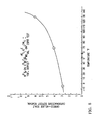
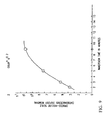
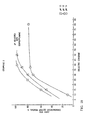
- polar protic and dipolar aprotic solvents either independently or in blends having a dielectric constant above 25 or more, can be synergized by raising the pH value to 11 or above (at 25 deg. C.). ( See Fig. 10 , Graph No. 3 ) .
- Methyl Formamide with a uniquely high dielectric constant in excess of 200, is unusually effective.
- Hydrazine and certain close derivatives
- a dielectric constant of about 53 and a pH valve of over 13 at 25 deg. C.
- concentrated aqueous Ammonium Hydroxide Solutions typically with 28.6% ammonia content
- having a dielectric constant of about 61 and a pH valve of over 13 25 deg. C.
- Our invention provides three distinct techniques for cleaning the component of the upper cylinder area of internal combustion engines. These are:
- aerosols with the desired synergistic composition and pre-determined delivery rate would be made available, together with the appropriate connector of plastic tubing and adapters.
- Each aerosol dispenser could be sized to provide maintenance for a multiplicity of internal combustion engines.
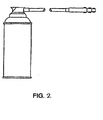
- Figs. 1-3 Illustrate an aerosol dispenser and adaptors for use with the invention
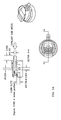
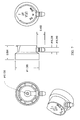
- Figs. 4-7 Illustrate various means for delivering the chemical composition of the invention to approximate areas of an engine
- Figs. 8-10 Illustrate graphs demonstrating effective use of the invention.
- Our invention provides specific compositions of matter ideal for dispersing and dissolving dense layers of heavy, baked-on carbonaceous deposits that form on surfaces within the upper internal combustion engine chambers; wherein a polar protic or dipolar aprotic solvent is synergized with a primary, secondary or tertiary amine, up to a pH valve of a least 11 (at 25 deg. C.).
- a polar protic or dipolar aprotic solvent is synergized with a primary, secondary or tertiary amine, up to a pH valve of a least 11 (at 25 deg. C.).
- a polar protic or dipolar aprotic solvent is synergized with a primary, secondary or tertiary amine, up to a pH valve of a least 11 (at 25 deg. C.).
- a polar protic or dipolar aprotic solvent is synergized with a primary, secondary or tertiary amine, up to a pH valve of
- the synergistic cleaning compositions should have a pH of 13 (at 25 deg. C.) or higher, and a dielectric constant of 35 or higher. This high level of cleaning efficiency is required because of limits imposed on engine cleaning time by OE shops, which is usually in the range of 5 to 10 minutes.
- the optimized upper engine aerosol formula for gasoline engines has a pH value of about 13.6 (25 deg. C.) and a dielectric constant of 32.01. When this optimized composition is blended in the order listed, (with moderate agitation) the batch temperature increases by approximately 16% after adding De-Ionized Water to N-Methylformamide and then increases another 16% when the primary alkylamine is added.
- the blend tank should be tightly closed and maintained with slow agitation until the batch temperature returns to room temperature.
- the blending room should be well ventilated.
- the aerosol is made by a two stage fill. First filling the concentrate into the aerosol unit and then pressure filling with the propellant and mechanically crimping the valve onto the aerosol unit. When this composition is sprayed into a test jar, using the appropriate adapter, about 40% of the product is gassed-off, due to propellant evaporation. The remaining fluid, approximately 50 ml of liquid product will typically have a temperature of about -4 deg. F. (-20 deg. C.). (50% or more of the propellant evaporates when sprayed into the plenum of a warmed-up engine, which raises the dielectric constant of the fluid to 50 plus).
- the plug To conduct the spark plug cleaning test, the plug must be lowered very slowly into the very cold liquid. This will cause some boiling, but will avoid an excessive boil-out and loss of some liquid. Use a stopwatch or other timer and wait for two (2) minutes; then lift out the plug. The test solution is then slowly poured into the standard 250 ml cylinder and brought to 250 ml with De-ionized Water, taking care not to have an excessive final boil-off of propellant. Stir until uniform. Transfer some of this solution into the Orbeco-Hellige glass tube and insert into the colorimetric test unit. Under these very cold conditions the scale reading will typically show 3.4, indicating that about 35% of the baked-on carbonaceous deposit has been dispersed and dissolved.
- the optimized formula for preventative maintenance is packaged as a 7.5 ounce (212 grams) filled in an aerosol container, which is then attached to the upper engine plenum by the use of a special adapter ( Fig. 1 ). It is important to assure that the product is delivered into the plenum in form of a mist of finely divided particles. To do this we have selected two capillary type extension tubes; one with a 0.033" (0.84 mm) and one with a 0.042" (1.07 mm) inside diameter. [See Fig. 4 , Product part No. 610000 (0.042 I.D.) and Product Part No. 640000 (0.033 I.D.)].
- capillary tubes are inserted into a Locking Actuator Cap.
- the O.D. of the capillary tube is 0.102" (02.59 mm) and the I.D. of the tube housing which protrudes from the Locking Actuator Cap is 0.107" (2.718 mm) and narrows to 0.100" (2.54 mm) at the center of the Actuator. [See Fig. 5 A ].
- the capillary tubes are pressed firmly toward the center of the Actuator and extend out ward 30" to 40", (this long adapter lets the user place the aerosol unit away from the hot vehicle engine during the cleaning process).
- a clear PVC tube is placed over the capillary tube for protection and pressed fitted over the protruding tube-housing on the Actuator and then a multi-adapter is inserted into the other end of the clear PVC tube, so this can be attach to the air intake vehicle plenum, (See Fig. 6 , clear PVC tube.) and (See Fig. 7 , multi-adapter for the vehicle plenum).
- the capillary tube will protrude approximately one inch (1") out of the multi-adapter, so that the synergistic spray mist goes directly into the plenum.
- Using the 0.033" (0.84 mm) capillary tube adapter gives a product delivery rate of about 0.50 grams per second and will last approximately seven minutes.
- the 0.042 (1.07 mm) capillary tube adapter delivers about 0.90 gram of product per second and will empty the aerosol unit in approximately four (4) minutes. The lower delivery rate works best for small gasoline and diesel engines.
- a preferred use of this product is to attach the over-cap actuator onto the aerosol valve stem and mounting cup, and then position the other end of the eductor tube, protruding through the variable diameter plenum adapter, into the upper engine plenum. Then slowly depress the actuator pad until a mechanical feature locks the valve in an "open" position. The aerosol unit will then spray until it is empty.
- the discharge rate is normally four (4) to seven (7) minutes depending on the size of the capillary I.D. selected. Since there is no operator present, in the event that the engine should stall, the aerosol will continue to spray until empty.
- This controlled spray mist will not cause any harm to the stalled engine, because this capillary adapter prevents the possibility of discharging the synergistic mixture as a heavy wet spray or liquid stream that would tend to run down the plenum wall to the closest intake runner. It would then accumulate behind a single intake valve, or if that valve was open, it would then leak down upon the top of the piston. If these things happen, when the operator attempts to start the engine, there will be the risk of hydraulically locking it, cracking the top of the piston or bending a piston rod, thus severely damaging or even destroying the engine.
- the optimized Diesel mist formula ( Table Four), Formula 526 also requires the use of this same adapter, which will deliver a finely particled mist into the center of the intake air flow, after the air filter has been removed, and when the diesel engine is at idle speed.
- a different formula (Table Four),Formula 525 can utilize this same adapter without the capillary inner tube and without a lock-down aerosol valve actuator. (This is illustrated in Fig. 2 ).
- the adapter for this assembly is designed to deliver a heavy, wet, residual spray into the plenum of a gasoline engine and adjust the engine speed to about 1500 rpm. The mechanic will then shake the aerosol dispenser, using a spray and release technique until the aerosol is empty.
- This spray technique requires the mechanic to fully actuate the aerosol dispenser for about 5 to 10 seconds, this will produce a flooding action in the upper engine which will cause the speed to decrease to about 500 rpm. The mechanic will then shut off the spray and this will allow the engine to recover its original speed of about 1500 rpm. The procedure is repeated, until the aerosol is less than about 5% full. At this point, the aerosol should be actuated until the engine stalls, after which the dispenser can be sprayed for a few more seconds until the can is empty.
- the mechanic will then let the engine “soak” for ten (10) to fifteen (15) minutes. Then he should crank the engine very slowly until it has made one complete revolution, after which regular cranking can be initiated until the engine starts.
- the engine is brought to about 3000 rpm, then snapped to about 5000 rpm briefly, to blow out any loose carbonaceous fragments.
- the vehicle should be driven for 3 to 5 miles, to fully exhaust the combustion chambers and catalytic converter.
- Formula 525 can be effectively used to "soak" cylinders, to clean entire combustion chambers, cylinder domes, piston heads and to release compression rings that have been frozen into place by hard carbonaceous depositions.
- This cleaning technique requires the use of a unique adapter 360 degree tip (illustrated in Fig. 3 ), attached to a standard plenum adapter, by replacing the multi-adapter tip with the 360 degree brass spray tip.
- Methyl Pyrrole 66% Water 34% 6.5 27+ ---- 0 53. Methyl Pyrrolidine 11.7 9.8 ---- 2 54. Methyl Pyrrolidine 66% Water 34% 11.7 33.2 ---- 75 55. Monoethanolamine 13.1 ---- ---- 10 56. Monoethanolamine 66% Water 34% 13.1 27+ ---- 80 57. Morpholine 11.0 7.3 1.75 10 58. Morpholine 66% Water 34% 11.0 31.5 1.75 70 59. Nitromethane 6.1 35.87 3.46 0 60. Nitromethane 66% Water 34% 6.1 50.5 3.46 0 61. 1-Octyl-2-Pyrrolidinone 9.7 3.82 2 62.
- Methylformamide 10% Isopropylamine 90% 13.2 24.9 ---- 75 86.
- Methylformamlde 20% Isopropylamine 80% 13.2 44.36 ---- 100 *87.
- Dimethylether 35% Formamide 22% Isopropylamine 43% 13.2 30.85 ---- 30 *88.
- Dimethylether 35% Methylformamide 22% Isopropylamine 43% 13.2 50.46 ---- 50 *Represents 50% DME loss when spraying the aeroso. Both solution temperatures were approx. 4 deg. F. after two minutes soak time.
Landscapes
- Chemical & Material Sciences (AREA)
- Engineering & Computer Science (AREA)
- Oil, Petroleum & Natural Gas (AREA)
- Organic Chemistry (AREA)
- Chemical Kinetics & Catalysis (AREA)
- Wood Science & Technology (AREA)
- Life Sciences & Earth Sciences (AREA)
- Health & Medical Sciences (AREA)
- Emergency Medicine (AREA)
- Combustion & Propulsion (AREA)
- Inorganic Chemistry (AREA)
- Mechanical Engineering (AREA)
- General Engineering & Computer Science (AREA)
- Detergent Compositions (AREA)
Applications Claiming Priority (1)
| Application Number | Priority Date | Filing Date | Title |
|---|---|---|---|
| MX2008007886A MX2008007886A (es) | 2007-07-03 | 2008-06-18 | Adaptadores limpiadores del motor superior utilizados para conectar una unidad presurizada que contiene un limpiador de motor superior a la camara de sobrepresion del vehiculo. |
Publications (1)
| Publication Number | Publication Date |
|---|---|
| EP2138557A1 true EP2138557A1 (de) | 2009-12-30 |
Family
ID=40029084
Family Applications (1)
| Application Number | Title | Priority Date | Filing Date |
|---|---|---|---|
| EP08015093A Withdrawn EP2138557A1 (de) | 2008-06-18 | 2008-08-27 | Reinigungszusammensetzung für die Oberfläche eines Verbrennungsmotors |
Country Status (1)
| Country | Link |
|---|---|
| EP (1) | EP2138557A1 (de) |
Cited By (3)
| Publication number | Priority date | Publication date | Assignee | Title |
|---|---|---|---|---|
| WO2012025227A1 (de) * | 2010-08-24 | 2012-03-01 | Tunap Industrie Chemie Gmbh & Co. Produktions Kg | Verfahren und vorrichtung zur reinigung von verkokten hohlräumen, insbesondere von einlasskanälen und ventilen eines verbrennungsmotors |
| CN104736808A (zh) * | 2012-07-27 | 2015-06-24 | 塞尔瓦斯实验室有限公司 | 催化转换器、用于保养催化转换器的套件,以及用于保养催化转换器的方法 |
| US12044489B2 (en) * | 2021-02-24 | 2024-07-23 | Vgp Ipco Llc | Foaming evaporator coil cleaner |
Citations (18)
| Publication number | Priority date | Publication date | Assignee | Title |
|---|---|---|---|---|
| US1176425A (en) * | 1914-09-08 | 1916-03-21 | Bristol Company | Hygrometer. |
| GB116010A (en) * | 1917-09-27 | 1918-05-30 | John Broadbent Perkins | A New or Improved Solution for Decarbonising and Cleansing the Interiors of Internal-combustion Engines. |
| US1787789A (en) * | 1931-01-06 | A corpora | ||
| US2047191A (en) * | 1932-05-03 | 1936-07-14 | Standard Oil Dev Co | Carbon remover and method of using the same |
| US2700005A (en) * | 1951-10-19 | 1955-01-18 | Standard Oil Co | Removal of combustion chamber deposits by solvent spraying |
| US4992187A (en) | 1989-11-15 | 1991-02-12 | Petro Chemical Products, Inc. | Composition for cleaning an internal combustion engine |
| JPH04154900A (ja) * | 1990-10-19 | 1992-05-27 | Asahi Chem Ind Co Ltd | アクリロニトリル―芳香族ビニル系高分子物質の洗浄法 |
| EP0580413A1 (de) * | 1992-07-20 | 1994-01-26 | Exxon Research And Engineering Company | Verfahren zur Kohlenstoffablagerungsreinigung und zur Verminderung des Oktanbedarfs einer Brennkraftmaschine |
| WO1995028236A1 (en) * | 1994-04-14 | 1995-10-26 | Engine Fog, Inc. | Engine cleaner composition, method, and apparatus |
| US5693599A (en) * | 1993-12-16 | 1997-12-02 | Mitsubishi Gas Chemical Company, Inc. | Flux washing agent |
| WO2002046588A1 (en) * | 2000-12-07 | 2002-06-13 | 3M Innovative Properties Company | Method of cleaning an internal combustion engine using an engine cleaner composition and fluid-dispensing device for use in said method |
| US20020116782A1 (en) * | 1997-05-23 | 2002-08-29 | Bowsman Shelba F. | Engine decarbonizing system |
| US20030060382A1 (en) * | 2001-09-21 | 2003-03-27 | Hynix Semiconductor Inc. | Solution composition for removing a remaining photoresist resin |
| WO2004113461A1 (en) * | 2003-06-20 | 2004-12-29 | Ppg Industries Ohio, Inc. | Concentrate composition and process for removing coatings from surfaces such as paint application equipment |
| EP1610185A2 (de) * | 2004-06-15 | 2005-12-28 | Air Products And Chemicals, Inc. | Zusammensetzung und Verfahren zum Entfernen von Rückständen von einem Substrat unter Verwendung derselben |
| WO2006011747A1 (en) * | 2004-07-28 | 2006-02-02 | Samyangems Co., Ltd. | Aqueous resist stripper composition |
| WO2007104746A1 (en) * | 2006-03-13 | 2007-09-20 | Basf Aktiengesellschaft | Cleaning composition for removing post-dry-etch residues |
| US20090011968A1 (en) * | 2007-07-03 | 2009-01-08 | Paul Hughett | Upper engine cleaning adaptors used to connect a pressurized unit containing an upper engine cleaner to the vehicles plenum |
-
2008
- 2008-08-27 EP EP08015093A patent/EP2138557A1/de not_active Withdrawn
Patent Citations (18)
| Publication number | Priority date | Publication date | Assignee | Title |
|---|---|---|---|---|
| US1787789A (en) * | 1931-01-06 | A corpora | ||
| US1176425A (en) * | 1914-09-08 | 1916-03-21 | Bristol Company | Hygrometer. |
| GB116010A (en) * | 1917-09-27 | 1918-05-30 | John Broadbent Perkins | A New or Improved Solution for Decarbonising and Cleansing the Interiors of Internal-combustion Engines. |
| US2047191A (en) * | 1932-05-03 | 1936-07-14 | Standard Oil Dev Co | Carbon remover and method of using the same |
| US2700005A (en) * | 1951-10-19 | 1955-01-18 | Standard Oil Co | Removal of combustion chamber deposits by solvent spraying |
| US4992187A (en) | 1989-11-15 | 1991-02-12 | Petro Chemical Products, Inc. | Composition for cleaning an internal combustion engine |
| JPH04154900A (ja) * | 1990-10-19 | 1992-05-27 | Asahi Chem Ind Co Ltd | アクリロニトリル―芳香族ビニル系高分子物質の洗浄法 |
| EP0580413A1 (de) * | 1992-07-20 | 1994-01-26 | Exxon Research And Engineering Company | Verfahren zur Kohlenstoffablagerungsreinigung und zur Verminderung des Oktanbedarfs einer Brennkraftmaschine |
| US5693599A (en) * | 1993-12-16 | 1997-12-02 | Mitsubishi Gas Chemical Company, Inc. | Flux washing agent |
| WO1995028236A1 (en) * | 1994-04-14 | 1995-10-26 | Engine Fog, Inc. | Engine cleaner composition, method, and apparatus |
| US20020116782A1 (en) * | 1997-05-23 | 2002-08-29 | Bowsman Shelba F. | Engine decarbonizing system |
| WO2002046588A1 (en) * | 2000-12-07 | 2002-06-13 | 3M Innovative Properties Company | Method of cleaning an internal combustion engine using an engine cleaner composition and fluid-dispensing device for use in said method |
| US20030060382A1 (en) * | 2001-09-21 | 2003-03-27 | Hynix Semiconductor Inc. | Solution composition for removing a remaining photoresist resin |
| WO2004113461A1 (en) * | 2003-06-20 | 2004-12-29 | Ppg Industries Ohio, Inc. | Concentrate composition and process for removing coatings from surfaces such as paint application equipment |
| EP1610185A2 (de) * | 2004-06-15 | 2005-12-28 | Air Products And Chemicals, Inc. | Zusammensetzung und Verfahren zum Entfernen von Rückständen von einem Substrat unter Verwendung derselben |
| WO2006011747A1 (en) * | 2004-07-28 | 2006-02-02 | Samyangems Co., Ltd. | Aqueous resist stripper composition |
| WO2007104746A1 (en) * | 2006-03-13 | 2007-09-20 | Basf Aktiengesellschaft | Cleaning composition for removing post-dry-etch residues |
| US20090011968A1 (en) * | 2007-07-03 | 2009-01-08 | Paul Hughett | Upper engine cleaning adaptors used to connect a pressurized unit containing an upper engine cleaner to the vehicles plenum |
Cited By (3)
| Publication number | Priority date | Publication date | Assignee | Title |
|---|---|---|---|---|
| WO2012025227A1 (de) * | 2010-08-24 | 2012-03-01 | Tunap Industrie Chemie Gmbh & Co. Produktions Kg | Verfahren und vorrichtung zur reinigung von verkokten hohlräumen, insbesondere von einlasskanälen und ventilen eines verbrennungsmotors |
| CN104736808A (zh) * | 2012-07-27 | 2015-06-24 | 塞尔瓦斯实验室有限公司 | 催化转换器、用于保养催化转换器的套件,以及用于保养催化转换器的方法 |
| US12044489B2 (en) * | 2021-02-24 | 2024-07-23 | Vgp Ipco Llc | Foaming evaporator coil cleaner |
Similar Documents
| Publication | Publication Date | Title |
|---|---|---|
| CA2818120C (en) | Method for cleaning deposits from an engine fuel delivery system | |
| EP1331376B1 (de) | Verfahren zum Entfernen von Ablagerungen in einer Brennkraftmaschine | |
| US4992187A (en) | Composition for cleaning an internal combustion engine | |
| JP4383893B2 (ja) | ガソリン添加物 | |
| KR20170109628A (ko) | 가솔린 엔진 연료 전달 시스템, 공기 흡입 시스템, 및 연소 챔버를 세정하기 위한 조성물 | |
| EP4179047B1 (de) | Kraftstoffadditive zur minderung der verschmutzung von injektordüsen und zur reduzierung von partikelemissionen | |
| JP2923806B2 (ja) | 内燃機関清浄用組成物 | |
| EP2138557A1 (de) | Reinigungszusammensetzung für die Oberfläche eines Verbrennungsmotors | |
| US20090011968A1 (en) | Upper engine cleaning adaptors used to connect a pressurized unit containing an upper engine cleaner to the vehicles plenum | |
| CA2417019C (en) | Method for removing engine deposits in a reciprocating internal combustion engine | |
| CA2904454C (en) | De-carbonizing process for combustion component cleaning | |
| HK1138870A (en) | An upper internal combustion engine cleaning composition | |
| CN109735861B (zh) | 一种发动机积碳清洗剂及其制备方法 | |
| KR20180036120A (ko) | 내연기관 세정제 및 이를 사용하는 내연기관의 세정방법 | |
| AU2022360878B2 (en) | Fuel additives for lowering deposit and particulate emission | |
| JP2002129198A (ja) | ディーゼルエンジン吸気系統の洗浄用エアゾール製品及び洗浄方法 | |
| ES2599063T3 (es) | Composiciones de aditivo y combustible que contienen un detergente, un fluidizador y sus métodos | |
| US7964003B2 (en) | Rejuvenation of stored gasoline | |
| CN100432196C (zh) | 汽油组合物 | |
| JPH101699A (ja) | ガソリンエンジンの吸気系統の発泡型洗浄剤 | |
| WO2018165540A1 (en) | Composition to treat diesel fuel system | |
| CN114369506A (zh) | 积碳清洗剂、气雾剂以及发动机燃烧室积碳的清洗方法 |
Legal Events
| Date | Code | Title | Description |
|---|---|---|---|
| PUAI | Public reference made under article 153(3) epc to a published international application that has entered the european phase |
Free format text: ORIGINAL CODE: 0009012 |
|
| AK | Designated contracting states |
Kind code of ref document: A1 Designated state(s): AT BE BG CH CY CZ DE DK EE ES FI FR GB GR HR HU IE IS IT LI LT LU LV MC MT NL NO PL PT RO SE SI SK TR |
|
| AX | Request for extension of the european patent |
Extension state: AL BA MK RS |
|
| 17P | Request for examination filed |
Effective date: 20100629 |
|
| 17Q | First examination report despatched |
Effective date: 20100803 |
|
| REG | Reference to a national code |
Ref country code: HK Ref legal event code: DE Ref document number: 1138870 Country of ref document: HK |
|
| AKX | Designation fees paid |
Designated state(s): AT BE BG CH CY CZ DE DK EE ES FI FR GB GR HR HU IE IS IT LI LT LU LV MC MT NL NO PL PT RO SE SI SK TR |
|
| STAA | Information on the status of an ep patent application or granted ep patent |
Free format text: STATUS: THE APPLICATION IS DEEMED TO BE WITHDRAWN |
|
| 18D | Application deemed to be withdrawn |
Effective date: 20120301 |
|
| REG | Reference to a national code |
Ref country code: HK Ref legal event code: WD Ref document number: 1138870 Country of ref document: HK |