EP2139259A1 - Transmission restart method, mobile station, and wireless base station - Google Patents
Transmission restart method, mobile station, and wireless base station Download PDFInfo
- Publication number
- EP2139259A1 EP2139259A1 EP08738713A EP08738713A EP2139259A1 EP 2139259 A1 EP2139259 A1 EP 2139259A1 EP 08738713 A EP08738713 A EP 08738713A EP 08738713 A EP08738713 A EP 08738713A EP 2139259 A1 EP2139259 A1 EP 2139259A1
- Authority
- EP
- European Patent Office
- Prior art keywords
- mobile station
- data series
- radio base
- base station
- transmission
- Prior art date
- Legal status (The legal status is an assumption and is not a legal conclusion. Google has not performed a legal analysis and makes no representation as to the accuracy of the status listed.)
- Granted
Links
Images



Classifications
-
- H—ELECTRICITY
- H04—ELECTRIC COMMUNICATION TECHNIQUE
- H04W—WIRELESS COMMUNICATION NETWORKS
- H04W76/00—Connection management
- H04W76/20—Manipulation of established connections
- H04W76/28—Discontinuous transmission [DTX]; Discontinuous reception [DRX]
-
- H—ELECTRICITY
- H04—ELECTRIC COMMUNICATION TECHNIQUE
- H04L—TRANSMISSION OF DIGITAL INFORMATION, e.g. TELEGRAPHIC COMMUNICATION
- H04L1/00—Arrangements for detecting or preventing errors in the information received
- H04L1/12—Arrangements for detecting or preventing errors in the information received by using return channel
- H04L1/16—Arrangements for detecting or preventing errors in the information received by using return channel in which the return channel carries supervisory signals, e.g. repetition request signals
- H04L1/18—Automatic repetition systems, e.g. Van Duuren systems
- H04L1/1812—Hybrid protocols; Hybrid automatic repeat request [HARQ]
-
- H—ELECTRICITY
- H04—ELECTRIC COMMUNICATION TECHNIQUE
- H04W—WIRELESS COMMUNICATION NETWORKS
- H04W56/00—Synchronisation arrangements
- H04W56/004—Synchronisation arrangements compensating for timing error of reception due to propagation delay
- H04W56/0045—Synchronisation arrangements compensating for timing error of reception due to propagation delay compensating for timing error by altering transmission time
-
- H—ELECTRICITY
- H04—ELECTRIC COMMUNICATION TECHNIQUE
- H04W—WIRELESS COMMUNICATION NETWORKS
- H04W72/00—Local resource management
- H04W72/12—Wireless traffic scheduling
- H04W72/1263—Mapping of traffic onto schedule, e.g. scheduled allocation or multiplexing of flows
- H04W72/1273—Mapping of traffic onto schedule, e.g. scheduled allocation or multiplexing of flows of downlink data flows
-
- H—ELECTRICITY
- H04—ELECTRIC COMMUNICATION TECHNIQUE
- H04W—WIRELESS COMMUNICATION NETWORKS
- H04W72/00—Local resource management
- H04W72/20—Control channels or signalling for resource management
- H04W72/23—Control channels or signalling for resource management in the downlink direction of a wireless link, i.e. towards a terminal
-
- H—ELECTRICITY
- H04—ELECTRIC COMMUNICATION TECHNIQUE
- H04W—WIRELESS COMMUNICATION NETWORKS
- H04W74/00—Wireless channel access
- H04W74/08—Non-scheduled access, e.g. ALOHA
- H04W74/0833—Random access procedures, e.g. with 4-step access
-
- H—ELECTRICITY
- H04—ELECTRIC COMMUNICATION TECHNIQUE
- H04W—WIRELESS COMMUNICATION NETWORKS
- H04W76/00—Connection management
- H04W76/20—Manipulation of established connections
Definitions
- the present invention relates to a transmission restarting method, a mobile station and a radio base station for restarting transmission of downlink user data to a mobile station in a discontinuous reception state.
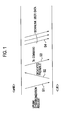
- this radio access scheme is configured to establish uplink synchronization between the radio base station eNB and the mobile station UE, as shown in Fig. 1 , when downlink user data for the mobile station UE in the discontinuous reception state occurs and when uplink synchronization is not maintained between the mobile station and the radio base station eNB.
- Step S1 the radio base station eNB transmits "UL synch request (an uplink synchronization request)" to the mobile station UE, in order to establish uplink synchronization between the radio base station eNB and the mobile station UE.
- UL synch request an uplink synchronization request
- Step S2 using an asynchronous RACH (random access channel), the mobile station UE transmits a dedicated preamble designated by the above-mentioned "UL synch request".
- asynchronous RACH random access channel
- the dedicated preamble means a data series which is individually allocated to each mobile station.
- the "UL synch request" does not include the dedicated preamble itself but includes an identifier for identifying the dedicated preamble.
- Step S3 in response to the dedicated preamble transmitted from the mobile station UE, the radio base station eNB creates a TA (Timing Advance) command for adjusting uplink transmission timing for the mobile station UE, and transmits the TA command to the mobile station UE.
- TA Timing Advance
- Step S4 the radio base station eNB transmits the above-described downlink user data to the mobile station UE by using a DL-SCH (downlink shared data channel:
- the conventional radio access scheme has a problem that, due to a limit of the number of dedicated preambles for the RACH, a dedicated preamble for the RACH cannot be allocated to a specific mobile station UE if these dedicated preambles remain unreleased.
- An object of the present invention is to provide a transmission restarting method, a mobile station and a radio base station which enable prevention of shortage of dedicated preambles allocatable to mobile stations by defining a method of releasing a dedicated preamble for a RACH in a procedure for restarting transmission of downlink user data to a mobile station in a discontinuous reception state.
- a first aspect of the present invention is summarized as a transmission restarting method of restarting transmission of downlink user data to a mobile station in a discontinuous reception state, including the steps of: allocating, at a radio base station, a data series for identifying the mobile station, to the mobile station; transmitting, at the radio base station, an uplink synchronization request to the mobile station, the uplink synchronization request designating the allocated data series; notifying, at the mobile station, the radio base station of the data series designated by the uplink synchronization request, when successfully receiving the uplink synchronization request; creating, at the radio base station, a command for adjusting uplink transmission timing, and transmitting the command to the mobile station, when receiving the data series from the mobile station; restarting, at the radio base station, transmission of the downlink user data to the mobile station, when not receiving the data series from the mobile station until a predetermined period is passed after transmission of the command; creating, at the radio base station, the command, and transmitting the command to the mobile station, when receiving the data series from the
- the mobile station and the radio base station can release the data series even before the validation period of the data series is passed, when transmission acknowledgment information in a HARQ process for the downlink user data is detected by the radio base station a predetermined number of times.
- the radio base station can notify, to the mobile station, the data series and the validity period of the data series, when transmitting the uplink synchronization request.
- the radio base station can notify, to the mobile station, the validity period of the data series, when the mobile station sets up an RRC connection.
- the radio base station can notify, to the mobile station, the validity period of the data series, when the mobile station executes a process for registration to a network.
- the validity period of the data series can be defined by a maximum number of times of retransmission of the data series when the command is not received.
- the new data series can be the same data series as the released data series.
- the data series can be a preamble for a random access channel; and the mobile station can notify, to the radio base station, the preamble designated by the uplink synchronization request by using the random access channel, when successfully receiving the uplink synchronization request.
- a second aspect of the present invention is summarized as a mobile station configured to restart continuous reception of downlink user data in a discontinuous reception state, wherein the mobile station is configured to: notify, to a radio base station, a data series designated by an uplink synchronization request transmitted by the radio base station, when successfully receiving the uplink synchronization request; notify, to the radio base station, the data series, when failing to receive a command for adjusting uplink transmission timing, the command transmitted by the radio base station; and release the data series, when a validity period of the data series is passed.
- the mobile station can be configured to release the data series even before the validation period of the data series is passed, when transmission acknowledgment information in a HARQ process for the downlink user data is transmitted a predetermined number of times.
- the mobile station is configured to release the preamble even before the validation period of the data series is passed, when receiving a command for adjusting uplink transmission timing.
- the data series can be a preamble for a random access channel
- the mobile station can be configured to notify, to the radio base station, the preamble designated by the uplink synchronization request by using the random access channel, when successfully receiving the uplink synchronization request transmitted by the radio base station.
- a third aspect of the present invention is summarized as a radio base station configured to restart transmission of downlink user data to a mobile station in a discontinuous reception state, wherein the radio base station is configured to: allocate a data series for identifying the mobile station, to the mobile station, and transmit an uplink synchronization request to the mobile station, the uplink synchronization request designating the allocated data series; create a command for adjusting uplink transmission timing and transmit the command to the mobile station, when receiving the data series from the mobile station; restart transmission of the downlink user data to the mobile station, when not receiving the data series from the mobile station until a predetermined period is passed after transmission of the command; create the command and transmit the command to the mobile station, when receiving the data series from the mobile station before the predetermined period is passed after transmission of the command; and release the data series and allocate a new data series to the mobile station, when a validity period of the data series is passed.
- the radio base station can be configured to release the data series even before the validation period of the data series is passed, when transmission acknowledgment information in a HARQ process for the downlink user data is detected a predetermined number of times.
- the new data series can be the same data series as the released data series.
- the data series can be a preamble for a random access channel.
- the present invention can provide a transmission restarting method, a mobile station, and a radio base station which enable prevention of shortage of dedicated preambles allocatable to mobile stations by defining a method of releasing a dedicated preamble for a RACH in a procedure for restarting transmission of downlink user data to a mobile station in a discontinuous reception state.
- a configuration of a mobile communication system according to a first embodiment of the present invention will be described with reference to Fig. 2 .
- a mobile communication system applying a radio access system defined by the LTE will be described as an example.
- the present invention is not limited to such mobile communication system and is also applicable to mobile communication systems applying other radio access systems.
- the mobile communication system includes a radio base station eNB and a mobile station UE. Moreover, the mobile station is configured to establish uplink synchronization when a reception state of the mobile station UE transitions from a DRX state (a discontinuous reception state) to a continuous reception state.
- a DRX state a discontinuous reception state
- the radio base station eNB includes an L1/L2 control information generator unit 11, a MAC controller unit 12, a transmitter unit 17, and a receiver unit 18.
- the L1/L2 control information generator unit 11 is configured to generate L1/L2 control information.
- the L1/L2 control information includes, for example, radio resource notification control information for notifying of a radio resource for transmission of downlink data allocated to the mobile station UE.
- the radio resource notification control information does not include a common identifier (RA-RNTI: Random Access - Radio Network Temporary Identifier) that is allocated to a response to a random access, but includes an identifier (C-RNTI: Cell-Radio Network Temporary Identifier) for individually identifying the mobile station UE within a cell.
- RA-RNTI Random Access - Radio Network Temporary Identifier
- C-RNTI Cell-Radio Network Temporary Identifier
- downlink data is assumed to correspond to a MAC-PDU and to include downlink user data to be transmitted by DCCH, DTCH or the like, a TA command, an uplink synchronization request, and so forth.
- the MAC controller unit 12 includes a HARQ manager unit 13, a RACH manager unit 14, a transmission timing manager unit 15, a MAC-PDU generator unit 16, and a scheduler unit 16a.
- the HARQ manager unit 13 is configured to perform retransmission control based on transmission acknowledgment information (ACK/NACK) of a HARQ process.
- ACK/NACK transmission acknowledgment information
- the RACH manager unlit 14 is configured to allocate a dedicated preamble (a data series which is individually allocated to each mobile station UE and used for identifying the mobile station) to be transmitted by an asynchronous RACH, to the mobile station UE. Moreover, the RACH manager unit 14 is configured to identify the dedicated preamble included in the asynchronous RACH transmitted from the mobile station UE.
- a dedicated preamble a data series which is individually allocated to each mobile station UE and used for identifying the mobile station
- the RACH manager unit 14 may be configured to set up a validity period of the dedicated preamble allocated to the mobile station UE.
- the validity period may be defined by a period starting from transmission of the uplink synchronization request or the TA command by the radio base station eNB or defined by the maximum number of times of retransmission of the dedicated preamble when the TA command is not received.
- the RACH manager unit 14 when the validity period of a dedicated preamble allocated to the mobile station UE is passed, the RACH manager unit 14 is configured to release the dedicated preamble and to allocate a new dedicated preamble to the mobile station UE.
- the RACH manager unit 14 may be configured to release the dedicated preamble when a timer started at the time of transmission of the uplink synchronization request or the TA command expires (when the validity period is passed).
- the RACH manager unit 14 may be configured to release the dedicated preamble when the number of times of retransmission of the dedicated preamble reaches the maximum number of times of retransmission thereof (when the validity period is passed).
- the RACH manager unit 14 may be configured to release the dedicated preamble when any earlier one of a period until the timer expires and a period until the number of times of transmission reaches the maximum number of times of retransmission is passed. Still alternatively, the RACH manager unit 14 may be configured to release the dedicated preamble when both of the period until the timer expires and the period until the number of times of transmission reaches the maximum number of times of retransmission are passed.
- the new dedicated preamble may be obtained by allocating the same one as the released dedicated preamble or by allocating a different preamble.
- the transmission timing manager unit 15 is configured to generate a TA command for adjusting uplink transmission timing in response to reception timing of an dedicated preamble notified by the mobile station UE, when the dedicated preamble is received from the mobile station UE before a RACH reception timer (L1 retransmission) expires after the transmitter unit 17 transmits an uplink synchronization request.
- a RACH reception timer L1 retransmission
- the uplink transmission timing includes transmission timing in an uplink control channel and in an uplink data channel.
- the MAC-PDU generator unit 16 is configured to generate a MAC-PDU (downlink data) in a radio subframe to which a transmission opportunity is allocated by the scheduler unit 16a, in response to instructions and the like from the HARQ manager unit 13, the RACH manager unit 14, and the transmission timing manager unit 15.
- the MAC-PDU generator unit 16 is configured to generate a MAC-PDU including downlink user data to be retransmitted in response to a retransmission control instruction from the HARQ manager unit 13.
- the MAC-PDU generator unit 16 is configured to generate a MAC-PDU including an uplink synchronization request that designates the dedicated preamble for the mobile station UE allocated by the RACH manager unit 14.
- the uplink synchronization request may be configured to designate the dedicated preamble for the mobile station UE by containing the dedicated preamble for the mobile station UE itself or to designate the dedicated preamble for the mobile station UE by containing an identifier for identifying the dedicated preamble for the mobile station UE instead of containing the dedicated preamble for the mobile station UE itself.
- the uplink synchronization request may be configured to designate the dedicated preamble for the mobile station UE and to designate the validity period of the dedicated preamble allocated by the RACH manager unit 14.
- the MAC-PDU generator unit 16 is configured to generate a MAC-PDU containing an uplink synchronization request designating the dedicated preamble.
- the MAC-PDU generator unit 16 is configured to generate a MAC-PDU containing the TA command that is created by the transmission timing manager unit 15.
- the transmitter unit 17 is configured to transmit L1/L2 control information by using an L1/L2 control channel (such as a PDCCH: Physical Downlink Control Channel) and to transmit a MAC-PDU including downlink user data, an uplink synchronization request, a TA command, and so forth by using a downlink data channel (such as a DL-SCH).
- L1/L2 control channel such as a PDCCH: Physical Downlink Control Channel
- a MAC-PDU including downlink user data, an uplink synchronization request, a TA command, and so forth by using a downlink data channel (such as a DL-SCH).
- the transmitter unit 17 is configured to notify a radio resource for downlink data transmission allocated to the mobile station UE, by using radio resource notification control information transmitted via the L1/L2 control channel.
- the transmitter unit 17 may be configured to notify, to the mobile station UE located in a specified area, the validity period of the dedicated preamble allocated by the RACH manager unit 14 by use of a notification channel (such as a BCH: Broadcast Channel).
- a notification channel such as a BCH: Broadcast Channel
- the transmitter unit 17 may be configured to notify, to the mobile station UE, the validity period of the dedicated preamble allocated by the RACH manager unit 14 individually when the mobile station UE sets up an RRC (Radio Resource Control) connection.
- RRC Radio Resource Control
- the transmitter unit 17 may be configured to notify, to the mobile station UE, the validity period of the dedicated preamble allocated by the RACH manager unit 14 individually as needed during communication by the mobile station UE.
- the receiver unit 18 is configured to receive an dedicated preamble for the mobile station UE and to receive transmission acknowledgment information in a HARQ process via an uplink channel (such as a PUCCH: Physical Uplink Control Channel or a PUSCH: Physical Uplink Shared Channel).
- an uplink channel such as a PUCCH: Physical Uplink Control Channel or a PUSCH: Physical Uplink Shared Channel.
- the mobile station UE includes a receiver unit 31, an L1/L2 control information processor unit 32, a MAC controller unit 33, and a transmitter unit 38.
- the L1/L2 control information processor unit 32 and the MAC controller unit 33 may be realized by a chip that is mounted on the mobile station UE.
- the receiver unit 31 is configured to receive L1/L2 control information via the L1/L2 control channel and to receive a MAC-PDU containing downlink user data, an uplink synchronization request, a TA command, and the like by using the downlink data channel.
- the receiver unit 31 is configured to receive the validity period of the dedicated preamble notified by the radio base station eNB and notifies the RACH transmission manager unit 36 of the validity period.
- the L1/L2 control information processor unit 32 is configured to perform predetermined L1/L2 control processing in accordance with the received L1/L2 control information.
- the MAC controller unit 33 includes a MAC-PDU analyzer unit 34, a HARQ transmission manager unit 35, a RACH transmission manager unit 36, and a transmission timing controller unit 37.
- the MAC-PDU analyzer unit 34 is configured to analyze the received MAC-PDU.
- the HARQ transmission manager unit 35 is configured to manage transmission of transmission acknowledgment information (ACK/NACK) in a HARQ process in accordance with a result of analysis of the MAC-PDU performed by the MAC-PDU analyzer unit 34.
- ACK/NACK transmission acknowledgment information
- the HARQ manager unit 35 may, but does not necessarily have to, transmit the transmission acknowledgment information in the HARQ process to the MAC-PDU that contains the TA command.
- the RACH transmission controller unit 36 is configured to manage transmission of an asynchronous RACH in accordance with the analysis result of the MAC-PDU by the MAC-PDU analyzer unit 34.
- the RACH transmission manager unit 36 is configured to instruct the transmitter unit 38 to transmit the dedicated preamble designated in the uplink synchronization request by using the asynchronous RACH.
- the RACH transmission manager unit 36 is configured to instruct the transmitter unit 38 to transmit the dedicated preamble designated in the uplink synchronization request again by using the asynchronous RACH.
- the RACH transmission manager unit 36 when the validity period of a dedicated preamble allocated to the mobile station UE is passed, the RACH transmission manager unit 36 is configured to release the dedicated preamble.
- the RACH transmission manager unit 36 may be configured to release the dedicated preamble when a timer started at the time of transmission of the dedicated preamble expires (when the validity period is passed).
- the RACH transmission manager unit 36 may be configured to release the dedicated preamble when the number of times of retransmission of the dedicated preamble reaches the maximum number of times of retransmission thereof (when the validity period is passed).
- the RACH transmission manager unit 36 may be configured to release the dedicated preamble when any earlier one of a period until the timer expires and a period until the number of times of transmission reaches the maximum number of times of retransmission is passed. Still alternatively, the RACH transmission manager unit 36 may be configured to release the dedicated preamble when both of the period until the timer expires and the period until the number of times of transmission reaches the maximum number of times of retransmission are passed.
- the RACH transmission manager unit 36 may be configured to release the dedicated preamble even before the validity period of the dedicated preamble is passed when the transmission acknowledgment information (ACK/NACK) in the HARQ process for downlink data is transmitted to the radio base station a predetermined number of times (N in the case of Fig. 6 ).
- ACK/NACK transmission acknowledgment information
- the RACH transmission manager unit 36 may be configured to release the dedicated preamble even before the validity period of the dedicated preamble is passed when the TA command is received from the radio base station eNB.
- the RACH transmission manager unit 36 may be configured to apply the validity period notified by the radio base station eNB as described above, or apply a predetermined validity period.
- the transmission timing controller unit 37 is configured to control uplink transmission timing (uplink channel transmission timing for an uplink data channel and an uplink control channel and the like) in accordance with the analysis result of the MAC-PDU by the MAC-PDU analyzer unit 34.
- the transmission timing controller unit 37 is configured to establish uplink synchronization by controlling the uplink transmission timing in accordance with the TA command and the like transmitted by the radio base station eNB.
- the transmitter unit 38 is configured to transmit the dedicated preamble for the mobile station UE via the asynchronous RACH in response to instructions from the HARQ transmission manager unit 35, the RACH transmission manager unit 36, and the transmission timing controller unit 37, and to transmit the transmission acknowledgment information (ACK/NACK) in the HARQ process via the uplink channel (such as the PUCCH or the PUSCH).
- ACK/NACK transmission acknowledgment information
- the radio base station eNB allocates a radio resource for downlink data transmission and a dedicated preamble to the mobile station UE, and transmits an uplink synchronization request containing the dedicated preamble and the validity period of the dedicated preamble by using the radio resource (the downlink data channel) for downlink data transmission thus allocated.
- the radio base station eNB determines whether or not to have received the dedicated preamble for the above-described uplink synchronization request from the mobile station UE in Step S104.
- the radio base station eNB releases the dedicated preamble in Step S103 and allocates a new dedicated preamble to the mobile station UE in Step S101.
- the radio base station eNB When determining in Step S104 that the radio base station eNB has received the above-described dedicated preamble, the radio base station eNB transmits a TA command to the mobile station UE in Step S105.
- this operation returns to Step S102 when it is determined in Step S104 that the radio base station eNB has not received the above-described dedicated preamble.
- Step S107 the radio base station eNB determines whether or not to have received the dedicated preamble for the above-described TA command from the mobile station UE, before a transmission restart determination timer expires.
- the radio base station eNB releases the dedicated preamble in Step S103 and allocates a new dedicated preamble to the mobile station UE in Step S101.
- Step S108 the radio base station eNB determines that uplink synchronization with the mobile station UE is established and restarts transmission of downlink data to the mobile station UE.
- this operation returns to Step S105 when it is determined that the radio base station eNB has received the above-described dedicated preamble.
- Step S201 the mobile station UE in the discontinuous reception state receives an uplink synchronization request transmitted from the radio base station eNB at reception timing (a DRX cycle) in discontinuous reception.
- Step S202 the mobile station UE transmits a dedicated preamble for the mobile station UE, which is included in the received uplink synchronization request, to the radio base station eNB.
- the mobile station UE determines whether or not to have received a TA command from the radio base station eNB before a lapse of a predetermined period in Step S205.
- the radio base station eNB releases the dedicated preamble in Step S204 and allocates a new dedicated preamble to the mobile station UE in Step S201.
- the mobile station UE determines that uplink synchronization with the radio base station eNB is established in Step S206.
- this operation returns to Step S202 when it is determined that the mobile station UE has not received the above-described TA command.
- the mobile station UE when the mobile station UE fails to receive the TA command transmitted from the radio base station eNB, the mobile station UE can urge the radio base station eNB to retransmit the TA command by transmitting the dedicated preamble for the mobile station UE until a validity period T of the dedicated preamble expires.
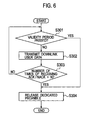
- the radio base station eNB determines whether or not the validity period of the dedicated preamble is passed in Step S301. When determining that the validity period is not passed, in Step S302, the radio base station eNB determines whether or not to have received the transmission acknowledgment information (ACK/NACK) in the HARQ process from the mobile station UE a predetermined number of times N or more.
- ACK/NACK transmission acknowledgment information
- the radio base station eNB releases the dedicated preamble in Step S304.
- Step S302 when it is determined to be equal to or above the predetermined number of times N in Step S302, the radio base station eNB releases the dedicated preamble in Step S304.
- this process returns to Step S301 when it is determined not to be equal to or above the predetermined number of times N in Step S302.
- the dedicated preamble for the mobile station UE does not need to be maintained any longer and thus can be released promptly.
- shortage of dedicated preambles allocatable to mobile stations can be prevented by defining a method of releasing a dedicated preamble for a RACH.
- the present invention can provide a transmission restarting method, a mobile station, and a radio base station which enable prevention of shortage of dedicated preambles allocatable to mobile stations by defining a method of releasing a dedicated preamble for a RACH in a procedure for restarting transmission of downlink user data to a mobile station in a discontinuous reception state. Accordingly, the present invention is useful for radio communication such as mobile communication.
Landscapes
- Engineering & Computer Science (AREA)
- Computer Networks & Wireless Communication (AREA)
- Signal Processing (AREA)
- Mobile Radio Communication Systems (AREA)
Abstract
Description
- The present invention relates to a transmission restarting method, a mobile station and a radio base station for restarting transmission of downlink user data to a mobile station in a discontinuous reception state.
- In recent years, there has been known a technique by which a mobile station UE performs "discontinuous reception" of downlink data in order to save its own battery, in a radio access scheme such as "LTE (long term evolution)", the 3GPP standardization of which is underway.
- In this radio access scheme, it is not always necessary to maintain uplink synchronization between the mobile station UE in a discontinuous reception state and a radio base station eNB.
- Accordingly, this radio access scheme is configured to establish uplink synchronization between the radio base station eNB and the mobile station UE, as shown in
Fig. 1 , when downlink user data for the mobile station UE in the discontinuous reception state occurs and when uplink synchronization is not maintained between the mobile station and the radio base station eNB. - To be more precise, as shown in
Fig. 1 , in Step S1, the radio base station eNB transmits "UL synch request (an uplink synchronization request)" to the mobile station UE, in order to establish uplink synchronization between the radio base station eNB and the mobile station UE. - In Step S2, using an asynchronous RACH (random access channel), the mobile station UE transmits a dedicated preamble designated by the above-mentioned "UL synch request".
- Here, the dedicated preamble means a data series which is individually allocated to each mobile station. Note that the "UL synch request" does not include the dedicated preamble itself but includes an identifier for identifying the dedicated preamble.
- In Step S3, in response to the dedicated preamble transmitted from the mobile station UE, the radio base station eNB creates a TA (Timing Advance) command for adjusting uplink transmission timing for the mobile station UE, and transmits the TA command to the mobile station UE.
- Thereafter, in Step S4, the radio base station eNB transmits the above-described downlink user data to the mobile station UE by using a DL-SCH (downlink shared data channel:
- Downlink-Shared Channel).
- Non-patent Document 1: 3GPP TSG RAN WG2 #57, R2-070781
- However, the conventional radio access scheme has a problem that, due to a limit of the number of dedicated preambles for the RACH, a dedicated preamble for the RACH cannot be allocated to a specific mobile station UE if these dedicated preambles remain unreleased.
- Therefore, the present invention has been made in view of the foregoing problem. An object of the present invention is to provide a transmission restarting method, a mobile station and a radio base station which enable prevention of shortage of dedicated preambles allocatable to mobile stations by defining a method of releasing a dedicated preamble for a RACH in a procedure for restarting transmission of downlink user data to a mobile station in a discontinuous reception state.
- A first aspect of the present invention is summarized as a transmission restarting method of restarting transmission of downlink user data to a mobile station in a discontinuous reception state, including the steps of: allocating, at a radio base station, a data series for identifying the mobile station, to the mobile station; transmitting, at the radio base station, an uplink synchronization request to the mobile station, the uplink synchronization request designating the allocated data series; notifying, at the mobile station, the radio base station of the data series designated by the uplink synchronization request, when successfully receiving the uplink synchronization request; creating, at the radio base station, a command for adjusting uplink transmission timing, and transmitting the command to the mobile station, when receiving the data series from the mobile station; restarting, at the radio base station, transmission of the downlink user data to the mobile station, when not receiving the data series from the mobile station until a predetermined period is passed after transmission of the command; creating, at the radio base station, the command, and transmitting the command to the mobile station, when receiving the data series from the mobile station before the predetermined period is passed after transmission of the command; releasing, at the mobile station and the radio base station, the data series, when a validity period of the data series is passed; and allocating, at the radio base station, a new data series to the mobile station, when the data series is released.
- In the first aspect, the mobile station and the radio base station can release the data series even before the validation period of the data series is passed, when transmission acknowledgment information in a HARQ process for the downlink user data is detected by the radio base station a predetermined number of times.
- In the first aspect, the radio base station can notify, to the mobile station, the data series and the validity period of the data series, when transmitting the uplink synchronization request.
- In the first aspect, the radio base station can notify, to the mobile station, the validity period of the data series, when the mobile station sets up an RRC connection.
- In the first aspect, the radio base station can notify, to the mobile station, the validity period of the data series, when the mobile station executes a process for registration to a network.
- In the first aspect, the validity period of the data series can be defined by a maximum number of times of retransmission of the data series when the command is not received.
- In the first aspect, the new data series can be the same data series as the released data series.
- In the first aspect, the data series can be a preamble for a random access channel; and the mobile station can notify, to the radio base station, the preamble designated by the uplink synchronization request by using the random access channel, when successfully receiving the uplink synchronization request.
- A second aspect of the present invention is summarized as a mobile station configured to restart continuous reception of downlink user data in a discontinuous reception state, wherein the mobile station is configured to: notify, to a radio base station, a data series designated by an uplink synchronization request transmitted by the radio base station, when successfully receiving the uplink synchronization request; notify, to the radio base station, the data series, when failing to receive a command for adjusting uplink transmission timing, the command transmitted by the radio base station; and release the data series, when a validity period of the data series is passed.
- In the second aspect, the mobile station can be configured to release the data series even before the validation period of the data series is passed, when transmission acknowledgment information in a HARQ process for the downlink user data is transmitted a predetermined number of times.
- In the second aspect, the mobile station is configured to release the preamble even before the validation period of the data series is passed, when receiving a command for adjusting uplink transmission timing.
- In the second aspect, the data series can be a preamble for a random access channel, and the mobile station can be configured to notify, to the radio base station, the preamble designated by the uplink synchronization request by using the random access channel, when successfully receiving the uplink synchronization request transmitted by the radio base station.
- A third aspect of the present invention is summarized as a radio base station configured to restart transmission of downlink user data to a mobile station in a discontinuous reception state, wherein the radio base station is configured to: allocate a data series for identifying the mobile station, to the mobile station, and transmit an uplink synchronization request to the mobile station, the uplink synchronization request designating the allocated data series; create a command for adjusting uplink transmission timing and transmit the command to the mobile station, when receiving the data series from the mobile station; restart transmission of the downlink user data to the mobile station, when not receiving the data series from the mobile station until a predetermined period is passed after transmission of the command; create the command and transmit the command to the mobile station, when receiving the data series from the mobile station before the predetermined period is passed after transmission of the command; and release the data series and allocate a new data series to the mobile station, when a validity period of the data series is passed.
- In the third aspect, the radio base station can be configured to release the data series even before the validation period of the data series is passed, when transmission acknowledgment information in a HARQ process for the downlink user data is detected a predetermined number of times.
- In the third aspect, the new data series can be the same data series as the released data series.
- In the third aspect, the data series can be a preamble for a random access channel.
- As described above, the present invention can provide a transmission restarting method, a mobile station, and a radio base station which enable prevention of shortage of dedicated preambles allocatable to mobile stations by defining a method of releasing a dedicated preamble for a RACH in a procedure for restarting transmission of downlink user data to a mobile station in a discontinuous reception state.
-
- [
Fig. 1] Fig. 1 is a view for explaining a problem of procedures for a restart from a DRX state in a mobile communication system according to a conventional technique. - [
Fig. 2] Fig. 2 is a functional block diagram of a radio base station and a mobile station according to a first embodiment of the present invention. - [
Fig. 3] Fig. 3 is a flowchart showing operations of the radio base station according to the first embodiment of the present invention. - [
Fig. 4] Fig. 4 is a flowchart showing operations of the mobile station according to the first embodiment of the present invention. - [
Fig. 5] Fig. 5 is a view for explaining procedures for a restart from a DRX state in a mobile communication system according to the first embodiment of the present invention. - [
Fig. 6] Fig. 6 is a flowchart showing the operations of the radio base station according to the first embodiment of the present invention. - [
Fig. 7] Fig. 7 is a view for explaining the procedures for the restart from the DRX state in the mobile communication system according to the first embodiment of the present invention. - A configuration of a mobile communication system according to a first embodiment of the present invention will be described with reference to
Fig. 2 . In this embodiment, a mobile communication system applying a radio access system defined by the LTE will be described as an example. However, the present invention is not limited to such mobile communication system and is also applicable to mobile communication systems applying other radio access systems. - As shown in
Fig. 2 , the mobile communication system according to this embodiment includes a radio base station eNB and a mobile station UE. Moreover, the mobile station is configured to establish uplink synchronization when a reception state of the mobile station UE transitions from a DRX state (a discontinuous reception state) to a continuous reception state. - The radio base station eNB includes an L1/L2 control
information generator unit 11, aMAC controller unit 12, atransmitter unit 17, and areceiver unit 18. - The L1/L2 control
information generator unit 11 is configured to generate L1/L2 control information. - The L1/L2 control information includes, for example, radio resource notification control information for notifying of a radio resource for transmission of downlink data allocated to the mobile station UE.
- The radio resource notification control information does not include a common identifier (RA-RNTI: Random Access - Radio Network Temporary Identifier) that is allocated to a response to a random access, but includes an identifier (C-RNTI: Cell-Radio Network Temporary Identifier) for individually identifying the mobile station UE within a cell. In other words, in this embodiment, the above-described allocation of the radio resource is executed by use of the C-RNTI instead of the RA-RNTI.
- Moreover, in this embodiment, downlink data is assumed to correspond to a MAC-PDU and to include downlink user data to be transmitted by DCCH, DTCH or the like, a TA command, an uplink synchronization request, and so forth.
- The
MAC controller unit 12 includes aHARQ manager unit 13, aRACH manager unit 14, a transmissiontiming manager unit 15, a MAC-PDU generator unit 16, and ascheduler unit 16a. - The HARQ
manager unit 13 is configured to perform retransmission control based on transmission acknowledgment information (ACK/NACK) of a HARQ process. - The RACH
manager unlit 14 is configured to allocate a dedicated preamble (a data series which is individually allocated to each mobile station UE and used for identifying the mobile station) to be transmitted by an asynchronous RACH, to the mobile station UE. Moreover, the RACHmanager unit 14 is configured to identify the dedicated preamble included in the asynchronous RACH transmitted from the mobile station UE. - Moreover, the RACH
manager unit 14 may be configured to set up a validity period of the dedicated preamble allocated to the mobile station UE. Here, the validity period may be defined by a period starting from transmission of the uplink synchronization request or the TA command by the radio base station eNB or defined by the maximum number of times of retransmission of the dedicated preamble when the TA command is not received. - Further, when the validity period of a dedicated preamble allocated to the mobile station UE is passed, the RACH
manager unit 14 is configured to release the dedicated preamble and to allocate a new dedicated preamble to the mobile station UE. Here, the RACHmanager unit 14 may be configured to release the dedicated preamble when a timer started at the time of transmission of the uplink synchronization request or the TA command expires (when the validity period is passed). Alternatively, the RACHmanager unit 14 may be configured to release the dedicated preamble when the number of times of retransmission of the dedicated preamble reaches the maximum number of times of retransmission thereof (when the validity period is passed). Still alternatively, the RACHmanager unit 14 may be configured to release the dedicated preamble when any earlier one of a period until the timer expires and a period until the number of times of transmission reaches the maximum number of times of retransmission is passed. Still alternatively, theRACH manager unit 14 may be configured to release the dedicated preamble when both of the period until the timer expires and the period until the number of times of transmission reaches the maximum number of times of retransmission are passed. - Here, the new dedicated preamble may be obtained by allocating the same one as the released dedicated preamble or by allocating a different preamble.
- The transmission
timing manager unit 15 is configured to generate a TA command for adjusting uplink transmission timing in response to reception timing of an dedicated preamble notified by the mobile station UE, when the dedicated preamble is received from the mobile station UE before a RACH reception timer (L1 retransmission) expires after thetransmitter unit 17 transmits an uplink synchronization request. - Here, the uplink transmission timing includes transmission timing in an uplink control channel and in an uplink data channel.
- The MAC-
PDU generator unit 16 is configured to generate a MAC-PDU (downlink data) in a radio subframe to which a transmission opportunity is allocated by thescheduler unit 16a, in response to instructions and the like from theHARQ manager unit 13, theRACH manager unit 14, and the transmissiontiming manager unit 15. - To be more precise, the MAC-
PDU generator unit 16 is configured to generate a MAC-PDU including downlink user data to be retransmitted in response to a retransmission control instruction from theHARQ manager unit 13. - Moreover, the MAC-
PDU generator unit 16 is configured to generate a MAC-PDU including an uplink synchronization request that designates the dedicated preamble for the mobile station UE allocated by theRACH manager unit 14. - Here, the uplink synchronization request may be configured to designate the dedicated preamble for the mobile station UE by containing the dedicated preamble for the mobile station UE itself or to designate the dedicated preamble for the mobile station UE by containing an identifier for identifying the dedicated preamble for the mobile station UE instead of containing the dedicated preamble for the mobile station UE itself.
- Note that the uplink synchronization request may be configured to designate the dedicated preamble for the mobile station UE and to designate the validity period of the dedicated preamble allocated by the
RACH manager unit 14. - Moreover, when a dedicated preamble for the mobile station UE is newly allocated to the mobile station UE by the
RACH manager unit 14, the MAC-PDU generator unit 16 is configured to generate a MAC-PDU containing an uplink synchronization request designating the dedicated preamble. - In addition, the MAC-
PDU generator unit 16 is configured to generate a MAC-PDU containing the TA command that is created by the transmissiontiming manager unit 15. - The
transmitter unit 17 is configured to transmit L1/L2 control information by using an L1/L2 control channel (such as a PDCCH: Physical Downlink Control Channel) and to transmit a MAC-PDU including downlink user data, an uplink synchronization request, a TA command, and so forth by using a downlink data channel (such as a DL-SCH). - For example, the
transmitter unit 17 is configured to notify a radio resource for downlink data transmission allocated to the mobile station UE, by using radio resource notification control information transmitted via the L1/L2 control channel. - Meanwhile, the
transmitter unit 17 may be configured to notify, to the mobile station UE located in a specified area, the validity period of the dedicated preamble allocated by theRACH manager unit 14 by use of a notification channel (such as a BCH: Broadcast Channel). - Meanwhile, the
transmitter unit 17 may be configured to notify, to the mobile station UE, the validity period of the dedicated preamble allocated by theRACH manager unit 14 individually when the mobile station UE sets up an RRC (Radio Resource Control) connection. - Meanwhile, the
transmitter unit 17 may be configured to notify, to the mobile station UE, the validity period of the dedicated preamble allocated by theRACH manager unit 14 individually as needed during communication by the mobile station UE. - The
receiver unit 18 is configured to receive an dedicated preamble for the mobile station UE and to receive transmission acknowledgment information in a HARQ process via an uplink channel (such as a PUCCH: Physical Uplink Control Channel or a PUSCH: Physical Uplink Shared Channel). - The mobile station UE includes a
receiver unit 31, an L1/L2 control information processor unit 32, aMAC controller unit 33, and atransmitter unit 38. Here, the L1/L2 control information processor unit 32 and theMAC controller unit 33 may be realized by a chip that is mounted on the mobile station UE. - The
receiver unit 31 is configured to receive L1/L2 control information via the L1/L2 control channel and to receive a MAC-PDU containing downlink user data, an uplink synchronization request, a TA command, and the like by using the downlink data channel. - Moreover, the
receiver unit 31 is configured to receive the validity period of the dedicated preamble notified by the radio base station eNB and notifies the RACHtransmission manager unit 36 of the validity period. - The L1/L2 control information processor unit 32 is configured to perform predetermined L1/L2 control processing in accordance with the received L1/L2 control information.
- The
MAC controller unit 33 includes a MAC-PDU analyzer unit 34, a HARQtransmission manager unit 35, a RACHtransmission manager unit 36, and a transmissiontiming controller unit 37. - The MAC-
PDU analyzer unit 34 is configured to analyze the received MAC-PDU. - The HARQ
transmission manager unit 35 is configured to manage transmission of transmission acknowledgment information (ACK/NACK) in a HARQ process in accordance with a result of analysis of the MAC-PDU performed by the MAC-PDU analyzer unit 34. - Here, the
HARQ manager unit 35 may, but does not necessarily have to, transmit the transmission acknowledgment information in the HARQ process to the MAC-PDU that contains the TA command. - The RACH
transmission controller unit 36 is configured to manage transmission of an asynchronous RACH in accordance with the analysis result of the MAC-PDU by the MAC-PDU analyzer unit 34. - To be more precise, when the uplink synchronization request from the radio base station eNB is received, the RACH
transmission manager unit 36 is configured to instruct thetransmitter unit 38 to transmit the dedicated preamble designated in the uplink synchronization request by using the asynchronous RACH. - Meanwhile, when the TA command from the radio base station eNB is not received for a predetermined period, the RACH
transmission manager unit 36 is configured to instruct thetransmitter unit 38 to transmit the dedicated preamble designated in the uplink synchronization request again by using the asynchronous RACH. - Moreover, when the validity period of a dedicated preamble allocated to the mobile station UE is passed, the RACH
transmission manager unit 36 is configured to release the dedicated preamble. Here, the RACHtransmission manager unit 36 may be configured to release the dedicated preamble when a timer started at the time of transmission of the dedicated preamble expires (when the validity period is passed). Alternatively, the RACHtransmission manager unit 36 may be configured to release the dedicated preamble when the number of times of retransmission of the dedicated preamble reaches the maximum number of times of retransmission thereof (when the validity period is passed). Still alternatively, the RACHtransmission manager unit 36 may be configured to release the dedicated preamble when any earlier one of a period until the timer expires and a period until the number of times of transmission reaches the maximum number of times of retransmission is passed. Still alternatively, the RACHtransmission manager unit 36 may be configured to release the dedicated preamble when both of the period until the timer expires and the period until the number of times of transmission reaches the maximum number of times of retransmission are passed. - Still alternatively, the RACH
transmission manager unit 36 may be configured to release the dedicated preamble even before the validity period of the dedicated preamble is passed when the transmission acknowledgment information (ACK/NACK) in the HARQ process for downlink data is transmitted to the radio base station a predetermined number of times (N in the case ofFig. 6 ). - Still alternatively, the RACH
transmission manager unit 36 may be configured to release the dedicated preamble even before the validity period of the dedicated preamble is passed when the TA command is received from the radio base station eNB. - Here, as for the validity period, the RACH
transmission manager unit 36 may be configured to apply the validity period notified by the radio base station eNB as described above, or apply a predetermined validity period. - The transmission
timing controller unit 37 is configured to control uplink transmission timing (uplink channel transmission timing for an uplink data channel and an uplink control channel and the like) in accordance with the analysis result of the MAC-PDU by the MAC-PDU analyzer unit 34. - To be more precise, the transmission
timing controller unit 37 is configured to establish uplink synchronization by controlling the uplink transmission timing in accordance with the TA command and the like transmitted by the radio base station eNB. - The
transmitter unit 38 is configured to transmit the dedicated preamble for the mobile station UE via the asynchronous RACH in response to instructions from the HARQtransmission manager unit 35, the RACHtransmission manager unit 36, and the transmissiontiming controller unit 37, and to transmit the transmission acknowledgment information (ACK/NACK) in the HARQ process via the uplink channel (such as the PUCCH or the PUSCH). - Operations of the mobile communication system according to the first embodiment of the present invention will be described with reference to
Fig. 3 to Fig. 7 . - First, an operation of the radio base station eNB according to this embodiment before transmission of downlink user data is restarted will be described with reference to
Fig. 3 . - As shown in
Fig. 3 , when downlink user data to be transmitted to the mobile station UE occurs in Step S101, the radio base station eNB allocates a radio resource for downlink data transmission and a dedicated preamble to the mobile station UE, and transmits an uplink synchronization request containing the dedicated preamble and the validity period of the dedicated preamble by using the radio resource (the downlink data channel) for downlink data transmission thus allocated. - When determining that the validity period of the dedicated preamble is not passed in Step S102, the radio base station eNB determines whether or not to have received the dedicated preamble for the above-described uplink synchronization request from the mobile station UE in Step S104.
- On the other hand, when determining that the validity period of the dedicated preamble is passed in Step S102, the radio base station eNB releases the dedicated preamble in Step S103 and allocates a new dedicated preamble to the mobile station UE in Step S101.
- When determining in Step S104 that the radio base station eNB has received the above-described dedicated preamble, the radio base station eNB transmits a TA command to the mobile station UE in Step S105.
- On the other hand, this operation returns to Step S102 when it is determined in Step S104 that the radio base station eNB has not received the above-described dedicated preamble.
- When determining that the validity period of the dedicated preamble is not passed in Step S106, in Step S107, the radio base station eNB determines whether or not to have received the dedicated preamble for the above-described TA command from the mobile station UE, before a transmission restart determination timer expires.
- On the other hand, when determining that the validity period of the dedicated preamble is passed in Step S106, the radio base station eNB releases the dedicated preamble in Step S103 and allocates a new dedicated preamble to the mobile station UE in Step S101.
- When determining that the radio base station eNB has not received the above-described dedicated preamble in Step S107, in Step S108, the radio base station eNB determines that uplink synchronization with the mobile station UE is established and restarts transmission of downlink data to the mobile station UE.
- On the other hand, this operation returns to Step S105 when it is determined that the radio base station eNB has received the above-described dedicated preamble.
- Second, an operation of the mobile station UE according to this embodiment before transmission of downlink user data is restarted will be described with reference to
Fig. 4 . - As shown in
Fig. 4 , in Step S201, the mobile station UE in the discontinuous reception state receives an uplink synchronization request transmitted from the radio base station eNB at reception timing (a DRX cycle) in discontinuous reception. - In Step S202, the mobile station UE transmits a dedicated preamble for the mobile station UE, which is included in the received uplink synchronization request, to the radio base station eNB.
- When determining that the validity period of the dedicated preamble is not passed in Step S203, the mobile station UE determines whether or not to have received a TA command from the radio base station eNB before a lapse of a predetermined period in Step S205.
- On the other hand, when determining that the validity period of the dedicated preamble is passed in Step S203, the radio base station eNB releases the dedicated preamble in Step S204 and allocates a new dedicated preamble to the mobile station UE in Step S201.
- When determining that the mobile station UE has received the above-described TA command in Step S205, the mobile station UE determines that uplink synchronization with the radio base station eNB is established in Step S206.
- On the other hand, this operation returns to Step S202 when it is determined that the mobile station UE has not received the above-described TA command.
- Thus, as shown in
Fig. 5 , in the mobile communication system according to this embodiment, when the mobile station UE fails to receive the TA command transmitted from the radio base station eNB, the mobile station UE can urge the radio base station eNB to retransmit the TA command by transmitting the dedicated preamble for the mobile station UE until a validity period T of the dedicated preamble expires. - Third, an operation of the radio base station eNB according to this embodiment after transmission of downlink user data is restarted will be described with reference to
Fig. 6 . - As shown in
Fig. 6 , the radio base station eNB determines whether or not the validity period of the dedicated preamble is passed in Step S301. When determining that the validity period is not passed, in Step S302, the radio base station eNB determines whether or not to have received the transmission acknowledgment information (ACK/NACK) in the HARQ process from the mobile station UE a predetermined number of times N or more. - On the other hand, when determining that the validity period is passed, the radio base station eNB releases the dedicated preamble in Step S304.
- Meanwhile, when it is determined to be equal to or above the predetermined number of times N in Step S302, the radio base station eNB releases the dedicated preamble in Step S304.
- On the other hand, this process returns to Step S301 when it is determined not to be equal to or above the predetermined number of times N in Step S302.
- Thus, as shown in
Fig. 7 , in the mobile communication system according to this embodiment, even if the validity period T of the dedicated preamble for the mobile station UE is not passed, uplink synchronization between the mobile station UE and the radio base station eNB is established when transmission of downlink user data from the radio base station eNB to the mobile station UE via the DL-SCH is successfully transmitted the predetermined number of times N, that is, when the transmission acknowledgment information (ACK/NACK) in the HARQ process for the downlink user data is detected by the radio base station eNB the predetermined number of times N. Accordingly, the dedicated preamble for the mobile station UE does not need to be maintained any longer and thus can be released promptly. - According to the mobile communication system of the first embodiment of the present invention, shortage of dedicated preambles allocatable to mobile stations can be prevented by defining a method of releasing a dedicated preamble for a RACH.
- The present invention has been explained in detail by using the above-described embodiment. However, it is obvious to those skilled in the art that the present invention is not limited to the embodiment described herein. The present invention can be implemented as modified and corrected forms without departing from the spirit and scope of the present invention to be defined by the appended claims. Therefore, it is to be understood that the description herein is for illustrative purposes only and therefore does not intend to limit the present invention whatsoever.
- It is to be understood that the entire contents of Japanese Patent Application No.
2007-077975 (filed on March 23, 2007 - As described above, the present invention can provide a transmission restarting method, a mobile station, and a radio base station which enable prevention of shortage of dedicated preambles allocatable to mobile stations by defining a method of releasing a dedicated preamble for a RACH in a procedure for restarting transmission of downlink user data to a mobile station in a discontinuous reception state. Accordingly, the present invention is useful for radio communication such as mobile communication.
Claims (16)
- A transmission restarting method of restarting transmission of downlink user data to a mobile station in a discontinuous reception state, comprising the steps of:allocating, at a radio base station, a data series for identifying the mobile station, to the mobile station;transmitting, at the radio base station, an uplink synchronization request to the mobile station, the uplink synchronization request designating the allocated data series;notifying, at the mobile station, the radio base station of the data series designated by the uplink synchronization request, when successfully' receiving the uplink synchronization request;creating, at the radio base station, a command for adjusting uplink transmission timing, and transmitting the command to the mobile station, when receiving the data series from the mobile station;restarting, at the radio base station, transmission of the downlink user data to the mobile station, when not receiving the data series from the mobile station until a predetermined period is passed after transmission of the command;creating, at the radio base station, the command, and transmitting the command to the mobile station, when receiving the data series from the mobile station before the predetermined period is passed after transmission of the command;releasing, at the mobile station and the radio base station, the data series, when a validity period of the data series is passed; andallocating, at the radio base station, a new data series to the mobile station, when the data series is released.
- The transmission restarting method according to claim 1, wherein
the mobile station and the radio base station release the data series even before the validation period of the data series is passed, when transmission acknowledgment information in a HARQ process for the downlink user data is detected by the radio base station a predetermined number of times. - The transmission restarting method according to claim 1, wherein
the radio base station notifies, to the mobile station, the data series and the validity period of the data series, when transmitting the uplink synchronization request. - The transmission restarting method according to claim 1, wherein
the radio base station notifies, to the mobile station, the validity period of the data series, when the mobile station sets up an RRC connection. - The transmission restarting method according to claim 1, wherein
the radio base station notifies, to the mobile station, the validity period of the data series, when the mobile station executes a process for registration to a network. - The transmission restarting method according to claim 1, wherein
the validity period of the data series is defined by a maximum number of times of retransmission of the data series when the command is not received. - The transmission restarting method according to claim 1, wherein
the new data series is the same data series as the released data series. - The transmission restarting method according to claim 1, wherein
the data series is a preamble for a random access channel; and
the mobile station notifies, to the radio base station, the preamble designated by the uplink synchronization request by using the random access channel, when successfully receiving the uplink synchronization request. - A mobile station configured to restart continuous reception of downlink user data in a discontinuous reception state, wherein the mobile station is configured to:notify, to a radio base station, a data series designated by an uplink synchronization request transmitted by the radio base station, when successfully receiving the uplink synchronization request;notify, to the radio base station, the data series, when failing to receive a command for adjusting uplink transmission timing, the command transmitted by the radio base station; andrelease the data series, when a validity period of the data series is passed.
- The mobile station according to claim 9, wherein
the mobile station is configured to release the data series even before the validation period of the data series is passed, when transmission acknowledgment information in a HARQ process for the downlink user data is transmitted a predetermined number of times. - The mobile station according to claim 9, wherein
the mobile station is configured to release the preamble even before the validation period of the data series is passed, when receiving a command for adjusting uplink transmission timing. - The mobile station according to claim 9, wherein
the data series is a preamble for a random access channel, and
the mobile station is configured to notify, to the radio base station, the preamble designated by the uplink synchronization request by using the random access channel, when successfully receiving the uplink synchronization request transmitted by the radio base station. - A radio base station configured to restart transmission of downlink user data to a mobile station in a discontinuous reception state, wherein the radio base station is configured to:allocate a data series for identifying the mobile station, to the mobile station, and transmit an uplink synchronization request to the mobile station, the uplink synchronization request designating the allocated data series;create a command for adjusting uplink transmission timing and transmit the command to the mobile station, when receiving the data series from the mobile station;restart transmission of the downlink user data to the mobile station, when not receiving the data series from the mobile station until a predetermined period is passed after transmission of the command;create the command and transmit the command to the mobile station, when receiving the data series from the mobile station before the predetermined period is passed after transmission of the command; andrelease the data series and allocate a new data series to the mobile station, when a validity period of the data series is passed.
- The radio base station according to claim 13, wherein
the radio base station is configured to release the data series even before the validation period of the data series is passed, when transmission acknowledgment information in a HARQ process for the downlink user data is detected a predetermined number of times. - The radio base station according to claim 13, wherein
the new data series is the same data series as the released data series. - The radio base station according to claim 13, wherein
the data series is a preamble for a random access channel.
Applications Claiming Priority (2)
| Application Number | Priority Date | Filing Date | Title |
|---|---|---|---|
| JP2007077975 | 2007-03-23 | ||
| PCT/JP2008/055320 WO2008123155A1 (en) | 2007-03-23 | 2008-03-21 | Transmission restart method, mobile station, and wireless base station |
Publications (3)
| Publication Number | Publication Date |
|---|---|
| EP2139259A1 true EP2139259A1 (en) | 2009-12-30 |
| EP2139259A4 EP2139259A4 (en) | 2011-01-26 |
| EP2139259B1 EP2139259B1 (en) | 2012-04-25 |
Family
ID=39830652
Family Applications (1)
| Application Number | Title | Priority Date | Filing Date |
|---|---|---|---|
| EP08738713A Not-in-force EP2139259B1 (en) | 2007-03-23 | 2008-03-21 | Transmission restart method, mobile station, and radio base station |
Country Status (7)
| Country | Link |
|---|---|
| US (1) | US20100074246A1 (en) |
| EP (1) | EP2139259B1 (en) |
| JP (1) | JP5118128B2 (en) |
| KR (1) | KR20090119982A (en) |
| CN (1) | CN101663913B (en) |
| AT (1) | ATE555631T1 (en) |
| WO (1) | WO2008123155A1 (en) |
Cited By (1)
| Publication number | Priority date | Publication date | Assignee | Title |
|---|---|---|---|---|
| EP2802177A4 (en) * | 2012-01-06 | 2016-01-27 | Fujitsu Ltd | BASE STATION, WIRELESS TERMINAL, WIRELESS COMMUNICATION SYSTEM, AND WIRELESS COMMUNICATION METHOD |
Families Citing this family (28)
| Publication number | Priority date | Publication date | Assignee | Title |
|---|---|---|---|---|
| JP5210990B2 (en) * | 2009-07-17 | 2013-06-12 | 株式会社エヌ・ティ・ティ・ドコモ | Mobile communication system, mobile station and radio base station |
| JP5322832B2 (en) * | 2009-08-06 | 2013-10-23 | シャープ株式会社 | Mobile station apparatus, base station apparatus, radio communication system, and random access method |
| HUE031543T2 (en) | 2009-09-15 | 2017-07-28 | Huawei Tech Co Ltd | Uplink synchronization processing method, user equipment and base station |
| EP2364041B1 (en) * | 2010-03-03 | 2012-09-19 | Research In Motion Limited | Method and apparatus to signal use-specific capabilities of mobile stations to establish data transfer sessions |
| EP3179809B1 (en) | 2010-03-03 | 2019-07-10 | BlackBerry Limited | Method and apparatus to signal use-specific capabilities of mobile stations to establish data transfer sessions |
| EP4539565A3 (en) * | 2010-03-12 | 2025-06-18 | Malikie Innovations Limited | Timing advance enhancements for cellular communications |
| EP2367392B1 (en) * | 2010-03-12 | 2015-11-11 | BlackBerry Limited | Method and device for registration and data transmission using fast / zero contention resolution |
| EP2365717A1 (en) * | 2010-03-12 | 2011-09-14 | Research In Motion Limited | Communication station and method for transmitting on a random access channel |
| EP2367393B8 (en) * | 2010-03-12 | 2015-12-30 | BlackBerry Limited | Communication Station and Method for Transmitting Additional Information on an Enhanced Random Access Channel |
| EP2367394B1 (en) * | 2010-03-12 | 2015-11-25 | BlackBerry Limited | Base station and method for receiving transmissions on an enhanced random access channel |
| CN103069738B (en) * | 2010-07-15 | 2016-01-20 | Lg电子株式会社 | The method and apparatus of subscriber equipment transmission and reception confirmation response in wireless communication system |
| US8395985B2 (en) * | 2011-07-25 | 2013-03-12 | Ofinno Technologies, Llc | Time alignment in multicarrier OFDM network |
| US9474081B2 (en) * | 2011-07-26 | 2016-10-18 | Broadcom Corporation | Method for obtaining a timing advance value |
| US20130039287A1 (en) | 2011-08-12 | 2013-02-14 | Venkata Ratnakar Rao Rayavarapu | Simplified ue + enb messaging |
| US9258839B2 (en) | 2011-08-12 | 2016-02-09 | Blackberry Limited | Other network component receiving RRC configuration information from eNB |
| US9504081B2 (en) | 2011-08-12 | 2016-11-22 | Blackberry Limited | Suspending a connection in a wireless communication system |
| US9237537B2 (en) | 2012-01-25 | 2016-01-12 | Ofinno Technologies, Llc | Random access process in a multicarrier base station and wireless device |
| US9155121B2 (en) | 2012-03-27 | 2015-10-06 | Blackberry Limited | Re-establishment of suspended RRC connection at a different eNB |
| US9247575B2 (en) | 2012-03-27 | 2016-01-26 | Blackberry Limited | eNB storing RRC configuration information at another network component |
| US9295095B2 (en) | 2012-03-27 | 2016-03-22 | Blackberry Limited | UE preference indicator for suspension |
| US11943813B2 (en) | 2012-04-01 | 2024-03-26 | Comcast Cable Communications, Llc | Cell grouping for wireless communications |
| US11825419B2 (en) | 2012-04-16 | 2023-11-21 | Comcast Cable Communications, Llc | Cell timing in a wireless device and base station |
| US11882560B2 (en) | 2012-06-18 | 2024-01-23 | Comcast Cable Communications, Llc | Carrier grouping in multicarrier wireless networks |
| KR102629352B1 (en) | 2016-05-13 | 2024-01-25 | 삼성전자주식회사 | Method and apparatus for deciding timing of uplink data and control signal transmission in wirelss cellular communication system |
| CN107690199B (en) * | 2016-08-05 | 2019-12-13 | 电信科学技术研究院 | Method and equipment for resource allocation and random access |
| CN112154693A (en) * | 2018-05-10 | 2020-12-29 | 上海诺基亚贝尔股份有限公司 | Monitoring PDCCH for uplink HARQ-ACK feedback |
| JP7506190B2 (en) * | 2020-05-25 | 2024-06-25 | ノキア テクノロジーズ オサケユイチア | DEVICE FOR A WIRELESS COMMUNICATION NETWORK, METHOD FOR OPERATING A DEVICE FOR A WIRELESS COMMUNICATION NETWORK - Patent application |
| US20240097740A1 (en) * | 2022-09-19 | 2024-03-21 | Apple Inc. | Systems and methods to conform transmission to regulatory restrictions in wireless communications |
Family Cites Families (2)
| Publication number | Priority date | Publication date | Assignee | Title |
|---|---|---|---|---|
| US20070064665A1 (en) * | 2005-08-23 | 2007-03-22 | Interdigital Technology Corporation | Method and apparatus for accessing an uplink random access channel in a single carrier frequency division multiple access system |
| CN100456698C (en) * | 2006-07-27 | 2009-01-28 | 普天信息技术研究院 | A method for starting a base station |
-
2008
- 2008-03-21 KR KR1020097019729A patent/KR20090119982A/en not_active Abandoned
- 2008-03-21 CN CN2008800095663A patent/CN101663913B/en not_active Expired - Fee Related
- 2008-03-21 AT AT08738713T patent/ATE555631T1/en active
- 2008-03-21 WO PCT/JP2008/055320 patent/WO2008123155A1/en not_active Ceased
- 2008-03-21 JP JP2009509081A patent/JP5118128B2/en not_active Expired - Fee Related
- 2008-03-21 EP EP08738713A patent/EP2139259B1/en not_active Not-in-force
- 2008-03-21 US US12/532,736 patent/US20100074246A1/en not_active Abandoned
Cited By (2)
| Publication number | Priority date | Publication date | Assignee | Title |
|---|---|---|---|---|
| EP2802177A4 (en) * | 2012-01-06 | 2016-01-27 | Fujitsu Ltd | BASE STATION, WIRELESS TERMINAL, WIRELESS COMMUNICATION SYSTEM, AND WIRELESS COMMUNICATION METHOD |
| US9451544B2 (en) | 2012-01-06 | 2016-09-20 | Fujitsu Limited | Base station, radio terminal and radio communication system |
Also Published As
| Publication number | Publication date |
|---|---|
| ATE555631T1 (en) | 2012-05-15 |
| EP2139259A4 (en) | 2011-01-26 |
| EP2139259B1 (en) | 2012-04-25 |
| JPWO2008123155A1 (en) | 2010-07-15 |
| WO2008123155A1 (en) | 2008-10-16 |
| JP5118128B2 (en) | 2013-01-16 |
| US20100074246A1 (en) | 2010-03-25 |
| CN101663913B (en) | 2013-03-20 |
| CN101663913A (en) | 2010-03-03 |
| KR20090119982A (en) | 2009-11-23 |
Similar Documents
| Publication | Publication Date | Title |
|---|---|---|
| EP2139259A1 (en) | Transmission restart method, mobile station, and wireless base station | |
| US8442027B2 (en) | Mobile station, radio base station and synchronization establishing method | |
| EP3277042B1 (en) | Method and apparatus for improving msg3 transmission of random access procedure in a wireless communication system | |
| KR101531419B1 (en) | Operation Method of Uplink HARQ at Expiration of Time Synchronization Timer | |
| EP2288223B1 (en) | Method for timing adjustment, mobile station, base station, and mobile communication system | |
| KR101429294B1 (en) | How to limit scheduling requests for efficient data transfer | |
| KR101514079B1 (en) | Reconfiguration method of uplink time synchronization timer | |
| US7843895B2 (en) | Method of performing uplink synchronization in random access procedure | |
| KR100902897B1 (en) | Method for random access | |
| US9338800B2 (en) | Method of performing random access procedure in wireless communication system | |
| EP3930414B1 (en) | Random access method and device | |
| EP2144452A1 (en) | Mobile communication method, wireless base station, mobile station, and processor | |
| US8571006B2 (en) | Mobile communication method and radio base station | |
| CN101873707B (en) | Downlink data scheduling method and system | |
| JP2009535954A (en) | Apparatus, method and computer program for providing uplink synchronization by using dedicated uplink resource allocation | |
| JPWO2009133599A1 (en) | Connection processing method, radio base station, and radio terminal in radio communication system | |
| CN110958670A (en) | Uplink data transmission method, user terminal and network side equipment | |
| US8238305B2 (en) | Transmission restarting method and radio base station | |
| CN103260235A (en) | Timing adjustment method, mobile radio station, base station and mobile communication system |
Legal Events
| Date | Code | Title | Description |
|---|---|---|---|
| PUAI | Public reference made under article 153(3) epc to a published international application that has entered the european phase |
Free format text: ORIGINAL CODE: 0009012 |
|
| 17P | Request for examination filed |
Effective date: 20091015 |
|
| AK | Designated contracting states |
Kind code of ref document: A1 Designated state(s): AT BE BG CH CY CZ DE DK EE ES FI FR GB GR HR HU IE IS IT LI LT LU LV MC MT NL NO PL PT RO SE SI SK TR |
|
| RIC1 | Information provided on ipc code assigned before grant |
Ipc: H04W 84/02 20090101ALI20091201BHEP Ipc: H04W 4/00 20090101AFI20091201BHEP |
|
| DAX | Request for extension of the european patent (deleted) | ||
| A4 | Supplementary search report drawn up and despatched |
Effective date: 20101223 |
|
| RIC1 | Information provided on ipc code assigned before grant |
Ipc: H04B 7/26 20060101AFI20101217BHEP |
|
| REG | Reference to a national code |
Ref country code: DE Ref legal event code: R079 Ref document number: 602008015199 Country of ref document: DE Free format text: PREVIOUS MAIN CLASS: H04W0004000000 Ipc: H04W0056000000 Ref country code: DE Ref legal event code: R079 Ref document number: 602008015199 Country of ref document: DE Free format text: PREVIOUS MAIN CLASS: H04Q0007380000 Ipc: H04W0056000000 |
|
| GRAP | Despatch of communication of intention to grant a patent |
Free format text: ORIGINAL CODE: EPIDOSNIGR1 |
|
| RIC1 | Information provided on ipc code assigned before grant |
Ipc: H04W 56/00 20090101AFI20110628BHEP |
|
| GRAS | Grant fee paid |
Free format text: ORIGINAL CODE: EPIDOSNIGR3 |
|
| GRAA | (expected) grant |
Free format text: ORIGINAL CODE: 0009210 |
|
| RTI1 | Title (correction) |
Free format text: TRANSMISSION RESTART METHOD, MOBILE STATION, AND RADIO BASE STATION |
|
| AK | Designated contracting states |
Kind code of ref document: B1 Designated state(s): AT BE BG CH CY CZ DE DK EE ES FI FR GB GR HR HU IE IS IT LI LT LU LV MC MT NL NO PL PT RO SE SI SK TR |
|
| REG | Reference to a national code |
Ref country code: GB Ref legal event code: FG4D |
|
| REG | Reference to a national code |
Ref country code: CH Ref legal event code: EP |
|
| REG | Reference to a national code |
Ref country code: AT Ref legal event code: REF Ref document number: 555631 Country of ref document: AT Kind code of ref document: T Effective date: 20120515 |
|
| REG | Reference to a national code |
Ref country code: IE Ref legal event code: FG4D |
|
| REG | Reference to a national code |
Ref country code: DE Ref legal event code: R096 Ref document number: 602008015199 Country of ref document: DE Effective date: 20120705 |
|
| REG | Reference to a national code |
Ref country code: NL Ref legal event code: VDEP Effective date: 20120425 |
|
| REG | Reference to a national code |
Ref country code: AT Ref legal event code: MK05 Ref document number: 555631 Country of ref document: AT Kind code of ref document: T Effective date: 20120425 |
|
| LTIE | Lt: invalidation of european patent or patent extension |
Effective date: 20120425 |
|
| PG25 | Lapsed in a contracting state [announced via postgrant information from national office to epo] |
Ref country code: LT Free format text: LAPSE BECAUSE OF FAILURE TO SUBMIT A TRANSLATION OF THE DESCRIPTION OR TO PAY THE FEE WITHIN THE PRESCRIBED TIME-LIMIT Effective date: 20120425 Ref country code: NO Free format text: LAPSE BECAUSE OF FAILURE TO SUBMIT A TRANSLATION OF THE DESCRIPTION OR TO PAY THE FEE WITHIN THE PRESCRIBED TIME-LIMIT Effective date: 20120725 Ref country code: FI Free format text: LAPSE BECAUSE OF FAILURE TO SUBMIT A TRANSLATION OF THE DESCRIPTION OR TO PAY THE FEE WITHIN THE PRESCRIBED TIME-LIMIT Effective date: 20120425 Ref country code: CY Free format text: LAPSE BECAUSE OF FAILURE TO SUBMIT A TRANSLATION OF THE DESCRIPTION OR TO PAY THE FEE WITHIN THE PRESCRIBED TIME-LIMIT Effective date: 20120425 Ref country code: IS Free format text: LAPSE BECAUSE OF FAILURE TO SUBMIT A TRANSLATION OF THE DESCRIPTION OR TO PAY THE FEE WITHIN THE PRESCRIBED TIME-LIMIT Effective date: 20120825 Ref country code: SE Free format text: LAPSE BECAUSE OF FAILURE TO SUBMIT A TRANSLATION OF THE DESCRIPTION OR TO PAY THE FEE WITHIN THE PRESCRIBED TIME-LIMIT Effective date: 20120425 Ref country code: PL Free format text: LAPSE BECAUSE OF FAILURE TO SUBMIT A TRANSLATION OF THE DESCRIPTION OR TO PAY THE FEE WITHIN THE PRESCRIBED TIME-LIMIT Effective date: 20120425 |
|
| PG25 | Lapsed in a contracting state [announced via postgrant information from national office to epo] |
Ref country code: GR Free format text: LAPSE BECAUSE OF FAILURE TO SUBMIT A TRANSLATION OF THE DESCRIPTION OR TO PAY THE FEE WITHIN THE PRESCRIBED TIME-LIMIT Effective date: 20120726 Ref country code: SI Free format text: LAPSE BECAUSE OF FAILURE TO SUBMIT A TRANSLATION OF THE DESCRIPTION OR TO PAY THE FEE WITHIN THE PRESCRIBED TIME-LIMIT Effective date: 20120425 Ref country code: HR Free format text: LAPSE BECAUSE OF FAILURE TO SUBMIT A TRANSLATION OF THE DESCRIPTION OR TO PAY THE FEE WITHIN THE PRESCRIBED TIME-LIMIT Effective date: 20120425 Ref country code: PT Free format text: LAPSE BECAUSE OF FAILURE TO SUBMIT A TRANSLATION OF THE DESCRIPTION OR TO PAY THE FEE WITHIN THE PRESCRIBED TIME-LIMIT Effective date: 20120827 Ref country code: LV Free format text: LAPSE BECAUSE OF FAILURE TO SUBMIT A TRANSLATION OF THE DESCRIPTION OR TO PAY THE FEE WITHIN THE PRESCRIBED TIME-LIMIT Effective date: 20120425 |
|
| PG25 | Lapsed in a contracting state [announced via postgrant information from national office to epo] |
Ref country code: BE Free format text: LAPSE BECAUSE OF FAILURE TO SUBMIT A TRANSLATION OF THE DESCRIPTION OR TO PAY THE FEE WITHIN THE PRESCRIBED TIME-LIMIT Effective date: 20120425 |
|
| PG25 | Lapsed in a contracting state [announced via postgrant information from national office to epo] |
Ref country code: NL Free format text: LAPSE BECAUSE OF FAILURE TO SUBMIT A TRANSLATION OF THE DESCRIPTION OR TO PAY THE FEE WITHIN THE PRESCRIBED TIME-LIMIT Effective date: 20120425 Ref country code: CZ Free format text: LAPSE BECAUSE OF FAILURE TO SUBMIT A TRANSLATION OF THE DESCRIPTION OR TO PAY THE FEE WITHIN THE PRESCRIBED TIME-LIMIT Effective date: 20120425 Ref country code: RO Free format text: LAPSE BECAUSE OF FAILURE TO SUBMIT A TRANSLATION OF THE DESCRIPTION OR TO PAY THE FEE WITHIN THE PRESCRIBED TIME-LIMIT Effective date: 20120425 Ref country code: SK Free format text: LAPSE BECAUSE OF FAILURE TO SUBMIT A TRANSLATION OF THE DESCRIPTION OR TO PAY THE FEE WITHIN THE PRESCRIBED TIME-LIMIT Effective date: 20120425 Ref country code: EE Free format text: LAPSE BECAUSE OF FAILURE TO SUBMIT A TRANSLATION OF THE DESCRIPTION OR TO PAY THE FEE WITHIN THE PRESCRIBED TIME-LIMIT Effective date: 20120425 Ref country code: AT Free format text: LAPSE BECAUSE OF FAILURE TO SUBMIT A TRANSLATION OF THE DESCRIPTION OR TO PAY THE FEE WITHIN THE PRESCRIBED TIME-LIMIT Effective date: 20120425 Ref country code: DK Free format text: LAPSE BECAUSE OF FAILURE TO SUBMIT A TRANSLATION OF THE DESCRIPTION OR TO PAY THE FEE WITHIN THE PRESCRIBED TIME-LIMIT Effective date: 20120425 |
|
| PG25 | Lapsed in a contracting state [announced via postgrant information from national office to epo] |
Ref country code: IT Free format text: LAPSE BECAUSE OF FAILURE TO SUBMIT A TRANSLATION OF THE DESCRIPTION OR TO PAY THE FEE WITHIN THE PRESCRIBED TIME-LIMIT Effective date: 20120425 |
|
| PLBE | No opposition filed within time limit |
Free format text: ORIGINAL CODE: 0009261 |
|
| STAA | Information on the status of an ep patent application or granted ep patent |
Free format text: STATUS: NO OPPOSITION FILED WITHIN TIME LIMIT |
|
| 26N | No opposition filed |
Effective date: 20130128 |
|
| PG25 | Lapsed in a contracting state [announced via postgrant information from national office to epo] |
Ref country code: ES Free format text: LAPSE BECAUSE OF FAILURE TO SUBMIT A TRANSLATION OF THE DESCRIPTION OR TO PAY THE FEE WITHIN THE PRESCRIBED TIME-LIMIT Effective date: 20120805 |
|
| REG | Reference to a national code |
Ref country code: DE Ref legal event code: R097 Ref document number: 602008015199 Country of ref document: DE Effective date: 20130128 |
|
| PG25 | Lapsed in a contracting state [announced via postgrant information from national office to epo] |
Ref country code: BG Free format text: LAPSE BECAUSE OF FAILURE TO SUBMIT A TRANSLATION OF THE DESCRIPTION OR TO PAY THE FEE WITHIN THE PRESCRIBED TIME-LIMIT Effective date: 20120725 |
|
| PG25 | Lapsed in a contracting state [announced via postgrant information from national office to epo] |
Ref country code: MC Free format text: LAPSE BECAUSE OF NON-PAYMENT OF DUE FEES Effective date: 20130331 |
|
| REG | Reference to a national code |
Ref country code: CH Ref legal event code: PL |
|
| GBPC | Gb: european patent ceased through non-payment of renewal fee |
Effective date: 20130321 |
|
| REG | Reference to a national code |
Ref country code: FR Ref legal event code: ST Effective date: 20131129 |
|
| REG | Reference to a national code |
Ref country code: IE Ref legal event code: MM4A |
|
| PG25 | Lapsed in a contracting state [announced via postgrant information from national office to epo] |
Ref country code: CH Free format text: LAPSE BECAUSE OF NON-PAYMENT OF DUE FEES Effective date: 20130331 Ref country code: IE Free format text: LAPSE BECAUSE OF NON-PAYMENT OF DUE FEES Effective date: 20130321 Ref country code: GB Free format text: LAPSE BECAUSE OF NON-PAYMENT OF DUE FEES Effective date: 20130321 Ref country code: FR Free format text: LAPSE BECAUSE OF NON-PAYMENT OF DUE FEES Effective date: 20130402 Ref country code: LI Free format text: LAPSE BECAUSE OF NON-PAYMENT OF DUE FEES Effective date: 20130331 |
|
| PG25 | Lapsed in a contracting state [announced via postgrant information from national office to epo] |
Ref country code: MT Free format text: LAPSE BECAUSE OF FAILURE TO SUBMIT A TRANSLATION OF THE DESCRIPTION OR TO PAY THE FEE WITHIN THE PRESCRIBED TIME-LIMIT Effective date: 20120425 |
|
| PG25 | Lapsed in a contracting state [announced via postgrant information from national office to epo] |
Ref country code: TR Free format text: LAPSE BECAUSE OF FAILURE TO SUBMIT A TRANSLATION OF THE DESCRIPTION OR TO PAY THE FEE WITHIN THE PRESCRIBED TIME-LIMIT Effective date: 20120425 |
|
| PG25 | Lapsed in a contracting state [announced via postgrant information from national office to epo] |
Ref country code: HU Free format text: LAPSE BECAUSE OF FAILURE TO SUBMIT A TRANSLATION OF THE DESCRIPTION OR TO PAY THE FEE WITHIN THE PRESCRIBED TIME-LIMIT; INVALID AB INITIO Effective date: 20080321 Ref country code: LU Free format text: LAPSE BECAUSE OF NON-PAYMENT OF DUE FEES Effective date: 20130321 |
|
| PGFP | Annual fee paid to national office [announced via postgrant information from national office to epo] |
Ref country code: DE Payment date: 20180306 Year of fee payment: 11 |
|
| REG | Reference to a national code |
Ref country code: DE Ref legal event code: R119 Ref document number: 602008015199 Country of ref document: DE |
|
| PG25 | Lapsed in a contracting state [announced via postgrant information from national office to epo] |
Ref country code: DE Free format text: LAPSE BECAUSE OF NON-PAYMENT OF DUE FEES Effective date: 20191001 |