EP2139278A1 - Procédé de détection d'interruption d'une cellule radio - Google Patents
Procédé de détection d'interruption d'une cellule radio Download PDFInfo
- Publication number
- EP2139278A1 EP2139278A1 EP08290488A EP08290488A EP2139278A1 EP 2139278 A1 EP2139278 A1 EP 2139278A1 EP 08290488 A EP08290488 A EP 08290488A EP 08290488 A EP08290488 A EP 08290488A EP 2139278 A1 EP2139278 A1 EP 2139278A1
- Authority
- EP
- European Patent Office
- Prior art keywords
- base station
- radio
- radio cell
- neighbouring
- outage
- Prior art date
- Legal status (The legal status is an assumption and is not a legal conclusion. Google has not performed a legal analysis and makes no representation as to the accuracy of the status listed.)
- Granted
Links
- 238000000034 method Methods 0.000 title claims abstract description 35
- 230000001419 dependent effect Effects 0.000 claims abstract description 14
- 238000012935 Averaging Methods 0.000 claims description 3
- 238000012544 monitoring process Methods 0.000 claims 2
- 238000005315 distribution function Methods 0.000 description 17
- 238000009826 distribution Methods 0.000 description 9
- 230000000875 corresponding effect Effects 0.000 description 8
- 238000004891 communication Methods 0.000 description 4
- 238000010586 diagram Methods 0.000 description 4
- 230000008901 benefit Effects 0.000 description 3
- 238000001514 detection method Methods 0.000 description 3
- 230000005540 biological transmission Effects 0.000 description 2
- 230000007423 decrease Effects 0.000 description 2
- 238000012545 processing Methods 0.000 description 2
- 230000001360 synchronised effect Effects 0.000 description 2
- 101150014328 RAN2 gene Proteins 0.000 description 1
- 238000013459 approach Methods 0.000 description 1
- 230000008859 change Effects 0.000 description 1
- 230000002596 correlated effect Effects 0.000 description 1
- 230000000694 effects Effects 0.000 description 1
- 238000005516 engineering process Methods 0.000 description 1
- 230000004807 localization Effects 0.000 description 1
- 230000007774 longterm Effects 0.000 description 1
- 238000012423 maintenance Methods 0.000 description 1
- 230000008569 process Effects 0.000 description 1
- 230000035484 reaction time Effects 0.000 description 1
- 230000008707 rearrangement Effects 0.000 description 1
- 230000011664 signaling Effects 0.000 description 1
- 230000001960 triggered effect Effects 0.000 description 1
Images

Classifications
-
- H—ELECTRICITY
- H04—ELECTRIC COMMUNICATION TECHNIQUE
- H04W—WIRELESS COMMUNICATION NETWORKS
- H04W24/00—Supervisory, monitoring or testing arrangements
- H04W24/04—Arrangements for maintaining operational condition
-
- H—ELECTRICITY
- H04—ELECTRIC COMMUNICATION TECHNIQUE
- H04L—TRANSMISSION OF DIGITAL INFORMATION, e.g. TELEGRAPHIC COMMUNICATION
- H04L43/00—Arrangements for monitoring or testing data switching networks
- H04L43/08—Monitoring or testing based on specific metrics, e.g. QoS, energy consumption or environmental parameters
- H04L43/0805—Monitoring or testing based on specific metrics, e.g. QoS, energy consumption or environmental parameters by checking availability
- H04L43/0817—Monitoring or testing based on specific metrics, e.g. QoS, energy consumption or environmental parameters by checking availability by checking functioning
-
- H—ELECTRICITY
- H04—ELECTRIC COMMUNICATION TECHNIQUE
- H04L—TRANSMISSION OF DIGITAL INFORMATION, e.g. TELEGRAPHIC COMMUNICATION
- H04L43/00—Arrangements for monitoring or testing data switching networks
- H04L43/16—Threshold monitoring
-
- H—ELECTRICITY
- H04—ELECTRIC COMMUNICATION TECHNIQUE
- H04W—WIRELESS COMMUNICATION NETWORKS
- H04W24/00—Supervisory, monitoring or testing arrangements
- H04W24/08—Testing, supervising or monitoring using real traffic
Definitions
- the present invention relates to a method of detecting an outage of a radio cell, and a base station to execute said method.
- LTE Long Term Evolution
- eNB E-UTRAN Node B
- RF radio frequency
- OMC Operations & Maintenance Centre
- UE mobile terminals
- UE user equipment
- the object of the present invention is achieved by a method of detecting an outage of a radio cell in a wireless telecommunication network comprising a plurality of radio cells and two or more base stations, each radio cell associated with a base station providing telecommunication service to at least one user terminal inside the radio cell, the method comprising: determining, by at least one of said base stations, for at least one of the radio cells associated with the at least one base station values of one or more RF-signal related parameters associated with at least one user terminal inside the at least one radio cell; providing, from the determined values of the one or more RF-signal related parameters, one or more indications corresponding to the one or more RF-signal related parameters; comparing said one or more indications with respective references; if an indication differs from the respective reference in excess of a predefined threshold, generating a respective trigger event; and indicating, dependent on one or more of said respective trigger events, that one or more neighbouring radio cells neighbouring the at least one radio cell associated with the at least one base station are affected by an out
- a base station for detecting an outage of a radio cell in a wireless telecommunication network comprising a plurality of radio cells, said base station, and one or more other base stations, each radio cell associated with one of said base stations providing telecommunication service to at least one user terminal inside the radio cell
- the base station comprising a control unit adapted to determine for at least one of the radio cells associated with the base station values of one or more RF-signal related parameters associated with at least one user terminal inside the at least one radio cell, provide, from the determined values of the one or more RF-signal related parameters, one or more indications corresponding to the one or more RF-signal related parameters, compare said one or more indications with respective references, generate, if an indication differs from the respective reference in excess of a predefined threshold, a respective trigger event, and indicate, dependent on one or more of said respective trigger events, that one or more neighbouring radio cells neighbouring the at least one radio cell associated with the base station are affected by an outage.
- a base station may serve one or more radio cells.
- a radio cell served by a base station is said to be associated with this base station. Every radio cell is associated with a base station.
- a user terminal located in a radio cell is provided with telecommunication service by the base station serving said radio cell. If the base station or a part of the base station (e.g. sector antenna) stops its service, e.g., due to a power outage, the radio cell associated with the base station or the part of the base station ceases to exist.
- the wireless telecommunication network comprises at least two radio cells and at least two base stations.
- a radio cell associated with a first base station may have one or more neighbouring radio cells associated with one or more second base stations. Neighbouring radio cells adjoin, i.e., they are next to each other.
- the second base stations are called neighbouring/surrounding base stations with respect to the first base station.
- the present invention allows a first base station neighbouring a second base station to detect an outage of a radio cell associated with the second base station and inform the OMC, possibly in addition to the second base station.
- a report of a cell outage towards the OMC is no longer dependent on the base station affected by the cell outage, only. Instead, also a base station neighbouring the affected base station may detect a cell outage of a radio cell associated with the affected base station and inform the OMC. This means that the detection of a cell outage is faster and more reliable.
- the OMC In case of a total outage of a base station, e.g., due to electrical power outage, the OMC is informed by neighbouring base stations.
- An automatic adjustment of base station parameters and configuration, e.g., the orientation of the antennas, can be initiated to enhance the coverage in case an outage was detected by neighbouring base stations.
- the present invention provides a better opportunity for the operator to maintain radio services in case of a cell outage, e.g., by a faster reaction time in advance of and instead of complaints of the subscribers.
- the at least one base station determines for the at least one radio cell associated with the at least one base station values of one or more of the following RF-signal related parameters: the channel quality indicator (CQI) reported by the at least one user terminal inside the at least one radio cell, the timing advance (TA) allocated to the at least one user terminal inside the at least one radio cell, the available power headroom signalled by the at least one user terminal inside the at least one radio cell.
- CQI channel quality indicator
- TA timing advance
- a deviation of the statistics of internal and external (UE information) values available in the base stations is used for the detection of a cell outage. From this deviation a base station can either deduce an enlargement of the size of one of its radio cells, or a rearrangement of its border towards other cells. In the first case, the base station can deduce that one of its neighbouring cells is in outage, although the base station does not know which of its neighbouring radio cells. In the second case, the base station can deduce that a certain neighbouring radio cell is in outage, i.e. the base station is able to identify the neighbouring radio cell in outage.
- Convenient internal and external UE information values are:
- an analysis of the CQI values (B), the TA values (C), and the power headroom values (D) is performed:
- At least one of said indications is provided by averaging the determined values of one of said RF-signal related parameters over a predefined time period.
- a base station provides one of said indications by averaging the determined values of one of said RF-signal related parameters over a predefined time period.
- the predefined time period may be chosen from about several hundred milliseconds to several minutes.
- two or more of said indications are correlated to identify the one or more neighbouring radio cells affected by an outage.
- the base station correlates two or more of said indications to identify the one or more neighbouring radio cells affected by an outage.
- Said correlation can mean that the base station uses a first indication in combination with a second indication to set limits to the location of a radio cell affected by an outage.
- the base station is able to identify the affected radio cell or an area where the affected radio cell is located.
- a correlation can be made between two or more indications gained from the same radio cell. It is also possible that a correlation is made between one or more indications gained from different radio cells.
- topological data is provided wherein said topological data specifies neighbouring radio cells of said plurality of radio cells and/or neighbouring base stations of the wireless telecommunication network.
- the topological data specifies neighbour relationships among the base stations, preferably also among the radio cells of the wireless telecommunication network.
- the neighbour relationships may be included in neighbourhood information. Neighbourhood information is basically required for radio resource management, for self-configuration and self-optimisation of radio access networks, e.g. for coverage optimisation and interference co-ordination.
- the (updated) neighbourhood relations may be stored in the base station node the new radio cell(s) belongs to or in the neighbouring base stations/radio cells or in OMC databases.
- said topological data is provided by the network operator. From said topological data a list is generated, the list specifying the base stations neighbouring the at least one base station. Preferably, the list also specifies the radio cells neighbouring the at least one radio cell associated with the at least one base station. Preferably, said list is generated by the at least one base station. The at least one base station determines, for the at least one radio cell associated with the at least one base station, values of one or more of the RF-signal related parameters, whereby said values are associated with at least one user terminal inside the at least one radio cell associated with the at least one base station.
- At least one of said neighbouring base stations neighbouring the at least one base station determines, for at least one of the radio cells associated with the at least one neighbouring base station, values of one or more of the RF-signal related parameters, whereby said values are associated with at least one user terminal inside the at least one radio cell associated with the at least one neighbouring base station.
- the at least one base station provides, from the determined values of the one or more RF-signal related parameters, at least one indication associated with the at least one radio cell associated with the at least one base station.
- the at least one neighbouring base station provides, from the determined values of the one or more RF-signal related parameters, at least one indication associated with the at least one radio cell associated with the at least one neighbouring base station.
- the at least one base station compares the at least one indication provided by the at least one base station with respective references.
- the at least one neighbouring base station compares the at least one indication provided by the at least one neighbouring base station with respective references. If the at least one indication provided by the at least one base station differs from the respective reference in excess of a predefined threshold, the at least one base station generates a respective trigger event. If the at least one indication provided by the at least one neighbouring base station differs from the respective reference in excess of a predefined threshold, the at least one neighbouring base station generates a respective trigger event.
- the at least one base station indicates, dependent on one or more of said respective trigger events, that one or more neighbouring radio cells neighbouring the at least one radio cell associated with the at least one base station are affected by an outage.
- the at least one neighbouring base station indicates, dependent on one or more of said respective trigger events, that one or more neighbouring radio cells neighbouring the at least one radio cell associated with the at least one neighbouring base station are affected by an outage.
- the at least one base station correlates said at least one indication provided by the at least one base station and said at least one indication provided by the at least one neighbouring base station, preferably in combination with said topological data, for identification of the one or more radio cells affected by an outage.
- An advantage of this aforementioned preferred embodiment is that the information gathered by at least two different base stations is merged in the OMC or by communication among the base stations so that a better localisation of the radio cell affected by the outage is possible.
- the at least one base station receives said at least one indication provided by the at least one neighbouring base station via a communication connection between the at least one base station and the at least one neighbouring base station, e.g., a wire-line connection.
- a communication connection between the at least one base station and the at least one neighbouring base station, e.g., a wire-line connection.
- a report is sent from the at least one base station to the OMC.
- Said report indicates that one or more neighbouring radio cells neighbouring the at least one radio cell associated with the at least one base station are affected by an outage.
- the control unit of the base station generates the report, and the report is sent from the at least one base station to the OMC.
- a report is sent from the at least one base station to at least one other base station.
- Said report indicates that one or more neighbouring radio cells neighbouring the at least one radio cell associated with the at least one base station are affected by an outage.
- the control unit of the base station generates the report, and the report is sent from the at least one base station to at least one other base station.
- the step of indicating, dependent on one or more of said respective trigger events, that one or more neighbouring radio cells neighbouring the at least one radio cell associated with the at least one base station are affected by an outage comprises sending a report from the at least one base station to the OMC and/or to at least one other base station.
- the at least one base station monitors, for the at least one radio cell associated with the at least one base station, call control messages associated with at least one user terminal inside the at least one radio cell. From the monitored call control messages, one or more indications are provided.
- Call control messages comprise messages that are sent to control a telecommunication call, e.g., signalling data.
- a call control message comprises data that are not media data.
- the at least one base station monitors, for the at least one radio cell associated with the at least one base station, call control messages of one or more of the following types: random access attempts performed by the at least one user terminal inside the at least one radio cell; handover reports sent by the at least one user terminal inside the at least one radio cell.
- Random Access attempts During normal operation the UEs are performing a Random Access procedure based on:
- Handover During mobility the UEs are moving from one radio cell to other radio cells by means of handover, which follows a specified HO procedure. In case of a cell outage, HO from the outage radio cell to surrounding cells of the same or other base stations will no longer occur. Additionally, no UE will leave the currently still active radio cells into the outage radio cell anymore. Normally the UEs report an "addition event" as soon as a new radio cell is within the reachability of the UE. In case of a cell outage, no UE in the still active cells will report the addition event of the outage cell any longer.
- an analysis of the random access attempts (A), and the HO processes (E) is performed:
- An extended trigger "A” includes a specification of the affected radio cell, e.g., a cell ID. It is possible that the UEs which are located in a radio cell affected by an outage, in case of a radio link failure, signal the "old" cell ID, i.e., the cell ID of the radio cell affected by the outage, when the UEs send a Random Access message.
- the "old" cell ID may be included in the a Random Access message.
- a base station receiving a Random Access message receives the "old" cell ID, too. If a base station notices a peak of Random Access attempts, the base station may deduce that a cell outage has occurred. If the Random Access messages associated with the Random Access attempts comprise the cell ID of the radio cell affected by the outage, the base station also knows in which radio cell the cell outage has occurred.
- the use of the RF-signal related parameters and the call control messages for detecting an outage of a radio cell makes use of the following relationships. Shortly after a cell outage, the random access attempts per time reach a peak in the radio cells surrounding/neighbouring the affected radio cell. In case of an outage of a radio cell, the channel quality information CQI decreases for UEs previously located in the affected radio cell, and increases for UEs in a neighbouring radio cell. In case of an outage of a radio cell, the timing advance TA must be increased (by the base station serving these UEs) for UEs previously located in the affected radio cell. With regard to the power headroom, the percentage of UEs with low power headroom is increased in case of an outage of a radio cell. The handover pattern in an affected radio cell and in its neighbouring radio cells changes in case of an outage of a radio cell.
- the decision that a cell outage in a neighbouring cell has occurred can either be based on trigger values B and/or C and/or D, or a combination of the trigger values B to D. In this case only a report of a cell outage without detailed information about the cell ID can be generated towards the OMC.
- the decision that a cell outage in a neighbouring radio cell has occurred can either be based on trigger value A, with the supporting triggers B and/or C and/or D, or a combination of the trigger values A to D. In this case only a report of a cell outage without detailed information about the cell ID may be generated towards the OMC.
- the affected radio cell With the extended trigger A and/or the trigger E, the affected radio cell can be identified and a report containing, e.g., the cell ID of the affected radio cell can be generated and sent to the OMC.
- a combination of trigger E together with A and/or B and/or C or a combination of the trigger values A to E may initiate a generation of the message to the OMC
- the mean number of Random Access attempts per interval (trigger A), and the triggers B, C, D may be based on mean values defined on, e.g., daily basis or on configurable intervals (e.g. 07:00h to 08:00h, 08:00h to 9:00h, etc.).
- the base station analysing the more RF-signal related parameters and/or the call control messages may use mathematical algorithms specific for analysing and correlating the statistical behaviour.
- the application of the algorithm may result in a correlation coefficient which is a measure for a similarity of two data sets.
- the report with the cell ID of the affected radio cell will be sent to other surrounding cells.
- parameters and configurations of one or more of the base stations of the network are adjusted if an outage has been detected.
- Fig. 1 shows a wireless telecommunication network 1, e.g., a UMTS LTE network, comprising four base stations B1 to B4.
- the base stations B1 to B4 may be a LTE eNB.
- Each of the base stations B1 to B4 has three antennas. Each of these antennas covers a sector forming one of the radio cells C1 to C12.
- the three antennas of base station B1 serve the three radio cells C1, C6, and C7.
- the three antennas of base station B2 serve the three radio cells C2, C8, and C9.
- the three antennas of base station B3 serve the three radio cells C3, C5, and C10.
- the three antennas of base station B4 serve the three radio cells C4, C11, and C12.
- Users with user terminals may move about the wireless telecommunication network N.
- a user terminal located in the area of a radio cell is served by the associated base station.
- a user terminal located in the area of the radio cell C1 will be served by the upper antenna of base station B1.
- the radio cell C1 ceases to exist.
- the user terminals located in the area of the former radio cell C1 have to be served by radio cells neighbouring the former radio cell C1. Accordingly, the areas of the radio cells C2 to C7 neighbouring the former radio cell C1 increase.
- Fig. 2 shows a state of the wireless telecommunication network 1 when the radio cells C2 to C7 have segmented the area of the former radio cell C1 among them.
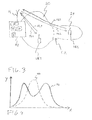
- Fig. 3 shows the base station B2 and its associated, extended radio cell C2 after a part of the area of the affected radio cell C1 has been integrated into the radio cell C2.
- the area of the extended radio cell C2 shown in Fig. 3 corresponds to the area of the radio cell C2 shown in Fig. 2 .
- the extended radio cell C2 comprises an original area 20 and an additional area 21.
- the original area 20 - and the additional area 21 - may dynamically change (increase or decrease), e.g., dependent on the workload of its associated base station or the workload of neighbouring base stations.
- the original area 20 corresponds to the area of the radio cell C2 shown in Fig. 1 .
- the additional area 21 is a part of the area of the former radio cell C1.
- the additional area 21 may consist from one or more parts of one or more other cells.
- the base station B2 is composed of one or several inter-linked computers, i.e., a hardware platform, a software platform basing on the hardware platform and several application programs executed by the system platform formed by the software and hardware platform.
- the functionality of the base station B2 are provided by the execution of these application programs.
- the application programs or a selected part of these application programs constitute a computer software product providing a call control service as described in the following, when executed on the system platform. Further, such computer software product is constituted by a storage medium storing these application programs or said selected part of application programs.
- the base station B2 provides telecommunication service to two user terminals UE1, UE2 inside the radio cell C2.
- a first user terminal UE1 is located in the original area 20, and a second user terminal UE2 is located in the additional area 21.
- the first user terminal UE1 exchanges data information with the base station B2 via a radio air interface downlink connection DL1 and an uplink connection UL1.
- the second user terminal UE2 exchanges data information with the base station B2 via a radio air interface downlink connection DL2 and an uplink connection UL2.
- the distance between the base station B2 and the second user terminal UE2 is greater than the distance between the base station B2 and the first user terminal UE1. Because of the increased distance, the second user terminal UE2 transmits very low CQI values.
- the already active user terminal UE1 in the serving cell C2 generates better, i.e. higher CQI values due to the better interference situation.
- the base station B2 receives the CQI values from the two user terminals UE1, UE2 over a certain time interval.
- the control unit 33 provides, from the determined CQI values of the two user terminals UE1, UE2, an indication corresponding to the CQI values.
- the indication may comprise a distribution function of the CQI values.
- the control unit 33 compares said indication, e.g., the CQI distribution function with a respective reference, e.g., a reference CQI distribution function.
- Fig. 4 shows a x-y-diagram of a CQI distribution.
- the CQI values increase along the positive x-axis.
- the amount/frequency of a certain CQI value increases along the positive y-axis.
- a reference CQI distribution 40 characterising a state of the network N where no radio cell neighbouring the base station B2 has an outage shows one central peak, while a current CQI distribution 41 shows two peaks which are offset from the central peak of the reference CQI distribution 40.
- the second user terminal UE2 located in the additional area 21 reports lower CQI values while the user terminal UE1 located in the original area 20 reports higher CQI values. Therefore, the reference CQI distribution 40 is changed into the two-peaked CQI distribution 41.
- the control unit 33 If the CQI distribution function 41 differs from the respective CQI reference distribution function in excess of a predefined threshold, the control unit 33 generates a trigger event. Triggered by said trigger event, the control unit 33 indicates, preferably to the OMC, that one or more of the neighbouring radio cells C1, C3, C6 neighbouring the at least one radio cell C2 associated with the base station B2 are affected by an outage.
Landscapes
- Engineering & Computer Science (AREA)
- Computer Networks & Wireless Communication (AREA)
- Signal Processing (AREA)
- Environmental & Geological Engineering (AREA)
- Mobile Radio Communication Systems (AREA)
Priority Applications (2)
| Application Number | Priority Date | Filing Date | Title |
|---|---|---|---|
| EP08290488A EP2139278B1 (fr) | 2008-05-28 | 2008-05-28 | Procédé de détection d'interruption d'une cellule radio |
| AT08290488T ATE549881T1 (de) | 2008-05-28 | 2008-05-28 | Verfahren zum erkennen eines funkzellenausfalls |
Applications Claiming Priority (1)
| Application Number | Priority Date | Filing Date | Title |
|---|---|---|---|
| EP08290488A EP2139278B1 (fr) | 2008-05-28 | 2008-05-28 | Procédé de détection d'interruption d'une cellule radio |
Publications (2)
| Publication Number | Publication Date |
|---|---|
| EP2139278A1 true EP2139278A1 (fr) | 2009-12-30 |
| EP2139278B1 EP2139278B1 (fr) | 2012-03-14 |
Family
ID=40042594
Family Applications (1)
| Application Number | Title | Priority Date | Filing Date |
|---|---|---|---|
| EP08290488A Not-in-force EP2139278B1 (fr) | 2008-05-28 | 2008-05-28 | Procédé de détection d'interruption d'une cellule radio |
Country Status (2)
| Country | Link |
|---|---|
| EP (1) | EP2139278B1 (fr) |
| AT (1) | ATE549881T1 (fr) |
Cited By (7)
| Publication number | Priority date | Publication date | Assignee | Title |
|---|---|---|---|---|
| CN102238595A (zh) * | 2010-04-30 | 2011-11-09 | 华为技术有限公司 | 小区失效的处理方法及其设备 |
| EP2403186A1 (fr) * | 2010-07-02 | 2012-01-04 | Vodafone IP Licensing limited | Réseaux de télécommunications |
| CN102932826A (zh) * | 2012-11-30 | 2013-02-13 | 北京邮电大学 | 蜂窝移动通信系统网络自组织中的小区中断探测定位方法 |
| WO2013191600A1 (fr) * | 2012-06-19 | 2013-12-27 | Telefonaktiebolaget L M Ericsson (Publ) | Procédés et nœud d'accès radio pour déterminer un état de cellule |
| EP2568734A4 (fr) * | 2010-06-13 | 2014-01-08 | Huawei Tech Co Ltd | Procédé, dispositif et système de détection de cellule |
| EP2693810A4 (fr) * | 2011-04-20 | 2014-04-30 | Huawei Tech Co Ltd | Procédé et dispositif de détection de défaillance de cellule |
| CN104255049A (zh) * | 2011-12-20 | 2014-12-31 | 惠普研发有限合伙公司 | 一种无线接入点备用设置的方法和设备 |
Citations (5)
| Publication number | Priority date | Publication date | Assignee | Title |
|---|---|---|---|---|
| GB2277234A (en) * | 1990-03-31 | 1994-10-19 | Motorola Ltd | Cellular radio telephone diagnostics |
| GB2280570A (en) * | 1993-07-31 | 1995-02-01 | Motorola Ltd | Stand-by arrangement for a communications system |
| WO2001045276A2 (fr) * | 1999-12-14 | 2001-06-21 | Telefonaktiebolaget Lm Ericsson (Publ) | Procede et dispositif de detection de defaillances d'emetteurs-recepteurs de station de base |
| EP1638253A1 (fr) * | 2004-09-21 | 2006-03-22 | Lucent Technologies Inc. | Procédé pour contrôler la performance de réseaux sans fils |
| US20060221886A1 (en) * | 2005-03-31 | 2006-10-05 | Rao Sudarshan A | Method of detecting wireless network faults |
-
2008
- 2008-05-28 AT AT08290488T patent/ATE549881T1/de active
- 2008-05-28 EP EP08290488A patent/EP2139278B1/fr not_active Not-in-force
Patent Citations (5)
| Publication number | Priority date | Publication date | Assignee | Title |
|---|---|---|---|---|
| GB2277234A (en) * | 1990-03-31 | 1994-10-19 | Motorola Ltd | Cellular radio telephone diagnostics |
| GB2280570A (en) * | 1993-07-31 | 1995-02-01 | Motorola Ltd | Stand-by arrangement for a communications system |
| WO2001045276A2 (fr) * | 1999-12-14 | 2001-06-21 | Telefonaktiebolaget Lm Ericsson (Publ) | Procede et dispositif de detection de defaillances d'emetteurs-recepteurs de station de base |
| EP1638253A1 (fr) * | 2004-09-21 | 2006-03-22 | Lucent Technologies Inc. | Procédé pour contrôler la performance de réseaux sans fils |
| US20060221886A1 (en) * | 2005-03-31 | 2006-10-05 | Rao Sudarshan A | Method of detecting wireless network faults |
Cited By (18)
| Publication number | Priority date | Publication date | Assignee | Title |
|---|---|---|---|---|
| US9301250B2 (en) | 2010-04-30 | 2016-03-29 | Huawei Technologies Co., Ltd. | Method and device for handling cell outage |
| US10659979B2 (en) | 2010-04-30 | 2020-05-19 | Huawei Technologies Co., Ltd. | Method and device for handling cell outage |
| US10271231B2 (en) | 2010-04-30 | 2019-04-23 | Huawei Technologies Co., Ltd. | Method and device for handling cell outage |
| CN102238595B (zh) * | 2010-04-30 | 2014-02-26 | 华为技术有限公司 | 小区失效的处理方法及其设备 |
| CN102238595A (zh) * | 2010-04-30 | 2011-11-09 | 华为技术有限公司 | 小区失效的处理方法及其设备 |
| EP2568734A4 (fr) * | 2010-06-13 | 2014-01-08 | Huawei Tech Co Ltd | Procédé, dispositif et système de détection de cellule |
| EP2403186A1 (fr) * | 2010-07-02 | 2012-01-04 | Vodafone IP Licensing limited | Réseaux de télécommunications |
| US9654357B2 (en) | 2010-07-02 | 2017-05-16 | Vodafone Ip Licensing Limited | Telecommunication networks |
| US9408101B2 (en) | 2011-04-20 | 2016-08-02 | Huawei Technologies Co., Ltd. | Method and device for cell outage detection |
| EP2693810A4 (fr) * | 2011-04-20 | 2014-04-30 | Huawei Tech Co Ltd | Procédé et dispositif de détection de défaillance de cellule |
| EP2795954A4 (fr) * | 2011-12-20 | 2015-12-30 | Hewlett Packard Development Co | Réglages de remplacement de point d'accès sans fil |
| CN104255049A (zh) * | 2011-12-20 | 2014-12-31 | 惠普研发有限合伙公司 | 一种无线接入点备用设置的方法和设备 |
| US9756513B2 (en) | 2012-06-19 | 2017-09-05 | Telefonaktiebolaget Lm Ericsson (Publ) | Methods and radio access node for determining a cell state |
| WO2013191600A1 (fr) * | 2012-06-19 | 2013-12-27 | Telefonaktiebolaget L M Ericsson (Publ) | Procédés et nœud d'accès radio pour déterminer un état de cellule |
| CN102932826B (zh) * | 2012-11-30 | 2015-01-14 | 北京邮电大学 | 蜂窝移动通信系统网络自组织中的小区中断探测定位方法 |
| WO2014082437A1 (fr) * | 2012-11-30 | 2014-06-05 | 北京邮电大学 | Procédé pour détecter et localiser une interruption cellulaire dans un réseau auto-organisateur de système de communication mobile cellulaire |
| US9426771B2 (en) | 2012-11-30 | 2016-08-23 | Beijing University Of Posts And Telecommunications | Method for detecting cell disconnection and locating disconnected cell in SON of cellular mobile communication system |
| CN102932826A (zh) * | 2012-11-30 | 2013-02-13 | 北京邮电大学 | 蜂窝移动通信系统网络自组织中的小区中断探测定位方法 |
Also Published As
| Publication number | Publication date |
|---|---|
| ATE549881T1 (de) | 2012-03-15 |
| EP2139278B1 (fr) | 2012-03-14 |
Similar Documents
| Publication | Publication Date | Title |
|---|---|---|
| EP2129175B1 (fr) | Procédé de détection d'interruption d'une cellule radio | |
| RU2470491C1 (ru) | Способ и устройство оповещения об информации для указания отказа переключения | |
| US8559952B2 (en) | Automated and seamless change of reporting cell identity | |
| US9179348B2 (en) | Methods and radio base stations for determining performance state of a cell | |
| CN102209343B (zh) | 一种实现邻区上报的方法及系统 | |
| EP2509353B1 (fr) | Procédé et système de gestion d'informations de cellules voisines | |
| EP2141947A1 (fr) | Procédé de reconfiguration dynamique d'un réseau de communication | |
| EP2139278B1 (fr) | Procédé de détection d'interruption d'une cellule radio | |
| EP3797545B1 (fr) | Optimisation de manière automatique d'un paramètre de cellule d'une station de base de desserte | |
| JP2016509801A (ja) | ロング・ターム・エボリューション(lte)ネットワークの妨害器検出及び回避の方法 | |
| KR20110090644A (ko) | 무선 통신 시스템에서 핸드오버 방법 및 장치 | |
| EP2529567B1 (fr) | Procédé pour faire passer une cellule de télécommunication sans fil en mode dtx | |
| EP2288201B1 (fr) | Mesures d'équipement de l'utilisateur pour la détection de points d'accès sans fil | |
| KR20130093654A (ko) | 무선 링크 고장 정보를 보고하기 위한 방법, 단말 장비 및 eNB | |
| US11910465B2 (en) | Inactive MDT log with inactive duration | |
| US20140323119A1 (en) | Method of and apparatus for service coverage management in a radio communication network | |
| US20100035654A1 (en) | Base station, user device, and tracking area setting method | |
| KR20140116156A (ko) | 링크 실패의 원인을 분석하는 방법, 및 네트워크 최적화 방법 및 장치 | |
| GB2484534A (en) | Varying handover parameters at a specific cell edge and observing the effects of this in order to locate a coverage hole | |
| US8060077B2 (en) | Method and apparatus for functional testing of a base station system | |
| US9326169B2 (en) | Cell degradation detection | |
| US8504049B2 (en) | Mobile communication system, base station, access gateway, and tracking area setting method | |
| CN106937338B (zh) | 链路重建方法和系统 | |
| CN102647752B (zh) | 控制用户设备进行测量的方法、装置及系统 | |
| US7706798B2 (en) | Discovery of neighbour cell beacon frequencies in mobile networks |
Legal Events
| Date | Code | Title | Description |
|---|---|---|---|
| PUAI | Public reference made under article 153(3) epc to a published international application that has entered the european phase |
Free format text: ORIGINAL CODE: 0009012 |
|
| 17P | Request for examination filed |
Effective date: 20090623 |
|
| AK | Designated contracting states |
Kind code of ref document: A1 Designated state(s): AT BE BG CH CY CZ DE DK EE ES FI FR GB GR HR HU IE IS IT LI LT LU LV MC MT NL NO PL PT RO SE SI SK TR |
|
| AX | Request for extension of the european patent |
Extension state: AL BA MK RS |
|
| AKX | Designation fees paid |
Designated state(s): AT BE BG CH CY CZ DE DK EE ES FI FR GB GR HR HU IE IS IT LI LT LU LV MC MT NL NO PL PT RO SE SI SK TR |
|
| GRAP | Despatch of communication of intention to grant a patent |
Free format text: ORIGINAL CODE: EPIDOSNIGR1 |
|
| RIN1 | Information on inventor provided before grant (corrected) |
Inventor name: KAMINSKI, STEPHEN, DIPL.-ING. (BA) Inventor name: WEBER, ANDREAS, DR.-ING. Inventor name: BAKKER, HAJO, DIPL.-ING. |
|
| GRAS | Grant fee paid |
Free format text: ORIGINAL CODE: EPIDOSNIGR3 |
|
| GRAA | (expected) grant |
Free format text: ORIGINAL CODE: 0009210 |
|
| RAP1 | Party data changed (applicant data changed or rights of an application transferred) |
Owner name: ALCATEL LUCENT |
|
| AK | Designated contracting states |
Kind code of ref document: B1 Designated state(s): AT BE BG CH CY CZ DE DK EE ES FI FR GB GR HR HU IE IS IT LI LT LU LV MC MT NL NO PL PT RO SE SI SK TR |
|
| REG | Reference to a national code |
Ref country code: GB Ref legal event code: FG4D |
|
| REG | Reference to a national code |
Ref country code: AT Ref legal event code: REF Ref document number: 549881 Country of ref document: AT Kind code of ref document: T Effective date: 20120315 Ref country code: CH Ref legal event code: EP |
|
| REG | Reference to a national code |
Ref country code: IE Ref legal event code: FG4D |
|
| REG | Reference to a national code |
Ref country code: DE Ref legal event code: R096 Ref document number: 602008014086 Country of ref document: DE Effective date: 20120510 |
|
| REG | Reference to a national code |
Ref country code: NL Ref legal event code: VDEP Effective date: 20120314 |
|
| PG25 | Lapsed in a contracting state [announced via postgrant information from national office to epo] |
Ref country code: HR Free format text: LAPSE BECAUSE OF FAILURE TO SUBMIT A TRANSLATION OF THE DESCRIPTION OR TO PAY THE FEE WITHIN THE PRESCRIBED TIME-LIMIT Effective date: 20120314 Ref country code: NO Free format text: LAPSE BECAUSE OF FAILURE TO SUBMIT A TRANSLATION OF THE DESCRIPTION OR TO PAY THE FEE WITHIN THE PRESCRIBED TIME-LIMIT Effective date: 20120614 Ref country code: LT Free format text: LAPSE BECAUSE OF FAILURE TO SUBMIT A TRANSLATION OF THE DESCRIPTION OR TO PAY THE FEE WITHIN THE PRESCRIBED TIME-LIMIT Effective date: 20120314 |
|
| LTIE | Lt: invalidation of european patent or patent extension |
Effective date: 20120314 |
|
| PG25 | Lapsed in a contracting state [announced via postgrant information from national office to epo] |
Ref country code: LV Free format text: LAPSE BECAUSE OF FAILURE TO SUBMIT A TRANSLATION OF THE DESCRIPTION OR TO PAY THE FEE WITHIN THE PRESCRIBED TIME-LIMIT Effective date: 20120314 Ref country code: GR Free format text: LAPSE BECAUSE OF FAILURE TO SUBMIT A TRANSLATION OF THE DESCRIPTION OR TO PAY THE FEE WITHIN THE PRESCRIBED TIME-LIMIT Effective date: 20120615 Ref country code: FI Free format text: LAPSE BECAUSE OF FAILURE TO SUBMIT A TRANSLATION OF THE DESCRIPTION OR TO PAY THE FEE WITHIN THE PRESCRIBED TIME-LIMIT Effective date: 20120314 |
|
| REG | Reference to a national code |
Ref country code: AT Ref legal event code: MK05 Ref document number: 549881 Country of ref document: AT Kind code of ref document: T Effective date: 20120314 |
|
| PG25 | Lapsed in a contracting state [announced via postgrant information from national office to epo] |
Ref country code: CY Free format text: LAPSE BECAUSE OF FAILURE TO SUBMIT A TRANSLATION OF THE DESCRIPTION OR TO PAY THE FEE WITHIN THE PRESCRIBED TIME-LIMIT Effective date: 20120314 |
|
| PG25 | Lapsed in a contracting state [announced via postgrant information from national office to epo] |
Ref country code: PL Free format text: LAPSE BECAUSE OF FAILURE TO SUBMIT A TRANSLATION OF THE DESCRIPTION OR TO PAY THE FEE WITHIN THE PRESCRIBED TIME-LIMIT Effective date: 20120314 Ref country code: SE Free format text: LAPSE BECAUSE OF FAILURE TO SUBMIT A TRANSLATION OF THE DESCRIPTION OR TO PAY THE FEE WITHIN THE PRESCRIBED TIME-LIMIT Effective date: 20120314 Ref country code: IS Free format text: LAPSE BECAUSE OF FAILURE TO SUBMIT A TRANSLATION OF THE DESCRIPTION OR TO PAY THE FEE WITHIN THE PRESCRIBED TIME-LIMIT Effective date: 20120714 Ref country code: SI Free format text: LAPSE BECAUSE OF FAILURE TO SUBMIT A TRANSLATION OF THE DESCRIPTION OR TO PAY THE FEE WITHIN THE PRESCRIBED TIME-LIMIT Effective date: 20120314 Ref country code: RO Free format text: LAPSE BECAUSE OF FAILURE TO SUBMIT A TRANSLATION OF THE DESCRIPTION OR TO PAY THE FEE WITHIN THE PRESCRIBED TIME-LIMIT Effective date: 20120314 Ref country code: EE Free format text: LAPSE BECAUSE OF FAILURE TO SUBMIT A TRANSLATION OF THE DESCRIPTION OR TO PAY THE FEE WITHIN THE PRESCRIBED TIME-LIMIT Effective date: 20120314 Ref country code: CZ Free format text: LAPSE BECAUSE OF FAILURE TO SUBMIT A TRANSLATION OF THE DESCRIPTION OR TO PAY THE FEE WITHIN THE PRESCRIBED TIME-LIMIT Effective date: 20120314 Ref country code: BE Free format text: LAPSE BECAUSE OF FAILURE TO SUBMIT A TRANSLATION OF THE DESCRIPTION OR TO PAY THE FEE WITHIN THE PRESCRIBED TIME-LIMIT Effective date: 20120314 |
|
| PG25 | Lapsed in a contracting state [announced via postgrant information from national office to epo] |
Ref country code: PT Free format text: LAPSE BECAUSE OF FAILURE TO SUBMIT A TRANSLATION OF THE DESCRIPTION OR TO PAY THE FEE WITHIN THE PRESCRIBED TIME-LIMIT Effective date: 20120716 Ref country code: SK Free format text: LAPSE BECAUSE OF FAILURE TO SUBMIT A TRANSLATION OF THE DESCRIPTION OR TO PAY THE FEE WITHIN THE PRESCRIBED TIME-LIMIT Effective date: 20120314 |
|
| PG25 | Lapsed in a contracting state [announced via postgrant information from national office to epo] |
Ref country code: MC Free format text: LAPSE BECAUSE OF NON-PAYMENT OF DUE FEES Effective date: 20120531 |
|
| REG | Reference to a national code |
Ref country code: CH Ref legal event code: PL |
|
| PLBE | No opposition filed within time limit |
Free format text: ORIGINAL CODE: 0009261 |
|
| STAA | Information on the status of an ep patent application or granted ep patent |
Free format text: STATUS: NO OPPOSITION FILED WITHIN TIME LIMIT |
|
| PG25 | Lapsed in a contracting state [announced via postgrant information from national office to epo] |
Ref country code: LI Free format text: LAPSE BECAUSE OF NON-PAYMENT OF DUE FEES Effective date: 20120531 Ref country code: NL Free format text: LAPSE BECAUSE OF FAILURE TO SUBMIT A TRANSLATION OF THE DESCRIPTION OR TO PAY THE FEE WITHIN THE PRESCRIBED TIME-LIMIT Effective date: 20120314 Ref country code: CH Free format text: LAPSE BECAUSE OF NON-PAYMENT OF DUE FEES Effective date: 20120531 Ref country code: AT Free format text: LAPSE BECAUSE OF FAILURE TO SUBMIT A TRANSLATION OF THE DESCRIPTION OR TO PAY THE FEE WITHIN THE PRESCRIBED TIME-LIMIT Effective date: 20120314 Ref country code: DK Free format text: LAPSE BECAUSE OF FAILURE TO SUBMIT A TRANSLATION OF THE DESCRIPTION OR TO PAY THE FEE WITHIN THE PRESCRIBED TIME-LIMIT Effective date: 20120314 |
|
| 26N | No opposition filed |
Effective date: 20121217 |
|
| REG | Reference to a national code |
Ref country code: IE Ref legal event code: MM4A |
|
| PG25 | Lapsed in a contracting state [announced via postgrant information from national office to epo] |
Ref country code: IT Free format text: LAPSE BECAUSE OF FAILURE TO SUBMIT A TRANSLATION OF THE DESCRIPTION OR TO PAY THE FEE WITHIN THE PRESCRIBED TIME-LIMIT Effective date: 20120314 |
|
| REG | Reference to a national code |
Ref country code: DE Ref legal event code: R097 Ref document number: 602008014086 Country of ref document: DE Effective date: 20121217 |
|
| PG25 | Lapsed in a contracting state [announced via postgrant information from national office to epo] |
Ref country code: IE Free format text: LAPSE BECAUSE OF NON-PAYMENT OF DUE FEES Effective date: 20120528 Ref country code: ES Free format text: LAPSE BECAUSE OF FAILURE TO SUBMIT A TRANSLATION OF THE DESCRIPTION OR TO PAY THE FEE WITHIN THE PRESCRIBED TIME-LIMIT Effective date: 20120625 |
|
| PG25 | Lapsed in a contracting state [announced via postgrant information from national office to epo] |
Ref country code: MT Free format text: LAPSE BECAUSE OF FAILURE TO SUBMIT A TRANSLATION OF THE DESCRIPTION OR TO PAY THE FEE WITHIN THE PRESCRIBED TIME-LIMIT Effective date: 20120314 Ref country code: BG Free format text: LAPSE BECAUSE OF FAILURE TO SUBMIT A TRANSLATION OF THE DESCRIPTION OR TO PAY THE FEE WITHIN THE PRESCRIBED TIME-LIMIT Effective date: 20120614 |
|
| REG | Reference to a national code |
Ref country code: FR Ref legal event code: GC Effective date: 20131018 |
|
| PG25 | Lapsed in a contracting state [announced via postgrant information from national office to epo] |
Ref country code: TR Free format text: LAPSE BECAUSE OF FAILURE TO SUBMIT A TRANSLATION OF THE DESCRIPTION OR TO PAY THE FEE WITHIN THE PRESCRIBED TIME-LIMIT Effective date: 20120314 |
|
| PG25 | Lapsed in a contracting state [announced via postgrant information from national office to epo] |
Ref country code: LU Free format text: LAPSE BECAUSE OF NON-PAYMENT OF DUE FEES Effective date: 20120528 |
|
| PG25 | Lapsed in a contracting state [announced via postgrant information from national office to epo] |
Ref country code: HU Free format text: LAPSE BECAUSE OF FAILURE TO SUBMIT A TRANSLATION OF THE DESCRIPTION OR TO PAY THE FEE WITHIN THE PRESCRIBED TIME-LIMIT Effective date: 20080528 |
|
| REG | Reference to a national code |
Ref country code: FR Ref legal event code: PLFP Year of fee payment: 8 |
|
| REG | Reference to a national code |
Ref country code: FR Ref legal event code: PLFP Year of fee payment: 9 |
|
| REG | Reference to a national code |
Ref country code: FR Ref legal event code: PLFP Year of fee payment: 10 |
|
| REG | Reference to a national code |
Ref country code: FR Ref legal event code: PLFP Year of fee payment: 11 |
|
| PGFP | Annual fee paid to national office [announced via postgrant information from national office to epo] |
Ref country code: DE Payment date: 20180522 Year of fee payment: 11 |
|
| PGFP | Annual fee paid to national office [announced via postgrant information from national office to epo] |
Ref country code: FR Payment date: 20180522 Year of fee payment: 11 |
|
| PGFP | Annual fee paid to national office [announced via postgrant information from national office to epo] |
Ref country code: GB Payment date: 20180518 Year of fee payment: 11 |
|
| REG | Reference to a national code |
Ref country code: DE Ref legal event code: R119 Ref document number: 602008014086 Country of ref document: DE |
|
| GBPC | Gb: european patent ceased through non-payment of renewal fee |
Effective date: 20190528 |
|
| PG25 | Lapsed in a contracting state [announced via postgrant information from national office to epo] |
Ref country code: DE Free format text: LAPSE BECAUSE OF NON-PAYMENT OF DUE FEES Effective date: 20191203 Ref country code: GB Free format text: LAPSE BECAUSE OF NON-PAYMENT OF DUE FEES Effective date: 20190528 |
|
| PG25 | Lapsed in a contracting state [announced via postgrant information from national office to epo] |
Ref country code: FR Free format text: LAPSE BECAUSE OF NON-PAYMENT OF DUE FEES Effective date: 20190531 |