EP2143217B1 - Méthode et dispositif d'économie d'énergie dans un terminal d'utilisateur sans fil - Google Patents
Méthode et dispositif d'économie d'énergie dans un terminal d'utilisateur sans fil Download PDFInfo
- Publication number
- EP2143217B1 EP2143217B1 EP07835465.1A EP07835465A EP2143217B1 EP 2143217 B1 EP2143217 B1 EP 2143217B1 EP 07835465 A EP07835465 A EP 07835465A EP 2143217 B1 EP2143217 B1 EP 2143217B1
- Authority
- EP
- European Patent Office
- Prior art keywords
- controlling node
- state
- data
- nack
- transmissions
- Prior art date
- Legal status (The legal status is an assumption and is not a legal conclusion. Google has not performed a legal analysis and makes no representation as to the accuracy of the status listed.)
- Active
Links
Images


Classifications
-
- H—ELECTRICITY
- H04—ELECTRIC COMMUNICATION TECHNIQUE
- H04W—WIRELESS COMMUNICATION NETWORKS
- H04W52/00—Power management, e.g. Transmission Power Control [TPC] or power classes
- H04W52/02—Power saving arrangements
- H04W52/0209—Power saving arrangements in terminal devices
- H04W52/0225—Power saving arrangements in terminal devices using monitoring of external events, e.g. the presence of a signal
-
- H—ELECTRICITY
- H04—ELECTRIC COMMUNICATION TECHNIQUE
- H04L—TRANSMISSION OF DIGITAL INFORMATION, e.g. TELEGRAPHIC COMMUNICATION
- H04L1/00—Arrangements for detecting or preventing errors in the information received
- H04L1/12—Arrangements for detecting or preventing errors in the information received by using return channel
- H04L1/16—Arrangements for detecting or preventing errors in the information received by using return channel in which the return channel carries supervisory signals, e.g. repetition request signals
- H04L1/18—Automatic repetition systems, e.g. Van Duuren systems
- H04L1/1812—Hybrid protocols; Hybrid automatic repeat request [HARQ]
-
- H—ELECTRICITY
- H04—ELECTRIC COMMUNICATION TECHNIQUE
- H04L—TRANSMISSION OF DIGITAL INFORMATION, e.g. TELEGRAPHIC COMMUNICATION
- H04L1/00—Arrangements for detecting or preventing errors in the information received
- H04L1/12—Arrangements for detecting or preventing errors in the information received by using return channel
- H04L1/16—Arrangements for detecting or preventing errors in the information received by using return channel in which the return channel carries supervisory signals, e.g. repetition request signals
- H04L1/18—Automatic repetition systems, e.g. Van Duuren systems
- H04L1/1825—Adaptation of specific ARQ protocol parameters according to transmission conditions
-
- H—ELECTRICITY
- H04—ELECTRIC COMMUNICATION TECHNIQUE
- H04W—WIRELESS COMMUNICATION NETWORKS
- H04W52/00—Power management, e.g. Transmission Power Control [TPC] or power classes
- H04W52/02—Power saving arrangements
- H04W52/0209—Power saving arrangements in terminal devices
- H04W52/0212—Power saving arrangements in terminal devices managed by the network, e.g. network or access point is leader and terminal is follower
- H04W52/0216—Power saving arrangements in terminal devices managed by the network, e.g. network or access point is leader and terminal is follower using a pre-established activity schedule, e.g. traffic indication frame
-
- H—ELECTRICITY
- H04—ELECTRIC COMMUNICATION TECHNIQUE
- H04W—WIRELESS COMMUNICATION NETWORKS
- H04W72/00—Local resource management
- H04W72/04—Wireless resource allocation
-
- H—ELECTRICITY
- H04—ELECTRIC COMMUNICATION TECHNIQUE
- H04W—WIRELESS COMMUNICATION NETWORKS
- H04W72/00—Local resource management
- H04W72/04—Wireless resource allocation
- H04W72/044—Wireless resource allocation based on the type of the allocated resource
- H04W72/0446—Resources in time domain, e.g. slots or frames
-
- H—ELECTRICITY
- H04—ELECTRIC COMMUNICATION TECHNIQUE
- H04W—WIRELESS COMMUNICATION NETWORKS
- H04W72/00—Local resource management
- H04W72/04—Wireless resource allocation
- H04W72/044—Wireless resource allocation based on the type of the allocated resource
- H04W72/0453—Resources in frequency domain, e.g. a carrier in FDMA
-
- H—ELECTRICITY
- H04—ELECTRIC COMMUNICATION TECHNIQUE
- H04W—WIRELESS COMMUNICATION NETWORKS
- H04W28/00—Network traffic management; Network resource management
- H04W28/02—Traffic management, e.g. flow control or congestion control
- H04W28/04—Error control
-
- Y—GENERAL TAGGING OF NEW TECHNOLOGICAL DEVELOPMENTS; GENERAL TAGGING OF CROSS-SECTIONAL TECHNOLOGIES SPANNING OVER SEVERAL SECTIONS OF THE IPC; TECHNICAL SUBJECTS COVERED BY FORMER USPC CROSS-REFERENCE ART COLLECTIONS [XRACs] AND DIGESTS
- Y02—TECHNOLOGIES OR APPLICATIONS FOR MITIGATION OR ADAPTATION AGAINST CLIMATE CHANGE
- Y02D—CLIMATE CHANGE MITIGATION TECHNOLOGIES IN INFORMATION AND COMMUNICATION TECHNOLOGIES [ICT], I.E. INFORMATION AND COMMUNICATION TECHNOLOGIES AIMING AT THE REDUCTION OF THEIR OWN ENERGY USE
- Y02D30/00—Reducing energy consumption in communication networks
- Y02D30/70—Reducing energy consumption in communication networks in wireless communication networks
Definitions
- the present invention discloses a method and a device for saving power in a user terminal in a cellular wireless access system of the 3G kind.
- DRX Discontinuous Reception
- a user terminal By means of the DRX mechanism, a user terminal will be able to turn on and off radio resources for a certain amount of time, based on configured parameters and specified rules.
- a user terminal initiates continuous usage of its radio resources (continuous reception) as soon as it receives data during a non-DRX period, and resumes a DRX state based on a "timeout" following a period in time during which no data is received.
- CPC Continuous Packet Connectivity mechanism
- 3G third generation
- eNodeB controlling node
- eNodeB has as one of its purposes to control traffic to and from user terminals within a certain area, a cell, in the system.
- a set of clear rules are needed to enable the eNodeBs of the system to determine, at all times, the state of "their" user terminals with respect to DRX, i.e. DRX or not.
- NEC “Interaction of DRX and downlink HARQ", 3GPP DRAFT; R2-071273, 22 March 2007 , XP050134230 discusses various ways for downlink transmissions to a user equipment (UE) in DRX operation.
- Alternative 1 the configured DRX operation shall be cancelled whenever the UE receives a downlink packet.
- Alternative 2 the eNB tries to complete the HARQ transmission within the configured wake-up TTIs.
- Alternative 3 the HARQ transmission is continued in between two DRX intervals.
- Alternative 4 the wake-up period can be temporally extended to allow the HARQ termination.
- a packet can be transmitted using dynamic scheduling, by means of which explicit signalling is used by the eNodeB to notify the UE that data is coming, or using semi-persistent scheduling, in which the first transmission from the eNodeB is detected by the UE using so called "blind detection", and retransmissions from the eNodeB are made using scheduling assignments, as with dynamic scheduling.
- the UE In HARQ transmissions, for downlink transmissions, the UE sends a HARQ NACK to its eNodeB to request a retransmission.
- the eNodeB does not have advance knowledge that a retransmission will be needed, and can thus not signal in advance using MAC signalling to order the UE to assume a shorter DRX period to allow for retransmissions.
- a retransmission can occur after a certain amount of time, typically measured in milliseconds, during which time no resources will be used for this transmission.
- a cellular wireless access system of the 3G kind in particular the system known as Long Term Evolution, LTE, could overcome the problems posed by the combination of DRX intervals and different kinds of multiple transmissions, such as those caused by e.g. HARQ ACK/NACK and RLC segmentation.
- LTE Long Term Evolution
- the solution should also be possible to apply in other kinds of systems than LTE systems, in which there are periods similar to the DRX periods, i.e. periods during which a UE does not listen for data from its controlling node.
- the above-indicated problem is solved by a method according to claim 1.
- the first non listening state will be the DRX state
- the controlling node will be an eNodeB.
- the invention offers a solution by means of which the demands posed on the DRX function or similar functions by differing kinds of retransmissions (HARQ ACK/NACK and RLC segmentation) can be addressed.
- the above-indicated problem is solved with a user terminal, UE, according to claim 9.
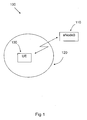
- Fig 1 shows a rough overview of a system in which the invention can be applied.
- the system for which the invention is intended is a wireless cellular access system of the LTE kind (Long Term Evolution).
- LTE Long Term Evolution
- Such a system will, as shown in fig 1 , comprise a controlling node 110, which has as one of its roles to control all the traffic to and from user terminals, UEs, within a certain area, a so called cell within the system. On such cell is shown symbolically as 120 in fig 1 , with one UE 130 within the cell.
- the type of system in which the invention is applied need not be an LTE type of system, the invention can be applied in other types of wireless cellular access systems as well.
- the use of terminology in this description of terms borrowed from LTE type systems should merely be seen as examples intended to facilitate the reader's understanding of the present invention.
- the invention mainly deals with problems posed by mechanisms involving periods of discontinuous reception, in LTE referred to as so called DRX periods.
- DRX periods periods of discontinuous reception
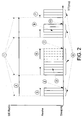
- Fig 2 shows the UE radio state as a function of time, the time being shown in TTIs, Transmission Time Intervals.
- the numerals used in fig 2 correspond to the following definitions or events:
- DRX period i.e. a period during which the UE assumes an idle state, i.e. it does not listen for data during this period.
- This period may be variable, and normally equals the DRX interval minus the awake time during the DRX interval.
- the invention is, as has been mentioned previously, intended to address problems with the DRX state, and different kinds of transmissions, such as transmissions which use HARQ and RLC, mainly problems involving retransmissions (HARQ) and transmissions in more than one TTI (mainly RLC).
- HARQ retransmissions
- RLC TTI
- the invention proposes to address these problems by means of taking into account the following:
- the invention proposes a solution in which the DRX scheme is bound to the type of transmission, so that one DRX scheme can be used for transmissions that employ HARQ-like principles, and another DRX scheme may be used for transmissions that employ RLC principles.
- the DRX scheme is configured without considering HARQ retransmissions, i.e. the wake up occasions correspond to the expected first transmissions.
- the UE For downlink transmission, i.e. for transmissions from the eNodeB to the UE, if no data is received during a configured wake-up period, the UE immediately enters the DRX state again until the next configured wake-up period. If a transmission has been received, the UE stays awake at least:
- the UE can also optionally go to sleep between occasions a) and b).
- HARQ NACK When HARQ principles are employed by the system, a case can be envisioned in which the UE transmits a HARQ ACK but the eNodeB misreads this as a HARQ NACK. In such a case, i.e. misreading of ACK as NACK, if the UE is in the DRX state right after sending the HARQ ACK, the retransmission from the eNodeB, and any subsequent retransmission attempts, will be lost. This will lead to the maximum number of retransmissions being performed by the eNodeB even if the UE received the data in the first attempt.
- the UE can extend its stay in the on duration state by a predefined period of time, or until it is clear to the UE that no retransmissions are attempted by the eNodeB, i.e. the UE does not receive any retransmission from the eNodeB during the time a retransmission would have been performed if a transmitted ACK had been misread as a NACK. This will thus reduce the risk of the eNodeB reaching the maximum number of retransmissions.
- uplink transmissions i.e. transmissions from the UE to the eNodeB
- a similar behaviour as that suggested above for the downlink can be applied: After the UE has transmitted a data unit to the eNodeB, it does not immediately assume the DRX state. Instead, it waits for the HARQ ACK/NACK from the eNodeB, i.e. the UE must "be awake" at least when the ACK/NACK is expected. If a NACK is received, the UE must also be awake when the retransmission is performed, similarly to that which has been described above for the downlink.
- waking up includes the case when “blind detection” is used (even for retransmissions), i.e. the case where a UE instead of waking up only for one specific TTI would instead listen for data during a small interval.
- the DRX scheme is configured without considering any possible use of RLC segmentation, i.e. the wake up occasions correspond to the expected first transmissions.
- the UE For downlink transmissions, i.e. from the eNodeB to the UE, if no data is received during a configured wake-up period, the UE will immediately enter the DRX state and remain there until the next configured wake-up period. If a transmission has been received, the UE stays awake at least:
- the "awake times" described immediately above can be kept outside of the ordinary DRX pattern, i.e. the UE will be awake at known occasions a) and b) until it has transmitted a HARQ ACK for all RLC segments and no further RLC segments are expected.
- Tying the wake-up time of the UE with the detection of RLC segments in this way has the additional benefit of achieving the same as an explicit "on duration" or “go to continuous level request” from the eNodeB when sending a data unit over several TTIs (which are possibly, but not necessarily consecutive) and also the same effect as an explicit "go to sleep request", i.e. "enter DRX" from the eNodeB to the UE after successful reception/transmission.
- a similar pattern can be applied. After the UE has transmitted a segmented data unit, it will not immediately go to sleep, but will instead continue sending all RLC segments, i.e. the UE must be awake at least until all segments are sent and until they are acknowledged.
- Fig 3 is a flow chart of some steps of a method 300 of the invention. Steps which are options or alternatives have been indicated with dashed lines.
- a UE in the system in which the invention is applied is able to alternate, step (310, between the two states mentioned previously in this text according to a certain scheme, with this scheme being dependent on whether or not data units which are transmitted between the UE and its controlling node are received entirely and correctly within an initially allocated resource for each data unit, as shown in step 320.
- Step 330 shows that according to the method of the invention, the scheme for altering between the two states can in one embodiment be adapted to accommodate HARQ ACK/NACK transmissions between the UE and its controlling node. As shown in step 340, in one embodiment of the method 300, the scheme for altering between the two states can also be adapted to accommodate RLC segmentation between the UE and its controlling node.
- Step 350 of fig 3 shows that, in another embodiment of the method 300, for transmissions from the controlling node to the UE, i.e. down link, "DL", the occasions when the UE goes from the non-listening state to the listening state can be scheduled to correspond to expected first transmissions of data from the controlling node.
- DL down link
- Step 360 shows that a UE can remain in the listening state ("non-DRX") until:
- step 370 if the UE transmits an ACK, the UE extends its stay in the listening state by a predefined period of time, to ensure that the UE does not receive any retransmission ("Re-TX") from the controlling node during the time that a retransmission would have been performed if an ACK transmitted by the UE had been misread by the controlling node as a NACK.
- Re-TX retransmission
- Step 380 shows that for transmissions from the UE to the controlling node, after the UE has transmitted a data unit to the controlling node, the UE waits for the ACK/NACK from the controlling node before assuming the non-listening state, and if a NACK is received, the UE is in the listening state when the retransmission is expected.
- Fig 4 shows a rough block diagram of a transceiver 400 of the invention, for use as a UE which basically functions as described above.
- the UE 400 of the invention comprises an antenna 410 for communicating with the eNodeB, and also comprises a transmitter 430 and a receiver 420.
- the UE 400 also comprises control means such as for example a microprocessor 440, as well as comprising a memory 450.
- the transceiver 400 basically comprises means for functioning according to the method described above, and thus comprises means such as the controller 440 and the memory 450 for assuming one of at least two different states, a first such state being an idle state, a DRX state, and a second such state being a listening state, an "on duration" state, each state being assumed for a certain amount of time.
- the controller 440 controls the length of time for the DRX and non DRX periods, which it can retrieve from the memory 450.
- controller 440 and the memory are depicted here as being part of the alternating mechanism, the antenna 410 and the receiver 420 may also be a part of this mechanism, if, for example, the eNodeB transmits information or commands relevant to the alternating.
- the alternating means in this case the means 440, 450, make the scheme according to which the UE alternates between said two states dependent on whether or not data units which are transmitted between the UE and its controlling node are received entirely and correctly within an initially allocated resource for each data unit.
- the alternating means 440, 450 may also adapt the scheme for altering between the two states to accommodate HARQ ACK/NACK transmissions between the UE 400 and its controlling node, e.g. the eNodeB.
- the alternating means 440, 450 may adapt the scheme for altering between the two states to accommodate RLC segmentation between the UE 400 and its controlling node 110.
- the above mentioned initially allocated resource is one of the following:
- the alternating means 400, 450 schedule the occasions when the UE goes from the non-listening state to the listening state to correspond to expected first transmissions of data from the controlling node.
- the alternating means 440, 450 may make the UE enter the non-listening state immediately, and if data has been received, the alternating means 440, 450, can make the UE remain in the listening state until:
- the alternating means 440, 450 may make the UE extend its stay in the listening state by a predefined period of time, in order to ensure that the UE does not receive any retransmission from the controlling node during the time that a retransmission would have been performed if an ACK transmitted by the UE had been misread by the controlling node as a NACK.
- the alternating means 440, 450 make the UE wait for the ACK/NACK from the controlling node before assuming the non-listening state, and if a NACK is received, the UE is kept in the listening state when the retransmission from the controlling node is expected.
Landscapes
- Engineering & Computer Science (AREA)
- Computer Networks & Wireless Communication (AREA)
- Signal Processing (AREA)
- Mobile Radio Communication Systems (AREA)
- Telephone Function (AREA)
Claims (16)
- Procédé (300) à utiliser dans un système d'accès sans fil cellulaire (100), système dans lequel il y a un premier noeud de commande (110) qui dessert entre autres des transmissions de commande verre et depuis des terminaux d'utilisateur UEs (130) à l'intérieur d'une certaine zone, une cellule (120), un système dans lequel des UEs peuvent adopter un d'au moins deux états, un premier tel état étant un état de non écoute, c'est-à-dire un état pendant lequel un UE (130) n'écoute pas les données provenant de son noeud de commande (110) et un second état étant un état d'écoute, un état « en durée », procédé selon lequel (300) un UE dans le système est capable d'alterner (310) entre lesdits deux états selon un certain mécanisme le procédé comprenant en outre (320) que le mécanisme selon lequel un UE dans le système alterne entre lesdits deux états dépend de ce que ou non les unités de données qui sont transmises entre l'UE et son noeud de commande sont reçues en totalité et correctement à l'intérieur d'une ressource allouée initialement pour chaque unité de données, telle qu'allouée par le noeud de commande, le procédé étant caractérisé en ce que :si l'UE transmet un accusé de réception, l'UE étend son séjour dans l'état d'écoute d'une période de temps prédéfinie, afin de garantir que l'UE ne reçoit aucune retransmission provenant du noeud de commande pendant le temps qu'une retransmission aurait été effectuée si un accusé de réception transmis par l'UE a été mal lu par le noeud de commande comme un non accusé de réception.
- Procédé (300,330) selon la revendication 1, selon lequel le mécanisme pour alterner entre les deux états est adapté pour prendre en charge des transmissions HARQ ACK/NACK (demande automatique hybride, accusé de réception/accusé de réception négatif) entre l'UE et son noeud de commande.
- Procédé (310,320,340) selon la revendication 1 ou 2, selon lequel le mécanisme pour alterner entre les deux états est adapté pour prendre en charge une segmentation RLC (commande de liaison radio) entre l'UE et son noeud de commande.
- Procédé (310,320) selon une quelconque des revendications précédentes, selon lequel ladite ressource allouée initialement est choisie parmi une des suivantes :• une ressource dans le temps, par exemple un TTI,• une ressource en fréquence, par exemple une sous trame ou un bloc de ressource,• un mécanisme de modulation et codage, c'est-à-dire une modulation, un taux de code et un nombre de bits de transmission.
- Procédé (310,320,350) selon une quelconque des revendications précédentes, selon lequel, pour les transmissions du noeud de commande vers l'UE, les occasions où l'UE passe de l'état de non écoute à l'état d'écoute sont programmées afin de correspondre aux premières transmissions de données escomptées depuis le noeud de commande.
- Procédé (310,320,360) selon la revendication 5, selon lequel si aucune donnée n'a été reçue par l'UE pendant une période d'écoute, l'UE entrera dans l'état de non écoute immédiatement et si des données ont été reçues, l'UE restent dans l'état d'écoute jusqu'à ce que :• l'UE a transmis l'ACK/NACK correspondant ; et• si un NACK est transmis, jusqu'à ce que la retransmission correspondante soit escomptée et/ou• si les données reçues comprennent un segment RLC PDU (protocole d'unité de données), jusqu'à ce que toutes les données aient été reçues.
- Procédé (310,320,380) selon la revendication 6, selon lequel, pour les transmissions du noeud de commande vers l'UE, après que l'UE a transmis une unité de données vers le noeud de commande, l'UE attend l'ACK/NACK provenant du noeud de commande avant d'adopter l'état de non écoute, et si un NACK est reçu, l'UE est dans l'État d'écoute quand la retransmission provenant du noeud commande est escomptée.
- Procédé (310,320) selon une quelconque des revendications précédentes, appliqué à un système de type LTE (évolution à long terme), de sorte que le premier état de non écoute soit l'état DRX et le noeud de commande est un eNodeB.
- Terminal d'utilisateur, UE (130), à utiliser dans un système d'accès sans fil cellulaire (100), système dans lequel il y a un premier noeud de commande (110) qui dessert entre autres des transmissions de commande verre et depuis des terminaux d'utilisateur UEs (130), l'UE étant équipé de moyens (440,150) pour adopter un d'au moins deux états, un premier tel état étant un état de non écoute, c'est-à-dire un état pendant lequel un UE (130) n'écoute pas les données provenant de son noeud de commande (110) et un second état étant un état d'écoute, un état « en durée », l'UE étant équipé de moyens (440) pour alterner entre lesdits deux états selon un certain mécanisme, l'UE comprenant en outre que les moyens d'alternance (440,450) sont adaptés pour faire alterner le mécanisme entre lesdits deux états en fonction de ce que ou non les unités de données qui sont transmises entre l'UE et son noeud de commande sont reçues en totalité et correctement à l'intérieur d'une ressource allouée initialement pour chaque unité de données, telle qu'allouée par le noeud de commande, l'UE étant caractérisé en ce que :si l'UE transmet un accusé de réception, les moyens d'alternance (440,450) sont configurés pour faire étendre à l'UE son séjour dans l'état d'écoute d'une période de temps prédéfinie, afin de garantir que l'UE ne reçoit aucune retransmission provenant du noeud de commande pendant le temps qu'une retransmission aurait été effectuée si un accusé de réception transmis par l'UE a été mal lu par le noeud de commande comme un non accusé de réception.
- UE (400) selon la revendication 9, dans lequel les moyens d'alternance (440,450) adaptent le mécanisme pour alterner entre les deux états afin de prendre en charge des transmissions HARQ ACK/NACK (demande automatique hybride, accusé de réception/accusé de réception négatif) entre l'UE (400) et son noeud de commande (110).
- UE (400) selon la revendication 9 ou 10, dans lequel les moyens d'alternance (440,450) adaptent le mécanisme pour alterner entre les deux états est adapté pour prendre en charge une segmentation RLC (commande de liaison radio) entre l'UE (400) et son noeud de commande (110).
- UE (400) selon une quelconque des revendications 9-11, dans lequel la ressource allouée initialement est choisie parmi une des suivantes :• une ressource dans le temps, par exemple un TTI,• une ressource en fréquence, par exemple une sous trame ou un bloc de ressource,• un mécanisme de modulation et codage, c'est-à-dire une modulation, un taux de code et un nombre de bits de transmission.
- UE (400) selon une quelconque des revendications 9-12, dans lequel, pour les transmissions du noeud de commande vers l'UE, les moyens d'alternance programment des occasions où l'UE passe de l'état de non écoute à l'état d'écoute afin de correspondre aux premières transmissions de données escomptées depuis le noeud de commande (110).
- UE (400) selon la revendication 13, dans lequel, si aucune donnée n'a été reçue par l'UE pendant une période d'écoute, les moyens d'alternance (440,450) font entrer l'UE dans un état de non écoute et si des données ont été reçues, les moyens d'alternance (440,450) font rester l'UE dans l'état d'écoute jusqu'à ce que :• l'UE a transmis l'ACK/NACK correspondant ; et• si un NACK est transmis, jusqu'à ce que la retransmission correspondante soit escomptée et/ou• si les données reçues comprennent un segment RLC PDU (protocole d'unité de données), jusqu'à ce que toutes les données aient été reçues.
- UE (400) selon une quelconque des revendications 9-14, dans lequel, pour les transmissions du noeud de commande vers l'UE, après que 1"UE a transmis une unité de données vers le noeud de commande, les moyens d'alternance (440,450)font attendre à l'UE l'ACK/NACK provenant du noeud de commande avant d'adopter l'état de non écoute et si un NACK est reçu, l'UE est conservé dans l'état d'écoute quand la retransmission provenant du noeud de commande est escomptée.
- UE (400) selon une quelconque des revendications 9-15, étant un UE pour un système de type LTE (évolution à long terme), de sorte que le premier état de non écoute soit l'état DRX et le noeud de commande est un eNodeB.
Applications Claiming Priority (2)
| Application Number | Priority Date | Filing Date | Title |
|---|---|---|---|
| SE0701030 | 2007-04-27 | ||
| PCT/SE2007/050882 WO2008133565A2 (fr) | 2007-04-27 | 2007-11-21 | Méthode et dispositif d'économie d'énergie dans un terminal d'utilisateur sans fil |
Publications (3)
| Publication Number | Publication Date |
|---|---|
| EP2143217A2 EP2143217A2 (fr) | 2010-01-13 |
| EP2143217A4 EP2143217A4 (fr) | 2013-06-26 |
| EP2143217B1 true EP2143217B1 (fr) | 2015-07-29 |
Family
ID=39926217
Family Applications (1)
| Application Number | Title | Priority Date | Filing Date |
|---|---|---|---|
| EP07835465.1A Active EP2143217B1 (fr) | 2007-04-27 | 2007-11-21 | Méthode et dispositif d'économie d'énergie dans un terminal d'utilisateur sans fil |
Country Status (7)
| Country | Link |
|---|---|
| US (3) | US8238281B2 (fr) |
| EP (1) | EP2143217B1 (fr) |
| JP (5) | JP5389783B2 (fr) |
| KR (1) | KR101495370B1 (fr) |
| CN (1) | CN101653024B (fr) |
| TW (1) | TWI448185B (fr) |
| WO (1) | WO2008133565A2 (fr) |
Families Citing this family (32)
| Publication number | Priority date | Publication date | Assignee | Title |
|---|---|---|---|---|
| JP5389783B2 (ja) * | 2007-04-27 | 2014-01-15 | テレフオンアクチーボラゲット エル エム エリクソン(パブル) | 無線ユーザ端末の電力を節約する方法および装置 |
| CN101911757B (zh) * | 2008-01-03 | 2015-01-28 | 皇家飞利浦电子股份有限公司 | 在基站与移动站之间交换数据的方法 |
| CN102217404B (zh) * | 2008-09-19 | 2015-06-10 | 黑莓有限公司 | 半持久性调度激活/重配置信令的检测时间 |
| JP5622735B2 (ja) | 2008-10-20 | 2014-11-12 | インターデイジタル パテント ホールディングス インコーポレイテッド | キャリア集約 |
| EP3627748A1 (fr) | 2008-10-31 | 2020-03-25 | InterDigital Patent Holdings, Inc. | Procédé et appareil pour utiliser plusieurs prestataires dans des communications d'accès par paquets haut débit |
| KR101546751B1 (ko) * | 2008-11-05 | 2015-08-24 | 삼성전자주식회사 | 이동통신시스템에서 단말기의 라디오 링크 실패를 효율적으로 탐지하는 방법 |
| KR101289107B1 (ko) | 2008-12-15 | 2013-08-07 | 리서치 인 모션 리미티드 | 반영구적 스케쥴링과 불연속적 정렬 |
| WO2010088536A1 (fr) | 2009-01-30 | 2010-08-05 | Interdigital Patent Holdings, Inc. | Procédé et appareil permettant une agrégation de porteuse composante dans des communications sans fil |
| CN101699904A (zh) * | 2009-10-27 | 2010-04-28 | 华为技术有限公司 | 一种节能方法及系统 |
| KR101298593B1 (ko) * | 2009-12-21 | 2013-08-22 | 한국전자통신연구원 | Usb-무선 랜(lan) 시스템에서 usb 통신 동기화를 통한 데이터 송신 장치 및 방법 |
| US8976720B2 (en) * | 2010-01-18 | 2015-03-10 | Telefonaktiebolaget L M Ericsson (Publ) | Technique of controlling discontinuous transceiving operations |
| US9615338B2 (en) | 2011-02-15 | 2017-04-04 | Samsung Electronics Co., Ltd. | Power headroom report method and apparatus of UE |
| EP2676475B1 (fr) | 2011-02-15 | 2022-04-06 | Samsung Electronics Co., Ltd. | Rapport de marge de puissance |
| KR102073027B1 (ko) | 2011-04-05 | 2020-02-04 | 삼성전자 주식회사 | 반송파 집적 기술을 사용하는 무선통신시스템에서 복수 개의 타임 정렬 타이머 운용 방법 및 장치 |
| KR101995293B1 (ko) | 2011-02-21 | 2019-07-02 | 삼성전자 주식회사 | 반송파 집적 기술을 사용하는 시분할 무선통신시스템에서 부차반송파의 활성화 또는 비활성화 방법 및 장치 |
| US8958840B2 (en) | 2011-02-21 | 2015-02-17 | Samsung Electronics Co., Ltd. | Method of efficiently reporting user equipment transmission power and apparatus thereof |
| ES2754035T3 (es) | 2011-04-05 | 2020-04-15 | Samsung Electronics Co Ltd | Activación eficiente de portadoras en sistemas de comunicación inalámbrica basados en agregación de portadoras |
| KR102066425B1 (ko) | 2011-05-10 | 2020-01-15 | 삼성전자 주식회사 | 반송파 집적 기술을 사용하는 무선통신시스템에서 타임 정렬 타이머를 적용하는 방법 및 장치 |
| US9258839B2 (en) | 2011-08-12 | 2016-02-09 | Blackberry Limited | Other network component receiving RRC configuration information from eNB |
| US20130039287A1 (en) * | 2011-08-12 | 2013-02-14 | Venkata Ratnakar Rao Rayavarapu | Simplified ue + enb messaging |
| CN103313291B (zh) * | 2012-03-15 | 2019-04-19 | 马维尔国际有限公司 | 无线通信系统中对hs-scch进行监听的方法和装置 |
| US9155121B2 (en) | 2012-03-27 | 2015-10-06 | Blackberry Limited | Re-establishment of suspended RRC connection at a different eNB |
| US9295095B2 (en) | 2012-03-27 | 2016-03-22 | Blackberry Limited | UE preference indicator for suspension |
| US9247575B2 (en) | 2012-03-27 | 2016-01-26 | Blackberry Limited | eNB storing RRC configuration information at another network component |
| US20140161010A1 (en) * | 2012-12-12 | 2014-06-12 | Qualcomm Incorporated | Enabling hierarchical wakeup schedules in a wireless system utilizing relays |
| US9560594B2 (en) * | 2013-05-15 | 2017-01-31 | Qualcomm Incorporated | Access point response to PS-Poll |
| EP2836029A1 (fr) * | 2013-08-09 | 2015-02-11 | Alcatel Lucent | Amélioration d'une couverture radio utilisant répétition des messages |
| WO2016136491A1 (fr) * | 2015-02-23 | 2016-09-01 | 京セラ株式会社 | Dispositif de transmission et dispositif de réception |
| WO2017067595A1 (fr) * | 2015-10-21 | 2017-04-27 | Nokia Solutions And Networks Oy | Amélioration de l'efficacité de communication |
| US10051568B2 (en) * | 2015-10-26 | 2018-08-14 | Qualcomm, Incorporated | Extending DRX operation in a high-power state |
| CN107241169A (zh) * | 2016-03-29 | 2017-10-10 | 中兴通讯股份有限公司 | 数据重传处理方法及装置 |
| US12593275B2 (en) | 2021-03-25 | 2026-03-31 | Mediatek Inc. | Power saving method for monitoring data channel |
Family Cites Families (29)
| Publication number | Priority date | Publication date | Assignee | Title |
|---|---|---|---|---|
| GB2230678B (en) | 1989-03-31 | 1993-07-14 | Plessey Telecomm | Improvements in or relating to exchanges |
| JP3629077B2 (ja) | 1995-12-08 | 2005-03-16 | 富士通株式会社 | 無線通信システム,無線通信システム用基地局および間欠電源投入型移動局 |
| US7230932B2 (en) * | 2000-08-18 | 2007-06-12 | Nokia Mobile Phones Ltd. | Method and apparatus for discontinuous reception scheme and power saving mode for user equipment in packet access mode |
| JP2003087185A (ja) * | 2001-09-12 | 2003-03-20 | Sony Corp | 送受信システムおよび送受信方法 |
| JP4005783B2 (ja) * | 2001-10-01 | 2007-11-14 | 松下電器産業株式会社 | 間欠通信方法及び間欠通信装置 |
| US7916674B2 (en) * | 2003-03-27 | 2011-03-29 | Panasonic Corporation | Method and apparatus for intermittent communication |
| EP1628428A4 (fr) * | 2003-05-27 | 2011-10-19 | Fujitsu Ltd | Recepteur et systeme de communication apq hybride |
| JP3695538B2 (ja) * | 2003-06-04 | 2005-09-14 | 日本電気株式会社 | ネットワークサービス接続方法/プログラム/記録媒体/システム、アクセスポイント、無線利用者端末 |
| JP2005026862A (ja) | 2003-06-30 | 2005-01-27 | Sony Corp | 無線端末管理方法及び基地局、並びに無線端末管理プログラム |
| JP2005045642A (ja) * | 2003-07-24 | 2005-02-17 | Matsushita Electric Ind Co Ltd | パケット通信装置およびパケット通信方法 |
| US20050032555A1 (en) * | 2003-08-07 | 2005-02-10 | Iqbal Jami | Method of intermittent activation of receiving circuitry of a mobile user terminal |
| CN100518340C (zh) * | 2004-07-23 | 2009-07-22 | 华为技术有限公司 | 一种高速分组数据业务网络实现快速寻呼的方法 |
| EP1743440B1 (fr) * | 2004-08-05 | 2009-10-07 | LG Electronics, Inc. | Interruption de l'utilisation d'un systeme de convergence de couches de frequence |
| RU2368081C2 (ru) | 2005-01-05 | 2009-09-20 | Эл Джи Электроникс Инк. | Управление информацией о конфигурации канала в системе беспроводной связи |
| JP2006237666A (ja) * | 2005-02-22 | 2006-09-07 | Mitsubishi Electric Corp | 通信システム及びユーザ無線端末及び探索者無線端末 |
| CN100396158C (zh) * | 2005-03-07 | 2008-06-18 | 华为技术有限公司 | 一种下发点对点控制信道消息的方法 |
| KR101079097B1 (ko) | 2005-03-29 | 2011-11-02 | 엘지전자 주식회사 | 무선 이동통신 시스템에서의 단일 채널을 통한 복수의서비스의 제공 방법 |
| GB0506539D0 (en) * | 2005-03-31 | 2005-05-04 | Koninkl Philips Electronics Nv | Method and apparatus for transmitting data, and a communication system |
| US8094595B2 (en) * | 2005-08-26 | 2012-01-10 | Qualcomm Incorporated | Method and apparatus for packet communications in wireless systems |
| KR100615139B1 (ko) * | 2005-10-18 | 2006-08-22 | 삼성전자주식회사 | 무선통신 시스템에서 전송 시간 구간의 할당 방법과 장치및 그 시스템 |
| KR101118368B1 (ko) | 2005-10-28 | 2012-03-14 | 닛본 덴끼 가부시끼가이샤 | 이동 통신 시스템, 기지국, 이동국 및 그것들의 통신 방법 및 기록매체 |
| ATE431691T1 (de) * | 2006-03-28 | 2009-05-15 | Samsung Electronics Co Ltd | Verfahren und vorrichtung zum diskontinuierlichen empfang eines angeschlossenen endgeräts in einem mobilen kommunikationssystem |
| JP5031822B2 (ja) * | 2006-04-11 | 2012-09-26 | サムスン エレクトロニクス カンパニー リミテッド | 移動通信システムにおけるパケットを不連続的に受信する方法及び装置 |
| US8818321B2 (en) | 2006-06-20 | 2014-08-26 | Nokia Corporation | Method and system for providing reply-controlled discontinuous reception |
| DE102006048254A1 (de) | 2006-10-12 | 2008-04-17 | Zf Friedrichshafen Ag | Servounterstützungseinrichtung für Kraftfahrzeug-Wechselgetriebe |
| US8169957B2 (en) * | 2007-02-05 | 2012-05-01 | Qualcomm Incorporated | Flexible DTX and DRX in a wireless communication system |
| CN101641995A (zh) * | 2007-03-23 | 2010-02-03 | 诺基亚公司 | 提供半动态持久分配的装置、方法和计算机程序产品 |
| JP5389783B2 (ja) * | 2007-04-27 | 2014-01-15 | テレフオンアクチーボラゲット エル エム エリクソン(パブル) | 無線ユーザ端末の電力を節約する方法および装置 |
| CN101796761B (zh) * | 2007-08-14 | 2014-07-16 | 诺基亚公司 | 实现部分受限重传的资源调度 |
-
2007
- 2007-11-21 JP JP2010506123A patent/JP5389783B2/ja active Active
- 2007-11-21 WO PCT/SE2007/050882 patent/WO2008133565A2/fr not_active Ceased
- 2007-11-21 KR KR20097022476A patent/KR101495370B1/ko active Active
- 2007-11-21 US US12/596,782 patent/US8238281B2/en active Active
- 2007-11-21 EP EP07835465.1A patent/EP2143217B1/fr active Active
- 2007-11-21 CN CN2007800527338A patent/CN101653024B/zh active Active
-
2008
- 2008-02-14 TW TW097105217A patent/TWI448185B/zh active
-
2012
- 2012-07-30 US US13/561,954 patent/US8675568B2/en active Active
-
2013
- 2013-10-09 JP JP2013212338A patent/JP5731609B2/ja active Active
-
2014
- 2014-01-28 US US14/166,071 patent/US9191895B2/en active Active
-
2015
- 2015-04-15 JP JP2015083688A patent/JP2015165690A/ja active Pending
-
2017
- 2017-03-21 JP JP2017054820A patent/JP2017143547A/ja active Pending
-
2019
- 2019-06-18 JP JP2019112986A patent/JP2019195200A/ja active Pending
Also Published As
| Publication number | Publication date |
|---|---|
| JP5731609B2 (ja) | 2015-06-10 |
| JP5389783B2 (ja) | 2014-01-15 |
| US20140140257A1 (en) | 2014-05-22 |
| JP2019195200A (ja) | 2019-11-07 |
| US20120294216A1 (en) | 2012-11-22 |
| US8675568B2 (en) | 2014-03-18 |
| KR20100015966A (ko) | 2010-02-12 |
| WO2008133565A2 (fr) | 2008-11-06 |
| US8238281B2 (en) | 2012-08-07 |
| TW200850019A (en) | 2008-12-16 |
| CN101653024B (zh) | 2013-03-27 |
| JP2014039316A (ja) | 2014-02-27 |
| EP2143217A4 (fr) | 2013-06-26 |
| KR101495370B1 (ko) | 2015-02-24 |
| JP2010525734A (ja) | 2010-07-22 |
| US9191895B2 (en) | 2015-11-17 |
| US20100189022A1 (en) | 2010-07-29 |
| EP2143217A2 (fr) | 2010-01-13 |
| JP2015165690A (ja) | 2015-09-17 |
| WO2008133565A3 (fr) | 2008-12-18 |
| TWI448185B (zh) | 2014-08-01 |
| JP2017143547A (ja) | 2017-08-17 |
| CN101653024A (zh) | 2010-02-17 |
Similar Documents
| Publication | Publication Date | Title |
|---|---|---|
| EP2143217B1 (fr) | Méthode et dispositif d'économie d'énergie dans un terminal d'utilisateur sans fil | |
| EP2153680B1 (fr) | Procédé et dispositif permettant d'économiser de l'énergie dans un terminal utilisateur sans fil | |
| JP6340656B2 (ja) | しきい値に基づく電力効率の高いスケジューリング要求手順 | |
| EP3372016B1 (fr) | Appareil et procédés de télécommunication | |
| CN101953092B (zh) | 在通信系统中操作控制睡眠模式的方法 | |
| US11991708B2 (en) | Information transmission method and communications apparatus | |
| CN116318579A (zh) | 用于移动台的功率节省方法 | |
| EP2190253B1 (fr) | Système de communication mobile et station mobile | |
| CN104581789B (zh) | 一种drx状态下调度请求处理的方法和系统 |
Legal Events
| Date | Code | Title | Description |
|---|---|---|---|
| PUAI | Public reference made under article 153(3) epc to a published international application that has entered the european phase |
Free format text: ORIGINAL CODE: 0009012 |
|
| 17P | Request for examination filed |
Effective date: 20090814 |
|
| AK | Designated contracting states |
Kind code of ref document: A2 Designated state(s): AT BE BG CH CY CZ DE DK EE ES FI FR GB GR HU IE IS IT LI LT LU LV MC MT NL PL PT RO SE SI SK TR |
|
| RIN1 | Information on inventor provided before grant (corrected) |
Inventor name: PELLETIER, GHYSLAIN Inventor name: SANDLUND, KRISTOFER Inventor name: PETTERSSON, JONAS Inventor name: TORSNER, JOHAN |
|
| DAX | Request for extension of the european patent (deleted) | ||
| REG | Reference to a national code |
Ref country code: DE Ref legal event code: R079 Ref document number: 602007042380 Country of ref document: DE Free format text: PREVIOUS MAIN CLASS: H04B0007260000 Ipc: H04W0052020000 |
|
| A4 | Supplementary search report drawn up and despatched |
Effective date: 20130528 |
|
| RIC1 | Information provided on ipc code assigned before grant |
Ipc: H04W 52/02 20090101AFI20130522BHEP |
|
| 17Q | First examination report despatched |
Effective date: 20130606 |
|
| GRAP | Despatch of communication of intention to grant a patent |
Free format text: ORIGINAL CODE: EPIDOSNIGR1 |
|
| INTG | Intention to grant announced |
Effective date: 20150311 |
|
| GRAS | Grant fee paid |
Free format text: ORIGINAL CODE: EPIDOSNIGR3 |
|
| GRAA | (expected) grant |
Free format text: ORIGINAL CODE: 0009210 |
|
| AK | Designated contracting states |
Kind code of ref document: B1 Designated state(s): AT BE BG CH CY CZ DE DK EE ES FI FR GB GR HU IE IS IT LI LT LU LV MC MT NL PL PT RO SE SI SK TR |
|
| REG | Reference to a national code |
Ref country code: GB Ref legal event code: FG4D |
|
| REG | Reference to a national code |
Ref country code: CH Ref legal event code: EP |
|
| REG | Reference to a national code |
Ref country code: AT Ref legal event code: REF Ref document number: 740082 Country of ref document: AT Kind code of ref document: T Effective date: 20150815 |
|
| REG | Reference to a national code |
Ref country code: IE Ref legal event code: FG4D |
|
| REG | Reference to a national code |
Ref country code: DE Ref legal event code: R096 Ref document number: 602007042380 Country of ref document: DE |
|
| REG | Reference to a national code |
Ref country code: NL Ref legal event code: FP |
|
| REG | Reference to a national code |
Ref country code: FR Ref legal event code: PLFP Year of fee payment: 9 |
|
| REG | Reference to a national code |
Ref country code: AT Ref legal event code: MK05 Ref document number: 740082 Country of ref document: AT Kind code of ref document: T Effective date: 20150729 |
|
| REG | Reference to a national code |
Ref country code: LT Ref legal event code: MG4D |
|
| PG25 | Lapsed in a contracting state [announced via postgrant information from national office to epo] |
Ref country code: FI Free format text: LAPSE BECAUSE OF FAILURE TO SUBMIT A TRANSLATION OF THE DESCRIPTION OR TO PAY THE FEE WITHIN THE PRESCRIBED TIME-LIMIT Effective date: 20150729 Ref country code: LV Free format text: LAPSE BECAUSE OF FAILURE TO SUBMIT A TRANSLATION OF THE DESCRIPTION OR TO PAY THE FEE WITHIN THE PRESCRIBED TIME-LIMIT Effective date: 20150729 Ref country code: GR Free format text: LAPSE BECAUSE OF FAILURE TO SUBMIT A TRANSLATION OF THE DESCRIPTION OR TO PAY THE FEE WITHIN THE PRESCRIBED TIME-LIMIT Effective date: 20151030 Ref country code: LT Free format text: LAPSE BECAUSE OF FAILURE TO SUBMIT A TRANSLATION OF THE DESCRIPTION OR TO PAY THE FEE WITHIN THE PRESCRIBED TIME-LIMIT Effective date: 20150729 |
|
| PG25 | Lapsed in a contracting state [announced via postgrant information from national office to epo] |
Ref country code: IS Free format text: LAPSE BECAUSE OF FAILURE TO SUBMIT A TRANSLATION OF THE DESCRIPTION OR TO PAY THE FEE WITHIN THE PRESCRIBED TIME-LIMIT Effective date: 20151129 Ref country code: AT Free format text: LAPSE BECAUSE OF FAILURE TO SUBMIT A TRANSLATION OF THE DESCRIPTION OR TO PAY THE FEE WITHIN THE PRESCRIBED TIME-LIMIT Effective date: 20150729 Ref country code: ES Free format text: LAPSE BECAUSE OF FAILURE TO SUBMIT A TRANSLATION OF THE DESCRIPTION OR TO PAY THE FEE WITHIN THE PRESCRIBED TIME-LIMIT Effective date: 20150729 Ref country code: PL Free format text: LAPSE BECAUSE OF FAILURE TO SUBMIT A TRANSLATION OF THE DESCRIPTION OR TO PAY THE FEE WITHIN THE PRESCRIBED TIME-LIMIT Effective date: 20150729 Ref country code: SE Free format text: LAPSE BECAUSE OF FAILURE TO SUBMIT A TRANSLATION OF THE DESCRIPTION OR TO PAY THE FEE WITHIN THE PRESCRIBED TIME-LIMIT Effective date: 20150729 Ref country code: PT Free format text: LAPSE BECAUSE OF FAILURE TO SUBMIT A TRANSLATION OF THE DESCRIPTION OR TO PAY THE FEE WITHIN THE PRESCRIBED TIME-LIMIT Effective date: 20151130 |
|
| PG25 | Lapsed in a contracting state [announced via postgrant information from national office to epo] |
Ref country code: EE Free format text: LAPSE BECAUSE OF FAILURE TO SUBMIT A TRANSLATION OF THE DESCRIPTION OR TO PAY THE FEE WITHIN THE PRESCRIBED TIME-LIMIT Effective date: 20150729 Ref country code: DK Free format text: LAPSE BECAUSE OF FAILURE TO SUBMIT A TRANSLATION OF THE DESCRIPTION OR TO PAY THE FEE WITHIN THE PRESCRIBED TIME-LIMIT Effective date: 20150729 Ref country code: SK Free format text: LAPSE BECAUSE OF FAILURE TO SUBMIT A TRANSLATION OF THE DESCRIPTION OR TO PAY THE FEE WITHIN THE PRESCRIBED TIME-LIMIT Effective date: 20150729 Ref country code: IT Free format text: LAPSE BECAUSE OF FAILURE TO SUBMIT A TRANSLATION OF THE DESCRIPTION OR TO PAY THE FEE WITHIN THE PRESCRIBED TIME-LIMIT Effective date: 20150729 Ref country code: CZ Free format text: LAPSE BECAUSE OF FAILURE TO SUBMIT A TRANSLATION OF THE DESCRIPTION OR TO PAY THE FEE WITHIN THE PRESCRIBED TIME-LIMIT Effective date: 20150729 |
|
| REG | Reference to a national code |
Ref country code: DE Ref legal event code: R097 Ref document number: 602007042380 Country of ref document: DE |
|
| PG25 | Lapsed in a contracting state [announced via postgrant information from national office to epo] |
Ref country code: RO Free format text: LAPSE BECAUSE OF FAILURE TO SUBMIT A TRANSLATION OF THE DESCRIPTION OR TO PAY THE FEE WITHIN THE PRESCRIBED TIME-LIMIT Effective date: 20150729 |
|
| PLBE | No opposition filed within time limit |
Free format text: ORIGINAL CODE: 0009261 |
|
| STAA | Information on the status of an ep patent application or granted ep patent |
Free format text: STATUS: NO OPPOSITION FILED WITHIN TIME LIMIT |
|
| PG25 | Lapsed in a contracting state [announced via postgrant information from national office to epo] |
Ref country code: MC Free format text: LAPSE BECAUSE OF FAILURE TO SUBMIT A TRANSLATION OF THE DESCRIPTION OR TO PAY THE FEE WITHIN THE PRESCRIBED TIME-LIMIT Effective date: 20150729 Ref country code: LU Free format text: LAPSE BECAUSE OF FAILURE TO SUBMIT A TRANSLATION OF THE DESCRIPTION OR TO PAY THE FEE WITHIN THE PRESCRIBED TIME-LIMIT Effective date: 20151121 |
|
| REG | Reference to a national code |
Ref country code: CH Ref legal event code: PL |
|
| 26N | No opposition filed |
Effective date: 20160502 |
|
| PG25 | Lapsed in a contracting state [announced via postgrant information from national office to epo] |
Ref country code: CH Free format text: LAPSE BECAUSE OF NON-PAYMENT OF DUE FEES Effective date: 20151130 Ref country code: LI Free format text: LAPSE BECAUSE OF NON-PAYMENT OF DUE FEES Effective date: 20151130 |
|
| REG | Reference to a national code |
Ref country code: IE Ref legal event code: MM4A |
|
| PG25 | Lapsed in a contracting state [announced via postgrant information from national office to epo] |
Ref country code: SI Free format text: LAPSE BECAUSE OF FAILURE TO SUBMIT A TRANSLATION OF THE DESCRIPTION OR TO PAY THE FEE WITHIN THE PRESCRIBED TIME-LIMIT Effective date: 20150729 |
|
| PG25 | Lapsed in a contracting state [announced via postgrant information from national office to epo] |
Ref country code: IE Free format text: LAPSE BECAUSE OF NON-PAYMENT OF DUE FEES Effective date: 20151121 |
|
| REG | Reference to a national code |
Ref country code: FR Ref legal event code: PLFP Year of fee payment: 10 |
|
| PG25 | Lapsed in a contracting state [announced via postgrant information from national office to epo] |
Ref country code: BE Free format text: LAPSE BECAUSE OF FAILURE TO SUBMIT A TRANSLATION OF THE DESCRIPTION OR TO PAY THE FEE WITHIN THE PRESCRIBED TIME-LIMIT Effective date: 20150729 |
|
| PG25 | Lapsed in a contracting state [announced via postgrant information from national office to epo] |
Ref country code: BG Free format text: LAPSE BECAUSE OF FAILURE TO SUBMIT A TRANSLATION OF THE DESCRIPTION OR TO PAY THE FEE WITHIN THE PRESCRIBED TIME-LIMIT Effective date: 20150729 Ref country code: HU Free format text: LAPSE BECAUSE OF FAILURE TO SUBMIT A TRANSLATION OF THE DESCRIPTION OR TO PAY THE FEE WITHIN THE PRESCRIBED TIME-LIMIT; INVALID AB INITIO Effective date: 20071121 |
|
| PG25 | Lapsed in a contracting state [announced via postgrant information from national office to epo] |
Ref country code: CY Free format text: LAPSE BECAUSE OF FAILURE TO SUBMIT A TRANSLATION OF THE DESCRIPTION OR TO PAY THE FEE WITHIN THE PRESCRIBED TIME-LIMIT Effective date: 20150729 |
|
| PG25 | Lapsed in a contracting state [announced via postgrant information from national office to epo] |
Ref country code: MT Free format text: LAPSE BECAUSE OF FAILURE TO SUBMIT A TRANSLATION OF THE DESCRIPTION OR TO PAY THE FEE WITHIN THE PRESCRIBED TIME-LIMIT Effective date: 20150729 Ref country code: TR Free format text: LAPSE BECAUSE OF FAILURE TO SUBMIT A TRANSLATION OF THE DESCRIPTION OR TO PAY THE FEE WITHIN THE PRESCRIBED TIME-LIMIT Effective date: 20150729 |
|
| REG | Reference to a national code |
Ref country code: FR Ref legal event code: PLFP Year of fee payment: 11 |
|
| PGFP | Annual fee paid to national office [announced via postgrant information from national office to epo] |
Ref country code: NL Payment date: 20251126 Year of fee payment: 19 |
|
| PGFP | Annual fee paid to national office [announced via postgrant information from national office to epo] |
Ref country code: DE Payment date: 20251128 Year of fee payment: 19 |
|
| PGFP | Annual fee paid to national office [announced via postgrant information from national office to epo] |
Ref country code: GB Payment date: 20251127 Year of fee payment: 19 |
|
| PGFP | Annual fee paid to national office [announced via postgrant information from national office to epo] |
Ref country code: FR Payment date: 20251125 Year of fee payment: 19 |