EP2143795A2 - Monoklonaler Antikörper gegen CD20 - Google Patents
Monoklonaler Antikörper gegen CD20 Download PDFInfo
- Publication number
- EP2143795A2 EP2143795A2 EP09011119A EP09011119A EP2143795A2 EP 2143795 A2 EP2143795 A2 EP 2143795A2 EP 09011119 A EP09011119 A EP 09011119A EP 09011119 A EP09011119 A EP 09011119A EP 2143795 A2 EP2143795 A2 EP 2143795A2
- Authority
- EP
- European Patent Office
- Prior art keywords
- seq
- nos
- monoclonal antibody
- cell
- amino acid
- Prior art date
- Legal status (The legal status is an assumption and is not a legal conclusion. Google has not performed a legal analysis and makes no representation as to the accuracy of the status listed.)
- Granted
Links
Images




Classifications
-
- C—CHEMISTRY; METALLURGY
- C07—ORGANIC CHEMISTRY
- C07K—PEPTIDES
- C07K16/00—Immunoglobulins [IG], e.g. monoclonal or polyclonal antibodies
- C07K16/18—Immunoglobulins [IG], e.g. monoclonal or polyclonal antibodies against material from animals or humans
- C07K16/28—Immunoglobulins [IG], e.g. monoclonal or polyclonal antibodies against material from animals or humans against receptors, cell surface antigens or cell surface determinants
- C07K16/2887—Immunoglobulins [IG], e.g. monoclonal or polyclonal antibodies against material from animals or humans against receptors, cell surface antigens or cell surface determinants against CD20
-
- C—CHEMISTRY; METALLURGY
- C07—ORGANIC CHEMISTRY
- C07K—PEPTIDES
- C07K16/00—Immunoglobulins [IG], e.g. monoclonal or polyclonal antibodies
- C07K16/18—Immunoglobulins [IG], e.g. monoclonal or polyclonal antibodies against material from animals or humans
- C07K16/28—Immunoglobulins [IG], e.g. monoclonal or polyclonal antibodies against material from animals or humans against receptors, cell surface antigens or cell surface determinants
-
- A—HUMAN NECESSITIES
- A61—MEDICAL OR VETERINARY SCIENCE; HYGIENE
- A61K—PREPARATIONS FOR MEDICAL, DENTAL OR TOILETRY PURPOSES
- A61K39/00—Medicinal preparations containing antigens or antibodies
- A61K39/395—Antibodies; Immunoglobulins; Immune serum, e.g. antilymphocytic serum
-
- A—HUMAN NECESSITIES
- A61—MEDICAL OR VETERINARY SCIENCE; HYGIENE
- A61P—SPECIFIC THERAPEUTIC ACTIVITY OF CHEMICAL COMPOUNDS OR MEDICINAL PREPARATIONS
- A61P1/00—Drugs for disorders of the alimentary tract or the digestive system
-
- A—HUMAN NECESSITIES
- A61—MEDICAL OR VETERINARY SCIENCE; HYGIENE
- A61P—SPECIFIC THERAPEUTIC ACTIVITY OF CHEMICAL COMPOUNDS OR MEDICINAL PREPARATIONS
- A61P1/00—Drugs for disorders of the alimentary tract or the digestive system
- A61P1/04—Drugs for disorders of the alimentary tract or the digestive system for ulcers, gastritis or reflux esophagitis, e.g. antacids, inhibitors of acid secretion, mucosal protectants
-
- A—HUMAN NECESSITIES
- A61—MEDICAL OR VETERINARY SCIENCE; HYGIENE
- A61P—SPECIFIC THERAPEUTIC ACTIVITY OF CHEMICAL COMPOUNDS OR MEDICINAL PREPARATIONS
- A61P17/00—Drugs for dermatological disorders
-
- A—HUMAN NECESSITIES
- A61—MEDICAL OR VETERINARY SCIENCE; HYGIENE
- A61P—SPECIFIC THERAPEUTIC ACTIVITY OF CHEMICAL COMPOUNDS OR MEDICINAL PREPARATIONS
- A61P19/00—Drugs for skeletal disorders
- A61P19/02—Drugs for skeletal disorders for joint disorders, e.g. arthritis, arthrosis
-
- A—HUMAN NECESSITIES
- A61—MEDICAL OR VETERINARY SCIENCE; HYGIENE
- A61P—SPECIFIC THERAPEUTIC ACTIVITY OF CHEMICAL COMPOUNDS OR MEDICINAL PREPARATIONS
- A61P25/00—Drugs for disorders of the nervous system
-
- A—HUMAN NECESSITIES
- A61—MEDICAL OR VETERINARY SCIENCE; HYGIENE
- A61P—SPECIFIC THERAPEUTIC ACTIVITY OF CHEMICAL COMPOUNDS OR MEDICINAL PREPARATIONS
- A61P29/00—Non-central analgesic, antipyretic or antiinflammatory agents, e.g. antirheumatic agents; Non-steroidal antiinflammatory drugs [NSAID]
-
- A—HUMAN NECESSITIES
- A61—MEDICAL OR VETERINARY SCIENCE; HYGIENE
- A61P—SPECIFIC THERAPEUTIC ACTIVITY OF CHEMICAL COMPOUNDS OR MEDICINAL PREPARATIONS
- A61P3/00—Drugs for disorders of the metabolism
- A61P3/08—Drugs for disorders of the metabolism for glucose homeostasis
- A61P3/10—Drugs for disorders of the metabolism for glucose homeostasis for hyperglycaemia, e.g. antidiabetics
-
- A—HUMAN NECESSITIES
- A61—MEDICAL OR VETERINARY SCIENCE; HYGIENE
- A61P—SPECIFIC THERAPEUTIC ACTIVITY OF CHEMICAL COMPOUNDS OR MEDICINAL PREPARATIONS
- A61P35/00—Antineoplastic agents
-
- A—HUMAN NECESSITIES
- A61—MEDICAL OR VETERINARY SCIENCE; HYGIENE
- A61P—SPECIFIC THERAPEUTIC ACTIVITY OF CHEMICAL COMPOUNDS OR MEDICINAL PREPARATIONS
- A61P35/00—Antineoplastic agents
- A61P35/02—Antineoplastic agents specific for leukemia
-
- A—HUMAN NECESSITIES
- A61—MEDICAL OR VETERINARY SCIENCE; HYGIENE
- A61P—SPECIFIC THERAPEUTIC ACTIVITY OF CHEMICAL COMPOUNDS OR MEDICINAL PREPARATIONS
- A61P37/00—Drugs for immunological or allergic disorders
- A61P37/02—Immunomodulators
-
- A—HUMAN NECESSITIES
- A61—MEDICAL OR VETERINARY SCIENCE; HYGIENE
- A61P—SPECIFIC THERAPEUTIC ACTIVITY OF CHEMICAL COMPOUNDS OR MEDICINAL PREPARATIONS
- A61P37/00—Drugs for immunological or allergic disorders
- A61P37/02—Immunomodulators
- A61P37/06—Immunosuppressants, e.g. drugs for graft rejection
-
- A—HUMAN NECESSITIES
- A61—MEDICAL OR VETERINARY SCIENCE; HYGIENE
- A61P—SPECIFIC THERAPEUTIC ACTIVITY OF CHEMICAL COMPOUNDS OR MEDICINAL PREPARATIONS
- A61P7/00—Drugs for disorders of the blood or the extracellular fluid
-
- A—HUMAN NECESSITIES
- A61—MEDICAL OR VETERINARY SCIENCE; HYGIENE
- A61P—SPECIFIC THERAPEUTIC ACTIVITY OF CHEMICAL COMPOUNDS OR MEDICINAL PREPARATIONS
- A61P7/00—Drugs for disorders of the blood or the extracellular fluid
- A61P7/04—Antihaemorrhagics; Procoagulants; Haemostatic agents; Antifibrinolytic agents
-
- A—HUMAN NECESSITIES
- A61—MEDICAL OR VETERINARY SCIENCE; HYGIENE
- A61P—SPECIFIC THERAPEUTIC ACTIVITY OF CHEMICAL COMPOUNDS OR MEDICINAL PREPARATIONS
- A61P7/00—Drugs for disorders of the blood or the extracellular fluid
- A61P7/06—Antianaemics
-
- C—CHEMISTRY; METALLURGY
- C12—BIOCHEMISTRY; BEER; SPIRITS; WINE; VINEGAR; MICROBIOLOGY; ENZYMOLOGY; MUTATION OR GENETIC ENGINEERING
- C12N—MICROORGANISMS OR ENZYMES; COMPOSITIONS THEREOF; PROPAGATING, PRESERVING, OR MAINTAINING MICROORGANISMS; MUTATION OR GENETIC ENGINEERING; CULTURE MEDIA
- C12N15/00—Mutation or genetic engineering; DNA or RNA concerning genetic engineering, vectors, e.g. plasmids, or their isolation, preparation or purification; Use of hosts therefor
- C12N15/09—Recombinant DNA-technology
-
- C—CHEMISTRY; METALLURGY
- C07—ORGANIC CHEMISTRY
- C07K—PEPTIDES
- C07K2317/00—Immunoglobulins specific features
- C07K2317/20—Immunoglobulins specific features characterized by taxonomic origin
- C07K2317/24—Immunoglobulins specific features characterized by taxonomic origin containing regions, domains or residues from different species, e.g. chimeric, humanized or veneered
-
- C—CHEMISTRY; METALLURGY
- C07—ORGANIC CHEMISTRY
- C07K—PEPTIDES
- C07K2317/00—Immunoglobulins specific features
- C07K2317/70—Immunoglobulins specific features characterized by effect upon binding to a cell or to an antigen
- C07K2317/73—Inducing cell death, e.g. apoptosis, necrosis or inhibition of cell proliferation
-
- C—CHEMISTRY; METALLURGY
- C07—ORGANIC CHEMISTRY
- C07K—PEPTIDES
- C07K2317/00—Immunoglobulins specific features
- C07K2317/70—Immunoglobulins specific features characterized by effect upon binding to a cell or to an antigen
- C07K2317/73—Inducing cell death, e.g. apoptosis, necrosis or inhibition of cell proliferation
- C07K2317/734—Complement-dependent cytotoxicity [CDC]
Definitions
- the present invention relates to a monoclonal antibody directed to the human CD20 antigen.
- the present invention further relates to a chimeric anti-CD20 monoclonal antibody and a humanized anti-CD20 monoclonal antibody produced by gene recombination, as well as a therapeutic agent for a B cell-mediated tumor or an immunological disease containing either of these antibodies as an active ingredient.
- rituximab a chimeric anti-CD20 monoclonal antibody developed by IDEC Pharmaceuticals Corporation, U.S., has been established as a standard therapeutic agent for low malignancy non-Hodgkin's lymphoma (NHL), and found to have a therapeutic effect on many B cell-mediated immunological diseases.
- autoimmune diseases in which a pathogenic autoantibody appears to be involved such as autoimmune hemolytic anemia and idiopathic thrombocytopenia purpura, and inflammatory diseases such as chronic rheumatoid arthritis and multiple sclerosis (Non-patent documents 14 to 17).
- CD20 is a molecule present on the B lymph cell surface and expression thereof is seen in normal B cells in peripheral blood, spleen, tonsil and bone marrow and so forth as well as B cells in most of malignant tumors.
- This molecule comprises 297 amino acid residues, penetrates a cell membrane four times, and has both the C-terminus and N-terminus inside the cell, and has the only extracellularly exposed loop with no sugar chain consisting of 43 amino acid residues between the third and fourth transmembrane domains (Non-patent documents 1 and 9).
- the CD20 molecule is thought to usually exist as a tetramer, and further form a heterocomplex with other minor components (Non-patent document 18).
- Non-patent documents 1 to 3 Since the CD20 protein is not secreted out of the cell or cleaved, and in addition, it is hardly taken up into the cell by antibody binding, it can be expected that a cytotoxic mechanism based on an antibody directed to it against a target cell effectively works (Non-patent documents 1 to 3).
- CD20 shows diversity of epitope partly due to the effect of the expression form thereof as a complex outside the cell, and antibodies binding to it mediate variously different biological responses.
- activities such as down-regulation of B cell receptors, increase of expressions of MHC class II antigens and adhesion molecules, activation of Ca 2+ release in the presence of hyper-cross-linking, inhibition of lymphocyte function-associated antigen 1 non-dependent homotypic adhesion, induction of apoptosis and the opposite activity, promotion of cell growth, vary significantly (Non-patent documents 4 to 13).
- the typical examples of anti-CD20 antibody, rituximab, B1, 1F5 and 2H7 also have different characteristics and biological functions, and a reference to a "monoclonal antibody binding to CD20" alone cannot specify the biological properties thereof.
- the molecule that constitutes the extracellular domain of CD20 is insoluble.
- the CD20 molecule derived from a cell lysate or as a gene recombinant protein can be solubilized by using a surfactant or strong alkali, it is difficult to maintain the natural three-dimensional structure under such a treatment condition. Therefore, a CD20 positive B cell strain is used as an immunogen for obtaining antibodies.
- immunostimulating property thereof is weak, and it is not easy to obtain clones of mature antibody-producing cells.
- rituximab a mouse/human chimeric antibody
- anti-CD20 antibodies have a property of targeting and eliminating all B cells including normal cells, and therefore they are said to have substantially no antigenicity.
- examples have been reported in which a neutralizing antibody is induced during the treatment period, although they account for only several percents, and it would become more likely to be induced depending on the dose and dosing period. Therefore, development of a humanized antibody having a sequence closer to that of human or a human antibody is desired.
- Non-patent document 1 Leukocyte Fact Book 2nd Edition, Academic Press
- Non-patent document 2 Stashenko P et al., J.
- Non-patent document 3 Anderson KC et al., Blood, 1984, 63: 1424-33
- Non-patent document 4 Shan D et al., Blood, 1998, 91: 1644-52
- Non-patent document 5 Flieger D et al., Cell Immunol., 2000, 204: 55-63
- Non-patent document 6 Mathas S et al., Cancer Res., 2000, 60: 7170-6
- Non-patent document 7 Cardarelli PM et al., Cancer Immunol.
- Non-patent document 8 Pedersen IM et al., Blood, 2002, 99: 1314-9
- Non-patent document 9 Deans JP et al., Imminol., 2002, 107: 176-82
- Non-patent document 10 Golay JT et al., J. Immunol., 1992, 149: 300-8
- Non-patent document 11 Bourger I et al., Eur. J. Immunol., 1993, 23: 768-71
- Non-patent document 12 White MW et al., J. Immunol., 1991, 146: 846-53
- Non-patent document 13 Shan D et al., Cancer Immunol.
- Non-patent document 14 Coiffier B et al., Blood, 1998, 92: 1927-32
- Non-patent document 15 Edward JC et al., Rheumatology (Oxford), 2001, 40: 205-11
- Non-patent document 16 Zaja F et al., Heamatologica, 2002, 87: 189-95
- Non-patent document 17 Perrotta S et al., Br. J. Haematol., 2002, 116: 465-7
- Non-patent document 18 Polyak MJ et al., Blood, 2002, 99: 3256-62
- An object of the present invention is to provide a monoclonal antibody having biological functions superior to those of conventional anti-CD20 monoclonal antibody therapeutic agents.
- the inventors of the present invention obtained murine anti-CD20 monoclonal antibodies that specifically bind to the human CD20 antigen by using two or more CD20 antigen positive B cell strains, mammalian cells biotechnologically made to express the human CD20 antigen on cell membranes thereof, and the human CD20 protein fused with glutathione S-transferase (GST) protein in an arbitrary combination as an immunogen. Some of them had direct cell growth inhibitory activities including apoptosis in an in vitro CD20 expressing cell culture without effector cells.
- GST glutathione S-transferase
- these antibodies including other selected murine anti-CD20 monoclonal antibodies, were imparted with effective complement- or antibody-dependent cell-mediated cytotoxicity by chimerization.
- anti-CD20 monoclonal antibodies that could be used as a therapeutic agent were prepared. The present invention was thus accomplished.
- the present invention provides the followings.
- Amino acid residues in the amino acid sequences of the monoclonal antibodies defined above may be replaced with other amino acid residues so long as the secondary structures and biological properties thereof are not significantly altered, and such monoclonal antibodies of which amino acid sequences are changed as mentioned above also fall in the scope of the present invention.
- antibody is used in a meaning that encompasses antibody in the general meaning, H chain and L chain constituting it, and fragments thereof.
- the present invention relates to an anti-CD20 monoclonal antibody that binds to the human CD20 antigen on a cell membrane and has biological activities desirable for inducing a therapeutic effect.
- the antibody according to a first embodiment of the present invention is a monoclonal antibody that specifically binds to the human CD20 antigen on a cell membrane and has cell growth inhibitory activities including apoptosis against human CD20 antigen expressing cells in culture of the CD20 antigen expressing cells without the aid of effector cells.
- This is originally a murine anti-CD20 monoclonal antibody, and further includes an anti-CD20 monoclonal antibody obtained by chimerizing or humanizing that antibody.
- These antibodies have direct cell growth inhibitory activities including apoptosis against human CD20 antigen expressing cells in in vitro culture of the CD20 antigen expressing cells without the aid of effector cells.
- These chimerized or humanized anti-CD20 monoclonal antibodies have a complement-and/or antibody-dependent cell-mediated cytotoxicity.
- the binding property to a CD20 antigen on a cell membrane can be examined by cell-ELISA, in which CD20 expressing cells such as SB cells and Raji cells are adhered to a plate and reacted with a monoclonal antibody to be tested.
- CD20 expressing cells such as SB cells and Raji cells
- a method of cell-ELISA was developed, in which CHO cells in which CD20 is expressed in a large amount by gene recombination (CD20/CHO cells) are adhered to a plate and reacted with a monoclonal antibody to be tested.
- the direct cell growth inhibitory activities in an in vitro culture of human CD20 antigen expressing cells without effector cells can be determined by a usual method ( Miyamoto T et al., Avian Dis., Vol. 46(1), 10-16 ). Further, the apoptosis inducing ability can be determined by a test using flow cytometry (annexin V/propidium iodide (PI) staining).
- Examples of the antibody according to the first embodiment include mouse anti-CD20 monoclonal antibodies having a combination of the amino acid sequences of SEQ ID NOS: 1 and 7, SEQ ID NOS: 2 and 8, or SEQ ID NOS: 15 and 17 for the H chain variable region and the L chain variable region, as well as anti-CD20 monoclonal antibodies obtained by chimerizing or humanizing those antibodies. These antibodies exhibit direct cell growth inhibitory activities including apoptosis against human CD20 antigen expressing cells in in vitro culture of the CD20 antigen expressing cells without the aid of effector cells. These antibodies also have complement- and/or antibody-dependent cell-mediated cytotoxicity.
- the present invention also includes a hybridoma producing a murine antibody, and a mammalian cell (CHO cell in the examples) incorporated with a nucleotide sequence corresponding to any one of the amino acid sequences of the chimeric or humanized antibodies.
- Chimerization is carried out by fusing the amino acid sequence of the H chain variable region of a murine monoclonal antibody and the amino acid sequence of the H chain constant region of human immunoglobulin, and the amino acid sequence of the L chain variable region and the amino acid sequence of the L chain constant region of human immunoglobulin ( Ishida T et al., Nippon Rinsho, Vol. 60, No 3, 439-444 ).
- Humanized antibodies are designed by using an amino acid sequence of the variable region CDR of a murine monoclonal antibody and an amino acid sequence of human immunoglobulin.
- Humanized anti-CD20 monoclonal antibodies preferred as therapeutic agents are selected by comparing characteristics of variously designed antibodies ( Padlan EA, Mol. Immunol., Vol. 28, No 4/5, 489-498 ; Wu TT and Kabat EA, Mol. Immunol., Vol. 29, No 9, 1141-1146 ; Padlan EA et al., FASEB J., Vol. 9, 133-139 ).
- Chimerized or humanized anti-CD20 monoclonal antibodies further have complement-dependent cytotoxicity (CDC), and antibody-dependent cell-mediated cytotoxicity (ADCC) in the presence of effector cells.
- CDC complement-dependent cytotoxicity
- ADCC antibody-dependent cell-mediated cytotoxicity
- test methods for these CDC and ADCC commonly used methods can be referred to ( Manches O et al., Blood, 2003, 101(3), 949-54 ; Idusogie EE et al., J. Immunol., 2000, 164, 4178-4184 ).
- humanized anti-CD20 monoclonal antibodies include those having a combination of the amino acid sequences of SEQ ID NOS: 19 and 23, SEQ ID NOS: 19 and 24, SEQ ID NOS: 19 and 25, SEQ ID NOS: 19 and 26, SEQ ID NOS: 20 and 23, SEQ ID NOS: 20 and 24, SEQ ID NOS: 20 and 25, SEQ ID NOS: 20 and 26, SEQ ID NOS: 21 and 23, SEQ ID NOS: 21 and 24, SEQ ID NOS: 21 and 25, SEQ ID NOS: 21 and 26, SEQ ID NOS: 22 and 23, SEQ ID NOS: 22 and 24, SEQ ID NOS: 22 and 25, or SEQ ID NOS: 22 and 26 for the H chain variable region and the L chain variable region.
- the antibody according to a second embodiment of the present invention is a murine monoclonal antibody that specifically binds to the human CD20 antigen on a cell membrane, and does not exhibit cell growth inhibitory activities including apoptosis or exhibit such activities at a level not so high.
- these murine antibodies can be imparted with CDC or ADCC activity by chimerization or humanization.
- cytotoxic activities are also important biological activities, and therefore the anti-CD20 monoclonal antibody of the second embodiment can also be a promising candidate of therapeutic agent.
- Examples of the antibody according to the second embodiment include murine anti-CD20 monoclonal antibodies having a combination of the amino acid sequences of SEQ ID NOS: 3 and 9, SEQ ID NOS: 4 and 10, SEQ ID NOS: 5 and 11, SEQ ID NOS: 6 and 12, or SEQ ID NOS: 16 and 18 for the H chain variable region and the L chain variable region, as well as anti-CD20 monoclonal antibodies obtained by chimerizing or humanizing those antibodies.
- the present invention also includes a hybridoma producing the murine antibody, and a mammalian cell (CHO cells in the example) incorporated with a nucleotide sequence corresponding to any one of the amino acid sequences of the chimeric or humanized antibodies.
- the method for determining binding property to the CD20 antigen on a cell membrane various test methods for determining cell growth inhibition, apoptosis, ADCC, CDC, and so forth, and the preparation method for chimeric or humanized antibodies are similar to those mentioned for the antibody of the first embodiment.
- Both the chimeric anti-CD20 monoclonal antibody and humanized anti-CD20 monoclonal antibody described as the antibodies of the first embodiment and the second embodiment can be expected to exhibit superior effect as a therapeutic agent for B cell-mediated malignant tumors and immunological diseases in which B cells or antibodies produced by B cells are involved, and an object of the present invention is to use them in development of a therapeutic agent containing either a chimeric or humanized anti-CD20 monoclonal antibody, desirably a humanized anti-CD20 monoclonal antibody, as an active ingredient.
- Examples of the objective diseases include non-Hodgkin's lymphoma, Hodgkin's lymphoma, chronic lymphatic leukemia, acute lymphatic leukemia, chronic rheumatoid arthritis, autoimmune hemolytic anemia, idiopathic thrombocytopenia purpura, systemic lupus erythematosus, anti-phospholipid antibody syndrome, Sjogren's syndrome, Crohn's disease, scleroderma, multiple sclerosis, type I diabetes, and so forth.
- the murine monoclonal antibody of the present invention can be prepared by the following method.
- the SB cell or Raji cell as a cell strain that expresses the human CD20 antigen, and CHO cell made to express the human CD20 antigen can be used in combination.
- a human CD20 protein fused with GST GST may be used as a complementary sensitizing antigen.
- a hybridoma producing a monoclonal antibody can be prepared by a series of procedures including (1) immunization of an animal to be immunized (mouse), (2) preparation of lymphocytes from the immunized animal, (3) preparation of parent cells, (4) cell fusion of the lymphocytes and the parent cells, (5) screening and (6) cloning (Biochemistry Experiment Method: Monoclonal antibody, written by Ailsa M. Campbell, translated by Toshiaki Osawa, Tokyo Kagaku Dozin Co., Ltd., 1989).
- An anti-CD20 monoclonal antibody that specifically binds to the CD20 antigen on a cell surface can be cloned by reacting a monoclonal antibody to be tested with a cell-ELISA system in which CD20/CHO cells are immobilized on a plate.
- Commercially available expression vectors can also be used.
- a mammalian cell high expression vector, pNOW Japanese Patent No. 3582965
- a selection criterion of the monoclonal antibody is exhibition of reactivity comparable to or higher than that of a positive control.
- a chimerized or humanized antibody can be prepared according to a usual gene recombination method.
- pNOW-Ab which contains 2 sets of multicloning sites positioned in tandem for producing the antibody, and is incorporated beforehand with the genes encoding human H chain and the L chain constant regions, can be used as an expression vector ( Fig. 1 ).
- the human CD20 gene was obtained from a cDNA library by using a 5' primer of SEQ ID NO: 13 and a 3' primer of SEQ ID NO: 14, which are specific to the gene encoding the total molecule of human CD20 (Multiple Choice cDNA human spleen, Origene Technologies, Inc., 6 Taft Court, Suite 100, Rockville, MD 20850). Specifically, the primers shown in Fig. 3 were used.
- the CD20 gene was incorporated into pNOW-Ag ( Fig. 2 ) as a high expression vector for mammalian cells, and transfected into CHO cells as the host cells. Recombinant CHO cells (CD20/CHO cells) expressing CD20 molecules at a high level on their cell surfaces were established by FACS analysis.
- GST-CD20 the complementary immunogen
- GST-CD20 was prepared by fusing GST at the N terminus of 43 amino acid residues of the CD20 extracellular domain by using the pGEX-4T2 vector ( G et al. AM, Electrophoresis, Vol. 20 (2) : 344-348 ).
- the SB cells or Raji cells were cultured in 10% FCS-added RPMI 1640 medium.
- the CD20/CHO cells were cultured in CHO-S-SFM II medium (GIBCO, Cat. No. 12052-098) added with 800 ⁇ g/ml of G418. These cultures were centrifuged (1100 rpm, 5 minutes), then the cells were added with Dulbecco's PBS(-) and suspended, and the suspension was centrifuged again. This washing procedure was repeated once again, and a suspension prepared by adding physiological saline to the cells (cell count: 1 to 3 x 10 7 /ml) was used for immunization.
- pGEX-4T2 incorporated with GST-CD20 was introduced into E. coli competent cells. The competent cells were lysed after culture, and GST-CD20 was crudely purified from the lysed cells, and then solubilized by addition of 0.1 N sodium hydroxide.
- mice 7- to 11-week old Balb/c female mice were used.
- the SB cells, Raji cells or CD20/CHO cells were repeatedly administered twice or three times at intervals of various numbers of days, then a different cell antigen (SB cells, Raji cells or CD20/CHO cells) was selected and used for the final immunization.
- the count of cells administered was 1 to 3 x 10 7 per mouse regardless of the cell type.
- complementary immunization was performed by using GST-CD20 for a part of the mice.
- mice Three days after the final immunization, spleen cells were extracted from the mice, and suspended in the RPMI medium, and a fusion reaction with mouse myeloma (NS-1) was carried out in the presence of PEG-1500 ( Oi, VT et. Touchberg, 1980 , in: Selected Methods in Cellular Immunology; Mishell B et al. (Freeman and Co., San Francisco, CA) p.351 ).
- PEG-1500 Oi, VT et. Herzenberg, 1980 , in: Selected Methods in Cellular Immunology; Mishell B et al. (Freeman and Co., San Francisco, CA) p.351 ).
- Cell-ELISA was performed by using a 96-well plate to which the CD20/CHO cells or CHO cells (CD20 parent cell line) were adhered, and wells were selected in which antibodies specifically reactive to CD20 were produced. 2B8 was used as a positive control, and a mouse monoclonal antibody directed to the human CD3 antigen (BD PharMingen) was used as a negative control. Specifically, the CD20/CHO cells or CHO cells (parent cell line) adhered to a poly-L-lysine coated 96-well plate (Asahi Techno Glass Corporation, Cat. No. 11-023-018) were used for cell-ELISA.
- a blocking solution (0.2% gelatin and 0.5% BSA solution in PBS) was added in a volume of 150 ⁇ l to each well and left standing at 37°C for 1 hour. Then, the plate was washed 5 times with 150 mM NaCl and 0.05% Tween 20 aqueous solution, and 100 ⁇ l of each sample (diluted solution of culture supernatant) was added to each well to perform the primary reaction at 37°C for 1 hour. After washing, 100 ⁇ l of a diluted solution of a labeled antibody [HRP-labeled anti-mouse IgG(H+L) rabbit antibody (Jackson Lab., Code No.
- Cloning was carried out by the limited dilution method. Cells were seeded on a 96-well plate and cultured, then cell-ELISA for CD20/CHO cells was performed for culture supernatant of a well containing 1 colony to select a clone producing a specific antibody.
- the clone producing a specific antibody was cultured in 10% FCS-added RPMI 1640 medium. When the cell density became about 5 x 10 5 /ml, the medium was replaced with a serum-free medium, ASF-104N (Ajinomoto Co. Inc.), and culture were continued. Then, 2 to 4 days later, the culture medium was centrifuged, and the culture supernatant was collected and subjected to purification using a protein G column. The eluted monoclonal antibody solution was dialyzed against 150 mM NaCl. The solution was subjected to filtration sterilization using a filter having a pore size of 0.2 ⁇ m and used as a test antibody (anti-human CD20 mouse monoclonal antibody).
- Monoclonal antibody clones showing binding affinity comparable to that of the positive control were selected by the CD20/CHO cell-ELISA.
- the gene sequences of variable regions of these antibodies were determined, and the amino acid sequences thereof were determined as a result.
- the sequences of the H chain variable region and the L chain variable region of typical antibodies are shown in SEQ ID NOS: 1 and 7, SEQ ID NOS: 2 and 8, SEQ ID NOS: 3 and 9, SEQ ID NOS: 4 and 10, SEQ ID NOS: 5 and 11, SEQ ID NOS: 6 and 12, SEQ ID NOS: 15 and 17, and SEQ ID NOS: 16 and 18 ( Fig. 4 ). Further, biological characteristics of these clones were investigated.
- test antibodies The apoptosis inducing ability of the test antibodies was determined by flow cytometry (annexin V/PI staining). 2B8 was used as a positive control, and the mouse monoclonal antibody directed to the human CD3 (BD PharMingen) was used as a negative control. The procedures were as follows.
- MEBCYTO Apoptosis Kit (MBL, Cat. No. 4700, Lot. 20) was used.
- the Raji cells were centrifuged, and then suspended in a fresh RPMI 1640 medium (Sigma, Cat. No. R8758, Lot 44K2416) containing 10% FCS (inactivated) (ICN, Cat. No. 2916754, Lot 8005C), and 1 ml of the suspension at a density of 5 x 10 5 cells/ml was added to each well of a 12-well plate. Twelve wells were used for each antibody, and each antibody was added at a final concentration of 2 ⁇ g/ml or 4 ⁇ g/ml (3 wells x 2 different concentrations x 2 time points, 12 wells in total).
- RPMI 1640 medium Sigma, Cat. No. R8758, Lot 44K2416
- FCS inactivated
- the culture medium containing about 2 x 10 5 cells was collected, and centrifuged, and then the cells were washed once with PBS. Subsequently, 85 ⁇ l of a binding buffer was added to the cells to suspend the cells in the buffer. Further, to the suspension was added 10 ⁇ l of annexin V-FITC and 5 ⁇ l of PI, mixed sufficiently, and allowed to react at room temperature for 15 minutes with light shielding. Measurement was performed by flow cytometry (FACS Calibur, Becton Dickinson), and the results were analyzed by using CellQuest (Becton Dickinson).
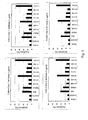
- Fig. 5 The measurement results of 8 kinds of the typical murine anti-CD20 monoclonal antibodies, positive control (2B8), and negative control (anti-CD3 antibody) are shown in Fig. 5 .
- the apoptosis inducing ability of 2B8 is said to be high.
- the clone of which amino acid sequences of the H chain variable region and the L chain variable region were those of SEQ ID NOS: 2 and 8 (1K1791) showed a markedly higher apoptosis inducing activity.
- a 5 x 10 4 cells/ml Raji cell suspension was prepared with 10% FCS-added RPMI 1640 medium, and added to a 96-well plate in a volume of 100 ⁇ l/well, and culture was performed. After 24 hours, 50 ⁇ l/well of each antibody solution was added at an antibody concentration of 0.01 ⁇ g/ml, 0.1 ⁇ g/ml or 1 ⁇ g/ml, and culture was continued. Seventy two hours after the addition of the antibody, 10 ⁇ l/well of a color development solution, Cell Counting Kit-8 (Dojindo Laboratories, Cat. No. 343-07623, Lot SG076) was added, the cells were cultured for further 4 hours, and then absorbance was measured at 492 nm.
- Cell Counting Kit-8 Dojindo Laboratories, Cat. No. 343-07623, Lot SG076
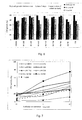
- the living cell counts of the typical 8 kinds of murine anti-CD20 monoclonal antibodies and the positive control (2B8) are shown in Fig. 6 as percentages based on that of the negative control (100%).
- the cell growth inhibitory effect can be estimated on the basis of the rate of the decreased living cell count compared with that of the negative control. Clear cell growth inhibition was observed with 1K0924, 1K1422, 1K1791 and 2B8 as the positive control, and the inhibition was particularly marked with 1K1791. This tendency was consistent with the results of the apoptosis induction test.
- the genes encoding the H chain and L chain variable regions of each murine antibody were incorporated into pNOW-Ab, a high expression vector for CHO cell already containing the genes encoding human immunoglobulin H chain and L chain ( ⁇ ) constant regions as a cassette. Each expression vector was transfected into CHO cells, and clones showing high productivity were selected for each antibody.
- the prepared 8 kinds of chimeric anti-CD20 monoclonal antibodies were examined for reactivity to the human CD20 antigen by the CD20/CHO cell-ELISA.
- Rituximab (c2B8) was used as a positive control.
- the test results are shown in Table 2.
- the values measured in the cell-ELISA (A492) reflect intensity of the binding property.
- the prepared 8 kinds of chimeric anti-CD20 monoclonal antibodies were examined for the CDC activity.
- Rituximab (c2B8) was used as a positive control.
- RC-K8 (obtained from Kochi Medical School) was used as the target cells.
- RHB basic medium: RPMI-1640, additives: 0.1% BSA, 20 mM HEPES (pH 7.2), 2 mM glutamine, 100 units/ml of penicillin G, 100 ⁇ g/ml of streptomycin
- the target cells were washed with RHB and resuspended at 10 6 cells/ml.
- Humanized antibodies were designed based on the variable region CDR of the murine anti-CD20 monoclonal antibody 1K1791.
- 4 kinds of humanized sequences were prepared for each of the H chain and the L chain ( Padlan EA, Mol. Immunol., Vol. 28, No 4/5, 489-498 ; Wu TT and Kabat EA, Mol. Immunol., Vol. 29, No 9, 1141-1146 ; Padlan EA et al., FASEB J., Vol. 9, 133-139 ).
- Antibodies were prepared with all possible combinations of the four types for each of the H chain and the L chain.
- amino acid sequences of these 4 kinds of H chain variable regions and 4 kinds of L chain variable regions were converted into DNA (nucleotide) sequences with codons most frequently used in human gene sequences, and some of these nucleotides were changed considering suitability in the host CHO cells without changing the original amino acid residues ( Kim CH et al., Gene, 1997, 15; 199 (1-2): 293-301 ).
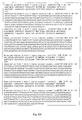
- nucleotide sequences corresponding to the amino acid sequences were those of SEQ ID NO: 27 corresponding to SEQ ID NO: 19, SEQ ID NO: 28 corresponding to SEQ ID NO: 20, SEQ ID NO: 29 corresponding to SEQ ID NO: 21, SEQ ID NO: 30 corresponding to SEQ ID NO: 22, SEQ ID NO: 31 corresponding to SEQ ID NO: 23, SEQ ID NO: 32 corresponding to SEQ ID NO: 24, SEQ ID NO: 33 corresponding to SEQ ID NO: 25, and SEQ ID NO: 34 corresponding to SEQ ID NO: 26 ( Fig. 8A and Fig. 8B ).
- nucleotides may be replaced with other nucleotides so long as the corresponding amino acid sequences are not altered.
- Total 8 kinds of the nucleotide sequences of H chain variable regions (SEQ ID NOS: 27 to 30) and L chain variable regions (SEQ ID NOS: 31 to 34) were synthesized (Takara Shuzo Co., Ltd.) and incorporated into pNOW-Ab, an expression vector for mammalian cells containing a multicloning site.
- the expression vectors incorporated with each of these humanized antibody genes were transfected into CHO cells, and clones showing high productivity were selected for each antibody.
- a suspension containing 5 x 10 4 /ml of the Raji cells was prepared with 10% FCS-added RPMI 1640 medium, and added to a 96-well plate in a volume of 100 ⁇ l/well, and culture was performed. After 24 hours, 50 ⁇ l/well of each antibody solution was added at an antibody concentration of 0.5 ⁇ g/ml, and culture was continued. Seventy two hours after the addition of the antibody, 10 ⁇ l/well of a color development solution, Cell Counting Kit-8 (Dojindo Laboratories, Cat. No. 343-07623, Lot SG076) was added, culture was performed for further 4 hours, and then absorbance was measured at 492 nm.
- the living cell counts of 15 kinds (27 clones) out of 16 kinds of humanized antibodies derived from 1K1791 and c2B8 (other name of rituximab) as the positive control are shown in Fig. 9 as rates based on that of the negative control (100%).
- the cell growth inhibitory effect can be estimated on the basis of rate of decreased living cell count compared with that of the negative control, and the growth inhibitory effect was observed for all the clones in this test.
- the hybridomas producing these monoclonal antibodies were named on the basis of the names of the antibodies produced thereby, and internationally deposited at the National Institute of Advanced Industrial Science and Technology, International Patent Organism Depositary (Tsukuba Central 6, 1-1, Higashi 1-Chome, Tsukuba-shi, Ibaraki-ken, 305-8566, Japan) on March 28, 2006 under the provisions of the Budapest Treaty, and assigned accession numbers of FERM BP-10587 (1K1422), FERM BP-10591 (1K1791), FERM BP-10588 (1K1712), FERM BP-10586 (1K1402), FERM BP-10589 (1K1736), FERM BP-10590 (1K1782), FERM BP-10584 (1K0924), and FERM BP-10585 (1K1228).
- the present invention provides a monoclonal antibody having biological activities suitable for use as a therapeutic agent.
Landscapes
- Health & Medical Sciences (AREA)
- Chemical & Material Sciences (AREA)
- Organic Chemistry (AREA)
- Life Sciences & Earth Sciences (AREA)
- Medicinal Chemistry (AREA)
- General Health & Medical Sciences (AREA)
- Engineering & Computer Science (AREA)
- Veterinary Medicine (AREA)
- Public Health (AREA)
- Animal Behavior & Ethology (AREA)
- Pharmacology & Pharmacy (AREA)
- Bioinformatics & Cheminformatics (AREA)
- Nuclear Medicine, Radiotherapy & Molecular Imaging (AREA)
- Chemical Kinetics & Catalysis (AREA)
- General Chemical & Material Sciences (AREA)
- Immunology (AREA)
- Genetics & Genomics (AREA)
- Diabetes (AREA)
- Hematology (AREA)
- Biochemistry (AREA)
- Molecular Biology (AREA)
- Biophysics (AREA)
- Biomedical Technology (AREA)
- Proteomics, Peptides & Aminoacids (AREA)
- Rheumatology (AREA)
- Wood Science & Technology (AREA)
- Microbiology (AREA)
- General Engineering & Computer Science (AREA)
- Biotechnology (AREA)
- Zoology (AREA)
- Physical Education & Sports Medicine (AREA)
- Plant Pathology (AREA)
- Emergency Medicine (AREA)
- Obesity (AREA)
- Oncology (AREA)
- Transplantation (AREA)
- Physics & Mathematics (AREA)
- Pain & Pain Management (AREA)
- Neurosurgery (AREA)
- Endocrinology (AREA)
Priority Applications (1)
| Application Number | Priority Date | Filing Date | Title |
|---|---|---|---|
| PL09011119T PL2143795T3 (pl) | 2005-03-31 | 2006-03-31 | Przeciwciało monoklonalne skierowane przeciwko CD20 |
Applications Claiming Priority (3)
| Application Number | Priority Date | Filing Date | Title |
|---|---|---|---|
| JP2005103093 | 2005-03-31 | ||
| JP2005378466 | 2005-12-28 | ||
| EP06730873A EP1865058B1 (de) | 2005-03-31 | 2006-03-31 | Monoklonaler anti-cd20-antikörper |
Related Parent Applications (2)
| Application Number | Title | Priority Date | Filing Date |
|---|---|---|---|
| EP06730873.4 Division | 2006-03-31 | ||
| EP06730873A Division EP1865058B1 (de) | 2005-03-31 | 2006-03-31 | Monoklonaler anti-cd20-antikörper |
Publications (3)
| Publication Number | Publication Date |
|---|---|
| EP2143795A2 true EP2143795A2 (de) | 2010-01-13 |
| EP2143795A3 EP2143795A3 (de) | 2010-02-24 |
| EP2143795B1 EP2143795B1 (de) | 2011-07-20 |
Family
ID=37073509
Family Applications (2)
| Application Number | Title | Priority Date | Filing Date |
|---|---|---|---|
| EP09011119A Expired - Lifetime EP2143795B1 (de) | 2005-03-31 | 2006-03-31 | Monoklonaler Antikörper gegen CD20 |
| EP06730873A Expired - Lifetime EP1865058B1 (de) | 2005-03-31 | 2006-03-31 | Monoklonaler anti-cd20-antikörper |
Family Applications After (1)
| Application Number | Title | Priority Date | Filing Date |
|---|---|---|---|
| EP06730873A Expired - Lifetime EP1865058B1 (de) | 2005-03-31 | 2006-03-31 | Monoklonaler anti-cd20-antikörper |
Country Status (17)
| Country | Link |
|---|---|
| US (1) | US8101179B2 (de) |
| EP (2) | EP2143795B1 (de) |
| JP (1) | JP4813465B2 (de) |
| KR (1) | KR101188117B1 (de) |
| CN (1) | CN101870730A (de) |
| AT (2) | ATE495248T1 (de) |
| AU (2) | AU2006231784B2 (de) |
| BR (1) | BRPI0609543B1 (de) |
| CA (1) | CA2603414C (de) |
| DE (1) | DE602006019565D1 (de) |
| DK (1) | DK2143795T3 (de) |
| IL (2) | IL186387A (de) |
| MX (1) | MX2007012197A (de) |
| PL (1) | PL2143795T3 (de) |
| RU (1) | RU2415871C2 (de) |
| TW (1) | TWI381050B (de) |
| WO (1) | WO2006106959A1 (de) |
Families Citing this family (64)
| Publication number | Priority date | Publication date | Assignee | Title |
|---|---|---|---|---|
| JPWO2006109533A1 (ja) * | 2005-03-31 | 2008-10-23 | 国立大学法人大阪大学 | 細胞膜表面抗原エピトープに対する抗体の作製法及びアッセイ法 |
| WO2007102200A1 (ja) * | 2006-03-07 | 2007-09-13 | Osaka University | 抗cd20モノクローナル抗体 |
| US7960139B2 (en) | 2007-03-23 | 2011-06-14 | Academia Sinica | Alkynyl sugar analogs for the labeling and visualization of glycoconjugates in cells |
| JP5986745B2 (ja) | 2008-07-15 | 2016-09-06 | アカデミア シニカAcademia Sinica | Ptfe様のアルミニウム・コート・ガラススライド上のグリカンアレイおよび関連する方法 |
| TW201438738A (zh) | 2008-09-16 | 2014-10-16 | 建南德克公司 | 治療進展型多發性硬化症之方法 |
| WO2010075249A2 (en) | 2008-12-22 | 2010-07-01 | Genentech, Inc. | A method for treating rheumatoid arthritis with b-cell antagonists |
| US8815242B2 (en) | 2009-05-27 | 2014-08-26 | Synageva Biopharma Corp. | Avian derived antibodies |
| PT3023438T (pt) | 2009-09-03 | 2020-05-08 | Merck Sharp & Dohme | Anticorpos anti-gitr |
| US11377485B2 (en) | 2009-12-02 | 2022-07-05 | Academia Sinica | Methods for modifying human antibodies by glycan engineering |
| US10087236B2 (en) | 2009-12-02 | 2018-10-02 | Academia Sinica | Methods for modifying human antibodies by glycan engineering |
| US9173961B2 (en) | 2010-02-10 | 2015-11-03 | Immunogen, Inc. | CD20 antibodies and uses thereof |
| WO2011130332A1 (en) | 2010-04-12 | 2011-10-20 | Academia Sinica | Glycan arrays for high throughput screening of viruses |
| EP2568976B1 (de) | 2010-05-10 | 2015-09-30 | Academia Sinica | Zanamivir-phosphinat-kongenere mit antigrippewirkung und bestimmung der oseltamivir-empfänglichkeit von influenzaviren |
| BR112013002535A2 (pt) | 2010-08-03 | 2019-09-24 | F. Hoffmann - La Roche Ag | biomarcadores de leucemia linfocítica crônica (cll) |
| WO2012158818A2 (en) | 2011-05-16 | 2012-11-22 | Fabion Pharmaceuticals, Inc. | Multi-specific fab fusion proteins and methods of use |
| CN103033621B (zh) * | 2011-10-09 | 2016-01-20 | 嘉和生物药业有限公司 | 一种抗cd20单克隆抗体结合活性的检测方法 |
| KR20140103140A (ko) * | 2011-12-13 | 2014-08-25 | 노르딕 나노벡터 에이에스 | 치료용 키메릭 항-cd37 항체 hh1 |
| US10130714B2 (en) | 2012-04-14 | 2018-11-20 | Academia Sinica | Enhanced anti-influenza agents conjugated with anti-inflammatory activity |
| WO2014031498A1 (en) | 2012-08-18 | 2014-02-27 | Academia Sinica | Cell-permeable probes for identification and imaging of sialidases |
| AU2013305827A1 (en) | 2012-08-21 | 2015-03-05 | Academia Sinica | Benzocyclooctyne compounds and uses thereof |
| CA2881966C (en) | 2012-08-24 | 2020-10-06 | The Regents Of The University Of California | Antibodies and vaccines for use in treating ror1 cancers and inhibiting metastasis |
| HK1221168A1 (zh) | 2013-04-17 | 2017-05-26 | 西格诺药品有限公司 | 用於治疗癌症的包括tor激酶抑制剂和n-(3-(5-氟-2-(4-(2-甲氧基乙氧基)苯基氨基)嘧啶-4-基氨基)苯基)丙烯醯胺的组合疗法 |
| EP2986318A1 (de) | 2013-04-17 | 2016-02-24 | Signal Pharmaceuticals, LLC | Kombinationstherapie mit einem torkinaseinhibitor und einer imidverbindung zur behandlung von krebs |
| MX368286B (es) | 2013-04-17 | 2019-09-27 | Signal Pharm Llc | Terapia de combinacion que comprende un inhibidor de tor cinasa y un compuesto de quinazolinona 5-sustituida para tratar cancer. |
| EP2991651A1 (de) | 2013-05-03 | 2016-03-09 | Celgene Corporation | Verfahren zur behandlung von krebs mit einer kombinationstherapie |
| US10086054B2 (en) | 2013-06-26 | 2018-10-02 | Academia Sinica | RM2 antigens and use thereof |
| WO2014210564A1 (en) | 2013-06-27 | 2014-12-31 | Academia Sinica | Glycan conjugates and use thereof |
| JP6486368B2 (ja) | 2013-09-06 | 2019-03-20 | アカデミア シニカAcademia Sinica | 改変されたグリコシル基を含む糖脂質を用いたヒトiNKT細胞の活性化 |
| US10150818B2 (en) | 2014-01-16 | 2018-12-11 | Academia Sinica | Compositions and methods for treatment and detection of cancers |
| TW201620939A (zh) | 2014-01-16 | 2016-06-16 | 中央研究院 | 治療及檢測癌症之組合物及方法 |
| EP3129767B1 (de) | 2014-03-27 | 2021-09-01 | Academia Sinica | Reaktive markierungsverbindungen und ihre verwendungen |
| AU2015267045B2 (en) | 2014-05-27 | 2021-02-25 | Academia Sinica | Anti-HER2 glycoantibodies and uses thereof |
| KR20170003720A (ko) | 2014-05-27 | 2017-01-09 | 아카데미아 시니카 | 항-cd20 글리코항체 및 이의 용도 |
| US10118969B2 (en) | 2014-05-27 | 2018-11-06 | Academia Sinica | Compositions and methods relating to universal glycoforms for enhanced antibody efficacy |
| DK3149045T3 (da) | 2014-05-27 | 2023-03-06 | Academia Sinica | Sammensætninger og fremgangsmåder vedrørende universelle glycoformer til forbedret antistofeffekt |
| JP7063538B2 (ja) | 2014-05-28 | 2022-05-09 | アカデミア シニカ | 抗TNFα糖操作抗体群およびその使用 |
| EP3191500A4 (de) | 2014-09-08 | 2018-04-11 | Academia Sinica | Aktivierung menschlicher inkt-zellen mithilfe von glykolipiden |
| US9975965B2 (en) | 2015-01-16 | 2018-05-22 | Academia Sinica | Compositions and methods for treatment and detection of cancers |
| US10495645B2 (en) | 2015-01-16 | 2019-12-03 | Academia Sinica | Cancer markers and methods of use thereof |
| US10342858B2 (en) | 2015-01-24 | 2019-07-09 | Academia Sinica | Glycan conjugates and methods of use thereof |
| HUE051246T2 (hu) | 2015-05-30 | 2021-03-01 | Molecular Templates Inc | Deimmunizált shigatoxin alegység vázak és azokat tartalmazó, sejthez irányító molekulák |
| AU2017231749A1 (en) | 2016-03-08 | 2018-09-20 | Academia Sinica | Methods for modular synthesis of N-glycans and arrays thereof |
| JP7034489B2 (ja) | 2016-03-15 | 2022-03-14 | アイタブメッド (エイチケイ) リミテッド | 多重特異性Fab融合タンパクおよびその使用 |
| EP3474854A4 (de) | 2016-06-27 | 2020-02-19 | The Regents of The University of California | Krebsbehandlungskombinationen |
| US20190330318A1 (en) | 2016-07-25 | 2019-10-31 | Biogen Ma Inc. | Anti-hspa5 (grp78) antibodies and uses thereof |
| AU2017316663B2 (en) | 2016-08-22 | 2024-02-22 | CHO Pharma Inc. | Antibodies, binding fragments, and methods of use |
| EP3551034A1 (de) | 2016-12-07 | 2019-10-16 | Progenity, Inc. | Verfahren, vorrichtungen und systeme zur detektion des magen-darm-trakts |
| ES3042097T3 (en) * | 2017-03-09 | 2025-11-18 | Mab Discovery Gmbh | Antibodies specifically binding to human il-1r7 |
| EP3600416B1 (de) | 2017-03-30 | 2023-06-07 | Biora Therapeutics, Inc. | Behandlung einer erkrankung des gastrointestinaltraktes mit einem immunmodulatorischen mittel, das mit einer einnehmbaren vorrichtung freigesetzt wird. |
| US12227565B2 (en) | 2018-06-20 | 2025-02-18 | Biora Therapeutics, Inc. | Method of formulating a pharmaceutical composition comprising administering an immune modulator to the small intestine |
| WO2019246312A1 (en) | 2018-06-20 | 2019-12-26 | Progenity, Inc. | Treatment of a disease of the gastrointestinal tract with an immunomodulator |
| CN112566936B (zh) | 2018-08-21 | 2024-07-12 | 阿尔伯特爱因斯坦医学院 | 针对人tim-3的单克隆抗体 |
| US12460000B2 (en) | 2018-09-07 | 2025-11-04 | Itabmed (Hk) Limited | Anti-CD19 and anti-CD3 bispecific antigen binding proteins and uses thereof |
| WO2020106757A1 (en) | 2018-11-19 | 2020-05-28 | Progenity, Inc. | Ingestible device for delivery of therapeutic agent to the gastrointestinal tract |
| WO2020132810A1 (en) | 2018-12-24 | 2020-07-02 | Generon (Shanghai) Corporation Ltd. | Multispecific antigen binding proteins capable of binding cd19 and cd3, and use thereof |
| US11345744B2 (en) | 2019-05-07 | 2022-05-31 | William R Church | Antibody specific to Staphylococcus aureus, therapeutic method and detection method using same |
| CN121197633A (zh) | 2019-12-13 | 2025-12-26 | 比特比德科有限责任公司 | 用于将治疗剂递送至胃肠道的可摄取装置 |
| CN111808191A (zh) * | 2020-05-11 | 2020-10-23 | 廊坊天光生物技术有限公司 | 一种用于检测血清中vegf含量的抗体对及其用途 |
| WO2022019924A1 (en) * | 2020-07-23 | 2022-01-27 | Church William R | Antibody specific to staphylococcus aureus, therapeutic method and detection method using same |
| JP7057954B2 (ja) * | 2020-09-03 | 2022-04-21 | 国立大学法人大阪大学 | 改善された保存安定性を有するタンパク質含有液体製剤 |
| CN116368154A (zh) | 2020-10-08 | 2023-06-30 | 阿菲姆德股份有限公司 | 三特异性结合剂 |
| AU2022320948A1 (en) | 2021-07-30 | 2024-01-18 | Affimed Gmbh | Duplexbodies |
| JP2024543822A (ja) | 2021-11-03 | 2024-11-26 | アフィメド ゲーエムベーハー | 二重特異性cd16aバインダー |
| CN114773474B (zh) * | 2022-05-20 | 2023-05-16 | 赛尔托马斯生物科技(成都)有限公司 | Nk细胞的制备方法及其抗癌的应用 |
Citations (1)
| Publication number | Priority date | Publication date | Assignee | Title |
|---|---|---|---|---|
| JP3582965B2 (ja) | 1996-08-23 | 2004-10-27 | 株式会社イムノ・ジャパン | 哺乳動物細胞用発現ベクター |
Family Cites Families (8)
| Publication number | Priority date | Publication date | Assignee | Title |
|---|---|---|---|---|
| DE69303494T2 (de) * | 1992-11-13 | 1997-01-16 | Idec Pharma Corp | Therapeutische verwendung von chimerischen und markierten antikörper gegen menschlichen b lymphozyt beschränkter differenzierung antigen für die behandlung von b-zell-lymphoma |
| US5595721A (en) * | 1993-09-16 | 1997-01-21 | Coulter Pharmaceutical, Inc. | Radioimmunotherapy of lymphoma using anti-CD20 |
| JP2001074737A (ja) | 1999-09-03 | 2001-03-23 | Asahi Breweries Ltd | 抗ヒトIgEモノクローナル抗体 |
| JP2004537976A (ja) | 2001-03-15 | 2004-12-24 | インターナショナル バイオイムン システムズ,インコーポレーテッド | 膵癌のモノクローナル抗体治療 |
| RU2004127458A (ru) | 2002-02-14 | 2005-10-27 | Иммуномедикс, Инк. (Us) | Анти-cd20 антитела, их гибридные белки и способы их использования |
| KR101351122B1 (ko) | 2003-05-09 | 2014-01-14 | 듀크 유니버시티 | Cd20-특이적 항체 및 이를 이용한 방법 |
| WO2005044307A2 (en) | 2003-11-04 | 2005-05-19 | Chiron Corporation | Methods of therapy for b cell-related cancers |
| WO2007102200A1 (ja) * | 2006-03-07 | 2007-09-13 | Osaka University | 抗cd20モノクローナル抗体 |
-
2006
- 2006-03-31 RU RU2007140257/10A patent/RU2415871C2/ru active
- 2006-03-31 DK DK09011119.6T patent/DK2143795T3/da active
- 2006-03-31 JP JP2007511194A patent/JP4813465B2/ja not_active Expired - Lifetime
- 2006-03-31 AT AT06730873T patent/ATE495248T1/de not_active IP Right Cessation
- 2006-03-31 AT AT09011119T patent/ATE517183T1/de active
- 2006-03-31 EP EP09011119A patent/EP2143795B1/de not_active Expired - Lifetime
- 2006-03-31 CN CN201010209079A patent/CN101870730A/zh active Pending
- 2006-03-31 MX MX2007012197A patent/MX2007012197A/es active IP Right Grant
- 2006-03-31 US US11/910,429 patent/US8101179B2/en active Active
- 2006-03-31 WO PCT/JP2006/306925 patent/WO2006106959A1/ja not_active Ceased
- 2006-03-31 TW TW095111734A patent/TWI381050B/zh active
- 2006-03-31 CA CA2603414A patent/CA2603414C/en not_active Expired - Lifetime
- 2006-03-31 AU AU2006231784A patent/AU2006231784B2/en not_active Expired
- 2006-03-31 EP EP06730873A patent/EP1865058B1/de not_active Expired - Lifetime
- 2006-03-31 DE DE602006019565T patent/DE602006019565D1/de not_active Expired - Lifetime
- 2006-03-31 PL PL09011119T patent/PL2143795T3/pl unknown
- 2006-03-31 BR BRPI0609543-7A patent/BRPI0609543B1/pt active IP Right Grant
- 2006-03-31 KR KR1020077025147A patent/KR101188117B1/ko not_active Expired - Lifetime
-
2007
- 2007-10-07 IL IL186387A patent/IL186387A/en active IP Right Grant
-
2010
- 2010-07-04 IL IL206783A patent/IL206783A/en not_active IP Right Cessation
- 2010-08-31 AU AU2010214745A patent/AU2010214745B2/en not_active Ceased
Patent Citations (1)
| Publication number | Priority date | Publication date | Assignee | Title |
|---|---|---|---|---|
| JP3582965B2 (ja) | 1996-08-23 | 2004-10-27 | 株式会社イムノ・ジャパン | 哺乳動物細胞用発現ベクター |
Non-Patent Citations (28)
| Title |
|---|
| AILSA M. CAMPBELL: "Biochemistry Experiment Method: Monoclonal antibody", 1989, TOKYO KAGAKU DOZIN CO., LTD. |
| AM, ELECTROPHORESIS, vol. 20, no. 2, pages 344 - 348 |
| ANDERSON KC ET AL., BLOOD, vol. 63, 1984, pages 1424 - 33 |
| BOURGER I ET AL., EUR. J. IMMUNOL., vol. 23, 1993, pages 768 - 71 |
| CARDARELLI PM ET AL., CANCER IMMUNOL. IMMUNOTHER., vol. 51, 2002, pages 15 - 24 |
| COIFFIER B ET AL., BLOOD, vol. 92, 1998, pages 1927 - 32 |
| DEANS JP ET AL., IMMINOL., vol. 107, 2002, pages 176 - 82 |
| EDWARD JC ET AL., RHEUMATOLOGY (OXFORD), vol. 40, 2001, pages 205 - 11 |
| FLIEGER D ET AL., CELL IMMUNOL., vol. 204, 2000, pages 55 - 63 |
| GOLAY JT ET AL., J. IMMUNOL., vol. 149, 1992, pages 300 - 8 |
| IDUSOGIE EE ET AL., J. IMMUNOL., vol. 164, 2000, pages 4178 - 4184 |
| ISHIDA T ET AL., NIPPON RINSHO, vol. 60, no. 3, pages 439 - 444 |
| KIM CH ET AL., GENE, vol. 15, 199, no. 1-2, 1997, pages 293 - 301 |
| MANCHES O ET AL., BLOOD, vol. 101, no. 3, 2003, pages 949 - 54 |
| MATHAS S ET AL., CANCER RES., vol. 60, 2000, pages 7170 - 6 |
| MIYAMOTO T ET AL., AVIAN DIS., vol. 46, no. 1, pages 10 - 16 |
| OI, VT ET AL.: "Selected Methods in Cellular Immunology", 1980, FREEMAN AND CO., pages: 351 |
| PADLAN EA ET AL., FASEB J., vol. 9, pages 133 - 139 |
| PADLAN EA, MOL. IMMUNOL., vol. 28, no. 4/5, pages 489 - 498 |
| PEDERSEN IM ET AL., BLOOD, vol. 99, 2002, pages 1314 - 9 |
| PERROTTA S ET AL., BR. J. HAEMATOL., vol. 116, 2002, pages 465 - 7 |
| POLYAK MJ ET AL., BLOOD, vol. 99, 2002, pages 3256 - 62 |
| SHAN D ET AL., BLOOD, vol. 91, 1998, pages 1644 - 52 |
| SHAN D ET AL., CANCER IMMUNOL. IMMNOTHER., vol. 48, 2000, pages 673 - 83 |
| STASHENKO P ET AL., J. IMMUNOL., vol. 125, 1980, pages 1678 - 85 |
| WHITE MW ET AL., J. IMMUNOL., vol. 146, 1991, pages 846 - 53 |
| WU TT; KABAT EA, MOL. IMMUNOL., vol. 29, no. 9, pages 1141 - 1146 |
| ZAJA F ET AL., HEAMATOLOGICA, vol. 87, 2002, pages 189 - 95 |
Also Published As
Similar Documents
| Publication | Publication Date | Title |
|---|---|---|
| EP2143795B1 (de) | Monoklonaler Antikörper gegen CD20 | |
| US20220112304A1 (en) | Anti-ox40 antibodies and their uses | |
| CN121248780A (zh) | 新颖激动性抗tnfr2抗体分子 | |
| NO20150245L (no) | Immunoglobulinvarianter og anvendelser derav | |
| EP2186892A1 (de) | Monoklonale anti-cd20-antikörper | |
| JP2012517806A (ja) | ヒト化抗cd20抗体および使用方法 | |
| JPWO2007102200A1 (ja) | 抗cd20モノクローナル抗体 | |
| KR20230015327A (ko) | 항-ox40 항체 및 이의 용도 | |
| CN101203607B (zh) | 抗cd20单克隆抗体 | |
| HK1138621B (en) | Anti-cd20 monoclonal antibody | |
| HK1111728B (en) | Anti-cd-20 monoclonal antibody | |
| JP2010189402A (ja) | ヒト化抗cd20モノクローナル抗体 | |
| HK40029314A (en) | Anti-ox40 antibodies and their uses |
Legal Events
| Date | Code | Title | Description |
|---|---|---|---|
| PUAI | Public reference made under article 153(3) epc to a published international application that has entered the european phase |
Free format text: ORIGINAL CODE: 0009012 |
|
| AC | Divisional application: reference to earlier application |
Ref document number: 1865058 Country of ref document: EP Kind code of ref document: P |
|
| AK | Designated contracting states |
Kind code of ref document: A2 Designated state(s): AT BE BG CH CY CZ DE DK EE ES FI FR GB GR HU IE IS IT LI LT LU LV MC NL PL PT RO SE SI SK TR |
|
| PUAL | Search report despatched |
Free format text: ORIGINAL CODE: 0009013 |
|
| AK | Designated contracting states |
Kind code of ref document: A3 Designated state(s): AT BE BG CH CY CZ DE DK EE ES FI FR GB GR HU IE IS IT LI LT LU LV MC NL PL PT RO SE SI SK TR |
|
| AX | Request for extension of the european patent |
Extension state: AL BA HR MK YU |
|
| RAP1 | Party data changed (applicant data changed or rights of an application transferred) |
Owner name: BIOMEDICS INC. |
|
| 17P | Request for examination filed |
Effective date: 20100609 |
|
| REG | Reference to a national code |
Ref country code: HK Ref legal event code: DE Ref document number: 1138621 Country of ref document: HK |
|
| 17Q | First examination report despatched |
Effective date: 20101115 |
|
| GRAP | Despatch of communication of intention to grant a patent |
Free format text: ORIGINAL CODE: EPIDOSNIGR1 |
|
| GRAS | Grant fee paid |
Free format text: ORIGINAL CODE: EPIDOSNIGR3 |
|
| GRAA | (expected) grant |
Free format text: ORIGINAL CODE: 0009210 |
|
| AC | Divisional application: reference to earlier application |
Ref document number: 1865058 Country of ref document: EP Kind code of ref document: P |
|
| AK | Designated contracting states |
Kind code of ref document: B1 Designated state(s): AT BE BG CH CY CZ DE DK EE ES FI FR GB GR HU IE IS IT LI LT LU LV MC NL PL PT RO SE SI SK TR |
|
| REG | Reference to a national code |
Ref country code: GB Ref legal event code: FG4D |
|
| REG | Reference to a national code |
Ref country code: CH Ref legal event code: EP |
|
| REG | Reference to a national code |
Ref country code: DE Ref legal event code: R096 Ref document number: 602006023243 Country of ref document: DE Effective date: 20110915 Ref country code: CH Ref legal event code: NV Representative=s name: E. BLUM & CO. AG PATENT- UND MARKENANWAELTE VSP |
|
| REG | Reference to a national code |
Ref country code: DK Ref legal event code: T3 |
|
| REG | Reference to a national code |
Ref country code: SE Ref legal event code: TRGR |
|
| REG | Reference to a national code |
Ref country code: RO Ref legal event code: EPE |
|
| REG | Reference to a national code |
Ref country code: NL Ref legal event code: T3 |
|
| REG | Reference to a national code |
Ref country code: ES Ref legal event code: FG2A Ref document number: 2370941 Country of ref document: ES Kind code of ref document: T3 Effective date: 20111223 |
|
| REG | Reference to a national code |
Ref country code: PL Ref legal event code: T3 Ref country code: HK Ref legal event code: GR Ref document number: 1138621 Country of ref document: HK |
|
| PG25 | Lapsed in a contracting state [announced via postgrant information from national office to epo] |
Ref country code: PT Free format text: LAPSE BECAUSE OF FAILURE TO SUBMIT A TRANSLATION OF THE DESCRIPTION OR TO PAY THE FEE WITHIN THE PRESCRIBED TIME-LIMIT Effective date: 20111121 Ref country code: IS Free format text: LAPSE BECAUSE OF FAILURE TO SUBMIT A TRANSLATION OF THE DESCRIPTION OR TO PAY THE FEE WITHIN THE PRESCRIBED TIME-LIMIT Effective date: 20111120 Ref country code: LT Free format text: LAPSE BECAUSE OF FAILURE TO SUBMIT A TRANSLATION OF THE DESCRIPTION OR TO PAY THE FEE WITHIN THE PRESCRIBED TIME-LIMIT Effective date: 20110720 |
|
| PG25 | Lapsed in a contracting state [announced via postgrant information from national office to epo] |
Ref country code: LV Free format text: LAPSE BECAUSE OF FAILURE TO SUBMIT A TRANSLATION OF THE DESCRIPTION OR TO PAY THE FEE WITHIN THE PRESCRIBED TIME-LIMIT Effective date: 20110720 Ref country code: CY Free format text: LAPSE BECAUSE OF FAILURE TO SUBMIT A TRANSLATION OF THE DESCRIPTION OR TO PAY THE FEE WITHIN THE PRESCRIBED TIME-LIMIT Effective date: 20110720 Ref country code: SI Free format text: LAPSE BECAUSE OF FAILURE TO SUBMIT A TRANSLATION OF THE DESCRIPTION OR TO PAY THE FEE WITHIN THE PRESCRIBED TIME-LIMIT Effective date: 20110720 Ref country code: GR Free format text: LAPSE BECAUSE OF FAILURE TO SUBMIT A TRANSLATION OF THE DESCRIPTION OR TO PAY THE FEE WITHIN THE PRESCRIBED TIME-LIMIT Effective date: 20111021 |
|
| REG | Reference to a national code |
Ref country code: HU Ref legal event code: AG4A Ref document number: E012330 Country of ref document: HU |
|
| PG25 | Lapsed in a contracting state [announced via postgrant information from national office to epo] |
Ref country code: SK Free format text: LAPSE BECAUSE OF FAILURE TO SUBMIT A TRANSLATION OF THE DESCRIPTION OR TO PAY THE FEE WITHIN THE PRESCRIBED TIME-LIMIT Effective date: 20110720 |
|
| PLBE | No opposition filed within time limit |
Free format text: ORIGINAL CODE: 0009261 |
|
| STAA | Information on the status of an ep patent application or granted ep patent |
Free format text: STATUS: NO OPPOSITION FILED WITHIN TIME LIMIT |
|
| PG25 | Lapsed in a contracting state [announced via postgrant information from national office to epo] |
Ref country code: EE Free format text: LAPSE BECAUSE OF FAILURE TO SUBMIT A TRANSLATION OF THE DESCRIPTION OR TO PAY THE FEE WITHIN THE PRESCRIBED TIME-LIMIT Effective date: 20110720 |
|
| 26N | No opposition filed |
Effective date: 20120423 |
|
| REG | Reference to a national code |
Ref country code: DE Ref legal event code: R097 Ref document number: 602006023243 Country of ref document: DE Effective date: 20120423 |
|
| PG25 | Lapsed in a contracting state [announced via postgrant information from national office to epo] |
Ref country code: MC Free format text: LAPSE BECAUSE OF NON-PAYMENT OF DUE FEES Effective date: 20120331 |
|
| PG25 | Lapsed in a contracting state [announced via postgrant information from national office to epo] |
Ref country code: BG Free format text: LAPSE BECAUSE OF FAILURE TO SUBMIT A TRANSLATION OF THE DESCRIPTION OR TO PAY THE FEE WITHIN THE PRESCRIBED TIME-LIMIT Effective date: 20111020 |
|
| PG25 | Lapsed in a contracting state [announced via postgrant information from national office to epo] |
Ref country code: LU Free format text: LAPSE BECAUSE OF NON-PAYMENT OF DUE FEES Effective date: 20120331 |
|
| REG | Reference to a national code |
Ref country code: FR Ref legal event code: PLFP Year of fee payment: 11 |
|
| REG | Reference to a national code |
Ref country code: FR Ref legal event code: PLFP Year of fee payment: 12 |
|
| REG | Reference to a national code |
Ref country code: FR Ref legal event code: PLFP Year of fee payment: 13 |
|
| PGFP | Annual fee paid to national office [announced via postgrant information from national office to epo] |
Ref country code: SE Payment date: 20250311 Year of fee payment: 20 |
|
| PGFP | Annual fee paid to national office [announced via postgrant information from national office to epo] |
Ref country code: DE Payment date: 20250319 Year of fee payment: 20 |
|
| PGFP | Annual fee paid to national office [announced via postgrant information from national office to epo] |
Ref country code: NL Payment date: 20250324 Year of fee payment: 20 Ref country code: DK Payment date: 20250321 Year of fee payment: 20 Ref country code: FI Payment date: 20250320 Year of fee payment: 20 Ref country code: RO Payment date: 20250327 Year of fee payment: 20 |
|
| PGFP | Annual fee paid to national office [announced via postgrant information from national office to epo] |
Ref country code: HU Payment date: 20250331 Year of fee payment: 20 |
|
| PGFP | Annual fee paid to national office [announced via postgrant information from national office to epo] |
Ref country code: IE Payment date: 20250319 Year of fee payment: 20 |
|
| PGFP | Annual fee paid to national office [announced via postgrant information from national office to epo] |
Ref country code: AT Payment date: 20250319 Year of fee payment: 20 Ref country code: BE Payment date: 20250320 Year of fee payment: 20 |
|
| PGFP | Annual fee paid to national office [announced via postgrant information from national office to epo] |
Ref country code: FR Payment date: 20250324 Year of fee payment: 20 Ref country code: CZ Payment date: 20250318 Year of fee payment: 20 Ref country code: PL Payment date: 20250319 Year of fee payment: 20 |
|
| PGFP | Annual fee paid to national office [announced via postgrant information from national office to epo] |
Ref country code: GB Payment date: 20250324 Year of fee payment: 20 |
|
| PGFP | Annual fee paid to national office [announced via postgrant information from national office to epo] |
Ref country code: TR Payment date: 20250324 Year of fee payment: 20 |
|
| PGFP | Annual fee paid to national office [announced via postgrant information from national office to epo] |
Ref country code: ES Payment date: 20250416 Year of fee payment: 20 |
|
| PGFP | Annual fee paid to national office [announced via postgrant information from national office to epo] |
Ref country code: IT Payment date: 20250331 Year of fee payment: 20 |
|
| PGFP | Annual fee paid to national office [announced via postgrant information from national office to epo] |
Ref country code: CH Payment date: 20250401 Year of fee payment: 20 |
|
| REG | Reference to a national code |
Ref country code: CH Ref legal event code: H14 Free format text: ST27 STATUS EVENT CODE: U-0-0-H10-H14 (AS PROVIDED BY THE NATIONAL OFFICE) Effective date: 20260331 Ref country code: DE Ref legal event code: R071 Ref document number: 602006023243 Country of ref document: DE |
|
| REG | Reference to a national code |
Ref country code: NL Ref legal event code: MK Effective date: 20260330 |
|
| REG | Reference to a national code |
Ref country code: DK Ref legal event code: EUP Expiry date: 20260331 |
|
| REG | Reference to a national code |
Ref country code: BE Ref legal event code: MK Effective date: 20260331 |
|
| REG | Reference to a national code |
Ref country code: GB Ref legal event code: PE20 Expiry date: 20260330 |
|
| PG25 | Lapsed in a contracting state [announced via postgrant information from national office to epo] |
Ref country code: CZ Free format text: LAPSE BECAUSE OF EXPIRATION OF PROTECTION Effective date: 20260331 |
|
| REG | Reference to a national code |
Ref country code: ES Ref legal event code: FD2A Effective date: 20260504 |