EP2144014B1 - Klimaanlage mit bedienung nach benutzerdefinierter kurve und steuerverfahren dafür - Google Patents
Klimaanlage mit bedienung nach benutzerdefinierter kurve und steuerverfahren dafür Download PDFInfo
- Publication number
- EP2144014B1 EP2144014B1 EP08748417A EP08748417A EP2144014B1 EP 2144014 B1 EP2144014 B1 EP 2144014B1 EP 08748417 A EP08748417 A EP 08748417A EP 08748417 A EP08748417 A EP 08748417A EP 2144014 B1 EP2144014 B1 EP 2144014B1
- Authority
- EP
- European Patent Office
- Prior art keywords
- user
- curve
- temperature
- remote controller
- setting
- Prior art date
- Legal status (The legal status is an assumption and is not a legal conclusion. Google has not performed a legal analysis and makes no representation as to the accuracy of the status listed.)
- Active
Links
Images


Classifications
-
- F—MECHANICAL ENGINEERING; LIGHTING; HEATING; WEAPONS; BLASTING
- F24—HEATING; RANGES; VENTILATING
- F24F—AIR-CONDITIONING; AIR-HUMIDIFICATION; VENTILATION; USE OF AIR CURRENTS FOR SCREENING
- F24F11/00—Control or safety arrangements
- F24F11/30—Control or safety arrangements for purposes related to the operation of the system, e.g. for safety or monitoring
-
- F—MECHANICAL ENGINEERING; LIGHTING; HEATING; WEAPONS; BLASTING
- F24—HEATING; RANGES; VENTILATING
- F24F—AIR-CONDITIONING; AIR-HUMIDIFICATION; VENTILATION; USE OF AIR CURRENTS FOR SCREENING
- F24F11/00—Control or safety arrangements
- F24F11/62—Control or safety arrangements characterised by the type of control or by internal processing, e.g. using fuzzy logic, adaptive control or estimation of values
-
- G—PHYSICS
- G05—CONTROLLING; REGULATING
- G05D—SYSTEMS FOR CONTROLLING OR REGULATING NON-ELECTRIC VARIABLES
- G05D23/00—Control of temperature
- G05D23/19—Control of temperature characterised by the use of electric means
- G05D23/1902—Control of temperature characterised by the use of electric means characterised by the use of a variable reference value
- G05D23/1904—Control of temperature characterised by the use of electric means characterised by the use of a variable reference value variable in time
-
- F—MECHANICAL ENGINEERING; LIGHTING; HEATING; WEAPONS; BLASTING
- F24—HEATING; RANGES; VENTILATING
- F24F—AIR-CONDITIONING; AIR-HUMIDIFICATION; VENTILATION; USE OF AIR CURRENTS FOR SCREENING
- F24F11/00—Control or safety arrangements
- F24F11/50—Control or safety arrangements characterised by user interfaces or communication
- F24F11/56—Remote control
-
- F—MECHANICAL ENGINEERING; LIGHTING; HEATING; WEAPONS; BLASTING
- F24—HEATING; RANGES; VENTILATING
- F24F—AIR-CONDITIONING; AIR-HUMIDIFICATION; VENTILATION; USE OF AIR CURRENTS FOR SCREENING
- F24F11/00—Control or safety arrangements
- F24F11/62—Control or safety arrangements characterised by the type of control or by internal processing, e.g. using fuzzy logic, adaptive control or estimation of values
- F24F11/63—Electronic processing
- F24F11/65—Electronic processing for selecting an operating mode
- F24F11/66—Sleep mode
-
- Y—GENERAL TAGGING OF NEW TECHNOLOGICAL DEVELOPMENTS; GENERAL TAGGING OF CROSS-SECTIONAL TECHNOLOGIES SPANNING OVER SEVERAL SECTIONS OF THE IPC; TECHNICAL SUBJECTS COVERED BY FORMER USPC CROSS-REFERENCE ART COLLECTIONS [XRACs] AND DIGESTS
- Y10—TECHNICAL SUBJECTS COVERED BY FORMER USPC
- Y10S—TECHNICAL SUBJECTS COVERED BY FORMER USPC CROSS-REFERENCE ART COLLECTIONS [XRACs] AND DIGESTS
- Y10S715/00—Data processing: presentation processing of document, operator interface processing, and screen saver display processing
- Y10S715/961—Operator interface with visual structure or function dictated by intended use
- Y10S715/965—Operator interface with visual structure or function dictated by intended use for process control and configuration
Definitions
- the present invention relates to an air conditioner and the control method thereof, more particularly, to an air conditioner operating according to a user-defined curve and the control method thereof, a user is able to realize the settings of the user-defined curve by means of a remote controller according to personal preference and surrounding environment.
- body temperature of a human being in sleep status changes continually as the sleep time goes by: the human being has normal body temperature as usual at the stage of beginning sleep, then the body temperature decreases as the sleep time goes by and increases gradually at the stage of nearly waking up under the automatic regulation of biological clock.
- Air conditioner sleep mode refers to the operation mode of air conditioner when the user is in sleep state (see for example patent document US-A-2005/115 258 ), air conditioner manufacturers have to set the sleep operation mode of air conditioner based on the mass data obtained from comprehensive statistics. For example, Figure 1 shows the change curve of temperature as a function of time of a prior art air conditioner with common sleep function.
- the setting temperature in cooling mode, the setting temperature will be automatically increased by 0.5 degree after the sleep mode is started for half an hour, and then increased by 1 degree after one hour, the setting temperature will be increased by 2 degrees compared with the primary temperature after two hours which will be held until the sleep mode is cancelled.
- the setting temperature in heating mode, the setting temperature will be automatically decreased by 0.5 degree after the sleep mode is started for half an hour, and then decreased by 1 degree after one hour, the setting temperature will be decreased by 2 degrees compared with the primary temperature after two hours which will be held until the sleep mode is cancelled.
- this kind of sleep function can not be changed by users which meets some people's needs but may not be suitable for other people at all, as a result, the sleep function is just an auxiliary function which may not be used at all by common users.
- the air conditioner functions just as a cold source (or hot source), which is far away from making people feel comfortable.
- the present invention aims at providing an air conditioner operating according to a user-defined curve and the control method thereof, so that the air conditioner user is able to adjust the temperature curve more easily according to personal sleep habit, and the air conditioner sleep function is more close to the demands of the most majority users. More particularly, according to personal preference and geographical environment, the user is able to set the user-defined curve at any time by means of a remote controller so as to produce a comfortable sleeping environment.
- an air conditioner operating according to a user-defined curve comprises a main unit, characterized in that , said main unit comprising: a receiving unit of user-defined curve for receiving the data of the user-defined curve set by the user, the user-defined curve defines air conditioner temperatures demanded by the user as a function of time; and a control unit connected to the receiving unit of user-defined curve for controlling the air conditioner temperatures at different times according to the user-defined curve.
- control unit is an air conditioner MCU control chip
- data of the user-defined curve are stored in a built-in RAM of the air conditioner MCU control chip
- control unit automatically calls the data of the user-defined curve according to the user's settings.
- the air conditioner further comprises a remote controller, and the user can set the user-defined curve by means of the remote controller.
- the remote controller comprises: a keyboard for inputting temperature and time data of the user-defined curve; a main chip of remote controller for receiving the temperature and time data inputted by the user to generate the data of the user-defined curve and for transmitting the data of the user-defined curve respectively to a memory chip, a display unit and a transmitting unit; a memory chip for storing the data of the user-defined curve; a display unit for displaying the data inputted by the user and displaying the user-defined curve based on the data of the user-defined curve transmitted by the main chip of remote controller; and a transmitting unit for transmitting the data of the user-defined curve transmitted from the main chip of remote controller to the receiving unit of user-defined curve of the main unit.
- a method of controlling an air conditioner to operate according to a user-defined curve comprises the following steps: the user-defined curve is set by use of the keyboard on the remote controller; when the settings are done, the data of the set user-defined curve are stored by the remote controller in the built-in memory chip of the remote controller; the data of the user-defined curve are transmitted in coding format to an infrared signal receiving unit of the main unit of air conditioner by an infrared signal transmitting unit of remote controller; the data of the user-defined curve are stored in a built-in RAM of a MCU control chip of the main unit of air conditioner by the infrared signal receiving unit of the main unit of air conditioner, then predetermined operation parameters are set during the corresponding period of time by the MCU control chip according to the data of the user-defined curve in the RAM, and the main unit of air conditioner is controlled to operate accordingly by said operation parameters.
- the user-defined curve is a user-defined sleep curve
- the process of setting user-defined sleep curve further comprises the following steps: the user enters the user-defined setting status; then the user sets a temperature value, the remote controller will automatically increase a certain time interval, at the same time, the remote controller will automatically maintain the setting temperature; if there is no need for the user to change the setting temperature, he can directly confirm, then the remote controller will automatically increase a certain time interval for one more time, if the user changes the setting temperature, he can adjust the setting temperature to the demanded value, the remote controller will automatically increase a certain time interval; keep on doing so until completing the temperature settings for the whole period of sleep time thereby a user-defined sleep curve is done.
- the user-defined curve is a user-defined temperature-time curve
- the process of setting user-defined temperature-time curve further comprises the following steps: the user enters the user-defined temperature setting mode to activate the user-defined curve setting status; set the starting time and operation time for entering user-defined curve operation status, set the setting temperature corresponding to the operation time so that the setting of one temperature point is done; by repeatedly setting a plurality of temperature points, said user-defined temperature-time curve is set.
- the user-defined curve may be a user-defined mode curve, for the remote controller having clock counting function
- the process of setting user-defined mode curve further comprises the following steps: the user enters the user-defined setting status to set the starting time and operation time of the user-defined mode; set the operation function parameters of air conditioner corresponding to each operation time, and said function parameters include on-off, mode, temperature and/or wind speed.
- the air conditioner user is able to set temperature-time curve at will according to personal sleep habit, which is convenient and flexible; the user will feel more comfortable when using the air conditioner, it is a breakthrough in comfortableness and personalization.
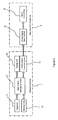
- Figure 2 is a modular diagram of the air conditioner with function of user-defined curve according to the present invention
- the air conditioner comprises a main unit 2 and a remote controller 1.
- the main unit 2 comprises: a receiving unit 21 of user-defined curve for receiving the data of the user-defined curve set by the user, the corresponding relation between time and the air conditioner temperature demanded by the user is defined by the user-defined curve; and a control unit 22 connected to the receiving unit 21 of user-defined curve for controlling air conditioner temperature at different times according to the user-defined curve.
- the user sets the user-defined curve by means of the remote controller 1.
- the remote controller 1 comprises a keyboard 11 for inputting temperature and time data of the user-defined curve; a main chip 12 of remote controller for receiving the temperature and time data inputted by the user to generate the data of the user-defined curve and transmitting the data of the user-defined curve respectively to a memory chip 13, a display unit 14 and a transmitting unit 15; a memory chip 13 for storing the data of the user-defined curve; a display unit 14 for displaying the data inputted by the user and the user-defined curve according to the data of the user-defined curve transmitted by the main chip 12 of remote controller; and a transmitting unit 15 for transmitting the data of the user-defined curve transmitted from the main chip 12 of remote controller to the receiving unit 21 of user-defined curve of the main unit 2.
- the control unit 22 of the main unit is the air conditioner MCU control chip, the data of the user-defined curve are stored in a built-in RAM of the air conditioner MCU control chip, and the control unit 22 automatically calls the data of the user-defined curve according to the user's settings.
- the main unit 2 of air conditioner may be connected to a computer, then the user can set the user-defined curve on the computer, the data of the user-defined curve are transmitted by the computer to the receiving unit 21 of the user-defined curve of the main unit 2 of air conditioner so as to make the air conditioner operate according to the user-defined curve.
- the user can change the setting temperature defined by the sleep temperature curve, the time interval being not changeable, until the default maximum sleep time of the remote controller is met.
- the operation is detailed as follows:
- common sleep the air conditioner enters the sleep mode defined by prior art remote controller; when intelligent sleep is selected, the air conditioner enters the operation according to the sleep curve pre-stored in the remote controller; when user-defined sleep is selected, the air conditioner enters the operation according to the user-defined sleep temperature curve.
- the main unit of air conditioner operates in prior common sleep mode which is provided for the continuity of use of prior sleep mode for the user.
- the sleep curve accustomed by investigating and sampling among a majority of people is stored in the control system so that the user is able to select the operation according to the sleep curve.
- the user-defined sleep curve can be called directly to operate. If the "setting" button is pressed repeatedly for 3 times within 2 seconds, the remote controller will enter user-defined setting status. Then, “one hour later” is displayed for the timing time on the remote controller, at this time, the display section "88" for setting temperature displays the temperature set last time as defined by the sleep curve and flickers.
- the display section "88" for setting temperature displays the temperature set last time as defined by the sleep curve and flickers.
- the remote controller restores to display the primary timing time and the primary setting temperature, at the same time, the user-defined sleep pattern is displayed.
- the remote controller In the process of the above-mentioned setting status, if none of the buttons is pressed continuously for 5 seconds, the remote controller will automatically quit the sleep curve setting status and restore to the primary display status. It also works to quit the sleep curve setting status by pressing the on-off button, the mode button or the sleep button to change the sleep mode during the process of setting.
- the user is able to search the sleep curve set by the user by way of sleep curve setting; in user-defined sleep mode, it is able to search the user-defined sleep curve by pressing "setting" button directly.
- the remote controller By storing the set sleep curve in the remote controller, it is convenient for controlling a plurality of air conditioners by use of one remote controller. Having entered the user-defined sleep mode, the remote controller sends the temperature curve directly to the air conditioner.
- the function of the user-defined sleep curve is realized as illustrated in Figure 2 : at first, the user sets the user-defined sleep curve by means of the keyboard 11, while the user is doing the settings, the corresponding pattern and data are displayed synchronously by the display unit 14 of remote controller, after the settings are done, the set data of the user-defined curve are stored by the remote controller 1 in the built-in memory chip 13 of the remote controller, the memory chip 13 can be AT24C02A or other types of memory chips with similar functions, then the data of the user-defined curve are transmitted in coding format to the infrared signal receiving unit 21 of the air conditioner by the infrared signal transmitting unit 15, then the data of the user-defined sleep curve are stored in the built-in RAM of the air conditioner MCU control chip 22 by the infrared signal receiving unit 21, then the MCU control chip 22 sets the predetermined setting temperature during the corresponding period of time according to the user-defined sleep curve in RAM and controls the air conditioner to operate accordingly by evaluating the difference between the setting temperature and room temperature.
- the data of the user-defined sleep curve in the memory chip 13 can be directly called and transmitted to the main unit 2 of air conditioner by the infrared signal transmitting unit 15, upon receiving the user-defined sleep curve set by the remote controller 1, the main unit 2 of air conditioner works at the setting temperature in the corresponding time according to the user-defined sleep curve.
- the settings of the user-defined curve of remote controller are not limited to function settings in the first embodiment; in the user-defined sleep curve mode, the user is able to set the temperature-time curve at will according to personal preference and call or change the curve at any time.
- the operation is detailed as follows:
- the remote controller In user-defined curve mode, if the "setting" button is pressed repeatedly for 3 times within 2 seconds, the remote controller will enter user-defined setting status, at this time, the timing time section on the remote controller displays the time set last time as defined by the curve and flickers.
- the corresponding setting time (such as 12.30 in Figure 4 ) and operation time (such as the half hour between 12.30 and 13.00 in Figure 4 ) can be changed, this time can be any time within 24 hours, after the settings are done, press "confirm” button to confirm.
- the display section "88" of remote controller for setting temperature displays the temperature set last time as defined by the curve and flickers, the corresponding setting temperature can be changed by adjusting "+" and “-” buttons, when the adjustments are done, press “confirm” button to confirm.
- the timing time section on the remote controller displays the time set last time as defined by the curve and flickers.
- the remote controller restores to display the primary timing time and the primary setting temperature, at the same time, the user-defined curve pattern is displayed.
- the remote controller In the process of the above-mentioned setting status, if none of the buttons is pressed continuously for 5 seconds, the remote controller will automatically quit the user-defined curve setting status and restore to primary display status. It also works to quit the user-defined curve setting status by pressing on-off button during the process of setting.
- the user is able to search or modify the curve set by the user by way of the user-defined curve setting; in user-defined curve mode, press "setting” button directly to start curve search, then each time when pressing the "setting” button, a group of data are displayed at the time display section or temperature display section and start to flicker, if the user is not satisfied with any one of the time or temperature, he can adjust "+” and “-” buttons or in cooperation with operations on the timing button to make modification, then press “confirm” button to confirm and save data.
- the remote controller sends the curve of temperate data as a function of time to the air conditioner, the set user-defined curve is stored in the remote controller so that it is convenient for controlling a plurality of air conditioners by use of one remote controller.
- the function of the user-defined temperature-time curve is realized as illustrated in Figure 2 : at first, the user sets the user-defined curve by means of the keyboard 11, while the user is doing the settings the corresponding pattern and data are displayed synchronously by the display unit 14 of remote controller, after the settings are done, the set data of the user-defined temperature-time curve are stored by the remote controller 1 in the built-in memory chip 13 of the remote controller, the memory chip 13 can be AT24C02A or other types of memory chips with similar functions, then the data of the user-defined temperature-time curve are transmitted in a certain coding format to the infrared signal receiving unit 21 of air conditioner by the infrared signal transmitting unit 15, then the data of the user-defined curve are stored in the built-in RAM of the air conditioner MCU control chip 22 by the infrared signal receiving unit 21, then the MCU control chip 22 sets the predetermined setting temperature during the corresponding period of time according to the user-defined curve in RAM and controls the air conditioner to operate accordingly by evaluating the difference between the setting temperature and room temperature.
- the data of the user-defined curve in the memory chip 13 can be directly called and transmitted to the main unit 2 of air conditioner by the infrared signal transmitting unit 15, upon receiving the user-defined temperature-time curve set by the remote controller 1, the main unit 2 of air conditioner works at the setting temperature in the corresponding time according to the user-defined curve.
- the present invention is not limited to the above-mentioned function settings, in the user-defined mode, the user is able to set within 24 hours one day variable instructions including turning on/off, changing operation mode, setting temperature or wind speed of the indoor unit of the air conditioner, etc.
- the operation is detailed as follows:
- the remote controller In user-defined mode, if the "setting" button is pressed repeatedly for 3 times within 2 seconds, the remote controller will enter user-defined setting status, at this time, the remote controller displays the parameter values set last time and flickers.
- the corresponding starting time and operation time can be changed, this time can be any time within 24 hours, after the settings are done, press “confirm” button to confirm.
- the corresponding sections for on-off, mode, temperature and wind speed on the remote controller flicker in turn, it is able to press "confirm” button for confirmation to skip or press related buttons to adjust functions, when all adjustments are done, press “confirm” button to confirm.
- the remote controller In the process of the above-mentioned setting status, if none of the buttons is pressed continuously for 5 seconds, the remote controller will automatically quit the user-defined setting status and restore to primary display status. It also works to quit the user-defined setting status by pressing on-off button in the process of setting.
- the user is able to search or modify the parameters by way of the user-defined setting; in user-defined mode, press "setting" button directly to start search, then each time when pressing the "setting” button, a group of parameters of setting time are displayed and flicker, if there is no need for the user to change, he can skip it by directly pressing confirm button, or modify functions by use of corresponding function buttons and press "confirm” to confirm and save data.
- the function of the user-defined mode is realized as illustrated in Figure 2 : at first, the user sets the user-defined operation parameter curve by means of the keyboard 11, while the user is doing the settings the pattern and data corresponding to each parameter are displayed synchronously by the display unit 14 of remote controller, after the settings are done, the set data of the user-defined operation parameter curve are stored by the remote controller 1 in the built-in memory chip 13 of the remote controller, the memory chip 13 can be AT24C02A or other types of memory chips with similar functions, then the data of the user-defined operation parameter curve are transmitted in coding format to the infrared signal receiving unit 21 of air conditioner by the infrared signal transmitting unit 15, then the data of the user-defined operation parameter curve are stored in the built-in RAM of the air conditioner MCU control chip 22 by the infrared signal receiving unit 21, then the MCU control chip 22 sets the predetermined operation parameter during the corresponding period of time according to the user-defined operation parameter curve in RAM and controls the air conditioner to operate accordingly by each parameter.
- the data of the user-defined operation parameter curve in the memory chip 13 can be directly called and transmitted to the main unit 2 of air conditioner by the infrared signal transmitting unit 15, upon receiving the user-defined operation parameter curve set by the remote controller 1, the main unit 2 of air conditioner works according to the parameters set by the user-defined operation parameter curve.
- the set parameters are sent to the air conditioner by the remote controller, and then the air conditioner starts to operate according to the user-defined mode.
Landscapes
- Engineering & Computer Science (AREA)
- Chemical & Material Sciences (AREA)
- Combustion & Propulsion (AREA)
- Mechanical Engineering (AREA)
- General Engineering & Computer Science (AREA)
- Physics & Mathematics (AREA)
- General Physics & Mathematics (AREA)
- Automation & Control Theory (AREA)
- Fuzzy Systems (AREA)
- Mathematical Physics (AREA)
- Signal Processing (AREA)
- Air Conditioning Control Device (AREA)
Claims (16)
- Verfahren zum Steuern einer Klimaanlage, so dass diese entsprechend einer benutzerdefinierten Kurve arbeitet, wobei die Klimaanlage eine Haupteinheit und eine Fernsteuervorrichtung enthält, dadurch gekennzeichnet, dass das Verfahren die folgenden Schritte enthält:die benutzerdefinierte Kurve wird unter Verwendung der Tastatur der Fernsteuervorrichtung eingestellt;wenn die Einstellungen vorgenommen sind, werden die Einstelldaten der benutzerdefinierten Kurve mittels der Fernsteuervorrichtung in dem eingebauten Speicherchip der Fernsteuervorrichtung gespeichert;die Daten der benutzerdefinierten Kurve werden im Kodierungsformat zu einer Infrarotsignalempfangseinheit der Haupteinheit der Klimaanlage mittels einer Infrarotsignalsendeeinheit der Fernsteuervorrichtung übermittelt;die Daten der benutzerdefinierten Kurve werden in einem eingebauten RAM eines MCU-Steuerchips der Haupteinheit der Klimaanlage mittels der lnfrarotsignalempfangseinheit der Haupteinheit der Klimaanlage gespeichert, woraufhin vorgegebene Betriebsparameter während der entsprechenden Zeitperiode mittels des MCU-Steuerchips gemäß den Daten der benutzerdefinierten Kurve im RAM eingestellt werden, wobei die Haupteinheit der Klimaanlage mittels der Betriebsparameter so gesteuert wird, dass sie dementsprechend arbeitet;die benutzerdefinierte Kurve ist eine benutzerdefinierte Schlaftemperaturkurve, wobei die Fernsteuervorrichtung eine abgestufte Zeitsteuerfunktion aufweist, wobei das Zeitintervall nicht änderbar ist, und wobei der Prozess des Einstellens der benutzerdefinierten Schlaftemperaturkurve ferner die folgenden Schritte enthält:der Benutzer wechselt in den Status zur benutzerdefinierten Einstellung;anschließend stellt der Benutzer eine erste Einstelltemperatur ein, wobei die Fernsteuervorrichtung während des ersten Zeitintervalls bei der ersten Einstelltemperatur bleibt;wenn für den Benutzer keine Notwendigkeit besteht, die Einstelltemperatur zu ändern, kann er direkt bestätigen, wobei die Fernsteuervorrichtung während des zweiten Zeitintervalls bei der ersten Einstelltemperatur bleibt;wenn für den Benutzer die Notwendigkeit besteht, die Einstelltemperatur zu ändern, kann die Einstelltemperatur an die geforderte zweite Einstelltemperatur angepasst werden, so dass die Fernsteuervorrichtung während des zweiten Zeitintervalls bei der zweiten Einstelltemperatur bleibt;dies wird fortgesetzt, bis die Temperatureinstellungen für die gesamte Schlafzeitperiode abgeschlossen sind, wobei die benutzerdefinierte Schlaftemperaturkurve fertiggestellt wird.
- Verfahren zum Steuern einer Klimaanlage, so dass diese entsprechend einer benutzerdefinierten Kurve arbeitet, wobei die Klimaanlage eine Haupteinheit und eine Fernsteuervorrichtung enthält, dadurch gekennzeichnet, dass das Verfahren die folgenden Schritte enthält:die benutzerdefinierte Kurve wird unter Verwendung der Tastatur der Fernsteuervorrichtung eingestellt;wenn die Einstellungen vorgenommen sind, werden die Einstelldaten der benutzerdefinierten Kurve mittels der Fernsteuervorrichtung in dem eingebauten Speicherchip der Fernsteuervorrichtung gespeichert;die Daten der benutzerdefinierten Kurve werden im Kodierungsformat zu einer Infrarotsignalempfangseinheit der Haupteinheit der Klimaanlage mittels einer Infrarotsignalsendeeinheit der Fernsteuervorrichtung übermittelt;die Daten der benutzerdefinierten Kurve werden in einem eingebauten RAM eines MCU-Steuerchips der Haupteinheit der Klimaanlage mittels der Infrarotsignalempfangseinheit der Haupteinheit der Klimaanlage gespeichert, woraufhin vorgegebene Betriebsparameter während der entsprechenden Zeitperiode mittels des MCU-Steuerchips gemäß den Daten der benutzerdefinierten Kurve im RAM eingestellt werden, wobei die Haupteinheit der Klimaanlage mittels der Betriebsparameter so gesteuert wird, dass sie dementsprechend arbeitet;die benutzerdefinierte Kurve ist eine benutzerdefinierte Schlaftemperaturkurve, wobei die Fernsteuervorrichtung eine abgestufte Zeitsteuerfunktion aufweist, wobei das Zeitintervall nicht änderbar ist, und wobei der Prozess des Einstellens der benutzerdefinierten Schlaftemperaturkurve ferner die folgenden Schritte enthält:der Benutzer wechselt in den Status zur benutzerdefinierten Einstellung;die Fernsteuervorrichtung zeigt die Temperatur, die beim letzten Mal wie durch die Schlaftemperaturkurve definiert eingestellt worden ist, während des ersten Ein-Stunden-Zeitintervalls an, wobei der Benutzer dann, wenn keine Notwendigkeit besteht, dass er die Temperatur ändert, direkt bestätigen kann, woraufhin die Fernsteuervorrichtung innerhalb des Zeitintervalls die Temperatur halten wird; wenn der Benutzer die Einstelltemperatur ändert, kann er die Temperatur an die geforderte erste Einstelltemperatur anpassen, woraufhin die Fernsteuervorrichtung innerhalb des Zeitintervalls die erste Einstelltemperatur halten wird;als Nächstes rückt die Fernsteuervorrichtung automatisch eine Stunde vor und zeigt die Temperatur, die beim letzten Mal wie durch die Schlaftemperaturkurve definiert eingestellt worden ist, während des zweiten Ein-Stunden-Zeitintervalls an, wobei der Benutzer dann, wenn keine Notwendigkeit besteht, dass er die Temperatur ändert, direkt bestätigen kann, woraufhin die Fernsteuervorrichtung die Temperatur innerhalb des zweiten Ein-Stunden-Zeitintervalls die Temperatur halten wird; wenn der Benutzer die Einstelltemperatur ändert, kann er die Temperatur an die geförderte zweite Einstelltemperatur anpassen, woraufhin die Fernsteuervorrichtung innerhalb des zweiten Ein-Stunden-Zeitintervalls die zweite Einstelltemperatur halten wird;Wiederholten der oben erwähnten Temperatureinstellschritte, bis die Temperatureinstellungen für die gesamte Schlafzeitperiode abgeschlossen sind, wobei die benutzerdefinierte Schlaftemperaturkurve fertiggestellt wird.
- Verfahren nach Anspruch 1 oder 2, dadurch gekennzeichnet, dass das Zeitintervall ein konstantes Zeitintervall ist, das innerhalb der Fernsteuervorrichtung voreingestellt ist.
- Verfahren nach Anspruch 1 oder 2, dadurch gekennzeichnet, dass der Schritt des Anpassens der Einstelltemperatur durch Betätigen von Knöpfen "+" und "-"" auf der Fernsteuervorrichtung bewerkstelligt wird.
- Verfahren nach Anspruch 1 oder 2, dadurch gekennzeichnet, dass in dem Prozess des Einstellens der benutzerdefinierten Schlaftemperaturkurve dann, wenn innerhalb einer voreingestellten Zeitspanne keiner der Knöpfe gedrückt wird oder ein Ein-Aus-Knopf der Fernsteuervorrichtung gedrückt wird oder ein Modus-Knopf auf der Fernsteuervorrichtung gedrückt wird, die Klimaanlage den Status zur Einstellung der benutzerdefinierten Schlaftemperaturkurve automatisch beendet.
- Verfahren nach Anspruch 1 oder 2, dadurch gekennzeichnet, dass in dem Prozess Einstellens der Schlaftemperaturkurve der Schlafknopf auf der Fernsteuervorrichtung gedrückt wird, um der Status zur Einstellung der benutzerdefinierten Schlaftemperaturkurve zu beenden, so dass der Schlafmodus geändert wird.
- Verfahren nach Anspruch 1 oder 2, dadurch gekennzeichnet, dass im benutzerdefinierten Schlafmodus der "Einstellung"-Knopf gedrückt wird, der Haupt-Chip der Fernsteuervorrichtung die Daten der benutzerdefinierten Schlaftemperaturkurve aus dem Speicherchip abruft und die Daten zu der Anzeigeeinheit der Fernsteuervorrichtung übermittelt, woraufhin die benutzerdefinierte Schlaftemperaturkurve von der Anzeigeeinheit angezeigt wird, um somit die benutzerdefinierte Schlafkurve zu prüfen.
- Verfahren zum Steuern einer Klimaanlage, so dass diese entsprechend einer benutzerdefinierten Kurve arbeitet, wobei die Klimaanlage eine Haupteinheit und eine Fernsteuervorrichtung enthält, dadurch gekennzeichnet, dass das Verfahren die folgenden Schritte enthält:die benutzerdefinierte Kurve wird unter Verwendung der Tastatur der Fernsteuervorrichtung eingestellt;wenn die Einstellungen vorgenommen sind, werden die Einstelldaten der benutzerdefinierten Kurve mittels der Fernsteuervorrichtung in dem eingebauten Speicherchip der Fernsteuervorrichtung gespeichert;die Daten der benutzerdefinierten Kurve werden im Kodierungsformat zu einer Infrarotsignalempfangseinheit der Haupteinheit der Klimaanlage mittels einer Infrarotsignalsendeeinheit der Fernsteuervorrichtung übermittelt;die Daten der benutzerdefinierten Kurve werden in einem eingebauten RAM eines MCU-Steuerchips der Haupteinheit der Klimaanlage mittels der Infrarotsignalempfangseinheit der Haupteinheit der Klimaanlage gespeichert, woraufhin vorgegebene Betriebsparameter während der entsprechenden Zeitperiode mittels des MCU-Steuerchips gemäß den Daten der benutzerdefinierten Kurve im RAM eingestellt werden, wobei die Haupteinheit der Klimaanlage mittels der Betriebsparameter so gesteuert wird, dass sie dementsprechend arbeitet;die Benutzerdefinierte Kurve ist eine benutzerdefinierte Temperatur-Zeit-Kurve, wobei die Fernsteuervorrichtung eine Zeitsteuerfunktion aufweist, und wobei der Prozess des Einstellens der benutzerdefinierten Temperatur-Zeit-Kurve ferner die folgenden Schritte enthält:der Benutzer wechselt in den Modus zur Einstellung der benutzerdefinierten Temperatur, um den Status zur Einstellung der benutzerdefinierten Kurve zu aktivieren;Einstellen des Starzeitpunkts und der Betriebszeit für das Eintreten in den Betriebsstatus mit benutzerdefinierter Kurve;Einstellen der Einstelltemperatur entsprechend der Betriebszeit, sodass die Einstellung eines Temperaturpunkts bewerkstelligt wird;durch wiederholtes Einstellen von Temperaturpunkten wird die benutzerdefinierte Temperatur-Zeit-Kurve eingestellt;Wechseln in den benutzerdefinierten Temperatur-Zeit-Betriebsmodus.
- Verfahren nach Anspruch 8, dadurch gekennzeichnet, dass der Startzeitpunkt ein beliebiger Zeitpunkt innerhalb von 24 Stunden sein kann.
- Verfahren nach Anspruch 8, dadurch gekennzeichnet, dass der Schritt des Anpassens der Einstellzeit durch Betätigen der Knöpfe "+" und "-" auf der Fernsteuervorrichtung im Zusammenwirken mit Betätigungen des Zeiteinstellknopfes erreicht wird.
- Verfahren nach Anspruch 8, dadurch gekennzeichnet, dass in dem Prozess des Einstellens der benutzerdefinierten Kurve dann, wenn keiner der Knöpfe innerhalb einer voreingestellten Zeitspanne gedrückt wird oder ein Ein-Aus-Knopf auf der Fernsteuervorrichtung gedrückt wird oder ein Modus-Knopf auf der Fernsteuervorrichtung gedrückt wird, die Klimaanlage den Status zur Einstellung der benutzerdefinierten Temperatur-Zeit-Kurve automatisch beendet.
- Verfahren nach Anspruch 8, dadurch gekennzeichnet, dass das im benutzerdefinierten Temperatur-Zeit-Betriebsmodus der "Einstellung"-Knopf direkt gedrückt wird, der Haupt-Chip der Fernsteuervorrichtung die Daten der benutzerdefinierten Temperatur-Zeit-Kurve aus dem Speicherchip abruft und die Daten zu der Anzeigeeinheit der Fernsteuervorrichtung übermittelt, und anschließend die benutzerdefinierte Temperatur-Zeit-Kurve von der Anzeigeeinheit angezeigt wird, um somit die benutzerdefinierte Temperatur-Zeit-Kurve zu prüfen und zu modifizieren.
- Verfahren nach Anspruch 8, dadurch gekennzeichnet, dass die benutzerdefinierte Kurve eine benutzerdefinierte Moduskurve umfasst, wobei die Fernsteuervorrichtung eine Taktzählfunktion aufweist, und wobei der Prozess des Einstellens der benutzerdefinierten Moduskurve ferner die folgenden Schritte enthält:der Benutzer wechselt in den Status zur benutzerdefinierten Einstellung, um den Starzeitpunkt und die Betriebszeit des benutzerdefinierten Modus einzustellen;Einstellen der Betriebsfunktionsparameter der Klimaanlage entsprechend der jeweiligen Betriebszeit, wobei die Funktionsparameter Ein-Aus, Modus, Temperatur und/oder Windgeschwindigkeit enthalten.
- Verfahren nach Anspruch 13, dadurch gekennzeichnet, dass die oben erwähnten zwei Schritte wiederholt werden bis von dem Benutzer die Einstellungen für 24 Stunden durchgeführt worden sind, wodurch der automatische Betriebsstatus der Klimaanlage eingestellt wird.
- Verfahren nach Anspruch 13, dadurch gekennzeichnet, dass der Starzeitpunkt und die Betriebszeit des benutzerdefinierten Modus eingestellt werden, durch betätigen der Knöpfe "+" und "-" im Zusammenwirken mit Betätigungen des Zeiteinstellknopfes.
- Klimaanlage, die entsprechend einer benutzerdefinierten Kurve arbeitet, wobei die Klimaanlage eine Haupteinheit (2) und eine Fernsteuervorrichtung (1) enthält, dadurch gekennzeichnet, dass die Klimaanlage durch das Verfahren nach Anspruch 1, 2 oder 8 gesteuert wird.
Applications Claiming Priority (2)
| Application Number | Priority Date | Filing Date | Title |
|---|---|---|---|
| CNB2007100972639A CN100416172C (zh) | 2007-04-28 | 2007-04-28 | 控制空调器按照自定义曲线运行的方法 |
| PCT/CN2008/000858 WO2008134931A1 (fr) | 2007-04-28 | 2008-04-28 | Conditionneur d'air fonctionnant selon une courbe définie par l'utilisateur et son procédé de commande |
Publications (3)
| Publication Number | Publication Date |
|---|---|
| EP2144014A1 EP2144014A1 (de) | 2010-01-13 |
| EP2144014A4 EP2144014A4 (de) | 2010-06-30 |
| EP2144014B1 true EP2144014B1 (de) | 2012-08-15 |
Family
ID=38730549
Family Applications (1)
| Application Number | Title | Priority Date | Filing Date |
|---|---|---|---|
| EP08748417A Active EP2144014B1 (de) | 2007-04-28 | 2008-04-28 | Klimaanlage mit bedienung nach benutzerdefinierter kurve und steuerverfahren dafür |
Country Status (6)
| Country | Link |
|---|---|
| US (1) | US8239065B2 (de) |
| EP (1) | EP2144014B1 (de) |
| CN (1) | CN100416172C (de) |
| AU (1) | AU2008247178B2 (de) |
| BR (1) | BRPI0809721B1 (de) |
| WO (1) | WO2008134931A1 (de) |
Families Citing this family (78)
| Publication number | Priority date | Publication date | Assignee | Title |
|---|---|---|---|---|
| CN100416172C (zh) | 2007-04-28 | 2008-09-03 | 珠海格力电器股份有限公司 | 控制空调器按照自定义曲线运行的方法 |
| KR100946652B1 (ko) * | 2008-01-21 | 2010-03-09 | 엘지전자 주식회사 | 공기조화기의 실내기 |
| CN101476762A (zh) * | 2008-12-20 | 2009-07-08 | 广东美的电器股份有限公司 | 控制空调器按照自定义舒睡曲线运行的方法 |
| CN101770243B (zh) * | 2009-01-06 | 2012-10-31 | 珠海格力电器股份有限公司 | 空调系统和空调系统的动态调温方法 |
| CN101561170B (zh) * | 2009-05-19 | 2011-07-27 | 广东美的制冷设备有限公司 | 一种改变空调器原有睡眠运行曲线的方法 |
| CN102147140B (zh) * | 2010-02-08 | 2013-04-10 | 珠海格力电器股份有限公司 | 空调定时预约方法 |
| CN101949571B (zh) * | 2010-09-20 | 2012-09-19 | 昆山锐芯微电子有限公司 | 一种用于控制空调机的芯片 |
| CN102221254A (zh) * | 2011-04-14 | 2011-10-19 | 张吞宇 | 第三方空调定时控制器 |
| CN102287892A (zh) * | 2011-07-11 | 2011-12-21 | 熊伟鸿 | 符合人体工程学的空调及调温方法 |
| JP5836741B2 (ja) * | 2011-09-30 | 2015-12-24 | 日立アプライアンス株式会社 | 空調制御端末および空調制御の設定操作方法 |
| CN102620382A (zh) * | 2012-03-23 | 2012-08-01 | 广东美的制冷设备有限公司 | 空调器的舒睡曲线查询和设置装置及其控制方法 |
| CN103574765B (zh) * | 2012-07-30 | 2016-01-13 | 美的集团股份有限公司 | 一种空调系统及其系统参数更改方法 |
| CN103697563B (zh) * | 2012-09-27 | 2016-10-19 | 广东美的制冷设备有限公司 | 具有专家学习功能的空调及专家学习方法、控制方法 |
| US8630742B1 (en) * | 2012-09-30 | 2014-01-14 | Nest Labs, Inc. | Preconditioning controls and methods for an environmental control system |
| CN102927028A (zh) * | 2012-10-11 | 2013-02-13 | 格力电器(中山)小家电制造有限公司 | 一种模式控制装置和一种电风扇 |
| CN103807968B (zh) * | 2012-11-06 | 2016-08-17 | 广东美的制冷设备有限公司 | 一种空调器运行控制方法及系统 |
| CN103868173A (zh) * | 2012-12-13 | 2014-06-18 | 美的集团股份有限公司 | 一体机的调温箱内温度控制方法及一体机系统 |
| CN103868193A (zh) * | 2012-12-13 | 2014-06-18 | 美的集团股份有限公司 | 一体机的调温箱内温度控制方法及空调和调温箱一体机 |
| CN103868196B (zh) * | 2012-12-17 | 2016-08-17 | 珠海格力电器股份有限公司 | 空调的控制方法、控制装置及具有该控制装置的空调 |
| CN103123159B (zh) * | 2013-01-24 | 2014-12-10 | 广东志高空调有限公司 | 一种基于云计算技术的空调器睡眠功能控制方法 |
| CN104235044B (zh) * | 2013-06-20 | 2016-08-10 | 广东美的环境电器制造有限公司 | 风扇及其控制方法 |
| CN103363624B (zh) * | 2013-07-30 | 2016-01-20 | 广东志高暖通设备股份有限公司 | 一种空调控制器 |
| JP2015099007A (ja) * | 2013-10-15 | 2015-05-28 | パナソニック インテレクチュアル プロパティ コーポレーション オブアメリカPanasonic Intellectual Property Corporation of America | 空調機器の制御方法、プログラム、及び携帯情報端末 |
| CN104613582B (zh) * | 2013-11-01 | 2017-06-30 | 广东美的制冷设备有限公司 | 空调器睡眠参数曲线控制方法及装置 |
| CN104697104A (zh) * | 2013-12-04 | 2015-06-10 | 广东美的制冷设备有限公司 | 空调器自运行控制方法及系统 |
| CN104864543B (zh) * | 2014-02-20 | 2017-10-27 | 广东美的制冷设备有限公司 | 空调器睡眠参数曲线控制方法及装置 |
| CN105022560A (zh) * | 2014-04-24 | 2015-11-04 | 广东美的暖通设备有限公司 | 电器工作参数的设定方法、系统和设定装置 |
| CN103954017B (zh) * | 2014-05-23 | 2016-12-21 | 努比亚技术有限公司 | 一种智能遥控器及其控制方法 |
| CN104075404A (zh) * | 2014-06-23 | 2014-10-01 | 广东美的集团芜湖制冷设备有限公司 | 空调器的控制方法和空调器的控制装置 |
| CN104132430B (zh) * | 2014-08-18 | 2017-08-08 | 珠海格力电器股份有限公司 | 控制方法、装置及空调遥控器 |
| CN104197468B (zh) * | 2014-08-20 | 2017-04-05 | 美的集团股份有限公司 | 空调运行参数处理方法及装置 |
| CN104534626B (zh) * | 2014-12-31 | 2017-02-22 | 珠海格力电器股份有限公司 | 一种空调的自动控制方法、装置及系统 |
| CN105674481A (zh) * | 2015-01-06 | 2016-06-15 | 海信科龙电器股份有限公司 | 一种空气调节系统 |
| CN104864568B (zh) * | 2015-05-28 | 2019-03-05 | 青岛海尔空调电子有限公司 | 空调睡眠模式控制方法及空调 |
| CN104898448B (zh) * | 2015-05-29 | 2018-12-25 | 四川长虹电器股份有限公司 | 一种智能家居设备控制方法和智能家居装置 |
| CN105090081B (zh) | 2015-06-12 | 2017-09-01 | 小米科技有限责任公司 | 运行数据的调节方法及装置 |
| CN104991461B (zh) * | 2015-07-06 | 2018-07-06 | 武汉星分科技有限公司 | 一种无线智能家居系统 |
| CN105135607A (zh) * | 2015-08-13 | 2015-12-09 | 祁晓光 | 一种具有时序控制的家用空调控制器 |
| WO2017028078A1 (zh) * | 2015-08-15 | 2017-02-23 | 黄冠明 | 根据时间调节温度时的信息提示方法和空调 |
| WO2017028077A1 (zh) * | 2015-08-15 | 2017-02-23 | 黄冠明 | 根据时间调节温度的方法和空调 |
| CN105020862A (zh) * | 2015-08-26 | 2015-11-04 | 广东美的制冷设备有限公司 | 具有记忆的智能空调器控制方法、控制装置及智能空调器 |
| CN106482282A (zh) * | 2015-08-28 | 2017-03-08 | 广东美的制冷设备有限公司 | 空调器及其控制方法 |
| CN105258294B (zh) * | 2015-10-29 | 2018-03-20 | 广东美的制冷设备有限公司 | 一种睡眠控制方法及空调控制器 |
| CN105299832A (zh) * | 2015-10-30 | 2016-02-03 | 深圳市金立通信设备有限公司 | 一种空气调节器控制方法及终端 |
| CN105241028B (zh) * | 2015-10-30 | 2018-02-27 | 广东美的制冷设备有限公司 | 一种空调器控制设备、系统和方法 |
| CN106839254A (zh) * | 2015-12-07 | 2017-06-13 | 美的集团股份有限公司 | 空调器的便携式控制装置和空调器的控制系统 |
| CN105444359B (zh) * | 2015-12-14 | 2018-10-30 | 海信(山东)空调有限公司 | 一种空调控制方法 |
| JP6359043B2 (ja) * | 2016-02-25 | 2018-07-18 | 三菱電機株式会社 | 空気調和機及び空気調和システム |
| CN109790993B (zh) * | 2016-10-11 | 2021-08-17 | 三菱电机株式会社 | 空调装置 |
| CN106371330B (zh) * | 2016-11-11 | 2023-08-18 | 深圳市艾特智能科技有限公司 | 智能睡眠控制方法、智能睡眠控制装置及智能家居系统 |
| CN106556118A (zh) * | 2016-11-30 | 2017-04-05 | 青岛海信日立空调系统有限公司 | 空调室内机及控制方法、遥控器及控制方法、空调系统 |
| CN106851862A (zh) * | 2016-12-22 | 2017-06-13 | 广州途威慧信息科技有限公司 | 一种控制电热毯温度的方法 |
| CN106658780A (zh) * | 2016-12-22 | 2017-05-10 | 广州途威慧信息科技有限公司 | 一种具有多模式选择功能的电热毯 |
| CN106686766A (zh) * | 2016-12-22 | 2017-05-17 | 广州途威慧信息科技有限公司 | 一种智能控制电热睡毯加热温度的方法 |
| CN107655157A (zh) * | 2017-11-10 | 2018-02-02 | 广东美的制冷设备有限公司 | 控制方法、控制系统、计算机可读存储介质和移动空调 |
| CN107642868A (zh) * | 2017-11-10 | 2018-01-30 | 广东美的制冷设备有限公司 | 控制方法、控制系统、计算机可读存储介质和移动空调 |
| CN109425076B (zh) * | 2017-12-13 | 2020-12-11 | 广东美的制冷设备有限公司 | 空气调节器的调节方法、装置以及存储介质 |
| CN108518818A (zh) * | 2018-04-16 | 2018-09-11 | 奥克斯空调股份有限公司 | 空调睡眠模式控制方法及空调器 |
| CN110398025A (zh) * | 2018-04-24 | 2019-11-01 | 天津健智者行空调技术有限公司 | 一种空调制冷自动化控制系统 |
| CN109458692B (zh) * | 2018-10-19 | 2020-05-26 | 珠海格力电器股份有限公司 | 一种控制智能电器的方法及智能电器 |
| CN109654682B (zh) * | 2018-11-30 | 2021-12-03 | 广东美的制冷设备有限公司 | 空调器的控制方法、控制终端以及空调器 |
| CN109612034B (zh) * | 2018-11-30 | 2022-04-12 | 广东美的制冷设备有限公司 | 温度控制方法、装置以及存储介质 |
| CN111505944B (zh) * | 2019-01-30 | 2021-06-11 | 珠海格力电器股份有限公司 | 节能控制策略学习方法、实现空调节能控制的方法及装置 |
| CN110094852A (zh) * | 2019-05-29 | 2019-08-06 | 珠海格力电器股份有限公司 | 温度调节设备的睡眠模式控制方法、装置、系统和空调 |
| JP7112167B2 (ja) * | 2019-06-03 | 2022-08-03 | 三菱電機株式会社 | リモートコントローラおよび空気調和システム |
| CN110529967A (zh) * | 2019-09-11 | 2019-12-03 | 宁波奥克斯电气股份有限公司 | 一种空调器睡眠控制方法、装置及空调器 |
| CN110895010B (zh) * | 2019-11-08 | 2023-11-17 | 珠海格力电器股份有限公司 | 一种空调的控制方法、装置、存储介质及空调 |
| CN111023494B (zh) * | 2019-11-29 | 2021-06-18 | 深圳数联天下智能科技有限公司 | 睡眠温度调控方法、装置、计算机设备和存储介质 |
| CN112833551B (zh) * | 2020-03-12 | 2023-05-12 | 青岛经济技术开发区海尔热水器有限公司 | 一种双向射频热水器的控制方法及热水器 |
| CN112634597B (zh) * | 2020-11-24 | 2022-07-12 | 山东易特尼新能源科技有限公司 | 基于lora的暖通电动调节阀遥控器 |
| CN112699897B (zh) * | 2020-12-04 | 2024-04-05 | 国网湖北省电力有限公司电力科学研究院 | 一种特高压瓷质绝缘子串铁帽温度曲线拼接方法及系统 |
| CN112524756A (zh) * | 2020-12-04 | 2021-03-19 | 深圳市爱尚智联科技有限公司 | 智能调温用电器及其调温控制方法 |
| CN112781196A (zh) * | 2020-12-25 | 2021-05-11 | 珠海格力电器股份有限公司 | 一种空调控制方法、装置、存储介质及空调 |
| CN114234409B (zh) * | 2021-12-24 | 2023-04-25 | 珠海格力电器股份有限公司 | 一种空调器控制方法、空调器及智能终端 |
| CN114442697B (zh) * | 2022-01-29 | 2023-07-25 | 美的集团(上海)有限公司 | 一种温度控制方法、设备、介质及产品 |
| CN115751678A (zh) * | 2022-12-09 | 2023-03-07 | 广东浩博特科技股份有限公司 | 空调智能控制方法 |
| CN116164386B (zh) * | 2022-12-30 | 2025-08-19 | 青岛海尔空调器有限总公司 | 空调器的控制方法和空调器 |
| CN116839187A (zh) * | 2023-06-29 | 2023-10-03 | 宁波奥克斯电气股份有限公司 | 一种空调器睡眠模式控制方法、装置及空调器 |
Family Cites Families (10)
| Publication number | Priority date | Publication date | Assignee | Title |
|---|---|---|---|---|
| JP2000146271A (ja) * | 1998-11-16 | 2000-05-26 | Funai Electric Co Ltd | 空調装置の温度設定装置 |
| WO2003084022A1 (en) * | 2002-03-28 | 2003-10-09 | Robertshaw Controls Company | Energy management system and method |
| CN1469085A (zh) * | 2002-07-18 | 2004-01-21 | 梁建荣 | 空调机可预置的控制方法 |
| US6983889B2 (en) * | 2003-03-21 | 2006-01-10 | Home Comfort Zones, Inc. | Forced-air zone climate control system for existing residential houses |
| CN2663859Y (zh) * | 2003-09-28 | 2004-12-15 | 广东科龙电器股份有限公司 | 可实现用户自定义运行模式的空调器 |
| US6968707B2 (en) * | 2003-12-02 | 2005-11-29 | Electrolux Home Products, Inc. | Variable speed, electronically controlled, room air conditioner |
| CN1699864A (zh) * | 2004-05-19 | 2005-11-23 | 乐金电子(天津)电器有限公司 | 空调机的遥控系统和遥控系统的工作方法 |
| JP4476792B2 (ja) * | 2004-12-08 | 2010-06-09 | 東芝キヤリア株式会社 | 空気調和機 |
| JP2007192515A (ja) * | 2006-01-20 | 2007-08-02 | Sanyo Electric Co Ltd | 空気調和装置 |
| CN100416172C (zh) | 2007-04-28 | 2008-09-03 | 珠海格力电器股份有限公司 | 控制空调器按照自定义曲线运行的方法 |
-
2007
- 2007-04-28 CN CNB2007100972639A patent/CN100416172C/zh active Active
-
2008
- 2008-04-28 BR BRPI0809721-6A patent/BRPI0809721B1/pt active IP Right Grant
- 2008-04-28 US US12/451,083 patent/US8239065B2/en active Active
- 2008-04-28 EP EP08748417A patent/EP2144014B1/de active Active
- 2008-04-28 WO PCT/CN2008/000858 patent/WO2008134931A1/zh not_active Ceased
- 2008-04-28 AU AU2008247178A patent/AU2008247178B2/en active Active
Also Published As
| Publication number | Publication date |
|---|---|
| BRPI0809721B1 (pt) | 2020-09-24 |
| CN100416172C (zh) | 2008-09-03 |
| BRPI0809721A2 (pt) | 2014-09-30 |
| US8239065B2 (en) | 2012-08-07 |
| AU2008247178B2 (en) | 2012-05-24 |
| EP2144014A4 (de) | 2010-06-30 |
| CN101033882A (zh) | 2007-09-12 |
| EP2144014A1 (de) | 2010-01-13 |
| WO2008134931A1 (fr) | 2008-11-13 |
| AU2008247178A1 (en) | 2008-11-13 |
| US20100121494A1 (en) | 2010-05-13 |
Similar Documents
| Publication | Publication Date | Title |
|---|---|---|
| EP2144014B1 (de) | Klimaanlage mit bedienung nach benutzerdefinierter kurve und steuerverfahren dafür | |
| EP1290521B1 (de) | Schnittstelleneinheit | |
| US7837128B2 (en) | Multiple thermostats for air conditioning system with time setting feature | |
| CN101382331A (zh) | 控制空调器按照自定义曲线运行的方法 | |
| US20050150967A1 (en) | System and method for reducing energy consumption by a water heater and thermostat for use therewith | |
| US8302873B2 (en) | Air conditioner having pleasant sleep driving mode | |
| CN106440249A (zh) | 基于可穿戴设备的空调器控制方法、装置及空调器 | |
| CN101476762A (zh) | 控制空调器按照自定义舒睡曲线运行的方法 | |
| US11334034B2 (en) | Energy efficiency promoting schedule learning algorithms for intelligent thermostat | |
| CN103673197A (zh) | 空调器及其控制方法 | |
| JP7527767B2 (ja) | サーバ、空気調和機の制御装置および空気調和機 | |
| CA2249758C (en) | Remote control unit | |
| JP2001343142A (ja) | 空気調和機の運転条件制御装置 | |
| CN113847724A (zh) | 空调器睡眠模式控制方法、移动终端及计算机可读取介质 | |
| CN113847695B (zh) | 一种基于通感的空调控制方法、装置及空调 | |
| CN213090082U (zh) | 一种厨房空调 | |
| JP2001128264A (ja) | 音声応答遠隔制御システムおよび音声応答遠隔制御装置 | |
| JP2020061665A (ja) | 空調機器の操作システム | |
| CN114234409B (zh) | 一种空调器控制方法、空调器及智能终端 | |
| CN107461880A (zh) | 空调器、终端及具有空调器和终端的空调系统 | |
| JP2007240127A (ja) | 空気調和機および空調制御システム | |
| US20230039838A1 (en) | Simplified system and method to setback programming of thermostats | |
| CN113883696B (zh) | 空调系统、空调系统的控制方法及计算机可读取介质 | |
| KR20180072451A (ko) | 보일러의 룸콘 화면 제어장치 | |
| CN116951677A (zh) | 一种自动亮灯和遥控器同步的方法及系统 |
Legal Events
| Date | Code | Title | Description |
|---|---|---|---|
| PUAI | Public reference made under article 153(3) epc to a published international application that has entered the european phase |
Free format text: ORIGINAL CODE: 0009012 |
|
| 17P | Request for examination filed |
Effective date: 20091105 |
|
| AK | Designated contracting states |
Kind code of ref document: A1 Designated state(s): AT BE BG CH CY CZ DE DK EE ES FI FR GB GR HR HU IE IS IT LI LT LU LV MC MT NL NO PL PT RO SE SI SK TR |
|
| A4 | Supplementary search report drawn up and despatched |
Effective date: 20100602 |
|
| DAX | Request for extension of the european patent (deleted) | ||
| RIC1 | Information provided on ipc code assigned before grant |
Ipc: F24F 11/00 20060101AFI20110204BHEP |
|
| GRAP | Despatch of communication of intention to grant a patent |
Free format text: ORIGINAL CODE: EPIDOSNIGR1 |
|
| GRAS | Grant fee paid |
Free format text: ORIGINAL CODE: EPIDOSNIGR3 |
|
| GRAA | (expected) grant |
Free format text: ORIGINAL CODE: 0009210 |
|
| AK | Designated contracting states |
Kind code of ref document: B1 Designated state(s): AT BE BG CH CY CZ DE DK EE ES FI FR GB GR HR HU IE IS IT LI LT LU LV MC MT NL NO PL PT RO SE SI SK TR |
|
| REG | Reference to a national code |
Ref country code: AT Ref legal event code: REF Ref document number: 571053 Country of ref document: AT Kind code of ref document: T Effective date: 20120815 Ref country code: GB Ref legal event code: FG4D Ref country code: CH Ref legal event code: EP |
|
| REG | Reference to a national code |
Ref country code: IE Ref legal event code: FG4D |
|
| REG | Reference to a national code |
Ref country code: DE Ref legal event code: R096 Ref document number: 602008018034 Country of ref document: DE Effective date: 20121011 |
|
| REG | Reference to a national code |
Ref country code: NL Ref legal event code: VDEP Effective date: 20120815 |
|
| REG | Reference to a national code |
Ref country code: AT Ref legal event code: MK05 Ref document number: 571053 Country of ref document: AT Kind code of ref document: T Effective date: 20120815 |
|
| PG25 | Lapsed in a contracting state [announced via postgrant information from national office to epo] |
Ref country code: FI Free format text: LAPSE BECAUSE OF FAILURE TO SUBMIT A TRANSLATION OF THE DESCRIPTION OR TO PAY THE FEE WITHIN THE PRESCRIBED TIME-LIMIT Effective date: 20120815 Ref country code: NO Free format text: LAPSE BECAUSE OF FAILURE TO SUBMIT A TRANSLATION OF THE DESCRIPTION OR TO PAY THE FEE WITHIN THE PRESCRIBED TIME-LIMIT Effective date: 20121115 Ref country code: LT Free format text: LAPSE BECAUSE OF FAILURE TO SUBMIT A TRANSLATION OF THE DESCRIPTION OR TO PAY THE FEE WITHIN THE PRESCRIBED TIME-LIMIT Effective date: 20120815 Ref country code: CY Free format text: LAPSE BECAUSE OF FAILURE TO SUBMIT A TRANSLATION OF THE DESCRIPTION OR TO PAY THE FEE WITHIN THE PRESCRIBED TIME-LIMIT Effective date: 20120815 Ref country code: AT Free format text: LAPSE BECAUSE OF FAILURE TO SUBMIT A TRANSLATION OF THE DESCRIPTION OR TO PAY THE FEE WITHIN THE PRESCRIBED TIME-LIMIT Effective date: 20120815 Ref country code: HR Free format text: LAPSE BECAUSE OF FAILURE TO SUBMIT A TRANSLATION OF THE DESCRIPTION OR TO PAY THE FEE WITHIN THE PRESCRIBED TIME-LIMIT Effective date: 20120815 Ref country code: IS Free format text: LAPSE BECAUSE OF FAILURE TO SUBMIT A TRANSLATION OF THE DESCRIPTION OR TO PAY THE FEE WITHIN THE PRESCRIBED TIME-LIMIT Effective date: 20121215 |
|
| PG25 | Lapsed in a contracting state [announced via postgrant information from national office to epo] |
Ref country code: LV Free format text: LAPSE BECAUSE OF FAILURE TO SUBMIT A TRANSLATION OF THE DESCRIPTION OR TO PAY THE FEE WITHIN THE PRESCRIBED TIME-LIMIT Effective date: 20120815 Ref country code: BE Free format text: LAPSE BECAUSE OF FAILURE TO SUBMIT A TRANSLATION OF THE DESCRIPTION OR TO PAY THE FEE WITHIN THE PRESCRIBED TIME-LIMIT Effective date: 20120815 Ref country code: SI Free format text: LAPSE BECAUSE OF FAILURE TO SUBMIT A TRANSLATION OF THE DESCRIPTION OR TO PAY THE FEE WITHIN THE PRESCRIBED TIME-LIMIT Effective date: 20120815 Ref country code: SE Free format text: LAPSE BECAUSE OF FAILURE TO SUBMIT A TRANSLATION OF THE DESCRIPTION OR TO PAY THE FEE WITHIN THE PRESCRIBED TIME-LIMIT Effective date: 20120815 Ref country code: PL Free format text: LAPSE BECAUSE OF FAILURE TO SUBMIT A TRANSLATION OF THE DESCRIPTION OR TO PAY THE FEE WITHIN THE PRESCRIBED TIME-LIMIT Effective date: 20120815 Ref country code: PT Free format text: LAPSE BECAUSE OF FAILURE TO SUBMIT A TRANSLATION OF THE DESCRIPTION OR TO PAY THE FEE WITHIN THE PRESCRIBED TIME-LIMIT Effective date: 20121217 |
|
| REG | Reference to a national code |
Ref country code: GR Ref legal event code: EP Ref document number: 20120402532 Country of ref document: GR Effective date: 20130122 |
|
| PG25 | Lapsed in a contracting state [announced via postgrant information from national office to epo] |
Ref country code: NL Free format text: LAPSE BECAUSE OF FAILURE TO SUBMIT A TRANSLATION OF THE DESCRIPTION OR TO PAY THE FEE WITHIN THE PRESCRIBED TIME-LIMIT Effective date: 20120815 |
|
| PG25 | Lapsed in a contracting state [announced via postgrant information from national office to epo] |
Ref country code: RO Free format text: LAPSE BECAUSE OF FAILURE TO SUBMIT A TRANSLATION OF THE DESCRIPTION OR TO PAY THE FEE WITHIN THE PRESCRIBED TIME-LIMIT Effective date: 20120815 Ref country code: ES Free format text: LAPSE BECAUSE OF FAILURE TO SUBMIT A TRANSLATION OF THE DESCRIPTION OR TO PAY THE FEE WITHIN THE PRESCRIBED TIME-LIMIT Effective date: 20121126 Ref country code: CZ Free format text: LAPSE BECAUSE OF FAILURE TO SUBMIT A TRANSLATION OF THE DESCRIPTION OR TO PAY THE FEE WITHIN THE PRESCRIBED TIME-LIMIT Effective date: 20120815 Ref country code: EE Free format text: LAPSE BECAUSE OF FAILURE TO SUBMIT A TRANSLATION OF THE DESCRIPTION OR TO PAY THE FEE WITHIN THE PRESCRIBED TIME-LIMIT Effective date: 20120815 Ref country code: DK Free format text: LAPSE BECAUSE OF FAILURE TO SUBMIT A TRANSLATION OF THE DESCRIPTION OR TO PAY THE FEE WITHIN THE PRESCRIBED TIME-LIMIT Effective date: 20120815 |
|
| PG25 | Lapsed in a contracting state [announced via postgrant information from national office to epo] |
Ref country code: SK Free format text: LAPSE BECAUSE OF FAILURE TO SUBMIT A TRANSLATION OF THE DESCRIPTION OR TO PAY THE FEE WITHIN THE PRESCRIBED TIME-LIMIT Effective date: 20120815 |
|
| PLBE | No opposition filed within time limit |
Free format text: ORIGINAL CODE: 0009261 |
|
| STAA | Information on the status of an ep patent application or granted ep patent |
Free format text: STATUS: NO OPPOSITION FILED WITHIN TIME LIMIT |
|
| 26N | No opposition filed |
Effective date: 20130516 |
|
| PG25 | Lapsed in a contracting state [announced via postgrant information from national office to epo] |
Ref country code: BG Free format text: LAPSE BECAUSE OF FAILURE TO SUBMIT A TRANSLATION OF THE DESCRIPTION OR TO PAY THE FEE WITHIN THE PRESCRIBED TIME-LIMIT Effective date: 20121115 |
|
| REG | Reference to a national code |
Ref country code: DE Ref legal event code: R097 Ref document number: 602008018034 Country of ref document: DE Effective date: 20130516 |
|
| PG25 | Lapsed in a contracting state [announced via postgrant information from national office to epo] |
Ref country code: MC Free format text: LAPSE BECAUSE OF FAILURE TO SUBMIT A TRANSLATION OF THE DESCRIPTION OR TO PAY THE FEE WITHIN THE PRESCRIBED TIME-LIMIT Effective date: 20120815 |
|
| REG | Reference to a national code |
Ref country code: CH Ref legal event code: PL |
|
| GBPC | Gb: european patent ceased through non-payment of renewal fee |
Effective date: 20130428 |
|
| REG | Reference to a national code |
Ref country code: IE Ref legal event code: MM4A |
|
| PG25 | Lapsed in a contracting state [announced via postgrant information from national office to epo] |
Ref country code: LI Free format text: LAPSE BECAUSE OF NON-PAYMENT OF DUE FEES Effective date: 20130430 Ref country code: GB Free format text: LAPSE BECAUSE OF NON-PAYMENT OF DUE FEES Effective date: 20130428 Ref country code: CH Free format text: LAPSE BECAUSE OF NON-PAYMENT OF DUE FEES Effective date: 20130430 |
|
| REG | Reference to a national code |
Ref country code: FR Ref legal event code: ST Effective date: 20131231 |
|
| PG25 | Lapsed in a contracting state [announced via postgrant information from national office to epo] |
Ref country code: FR Free format text: LAPSE BECAUSE OF NON-PAYMENT OF DUE FEES Effective date: 20130430 |
|
| PG25 | Lapsed in a contracting state [announced via postgrant information from national office to epo] |
Ref country code: IE Free format text: LAPSE BECAUSE OF NON-PAYMENT OF DUE FEES Effective date: 20130428 |
|
| PG25 | Lapsed in a contracting state [announced via postgrant information from national office to epo] |
Ref country code: MT Free format text: LAPSE BECAUSE OF FAILURE TO SUBMIT A TRANSLATION OF THE DESCRIPTION OR TO PAY THE FEE WITHIN THE PRESCRIBED TIME-LIMIT Effective date: 20120815 |
|
| PG25 | Lapsed in a contracting state [announced via postgrant information from national office to epo] |
Ref country code: LU Free format text: LAPSE BECAUSE OF NON-PAYMENT OF DUE FEES Effective date: 20130428 Ref country code: HU Free format text: LAPSE BECAUSE OF FAILURE TO SUBMIT A TRANSLATION OF THE DESCRIPTION OR TO PAY THE FEE WITHIN THE PRESCRIBED TIME-LIMIT; INVALID AB INITIO Effective date: 20080428 |
|
| P01 | Opt-out of the competence of the unified patent court (upc) registered |
Effective date: 20230530 |
|
| PGFP | Annual fee paid to national office [announced via postgrant information from national office to epo] |
Ref country code: DE Payment date: 20250417 Year of fee payment: 18 |
|
| PGFP | Annual fee paid to national office [announced via postgrant information from national office to epo] |
Ref country code: IT Payment date: 20250430 Year of fee payment: 18 |
|
| PGFP | Annual fee paid to national office [announced via postgrant information from national office to epo] |
Ref country code: GR Payment date: 20250416 Year of fee payment: 18 |
|
| PGFP | Annual fee paid to national office [announced via postgrant information from national office to epo] |
Ref country code: TR Payment date: 20260305 Year of fee payment: 19 |