EP2144899B1 - Epoxidverbindung und verfahren zu ihrer herstellung - Google Patents
Epoxidverbindung und verfahren zu ihrer herstellung Download PDFInfo
- Publication number
- EP2144899B1 EP2144899B1 EP08764285A EP08764285A EP2144899B1 EP 2144899 B1 EP2144899 B1 EP 2144899B1 EP 08764285 A EP08764285 A EP 08764285A EP 08764285 A EP08764285 A EP 08764285A EP 2144899 B1 EP2144899 B1 EP 2144899B1
- Authority
- EP
- European Patent Office
- Prior art keywords
- phenyl
- group
- substituted lower
- halogen
- substituent
- Prior art date
- Legal status (The legal status is an assumption and is not a legal conclusion. Google has not performed a legal analysis and makes no representation as to the accuracy of the status listed.)
- Active
Links
- 0 *C(C=C1)=CCC1O Chemical compound *C(C=C1)=CCC1O 0.000 description 8
Classifications
-
- C—CHEMISTRY; METALLURGY
- C07—ORGANIC CHEMISTRY
- C07D—HETEROCYCLIC COMPOUNDS
- C07D407/00—Heterocyclic compounds containing two or more hetero rings, at least one ring having oxygen atoms as the only ring hetero atoms, not provided for by group C07D405/00
- C07D407/02—Heterocyclic compounds containing two or more hetero rings, at least one ring having oxygen atoms as the only ring hetero atoms, not provided for by group C07D405/00 containing two hetero rings
- C07D407/12—Heterocyclic compounds containing two or more hetero rings, at least one ring having oxygen atoms as the only ring hetero atoms, not provided for by group C07D405/00 containing two hetero rings linked by a chain containing hetero atoms as chain links
-
- C—CHEMISTRY; METALLURGY
- C07—ORGANIC CHEMISTRY
- C07D—HETEROCYCLIC COMPOUNDS
- C07D405/00—Heterocyclic compounds containing both one or more hetero rings having oxygen atoms as the only ring hetero atoms, and one or more rings having nitrogen as the only ring hetero atom
- C07D405/02—Heterocyclic compounds containing both one or more hetero rings having oxygen atoms as the only ring hetero atoms, and one or more rings having nitrogen as the only ring hetero atom containing two hetero rings
- C07D405/12—Heterocyclic compounds containing both one or more hetero rings having oxygen atoms as the only ring hetero atoms, and one or more rings having nitrogen as the only ring hetero atom containing two hetero rings linked by a chain containing hetero atoms as chain links
-
- A—HUMAN NECESSITIES
- A61—MEDICAL OR VETERINARY SCIENCE; HYGIENE
- A61P—SPECIFIC THERAPEUTIC ACTIVITY OF CHEMICAL COMPOUNDS OR MEDICINAL PREPARATIONS
- A61P31/00—Antiinfectives, i.e. antibiotics, antiseptics, chemotherapeutics
- A61P31/04—Antibacterial agents
- A61P31/06—Antibacterial agents for tuberculosis
-
- C—CHEMISTRY; METALLURGY
- C07—ORGANIC CHEMISTRY
- C07D—HETEROCYCLIC COMPOUNDS
- C07D303/00—Compounds containing three-membered rings having one oxygen atom as the only ring hetero atom
- C07D303/02—Compounds containing oxirane rings
- C07D303/12—Compounds containing oxirane rings with hydrocarbon radicals, substituted by singly or doubly bound oxygen atoms
- C07D303/18—Compounds containing oxirane rings with hydrocarbon radicals, substituted by singly or doubly bound oxygen atoms by etherified hydroxyl radicals
-
- C—CHEMISTRY; METALLURGY
- C07—ORGANIC CHEMISTRY
- C07D—HETEROCYCLIC COMPOUNDS
- C07D498/00—Heterocyclic compounds containing in the condensed system at least one hetero ring having nitrogen and oxygen atoms as the only ring hetero atoms
- C07D498/02—Heterocyclic compounds containing in the condensed system at least one hetero ring having nitrogen and oxygen atoms as the only ring hetero atoms in which the condensed system contains two hetero rings
- C07D498/04—Ortho-condensed systems
Definitions
- the present invention relates to an epoxy compound and a method for manufacturing the same.
- a 2,3-dihydroimidazo[2,1-b]oxazole compound or salts thereof are useful compounds as an antitubercular agent ( WO2004/033463 , WO2004/035547 and WO2005/042542 ), the oxazole compound or salts thereof are represented by the general formula (1): wherein R 1 represents hydrogen or a lower alkyl group;
- R 2 represents a piperidyl group represented by the general formula (A1): (wherein R 3 represents:
- oxazole compound is an important compound as antitubercular agent, and the development of alternative methods for manufacturing industrially and profitably the compound is much desired.
- oxazole compounds starting from imidazole derivatives is described, for example, in Bioorganic & Medicinal Chemistry 2004, vol. 12, no. 18, p. 4895-4908 and Tetrahedron Letters 1992 vol. 33, no. 42, p. 6307-6308 where the synthesis of 7-mono- or 6,7-disubstituted dihydrooxazolo-[2,3-f]purinediones through the reaction of epoxides with 8-bromo-theophylline or 8-chlorotheophylline is disclosed.
- the present invention provides an epoxy compound or salts thereof, shown in Item 1 and Item 2 below.
- R 1 represents hydrogen or a lower alkyl group
- R 2 represents a piperidyl group represented by the general formula (A1) : (wherein R 3 represents:
- the present invention further provides a manufacturing method of an epoxy compound or salts thereof, shown in Item 3 below.
- the present invention further provides a manufacturing method of an oxazole compound or salts thereof shown in Item 4 below.
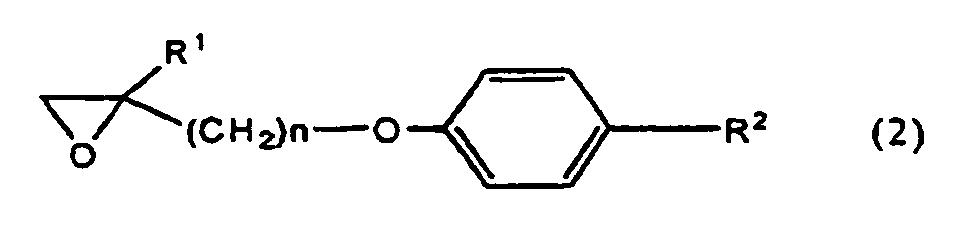
- An epoxy compound or salts thereof of the general formula (2) according to the present invention is a novel compound which is not described in any documents.
- An epoxy compound or salts thereof of the general formula (2) according to the present invention are useful as an intermediate for manufacturing an oxazole compound or salts thereof represented by the general formula (1), which is important as a synthesized intermediate for medicinals and agrichemicals, especially as an anti-tubercular agent.
- An epoxy compound represented by the above general formula (2) is preferably a compound or salts thereof selected from the group consisting of:
- the halogen atoms include a fluorine atom, chlorine atom, bromine atom and iodine atom.
- the lower alkoxy groups include, for example, linear or branched alkoxy groups having 1 to 6 carbon atoms (preferably 1 to 4 carbon atoms). More specifically, they include methoxy, ethoxy, n-propoxy, isopropoxy, n-butoxy, isobutoxy, tert-butoxy, sec-butoxy, n-pentyloxy, 1-ethylpropoxy, isopentyloxy, neopentyloxy, n-hexyloxy, 1,2,2-trimethylpropoxy, 3,3-dimethylbutoxy, 2-ethylbutoxy, isohexyloxy and 3-methylpentyloxy groups.
- the halogen-substituted lower alkoxy groups include the lower alkoxy groups as mentioned above having 1 to 7, preferably 1 to 3, halogen atoms as a substituent(s). More specifically, they include fluoromethoxy, difluoromethoxy, trifluoromethoxy, chloromethoxy, dichloromethoxy, trichloromethoxy, bromomethoxy, dibromomethoxy, dichlorofluoromethoxy, 2,2,2-trifluoroethoxy, pentafluoroethoxy, 2-chloroethoxy, 3,3,3-trifluoropropoxy, heptafluoropropoxy, heptafluoroisopropoxy, 3-chloropropoxy, 2-chloropropoxy, 3-bromopropoxy, 4,4,4-trifluorobutoxy, 4,4,4,3,3-pentafluorobutoxy, 4-chlorobutoxy, 4-bromobutoxy, 2-chlorobutoxy, 5,5,5-trifluoropentyl
- the phenoxy groups having a halogen-substituted lower alkoxy group on a phenyl group as a substituent(s) include, for example, phenoxy groups having 1 to 3 (preferably 1) the halogen-substituted lower alkoxy groups as mentioned above on a phenyl group as a substituent(s).
- the lower alkyl groups include linear or branched alkyl groups having 1 to 6 carbon atoms (preferably 1 to 4 carbon atoms). More specifically, they include methyl, ethyl, n-propyl, isopropyl, n-butyl, isobutyl, tert-butyl, sec-butyl, n-pentyl, 1-ethylpropyl, isopentyl, neopentyl, n-hexyl, 1,2,2-trimethylpropyl, 3,3-dimethylbutyl, 2-ethylbutyl, isohexyl and 3-methylpentyl groups.
- the halogen-substituted lower alkyl groups include the lower alkyl groups as mentioned above having 1 to 7, preferably 1 to 3, halogen atoms as a substituent(s). More specifically, they include fluoromethyl, difluoromethyl, trifluoromethyl, chloromethyl, dichloromethyl, trichloromethyl, bromomethyl, dibromomethyl, dichlorofluoromethyl, 2,2-difluoroethyl, 2,2,2-trifluoroethyl, pentafluoroethyl, 2-fluoroethyl, 2-chloroethyl, 3,3,3-trifluoropropyl, heptafluoropropyl, 2,2,3,3,3-pentafluoropropyl, heptafluoroisopropyl, 3-chloropropyl, 2-chloropropyl, 3-bromopropyl, 4,4,4-trifluorobutyl, 4,4,4,3,3-penta
- the phenoxy-substituted lower alkyl groups are exemplified by the lower alkyl groups as mentioned above having one phenoxy group as a substituent. More specifically, they include phenoxymethyl, 2-phenoxyethyl, 1-phenoxyethyl, 2-phenoxyethyl, 2-phenoxy-1-methylethyl, 2-phenoxy-1-ethylethyl, 3-phenoxypropyl and 4-phenoxybutyl groups.
- the phenoxy-substituted lower alkyl groups having a halogen-substituted lower alkyl group(s) as a substituent(s) on a phenyl group include, for example, the phenoxy-substituted lower alkyl groups as mentioned above having 1 to 3 (preferably 1) halogen-substituted lower alkyl group(s) as mentioned above as a substituent(s) on a phenyl group.
- the lower alkoxy lower alkyl groups are exemplified by the lower alkyl groups as mentioned above having one lower alkoxy group as mentioned above as a substituent. More specifically, they include methoxymethyl, 2-methoxyethyl, 1-ethoxyethyl, 2-ethoxyethyl, 2-isobutoxyethyl, 2,2-dimethoxyethyl, 2-methoxy-1-methylethyl, 2-methoxy-1-ethylethyl, 3-methoxypropyl, 3-ethoxypropyl, 3-isobutoxypropyl, 3-n-butoxypropyl, 4-n-propoxybutyl, 1-methyl-3-isobutoxypropyl, 1,1-dimethyl-2-n-pentyloxyethyl, 5-n-hexyloxypentyl, 6-methoxyhexyl, 1-ethoxyisopropyl and 2-methyl-3-methoxypropyl groups.
- the phenyl-substituted lower alkoxy lower alkyl groups are exemplified by the lower alkoxy lower alkyl groups as mentioned above having one phenyl group as a substituent on a lower alkoxy group. More specifically, they include benzyloxymethyl, (2-phenylethoxy)methyl, (1-phenylethoxy)methyl, 3-(3-phenylpropoxy)propyl, 4-(4-phenylbutoxy)butyl, 5-(5-phenylpentyloxy)pentyl, 6-(6-phenylhexyloxy)hexyl, 1,1-dimethyl-(2-phenylethoxy)ethyl, 2-methyl-3-(3-phenylpropoxy)propyl, 2-benzyloxyethyl, 1-benzyloxyethyl, 3-benzyloxypropyl, 4-benzyloxybutyl, 5-benzyloxypentyl and 6-benzyloxyhexyl groups.
- the phenyl-substituted lower alkoxy lower alkyl groups having a halogen(s) as a substituent(s) on a phenyl group include, for example, the phenyl-substituted lower alkoxy lower alkyl groups as mentioned above having 1 to 7, more preferably 1 to 3, the halogen atom(s) as a substituent(s) on a phenyl group.
- the phenyl-substituted lower alkyl groups are exemplified by the lower alkyl groups as mentioned above having one phenyl group as a substituent. More specifically, they include benzyl, 1-phenylethyl, 2-phenylethyl, 1-methyl-1-phenylethyl, 1,1-dimethyl-2-phenylethyl, 1,1-dimethyl-3-phenylpropyl, 3-phenylpropyl and 4-phenylbutyl groups.
- the phenyl-substituted lower alkyl groups having a halogen-substituted lower alkoxy group(s) as a substituent(s) on a phenyl group include, for example, the phenyl-substituted lower alkyl groups as mentioned above having 1 to 3 (preferably 1) halogen-substituted lower alkoxy groups as mentioned above as a substituent(s) on a phenyl group.
- the phenyl groups having a halogen-substituted lower alkoxy group(s) as a substituent(s) on a phenyl group include, for example, phenyl groups having 1 to 3 (preferably 1) halogen-substituted lower alkoxy group(s) as a substituent(s) on a phenyl group.
- the amino groups having a phenyl group having a halogen-substituted lower alkoxy group(s) as a substituent(s) on a phenyl group and a lower alkyl group as a substituent include, for example, amino groups having, on an amino group, one phenyl group as mentioned above having a halogen-substituted lower alkoxy group(s) as a substituent(s) on a phenyl group and one lower alkyl group.
- the phenyl-substituted lower alkoxy groups are exemplified by the lower alkyl groups as mentioned above having one phenyl group as a substituent. More specifically, they include benzyloxy, 1-phenylethoxy, 2-phenylethoxy, 1-methyl-1-phenylethoxy, 1,1-dimethyl-2-phenylethoxy, 1,1-dimethyl-3-phenylpropoxy, 3-phenylpropoxy and 4-phenylbutoxy groups.
- the phenyl-substituted lower alkoxy groups having a halogen-substituted lower alkoxy group(s) as a substituent(s) on a phenyl group include, for example, the phenyl-substituted lower alkoxy groups having 1 to 3 (preferably 1) halogen-substituted lower alkoxy group(s) as mentioned above as a substituent(s) on a phenyl group.
- the lower alkenyl groups include linear or branched alkenyl groups having 1 to 3 double bond(s) and having 2 to 6 carbon atoms, and include both the trans form and cis form. More specifically, they include vinyl, 1-propenyl, 2-propenyl, 1-methyl-1-propenyl, 2-methyl-1-propenyl, 2-methyl-2-propenyl, 2-propenyl, 2-butenyl, 1-butenyl, 3-butenyl, 2-pentenyl and 1-pentenyl groups.
- the phenyl-substituted lower alkenyl groups are exemplified by the lower alkenyl groups as mentioned above having one phenyl group as a substituent. More specifically, they include 2-phenylvinyl, 3-phenyl-1-propenyl, 3-phenyl-2-propenyl, 3-phenyl-1-methyl-1-propenyl, 3-phenyl-2-methyl-1-propenyl, 3-phenyl-2-methyl-2-propenyl, 4-phenyl-2-butenyl, 4-phenyl-1-butenyl, 4-phenyl-3-butenyl, 5-phenyl-2-pentenyl and 5-phenyl-1-pentenyl groups.
- the phenyl-substituted lower alkenyl groups having a halogen-substituted lower alkoxy group(s) as a substituent(s) on a phenyl group include, for example, the phenyl-substituted lower alkenyl groups as mentioned above having 1 to 3 (preferably 1) halogen-substituted lower alkoxy group(s) as mentioned above as a substituent(s) on a phenyl group.
- halogen-substituted phenyl groups include, for example, the phenyl group(s) as mentioned above having 1 to 7, preferably 1 to 3, halogen atom(s) as a substituent(s).
- the groups causing the substitution reaction similar to that of a halogen atom represented by X 2 are exemplified by lower alkanesulfonyloxy groups, arylsulfonyloxy groups and aralkylsulfonyloxy groups.
- the lower alkanesulfonyloxy groups are specifically exemplified by linear or branched alkanesulfonyloxy groups having 1 to 6 carbon atoms, such as methanesulfonyloxy, ethanesulfonyloxy, n-propanesulfonyloxy, isopropanesulfonyloxy, n-butanesulfonyloxy, tert-butanesulfonyloxy, n-pentanesulfonyloxy and n-hexanesulfonyloxy groups.
- the arylsulfonyloxy groups include, for example, phenylsulfonyloxy and naphthylsulfonyloxy groups which may have 1 to 3 groups selected from the group consisting of linear or branched alkyl groups having 1 to 6 carbon atoms, linear or branched alkoxy groups having 1 to 6 carbon atoms, nitro groups and halogen atoms as a substituent(s) on a phenyl ring.
- the phenylsulfonyloxy groups which may have the substituent(s) are specifically exemplified by phenylsulfonyloxy, 4-methylphenylsulfonyloxy, 2-methylphenylsulfonyloxy, 4-nitrophenylsulfonyloxy, 4-methoxyphenylsulfonyloxy, 2-nitrophenylsulfonyloxy and 3-chlorophenylsulfonyloxy groups.
- the naphthylsulfonyloxy groups are specifically exemplified by ⁇ -naphthylsulfonyloxy and ⁇ -naphthylsulfonyloxy groups.
- the aralkylsulfonyloxy groups include, for example, linear or branched alkanesulfonyloxy groups having a phenyl group(s) as a substituent(s) and having 1 to 6 carbon atoms or linear or branched alkanesulfonyloxy groups having a naphthyl group(s) as a substituent(s) and having 1 to 6 carbon atoms which may have 1 to 3 groups selected from the group consisting of linear or branched alkyl groups having 1 to 6 carbon atoms, linear or branched alkoxy groups having 1 to 6 carbon atoms, nitro groups and halogen atoms as a substituent(s) on a phenyl ring.
- alkanesulfonyloxy groups having a phenyl group substituted are specifically exemplified by benzylsulfonyloxy, 2-phenylethylsulfonyloxy, 4-phenylbutylsulfonyloxy, 4-methylbenzylsulfonyloxy, 2-methylbenzylsulfonyloxy, 4-nitrobenzylsulfonyloxy, 4-methoxybenzylsulfonyloxy and 3-chlorobenzylsulfonyloxy groups.
- alkanesulfonyloxy groups having a naphthyl group substituted are specifically exemplified by ⁇ -naphthylmethylsulfonyloxy and ⁇ -naphthylmethylsulfonyloxy groups.
- a compound represented by the general formula (2) is manufactured by reacting a compound represented by the general formula (3) with a compound represented by the general formula (4).
- reaction of a compound represented by the general formula (3) with a compound represented by the general formula (4) is performed without a solvent or in an inert solvent and under the presence of a basic compound or the absence thereof.
- the inert solvents include, for example, water; ether solvents such as dioxane, tetrahydrofuran, dimethyl ether, diethyl ether, diethylene glycol dimethyl ether and ethylene glycol dimethyl ether; aromatic hydrocarbon solvents such as benzene, toluene and xylene; lower alcohol solvents such as methanol, ethanol and isopropanol; ketone solvents such as acetone and methyl ethyl ketone; and polar solvents such as N,N-dimethylformamide (DMF), dimethylacetamide, dimethylsulfoxide (DMSO), hexamethylphosphoric acid triamide and acetonitrile.
- ether solvents such as dioxane, tetrahydrofuran, dimethyl ether, diethyl ether, diethylene glycol dimethyl ether and ethylene glycol dimethyl ether
- aromatic hydrocarbon solvents such as benzene, toluene
- alkali metal hydroxides such as sodium hydroxide, potassium hydroxide, cesium hydroxide and lithium hydroxide
- alkali metal carbonates such as sodium carbonate, potassium carbonate, cesium carbonate and lithium carbonate
- alkali metal hydrogencarbonates such as lithium hydrogencarbonate, sodium hydrogencarbonate and potassium hydrogencarbonate
- alkali metals such as sodium and potassium
- inorganic bases such as sodium amide, sodium hydride and potassium hydride
- alkali metal lower alkoxides such as sodium methoxide, sodium ethoxide, potassium methoxide and potassium ethoxide
- organic bases such as triethylamine, tripropylamine, pyridine, quinoline, piperidine, imidazole, N-ethyldiisopropylamine, dimethylaminopyridine, trimethylamine, dimethylaniline, N-methylmorpholine, 1,5-diazabicyclo[4.3.
- the using amount of a basic compound is usually 0.5 to 10 times mole, preferably 0.5 to 6 times mole to a compound of the general formula (3).
- the above reaction may be performed, as required, by adding an alkali metal iodide such as potassium iodide or sodium iodide, as a reaction accelerator.
- an alkali metal iodide such as potassium iodide or sodium iodide
- the ratio of the used amount of a compound of the general formula (3) to a compound of the general formula (4) in the above Reaction Formula-1 is usually 1 mole of the former to at least 0.5 mole, preferably about 0.5 to 5 mole of the latter.
- the above reaction is performed usually under the temperature condition of room temperature to 200°C, preferably room temperature to 150°C, and is generally completed in about 1 to 30 hours.
- phase-transfer catalysts to be usable include quaternary ammonium salts (quaternary ammonium salts substituted by a group(s) selected from the group consisting of linear or branched alkyl groups having 1 to 18 carbon atoms, phenyl-substituted lower alkyl groups and phenyl groups, such as tetrabutylammonium chloride, tetrabutylammonium bromide, tetrabutylammonium fluoride, tetrabutylammonium iodide, tetrabutylammonium hydroxide, tetrabutylammonium hydrogen sulfate, tributylmethylammonium chloride, tributylbenzylammonium chloride, tetrapentylammonium chloride, tetrapentylammonium bromide, tetrahexyl
- the reaction is preferably performed in water alone, or in a mixed solution with an organic solvent immiscible with water (benzene, toluene, xylene, methylene chloride, 1,2-dichloroethane, etc.).
- an organic solvent immiscible with water benzene, toluene, xylene, methylene chloride, 1,2-dichloroethane, etc.
- the ratio of the used amount of a compound represented by the general formula (4) to a phase-transfer catalyst is usually one mole of the former to 0.01 to 0.5 mole, preferably 0.2 to 0.3 mole of the latter.
- the ratio of the used amount of a compound represented by the general formula (3) to a compound represented by the general formula (4) is one mole of the former to 0.7 to 1.5 mole, preferably 0.8 to 1.0 mole of the latter.
- a compound represented by the general formula (4) used as a starting raw material in the above reaction preferably has a form of lithium salt.
- the lithium salt of a compound represented by the general formula (4) has advantages of being stable and being easily handled. Further, the lithium salt of a compound represented by the general formula (4) is easily synthesized in a suitable solvent from a compound represented by the general formula (4) and lithium hydroxide. Therefore, the lithium salt to be used of a compound represented by the general formula (4) needs not be an isolated one, and may be one obtained by dissolving a compound represented by the general formula (4) and lithium hydroxide in water.
- a compound represented by the general formula (1) is manufactured by reacting a 4-nitroimidazole compound represented by the general formula (5) with an epoxy compound represented by the general formula (2) under the presence of a basic compound or the absence thereof to obtain a compound represented by the general formula (6), and subjecting the obtained compound represented by the general formula (6) to a ring closure reaction.
- the ratio of the used amount of a compound of the general formula (5) to a compound of the general formula (2) is usually one mole of the former to 0.5 to 5 mole, preferably 0.5 to 3 mole of the former.
- inorganic bases such as metal hydrides, alkali metal lower alkoxides, hydroxides, carbonates and hydrogencarbonates
- organic bases such as acetates
- the metal hydrides are specifically exemplified by sodium hydride and potassium hydride.
- the alkali metal lower alkoxides are specifically exemplified by sodium methoxide, sodium ethoxide and potassium tert-butoxide.
- the hydroxides are specifically exemplified by sodium hydroxide and potassium hydroxide.
- the carbonates are specifically exemplified by sodium carbonate and potassium carbonate.
- the hydrogencarbonates are specifically exemplified by sodium hydrogencarbonate and potassium hydrogencarbonate.
- the inorganic bases also include sodium amides in addition to the above.
- the acetates are specifically exemplified by sodium acetate and potassium acetate.
- the organic salts in addition to the above are specifically exemplified by triethylamine, trimethylamine, diisopropylethylamine, pyridine, dimethylaniline, 1-methylpyrrolidine, N-methylmorpholine, 1,5-diazabicyclo[4.3.0]nonene-5 (DBN), 1,8-diazabicyclo[5.4.0]undecene-7 (DBU) and 1,4-diazabicyclo[2.2.2]octane (DABCO).
- Such a basic compound is used usually in 0.1 to 2 mole, preferably 0.1 to 1 mole, more preferably 0.1 to 0.5 mole to one mole of a compound of the general formula (5).
- reaction of a compound of the general formula (5) and a compound of the general formula (2) is performed usually in a suitable solvent.
- aprotic polar solvents such as dimethylformamide (DMF), dimethylsulfoxide (DMSO) and acetonitrile
- ketone solvents such as acetone and methyl ethyl ketone
- hydrocarbon solvents such as benzene, toluene, xylene, tetralin and liquid paraffin
- alcoholic solvents such as methanol, ethanol, isopropanol, n-butanol and tert-butanol
- ether solvents such as tetrahydrofuran (THF), dioxane, dipropyl ether, diethyl ether and diglyme
- ester solvents such as ethyl acetate and methyl acetate; and mixtures thereof.
- These solvents may contain water.
- the reaction of a compound of the general formula (5) with a compound of the general formula (2) is performed, for example, by dissolving the compound of the general formula (5) in a reaction solvent, adding a basic compound to the solution at an icecooling temperature to room temperature (30°C) under stirring, stirring the mixture at room temperature to 80°C for 30 minute to 1 hour, thereafter adding the compound of the general formula (2), and continuing stirring the mixture normally at room temperature to 100°C, preferably at 50 to 80°C for 30 minute to 60 hours, preferably for 1 to 50 hours.
- the compound (5) used as a raw material is a well-known compound.
- the compound of the present invention represented by the general formula (1) is manufactured by subjecting a compound represented by the general formula (6) to a ring closure reaction.
- the ring closure reaction is performed by dissolving the compound obtained in the above represented by the general formula (6) in a reaction solvent, and adding a basic compound thereto and stirring the mixture.
- reaction solvents and the basic compounds which the reaction solvents and the basic compounds used in the reaction of a compound of the general formula (5) and a compound of the general formula (2) as described above can be used.
- the using amount of a basic compound is usually 1 to an excessive mole, preferably 1 to 5 mole, more preferably 1 to 2 mole to one mole of a compound of the general formula (6).
- the reaction temperature of the ring closure reaction is usually at 0 to 150°C, preferably at room temperature to 120°C, more preferably at 50 to 100°C.
- the reaction time is usually 30 minute to 48 hours, preferably 1 to 24 hours, more preferably 1 to 12 hours.
- the reaction mixture of a compound of the general formula (5) and a compound of the general formula (2) can be provided to the following ring closure reaction without isolating a compound of the general formula (6) produced by the reaction thereof.
- a target compound represented by the general formula (1) can also be manufactured, for example, by reacting a compound of the general formula (5) with a compound of the general formula (2) at room temperature to 80°C, then adding a basic compound to the reaction mixture, and further stirring the mixture at 50 to 100°C, or by reacting a compound of the general formula (5) with a compound of the general formula (2) at room temperature to 80°C, then condensing the reaction mixture, dissolving the residue in a high-boiling point solvent, adding a basic compound to the obtained solution, and further stirring the solution at 50 to 100°C.
- a target compound represented by the general formula (1) can also be manufactured by using 0.9 to 2 mole of a basic compound to one mole of a compound of the general formula (5) in the reaction of the compound of the general formula (5) and a compound of the general formula (2), and stirring the reaction mixture at 50 to 100°C to react the compound of the general formula (5) and the compound of the general formula (2) at a single process.
- Raw material compounds used in the each reaction formula described above may be suitable salts, and target compounds obtained by the each reaction may form suitable salts.
- suitable salts are those pharmacologically acceptable salts, and include salts of inorganic bases, those of organic bases, those of inorganic acids and those of organic acids.
- the salts of inorganic bases include, for example, metal salts such as alkali metal salts (e.g., lithium salts, sodium salts and potassium salts ) and alkaline earth metal salts (e.g. calcium salts and magnesium salts), ammonium salts, alkali metal carbonates (e.g. lithium carbonate, potassium carbonate, sodium carbonate and cesium carbonate), alkali metal hydrogencarbonates (e.g. lithium hydrogencarbonate, sodium hydrogencarbonate and potassium hydrogencarbonate), and alkali metal hydroxides (e.g. lithium hydroxide, sodium hydroxide, potassium hydroxide and cesium hydroxide).
- metal salts such as alkali metal salts (e.g., lithium salts, sodium salts and potassium salts ) and alkaline earth metal salts (e.g. calcium salts and magnesium salts), ammonium salts, alkali metal carbonates (e.g. lithium carbonate, potassium carbonate, sodium carbonate and cesium carbonate), alkali metal hydrogencarbonates (
- the salts of organic bases include, for example, tri(lower)alkylamine (e.g. trimethylamine, triethylamine and N-ethyldiisopropylamine), pyridine, quinoline, piperidine, imidazole, picoline, dimethylaminopyridine, dimethylaniline, N-(lower)alkylmorpholine (e.g. N-methylmorpholine), 1,5-diazabicyclo[4.3.0]nonene-5 (DBN), 1,8-diazabicyclo[5.4.0]undecene-7 (DBU), and 1,4-diazabicyclo[2.2.2]octane (DABCO).
- tri(lower)alkylamine e.g. trimethylamine, triethylamine and N-ethyldiisopropylamine
- pyridine quinoline
- piperidine imidazole
- picoline dimethylaminopyridine
- dimethylaniline
- the salts of inorganic acids include, for example, hydrochlorides, hydrobromides, hydroiodides, sulfates, nitrates and phosphates.
- the salts of organic acids include, for example, those such as formates, acetates, propionates, oxalates, malonates, succinates, fumarates, maleates, lactates, malates, citrates, tartrates, citrates, carbonates, picrates, methanesulfonates, ethanesulfonates, p-toluenesulfonates and glutamates.
- solvates e.g. hydrates and ethanolates
- Preferable solvates include hydrates.
- the each target compound obtained in the above each reaction formula can be isolated and purified from a reaction mixture, for example, by separating a crude reaction product through isolation operations such as filtration, condensation and extraction after a reaction mixture is cooled, and subjecting the separated reaction product to common purification operations such as column chromatography and recrystallization.
- the compounds represented by the general formula (1) according to the present invention naturally include isomers such as geometrical isomers, stereoisomers and optical isomers.
- the epoxy compound of the present invention represented by the general formula (2) or salts thereof is a compound which is easily crystallized. Therefore, the epoxy compound of the present invention represented by the general formula (2) or salts thereof can be obtained with a high purity by a simple crystallization operation after the reaction of a compound represented by the general formula (3) or salts thereof with a compound represented by the general formula (4).
- 1-ethoxycarbonyl-4-mesyloxypiperidine (13.6 g), trifluoromethoxyphenol (4.0 g), tetrabutylammonium chloride (1.2 g) and potassium carbonate (7.72 g) were suspended in water (20 mL) and the suspension was refluxed for 3 hours.
- the reaction solution was cooled to room temperature, and then the reaction product was extracted with toluene (24 mL).
- the extract was washed with water (20 mL x 2), and then the solvent was concentrated under reduced pressure to obtain a target compound as a light yellow oily substance.
- the yield amount was 12.03 g (%).
- the obtained target compound was used, for the subsequent reaction without being purified.
- Potassium hydroxide (10.7 g) was heated to 100°C, and dissolved in isobutanol (15 mL).
- An isobutanol (25 mL) solution of 1-ethoxycarbonyl-4-(4-trifluoromethoxyphenoxy)piperidine (12.03 g) was dropwise added thereto while noticing generation of carbon dioxide gas. After the dropwise addition, the mixture was heated and stirred at 100°C for 2 hours; then the solvent was concentrated; and toluene (40 mL) was added to the obtained residue.
- the toluene solution was washed with water (40 mL x 2), and then the solvent was concentrated under reduced pressure to obtain a target compound as a light orange solid substance.
- This compound could be further purified by recrystallizing from a mixed solution of ethyl acetate of ten-times volume and water of two-times volume, and drying at 60°C.
- Potassium carbonate (19.3 kg) was dissolved in water (245 L), and while the obtained solution was stirred at 20 to 30°C, 4-[4-(4-trifluoromethoxyphenoxy)piperidin-1-yl]phenol ⁇ paratoluenesulfonic acid salt (49 kg) was added to the solution. The mixture was continuously stirred, for 1 hour; and then the crystal was filtered, and washed with water (245 L) (until the washing liquid exhibited neutrality). The obtained crystal was dried at about 60°C for 42 hours. The yield amount was 31.87 kg (yield: 96.74%).
- the organic layer was washed two times with water (260 mL X 2). The organic layer was filtered to remove a harz and then the organic layer was condensed under reduced pressure to give 43.34g (97.82% crude yield, 97.34% HPLC purity)of the pale yellow product.
- the crude product (43.3 g) and ethanol (433 mL) were placed in a vessel and heated until to dissolve and then the mixture was allowed to cool to 0°C for 1 hr. The mixture was then filtered and the crystalline powder washed with cooled ethanol (43 mL) and then dried at 40°C for 15hr to afford 39.7g (91.7% yield) of a pale yellow crystal target compound.
- the residue was mixed with 60 mL of ethyl acetate; the mixture was concentrated under reduced pressure; 150 mL of ethyl acetate and 31.2 g of 4-methylbenzenesulfonic acid were added to the mixture; the mixture was stirred at 10°C or less for 3 hours; then, the crystal was filtered, and dried at 60°C over night to obtain 42.5 g of an ivory crystal target substance.
- the precipitated crystal was filtered, and washed with water (82 L).
- the obtained crystal was dried at about 50°C for 20 hours to obtain a target substance as a grayish yellow crystalline powder.
- the yield was 23.61 kg (92.91%). This crystal was used in the subsequent reaction without being purified. A part of the crystal was recrystallized from ethanol.
- Lithium 4-[4-(4-trifluoromethoxyphenoxy)piperidin-1-yl]phenolate (66.6 g), (R)-2-methylglycidyl paranitrobenzenesulfonate (49.1 g) and tetrabutylammonium chloride (15.5 g) were added to a mixed liquid of toluene (200 mL) and water(333 mL), and the mixture was stirred at 60°C for 6 hours. The reaction liquid was cooled to room temperature; then the toluene layer was isolated, and washed with water; then the solvent was distilled off under reduced pressure.
- reaction liquid was cooled to 30 to 40°C; then an aqueous solution (5 mL) of (R)-2-methylglycidyl paranitrobenzenesulfonate (2.86 g) and tetrabutylammonium chloride (0.52 g), and toluene (5 mL) were added to the reaction liquid; and the mixture was stirred at 80°C for 2 hours. After the mixture was cooled, the toluene layer was isolated, and washed with water; and the solvent was distilled off.
- the obtained crystal was recrystallized from a mixed liquid of methanol (20 mL) and ethyl acetate (4 mL), and dried at 60°C over night to obtain a target substance as a light yellow crystal.
- the yield amount was 1.79 g (yield: 71%).
- the obtained mixture was stirred at 0°C for 30 min; water (15 mL) was dropwise added to the mixture; and then ethyl acetate (1.1 mL) was added. Thereafter, the obtained mixture was heated at 45 to 55°C, stirred for 1 hour, and then the precipitated crystal was filtered.
- the obtained crystal was recrystallized from a mixed liquid of methanol (13 mL) and ethyl acetate (13 mL), and dried at 60°C over night to obtain a target substance as a white crystal.
- the yield amount was 1.31 g (purity-reduced yield: 60%).
- the obtained mixture was stirred at 0°C for 1 hour and 30 min; then water (100 mL) was dropwise added to the mixture; and then ethyl acetate (11 mL) was added. Thereafter, the obtained mixture was heated at 45 to 55°C, stirred for 1 hour, and then the precipitated crystal was filtered.
- the obtained crystal was recrystallized from a mixed liquid of methanol (160 mL) and ethyl acetate (160 mL), and dried at 60°C over night to obtain a target substance as a light yellow crystal.
- the yield amount was 17.05 g (purity-reduced yield: 67.5%).
- HPLC conditions column CHIRALPACK AD-H (4.6 ⁇ ⁇ 250 mm), detection wavelength: 254 nm
- the mixture was stirred at 0°C for 2 hours; then water (84 mL) was dropwise added to the mixture; and then ethyl acetate (11 mL) was added. Thereafter, the mixture was heated at 45 to 55°C, stirred for 1 hour, and then the precipitated crystal was filtered.
- the obtained crystal was recrystallized from a mixed liquid of methanol (160 mL) and ethyl acetate (160 mL), and dried at 60°C over night to obtain a target substance as a light yellow crystal.
- the yield amount was 16.80 g (purity-reduced yield: 66.5%).
- the mixture was mixed with 0.904 kg of sodium dihydrogenphosphate dihydrate and 313 L of water, stirred at 50 to 60°C for 0.5 hour; then, the crystal was filtered, washed with 156 L of water, and dried at 60°C for 16 hours to obtain 24.06 kg of an ivory crystal target substance.
- the mixture was mixed with 255 L of water and 13 L of ethyl acetate, and stirred, and then allowed to stand over night.
- the mixture was stirred at 35 to 38°C for 0.5 hour, and then cooled to 24°C; the crystal was filtered, and washed with 82 L of water to obtain 32.44 kg of a wet crystal.
- 32.44 kg of the wet crystal, 166 L of ethyl acetate and 158 L of methanol were mixed, and stirred and dissolved under heating and refluxing.
- the solution was stirred at 40 to 42°C for 0.5 hour, and then stirred at 10 to 4°C for 1 hour; then, the crystal was filtered, washed with a mixed liquid of 8 L of ethyl acetate and 8 L of methanol, and dried at 60°C for 7.5 hours to obtain 7,650 g of an ocherous crystal target substance.
Landscapes
- Chemical & Material Sciences (AREA)
- Organic Chemistry (AREA)
- Health & Medical Sciences (AREA)
- Pharmacology & Pharmacy (AREA)
- Animal Behavior & Ethology (AREA)
- Chemical Kinetics & Catalysis (AREA)
- General Chemical & Material Sciences (AREA)
- Medicinal Chemistry (AREA)
- Nuclear Medicine, Radiotherapy & Molecular Imaging (AREA)
- Communicable Diseases (AREA)
- Pulmonology (AREA)
- Life Sciences & Earth Sciences (AREA)
- Oncology (AREA)
- General Health & Medical Sciences (AREA)
- Public Health (AREA)
- Veterinary Medicine (AREA)
- Plural Heterocyclic Compounds (AREA)
- Pharmaceuticals Containing Other Organic And Inorganic Compounds (AREA)
- Epoxy Compounds (AREA)
- Low-Molecular Organic Synthesis Reactions Using Catalysts (AREA)
- Nitrogen And Oxygen Or Sulfur-Condensed Heterocyclic Ring Systems (AREA)
Claims (4)
- Epoxyverbindung oder ein Salz davon, dargestellt durch die allgemeine Formel (2):
R2 eine durch die allgemeine Formel (A1) dargestellte Piperidylgruppe darstellt (A1a) eine Phenoxygruppe, die eine oder mehrere Halogen-substituierte niedere Alkoxygruppen als Substituenten an der Phenylgruppe aufweist,(A1b) eine Phenoxy-substituierte niedere Alkylgruppe, die eine oder mehrere Halogen-substituierte niedere Alkylgruppen als Substituenten an der Phenylgruppe aufweist,(A1c) eine Phenyl-substituierte Nieder-Alkoxy-niederAlkylgruppe, die ein oder mehrere Halogene als Substituenten an der Phenylgruppe aufweist,(A1d) eine Phenyl-substituierte niedere Alkylgruppe, die eine oder mehrere Halogen-substituierte niedere Alkoxygruppen als Substituenten an der Phenylgruppe aufweist,(A1e) eine Aminogruppe, die eine Phenylgruppe, die eine oder mehrere Halogen-substituierte niedere Alkoxygruppen als Substituenten an der Phenylgruppe hat, sowie eine niedere Alkylgruppe aufweist, oder(A1f) eine Phenyl-substituierte niedere Alkoxygruppe, die eine oder mehrere Halogen-substituierte niedere Alkoxygruppen als Substituenten an der Phenylgruppe aufweist, oder eine durch die allgemeine Formel (A2) dargestellte Piperazylgruppe:(worin R4 darstellt:
 (A2a) eine Phenyl-substituierte niedere Alkenylgruppe, die eine oder mehrere Halogen-substituierte niedere Alkoxygruppen als Substituenten an der Phenylgruppe aufweist oder(A2b) eine Halogen-substituierte Phenylgruppe); undn eine ganze Zahl von 1 bis 6 darstellt;der Begriff "nieder" im Fall einer Alkylgruppe oder einer Alkoxygruppe "1 bis 6 Kohlenstoffatome aufweisend" und im Falle einer Alkenylgruppe "2 bis 6 Kohlenstoffatome aufweisend" bedeutet.
 - Epoxyverbindung oder Salze davon gemäß Anspruch 1, ausgewählt aus der Gruppe bestehend aus:1) (R)-1-[4-(2,3-Epoxy-2-methylpropoxy)phenyl]-4-(4-trifluoromethoxyphenoxy)piperidin;2) (R)-1-[4-(2,3-Epoxypropoxy)phenyl]-4-(4-trifluoromethoxyphenoxy)piperidin;3) (R)-1-[4-(2,3-Epoxy-2-methylpropoxy)phenyl]-4-(4-trifluoromethylphenoxymethyl)piperidin;4) (R)-1-[4-(2,3-Epoxypropoxy)phenyl]-4-(4-trifluoromethylphenoxymethyl)piperidin;5) (R)-1-[4-(2,3-Epoxy-2-methylpropoxy)phenyl]-4-[3-(4-trifluoromethoxyphenyl)-2-propenyl]piperazin;6) (R)-1-[4-(2,3-Epoxypropoxy)phenyl]-4-[3-(4-trifluoromethoxyphenyl)-2-propenyl]piperazin;7) (R)-4-(4-Chlorobenzyloxymethyl)-1-[4-(2,3-epoxy-2-methylpropoxy)phenyl]piperidin;8) (R)-4-(4-Chlorobenzyloxymethyl)-1-[4-(2,3-epoxypropoxy)phenyl]piperidin;9) (R)-1-[4-(2,3-Epoxy-2-methylpropoxy)phenyl]-4-(4-trifluoromethoxybenzyl)piperidin;10) (R)-1-[4-(2,3-Epoxypropoxy)phenyl]-4-(4-trifluoromethoxybenzyl)piperidin;11) (R)-1-[4-(2,3-Epoxy-2-methylpropoxy)phenyl]-4-[N-methyl-N-(4-trifluoromethoxyphenyl)]aminopiperidin;12) (R)-4-[N-Methyl-N-(4-trifluoromethoxyphenyl)]amino-1-[4-(2,3-epoxypropoxy)phenyl]piperidin;13) (R)-1-(4-Chlorophenyl)-4-[4-(2,3-epoxy-2-methylpropoxy)phenyl]piperazin;14) (R)-1-(4-Chlorophenyl-4-[4-(2,3-epoxypropoxy)phenyl]piperazin;15) (R)-1-[4-(2,3-Epoxy-2-methylpropoxy)phenyl]-4-(4-trifluoromethoxybenzyloxy)piperidin; und16) (R)-1-(4-(Oxiranylmethoxy)phenyl]-4-(4-(trifluoromethoxy)benzyloxy)piperidin.
- Verfahren zur Herstellung einer Epoxyverbindung oder eines Salzes davon, dargestellt durch die allgemeine Formel (2):


n eine ganze Zahl von 1 bis 6 darstellt; und
X2 ein Halogen oder eine Gruppe darstellt, die eine Substitutionsreaktion ähnlich der eines Halogens verursacht, mit einer durch die allgemeine Formel (4) dargestellten Verbindung oder einem Salz davon: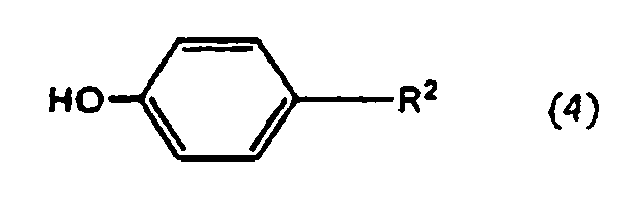
 (A1a) eine Phenoxygruppe, die eine oder mehrere Halogen-substituierte niedere Alkoxygruppen als Substituenten an der Phenylgruppe aufweist,(A1b) eine Phenoxy-substituierte niedere Alkylgruppe, die eine oder mehrere Halogen-substituierte niedere Alkylgruppen als Substituenten an der Phenylgruppe aufweist,(A1c) eine Phenyl-substituierte Nieder-Alkoxy-niederAlkylgruppe, die ein oder mehrere Halogene als Substituenten an der Phenylgruppe aufweist,(A1d) eine Phenyl-substituierte niedere Alkylgruppe, die eine oder mehrere Halogen-substituierte niedere Alkoxygruppen als Substituenten an der Phenylgruppe aufweist,(A1e) eine Aminogruppe, die eine Phenylgruppe, die eine oder mehrere Halogen-substituierte niedere Alkoxygruppen als Substituenten an der Phenylgruppe hat, sowie eine niedere Alkylgruppe aufweist, oder(A1f) eine Phenyl-substituierte niedere Alkoxygruppe, die eine oder mehrere Halogen-substituierte niedere Alkoxygruppen als Substituenten an der Phenylgruppe aufweist) oder eine durch die allgemeine Formel (A2) dargestellte Piperazylgruppe:
 (A2a) eine Phenyl-substituierte niedere Alkenylgruppe, die eine oder mehrere Halogen-substituierte niedere Alkoxygruppen als Substituenten an der Phenylgruppe aufweist oder(A2b) eine Halogen-substituierte Phenylgruppe).
 - Verfahren zur Herstellung einer Oxazolverbindung oder eines Salzes davon, dargestellt durch die allgemeine Formel (1):


 (A1a) eine Phenoxygruppe, die eine oder mehrere Halogen-substituierte niedere Alkoxygruppen als Substituenten an der Phenylgruppe aufweist,(A1b) eine Phenoxy-substituierte niedere Alkylgruppe, die eine oder mehrere Halogen-substituierte niedere Alkylgruppen als Substituenten an der Phenylgruppe aufweist,(A1c) eine Phenyl-substituierte Nieder-Alkoxy-niederAlkylgruppe, die ein oder mehrere Halogene als Substituenten an der Phenylgruppe aufweist,(A1d) eine Phenyl-substituierte niedere Alkylgruppe, die eine oder mehrere Halogen-substituierte niedere Alkoxygruppen als Substituenten an der Phenylgruppe aufweist,(A1e) eine Aminogruppe, die eine Phenylgruppe, die eine oder mehrere Halogen-substituierte niedere Alkoxygruppen als Substituenten an der Phenylgruppe hat, sowie eine niedere Alkylgruppe aufweist, oder(A1f) eine Phenyl-substituierte niedere Alkoxygruppe, die eine oder mehrere Halogen-substituierte niedere Alkoxygruppen als Substituenten an der Phenylgruppe aufweist) oder eine durch die allgemeine Formel (A2) dargestellte Piperazylgruppe:
 (A2a) eine Phenyl-substituierte niedere Alkenylgruppe, die eine oder mehrere Halogen-substituierte niedere Alkoxygruppen als Substituenten an der Phenylgruppe aufweist oder(A2b) eine Halogen-substituierte Phenylgruppe); undn eine ganze Zahl von 1 bis 6 darstellt.
Priority Applications (2)
| Application Number | Priority Date | Filing Date | Title |
|---|---|---|---|
| PL08764285T PL2144899T3 (pl) | 2007-05-08 | 2008-05-07 | Związek epoksydowy i sposób jego wytwarzania |
| CY20121100055T CY1112279T1 (el) | 2007-05-08 | 2012-01-17 | Εποξειδικη ενωση και μεθοδος για την παρασκευη της |
Applications Claiming Priority (2)
| Application Number | Priority Date | Filing Date | Title |
|---|---|---|---|
| JP2007123097 | 2007-05-08 | ||
| PCT/JP2008/058798 WO2008140090A1 (en) | 2007-05-08 | 2008-05-07 | Epoxy compound and method for manufacturing the same |
Publications (2)
| Publication Number | Publication Date |
|---|---|
| EP2144899A1 EP2144899A1 (de) | 2010-01-20 |
| EP2144899B1 true EP2144899B1 (de) | 2011-12-07 |
Family
ID=39683776
Family Applications (1)
| Application Number | Title | Priority Date | Filing Date |
|---|---|---|---|
| EP08764285A Active EP2144899B1 (de) | 2007-05-08 | 2008-05-07 | Epoxidverbindung und verfahren zu ihrer herstellung |
Country Status (26)
| Country | Link |
|---|---|
| US (2) | US8344148B2 (de) |
| EP (1) | EP2144899B1 (de) |
| JP (1) | JP4971343B2 (de) |
| KR (1) | KR101191072B1 (de) |
| CN (1) | CN101675044B (de) |
| AR (1) | AR070301A1 (de) |
| AT (1) | ATE536352T1 (de) |
| AU (1) | AU2008250097B2 (de) |
| BR (1) | BRPI0810780A2 (de) |
| CA (1) | CA2686092C (de) |
| CO (1) | CO6260137A2 (de) |
| CY (1) | CY1112279T1 (de) |
| DK (1) | DK2144899T3 (de) |
| ES (1) | ES2375245T3 (de) |
| HR (1) | HRP20120091T1 (de) |
| IL (1) | IL201976A (de) |
| MX (1) | MX2009011888A (de) |
| MY (1) | MY149301A (de) |
| NZ (1) | NZ580918A (de) |
| PL (1) | PL2144899T3 (de) |
| PT (1) | PT2144899E (de) |
| RU (1) | RU2459822C2 (de) |
| SI (1) | SI2144899T1 (de) |
| TW (1) | TWI432428B (de) |
| UA (1) | UA99455C2 (de) |
| WO (1) | WO2008140090A1 (de) |
Families Citing this family (6)
| Publication number | Priority date | Publication date | Assignee | Title |
|---|---|---|---|---|
| DE102008053240A1 (de) | 2008-10-25 | 2010-04-29 | Saltigo Gmbh | Herstellung von (N-Heterozyklyl)-Arylethern |
| TW201200523A (en) * | 2010-01-29 | 2012-01-01 | Otsuka Pharma Co Ltd | Synthetic intermediate of oxazole compound and method for producing the same |
| JP6083659B2 (ja) * | 2013-11-05 | 2017-02-22 | 公立大学法人横浜市立大学 | 超弾性材料、ならびに当該超弾性材料を用いた、エネルギー貯蔵材料、エネルギー吸収材料、弾性材料、アクチュエータおよび形状記憶材料 |
| LT3119757T (lt) | 2014-03-17 | 2018-07-10 | Pfizer Inc. | Diacilglicerolio aciltransferazės 2 inhibitoriai, skirti panaudoti metabolinių ir susijusių ligų gydyme |
| CN107207532B (zh) | 2015-01-29 | 2019-07-30 | 南京明德新药研发股份有限公司 | 抗肺结核病的硝基咪唑衍生物 |
| JP6776226B2 (ja) * | 2015-03-27 | 2020-10-28 | 大塚製薬株式会社 | 1−(4−ヒドロキシフェニル)−4−(4−トリフルオロメトキシフェノキシ)ピペリジン又はその塩の製造方法 |
Family Cites Families (7)
| Publication number | Priority date | Publication date | Assignee | Title |
|---|---|---|---|---|
| ES512316A0 (es) * | 1982-05-19 | 1983-02-01 | Romikim S A | Procedimiento de preparacion de la cis-1-acetil-4 4-4-(2,4-diclorofenil)-2-(1h-imidazol-1-ilmetil)-1,3-dioxolano-4-ilmetoxi-fenil piperacina. |
| AU1057401A (en) * | 1999-11-11 | 2001-06-06 | Senju Pharmaceutical Co., Ltd. | Pancreatitis remedies |
| TWI347946B (en) * | 2002-10-11 | 2011-09-01 | Otsuka Pharma Co Ltd | 2,3-dihydro-6-nitroimidazo[2,1-b]oxazole compound |
| MY145079A (en) * | 2002-10-15 | 2011-12-15 | Otsuka Pharma Co Ltd | 1-substituted-4-nitroimidazole compound and method for preparing the same |
| WO2005042542A1 (en) * | 2003-10-31 | 2005-05-12 | Otsuka Pharmaceutical Co., Ltd. | 2,3-dihydro-6-nitroimidazo (2,1-b) oxazole compounds for the treatment of tuberculosis |
| JP4787529B2 (ja) * | 2004-04-09 | 2011-10-05 | 大塚製薬株式会社 | 医薬組成物 |
| JP2009269859A (ja) * | 2008-05-08 | 2009-11-19 | Otsuka Pharmaceut Co Ltd | N−含有複素環化合物 |
-
2008
- 2008-05-05 AR ARP080101894A patent/AR070301A1/es unknown
- 2008-05-07 MY MYPI20094651A patent/MY149301A/en unknown
- 2008-05-07 NZ NZ580918A patent/NZ580918A/en unknown
- 2008-05-07 BR BRPI0810780-7A2A patent/BRPI0810780A2/pt not_active IP Right Cessation
- 2008-05-07 WO PCT/JP2008/058798 patent/WO2008140090A1/en not_active Ceased
- 2008-05-07 MX MX2009011888A patent/MX2009011888A/es active IP Right Grant
- 2008-05-07 HR HR20120091T patent/HRP20120091T1/hr unknown
- 2008-05-07 CA CA2686092A patent/CA2686092C/en not_active Expired - Fee Related
- 2008-05-07 CN CN2008800150834A patent/CN101675044B/zh active Active
- 2008-05-07 TW TW097116853A patent/TWI432428B/zh not_active IP Right Cessation
- 2008-05-07 JP JP2008536669A patent/JP4971343B2/ja active Active
- 2008-05-07 UA UAA200911599A patent/UA99455C2/ru unknown
- 2008-05-07 EP EP08764285A patent/EP2144899B1/de active Active
- 2008-05-07 AT AT08764285T patent/ATE536352T1/de active
- 2008-05-07 AU AU2008250097A patent/AU2008250097B2/en not_active Ceased
- 2008-05-07 SI SI200830521T patent/SI2144899T1/sl unknown
- 2008-05-07 DK DK08764285.6T patent/DK2144899T3/da active
- 2008-05-07 RU RU2009145273/04A patent/RU2459822C2/ru not_active IP Right Cessation
- 2008-05-07 US US12/599,214 patent/US8344148B2/en active Active
- 2008-05-07 KR KR1020087016495A patent/KR101191072B1/ko active Active
- 2008-05-07 PT PT08764285T patent/PT2144899E/pt unknown
- 2008-05-07 ES ES08764285T patent/ES2375245T3/es active Active
- 2008-05-07 PL PL08764285T patent/PL2144899T3/pl unknown
-
2009
- 2009-10-30 CO CO09122664A patent/CO6260137A2/es active IP Right Grant
- 2009-11-05 IL IL201976A patent/IL201976A/en not_active IP Right Cessation
-
2012
- 2012-01-17 CY CY20121100055T patent/CY1112279T1/el unknown
- 2012-11-15 US US13/677,727 patent/US8552188B2/en active Active
Also Published As
Similar Documents
| Publication | Publication Date | Title |
|---|---|---|
| US8552188B2 (en) | Epoxy compound and method for manufacturing the same | |
| JP6013326B2 (ja) | キラルトリアゾロンの調製のための方法 | |
| DK2612859T3 (en) | PROCEDURE FOR PREPARING 1-TRIAZOL-2-BUTANOL DERIVATE. | |
| EP3630738B1 (de) | Verfahren zur herstellung von ozanimod | |
| KR100583667B1 (ko) | 아리피프라졸의 제조방법 | |
| US7179919B2 (en) | Stereoselective synthesis of certain trifluoromethyl-substituted alcohols | |
| US20250129026A1 (en) | Pharmaceutical intermediate | |
| US7256300B2 (en) | Stereoselective synthesis of certain trifluoromethyl-substituted alcohols | |
| US8598358B2 (en) | Synthetic intermediate of oxazole compound and method for producing the same | |
| HK1137023B (en) | Epoxy compound and method for manufacturing the same | |
| EP3299364A1 (de) | Nebivolol-syntheseverfahren und zwischenverbindung davon | |
| US20060019993A1 (en) | 1-Amido-3-(2-hydroxyphenoxy)-2-propanol derivatives and a process for preparing 2-amidomethyl-1,4-benzodioxane derivatives | |
| HK1174031B (en) | Synthetic intermediate of oxazole compound and method for producing the same |
Legal Events
| Date | Code | Title | Description |
|---|---|---|---|
| PUAI | Public reference made under article 153(3) epc to a published international application that has entered the european phase |
Free format text: ORIGINAL CODE: 0009012 |
|
| 17P | Request for examination filed |
Effective date: 20091106 |
|
| AK | Designated contracting states |
Kind code of ref document: A1 Designated state(s): AT BE BG CH CY CZ DE DK EE ES FI FR GB GR HR HU IE IS IT LI LT LU LV MC MT NL NO PL PT RO SE SI SK TR |
|
| AX | Request for extension of the european patent |
Extension state: AL BA MK RS |
|
| 17Q | First examination report despatched |
Effective date: 20100430 |
|
| DAX | Request for extension of the european patent (deleted) | ||
| GRAP | Despatch of communication of intention to grant a patent |
Free format text: ORIGINAL CODE: EPIDOSNIGR1 |
|
| GRAS | Grant fee paid |
Free format text: ORIGINAL CODE: EPIDOSNIGR3 |
|
| GRAA | (expected) grant |
Free format text: ORIGINAL CODE: 0009210 |
|
| AK | Designated contracting states |
Kind code of ref document: B1 Designated state(s): AT BE BG CH CY CZ DE DK EE ES FI FR GB GR HR HU IE IS IT LI LT LU LV MC MT NL NO PL PT RO SE SI SK TR |
|
| REG | Reference to a national code |
Ref country code: GB Ref legal event code: FG4D |
|
| REG | Reference to a national code |
Ref country code: CH Ref legal event code: NV Representative=s name: BOHEST AG Ref country code: CH Ref legal event code: EP |
|
| REG | Reference to a national code |
Ref country code: PT Ref legal event code: SC4A Free format text: AVAILABILITY OF NATIONAL TRANSLATION Effective date: 20111209 |
|
| REG | Reference to a national code |
Ref country code: IE Ref legal event code: FG4D |
|
| REG | Reference to a national code |
Ref country code: RO Ref legal event code: EPE |
|
| REG | Reference to a national code |
Ref country code: SE Ref legal event code: TRGR |
|
| REG | Reference to a national code |
Ref country code: HR Ref legal event code: TUEP Ref document number: P20120091 Country of ref document: HR |
|
| REG | Reference to a national code |
Ref country code: NO Ref legal event code: T2 Effective date: 20111207 |
|
| REG | Reference to a national code |
Ref country code: NL Ref legal event code: T3 |
|
| REG | Reference to a national code |
Ref country code: DK Ref legal event code: T3 |
|
| REG | Reference to a national code |
Ref country code: ES Ref legal event code: FG2A Ref document number: 2375245 Country of ref document: ES Kind code of ref document: T3 Effective date: 20120228 |
|
| REG | Reference to a national code |
Ref country code: HR Ref legal event code: T1PR Ref document number: P20120091 Country of ref document: HR |
|
| REG | Reference to a national code |
Ref country code: DE Ref legal event code: R096 Ref document number: 602008011848 Country of ref document: DE Effective date: 20120301 |
|
| REG | Reference to a national code |
Ref country code: EE Ref legal event code: FG4A Ref document number: E006308 Country of ref document: EE Effective date: 20120126 |
|
| REG | Reference to a national code |
Ref country code: GR Ref legal event code: EP Ref document number: 20120400226 Country of ref document: GR Effective date: 20120305 |
|
| REG | Reference to a national code |
Ref country code: PL Ref legal event code: T3 |
|
| REG | Reference to a national code |
Ref country code: SK Ref legal event code: T3 Ref document number: E 11317 Country of ref document: SK |
|
| REG | Reference to a national code |
Ref country code: HU Ref legal event code: AG4A Ref document number: E013097 Country of ref document: HU |
|
| PLBE | No opposition filed within time limit |
Free format text: ORIGINAL CODE: 0009261 |
|
| STAA | Information on the status of an ep patent application or granted ep patent |
Free format text: STATUS: NO OPPOSITION FILED WITHIN TIME LIMIT |
|
| 26N | No opposition filed |
Effective date: 20120910 |
|
| REG | Reference to a national code |
Ref country code: DE Ref legal event code: R097 Ref document number: 602008011848 Country of ref document: DE Effective date: 20120910 |
|
| REG | Reference to a national code |
Ref country code: CH Ref legal event code: PCAR Free format text: NEW ADDRESS: HOLBEINSTRASSE 36-38, 4051 BASEL (CH) |
|
| REG | Reference to a national code |
Ref country code: HR Ref legal event code: ODRP Ref document number: P20120091 Country of ref document: HR Payment date: 20150408 Year of fee payment: 8 |
|
| PGFP | Annual fee paid to national office [announced via postgrant information from national office to epo] |
Ref country code: LU Payment date: 20150513 Year of fee payment: 8 |
|
| PGFP | Annual fee paid to national office [announced via postgrant information from national office to epo] |
Ref country code: SI Payment date: 20150408 Year of fee payment: 8 Ref country code: MC Payment date: 20150409 Year of fee payment: 8 Ref country code: CY Payment date: 20150409 Year of fee payment: 8 Ref country code: FI Payment date: 20150512 Year of fee payment: 8 Ref country code: HR Payment date: 20150408 Year of fee payment: 8 Ref country code: SK Payment date: 20150410 Year of fee payment: 8 Ref country code: RO Payment date: 20150408 Year of fee payment: 8 Ref country code: BG Payment date: 20150409 Year of fee payment: 8 Ref country code: EE Payment date: 20150429 Year of fee payment: 8 Ref country code: DK Payment date: 20150512 Year of fee payment: 8 Ref country code: PT Payment date: 20150504 Year of fee payment: 8 Ref country code: NO Payment date: 20150511 Year of fee payment: 8 Ref country code: LT Payment date: 20150423 Year of fee payment: 8 |
|
| PGFP | Annual fee paid to national office [announced via postgrant information from national office to epo] |
Ref country code: IS Payment date: 20150409 Year of fee payment: 8 Ref country code: HU Payment date: 20150415 Year of fee payment: 8 Ref country code: PL Payment date: 20150414 Year of fee payment: 8 Ref country code: GR Payment date: 20150416 Year of fee payment: 8 Ref country code: AT Payment date: 20150427 Year of fee payment: 8 Ref country code: LV Payment date: 20150506 Year of fee payment: 8 Ref country code: BE Payment date: 20150514 Year of fee payment: 8 |
|
| REG | Reference to a national code |
Ref country code: FR Ref legal event code: PLFP Year of fee payment: 9 |
|
| PG25 | Lapsed in a contracting state [announced via postgrant information from national office to epo] |
Ref country code: BE Free format text: LAPSE BECAUSE OF NON-PAYMENT OF DUE FEES Effective date: 20160531 |
|
| REG | Reference to a national code |
Ref country code: HR Ref legal event code: PBON Ref document number: P20120091 Country of ref document: HR Effective date: 20160507 |
|
| REG | Reference to a national code |
Ref country code: LT Ref legal event code: MM4D Effective date: 20160507 |
|
| REG | Reference to a national code |
Ref country code: EE Ref legal event code: MM4A Ref document number: E006308 Country of ref document: EE Effective date: 20160531 |
|
| REG | Reference to a national code |
Ref country code: NO Ref legal event code: MMEP |
|
| PG25 | Lapsed in a contracting state [announced via postgrant information from national office to epo] |
Ref country code: LU Free format text: LAPSE BECAUSE OF NON-PAYMENT OF DUE FEES Effective date: 20160507 |
|
| PGFP | Annual fee paid to national office [announced via postgrant information from national office to epo] |
Ref country code: MT Payment date: 20150523 Year of fee payment: 8 |
|
| REG | Reference to a national code |
Ref country code: DK Ref legal event code: EBP Effective date: 20160531 |
|
| REG | Reference to a national code |
Ref country code: AT Ref legal event code: MM01 Ref document number: 536352 Country of ref document: AT Kind code of ref document: T Effective date: 20160507 |
|
| PG25 | Lapsed in a contracting state [announced via postgrant information from national office to epo] |
Ref country code: LT Free format text: LAPSE BECAUSE OF NON-PAYMENT OF DUE FEES Effective date: 20160507 Ref country code: IS Free format text: LAPSE BECAUSE OF FAILURE TO SUBMIT A TRANSLATION OF THE DESCRIPTION OR TO PAY THE FEE WITHIN THE PRESCRIBED TIME-LIMIT Effective date: 20161201 Ref country code: RO Free format text: LAPSE BECAUSE OF NON-PAYMENT OF DUE FEES Effective date: 20160507 Ref country code: HR Free format text: LAPSE BECAUSE OF NON-PAYMENT OF DUE FEES Effective date: 20160507 Ref country code: CY Free format text: LAPSE BECAUSE OF NON-PAYMENT OF DUE FEES Effective date: 20160507 Ref country code: EE Free format text: LAPSE BECAUSE OF NON-PAYMENT OF DUE FEES Effective date: 20160531 Ref country code: SK Free format text: LAPSE BECAUSE OF NON-PAYMENT OF DUE FEES Effective date: 20160507 Ref country code: FI Free format text: LAPSE BECAUSE OF NON-PAYMENT OF DUE FEES Effective date: 20160507 Ref country code: NO Free format text: LAPSE BECAUSE OF NON-PAYMENT OF DUE FEES Effective date: 20160531 |
|
| REG | Reference to a national code |
Ref country code: GR Ref legal event code: ML Ref document number: 20120400226 Country of ref document: GR Effective date: 20161207 Ref country code: SK Ref legal event code: MM4A Ref document number: E 11317 Country of ref document: SK Effective date: 20160507 |
|
| PG25 | Lapsed in a contracting state [announced via postgrant information from national office to epo] |
Ref country code: LV Free format text: LAPSE BECAUSE OF NON-PAYMENT OF DUE FEES Effective date: 20160507 Ref country code: GR Free format text: LAPSE BECAUSE OF NON-PAYMENT OF DUE FEES Effective date: 20161207 Ref country code: PT Free format text: LAPSE BECAUSE OF NON-PAYMENT OF DUE FEES Effective date: 20161107 Ref country code: AT Free format text: LAPSE BECAUSE OF NON-PAYMENT OF DUE FEES Effective date: 20160507 |
|
| REG | Reference to a national code |
Ref country code: SI Ref legal event code: KO00 Effective date: 20170220 |
|
| REG | Reference to a national code |
Ref country code: FR Ref legal event code: PLFP Year of fee payment: 10 |
|
| PG25 | Lapsed in a contracting state [announced via postgrant information from national office to epo] |
Ref country code: HU Free format text: LAPSE BECAUSE OF NON-PAYMENT OF DUE FEES Effective date: 20160508 |
|
| PG25 | Lapsed in a contracting state [announced via postgrant information from national office to epo] |
Ref country code: DK Free format text: LAPSE BECAUSE OF NON-PAYMENT OF DUE FEES Effective date: 20160531 Ref country code: SI Free format text: LAPSE BECAUSE OF NON-PAYMENT OF DUE FEES Effective date: 20160508 |
|
| PG25 | Lapsed in a contracting state [announced via postgrant information from national office to epo] |
Ref country code: PL Free format text: LAPSE BECAUSE OF NON-PAYMENT OF DUE FEES Effective date: 20160507 |
|
| REG | Reference to a national code |
Ref country code: FR Ref legal event code: PLFP Year of fee payment: 11 |
|
| PG25 | Lapsed in a contracting state [announced via postgrant information from national office to epo] |
Ref country code: MC Free format text: LAPSE BECAUSE OF NON-PAYMENT OF DUE FEES Effective date: 20160531 |
|
| PG25 | Lapsed in a contracting state [announced via postgrant information from national office to epo] |
Ref country code: MT Free format text: LAPSE BECAUSE OF NON-PAYMENT OF DUE FEES Effective date: 20160507 |
|
| PG25 | Lapsed in a contracting state [announced via postgrant information from national office to epo] |
Ref country code: BG Free format text: LAPSE BECAUSE OF NON-PAYMENT OF DUE FEES Effective date: 20160507 |
|
| REG | Reference to a national code |
Ref country code: FR Ref legal event code: PLFP Year of fee payment: 16 |
|
| P01 | Opt-out of the competence of the unified patent court (upc) registered |
Effective date: 20230421 |
|
| PGFP | Annual fee paid to national office [announced via postgrant information from national office to epo] |
Ref country code: NL Payment date: 20250409 Year of fee payment: 18 |
|
| PGFP | Annual fee paid to national office [announced via postgrant information from national office to epo] |
Ref country code: DE Payment date: 20250402 Year of fee payment: 18 |
|
| PGFP | Annual fee paid to national office [announced via postgrant information from national office to epo] |
Ref country code: ES Payment date: 20250602 Year of fee payment: 18 |
|
| PGFP | Annual fee paid to national office [announced via postgrant information from national office to epo] |
Ref country code: IT Payment date: 20250422 Year of fee payment: 18 |
|
| PGFP | Annual fee paid to national office [announced via postgrant information from national office to epo] |
Ref country code: FR Payment date: 20250401 Year of fee payment: 18 |
|
| PGFP | Annual fee paid to national office [announced via postgrant information from national office to epo] |
Ref country code: CH Payment date: 20250601 Year of fee payment: 18 |
|
| PGFP | Annual fee paid to national office [announced via postgrant information from national office to epo] |
Ref country code: TR Payment date: 20250430 Year of fee payment: 18 |
|
| PGFP | Annual fee paid to national office [announced via postgrant information from national office to epo] |
Ref country code: CZ Payment date: 20250423 Year of fee payment: 18 |
|
| PGFP | Annual fee paid to national office [announced via postgrant information from national office to epo] |
Ref country code: IE Payment date: 20250402 Year of fee payment: 18 |
|
| PGFP | Annual fee paid to national office [announced via postgrant information from national office to epo] |
Ref country code: SE Payment date: 20250411 Year of fee payment: 18 |
|
| PGFP | Annual fee paid to national office [announced via postgrant information from national office to epo] |
Ref country code: GB Payment date: 20260323 Year of fee payment: 19 |