EP2146162B1 - Temperierelement und Verfahren zum Betrieb eines Isolierbehälters - Google Patents
Temperierelement und Verfahren zum Betrieb eines Isolierbehälters Download PDFInfo
- Publication number
- EP2146162B1 EP2146162B1 EP09004827.3A EP09004827A EP2146162B1 EP 2146162 B1 EP2146162 B1 EP 2146162B1 EP 09004827 A EP09004827 A EP 09004827A EP 2146162 B1 EP2146162 B1 EP 2146162B1
- Authority
- EP
- European Patent Office
- Prior art keywords
- fluid
- tempering element
- hollow body
- temperature
- element according
- Prior art date
- Legal status (The legal status is an assumption and is not a legal conclusion. Google has not performed a legal analysis and makes no representation as to the accuracy of the status listed.)
- Active
Links
- 238000005496 tempering Methods 0.000 title claims description 38
- 238000000034 method Methods 0.000 title claims description 8
- 238000009413 insulation Methods 0.000 title 1
- 239000012530 fluid Substances 0.000 claims description 42
- XLYOFNOQVPJJNP-UHFFFAOYSA-N water Substances O XLYOFNOQVPJJNP-UHFFFAOYSA-N 0.000 claims description 8
- VYPSYNLAJGMNEJ-UHFFFAOYSA-N Silicium dioxide Chemical compound O=[Si]=O VYPSYNLAJGMNEJ-UHFFFAOYSA-N 0.000 claims description 7
- 230000004927 fusion Effects 0.000 claims description 7
- 230000004888 barrier function Effects 0.000 claims description 6
- -1 polyethylene Polymers 0.000 claims description 6
- 239000004215 Carbon black (E152) Substances 0.000 claims description 5
- 239000004698 Polyethylene Substances 0.000 claims description 5
- 239000004743 Polypropylene Substances 0.000 claims description 5
- 229920001903 high density polyethylene Polymers 0.000 claims description 5
- 239000004700 high-density polyethylene Substances 0.000 claims description 5
- 229930195733 hydrocarbon Natural products 0.000 claims description 5
- 150000002430 hydrocarbons Chemical class 0.000 claims description 5
- 239000012188 paraffin wax Substances 0.000 claims description 5
- 229920000573 polyethylene Polymers 0.000 claims description 5
- 229920001155 polypropylene Polymers 0.000 claims description 5
- 239000004952 Polyamide Substances 0.000 claims description 4
- 239000000203 mixture Substances 0.000 claims description 4
- 229920002647 polyamide Polymers 0.000 claims description 4
- 239000004033 plastic Substances 0.000 claims description 3
- 229920003023 plastic Polymers 0.000 claims description 3
- 150000003839 salts Chemical class 0.000 claims description 3
- 239000000377 silicon dioxide Substances 0.000 claims description 3
- 125000004432 carbon atom Chemical group C* 0.000 claims description 2
- 239000003086 colorant Substances 0.000 claims description 2
- 239000000463 material Substances 0.000 claims description 2
- 238000002955 isolation Methods 0.000 claims 2
- 239000007788 liquid Substances 0.000 description 14
- 230000008018 melting Effects 0.000 description 13
- 238000002844 melting Methods 0.000 description 13
- 239000012809 cooling fluid Substances 0.000 description 8
- 239000003814 drug Substances 0.000 description 8
- 238000001816 cooling Methods 0.000 description 7
- 239000007787 solid Substances 0.000 description 6
- 229940079593 drug Drugs 0.000 description 5
- 230000008014 freezing Effects 0.000 description 5
- 238000007710 freezing Methods 0.000 description 5
- 230000032258 transport Effects 0.000 description 5
- 239000010836 blood and blood product Substances 0.000 description 3
- 229940125691 blood product Drugs 0.000 description 3
- 230000008859 change Effects 0.000 description 3
- 238000009792 diffusion process Methods 0.000 description 3
- 230000000694 effects Effects 0.000 description 3
- 238000004806 packaging method and process Methods 0.000 description 3
- 239000011833 salt mixture Substances 0.000 description 3
- 239000003381 stabilizer Substances 0.000 description 3
- 230000007704 transition Effects 0.000 description 3
- PXGOKWXKJXAPGV-UHFFFAOYSA-N Fluorine Chemical compound FF PXGOKWXKJXAPGV-UHFFFAOYSA-N 0.000 description 2
- 229910052731 fluorine Inorganic materials 0.000 description 2
- 239000011737 fluorine Substances 0.000 description 2
- 230000005484 gravity Effects 0.000 description 2
- 238000010200 validation analysis Methods 0.000 description 2
- 210000004369 blood Anatomy 0.000 description 1
- 239000008280 blood Substances 0.000 description 1
- 229910052799 carbon Inorganic materials 0.000 description 1
- 239000002826 coolant Substances 0.000 description 1
- 230000001419 dependent effect Effects 0.000 description 1
- 239000003599 detergent Substances 0.000 description 1
- 210000003743 erythrocyte Anatomy 0.000 description 1
- 230000005496 eutectics Effects 0.000 description 1
- 238000005338 heat storage Methods 0.000 description 1
- 238000010438 heat treatment Methods 0.000 description 1
- 230000002401 inhibitory effect Effects 0.000 description 1
- 229940126601 medicinal product Drugs 0.000 description 1
- 230000000704 physical effect Effects 0.000 description 1
- 230000008569 process Effects 0.000 description 1
- 238000005204 segregation Methods 0.000 description 1
- 229910052814 silicon oxide Inorganic materials 0.000 description 1
- 238000002560 therapeutic procedure Methods 0.000 description 1
Images

Classifications
-
- F—MECHANICAL ENGINEERING; LIGHTING; HEATING; WEAPONS; BLASTING
- F25—REFRIGERATION OR COOLING; COMBINED HEATING AND REFRIGERATION SYSTEMS; HEAT PUMP SYSTEMS; MANUFACTURE OR STORAGE OF ICE; LIQUEFACTION SOLIDIFICATION OF GASES
- F25D—REFRIGERATORS; COLD ROOMS; ICE-BOXES; COOLING OR FREEZING APPARATUS NOT OTHERWISE PROVIDED FOR
- F25D3/00—Devices using other cold materials; Devices using cold-storage bodies
- F25D3/02—Devices using other cold materials; Devices using cold-storage bodies using ice, e.g. ice-boxes
- F25D3/06—Movable containers
- F25D3/08—Movable containers portable, i.e. adapted to be carried personally
-
- C—CHEMISTRY; METALLURGY
- C09—DYES; PAINTS; POLISHES; NATURAL RESINS; ADHESIVES; COMPOSITIONS NOT OTHERWISE PROVIDED FOR; APPLICATIONS OF MATERIALS NOT OTHERWISE PROVIDED FOR
- C09K—MATERIALS FOR MISCELLANEOUS APPLICATIONS, NOT PROVIDED FOR ELSEWHERE
- C09K5/00—Heat-transfer, heat-exchange or heat-storage materials, e.g. refrigerants; Materials for the production of heat or cold by chemical reactions other than by combustion
- C09K5/02—Materials undergoing a change of physical state when used
- C09K5/06—Materials undergoing a change of physical state when used the change of state being from liquid to solid or vice versa
- C09K5/063—Materials absorbing or liberating heat during crystallisation; Heat storage materials
-
- F—MECHANICAL ENGINEERING; LIGHTING; HEATING; WEAPONS; BLASTING
- F28—HEAT EXCHANGE IN GENERAL
- F28D—HEAT-EXCHANGE APPARATUS, NOT PROVIDED FOR IN ANOTHER SUBCLASS, IN WHICH THE HEAT-EXCHANGE MEDIA DO NOT COME INTO DIRECT CONTACT
- F28D20/00—Heat storage plants or apparatus in general; Regenerative heat-exchange apparatus not covered by groups F28D17/00 or F28D19/00
- F28D20/02—Heat storage plants or apparatus in general; Regenerative heat-exchange apparatus not covered by groups F28D17/00 or F28D19/00 using latent heat
-
- F—MECHANICAL ENGINEERING; LIGHTING; HEATING; WEAPONS; BLASTING
- F25—REFRIGERATION OR COOLING; COMBINED HEATING AND REFRIGERATION SYSTEMS; HEAT PUMP SYSTEMS; MANUFACTURE OR STORAGE OF ICE; LIQUEFACTION SOLIDIFICATION OF GASES
- F25D—REFRIGERATORS; COLD ROOMS; ICE-BOXES; COOLING OR FREEZING APPARATUS NOT OTHERWISE PROVIDED FOR
- F25D2303/00—Details of devices using other cold materials; Details of devices using cold-storage bodies
- F25D2303/08—Devices using cold storage material, i.e. ice or other freezable liquid
- F25D2303/082—Devices using cold storage material, i.e. ice or other freezable liquid disposed in a cold storage element not forming part of a container for products to be cooled, e.g. ice pack or gel accumulator
- F25D2303/0822—Details of the element
-
- F—MECHANICAL ENGINEERING; LIGHTING; HEATING; WEAPONS; BLASTING
- F25—REFRIGERATION OR COOLING; COMBINED HEATING AND REFRIGERATION SYSTEMS; HEAT PUMP SYSTEMS; MANUFACTURE OR STORAGE OF ICE; LIQUEFACTION SOLIDIFICATION OF GASES
- F25D—REFRIGERATORS; COLD ROOMS; ICE-BOXES; COOLING OR FREEZING APPARATUS NOT OTHERWISE PROVIDED FOR
- F25D2303/00—Details of devices using other cold materials; Details of devices using cold-storage bodies
- F25D2303/08—Devices using cold storage material, i.e. ice or other freezable liquid
- F25D2303/085—Compositions of cold storage materials
-
- Y—GENERAL TAGGING OF NEW TECHNOLOGICAL DEVELOPMENTS; GENERAL TAGGING OF CROSS-SECTIONAL TECHNOLOGIES SPANNING OVER SEVERAL SECTIONS OF THE IPC; TECHNICAL SUBJECTS COVERED BY FORMER USPC CROSS-REFERENCE ART COLLECTIONS [XRACs] AND DIGESTS
- Y02—TECHNOLOGIES OR APPLICATIONS FOR MITIGATION OR ADAPTATION AGAINST CLIMATE CHANGE
- Y02E—REDUCTION OF GREENHOUSE GAS [GHG] EMISSIONS, RELATED TO ENERGY GENERATION, TRANSMISSION OR DISTRIBUTION
- Y02E60/00—Enabling technologies; Technologies with a potential or indirect contribution to GHG emissions mitigation
- Y02E60/14—Thermal energy storage
Definitions
- the invention relates to a tempering for use as a temperature stabilizer in insulating packaging with the features of the preamble of claim 1 and a method for operating an insulated container with such a tempering with the features of the preamble of claim 13.
- the temperature control takes place autonomously in insulated containers and is independent during transport from any power supply, such insulated containers being flexibly transported by different types of vehicles and persons. Often, the insulated containers are equipped with barcodes or RFId (Radio Frequency Identification) to automate the process of filling and shipping as much as possible.
- RFId Radio Frequency Identification
- the prior art since the stored amount of energy in the phase transition from solid to liquid compared to the amount of energy of a liquid fluid when heated from 2 to 8 ° C, for example, about 8 to 13 times greater, the prior art often cooling fluids are used, the phase change close to that for the Product to be achieved internal temperature.
- the problem here is that cooling fluid-filled elements in the solidified state, the internal temperature can hold constant only at a higher outside temperature than the target temperature in the interior of the insulated container. If, on the other hand, the outside temperature drops below that of the melting point of the cooling fluid, the cooling fluid in the solidified state has almost no temperature-stabilizing effect Effect more. This is because no phase change takes place anymore.
- An insulating container which is formed from a heat-insulating cover and a heat-insulating receiving part, which enclose an interior, which is provided for maintaining temperatures with at least one tempering.
- this insulating container is suitable for both cooling and heating of blood products during transport by tempering with different latent heat storage with high heat or cold storage capacity for the ranges of 2 ° C to 6 ° C for erythrocytes, 20 ° C to 24 ° C for platelets and whole blood and from -30 ° C to -40 ° C for frozen fresh plasma.
- This system of the prior art works exclusively with tempering, which are each pre-tempered for a specific, predicted temperature interval, so that these systems are particularly problematic in the application when outside temperatures z. B. different in winter than previously seen. Then there is a risk that the temperature of the cargo, z.
- medicinal products that are to be stored in most cases at 2 to 8 ° C, drops below 0 ° C and it may come to the freezing of the drug. Many medicines, once frozen, lose their effect or are even harmful to patients.
- DE 28 49 161 A1 discloses a method for storing heat energy in a solar thermal system in which as much heat as possible is to pass with small temperature differences.
- DE 480 037 C discloses a cold storage with two liquids of different high freezing point and arrangement of the evaporator of a refrigerator within the liquid with the lower freezing point. The two liquids touch each other immediately.
- the liquid with the low freezing point is located below that with the high freezing point, when the specific gravity of the latter in the solidified state (ice) is smaller than in the liquid, but above, when the specific gravity of the ice is greater than that of the liquid.
- EP-A 0 034 164 discloses a device for storing and exchanging heat in a closed system with an evaporator and a solid / liquid transition chamber.
- WO 2006/079828 discloses a eutectic plate having a housing containing a phase change coolant and a thermochromic material that undergoes a thermochromatic transition at a predetermined temperature.
- WO 96/10722 A discloses a two-layer system for receiving and storing energy in a solar thermal system, in which the highest possible heat transfer at low temperature differences should be achieved.
- the object of the invention is to provide a tempering, which is not designed exclusively for cooling at high summer temperatures but also at low outdoor temperatures below 0 ° C, such. As in winter, determinable, stable temperatures and a method for operating an insulated container with such a tempering.
- a tempering element for use as a temperature stabilizer in insulating packaging is formed with a hollow body which is filled with a first fluid which has a melting point in a first temperature interval. At least one further fluid, which has a melting point in a second temperature interval different from the first, is contained in the hollow body, wherein preferably the first fluid and the at least one further fluid form segregating phases.
- the tempering element according to the invention can be pre-tempered so that the first fluid having the higher melting point is solidified, for example, at 3 ° C, while at the same time another fluid with a lower melting point is liquid in the hollow body.
- tempering is now introduced together with the product to be tempered in an insulated container, so there are high energy barriers at higher and lower ambient temperatures against changes in the internal temperature in the insulated. Namely, the temperature drops outside of the insulated container the setpoint temperature of the interior, so must leave the setpoint temperature range in the interior of the energy to solidify the other fluid with the lower melting point, which is then in the liquid state, are applied. At an outside temperature above the setpoint temperature in the interior of the insulating container, however, the energy for liquefying the first fluid having the higher melting point, which is then in the solid state, must be applied.
- a tempering element according to the invention temperature stability around the cargo in the interior of the insulated container can be ensured even with changing external temperature conditions over a long period of time.
- the phases of the first fluid and of the at least one further fluid have different colors for easier verifiability of the properties of the tempering element according to the invention.
- the first fluid has a melting point between -2 ° C to 3 ° C and the at least one other fluid has a melting point between 4 ° C to 8 ° C or between 18 ° C to 24 ° C.
- At least one of the fluids is a water or a water salt mixture or a hydrocarbon, in particular an n-paraffin, in particular an n-paraffin having the linear structure of the empirical formula C n H 2n + 2 or even more particularly a hydrocarbon 12 to 20 carbon atoms.
- the hollow body is made of plastic, in particular polyethylene (PE) or polypropylene (PP), in particular high density polyethylene (HDPE).
- PE polyethylene
- PP polypropylene
- HDPE high density polyethylene
- the hollow body is transparent or translucent for easier verifiability of the properties of the fluids in the tempering element according to the invention.
- the hollow body has a diffusion-inhibiting barrier layer, in particular a fluorine, silica or polyamide barrier layer.
- the hollow body for improved validation of the tempering on a temperature display or a temperature recording device on its surface or in its interior.
- At least one fluid can enclose a fluid of another phase in the hollow body, which can be done either by microencapsulation, a detergent or by means of a high-pressure homogenizer.
- the hollow body contains at least two chambers, in which at least two fluids are separated from each other for improved segregation.
- At least one fluid is a salt hydrate and / or at least one fluid is in gel form.
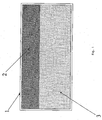
- a tempering element has a hollow body 1 made of plastic, which is filled with at least two fluids 2, 3, each of which has high melt therapy.
- the fluids 2, 3 hardly dissolve into each other and thus retain their physical properties as far as possible, so that at least two phases are formed, which separate according to different densities.
- the hollow body wall 1 consists of polyethylene, polypropylene, high density polyethylene or polyamide and / or a polyamide layer.
- the wall of the hollow body 1 may contain a diffusion barrier layer of silica, silicon oxide or fluorine.
- the filled in the hollow body 1 fluids 2, 3 form z. B. a first, light phase 2 and another, heavy phase 3, which do not mix with each other.
- the heavy phase 3 contains water or a water salt mixture which has a melting point at 0 ° C.
- the light phase 2 consists of a hydrocarbon or paraffin mixture, as in Fig. 2 represented, which has a melting point between 4 to 6 ° C. At 3 ° C is the light phase 2 solid and the heavy phase 3 completely liquid.
- the tempering element with the heavy phase 3 of water or a water salt mixture and the light phase 2 of Hydrocarbongemisch or Paraffingemisch is preheated to 3 ° C and as a temperature stabilizer in an insulated container (not shown), in contrast to a conventional cooling element at both high and also to stabilize low outside temperatures equally.
- the product to be tempered is thus protected against outside temperatures which are both higher and lower than the setpoint temperature in the interior of the insulated container.
Landscapes
- Engineering & Computer Science (AREA)
- Chemical & Material Sciences (AREA)
- Physics & Mathematics (AREA)
- Thermal Sciences (AREA)
- Combustion & Propulsion (AREA)
- Mechanical Engineering (AREA)
- General Engineering & Computer Science (AREA)
- Chemical Kinetics & Catalysis (AREA)
- Materials Engineering (AREA)
- Organic Chemistry (AREA)
- Medical Preparation Storing Or Oral Administration Devices (AREA)
- Packages (AREA)
Description
- Die Erfindung betrifft ein Temperierelement für den Einsatz als Temperaturstabilisator in Isolierverpackungen mit den Merkmalen des Oberbegriffs des Anspruchs 1 und ein Verfahren zum Betrieb eines Isolierbehälters mit einem solchen Temperierelement mit den Merkmalen des Oberbegriffs des Anspruchs 13.
- Bei der Distribution von Arzneimitteln vom Großhändler zur Apotheke müssen diese häufig bei vorgeschriebenen Temperaturen gelagert und transportiert werden. Großhändler von Arzneimitteln betreiben daher temperaturgesteuerte und überwachte Lagereinrichtungen. Diese sind europaweit verteilt und ermöglichen die Lieferung von Arzneimitteln and Apotheken innerhalb weniger Stunden. Während Temperaturen der Lagereinrichtungen für kühlkettenpflichtige Medikamente und andere Artikel mit Hilfe von Temperaturaufzeichnungsgeräten dokumentiert und von lokalen Behörden turnusgemäß geprüft werden, werden die Temperaturen der Transporte nicht vollständig überwacht. In den meisten Fällen genügt die Vorlage einer Validierung, die mit entsprechend zertifizierten Messinstrumenten durchgeführt wurde, um die ordnungsgemäße Einhaltung der Kühlkette nachzuweisen.
- Großhändler von Arzneimitteln setzen auch aufgrund des hohen Durchsatzes an kühlkettenpflichtigen Produkten auf passive Kühllösungen. Die Temperierung erfolgt dabei autonom in Isolierbehältern und ist während des Transportes unabhängig von jeglicher Energiezufuhr, wobei solche Isolierbehälter flexibel von unterschiedlichen Fahrzeugtypen und Personen transportiert werden. Häufig sind die Isolierbehälter mit Barcodes oder RFId (Radio Frequency Identification) ausgestattet, um den Ablauf der Befüllung und der Versendung weitestgehend zu automatisieren.
- Für den Transport von Arzneimitteln, Blutprodukten sowie anderen kühlkettenpflichtigen Produkten ist es Stand der Technik, einen als Kühlelement mit Kühlfluid gefüllten und verschlossenen Hohlkörper einzufrieren und dieses verfestigte Kühlelement zusammen mit dem kühlkettenpflichtigen Produkt, welches z.B. bei 2 bis 8°C gelagert und transportiert werden muss, in einen Isolierbehälter zu geben. Bei höheren Umgebungstemperaturen stabilisiert das Kühlelement im verfestigten Zustand so lange die Innentemperatur des Behälters bis der Aggregatzustand des Kühlfluides komplett von fest in flüssig übergegangen ist, wobei zum Verflüssigen die komplette Schmelzenthalpie des Kühlfluides ΔH (kJ kg-1) aufgebracht werden muss, welche bei wässrigen Kühlfluiden zwischen 200 und 330 kJ kg-1 liegt. Da die gespeicherte Energiemenge beim Phasenübergang von fest zu flüssig im Vergleich zur Energiemenge eines flüssigen Fluides bei Erwärmung von beispielsweise 2 auf 8°C etwa 8 bis 13 mal größer ist, werden beim Stand der Technik häufig Kühlfluide eingesetzt, die ihren Phasenwechsel nahe der für das Produkt zu erzielenden Innentemperatur haben. Problematisch ist hierbei, dass Kühlfluid-gefüllte Elemente im verfestigten Zustand die Innentemperatur nur bei höherer Außentemperatur als die Solltemperatur im Innenraum des Isolierbehälters konstant halten können. Sinkt dagegen die Außentemperatur unter die des Schmelzpunktes des Kühlfluids ab, so hat das Kühlfluid im verfestigten Zustand nahezu keine temperaturstabilisierende Wirkung mehr. Dies liegt daran, dass kein Phasenwechsel mehr stattfindet.
- Aus der
DE 20 2006 017 869 U ist ein Isolierbehälter bekannt, der aus einem wärmeisolierenden Deckel und einem wärmeisolierenden Aufnahmeteil gebildet ist, die einen Innenraum umschließen, der zur Einhaltung von Temperaturen mit mindestens einem Temperierelement versehen ist. Mittels Konfigurierbarkeit von Anzahl und Position der Temperierelemente ist es möglich, alle herkömmlichen Verpackungsgrößen verschiedener Blutprodukte in diesem Isolierbehälter des Standes der Technik bei bestimmbar stabilen Temperaturen zu transportieren, wobei dieser Isolierbehälter sowohl zum Abkühlen als auch Erwärmen von Blutprodukten während eines Transports geeignet ist durch Temperierelemente mit verschiedenen Latentwärmespeichern mit hoher Wärme- oder Kältespeicherkapazität für die Bereiche von 2° C bis 6° C für Erythrozyten, 20° C bis 24° C für Thrombozyten und Vollblut und von -30° C bis -40° C für gefrorenes Frischplasma. - Dieses System des Standes der Technik arbeitet ausschließlich mit Temperierelementen, die jeweils für ein bestimmtes, prognostiziertes Temperaturintervall vortemperiert werden, so dass diese Systeme insbesondere dann problematisch in der Anwendung sind, wenn sich Außentemperaturen z. B. im Winter anders ergeben als vorher gesehen. Dann besteht die Gefahr, dass die Temperatur des Transportguts, z. B. Arzneimittel, die in den meisten Fällen bei 2 bis 8°C gelagert werden sollen, unter 0°C absinkt und es zum Gefrieren der Arzneimittel kommen kann. Viele Arzneimittel verlieren, nachdem sie einmal eingefroren waren, ihre Wirkung oder sind sogar gesundheitsschädlich für Patienten.
-
DE 28 49 161 A1 offenbart ein Verfahren zur Speicherung von Wärmeenergie in einem Solar-Wärmesystem, in dem möglichst viel Wärme bei geringen Temperaturdifferenzen übergehen soll. -
DE 480 037 C offenbart einen Kältespeicher mit zwei Flüssigkeiten verschieden hohen Gefrierpunktes und Anordnung des Verdampfers einer Kältemaschine innerhalb der Flüssigkeit mit dem tiefer liegenden Gefrierpunkt. Die beiden Flüssigkeiten berühren sich unmittelbar. Die Flüssigkeit mit dem niederen Gefrierpunkt ist unterhalb der mit dem hohen Gefrierpunkt angeordnet, wenn das spezifische Gewicht der letzteren im erstarrten Zustand (Eis) kleiner ist als im flüssigen, dagegen oberhalb, wenn das spezifische Gewicht des Eises größer ist als das der Flüssigkeit. -
EP-A 0 034 164 offenbart eine Vorrichtung zum Speichern und Austauschen von Wärme in einem geschlossenen System mit einem Verdampfer und einer Kammer für fest/flüssig Übergang. -
WO 2006/079828 offenbart eine eutektische Platte mit einem Gehäuse, das ein Kühlmittel mit Phasenübergang und ein thermochromatisches Material enthält, das bei einer vorbestimmten Temperatur einen thermochromatischen Übergang durchläuft. -
WO 96/10722 A -
DE 4 415 946 A1 offenbart ein Temperierelement gemäß dem Oberbegriff des Anspruchs 1. - Aufgabe der Erfindung ist es, ein Temperierelement zu schaffen, das nicht ausschließlich für die Kühlung bei hohen Sommertemperaturen konzipiert ist sondern auch bei niedrigen Außentemperaturen unter 0°C, wie z. B. im Winter, bestimmbare, stabile Temperaturen gewährleistet und ein Verfahren zum Betrieb eines Isolierbehälters mit einem solchen Temperierelement.
- Die Lösung erfolgt mit einem Temperierelement mit den Merkmalen des Anspruchs 1 und einem Verfahren zum Betrieb eines Isolierbehälters mit einem solchen Temperierelement mit den Merkmalen des Anspruchs 13. Vorteilhafte Ausgestaltungen der Erfindung sind in den Unteransprüchen dargestellt.
- Gemäß der Erfindung wird ein Temperierelement für den Einsatz als Temperaturstabilisator in Isolierverpackungen mit einem Hohlkörper gebildet, der mit einem ersten Fluid gefüllt ist, das einen Schmelzpunkt in einem ersten Temperaturintervall hat. Mindestens ein weiteres Fluid, das einen Schmelzpunkt in einem zweiten, vom ersten unterschiedlichen Temperaturintervall hat, ist in dem Hohlkörper enthalten, wobei vorzugsweise das erste Fluid und das mindestens eine weitere Fluid sich entmischende Phasen bilden. Für bestimmungsgemäßen Gebrauch kann das erfindungsgemäße Temperierelement so vortemperiert werden, dass das erste Fluid mit dem höheren Schmelzpunkt beispielsweise bei 3°C verfestigt ist, während sich gleichzeitig ein weiteres Fluid mit niedrigerem Schmelzpunkt flüssig im Hohlkörper befindet. Wird das Temperierelement nun zusammen mit dem zu temperierenden Produkt in einen Isolierbehälter eingebracht, so bestehen hohe Energiebarrieren bei höheren und bei niedrigeren Umgebungstemperaturen gegen Veränderungen der Innentemperatur im Isolierbehälter. Sinkt nämlich die Temperatur außerhalb des Isolierbehälters unter die Solltemperatur von dessen Innenraum ab, so muss zum Verlassen des Solltemperaturbereichs im Innenraum die Energie zur Verfestigung des weiteren Fluides mit dem niedrigeren Schmelzpunkt, welches sich dann im flüssigen Zustand befindet, aufgebracht werden. Bei einer Außentemperatur oberhalb der Solltemperatur im Innenraum des Isolierbehälters muss dagegen die Energie zur Verflüssigung des ersten Fluides mit dem höheren Schmelzpunkt, welches dann im festen Zustand vorliegt, aufgebracht werden. Mit einem erfindungsgemäßen Temperierelement kann auch bei wechselhaften äußeren Temperaturbedingungen über einen langen Zeitraum Temperaturstabilität um das Transportgut im Innenraum des Isolierbehälters gewährleistet werden.
- Gemäß einer bevorzugten Ausgestaltung der Erfindung weisen die Phasen des ersten Fluids und des mindestens einen weiteren Fluids unterschiedliche Farben auf für leichtere Verifizierbarkeit der Eigenschaften des erfindungsgemäßen Temperierelements.
- Gemäß der Erfindung weist das erste Fluid einen Schmelzpunkt zwischen -2°C bis 3°C sowie das mindestens eine weitere Fluid einen Schmelzpunkt zwischen 4°C bis 8°C oder zwischen 18°C bis 24°C auf.
- Gemäß einer weiteren bevorzugten Ausgestaltung der Erfindung ist mindestens eines der Fluide ein Wasser oder ein WasserSalzgemisch oder ein Hydrocarbon, insbesondere ein n-Paraffin, insbesonders ein n-Paraffin mit der linearen Struktur der Summenformel CnH2n+2 oder noch insbesondere ein Hydrocarbon mit 12 bis 20 Kohlenstoffatomen.
- Gemäß der Erfindung ist der Hohlkörper aus Kunststoff, insbesondere aus Polyethylen (PE) oder Polypropylen (PP), insbesondere High Density Polyethylen (HDPE) gefertigt.
- Gemäß einer weiteren bevorzugten Ausgestaltung der Erfindung ist der Hohlkörper transparent oder durchscheinend für leichtere Verifizierbarkeit der Eigenschaften der Fluide im erfindungsgemäßen Temperierelement.
- Gemäß einer weiteren bevorzugten Ausgestaltung der Erfindung hat der Hohlkörper eine diffusionshindernde Sperrschicht, insbesondere eine Fluor-, Silica- oder Polyamidsperrschicht.
- Gemäß einer weiteren bevorzugten Ausgestaltung der Erfindung weist der Hohlkörper für verbesserte Validierung des Temperierelements eine Temperaturanzeige oder ein Temperaturaufzeichnungsgerät an seiner Oberfläche oder in seinem Inneren auf.
- Gemäß einer weiteren bevorzugten Ausgestaltung der Erfindung kann mindestens ein Fluid ein Fluid einer anderen Phase in dem Hohlkörper umschließen, was entweder durch Mikroverkapselung, ein Detergens oder mit Hilfe eines Hochdruckhomogenisators erfolgen kann.
- Gemäß einer weiteren bevorzugten Ausgestaltung der Erfindung enthält der Hohlkörper mindestens zwei Kammern, in denen mindestens zwei Fluide von einander getrennt sind für verbesserte Entmischung.
- Gemäß weiterer bevorzugter Ausgestaltungen der Erfindung ist mindestens ein Fluid ein Salzhydrat und/oder liegt mindestens ein Fluid in Gel-Form vor.
- Die Erfindung wird im Folgenden anhand eines bevorzugten Ausführungsbeispiels dargestellt. Es zeigen:
-
Fig. 1 : einen horizontalen Querschnitt durch einen Hohlkörper des Temperierelements gemäß der Erfindung, und -
Fig. 2 : eine Darstellung der Zusammensetzung eines Fluids des Temperierelements gemäß der Erfindung. -
Fig. 1 : Ein Temperierelement weist einen Hohlkörper 1 aus Kunststoff auf, der mit mindestens zwei Fluiden 2, 3, die jeweils hohe Schmelzenthapie aufweisen, gefüllt ist. Die Fluide 2, 3 lösen sich kaum ineinander und behalten so ihre physikalischen Eigenschaften weitestgehend bei, so dass mindestens zwei Phasen entstehen, die sich nach unterschiedlichen Dichten auftrennen. - Die Hohlkörperwand 1 besteht aus Polyethylen, Polypropylen, High Density Polyethylen oder Polyamid und/oder einer Polyamidschicht. Um die Diffusion herabzusetzen, kann die Wand des Hohlkörpers 1 eine Diffusionssperrschicht aus Silica, Siliziumoxid oder Fluor enthalten. Die in den Hohlkörper 1 eingefüllten Fluide 2, 3 bilden z. B. eine erste, leichte Phase 2 und eine weitere, schwere Phase 3, die sich nicht miteinander mischen.
- Die schwere Phase 3 enthält Wasser oder ein Wassersalzgemisch, welches einen Schmelzpunkt bei 0°C aufweist. Die leichte Phase 2 besteht aus einem Hydrocarbon- oder Paraffingemisch, wie in
Fig. 2 dargestellt, welches einen Schmelzpunkt zwischen 4 bis 6°C aufweist. Bei 3°C ist die leichte Phase 2 fest und die schwere Phase 3 komplett flüssig. - Das Temperierelement mit der schweren Phase 3 aus Wasser oder einem Wassersalzgemisch und der leichten Phase 2 aus Hydrocarbongemisch oder Paraffingemisch wird auf 3°C vortemperiert und als Temperaturstabilisator in einen Isolierbehälter (nicht dargestellt) gegeben, um im Gegensatz zu einem herkömmlichen Kühlelement sowohl bei hohen als auch niedrigen Außentemperaturen gleichermaßen zu stabilisieren.
- Dies wird an den beiden Szenarien A) und B) deutlich:
- A) Die Außentemperatur ist höher als die Solltemperatur im Innenraum des Isolierbehälters. In diesem Fall wird Wärme durch die Wand des Isolierbehälters in dessen Innenraum geleitet und so lange von der festen leichten Phase 2 aufgenommen, bis diese komplett verflüssigt ist, bevor die Temperatur des befüllten Hohlkörpers 1 über den Schmelzpunkt der Phase 2 ansteigt.
- B) Die Außentemperatur ist niedriger als die Solltemperatur im Innenraum des Isolierbehälters. In diesem Fall wird Wärme durch die Wand des Isolierbehälters aus dessen Innenraum nach draußen geleitet und so lange von der flüssigen schweren Phase 3 abgegeben, bis diese komplett verfestigt ist, bevor die Temperatur des befüllten Hohlkörpers 1 unter den Schmelzpunkt 3 absinkt.
- Das zu temperierende Produkt ist somit gegen Außentemperaturen, die sowohl höher als auch niedriger sind als die Solltemperatur im Innenraum des Isolierbehälters, geschützt.
Claims (13)
- Temperierelement für den Einsatz als Temperaturstabilisator zusammen mit einem zu temperierenden Produkt in einem Isolierbehälter, wobei das Temperierelement mit einem aus Kunststoff gefertigten Hohlkörper (1) gebildet ist, der mit einem ersten Fluid (2) gefüllt ist, das einen Schmelzpunkt in einem ersten Temperaturintervall hat und in dem Hohlkörper (1) mindestens ein weiteres Fluid (3) enthalten ist, das einen Schmelzpunkt in einem zweiten Temperaturintervall hat, dadurch gekennzeichnet, dass mindestens zwei Phasen entstehen, die sich nach unterschiedlichen Dichten auftrennen und das erste Fluid (2) und das mindestens eine weitere Fluid (3) sich entmischende Phasen bilden, wobei das erste Fluid (2) einen Schmelzpunkt von -2° C bis +3° C sowie das mindestens eine weitere Fluid (3) einen Schmelzpunkt von 4° C bis 8° C oder 18° C bis 24° C aufweisen.
- Temperierelement gemäß Anspruch 1, dadurch gekennzeichnet, dass die Phasen des ersten Fluids (2) und des mindestens einen weiteren Fluids (3) unterschiedliche Farben aufweisen.
- Temperierelement gemäß Anspruch 1, dadurch gekennzeichnet, dass mindestens eines der Fluide (2, 3) ein Wasser oder ein Wasser Salzgemisch ist.
- Temperierelement gemäß Anspruch 1, dadurch gekennzeichnet, dass mindestens ein Fluid (2, 3) ein Hydrocarbon, insbesondere ein n-Paraffin, ganz besonders ein n-Paraffin mit der linearen Struktur der Summenformel CnH2n+2 und ganz besonders ein Hydrocarbon mit 12 bis 20 Kohlenstoffatomen ist.
- Temperierelement gemäß Anspruch 1, dadurch gekennzeichnet, dass der Hohlkörper (1) aus Polyethylen (PE) oder Polypropylen (PP) ganz besonders High Density Polyethylen (HDPE) gefertigt ist.
- Temperierelement gemäß Anspruch 1, dadurch gekennzeichnet, dass der Hohlkörper (1) transparent oder durchscheinend ist.
- Temperierelement gemäß Anspruch 5, dadurch gekennzeichnet, dass der Hohlkörper (1) eine Sperrschicht insbesondere eine Fluor, Silica- oder Polyamidsperrschicht aufweist.
- Temperierelement gemäß Anspruch 1, dadurch gekennzeichnet, dass der Hohlkörper (1) eine Temperaturanzeige oder ein Temperaturaufzeichnungsgerät an der Oberfläche oder im Inneren aufweist.
- Temperierelement gemäß Anspruch 1 dadurch gekennzeichnet, dass mindestens ein Fluid (2) ein Fluid (3) einer anderen Phase in dem Hohlkörper (1) umschließt.
- Temperierelement gemäß Anspruch 1 dadurch gekennzeichnet, dass der Hohlkörper (1) mindestens zwei Kammern enthält, in denen mindestens zwei Fluide von einander getrennt sind.
- Temperierelement gemäß Anspruch 1 dadurch gekennzeichnet, dass mindestens ein Fluid (2, 3) ein Salzhydrat ist.
- Temperierelement gemäß Anspruch 1 dadurch gekennzeichnet, dass mindestens ein Fluid (2, 3) in Gel-Form vorliegt.
- Verfahren zum Betrieb eines Isolierbehälters mit einem Temperierelement zusammen mit einem zu temperierenden Produkt in dem Isolierbehälter gemäß einem der vorhergehenden Ansprüche, gekennzeichnet durch Vortemperieren des Hohlkörpers (1) mit einem ersten Fluid (2), das einen Schmelzpunkt in einem ersten Temperaturintervall hat, und mindestens einem weiteren Fluid (3), das einen Schmelzpunkt in einem zweiten Temperaturintervall hat, auf eine Temperatur zwischen dem ersten Temperaturintervall und dem zweiten Temperaturintervall und Einbringen des Hohlkörpers (1) in einen Innenraum des Isolierbehälters als Temperaturstabilisator.
Applications Claiming Priority (1)
| Application Number | Priority Date | Filing Date | Title |
|---|---|---|---|
| DE102008032531A DE102008032531A1 (de) | 2008-07-10 | 2008-07-10 | Temperierelement und Verfahren zum Betrieb eines Isolierbehälters |
Publications (2)
| Publication Number | Publication Date |
|---|---|
| EP2146162A1 EP2146162A1 (de) | 2010-01-20 |
| EP2146162B1 true EP2146162B1 (de) | 2016-03-30 |
Family
ID=41210471
Family Applications (1)
| Application Number | Title | Priority Date | Filing Date |
|---|---|---|---|
| EP09004827.3A Active EP2146162B1 (de) | 2008-07-10 | 2009-04-01 | Temperierelement und Verfahren zum Betrieb eines Isolierbehälters |
Country Status (2)
| Country | Link |
|---|---|
| EP (1) | EP2146162B1 (de) |
| DE (1) | DE102008032531A1 (de) |
Families Citing this family (5)
| Publication number | Priority date | Publication date | Assignee | Title |
|---|---|---|---|---|
| EP3147598A1 (de) | 2015-09-28 | 2017-03-29 | Swissmedpack Technologien JP. Buettiker GmbH | Thermoschutzspeicherzelle einer kühltransportbox |
| DE102016002472A1 (de) | 2016-03-03 | 2017-09-07 | delta T Gesellschaft für Medizintechnik mbH | Isoliereinsatz |
| EP3270081B1 (de) | 2016-07-12 | 2023-06-07 | delta T Gesellschaft für Medizintechnik mbH | System für den transport und die lagerung von arzneimitteln |
| WO2021093962A1 (de) * | 2019-11-14 | 2021-05-20 | Hombrechtikon Systems Engineering Ag | Vorrichtung und verfahren zur aufbewahrung und verarbeitung von empfindlichen substanzen |
| DE102020120807A1 (de) | 2020-08-06 | 2022-02-10 | Axiotherm GmbH | Kühlakku, Verfahren zur Herstellung eines Kühlakkus, sowie Transportbox zum Transport eines temperaturempfindlichen Guts mit einem Kühlakku |
Citations (2)
| Publication number | Priority date | Publication date | Assignee | Title |
|---|---|---|---|---|
| DE4415946A1 (de) * | 1994-05-05 | 1995-11-16 | Thomas Dr Lange | Flexible Kühlpackung |
| EP1302410A1 (de) * | 2001-10-10 | 2003-04-16 | delta T Gesellschaft für Medizintechnik GmbH | System zum Transport von Gütern bei gleichbleibenden Temperaturen |
Family Cites Families (10)
| Publication number | Priority date | Publication date | Assignee | Title |
|---|---|---|---|---|
| DE480037C (de) | 1927-10-09 | 1929-07-27 | Leo Szilard Dr | Kaeltespeicher |
| DE2607168C3 (de) | 1976-02-21 | 1981-04-09 | Deutsche Forschungs- und Versuchsanstalt für Luft- und Raumfahrt e.V., 5300 Bonn | Vorrichtung zum Austauschen von Wärme |
| SE408955B (sv) | 1977-11-14 | 1979-07-16 | Teknoterm Systems Ab | Forfarande och anordning for att lagra vermeenergi |
| SE414504B (sv) | 1979-08-22 | 1980-08-04 | Bo Carlsson | Sett och anordning vid lagring och uttag av verme genom smeltning och kristallisation av en eller flera kemiska foreningar |
| US5685289A (en) | 1994-10-04 | 1997-11-11 | Yeda Research And Development Co., Ltd. | Heat storage device |
| AUPR312901A0 (en) * | 2001-02-15 | 2001-03-08 | Creative Packaging Services Pty Ltd | Temperature retaining container |
| US7240513B1 (en) * | 2004-04-12 | 2007-07-10 | Conforti Carl J | Thermally-controlled package |
| GB2422657B (en) | 2005-01-28 | 2009-11-18 | Sean Flanagan | An eutectic plate |
| US7923112B2 (en) | 2005-05-12 | 2011-04-12 | Sgl Carbon Se | Latent heat storage material and process for manufacture of the latent heat storage material |
| DE202006017869U1 (de) | 2006-11-23 | 2007-03-15 | delta T Gesellschaft für Medizintechnik mbH | Isolierbehälter mit Temperierelementen |
-
2008
- 2008-07-10 DE DE102008032531A patent/DE102008032531A1/de not_active Withdrawn
-
2009
- 2009-04-01 EP EP09004827.3A patent/EP2146162B1/de active Active
Patent Citations (2)
| Publication number | Priority date | Publication date | Assignee | Title |
|---|---|---|---|---|
| DE4415946A1 (de) * | 1994-05-05 | 1995-11-16 | Thomas Dr Lange | Flexible Kühlpackung |
| EP1302410A1 (de) * | 2001-10-10 | 2003-04-16 | delta T Gesellschaft für Medizintechnik GmbH | System zum Transport von Gütern bei gleichbleibenden Temperaturen |
Also Published As
| Publication number | Publication date |
|---|---|
| EP2146162A1 (de) | 2010-01-20 |
| DE102008032531A1 (de) | 2010-01-21 |
Similar Documents
| Publication | Publication Date | Title |
|---|---|---|
| EP2936010B1 (de) | Verfahren zur vorkonditionierung von latentwärmespeicherelementen | |
| EP2943414A1 (de) | Modularer isolierbehälter und verfahren zum betreiben eines solchen | |
| EP1302410A1 (de) | System zum Transport von Gütern bei gleichbleibenden Temperaturen | |
| EP3687922A1 (de) | Transportbehälter | |
| WO2005066559A2 (de) | Transportbehälter zur kühlhaltung von gefrorenem gut | |
| EP4032824B1 (de) | Gehäuse für einen flexiblen behälter | |
| EP2146162A1 (de) | Temperierelement und Verfahren zum Betrieb eines Isolierbehälters | |
| DE102012006743A1 (de) | Isolierbehälter | |
| WO2019228684A1 (de) | Verfahren zum bereitstellen eines transportbehältersystems sowie ein transportbehältersystem | |
| EP2929263B1 (de) | Verfahren und vorrichtung zur vorkonditionierung von latentwärmespeicherelementen | |
| WO2001067013A1 (de) | Aufbewahr- und transportbehälter für leicht verderbliche produkte | |
| EP4193102A1 (de) | Kühlakku, verfahren zur herstellung eines kühlakkus und die verwendung eines kühlakkus | |
| DE10030102A1 (de) | System zum Transport von Gütern bei gleichbleibenden Temperaturen | |
| AT522703B1 (de) | Verpackung für pharmazeutische Erzeugnisse | |
| EP0136458A1 (de) | Behälter zum Kühlen eines Kühlgutes | |
| EP3986806B1 (de) | Verpackung für pharmazeutische erzeugnisse | |
| DE60022125T2 (de) | Tiefstkühlen von Waren | |
| DE202008013573U1 (de) | Transportsystem mit einem Isolierbehälter | |
| EP1611016A1 (de) | Verfahren zum abpacken von bitumen | |
| EP4234658A1 (de) | Latentwärmespeichermaterial für ultrakalte anwendungen und behälter für den temperaturgeführten transport bei ultrakalten temperaturen | |
| EP2098809B1 (de) | Kühlelement mit Unterkühlungsschutz | |
| DE20306320U1 (de) | Behälter zur Einhaltung eines definierten Temperaturbereichs | |
| DE202009010384U1 (de) | Kiste zum Transport von Proben | |
| CH705194B1 (de) | Transportbox für temperaturempfindliche Waren. | |
| DE102017000622B4 (de) | Verfahren zum Präparieren eines Transportbehälters |
Legal Events
| Date | Code | Title | Description |
|---|---|---|---|
| PUAI | Public reference made under article 153(3) epc to a published international application that has entered the european phase |
Free format text: ORIGINAL CODE: 0009012 |
|
| AK | Designated contracting states |
Kind code of ref document: A1 Designated state(s): AT BE BG CH CY CZ DE DK EE ES FI FR GB GR HR HU IE IS IT LI LT LU LV MC MK MT NL NO PL PT RO SE SI SK TR |
|
| AX | Request for extension of the european patent |
Extension state: AL BA RS |
|
| 17P | Request for examination filed |
Effective date: 20100303 |
|
| 17Q | First examination report despatched |
Effective date: 20100331 |
|
| RIC1 | Information provided on ipc code assigned before grant |
Ipc: C09K 5/06 20060101ALI20150507BHEP Ipc: F28D 20/02 20060101ALI20150507BHEP Ipc: F25D 3/08 20060101AFI20150507BHEP |
|
| GRAP | Despatch of communication of intention to grant a patent |
Free format text: ORIGINAL CODE: EPIDOSNIGR1 |
|
| INTG | Intention to grant announced |
Effective date: 20151030 |
|
| GRAS | Grant fee paid |
Free format text: ORIGINAL CODE: EPIDOSNIGR3 |
|
| GRAA | (expected) grant |
Free format text: ORIGINAL CODE: 0009210 |
|
| AK | Designated contracting states |
Kind code of ref document: B1 Designated state(s): AT BE BG CH CY CZ DE DK EE ES FI FR GB GR HR HU IE IS IT LI LT LU LV MC MK MT NL NO PL PT RO SE SI SK TR |
|
| REG | Reference to a national code |
Ref country code: GB Ref legal event code: FG4D Free format text: NOT ENGLISH |
|
| REG | Reference to a national code |
Ref country code: CH Ref legal event code: EP |
|
| REG | Reference to a national code |
Ref country code: AT Ref legal event code: REF Ref document number: 785836 Country of ref document: AT Kind code of ref document: T Effective date: 20160415 |
|
| REG | Reference to a national code |
Ref country code: IE Ref legal event code: FG4D Free format text: LANGUAGE OF EP DOCUMENT: GERMAN |
|
| REG | Reference to a national code |
Ref country code: DE Ref legal event code: R096 Ref document number: 502009012325 Country of ref document: DE |
|
| REG | Reference to a national code |
Ref country code: FR Ref legal event code: PLFP Year of fee payment: 8 |
|
| REG | Reference to a national code |
Ref country code: LT Ref legal event code: MG4D |
|
| PG25 | Lapsed in a contracting state [announced via postgrant information from national office to epo] |
Ref country code: HR Free format text: LAPSE BECAUSE OF FAILURE TO SUBMIT A TRANSLATION OF THE DESCRIPTION OR TO PAY THE FEE WITHIN THE PRESCRIBED TIME-LIMIT Effective date: 20160330 Ref country code: FI Free format text: LAPSE BECAUSE OF FAILURE TO SUBMIT A TRANSLATION OF THE DESCRIPTION OR TO PAY THE FEE WITHIN THE PRESCRIBED TIME-LIMIT Effective date: 20160330 Ref country code: NO Free format text: LAPSE BECAUSE OF FAILURE TO SUBMIT A TRANSLATION OF THE DESCRIPTION OR TO PAY THE FEE WITHIN THE PRESCRIBED TIME-LIMIT Effective date: 20160630 Ref country code: GR Free format text: LAPSE BECAUSE OF FAILURE TO SUBMIT A TRANSLATION OF THE DESCRIPTION OR TO PAY THE FEE WITHIN THE PRESCRIBED TIME-LIMIT Effective date: 20160701 |
|
| REG | Reference to a national code |
Ref country code: NL Ref legal event code: MP Effective date: 20160330 |
|
| PG25 | Lapsed in a contracting state [announced via postgrant information from national office to epo] |
Ref country code: LV Free format text: LAPSE BECAUSE OF FAILURE TO SUBMIT A TRANSLATION OF THE DESCRIPTION OR TO PAY THE FEE WITHIN THE PRESCRIBED TIME-LIMIT Effective date: 20160330 Ref country code: LT Free format text: LAPSE BECAUSE OF FAILURE TO SUBMIT A TRANSLATION OF THE DESCRIPTION OR TO PAY THE FEE WITHIN THE PRESCRIBED TIME-LIMIT Effective date: 20160330 Ref country code: BE Free format text: LAPSE BECAUSE OF NON-PAYMENT OF DUE FEES Effective date: 20160430 Ref country code: SE Free format text: LAPSE BECAUSE OF FAILURE TO SUBMIT A TRANSLATION OF THE DESCRIPTION OR TO PAY THE FEE WITHIN THE PRESCRIBED TIME-LIMIT Effective date: 20160330 |
|
| PG25 | Lapsed in a contracting state [announced via postgrant information from national office to epo] |
Ref country code: NL Free format text: LAPSE BECAUSE OF FAILURE TO SUBMIT A TRANSLATION OF THE DESCRIPTION OR TO PAY THE FEE WITHIN THE PRESCRIBED TIME-LIMIT Effective date: 20160330 |
|
| PG25 | Lapsed in a contracting state [announced via postgrant information from national office to epo] |
Ref country code: EE Free format text: LAPSE BECAUSE OF FAILURE TO SUBMIT A TRANSLATION OF THE DESCRIPTION OR TO PAY THE FEE WITHIN THE PRESCRIBED TIME-LIMIT Effective date: 20160330 Ref country code: PL Free format text: LAPSE BECAUSE OF FAILURE TO SUBMIT A TRANSLATION OF THE DESCRIPTION OR TO PAY THE FEE WITHIN THE PRESCRIBED TIME-LIMIT Effective date: 20160330 Ref country code: IS Free format text: LAPSE BECAUSE OF FAILURE TO SUBMIT A TRANSLATION OF THE DESCRIPTION OR TO PAY THE FEE WITHIN THE PRESCRIBED TIME-LIMIT Effective date: 20160730 |
|
| PG25 | Lapsed in a contracting state [announced via postgrant information from national office to epo] |
Ref country code: RO Free format text: LAPSE BECAUSE OF FAILURE TO SUBMIT A TRANSLATION OF THE DESCRIPTION OR TO PAY THE FEE WITHIN THE PRESCRIBED TIME-LIMIT Effective date: 20160330 Ref country code: SK Free format text: LAPSE BECAUSE OF FAILURE TO SUBMIT A TRANSLATION OF THE DESCRIPTION OR TO PAY THE FEE WITHIN THE PRESCRIBED TIME-LIMIT Effective date: 20160330 Ref country code: ES Free format text: LAPSE BECAUSE OF FAILURE TO SUBMIT A TRANSLATION OF THE DESCRIPTION OR TO PAY THE FEE WITHIN THE PRESCRIBED TIME-LIMIT Effective date: 20160330 Ref country code: PT Free format text: LAPSE BECAUSE OF FAILURE TO SUBMIT A TRANSLATION OF THE DESCRIPTION OR TO PAY THE FEE WITHIN THE PRESCRIBED TIME-LIMIT Effective date: 20160801 Ref country code: CZ Free format text: LAPSE BECAUSE OF FAILURE TO SUBMIT A TRANSLATION OF THE DESCRIPTION OR TO PAY THE FEE WITHIN THE PRESCRIBED TIME-LIMIT Effective date: 20160330 |
|
| PG25 | Lapsed in a contracting state [announced via postgrant information from national office to epo] |
Ref country code: IT Free format text: LAPSE BECAUSE OF FAILURE TO SUBMIT A TRANSLATION OF THE DESCRIPTION OR TO PAY THE FEE WITHIN THE PRESCRIBED TIME-LIMIT Effective date: 20160330 |
|
| REG | Reference to a national code |
Ref country code: DE Ref legal event code: R097 Ref document number: 502009012325 Country of ref document: DE |
|
| REG | Reference to a national code |
Ref country code: IE Ref legal event code: MM4A |
|
| PG25 | Lapsed in a contracting state [announced via postgrant information from national office to epo] |
Ref country code: DK Free format text: LAPSE BECAUSE OF FAILURE TO SUBMIT A TRANSLATION OF THE DESCRIPTION OR TO PAY THE FEE WITHIN THE PRESCRIBED TIME-LIMIT Effective date: 20160330 |
|
| PLBE | No opposition filed within time limit |
Free format text: ORIGINAL CODE: 0009261 |
|
| STAA | Information on the status of an ep patent application or granted ep patent |
Free format text: STATUS: NO OPPOSITION FILED WITHIN TIME LIMIT |
|
| 26N | No opposition filed |
Effective date: 20170103 |
|
| REG | Reference to a national code |
Ref country code: FR Ref legal event code: PLFP Year of fee payment: 9 |
|
| PG25 | Lapsed in a contracting state [announced via postgrant information from national office to epo] |
Ref country code: SI Free format text: LAPSE BECAUSE OF FAILURE TO SUBMIT A TRANSLATION OF THE DESCRIPTION OR TO PAY THE FEE WITHIN THE PRESCRIBED TIME-LIMIT Effective date: 20160330 Ref country code: IE Free format text: LAPSE BECAUSE OF NON-PAYMENT OF DUE FEES Effective date: 20160401 |
|
| REG | Reference to a national code |
Ref country code: AT Ref legal event code: MM01 Ref document number: 785836 Country of ref document: AT Kind code of ref document: T Effective date: 20160401 |
|
| PG25 | Lapsed in a contracting state [announced via postgrant information from national office to epo] |
Ref country code: AT Free format text: LAPSE BECAUSE OF NON-PAYMENT OF DUE FEES Effective date: 20160401 |
|
| REG | Reference to a national code |
Ref country code: FR Ref legal event code: PLFP Year of fee payment: 10 |
|
| PG25 | Lapsed in a contracting state [announced via postgrant information from national office to epo] |
Ref country code: HU Free format text: LAPSE BECAUSE OF FAILURE TO SUBMIT A TRANSLATION OF THE DESCRIPTION OR TO PAY THE FEE WITHIN THE PRESCRIBED TIME-LIMIT; INVALID AB INITIO Effective date: 20090401 Ref country code: CY Free format text: LAPSE BECAUSE OF FAILURE TO SUBMIT A TRANSLATION OF THE DESCRIPTION OR TO PAY THE FEE WITHIN THE PRESCRIBED TIME-LIMIT Effective date: 20160330 |
|
| PG25 | Lapsed in a contracting state [announced via postgrant information from national office to epo] |
Ref country code: LU Free format text: LAPSE BECAUSE OF NON-PAYMENT OF DUE FEES Effective date: 20160401 Ref country code: TR Free format text: LAPSE BECAUSE OF FAILURE TO SUBMIT A TRANSLATION OF THE DESCRIPTION OR TO PAY THE FEE WITHIN THE PRESCRIBED TIME-LIMIT Effective date: 20160330 Ref country code: MK Free format text: LAPSE BECAUSE OF FAILURE TO SUBMIT A TRANSLATION OF THE DESCRIPTION OR TO PAY THE FEE WITHIN THE PRESCRIBED TIME-LIMIT Effective date: 20160330 Ref country code: MC Free format text: LAPSE BECAUSE OF FAILURE TO SUBMIT A TRANSLATION OF THE DESCRIPTION OR TO PAY THE FEE WITHIN THE PRESCRIBED TIME-LIMIT Effective date: 20160330 Ref country code: MT Free format text: LAPSE BECAUSE OF FAILURE TO SUBMIT A TRANSLATION OF THE DESCRIPTION OR TO PAY THE FEE WITHIN THE PRESCRIBED TIME-LIMIT Effective date: 20160330 |
|
| PG25 | Lapsed in a contracting state [announced via postgrant information from national office to epo] |
Ref country code: BG Free format text: LAPSE BECAUSE OF FAILURE TO SUBMIT A TRANSLATION OF THE DESCRIPTION OR TO PAY THE FEE WITHIN THE PRESCRIBED TIME-LIMIT Effective date: 20160330 |
|
| PGFP | Annual fee paid to national office [announced via postgrant information from national office to epo] |
Ref country code: FR Payment date: 20230421 Year of fee payment: 15 Ref country code: DE Payment date: 20230414 Year of fee payment: 15 Ref country code: CH Payment date: 20230502 Year of fee payment: 15 |
|
| PGFP | Annual fee paid to national office [announced via postgrant information from national office to epo] |
Ref country code: GB Payment date: 20230413 Year of fee payment: 15 |
|
| REG | Reference to a national code |
Ref country code: DE Ref legal event code: R119 Ref document number: 502009012325 Country of ref document: DE |
|
| REG | Reference to a national code |
Ref country code: CH Ref legal event code: PL |
|
| GBPC | Gb: european patent ceased through non-payment of renewal fee |
Effective date: 20240401 |
|
| PG25 | Lapsed in a contracting state [announced via postgrant information from national office to epo] |
Ref country code: DE Free format text: LAPSE BECAUSE OF NON-PAYMENT OF DUE FEES Effective date: 20241105 |
|
| PG25 | Lapsed in a contracting state [announced via postgrant information from national office to epo] |
Ref country code: GB Free format text: LAPSE BECAUSE OF NON-PAYMENT OF DUE FEES Effective date: 20240401 |
|
| PG25 | Lapsed in a contracting state [announced via postgrant information from national office to epo] |
Ref country code: FR Free format text: LAPSE BECAUSE OF NON-PAYMENT OF DUE FEES Effective date: 20240430 |
|
| PG25 | Lapsed in a contracting state [announced via postgrant information from national office to epo] |
Ref country code: GB Free format text: LAPSE BECAUSE OF NON-PAYMENT OF DUE FEES Effective date: 20240401 Ref country code: FR Free format text: LAPSE BECAUSE OF NON-PAYMENT OF DUE FEES Effective date: 20240430 Ref country code: DE Free format text: LAPSE BECAUSE OF NON-PAYMENT OF DUE FEES Effective date: 20241105 Ref country code: CH Free format text: LAPSE BECAUSE OF NON-PAYMENT OF DUE FEES Effective date: 20240430 |