EP2147389B1 - Mobile unit parental control - Google Patents
Mobile unit parental control Download PDFInfo
- Publication number
- EP2147389B1 EP2147389B1 EP08745796.6A EP08745796A EP2147389B1 EP 2147389 B1 EP2147389 B1 EP 2147389B1 EP 08745796 A EP08745796 A EP 08745796A EP 2147389 B1 EP2147389 B1 EP 2147389B1
- Authority
- EP
- European Patent Office
- Prior art keywords
- threshold
- mobile device
- content
- secure storage
- command set
- Prior art date
- Legal status (The legal status is an assumption and is not a legal conclusion. Google has not performed a legal analysis and makes no representation as to the accuracy of the status listed.)
- Active
Links
Images







Classifications
-
- G—PHYSICS
- G06—COMPUTING OR CALCULATING; COUNTING
- G06F—ELECTRIC DIGITAL DATA PROCESSING
- G06F21/00—Security arrangements for protecting computers, components thereof, programs or data against unauthorised activity
- G06F21/60—Protecting data
- G06F21/62—Protecting access to data via a platform, e.g. using keys or access control rules
-
- G—PHYSICS
- G06—COMPUTING OR CALCULATING; COUNTING
- G06F—ELECTRIC DIGITAL DATA PROCESSING
- G06F21/00—Security arrangements for protecting computers, components thereof, programs or data against unauthorised activity
- G06F21/10—Protecting distributed programs or content, e.g. vending or licensing of copyrighted material ; Digital rights management [DRM]
- G06F21/101—Protecting distributed programs or content, e.g. vending or licensing of copyrighted material ; Digital rights management [DRM] by binding digital rights to specific entities
- G06F21/1011—Protecting distributed programs or content, e.g. vending or licensing of copyrighted material ; Digital rights management [DRM] by binding digital rights to specific entities to devices
-
- H—ELECTRICITY
- H04—ELECTRIC COMMUNICATION TECHNIQUE
- H04L—TRANSMISSION OF DIGITAL INFORMATION, e.g. TELEGRAPHIC COMMUNICATION
- H04L63/00—Network architectures or network communication protocols for network security
- H04L63/10—Network architectures or network communication protocols for network security for controlling access to devices or network resources
- H04L63/102—Entity profiles
-
- G—PHYSICS
- G06—COMPUTING OR CALCULATING; COUNTING
- G06F—ELECTRIC DIGITAL DATA PROCESSING
- G06F2221/00—Indexing scheme relating to security arrangements for protecting computers, components thereof, programs or data against unauthorised activity
- G06F2221/21—Indexing scheme relating to G06F21/00 and subgroups addressing additional information or applications relating to security arrangements for protecting computers, components thereof, programs or data against unauthorised activity
- G06F2221/2117—User registration
-
- G—PHYSICS
- G06—COMPUTING OR CALCULATING; COUNTING
- G06F—ELECTRIC DIGITAL DATA PROCESSING
- G06F2221/00—Indexing scheme relating to security arrangements for protecting computers, components thereof, programs or data against unauthorised activity
- G06F2221/21—Indexing scheme relating to G06F21/00 and subgroups addressing additional information or applications relating to security arrangements for protecting computers, components thereof, programs or data against unauthorised activity
- G06F2221/2141—Access rights, e.g. capability lists, access control lists, access tables, access matrices
-
- G—PHYSICS
- G06—COMPUTING OR CALCULATING; COUNTING
- G06F—ELECTRIC DIGITAL DATA PROCESSING
- G06F2221/00—Indexing scheme relating to security arrangements for protecting computers, components thereof, programs or data against unauthorised activity
- G06F2221/21—Indexing scheme relating to G06F21/00 and subgroups addressing additional information or applications relating to security arrangements for protecting computers, components thereof, programs or data against unauthorised activity
- G06F2221/2149—Restricted operating environment
-
- G—PHYSICS
- G06—COMPUTING OR CALCULATING; COUNTING
- G06F—ELECTRIC DIGITAL DATA PROCESSING
- G06F2221/00—Indexing scheme relating to security arrangements for protecting computers, components thereof, programs or data against unauthorised activity
- G06F2221/21—Indexing scheme relating to G06F21/00 and subgroups addressing additional information or applications relating to security arrangements for protecting computers, components thereof, programs or data against unauthorised activity
- G06F2221/2153—Using hardware token as a secondary aspect
Definitions
- the following description relates generally to wireless communications and, more particularly, to programming a chip card to regulate content viewing upon a mobile device.
- Wireless communication systems are widely deployed to provide various types of communication content such as, for example, voice, data, and so on.
- Typical wireless communication systems can be multiple-access systems capable of supporting communication with multiple users by sharing available system resources (e.g., bandwidth, transmit power, ).
- multiple-access systems can include code division multiple access (CDMA) systems, time division multiple access (TDMA) systems, frequency division multiple access (FDMA) systems, orthogonal frequency division multiple access (OFDMA) systems, and the like.
- CDMA code division multiple access
- TDMA time division multiple access
- FDMA frequency division multiple access
- OFDMA orthogonal frequency division multiple access
- wireless multiple-access communication systems can simultaneously support communication for multiple mobile devices.
- Each mobile device can communicate with one or more base stations via transmissions on forward and reverse links.
- the forward link (or downlink) refers to the communication link from base stations to mobile devices
- the reverse link (or uplink) refers to the communication link from mobile devices to base stations.
- communications between mobile devices and base stations can be established via single-input single-output (SISO) systems, multiple-input single-output (MISO) systems, multiple-input multiple-output (MIMO) systems, and so forth.
- SISO single-input single-output
- MISO multiple-input single-output
- MIMO multiple-input multiple-output
- MIMO systems commonly employ multiple ( N T ) transmit antennas and multiple ( N R ) receive antennas for data transmission.
- a MIMO channel formed by the N T transmit and N R receive antennas can be decomposed into N S independent channels, which can be referred to as spatial channels, where N S ⁇ ⁇ N T , N R ⁇ .
- Each of the N S independent channels corresponds to a dimension.
- MIMO systems can provide improved performance (e.g., increased spectral efficiency, higher throughput and/or greater reliability) if the additional dimensionalities created by the multiple transmit and received antennas are utilized.
- MIMO systems can support various duplexing techniques to divide forward and reverse link communications over a common physical medium.
- frequency division duplex (FDD) systems can utilize disparate frequency regions for forward and reverse link communications.
- time division duplex (TDD) systems forward and reverse link communications can employ a common frequency region.
- conventional techniques can provide limited or no feedback related to channel information.
- a method for managing content viewing upon a mobile device.
- the method can comprise comparing a rating of content against a threshold retained upon secure storage as well as formulating if the content can be viewed based upon a result of the comparison between the content rating and the retained threshold.
- the apparatus can comprise at least one processor configured to compare a rating of content against a threshold retained upon secure storage and formulate if the content can be viewed based upon a result of the comparison between the content rating and the retained threshold. Additionally, the apparatus can comprise a memory coupled to the at least one processor.
- a wireless communications apparatus that facilitates viewing remote content on a mobile device.
- the apparatus can comprise means for comparing a rating of content against a threshold retained upon secure storage as well as means for formulating if the content can be viewed based upon a result of the comparison between the content rating and the retained threshold.
- Yet another aspect relates to a computer program product that can comprise a computer-readable medium.
- the computer-readable medium can comprise code for comparing a rating of content against a threshold retained upon secure storage and code for formulating if the content can be viewed based upon a result of the comparison between the content rating and the retained threshold.
- a method that facilitates programming upon secure storage a threshold to regulate content viewing is disclosed herein.
- the method can comprise reading the threshold from communication provided by an auxiliary entity and generating a command set for the secure storage to implement the read threshold, the generated command set is used to program the threshold upon the secure storage.
- the apparatus can comprise at least one processor configured to read a threshold from communication provided by an auxiliary entity, and a generate a command set for secure storage to implement the read threshold, the generated command set is used to program the threshold upon the secure storage.
- the apparatus can comprise a memory couple to the at least one processor.
- a wireless communications apparatus that facilitates programming upon secure storage a threshold to regulate content viewing is disclosed herein.
- the apparatus can comprise means for reading the threshold from communication provided by an auxiliary entity as well as means for generating a command set for the secure storage to implement the read threshold, the generated command set is used to program the threshold upon the secure storage.
- Yet another aspect relates to a computer program produce that can comprise a computer-readable medium.
- the medium can comprise code for reading the threshold from communication provided by an auxiliary entity and code for generating a command set for the secure storage to implement the read threshold, the generated command set is used to program the threshold upon the secure storage.
- the one or more embodiments comprise the features hereinafter fully described and particularly pointed out in the claims.
- the following description and the annexed drawings set forth in detail certain illustrative aspects of the one or more embodiments. These aspects are indicative, however, of but a few of the various ways in which the principles of various embodiments can be employed and the described embodiments are intended to include all such aspects and their equivalents.
- CDMA Code Division Multiple Access
- TDMA Time division multiple access
- FDMA Frequency Division Multiple Access
- OFDMA Orthogonal Frequency-Division Multiple Access
- SC-FDMA Single Carrier FDMA
- a CDMA system can implement a radio technology such as Universal Terrestrial Radio Access (UTRA), CDMA2000, etc.
- UTRA includes Wideband-CDMA (W-CDMA) and other variants of CDMA.
- CDMA2000 covers Interim Standard (IS)-2000, IS-95 and IS-856 standards.
- a TDMA system can implement a radio technology such as Global System for Mobile Communications (GSM).
- GSM Global System for Mobile Communications
- An OFDMA system can implement a radio technology such as Evolved Universal Terrestrial Radio Access (Evolved UTRA or E-UTRA), Ultra Mobile Broadband (UMB), Institute of Electrical and Electronics Engineers (IEEE) 802.11 (Wi-Fi), IEEE 802.16 (WiMAX), IEEE 802.20, Flash-OFDM®, etc.
- Evolved Universal Terrestrial Radio Access (Evolved UTRA or E-UTRA Ultra Mobile Broadband (UMB), Institute of Electrical and Electronics Engineers (IEEE) 802.11 (Wi-Fi), IEEE 802.16 (WiMAX), IEEE 802.20, Flash-OFDM®, etc.
- Universal Terrestrial Radio Access (UTRA) and E-UTRA are part of Universal Mobile Telecommunication System (UMTS).
- 3GPP Long Term Evolution (LTE) is an upcoming release of UMTS that uses E-UTRA, which employs OFDMA on the downlink and SC-FDMA on the uplink.
- UTRA, E-UTRA, UMTS, LTE and GSM are described in documents from an organization named "3rd Generation Partnership Project” (3GPP).
- CDMA2000 and UMB are described in documents from an organization named “3rd Generation Partnership Project 2" (3GPP2).
- a component can be, but is not limited to being, a process running on a processor, a processor, an object, an executable, a thread of execution, a program, and/or a computer.
- an application running on a computing device and the computing device can be a component.
- One or more components can reside within a process and/or thread of execution and a component can be localized on one computer and/or distributed between two or more computers.
- these components can execute from various computer readable media having various data structures stored thereon.
- the components can communicate by way of local and/or remote processes such as in accordance with a signal having one or more data packets (e.g., data from one component interacting with another component in a local system, distributed system, and/or across a network such as the Internet with other systems by way of the signal).
- a signal having one or more data packets (e.g., data from one component interacting with another component in a local system, distributed system, and/or across a network such as the Internet with other systems by way of the signal).
- a mobile device can also be called a system, subscriber unit, subscriber station, mobile station, mobile, remote station, remote terminal, access terminal, user terminal, terminal, wireless communication device, user agent, user device, or user equipment (UE).
- a mobile device can be a cellular telephone, a cordless telephone, a Session Initiation Protocol (SIP) phone, a wireless local loop (WLL) station, a personal digital assistant (PDA), a handheld device having wireless connection capability, computing device, or other processing device connected to a wireless modem.
- SIP Session Initiation Protocol
- WLL wireless local loop
- PDA personal digital assistant
- a base station can be utilized for communicating with mobile device(s) and can also be referred to as an access point, Node B, or some other terminology.
- various aspects or features described herein can be implemented as a method, apparatus, or article of manufacture using standard programming and/or engineering techniques.
- article of manufacture as used herein is intended to encompass a computer program accessible from any computer-readable device, carrier, or media.
- computer-readable media can include but are not limited to magnetic storage devices (e.g., hard disk, floppy disk, magnetic strips, etc. ), optical disks (e.g., compact disk (CD), digital versatile disk (DVD), etc. ), smart cards, and flash memory devices (e .g., EPROM, card, stick, key drive, etc. ).
- various storage media described herein can represent one or more devices and/or other machine-readable media for storing information.
- the term "machine-readable medium” can include, without being limited to, wireless channels and various other media capable of storing, containing, and/or carrying instruction(s) and/or data.
- System 100 comprises a base station 102 that can include multiple antenna groups.
- one antenna group can include antennas 104 and 106, another group can comprise antennas 108 and 110, and an additional group can include antennas 112 and 114.
- Two antennas are illustrated for each antenna group; however, more or fewer antennas can be utilized for each group.
- Base station 102 can additionally include a transmitter chain and a receiver chain, each of which can in turn comprise a plurality of components associated with signal transmission and reception ( e.g ., processors, modulators, multiplexers, demodulators, demultiplexers, antennas, etc. ), as will be appreciated by one skilled in the art.
- Base station 102 can communicate with one or more mobile devices such as mobile device 116 and mobile device 122; however, it is to be appreciated that base station 102 can communicate with substantially any number of mobile devices similar to mobile devices 116 and 122.
- Mobile devices 116 and 122 can be, for example, cellular phones, smart phones, laptops, handheld communication devices, handheld computing devices, satellite radios, global positioning systems, PDAs, and/or any other suitable device for communicating over wireless communication system 100.
- mobile device 116 is in communication with antennas 112 and 114, where antennas 112 and 114 transmit information to mobile device 116 over a forward link 118 and receive information from mobile device 116 over a reverse link 120.
- mobile device 122 is in communication with antennas 104 and 106, where antennas 104 and 106 transmit information to mobile device 122 over a forward link 124 and receive information from mobile device 122 over a reverse link 126.
- forward link 118 can utilize a different frequency band than that used by reverse link 120
- forward link 124 can employ a different frequency band than that employed by reverse link 126, for example.
- forward link 118 and reverse link 120 can utilize a common frequency band and forward link 124 and reverse link 126 can utilize a common frequency band.
- the set of antennas and/or the area in which they are designated to communicate can be referred to as a sector of base station 102.
- multiple antennas can be designed to communicate to mobile devices in a sector of the areas covered by base station 102.
- the transmitting antennas of base station 102 can utilize beamforming to improve signal-to-noise ratio of forward links 118 and 124 for mobile devices 116 and 122.
- base station 102 utilizes beamforming to transmit to mobile devices 116 and 122 scattered randomly through an associated coverage
- mobile devices in neighboring cells can be subject to less interference as compared to a base station transmitting through a single antenna to all its mobile devices.
- Fig. 1 discloses a cellular system with a base station that enables bidirectional communication.
- a distribution system can be used where there is single directional communication.
- a broadcast transmitter emits data to a terminal and does not receive anything on a reverse channel.
- the mobile devices, 116 and 122 can send uplink information via the cellular base station 102 and a network sends a message from a tower and/or transmitter for distribution.
- a hybrid system can also be used, such as having the broadcast transmitter 128 emit information, while enabling the base station 102 to perform interaction as well as having the broadcast transmitter as a broadcast tower that implements a unidirectional push of information to mobile devices 116 and 122.
- an example system 200 for facilitating content viewing regulation upon a mobile device 202.
- a parent obtain the mobile device 202 and desire to order content for a child to view upon the mobile device 202. However, the parent can also desire that content be limited, such that material not suitable for the child is blocked.
- a service request form can be downloaded via a subscription manager 204 or directly from a service provider 206 ( e.g., a host that provides movies to a user for a fee) at request of the parent.
- a service provider 206 e.g., a host that provides movies to a user for a fee
- Such service provider has a subscription or purchasing based business relationship with the end user, and is often referred to in the literature as a "broadcast service provider".
- the parent can complete the request form by specifying what services she desires (e.g., a set number of movies, a month-long viewership, and the like) as well as what rating threshold she would like used in regulating content upon the mobile device 202 (e.g., block movies with a high violence rating, allow movies with a low violence rating, etc. ).
- what ratings threshold she would like used in regulating content upon the mobile device 202 e.g., block movies with a high violence rating, allow movies with a low violence rating, etc.
- the user interface for display and accepting user entry on the service request form is typically terminal implementation specific and is outside the scope of this invention.
- the completed form can be returned to the service provider 206 ( e.g., directly, via a base station, etc. ) and the service provider 206 can supply content as well as metadata related to the content (e.g ., service guide information), where the metadata can include a rating of the content, a critic score, running time, and the like.
- the content and/or a threshold can be transmitted to the mobile device 202 in a secured manner (e.g ., as a short-term key message that can be subjected to an integrity check) while the metadata is relayed in a non-secure manner.
- the subscription manager 204 can analyze the threshold and create instructions for programming the threshold upon a secure storage 208 (e.g., a chip card such as a universal integrated circuit card, commonly referred to as a 'smartcard', or secure memory of the mobile device, i.e., a separate physical entity from a smartcard which may or may not exist) of the mobile device 202. While aspects disclosed herein discuss programming a chip card, it is to be appreciated that other forms of secure storage 208 can be used in implementing disclosed aspects.
- a secure storage 208 e.g., a chip card such as a universal integrated circuit card, commonly referred to as a 'smartcard', or secure memory of the mobile device, i.e., a separate physical entity from a smartcard which may or may not exist
- a network can include the subscription manager 204 and secure storage 208 that share a secret key. From the secret key, when a user states she wants to subscribe to content, a subscription key can be generated, where the subscription key is used to encrypt a service encryption key that can function as a long-term key. Then the service encryption key can be used to protect a traffic encryption key. The traffic encryption key is used to encrypt content. The mobile device 202 can use the subscription key to decrypt the service encryption key. The decrypted service encryption key can then be used to decrypt the traffic encryption key and thus the mobile device 202 has an ability to decrypt content.
- the parental threshold can be sent as a payload of a specially defined key management message.
- a determination can be made if the content should be viewed based on comparing the rating against the threshold and appropriate action can be taken as a function of the comparison (e.g ., content can be disclosed to the user, content can be blocked, portions of a program designated above the threshold can be filtered out, and the like).
- Conventional content regulatory systems implement a threshold upon local unsecure storage of a mobile device.
- a user directly programs the threshold into mobile device local storage and the threshold is used in regulating content viewing.
- the subject disclosure goes against conventional practice - there can be programming a secure storage 208 as opposed to local storage and indirectly programming the secure storage 208.
- the secure storage 208 can be considered more secure than the local storage; however, it is commonly viewed as much more difficult to program and thus few in research circles consider using a chip card. Therefore, little development has taken place in the art with regard to using a secure storage 208 to regulate content viewing upon a mobile device 202.
- One in the art would find it illogical to use the chip card for programming the threshold when local storage can be more convenient.
- an example system 300 for regulating content upon a mobile device 202 with a subscription manager 204.
- a user can provide a request form to a service provider with an appeal for content as well as a threshold that should regulate viewing of that content. While the provided request form can be transmitted from the mobile device 202, it is to be appreciated that other configurations are possible, such as sending the request form from a desktop computer to regulate the mobile device 202 as well as making arrangements through a call from the mobile device 202 to a customer service entity.
- the service provider can relay the threshold to the subscription manager 204 through a wireless communication, where the base station interprets the threshold from the communication through a reader 302.
- the communication from the service provider can be encrypted, and the reader 302 can decrypt the threshold from the communication.
- the request form transfers through a base station prior to arrival to a service provider.
- a programming command set can be produced ( e.g., created, selected, etc. ) by a generator 304 that enables the secure storage 208 of Fig. 2 to be programmed with the threshold.
- Example command sets can include a signal notifying the mobile device 202 of the threshold, computer code to program a chip card, and the like. Different mobile devices 202 can have different chip cards and the generator 304 can develop specific instructions for the different chip cards.
- the generator 304 can retain a database of command sets, where a command set is selected by the generator 304 based upon the threshold and/or an anticipated chip card type.
- the mobile device can receive protected content encrypted by a short term key, and a content rating as part of a short-term key message.
- the short-term message also includes a short-term key that is encrypted by a long-term key, whereas the associated content rating is not encrypted. While not encrypted, the rating can still ensured to be genuine through an integrity check procedure.
- the mobile device 202 can receive content as well as a rating for the content.
- a comparator 306 can balance the rating of the content against a programmed chip card threshold (e.g., a threshold that is programmed through a command set produced by the generator 304). Based upon the balance, a formulator 308 can determine if content should be viewed upon the mobile device 202.
- a programmed chip card threshold e.g., a threshold that is programmed through a command set produced by the generator 304.
- the system 300 can use a three tier rating system where 'child', 'teenager', or 'adult' are designated as available ratings.
- the command set can implement a threshold that limits viewership to content rated 'child' or 'teenager' - commonly the limitation applies to content of a service provider related to the completed form, but other implementations can be practiced. If content is received that is rated 'adult', then the comparator 306 can balance the threshold against the rating and the formulator 308 can determine that the content is too highly rated to be viewed upon the mobile device 202. In contrast, if the rating of the content is at 'child' or 'teenager', then the formulator 308 can determine that the mobile device 202 should allow the content to be disclosed.
- a user completes a form upon the mobile device 202 to set the threshold utilized by the generator 304.
- a collector 402 can gather a form from a broadcast service provider where the form commonly includes multiple fields such as price, duration, package, allowable content ratings, and the like. The user commonly enters information upon at least some of the fields via a user interface of the mobile device 202 where one of the completed fields is an allowable content rating that can be viewed upon the mobile device 202. While the gathered form can be supplied for a service provider, it is to be appreciated that other suppliers can be utilized ( e.g., a third party host).
- the completed form e.g ., partially completed, fully completed, ...) can be conveyed by a transmitter 404.
- a service provider or the mobile device 202 can supply a threshold to the subscription manager 204, where the threshold is to be programmed upon a chip card of the mobile device 202.
- a reader 302 can interpret a threshold from communication provided by an auxiliary entity (e.g., service provider, mobile device 202, etc. ). Based upon the interpreted threshold, a generator 304 can produce a command set for a chip card to implement the read threshold, the generated command set is used to program the threshold upon the chip card ( e.g., the chip card resides upon the mobile device 202).
- the mobile device 202 can include a receiver 406 that attains a command set for programming the chip card concerning the threshold (e.g ., supplied from the generator 304).
- a programmer 408 can implement the command set such that the chip card is coded in accordance with the received command set.
- Implementing the command set can create a new threshold as well as overwrite an existing threshold (e.g., change threshold from 'teenager' to 'child).
- a received threshold can be considered a global default - if another rating is not supplied for specific content, then a received threshold is globally used (e.g., a first-in-time received threshold, a last-in-time threshold, a most consistent threshold, and the like.)
- Content can be received by the receiver 406 and a comparator 306 can balance a rating of content against the threshold retained upon a chip card. With the balance, a formulator 308 can determine if the content can be viewed based upon a result of the comparison between the content rating and the retained threshold.
- An implementer 410 can take action based upon the result - for example, the implementer 410 can allow the content to be viewed if the comparison is successful or deny the content to be viewed if the comparison is unsuccessful. Different standards can be used to determine if a comparison is successful (e.g ., the content is at an acceptable rating for viewing).
- a successful comparison can occur in an instance that the content rating is equal to or lesser than the threshold; however, a successful comparison can also occur in an instance that the content rating is lesser than the threshold. Additionally, other configurations can be practiced such as allowing a portion of the content to be viewed (e.g., most of a movie can be played that is rated at 'teenager', but violent scenes rated at 'adult' can be blocked such that the 'adult' scenes are removed and remaining scenes are streamlined together).
- an example system 500 for regulating content viewing with a detailed subscription manager 204 and a mobile device 202.
- An auxiliary entity can transmit a communication that includes threshold for use in regulating content viewing upon the mobile device 202.
- An obtainer 502 can collect the communication and send a confirmation message to the auxiliary entity and/or the mobile device 202.
- a determiner 504 can conclude a mobile device 202 that is to have a chip card programmed. For instance, multiple requests can be received for content to be streamed upon a mobile device 202, where the requests have different thresholds. The determiner 504 identifies a mobile device 202 that is to be programmed with a specific threshold.
- a reader 302 can interpret a threshold from communication provided by an auxiliary entity. With the interpretation, a generator 304 can produce a command set for a chip card to implement the read threshold, the generated command set is used to program the threshold upon the chip card. Specifically, the generator 304 can tailor the command set for a specific mobile device that can be ascertained from an output of the determiner 504. The command set can be integrated into a short-term key by a sender 506 that transmits the command set to the determined mobile device 202.
- a command set can be collected and extracted by the mobile device 202, where the command set can be used to program a chip card of the mobile device 202.
- Content with a particular rating can be collected by the mobile device 202, where a comparator 306 can balance a rating of content against a threshold retained upon a chip card.
- a result of the balance can transfer to a formulator 308 that can determine if the content can be viewed based upon a result of the comparison between the content rating and the retained threshold.
- FIG. 6 an example system 600 with multiple mobile devices 202 and base stations 204 in addition to a service network 602 that can include service providing and/or subscription management capabilities is disclosed. While aspects of the subject disclosure discuss communication between singular modules, it is to be appreciated that aspects can be practiced in a multi-point environment.
- a number of mobile devices 202 can transmit completed forms to a service provider that is part of a service network 602. As part of the transmission, the mobile devices 202 can include identification information that relates to the mobile device, such as a unique Internet Protocol address.
- the service provider can process the completed forms and provide appropriate content, a threshold, identification information, and the like to a subscription manager that is also part of the service network 602.
- the threshold, content, content metadata, and the like can be relayed to different mobile devices 202 by multiple base stations 204.
- the command set, the content, and the like can transfer to the mobile device 202 and be implemented accordingly.
- the system 600 can implement with unidirectional units, where a tower transmits information from the mobile device 202 to the service network 602 and separate towers are used to transmit data from the service network 602 to the mobile devices 202.
- FIGs. 7-11 methodologies relating to content regulation upon a mobile device are illustrated. While, for purposes of simplicity of explanation, the methodologies are shown and described as a series of acts, it is to be understood and appreciated that the methodologies are not limited by the order of acts, as some acts can, in accordance with one or more embodiments, occur in different orders and/or concurrently with other acts from that shown and described herein. For example, those skilled in the art will understand and appreciate that a methodology could alternatively be represented as a series of interrelated states or events, such as in a state diagram. Moreover, not all illustrated acts can be required to implement a methodology in accordance with one or more embodiments.
- an example methodology 700 for regulating content upon a mobile device, commonly through utilization of a chip card.
- a user can complete a service request form at block 702, where completion of the form includes disclosing an intended content rating threshold.
- a monetary transaction can take place, such that a service provider is compensated for presenting content (e.g., a movie, live sports, real time stock quotes, etc. ) through use of a credit card account number provided on the form.
- the form that includes the anticipated threshold rating can be transmitted to the service provider at event 704. Since monetary information can be transmitted, such as financial account numbers, various protective features can be implemented to secure information.
- the service provider can receive the transmitted form and perform operations consistent with supplying content, such as verifying an account and determining if a threshold is supplied in the form/a value of the threshold.
- the service provider can transmit the threshold to a subscription manager and the subscription manager can send a command set (e.g., a threshold value) to a mobile device.
- the sent command set can be used to retain the threshold upon secure storage at event 708.
- an example methodology 800 for regulating content viewing, commonly implemented upon a mobile device.
- Content that is to be viewed can include a rating that is compared against a set threshold at event 802.
- the threshold can be retained upon a chip card that is located upon the mobile device. Based upon a result of the comparison, a formulation can be made on if the content is defined as viewable at event 804.
- complex ratings and thresholds can be used to determine if content is viewable.
- a multi-tier rating system can be used in conjunction with a numerous factors.
- the multi-tier rating system can include 'child', 'teenager', and 'adult' while different factors can include violence, language, sexuality, etc.
- the threshold can be set at different ratings for different factors, such violence being set to 'teenager' while language can be set to 'adult'.
- Appropriate comparisons can be made (e.g., comparing a content violence rating against a violence threshold) and the formulation can be determined based upon the comparison.
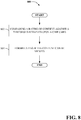
- a form can be collected from a service provider that facilitates obtainment of a threshold at action 902.
- a user makes a request to a service provider for a form so the user can apply for content.
- the service provider can process the request and transfer the correct form, where the transferred form is collected.
- the user can complete the form (e.g., add the threshold information) and then the form can be transmitted to the service provider at act 904.
- a determination can be made if the completed form includes sensitive information (e.g ., a credit card number) and if the determination is positive, then the sensitive information and/or the entire form can be encrypted. Transmission of the form can be directly to the service provider, be relayed through the base station, and the like.
- Action 902 and/or act 904 can be completed through use of a mobile device, personal computer, and the like.
- a command set that can be used to program a chip card can be received at action 906.
- the chip card can be programmed with the threshold in accordance with the received command set at event 908.
- the command set can be computer code that initiates the programming, a notice that the chip card should be programmed with the threshold, and the like.
- the content can be then received at act 910, where the content commonly includes a rating.
- a comparison can be made between the threshold and the rating of the content at event 912.
- a check 914 can be made to determine if content can be viewed; the check 914 can function as formulating if the content can be viewed based upon a result of the comparison between the content rating and the retained threshold. If the comparison is considered successful, then an allowance to view the content can occur at event 916; if the comparison is considered unsuccessful, then denial to view the content can occur at action 918.
- a successful comparison can be that the content rating is equal to or lesser than the threshold, a successful comparison can that the content rating is lesser than the threshold, etc.
- an example methodology 1000 for producing a command set to program a threshold for regulating content viewing upon a chip card.
- a communication can be transmitted from an auxiliary entity, oftentimes from a content service provider, which includes the threshold.
- the threshold can be read from the communication at action 1002. Reading of the threshold can include decrypting the threshold, decompressing information that retains the threshold, and the like.
- a command set can be generated that programs the chip chard with the threshold at event 1004.
- the command set can program a new threshold as well as overwrite an existing threshold upon the chip card.
- specific characteristics of a chip card can be ascertained and based upon the ascertained characteristics, the command set can be generated.
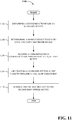
- FIG. 11 an example detailed methodology 1100 is disclosed for producing a command set to program a threshold for regulating content viewing upon a chip card.
- a communication from an auxiliary entity can be obtained at action 1102, commonly from a service provider or from a mobile device that retains the chip card.
- Various security features can be implemented concerning communication obtainment, such as checking for errors in the communication, determining if the communication is from a reliable/correct source, and the like.
- a relatively large number of communications can be obtained, where the communications include different thresholds for different mobile devices. Therefore, making the determination assists in assuring that a threshold and/or an appropriate command set can transfer to a correct mobile device.
- the threshold can be read from the communication at action 1106. Based upon the read threshold, a command set can be generated that programs the chip chard with the threshold at event 1108. The command set can transfer to the determined mobile device at act 1110. According to one embodiment, feedback can be collected, such as collecting information if the programming the chip card is successful, a manner the card chip is programmed, and the like.
- inferences can be made regarding whether a semi-connected mode should be employed, determining a wakeup period parameter, etc.
- the term to "infer” or “inference” refers generally to the process of reasoning about or inferring states of the system, environment, and/or user from a set of observations as captured via events and/or data. Inference can be employed to identify a specific context or action, or can generate a probability distribution over states, for example. The inference can be probabilistic-that is, the computation of a probability distribution over states of interest based on a consideration of data and events. Inference can also refer to techniques employed for composing higher-level events from a set of events and/or data. Such inference results in the construction of new events or actions from a set of observed events and/or stored event data, whether or not the events are correlated in close temporal proximity, and whether the events and data come from one or several event and data sources.
- Fig. 12 is an illustration of a mobile device 1200 capable of regulating content through a threshold retained upon a chip card.
- Mobile device 1200 comprises a receiver 1202 that receives a signal from, for instance, a receive antenna (not shown), and performs typical actions thereon (e.g., filters, amplifies, downconverts, etc. ) the received signal and digitizes the conditioned signal to obtain samples.
- Receiver 1202 can be, for example, an MMSE receiver, and can comprise a demodulator 1204 that can demodulate received symbols and provide them to a processor 1206 for channel estimation.
- Processor 1206 can be a processor dedicated to analyzing information received by receiver 1202 and/or generating information for transmission by a transmitter 1216, a processor that controls one or more components of mobile device 1200, and/or a processor that both analyzes information received by receiver 1202, generates information for transmission by transmitter 1216, and controls one or more components of mobile device 1200.
- Mobile device 1200 can additionally comprise memory 1208 that is operatively coupled to processor 1206 and that can store data to be transmitted, received data, information related to available channels, data associated with analyzed signal and/or interference strength, information related to an assigned channel, power, rate, or the like, and any other suitable information for estimating a channel and communicating via the channel.
- Memory 1208 can additionally store protocols and/or algorithms associated with estimating and/or utilizing a channel ( e.g ., performance based, capacity based, etc .).
- nonvolatile memory can include read only memory (ROM), programmable ROM (PROM), electrically programmable ROM (EPROM), electrically erasable PROM (EEPROM), or flash memory.
- Volatile memory can include random access memory (RAM), which acts as external cache memory.
- RAM is available in many forms such as synchronous RAM (SRAM), dynamic RAM (DRAM), synchronous DRAM (SDRAM), double data rate SDRAM (DDR SDRAM), enhanced SDRAM (ESDRAM), Synchlink DRAM (SLDRAM), and direct Rambus RAM (DRRAM).
- SRAM synchronous RAM
- DRAM dynamic RAM
- SDRAM synchronous DRAM
- DDR SDRAM double data rate SDRAM
- ESDRAM enhanced SDRAM
- SLDRAM Synchlink DRAM
- DRRAM direct Rambus RAM
- the memory 1208 of the subject systems and methods is intended to comprise, without being limited to, these and any other suitable types of memory.
- Processor 1202 is further operatively coupled to a comparator that contrasts a programmed threshold rating against a rating associated with content that is to be viewed upon the mobile device 1200. Additionally, the mobile device 1200 can include a formulator 1212 that determines if content can be viewed based upon a result of a comparison. Mobile device 1200 still further comprises a modulator 1214 and a transmitter 1216 that transmits a signal (e.g ., base CQI and differential CQI) to, for instance, a base station, another mobile device, etc. Although depicted as being separate from the processor 1206, it is to be appreciated that semi-connected controller 1210 and/or modulator 1214 can be part of processor 1206 or a number of processors (not shown). Additionally, the mobile device 1200 can include a media player 1218 that disclosed obtained and permissible content.
- a signal e.g ., base CQI and differential CQI
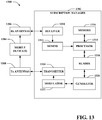
- Fig. 13 is an illustration of a system 1300 that facilitates programming a chip card upon a mobile device.
- System 1300 comprises a subscription manager 1302 (e.g., access point, ...) with a receiver 1310 that receives signal(s) from one or more mobile devices 1304 through a plurality of receive antennas 1306, and a transmitter 1322 that transmits to the one or more mobile devices 1304 through a plurality of transmit antennas 1308.
- Receiver 1310 can receive information from receive antennas 1306 and is operatively associated with a demodulator 1312 that demodulates received information. Demodulated symbols are analyzed by a processor 1314 that can be similar to the processor described above with regard to Fig.
- a memory 1316 that stores information related to estimating a signal (e.g., pilot) strength and/or interference strength, data to be transmitted to or received from mobile device(s) 1304 (or a disparate base station (not shown)), and/or any other suitable information related to performing the various actions and functions set forth herein.
- a signal e.g., pilot
- interference strength e.g., data to be transmitted to or received from mobile device(s) 1304 (or a disparate base station (not shown)
- Processor 1314 can further couple to a reader 1318 that identifies a threshold rating that is to be implemented upon a chip card of a mobile device. Based upon the identified rating, a generator 1320 can produce command set information that instructs the mobile device how to program the chip card in accordance with the threshold. Modulator 1323 can multiplex the information for transmission by a transmitter 1324 through antenna 1308 to mobile device(s) 1304. Although depicted as being separate from the processor 1314, it is to be appreciated that receiver 1310, reader 1118, generator 1320 and/or modulator 1322 can be part of processor 1314 or a number of processors (not shown).
- Fig. 14 shows an example wireless communication system 1400.
- the wireless communication system 1400 depicts one base station 1410 and one mobile device 1450 for sake of brevity.
- system 1400 can include more than one base station and/or more than one mobile device, wherein additional base stations and/or mobile devices can be substantially similar or different from example base station 1410 and mobile device 1450 described below.
- base station 1410 and/or mobile device 1450 can employ the systems ( Figs. 1-6 and 12-13 ) and/or methods ( Figs. 7-11 ) described herein to facilitate wireless communication there between.
- traffic data for a number of data streams is provided from a data source 1412 to a transmit (TX) data processor 1414.
- TX data processor 1414 formats, codes, and interleaves the traffic data stream based on a particular coding scheme selected for that data stream to provide coded data.
- the coded data for each data stream can be multiplexed with pilot data using orthogonal frequency division multiplexing (OFDM) techniques. Additionally or alternatively, the pilot symbols can be frequency division multiplexed (FDM), time division multiplexed (TDM), or code division multiplexed (CDM).
- the pilot data is typically a known data pattern that is processed in a known manner and can be used at mobile device 1450 to estimate channel response.
- the multiplexed pilot and coded data for each data stream can be modulated (e.g ., symbol mapped) based on a particular modulation scheme (e.g ., binary phase-shift keying (BPSK), quadrature phase-shift keying (QPSK), M-phase-shift keying (M-PSK), M-quadrature amplitude modulation (M-QAM), etc. ) selected for that data stream to provide modulation symbols.
- BPSK binary phase-shift keying
- QPSK quadrature phase-shift keying
- M-PSK M-phase-shift keying
- M-QAM M-quadrature amplitude modulation
- the data rate, coding, and modulation for each data stream can be determined by instructions performed or provided by processor 1430.
- the modulation symbols for the data streams can be provided to a TX MIMO processor 1420, which can further process the modulation symbols (e.g ., for OFDM). TX MIMO processor 1420 then provides N T modulation symbol streams to N T transmitters (TMTR) 1422a through 1422t. In various embodiments, TX MIMO processor 1420 applies beamforming weights to the symbols of the data streams and to the antenna from which the symbol is being transmitted.
- TX MIMO processor 1420 applies beamforming weights to the symbols of the data streams and to the antenna from which the symbol is being transmitted.
- Each transmitter 1422 receives and processes a respective symbol stream to provide one or more analog signals, and further conditions (e.g. , amplifies, filters, and upconverts) the analog signals to provide a modulated signal suitable for transmission over the MIMO channel. Further, N T modulated signals from transmitters 1422a through 1422t are transmitted from N T antennas 1424a through 1424t, respectively.
- the transmitted modulated signals are received by N R antennas 1452a through 1452r and the received signal from each antenna 1452 is provided to a respective receiver (RCVR) 1454a through 1454r.
- Each receiver 1454 conditions (e.g ., filters, amplifies, and downconverts) a respective signal, digitizes the conditioned signal to provide samples, and further processes the samples to provide a corresponding "received" symbol stream.
- An RX data processor 1460 can receive and process the N R received symbol streams from N R receivers 1454 based on a particular receiver processing technique to provide N T "detected" symbol streams. RX data processor 1460 can demodulate, deinterleave, and decode each detected symbol stream to recover the traffic data for the data stream. The processing by RX data processor 1460 is complementary to that performed by TX MIMO processor 1420 and TX data processor 1414 at base station 1410.
- a processor 1470 can periodically determine which precoding matrix to utilize as discussed above. Further, processor 1470 can formulate a reverse link message comprising a matrix index portion and a rank value portion.
- the reverse link message can comprise various types of information regarding the communication link and/or the received data stream.
- the reverse link message can be processed by a TX data processor 1438, which also receives traffic data for a number of data streams from a data source 1436, modulated by a modulator 1480, conditioned by transmitters 1454a through 1454r, and transmitted back to base station 1410.
- the modulated signals from mobile device 1450 are received by antennas 1424, conditioned by receivers 1422, demodulated by a demodulator 1440, and processed by a RX data processor 1442 to extract the reverse link message transmitted by mobile device 1450. Further, processor 1430 can process the extracted message to determine which precoding matrix to use for determining the beamforming weights.
- Processors 1430 and 1470 can direct (e.g ., control, coordinate, manage, etc. ) operation at base station 1410 and mobile device 1450, respectively. Respective processors 1430 and 1470 can be associated with memory 1432 and 1472 that store program codes and data. Processors 1430 and 1470 can also perform computations to derive frequency and impulse response estimates for the uplink and downlink, respectively.
- the embodiments described herein can be implemented in hardware, software, firmware, middleware, microcode, or any combination thereof.
- the processing units can be implemented within one or more application specific integrated circuits (ASICs), digital signal processors (DSPs), digital signal processing devices (DSPDs), programmable logic devices (PLDs), field programmable gate arrays (FPGAs), processors, controllers, micro-controllers, microprocessors, other electronic units designed to perform the functions described herein, or a combination thereof.
- ASICs application specific integrated circuits
- DSPs digital signal processors
- DSPDs digital signal processing devices
- PLDs programmable logic devices
- FPGAs field programmable gate arrays
- processors controllers, micro-controllers, microprocessors, other electronic units designed to perform the functions described herein, or a combination thereof.
- a code segment can represent a procedure, a function, a subprogram, a program, a routine, a subroutine, a module, a software package, a class, or any combination of instructions, data structures, or program statements.
- a code segment can be coupled to another code segment or a hardware circuit by passing and/or receiving information, data, arguments, parameters, or memory contents. Information, arguments, parameters, data, etc. can be passed, forwarded, or transmitted using any suitable means including memory sharing, message passing, token passing, network transmission, etc.
- the techniques described herein can be implemented with modules (e.g ., procedures, functions, and so on) that perform the functions described herein.
- the software codes can be stored in memory units and executed by processors.
- the memory unit can be implemented within the processor or external to the processor, in which case it can be communicatively coupled to the processor via various means as is known in the art.
- system 1500 that regulates content viewing upon a mobile device in accordance with rating comparisons.
- system 1500 can reside at least partially within a mobile device.
- system 1500 is represented as including functional blocks, which can be functional blocks that represent functions implemented by a processor, software, or combination thereof ( e.g ., firmware).
- System 1500 includes a logical grouping 1502 of electrical components that can act in conjunction.
- logical grouping can include an electrical component for comparing a rating of content against a threshold retained upon a secure storage 1504.
- logical grouping 1502 can comprise an electrical component for formulating if the content can be viewed based upon a result of the comparison between the content rating and the retained threshold 1506.
- system 1500 can include a memory 1508 that retains instructions for executing functions associated with electrical components 1504 and 1506. While shown as being external to memory 1508, it is to be understood that one or more of electrical components 1504 and 1506 can exist within memory 1508.
- the electrical component 1504 and/or electrical component 1506 can inherently include an electrical component for receiving the content from a service provider, an electrical component for receiving a command set for programming the secure storage concerning the threshold, an electrical component for programming the secure storage in accordance with the received command set, an electrical component for transmitting a form that includes the threshold, an electrical component for collecting the form, an electrical component for allowing the content to be viewed if the comparison is successful, an electrical component for denying the content to be viewed if the comparison is unsuccessful, or a combination thereof.
- other configurations can be practiced, such as at least one of the inherent components implementing independently.
- system 1600 that facilitates programming of a secure storage to regulate content viewed upon a mobile device.
- system 1600 can reside at least partially within a mobile device.
- system 1600 is represented as including functional blocks, which can be functional blocks that represent functions implemented by a processor, software, or combination thereof ( e.g ., firmware).
- System 1600 includes a logical grouping 1602 of electrical components that can act in conjunction.
- logical grouping 1602 can include an electrical component for reading the threshold from communication provided by an auxiliary entity 1604.
- logical grouping 1602 can comprise an electrical component for means for generating a command set for the secure storage to implement the read threshold 1606, commonly the generated command set is used to program the threshold upon the secure storage.
- system 1600 can include a memory 1608 that retains instructions for executing functions associated with electrical components 1604 and 1606. While shown as being external to memory 1608, it is to be understood that one or more of electrical components 1604 and 1606 can exist within memory 1608.
- the electrical component 1604 and/or electrical component 1606 can inherently include an electrical component for obtaining the communication from the auxiliary entity, an electrical component for determining a mobile device that is to have the secure storage programmed, an electrical component for sending the command set to the determined mobile device, or a combination thereof.
- other configurations can be practiced, such as at least one of the inherent components implementing independently.
Landscapes
- Engineering & Computer Science (AREA)
- Theoretical Computer Science (AREA)
- Software Systems (AREA)
- Computer Hardware Design (AREA)
- Computer Security & Cryptography (AREA)
- General Engineering & Computer Science (AREA)
- General Physics & Mathematics (AREA)
- Physics & Mathematics (AREA)
- General Health & Medical Sciences (AREA)
- Health & Medical Sciences (AREA)
- Bioethics (AREA)
- Technology Law (AREA)
- Multimedia (AREA)
- Signal Processing (AREA)
- Computer Networks & Wireless Communication (AREA)
- Computing Systems (AREA)
- Mobile Radio Communication Systems (AREA)
- Telephonic Communication Services (AREA)
- Telephone Function (AREA)
- Management, Administration, Business Operations System, And Electronic Commerce (AREA)
Applications Claiming Priority (3)
| Application Number | Priority Date | Filing Date | Title |
|---|---|---|---|
| US91158307P | 2007-04-13 | 2007-04-13 | |
| US12/101,370 US8046839B2 (en) | 2007-04-13 | 2008-04-11 | Mobile unit parental control |
| PCT/US2008/060270 WO2008128203A1 (en) | 2007-04-13 | 2008-04-14 | Mobile unit parental control |
Publications (2)
| Publication Number | Publication Date |
|---|---|
| EP2147389A1 EP2147389A1 (en) | 2010-01-27 |
| EP2147389B1 true EP2147389B1 (en) | 2017-12-27 |
Family
ID=39855009
Family Applications (1)
| Application Number | Title | Priority Date | Filing Date |
|---|---|---|---|
| EP08745796.6A Active EP2147389B1 (en) | 2007-04-13 | 2008-04-14 | Mobile unit parental control |
Country Status (10)
| Country | Link |
|---|---|
| US (1) | US8046839B2 (pt) |
| EP (1) | EP2147389B1 (pt) |
| JP (4) | JP5507442B2 (pt) |
| KR (2) | KR101258161B1 (pt) |
| CN (1) | CN101657821B (pt) |
| BR (1) | BRPI0810174A2 (pt) |
| CA (1) | CA2681664A1 (pt) |
| RU (1) | RU2009141833A (pt) |
| TW (1) | TW200849861A (pt) |
| WO (1) | WO2008128203A1 (pt) |
Families Citing this family (54)
| Publication number | Priority date | Publication date | Assignee | Title |
|---|---|---|---|---|
| US8189786B2 (en) * | 2005-05-25 | 2012-05-29 | Zenith Electronics Llc | Encryption system |
| US8144868B2 (en) * | 2005-05-25 | 2012-03-27 | Zenith Electronics Llc | Encryption/decryption of program data but not PSI data |
| KR101507790B1 (ko) * | 2008-04-21 | 2015-04-03 | 엘지전자 주식회사 | 단말기 및 이것의 방송 제어 방법 |
| WO2010051033A1 (en) * | 2008-10-30 | 2010-05-06 | Nortel Networks Limited | Relay techniques suitable for user equipment in downlink |
| US10880340B2 (en) | 2008-11-26 | 2020-12-29 | Free Stream Media Corp. | Relevancy improvement through targeting of information based on data gathered from a networked device associated with a security sandbox of a client device |
| US9986279B2 (en) | 2008-11-26 | 2018-05-29 | Free Stream Media Corp. | Discovery, access control, and communication with networked services |
| US10334324B2 (en) | 2008-11-26 | 2019-06-25 | Free Stream Media Corp. | Relevant advertisement generation based on a user operating a client device communicatively coupled with a networked media device |
| US10567823B2 (en) | 2008-11-26 | 2020-02-18 | Free Stream Media Corp. | Relevant advertisement generation based on a user operating a client device communicatively coupled with a networked media device |
| US8180891B1 (en) | 2008-11-26 | 2012-05-15 | Free Stream Media Corp. | Discovery, access control, and communication with networked services from within a security sandbox |
| US10419541B2 (en) | 2008-11-26 | 2019-09-17 | Free Stream Media Corp. | Remotely control devices over a network without authentication or registration |
| US9026668B2 (en) | 2012-05-26 | 2015-05-05 | Free Stream Media Corp. | Real-time and retargeted advertising on multiple screens of a user watching television |
| US10631068B2 (en) | 2008-11-26 | 2020-04-21 | Free Stream Media Corp. | Content exposure attribution based on renderings of related content across multiple devices |
| US9386356B2 (en) | 2008-11-26 | 2016-07-05 | Free Stream Media Corp. | Targeting with television audience data across multiple screens |
| US9961388B2 (en) | 2008-11-26 | 2018-05-01 | David Harrison | Exposure of public internet protocol addresses in an advertising exchange server to improve relevancy of advertisements |
| US10977693B2 (en) | 2008-11-26 | 2021-04-13 | Free Stream Media Corp. | Association of content identifier of audio-visual data with additional data through capture infrastructure |
| US9519772B2 (en) | 2008-11-26 | 2016-12-13 | Free Stream Media Corp. | Relevancy improvement through targeting of information based on data gathered from a networked device associated with a security sandbox of a client device |
| US9154942B2 (en) | 2008-11-26 | 2015-10-06 | Free Stream Media Corp. | Zero configuration communication between a browser and a networked media device |
| US8621520B2 (en) * | 2009-05-19 | 2013-12-31 | Qualcomm Incorporated | Delivery of selective content to client applications by mobile broadcast device with content filtering capability |
| US8751329B2 (en) * | 2009-08-20 | 2014-06-10 | T-Mobile Usa, Inc. | Licensed content purchasing and delivering |
| US8929887B2 (en) * | 2009-08-20 | 2015-01-06 | T-Mobile Usa, Inc. | Shared book reading |
| US8825036B2 (en) * | 2009-08-20 | 2014-09-02 | T-Mobile Usa, Inc. | Parent telecommunication device configuration of activity-based child telecommunication device |
| US8654952B2 (en) * | 2009-08-20 | 2014-02-18 | T-Mobile Usa, Inc. | Shareable applications on telecommunications devices |
| US8750854B2 (en) * | 2010-03-25 | 2014-06-10 | T-Mobile Usa, Inc. | Parent-controlled episodic content on a child telecommunication device |
| US8483738B2 (en) * | 2010-03-25 | 2013-07-09 | T-Mobile Usa, Inc. | Chore and rewards tracker |
| SK5919Y1 (sk) * | 2010-12-08 | 2011-11-04 | Stefan Valicek | Device for secure control access to applications and data by two-factor authentication |
| US9880604B2 (en) | 2011-04-20 | 2018-01-30 | Microsoft Technology Licensing, Llc | Energy efficient location detection |
| US20120311673A1 (en) * | 2011-06-01 | 2012-12-06 | Comcast Cable Communications, Llc | Media usage monitoring and control |
| US9325752B2 (en) | 2011-12-23 | 2016-04-26 | Microsoft Technology Licensing, Llc | Private interaction hubs |
| US20130305354A1 (en) | 2011-12-23 | 2013-11-14 | Microsoft Corporation | Restricted execution modes |
| US8874162B2 (en) | 2011-12-23 | 2014-10-28 | Microsoft Corporation | Mobile device safe driving |
| US9363250B2 (en) | 2011-12-23 | 2016-06-07 | Microsoft Technology Licensing, Llc | Hub coordination service |
| US9420432B2 (en) | 2011-12-23 | 2016-08-16 | Microsoft Technology Licensing, Llc | Mobile devices control |
| US9467834B2 (en) | 2011-12-23 | 2016-10-11 | Microsoft Technology Licensing, Llc | Mobile device emergency service |
| EP2733909B8 (en) * | 2012-08-29 | 2019-03-13 | Huawei Device Co., Ltd. | Terminal control method and device, and terminal |
| US9230076B2 (en) | 2012-08-30 | 2016-01-05 | Microsoft Technology Licensing, Llc | Mobile device child share |
| US9542172B2 (en) | 2013-02-05 | 2017-01-10 | Apple Inc. | Automatic updating of applications |
| US9998866B2 (en) | 2013-06-14 | 2018-06-12 | Microsoft Technology Licensing, Llc | Detecting geo-fence events using varying confidence levels |
| US9820231B2 (en) | 2013-06-14 | 2017-11-14 | Microsoft Technology Licensing, Llc | Coalescing geo-fence events |
| US9223586B1 (en) * | 2013-06-27 | 2015-12-29 | Amazon Technologies, Inc. | Run-time limitations of software applications based on user characteristics |
| CN104063655B (zh) * | 2014-05-30 | 2019-08-06 | 小米科技有限责任公司 | 一种处理儿童模式的方法和装置 |
| US10404532B2 (en) | 2015-04-10 | 2019-09-03 | Comcast Cable Commnications, LLC | Virtual gateway control and management |
| CN106250774A (zh) * | 2016-08-16 | 2016-12-21 | 三星电子(中国)研发中心 | 主设备和辅助设备及其操作的处理方法 |
| RU177377U1 (ru) * | 2016-10-28 | 2018-02-19 | Общество с ограниченной ответственностью "ТопВью" | Устройство определения интересов ребенка и оценки уровня угроз ребенку в интернете |
| US9698792B1 (en) * | 2016-11-22 | 2017-07-04 | Nxp B.V. | System and method for clocking digital logic circuits |
| US20220166762A1 (en) * | 2020-11-25 | 2022-05-26 | Microsoft Technology Licensing, Llc | Integrated circuit for obtaining enhanced privileges for a network-based resource and performing actions in accordance therewith |
| US11888690B2 (en) | 2022-01-07 | 2024-01-30 | Dell Products L.P. | System and method for subscription limitation enforcement in distributed system |
| US11789718B2 (en) | 2022-01-07 | 2023-10-17 | Dell Products L.P. | System and method for subscription based solution modification implementation |
| US12093102B2 (en) | 2022-01-07 | 2024-09-17 | Dell Products L.P. | System and method for power state enforced subscription management |
| US12561180B2 (en) | 2022-01-07 | 2026-02-24 | Dell Products L.P. | System and method for subscription management by instantiating and/or retiring composed systems of a managed system |
| US11829740B2 (en) | 2022-01-07 | 2023-11-28 | Dell Products L.P. | System and method for deployment level management of subscription based solutions |
| US11861577B2 (en) | 2022-01-07 | 2024-01-02 | Dell Products L.P. | System and method for distributed enforcement of configuration limitations |
| US11947433B2 (en) | 2022-01-07 | 2024-04-02 | Dell Products L.P. | System and method for subscription based solution management |
| US11907153B2 (en) * | 2022-01-07 | 2024-02-20 | Dell Products L.P. | System and method for distributed subscription management |
| US12211021B2 (en) | 2022-01-07 | 2025-01-28 | Dell Products L.P. | System and method for subscription based solution implementation |
Family Cites Families (21)
| Publication number | Priority date | Publication date | Assignee | Title |
|---|---|---|---|---|
| US7124938B1 (en) * | 1999-03-24 | 2006-10-24 | Microsoft Corporation | Enhancing smart card usage for associating media content with households |
| US6678733B1 (en) * | 1999-10-26 | 2004-01-13 | At Home Corporation | Method and system for authorizing and authenticating users |
| US6658415B1 (en) * | 2000-04-28 | 2003-12-02 | International Business Machines Corporation | Monitoring and managing user access to content via a universally accessible database |
| US7100053B1 (en) * | 2000-04-28 | 2006-08-29 | International Business Machines Corporation | Monitoring and managing user access to content via a portable data storage medium |
| US7386512B1 (en) * | 2000-05-11 | 2008-06-10 | Thomson Licensing | Method and system for controlling and auditing content/service systems |
| US7890741B2 (en) * | 2000-12-01 | 2011-02-15 | O2Micro International Limited | Low power digital audio decoding/playing system for computing devices |
| US7818443B2 (en) * | 2000-12-01 | 2010-10-19 | O2Micro International Ltd. | Low power digital audio decoding/playing system for computing devices |
| CN1265640C (zh) * | 2001-06-11 | 2006-07-19 | 松下电器产业株式会社 | 许可管理服务器、许可管理系统及使用限制方法 |
| JP3653242B2 (ja) * | 2001-08-06 | 2005-05-25 | デジタルア−ツ株式会社 | インターネットへのアクセスを管理する方法、そのシステム及びそのコンピュータ・プログラム |
| US20030115592A1 (en) * | 2001-12-19 | 2003-06-19 | Johnson Carolynn Rae | Method and apparatus for selecting rating limits in a parental control system |
| US7356836B2 (en) * | 2002-06-28 | 2008-04-08 | Microsoft Corporation | User controls for a computer |
| JP4181077B2 (ja) * | 2004-03-23 | 2008-11-12 | 株式会社エヌ・ティ・ティ・ドコモ | 移動機及び出力制御方法 |
| JP4247145B2 (ja) * | 2004-03-23 | 2009-04-02 | 株式会社エヌ・ティ・ティ・ドコモ | 移動機及び移動機における出力制御方法 |
| US7046139B2 (en) * | 2004-04-26 | 2006-05-16 | Matsushita Electric Industrial Co., Ltd. | Method and parental control and monitoring of usage of devices connected to home network |
| US20060080702A1 (en) * | 2004-05-20 | 2006-04-13 | Turner Broadcasting System, Inc. | Systems and methods for delivering content over a network |
| US7437772B1 (en) * | 2004-09-17 | 2008-10-14 | Sprint Spectrum L.P. | Method and system for access control based on content-ratings and client-specified rating allowances |
| JP2006186625A (ja) * | 2004-12-27 | 2006-07-13 | Fujitsu Ten Ltd | 電話機を用いた通信装置および電話機 |
| JP4604736B2 (ja) * | 2005-01-27 | 2011-01-05 | 日本電気株式会社 | 情報取得制御システム,携帯端末およびプログラム |
| US7836192B2 (en) * | 2005-07-15 | 2010-11-16 | Microsoft Corporation | Parental controls for a media console |
| US8635526B2 (en) * | 2006-05-25 | 2014-01-21 | Qualcomm Incorporated | Target advertisement in a broadcast system |
| US9055040B2 (en) * | 2006-02-03 | 2015-06-09 | Qualcomm Incorporated | Method and apparatus for content protection in wireless communications |
-
2008
- 2008-04-11 US US12/101,370 patent/US8046839B2/en active Active
- 2008-04-14 KR KR1020097023732A patent/KR101258161B1/ko active Active
- 2008-04-14 KR KR1020117028074A patent/KR20110133064A/ko not_active Withdrawn
- 2008-04-14 EP EP08745796.6A patent/EP2147389B1/en active Active
- 2008-04-14 BR BRPI0810174-4A2A patent/BRPI0810174A2/pt not_active Application Discontinuation
- 2008-04-14 CA CA002681664A patent/CA2681664A1/en not_active Abandoned
- 2008-04-14 CN CN2008800119742A patent/CN101657821B/zh active Active
- 2008-04-14 TW TW097113538A patent/TW200849861A/zh unknown
- 2008-04-14 RU RU2009141833/08A patent/RU2009141833A/ru not_active Application Discontinuation
- 2008-04-14 WO PCT/US2008/060270 patent/WO2008128203A1/en not_active Ceased
- 2008-04-14 JP JP2010503278A patent/JP5507442B2/ja active Active
-
2013
- 2013-03-27 JP JP2013067097A patent/JP5882249B2/ja active Active
-
2015
- 2015-05-26 JP JP2015106502A patent/JP2015201863A/ja not_active Withdrawn
-
2016
- 2016-08-17 JP JP2016159981A patent/JP6411416B2/ja active Active
Also Published As
| Publication number | Publication date |
|---|---|
| EP2147389A1 (en) | 2010-01-27 |
| TW200849861A (en) | 2008-12-16 |
| JP2015201863A (ja) | 2015-11-12 |
| KR20100007875A (ko) | 2010-01-22 |
| JP5507442B2 (ja) | 2014-05-28 |
| JP2017028704A (ja) | 2017-02-02 |
| CA2681664A1 (en) | 2008-10-23 |
| CN101657821A (zh) | 2010-02-24 |
| CN101657821B (zh) | 2013-06-12 |
| RU2009141833A (ru) | 2011-05-20 |
| US8046839B2 (en) | 2011-10-25 |
| WO2008128203A1 (en) | 2008-10-23 |
| KR101258161B1 (ko) | 2013-04-30 |
| JP6411416B2 (ja) | 2018-10-24 |
| BRPI0810174A2 (pt) | 2014-12-30 |
| JP5882249B2 (ja) | 2016-03-09 |
| JP2013168975A (ja) | 2013-08-29 |
| JP2010524409A (ja) | 2010-07-15 |
| US20080256641A1 (en) | 2008-10-16 |
| KR20110133064A (ko) | 2011-12-09 |
Similar Documents
| Publication | Publication Date | Title |
|---|---|---|
| US8046839B2 (en) | Mobile unit parental control | |
| EP3375165B1 (en) | Method and apparatus for downloading profile on embedded universal integrated circuit card of terminal | |
| CN107750441B (zh) | 安全动态通讯网络及协定 | |
| US9769669B2 (en) | Apparatus and methods for secure architectures in wireless networks | |
| US20090041247A1 (en) | Key identifier in packet data convergence protocol header | |
| CN115968473A (zh) | 物联网网络中的自管理信任 | |
| US8819421B2 (en) | File decryption interface | |
| CN101375290B (zh) | 无线通信中用于内容保护的方法和设备 | |
| US12411938B1 (en) | Systems and methods for utilizing cryptographic co-dependency across multiple roots of trust | |
| Sriram et al. | 5G security: Concepts and challenges | |
| US8537742B2 (en) | Reverse-link quality-of-service information in data packet header | |
| Gong | Securing internet-of-things | |
| US20240372858A1 (en) | Digital Picture Verification for Communication Applications | |
| EP3210403B1 (en) | Method of sending data from a secure token to a distant server | |
| WO2025081867A1 (en) | Method and system for a user to communicate with an external entity preserving user privacy | |
| EP3202173B1 (en) | Method of sending a data from a secure token to a server | |
| CN119854779A (zh) | 数据传输方法、装置、电子设备以及存储介质 |
Legal Events
| Date | Code | Title | Description |
|---|---|---|---|
| PUAI | Public reference made under article 153(3) epc to a published international application that has entered the european phase |
Free format text: ORIGINAL CODE: 0009012 |
|
| 17P | Request for examination filed |
Effective date: 20091111 |
|
| AK | Designated contracting states |
Kind code of ref document: A1 Designated state(s): AT BE BG CH CY CZ DE DK EE ES FI FR GB GR HR HU IE IS IT LI LT LU LV MC MT NL NO PL PT RO SE SI SK TR |
|
| AX | Request for extension of the european patent |
Extension state: AL BA MK RS |
|
| 17Q | First examination report despatched |
Effective date: 20100310 |
|
| DAX | Request for extension of the european patent (deleted) | ||
| REG | Reference to a national code |
Ref country code: DE Ref legal event code: R079 Ref document number: 602008053504 Country of ref document: DE Free format text: PREVIOUS MAIN CLASS: G06F0021000000 Ipc: G06F0021100000 |
|
| GRAP | Despatch of communication of intention to grant a patent |
Free format text: ORIGINAL CODE: EPIDOSNIGR1 |
|
| RIC1 | Information provided on ipc code assigned before grant |
Ipc: G06F 21/62 20130101ALI20170622BHEP Ipc: G06F 21/10 20130101AFI20170622BHEP Ipc: H04L 29/06 20060101ALI20170622BHEP |
|
| INTG | Intention to grant announced |
Effective date: 20170710 |
|
| GRAS | Grant fee paid |
Free format text: ORIGINAL CODE: EPIDOSNIGR3 |
|
| GRAA | (expected) grant |
Free format text: ORIGINAL CODE: 0009210 |
|
| AK | Designated contracting states |
Kind code of ref document: B1 Designated state(s): AT BE BG CH CY CZ DE DK EE ES FI FR GB GR HR HU IE IS IT LI LT LU LV MC MT NL NO PL PT RO SE SI SK TR |
|
| REG | Reference to a national code |
Ref country code: GB Ref legal event code: FG4D |
|
| REG | Reference to a national code |
Ref country code: CH Ref legal event code: EP |
|
| REG | Reference to a national code |
Ref country code: AT Ref legal event code: REF Ref document number: 958871 Country of ref document: AT Kind code of ref document: T Effective date: 20180115 |
|
| REG | Reference to a national code |
Ref country code: IE Ref legal event code: FG4D |
|
| REG | Reference to a national code |
Ref country code: DE Ref legal event code: R096 Ref document number: 602008053504 Country of ref document: DE |
|
| REG | Reference to a national code |
Ref country code: FR Ref legal event code: PLFP Year of fee payment: 11 |
|
| PG25 | Lapsed in a contracting state [announced via postgrant information from national office to epo] |
Ref country code: LT Free format text: LAPSE BECAUSE OF FAILURE TO SUBMIT A TRANSLATION OF THE DESCRIPTION OR TO PAY THE FEE WITHIN THE PRESCRIBED TIME-LIMIT Effective date: 20171227 Ref country code: NO Free format text: LAPSE BECAUSE OF FAILURE TO SUBMIT A TRANSLATION OF THE DESCRIPTION OR TO PAY THE FEE WITHIN THE PRESCRIBED TIME-LIMIT Effective date: 20180327 Ref country code: FI Free format text: LAPSE BECAUSE OF FAILURE TO SUBMIT A TRANSLATION OF THE DESCRIPTION OR TO PAY THE FEE WITHIN THE PRESCRIBED TIME-LIMIT Effective date: 20171227 |
|
| REG | Reference to a national code |
Ref country code: NL Ref legal event code: MP Effective date: 20171227 |
|
| REG | Reference to a national code |
Ref country code: LT Ref legal event code: MG4D |
|
| REG | Reference to a national code |
Ref country code: AT Ref legal event code: MK05 Ref document number: 958871 Country of ref document: AT Kind code of ref document: T Effective date: 20171227 |
|
| PG25 | Lapsed in a contracting state [announced via postgrant information from national office to epo] |
Ref country code: BG Free format text: LAPSE BECAUSE OF FAILURE TO SUBMIT A TRANSLATION OF THE DESCRIPTION OR TO PAY THE FEE WITHIN THE PRESCRIBED TIME-LIMIT Effective date: 20180327 Ref country code: HR Free format text: LAPSE BECAUSE OF FAILURE TO SUBMIT A TRANSLATION OF THE DESCRIPTION OR TO PAY THE FEE WITHIN THE PRESCRIBED TIME-LIMIT Effective date: 20171227 Ref country code: GR Free format text: LAPSE BECAUSE OF FAILURE TO SUBMIT A TRANSLATION OF THE DESCRIPTION OR TO PAY THE FEE WITHIN THE PRESCRIBED TIME-LIMIT Effective date: 20180328 Ref country code: LV Free format text: LAPSE BECAUSE OF FAILURE TO SUBMIT A TRANSLATION OF THE DESCRIPTION OR TO PAY THE FEE WITHIN THE PRESCRIBED TIME-LIMIT Effective date: 20171227 |
|
| PG25 | Lapsed in a contracting state [announced via postgrant information from national office to epo] |
Ref country code: NL Free format text: LAPSE BECAUSE OF FAILURE TO SUBMIT A TRANSLATION OF THE DESCRIPTION OR TO PAY THE FEE WITHIN THE PRESCRIBED TIME-LIMIT Effective date: 20171227 |
|
| PG25 | Lapsed in a contracting state [announced via postgrant information from national office to epo] |
Ref country code: CY Free format text: LAPSE BECAUSE OF FAILURE TO SUBMIT A TRANSLATION OF THE DESCRIPTION OR TO PAY THE FEE WITHIN THE PRESCRIBED TIME-LIMIT Effective date: 20171227 Ref country code: EE Free format text: LAPSE BECAUSE OF FAILURE TO SUBMIT A TRANSLATION OF THE DESCRIPTION OR TO PAY THE FEE WITHIN THE PRESCRIBED TIME-LIMIT Effective date: 20171227 Ref country code: SK Free format text: LAPSE BECAUSE OF FAILURE TO SUBMIT A TRANSLATION OF THE DESCRIPTION OR TO PAY THE FEE WITHIN THE PRESCRIBED TIME-LIMIT Effective date: 20171227 Ref country code: ES Free format text: LAPSE BECAUSE OF FAILURE TO SUBMIT A TRANSLATION OF THE DESCRIPTION OR TO PAY THE FEE WITHIN THE PRESCRIBED TIME-LIMIT Effective date: 20171227 Ref country code: CZ Free format text: LAPSE BECAUSE OF FAILURE TO SUBMIT A TRANSLATION OF THE DESCRIPTION OR TO PAY THE FEE WITHIN THE PRESCRIBED TIME-LIMIT Effective date: 20171227 |
|
| PG25 | Lapsed in a contracting state [announced via postgrant information from national office to epo] |
Ref country code: AT Free format text: LAPSE BECAUSE OF FAILURE TO SUBMIT A TRANSLATION OF THE DESCRIPTION OR TO PAY THE FEE WITHIN THE PRESCRIBED TIME-LIMIT Effective date: 20171227 Ref country code: IT Free format text: LAPSE BECAUSE OF FAILURE TO SUBMIT A TRANSLATION OF THE DESCRIPTION OR TO PAY THE FEE WITHIN THE PRESCRIBED TIME-LIMIT Effective date: 20171227 Ref country code: RO Free format text: LAPSE BECAUSE OF FAILURE TO SUBMIT A TRANSLATION OF THE DESCRIPTION OR TO PAY THE FEE WITHIN THE PRESCRIBED TIME-LIMIT Effective date: 20171227 Ref country code: IS Free format text: LAPSE BECAUSE OF FAILURE TO SUBMIT A TRANSLATION OF THE DESCRIPTION OR TO PAY THE FEE WITHIN THE PRESCRIBED TIME-LIMIT Effective date: 20180427 Ref country code: PL Free format text: LAPSE BECAUSE OF FAILURE TO SUBMIT A TRANSLATION OF THE DESCRIPTION OR TO PAY THE FEE WITHIN THE PRESCRIBED TIME-LIMIT Effective date: 20171227 |
|
| REG | Reference to a national code |
Ref country code: DE Ref legal event code: R097 Ref document number: 602008053504 Country of ref document: DE |
|
| PLBE | No opposition filed within time limit |
Free format text: ORIGINAL CODE: 0009261 |
|
| STAA | Information on the status of an ep patent application or granted ep patent |
Free format text: STATUS: NO OPPOSITION FILED WITHIN TIME LIMIT |
|
| PG25 | Lapsed in a contracting state [announced via postgrant information from national office to epo] |
Ref country code: DK Free format text: LAPSE BECAUSE OF FAILURE TO SUBMIT A TRANSLATION OF THE DESCRIPTION OR TO PAY THE FEE WITHIN THE PRESCRIBED TIME-LIMIT Effective date: 20171227 Ref country code: MC Free format text: LAPSE BECAUSE OF FAILURE TO SUBMIT A TRANSLATION OF THE DESCRIPTION OR TO PAY THE FEE WITHIN THE PRESCRIBED TIME-LIMIT Effective date: 20171227 |
|
| REG | Reference to a national code |
Ref country code: CH Ref legal event code: PL |
|
| 26N | No opposition filed |
Effective date: 20180928 |
|
| REG | Reference to a national code |
Ref country code: BE Ref legal event code: MM Effective date: 20180430 |
|
| REG | Reference to a national code |
Ref country code: IE Ref legal event code: MM4A |
|
| PG25 | Lapsed in a contracting state [announced via postgrant information from national office to epo] |
Ref country code: LU Free format text: LAPSE BECAUSE OF NON-PAYMENT OF DUE FEES Effective date: 20180414 |
|
| PG25 | Lapsed in a contracting state [announced via postgrant information from national office to epo] |
Ref country code: CH Free format text: LAPSE BECAUSE OF NON-PAYMENT OF DUE FEES Effective date: 20180430 Ref country code: SI Free format text: LAPSE BECAUSE OF FAILURE TO SUBMIT A TRANSLATION OF THE DESCRIPTION OR TO PAY THE FEE WITHIN THE PRESCRIBED TIME-LIMIT Effective date: 20171227 Ref country code: LI Free format text: LAPSE BECAUSE OF NON-PAYMENT OF DUE FEES Effective date: 20180430 Ref country code: BE Free format text: LAPSE BECAUSE OF NON-PAYMENT OF DUE FEES Effective date: 20180430 |
|
| PG25 | Lapsed in a contracting state [announced via postgrant information from national office to epo] |
Ref country code: IE Free format text: LAPSE BECAUSE OF NON-PAYMENT OF DUE FEES Effective date: 20180414 |
|
| PG25 | Lapsed in a contracting state [announced via postgrant information from national office to epo] |
Ref country code: MT Free format text: LAPSE BECAUSE OF NON-PAYMENT OF DUE FEES Effective date: 20180414 |
|
| PG25 | Lapsed in a contracting state [announced via postgrant information from national office to epo] |
Ref country code: TR Free format text: LAPSE BECAUSE OF FAILURE TO SUBMIT A TRANSLATION OF THE DESCRIPTION OR TO PAY THE FEE WITHIN THE PRESCRIBED TIME-LIMIT Effective date: 20171227 |
|
| PG25 | Lapsed in a contracting state [announced via postgrant information from national office to epo] |
Ref country code: PT Free format text: LAPSE BECAUSE OF FAILURE TO SUBMIT A TRANSLATION OF THE DESCRIPTION OR TO PAY THE FEE WITHIN THE PRESCRIBED TIME-LIMIT Effective date: 20171227 Ref country code: HU Free format text: LAPSE BECAUSE OF FAILURE TO SUBMIT A TRANSLATION OF THE DESCRIPTION OR TO PAY THE FEE WITHIN THE PRESCRIBED TIME-LIMIT; INVALID AB INITIO Effective date: 20080414 |
|
| PG25 | Lapsed in a contracting state [announced via postgrant information from national office to epo] |
Ref country code: SE Free format text: LAPSE BECAUSE OF FAILURE TO SUBMIT A TRANSLATION OF THE DESCRIPTION OR TO PAY THE FEE WITHIN THE PRESCRIBED TIME-LIMIT Effective date: 20171227 |
|
| PGFP | Annual fee paid to national office [announced via postgrant information from national office to epo] |
Ref country code: DE Payment date: 20250317 Year of fee payment: 18 |
|
| PGFP | Annual fee paid to national office [announced via postgrant information from national office to epo] |
Ref country code: GB Payment date: 20260320 Year of fee payment: 19 |
|
| PGFP | Annual fee paid to national office [announced via postgrant information from national office to epo] |
Ref country code: FR Payment date: 20260317 Year of fee payment: 19 |