EP2151971B1 - Umcodierung von Videodaten - Google Patents
Umcodierung von Videodaten Download PDFInfo
- Publication number
- EP2151971B1 EP2151971B1 EP08253317A EP08253317A EP2151971B1 EP 2151971 B1 EP2151971 B1 EP 2151971B1 EP 08253317 A EP08253317 A EP 08253317A EP 08253317 A EP08253317 A EP 08253317A EP 2151971 B1 EP2151971 B1 EP 2151971B1
- Authority
- EP
- European Patent Office
- Prior art keywords
- video data
- transcoding
- video
- data
- processors
- Prior art date
- Legal status (The legal status is an assumption and is not a legal conclusion. Google has not performed a legal analysis and makes no representation as to the accuracy of the status listed.)
- Not-in-force
Links
- 238000000034 method Methods 0.000 description 43
- 239000000463 material Substances 0.000 description 31
- 230000006835 compression Effects 0.000 description 19
- 238000007906 compression Methods 0.000 description 19
- 230000011218 segmentation Effects 0.000 description 5
- 230000005540 biological transmission Effects 0.000 description 4
- 230000002123 temporal effect Effects 0.000 description 4
- 230000001419 dependent effect Effects 0.000 description 3
- 230000000717 retained effect Effects 0.000 description 2
- 230000003139 buffering effect Effects 0.000 description 1
- 238000006243 chemical reaction Methods 0.000 description 1
- 230000000694 effects Effects 0.000 description 1
- 230000002045 lasting effect Effects 0.000 description 1
- 230000003287 optical effect Effects 0.000 description 1
- 239000007787 solid Substances 0.000 description 1
Images


Classifications
-
- H—ELECTRICITY
- H04—ELECTRIC COMMUNICATION TECHNIQUE
- H04L—TRANSMISSION OF DIGITAL INFORMATION, e.g. TELEGRAPHIC COMMUNICATION
- H04L67/00—Network arrangements or protocols for supporting network services or applications
- H04L67/01—Protocols
- H04L67/02—Protocols based on web technology, e.g. hypertext transfer protocol [HTTP]
-
- H—ELECTRICITY
- H04—ELECTRIC COMMUNICATION TECHNIQUE
- H04L—TRANSMISSION OF DIGITAL INFORMATION, e.g. TELEGRAPHIC COMMUNICATION
- H04L65/00—Network arrangements, protocols or services for supporting real-time applications in data packet communication
- H04L65/60—Network streaming of media packets
- H04L65/61—Network streaming of media packets for supporting one-way streaming services, e.g. Internet radio
- H04L65/612—Network streaming of media packets for supporting one-way streaming services, e.g. Internet radio for unicast
-
- H—ELECTRICITY
- H04—ELECTRIC COMMUNICATION TECHNIQUE
- H04L—TRANSMISSION OF DIGITAL INFORMATION, e.g. TELEGRAPHIC COMMUNICATION
- H04L65/00—Network arrangements, protocols or services for supporting real-time applications in data packet communication
- H04L65/60—Network streaming of media packets
- H04L65/75—Media network packet handling
- H04L65/765—Media network packet handling intermediate
-
- H—ELECTRICITY
- H04—ELECTRIC COMMUNICATION TECHNIQUE
- H04L—TRANSMISSION OF DIGITAL INFORMATION, e.g. TELEGRAPHIC COMMUNICATION
- H04L67/00—Network arrangements or protocols for supporting network services or applications
- H04L67/50—Network services
- H04L67/56—Provisioning of proxy services
- H04L67/565—Conversion or adaptation of application format or content
-
- H—ELECTRICITY
- H04—ELECTRIC COMMUNICATION TECHNIQUE
- H04N—PICTORIAL COMMUNICATION, e.g. TELEVISION
- H04N19/00—Methods or arrangements for coding, decoding, compressing or decompressing digital video signals
- H04N19/40—Methods or arrangements for coding, decoding, compressing or decompressing digital video signals using video transcoding, i.e. partial or full decoding of a coded input stream followed by re-encoding of the decoded output stream
-
- H—ELECTRICITY
- H04—ELECTRIC COMMUNICATION TECHNIQUE
- H04N—PICTORIAL COMMUNICATION, e.g. TELEVISION
- H04N19/00—Methods or arrangements for coding, decoding, compressing or decompressing digital video signals
- H04N19/42—Methods or arrangements for coding, decoding, compressing or decompressing digital video signals characterised by implementation details or hardware specially adapted for video compression or decompression, e.g. dedicated software implementation
- H04N19/436—Methods or arrangements for coding, decoding, compressing or decompressing digital video signals characterised by implementation details or hardware specially adapted for video compression or decompression, e.g. dedicated software implementation using parallelised computational arrangements
Definitions
- the present invention relates to a method of decoding coded video data and re-coding said video data, in a process generally referred to as transcoding.
- Procedures for the downloading or streaming of video material are well known. When downloading, the whole of the file is transmitted before the file is played. Alternatively, when streaming, the material is viewed as the data is being transmitted. In either case, it is necessary for the receiving equipment to include appropriate decoding procedures (a CODEC) for decoding material, thereby allowing the material to be played.
- a CODEC decoding procedures
- High-Speed Distributed Video Transcoding for Multiple Rates and Formats provides a method of transcoding data before sending it to requesting devices.
- a video file to be transcoded is split into small segments by a source PC.
- Each segment is sent to a networked transcoding PC, which transcodes the data.
- a merging PC then receives all the transcoded segments and stitches them together to create a transcoded copy of the entire video file.
- Data before and after each segment is also sent to each transcoding PC in order to allow it to decode the segment with respect to any reference frames that may be just before or just after the segment.
- This method requires a lot of processing to be done at the source PC before sending the segments out to the transcoding PCs. This processing takes time. A quicker, more efficient method of supplying the data to individual transcoding devices would be better.
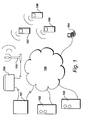
- FIG. 1 An environment that includes a video processing station 101 is illustrated in Figure 1 .
- the video processing station 101 supplies video data from many accessible sources, including source 102 and source 103. These sources are accessible to anyone, usually without payment being made, but as such the supplier is not motivated to configure the downloadable or streamable material for every reception CODECs. Thus, it is possible that the material is viewable on a particular computing system (such as an Apple Mac system) but would generally not be displayable on other computing systems, such as a LINUX system. Further problems of this type exist if the material is to be displayed on mobile devices where additional constraints will exist in terms of screen definition and transmission bandwidth.
- the sources are accessible via a conventional web browsing system, such as system 104.
- the video processing station 101 receives video assets from the accessible sources 102, 103 via the Internet 105.
- the video processing apparatus 101 is also connected to a mobile telephony service provider 106, that communicates with mobile devices 107, 108 and 109 via a network of transmitter base stations, such as transmitter 110.
- transmission could occur to other types of devices connected to other networks, such as a high bandwidth optical network or a local radio network etc.
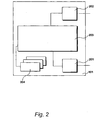
- Video processing station 101 is detailed in Figure 2 .
- the video processing station 101 includes an Internet connected input device 201 for receiving video assets from Internet accessible servers (102, 103).
- the video processing station is provided with an output interface for sending transcoded copies of video assets to user devices, such as (but not exclusively) devices 104, 107, 108 and 109.
- the transcoding station also includes a transcoding system 203 configured to transcode video assets on demand.
- a video asset is received at input device 201, transcoded within transcoding system 203 and then conveyed to output interface 202 for transmission to the requesting device.
- transcoded version Having transcoded a video asset, it is possible for the transcoded version to be written to a solid state cache, such as cache 204 shown in Figure 2 for illustrative purposes, preferably having a storage capacity of several terabytes. Thus, having transcoded an asset it is not necessary for the transcoding operation to be performed again while the transcoded copy remains in the cache 204.
- a solid state cache such as cache 204 shown in Figure 2 for illustrative purposes, preferably having a storage capacity of several terabytes.
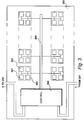
- Transcoding system 203 is detailed in Figure 3 .
- the transcoding system 203 has a large number of individual transcoding processors 301, 302 etc.
- Each transcoding processor is implemented as a processor core and in this example a total of four cores are available within each chip.
- a plurality of chips with associated circuitry are enclosed within an individual rack mounted server and within the transcoding system 203 a large number of interconnected servers are provided. This represents an example of many possible configurations and preferably many individual processors are connected to a high bandwidth bus 304 or similar communication network.
- a total of one hundred and sixty individual transcoding processes may be included within the transcoding system, thereby providing sufficient processing power for a video asset lasting tens of minutes when displayed in real-time to be transcoded within four seconds.
- the number of processors provided within any system will be dependent upon the processing power of each individual processor and the level of processing required for each individual video segment.
- segmentation of a video asset may introduce undesirable artefacts when the video segments are recombined. Consequently, for relatively short video clips, it is preferable for a subset of the available processors to be instructed so as to reduce the level of segmentation to a minimum while still performing a transcoding process over a period of a few seconds.
- segmentation it is possible for the segmentation to be optimised so as to reduce the number of artefacts introduced while ensuring that the transcoding operation takes place within a relatively short time frame.
- the transcoding system includes a control processor 305 that receives input data from input device 201 and supplies transcoded data to output interface 202. Having received a video asset, the control processor 305 supplies a copy of the total video asset to each of the transcoding processors 301, 302 etc. Thus, in a preferred embodiment, the control processor 305 broadcasts the video asset over bus 304, resulting in a copy of the asset being retained at each individual processor 301 to 302. In this way, it is not necessary for the control processor 305 to implement a procedure for subdividing the video asset, which could place a significant burden upon the control processor 305.
- each individual trancoding processor 301, 302 is placed in a position where it is possible for the processor to read and process the whole of the video material.
- each transcoding processor 301, 302 etc is instructed by the control processor 305 to transcode a time-based segment of the asset to produce transcoded segments.
- control processor 305 is required to identify the total duration of the video asset and then divide this total duration by the total number of transcoding processors available (such as one hundred and sixty in an example embodiment).
- the total number of transcoding processors available such as one hundred and sixty in an example embodiment.
- all of the available (one hundred and sixty) transcoding processors are deployed.
- fewer transcoding processors may be selected as a subgroup. Having identified the total number of transcoding processors available and the total duration of the video asset, the total duration is divided by the number of processors available so as to identify specific durations for each processor to process.
- a video asset may have been identified that has a total duration of one hour, forty-six minutes and forty seconds. This is equivalent to a duration of six thousand, four hundred seconds which when divided across one hundred and sixty processors results in a forty second segment being transcoded by each of the processors.
- trancoding processor would be required to produce a segment of output video material from timecode 00:00:00 to timecode 00:00:40.
- Processor 302 would be instructed to transcode the next segment and would therefore receive instructions to transcode from position 00:00:40 to 00:01:20.
- each individual trancoding processor within the transcoding system would be allocated its unique forty second segment, such that the transcoding procedures are completed in parallel and then reassembled at the control processor 305, for transmission via the output interface 202.
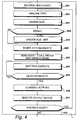
- Procedures performed by the control processor 305 are detailed in Figure 4 .
- a video asset is received and at step 402 an analysis is performed in order to identify the coding type of the video asset.
- an assessment is made as to the size of the video asset.
- the video asset is considered to be large in duration it is only necessary for a subset of the available processors to be deployed.
- the asset duration is considered not to be small then all of the processors will be deployed. Consequently, a question is asked at step 404 as to whether the duration is small and when answered in the affirmative a subset of processors are created at step 405.
- the video asset duration is divided into segments. It should be noted that these segments are identified by timecode locations and do not represent a segmentation of the actual video material. Consequently, at step 407 the entire asset is sent to all of the processors (or subset of processors) along with instructions for the transcoding process.
- a wait state is entered while the trasncoding procedures are performed with a question being asked at step 409 as to whether the outputs are ready.
- the wait state at 408 is entered again but ultimately the question asked at step 409 will be answered in the affirmative resulting in the outputs being combined at step 410.
- the combined transcoded video is supplied as an output file to the output interface and a question is then asked at step 412 as to whether another asset is available. Consequently when answered in the affirmative control is returned to step 402.
- Video files often take the form of a container within which there are a plurality of boxes or atoms arranged in a tree-like structure. These containers have been enhanced as various versions are released therefore at step 502 the version of the container is identified.
- Some containers contain hints to assist when streaming video data.
- a question is asked as to whether the file contains hints and when answered in the affirmative a hints flag is set at step 503 such that transcoded data will also include hints.
- tracks are identified and at step 505 a track is selected.
- the particular CODEC used is identified at step 506 and a record is made of this identified CODEC at step 507.
- a question is asked as to whether another track is to be processed and when answered in the affirmative control is returned to step 505.
- Typical CODECs for video material are H.264, MPEG 4 and H.263. Furthermore, for each video track it is necessary to identify the width and the height of the video material and some specifications, such as H.264 and MPEG 4 will include a profile definition. The profile does not actually change the decoding process but it does provide an indication of the type of material to come.
- CODEC identification parameters concern the size of the decoding buffer and bit rate.
- the audio material is also transcoded therefore similar procedures must be performed upon the audio tracks, hence the requirement at step 508 consider other tracks. For sound channels it is necessary to identify whether there is one mono track or two stereo tracks and it is also necessary to identify the sample rate which typically lies between 8KHz and 48KHz.
- the transcoding process performed within the transcoding system 203 is illustrated in Figure 6 .
- the process is initiated by the reception of video footage 601 that has usually been compressed using compression techniques such as MPEG 4.
- compression techniques such as MPEG 4.
- Many specific compression procedures are available, each having their own dedicated CODEC and it is likely that new CODEC definitions will continue to be developed. However, the majority of these compression procedures use similar techniques for achieving video compression.
- the control processor is required to identify the type of compression that has occurred so as to determine the type of CODEC required in order to perform a decoding operation, along with a determination of the duration of the asset.
- the original material 601 is divided into a plurality of segments shown as 602 to 609.
- the original material 601 has been divided into a total of eight time-based segments of equal duration.
- the total asset may be divided into a total of one hundred a sixty segments.
- each transcoding processor preferably retains a copy of the entire source material for subsequent decoding.
- the control processor instructs each individual transcoding processor to identify the specific segment of video for which an output segment is required.
- the transcoding process is initiated by firstly performing a decoding process such that each transcoding processor 612 to 619 produces a respective decoded segment of video material 622 to 629.
- each transcoding processor is required to produce forty seconds of transcoded material, for the purposes of this illustration, it may be assumed that transcoding processor 613 is required to transcode forty seconds of output material from timecode position 00:00:40 to 00:01:20.
- a recoding operation is performed so as to convert the material into a form suitable for reception at the receiving device.
- decoded video segments 622 to 629 re-coded segments 632 to 639 are produced.
- Re-coded segments 632 to 639 are received at the control processor 305 which in turn reassembles the segments to produce output video data 640.
- the majority of video assets will also include audio tracks and the digital representation of the audio material will be received as discrete samples and these samples may in turn be associated with timecode defining a position of frames within the video material.
- the audio samples are retained with the video material and processed within the same transcoding processor.
- the segmentation that divides the video material between the individual transcoding processors is re-deployed for the transcoding of the audio material such that at each stage, the audio material is processed with its associated video frames.
- each transcoding processor identifies an instructed segment of the video asset and decodes data from that time segment.
- the transcoding processor will decode some frames before the defined segment and/or after the defined segment to facilitate the video decoding process.
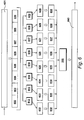
- FIG. 7 a sequence of video frames are shown, representing frames within a segment.
- Frames 701 to 705 represent frames at the start of a segment and frames 706 to 710 represent frames at the end of the segment, with a plurality of frames at the centre of the segment not being shown.
- the frames shown in Figure 7 are required in order to transcode material lying within the segment defined as 00:00:40 to 00:01:20. Thus, this represents a forty second segment.
- the position of the start of the segment is shown lying between frames 703 and 704.
- the end point is shown as lying between frames 708 and 709.
- the transcoded material from the segment will include frames 721 and 722 at the start along with frames 723, 724 and 725 at the end.
- frame 721 will follow the final frame of the previous segment and frame 725 will precede the first frame of the next segment.
- i-frames are often identified as "i-frames", possibly because they may be viewed as individual frames without making reference to other frames in a temporal manner. Frames of this type are also often substantially similar to individual graphical frames produced as still images. Thus, within an MPEG stream, the i-frames may be considered as being substantially similar to JPEG images.
- the video stream also includes relative frames, identified as "r-frames" in the embodiment shown. These relative frames have undergone spatial compression similar to the compression performed on the i-frames. In addition, further compression is achieved by storing only the differences between the frame under consideration and one or more other frames within a sequence. R-frames may also occur in different types. Thus, under some coding schemes, some of the r-frarnes will be identified as p-frames" in which the temporal compressions are made with respect to previously transmitted frames in the sequence. In addition, some coding techniques deploy "b-frames" where greater compression is achieved by transmitting different signals based on later frames in the sequence. Thus, when decoding it is only possible to decode these b-frames after a later transmitted frame has been received. It can therefore be appreciated that a level of buffering is required as part of many CODEC procedures.
- frame 704 is an r-frame and has therefore undergone temporal compression.
- the data contained within r-frame 704 merely represents differences between it and previous frame 703.
- frame 703 only represents differences from frame 702 which again is an r-frame representing differences from frame 701.
- frame 701 is considered to be an i-frame. Consequently if frame 704 is to be reconstituted, it is necessary to process frames 701, 702 and 703 in addition to the specific material received for frame 704. As a result, in order to perform the transcoding operation, frame 701 to 703 are processed in addition to processing frames 704 onwards.
- each transcoding processor receiving the totality of the video material is that the control process does not need to make any decisions as to where to segment the original source material.
- the control processor does divide the total duration by the total number of processors available but it does not divide the material itself at these frame boundaries.
- input frame 701 is required as source material for two output segments, as is input frame 710.
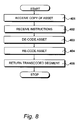
- Procedures performed at each of the transcoding processors are identified in Figure 8 .
- a copy of the video asset is received in its totality and stored temporarily in volatile storage.
- each individual transcoding processor retains a copy of the entire video asset.
- step 802 specific instructions are received by each individual transcoding processor identifying the segment of video material to be transcoded.
- a decoding operation is performed in order to reconstitute original video frames within the instructed segment.
- a sufficient number of frames within the original encoded video data are decoded in order to generate forty seconds of video data.
- the decoded video data is re-coded so as to be compatible with the requirements of the receiving station.
- step 805 a transcoded segment is returned to the control processor.
Landscapes
- Engineering & Computer Science (AREA)
- Multimedia (AREA)
- Signal Processing (AREA)
- Computer Networks & Wireless Communication (AREA)
- Computing Systems (AREA)
- Theoretical Computer Science (AREA)
- Compression Or Coding Systems Of Tv Signals (AREA)
- Two-Way Televisions, Distribution Of Moving Picture Or The Like (AREA)
- Radar Systems Or Details Thereof (AREA)
- Closed-Circuit Television Systems (AREA)
- Ultra Sonic Daignosis Equipment (AREA)
- Traffic Control Systems (AREA)
Claims (15)
- Eine Methode zur Transcodierung codierter Videodaten und zur Recodierung der besagten Videodaten, die die folgenden Schritte umfasst:Empfangen (201) codierter Videodaten als Eingabedaten;Übertragen der die besagten Eingabedaten darstellenden Daten an eine Pluralität von Transcodierprozessoren (301, 302);Instruieren (407) jedes der besagten Transcodierprozessoren, ein zeitbasiertes Segment der Eingabedaten zu transcodieren;Kombinieren (410) der besagten transcodierten Segmente;Bereitstellen (411) der besagten kombinierten transcodierten Segmente als Ausgabe-Videodaten,dadurch gekennzeichnet, dass die besagten die Eingabedaten darstellenden Daten eine Kopie der gesamten besagten Eingabedaten sind.
- Die Methode gemäß Anspruch 1, dadurch gekennzeichnet, dass sich die besagten codierten Videodaten in einem komprimierten Format befinden, das räumliche Komprimierung und zeitliche Komprimierung beinhaltet.
- Die Methode zur Übertragung von Videodaten gemäß Anspruch 1, dadurch gekennzeichnet, dass jeder Transcodierprozessor Zugang zu einer Pluralität von Codier- und Decodierverfahren (CODECs) hat.
- Die Methode zur Übertragung von Videodaten gemäß Anspruch 1, dadurch gekennzeichnet, dass jeder der besagten Prozessoren konfiguriert ist, um:ein instruiertes Segment der Eingabe-Videodaten bestehend aus einer Pluralität von Image-Frames zu identifizieren; undeinige der Frames vor (701 - 703) und/oder nach (709, 710) dem besagten definierten Segment zu decodieren, um die Video-Decodierung zu ermöglichen.
- Die Methode zur Übertragung von Videodaten gemäß Anspruch 1, dadurch gekennzeichnet, dass alle verfügbaren Prozessoren instruiert werden, wenn die Dauer des Inhalts größer ist als eine vorherbestimmte Mindestdauer, und dass anderenfalls eine reduzierte Teilmenge (405) von Prozessoren instruiert wird.
- Die Methode zur Übertragung von Videodaten gemäß Anspruch 1, dadurch gekennzeichnet, dass zuvor decodiertes Material zwischengespeichert wird.
- Die Methode zur Übertragung von Videodaten gemäß Anspruch 1, dadurch gekennzeichnet, dass das besagte zuvor decodierte Material in einem Halbleiterspeicher (204) zwischengespeichert wird, um einen schnellen Zugang zu dem besagten zwischengespeicherten Material zu ermöglichen.
- Die Methode zur Übertragung von Videodaten gemäß Anspruch 1, dadurch gekennzeichnet, dass zeitbasierte Segmente von Audiomaterial in Kombination mit dessen zugehörigem Videomaterial bearbeitet werden.
- Transcodiervorrichtung zur Decodierung codierter Videodaten und zur Recodierung der besagten Videodaten, bestehend aus:einer Eingabevorrichtung (201) zum Empfangen codierter Videodaten als Eingabedaten;einer Pluralität von Transcodierprozessoren (301, 302);einer Verteilervorrichtung (304) zum Übertragen der die besagten Eingabedaten darstellenden Daten an eine Pluralität von Transcodierprozessoren;einem Steuerprozessor (305), der konfiguriert ist, um jeden der besagten Transcodierprozessoren zu instruieren, ein zeitbasiertes Segment der besagten Eingabedaten zu transcodieren und die besagten transcodierten Segmente zu kombinieren; undeiner Ausgabevorrichtung (202) zum Bereitstellen von Videodaten besagter kombinierter transcodierter Segmente als Ausgabedaten, dadurch gekennzeichnet, dass die die besagten die Eingabedaten darstellenden Daten eine Kopie der gesamten besagten Eingabedaten sind.
- Vorrichtung gemäß Anspruch 9, dadurch gekennzeichnet, dass sich die besagten codierten Videodaten in einem komprimierten Format befinden, das räumliche Komprimierung und zeitliche Komprimierung beinhaltet.
- Vorrichtung gemäß Anspruch 9, einschließlich Speichervorrichtungen zur Speicherung einer Pluralität von Codier- und Decodierverfahren (CODECs), so dass jeder der besagten Transcodierprozessoren Zugang zu einer Pluralität der besagten CODECs hat.
- Vorrichtung gemäß Anspruch 9, dadurch gekennzeichnet, dass jeder Transcodierprozessor ein instruiertes Segment der Eingabe-Videodaten bestehend aus einer Pluralität von Image-Frames identifiziert und einige der Frames vor und/oder nach dem besagten definierten Segment decodiert, um die Video-Decodierung zu ermöglichen
- Vorrichtung gemäß Anspruch 9, dadurch gekennzeichnet, dass alle verfügbaren Prozessoren instruiert werden, wenn die Dauer des Inhalts größer ist als eine vorherbestimmte Mindestdauer, und dass anderenfalls eine reduzierte Teilmenge (405) von Prozessoren instruiert wird.
- Vorrichtung gemäß Anspruch 9 mit Halbleiterspeichervorrichtungen zum Zwischenspeichern von zuvor decodiertem Material.
- Vorrichtung gemäß Anspruch 9, dadurch gekennzeichnet, dass zeitbasierte Segmente von Audiomaterial in Kombination mit deren zugehörigem Videomaterial bearbeitet werden.
Priority Applications (2)
| Application Number | Priority Date | Filing Date | Title |
|---|---|---|---|
| EP08253317A EP2151971B1 (de) | 2008-08-09 | 2008-10-10 | Umcodierung von Videodaten |
| US12/330,782 US8351498B2 (en) | 2008-08-09 | 2008-12-09 | Transcoding video data |
Applications Claiming Priority (2)
| Application Number | Priority Date | Filing Date | Title |
|---|---|---|---|
| EP08252659A EP2151970B1 (de) | 2008-08-09 | 2008-08-09 | Verarbeitung und Bereitstellung von Videodaten |
| EP08253317A EP2151971B1 (de) | 2008-08-09 | 2008-10-10 | Umcodierung von Videodaten |
Publications (2)
| Publication Number | Publication Date |
|---|---|
| EP2151971A1 EP2151971A1 (de) | 2010-02-10 |
| EP2151971B1 true EP2151971B1 (de) | 2011-08-03 |
Family
ID=40352342
Family Applications (2)
| Application Number | Title | Priority Date | Filing Date |
|---|---|---|---|
| EP08252659A Not-in-force EP2151970B1 (de) | 2008-08-09 | 2008-08-09 | Verarbeitung und Bereitstellung von Videodaten |
| EP08253317A Not-in-force EP2151971B1 (de) | 2008-08-09 | 2008-10-10 | Umcodierung von Videodaten |
Family Applications Before (1)
| Application Number | Title | Priority Date | Filing Date |
|---|---|---|---|
| EP08252659A Not-in-force EP2151970B1 (de) | 2008-08-09 | 2008-08-09 | Verarbeitung und Bereitstellung von Videodaten |
Country Status (6)
| Country | Link |
|---|---|
| US (1) | US8351498B2 (de) |
| EP (2) | EP2151970B1 (de) |
| AT (2) | ATE519321T1 (de) |
| DK (2) | DK2151970T3 (de) |
| ES (2) | ES2373810T3 (de) |
| PL (1) | PL2151970T3 (de) |
Cited By (1)
| Publication number | Priority date | Publication date | Assignee | Title |
|---|---|---|---|---|
| CN105872595A (zh) * | 2016-03-31 | 2016-08-17 | 乐视控股(北京)有限公司 | 转码任务分配方法及装置 |
Families Citing this family (15)
| Publication number | Priority date | Publication date | Assignee | Title |
|---|---|---|---|---|
| US9819984B1 (en) | 2007-03-26 | 2017-11-14 | CSC Holdings, LLC | Digital video recording with remote storage |
| US9049459B2 (en) | 2011-10-17 | 2015-06-02 | Exaimage Corporation | Video multi-codec encoders |
| US8583818B2 (en) * | 2011-01-31 | 2013-11-12 | Cbs Interactive Inc. | System and method for custom segmentation for streaming video |
| CN103188521B (zh) * | 2011-12-29 | 2015-10-28 | 北京大学 | 转码分配方法及装置,转码方法及设备 |
| US9472239B1 (en) * | 2012-03-26 | 2016-10-18 | Google Inc. | Concurrent transcoding of streaming video for immediate download |
| US9532080B2 (en) | 2012-05-31 | 2016-12-27 | Sonic Ip, Inc. | Systems and methods for the reuse of encoding information in encoding alternative streams of video data |
| US9357210B2 (en) | 2013-02-28 | 2016-05-31 | Sonic Ip, Inc. | Systems and methods of encoding multiple video streams for adaptive bitrate streaming |
| ITBA20130077A1 (it) * | 2013-11-25 | 2015-05-26 | Cicco Luca De | Meccanismo per il controllo del bitrate di codifica in un sistema di video streaming adattivo basato su buffer di playout e sulla stima di banda. |
| US9584570B2 (en) | 2014-03-28 | 2017-02-28 | Pelco, Inc. | Dynamic media transcoding for P2P communications |
| US10403253B2 (en) * | 2014-12-19 | 2019-09-03 | Teac Corporation | Portable recording/reproducing apparatus with wireless LAN function and recording/reproduction system with wireless LAN function |
| US10904329B1 (en) | 2016-12-30 | 2021-01-26 | CSC Holdings, LLC | Virtualized transcoder |
| CN108989885B (zh) * | 2017-06-05 | 2020-08-28 | 腾讯科技(深圳)有限公司 | 视频文件转码系统、分割方法、转码方法及装置 |
| US10659797B2 (en) | 2017-10-31 | 2020-05-19 | Google Llc | Video frame codec architectures |
| US10798393B2 (en) * | 2018-07-09 | 2020-10-06 | Hulu, LLC | Two pass chunk parallel transcoding process |
| US11284165B1 (en) | 2021-02-26 | 2022-03-22 | CSC Holdings, LLC | Copyright compliant trick playback modes in a service provider network |
Family Cites Families (7)
| Publication number | Priority date | Publication date | Assignee | Title |
|---|---|---|---|---|
| US5742840A (en) * | 1995-08-16 | 1998-04-21 | Microunity Systems Engineering, Inc. | General purpose, multiple precision parallel operation, programmable media processor |
| US6275536B1 (en) * | 1999-06-23 | 2001-08-14 | General Instrument Corporation | Implementation architectures of a multi-channel MPEG video transcoder using multiple programmable processors |
| KR100725385B1 (ko) * | 2004-08-14 | 2007-06-07 | 삼성전자주식회사 | 메시지 통신을 이용한 컨텐츠 디스플레이 시스템 및 방법 |
| WO2006025322A1 (ja) * | 2004-08-30 | 2006-03-09 | Matsushita Electric Industrial Co., Ltd. | 記録装置 |
| US20070230586A1 (en) * | 2006-03-31 | 2007-10-04 | Masstech Group Inc. | Encoding, decoding and transcoding of audio/video signals using combined parallel and serial processing techniques |
| US11223808B1 (en) | 2020-06-30 | 2022-01-11 | Christie Digital Systems Usa, Inc. | Device, system and method for generating a mapping of projector pixels to camera pixels and/or object positions using alternating patterns |
| US11340308B1 (en) | 2021-04-27 | 2022-05-24 | Beta Air, Llc | System and method for state determination of a battery module configured for used in an electric vehicle |
-
2008
- 2008-08-09 DK DK08252659.1T patent/DK2151970T3/da active
- 2008-08-09 EP EP08252659A patent/EP2151970B1/de not_active Not-in-force
- 2008-08-09 PL PL08252659T patent/PL2151970T3/pl unknown
- 2008-08-09 ES ES08252659T patent/ES2373810T3/es active Active
- 2008-08-09 AT AT08252659T patent/ATE519321T1/de not_active IP Right Cessation
- 2008-10-10 EP EP08253317A patent/EP2151971B1/de not_active Not-in-force
- 2008-10-10 DK DK08253317.5T patent/DK2151971T3/da active
- 2008-10-10 ES ES08253317T patent/ES2373811T3/es active Active
- 2008-10-10 AT AT08253317T patent/ATE519322T1/de not_active IP Right Cessation
- 2008-12-09 US US12/330,782 patent/US8351498B2/en not_active Expired - Fee Related
Cited By (2)
| Publication number | Priority date | Publication date | Assignee | Title |
|---|---|---|---|---|
| CN105872595A (zh) * | 2016-03-31 | 2016-08-17 | 乐视控股(北京)有限公司 | 转码任务分配方法及装置 |
| WO2017166501A1 (zh) * | 2016-03-31 | 2017-10-05 | 乐视控股(北京)有限公司 | 转码任务分配方法及装置 |
Also Published As
| Publication number | Publication date |
|---|---|
| ES2373811T3 (es) | 2012-02-08 |
| ES2373810T3 (es) | 2012-02-08 |
| US20100034257A1 (en) | 2010-02-11 |
| ATE519322T1 (de) | 2011-08-15 |
| DK2151971T3 (da) | 2011-11-21 |
| EP2151970B1 (de) | 2011-08-03 |
| DK2151970T3 (da) | 2011-11-21 |
| EP2151970A1 (de) | 2010-02-10 |
| EP2151971A1 (de) | 2010-02-10 |
| PL2151970T3 (pl) | 2012-02-29 |
| ATE519321T1 (de) | 2011-08-15 |
| US8351498B2 (en) | 2013-01-08 |
Similar Documents
| Publication | Publication Date | Title |
|---|---|---|
| EP2151971B1 (de) | Umcodierung von Videodaten | |
| US9478256B1 (en) | Video editing processor for video cloud server | |
| CN112752115B (zh) | 直播数据传输方法、装置、设备及介质 | |
| KR101701182B1 (ko) | 청크로 스트리밍된 컨텐츠를 복구하기 위한 방법 | |
| US20170092280A1 (en) | Information processing apparatus and information processing method | |
| US9271016B2 (en) | Reformatting media streams to include auxiliary data | |
| EP1741295A1 (de) | Media-inhalts- und verbesserungsdaten-ablieferung | |
| WO2013173721A1 (en) | Audio-visual content delivery | |
| US10375439B2 (en) | Information processing apparatus and information processing method | |
| US7827036B2 (en) | Data processing system, data processing method, data processor, and data processing program | |
| JP2015136059A (ja) | 通信装置、通信データ生成方法、および通信データ処理方法 | |
| EP1713193A1 (de) | Inhaltsverteilungsverfahren, codierungsverfahren, empfangs-/wiedergabeverfahren und -einrichtung und programm | |
| US20190373213A1 (en) | Information processing device and method | |
| US11206386B2 (en) | Information processing apparatus and information processing method | |
| EP3416398A1 (de) | Vorrichtung zur ausgabe von durch terminplanungsdatensätze aufgezeichneten rundsendungsinhalten und verfahren dafür | |
| JP2001358799A (ja) | データ伝送システム、このデータ伝送システムに用いられるデータ送信装置、データ再生装置及びデータ伝送方法 | |
| US20120087417A1 (en) | Apparatus and method for multimedia service | |
| JP7521531B2 (ja) | 情報処理装置、情報処理方法、再生処理装置及び再生処理方法 | |
| US9398351B2 (en) | Method and apparatus for converting content in multimedia system | |
| JP7292901B2 (ja) | 送信装置、送信方法、及びプログラム | |
| EP1713274A2 (de) | System, Vorrichtung und Verfahren zur Verwaltung von Informationen | |
| US12361973B2 (en) | Seamless insertion of modified media content | |
| JP2005176068A (ja) | 動画像配信システム及びその方法 | |
| Notebaert et al. | Digital recording of performing arts: formats and conversion | |
| KR20110085797A (ko) | 컨텐츠 파일 생성/제공 장치 및 방법 |
Legal Events
| Date | Code | Title | Description |
|---|---|---|---|
| PUAI | Public reference made under article 153(3) epc to a published international application that has entered the european phase |
Free format text: ORIGINAL CODE: 0009012 |
|
| AK | Designated contracting states |
Kind code of ref document: A1 Designated state(s): AT BE BG CH CY CZ DE DK EE ES FI FR GB GR HR HU IE IS IT LI LT LU LV MC MT NL NO PL PT RO SE SI SK TR |
|
| AX | Request for extension of the european patent |
Extension state: AL BA MK RS |
|
| 17P | Request for examination filed |
Effective date: 20100604 |
|
| 17Q | First examination report despatched |
Effective date: 20100629 |
|
| AKX | Designation fees paid |
Designated state(s): AT BE BG CH CY CZ DE DK EE ES FI FR GB GR HR HU IE IS IT LI LT LU LV MC MT NL NO PL PT RO SE SI SK TR |
|
| GRAP | Despatch of communication of intention to grant a patent |
Free format text: ORIGINAL CODE: EPIDOSNIGR1 |
|
| GRAS | Grant fee paid |
Free format text: ORIGINAL CODE: EPIDOSNIGR3 |
|
| GRAA | (expected) grant |
Free format text: ORIGINAL CODE: 0009210 |
|
| AK | Designated contracting states |
Kind code of ref document: B1 Designated state(s): AT BE BG CH CY CZ DE DK EE ES FI FR GB GR HR HU IE IS IT LI LT LU LV MC MT NL NO PL PT RO SE SI SK TR |
|
| REG | Reference to a national code |
Ref country code: GB Ref legal event code: FG4D |
|
| REG | Reference to a national code |
Ref country code: CH Ref legal event code: EP |
|
| REG | Reference to a national code |
Ref country code: IE Ref legal event code: FG4D |
|
| REG | Reference to a national code |
Ref country code: DE Ref legal event code: R096 Ref document number: 602008008594 Country of ref document: DE Effective date: 20111006 |
|
| REG | Reference to a national code |
Ref country code: DK Ref legal event code: T3 |
|
| REG | Reference to a national code |
Ref country code: SE Ref legal event code: TRGR |
|
| REG | Reference to a national code |
Ref country code: NL Ref legal event code: VDEP Effective date: 20110803 |
|
| REG | Reference to a national code |
Ref country code: NO Ref legal event code: T2 Effective date: 20110803 |
|
| LTIE | Lt: invalidation of european patent or patent extension |
Effective date: 20110803 |
|
| PG25 | Lapsed in a contracting state [announced via postgrant information from national office to epo] |
Ref country code: NL Free format text: LAPSE BECAUSE OF FAILURE TO SUBMIT A TRANSLATION OF THE DESCRIPTION OR TO PAY THE FEE WITHIN THE PRESCRIBED TIME-LIMIT Effective date: 20110803 Ref country code: HR Free format text: LAPSE BECAUSE OF FAILURE TO SUBMIT A TRANSLATION OF THE DESCRIPTION OR TO PAY THE FEE WITHIN THE PRESCRIBED TIME-LIMIT Effective date: 20110803 Ref country code: PT Free format text: LAPSE BECAUSE OF FAILURE TO SUBMIT A TRANSLATION OF THE DESCRIPTION OR TO PAY THE FEE WITHIN THE PRESCRIBED TIME-LIMIT Effective date: 20111205 Ref country code: LT Free format text: LAPSE BECAUSE OF FAILURE TO SUBMIT A TRANSLATION OF THE DESCRIPTION OR TO PAY THE FEE WITHIN THE PRESCRIBED TIME-LIMIT Effective date: 20110803 Ref country code: IS Free format text: LAPSE BECAUSE OF FAILURE TO SUBMIT A TRANSLATION OF THE DESCRIPTION OR TO PAY THE FEE WITHIN THE PRESCRIBED TIME-LIMIT Effective date: 20111203 |
|
| PGFP | Annual fee paid to national office [announced via postgrant information from national office to epo] |
Ref country code: DK Payment date: 20111110 Year of fee payment: 4 |
|
| REG | Reference to a national code |
Ref country code: ES Ref legal event code: FG2A Ref document number: 2373811 Country of ref document: ES Kind code of ref document: T3 Effective date: 20120208 |
|
| REG | Reference to a national code |
Ref country code: AT Ref legal event code: MK05 Ref document number: 519322 Country of ref document: AT Kind code of ref document: T Effective date: 20110803 |
|
| PG25 | Lapsed in a contracting state [announced via postgrant information from national office to epo] |
Ref country code: LV Free format text: LAPSE BECAUSE OF FAILURE TO SUBMIT A TRANSLATION OF THE DESCRIPTION OR TO PAY THE FEE WITHIN THE PRESCRIBED TIME-LIMIT Effective date: 20110803 Ref country code: SI Free format text: LAPSE BECAUSE OF FAILURE TO SUBMIT A TRANSLATION OF THE DESCRIPTION OR TO PAY THE FEE WITHIN THE PRESCRIBED TIME-LIMIT Effective date: 20110803 Ref country code: PL Free format text: LAPSE BECAUSE OF FAILURE TO SUBMIT A TRANSLATION OF THE DESCRIPTION OR TO PAY THE FEE WITHIN THE PRESCRIBED TIME-LIMIT Effective date: 20110803 Ref country code: CY Free format text: LAPSE BECAUSE OF FAILURE TO SUBMIT A TRANSLATION OF THE DESCRIPTION OR TO PAY THE FEE WITHIN THE PRESCRIBED TIME-LIMIT Effective date: 20110803 Ref country code: GR Free format text: LAPSE BECAUSE OF FAILURE TO SUBMIT A TRANSLATION OF THE DESCRIPTION OR TO PAY THE FEE WITHIN THE PRESCRIBED TIME-LIMIT Effective date: 20111104 Ref country code: AT Free format text: LAPSE BECAUSE OF FAILURE TO SUBMIT A TRANSLATION OF THE DESCRIPTION OR TO PAY THE FEE WITHIN THE PRESCRIBED TIME-LIMIT Effective date: 20110803 |
|
| PG25 | Lapsed in a contracting state [announced via postgrant information from national office to epo] |
Ref country code: BE Free format text: LAPSE BECAUSE OF FAILURE TO SUBMIT A TRANSLATION OF THE DESCRIPTION OR TO PAY THE FEE WITHIN THE PRESCRIBED TIME-LIMIT Effective date: 20110803 |
|
| PG25 | Lapsed in a contracting state [announced via postgrant information from national office to epo] |
Ref country code: CZ Free format text: LAPSE BECAUSE OF FAILURE TO SUBMIT A TRANSLATION OF THE DESCRIPTION OR TO PAY THE FEE WITHIN THE PRESCRIBED TIME-LIMIT Effective date: 20110803 Ref country code: SK Free format text: LAPSE BECAUSE OF FAILURE TO SUBMIT A TRANSLATION OF THE DESCRIPTION OR TO PAY THE FEE WITHIN THE PRESCRIBED TIME-LIMIT Effective date: 20110803 |
|
| PG25 | Lapsed in a contracting state [announced via postgrant information from national office to epo] |
Ref country code: RO Free format text: LAPSE BECAUSE OF FAILURE TO SUBMIT A TRANSLATION OF THE DESCRIPTION OR TO PAY THE FEE WITHIN THE PRESCRIBED TIME-LIMIT Effective date: 20110803 Ref country code: EE Free format text: LAPSE BECAUSE OF FAILURE TO SUBMIT A TRANSLATION OF THE DESCRIPTION OR TO PAY THE FEE WITHIN THE PRESCRIBED TIME-LIMIT Effective date: 20110803 Ref country code: MC Free format text: LAPSE BECAUSE OF NON-PAYMENT OF DUE FEES Effective date: 20111031 |
|
| PLBE | No opposition filed within time limit |
Free format text: ORIGINAL CODE: 0009261 |
|
| STAA | Information on the status of an ep patent application or granted ep patent |
Free format text: STATUS: NO OPPOSITION FILED WITHIN TIME LIMIT |
|
| 26N | No opposition filed |
Effective date: 20120504 |
|
| REG | Reference to a national code |
Ref country code: DE Ref legal event code: R097 Ref document number: 602008008594 Country of ref document: DE Effective date: 20120504 |
|
| PGFP | Annual fee paid to national office [announced via postgrant information from national office to epo] |
Ref country code: IE Payment date: 20120905 Year of fee payment: 5 Ref country code: NO Payment date: 20120912 Year of fee payment: 5 Ref country code: FI Payment date: 20120914 Year of fee payment: 5 Ref country code: GB Payment date: 20120912 Year of fee payment: 5 Ref country code: SE Payment date: 20120924 Year of fee payment: 5 |
|
| PGFP | Annual fee paid to national office [announced via postgrant information from national office to epo] |
Ref country code: ES Payment date: 20120918 Year of fee payment: 5 |
|
| PGFP | Annual fee paid to national office [announced via postgrant information from national office to epo] |
Ref country code: FR Payment date: 20121023 Year of fee payment: 5 |
|
| PG25 | Lapsed in a contracting state [announced via postgrant information from national office to epo] |
Ref country code: MT Free format text: LAPSE BECAUSE OF FAILURE TO SUBMIT A TRANSLATION OF THE DESCRIPTION OR TO PAY THE FEE WITHIN THE PRESCRIBED TIME-LIMIT Effective date: 20110803 |
|
| PGFP | Annual fee paid to national office [announced via postgrant information from national office to epo] |
Ref country code: IT Payment date: 20121030 Year of fee payment: 5 |
|
| PGFP | Annual fee paid to national office [announced via postgrant information from national office to epo] |
Ref country code: DE Payment date: 20121221 Year of fee payment: 5 |
|
| PG25 | Lapsed in a contracting state [announced via postgrant information from national office to epo] |
Ref country code: LU Free format text: LAPSE BECAUSE OF NON-PAYMENT OF DUE FEES Effective date: 20111010 |
|
| REG | Reference to a national code |
Ref country code: CH Ref legal event code: PL |
|
| PG25 | Lapsed in a contracting state [announced via postgrant information from national office to epo] |
Ref country code: BG Free format text: LAPSE BECAUSE OF FAILURE TO SUBMIT A TRANSLATION OF THE DESCRIPTION OR TO PAY THE FEE WITHIN THE PRESCRIBED TIME-LIMIT Effective date: 20111103 |
|
| PG25 | Lapsed in a contracting state [announced via postgrant information from national office to epo] |
Ref country code: LI Free format text: LAPSE BECAUSE OF NON-PAYMENT OF DUE FEES Effective date: 20121031 Ref country code: CH Free format text: LAPSE BECAUSE OF NON-PAYMENT OF DUE FEES Effective date: 20121031 |
|
| PG25 | Lapsed in a contracting state [announced via postgrant information from national office to epo] |
Ref country code: TR Free format text: LAPSE BECAUSE OF FAILURE TO SUBMIT A TRANSLATION OF THE DESCRIPTION OR TO PAY THE FEE WITHIN THE PRESCRIBED TIME-LIMIT Effective date: 20110803 |
|
| PG25 | Lapsed in a contracting state [announced via postgrant information from national office to epo] |
Ref country code: HU Free format text: LAPSE BECAUSE OF FAILURE TO SUBMIT A TRANSLATION OF THE DESCRIPTION OR TO PAY THE FEE WITHIN THE PRESCRIBED TIME-LIMIT Effective date: 20110803 |
|
| REG | Reference to a national code |
Ref country code: DK Ref legal event code: EBP Effective date: 20131031 |
|
| REG | Reference to a national code |
Ref country code: SE Ref legal event code: EUG |
|
| GBPC | Gb: european patent ceased through non-payment of renewal fee |
Effective date: 20131010 |
|
| REG | Reference to a national code |
Ref country code: IE Ref legal event code: MM4A |
|
| PG25 | Lapsed in a contracting state [announced via postgrant information from national office to epo] |
Ref country code: GB Free format text: LAPSE BECAUSE OF NON-PAYMENT OF DUE FEES Effective date: 20131010 Ref country code: NO Free format text: LAPSE BECAUSE OF NON-PAYMENT OF DUE FEES Effective date: 20131031 |
|
| REG | Reference to a national code |
Ref country code: FR Ref legal event code: ST Effective date: 20140630 |
|
| REG | Reference to a national code |
Ref country code: DE Ref legal event code: R119 Ref document number: 602008008594 Country of ref document: DE Effective date: 20140501 |
|
| PG25 | Lapsed in a contracting state [announced via postgrant information from national office to epo] |
Ref country code: FR Free format text: LAPSE BECAUSE OF NON-PAYMENT OF DUE FEES Effective date: 20131031 Ref country code: IT Free format text: LAPSE BECAUSE OF NON-PAYMENT OF DUE FEES Effective date: 20131010 Ref country code: SE Free format text: LAPSE BECAUSE OF NON-PAYMENT OF DUE FEES Effective date: 20131011 Ref country code: DE Free format text: LAPSE BECAUSE OF NON-PAYMENT OF DUE FEES Effective date: 20140501 Ref country code: FI Free format text: LAPSE BECAUSE OF NON-PAYMENT OF DUE FEES Effective date: 20131010 |
|
| PG25 | Lapsed in a contracting state [announced via postgrant information from national office to epo] |
Ref country code: IE Free format text: LAPSE BECAUSE OF NON-PAYMENT OF DUE FEES Effective date: 20131010 Ref country code: DK Free format text: LAPSE BECAUSE OF NON-PAYMENT OF DUE FEES Effective date: 20131031 |
|
| REG | Reference to a national code |
Ref country code: ES Ref legal event code: FD2A Effective date: 20141107 |
|
| PG25 | Lapsed in a contracting state [announced via postgrant information from national office to epo] |
Ref country code: ES Free format text: LAPSE BECAUSE OF NON-PAYMENT OF DUE FEES Effective date: 20131011 |