EP2153655B1 - Procédé et appareil de codage et de décodage d'image utilisant une modification de bloc résiduel - Google Patents
Procédé et appareil de codage et de décodage d'image utilisant une modification de bloc résiduel Download PDFInfo
- Publication number
- EP2153655B1 EP2153655B1 EP08712533.2A EP08712533A EP2153655B1 EP 2153655 B1 EP2153655 B1 EP 2153655B1 EP 08712533 A EP08712533 A EP 08712533A EP 2153655 B1 EP2153655 B1 EP 2153655B1
- Authority
- EP
- European Patent Office
- Prior art keywords
- block
- residual
- dct
- values
- residual block
- Prior art date
- Legal status (The legal status is an assumption and is not a legal conclusion. Google has not performed a legal analysis and makes no representation as to the accuracy of the status listed.)
- Not-in-force
Links
Images




Classifications
-
- H—ELECTRICITY
- H04—ELECTRIC COMMUNICATION TECHNIQUE
- H04N—PICTORIAL COMMUNICATION, e.g. TELEVISION
- H04N19/00—Methods or arrangements for coding, decoding, compressing or decompressing digital video signals
- H04N19/60—Methods or arrangements for coding, decoding, compressing or decompressing digital video signals using transform coding
- H04N19/649—Methods or arrangements for coding, decoding, compressing or decompressing digital video signals using transform coding the transform being applied to non rectangular image segments
-
- H—ELECTRICITY
- H04—ELECTRIC COMMUNICATION TECHNIQUE
- H04N—PICTORIAL COMMUNICATION, e.g. TELEVISION
- H04N19/00—Methods or arrangements for coding, decoding, compressing or decompressing digital video signals
- H04N19/10—Methods or arrangements for coding, decoding, compressing or decompressing digital video signals using adaptive coding
- H04N19/102—Methods or arrangements for coding, decoding, compressing or decompressing digital video signals using adaptive coding characterised by the element, parameter or selection affected or controlled by the adaptive coding
- H04N19/12—Selection from among a plurality of transforms or standards, e.g. selection between discrete cosine transform [DCT] and sub-band transform or selection between H.263 and H.264
- H04N19/122—Selection of transform size, e.g. 8x8 or 2x4x8 DCT; Selection of sub-band transforms of varying structure or type
-
- H—ELECTRICITY
- H04—ELECTRIC COMMUNICATION TECHNIQUE
- H04N—PICTORIAL COMMUNICATION, e.g. TELEVISION
- H04N19/00—Methods or arrangements for coding, decoding, compressing or decompressing digital video signals
- H04N19/10—Methods or arrangements for coding, decoding, compressing or decompressing digital video signals using adaptive coding
- H04N19/102—Methods or arrangements for coding, decoding, compressing or decompressing digital video signals using adaptive coding characterised by the element, parameter or selection affected or controlled by the adaptive coding
- H04N19/132—Sampling, masking or truncation of coding units, e.g. adaptive resampling, frame skipping, frame interpolation or high-frequency transform coefficient masking
-
- H—ELECTRICITY
- H04—ELECTRIC COMMUNICATION TECHNIQUE
- H04N—PICTORIAL COMMUNICATION, e.g. TELEVISION
- H04N19/00—Methods or arrangements for coding, decoding, compressing or decompressing digital video signals
- H04N19/10—Methods or arrangements for coding, decoding, compressing or decompressing digital video signals using adaptive coding
- H04N19/134—Methods or arrangements for coding, decoding, compressing or decompressing digital video signals using adaptive coding characterised by the element, parameter or criterion affecting or controlling the adaptive coding
- H04N19/136—Incoming video signal characteristics or properties
- H04N19/14—Coding unit complexity, e.g. amount of activity or edge presence estimation
-
- H—ELECTRICITY
- H04—ELECTRIC COMMUNICATION TECHNIQUE
- H04N—PICTORIAL COMMUNICATION, e.g. TELEVISION
- H04N19/00—Methods or arrangements for coding, decoding, compressing or decompressing digital video signals
- H04N19/10—Methods or arrangements for coding, decoding, compressing or decompressing digital video signals using adaptive coding
- H04N19/169—Methods or arrangements for coding, decoding, compressing or decompressing digital video signals using adaptive coding characterised by the coding unit, i.e. the structural portion or semantic portion of the video signal being the object or the subject of the adaptive coding
- H04N19/17—Methods or arrangements for coding, decoding, compressing or decompressing digital video signals using adaptive coding characterised by the coding unit, i.e. the structural portion or semantic portion of the video signal being the object or the subject of the adaptive coding the unit being an image region, e.g. an object
- H04N19/176—Methods or arrangements for coding, decoding, compressing or decompressing digital video signals using adaptive coding characterised by the coding unit, i.e. the structural portion or semantic portion of the video signal being the object or the subject of the adaptive coding the unit being an image region, e.g. an object the region being a block, e.g. a macroblock
-
- H—ELECTRICITY
- H04—ELECTRIC COMMUNICATION TECHNIQUE
- H04N—PICTORIAL COMMUNICATION, e.g. TELEVISION
- H04N19/00—Methods or arrangements for coding, decoding, compressing or decompressing digital video signals
- H04N19/10—Methods or arrangements for coding, decoding, compressing or decompressing digital video signals using adaptive coding
- H04N19/169—Methods or arrangements for coding, decoding, compressing or decompressing digital video signals using adaptive coding characterised by the coding unit, i.e. the structural portion or semantic portion of the video signal being the object or the subject of the adaptive coding
- H04N19/182—Methods or arrangements for coding, decoding, compressing or decompressing digital video signals using adaptive coding characterised by the coding unit, i.e. the structural portion or semantic portion of the video signal being the object or the subject of the adaptive coding the unit being a pixel
-
- H—ELECTRICITY
- H04—ELECTRIC COMMUNICATION TECHNIQUE
- H04N—PICTORIAL COMMUNICATION, e.g. TELEVISION
- H04N19/00—Methods or arrangements for coding, decoding, compressing or decompressing digital video signals
- H04N19/20—Methods or arrangements for coding, decoding, compressing or decompressing digital video signals using video object coding
-
- H—ELECTRICITY
- H04—ELECTRIC COMMUNICATION TECHNIQUE
- H04N—PICTORIAL COMMUNICATION, e.g. TELEVISION
- H04N19/00—Methods or arrangements for coding, decoding, compressing or decompressing digital video signals
- H04N19/50—Methods or arrangements for coding, decoding, compressing or decompressing digital video signals using predictive coding
- H04N19/503—Methods or arrangements for coding, decoding, compressing or decompressing digital video signals using predictive coding involving temporal prediction
- H04N19/51—Motion estimation or motion compensation
-
- H—ELECTRICITY
- H04—ELECTRIC COMMUNICATION TECHNIQUE
- H04N—PICTORIAL COMMUNICATION, e.g. TELEVISION
- H04N19/00—Methods or arrangements for coding, decoding, compressing or decompressing digital video signals
- H04N19/60—Methods or arrangements for coding, decoding, compressing or decompressing digital video signals using transform coding
- H04N19/61—Methods or arrangements for coding, decoding, compressing or decompressing digital video signals using transform coding in combination with predictive coding
Definitions
- Apparatuses and methods consistent with the present invention relate to encoding and decoding an image, and more particularly, to encoding and decoding a block that contains regions, such as an edge or a texture, that is difficult to precisely predict, thus reducing the compression efficiency of encoding, thereby ensuring high compression efficiency.
- a picture is divided into a plurality of macro blocks in order to encode an image. Then, each of the macro blocks is prediction encoded by performing inter prediction or intra prediction thereon. Specifically, a predicted block of a current block that is to be encoded is produced using inter prediction or intra prediction, only a residual block obtained by subtracting the predicted block from the current block is encoded, and the encoded residual block is transmitted.
- MPEG Motion Pictures Expert Group
- MPEG-2 MPEG-2
- AVC H.264/MPEG-4 Advanced Video Coding
- the values of pixels included in the current block are not directly encoded; instead, the result of subtracting the value of each pixel of the predicted block from the value of the corresponding pixel of the current block is encoded, thereby improving the compression efficiency of encoding, as will now be described in detail with reference to FIG. 1 .
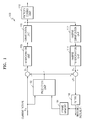
- FIG. 1 is a block diagram of a related art image encoding apparatus 100.
- the encoding apparatus 100 includes a prediction unit 102, a frame memory 104, a transformation unit 106, a quantization unit 108, an entropy encoding unit 110, an inverse quantization unit 112, an inverse transformation unit 114, and a filter 116.
- the prediction unit 102 performs inter prediction or intra prediction so as to produce a predicted block of a current block that is to be encoded.
- inter prediction a block similar to the current block is searched for from among one or more reference pictures stored in the frame memory 104. The searched block is used as a predicted block of the current block.
- intra prediction intra directional prediction is performed using pixels of previously encoded blocks adjacent to a current block so as to produce a predicted block of the current block.
- a residual block is obtained by subtracting the predicted block from the current block, and is orthogonally transformed into the frequency domain by the transformation unit 106.
- the transformation unit 106 orthogonally transforms the residual block into the frequency domain by producing discrete cosine transform (DCT) coefficients by performing DCT on a residual value of each pixel of the residual block.
- DCT discrete cosine transform
- the quantization unit 108 quantizes the DCT coefficients received from the transformation unit 106 by using a predetermined quantization coefficient Qp.
- the entropy encoding unit 110 entropy encodes the quantized DCT coefficients and inserts the encoded result into a bitstream.
- the quantized DCT coefficients are inversely quantized by the inverse quantization unit 112, and restored to the residual block by the inverse transformation unit 114.
- the restored residual block is added to the predicted block produced by the prediction unit 102.
- the resultant block is deblocking filtered by the filter 116, and stored in the frame memory 104 so that it can be used to perform inter prediction or intra prediction on a subsequent block.
- a predicted block of a current block must be as similar as possible to the current block in order to prediction encode the current block with high compression efficiency, using a related art image encoding apparatus.
- the current block contains pixels of an edge region or a text region, it is difficult to precisely perform prediction on the current block.
- GB 2 320 989 A discloses a method for padding an input video signal having a multiplicity of image blocks.
- the pre-characterising portions of the appended claims are based on this document.
- the present invention provides a method and apparatus for encoding and decoding an image with high compression efficiency by transforming a residual block so that the spatial correlation among pixels of the residual block can be increased, and performing DCT on the transformed block.
- the present invention also provides a computer readable medium having recorded thereon a program for executing the above method.
- information for increasing the spatial correlation among the values of residuals included in a residual block is created based on a predicted block, the residual block is transformed based on the information, DCT is partially performed on the transformed residual block, and the result of performing DCT is encoded, thereby improving the compression rate of encoding.
- entropy encoding is partially performed based on the information for increasing the spatial correlation. That is, entropy encoding is performed on only indispensable DCT coefficients, thus improving the compression rate of encoding.
- the present invention can be embodied as computer readable code in a computer readable medium.
- the computer readable medium may be any recording apparatus capable of storing data that is read by a computer system, e.g., a read-only memory (ROM), a random access memory (RAM), a compact disc (CD)-ROM, a magnetic tape, a floppy disk, an optical data storage device, and so on.
- the computer readable medium can be distributed among computer systems that are interconnected through a network, and the present invention may be stored and implemented as computer readable code in the distributed system.
- a method of encoding an image including generating a predicted block of a current block, and subtracting the predicted block from the current block in order to generate a residual block of the current block; generating information for increasing a spatial correlation among values of residuals included in the residual block based on the predicted block, and transforming the residual block based on the information; and performing DCT on a part of the transformed residual block based on the information.
- the performing of the DCT may include performing shape-adaptive DCT on the transformed residual block.
- the generating of the information and transforming of the residual block may include generating a gradient map of the predicted block; selecting residual values on which DCT is to be performed, from among the residual values of the residual block, based on the gradient map; and shifting the selected residual values to the top and the left side of the residual block.
- the method may further include performing entropy encoding only on coefficients obtained by performing shape-adaptive DCT, according to the gradient map.
- an apparatus for encoding an image including a prediction unit generating a predicted block of a current block; a subtraction unit generating a residual block of the current block by subtracting the predicted block from the current block; a pre-processor generating information for increasing the spatial correlation among values of residuals included in the residual block based on the predicted block, and transforming the residual block based on the information; and a transformation unit performing DCT) on a part of the transformed residual block based on the information.
- the transformation unit may perform shape-adaptive DCT on the transformed residual block.
- the apparatus may further include an entropy encoding unit performing entropy encoding on only coefficients obtained by performing shape-adaptive DCT, according to the gradient map.
- a method of decoding an image including generating a predicted block of a current block, and information for increasing the spatial correlation among values of residuals included in a residual block of the current block based on the predicted block; performing inverse DCT on a part of DCT coefficients of the residual block, using the information; rearranging the residual values of the residual block which are obtained by performing inverse DCT, using the information; and combining the rearranged residual block and the predicted block so as to restore the current block.
- the generating of the predicted block and the information may include generating a gradient map of the predicted block.
- an apparatus for decoding an image including a prediction unit generating a predicted block of a current block; a pre-processor generating information for increasing a spatial correlation among values of residuals included in a residual block of the current block, based on the predicted block; an inverse transformation unit performing inverse DCT on a part of DCT coefficients of the residual block, using the information; and an addition unit rearranging the residual values of the residual block which are obtained by performing inverse DCT by using the information, and combining the rearranged residual block and the predicted block so as to restore the current block.
- the pre-processor may generate a gradient map of the predicted block.
- a computer readable medium having recorded thereon a program for executing the above methods of encoding and decoding an image.
- FIG. 2 is a block diagram of an apparatus 200 that encodes an image, according to an exemplary embodiment of the present invention.
- the encoding apparatus 200 includes a prediction unit 202, a frame memory 204, a subtraction unit 206, a pre-processor 208, a transformation unit 210, a quantization unit 212, an entropy encoding unit 214, a post-processor 216, an inverse quantization unit 218, an inverse transformation unit 220, an addition unit 222, and a filter 224.
- the pre-processor 208, the transformation unit 210, and the entropy encoding unit 214 correspond to an image encoding apparatus according to the present invention.
- the prediction unit 202 produces a predicted block of a current block by performing inter prediction or intra prediction on the current block. For example, inter prediction is performed on the current block by using reference pictures stored in the frame memory 204, and intra prediction is performed using pixels of a previously encoded region adjacent to the current block, which are stored in the frame memory 204.
- the subtraction unit 206 produces a residual block by subtracting the predicted block from the current block. That is, the predicted block obtained by the prediction unit 202 performing inter prediction or intra prediction is subtracted from the current block.
- the pre-processor 208 produces information for increasing the spatial correlation among the values of residuals of the residual block generated by the subtraction unit 206, based on the predicted block, and then transforms the residual block based on the information.
- a gradient map of the predicted block is produced, the values of residuals included in a region having similar gradient values are selected, and then, the residual block is transformed using the selected values, thereby increasing the spatial correlation among the values of residuals of the residual block.
- FIG. 3 is a block diagram of the pre-processor 208 illustrated in FIG. 2 , according to an embodiment of the present invention.
- the pre-processor 208 includes a gradient map generator 310, a selection unit 320, and a shift unit 330.
- the pre-processor 208 generates a gradient map of a predicted block as information for increasing the spatial correlation among the values of residuals of a residual block, and transforms the residual block using the gradient map.
- the gradient map generation unit 310 produces a gradient map and a shifted gradient map of the predicted block.
- a method of producing the gradient map is not limited, and would be obvious to those of ordinary skill in the technical field to which the present invention pertains.
- the gradient map may be produced by performing a sobel operation, which is an image processing method for edge detection, on the predicted block, as will now be described in detail with reference to FIGS. 4A to 4C .
- FIGS. 4A through 4C respectively illustrate a predicted block, a gradient map, and a shifted gradient map, according to an exemplary embodiment of the present invention.
- a gradient map of the 4x4 block is as illustrated in FIG. 4B .
- a pixel expressed with '0' is included in a plane region having no gradient
- a pixel expressed with '1' is included in a region having a gradient.
- it is highly probable that a pixel included in the region expressed with '0' is included in a plane region of an image and a pixel included in a region expressed with '1' is included in an edge region or a texture region of the image.
- the pixels in a region 410 having a gradient value of '0' are likely to be more precisely predicted than the pixels in a region 420 having a gradient value of '1'.
- the gradient map generation unit 310 generating the gradient map illustrated in FIG. 4B produces the shifted gradient map illustrated in FIG. 4C by shifting the pixels in the region of the gradient map, which is expressed with '1'. That is, the shifted gradient map of FIG. 4C is produced by shifting the pixels expressed with '1' to the top of the residual block and then to the left side of the residual block.
- the selection unit 320 selects residual values on which DCT is to be performed from among the residual values of the residual block according to the gradient map of FIG. 4B . That is, in the gradient map of FIG. 4B , residual values of a region 520 of the residual block, which corresponds to the region that is very probably incorrectly predicted, i.e., the region 420 having the gradient value of '1', are selected as residual values on which DCT is to be performed.
- Residual values that are highly, spatially correlated with each other e.g., residual values in region 520, corresponding to region 420, having the gradient value of '1', are selected from the residual block as residual values on which DCT is to be performed, based on the predicted block.
- Residual values in the other region 510 of the residual block which have the gradient value of '0', correspond to a plane region of the predicted block, and thus the other region 510 is very likely to be precisely predicted. For this reason, DCT is not performed on the other region 510 of the residual block.
- a block on which DCT is to be performed which is selected by the selection unit 320, does not include the residual values of the region 510 having the gradient value of '0'.
- the shift unit 330 shifts the residual values of region 520 selected by the selection unit 320. That is, the residual values of region 520 selected based on the shifted gradient map illustrated in FIG. 4C are shifted to the top and the left side of the residual block.
- the reason for shifting the residual values of region 520 is to perform shape-adaptive DCT which will be described later.
- the pre-processor 208 transforms the residual block on which DCT is to be performed. Then, the transformation unit 210 partially performs DCT on the transformed residual block, based on the information for increasing the spatial correlation among the values of residuals of the residual block, which is generated by the pre-processor 208.
- Shape-adaptive DCT is preferably performed on the block of FIG. 5C , which is obtained by shifting the selected residual values illustrated in FIG. 5B .
- one-dimensional (1D) DCT is performed only on a region 540 having residual values other than '0' from among the shifted residual values, in a column direction. Then, 1D DCT is performed on DCT coefficients obtained by performing 1D DCT in a row direction. Alternatively, 1D DCT may be sequentially performed in the row direction and the column direction, rather than in the column direction and the row direction.
- the quantization unit 212 quantizes the DCT coefficients obtained by performing DCT by the transformation unit 210. If the transformation unit 210 performs shape-adaptive DCT, DCT coefficients of only the region 540 illustrated in FIG. 5C which have residual values other than '0' are obtained. Accordingly, quantization is performed only on the DCT coefficients of the region 540.
- FIG. 6 illustrates the result of quantizing DCT coefficients obtained by performing shape-adaptive DCT, according to an exemplary embodiment of the present invention.
- FIG. 6 illustrates the result of performing shape-adaptive DCT on the shifted residual values of FIG. 5C so as to obtain DCT coefficients, and of quantizing the DCT coefficients.
- the quantized DCT coefficients having values other than '0' are included in only a specific region 610, similar to the region 430 expressed with values of '1' of the shifted gradient map of FIG. 4C and the region 540 of FIG. 5C that is obtained by shifting the selected residual values.
- the quantized DCT coefficients of a region 620 that corresponds to the region 440 of FIG. 4C which is expressed with values of '0' and the region 550 of FIG. 5C which is expressed with values of '0' are all '0'.
- the entropy encoding unit 214 performs entropy encoding on the DCT coefficients quantized by the quantization unit 212.
- the entropy encoding unit 214 performs entropy encoding based on the information, e.g., the gradient map, which is generated by the pre-processor 208.
- the region 440 having the gradient values of '0' of the shifted gradient map is identical to the region 620 having the quantized DCT coefficients of '0'.
- entropy encoding need not be performed on the region 620 having the DCT coefficients of '0'.
- An entropy encoding unit of a related art encoding apparatus produces a significant map of the DCT coefficients quantized by the quantization unit 212, and respectively entropy encodes absolute values and signs of significant map values of '1', according to related art context models.
- the entropy encoding unit 214 need not perform entropy encoding on the region 620 having the DCT coefficients of '0' since the region 620 has already been determined by the pre-processor 208. Thus, it is possible to increase the compression rate of encoding.
- the post-processor 216 produces information for increasing the correlation among the residual values of the residual block, based on the predicted block produced by the prediction unit 202. That is, a gradient map and a shifted gradient map of the predicted block are produced.
- the inverse quantization unit 218 inversely quantizes the DCT coefficients quantized by the quantization unit 212.
- the inverse transformation unit 220 performs inverse DCT on the inversely quantized DCT coefficients. Inverse DCT is partially performed only on coefficients, which are included in the specific region 610, from among the DCT coefficients, using the information produced by the post-processor 216, i.e., the shifted gradient map.
- shape-adaptive, inverse DCT may be performed on the DCT coefficients included in the specific region 610.
- the addition unit 222 rearranges residual values obtained by performing inverse DCT, based on the information, e.g., the gradient map. That is, the residual values shifted according to the shifted gradient map are re-shifted so as to be rearranged according to the gradient map.
- the rearranged residual values are added to the predicted block produced by the prediction unit 202, thereby restoring the current block.
- the restored block is deblocking filtered by the filter 224 and then stored in the frame memory 204 so that it can be used for prediction of a subsequent picture or a subsequent block.
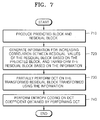
- FIG. 7 is a flowchart illustrating a method of encoding an image, according to an exemplary embodiment of the present invention.
- an image encoding apparatus in operation 710, produces a predicted block and a residual block of a current block.
- the predicted block is generated by performing inter prediction or intra prediction on the current block, and the residual block is generated by subtracting the predicted block from the current block.
- the image encoding apparatus In operation 720, the image encoding apparatus generates information for increasing the correlation among residual values of the residual block, based on the predicted block generated in operation 710.
- the information may be a gradient map and a shifted gradient map of the predicted block.
- the residual block is transformed based on the information. That is, in the gradient map, residual values of regions having the same gradient value are closely related to one another, and the residual block is transformed by shifting only these residual values.
- the image encoding apparatus partially performs DCT on the residual block transformed using the information generated in operation 720.
- Shape-adaptive DCT may be performed on only the residual values that are closely related to one another.
- the image encoding apparatus performs entropy encoding on DCT coefficients obtained by performing DCT in operation 730. That is, entropy encoding is performed on only the DCT coefficients included in the specific region 610, based on the shifted gradient map generated in operation 720.
- the above image encoding method according to an exemplary embodiment of the present invention is used as one of a plurality of modes for image encoding. That is, the image encoding method is one of a plurality of encoding modes, which is selectively performed according to the result of calculating a rate-distortion (R-D) cost. If the R-D cost when only DCT, quantization, and entropy encoding are performed, as suggested in a related art method, is lower than when pre-processing is further performed to transform a residual block according to an exemplary embodiment of the present invention, then a current block is encoded according to the related art method.
- R-D cost rate-distortion
- FIG. 8 is a block diagram of an image decoding apparatus 800 according to an exemplary embodiment of the present invention.
- the decoding apparatus 800 includes a prediction unit 802, a frame memory 804, a pre-processor 806, an entropy decoding unit 808, an inverse quantization unit 810, an inverse transformation unit 812, an addition unit 814, and a filter 816.
- the pre-processor 806, the entropy decoding unit 808, and the inverse transformation unit 812 correspond to an image decoding apparatus according to an exemplary embodiment of the present invention.
- the prediction unit 802 generates a predicted block of a current block that is to be decoded by performing inter prediction or intra prediction.
- inter prediction or intra prediction is performed, using either a reference picture(s) stored in the frame memory 804 or pixels included in previously encoded blocks adjacent to the current block.
- the pre-processor 806 produces information for increasing the spatial correlation among residual values of a residual block, based on the predicted block.
- the information may be a gradient map and a shifted gradient map of the predicted block.
- the gradient map residual values included in a region having similar gradient values are closely, spatially related to one another.
- the entropy decoding unit 808 performs entropy decoding so as to generate DCT coefficients of the current block, using the information produced by the pre-processor 806, i.e., the gradient map and the shifted gradient map.
- a shifted gradient map such as that illustrated in FIG. 4C , of a predicted block is used to perform entropy encoding.
- the shifted gradient map of the predicted block generated by the prediction unit 802 is also used to perform entropy decoding for image decoding. Entropy decoding is not performed on the region 620 of FIG. 6 , on which entropy encoding is not performed according to the shifted gradient map.
- the inverse quantization unit 810 inversely quantizes DCT coefficients obtained as the result of the entropy decoding unit 808 performing entropy decoding.
- the inverse transformation unit 812 performs inverse DCT on the inversely quantized DCT coefficients. Shape-adaptive, inverse DCT may be performed.
- Inverse DCT is partially performed only on DCT coefficients included in the specific region 610 of FIG. 6 , based on the shifted gradient map produced by the pre-processor 806.
- 1D inverse DCT is performed in a column direction. Then, 1D inverse DCT is performed on DCT coefficients obtained by performing 1D inverse DCT in a row direction. Alternatively, 1D inverse DCT may be performed in the row direction and then in the column direction.
- the addition unit 814 rearranges residual values obtained by performing inverse DCT by the inverse transformation unit 812.
- the obtained residual values are shifted as illustrated in FIG. 5C .
- the residual values are rearranged according to the gradient map produced by the pre-processor 806.
- the rearranged residual block and the predicted block that is produced by the prediction unit 802 are combined so as to restore the current block.
- the restored block is deblocking filtered by the filter 816, and stored in the frame memory 804 so that it can be used for prediction of a subsequent picture or a subsequent block.
- FIG. 9 is a flowchart illustrating a method 900 that decodes an image, according to an exemplary embodiment of the present invention.
- an image decoding apparatus in operation 910, produces a predicted block of a current block, and produces information for increasing the spatial correlation among the values of residuals included in a residual block of the current block, based on the predicted block.
- the information may include a gradient map and a shifted gradient map of the predicted block.
- the image decoding apparatus partially performs inverse DCT on DCT coefficients of the residual block, based on the information produced in operation 910. That is, shape-adaptive inverse DCT is performed on a part of the DCT coefficients according to the shifted gradient map produced in operation 910.
- the image decoding apparatus rearranges residual values obtained by performing inverse DCT in operation 920, based on the information produced in operation 910. That is, the residual values are shifted so as to be rearranged according to the gradient map produced in operation 910.
- the image decoding apparatus combines the rearranged residual block and the predicted block so as to restore the current block.
Landscapes
- Engineering & Computer Science (AREA)
- Multimedia (AREA)
- Signal Processing (AREA)
- Physics & Mathematics (AREA)
- Discrete Mathematics (AREA)
- General Physics & Mathematics (AREA)
- Compression Or Coding Systems Of Tv Signals (AREA)
- Compression, Expansion, Code Conversion, And Decoders (AREA)
Claims (13)
- Procédé pour coder une image, comprenant les étapes suivantes :générer un bloc prédit d'un bloc courant, et soustraire le bloc prédit du bloc courant pour générer un bloc résiduel du bloc courant ;générer des informations pour augmenter une corrélation spatiale parmi des valeurs résiduelles comprises dans le bloc résiduel sur la base du bloc prédit, et transformer le bloc résiduel sur la base des informations ; etexécuter une transformée en cosinus discrète (DCT) sur une partie du bloc résiduel transformé sur la base des informations ;caractérisé en ce que :la génération des informations et la transformation du bloc résiduel comprennent les étapes suivantes :générer une carte de gradient du bloc prédit qui différencie des pixels s'y trouvant comme associés à une région plane de l'image des pixels s'y trouvant comme associés à un bord ou à une région texturée de l'image ;sélectionner des valeurs résiduelles sur lesquelles la DCT va être exécutée, parmi les valeurs résiduelles du bloc résiduel, sur la base de la carte de gradient, moyennant quoi les valeurs de résidus dans une région du bloc résiduel correspondant à une région de la carte de gradient associées au bord ou à la région texturée de l'image sont sélectionnées ; ettransformer le bloc résiduel en décalant les valeurs résiduelles sélectionnées.
- Procédé selon la revendication 1, dans lequel l'exécution de la DCT comprend d'exécuter une DCT adaptée aux formes sur le bloc résiduel transformé.
- Procédé selon la revendication 1, dans lequel l'étape comprenant de transformer le bloc résiduel sur la base de la sélection des valeurs résiduelles comprend de décaler les valeurs résiduelles sélectionnées vers le haut et le côté gauche du bloc résiduel.
- Procédé selon la revendication 3, dans lequel l'exécution de la DCT comprend d'exécuter une DCT adaptée aux formes sur les valeurs résiduelles décalées.
- Procédé selon la revendication 4, comprenant en outre d'exécuter un codage entropique uniquement sur des coefficients obtenus par l'exécution d'une DCT adaptée aux formes, conformément à la carte de gradient.
- Appareil (200) pour coder une image, l'appareil comprenant :une unité de prédiction (202) conçue pour générer un bloc prédit d'un bloc courant ;une unité de soustraction (206) conçue pour générer un bloc résiduel du bloc courant en soustrayant le bloc prédit du bloc courant ;un pré-processeur (208) conçu pour générer des informations pour augmenter la corrélation spatiale parmi des valeurs de résidus comprises dans le bloc résiduel sur la base du bloc prédit, et pour transformer le bloc résiduel sur la base des informations ; etune unité de transformation (220) conçue pour exécuter une transformée en cosinus discrète (DCT) sur une partie du bloc résiduel transformé sur la base des informations ;caractérisé en ce que :le pré-processeur (208) comprend :une unité de génération de carte de gradient (310) conçue pour générer une carte de gradient du bloc prédit qui différencie les pixels s'y trouvant comme associés à une région plane de l'image et des pixels s'y trouvant comme associés à un bord ou à une région texturée de l'image ;une unité de sélection (320) conçue pour sélectionner des valeurs résiduelles sur lesquelles la DCT va être exécutée, parmi les valeurs résiduelles du bloc résiduel sur la base de la carte de gradient, moyennant quoi les valeurs de résidus dans une région du bloc résiduel correspondant à une région de la carte de gradient associées au bord ou à la région texturée de l'image sont sélectionnées ; etune unité de décalage (330), conçue pour décaler des valeurs résiduelles du bloc résiduel sur la base de la sélection des valeurs résiduelles.
- Appareil selon la revendication 6, dans lequel l'unité de transformation (220) est conçue pour exécuter une DCT adaptée aux formes sur le bloc résiduel transformé.
- Appareil selon la revendication 6, dans lequel l'unité de décalage (330) est conçue pour décaler les valeurs résiduelles sélectionnées vers le haut et le côté gauche du bloc résiduel.
- Procédé pour décoder une image, le procédé comprenant les étapes suivantes :générer un bloc prédit d'un bloc courant, etgénérer des informations pour augmenter la corrélation spatiale parmi des valeurs résiduelles comprises dans un bloc résiduel du bloc courant sur la base du bloc prédit ;exécuter une transformée en cosinus discrète (DCT) inverse sur une partie de coefficients de DCT du bloc résiduel, sur la base des informations ;réorganiser les valeurs résiduelles du bloc résiduel qui sont obtenues par l'exécution d'une DCT inverse, sur la base des informations ; etcombiner le bloc résiduel réorganisé et le bloc prédit pour restaurer le bloc courant ;caractérisé en ce qui :la génération du bloc prédit et des informations comprennent de générer une carte de gradient du bloc prédit qui différencie des pixels s'y trouvant comme associés à une région plane de l'image et des pixels s'y trouvant comme associés à un bord ou à une région texturée de l'image ;la réorganisation des valeurs résiduelles comprend de commuter des valeurs résiduelles comprises dans le bloc résiduel, sur lesquelles la DCT inverse est exécutée sur la base de la carte de gradient, moyennant quoi les valeurs de résidus dans une région du bloc résiduel correspondant à une région de la carte de gradient associées au bord ou à la région texturée de l'image sont réorganisées.
- Procédé selon la revendication 9, dans lequel l'exécution d'une DCT inverse comprend d'exécuter une DCT inverse adaptée aux formes sur une partie des coefficients de DCT du bloc résiduel, sur la base de la carte de gradient.
- Le procédé selon la revendication 10, dans lequel la réorganisation des valeurs résiduelles comprend de décaler des valeurs résiduelles comprises dans le bloc résiduel sur lesquelles la DCT inverse adaptée aux formes est exécutée sur la base de la carte de gradient.
- Appareil (800) pour décoder une image, l'appareil comprenant :une unité de prédiction (802) conçue pour générer un bloc prédit d'un bloc courant ;un pré-processeur (806) conçu pour générer des informations pour augmenter une corrélation spatiale parmi des valeurs de résidus comprises dans un bloc résiduel du bloc courant, sur la base du bloc prédit ;une unité de transformation inverse (812), conçue pour exécuter une transformée en cosinus discrète (DCT) inverse sur une partie de coefficients de DCT du bloc résiduel, sur la base des informations ; etune unité d'ajout (814), conçue pour réorganiser les valeurs résiduelles du bloc résiduel qui sont obtenues par l'exécution d'une DCT inverse sur la base des informations, et pour combiner le bloc résiduel réorganisé et le bloc prédit pour restaurer le bloc courant ;caractérisé en ce que :le pré-processeur (806) génère une carte de gradient du bloc prédit qui différencie des pixels s'y trouvant comme associés à une région plane de l'image et des pixels s'y trouvant comme associés à un bord ou à une région texturée de l'image ;l'unité d'ajout (814) décale les valeurs résiduelles du bloc résiduel, sur lesquelles la DCT inverse est exécutée sur la base de la carte de gradient, moyennant quoi les valeurs de résidus dans une région du bloc résiduel correspondant à une région de la carte de gradient associées au bord ou à la région texturée de l'image sont décalées, et combine les valeurs résiduelles décalées et le bloc prédit pour restaurer le bloc courant.
- Support lisible par ordinateur sur lequel est enregistré un programme pour exécuter le procédé selon l'une quelconque des revendications 1 à 5 ou 9 à 11.
Applications Claiming Priority (2)
| Application Number | Priority Date | Filing Date | Title |
|---|---|---|---|
| KR1020070034418A KR101370286B1 (ko) | 2007-04-06 | 2007-04-06 | 레지듀얼 블록의 변형을 이용한 영상 부호화, 복호화 방법및 장치 |
| PCT/KR2008/000926 WO2008123657A1 (fr) | 2007-04-06 | 2008-02-18 | Procédé et appareil de codage et de décodage d'image utilisant une modification de bloc résiduel |
Publications (3)
| Publication Number | Publication Date |
|---|---|
| EP2153655A1 EP2153655A1 (fr) | 2010-02-17 |
| EP2153655A4 EP2153655A4 (fr) | 2011-03-09 |
| EP2153655B1 true EP2153655B1 (fr) | 2015-01-28 |
Family
ID=39826958
Family Applications (1)
| Application Number | Title | Priority Date | Filing Date |
|---|---|---|---|
| EP08712533.2A Not-in-force EP2153655B1 (fr) | 2007-04-06 | 2008-02-18 | Procédé et appareil de codage et de décodage d'image utilisant une modification de bloc résiduel |
Country Status (5)
| Country | Link |
|---|---|
| US (1) | US8194989B2 (fr) |
| EP (1) | EP2153655B1 (fr) |
| KR (1) | KR101370286B1 (fr) |
| CN (1) | CN101682752B (fr) |
| WO (1) | WO2008123657A1 (fr) |
Families Citing this family (19)
| Publication number | Priority date | Publication date | Assignee | Title |
|---|---|---|---|---|
| EP2271102A1 (fr) * | 2009-06-29 | 2011-01-05 | Thomson Licensing | Codage adaptif d'une image résiduelle |
| CN102474625A (zh) * | 2009-07-23 | 2012-05-23 | 瑞典爱立信有限公司 | 用于图像的编码和解码的方法和设备 |
| EP2280548B1 (fr) * | 2009-07-30 | 2018-03-28 | Thomson Licensing DTV | Procédé de décodage d'un flux de données codées représentatif d'une séquence d'images et procédé de codage d'une séquence d'images |
| KR101675116B1 (ko) * | 2009-08-06 | 2016-11-10 | 삼성전자 주식회사 | 영상의 부호화 방법 및 장치, 그 복호화 방법 및 장치 |
| US8705623B2 (en) | 2009-10-02 | 2014-04-22 | Texas Instruments Incorporated | Line-based compression for digital image data |
| CN101895757A (zh) * | 2010-07-15 | 2010-11-24 | 北京大学 | 预测残差块的重排序、逆重排序方法及系统 |
| KR101530284B1 (ko) | 2010-07-16 | 2015-06-19 | 삼성전자주식회사 | 영상의 인트라 예측 부호화, 복호화 방법 및 장치 |
| KR20120009618A (ko) * | 2010-07-19 | 2012-02-02 | 에스케이 텔레콤주식회사 | 주파수변환단위 분할부호화 방법 및 장치와 이를 이용한 영상 부호화/복호화 방법 및 장치 |
| FR2993740B1 (fr) * | 2012-07-20 | 2015-10-02 | Univ Nice Sophia Antipolis | Procede et systeme d'encodage et de decodage video comportant une etape d'elimination de la redondance de pixellisation lors de l'encodage et une etape de repixellisation lors du decodage |
| US10015507B2 (en) | 2013-05-20 | 2018-07-03 | Cinova Media | Transform system and method in video and image compression |
| US10462477B2 (en) | 2015-02-25 | 2019-10-29 | Cinova Media | Partial evaluator system and method |
| US10460700B1 (en) | 2015-10-12 | 2019-10-29 | Cinova Media | Method and apparatus for improving quality of experience and bandwidth in virtual reality streaming systems |
| US20170214943A1 (en) * | 2016-01-22 | 2017-07-27 | Mitsubishi Electric Research Laboratories, Inc. | Point Cloud Compression using Prediction and Shape-Adaptive Transforms |
| GB2554065B (en) * | 2016-09-08 | 2022-02-23 | V Nova Int Ltd | Data processing apparatuses, methods, computer programs and computer-readable media |
| US12212751B1 (en) | 2017-05-09 | 2025-01-28 | Cinova Media | Video quality improvements system and method for virtual reality |
| US10944971B1 (en) | 2017-05-22 | 2021-03-09 | Cinova Media | Method and apparatus for frame accurate field of view switching for virtual reality |
| CN111713110B (zh) * | 2017-12-08 | 2024-08-23 | 松下电器(美国)知识产权公司 | 图像编码设备、图像解码设备、图像编码方法以及图像解码方法 |
| WO2020009460A1 (fr) * | 2018-07-04 | 2020-01-09 | 에스케이텔레콤 주식회사 | Procédé de réagencement de signaux résiduels, et appareil de décodage d'image |
| CN109191411B (zh) * | 2018-08-16 | 2021-05-18 | 广州视源电子科技股份有限公司 | 一种多任务图像重建方法、装置、设备和介质 |
Family Cites Families (18)
| Publication number | Priority date | Publication date | Assignee | Title |
|---|---|---|---|---|
| TW224553B (en) | 1993-03-01 | 1994-06-01 | Sony Co Ltd | Method and apparatus for inverse discrete consine transform and coding/decoding of moving picture |
| JPH09121358A (ja) | 1995-10-25 | 1997-05-06 | Matsushita Electric Ind Co Ltd | 画像符号化及び復号化装置と方法 |
| EP0779744A3 (fr) | 1995-12-06 | 1997-08-20 | Thomson Multimedia Sa | Procédé et dispositif de codage pour signaux vidéo numériques |
| ES2218653T3 (es) * | 1996-01-29 | 2004-11-16 | Matsushita Electric Industrial Co., Ltd. | Procedimiento para completar una imagen digital con un elemento de imagen. |
| EP0817499A3 (fr) | 1996-06-28 | 2002-05-22 | Matsushita Electric Industrial Co., Ltd. | Méthode de codage d'image avec extrapolation des pixels non significatifs d'un bloc |
| EP0831658A3 (fr) * | 1996-09-24 | 1999-09-15 | Hyundai Electronics Industries Co., Ltd. | Codeur/décodeur pour le codage/décodage de données de forme à échelle de gris et procédé pour celui-ci |
| TW366648B (en) * | 1996-10-24 | 1999-08-11 | Matsushita Electric Industrial Co Ltd | Method of supplementing pixel signal coding device, and pixel signal decoding device |
| GB9623573D0 (en) * | 1996-11-13 | 1997-01-08 | Philips Electronics Nv | Image segmentation |
| US6687405B1 (en) | 1996-11-13 | 2004-02-03 | Koninklijke Philips Electronics N.V. | Image segmentation |
| US5990956A (en) * | 1996-12-30 | 1999-11-23 | Daewoo Electronics, Inc. | Method and apparatus for padding a video signal for shape adaptive transformation |
| EP0907290B8 (fr) * | 1997-01-30 | 2002-09-04 | Matsushita Electric Industrial Co., Ltd. | Procede de remplissage d'image numerique, dispositif de traitement d'image et support d'enregistrement de donnees |
| JPH11341496A (ja) * | 1998-05-28 | 1999-12-10 | Matsushita Electric Ind Co Ltd | 画像処理方法,画像処理装置,及びデータ記憶媒体 |
| US6600786B1 (en) | 1999-04-17 | 2003-07-29 | Pulsent Corporation | Method and apparatus for efficient video processing |
| US7216140B1 (en) * | 2000-09-30 | 2007-05-08 | Intel Corporation | Efficient implementation of n-point DCT, n-point IDCT, SA-DCT and SA-IDCT algorithms |
| KR100481732B1 (ko) | 2002-04-20 | 2005-04-11 | 전자부품연구원 | 다 시점 동영상 부호화 장치 |
| KR100664932B1 (ko) | 2004-10-21 | 2007-01-04 | 삼성전자주식회사 | 비디오 코딩 방법 및 장치 |
| EP1761069A1 (fr) | 2005-09-01 | 2007-03-07 | Thomson Licensing | Appareil et méthode pour le codage de données vidéo avec un mode d'omission de blocks |
| US20080225947A1 (en) * | 2007-03-13 | 2008-09-18 | Matthias Narroschke | Quantization for hybrid video coding |
-
2007
- 2007-04-06 KR KR1020070034418A patent/KR101370286B1/ko not_active Expired - Fee Related
-
2008
- 2008-02-15 US US12/032,056 patent/US8194989B2/en not_active Expired - Fee Related
- 2008-02-18 WO PCT/KR2008/000926 patent/WO2008123657A1/fr not_active Ceased
- 2008-02-18 CN CN2008800190278A patent/CN101682752B/zh not_active Expired - Fee Related
- 2008-02-18 EP EP08712533.2A patent/EP2153655B1/fr not_active Not-in-force
Also Published As
| Publication number | Publication date |
|---|---|
| CN101682752A (zh) | 2010-03-24 |
| CN101682752B (zh) | 2012-11-07 |
| US20080247658A1 (en) | 2008-10-09 |
| KR101370286B1 (ko) | 2014-03-06 |
| EP2153655A1 (fr) | 2010-02-17 |
| EP2153655A4 (fr) | 2011-03-09 |
| WO2008123657A1 (fr) | 2008-10-16 |
| KR20080090936A (ko) | 2008-10-09 |
| US8194989B2 (en) | 2012-06-05 |
Similar Documents
| Publication | Publication Date | Title |
|---|---|---|
| US8194989B2 (en) | Method and apparatus for encoding and decoding image using modification of residual block | |
| US8126053B2 (en) | Image encoding/decoding method and apparatus | |
| US7925107B2 (en) | Adaptive variable block transform system, medium, and method | |
| US8649431B2 (en) | Method and apparatus for encoding and decoding image by using filtered prediction block | |
| KR101426272B1 (ko) | 영상 부호화장치 및 영상 복호화장치 | |
| US8194749B2 (en) | Method and apparatus for image intraprediction encoding/decoding | |
| US20060268982A1 (en) | Apparatus and method for image encoding and decoding | |
| US20120033731A1 (en) | Video encoding apparatus and video decoding apparatus | |
| US20080247464A1 (en) | Method and apparatus for encoding and decoding based on intra prediction using differential equation | |
| US9357219B2 (en) | Video encoding apparatus and video decoding apparatus | |
| CN101009839A (zh) | 基于正交变换和向量量化的视频编码/解码的方法和设备 | |
| US20220060697A1 (en) | Method and apparatus for processing image signal | |
| KR20110135787A (ko) | 엣지-적응 변환을 이용한 영상 부호화/복호화 시스템 및 방법 | |
| KR101108681B1 (ko) | 동영상 코덱에서의 주파수 변환 계수 예측 방법 및 장치,이를 구비한 부호화 및 복호화 장치와 방법 | |
| CN101175211A (zh) | 用于变换和逆变换图像的方法和设备 | |
| JP4939273B2 (ja) | 画像符号化装置及び画像符号化方法 | |
| JP5908619B2 (ja) | 動画像符号化装置及び動画像復号化装置 | |
| US20100329336A1 (en) | Method and apparatus for encoding and decoding based on inter prediction using image inpainting | |
| JP5526277B2 (ja) | 動画像復号化装置、方法及びプログラム | |
| JP5432359B2 (ja) | 動画像符号化装置、方法及びプログラム | |
| JP5432412B1 (ja) | 動画像符号化装置及び動画像復号化装置 | |
| KR100728032B1 (ko) | 워핑 기반의 인트라 예측 방법 | |
| JP5696248B2 (ja) | 動画像符号化装置及び動画像復号化装置 | |
| JP5525650B2 (ja) | 動画像復号化装置、方法及びプログラム | |
| JP5323209B2 (ja) | 動画像符号化装置及び動画像復号化装置 |
Legal Events
| Date | Code | Title | Description |
|---|---|---|---|
| PUAI | Public reference made under article 153(3) epc to a published international application that has entered the european phase |
Free format text: ORIGINAL CODE: 0009012 |
|
| 17P | Request for examination filed |
Effective date: 20091001 |
|
| AK | Designated contracting states |
Kind code of ref document: A1 Designated state(s): AT BE BG CH CY CZ DE DK EE ES FI FR GB GR HR HU IE IS IT LI LT LU LV MC MT NL NO PL PT RO SE SI SK TR |
|
| AX | Request for extension of the european patent |
Extension state: AL BA MK RS |
|
| DAX | Request for extension of the european patent (deleted) | ||
| A4 | Supplementary search report drawn up and despatched |
Effective date: 20110204 |
|
| RIC1 | Information provided on ipc code assigned before grant |
Ipc: H04N 7/26 20060101AFI20110201BHEP |
|
| 17Q | First examination report despatched |
Effective date: 20111021 |
|
| RAP1 | Party data changed (applicant data changed or rights of an application transferred) |
Owner name: SAMSUNG ELECTRONICS CO., LTD. |
|
| REG | Reference to a national code |
Ref country code: DE Ref legal event code: R079 Ref document number: 602008036546 Country of ref document: DE Free format text: PREVIOUS MAIN CLASS: H04N0007240000 Ipc: H04N0019132000 |
|
| RIC1 | Information provided on ipc code assigned before grant |
Ipc: H04N 19/176 20140101ALI20140730BHEP Ipc: H04N 19/122 20140101ALI20140730BHEP Ipc: H04N 19/14 20140101ALI20140730BHEP Ipc: H04N 19/61 20140101ALI20140730BHEP Ipc: H04N 19/20 20140101ALI20140730BHEP Ipc: H04N 19/132 20140101AFI20140730BHEP Ipc: H04N 19/182 20140101ALI20140730BHEP Ipc: H04N 19/60 20140101ALI20140730BHEP |
|
| GRAP | Despatch of communication of intention to grant a patent |
Free format text: ORIGINAL CODE: EPIDOSNIGR1 |
|
| INTG | Intention to grant announced |
Effective date: 20140923 |
|
| GRAS | Grant fee paid |
Free format text: ORIGINAL CODE: EPIDOSNIGR3 |
|
| GRAA | (expected) grant |
Free format text: ORIGINAL CODE: 0009210 |
|
| AK | Designated contracting states |
Kind code of ref document: B1 Designated state(s): AT BE BG CH CY CZ DE DK EE ES FI FR GB GR HR HU IE IS IT LI LT LU LV MC MT NL NO PL PT RO SE SI SK TR |
|
| REG | Reference to a national code |
Ref country code: GB Ref legal event code: FG4D |
|
| REG | Reference to a national code |
Ref country code: CH Ref legal event code: EP |
|
| REG | Reference to a national code |
Ref country code: IE Ref legal event code: FG4D |
|
| REG | Reference to a national code |
Ref country code: DE Ref legal event code: R096 Ref document number: 602008036546 Country of ref document: DE Effective date: 20150312 |
|
| REG | Reference to a national code |
Ref country code: AT Ref legal event code: REF Ref document number: 708666 Country of ref document: AT Kind code of ref document: T Effective date: 20150315 |
|
| REG | Reference to a national code |
Ref country code: AT Ref legal event code: MK05 Ref document number: 708666 Country of ref document: AT Kind code of ref document: T Effective date: 20150128 |
|
| REG | Reference to a national code |
Ref country code: NL Ref legal event code: VDEP Effective date: 20150128 |
|
| REG | Reference to a national code |
Ref country code: LT Ref legal event code: MG4D |
|
| PG25 | Lapsed in a contracting state [announced via postgrant information from national office to epo] |
Ref country code: BE Free format text: LAPSE BECAUSE OF NON-PAYMENT OF DUE FEES Effective date: 20150228 |
|
| PG25 | Lapsed in a contracting state [announced via postgrant information from national office to epo] |
Ref country code: LT Free format text: LAPSE BECAUSE OF FAILURE TO SUBMIT A TRANSLATION OF THE DESCRIPTION OR TO PAY THE FEE WITHIN THE PRESCRIBED TIME-LIMIT Effective date: 20150128 Ref country code: NO Free format text: LAPSE BECAUSE OF FAILURE TO SUBMIT A TRANSLATION OF THE DESCRIPTION OR TO PAY THE FEE WITHIN THE PRESCRIBED TIME-LIMIT Effective date: 20150428 Ref country code: SE Free format text: LAPSE BECAUSE OF FAILURE TO SUBMIT A TRANSLATION OF THE DESCRIPTION OR TO PAY THE FEE WITHIN THE PRESCRIBED TIME-LIMIT Effective date: 20150128 Ref country code: ES Free format text: LAPSE BECAUSE OF FAILURE TO SUBMIT A TRANSLATION OF THE DESCRIPTION OR TO PAY THE FEE WITHIN THE PRESCRIBED TIME-LIMIT Effective date: 20150128 Ref country code: HR Free format text: LAPSE BECAUSE OF FAILURE TO SUBMIT A TRANSLATION OF THE DESCRIPTION OR TO PAY THE FEE WITHIN THE PRESCRIBED TIME-LIMIT Effective date: 20150128 Ref country code: FI Free format text: LAPSE BECAUSE OF FAILURE TO SUBMIT A TRANSLATION OF THE DESCRIPTION OR TO PAY THE FEE WITHIN THE PRESCRIBED TIME-LIMIT Effective date: 20150128 Ref country code: BG Free format text: LAPSE BECAUSE OF FAILURE TO SUBMIT A TRANSLATION OF THE DESCRIPTION OR TO PAY THE FEE WITHIN THE PRESCRIBED TIME-LIMIT Effective date: 20150428 |
|
| PG25 | Lapsed in a contracting state [announced via postgrant information from national office to epo] |
Ref country code: AT Free format text: LAPSE BECAUSE OF FAILURE TO SUBMIT A TRANSLATION OF THE DESCRIPTION OR TO PAY THE FEE WITHIN THE PRESCRIBED TIME-LIMIT Effective date: 20150128 Ref country code: IS Free format text: LAPSE BECAUSE OF FAILURE TO SUBMIT A TRANSLATION OF THE DESCRIPTION OR TO PAY THE FEE WITHIN THE PRESCRIBED TIME-LIMIT Effective date: 20150528 Ref country code: NL Free format text: LAPSE BECAUSE OF FAILURE TO SUBMIT A TRANSLATION OF THE DESCRIPTION OR TO PAY THE FEE WITHIN THE PRESCRIBED TIME-LIMIT Effective date: 20150128 Ref country code: GR Free format text: LAPSE BECAUSE OF FAILURE TO SUBMIT A TRANSLATION OF THE DESCRIPTION OR TO PAY THE FEE WITHIN THE PRESCRIBED TIME-LIMIT Effective date: 20150429 Ref country code: LV Free format text: LAPSE BECAUSE OF FAILURE TO SUBMIT A TRANSLATION OF THE DESCRIPTION OR TO PAY THE FEE WITHIN THE PRESCRIBED TIME-LIMIT Effective date: 20150128 Ref country code: PL Free format text: LAPSE BECAUSE OF FAILURE TO SUBMIT A TRANSLATION OF THE DESCRIPTION OR TO PAY THE FEE WITHIN THE PRESCRIBED TIME-LIMIT Effective date: 20150128 |
|
| REG | Reference to a national code |
Ref country code: CH Ref legal event code: PL |
|
| REG | Reference to a national code |
Ref country code: DE Ref legal event code: R097 Ref document number: 602008036546 Country of ref document: DE |
|
| PG25 | Lapsed in a contracting state [announced via postgrant information from national office to epo] |
Ref country code: DK Free format text: LAPSE BECAUSE OF FAILURE TO SUBMIT A TRANSLATION OF THE DESCRIPTION OR TO PAY THE FEE WITHIN THE PRESCRIBED TIME-LIMIT Effective date: 20150128 Ref country code: RO Free format text: LAPSE BECAUSE OF FAILURE TO SUBMIT A TRANSLATION OF THE DESCRIPTION OR TO PAY THE FEE WITHIN THE PRESCRIBED TIME-LIMIT Effective date: 20150128 Ref country code: EE Free format text: LAPSE BECAUSE OF FAILURE TO SUBMIT A TRANSLATION OF THE DESCRIPTION OR TO PAY THE FEE WITHIN THE PRESCRIBED TIME-LIMIT Effective date: 20150128 Ref country code: LI Free format text: LAPSE BECAUSE OF NON-PAYMENT OF DUE FEES Effective date: 20150228 Ref country code: MC Free format text: LAPSE BECAUSE OF FAILURE TO SUBMIT A TRANSLATION OF THE DESCRIPTION OR TO PAY THE FEE WITHIN THE PRESCRIBED TIME-LIMIT Effective date: 20150128 Ref country code: SK Free format text: LAPSE BECAUSE OF FAILURE TO SUBMIT A TRANSLATION OF THE DESCRIPTION OR TO PAY THE FEE WITHIN THE PRESCRIBED TIME-LIMIT Effective date: 20150128 Ref country code: CH Free format text: LAPSE BECAUSE OF NON-PAYMENT OF DUE FEES Effective date: 20150228 Ref country code: CZ Free format text: LAPSE BECAUSE OF FAILURE TO SUBMIT A TRANSLATION OF THE DESCRIPTION OR TO PAY THE FEE WITHIN THE PRESCRIBED TIME-LIMIT Effective date: 20150128 |
|
| REG | Reference to a national code |
Ref country code: IE Ref legal event code: MM4A |
|
| PLBE | No opposition filed within time limit |
Free format text: ORIGINAL CODE: 0009261 |
|
| STAA | Information on the status of an ep patent application or granted ep patent |
Free format text: STATUS: NO OPPOSITION FILED WITHIN TIME LIMIT |
|
| PG25 | Lapsed in a contracting state [announced via postgrant information from national office to epo] |
Ref country code: IT Free format text: LAPSE BECAUSE OF FAILURE TO SUBMIT A TRANSLATION OF THE DESCRIPTION OR TO PAY THE FEE WITHIN THE PRESCRIBED TIME-LIMIT Effective date: 20150128 |
|
| 26N | No opposition filed |
Effective date: 20151029 |
|
| REG | Reference to a national code |
Ref country code: FR Ref legal event code: PLFP Year of fee payment: 9 |
|
| PG25 | Lapsed in a contracting state [announced via postgrant information from national office to epo] |
Ref country code: IE Free format text: LAPSE BECAUSE OF NON-PAYMENT OF DUE FEES Effective date: 20150218 |
|
| PG25 | Lapsed in a contracting state [announced via postgrant information from national office to epo] |
Ref country code: SI Free format text: LAPSE BECAUSE OF FAILURE TO SUBMIT A TRANSLATION OF THE DESCRIPTION OR TO PAY THE FEE WITHIN THE PRESCRIBED TIME-LIMIT Effective date: 20150128 |
|
| PG25 | Lapsed in a contracting state [announced via postgrant information from national office to epo] |
Ref country code: BE Free format text: LAPSE BECAUSE OF FAILURE TO SUBMIT A TRANSLATION OF THE DESCRIPTION OR TO PAY THE FEE WITHIN THE PRESCRIBED TIME-LIMIT Effective date: 20150128 |
|
| PG25 | Lapsed in a contracting state [announced via postgrant information from national office to epo] |
Ref country code: MT Free format text: LAPSE BECAUSE OF FAILURE TO SUBMIT A TRANSLATION OF THE DESCRIPTION OR TO PAY THE FEE WITHIN THE PRESCRIBED TIME-LIMIT Effective date: 20150128 |
|
| REG | Reference to a national code |
Ref country code: FR Ref legal event code: PLFP Year of fee payment: 10 |
|
| PG25 | Lapsed in a contracting state [announced via postgrant information from national office to epo] |
Ref country code: HU Free format text: LAPSE BECAUSE OF FAILURE TO SUBMIT A TRANSLATION OF THE DESCRIPTION OR TO PAY THE FEE WITHIN THE PRESCRIBED TIME-LIMIT; INVALID AB INITIO Effective date: 20080218 |
|
| PG25 | Lapsed in a contracting state [announced via postgrant information from national office to epo] |
Ref country code: CY Free format text: LAPSE BECAUSE OF FAILURE TO SUBMIT A TRANSLATION OF THE DESCRIPTION OR TO PAY THE FEE WITHIN THE PRESCRIBED TIME-LIMIT Effective date: 20150128 |
|
| PG25 | Lapsed in a contracting state [announced via postgrant information from national office to epo] |
Ref country code: PT Free format text: LAPSE BECAUSE OF FAILURE TO SUBMIT A TRANSLATION OF THE DESCRIPTION OR TO PAY THE FEE WITHIN THE PRESCRIBED TIME-LIMIT Effective date: 20150528 |
|
| PG25 | Lapsed in a contracting state [announced via postgrant information from national office to epo] |
Ref country code: TR Free format text: LAPSE BECAUSE OF FAILURE TO SUBMIT A TRANSLATION OF THE DESCRIPTION OR TO PAY THE FEE WITHIN THE PRESCRIBED TIME-LIMIT Effective date: 20150128 |
|
| PG25 | Lapsed in a contracting state [announced via postgrant information from national office to epo] |
Ref country code: LU Free format text: LAPSE BECAUSE OF NON-PAYMENT OF DUE FEES Effective date: 20150218 |
|
| REG | Reference to a national code |
Ref country code: FR Ref legal event code: PLFP Year of fee payment: 11 |
|
| PGFP | Annual fee paid to national office [announced via postgrant information from national office to epo] |
Ref country code: GB Payment date: 20200123 Year of fee payment: 13 Ref country code: DE Payment date: 20200121 Year of fee payment: 13 |
|
| PGFP | Annual fee paid to national office [announced via postgrant information from national office to epo] |
Ref country code: FR Payment date: 20200123 Year of fee payment: 13 |
|
| REG | Reference to a national code |
Ref country code: DE Ref legal event code: R119 Ref document number: 602008036546 Country of ref document: DE |
|
| GBPC | Gb: european patent ceased through non-payment of renewal fee |
Effective date: 20210218 |
|
| PG25 | Lapsed in a contracting state [announced via postgrant information from national office to epo] |
Ref country code: FR Free format text: LAPSE BECAUSE OF NON-PAYMENT OF DUE FEES Effective date: 20210228 Ref country code: GB Free format text: LAPSE BECAUSE OF NON-PAYMENT OF DUE FEES Effective date: 20210218 Ref country code: DE Free format text: LAPSE BECAUSE OF NON-PAYMENT OF DUE FEES Effective date: 20210901 |