EP2154108A1 - Liquide de dispersion de nanotubes de carbone monofeuillets et procédé de production d'un liquide de dispersion de nanotubes de carbone monofeuillets - Google Patents
Liquide de dispersion de nanotubes de carbone monofeuillets et procédé de production d'un liquide de dispersion de nanotubes de carbone monofeuillets Download PDFInfo
- Publication number
- EP2154108A1 EP2154108A1 EP08752022A EP08752022A EP2154108A1 EP 2154108 A1 EP2154108 A1 EP 2154108A1 EP 08752022 A EP08752022 A EP 08752022A EP 08752022 A EP08752022 A EP 08752022A EP 2154108 A1 EP2154108 A1 EP 2154108A1
- Authority
- EP
- European Patent Office
- Prior art keywords
- carbon nanotube
- walled carbon
- dispersion liquid
- nanotube dispersion
- fullerene
- Prior art date
- Legal status (The legal status is an assumption and is not a legal conclusion. Google has not performed a legal analysis and makes no representation as to the accuracy of the status listed.)
- Withdrawn
Links
Images


Classifications
-
- B—PERFORMING OPERATIONS; TRANSPORTING
- B82—NANOTECHNOLOGY
- B82B—NANOSTRUCTURES FORMED BY MANIPULATION OF INDIVIDUAL ATOMS, MOLECULES, OR LIMITED COLLECTIONS OF ATOMS OR MOLECULES AS DISCRETE UNITS; MANUFACTURE OR TREATMENT THEREOF
- B82B1/00—Nanostructures formed by manipulation of individual atoms or molecules, or limited collections of atoms or molecules as discrete units
-
- B—PERFORMING OPERATIONS; TRANSPORTING
- B82—NANOTECHNOLOGY
- B82Y—SPECIFIC USES OR APPLICATIONS OF NANOSTRUCTURES; MEASUREMENT OR ANALYSIS OF NANOSTRUCTURES; MANUFACTURE OR TREATMENT OF NANOSTRUCTURES
- B82Y30/00—Nanotechnology for materials or surface science, e.g. nanocomposites
-
- B—PERFORMING OPERATIONS; TRANSPORTING
- B82—NANOTECHNOLOGY
- B82B—NANOSTRUCTURES FORMED BY MANIPULATION OF INDIVIDUAL ATOMS, MOLECULES, OR LIMITED COLLECTIONS OF ATOMS OR MOLECULES AS DISCRETE UNITS; MANUFACTURE OR TREATMENT THEREOF
- B82B3/00—Manufacture or treatment of nanostructures by manipulation of individual atoms or molecules, or limited collections of atoms or molecules as discrete units
-
- B—PERFORMING OPERATIONS; TRANSPORTING
- B82—NANOTECHNOLOGY
- B82Y—SPECIFIC USES OR APPLICATIONS OF NANOSTRUCTURES; MEASUREMENT OR ANALYSIS OF NANOSTRUCTURES; MANUFACTURE OR TREATMENT OF NANOSTRUCTURES
- B82Y40/00—Manufacture or treatment of nanostructures
-
- C—CHEMISTRY; METALLURGY
- C01—INORGANIC CHEMISTRY
- C01B—NON-METALLIC ELEMENTS; COMPOUNDS THEREOF; METALLOIDS OR COMPOUNDS THEREOF NOT COVERED BY SUBCLASS C01C
- C01B32/00—Carbon; Compounds thereof
- C01B32/15—Nano-sized carbon materials
- C01B32/152—Fullerenes
- C01B32/156—After-treatment
-
- C—CHEMISTRY; METALLURGY
- C01—INORGANIC CHEMISTRY
- C01B—NON-METALLIC ELEMENTS; COMPOUNDS THEREOF; METALLOIDS OR COMPOUNDS THEREOF NOT COVERED BY SUBCLASS C01C
- C01B32/00—Carbon; Compounds thereof
- C01B32/15—Nano-sized carbon materials
- C01B32/158—Carbon nanotubes
- C01B32/168—After-treatment
- C01B32/174—Derivatisation; Solubilisation; Dispersion in solvents
-
- Y—GENERAL TAGGING OF NEW TECHNOLOGICAL DEVELOPMENTS; GENERAL TAGGING OF CROSS-SECTIONAL TECHNOLOGIES SPANNING OVER SEVERAL SECTIONS OF THE IPC; TECHNICAL SUBJECTS COVERED BY FORMER USPC CROSS-REFERENCE ART COLLECTIONS [XRACs] AND DIGESTS
- Y10—TECHNICAL SUBJECTS COVERED BY FORMER USPC
- Y10S—TECHNICAL SUBJECTS COVERED BY FORMER USPC CROSS-REFERENCE ART COLLECTIONS [XRACs] AND DIGESTS
- Y10S977/00—Nanotechnology
- Y10S977/70—Nanostructure
- Y10S977/734—Fullerenes, i.e. graphene-based structures, such as nanohorns, nanococoons, nanoscrolls or fullerene-like structures, e.g. WS2 or MoS2 chalcogenide nanotubes, planar C3N4, etc.
-
- Y—GENERAL TAGGING OF NEW TECHNOLOGICAL DEVELOPMENTS; GENERAL TAGGING OF CROSS-SECTIONAL TECHNOLOGIES SPANNING OVER SEVERAL SECTIONS OF THE IPC; TECHNICAL SUBJECTS COVERED BY FORMER USPC CROSS-REFERENCE ART COLLECTIONS [XRACs] AND DIGESTS
- Y10—TECHNICAL SUBJECTS COVERED BY FORMER USPC
- Y10S—TECHNICAL SUBJECTS COVERED BY FORMER USPC CROSS-REFERENCE ART COLLECTIONS [XRACs] AND DIGESTS
- Y10S977/00—Nanotechnology
- Y10S977/70—Nanostructure
- Y10S977/734—Fullerenes, i.e. graphene-based structures, such as nanohorns, nanococoons, nanoscrolls or fullerene-like structures, e.g. WS2 or MoS2 chalcogenide nanotubes, planar C3N4, etc.
- Y10S977/735—Carbon buckyball
-
- Y—GENERAL TAGGING OF NEW TECHNOLOGICAL DEVELOPMENTS; GENERAL TAGGING OF CROSS-SECTIONAL TECHNOLOGIES SPANNING OVER SEVERAL SECTIONS OF THE IPC; TECHNICAL SUBJECTS COVERED BY FORMER USPC CROSS-REFERENCE ART COLLECTIONS [XRACs] AND DIGESTS
- Y10—TECHNICAL SUBJECTS COVERED BY FORMER USPC
- Y10S—TECHNICAL SUBJECTS COVERED BY FORMER USPC CROSS-REFERENCE ART COLLECTIONS [XRACs] AND DIGESTS
- Y10S977/00—Nanotechnology
- Y10S977/70—Nanostructure
- Y10S977/734—Fullerenes, i.e. graphene-based structures, such as nanohorns, nanococoons, nanoscrolls or fullerene-like structures, e.g. WS2 or MoS2 chalcogenide nanotubes, planar C3N4, etc.
- Y10S977/735—Carbon buckyball
- Y10S977/737—Carbon buckyball having a modified surface
-
- Y—GENERAL TAGGING OF NEW TECHNOLOGICAL DEVELOPMENTS; GENERAL TAGGING OF CROSS-SECTIONAL TECHNOLOGIES SPANNING OVER SEVERAL SECTIONS OF THE IPC; TECHNICAL SUBJECTS COVERED BY FORMER USPC CROSS-REFERENCE ART COLLECTIONS [XRACs] AND DIGESTS
- Y10—TECHNICAL SUBJECTS COVERED BY FORMER USPC
- Y10S—TECHNICAL SUBJECTS COVERED BY FORMER USPC CROSS-REFERENCE ART COLLECTIONS [XRACs] AND DIGESTS
- Y10S977/00—Nanotechnology
- Y10S977/70—Nanostructure
- Y10S977/734—Fullerenes, i.e. graphene-based structures, such as nanohorns, nanococoons, nanoscrolls or fullerene-like structures, e.g. WS2 or MoS2 chalcogenide nanotubes, planar C3N4, etc.
- Y10S977/742—Carbon nanotubes, CNTs
Definitions
- the present invention relates to a carbon nanotube dispersion liquid, particularly, for producing a transparent conductive film.
- the transparent conductive film is employed for an electrode. Further, it is employed for a member constituting a resistive touch panel technique. Further, it is employed for an electromagnetic wave shielding film. It is employed for various fields besides them.
- the transparent conductive film of this type is made of metal oxide such as Indium thin oxide (ITO). And, this transparent conductive film is manufactured in vacuum with the methods such as sputtering while a substrate is heated. Thus, the film-forming with these methods necessitates a high temperature. For this, the use of a resin substrate having a poor heat-resistance is greatly restricted.
- the film-forming requires a vacuum environment. For this, a huge film-forming device is necessitated as the substrate become big. Thus, the film-forming becomes costly. Further, In etc. is hard to obtain because it is rare. Thus, ITO becomes costly from this viewpoint as well.
- the alternative technology which replaces ITO, has been proposed from such a background.
- the technology has been proposed of forming the carbon nanotube film with the coating method.
- the transparent conductive film using the carbon nanotube is highly evaluated.
- the single-walled carbon nanotube, out of the carbon nanotubes is highest in conductivity. As it is, it is hard to disperse the single-walled carbon nanotube into a solvent. Thus, it is not easy to constitute the sirigle-walled carbon nanotube conductive film with the coating technique.
- the technique employing a dispersing agent has been proposed. For example, it is proposed to employ sodium dodecyl sulfate (Non-patent document 1). Further, it has been proposed to employ sodium dodecylbenzene sulfonate (Non-patent document 1). Further, it has been proposed to employ octylphenol polyethylene glycol ether (Non-patent document 1). Further, it has been proposed to employ sodium cholate (Non-patent document 2). Further, it has been proposed to employ polyvinylpyrrolidone (Non-patent document 3).
- the single-walled carbon nanotube dispersion liquid of which a concentration is low can be obtained even though a large quantity of sodium dodecylbenzene sulfonate (dispersing agent) is employed.
- sodium dodecylbenzene sulfonate dispersing agent
- the single-walled carbon nanotube dispersion liquid of which a concentration is low can be obtained.
- Non-patent document 3 With the case of employing polyvinylpyrrolidone (Non-patent document 3) as a dispersing agent, the single-walled carbon nanotube dispersion liquid of which a concentration is high can be obtained.
- the dispersing agent cannot be removed. For this, even though a film of the single-walled carbon nanotube is formed, this single-walled carbon nanotube film cannot exhibit a high conductivity. Thus, for this reason, it is hard to utilize this film as a transparent conductive film.
- the prior art is capable of obtaining only the single-walled carbon nanotube dispersion liquid of which a concentration is low even though a large quantity of the dispersing agent is employed. That is the reason why the practical coating method such as a bar coating cannot be employed therefor.
- the prior art succeeded in dispersing the single-walled carbon nanotube into organic solvents such as tetrahydrofuran and dimethylformamide.
- organic solvents such as tetrahydrofuran and dimethylformamide.
- tetrahydrofuran is very toxic.
- dimethylformamide is too high.
- the use of these solvents is not preferable. That is, it is difficult to put them to practical use.
- the single-walled carbon nanotube dispersion liquid dispersed into the solvents such as water and alcohol (for example, alcohol such as methanol and 2-propanol) comes out.
- an object of the present invention is to provide the single-walled carbon nanotube dispersion liquid having a high concentration/high dispersibility that enable the transparent conductive film having high conductivity/transparency to be formed with a simple coating technology.
- the inventor has found out that the transparent conductive film having a high conductivity/transparency can be constituted with a simple coating means.
- the present invention has been accomplished based upon this knowledge.
- a single-walled carbon nanotube dispersion liquid that is characterized in containing a single-walled carbon nanotube, a fullerene, and a solvent.
- the foregoing problems are solved by the single-walled carbon nanotube dispersion liquid that is characterized in containing a single-walled carbon nanotube, a fullerene, and a solvent, and having a content of 10 to 1000 mass parts of the fullerene per 100 mass parts of the single-walled carbon nanotube.
- the foregoing problems are solved by the above-mentioned single-walled carbon nanotube dispersion liquid that is characterized in that the fullerene has a polar group.
- the foregoing problems are solved by the above-mentioned single-walled carbon nanotube dispersion liquid that is characterized in that the fullerene has an OH group.
- the foregoing problems are solved by the above-mentioned single-walled carbon nanotube dispersion liquid that is characterized in that the single-walled carbon nanotube is a single-walled carbon nanotube subjected to a wet oxidation process.
- the foregoing problems are solved by the above-mentioned single-walled carbon nanotube dispersion liquid that is characterized in that the single-walled carbon nanotube is a single-walled carbon nanotube subjected to a wet oxidation process of performing a reflux operation for 24 hours or more with nitric acid having a concentration of 50% or more, or a mixed acid of nitric acid and sulfuric acid.
- the foregoing problems are solved by the above-mentioned single-walled carbon nanotube dispersion liquid that is characterized in that the single-walled carbon nanotube is a single-walled carbon nanotube obtained with an arc-discharge method.
- the foregoing problems are solved by the above-mentioned single-walled carbon nanotube dispersion liquid that is characterized in that the single-walled carbon nanotube has a first absorption in a Raman scattering intensity in a range of which a Raman shift is 1340 ⁇ 40 cm -1 , and a second absorption in a Raman scattering intensity in a range of which a Raman shrift is 1590 ⁇ 20 cm -1 , and yet satisfies a condition of 0 ⁇ (the foregoing intensity of the first absorption)/(the foregoing intensity of the second absorption) ⁇ 0.03 absorption) in terms of a Raman spectrum characteristic that is detected with the 532 nm laser excitation.
- the foregoing problems are solved by the above-mentioned single-walled carbon nanotube dispersion liquid that is characterized in that the single-walled carbon nanotube exists in a situation of being bundled, and the number of the bundles of which a length exceeds 1.5 ⁇ m is more than that of the bundles of which a length is 1.5 ⁇ m or less.
- the foregoing problems are solved by the above-mentioned single-walled carbon nanotube dispersion liquid that is characterized in that the single-walled carbon nanotube exists in a situation of being bundled, and the length of the foregoing bundle is not single but has a predetermined distribution in which a mode in the frequency distribution of the bundle length for each 0.5 ⁇ m exceeds 1.5 ⁇ m.
- the foregoing problems are solved by the above-mentioned single-walled carbon nanotube dispersion liquid that is characterized in that the single-walled carbon nanotube exists in a situation of being bundled, the length of the foregoing bundle is not single but has a predetermined distribution in which a mode in the frequency distribution of the bundle length for each 0.5 ⁇ m exceeds 1.5 ⁇ m, and yet the number of the bundles of which a length exceeds 1.5 ⁇ m is more than that of the bundles of which a length is 1.5 ⁇ m or less.
- the foregoing problems are solved by the above-mentioned single-walled carbon nanotube dispersion liquid that is characterized in that at least one member selected from a group of water and alcohol is employed as a solvent.
- the foregoing problems are solved by the above-mentioned single-walled carbon nanotube dispersion liquid that is characterized in that the solvent is a solvent of which PH exceeds 7.
- the foregoing problems are solved by the above-mentioned single-walled carbon nanotube dispersion liquid that is characterized in: that it has a maximal of the absorbance originating in the single-walled carbon nanotube in a range of 800 nm to 1200 nm in the case of measuring absorbance of the single-walled carbon nanotube dispersion liquid diluted with the solvent employed for the dispersion liquid by a factor of 5, and the above maximal is 0.1 or more; and that it has a maxima of the absorbance originating in the single-walled carbon nanotube in a range of 800 nm to 1200 nm in the case of measuring absorbance of the single-walled carbon nanotube dispersion liquid diluted with the solvent employed for the dispersion liquid by a factor of 20, and the above maximal is 2.0 or less.
- a single-walled carbon nanotube dispersion liquid that is characterized in: that it has a maximal of the absorbance originating in the single-walled carbon nanotube in a range of 800 nm to 1200 nm in the case of measuring absorbance of the single-walled carbon nanotube dispersion liquid diluted with the solvent employed for the dispersion liquid by a factor of 5, and the above maximal is 0.1 or more; and that it has a maximal of the absorbance originating in the single-walled carbon nanotube in a range of 800 nm to 1200 nm in the case of measuring absorbance of the single-walled carbon nanotube dispersion liquid diluted with the solvent employed for the dispersion liquid by a factor of 20, and the above maximal is 2.0 or less.
- a method of producing a single-walled carbon nanotube dispersion liquid that is characterized in including: a mixture step of mixing a single-walled carbon nanotube, a fullerene, and a solvent; and a dispersion step of, after the foregoing mixture step, irradiating the obtained mixed liquid with ultrasonic waves, thereby to yield a dispersion liquid.
- the foregoing problems are solved by the foregoing method of producing a single-walled carbon nanotube dispersion liquid that is characterized in including: a mixture step of mixing a single-walled carbon nanotube, a fullerene, and a solvent; and a dispersion step of, after the foregoing mixture step, irradiating the obtained mixed liquid with ultrasonic waves, thereby to yield a dispersion liquid.
- the foregoing problems are solved by the foregoing method of producing a single-walled carbon nanotube dispersion liquid that is characterized in further including a removal step of removing the single-walled carbon nanotube forming a bundle of which a length is 1.5 ⁇ m or less.
- the foregoing problems are solved by the foregoing method of producing a single-walled carbon nanotube dispersion liquid that is characterized in further including a supernatant collection process of centrifugating the dispersion liquid, and collecting a supernatant.
- the single-wailed carbon nanotube dispersion liquid containing the fullerene is very excellent in the dispersibility of the single-walled carbon nanotube. In particular, it is good in the dispersibility even though a concentration of the single-walled carbon nanotube is high. In addition, it is excellent in the dispersibility of the single-walled carbon nanotube even though water (or alcohol) is employed as a solvent. Further, it is very excellent in the dispersibility of the single-walled carbon nanotube notwithstanding a small quantity of the fullerene (dispersing agent).
- the conductive film coated with this paint exhibits a special feature that is excellent in the transparency and the conductivity because the dispersibility is good.
- the single-walled carbon nanotube dispersion liquid in accordance with the present invention contains the single-walled carbon nanotube, the fullerene, the solvent.
- a ratio of the single-walled carbon nanotube versus the fullerene is, particularly, 10 to 1000 mass parts of the fullerene per 100 mass parts of the single-walled carbon nanotube.
- a concentration of the fullerene is, particularly, 1 to 100000 ppm (Preferably, it is 10 ppm or more, and yet, 100 ppm or more. It is 10000 ppm or less, and yet, 5000 ppm or less).
- the fullerene having a polar group is particularly preferable.
- the single-walled carbon nanotube is, particularly, a single-walled carbon nanotube subjected to a wet oxidation process.
- the single-walled carbon nanotube is a single-walled carbon nanotube subjected to a wet oxidation process of performing a reflux operation for 24 hours or more with nitric acid having a concentration of 50% or more, or a mixed acid of nitric acid and sulfuric acid.
- the single-walled carbon nanotube obtained with the arc-discharge method is preferably employed.
- the single-walled carbon nanotube which has a first absorption in a Raman scattering intensity in a range of which a Raman shift is 1340 ⁇ 40 cm -1 , and a second absorption in a Raman scattering intensity in a range of which a Raman shift is 1590 ⁇ 20 cm -1 , and yet satisfies a condition of 0 ⁇ (the foregoing intensity of the first absorption)/ (the foregoing intensity of the second absorption) ⁇ 0.03) in terms of a Raman spectrum that is detected with the 532nm laser excitation, is preferably employed.
- the single-walled carbon nanotube existing within the liquid in a situation of being bundled in which the number of the bundles of which a length exceeds 1.5 ⁇ m is more than that of the bundles of which a length is 1.5 ⁇ m or less, is preferable.
- the single-walled carbon nanotube existing in a situation of being bundled, in which the length of the foregoing bundle is not single but has a predetermined distribution, the foregoing predetermined distribution has a mode exceeding 1.5 ⁇ m in the frequency distribution of the bundle length for each 0.5 ⁇ m, and yet the number of the bundles of which a length exceeds 1.5 ⁇ m is more than that of the bundles of which a length is 1.5 ⁇ m or less, is preferable.
- Various liquids are employed for the single-walled carbon nanotube dispersion liquid of the present invention as a solvent. However, water, alcohol (particularly, aliphatic alcohol of which a carbon number is 7 or less), or a mixed liquid thereof is preferable as a solvent being employed.
- the solvent containing at least water is preferable.
- the solvent of which pH exceeds 7 is preferable (that is, the solvent indicating alkaline).
- the single-walled carbon nanotube dispersion liquid has a maximal of the absorbance originating in the single-walled carbon nanotube in a range of 800 nm to 1200 nm in the case of measuring, particularly, the absorbance of the dispersion liquid diluted with the solvent employed for the dispersion liquid by a factor of 5, and the above maximal is 0.1 or more, and the single-walled carbon nanotube dispersion liquid has a maximal of the absorbance originating in the single-walled carbon nanotube in a range of 800 nm to 1200 nm in the case of measuring, particularly, the absorbance of the dispersion liquid diluted with the solvent employed for the dispersion liquid by a factor of 20, and the above maximal is 2.0 or less.
- the present invention relates to a method of producing a single-walled carbon nanotube dispersion liquid. Particularly, it relates to a method of producing the foregoing single-walled carbon nanotube dispersion liquid. And, the method includes a mixture step of mixing a single-walled carbon nanotube, a fullerene, and a solvent. Yet, it includes a dispersion step of, after the foregoing mixture step, irradiating the obtained mixed liquid with ultrasonic waves, thereby to yield a dispersion liquid. Further, preferably, it further includes a removal step of removing the single-walled carbon nanotube forming the bundle of which a length is 1.5 ⁇ m or less from the dispersion liquid. Further, preferably, it further includes a supernatant collection process of centrifugatating the dispersion liquid and collecting a supernatant.
- the present invention relates to a method of producing a transparent conductive film. Particularly, it relates to a method of coating a substrate member, particularly, a transparent substrate member with the above-mentioned single-walled carbon nanotube dispersion liquid.
- the present invention relates to a method of forming the above-mentioned coated film of the single-walled carbon nanotube dispersion liquid upon the substrate member (particularly, the transparent substrate member).
- the single-walled carbon nanotube exists, particularly, in a situation of being bundled.
- the number of the bundles of which a length exceeds 1.5 ⁇ m is more than that of the bundles of which a length is 1.5 ⁇ m or less.
- the length of the foregoing bundle is not single but has a predetermined distribution, and the above predetermined distribution has a mode exceeding 1.5 ⁇ m in the frequency distribution of the bundle length for each 0.5 ⁇ m.
- the thickness of the conductive film having the single-walled carbon nanotube is, for example, 10 nm to 1000 nm. And, responding to a necessity, an agent as well for suppressing a decline in the conductivity due to a temperature of the single-walled carbon nanotube is contained in the conductive film.
- polymer having a sulfonic acid group is contained.
- the single-walled carbon nanotube is protected with the polymer having a sulfonic acid group.
- the conductive layer is covered with the polymer having a sulfonic acid group.
- An total light transmittance of the transparent conductive film is 60% or more. Particularly, it is 80% or more.
- the surface resistivity is 1000 ⁇ / ⁇ or less. Particularly, it is 200 ⁇ / ⁇ or less.
- any fullerene is acceptable.
- C60, C70, C76, C78, C82, C84, C90, C96, etc. can be listed. Needless to say, a mixture of these plural kinds of the fullerenes may be also employed. Additionally, C60 is particularly preferable from a viewpoint of a dispersion performance. Yet, C60 is easy to obtain. Additionally, not only C60 but also a mixture of C60 and the other kinds of the fullerenes (for example, C70) may be employed.
- the fullerene having a metal atom appropriately contained inside it is also acceptable.
- the fullerene having well-known functional groups such as a hydroxyl group (OH group), a carboxyl group, an epoxy group, an ester group, an amide group, a sulfonyl group, and an ether group is preferable.
- polar groups such as a hydroxyl group (OH group), a carboxyl group, an epoxy group, an ester group, an amide group, a sulfonyl group, and an ether group is preferable.
- fullerene having phenyl-C61-propyl acid alkyl ester or phenyl-C61-butyric acid alkyl ester may be employed.
- a hydrogenated fullerene may be employed.
- the fullerene having an OH-group (hydroxyl group) is particularly preferable.
- the reason is that the dispersibility of the single-walled carbon nanotube is high. Additionally, a small quantity of the hydroxyl group does not lead to a large enhancement in the dispersibility of the single-walled carbon nanotube.
- the quantity of the hydroxyl group is much, the fullerene is hard to synthesize.
- the quantity of the hydroxyl groups is 5 to 30 pieces (per one molecule of the fullerene). Particularly, the quantity of 8 to 15 pieces is preferable.
- the fullerene having a polar group is preferably employed when the solvent is a solvent having a polar group.
- the fullerene having a polar group is more easily soluble in a polar solvent (for example, water or alcohol) than in a non-polar solvent.
- the fullerene having the polar group as described above is preferably employed from a viewpoint of the dispersibility of the single-walled carbon nanotube.
- the single-walled carbon nanotube dispersion liquid is employed as a paint
- water (or/and alcohol) is preferably employed as a solvent from a viewpoint of a reduction in the environmental burden and an improvement in the working environment.
- the fullerene having the functional groups (polar groups), for example, a hydroxyl group (OH-group), a carboxyl group, an epoxy group, an ester group, an amide group, a sulfonyl group, an ether group, or the like is preferably employed from a viewpoint of affinity between the solvent and the fullerene.
- the fullerene having an OH-group (hydroxyl group) is preferable because water or alcohol has an OH-group.
- a concentration of the fullerene is 1 ppm to 100000 ppm. Particularly, it is preferable that a concentration of the fullerene is 10 ppm to 10000 ppm. Among others, it is preferable that it is 100 ppm to 5000 ppm. The reason is that when the fullerene concentration is too high, a liquid viscosity become too high, which makes the coating difficult. To the contrary, when the fullerene concentration is too low, a large improvement in the dispersibility of the single-walled carbon nanotube is not yielded.
- the carbon nanotube being employed in the present invention is the single-walled carbon nanotube.
- the reason is that the single-walled carbon nanotube is high in the conductivity as compared with a multi-walled carbon nanotube and the well-known carbon materials.
- the single-walled carbon nanotube subjected to the wet oxidation is preferable.
- the reason is that the dispersibility into the solvent is improved.
- No special limitation to the oxidation process is put so long as it is a wet oxidation process.
- inorganic acid for example, hydrochloric acid, nitric acid, sulfuric acid, phosphoric acid, or a mixed acid thereof
- inorganic acid for example, hydrochloric acid, nitric acid, sulfuric acid, phosphoric acid, or a mixed acid thereof
- nitric acid having a concentration of 50% or more, or a mixed acid of nitric acid and sulfuric acid is preferably employed.
- a mixed acid of nitric acid and sulfuric acid when a volume ratio of water, nitric acid, and sulfuric acid over an entirety of a mixed acid solution is defined as a (volume %), b (volume %), and c (volume %), respectively, the mixed acid satisfying 0.20 ⁇ ⁇ a/(a+b+c) ⁇ ⁇ 0.40 and 0.20 ⁇ ⁇ b/(b+c) ⁇ ⁇ 0.30 is more preferable.
- the reaction condition of the wet oxidation as well, there is no special limitation hereto. However, so as to perform an effective acid process, it is preferable that the reaction temperature is 85°C or more. It is preferable that the reaction time is 24 hours or more and yet, it is 48 hours or more.
- the single-walled carbon nanotube produced with any technique is employed in the present invention.
- the single-walled carbon nanotube is obtained, for example, with an arc discharge method, a laser ablation method, and a chemical vapor deposition method.
- the single-walled carbon nanotube obtained with the arc discharge method is preferably employed from a viewpoint of crystallization and a yield.
- the single-walled carbon nanotube of which a purity is high is preferably employed in the present invention.
- the reason is that a low purity leads to a decline in a transparency.
- the purity of the single-walled carbon nanotube can be confirmed with a Raman spectrum measurement. Specifically, with a ratio of an absorption intensity originating in the graphene sheet, being a main component constituting the carbon nanotube, and an absorption intensity originating in a component indicative of a carbon material other than it, the purity of the carbon nanotube can be confirmed.
- the single-walled carbon nanotube produced by the arc-discharge with the 532 nm laser excitation has a first absorption in a Raman scattering intensity in a range of which a Raman shift is 1340 ⁇ 40 cm -1 , and has a second absorption a Raman scattering intensity in a range of which a Raman shift is 1590 ⁇ 20 cm -1 .
- the first absorption is an absorption originating in the graphene sheet
- the second absorption is an absorption originating in an SP 3 orbit of the carbon atom.
- the carbon nanotube of which the second absorption intensity is smaller as compared with its first absorption intensity is higher in the purity.
- the single-walled carbon nanotube in accordance with the present invention satisfying the following condition is preferable. That is, the single-walled carbon nanotube, which has a first absorption in a Raman scattering intensity in a range of which a Raman shift is 1340 ⁇ 40 cm -1 , and a second absorption in a Raman scattering intensity in a range of which a Raman shift is 1590 ⁇ 20 cm -1 in terms of a Raman spectrum characteristic that is detected with the 532 nm laser excitation, and satisfies Equation (1) when the foregoing first absorption intensity and the foregoing second absorption intensity are defined as ID and IG, respectively, is preferable.
- the single-walled carbon nanotube satisfying Equation (2) is particularly preferable.
- the single-walled carbon nanotube when a value of ID/IG was 0.03 or less, the single-walled carbon nanotube was high in the purity, and was excellent in both of the transparency/conductivity. 0 ⁇ ID / IG ⁇ 0.03 0 ⁇ ID / IG ⁇ 0.02
- the single-walled carbon nanotube preferably forms a bundle in the dispersion liquid (in addition, in the conductive film).
- the so-called bundle signifies a situation (shape) in which plural pieces of the single-walled carbon nanotubes are overlapped upon each other due to van der Waals force of side wall.
- the single-walled carbon nanotube prepared with the conventionally known method is obtained in a situation of being bundled.
- the lengths of this bundle have a certain distribution.
- the single-walled carbon nanotube having the following characteristics is particularly preferable. That is, with the single-walled carbon nanotube, the lengths of the bundle thereof have a certain distribution. This distribution is characteristic.
- the number of the bundles of which the length exceeds 1.5 ⁇ m is more than that of the bundles of which the length is 1.5 ⁇ m or less.
- the number of the bundles of which the length is 2.0 ⁇ m or more is more than that of the bundles of which the length is 1.5 ⁇ m or less.
- the number of the bundles of which the length is 2.5 ⁇ m or more is more than that of the bundles of which the length is 1.5 ⁇ m or less.
- a mode in a frequency distribution (a frequency distribution table or a frequency distribution diagram) of the bundle length for each 0.5 ⁇ m exceeds 1.5 ⁇ m.
- a mode in a frequency distribution of the length of the bundle exceeds 2.0 ⁇ m.
- a mode in a frequency distribution of the length of the bundle exceeds 2.5 ⁇ m. And, when the bundle had a distribution having the above-mentioned characteristic, the single-walled carbon nanotube was excellent in both of the transparency/conductivity.
- the method of observing the single-walled carbon nanotube with a scanning electron microscope, and measuring its length is employed for measuring the length of the bundle. Additionally, the method is not limited hereto. No special limitation to the number of the bundles being measured is put. However, so as to obtain accurate statistics, it is preferable to measure 50 bundles or more. Yet, it is more preferable to measure 100 bundles or more. At the moment of measuring the length of the bundle, existence of a lot of impurities makes the measurement difficult. Thus, it is preferable to firstly remove the impurities to an extent in which the length is measurable, and then to measure the length. Further, the length is difficult to measure in a situation in which the bundles are massed. Thus, it is preferable that the bundles are dispersed to an extent in which the bundles can be measured one by one.
- the frequency distribution diagram (table) associated with the length of the bundle is put.
- any of a symmetrical distribution, an asymmetrical distribution, a J letter-type distribution, a U letter-type distribution, and a bimodal distribution is acceptable.
- the symmetrical distribution is preferable.
- the so-called mode signifies a value of a rank having the highest frequency, out of all ranks. When the rank number is classified, the range is divided for each 0.5 ⁇ m, and the number of each division is collected.
- a solvent being employed for the general-use paint is acceptable. No special limit hereto is put. However, the solvent of which a boiling point is 200 °C or less is preferable (the preferable lower limit value is 25 °C, and yet, it is 30 °C).
- the reason why the solvent having a low boiling point is preferable is that drying after coating is made easy.
- alcohol compounds particularly, alcohol of which a carbon number is 7 or less, and particularly, aliphatic alcohol
- water, methanol, ethanol, normal-propanol, and isopropanol, or a mixture thereof are preferable.
- the solvent indicative of alkaline in which pH exceeds 7 is preferable when water is employed.
- the fullerene containing a hydroxyl group is highly soluble. That is, the single-walled carbon nanotube dispersion liquid having a higher concentration can be obtained.
- ketone compounds such as acetone, methyl ethyl ketone, methyl isobutyl ketone, and cyclohexanone can be employed.
- ester compounds such as methyl acetate, ethyl acetate, butyl acetate, ethyl lactate, and methoxyethyl acetate can be employed.
- ether compounds such as diethyl ether, ethylene glycol dimethyl ether, ethyl cellosolve, butyl cellosolve, phenyl cellosolve, and dioxane can be employed.
- aromatic compounds such as toluene and xylene can be employed.
- aliphatic compounds such as pentane and hexane can be employed.
- halogenic hydrocarbons such as dichloromethane, chlorobenzene, and chloroform can be employed. A mixture of the foregoing compounds can be employed.
- a concentration of the single-walled carbon nanotube, in the single-walled carbon nanotube dispersion liquid can be measured quantitatively with a spectrometer. That is, measuring an absorbance by employing the spectrometer makes it possible to quantitatively measure a concentration of the single-walled carbon nanotube. In addition, preparing a standard curve to obtain a proportionality constant indicative of an absorbance and a mass ratio makes it possible to indicate the concentration with the mass ratio.
- the dispersion liquid becomes pasty when a concentration of the single-walled carbon nanotube is too high.
- the coating becomes difficult.
- a concentration of the single-walled carbon nanotube is too low, the coating has to be repeatedly carried out many times.
- the dispersion liquid of which the maximal obtained by diluting the dispersion liquid by a factor of 5 is 0.2 or more, and of which the maximal obtained by diluting the dispersion liquid by a factor of 20 is 1.5 or less is more preferable.
- the dispersion liquid of which the maximal obtained by diluting the dispersion liquid by a factor of 5 is 0.3 or more, and of which the maximal obtained by diluting the dispersion liquid by a factor of 20 is 1.2 or less is yet more preferable.
- the above-mentioned single-walled carbon nanotube and fullerene, and solvent are employed by a predetermined quantity, respectively, and the single-walled carbon nanotube dispersion liquid is produced.
- the single-walled carbon nanotube dispersion liquid is produced through the following steps.
- Step 1 a step of mixing the single-walled carbon nanotube and the fullerene, and the solvent.
- Step 2 a step of irradiating the mixed liquid obtained in the step 1 with ultrasonic waves, thereby to yield the dispersion liquid.
- the step 1 is a step for mixing the single-walled carbon nanotube and the fullerene, and the solvent.
- the single-walled carbon nanotube, the fullerene, and the solvent may be mixed simultaneously.
- the single-walled carbon nanotube may be mixed.
- the fullerene may be added hereto. Additionally, the dispersing agent such as the surfactant may be added.
- the step 2 is a step of irradiating the mixed liquid obtained in the step 1 with ultrasonic waves, thereby to yield the dispersion liquid.
- a bath-type sonicator can be employed for ultrasonic irradiation (sonication).
- a cone-type sonicator can be employed therefor. Needless to say, other sonicators may be employed.
- the cone-type sonicator which yields a high power, is preferably employed.
- the time of the sonication cannot be fixed sweepingly because it is also governed by the power of the sonicator. However, for example, with case of employing the cone-type sonicator, the irradiation time of 30 seconds to 10 minutes is preferable. That is, too short irradiation time causes insufficient dispersion. To the contrary, too long irradiation time causes the single-walled carbon nanotube to be damaged. Particularly, the bundle results in being destroyed.
- step 3 a step of centrifugating the dispersion liquid obtained in the step 2, and collecting a supernatant.
- This step is performed for a purpose of removing the single-walled carbon nanotube that has not been dispersed in the step 2, and obtaining the conductive film that is higher in the transparency. Additionally, too strong centrifugation causes the dispersed single-walled carbon nanotube to be removed. To the contrary, when the centrifugation is too weak, the single-walled carbon nanotube that has not been dispersed cannot be removed.
- the dispersion liquid is preferably centrifugated in a condition of 1000G to 10000G (yet, 3000G or more. 5000G or less). The single-walled carbon nanotube dispersion liquid that has been more uniformly dispersed can be obtained as a result of passing through this step 3.
- a next step X a step of removing the single-walled carbon nanotube forming a bundle of 1.5 ⁇ m or less from among the single-walled carbon nanotubes
- the separation (removal) step using a filtering method can be listed.
- Various filtering methods are employed for the filtering. For example, a suction filtration can be employed. Further, a pressure filtration can be employed. Further, a cross-flow filtration can be employed. Additionally, which step, out of the step X and the step 3, is performed firstly is arbitrary.
- the substrate member is coated with the single-walled carbon nanotube dispersion liquid obtained as mentioned above, and the transparent conductive film is obtained.
- the single-walled carbon nanotube dispersion liquid in accordance with the present invention is high in the dispersibility of the single-walled carbon nanotube.
- it is dispersed in the solvents such as water and alcohol at a high dispersibility.
- various coating methods such as a spray coating method, a bar coating method, a roll coating method, an inkjet method, a screen coating method can be employed.
- the transparent substrate member (film, sheet, plate of which a thickness is higher than the foregoing film (sheer)) is preferable in a field in which the transparency is required, for example, a transparent electrode being employed for a display etc.
- acrylic resin, polyester resin, polycarbonate resin, polystyrene resin, styrene-acrylic acid copolymer, vinyl chloride resin, polyolefin, ABS (acrylonitrile-butadiene-styrene copolymer), vinyl alcohol resin, cycloolefin resin, cellulose resin, etc. can be employed.
- inorganic glass etc. can be employed.
- the substrate member made of organic resin that is excellent in flexibility is preferable.
- a hard coat layer, an anti-contamination layer, an anti-glare layer, an anti-reflection layer, an adhesive layer, a colored layer etc. are formed (laminated) on the surface of the foregoing substrate member (the surface of the side in which the conductive layer is formed, and/or on the backside opposite to the side in which the conductive layer is formed) responding to a necessity.
- the thickness of the substrate member is governed by the purpose thereof. However, as a rule, it is 10 ⁇ m to 10 mm or so.
- a drying operation is performed.
- a heating oven is employed for the drying operation.
- a far infrared oven may be employed.
- an ultra-far infrared oven may be employed.
- the apparatuses which can be usually used for drying, can be employed.
- the transparent conductive film which is characteristic of the foregoing, can be obtained.
- the transparent conductive film of which the total light transmission is 60% or more and yet of which the surface resistivity is 1000 ⁇ / ⁇ or less, can be obtained.
- the transparent conductive film of which the total light transmittance is 70% or more, and yet of which the surface resistivity is 500 ⁇ / ⁇ or less, can be obtained.
- the transparent conductive film of which the total light transmittance is 80% or more and yet of which the surface resistivity is 200 ⁇ / ⁇ or less, can be obtained.
- it can be obtained at a simple way/low cost.
- the total light transmittance is an total light transmittance relating to not only the conductive film containing the single-walled carbon nanotube but also the substrate member.
- the transparent conductive film which is characteristic of the foregoing, can be utilized for an electrode substrate for a touch panel. Further, it can be utilized for an electrode substrate for electronic paper. Further, it can be utilized for an electrode substrate for a liquid crystal display. Further, it can be utilized for an electrode substrate for plasma display. Besides, it can be utilized for various applications.
- the single-walled carbon nanotube was prepared with the arc-discharge method. This prepared single-walled carbon nanotube was subjected to the reaction (wet oxidation) with nitric acid having a concentration of 63% at 85°C for 2 days. Thereafter, the single-walled carbon nanotube was purified/collected with the filtering.
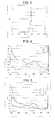
- Fig. 1 the scanning electron microscope picture of this purified single-walled carbon nanotube is shown in Fig. 1 .
- a measurement result of the length of the bundles of the single-walled carbon nanotube is shown in Fig. 2 . It can be seen from the frequency distribution for each 0.5 ⁇ m ( Fig. 2 ) that a mode exists in the range of 1.5 ⁇ m to 2.0 ⁇ m. And, a ratio of the number of the bundles of the single-walled carbon nanotube of which the length of the bundle exceeds 1.5 ⁇ m over an entirety is 73%. A ratio of the number of the bundles of the single-walled carbon nanotube of which the length of the bundle is 1.5 ⁇ m or less over an entirety is 27%.
- the number of the bundles of the single-walled carbon nanotube of which the length of the bundle is 1.5 ⁇ m or less is smaller than that of the bundles of the single-walled carbon nanotube of which the length of the bundle exceeds 1.5 ⁇ m.
- the mixed liquid obtained in the above-mentioned step 1 was irradiated with the ultrasonic waves. That is, the mixed liquid was irradiated with the ultrasonic waves by employing an sonicator (ULTRASONIC HOMOGENIZER MODEL UH-600SR manufactured by SMT Co., Ltd.) and was subjected to an ultrasonic dispersion. And, the single-walled carbon nanotube dispersion liquid was obtained.
- an sonicator ULTRASONIC HOMOGENIZER MODEL UH-600SR manufactured by SMT Co., Ltd.
- the single-walled carbon nanotube dispersion liquid obtained in the above-mentioned step 2 was subjected to a centrifugation operation by employing a centrifuge (a product name: CR26H manufactured by Hitachi Koki Co., Ltd.)
- the condition of the centrifugation is 6000 rpm (4400G) for 30 minutes.
- the centrifugated supernatant was collected.
- the concentration of this supernatant was measured with the spectrometer.
- a result thereof is shown in Fig. 4 .
- a concentration of the single-walled carbon nanotube was 580 ppm (see Table 1).
- Example 1 Example 2
- Example 3 Example 4
- Example 5 Example 6
- Example 7 Comparative Example 1 Fullerene concentration (ppm) 300 30 100 900 1500 3000 10000 0 Single-walled carbon nanotube concentration (ppm) 580 281 422 1459 1423 1390 2628 185
- the bar coating was carried out for polycarbonate substrate having the hard coat with the single-walled carbon nanotube dispersion liquid centrifugated in the above-mentioned step 3.
- a coating thickness (wet thickness) is 50 ⁇ m.
- the operation was performed similarly to the case of the example 1 except that the quantity of the fullerene containing the hydroxyl group and sodium hydroxide employed in the example 1 was 0.3 mg and 0.03 mg, respectively, and the single-walled carbon nanotube dispersion liquid was obtained.
- the operation was performed similarly to the case of the example 1 except that the quantity of the fullerene containing the hydroxyl group and sodium hydroxide employed in the example 1 was 1 mg, and 0.1 mg, respectively, and the single-walled carbon nanotube dispersion liquid was obtained.
- the operation was performed similarly to the case of the example 1 except that the quantity of the fullerene containing the hydroxyl group and sodium hydroxide employed in the example 1 was 9 mg, and 0.9 mg, respectively, and the single-walled carbon nanotube dispersion liquid was obtained.
- the operation was performed similarly to the case of the example 1 except that the quantity of the fullerene containing the hydroxyl group and sodium hydroxide employed in the example 1 was 15 mg, and 0.15 mg, respectively, and the single-walled carbon nanotube dispersion liquid was obtained.
- the operation was performed similarly to the case of the example 1 except that the quantity of the fullerene containing the hydroxyl group and sodium hydroxide employed in the example 1 was 30 mg, and 3 mg, respectively, and the single-walled carbon nanotube dispersion liquid was obtained.
- the operation was performed similarly to the case of the example 1 except that the quantity of the single-walled carbon nanotube, the fullerene containing the hydroxyl group, and sodium hydroxide employed in the example 1 was 40 mg, 100 mg, and 10 mg, respectively, and the single-walled carbon nanotube dispersion liquid was obtained.
- the operation was performed similarly to the case of the example 1 except that the quantity of water and methanol employed in the example 1 was 1 ml and 9 ml, respectively, and the single-walled carbon nanotube dispersion liquid was obtained.
- Example 1 Example 8
- Example 9 Example 10
- the operation was performed similarly to the case of the example 1 except that the quantity of water and methanol employed in the example 1 was 10 ml and 0 ml, respectively, and the single-walled carbon nanotube dispersion liquid was obtained.
- Example 1 Example 13
- Example 3 Comp. example 4
- Comp. example 5 Comp. example 6
- Example 7 Dispersing agent Fullerene containing a hydroxyl group (only C60) Fullerene containing a hydroxyl group (a mixture of C60 and C70) Sodium dodecyl sulfate Sodium dodecyl benzene sulfonate Octylphenol Polyethylene glycol ether Sodium cholate Polyvinyl pyrrolidone Single-walled carbon nanotube concentration (ppm) 580 511 81 91 182 78 462
- the single-walled carbon nanotube dispersion liquid in accordance with the present invention is excellent in the dispersibility of the single-walled carbon nanotube even though the concentration thereof is high.
- the present invention can be advantageously utilized, for example, for a transparent electrode, a touch panel member, and an electromagnetic wave shield material.
Landscapes
- Chemical & Material Sciences (AREA)
- Engineering & Computer Science (AREA)
- Nanotechnology (AREA)
- Crystallography & Structural Chemistry (AREA)
- Materials Engineering (AREA)
- Organic Chemistry (AREA)
- Physics & Mathematics (AREA)
- Condensed Matter Physics & Semiconductors (AREA)
- General Physics & Mathematics (AREA)
- Inorganic Chemistry (AREA)
- Manufacturing & Machinery (AREA)
- Composite Materials (AREA)
- Carbon And Carbon Compounds (AREA)
- Conductive Materials (AREA)
Applications Claiming Priority (2)
| Application Number | Priority Date | Filing Date | Title |
|---|---|---|---|
| JP2007118010 | 2007-04-27 | ||
| PCT/JP2008/057923 WO2008136347A1 (fr) | 2007-04-27 | 2008-04-24 | Liquide de dispersion de nanotubes de carbone monofeuillets et procédé de production d'un liquide de dispersion de nanotubes de carbone monofeuillets |
Publications (2)
| Publication Number | Publication Date |
|---|---|
| EP2154108A1 true EP2154108A1 (fr) | 2010-02-17 |
| EP2154108A4 EP2154108A4 (fr) | 2014-06-25 |
Family
ID=39943458
Family Applications (1)
| Application Number | Title | Priority Date | Filing Date |
|---|---|---|---|
| EP08752022.7A Withdrawn EP2154108A4 (fr) | 2007-04-27 | 2008-04-24 | Liquide de dispersion de nanotubes de carbone monofeuillets et procédé de production d'un liquide de dispersion de nanotubes de carbone monofeuillets |
Country Status (7)
| Country | Link |
|---|---|
| US (1) | US8968604B2 (fr) |
| EP (1) | EP2154108A4 (fr) |
| JP (1) | JP5430397B2 (fr) |
| KR (1) | KR101118497B1 (fr) |
| CN (1) | CN101668700B (fr) |
| TW (1) | TWI428275B (fr) |
| WO (1) | WO2008136347A1 (fr) |
Cited By (1)
| Publication number | Priority date | Publication date | Assignee | Title |
|---|---|---|---|---|
| US20130316160A1 (en) | 2010-11-05 | 2013-11-28 | National Institute Of Advanced Industrial Science And Technology | Cnt dispersion liquid, cnt compact, cnt composition, cnt aggregate, and method of producing each |
Families Citing this family (22)
| Publication number | Priority date | Publication date | Assignee | Title |
|---|---|---|---|---|
| US8734684B2 (en) * | 2008-10-24 | 2014-05-27 | Kuraray Co., Ltd. | Method for producing metallic carbon nanotube, carbon nanotube dispersion liquid, carbon nanotube-containing film, and transparent conductive film |
| JP2011057516A (ja) * | 2009-09-11 | 2011-03-24 | Dowa Holdings Co Ltd | 単層カーボンナノチューブフィルムおよびその製造方法 |
| KR101376438B1 (ko) * | 2009-09-24 | 2014-03-20 | 코오롱인더스트리 주식회사 | 심리스 벨트 및 그 제조방법 |
| TWI416545B (zh) * | 2009-09-25 | 2013-11-21 | Innolux Corp | 導電板的製作方法及其製備系統 |
| CN103930951B (zh) | 2011-06-24 | 2017-04-19 | 布鲁尔科技公司 | 具有增强导电率的高度可溶碳纳米管 |
| JP6097490B2 (ja) * | 2012-04-18 | 2017-03-15 | 国立大学法人 岡山大学 | 酸化物の製造方法 |
| SG10201608939XA (en) * | 2012-04-26 | 2016-12-29 | Brewer Science Inc | Multifunctional alcohol dispersions of carbon nanotubes |
| JP5497109B2 (ja) * | 2012-07-03 | 2014-05-21 | 昭和電工株式会社 | 複合炭素繊維 |
| JP5497110B2 (ja) * | 2012-07-03 | 2014-05-21 | 昭和電工株式会社 | 複合炭素繊維の製造方法 |
| JP5497220B1 (ja) * | 2013-03-14 | 2014-05-21 | 昭和電工株式会社 | 複合炭素繊維 |
| WO2015016642A1 (fr) | 2013-08-01 | 2015-02-05 | 주식회사 엘지화학 | Composition conductrice, composition de suspension épaisse pour la formation d'une électrode de batterie secondaire au lithium la comprenant, et batterie secondaire au lithium |
| KR101652921B1 (ko) | 2013-12-27 | 2016-08-31 | 주식회사 엘지화학 | 도전재 조성물, 이를 사용한 리튬 이차 전지의 전극 형성용 슬러리 조성물 및 리튬 이차 전지 |
| JP6179923B2 (ja) * | 2014-03-10 | 2017-08-16 | 国立大学法人秋田大学 | カーボンナノチューブ複合体、カーボンナノチューブ分散液及びそれらの製造方法、カーボンナノチューブの分散方法、並びに、透明電極及びその製造方法 |
| KR20160024245A (ko) * | 2014-08-25 | 2016-03-04 | 서울대학교산학협력단 | 산화된 나노탄소 기반의 투명 전도성 필름의 제조방법 |
| KR102399680B1 (ko) * | 2015-08-19 | 2022-05-19 | 에스케이이노베이션 주식회사 | 탄소나노튜브 품질 평가 방법 |
| WO2017090757A1 (fr) * | 2015-11-27 | 2017-06-01 | 株式会社京都製作所 | Dispositif de culture |
| CN107851800B (zh) | 2015-12-10 | 2021-02-09 | 株式会社Lg化学 | 导电材料分散液和使用其制造的锂二次电池 |
| JP6836783B2 (ja) * | 2017-03-30 | 2021-03-03 | 国立大学法人信州大学 | 逆浸透膜中のカーボンナノチューブの濃度の測定方法及び測定装置並びに逆浸透複合膜の製造方法 |
| CN109870418B (zh) * | 2017-12-01 | 2022-04-01 | 北京华碳元芯电子科技有限责任公司 | 半导体性单壁碳纳米管的纯度测量方法 |
| CN111417596B (zh) * | 2017-12-19 | 2023-05-02 | 日本瑞翁株式会社 | 纤维状碳纳米结构体、其评价方法及其表面改性体的制造方法 |
| JP6590034B1 (ja) | 2018-06-28 | 2019-10-16 | 東洋インキScホールディングス株式会社 | カーボンナノチューブ分散液およびその利用 |
| CN114728793A (zh) * | 2019-12-27 | 2022-07-08 | 日本瑞翁株式会社 | 纤维状碳纳米结构体和表面改性纤维状碳纳米结构体的制造方法 |
Family Cites Families (16)
| Publication number | Priority date | Publication date | Assignee | Title |
|---|---|---|---|---|
| JP2595903B2 (ja) | 1994-07-05 | 1997-04-02 | 日本電気株式会社 | 液相におけるカーボン・ナノチューブの精製・開口方法および官能基の導入方法 |
| US6835366B1 (en) * | 1998-09-18 | 2004-12-28 | William Marsh Rice University | Chemical derivatization of single-wall carbon nanotubes to facilitate solvation thereof, and use of derivatized nanotubes |
| US6495290B1 (en) * | 1999-07-19 | 2002-12-17 | Sony Corporation | Proton conductor, production method thereof, and electrochemical device using the same |
| JP2004192808A (ja) * | 2001-01-18 | 2004-07-08 | Sony Corp | プロトン伝導体及びその製造方法、並びに電気化学デバイス |
| JP3665969B2 (ja) * | 2001-03-26 | 2005-06-29 | エイコス・インコーポレーテッド | カーボンナノチューブ含有フィルムの製造方法及びカーボンナノチューブ含有コーティング |
| US6723299B1 (en) * | 2001-05-17 | 2004-04-20 | Zyvex Corporation | System and method for manipulating nanotubes |
| US6872681B2 (en) * | 2001-05-18 | 2005-03-29 | Hyperion Catalysis International, Inc. | Modification of nanotubes oxidation with peroxygen compounds |
| AU2002334784A1 (en) * | 2001-10-01 | 2003-04-14 | Tda Research, Inc. | Derivatization and solubilization of insoluble classes of fullerenes |
| EP1456124A4 (fr) * | 2001-11-20 | 2009-01-28 | Univ Wm Marsh Rice | Fullerenes revetus, composites et dielectriques fabriques a partir desdits fullerenes |
| JP2003183011A (ja) | 2001-12-14 | 2003-07-03 | Sony Corp | 炭素質材料捕獲器、炭素質材料の製造方法及び製造装置 |
| US20070096066A1 (en) * | 2003-06-18 | 2007-05-03 | Kazuyoshi Yoshida | Conductive composition, conductive coating material, conductive resin, capacitor, photoelectric transducer, and their production method |
| EP2113302A4 (fr) * | 2004-05-13 | 2009-12-23 | Univ Hokkaido Nat Univ Corp | Dispersion de fines particules de carbone |
| JP2006008861A (ja) * | 2004-06-25 | 2006-01-12 | Fuji Xerox Co Ltd | 電気部品用塗料、および塗布膜の形成方法 |
| US8246995B2 (en) * | 2005-05-10 | 2012-08-21 | The Board Of Trustees Of The Leland Stanford Junior University | Hydrophobic nanotubes and nanoparticles as transporters for the delivery of drugs into cells |
| US20090032777A1 (en) * | 2005-06-07 | 2009-02-05 | Kuraray Co., Ltd. | Carbon nanotube dispersion liquid and transparent conductive film using same |
| US20070292622A1 (en) | 2005-08-04 | 2007-12-20 | Rowley Lawrence A | Solvent containing carbon nanotube aqueous dispersions |
-
2008
- 2008-04-24 WO PCT/JP2008/057923 patent/WO2008136347A1/fr not_active Ceased
- 2008-04-24 CN CN2008800139055A patent/CN101668700B/zh not_active Expired - Fee Related
- 2008-04-24 EP EP08752022.7A patent/EP2154108A4/fr not_active Withdrawn
- 2008-04-24 KR KR1020097022385A patent/KR101118497B1/ko not_active Expired - Fee Related
- 2008-04-24 US US12/597,844 patent/US8968604B2/en not_active Expired - Fee Related
- 2008-04-24 JP JP2009512950A patent/JP5430397B2/ja not_active Expired - Fee Related
- 2008-04-25 TW TW097115245A patent/TWI428275B/zh not_active IP Right Cessation
Cited By (3)
| Publication number | Priority date | Publication date | Assignee | Title |
|---|---|---|---|---|
| US20130316160A1 (en) | 2010-11-05 | 2013-11-28 | National Institute Of Advanced Industrial Science And Technology | Cnt dispersion liquid, cnt compact, cnt composition, cnt aggregate, and method of producing each |
| EP2636642A4 (fr) * | 2010-11-05 | 2017-12-27 | National Institute of Advanced Industrial Science And Technology | Liquide de dispersion de nanotubes de carbone, compact de nanotubes de carbone, composition de nanotubes de carbone, assemblage de nanotubes de carbone et procédé de production de chacun de ces éléments |
| US10040686B2 (en) | 2010-11-05 | 2018-08-07 | National Institute Of Advanced Industrial Science And Technology | CNT dispersion solution, CNT compact, CNT composition, CNT aggregate, and method of producing each |
Also Published As
| Publication number | Publication date |
|---|---|
| TWI428275B (zh) | 2014-03-01 |
| JPWO2008136347A1 (ja) | 2010-07-29 |
| WO2008136347A1 (fr) | 2008-11-13 |
| US20100187485A1 (en) | 2010-07-29 |
| CN101668700B (zh) | 2012-11-21 |
| CN101668700A (zh) | 2010-03-10 |
| TW200900351A (en) | 2009-01-01 |
| KR20090122494A (ko) | 2009-11-30 |
| US8968604B2 (en) | 2015-03-03 |
| KR101118497B1 (ko) | 2012-03-13 |
| EP2154108A4 (fr) | 2014-06-25 |
| JP5430397B2 (ja) | 2014-02-26 |
Similar Documents
| Publication | Publication Date | Title |
|---|---|---|
| EP2154108A1 (fr) | Liquide de dispersion de nanotubes de carbone monofeuillets et procédé de production d'un liquide de dispersion de nanotubes de carbone monofeuillets | |
| US9315679B2 (en) | Transparent conductive film and method for producing transparent conductive film | |
| US8734684B2 (en) | Method for producing metallic carbon nanotube, carbon nanotube dispersion liquid, carbon nanotube-containing film, and transparent conductive film | |
| Park et al. | Comb-type polymer-hybridized MXene nanosheets dispersible in arbitrary polar, nonpolar, and ionic solvents | |
| Zeng et al. | Thin and flexible multi-walled carbon nanotube/waterborne polyurethane composites with high-performance electromagnetic interference shielding | |
| US8323784B2 (en) | Transparent electrical conductors prepared from sorted carbon nanotubes and methods of preparing same | |
| US20090266580A1 (en) | Method for manufacturing a transparent conductive electrode using carbon nanotube films | |
| KR20190002447A (ko) | 카본 나노튜브 분산액, 그의 제조 방법 및 도전성 성형체 | |
| EP2962990A1 (fr) | Agrégat à nanotubes de carbone et procédé de fabrication associé | |
| WO2009125788A1 (fr) | Film électroconducteur comprenant des nanotubes de carbone et son procédé de production | |
| EP3798186B1 (fr) | Méthode de production d'une dispersion de nanotubes de carbone à paroi unique de type semi-conducteur | |
| EP2738776A1 (fr) | Conducteur transparent et son procédé de fabrication | |
| KR100893528B1 (ko) | 라디칼 개시제를 이용한 탄소나노튜브의 개질 방법, 및상기 방법으로 개질된 탄소나노튜브를 포함하는 분산액 및전극 | |
| Yu et al. | Preparation of a HDPE/carbon nanotube composite | |
| EP4059886A1 (fr) | Procédé de production d'un liquide de dispersion de nanotube de carbone à paroi simple de type semi-conducteur | |
| JP5160065B2 (ja) | 液晶配向膜の製造方法 | |
| JP7699756B2 (ja) | カーボンナノチューブを含む樹脂複合材、およびその製造方法 | |
| JP2025155932A (ja) | 導電粒子を含む分散液、導電膜形成用の塗布液 | |
| KR20110071531A (ko) | 투명도전막 및 그 제조방법 |
Legal Events
| Date | Code | Title | Description |
|---|---|---|---|
| PUAI | Public reference made under article 153(3) epc to a published international application that has entered the european phase |
Free format text: ORIGINAL CODE: 0009012 |
|
| 17P | Request for examination filed |
Effective date: 20091127 |
|
| AK | Designated contracting states |
Kind code of ref document: A1 Designated state(s): AT BE BG CH CY CZ DE DK EE ES FI FR GB GR HR HU IE IS IT LI LT LU LV MC MT NL NO PL PT RO SE SI SK TR |
|
| AX | Request for extension of the european patent |
Extension state: AL BA MK RS |
|
| DAX | Request for extension of the european patent (deleted) | ||
| A4 | Supplementary search report drawn up and despatched |
Effective date: 20140523 |
|
| RIC1 | Information provided on ipc code assigned before grant |
Ipc: B82Y 40/00 20110101ALI20140519BHEP Ipc: H01B 13/00 20060101ALI20140519BHEP Ipc: C01B 31/02 20060101AFI20140519BHEP Ipc: B82B 3/00 20060101ALI20140519BHEP Ipc: B82B 1/00 20060101ALI20140519BHEP Ipc: B82Y 30/00 20110101ALI20140519BHEP |
|
| STAA | Information on the status of an ep patent application or granted ep patent |
Free format text: STATUS: THE APPLICATION HAS BEEN WITHDRAWN |
|
| 18W | Application withdrawn |
Effective date: 20160229 |