EP2154262B1 - Tôle d'acier résistante à l'abrasion extrêmement facile à mettre en uvre et son procédé de production - Google Patents
Tôle d'acier résistante à l'abrasion extrêmement facile à mettre en uvre et son procédé de production Download PDFInfo
- Publication number
- EP2154262B1 EP2154262B1 EP08764952.1A EP08764952A EP2154262B1 EP 2154262 B1 EP2154262 B1 EP 2154262B1 EP 08764952 A EP08764952 A EP 08764952A EP 2154262 B1 EP2154262 B1 EP 2154262B1
- Authority
- EP
- European Patent Office
- Prior art keywords
- steel
- abrasion
- abrasion resistant
- test
- phase
- Prior art date
- Legal status (The legal status is an assumption and is not a legal conclusion. Google has not performed a legal analysis and makes no representation as to the accuracy of the status listed.)
- Active
Links
Images

Classifications
-
- C—CHEMISTRY; METALLURGY
- C22—METALLURGY; FERROUS OR NON-FERROUS ALLOYS; TREATMENT OF ALLOYS OR NON-FERROUS METALS
- C22C—ALLOYS
- C22C38/00—Ferrous alloys, e.g. steel alloys
- C22C38/18—Ferrous alloys, e.g. steel alloys containing chromium
- C22C38/40—Ferrous alloys, e.g. steel alloys containing chromium with nickel
- C22C38/58—Ferrous alloys, e.g. steel alloys containing chromium with nickel with more than 1.5% by weight of manganese
-
- C—CHEMISTRY; METALLURGY
- C22—METALLURGY; FERROUS OR NON-FERROUS ALLOYS; TREATMENT OF ALLOYS OR NON-FERROUS METALS
- C22C—ALLOYS
- C22C38/00—Ferrous alloys, e.g. steel alloys
- C22C38/18—Ferrous alloys, e.g. steel alloys containing chromium
- C22C38/22—Ferrous alloys, e.g. steel alloys containing chromium with molybdenum or tungsten
-
- C—CHEMISTRY; METALLURGY
- C21—METALLURGY OF IRON
- C21D—MODIFYING THE PHYSICAL STRUCTURE OF FERROUS METALS; GENERAL DEVICES FOR HEAT TREATMENT OF FERROUS OR NON-FERROUS METALS OR ALLOYS; MAKING METAL MALLEABLE, e.g. BY DECARBURISATION OR TEMPERING
- C21D8/00—Modifying the physical properties of ferrous metals or ferrous alloys by deformation combined with, or followed by, heat treatment
- C21D8/02—Modifying the physical properties of ferrous metals or ferrous alloys by deformation combined with, or followed by, heat treatment during manufacturing of plates or strips
-
- C—CHEMISTRY; METALLURGY
- C21—METALLURGY OF IRON
- C21D—MODIFYING THE PHYSICAL STRUCTURE OF FERROUS METALS; GENERAL DEVICES FOR HEAT TREATMENT OF FERROUS OR NON-FERROUS METALS OR ALLOYS; MAKING METAL MALLEABLE, e.g. BY DECARBURISATION OR TEMPERING
- C21D8/00—Modifying the physical properties of ferrous metals or ferrous alloys by deformation combined with, or followed by, heat treatment
- C21D8/02—Modifying the physical properties of ferrous metals or ferrous alloys by deformation combined with, or followed by, heat treatment during manufacturing of plates or strips
- C21D8/0221—Modifying the physical properties of ferrous metals or ferrous alloys by deformation combined with, or followed by, heat treatment during manufacturing of plates or strips characterised by the working steps
- C21D8/0226—Hot rolling
-
- C—CHEMISTRY; METALLURGY
- C21—METALLURGY OF IRON
- C21D—MODIFYING THE PHYSICAL STRUCTURE OF FERROUS METALS; GENERAL DEVICES FOR HEAT TREATMENT OF FERROUS OR NON-FERROUS METALS OR ALLOYS; MAKING METAL MALLEABLE, e.g. BY DECARBURISATION OR TEMPERING
- C21D8/00—Modifying the physical properties of ferrous metals or ferrous alloys by deformation combined with, or followed by, heat treatment
- C21D8/02—Modifying the physical properties of ferrous metals or ferrous alloys by deformation combined with, or followed by, heat treatment during manufacturing of plates or strips
- C21D8/0247—Modifying the physical properties of ferrous metals or ferrous alloys by deformation combined with, or followed by, heat treatment during manufacturing of plates or strips characterised by the heat treatment
- C21D8/0263—Modifying the physical properties of ferrous metals or ferrous alloys by deformation combined with, or followed by, heat treatment during manufacturing of plates or strips characterised by the heat treatment following hot rolling
-
- C—CHEMISTRY; METALLURGY
- C22—METALLURGY; FERROUS OR NON-FERROUS ALLOYS; TREATMENT OF ALLOYS OR NON-FERROUS METALS
- C22C—ALLOYS
- C22C38/00—Ferrous alloys, e.g. steel alloys
- C22C38/02—Ferrous alloys, e.g. steel alloys containing silicon
-
- C—CHEMISTRY; METALLURGY
- C22—METALLURGY; FERROUS OR NON-FERROUS ALLOYS; TREATMENT OF ALLOYS OR NON-FERROUS METALS
- C22C—ALLOYS
- C22C38/00—Ferrous alloys, e.g. steel alloys
- C22C38/04—Ferrous alloys, e.g. steel alloys containing manganese
-
- C—CHEMISTRY; METALLURGY
- C22—METALLURGY; FERROUS OR NON-FERROUS ALLOYS; TREATMENT OF ALLOYS OR NON-FERROUS METALS
- C22C—ALLOYS
- C22C38/00—Ferrous alloys, e.g. steel alloys
- C22C38/14—Ferrous alloys, e.g. steel alloys containing titanium or zirconium
-
- C—CHEMISTRY; METALLURGY
- C22—METALLURGY; FERROUS OR NON-FERROUS ALLOYS; TREATMENT OF ALLOYS OR NON-FERROUS METALS
- C22C—ALLOYS
- C22C38/00—Ferrous alloys, e.g. steel alloys
- C22C38/18—Ferrous alloys, e.g. steel alloys containing chromium
- C22C38/28—Ferrous alloys, e.g. steel alloys containing chromium with titanium or zirconium
-
- C—CHEMISTRY; METALLURGY
- C21—METALLURGY OF IRON
- C21D—MODIFYING THE PHYSICAL STRUCTURE OF FERROUS METALS; GENERAL DEVICES FOR HEAT TREATMENT OF FERROUS OR NON-FERROUS METALS OR ALLOYS; MAKING METAL MALLEABLE, e.g. BY DECARBURISATION OR TEMPERING
- C21D1/00—General methods or devices for heat treatment, e.g. annealing, hardening, quenching or tempering
- C21D1/06—Surface hardening
-
- C—CHEMISTRY; METALLURGY
- C21—METALLURGY OF IRON
- C21D—MODIFYING THE PHYSICAL STRUCTURE OF FERROUS METALS; GENERAL DEVICES FOR HEAT TREATMENT OF FERROUS OR NON-FERROUS METALS OR ALLOYS; MAKING METAL MALLEABLE, e.g. BY DECARBURISATION OR TEMPERING
- C21D2211/00—Microstructure comprising significant phases
- C21D2211/004—Dispersions; Precipitations
-
- C—CHEMISTRY; METALLURGY
- C21—METALLURGY OF IRON
- C21D—MODIFYING THE PHYSICAL STRUCTURE OF FERROUS METALS; GENERAL DEVICES FOR HEAT TREATMENT OF FERROUS OR NON-FERROUS METALS OR ALLOYS; MAKING METAL MALLEABLE, e.g. BY DECARBURISATION OR TEMPERING
- C21D2211/00—Microstructure comprising significant phases
- C21D2211/005—Ferrite
-
- C—CHEMISTRY; METALLURGY
- C21—METALLURGY OF IRON
- C21D—MODIFYING THE PHYSICAL STRUCTURE OF FERROUS METALS; GENERAL DEVICES FOR HEAT TREATMENT OF FERROUS OR NON-FERROUS METALS OR ALLOYS; MAKING METAL MALLEABLE, e.g. BY DECARBURISATION OR TEMPERING
- C21D2211/00—Microstructure comprising significant phases
- C21D2211/009—Pearlite
Definitions
- the present invention relates to an abrasion resistant steel suitable for members, which have issues in wear or abrasion resulting from contact with earth and sand, of industrial machines and transporting machines, e.g., power shovels, bulldozers, hoppers, and buckets, used in the fields of construction, civil engineering, mining, and the like and a production method thereof.
- industrial machines and transporting machines e.g., power shovels, bulldozers, hoppers, and buckets, used in the fields of construction, civil engineering, mining, and the like and a production method thereof.
- an abrasion resistant steel excellent in bending formability e.g., power shovels, bulldozers, hoppers, and buckets
- Steels having an excellent abrasion resistant property are used for members which are worn and abraded by earth and sand, in order to obtain its prolonged service life. It is known that the abrasion resistant property of the steel is improved by increasing hardness. Therefore, steels having a hardness increased by subjecting the steel containing large amounts of alloy elements, e.g., Cr and Mo, to a heat treatment, e.g., quenching, has been used for a member required to have the abrasion resistant property.
- alloy elements e.g., Cr and Mo
- Japanese Unexamined Patent Application Publication No. 62-142726 proposes a method for producing an abrasion resistant steel plate, wherein a steel containing 0.10% to 0.19% of C and appropriate amounts of Si and Mn and having Ceq limited to 0.35% to 0.44% is hot rolled and, thereafter, is quenched directly or is reheated to 900°C to 950°C and quenched, followed by tempering at 300°C to 500°C so as to have a steel surface hardness of 300 HV (Vickers hardness) or more.
- HV Vander hardness
- Japanese Unexamined Patent Application Publication No. 63-169359 proposes a method for producing an abrasion resistant thick steel plate, wherein a steel containing 0.10% to 0.20% of C and appropriately adjusted amounts of Si, Mn, P, S, N, and Al, or further containing at least one element of Cu, Ni, Cr, Mo, and B is hot rolled, followed directly by quenching or above steel is hot rolled, cooled through standing, reheated, and quenched, so as to be provided with a hardness of 340 HB (Brinell hardness) or more.
- a steel containing 0.10% to 0.20% of C and appropriately adjusted amounts of Si, Mn, P, S, N, and Al, or further containing at least one element of Cu, Ni, Cr, Mo, and B is hot rolled, followed directly by quenching or above steel is hot rolled, cooled through standing, reheated, and quenched, so as to be provided with a hardness of 340 HB (Brinell hard
- Japanese Unexamined Patent Application Publication No. 1-142023 proposes a method for producing an abrasion resistant steel, wherein a steel containing 0.07% to 0.17% of C and appropriately adjusted amounts of Si, Mn, P, S, N, and Al, or further containing at least one element of Cu, Ni, Cr, Mo, and B is hot rolled, followed directly by quenching or above steel is hot rolled, air cooled to the room temperature, reheated, and quenched, so as to produce a steel having a surface hardness of 321 HB or more and exhibiting excellent bending formability.
- the hardness is increased taking advantage of solid solution hardening, transformation hardening, precipitation hardening, and the like by addition of large amounts of alloy elements and, thereby, the abrasion resistant characteristic is improved.
- the hardness is increased taking advantage of solid solution hardening, transformation hardening, precipitation hardening, and the like by addition of large amounts of alloy elements, the weldability and the formability deteriorate and, furthermore, the production cost increases.
- the member required to have the abrasion resistant property in some cases, merely an increase in hardness of only a surface and the vicinity of surface to improve the abrasion resistant property is good enough depending on the use condition.
- the steel used in such a case it is believed that addition of large amounts of alloy elements, e.g., Cr, Mo, and the like is not necessary, but a heat treatment, e.g., quenching, is conducted so as to allow only a surface and the vicinity of surface to have a hardened structure.
- an increase in the amount of solid solution C in the steel is required to increase the hardness of the hardened structure.
- the increase in the amount of solid solution C causes deterioration of the weldability, deterioration of the bending formability, and the like.
- the deterioration of the bending formability limits the bending which is required of the member and, therefore, the use condition is limited.
- Japanese Patent No. 3089882 proposes an abrasion resistant steel containing 0.10% to 0.45% of C, appropriately adjusted amounts of Si, Mn, P, S, and N, and 0.10% to 1.0% of Ti, including 400 particles/mm 2 or more of TiC precipitates or complex precipitates of TiC and TiN or TiS, which have an average particle diameter of 0.5 ⁇ m or more, having 0.05% or more, and less than 0.4% of Ti*, and exhibiting improved surface properties.
- Japanese Unexamined Patent Application Publication No. 4-41616 proposes a method for producing an abrasion resistant steel, wherein 0.05% to 0.45% of C, 0.1% to 1.0% of Si, 0.1% to 1.0% of Mn, and 0.05% to 1.5% of Ti are contained and the bending formability is improved by specifying a surface hardness to be 401 or less on a Brinell hardness basis.
- the surface hardness is specified to be 401 or less on a Brinell hardness basis in order to ensure the bending formability.
- the tensile strength exceeds 780 MPa. Therefore, satisfactory bending formability is not achieved from the viewpoint of reduction in a load during forming.
- an object of the present invention to provide an abrasion resistant steel which can be produced by hot rolling without conducting a heat treatment and which is excellent in abrasion resistant property and bending formability, as well as a production method thereof.
- the inventors of the present invention conducted intensive research on various factors having influences on the abrasion resistant property and the bending formability. As a result, it was found that a forming load in the bending was able to be reduced, i.e. the bending formability was able to be improved, while the abrasion resistant property was ensured, by including a chemical composition containing Ti and C, allowing a microstructure of base metal to include a complex structure of a ferrite and pearlite structure, which remained unchanged after rolling, as a base phase, and dispersing a second phase (hard phase: Ti based carbide) in a matrix.
- a chemical composition containing Ti and C allowing a microstructure of base metal to include a complex structure of a ferrite and pearlite structure, which remained unchanged after rolling, as a base phase, and dispersing a second phase (hard phase: Ti based carbide) in a matrix.
- the present invention has been made on the basis of the obtained findings and additional research. That is, the present invention relates to the followings.
- the above-described hard phase is specified to be a Ti based carbide, e.g., TiC.
- TiC a Ti based carbide
- examples thereof can include TiC, (NbTi)C, (VTi)C, and a TiC which Mo and/or W is dissolved in.
- the abrasion resistant steel exhibiting the bending formability improved without impairing the abrasion resistant property can be obtained without conducting a heat treatment after hot rolling. Therefore, rational production, e.g., a reduction in heat treatment cost and a reduction in production time, can be conducted, so that remarkable industrial effects are exerted.
- An element C is effective for increasing the hardness of the matrix in the microstructure of base metal so as to improve the abrasion resistant property, as well as for forming Ti carbide serving as a hard second phase (hereafter may be referred to as a hard phase) so as to improve the abrasion resistant property.
- a hard phase Ti carbide serving as a hard second phase
- C is specified to be within the range of 0.05% to 0.35%.
- C is 0.15% to 0.32%.
- Ti and C are important in the present invention, and Ti is an indispensable element which forms Ti carbide serving as a hard phase contributing to improvement of the abrasion resistant property. In order to obtain such effects, it is necessary that the content is 0.1% or more.
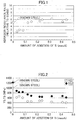
- Fig. 1 shows an effect of the amount of addition of Ti on the abrasion resistant property.
- Fig. 2 shows an effect of the amount of addition of Ti on the tensile properties (yield strength: YS, tensile strength: TS).
- the vertical axis indicates the abrasion resistance ratio, where the amount of abrasion in a rubber wheel abrasion test is compared with the abrasion weight loss of a mild steel (SS400) .
- the amount of addition of Ti is 0.1% or more, characteristics in which the abrasion resistant property is higher than or equal to that of a common abrasion resistant steel are obtained and TS is reduced to 800 MPa or less. That is, the formability can be improved while the abrasion characteristics equal to the known abrasion resistant steel, which has been subjected to a quenching heat treatment, is maintained.
- the test steel in the rubber wheel abrasion test was produced by rolling a steel slab containing 0.33%C-0.35%Si-0.82%Mn-0.05% to 1.2%Ti to 19 mmt and, thereafter, conducting air-cooling at a cooling rate of 0.5°C/s.
- the resulting steel was subjected to tensile tests and abrasion tests.
- a JIS No. 5 test piece was taken on the basis of the stipulation of JIS Z2201, and the tensile test was conducted so as to determine the tensile properties (yield strength: YS, tensile strength: TS).
- the rubber wheel abrasion test was conducted on the basis of ASTM G65, and the test results were organized in terms of the abrasion resistance ratio that is the ratio of the amount of abrasion weight loss of the mild steel (SS400) to the amount of abrasion weight loss of each test steel.
- the larger abrasion resistance ratio corresponds to better abrasion characteristics.
- the common abrasion resistant steel refers to a steel which is a material produced by hot rolling a steel having a composition of 0.15 mass%C-0.35 mass%Si-1.50 mass%Mn-0.13 mass%Cr-0.13 mass%Mo-0.01 mass%Ti-0.0010 mass%B, conducting reheating to 900°C and, thereafter, conducting a quenching heat treatment, and which has a Brinell hardness of about 400 HB.
- Ti is limited within the range of 0.1% to 1.2%, and preferably 0.1% to 0.8%.
- Si is effective as a deoxidizing element. In order to obtain such an effect, it is necessary that the content is 0.05% or more. Furthermore, Si is an element which forms a solid solution in a steel so as to contribute to an increase in hardness because of solid solution strengthening. However, if the content exceeds 1.0%, problems occur in that, for example, the ductility and the toughness deteriorate and the inclusion content increases. Therefore, preferably, Si is limited within the range of 0.05% to 1.0%. More preferably, Si is 0.05% to 0.40%.
- Mn contributes to an increase in hardness because of solid solution strengthening. In order to obtain such an effect, it is necessary that the content is 0.1% or more. On the other hand, if the content exceeds 2.0%, the weldability deteriorates. Therefore, preferably, Mn is limited within the range of 0.1% to 2.0%. More preferably, Mn is 0.1% to 1.60%.
- An element Al acts as a deoxidizing element. Such an effect is observed if the content is 0.0020% or more. However, a large content exceeding 0.1% allows the cleanness of the steel to deteriorate. Therefore, preferably, Al is limited to 0.1% or less.
- An element Cu improve the hardenability because of solid solution. In order to obtain this effect, it is necessary that the content is 0.1% or more. On the other hand, if the content exceeds 1.0%, the hot formability deteriorates. Therefore, preferably, Cu is limited within the range of 0.1% to 1.0%. More preferably, Cu is 0.1% to 0.5%.
- Ni improve the hardenability because of solid solution. Such an effect becomes remarkable if the content is 0.1% or more. On the other hand, if the content exceeds 2.0%, the material cost increases significantly. Therefore, preferably, Ni is limited within the range of 0.1% to 2.0%. More preferably, Ni is 0.1% to 1.0%.
- An element Cr exerts an effect of improving the hardenability. In order to obtain such an effect, it is necessary that the content is 0.1% or more. However, if the content exceeds 1.0%, the weldability deteriorates. Therefore, preferably, Cr is limited within the range of 0.1% to 1.0%. More preferably, Cr is 0.1% to 0.8%. Further preferably, Cr is 0.4% to 0.7%.
- Mo improves the hardenability. In order to obtain such an effect, it is necessary that the content is 0.05% or more. On the other hand, if the content exceeds 1.0%, the weldability deteriorates. Therefore, Mo is limited within the range of 0.05% to 1.0%. Preferably Mo is 0.05% to 0.40%.
- An element W improves the hardenability. In order to obtain such an effect, it is necessary that the content is 0.05% or more. On the other hand, if the content exceeds 1.0%, the weldability deteriorates. Therefore, preferably, W is limited within the range of 0.05% to 1.0%. More preferably, W is 0.05% to 0.40%. Since Mo and W form solid solutions in TiC, an effect of increasing the amount of hard phase is also exerted.
- An element B segregates at grain boundaries, strengthen grain boundaries, and contributes to improvement of the toughness effectively. In order to obtain such effects, it is necessary that the content is 0.0003% or more. On the other hand, if the content exceeds 0.0030%, the weldability deteriorates. Therefore, preferably, B is limited within the range of 0.0003% to 0.0030%. More preferably, B is 0.0003% to 0.0015%.
- DI* hardenability index
- Fig. 3 shows an effect of DI* on the abrasion resistant property.
- Fig. 4 shows an effect of DI* on the tensile properties (yield strength: YS, tensile strength: TS).
- the vertical axis indicates the abrasion resistance ratio, where the amount of abrasion in the rubber wheel abrasion test is compared with the amount of abrasion of the mild steel (SS400). The larger abrasion resistance ratio corresponds to better abrasion characteristics.
- the amount of abrasion is at a level equal to that of a common abrasion resistant steel regardless of low strength, that is, TS is 800 MPa or less.
- DI* is 60 or more
- excellent abrasion resistant property is exhibited, however, the tensile strength is 800 MPa or more and the formability is poor.
- the reason is estimated that in the case where DI* is 60 or more, a ferrite and bainite structure results.
- the test steel in the rubber wheel abrasion test was produced by rolling a steel slab containing 0.34%C-0.22%Si-0.55%Mn-0.22%Ti on a percent by mass basis and at least one element of Cu, Ni, Cr, Mo, and W, where DI* is 40 to 120, to 8 mmt and, thereafter, conducting air-cooling (cooling rate: 1.2°C/s) .
- the resulting steel was subjected to tensile tests and abrasion tests.
- a JIS No. 5 test piece was taken on the basis of the stipulation of JIS Z2201, and the tensile test was conducted so as to determine the tensile properties (yield strength: YS, tensile strength: TS).
- the rubber wheel abrasion test was conducted on the basis of ASTM G65, and the test results were organized in terms of the abrasion resistance ratio that is the ratio of the amount of abrasion of the mild steel (SS400) to the amount of abrasion of each test steel.
- Nb and V which are elements contributing to the abrasion resistant property, can be included as selective elements in order to further improve the abrasion resistant property.
- Nb is added in combination with Ti, forms a complex carbide ((NbTi)C) of Ti and Nb, and disperses as a hard second phase, so as to contribute to an improvement of the abrasion resistant property effectively.
- the content is 0.005% or more.
- the hard second phase complex carbide of Ti and Nb
- the hard second phase complex carbide of Ti and Nb
- Nb is limited within the range of 0.005% to 1.0%. More preferably, Nb is 0.1% to 0.5%.
- V 0.005% to 1.0%
- an element V is added in combination with Ti, forms a complex carbide ((VTi)C) of Ti and V, and disperses as a hard second phase, so as to contribute to an improvement of the abrasion resistant property effectively.
- the content is 0.005% or more.
- V is limited within the range of 0.005% to 1.0%. More preferably, V is 0.1% to 0.5%.
- Nb and V are added in combination, the same effect of improving the abrasion resistant property is exerted merely except that the hard second phase becomes (NbVTi)C.
- a carbonitride may be formed in addition to a carbide, but the same effect is obtained.
- the amount of addition of N exceeds 0.01%, the proportion of N in the carbonitride increases, the hardness of the hard second phase decreases, and deterioration of the abrasion resistant property is concerned. Therefore, it is preferable that the amount of addition of N is specified to be 0.01% or less.
- a microstructure of base metal is specified to be a microstructure in which a base phase is a ferrite and pearlite structure, and a hard phase (hard second phase) is dispersed in the base phase.
- the base phase means that the volume fraction thereof is 90% or more.
- two phases, i.e. ferrite and pearlite, constitute 90% or more of the whole.
- the volume fraction of the ferrite phase is 70% or more, among them, and the ferrite phase has an average particle diameter of 20 ⁇ m in terms of an equivalent circle diameter.
- the base phase has a Brinell hardness of 300 HB or less in consideration of the formability.
- the hard phase is a Ti based carbide, e.g., TiC.
- TiC Ti based carbide
- examples thereof can include TiC, (NbTi)C, (VTi)C, and TiC which Mo and/or W is dissolved in.
- the size of the hard phase is not specifically limited. However, from the viewpoint of the abrasion resistant property, about 0.5 ⁇ m or more, and 50 ⁇ m or less is preferable. Furthermore, it is preferable that the dispersion density of the hard phase is 400 particles/mm 2 or more from the viewpoint of the abrasion resistant property.
- the area of each hard phase is measured, an equivalent circle diameter is calculated from the area, the resulting equivalent circle diameters are arithmetically averaged, and the average value is assumed to be the size (average particle diameter) of the hard phase in the steel.
- a molten steel having the above-described composition is melted by a known melting method and steel materials, e.g., a slab, having a predetermined dimension is produced by a continuous casting method or an ingot making-blooming method.
- the cooling is adjusted in such a way that the cooling rate of a cast slab having a thickness of 200 to 400 mm in a temperature range of 1,500°C to 1,200°C becomes 0.2°C/s to 10°C/s.
- the steel material (cast slab or ingot) is hot rolled immediately without cooling or the above material is cooled, reheated to 950°C to 1,250°C, and hot rolled, so as to produce a steel having a predetermined sheet thickness. After the hot rolling, cooling is conducted at an average cooling rate of 2°C/s or less without a heat treatment.
- the cooling rate exceeds 2°C/s, the ferrite and pearlite structure is not obtained, the tensile strength becomes 800 MPa or more, the forming load in the steel bending increases, and the formability deteriorates. Therefore, the cooling rate is specified to be 2°C/s or less.
- the hot rolling condition is not specifically limited, insofar as the steel having predetermined size and shape can be produced. However, in consideration of the toughness which is a performance necessary to the steel, it is necessary that the rolling reduction rate at a steel surface temperature of 920°C or lower is specified to be 30% or more and the rolling finishing temperature is specified to be 900°C or lower.
- the abrasion resistant steel according to the present invention can be used for various purposes in which bending is required to the hot-rolled steel with no need to conduct a heat treatment after the hot rolling.
- a molten steel having the composition shown in Table 1 was melted in a vacuum melting furnace so as to produce a small steel ingot (50 kg) (steel material). Thereafter, heating to 1,050°C to 1,250°C and hot rolling were conducted so that a test steel having a sheet thickness of 6 to 100 mm was produced. Regarding each test steel, a microstructure observation, a tensile test, an abrasion test, a Charpy impact test, and a bend test were conducted.
- a test piece for the microstructure observation was polished and etched with nital. Regarding the site at a position 1 mm under the surface layer, the microstructure was identified by using an optical microscope (magnification ratio: 400 times), and the ferrite grain diameter and the size and the number of the hard phase were measured. The microstructure constituting 90% or more of the observation field of view was assumed to be a base phase, and an average particle diameter determined by the above-described method was assumed to be the size of hard phase.
- a JIS No. 5 test piece was taken on the basis of the stipulation of JIS Z2201, and the tensile test was conducted on the basis of the stipulation of JIS Z2241, so as to determine the tensile properties (yield strength: YS, tensile strength: TS).
- the present invention is specified to be within the range of a tensile strength (TS) of less than 800 MPa and a yield strength (YS) of less than 600 MPa.
- test piece was t (sheet thickness) ⁇ 20 ⁇ 75 (mm) and the rubber wheel abrasion test was conducted by using abrasion sand on the basis of the stipulation of ASTM G65. After the test, the amount of abrasion of the test piece was measured.
- the larger abrasion resistance ratio corresponds to better abrasion property.
- the range of the present invention is specified to be an abrasion resistance ratio of 4.0 or more.
- a V notch impact test piece was taken from the position at 1/4 in the plate thickness direction toward an L direction on the basis of the stipulation of JIS Z2202.
- the Charpy impact test was conducted at a test temperature of 0°C on the basis of the stipulation of JIS Z2242, so as to determine Charpy absorbed energy.
- the number of test pieces was three, and an average value was determined.
- Test pieces were taken on the basis of the stipulation of JIS Z2204.
- the width was 50 mm and in the case where the plate thickness of the test steel was 45 mm or more, the thickness was reduced to 25 mm by cutting from one surface side. In the case where the plate thickness of the test steel was less than 45 mm, the plate thickness was not changed.
- the bend test was conducted on the basis of the stipulation of JIS Z2248. The bend test was conducted by a pressing bend method at a pressing bend radius r of 1.5t.
- Table 2 shows the results of the microstructure observation, the tensile test, and the abrasion test.
- Invention examples (Steel Nos. 1 to 6 and Steel Nos. 8 and 9) are steels having a very excellent abrasion resistant property in spite of the tensile strength (TS) ⁇ 800 MPa and the yield strength (YS) ⁇ 600 MPa.
- Comparative examples are inferior in the abrasion resistant property to Invention examples, or inferior in the bending formability because YS and TS are high even if the abrasion resistant property is at an equal level.
Landscapes
- Chemical & Material Sciences (AREA)
- Engineering & Computer Science (AREA)
- Materials Engineering (AREA)
- Mechanical Engineering (AREA)
- Metallurgy (AREA)
- Organic Chemistry (AREA)
- Physics & Mathematics (AREA)
- Thermal Sciences (AREA)
- Crystallography & Structural Chemistry (AREA)
- Heat Treatment Of Steel (AREA)
- Heat Treatment Of Sheet Steel (AREA)
Claims (5)
- Acier résistant à l'abrasion constitué, sur une base de pourcentage en masse, de 0,05 % à 0,35 % de C, de 0,05 % à 1,0 % de Si, de 0,1 % à 2,0 % de Mn, de 0,1 % à 1,2 % de Ti, de 0,1 % ou moins d'Al, de 0,05 % à 1,0 % de Mo, d'au moins un élément parmi 0,1 % à 1,0 % de Cu, 0,1 % à 2,0 % de Ni, 0,1 % à 1,0 % de Cr, 0,05 % à 1,0 % de W et 0,0003 % à 0,0030 % de B, et éventuellement
d'au moins un élément parmi 0,005 % à 1,0 % de Nd et 0,005 % à 1,0 % de V sur une base de pourcentage en masse, et/ou
pas plus de 0,015 % de P, et/ou
pas plus de 0,012 % de S ; et/ou 0,01 % ou moins de N,
le reste étant du Fe et des impuretés inévitables,
où DI* représenté par la formule (1) est inférieur à 60.
où la tôle d'acier a une TS < 800 MPa et une YS < 600 MPa. - Acier résistant à l'abrasion selon la revendication 1, dans lequel une microstructure du métal de base comprend une phase de ferrite et de perlite en tant que phase de base ayant une fraction volumique de 90 % ou plus, et une phase dure de carbure à base de Ti est dispersée dans la phase de base.
- Acier résistant à l'abrasion selon la revendication 2, dans lequel la densité de dispersion de la phase dure est de 400 particules/mm2 ou plus.
- Procédé de production d'un acier résistant à l'abrasion, le procédé comprenant les étapes de laminage à chaud d'une brame d'acier ayant la composition selon la revendication 1 et de réalisation d'un refroidissement jusqu'à 400 °C ou moins à une vitesse de refroidissement de 2 °C/s ou moins après laminage à chaud.
- Procédé de production d'un acier résistant à l'abrasion extrêmement facile à mettre en oeuvre, selon la revendication 4, dans lequel le taux de réduction par laminage à chaud à 920 °C ou moins est spécifié comme étant égal ou supérieur à 30 % et la température de finissage de laminage est spécifiée comme étant égale ou inférieure à 900 °C.
Applications Claiming Priority (3)
| Application Number | Priority Date | Filing Date | Title |
|---|---|---|---|
| JP2007142003 | 2007-05-29 | ||
| JP2008113529A JP5380892B2 (ja) | 2007-05-29 | 2008-04-24 | 加工性に優れた耐磨耗鋼板およびその製造方法 |
| PCT/JP2008/060096 WO2008146929A1 (fr) | 2007-05-29 | 2008-05-26 | Tôle d'acier résistante à l'abrasion extrêmement facile à mettre en œuvre et son procédé de production |
Publications (3)
| Publication Number | Publication Date |
|---|---|
| EP2154262A1 EP2154262A1 (fr) | 2010-02-17 |
| EP2154262A4 EP2154262A4 (fr) | 2016-01-20 |
| EP2154262B1 true EP2154262B1 (fr) | 2018-03-07 |
Family
ID=40075158
Family Applications (1)
| Application Number | Title | Priority Date | Filing Date |
|---|---|---|---|
| EP08764952.1A Active EP2154262B1 (fr) | 2007-05-29 | 2008-05-26 | Tôle d'acier résistante à l'abrasion extrêmement facile à mettre en uvre et son procédé de production |
Country Status (12)
| Country | Link |
|---|---|
| US (1) | US20100147424A1 (fr) |
| EP (1) | EP2154262B1 (fr) |
| JP (1) | JP5380892B2 (fr) |
| KR (1) | KR101165654B1 (fr) |
| CN (1) | CN101688283B (fr) |
| AU (1) | AU2008255706B2 (fr) |
| BR (1) | BRPI0812277A2 (fr) |
| CA (1) | CA2685710C (fr) |
| CL (1) | CL2008001542A1 (fr) |
| MX (1) | MX2009012820A (fr) |
| PE (1) | PE20090342A1 (fr) |
| WO (1) | WO2008146929A1 (fr) |
Families Citing this family (43)
| Publication number | Priority date | Publication date | Assignee | Title |
|---|---|---|---|---|
| JP5458624B2 (ja) * | 2009-03-25 | 2014-04-02 | Jfeスチール株式会社 | 加工性に優れた耐磨耗鋼板およびその製造方法 |
| FR2960883B1 (fr) * | 2010-06-04 | 2012-07-13 | Vallourec Mannesmann Oil & Gas | Acier faiblement allie a limite d'elasticite elevee et haute resistance a la fissuration sous contrainte par les sulfures |
| KR101253897B1 (ko) * | 2010-12-23 | 2013-04-16 | 주식회사 포스코 | 내마모성 및 내식성이 우수한 오일샌드 슬러리 파이프용 강판 및 그 제조방법 |
| KR101271781B1 (ko) * | 2010-12-23 | 2013-06-07 | 주식회사 포스코 | 내마모성, 내식성 및 저온인성이 우수한 오일샌드 슬러리 파이프용 강판 및 그 제조방법 |
| CN102296234A (zh) * | 2011-09-07 | 2011-12-28 | 柳州钢铁股份有限公司 | 耐磨钢板及其生产装置和生产方法 |
| JP5375981B2 (ja) * | 2012-01-10 | 2013-12-25 | Jfeスチール株式会社 | 耐溶接割れ性に優れた耐摩耗溶接鋼管およびその製造方法 |
| KR101382833B1 (ko) * | 2012-03-16 | 2014-04-08 | 주식회사 포스코 | 내침식성이 우수한 오일샌드 슬러리 파이프용 강판 및 그 제조방법. |
| KR101382790B1 (ko) * | 2012-03-16 | 2014-04-08 | 주식회사 포스코 | 내침식성 및 저온충격인성이 우수한 오일샌드 슬러리 파이프용 강판 및 그 제조방법 |
| KR101382675B1 (ko) | 2012-03-19 | 2014-04-07 | 주식회사 포스코 | 내마모성과 가공성이 우수한 저합금 열연 강판 및 그 제조방법 |
| CN102876993A (zh) * | 2012-10-24 | 2013-01-16 | 章磊 | 一种高强度耐磨钢材料及其制作方法 |
| KR101461741B1 (ko) * | 2012-12-21 | 2014-11-14 | 주식회사 포스코 | 충격인성이 우수한 강관용 후물 열연강판과 강관 및 이들의 제조방법 |
| CN103898420A (zh) * | 2012-12-25 | 2014-07-02 | 隆英(金坛)特钢科技有限公司 | 耐磨钢板及其制造方法 |
| CN103272848B (zh) * | 2013-05-20 | 2015-12-02 | 浙江朋诚科技有限公司 | 一种高速轧机辊轴 |
| CN103272851A (zh) * | 2013-05-20 | 2013-09-04 | 浙江朋诚科技有限公司 | 一种高速轧机辊箱 |
| CN103266270A (zh) * | 2013-05-23 | 2013-08-28 | 江苏久联冶金机械制造有限公司 | 含硼铁基耐磨材料 |
| CN103409695B (zh) * | 2013-08-16 | 2015-04-08 | 洛阳钢丰机械制造有限公司 | 一种复合材料浇注铸造的挖斗和生产工艺及装置 |
| CN103469077B (zh) * | 2013-09-30 | 2015-12-02 | 济钢集团有限公司 | 一种高硅轧制钢板及其制备工艺 |
| CN104561823B (zh) * | 2013-10-09 | 2016-12-07 | 宝钢特钢有限公司 | 一种深冲用超高强度钢热轧钢板及制造方法 |
| KR101828199B1 (ko) | 2014-01-28 | 2018-02-09 | 제이에프이 스틸 가부시키가이샤 | 내마모 강판 및 그 제조 방법 |
| CN103882331A (zh) * | 2014-02-25 | 2014-06-25 | 南通东方科技有限公司 | 大型挖掘机用高强度、高耐磨支撑轮 |
| BR112017007685B1 (pt) * | 2014-10-17 | 2021-05-11 | Nippon Steel Corporation | material de aço laminado para haste de conexão de divisão por fratura |
| CN105779885B (zh) * | 2014-12-23 | 2018-03-27 | 上海梅山钢铁股份有限公司 | 一种具有良好加工性能的耐磨热轧薄钢板及其制造方法 |
| CN105018848A (zh) * | 2015-08-05 | 2015-11-04 | 启东市佳宝金属制品有限公司 | 耐磨合金 |
| CN105063497B (zh) * | 2015-09-17 | 2017-10-17 | 东北大学 | 一种高耐磨性能易加工低合金耐磨钢板及其制造方法 |
| CN105349896B (zh) * | 2015-10-28 | 2017-03-22 | 安徽省三方新材料科技有限公司 | 一种低合金挖掘机斗齿的制备方法 |
| CN105220077B (zh) * | 2015-11-11 | 2017-05-10 | 武汉钢铁(集团)公司 | 用于制造挖掘机挖斗的高表面质量热轧钢板及制造方法 |
| CN105779895A (zh) * | 2016-04-22 | 2016-07-20 | 柳州凯通新材料科技有限公司 | 一种锰钨钛耐磨铸钢及其加工工艺 |
| CN105695878A (zh) * | 2016-04-22 | 2016-06-22 | 柳州凯通新材料科技有限公司 | 锰钨钛耐磨铸钢及其制备方法 |
| CN105671438B (zh) * | 2016-04-22 | 2018-06-29 | 柳州凯通新材料科技有限公司 | 一种锰钨钛合金钢及其加工工艺 |
| CN105695861B (zh) * | 2016-04-22 | 2018-04-24 | 柳州凯通新材料科技有限公司 | 一种耐磨轧制复合钢板 |
| CN108034940B (zh) * | 2017-11-24 | 2020-08-25 | 宁波祥福机械科技有限公司 | 一种涡轮增压转子轴及其制备方法 |
| CN108588573A (zh) * | 2018-04-28 | 2018-09-28 | 江苏恒加机械工程有限公司 | 一种金属支架的生产工艺 |
| CN109881120A (zh) * | 2019-03-15 | 2019-06-14 | 重庆明高机械制造有限公司 | 一种挖沙斗 |
| CN110387499A (zh) * | 2019-06-27 | 2019-10-29 | 扬州市海纳源科技服务有限责任公司 | 一种混合低合金的金属材料及制备方法 |
| CN112442635B (zh) * | 2020-11-13 | 2022-03-29 | 唐山钢铁集团高强汽车板有限公司 | 高性能800MPa级以上低合金高强钢板及其制备方法 |
| CN112553543A (zh) * | 2020-11-30 | 2021-03-26 | 攀钢集团研究院有限公司 | 贝氏体基耐磨钢及其生产方法 |
| CN112813362B (zh) * | 2020-12-14 | 2023-03-28 | 内蒙古科技大学 | 高强钢的制造方法及高强钢履带板 |
| CN114774799B (zh) * | 2022-03-02 | 2023-04-18 | 河钢乐亭钢铁有限公司 | 一种农机用耐磨圆棒及其生产方法 |
| CN114737136B (zh) * | 2022-03-30 | 2023-05-16 | 鞍钢股份有限公司 | 布氏硬度400hbw高强度、高韧性热连轧薄钢板的生产方法 |
| CN115612923B (zh) * | 2022-09-13 | 2023-11-14 | 攀钢集团攀枝花钢铁研究院有限公司 | 一种成形及焊接性能良好的耐磨钢及其生产方法 |
| CN115558864B (zh) * | 2022-10-19 | 2023-10-24 | 湖南华菱涟源钢铁有限公司 | 一种高强钢板及其制备方法 |
| CN115838897A (zh) * | 2022-11-18 | 2023-03-24 | 莱芜钢铁集团银山型钢有限公司 | 一种415hb级泥沙输送管道用马氏体耐磨耐蚀钢管及其制备方法 |
| CN120796858B (zh) * | 2025-06-11 | 2026-01-16 | 东北大学 | 一种多尺度TiC颗粒强化型大厚度耐磨蚀钢材及其制备方法 |
Family Cites Families (16)
| Publication number | Priority date | Publication date | Assignee | Title |
|---|---|---|---|---|
| JPS62142726A (ja) | 1985-12-18 | 1987-06-26 | Kobe Steel Ltd | 溶接性の良好な耐摩耗用鋼板の製造法 |
| JPS63169359A (ja) | 1986-12-29 | 1988-07-13 | Sumitomo Metal Ind Ltd | 高靭性耐摩耗厚鋼板 |
| JPH01142023A (ja) | 1987-11-30 | 1989-06-02 | Kobe Steel Ltd | 曲げ加工性の良好な耐摩耗用鋼板の製造方法 |
| JPH04228536A (ja) * | 1990-06-06 | 1992-08-18 | Nkk Corp | 耐摩耗性に優れた鋼 |
| US5284529A (en) * | 1990-06-06 | 1994-02-08 | Nkk Corporation | Abrasion-resistant steel |
| JPH0441616A (ja) * | 1990-06-06 | 1992-02-12 | Nkk Corp | 低硬度で且つ耐摩耗性および曲げ加工性に優れた耐摩耗鋼の製造方法 |
| JPH0834684B2 (ja) * | 1990-11-30 | 1996-03-29 | 財団法人鉄道総合技術研究所 | 磁気浮上車両の推進装置 |
| JP3089882B2 (ja) * | 1993-03-09 | 2000-09-18 | 日本鋼管株式会社 | 表面性状に優れた耐摩耗鋼及びその製造方法 |
| JPH04308058A (ja) * | 1991-04-02 | 1992-10-30 | Nkk Corp | 耐摩耗性に優れた鋼 |
| JPH05239591A (ja) * | 1992-02-27 | 1993-09-17 | Nkk Corp | 耐摩耗性に優れた鋼 |
| JP4239257B2 (ja) * | 1998-11-02 | 2009-03-18 | Jfeスチール株式会社 | 耐リジング性に優れたTi含有フェライト系ステンレス鋼板の製造方法 |
| JP3940301B2 (ja) * | 2002-02-27 | 2007-07-04 | 新日本製鐵株式会社 | 耐曲げ性に優れるブラスト用耐候性高強度鋼板およびその製造方法 |
| FR2847272B1 (fr) * | 2002-11-19 | 2004-12-24 | Usinor | Procede pour fabriquer une tole en acier resistant a l'abrasion et tole obtenue |
| JP4257539B2 (ja) * | 2003-09-01 | 2009-04-22 | 住友金属工業株式会社 | 軟窒化用非調質鋼 |
| JP5017937B2 (ja) * | 2005-12-28 | 2012-09-05 | Jfeスチール株式会社 | 曲げ加工性に優れた耐摩耗鋼板 |
| JP4899874B2 (ja) * | 2007-01-12 | 2012-03-21 | Jfeスチール株式会社 | 加工性に優れた耐摩耗鋼板およびその製造方法 |
-
2008
- 2008-04-24 JP JP2008113529A patent/JP5380892B2/ja active Active
- 2008-05-26 KR KR1020097021902A patent/KR101165654B1/ko active Active
- 2008-05-26 US US12/600,891 patent/US20100147424A1/en not_active Abandoned
- 2008-05-26 AU AU2008255706A patent/AU2008255706B2/en active Active
- 2008-05-26 WO PCT/JP2008/060096 patent/WO2008146929A1/fr not_active Ceased
- 2008-05-26 MX MX2009012820A patent/MX2009012820A/es active IP Right Grant
- 2008-05-26 CN CN2008800161928A patent/CN101688283B/zh active Active
- 2008-05-26 BR BRPI0812277-6A2A patent/BRPI0812277A2/pt not_active Application Discontinuation
- 2008-05-26 CA CA2685710A patent/CA2685710C/fr active Active
- 2008-05-26 EP EP08764952.1A patent/EP2154262B1/fr active Active
- 2008-05-28 PE PE2008000905A patent/PE20090342A1/es active IP Right Grant
- 2008-05-28 CL CL200801542A patent/CL2008001542A1/es unknown
Non-Patent Citations (1)
| Title |
|---|
| None * |
Also Published As
| Publication number | Publication date |
|---|---|
| BRPI0812277A2 (pt) | 2014-11-18 |
| JP2009007665A (ja) | 2009-01-15 |
| CN101688283A (zh) | 2010-03-31 |
| AU2008255706A1 (en) | 2008-12-04 |
| KR20090123006A (ko) | 2009-12-01 |
| CN101688283B (zh) | 2012-02-01 |
| KR101165654B1 (ko) | 2012-07-16 |
| WO2008146929A9 (fr) | 2009-11-12 |
| PE20090342A1 (es) | 2009-03-29 |
| US20100147424A1 (en) | 2010-06-17 |
| EP2154262A4 (fr) | 2016-01-20 |
| JP5380892B2 (ja) | 2014-01-08 |
| CA2685710C (fr) | 2012-07-31 |
| EP2154262A1 (fr) | 2010-02-17 |
| MX2009012820A (es) | 2009-12-15 |
| WO2008146929A1 (fr) | 2008-12-04 |
| CA2685710A1 (fr) | 2008-12-04 |
| CL2008001542A1 (es) | 2008-09-05 |
| AU2008255706B2 (en) | 2011-10-13 |
Similar Documents
| Publication | Publication Date | Title |
|---|---|---|
| EP2154262B1 (fr) | Tôle d'acier résistante à l'abrasion extrêmement facile à mettre en uvre et son procédé de production | |
| JP5186809B2 (ja) | 加工性に優れた耐磨耗鋼板およびその製造方法 | |
| EP2589676B1 (fr) | Plaque ou tôle d'acier résistant à l'abrasion avec d'excellentes propriétés en termes de ténacité d'une soudure et de résistance à la rupture différée | |
| EP2789699B1 (fr) | Produit d'acier laminé à chaud de grande dureté et procédé de fabrication de celui-ci | |
| JP4899874B2 (ja) | 加工性に優れた耐摩耗鋼板およびその製造方法 | |
| KR101388334B1 (ko) | 내지연 파괴 특성이 우수한 고장력 강재 그리고 그 제조 방법 | |
| EP2589675A1 (fr) | Tôle d'acier résistant à l'usure avec d'excellentes propriétés en termes de ténacité d'une pièce soudée et de résistance à la destruction d'une enveloppe | |
| CN110100034A (zh) | 高硬度耐磨钢以及制造该高硬度耐磨钢的方法 | |
| JP5683327B2 (ja) | 低温靭性に優れた耐摩耗鋼板 | |
| CN101835918A (zh) | 高强度厚钢板及其制造方法 | |
| CN104884655A (zh) | 焊接性优异的高锰耐磨钢 | |
| JP4735167B2 (ja) | 低温靭性に優れた耐摩耗鋼板の製造方法 | |
| CN114729435A (zh) | 低温冲击韧性优异的高硬度耐磨钢及其制造方法 | |
| KR20250020738A (ko) | 내마모 강판 및 그의 제조 방법 | |
| JP5458624B2 (ja) | 加工性に優れた耐磨耗鋼板およびその製造方法 | |
| JP4735191B2 (ja) | 低温靭性に優れた耐摩耗鋼板およびその製造方法 | |
| JP4650013B2 (ja) | 低温靱性に優れた耐摩耗鋼板およびその製造方法 | |
| JP4238832B2 (ja) | 耐摩耗鋼板及びその製造方法 | |
| JP2002020837A (ja) | 靭性に優れた耐摩耗鋼およびその製造方法 | |
| JP5217191B2 (ja) | 加工性に優れた耐磨耗鋼板およびその製造方法 | |
| JP2010174284A (ja) | 耐磨耗鋼 | |
| JP3536687B2 (ja) | 高耐食性および高強度を有する低C高Cr合金鋼及びその製造方法 | |
| KR102832310B1 (ko) | 내마모 강판 및 내마모 강판의 제조 방법 | |
| JP2007262429A (ja) | 曲げ加工性に優れた耐摩耗鋼板 | |
| JP2020132912A (ja) | 耐摩耗厚鋼板 |
Legal Events
| Date | Code | Title | Description |
|---|---|---|---|
| PUAI | Public reference made under article 153(3) epc to a published international application that has entered the european phase |
Free format text: ORIGINAL CODE: 0009012 |
|
| 17P | Request for examination filed |
Effective date: 20091127 |
|
| AK | Designated contracting states |
Kind code of ref document: A1 Designated state(s): AT BE BG CH CY CZ DE DK EE ES FI FR GB GR HR HU IE IS IT LI LT LU LV MC MT NL NO PL PT RO SE SI SK TR |
|
| AX | Request for extension of the european patent |
Extension state: AL BA MK RS |
|
| DAX | Request for extension of the european patent (deleted) | ||
| RA4 | Supplementary search report drawn up and despatched (corrected) |
Effective date: 20151217 |
|
| RIC1 | Information provided on ipc code assigned before grant |
Ipc: C22C 38/14 20060101ALI20151211BHEP Ipc: C22C 38/04 20060101ALI20151211BHEP Ipc: C22C 38/02 20060101ALI20151211BHEP Ipc: C21D 8/02 20060101ALI20151211BHEP Ipc: C22C 38/58 20060101AFI20151211BHEP |
|
| GRAP | Despatch of communication of intention to grant a patent |
Free format text: ORIGINAL CODE: EPIDOSNIGR1 |
|
| RIC1 | Information provided on ipc code assigned before grant |
Ipc: C22C 38/28 20060101ALI20170515BHEP Ipc: C22C 38/14 20060101ALI20170515BHEP Ipc: C22C 38/22 20060101ALI20170515BHEP Ipc: C21D 1/06 20060101ALI20170515BHEP Ipc: C22C 38/04 20060101ALI20170515BHEP Ipc: C21D 8/02 20060101ALI20170515BHEP Ipc: C22C 38/02 20060101ALI20170515BHEP Ipc: C22C 38/58 20060101AFI20170515BHEP |
|
| INTG | Intention to grant announced |
Effective date: 20170612 |
|
| GRAJ | Information related to disapproval of communication of intention to grant by the applicant or resumption of examination proceedings by the epo deleted |
Free format text: ORIGINAL CODE: EPIDOSDIGR1 |
|
| INTC | Intention to grant announced (deleted) | ||
| GRAP | Despatch of communication of intention to grant a patent |
Free format text: ORIGINAL CODE: EPIDOSNIGR1 |
|
| INTG | Intention to grant announced |
Effective date: 20171013 |
|
| GRAS | Grant fee paid |
Free format text: ORIGINAL CODE: EPIDOSNIGR3 |
|
| GRAA | (expected) grant |
Free format text: ORIGINAL CODE: 0009210 |
|
| AK | Designated contracting states |
Kind code of ref document: B1 Designated state(s): AT BE BG CH CY CZ DE DK EE ES FI FR GB GR HR HU IE IS IT LI LT LU LV MC MT NL NO PL PT RO SE SI SK TR |
|
| REG | Reference to a national code |
Ref country code: GB Ref legal event code: FG4D |
|
| REG | Reference to a national code |
Ref country code: CH Ref legal event code: EP Ref country code: AT Ref legal event code: REF Ref document number: 976646 Country of ref document: AT Kind code of ref document: T Effective date: 20180315 |
|
| REG | Reference to a national code |
Ref country code: IE Ref legal event code: FG4D |
|
| REG | Reference to a national code |
Ref country code: DE Ref legal event code: R096 Ref document number: 602008054350 Country of ref document: DE |
|
| REG | Reference to a national code |
Ref country code: FR Ref legal event code: PLFP Year of fee payment: 11 |
|
| REG | Reference to a national code |
Ref country code: SE Ref legal event code: TRGR |
|
| REG | Reference to a national code |
Ref country code: NL Ref legal event code: MP Effective date: 20180307 |
|
| REG | Reference to a national code |
Ref country code: LT Ref legal event code: MG4D |
|
| PG25 | Lapsed in a contracting state [announced via postgrant information from national office to epo] |
Ref country code: NO Free format text: LAPSE BECAUSE OF FAILURE TO SUBMIT A TRANSLATION OF THE DESCRIPTION OR TO PAY THE FEE WITHIN THE PRESCRIBED TIME-LIMIT Effective date: 20180607 Ref country code: CY Free format text: LAPSE BECAUSE OF FAILURE TO SUBMIT A TRANSLATION OF THE DESCRIPTION OR TO PAY THE FEE WITHIN THE PRESCRIBED TIME-LIMIT Effective date: 20180307 Ref country code: ES Free format text: LAPSE BECAUSE OF FAILURE TO SUBMIT A TRANSLATION OF THE DESCRIPTION OR TO PAY THE FEE WITHIN THE PRESCRIBED TIME-LIMIT Effective date: 20180307 Ref country code: LT Free format text: LAPSE BECAUSE OF FAILURE TO SUBMIT A TRANSLATION OF THE DESCRIPTION OR TO PAY THE FEE WITHIN THE PRESCRIBED TIME-LIMIT Effective date: 20180307 Ref country code: HR Free format text: LAPSE BECAUSE OF FAILURE TO SUBMIT A TRANSLATION OF THE DESCRIPTION OR TO PAY THE FEE WITHIN THE PRESCRIBED TIME-LIMIT Effective date: 20180307 |
|
| PG25 | Lapsed in a contracting state [announced via postgrant information from national office to epo] |
Ref country code: GR Free format text: LAPSE BECAUSE OF FAILURE TO SUBMIT A TRANSLATION OF THE DESCRIPTION OR TO PAY THE FEE WITHIN THE PRESCRIBED TIME-LIMIT Effective date: 20180608 Ref country code: BG Free format text: LAPSE BECAUSE OF FAILURE TO SUBMIT A TRANSLATION OF THE DESCRIPTION OR TO PAY THE FEE WITHIN THE PRESCRIBED TIME-LIMIT Effective date: 20180607 Ref country code: LV Free format text: LAPSE BECAUSE OF FAILURE TO SUBMIT A TRANSLATION OF THE DESCRIPTION OR TO PAY THE FEE WITHIN THE PRESCRIBED TIME-LIMIT Effective date: 20180307 |
|
| PG25 | Lapsed in a contracting state [announced via postgrant information from national office to epo] |
Ref country code: PL Free format text: LAPSE BECAUSE OF FAILURE TO SUBMIT A TRANSLATION OF THE DESCRIPTION OR TO PAY THE FEE WITHIN THE PRESCRIBED TIME-LIMIT Effective date: 20180307 Ref country code: EE Free format text: LAPSE BECAUSE OF FAILURE TO SUBMIT A TRANSLATION OF THE DESCRIPTION OR TO PAY THE FEE WITHIN THE PRESCRIBED TIME-LIMIT Effective date: 20180307 Ref country code: NL Free format text: LAPSE BECAUSE OF FAILURE TO SUBMIT A TRANSLATION OF THE DESCRIPTION OR TO PAY THE FEE WITHIN THE PRESCRIBED TIME-LIMIT Effective date: 20180307 Ref country code: RO Free format text: LAPSE BECAUSE OF FAILURE TO SUBMIT A TRANSLATION OF THE DESCRIPTION OR TO PAY THE FEE WITHIN THE PRESCRIBED TIME-LIMIT Effective date: 20180307 |
|
| PG25 | Lapsed in a contracting state [announced via postgrant information from national office to epo] |
Ref country code: SK Free format text: LAPSE BECAUSE OF FAILURE TO SUBMIT A TRANSLATION OF THE DESCRIPTION OR TO PAY THE FEE WITHIN THE PRESCRIBED TIME-LIMIT Effective date: 20180307 Ref country code: CZ Free format text: LAPSE BECAUSE OF FAILURE TO SUBMIT A TRANSLATION OF THE DESCRIPTION OR TO PAY THE FEE WITHIN THE PRESCRIBED TIME-LIMIT Effective date: 20180307 |
|
| REG | Reference to a national code |
Ref country code: DE Ref legal event code: R097 Ref document number: 602008054350 Country of ref document: DE |
|
| REG | Reference to a national code |
Ref country code: CH Ref legal event code: PL |
|
| PG25 | Lapsed in a contracting state [announced via postgrant information from national office to epo] |
Ref country code: PT Free format text: LAPSE BECAUSE OF FAILURE TO SUBMIT A TRANSLATION OF THE DESCRIPTION OR TO PAY THE FEE WITHIN THE PRESCRIBED TIME-LIMIT Effective date: 20180709 |
|
| PLBE | No opposition filed within time limit |
Free format text: ORIGINAL CODE: 0009261 |
|
| STAA | Information on the status of an ep patent application or granted ep patent |
Free format text: STATUS: NO OPPOSITION FILED WITHIN TIME LIMIT |
|
| REG | Reference to a national code |
Ref country code: BE Ref legal event code: MM Effective date: 20180531 |
|
| PG25 | Lapsed in a contracting state [announced via postgrant information from national office to epo] |
Ref country code: DK Free format text: LAPSE BECAUSE OF FAILURE TO SUBMIT A TRANSLATION OF THE DESCRIPTION OR TO PAY THE FEE WITHIN THE PRESCRIBED TIME-LIMIT Effective date: 20180307 Ref country code: MC Free format text: LAPSE BECAUSE OF FAILURE TO SUBMIT A TRANSLATION OF THE DESCRIPTION OR TO PAY THE FEE WITHIN THE PRESCRIBED TIME-LIMIT Effective date: 20180307 |
|
| 26N | No opposition filed |
Effective date: 20181210 |
|
| REG | Reference to a national code |
Ref country code: IE Ref legal event code: MM4A |
|
| PG25 | Lapsed in a contracting state [announced via postgrant information from national office to epo] |
Ref country code: CH Free format text: LAPSE BECAUSE OF NON-PAYMENT OF DUE FEES Effective date: 20180531 Ref country code: LI Free format text: LAPSE BECAUSE OF NON-PAYMENT OF DUE FEES Effective date: 20180531 Ref country code: SI Free format text: LAPSE BECAUSE OF FAILURE TO SUBMIT A TRANSLATION OF THE DESCRIPTION OR TO PAY THE FEE WITHIN THE PRESCRIBED TIME-LIMIT Effective date: 20180307 |
|
| PG25 | Lapsed in a contracting state [announced via postgrant information from national office to epo] |
Ref country code: LU Free format text: LAPSE BECAUSE OF NON-PAYMENT OF DUE FEES Effective date: 20180526 |
|
| PG25 | Lapsed in a contracting state [announced via postgrant information from national office to epo] |
Ref country code: IE Free format text: LAPSE BECAUSE OF NON-PAYMENT OF DUE FEES Effective date: 20180526 |
|
| PG25 | Lapsed in a contracting state [announced via postgrant information from national office to epo] |
Ref country code: BE Free format text: LAPSE BECAUSE OF NON-PAYMENT OF DUE FEES Effective date: 20180531 |
|
| REG | Reference to a national code |
Ref country code: AT Ref legal event code: UEP Ref document number: 976646 Country of ref document: AT Kind code of ref document: T Effective date: 20180307 |
|
| PG25 | Lapsed in a contracting state [announced via postgrant information from national office to epo] |
Ref country code: MT Free format text: LAPSE BECAUSE OF NON-PAYMENT OF DUE FEES Effective date: 20180526 |
|
| PG25 | Lapsed in a contracting state [announced via postgrant information from national office to epo] |
Ref country code: TR Free format text: LAPSE BECAUSE OF FAILURE TO SUBMIT A TRANSLATION OF THE DESCRIPTION OR TO PAY THE FEE WITHIN THE PRESCRIBED TIME-LIMIT Effective date: 20180307 |
|
| PG25 | Lapsed in a contracting state [announced via postgrant information from national office to epo] |
Ref country code: HU Free format text: LAPSE BECAUSE OF FAILURE TO SUBMIT A TRANSLATION OF THE DESCRIPTION OR TO PAY THE FEE WITHIN THE PRESCRIBED TIME-LIMIT; INVALID AB INITIO Effective date: 20080526 |
|
| PG25 | Lapsed in a contracting state [announced via postgrant information from national office to epo] |
Ref country code: IS Free format text: LAPSE BECAUSE OF FAILURE TO SUBMIT A TRANSLATION OF THE DESCRIPTION OR TO PAY THE FEE WITHIN THE PRESCRIBED TIME-LIMIT Effective date: 20180707 |
|
| REG | Reference to a national code |
Ref country code: FR Ref legal event code: PLFP Year of fee payment: 16 |
|
| PGFP | Annual fee paid to national office [announced via postgrant information from national office to epo] |
Ref country code: IT Payment date: 20230412 Year of fee payment: 16 |
|
| PG25 | Lapsed in a contracting state [announced via postgrant information from national office to epo] |
Ref country code: IT Free format text: LAPSE BECAUSE OF NON-PAYMENT OF DUE FEES Effective date: 20240526 |
|
| PGFP | Annual fee paid to national office [announced via postgrant information from national office to epo] |
Ref country code: FI Payment date: 20250513 Year of fee payment: 18 |
|
| PGFP | Annual fee paid to national office [announced via postgrant information from national office to epo] |
Ref country code: DE Payment date: 20250402 Year of fee payment: 18 |
|
| PGFP | Annual fee paid to national office [announced via postgrant information from national office to epo] |
Ref country code: GB Payment date: 20250401 Year of fee payment: 18 |
|
| PGFP | Annual fee paid to national office [announced via postgrant information from national office to epo] |
Ref country code: FR Payment date: 20250401 Year of fee payment: 18 |
|
| PGFP | Annual fee paid to national office [announced via postgrant information from national office to epo] |
Ref country code: AT Payment date: 20250425 Year of fee payment: 18 |
|
| PGFP | Annual fee paid to national office [announced via postgrant information from national office to epo] |
Ref country code: SE Payment date: 20250411 Year of fee payment: 18 |