EP2154833A1 - Procédé de transmission, procédé de traitement de réception et appareil permettant d'adapter la largeur de bande pour une transmission de données - Google Patents
Procédé de transmission, procédé de traitement de réception et appareil permettant d'adapter la largeur de bande pour une transmission de données Download PDFInfo
- Publication number
- EP2154833A1 EP2154833A1 EP08757781A EP08757781A EP2154833A1 EP 2154833 A1 EP2154833 A1 EP 2154833A1 EP 08757781 A EP08757781 A EP 08757781A EP 08757781 A EP08757781 A EP 08757781A EP 2154833 A1 EP2154833 A1 EP 2154833A1
- Authority
- EP
- European Patent Office
- Prior art keywords
- control
- block
- blocks
- coding
- identifier
- Prior art date
- Legal status (The legal status is an assumption and is not a legal conclusion. Google has not performed a legal analysis and makes no representation as to the accuracy of the status listed.)
- Granted
Links
Images





Classifications
-
- H—ELECTRICITY
- H04—ELECTRIC COMMUNICATION TECHNIQUE
- H04Q—SELECTING
- H04Q11/00—Selecting arrangements for multiplex systems
- H04Q11/04—Selecting arrangements for multiplex systems for time-division multiplexing
-
- H—ELECTRICITY
- H04—ELECTRIC COMMUNICATION TECHNIQUE
- H04J—MULTIPLEX COMMUNICATION
- H04J3/00—Time-division multiplex systems
- H04J3/16—Time-division multiplex systems in which the time allocation to individual channels within a transmission cycle is variable, e.g. to accommodate varying complexity of signals, to vary number of channels transmitted
- H04J3/1605—Fixed allocated frame structures
- H04J3/1652—Optical Transport Network [OTN]
-
- H—ELECTRICITY
- H04—ELECTRIC COMMUNICATION TECHNIQUE
- H04J—MULTIPLEX COMMUNICATION
- H04J3/00—Time-division multiplex systems
- H04J3/16—Time-division multiplex systems in which the time allocation to individual channels within a transmission cycle is variable, e.g. to accommodate varying complexity of signals, to vary number of channels transmitted
- H04J3/1605—Fixed allocated frame structures
- H04J3/1652—Optical Transport Network [OTN]
- H04J3/1664—Optical Transport Network [OTN] carrying hybrid payloads, e.g. different types of packets or carrying frames and packets in the paylaod
-
- H—ELECTRICITY
- H04—ELECTRIC COMMUNICATION TECHNIQUE
- H04L—TRANSMISSION OF DIGITAL INFORMATION, e.g. TELEGRAPHIC COMMUNICATION
- H04L25/00—Baseband systems
- H04L25/38—Synchronous or start-stop systems, e.g. for Baudot code
- H04L25/40—Transmitting circuits; Receiving circuits
- H04L25/49—Transmitting circuits; Receiving circuits using code conversion at the transmitter; using predistortion; using insertion of idle bits for obtaining a desired frequency spectrum; using three or more amplitude levels ; Baseband coding techniques specific to data transmission systems
- H04L25/4906—Transmitting circuits; Receiving circuits using code conversion at the transmitter; using predistortion; using insertion of idle bits for obtaining a desired frequency spectrum; using three or more amplitude levels ; Baseband coding techniques specific to data transmission systems using binary codes
- H04L25/4908—Transmitting circuits; Receiving circuits using code conversion at the transmitter; using predistortion; using insertion of idle bits for obtaining a desired frequency spectrum; using three or more amplitude levels ; Baseband coding techniques specific to data transmission systems using binary codes using mBnB codes
-
- H—ELECTRICITY
- H04—ELECTRIC COMMUNICATION TECHNIQUE
- H04J—MULTIPLEX COMMUNICATION
- H04J2203/00—Aspects of optical multiplex systems other than those covered by H04J14/05 and H04J14/07
- H04J2203/0001—Provisions for broadband connections in integrated services digital network using frames of the Optical Transport Network [OTN] or using synchronous transfer mode [STM], e.g. SONET, SDH
- H04J2203/0073—Services, e.g. multimedia, GOS, QOS
- H04J2203/0082—Interaction of SDH with non-ATM protocols
- H04J2203/0085—Support of Ethernet
-
- H—ELECTRICITY
- H04—ELECTRIC COMMUNICATION TECHNIQUE
- H04J—MULTIPLEX COMMUNICATION
- H04J2203/00—Aspects of optical multiplex systems other than those covered by H04J14/05 and H04J14/07
- H04J2203/0001—Provisions for broadband connections in integrated services digital network using frames of the Optical Transport Network [OTN] or using synchronous transfer mode [STM], e.g. SONET, SDH
- H04J2203/0089—Multiplexing, e.g. coding, scrambling, SONET
-
- H—ELECTRICITY
- H04—ELECTRIC COMMUNICATION TECHNIQUE
- H04J—MULTIPLEX COMMUNICATION
- H04J3/00—Time-division multiplex systems
- H04J3/16—Time-division multiplex systems in which the time allocation to individual channels within a transmission cycle is variable, e.g. to accommodate varying complexity of signals, to vary number of channels transmitted
- H04J3/1605—Fixed allocated frame structures
- H04J3/1652—Optical Transport Network [OTN]
- H04J3/1658—Optical Transport Network [OTN] carrying packets or ATM cells
-
- H—ELECTRICITY
- H04—ELECTRIC COMMUNICATION TECHNIQUE
- H04Q—SELECTING
- H04Q2213/00—Indexing scheme relating to selecting arrangements in general and for multiplex systems
- H04Q2213/13034—A/D conversion, code compression/expansion
-
- H—ELECTRICITY
- H04—ELECTRIC COMMUNICATION TECHNIQUE
- H04Q—SELECTING
- H04Q2213/00—Indexing scheme relating to selecting arrangements in general and for multiplex systems
- H04Q2213/13166—Fault prevention
-
- H—ELECTRICITY
- H04—ELECTRIC COMMUNICATION TECHNIQUE
- H04Q—SELECTING
- H04Q2213/00—Indexing scheme relating to selecting arrangements in general and for multiplex systems
- H04Q2213/13216—Code signals, frame structure
-
- H—ELECTRICITY
- H04—ELECTRIC COMMUNICATION TECHNIQUE
- H04Q—SELECTING
- H04Q2213/00—Indexing scheme relating to selecting arrangements in general and for multiplex systems
- H04Q2213/13297—Coupling different rates in TDM systems, data rate adaptation
-
- H—ELECTRICITY
- H04—ELECTRIC COMMUNICATION TECHNIQUE
- H04Q—SELECTING
- H04Q2213/00—Indexing scheme relating to selecting arrangements in general and for multiplex systems
- H04Q2213/13332—Broadband, CATV, dynamic bandwidth allocation
Definitions
- the present invention relates to the field of communications, and more particularly to a technology of adapting a payload bandwidth for data transmission.
- a communication system When transmitting service data, a communication system encodes the service data to be transmitted through an encoding scheme adapted for a payload bandwidth.
- the control character includes C code, O code, /S/ code, and /T/ code.
- the C code occupies seven bits
- the O code occupies four bits
- the /S/ code and the /T/ code are removed according to the encoding rule during encoding.
- a 65B coding block has a structure similar to that of the 66B coding block, except that the Syn field of the 65B coding block occupies only one bit.
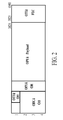
- FIG. 2 shows a structure of an OTN frame. It can be seen that, the OTN frame includes an optical channel payload unit-k (OPUk) payload, an optical channel transport unit-k (OTUk) forward error correction (FEC), and the following overhead (OH) portion caused by transmitting the payload:
- OPUk optical channel payload unit-k
- OFEC optical channel transport unit-k
- OH overhead
- the payload bandwidth of the OPU2 is 9.995276962 GBits/s
- the payload bandwidth of the OPU3 is 40.150519322 GBits/s.
- FIG. 3 is a schematic view of an OH structure of the OTN frame. Referring to FIGs. 2 and 3 , the OH suitable for extending the payload bandwidth of the OPU2 is analyzed in the following.
- FIG. 3 It can be seen from FIG. 3 that, nine Reserve (RES) bytes, namely, the first three RES bytes in the second row and six RES bytes in the fourth row in FIG. 3 , may be used for bearing the load.
- RES Reserve
- a portion in FIG. 3 corresponding to the OPU k OH in FIG. 2 includes a client specific portion and a payload structure identifier (PSI), and occupies eight bytes, in which the PSI occupies one byte and cannot be used for bearing the load, and the other seven bytes may be used for bearing the load.
- PSI payload structure identifier
- the 16 bytes may be used for bearing the load, thereby extending the payload bandwidth of the OPU2.
- the value is slightly higher than the rate of 10 GBits/s.
- a payload bandwidth of at least 40 GBits/s is required.
- the payload bandwidth of the OPU3 of the OTN is 40.150519322 GBits/s, which is higher than 40 GBits/s
- the transmission of 40GE MAC frames in the OTN may be achieved.
- the two linear rates are both higher than the payload bandwidth of the OPU3 of the OTN. Therefore, the payload bandwidth required for transmitting MAC frames of the 40GE standard in the OTN cannot be satisfied if the 64B/66B encoding scheme or the 64B/65B encoding scheme (with the Syn field being changed to one bit) is directly used.
- the present invention is directed to a sending method, a receiving and processing method and an apparatus for adapting a payload bandwidth for data transmission, which satisfy the payload bandwidth required for transmitting MAC frames of the 40GE or 10GE standard in an OTN.
- the present invention is realized through the following technical solutions.
- the present invention provides a sending method for adapting a payload bandwidth for data transmission, which includes the following steps.
- N coding blocks containing 64B are acquired, in which N is an integer greater than or equal to 2.
- the acquired N coding blocks are converted into a (64*N+1)B coding block.
- the (64*N+1)B coding block obtained by conversion is sent.
- the present invention further provides a sending device, which includes a first acquisition unit, a first conversion unit, and a first transmission unit.
- the first acquisition unit is adapted to acquire N coding blocks containing 64B, in which N is an integer greater than or equal to 2.
- the first conversion unit is adapted to convert the acquired N coding blocks into a (64*N+1)B coding block.
- the first transmission unit is adapted to send the (64*N+1)B coding block obtained by conversion.
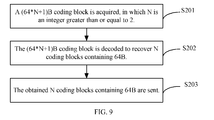
- the present invention further provides a receiving and processing method for adapting a payload bandwidth for data transmission, which includes the following steps.
- a (64*N+1)B coding block is acquired, in which N is an integer greater than or equal to 2.
- the (64*N+1)B coding block is decoded to recover N coding blocks containing 64B.
- the recovered N coding blocks containing 64B are sent.
- the present invention further provides a receiving and processing device, which includes a second acquisition unit, a second conversion unit, and a second transmission unit.
- the second acquisition unit is adapted to acquire a (64*N+1)B coding block, in which N is an integer greater than or equal to 2.
- the second conversion unit is adapted to decode the (64*N+1)B coding block to recover N coding blocks containing 64B.
- the second transmission unit is adapted to send the recovered N coding blocks containing 64B.
- N coding blocks containing 64B are acquired, in which N is an integer greater than or equal to 2, and the acquired N coding blocks are converted into a (64*N+1)B coding block, so that a required linear rate is reduced after conversion, thereby reducing the requirements for the payload bandwidth of a bearer layer, and satisfying the payload bandwidth required for transmitting 40GE or 10GE MAC frames in an OTN.
- the present invention provides a sending method for adapting a payload bandwidth for data transmission, which is capable of converting N 66B coding blocks containing 64B obtained through the 64B/66B encoding scheme into a (64*N+1)B coding block, thereby adapting a payload bandwidth of an OTN.
- the possibility of converting N 66B coding blocks into a (64*N+1)B coding block is analyzed as follows.
- the Syn occupying two bits is used to identify whether a payload block in the coding block is a data block containing data only or a control block containing control characters.
- one bit or two bits may be used to identify whether a payload block following a certain control block containing control characters in the coding block is a control block containing control characters or a data block containing data only.
- the identifier is still named Syn. If one bit is used, one bit is saved as compared with the Syn field in the original 66B coding block, so that the total number of bytes of the coding block can be reduced, thereby further reducing the payload bandwidth for bearing the coding block.
- a control block containing control characters Since the positions of the control blocks need to be changed when the encoding scheme is converted, and the Syn for identifying whether a payload block is a control block containing control characters can only indicate whether a certain control block contains control characters, a control block containing control characters must use a corresponding identifier to identify a block point thereof in the 66B coding block.
- the identifier is named Block Point (BP), and the maximum number of bits occupied by the identifier BP can determine a maximum value of the number N of 66B coding blocks that can be converted.
- the control block containing the control characters also needs to use a corresponding identifier to indicate whether the subsequent control block contains control characters.
- the identifier is named Last Control Block (LC), and may occupy one bit.
- the number of bits occupied by the BP is determined below.
- Encoding rates of (64*N)B coding blocks and (64*N+1)B coding blocks obtained after encoding are calculated according to various values ofN, and the data shown in Table 2 is obtained.
- Table 2 N 64*N 64*N+ 1 Encoding Rate/Payload Kate Encoding Rate under 10GBits/s Payload Encoding Rate under 40GBits/s Payload Encoding Rate under 100GBits/s Payload 1 64 65 1.015625000000 10.156250000000 40.625000000000 101.562500000000 2 128 129 1.007812500000 10.078125000000 40.312500000000 100.781250000000 3 192 193 1.005208333333 10.052083333333 40.208333333333 100.520833333333 4 256 257 1.003906250000 10.039062500000 40.156250000000 100.390625000000 5 320 321 1.003125000000 10.031250000000 40.125000000000 100.312500000000 6 384 385 1.002604166667 10.0
- the linear rate of the 66B coding block obtained after encoding should be lower than the payload bandwidth of the OPU3 of 40.150519322 GBits/s. It can be seen from FIG. 2 that, at this time, the value of N needs to be greater than or equal to 5, and at least three bits are needed for identifying the block point of the control block containing the control characters in the original 64B coding block, that is to say, the BP occupies at least three bits.
- the BP and the LC need to occupy four bits in total. Since the Block Type Field in the 66B coding block structure has eight bits, four bits are left. The four bits may indicate 16 types of control blocks, and thus can satisfy the requirements for representing the 15 types of control blocks in the original 66B coding block structure.
- N 66B coding blocks are converted into a (64*N+1)B coding block
- a BT occupying four bits is used for representing the original 15 data types
- the code content in the subsequent control block corresponding to each data type identified by the BT remains unchanged
- an LC occupying one bit is used for identifying whether a control block following the control block contains control characters is a control block containing control characters or a control block containing data only.
- three bits are left, which may be used for identifying the position of the control block in the original 66B coding block, that is, the BP occupies three bits at most.
- the maximum value of the number N of 66B coding blocks is 8.
- the linear rate of the 66B coding blocks obtained after encoding should be lower than the extended payload bandwidth of the OPU2 of 10.005776202 GBits/s. It can be seen from FIG. 3 that, at this time, the value of N needs to be greater than or equal to 28. Since 2 4 ⁇ 28 ⁇ 2 5 , at least five bits need to be used for identifying the block point of the control block containing the control characters in the original 66B coding block, that is to say, the BP at least needs to occupy five bits.
- the BP and the LC need to occupy six bits in total.
- the rest two bits may be used to set an identifier BT for indicating four types of control blocks, which obviously cannot satisfy the requirements for representing the 15 types of control blocks in the original 66B coding block structure. Therefore, other methods need to be used, so as to save the bits, and use the bits in combination with the BT to satisfy the requirements for representing the 15 data types of control blocks in the original 66B coding block structure.
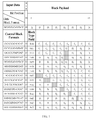
- control characters In the 10GE standard, only 12 types of control characters exist, including one type of /S/ code, one type of /T/ code, eight types of C code, and two types of O code. Each type of code occupies eight bits. The /S/ code and the /T/ code are removed according to the encoding rule during encoding. Corresponding to the 15 types of control blocks in the 66B coding block structure as shown in FIG.
- nine types of control blocks having idle bits are control blocks with the /S/ code and the /T/ code removed, namely, control blocks corresponding to type identifiers 0x33, 0x66, 0x87, 0x99, 0xaa, 0xb4, 0xcc, 0xd2, and 0xe1 as shown in FIG. 1 .
- four types of control blocks contain the C code and/or the O code, namely, control blocks corresponding to type identifiers 0x1e, 0x2d, 0x55, and 0x4b as shown in FIG. 1 , and two types of control blocks do not contain any control character (but contain data only), namely, control blocks corresponding to type identifiers 0x78 and 0xff as shown in FIG. 1 .
- the 13 types of control blocks containing control characters may be compressed. After the 13 types of control blocks containing control characters are compressed, some space is available. For example, a space occupying four bits may be available, and an identifier Block Type Extend (BTX) may be set in the space to identify the corresponding compressed data blocks.
- BTX Block Type Extend
- control blocks containing data only there is no space for compression. Since the nine types of control blocks with the /S/ code and the /T/ code removed have idle bits, the control blocks may be compressed. Since only eight types of C code exist and only two types of O code exist, the space occupied by the C code and the O code may be further compressed. For example, four bits rather than eight bits are used for representing the C code, and two bits rather than eight bits are used for representing the O code. In this way, the original code content is maintained, and meanwhile, expandable space is reserved. As shown in Table 3, the last two columns show types represented by the C code and the O code after compression. The C code uses four bits, and the O code uses two bits.
- N 66B coding blocks are converted into a (64*N+1)B coding block
- the code content in the control blocks containing data only remains unchanged
- the space occupied by control characters in each control block containing the control characters is compressed
- the bits corresponding to the space are used to identify the corresponding compressed control block, in which the identifier is marked BTX.
- the specific method for compressing the control characters in the control blocks is not limited in the present invention, as long as the purpose of field compression can be achieved.
- Control blocks that can be compressed are taken as a control block group of one type, a space occupied by a field identifying types of the control blocks is determined according to the control block group and the number of control blocks that cannot be compressed, and an identifier BT is set in the space to identify the types of the control blocks.
- control block group of one type Since all the compressed control blocks are taken as the control block group of one type, it can be known that a control block following the last control block in the control block group does not contain any control character and is a control block containing data only, as long as the last control block is identified.
- a space corresponding to one bit may be used to set an identifier LC to identify the last control block in the control block group.
- Block Type Field for identifying the types of the control blocks in the 66B coding block uses eight bits, the BT for identifying the block types of the control blocks occupies two bits, and the LC for identifying the last control block in the control block group occupies one bit, it may be determined that an identifier occupying five bits can be used for identifying the positions of the control blocks in the original 66B coding block, in which the identifier is marked BP.
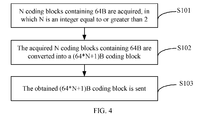
- the method according to the first embodiment of the present invention includes the following steps, as shown in FIG. 4 .
- step S 101 N coding blocks containing 64B are acquired, in which N is an integer greater than or equal to 2.
- a data stream of coding block obtained through the 64B/66B encoding scheme is received through a data interface using the 64B/66B encoding scheme, and N 66B coding blocks containing 64B contained in the data stream of coding block are acquired.
- step S102 the acquired N coding blocks containing 64B are converted into a (64*N+1)B coding block.
- N 66B coding blocks containing 64B are converted into a (64*N+1)B coding block, which may be implemented through the following two solutions.
- the N 66B coding blocks containing 64B are decoded to obtain data blocks containing data only and different types of control blocks containing control characters.
- control blocks containing the control characters are placed into a control block buffer as a control block group, an identifier Syn is set to identify the control block group, an identifier LC is set to identify a last control block in the control block group, and the data blocks containing data only are placed, as a data block group, into a buffer containing data blocks only.
- a space occupied by the identifier Syn for identifying the control block group may be equal to or smaller than the space occupied by the Syn field for identifying control blocks containing control characters in the original 66B coding blocks containing 64B.
- a space smaller than or equal to three bits is used to set an identifier BP to identify the positions of the control blocks in the original 66B coding blocks containing 64B.
- FIG. 5 is a schematic structural view of a 60B coding block obtained by converting 66B coding blocks containing 64B. It can be seen by comparing FIG. 1 with FIG. 5 that, the 15 types of control blocks represented by eight bits in the 66B coding blocks containing 64B are represented by four bits in the 60B coding block, for example, 1, 2, 3, 4, 5, 6, 7, 8, 9, A, B, C, D, E, and F are corresponding to the original 15 data types in the 66B coding blocks containing 64B; in the 60B coding block, the LC uses one bit to represent whether a control block following a control block containing control characters contains control characters; and in the 60B coding block, the BP is used for identifying the positions of the control blocks in the original 66B coding blocks containing 64B.
- the space occupied by the control characters in the control blocks may be further compressed.
- the N 66B coding blocks containing 64B are decoded to obtain data blocks containing data only and different types of control blocks containing control characters.
- control blocks containing the control characters are placed into a control block buffer as a control block group, an identifier Syn is set to identify the control block group, an identifier LC is set to identify a last control block in the control block group, and the data blocks containing data only are placed, as a data block group, into a buffer containing data blocks only.
- a space occupied by the identifier Syn for identifying the control block group may be equal to or smaller than the space occupied by the Syn field for identifying control blocks containing control characters in the original 66B coding blocks containing 64B.
- Two bits are used to set an identifier BT to identify the following block types corresponding to the control blocks in the control block group: a type of control blocks containing O code and/or C code, a type of control blocks containing removed /S/ code, and a type of control blocks containing removed /T/ code; the space occupied by O code and/or C code in the control blocks containing the O code and/or the C code is compressed, bits corresponding to the compressed space are used to set an identifier BTX to identify types corresponding to the compressed control blocks, and the BTX is combined with the BT to uniquely identify the block types of the control blocks in the original 66B coding blocks containing 64B.
- a space smaller than or equal to five bits is used to set an identifier BP to identify the positions of the control blocks in the original 66B coding blocks containing 64B.
- FIG. 6 is a schematic structural view of a 58B coding block obtained by converting 66B coding blocks containing 64B. It can be seen by comparing FIG. 1 with FIG. 6 that, the 15 types of control blocks represented by eight bits in the 66B coding blocks containing 64B are represented by two bits in the 58B coding block, for example, 01, 10, and 11 occupying two bits are corresponding to the original 15 data types in the 66B coding blocks containing 64B, with 01 and 10 corresponding to control blocks containing data only in the 66B coding blocks containing 64B, and 11 corresponding to control blocks containing control characters in the 66B coding blocks containing 64B, in which the control blocks are compressed control blocks.
- a space obtained after compressing the control blocks is used to set an identifier BTX to identify the compressed control blocks.
- the LC uses one bit to represent whether a control block following a control block containing control characters contains control characters; and in the 58B coding block, the BP is used for identifying the positions of the control blocks in the original 66B coding blocks containing 64B.
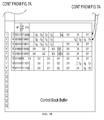
- FIG. 7 is a schematic view of an encoding process for converting N 66B coding blocks containing 64B into a 58B coding block, in which N is 16.
- the first 66B block is a data block containing data only, and is placed into a buffer containing data blocks only.
- the third 66B block is a data block containing data only, and is placed into the buffer for data blocks containing data only.
- FIG. 8 is a structural view of a 58B coding block obtained after the encoding process is completed.
- the first embodiment of the present invention merely provides an instance of the process for converting N 66B coding blocks containing 64B into a (64*N+1)B coding block; however, the present invention is not limited thereto, and other methods may also be used, as long as the 66B coding blocks containing 64B can be sequentially recovered from the (64*N+1)B coding block obtained by conversion.
- step S 103 is performed.
- step S103 the obtained (64*N+1)B coding block is sent.
- the (64*N+1)B coding block may be sent through a lower-layer data transmission module.
- the present invention provides a receiving and processing method for adapting a payload bandwidth for data transmission.
- the method includes the following steps.
- step S201 a (64*N+1)B coding block is acquired, in which N is an integer greater than or equal to 2.
- the (64*N+1)B coding block may be acquired from a data stream transmitted from a lower-layer data transmission module.
- step S202 the (64*N+1)B coding block is decoded to recover N coding blocks containing 64B.
- the acquired (64*N+1)B coding block is decoded to obtain an identifier Syn for identifying a control block group containing control characters, an identifier LC for identifying a last control block in the control block group, an identifier BP for identifying the positions of the control blocks in the original coding blocks containing 64B, and an identifier BT for identifying a block type of each control block.
- control block group containing the control characters and a data block group containing data only are determined according to the identifier Syn and the identifier LC.
- Types of control blocks in the control block group in the coding blocks containing 64B are determined according to an identifier BTX for identifying block types of compressed control blocks and an identifier BT for identifying the block types of the control blocks.
- control blocks are recovered according to the position of the control blocks in the original coding blocks containing 64B corresponding to the identifier BP.
- the decoding process includes the following steps.
- the acquired (64*N+1)B coding block is decoded.
- Syn 1, representing that the first block of the (64*N+1)B coding block is a control block, the first block is decoded according to the control block, and a control block in the 66B coding blocks containing 64B is recovered from the control block according to the BT and the BTX.
- the recovered control block in the 64B/66B coding blocks is placed into the second control block in the 66B coding blocks containing 64B according to the BP, and Syn is set to 10.
- the LC of the first control block of the (64*N+1)B coding block is 0, indicating that the second block is still a control block.
- the second block is decoded according to the control block, and a control block in the 66B coding blocks containing 64B is recovered from the control block according to the BT and the BTX; and the recovered control block in the 66B coding blocks containing 64B is placed into the second control block in the 66B coding blocks containing 64B according to the BP, and Syn is set to 10.
- Syn corresponding to the first block in a buffer of the (64*N+1)B coding block is searched out, which is 00; then, the ninth block is written to the 66B coding blocks containing 64B, and Syn is set to 01.
- Syn corresponding to the third block in a buffer of the (64*N+1)B coding block is searched out, which is 00; then, the tenth block is written to the 66B coding blocks containing 64B, and Syn is set to 01.
- Syn corresponding to the sixth block in a buffer of the (64*N+1)B coding block is searched out, which is 00; then, the eleventh block is written to the 66B coding blocks containing 64B, and Syn is set to 01.
- step S203 the obtained N coding blocks containing 64B are sent.
- the 66B coding blocks containing 64B are sent to a data interface using the 64B/66B encoding scheme, or the 65B coding blocks containing 64B are sent to a data interface using the 64B/65B encoding scheme.
- the present invention further provides a sending device, which includes a first acquisition unit, a first conversion unit, and a first transmission unit.
- the first conversion unit includes a first decoding subunit, a first control block group discrimination subunit, a first type discrimination subunit, and a first position discrimination subunit.
- the first acquisition unit is adapted to acquire N coding blocks containing 64B, in which N is an integer greater than or equal to 2.
- the first conversion unit is adapted to convert the acquired N coding blocks into a (64*N+1)B coding block.
- the specific implementation is as follows.
- the first decoding subunit is adapted to decode the N coding blocks containing 64B to obtain data blocks containing data only and different types of control blocks containing control characters.
- the first control block group discrimination subunit is adapted to place the control blocks containing the control characters into a control block buffer as a control block group, set an identifier Syn to identify the control block group, set an identifier LC to identify a last control block in the control block group, and place the data blocks containing data only, as a data block group, into a buffer containing data blocks only.
- the first type discrimination subunit is adapted to use four bits to set an identifier BT to identify a block type of each control block, in which the type is corresponding to a type of each control block in the coding blocks containing 64B.
- the first position discrimination subunit is adapted to use a space smaller than or equal to three bits to set an identifier BP to identify the position of the control blocks in the coding blocks containing 64B.
- the first transmission unit is adapted to send the (64*N+1)B coding block obtained by conversion.
- the sending device may further include a compression subunit, adapted to compress space occupied by the control characters in the control blocks.
- N is an integer.
- the present invention further provides another sending device, which includes a first acquisition unit, a first conversion unit, and a first transmission unit.
- the first conversion unit includes a first decoding subunit, a first control block group discrimination subunit, a second type discrimination subunit, and a second position discrimination subunit.
- the first acquisition unit is adapted to acquire N coding blocks containing 64B, in which N is an integer greater than or equal to 2.
- the first conversion unit is adapted to convert the acquired N coding blocks into a (64*N+1)B coding block.
- the specific implementation is as follows.
- the first decoding subunit is adapted to decode the N coding blocks containing 64B to obtain data blocks containing data only and different types of control blocks containing control characters.
- the first control block group discrimination subunit is adapted to place the control blocks containing the control characters into a control block buffer as a control block group, set an identifier Syn to identify the control block group, set an identifier LC to identify a last control block in the control block group, and place the data blocks containing data only, as a data block group, into a buffer containing data blocks only.
- the second type discrimination subunit is adapted to use two bits to set an identifier BT to identify the following block types corresponding to the control blocks in the control block group: a type of control blocks containing O code and/or C code, a type of control blocks containing removed /S/ code, and a type of control blocks containing removed /T/ code; compress a space occupied by O code and/or C code in the control blocks containing the O code and/or the C code, use bits corresponding to the compressed space to set an identifier BTX to identify block types corresponding to the compressed control blocks, and combine the BTX with the BT to uniquely identify block types of the control blocks in the coding blocks containing 64B.
- the second position discrimination subunit is adapted to use a space smaller than or equal to five bits to set an identifier BP to identify the positions of the control blocks in the coding blocks containing 64B.
- the first transmission unit is adapted to send the (64*N+1)B coding block obtained by conversion.
- N is an integer.
- the present invention further provides a receiving and processing device, which includes a second acquisition unit, a second conversion unit, and a second transmission unit.
- the second conversion unit includes a second decoding subunit, a first control block group determination subunit, a first control block type determination subunit, and a first position recovery subunit.
- the second acquisition unit is adapted to acquire a (64*N+1)B coding block, in which N is an integer greater than or equal to 2.
- the second conversion unit is adapted to decode the (64*N+1)B coding block to recover N coding blocks containing 64B.
- the specific implementation is as follows.
- the second decoding subunit is adapted to decode the (64*N+1)B coding block to obtain an identifier Syn for identifying a control block group containing control characters, an identifier LC for identifying a last control block in the control block group, an identifier BP for identifying the positions of the control blocks in the coding blocks containing 64B, and an identifier BT for identifying the type of each control block.
- the first control block group determination subunit is adapted to determine the control block group containing the control characters and a data block group containing data only according to the identifier Syn and the identifier LC.
- the first control block type determination subunit is adapted to determine a type of each control block in the coding blocks containing 64B according to a corresponding relation between the types of the control blocks identified by the identifier BT and types of control blocks in the coding blocks containing 64B.
- the first position recovery subunit is adapted to recover the control blocks to the positions in the coding blocks containing 64B according to the positions of the control blocks in the coding blocks containing 64B corresponding to the identifier BP.
- the second transmission unit is adapted to send the recovered N coding blocks containing 64B.
- the receiving and processing device may further include a space recovery subunit, which is adapted to recover space occupied by the control characters in the control blocks in the coding blocks containing 64B from space occupied by control characters in compressed control blocks.
- a space recovery subunit which is adapted to recover space occupied by the control characters in the control blocks in the coding blocks containing 64B from space occupied by control characters in compressed control blocks.
- N is an integer.
- the present invention further provides another receiving and processing device, which includes a second acquisition unit, a second conversion unit, and a second transmission unit.
- the second conversion unit includes a second decoding subunit, a first control block group determination subunit, a second control block type determination subunit, and a second position recovery subunit.
- the second acquisition unit is adapted to acquire a (64*N+1)B coding block, in which N is an integer greater than or equal to 2.
- the second conversion unit is adapted to decode the (64*N+1)B coding block to recover N coding blocks containing 64B.
- the specific implementation is as follows.
- the second decoding subunit is adapted to decode the (64*N+1)B coding block to obtain an identifier Syn for identifying a control block group containing control characters, an identifier LC for identifying a last control block in the control block group, an identifier BP for identifying the positions of the control blocks in the coding blocks containing 64B, and an identifier BT for identifying a block type of each control block.
- the first control block group determination subunit is adapted to determine the control block group containing the control characters and a data block group containing data only according to the identifier Syn and the identifier LC.
- the second control block type determination subunit is adapted to determine types of control blocks in the control block group in the coding blocks containing 64B according to an identifier BTX for identifying types corresponding to compressed control blocks and the identifier BT for identifying the block types of the control blocks.
- the second position recovery subunit is adapted to recover the control blocks to the positions in the coding blocks containing 64B according to the positions of the control blocks in the coding blocks containing 64B corresponding to the identifier BP.
- the second transmission unit is adapted to send the recovered N coding blocks containing 64B.
- N is an integer.
- the acquired N coding blocks are converted into a (64*N+1)B coding block, so that the required linear rate is reduced after conversion, thereby reducing the requirements for the payload bandwidth of the bearer layer, and satisfying the payload bandwidth required for transmitting 40GE or 10GE MAC frames in the OTN.
Landscapes
- Engineering & Computer Science (AREA)
- Computer Networks & Wireless Communication (AREA)
- Signal Processing (AREA)
- Physics & Mathematics (AREA)
- Spectroscopy & Molecular Physics (AREA)
- Compression, Expansion, Code Conversion, And Decoders (AREA)
Applications Claiming Priority (2)
| Application Number | Priority Date | Filing Date | Title |
|---|---|---|---|
| CN2007101124069A CN101330350B (zh) | 2007-06-21 | 2007-06-21 | 适配载荷带宽传输数据的发送方法、接收处理方法及装置 |
| PCT/CN2008/071372 WO2008154878A1 (fr) | 2007-06-21 | 2008-06-19 | Procédé de transmission, procédé de traitement de réception et appareil permettant d'adapter la largeur de bande pour une transmission de données |
Publications (3)
| Publication Number | Publication Date |
|---|---|
| EP2154833A1 true EP2154833A1 (fr) | 2010-02-17 |
| EP2154833A4 EP2154833A4 (fr) | 2011-01-05 |
| EP2154833B1 EP2154833B1 (fr) | 2013-08-14 |
Family
ID=40155923
Family Applications (1)
| Application Number | Title | Priority Date | Filing Date |
|---|---|---|---|
| EP08757781.3A Active EP2154833B1 (fr) | 2007-06-21 | 2008-06-19 | Procédé de transmission, procédé de traitement de réception et appareil permettant d'adapter la largeur de bande pour une transmission de données |
Country Status (5)
| Country | Link |
|---|---|
| US (1) | US8270433B2 (fr) |
| EP (1) | EP2154833B1 (fr) |
| CN (1) | CN101330350B (fr) |
| ES (1) | ES2432794T3 (fr) |
| WO (1) | WO2008154878A1 (fr) |
Cited By (3)
| Publication number | Priority date | Publication date | Assignee | Title |
|---|---|---|---|---|
| EP3226144A4 (fr) * | 2014-11-24 | 2017-12-13 | ZTE Corporation | Procédés et appareils d'envoi et de réception de données en série, et support d'informations |
| EP3316495A4 (fr) * | 2015-07-23 | 2018-09-05 | Huawei Technologies Co., Ltd. | Procédé et dispositif d'émission de données |
| EP3813282A4 (fr) * | 2018-11-26 | 2021-10-20 | Huawei Technologies Co., Ltd. | Procédé et appareil de traitement de flux de bits de service |
Families Citing this family (16)
| Publication number | Priority date | Publication date | Assignee | Title |
|---|---|---|---|---|
| CN101330350B (zh) | 2007-06-21 | 2011-09-14 | 华为技术有限公司 | 适配载荷带宽传输数据的发送方法、接收处理方法及装置 |
| JP5631406B2 (ja) * | 2009-11-03 | 2014-11-26 | アルカテル−ルーセント | 機械端末機器からの複数のサービス・データを集約する方法およびデバイス |
| CN102377589B (zh) * | 2010-08-12 | 2014-12-24 | 华为终端有限公司 | 实现权限管理控制的方法及终端 |
| US9065626B2 (en) | 2011-10-25 | 2015-06-23 | Cavium, Inc. | Bit error rate impact reduction |
| US8855248B2 (en) * | 2011-10-25 | 2014-10-07 | Cavium, Inc. | Word boundary lock |
| US8898550B2 (en) * | 2012-06-26 | 2014-11-25 | International Business Machines Corporation | Encoding of data for transmission |
| US9166618B2 (en) | 2013-03-15 | 2015-10-20 | International Business Machines Corporation | Data encoding and decoding |
| EP2966823B1 (fr) | 2013-04-01 | 2017-05-31 | Huawei Technologies Co., Ltd. | Procédé et dispositif de codage et décodage de couche physique de l'ethernet |
| US11277217B2 (en) * | 2015-06-30 | 2022-03-15 | Ciena Corporation | Flexible Ethernet switching systems and methods |
| HUP1500335A2 (en) | 2015-07-17 | 2017-01-30 | Tibor Rozsas | Installation and process for converting of wastes |
| CN108270512B (zh) * | 2016-12-30 | 2021-10-26 | 华为技术有限公司 | 一种信号传送方法、装置和系统 |
| CN108347292A (zh) * | 2017-01-22 | 2018-07-31 | 深圳市中兴微电子技术有限公司 | 一种物理编码子层的数据编解码方法和装置 |
| CN109391461B (zh) * | 2017-08-11 | 2021-08-13 | 华为技术有限公司 | 透传业务频率的方法和设备 |
| CN111327970B (zh) * | 2018-12-13 | 2022-04-26 | 中国电信股份有限公司 | 无源光网络管理通道、建立方法和系统、发送端和接收端 |
| CN113381836B (zh) * | 2020-02-25 | 2023-03-24 | 华为技术有限公司 | 一种线路编码方法及装置 |
| CN115017404B (zh) * | 2022-04-27 | 2024-10-18 | 昆明理工大学 | 基于压缩空间句子选择的目标新闻话题摘要方法 |
Family Cites Families (7)
| Publication number | Priority date | Publication date | Assignee | Title |
|---|---|---|---|---|
| US7570643B2 (en) * | 2003-02-12 | 2009-08-04 | Cisco Technology, Inc. | Efficient framing procedure for variable length packets |
| US20050047433A1 (en) | 2003-06-17 | 2005-03-03 | Dmitri Rizer | Physical coding sublayer transcoding |
| US7639687B1 (en) * | 2004-12-30 | 2009-12-29 | Marvell International Ltd. | Encoding scheme with arbitrary control symbol placement |
| US7782805B1 (en) * | 2005-02-08 | 2010-08-24 | Med Belhadj | High speed packet interface and method |
| CN1841976B (zh) * | 2005-03-29 | 2010-04-28 | 华为技术有限公司 | 一种传输实时并行数据流的方法及系统 |
| US7487426B2 (en) * | 2005-10-17 | 2009-02-03 | Enigma Semiconductor, Inc. | 64b/66b coding apparatus and method |
| CN101330350B (zh) | 2007-06-21 | 2011-09-14 | 华为技术有限公司 | 适配载荷带宽传输数据的发送方法、接收处理方法及装置 |
-
2007
- 2007-06-21 CN CN2007101124069A patent/CN101330350B/zh active Active
-
2008
- 2008-06-19 WO PCT/CN2008/071372 patent/WO2008154878A1/fr not_active Ceased
- 2008-06-19 EP EP08757781.3A patent/EP2154833B1/fr active Active
- 2008-06-19 ES ES08757781T patent/ES2432794T3/es active Active
-
2009
- 2009-12-17 US US12/640,338 patent/US8270433B2/en active Active
Non-Patent Citations (2)
| Title |
|---|
| No further relevant documents disclosed * |
| See also references of WO2008154878A1 * |
Cited By (6)
| Publication number | Priority date | Publication date | Assignee | Title |
|---|---|---|---|---|
| EP3226144A4 (fr) * | 2014-11-24 | 2017-12-13 | ZTE Corporation | Procédés et appareils d'envoi et de réception de données en série, et support d'informations |
| EP3316495A4 (fr) * | 2015-07-23 | 2018-09-05 | Huawei Technologies Co., Ltd. | Procédé et dispositif d'émission de données |
| US10567103B2 (en) | 2015-07-23 | 2020-02-18 | Huawei Technologies Co., Ltd. | Data transmission method and device |
| EP3813282A4 (fr) * | 2018-11-26 | 2021-10-20 | Huawei Technologies Co., Ltd. | Procédé et appareil de traitement de flux de bits de service |
| JP2021533691A (ja) * | 2018-11-26 | 2021-12-02 | 華為技術有限公司Huawei Technologies Co., Ltd. | サービスビットストリームを処理する方法及び装置 |
| US12074696B2 (en) | 2018-11-26 | 2024-08-27 | Huawei Technologies Co., Ltd. | Method and apparatus for processing service bitstream |
Also Published As
| Publication number | Publication date |
|---|---|
| US8270433B2 (en) | 2012-09-18 |
| EP2154833B1 (fr) | 2013-08-14 |
| ES2432794T3 (es) | 2013-12-05 |
| CN101330350B (zh) | 2011-09-14 |
| WO2008154878A1 (fr) | 2008-12-24 |
| EP2154833A4 (fr) | 2011-01-05 |
| US20100091794A1 (en) | 2010-04-15 |
| CN101330350A (zh) | 2008-12-24 |
Similar Documents
| Publication | Publication Date | Title |
|---|---|---|
| EP2154833A1 (fr) | Procédé de transmission, procédé de traitement de réception et appareil permettant d'adapter la largeur de bande pour une transmission de données | |
| US8259750B2 (en) | Method and device for mapping ethernet code blocks to OTN for transmission | |
| US8238373B2 (en) | Method and device for mapping ethernet code blocks to OTN for transmission | |
| EP2288059B1 (fr) | Procédé et dispositif pour appliquer des blocs de code Ethernet sur OTN pour transmission | |
| US9451057B1 (en) | Communication system and encoding method having low overhead | |
| KR101341933B1 (ko) | 데이터를 부호화 및 복호화하기 위한 방법 및 장치 | |
| EP2999152A1 (fr) | Procédé de traitement de données et dispositif associé de codage et de décodage fec | |
| US8199772B2 (en) | Systems and methods for synchronous generic framing protocol mapping | |
| CN108631908B (zh) | 使用FlexE承载信号帧的方法、FlexE信号帧还原的方法及装置 | |
| CN115623363A (zh) | 传输数据的方法和装置 | |
| CN105790883B (zh) | 一种处理信号的方法及通信设备 | |
| WO2021047228A1 (fr) | Procédé de communication, dispositif et support de stockage | |
| CN110890936B (zh) | 一种码块生成方法、接收方法和装置 | |
| US20020159484A1 (en) | Coding scheme using a control code map for signal transmission in optical communications networks | |
| EP1648133B1 (fr) | Procédé d'encapsulation d'un flot de données | |
| CN101692633A (zh) | 一种编码/解码的方法及装置 | |
| CN101710853A (zh) | 一种数据映射与解映射的方法及装置 | |
| CN101098192A (zh) | 一种基于光传输系统的监控信息传送装置和方法 | |
| CN117729459A (zh) | 一种otn网络中用于osu业务带内管理的方法及设备 | |
| CN121310004A (zh) | 数据处理方法及相关设备 | |
| CN106134118A (zh) | 光收发机以及使用该光收发机的数据映射方法 | |
| CN101938311A (zh) | 一种光纤通道业务中数据压缩或解压缩的方法及装置 |
Legal Events
| Date | Code | Title | Description |
|---|---|---|---|
| PUAI | Public reference made under article 153(3) epc to a published international application that has entered the european phase |
Free format text: ORIGINAL CODE: 0009012 |
|
| 17P | Request for examination filed |
Effective date: 20091216 |
|
| AK | Designated contracting states |
Kind code of ref document: A1 Designated state(s): AT BE BG CH CY CZ DE DK EE ES FI FR GB GR HR HU IE IS IT LI LT LU LV MC MT NL NO PL PT RO SE SI SK TR |
|
| AX | Request for extension of the european patent |
Extension state: AL BA MK RS |
|
| DAX | Request for extension of the european patent (deleted) | ||
| A4 | Supplementary search report drawn up and despatched |
Effective date: 20101202 |
|
| RIC1 | Information provided on ipc code assigned before grant |
Ipc: H04L 25/49 20060101ALI20101126BHEP Ipc: H04L 12/46 20060101AFI20090114BHEP |
|
| 17Q | First examination report despatched |
Effective date: 20120423 |
|
| GRAP | Despatch of communication of intention to grant a patent |
Free format text: ORIGINAL CODE: EPIDOSNIGR1 |
|
| RIN1 | Information on inventor provided before grant (corrected) |
Inventor name: JIANG, ZHANGZHEN |
|
| GRAS | Grant fee paid |
Free format text: ORIGINAL CODE: EPIDOSNIGR3 |
|
| GRAA | (expected) grant |
Free format text: ORIGINAL CODE: 0009210 |
|
| AK | Designated contracting states |
Kind code of ref document: B1 Designated state(s): AT BE BG CH CY CZ DE DK EE ES FI FR GB GR HR HU IE IS IT LI LT LU LV MC MT NL NO PL PT RO SE SI SK TR |
|
| REG | Reference to a national code |
Ref country code: GB Ref legal event code: FG4D |
|
| REG | Reference to a national code |
Ref country code: AT Ref legal event code: REF Ref document number: 627372 Country of ref document: AT Kind code of ref document: T Effective date: 20130815 Ref country code: CH Ref legal event code: EP |
|
| REG | Reference to a national code |
Ref country code: IE Ref legal event code: FG4D |
|
| REG | Reference to a national code |
Ref country code: DE Ref legal event code: R096 Ref document number: 602008026781 Country of ref document: DE Effective date: 20131010 |
|
| REG | Reference to a national code |
Ref country code: ES Ref legal event code: FG2A Ref document number: 2432794 Country of ref document: ES Kind code of ref document: T3 Effective date: 20131205 |
|
| REG | Reference to a national code |
Ref country code: NL Ref legal event code: VDEP Effective date: 20130814 Ref country code: AT Ref legal event code: MK05 Ref document number: 627372 Country of ref document: AT Kind code of ref document: T Effective date: 20130814 |
|
| REG | Reference to a national code |
Ref country code: LT Ref legal event code: MG4D |
|
| PG25 | Lapsed in a contracting state [announced via postgrant information from national office to epo] |
Ref country code: PT Free format text: LAPSE BECAUSE OF FAILURE TO SUBMIT A TRANSLATION OF THE DESCRIPTION OR TO PAY THE FEE WITHIN THE PRESCRIBED TIME-LIMIT Effective date: 20131216 Ref country code: AT Free format text: LAPSE BECAUSE OF FAILURE TO SUBMIT A TRANSLATION OF THE DESCRIPTION OR TO PAY THE FEE WITHIN THE PRESCRIBED TIME-LIMIT Effective date: 20130814 Ref country code: LT Free format text: LAPSE BECAUSE OF FAILURE TO SUBMIT A TRANSLATION OF THE DESCRIPTION OR TO PAY THE FEE WITHIN THE PRESCRIBED TIME-LIMIT Effective date: 20130814 Ref country code: HR Free format text: LAPSE BECAUSE OF FAILURE TO SUBMIT A TRANSLATION OF THE DESCRIPTION OR TO PAY THE FEE WITHIN THE PRESCRIBED TIME-LIMIT Effective date: 20130814 Ref country code: CY Free format text: LAPSE BECAUSE OF FAILURE TO SUBMIT A TRANSLATION OF THE DESCRIPTION OR TO PAY THE FEE WITHIN THE PRESCRIBED TIME-LIMIT Effective date: 20130821 Ref country code: IS Free format text: LAPSE BECAUSE OF FAILURE TO SUBMIT A TRANSLATION OF THE DESCRIPTION OR TO PAY THE FEE WITHIN THE PRESCRIBED TIME-LIMIT Effective date: 20131214 Ref country code: NO Free format text: LAPSE BECAUSE OF FAILURE TO SUBMIT A TRANSLATION OF THE DESCRIPTION OR TO PAY THE FEE WITHIN THE PRESCRIBED TIME-LIMIT Effective date: 20131114 Ref country code: SE Free format text: LAPSE BECAUSE OF FAILURE TO SUBMIT A TRANSLATION OF THE DESCRIPTION OR TO PAY THE FEE WITHIN THE PRESCRIBED TIME-LIMIT Effective date: 20130814 |
|
| PG25 | Lapsed in a contracting state [announced via postgrant information from national office to epo] |
Ref country code: LV Free format text: LAPSE BECAUSE OF FAILURE TO SUBMIT A TRANSLATION OF THE DESCRIPTION OR TO PAY THE FEE WITHIN THE PRESCRIBED TIME-LIMIT Effective date: 20130814 Ref country code: BE Free format text: LAPSE BECAUSE OF FAILURE TO SUBMIT A TRANSLATION OF THE DESCRIPTION OR TO PAY THE FEE WITHIN THE PRESCRIBED TIME-LIMIT Effective date: 20130814 Ref country code: GR Free format text: LAPSE BECAUSE OF FAILURE TO SUBMIT A TRANSLATION OF THE DESCRIPTION OR TO PAY THE FEE WITHIN THE PRESCRIBED TIME-LIMIT Effective date: 20131115 Ref country code: FI Free format text: LAPSE BECAUSE OF FAILURE TO SUBMIT A TRANSLATION OF THE DESCRIPTION OR TO PAY THE FEE WITHIN THE PRESCRIBED TIME-LIMIT Effective date: 20130814 Ref country code: SI Free format text: LAPSE BECAUSE OF FAILURE TO SUBMIT A TRANSLATION OF THE DESCRIPTION OR TO PAY THE FEE WITHIN THE PRESCRIBED TIME-LIMIT Effective date: 20130814 Ref country code: PL Free format text: LAPSE BECAUSE OF FAILURE TO SUBMIT A TRANSLATION OF THE DESCRIPTION OR TO PAY THE FEE WITHIN THE PRESCRIBED TIME-LIMIT Effective date: 20130814 |
|
| PG25 | Lapsed in a contracting state [announced via postgrant information from national office to epo] |
Ref country code: CY Free format text: LAPSE BECAUSE OF FAILURE TO SUBMIT A TRANSLATION OF THE DESCRIPTION OR TO PAY THE FEE WITHIN THE PRESCRIBED TIME-LIMIT Effective date: 20130814 |
|
| PG25 | Lapsed in a contracting state [announced via postgrant information from national office to epo] |
Ref country code: RO Free format text: LAPSE BECAUSE OF FAILURE TO SUBMIT A TRANSLATION OF THE DESCRIPTION OR TO PAY THE FEE WITHIN THE PRESCRIBED TIME-LIMIT Effective date: 20130814 Ref country code: EE Free format text: LAPSE BECAUSE OF FAILURE TO SUBMIT A TRANSLATION OF THE DESCRIPTION OR TO PAY THE FEE WITHIN THE PRESCRIBED TIME-LIMIT Effective date: 20130814 Ref country code: DK Free format text: LAPSE BECAUSE OF FAILURE TO SUBMIT A TRANSLATION OF THE DESCRIPTION OR TO PAY THE FEE WITHIN THE PRESCRIBED TIME-LIMIT Effective date: 20130814 Ref country code: NL Free format text: LAPSE BECAUSE OF FAILURE TO SUBMIT A TRANSLATION OF THE DESCRIPTION OR TO PAY THE FEE WITHIN THE PRESCRIBED TIME-LIMIT Effective date: 20130814 Ref country code: SK Free format text: LAPSE BECAUSE OF FAILURE TO SUBMIT A TRANSLATION OF THE DESCRIPTION OR TO PAY THE FEE WITHIN THE PRESCRIBED TIME-LIMIT Effective date: 20130814 Ref country code: CZ Free format text: LAPSE BECAUSE OF FAILURE TO SUBMIT A TRANSLATION OF THE DESCRIPTION OR TO PAY THE FEE WITHIN THE PRESCRIBED TIME-LIMIT Effective date: 20130814 |
|
| PLBE | No opposition filed within time limit |
Free format text: ORIGINAL CODE: 0009261 |
|
| STAA | Information on the status of an ep patent application or granted ep patent |
Free format text: STATUS: NO OPPOSITION FILED WITHIN TIME LIMIT |
|
| 26N | No opposition filed |
Effective date: 20140515 |
|
| REG | Reference to a national code |
Ref country code: DE Ref legal event code: R097 Ref document number: 602008026781 Country of ref document: DE Effective date: 20140515 |
|
| PG25 | Lapsed in a contracting state [announced via postgrant information from national office to epo] |
Ref country code: LU Free format text: LAPSE BECAUSE OF FAILURE TO SUBMIT A TRANSLATION OF THE DESCRIPTION OR TO PAY THE FEE WITHIN THE PRESCRIBED TIME-LIMIT Effective date: 20140619 Ref country code: MC Free format text: LAPSE BECAUSE OF FAILURE TO SUBMIT A TRANSLATION OF THE DESCRIPTION OR TO PAY THE FEE WITHIN THE PRESCRIBED TIME-LIMIT Effective date: 20130814 |
|
| REG | Reference to a national code |
Ref country code: CH Ref legal event code: PL |
|
| REG | Reference to a national code |
Ref country code: IE Ref legal event code: MM4A |
|
| PG25 | Lapsed in a contracting state [announced via postgrant information from national office to epo] |
Ref country code: LI Free format text: LAPSE BECAUSE OF NON-PAYMENT OF DUE FEES Effective date: 20140630 Ref country code: IE Free format text: LAPSE BECAUSE OF NON-PAYMENT OF DUE FEES Effective date: 20140619 Ref country code: CH Free format text: LAPSE BECAUSE OF NON-PAYMENT OF DUE FEES Effective date: 20140630 |
|
| PG25 | Lapsed in a contracting state [announced via postgrant information from national office to epo] |
Ref country code: MT Free format text: LAPSE BECAUSE OF FAILURE TO SUBMIT A TRANSLATION OF THE DESCRIPTION OR TO PAY THE FEE WITHIN THE PRESCRIBED TIME-LIMIT Effective date: 20130814 |
|
| REG | Reference to a national code |
Ref country code: FR Ref legal event code: PLFP Year of fee payment: 9 |
|
| PG25 | Lapsed in a contracting state [announced via postgrant information from national office to epo] |
Ref country code: BG Free format text: LAPSE BECAUSE OF FAILURE TO SUBMIT A TRANSLATION OF THE DESCRIPTION OR TO PAY THE FEE WITHIN THE PRESCRIBED TIME-LIMIT Effective date: 20130814 |
|
| PG25 | Lapsed in a contracting state [announced via postgrant information from national office to epo] |
Ref country code: TR Free format text: LAPSE BECAUSE OF FAILURE TO SUBMIT A TRANSLATION OF THE DESCRIPTION OR TO PAY THE FEE WITHIN THE PRESCRIBED TIME-LIMIT Effective date: 20130814 Ref country code: HU Free format text: LAPSE BECAUSE OF FAILURE TO SUBMIT A TRANSLATION OF THE DESCRIPTION OR TO PAY THE FEE WITHIN THE PRESCRIBED TIME-LIMIT; INVALID AB INITIO Effective date: 20080619 |
|
| REG | Reference to a national code |
Ref country code: FR Ref legal event code: PLFP Year of fee payment: 10 |
|
| REG | Reference to a national code |
Ref country code: FR Ref legal event code: PLFP Year of fee payment: 11 |
|
| P01 | Opt-out of the competence of the unified patent court (upc) registered |
Effective date: 20230515 |
|
| PGFP | Annual fee paid to national office [announced via postgrant information from national office to epo] |
Ref country code: DE Payment date: 20250429 Year of fee payment: 18 |
|
| PGFP | Annual fee paid to national office [announced via postgrant information from national office to epo] |
Ref country code: GB Payment date: 20250501 Year of fee payment: 18 |
|
| PGFP | Annual fee paid to national office [announced via postgrant information from national office to epo] |
Ref country code: IT Payment date: 20250522 Year of fee payment: 18 |
|
| PGFP | Annual fee paid to national office [announced via postgrant information from national office to epo] |
Ref country code: FR Payment date: 20250508 Year of fee payment: 18 |
|
| PGFP | Annual fee paid to national office [announced via postgrant information from national office to epo] |
Ref country code: ES Payment date: 20250704 Year of fee payment: 18 |